This topic is in the 2025 archive. You can read it and like its posts here. It is read only.
Archive 2025Viltrox 50mm 2.0 Air - Image Thread
p.6 #1Viltrox 50mm 2.0 Air - Image Thread
Nifty Fifty wrote:
Thanks for the image comparison. I like the Sigma a bit better in this case, even after adjusting the vignette and brightness a bit.
So do I; the Sigma bokeh is more rounded. Does it matter when not having anything to compare to? Maybe for some. With my old Canon FD 50/1.4 I sometimes used the blur tool in Photoshop when my eyes hurt. I guess i can do that again in unfortunate situations when it really matters.
Oct 10, 2025 at 08:32 AM
p.6 #2Viltrox 50mm 2.0 Air - Image Thread
I was simply curious whether the difference in background blur at the same aperture is due more to the GM or the Air. I'm inclined to believe it's the Air, which has a bokeh effect that looks more like a 2.5 or 2.8 aperture than a 2.0 aperture.
Oct 10, 2025 at 08:54 AM
p.6 #3Viltrox 50mm 2.0 Air - Image Thread
Nifty Fifty wrote:
I was simply curious whether the difference in background blur at the same aperture is due more to the GM or the Air. I'm inclined to believe it's the Air, which has a bokeh effect that looks more like a 2.5 or 2.8 aperture than a 2.0 aperture.
Yes... interesting.
I'll have to check this doing some exposure comparisons in controlled light.
Oct 10, 2025 at 12:52 PM
p.6 #4Viltrox 50mm 2.0 Air - Image Thread
Jonas B wrote:
So do I; the Sigma bokeh is more rounded. Does it matter when not having anything to compare to? Maybe for some. With my old Canon FD 50/1.4 I sometimes used the blur tool in Photoshop when my eyes hurt. I guess i can do that again in unfortunate situations when it really matters.
I personally liked the Sigma bokeh (and the overall package) enough more that that's what I kept. I don't mind the lens being a little heavier for the build and visual improvements.
Nifty Fifty wrote
Thanks for the image comparison. I like the Sigma a bit better in this case, even after adjusting the vignette and brightness a bit.I personally liked the Sigma bokeh (and the overall package) enough more that that's what I kept. I don't mind the lens being a little heavier for the build and visual improvements.
Oct 10, 2025 at 04:55 PM
p.6 #5Viltrox 50mm 2.0 Air - Image Thread
I'm happy with both, but I've yet to test AF speed. Less important for me with the viltrox.
Most likely would rather have the extra smoothness than not though. Can stop it down a little if it's too much.
But I dont mind the viltrox and it's just nice to have for such a quality look in a tiny package with af and low price, it's not far off. Wouldn't think twice about taking it for a walkabout. Sigma I'm a little more careful with.
Only thing I'm actually miffed with is the lack of weather sealing on sigma considering the price and because it's longer.
Next step up (for this clean look) is probably the Samyang 50mm f1.4 II though it's significantly larger than the Sigma f2, but not huge, and not heavy (very comfortable with the a7cii, particularly with a bottom plate) and renders a little (or more) nicer.
It does cross the size threshold for regular compact carry for me though. Can't fit it with another lens in my minimal shoulder bag.
Not sure how the Voigtlander 50mm F2 apo would fit in.
Oct 10, 2025 at 06:01 PM
p.6 #6Viltrox 50mm 2.0 Air - Image Thread
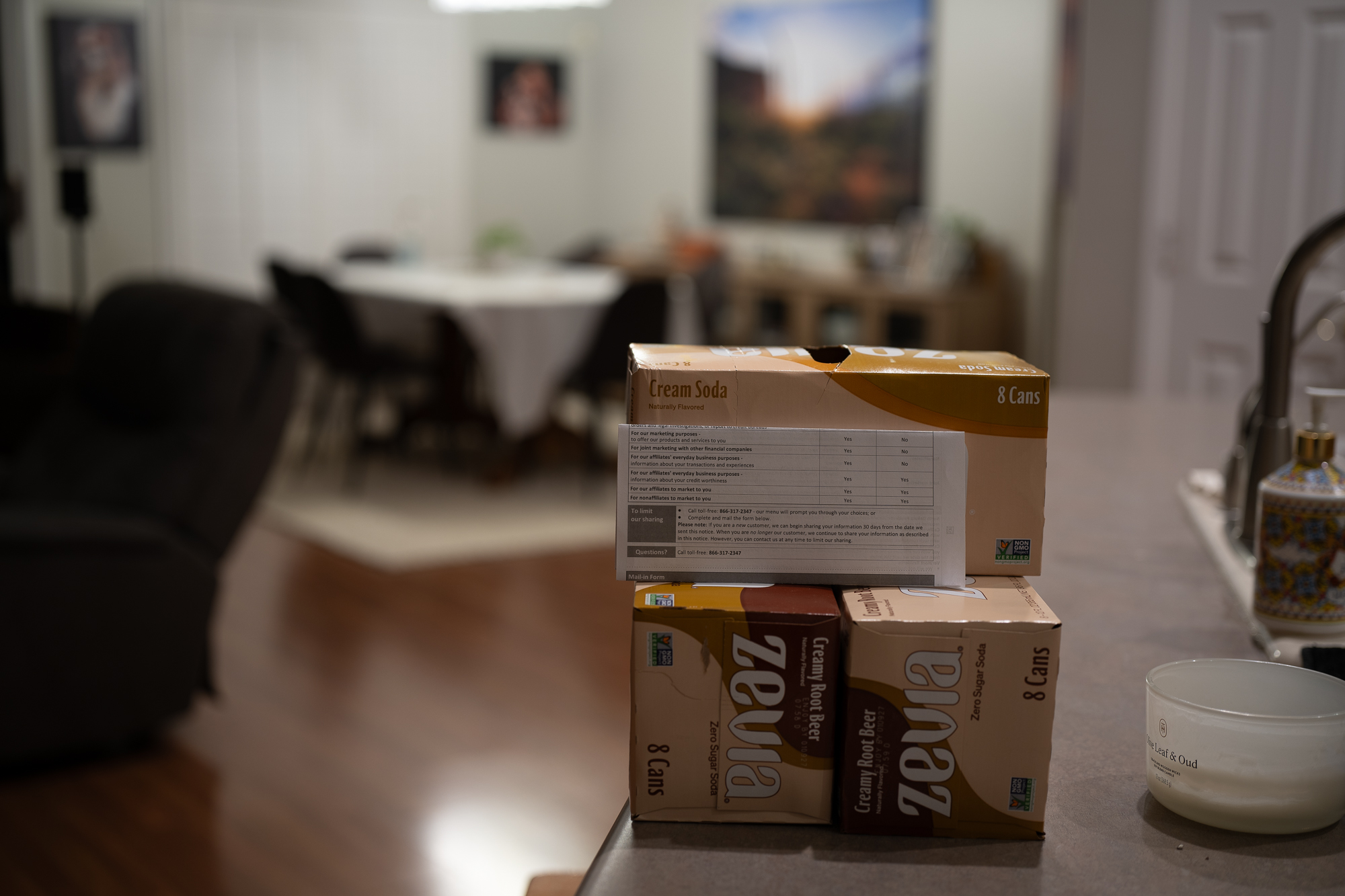
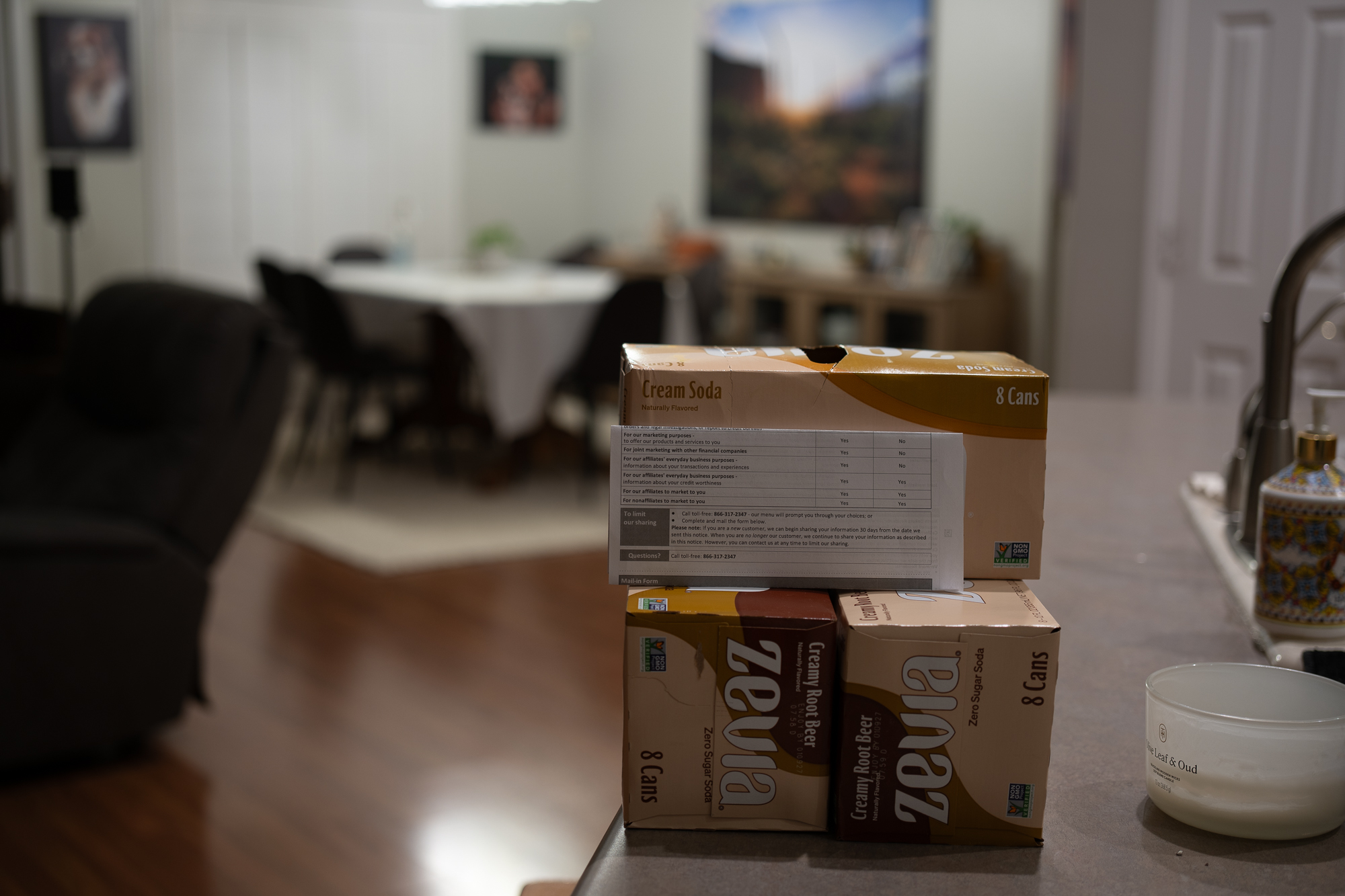
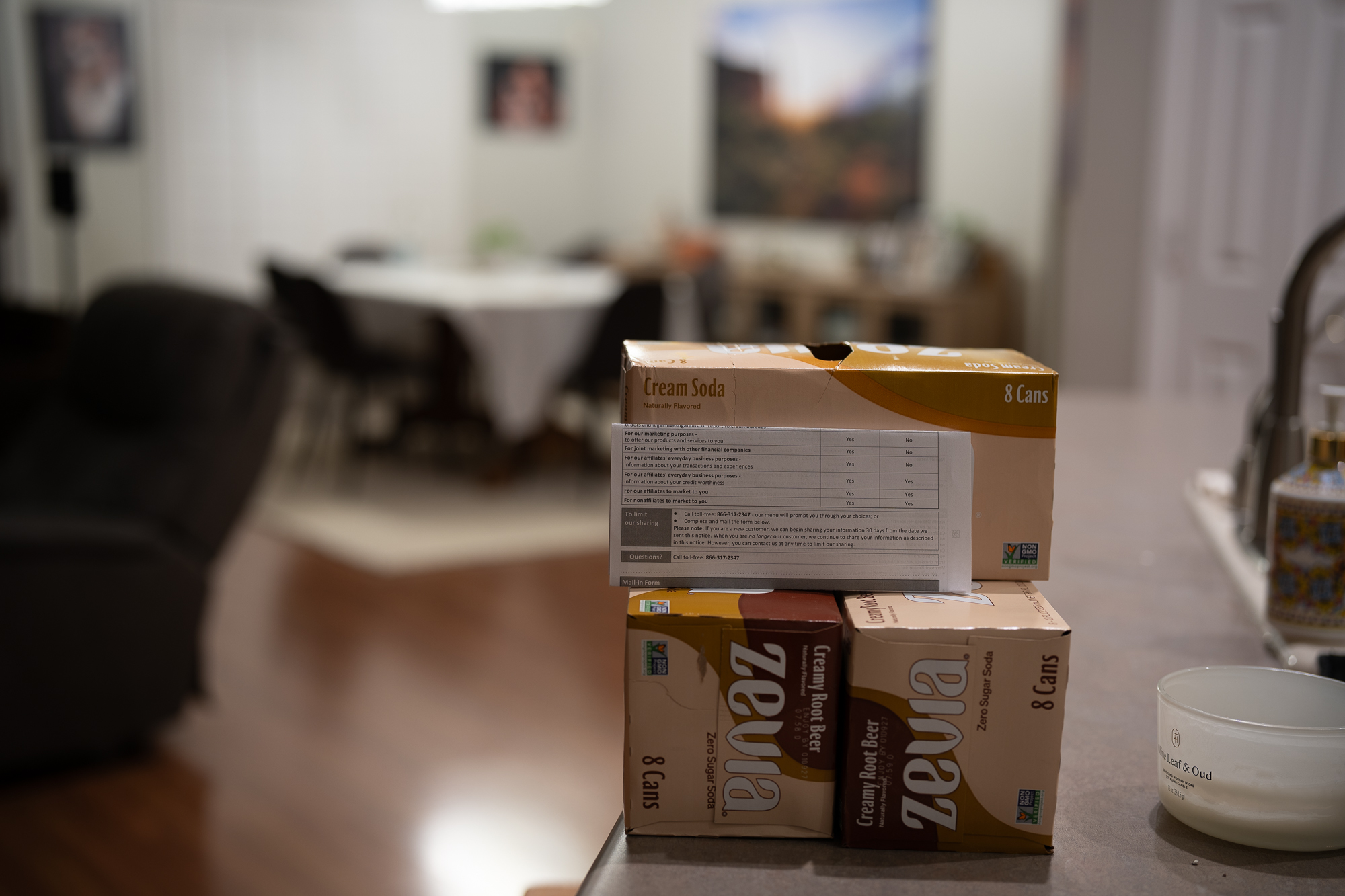
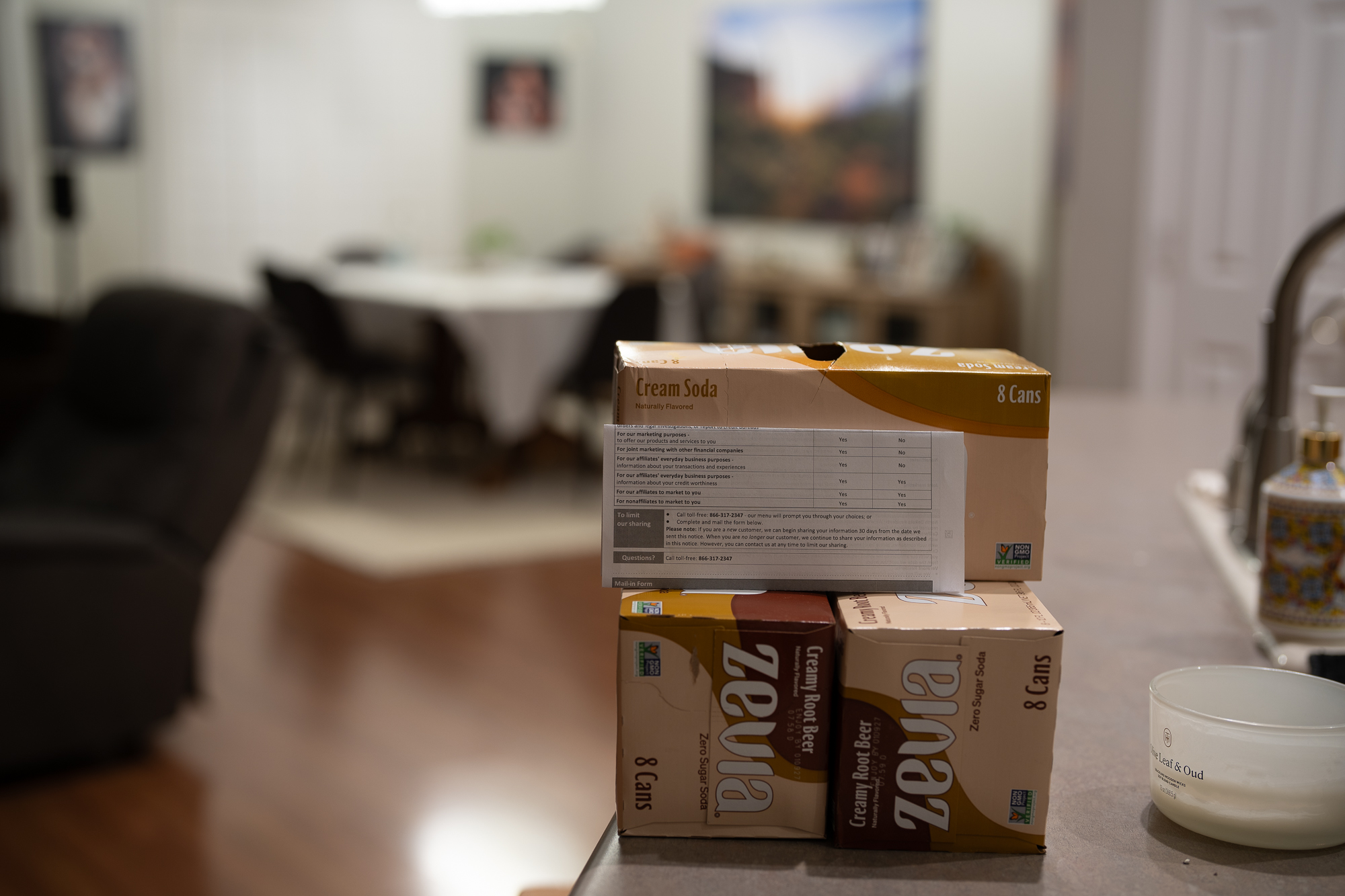
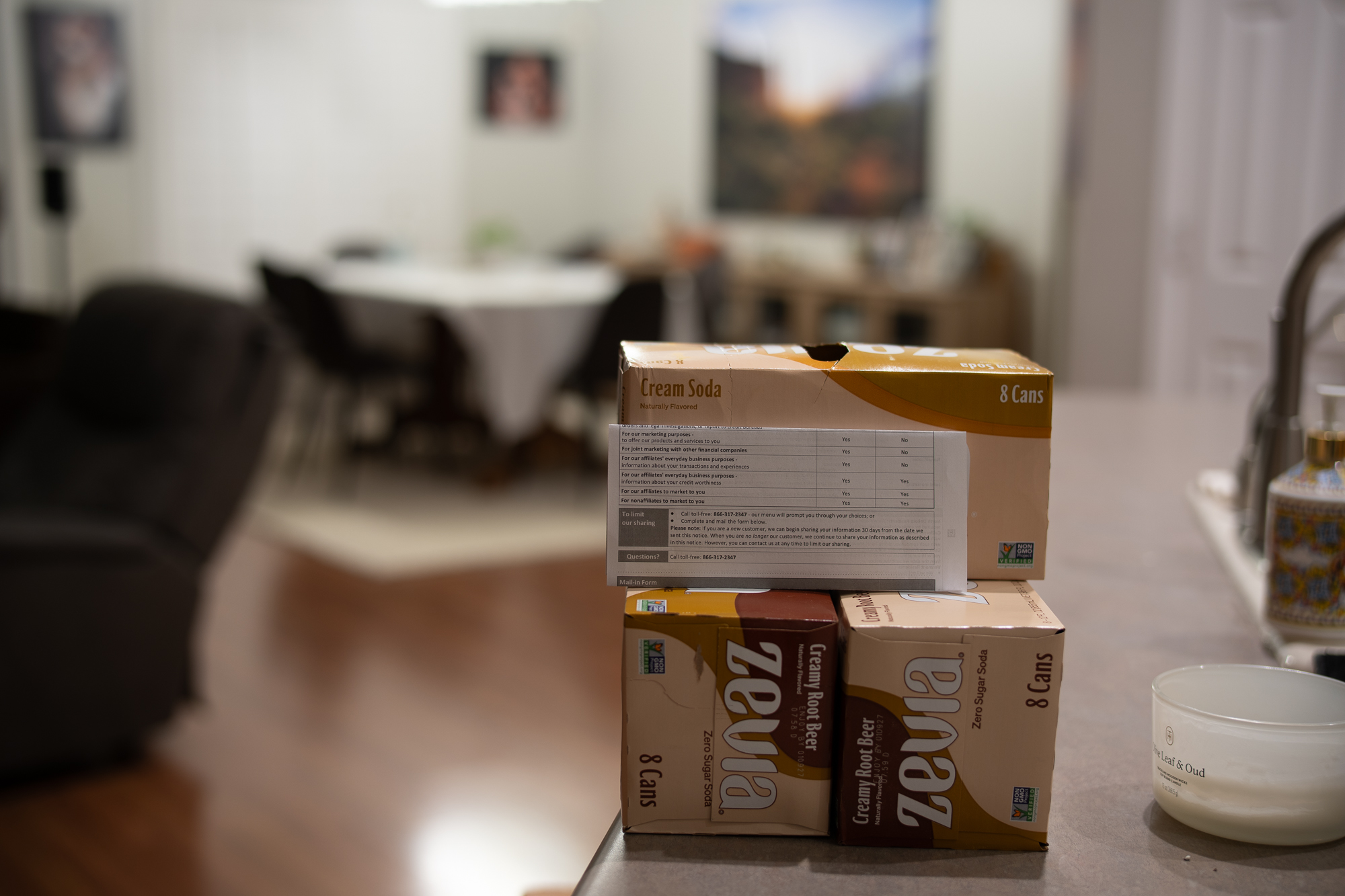
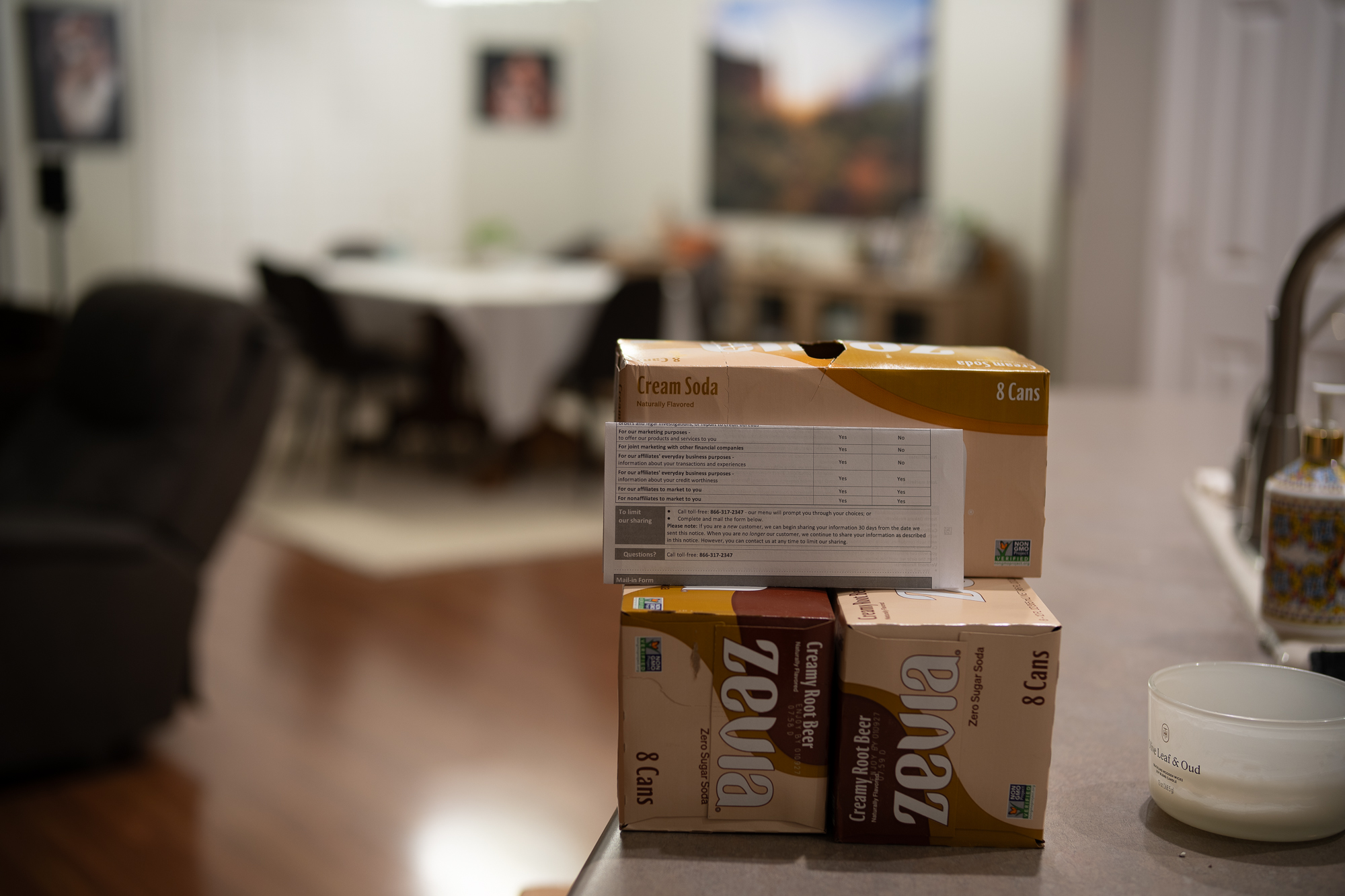
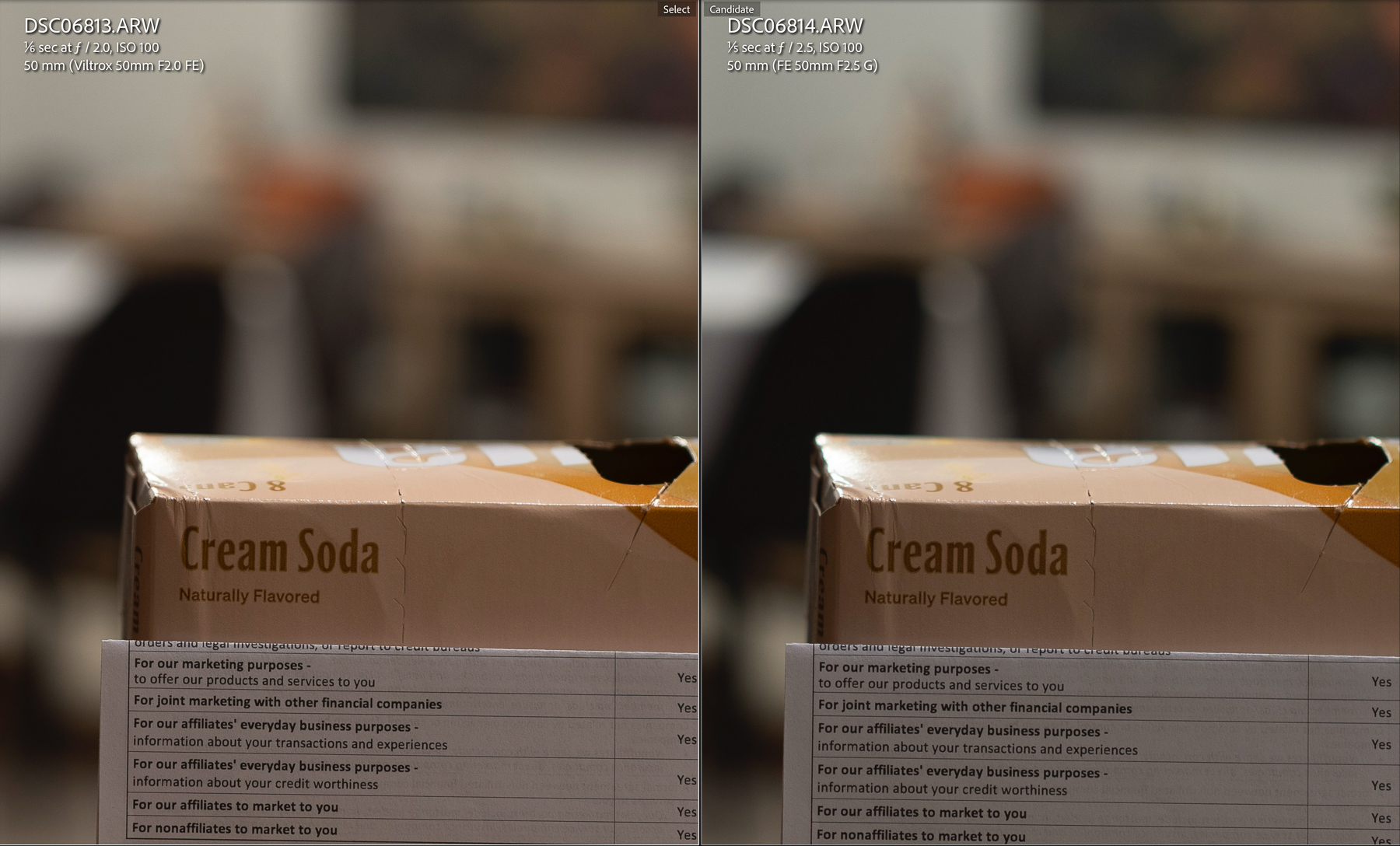
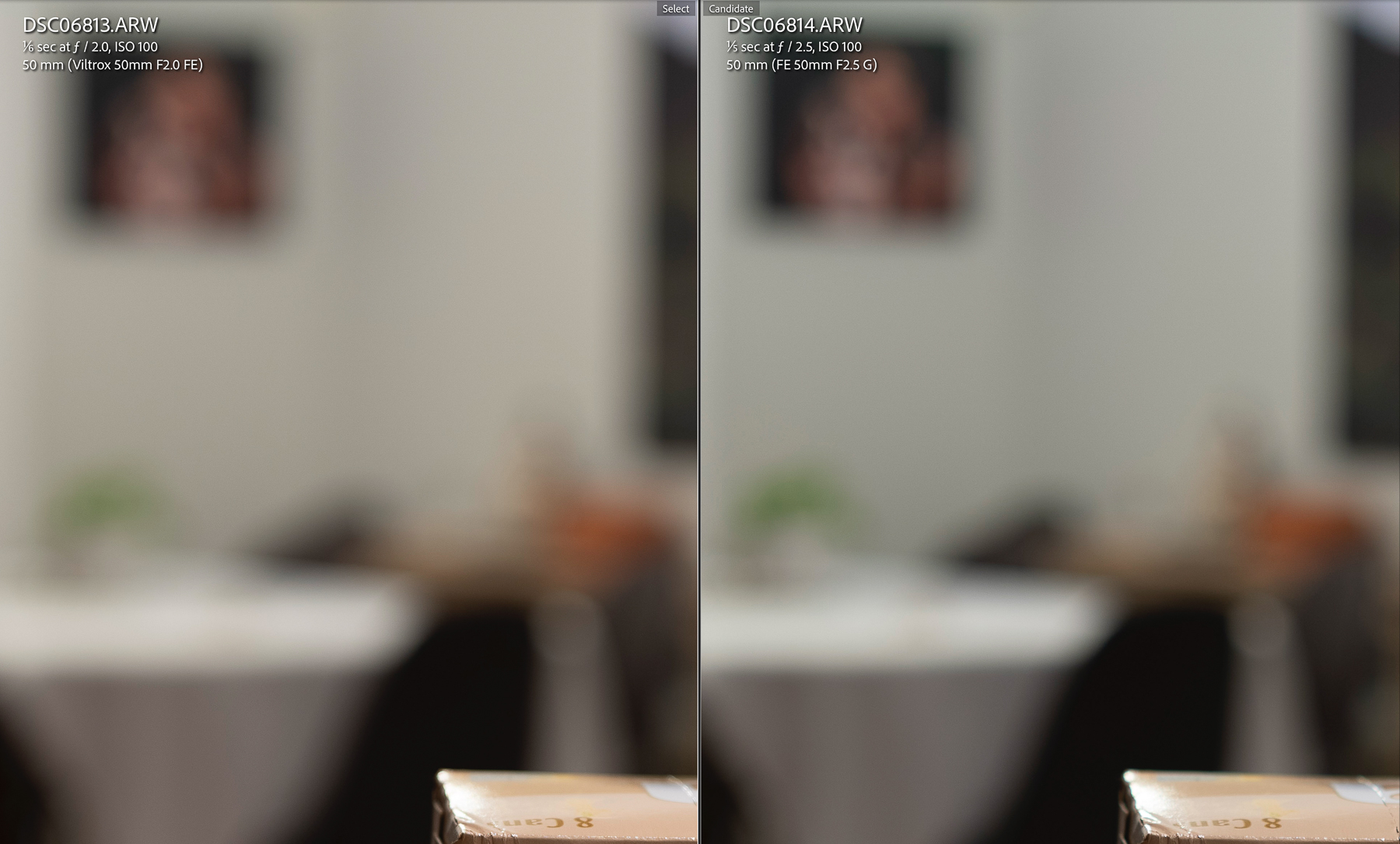
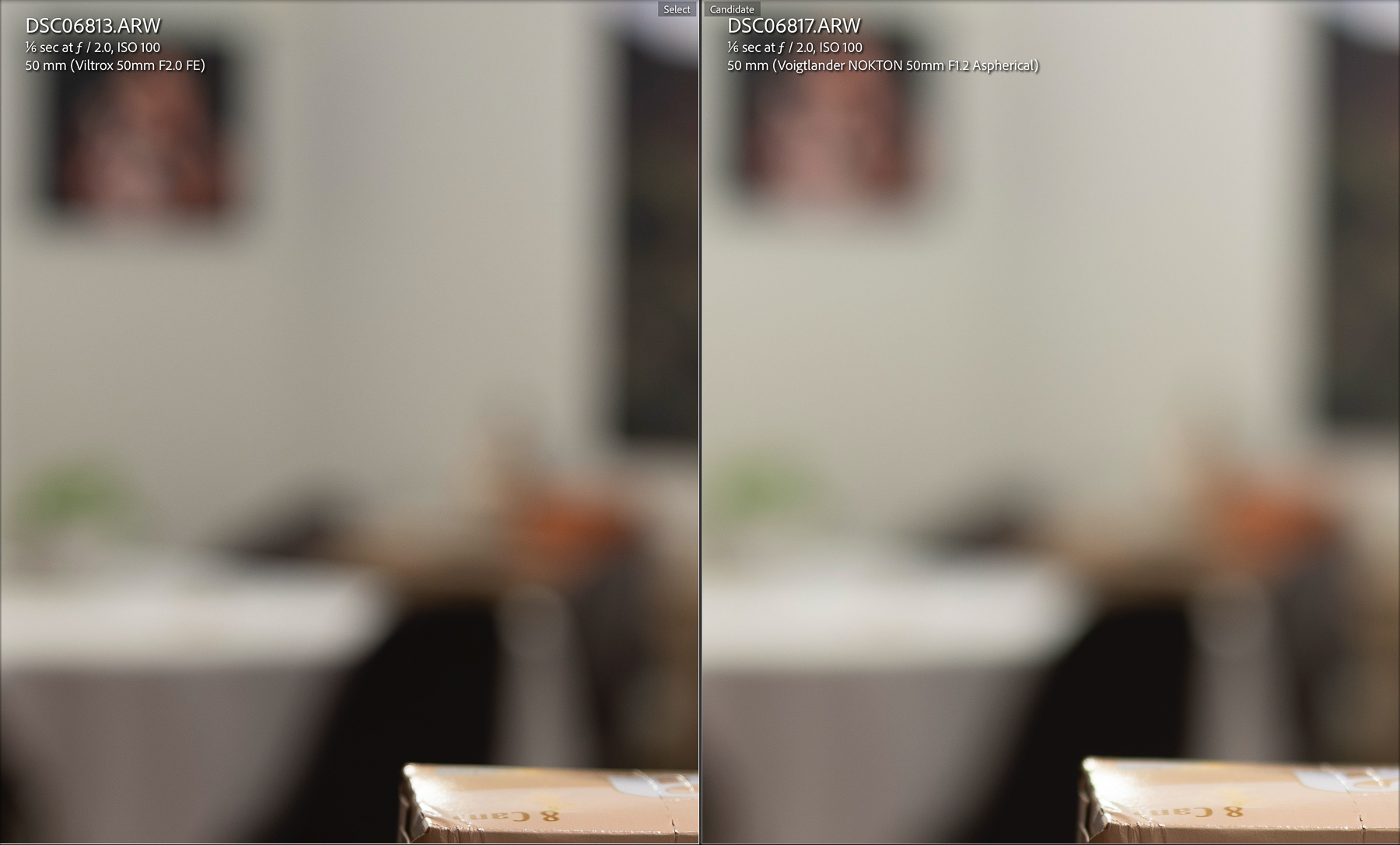
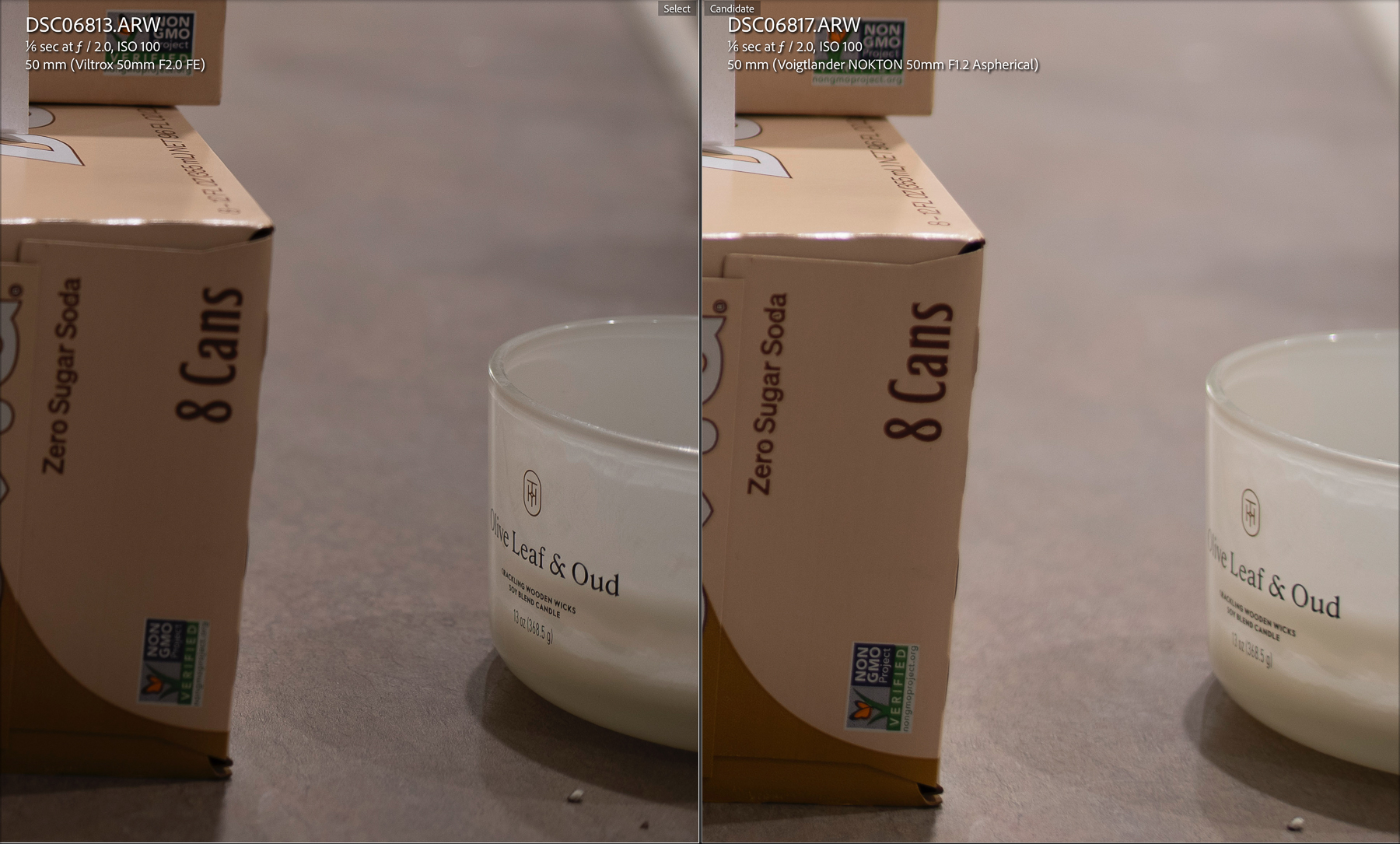
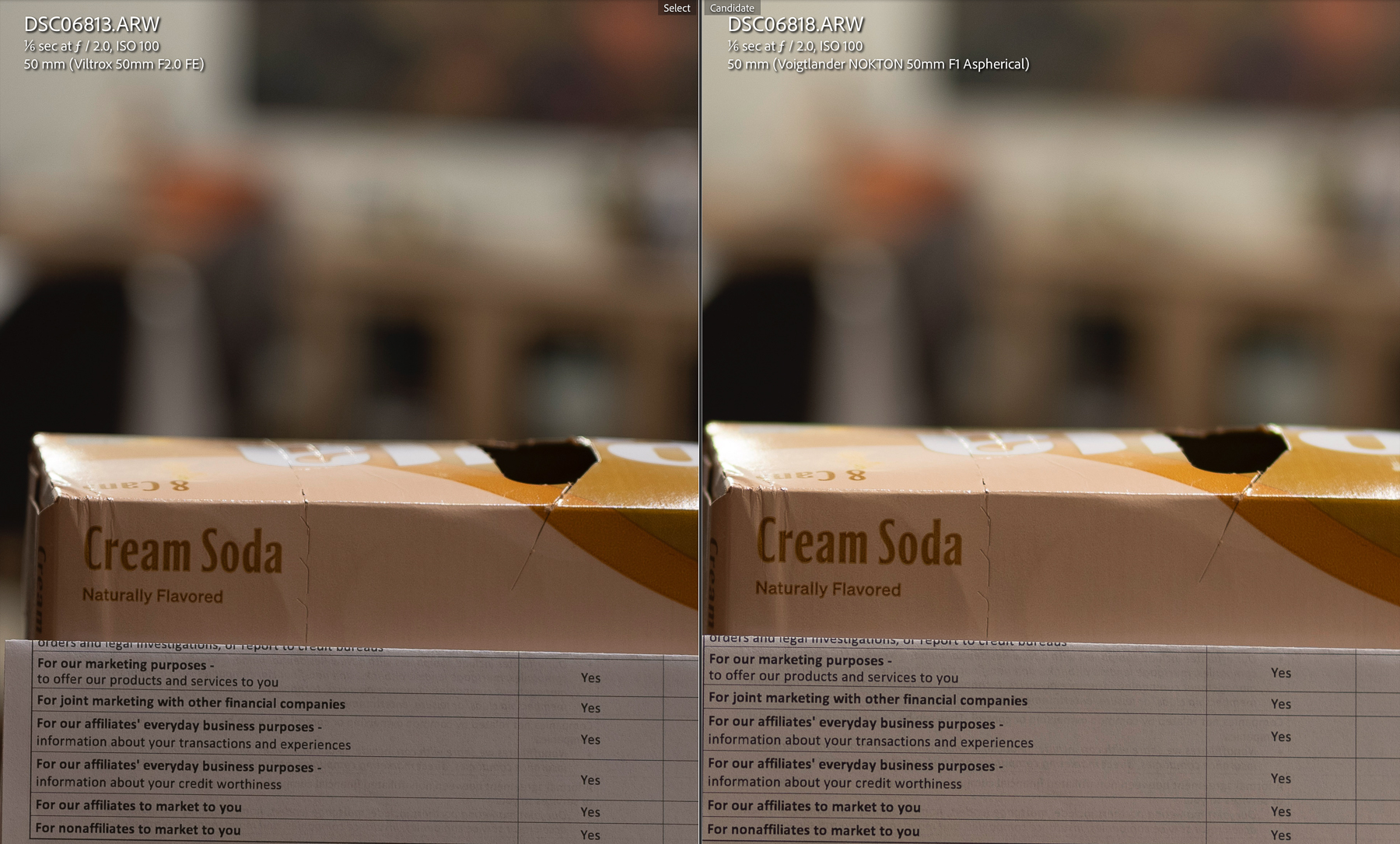
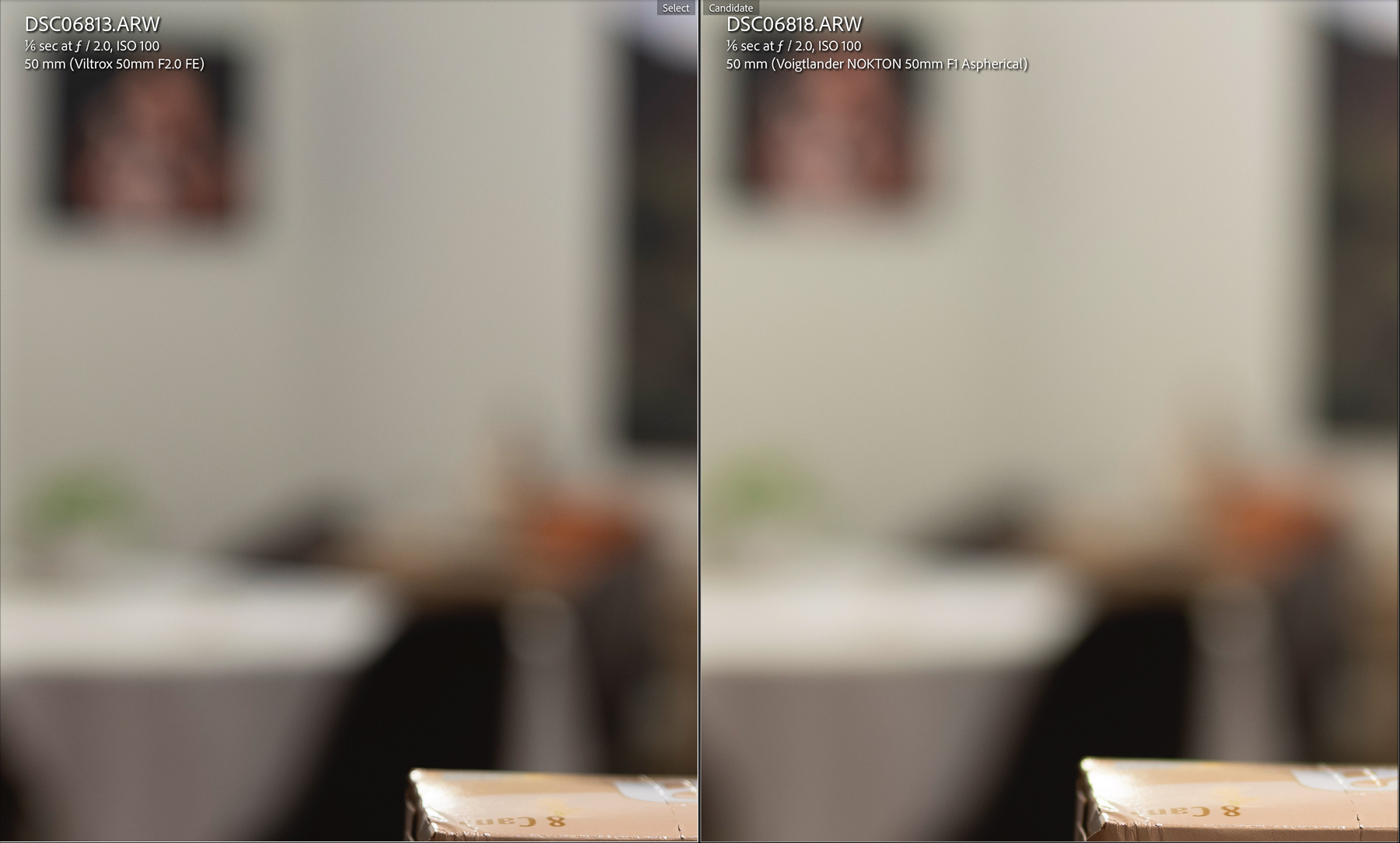
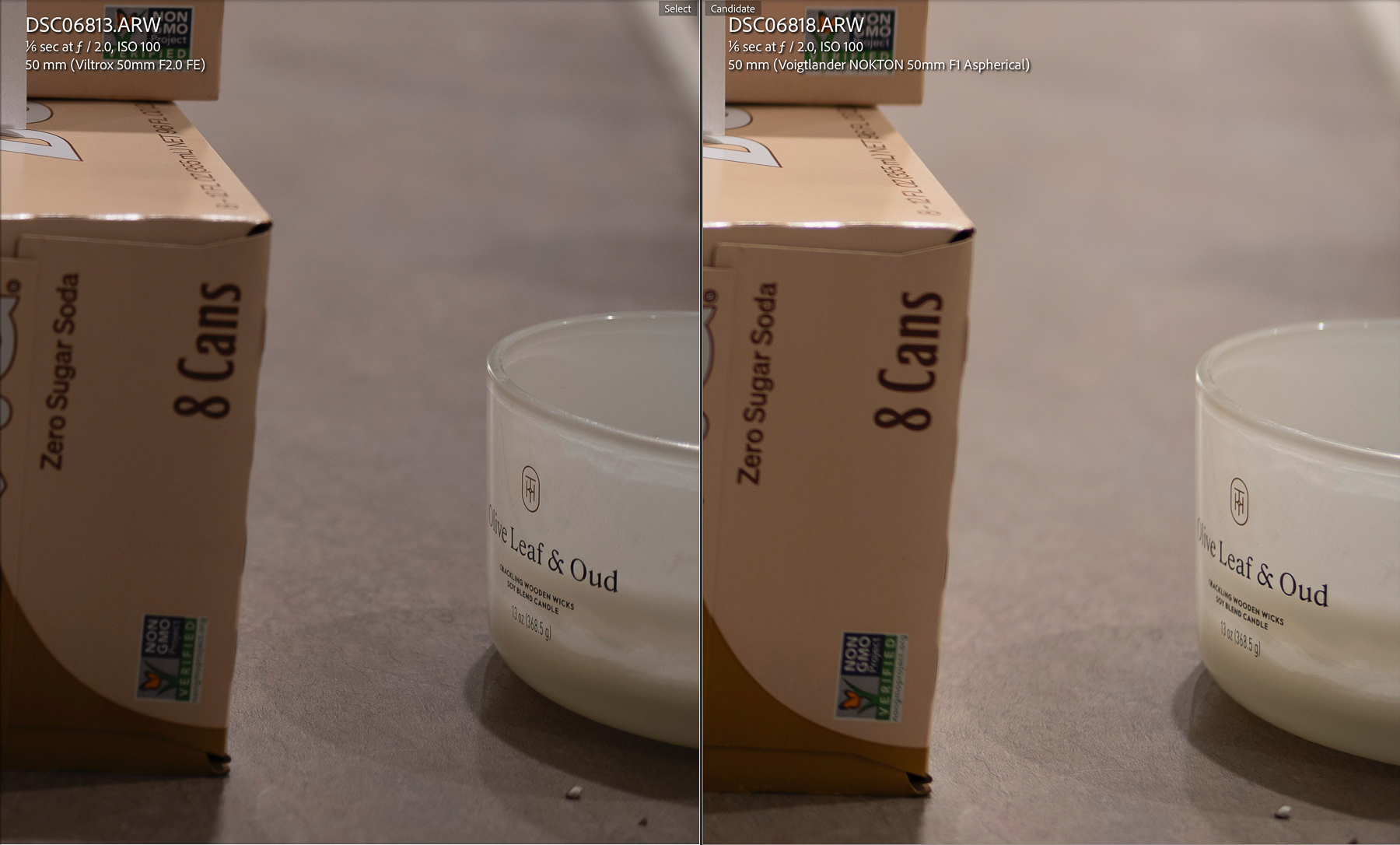
As promised, here is a side-by-side comparison of the Viltrox 50/2 against five other 50mm lenses. I'll probably do a new post with these and others that I'll do just for information purposes since we don't get a ton of comparisons.
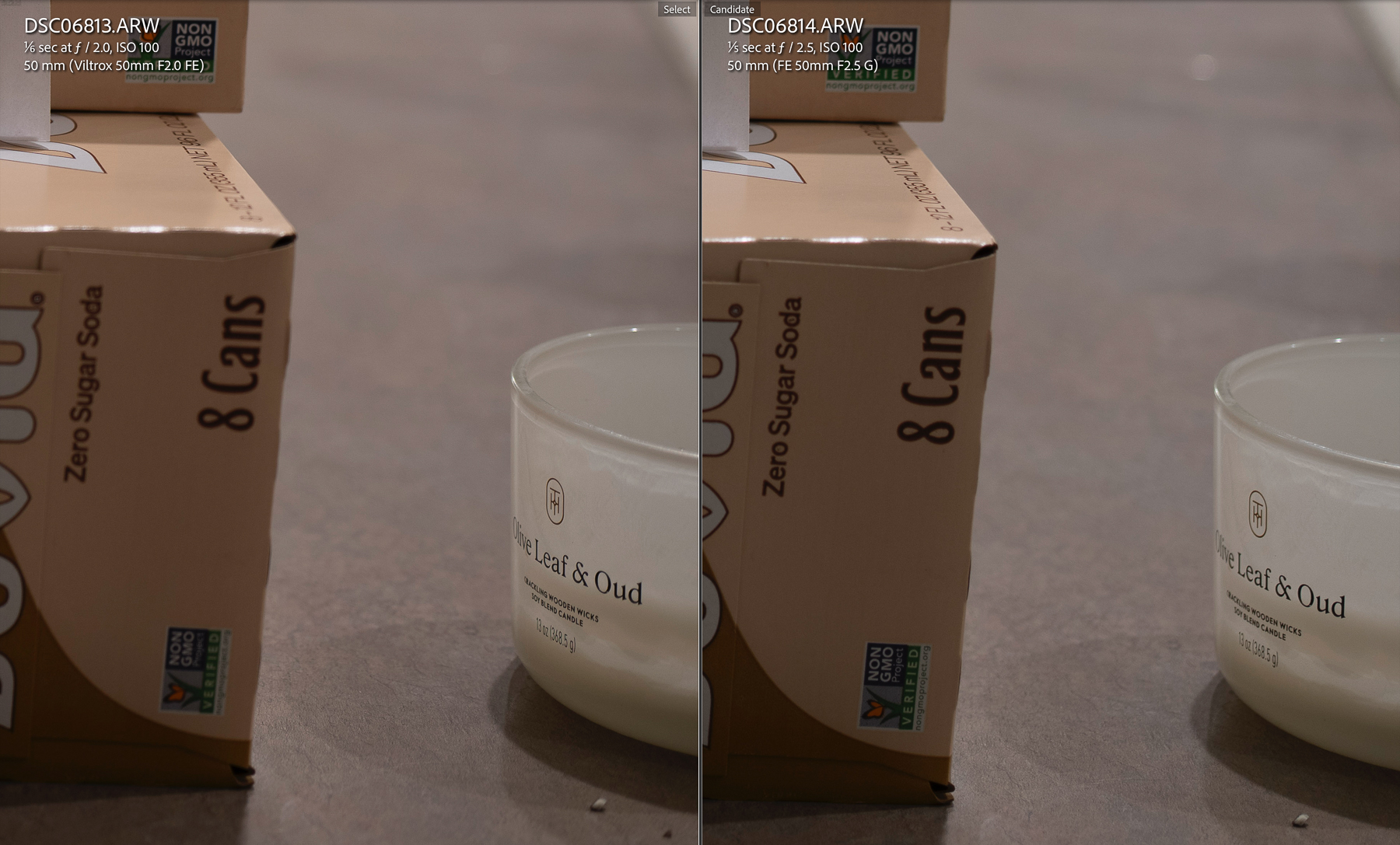
Lenses tested against: Sony 50/2.5G, Sony 50/1.4GM, Sony 50/1.2GM, Voigtlander 50/1.2 Nokton, and Voigtlander 50/1.0.
The first images are the whole scene from each lens in the order above, then comparisons at 100% from various parts of the frame. No post processing done at all. Exposure was identical for each shot except for the 2.5G since it is slower and so needed a slightly slower shutter for the same exposure.
Edited on Oct 10, 2025 at 08:21 PM · View previous versions
Lenses tested against: Sony 50/2.5G, Sony 50/1.4GM, Sony 50/1.2GM, Voigtlander 50/1.2 Nokton, and Voigtlander 50/1.0.
The first images are the whole scene from each lens in the order above, then comparisons at 100% from various parts of the frame. No post processing done at all. Exposure was identical for each shot except for the 2.5G since it is slower and so needed a slightly slower shutter for the same exposure.
ILCE-7RM5 Viltrox 50mm F2.0 FE lens 50mm f/2.0 1/6s 100 ISO 0.0 EV
ILCE-7RM5 FE 50mm F2.5 G lens 50mm f/2.5 1/5s 100 ISO 0.0 EV
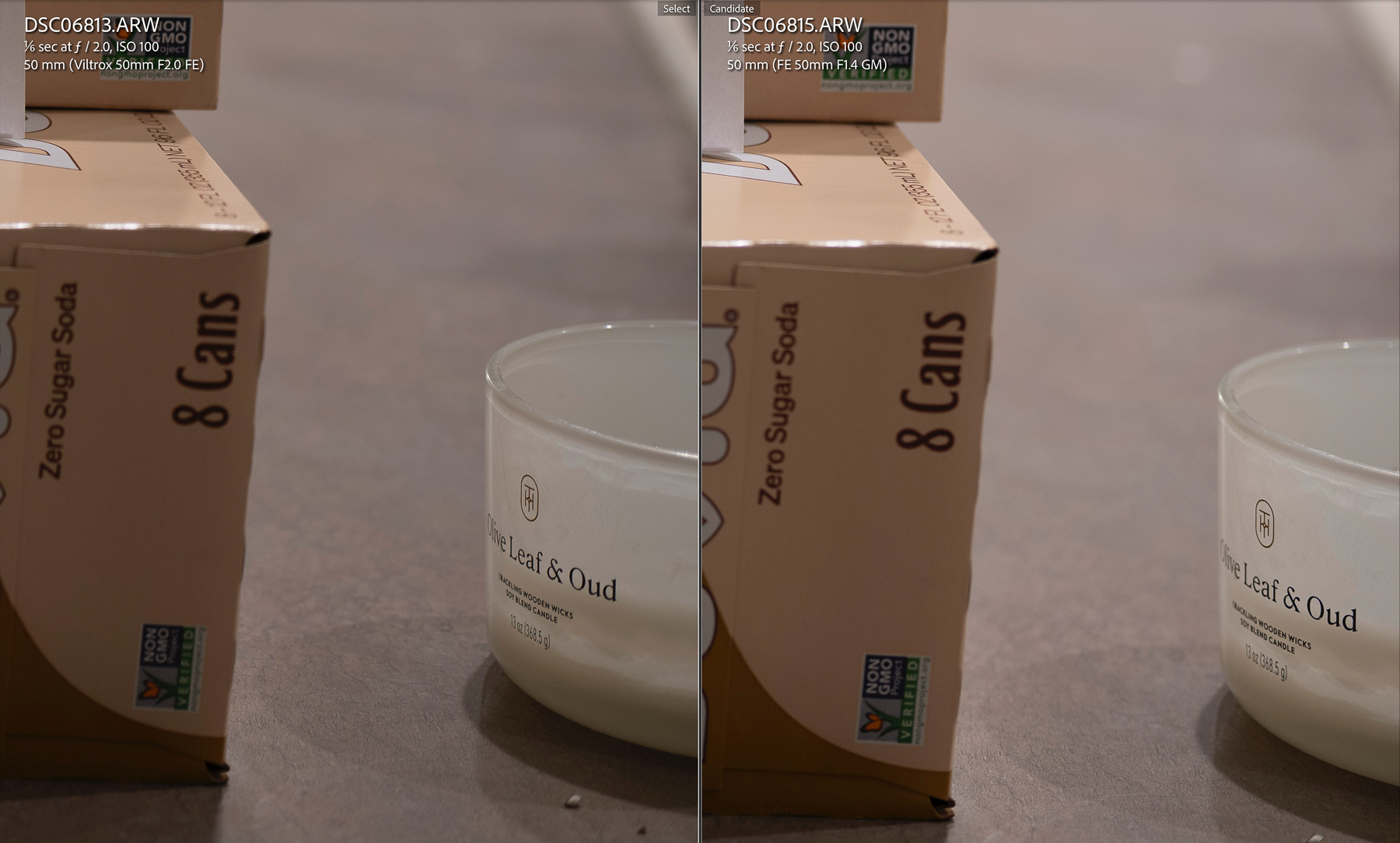
ILCE-7RM5 FE 50mm F1.4 GM lens 50mm f/2.0 1/6s 100 ISO 0.0 EV
ILCE-7RM5 FE 50mm F1.2 GM lens 50mm f/2.0 1/6s 100 ISO 0.0 EV
ILCE-7RM5 Voigtlander NOKTON 50mm F1.2 Aspherical lens 50mm f/2.0 1/6s 100 ISO 0.0 EV
ILCE-7RM5 Voigtlander NOKTON 50mm F1 Aspherical lens 50mm f/2.0 1/6s 100 ISO 0.0 EV
Edited on Oct 10, 2025 at 08:21 PM · View previous versions
Oct 10, 2025 at 08:17 PM
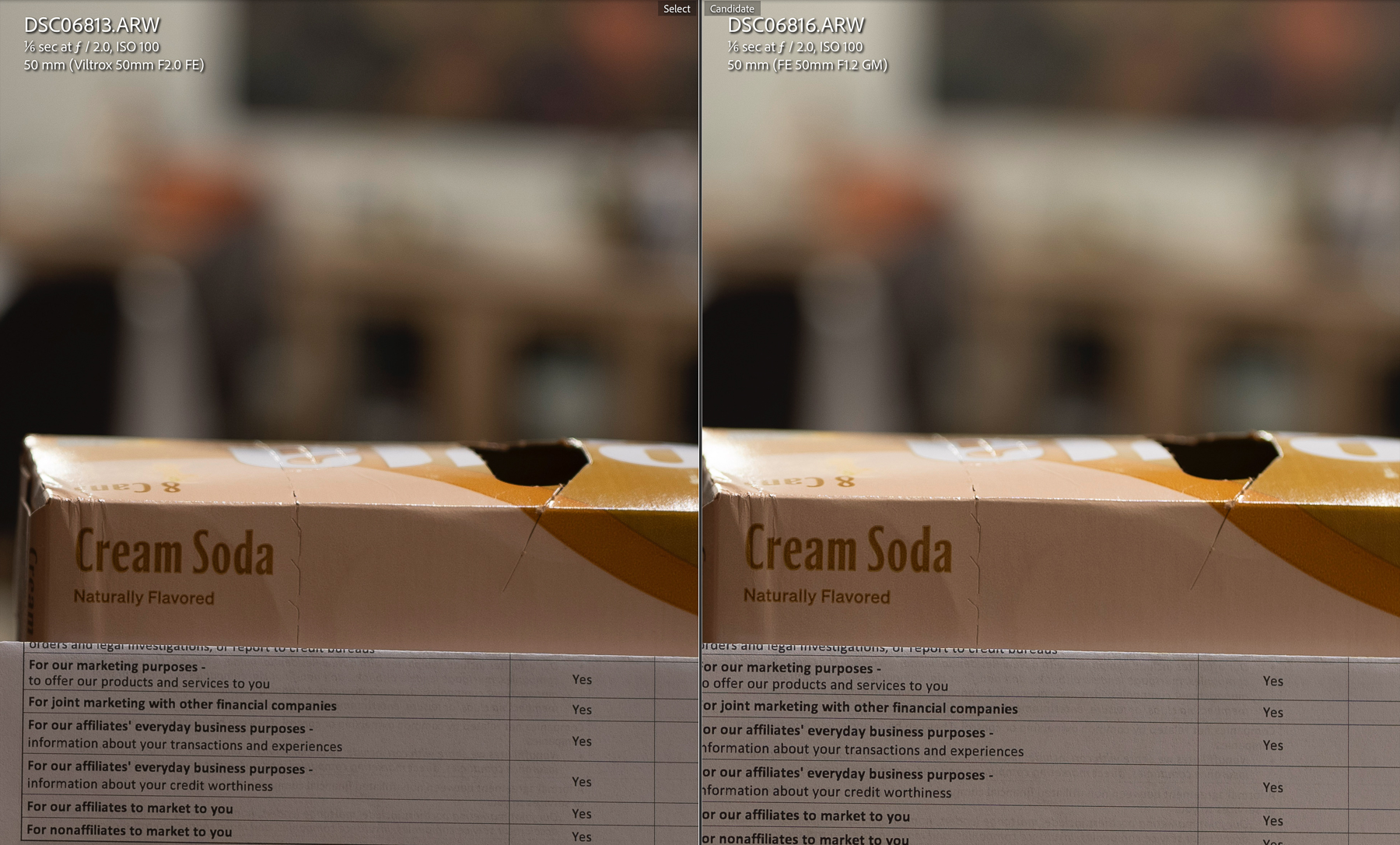
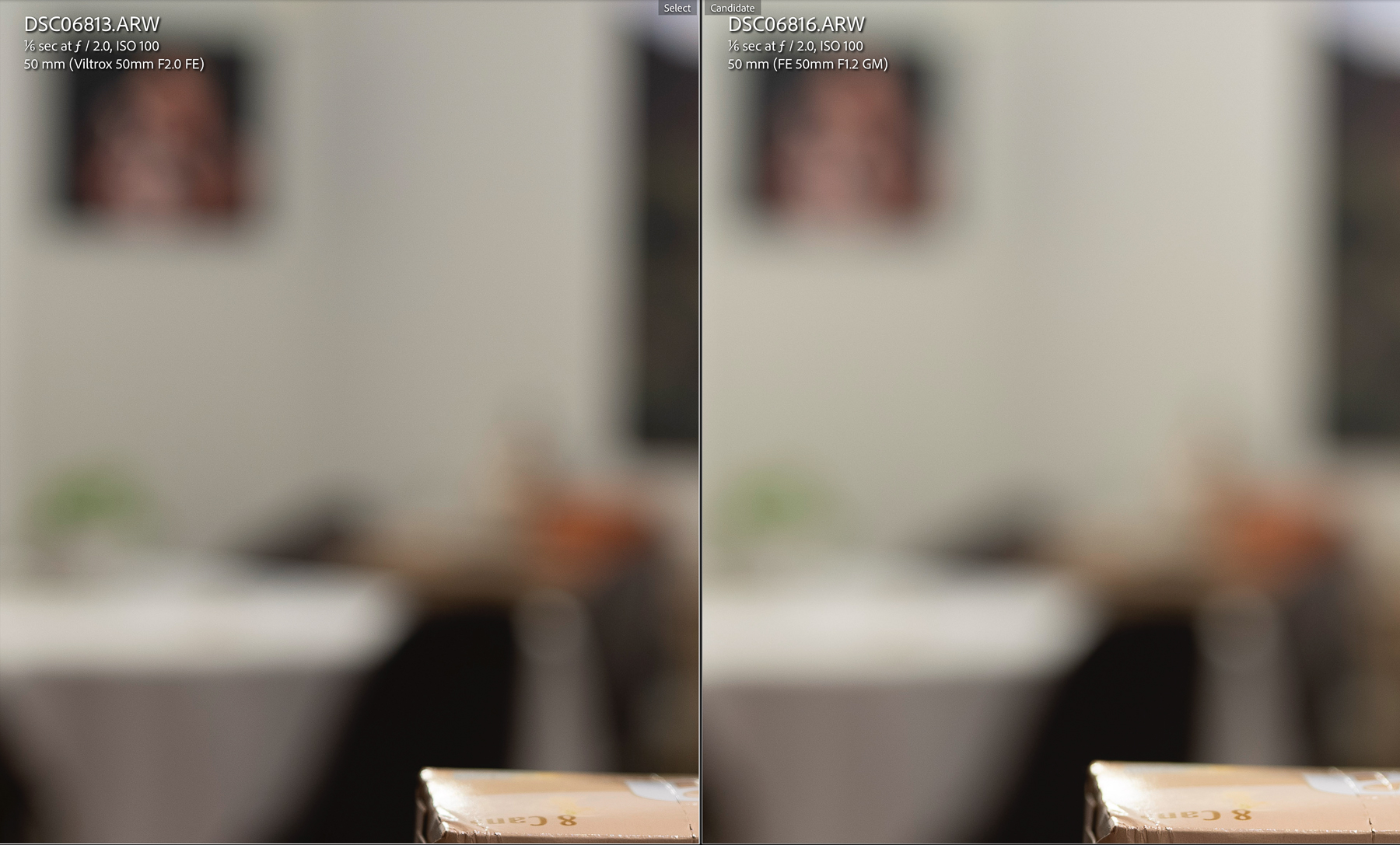
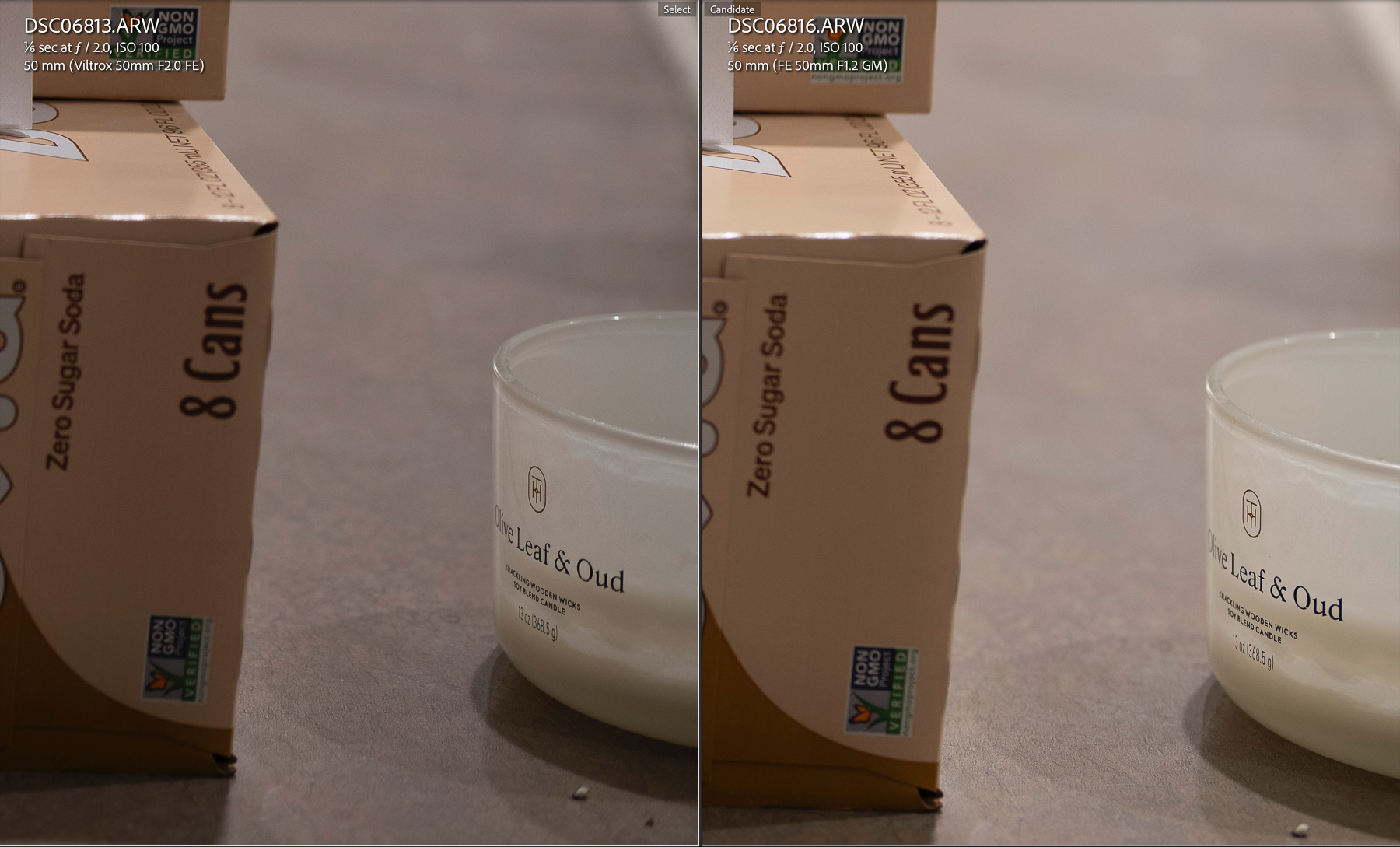
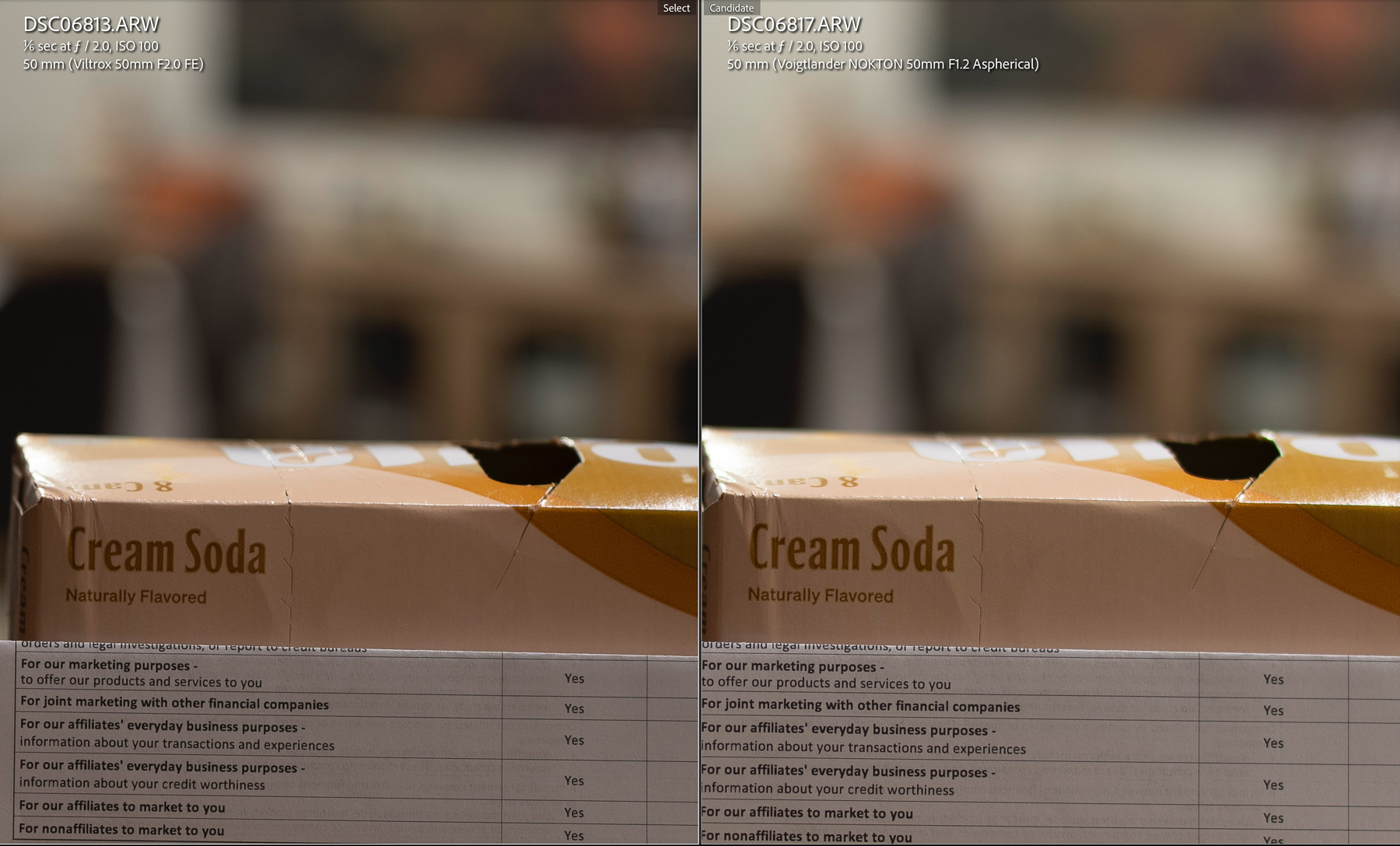
p.6 #8Viltrox 50mm 2.0 Air - Image Thread
OK, the Air definitely looks nicer than the 2.5G in my opinion.
If this is already visible at such short distances, it should be even more noticeable at longer distances.
Personally, I always find it difficult to compare images of different brightness. It simply changes the perception of contrast so much.
If this is already visible at such short distances, it should be even more noticeable at longer distances.
Personally, I always find it difficult to compare images of different brightness. It simply changes the perception of contrast so much.
Oct 11, 2025 at 01:34 AM
p.6 #9Viltrox 50mm 2.0 Air - Image Thread
I wonder why the 1.4 GM image appears so gray, weak, and dark compared to the 1.2 GM and the Voigtländers. It's strange. There must have been some deviation in the shot. Or the transmission is worse. I can't think of any other explanation.
Oct 11, 2025 at 02:38 AM
p.6 #10Viltrox 50mm 2.0 Air - Image Thread
Thank you mudlake. I sometimes do comparisons like this one and know it's some work involved if wanting to show anything in public.
it seems as the light hasn't been the same over the series? Anyway, this together with earlier images make me wonder if the Viltrox really is an f/2 lens. It seems as it might be a tad smaller aperture opening when comparing.
I may have to reconsider my choice between the Sigma 50i and the Viltrox 50 AIR.
When size and weight matters, or not matters:
https://photos.imageevent.com/jonas_b/fotoforum2022andfw/O587_Viltrox_Sigma_50mm_size.jpg
Oct 11, 2025 at 03:27 AM
p.6 #11Viltrox 50mm 2.0 Air - Image Thread
Yogifi wrote:
I'm happy with both, but I've yet to test AF speed. Less important for me with the viltrox.
Most likely would rather have the extra smoothness than not though. Can stop it down a little if it's too much.
But I dont mind the viltrox and it's just nice to have for such a quality look in a tiny package with af and low price, it's not far off. Wouldn't think twice about taking it for a walkabout. Sigma I'm a little more careful with.
Only thing I'm actually miffed with is the lack of weather sealing on sigma considering the price...Show more →
I'm not sure about the Sammy 50/1.4 ii. Looking at the Lenstip samples, image 2, make me hesitate. And of course, again bigger and heavier. So no.
The Sigma 50i could have been made a bit lighter. The weight difference may be important (or not).
The Voigtländer 50/2 APO doesn't fit in (for me) as it's a manual focusing lens. I'm looking for two good 50mm lenses; one AF and one MF. The MF will be the CV 50 APO.
Oct 11, 2025 at 03:35 AM
p.6 #12Viltrox 50mm 2.0 Air - Image Thread
Jonas B wrote:
When size and weight matters, or not matters:
https://photos.imageevent.com/jonas_b/fotoforum2022andfw/O587_Viltrox_Sigma_50mm_size.jpg
I put the lens hood from the Voigtländer Nokton on the Air, which is a bit shorter.

Oct 11, 2025 at 03:41 AM
p.6 #13Viltrox 50mm 2.0 Air - Image Thread
Nifty Fifty wrote:
https://photos.imageevent.com/jonas_b/fotoforum2022andfw/O587_Viltrox_Sigma_50mm_size.jpgI put the lens hood from the Voigtländer Nokton on the Air, which is a bit shorter.
Lol, yes, just don't use the original hood...! ;-)
I have a box with several old type standard metal screw in hoods. The hoods in the image are about the right size to my taste. But sure, you can shave a bit there.
Jonas B wrote
When size and weight matters, or not matters:https://photos.imageevent.com/jonas_b/fotoforum2022andfw/O587_Viltrox_Sigma_50mm_size.jpg
Lol, yes, just don't use the original hood...! ;-)
I have a box with several old type standard metal screw in hoods. The hoods in the image are about the right size to my taste. But sure, you can shave a bit there.
Oct 11, 2025 at 03:57 AM
p.6 #14Viltrox 50mm 2.0 Air - Image Thread
What also strikes me is that at distances like those in the comparison images, the bokeh of the 1.2 GM and 1.2 Nokton are quite similar. I once had a comparison image with different distances, and the difference was striking. The GM was much(!) more shaky than the Nokton. So, it's always difficult to make general statements based on specific comparisons. Nevertheless, I naturally find such comparisons very interesting. However, I almost always shoot in situations where both the subject and background are significantly farther away from the camera. As a result, I personally have to pay more attention to the rendering at greater distances. On the other hand, I don't plan on buying any more 50mm lenses, unless there's a 6cm long AF 1.2 that weighs less than 400g. So, these comparisons interest me completely independent of my own ambitions.
Oct 11, 2025 at 04:00 AM
p.6 #15Viltrox 50mm 2.0 Air - Image Thread
The viltrox was smoother than the 2.5g to my eye too, though I'd guess the sony has better autofocus and weather sealing, and also quite a bit pricier I think. But probably the closest out of the ones in that great test in terms of size price and image.
I want to do one with a single flat-ish scene at like 8m that isn't a brick wall later at f2. Can do nokton 50mmf1.2, viltrox, sigma and the sony 50mmf1.8, might be interesting.
Jonas B wrote:
Most likely would rather have the extra smoothness than not though. Can stop it down a little if it's too much.
But I dont mind the viltrox and it's just nice to have for such a quality look in a tiny package with af and low price, it's not far off. Wouldn't think twice about taking it for a walkabout. Sigma I'm a little more careful with.
Only thing I'm actually miffed with is the lack of weather sealing on sigma considering the price and because it's longer.
Next step up (for this clean look) is probably the Samyang 50mm f1.4 II though it's significantly larger than the Sigma f2, but not huge, and not heavy (very comfortable with the a7cii, particularly with a bottom plate) and renders a little (or more) nicer.
It does cross the size threshold for regular compact carry for me though. Can't fit it with another lens in my minimal shoulder bag.
Not sure how the Voigtlander 50mm F2 apo would fit in.I'm not sure about the Sammy 50/1.4 ii. Looking at the Lenstip samples, image 2, make me hesitate. And of course, again bigger and heavier. So no.
The Sigma 50i could have been made a bit lighter. The weight difference may be important (or not).
The Voigtländer 50/2 APO doesn't fit in (for me) as it's a manual focusing lens. I'm looking for two good 50mm lenses; one AF and one MF. The MF will be the CV 50 APO.
I took some photos with the samyang after but not on the tripod like with the other 2, it is just nicer and cleaner but I took them at f1.4. The Sigma might actually be smoother in a way, like even less structure but the Samyang 50II was clean and natural, I really liked the image. I saw the example on lenstip and I think you were talking about the tree in the background next to the statue?
I think if the samyang looked like that the sigma wouldnt be far off in that situation either. But not sure. Yeah it's bigger, not a compact everyday carry but it is maybe the smallest and lightest out of the 50mm f1.4 with AF. Continuous sucks, but I haven't upgraded the firmware that is supposed to address it with my camera, needs a separate docking station if not a recent copy.
I bought it used but in great condition and cheap, lucked out with that auction.
Sigma for out and about makes more sense to me, especially because I also don't take shots at close range often, with the samyang. Need to try the Sigma a bit more with people too but probably won't be my favourite for that. I'm quite liking the samyang 45mmf1.8 as a compact option for that, nice in crop mode too for filmic edits.
I'm with you, I want a mf one too... the nokton is so good for people for the size. You can stop it down to get closer to the apo but... apo is apo and even when I had both before the additional 40-50s I felt conflicted about keeping both. But the apo formfactor just calls me.
Thank you mudlake, great comparison and good to know.
I want to do one with a single flat-ish scene at like 8m that isn't a brick wall later at f2. Can do nokton 50mmf1.2, viltrox, sigma and the sony 50mmf1.8, might be interesting.
Jonas B wrote:
Yogifi wrote
I'm happy with both, but I've yet to test AF speed. Less important for me with the viltrox.Most likely would rather have the extra smoothness than not though. Can stop it down a little if it's too much.
But I dont mind the viltrox and it's just nice to have for such a quality look in a tiny package with af and low price, it's not far off. Wouldn't think twice about taking it for a walkabout. Sigma I'm a little more careful with.
Only thing I'm actually miffed with is the lack of weather sealing on sigma considering the price and because it's longer.
Next step up (for this clean look) is probably the Samyang 50mm f1.4 II though it's significantly larger than the Sigma f2, but not huge, and not heavy (very comfortable with the a7cii, particularly with a bottom plate) and renders a little (or more) nicer.
It does cross the size threshold for regular compact carry for me though. Can't fit it with another lens in my minimal shoulder bag.
Not sure how the Voigtlander 50mm F2 apo would fit in.
The Sigma 50i could have been made a bit lighter. The weight difference may be important (or not).
The Voigtländer 50/2 APO doesn't fit in (for me) as it's a manual focusing lens. I'm looking for two good 50mm lenses; one AF and one MF. The MF will be the CV 50 APO.
I took some photos with the samyang after but not on the tripod like with the other 2, it is just nicer and cleaner but I took them at f1.4. The Sigma might actually be smoother in a way, like even less structure but the Samyang 50II was clean and natural, I really liked the image. I saw the example on lenstip and I think you were talking about the tree in the background next to the statue?
I think if the samyang looked like that the sigma wouldnt be far off in that situation either. But not sure. Yeah it's bigger, not a compact everyday carry but it is maybe the smallest and lightest out of the 50mm f1.4 with AF. Continuous sucks, but I haven't upgraded the firmware that is supposed to address it with my camera, needs a separate docking station if not a recent copy.
I bought it used but in great condition and cheap, lucked out with that auction.
Sigma for out and about makes more sense to me, especially because I also don't take shots at close range often, with the samyang. Need to try the Sigma a bit more with people too but probably won't be my favourite for that. I'm quite liking the samyang 45mmf1.8 as a compact option for that, nice in crop mode too for filmic edits.
I'm with you, I want a mf one too... the nokton is so good for people for the size. You can stop it down to get closer to the apo but... apo is apo and even when I had both before the additional 40-50s I felt conflicted about keeping both. But the apo formfactor just calls me.
Thank you mudlake, great comparison and good to know.
Oct 11, 2025 at 04:03 AM
p.6 #16Viltrox 50mm 2.0 Air - Image Thread
Art Adams explains:
'The quality of the out-of-focus portion of an image is often an afterthought. From an engineer’s perspective, the part of the picture that matters most is where the lens focuses. From an artist’s perspective, the soft background sets the stage for the action that occurs in front of it. The designers behind the Signature Primes paid as much attention to the point of focus as to the bokeh.' 'I suspect Zeiss makes their lenses technically perfect, whereas I know that ARRI has opted for aesthetically perfect.'
So we see a graphic divergence of rendering even at the top end of lens design.
In the thread, well, most buyers want to see the dreamy and heavily abstracted bokeh in their f1.2 lenses as an entity in itself, and that is what both these mainstream f1.2 lenses deliver. My interests here are twofold: (i) to point to the very different onset of bokeh blur in the non-Viltrox lenses (as seen in the 'Leaf and Oud' closeups), engineered by a combination of rapid focus-fade and low contrast in the GM and CV faster lenses; and (ii) to raise the design differences between 'attractive' blur and the more tightly controlled and detail-relevant bokeh of the Viltrox lens.
A big issue arises here. While the established format is that of high blur volume, that blur effect seems to want to prevent viewing of the background at all, lest you go cross-eyed; contrasted with the kind of background lovers of 'context bokeh' enjoy, as they connect the focal plane data with what can be gleaned from the background.
Bokeh is fundamental to 3D because that is where the effect starts, and we can generally expect the pattern to continue 1-2 stops down, so it may persist. Compositions are vital to seeing the issue; here we see just two planes in essence - (i) the tables, wall, wall hangings and door, and (ii) the product and a bit of the table. A continuous run of image motifs in the axial direction works really well, your eye can follow it more easily. Gardens, soil, beach sand etc.
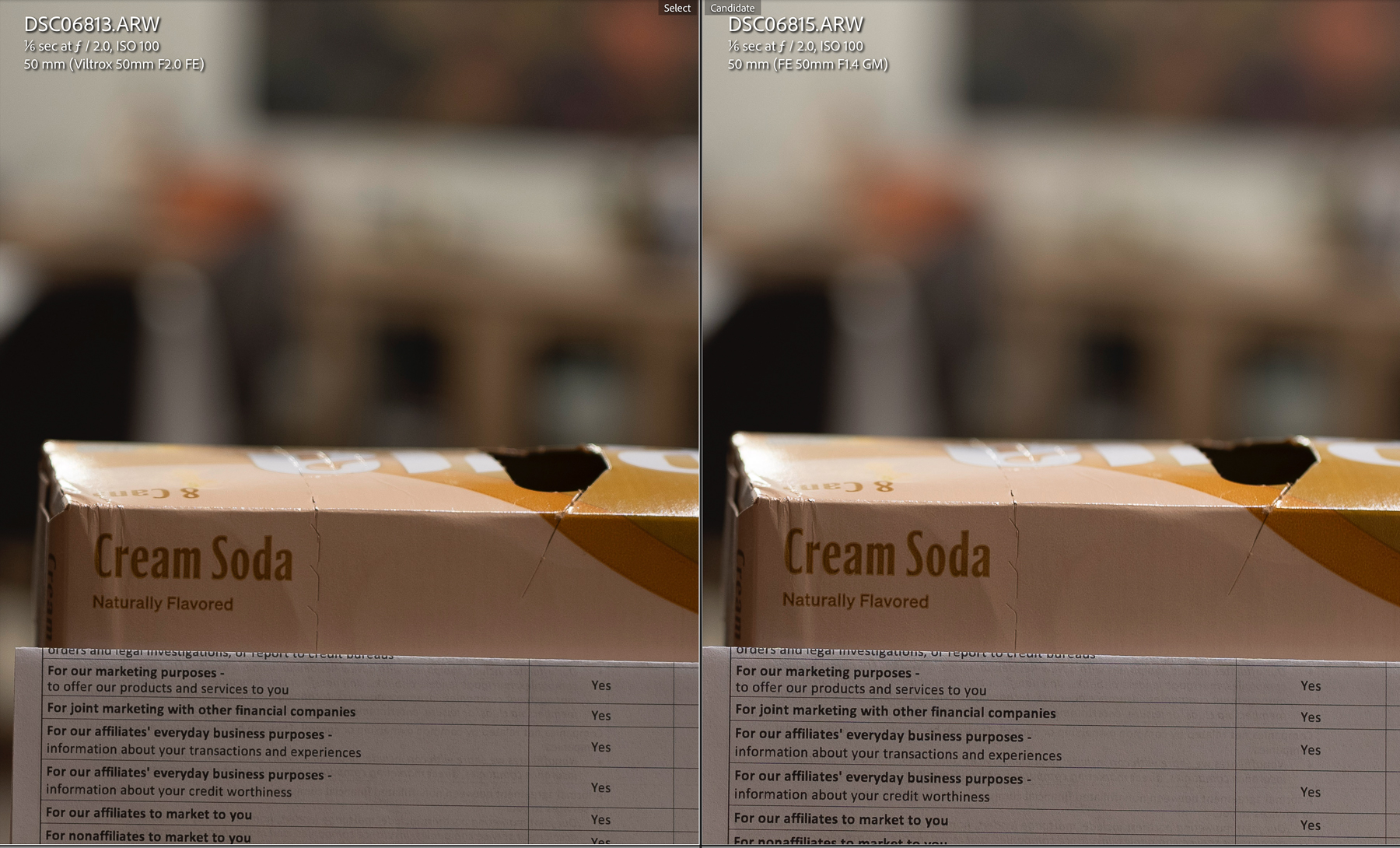
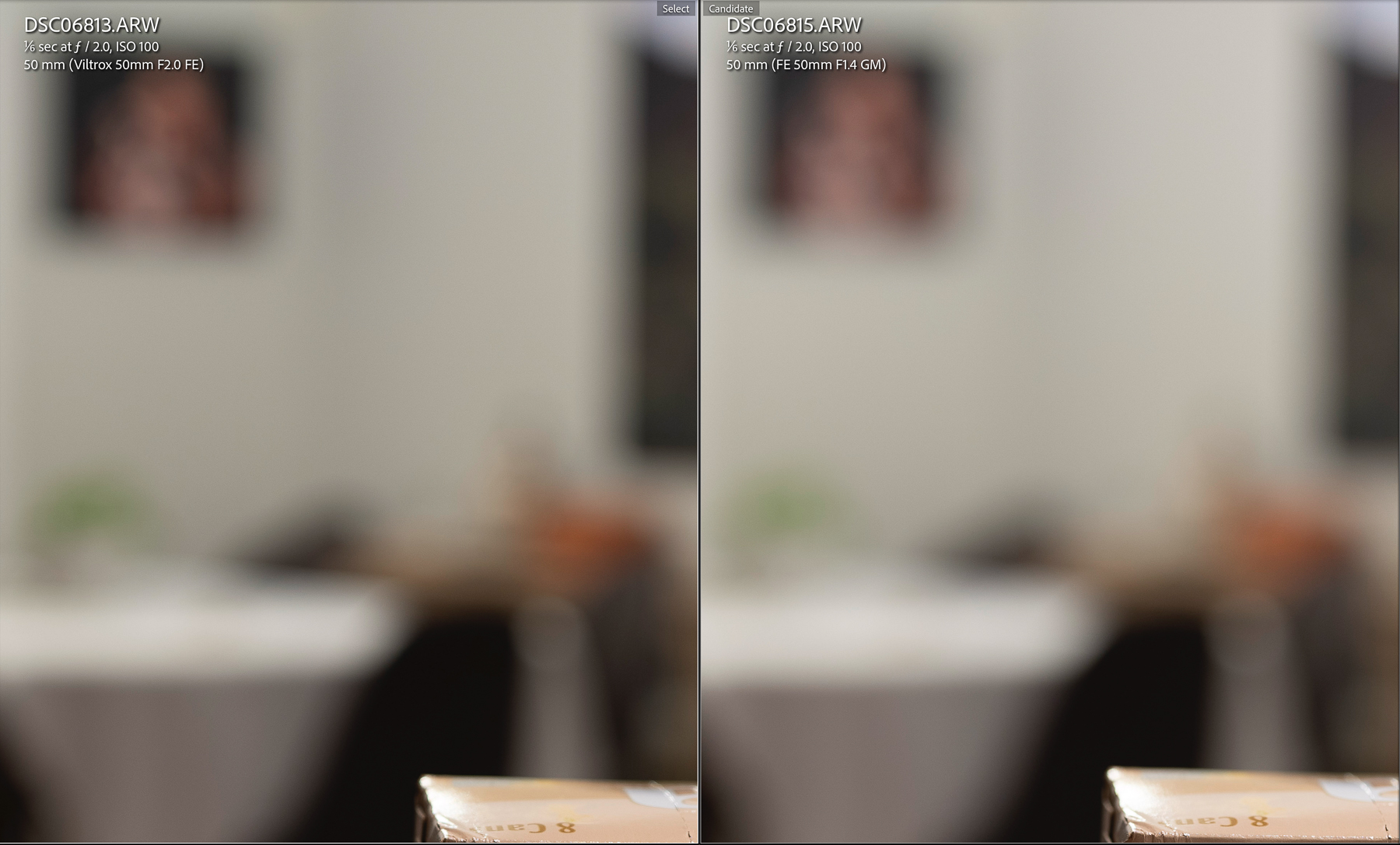
So the GM 50/1.4 got my attention, being closest to the Viltrox in lens speed. Sony's lens is a little tighter as we can see (49.75mm vs 49.3mm), and exposure is brighter, making conclusions a little more difficult. If you enjoy deep 3D instead of Zeiss 3D, the Viltrox is the pick here, and they have done a good job of it considering the price and narrow user expectations of it (sharpness!).
I tend to see Viltrox lenses as halfway between say, Thypoch and Sirui, and the mainstream lenses in terms of 3D inside the bokeh field - a happy compromise for some users. The high abstraction lenses use blur at such levels that all motifs are 'damaged' so you often lose all context; you see it here in the vertical lines that have imaged the door scalloping and wall detail. Sony really, really doesn't want you looking 'inside' the image. To the contrary, the Viltrox image bleeds less from motif edges and it lacks the wholesale low contrast smear of the Sony lens.
The loss of contrast also heavily degrades color tone differences inside the bokeh field, adding to the impetus to visually destroy the background. They have forsaken image depth and the spatial relationships between objects in the image, as part of the model they are using - you see the extra detail in the things sitting on the table/island in the foreground of the Viltrox image. The blur of the rapid-fade lenses consumes it all, and you lose all sense of shape, as the objects sit uneasily between how they look when in focus, and some random shapes - zombie objects.
Choices are good, and that is what I see here. It's a lot of work, so much appreciated.
Oct 11, 2025 at 11:03 PM
p.6 #17Viltrox 50mm 2.0 Air - Image Thread
As I post this one to illustrate 'structure retention' in bokeh, I wondered how the sample lenses here would capture this scene. There will be compositions that suit all or none of them, and a whole spectrum in-between. Very dependent on the comp. This one would be poorer if the background was significantly blurred, to my tastes.
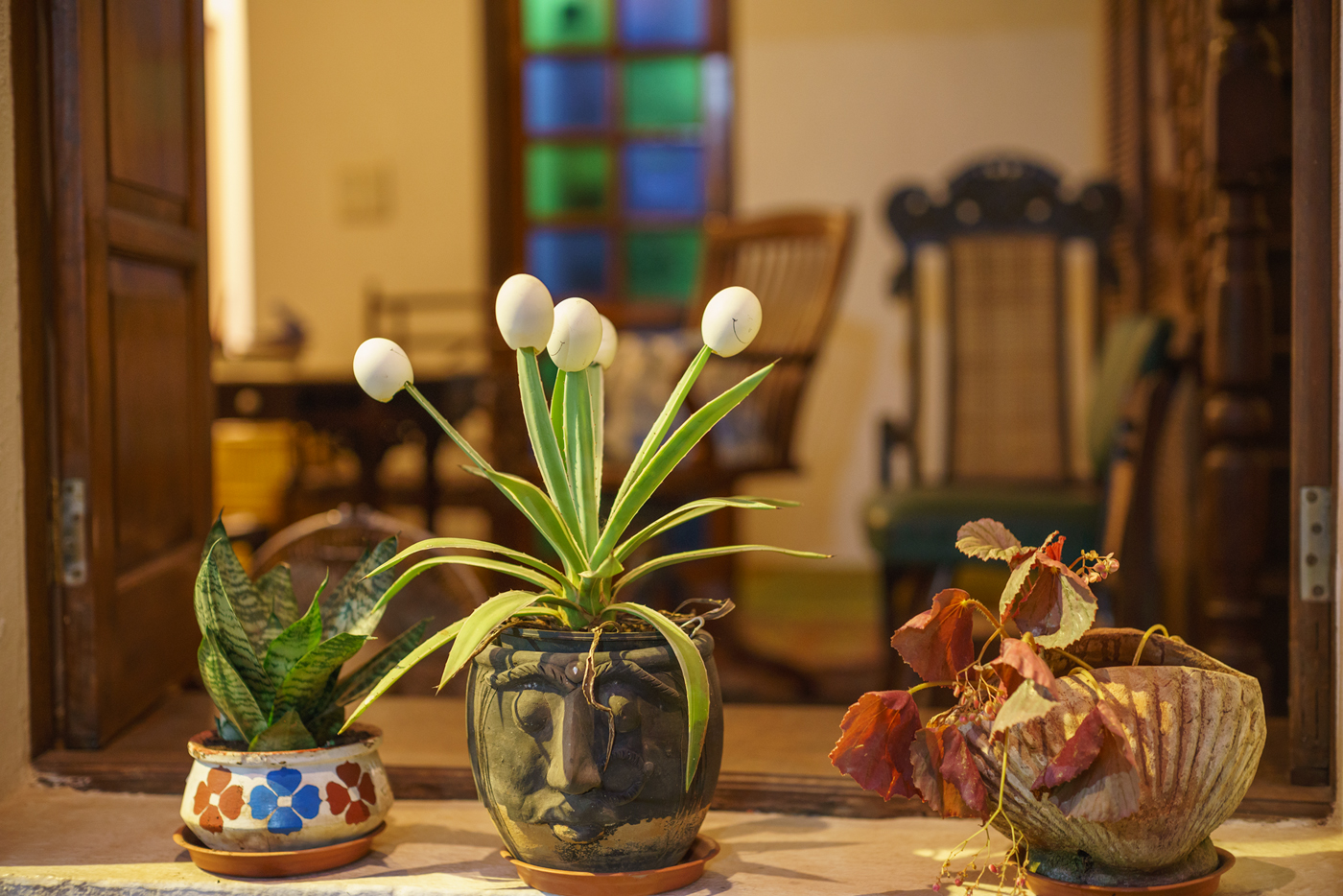
Thypoch Simera 50/1.4 - 1/15s, ISO 2000
Thypoch Simera 50/1.4 - 1/15s, ISO 2000
Oct 11, 2025 at 11:15 PM
p.6 #18Viltrox 50mm 2.0 Air - Image Thread
I bought the Air for lightweight set, and when I sell my 35GM, get the 50 1.2GM. That lens is magical.
Oct 11, 2025 at 11:47 PM
p.6 #19Viltrox 50mm 2.0 Air - Image Thread
philip_pj wrote:
So we see a graphic divergence of rendering even at the top end of lens design.
In the thread, well, most buyers want to see the dreamy and heavily abstracted bokeh in their f1.2 lenses as an entity in itself, and that is what both these mainstream f1.2 lenses deliver. My interests here are twofold: (i) to point to the very different onset of bokeh blur in the non-Viltrox lenses (as seen in the 'Leaf and Oud' closeups), engineered by a combination of rapid focus-fade and low contrast in the GM and CV faster lenses; and (ii) to raise the...Show more →
And again, much ado about nothing. Step down the "mainstream 1.2 lens" half a stop more than the Viltrox, and you'll get what you consider less "damaged" subjects. Remember: Choose the aperture according to the desired drop in sharpness.
Speaking of random "shapes and zombie lenses."
When I look at the treatment of the license plate, I can't help but wonder which image one shouldn't "look into."
GM
 1.2 GM @2.0a by Werner Wurst, on Flickr
Air
 2.0 Air @2.0a by Werner Wurst, on Flickr
So we see a graphic divergence of rendering even at the top end of lens design.
In the thread, well, most buyers want to see the dreamy and heavily abstracted bokeh in their f1.2 lenses as an entity in itself, and that is what both these mainstream f1.2 lenses deliver. My interests here are twofold: (i) to point to the very different onset of bokeh blur in the non-Viltrox lenses (as seen in the 'Leaf and Oud' closeups), engineered by a combination of rapid focus-fade and low contrast in the GM and CV faster lenses; and (ii) to raise the...Show more →
And again, much ado about nothing. Step down the "mainstream 1.2 lens" half a stop more than the Viltrox, and you'll get what you consider less "damaged" subjects. Remember: Choose the aperture according to the desired drop in sharpness.
Speaking of random "shapes and zombie lenses."
When I look at the treatment of the license plate, I can't help but wonder which image one shouldn't "look into."
GM
1.2 GM @2.0a by Werner Wurst, on FlickrAir
2.0 Air @2.0a by Werner Wurst, on FlickrOct 12, 2025 at 03:50 AM
p.6 #20Viltrox 50mm 2.0 Air - Image Thread
philip_pj wrote:
As I post this one to illustrate 'structure retention' in bokeh, I wondered how the sample lenses here would capture this scene. There will be compositions that suit all or none of them, and a whole spectrum in-between. Very dependent on the comp. This one would be poorer if the background was significantly blurred, to my tastes.
Here's an example of a background that's still clearly visible (an old positive scan of an analog shot with the Sonnar 4/150), but (unlike the example you posted) not distracting. One reason for this is that the bokeh does not have a more pronounced contrast than the main subject, which unfortunately seems to be the case in your example. Since the color contrast in the bokeh in your example is just as high as that of the focused main subject, the overall effect of the image is further worsened in the picture shown, as the result is simply a wild, overlapping jumble of many individual subjects. This causes the eye to constantly scan the entire scene and fail to focus on the unfortunately rather jagged skin subject. In other words: This type and intensity of bokeh simply doesn't suit the photographed arrangement in my opinion, unless, of course, you prefer not to look at images in their entirety, but rather to immerse yourself in the bokeh and become intoxicated by it, because it's having exactly the degree of blur and contrast that suits you personally.
 A3 by Werner Wurst, on Flickr
Edited on Oct 12, 2025 at 04:02 AM · View previous versions
As I post this one to illustrate 'structure retention' in bokeh, I wondered how the sample lenses here would capture this scene. There will be compositions that suit all or none of them, and a whole spectrum in-between. Very dependent on the comp. This one would be poorer if the background was significantly blurred, to my tastes.
Here's an example of a background that's still clearly visible (an old positive scan of an analog shot with the Sonnar 4/150), but (unlike the example you posted) not distracting. One reason for this is that the bokeh does not have a more pronounced contrast than the main subject, which unfortunately seems to be the case in your example. Since the color contrast in the bokeh in your example is just as high as that of the focused main subject, the overall effect of the image is further worsened in the picture shown, as the result is simply a wild, overlapping jumble of many individual subjects. This causes the eye to constantly scan the entire scene and fail to focus on the unfortunately rather jagged skin subject. In other words: This type and intensity of bokeh simply doesn't suit the photographed arrangement in my opinion, unless, of course, you prefer not to look at images in their entirety, but rather to immerse yourself in the bokeh and become intoxicated by it, because it's having exactly the degree of blur and contrast that suits you personally.
A3 by Werner Wurst, on FlickrEdited on Oct 12, 2025 at 04:02 AM · View previous versions
Oct 12, 2025 at 03:52 AM