fredmiranda.com
Login

Moderated by: Fred Miranda
  New fredmiranda.com Mobile Site
  New Feature: SMS Notification alert
  New Feature: Buy & Sell Watchlist
  

FM Forums | Sony Forum | Join Upload & Sell
       2       3              6       7       end
  

Thypoch Simera 75mm f/1.4 ASPH. Review


Fred Miranda
Offline
Admin
Upload & Sell: On
p.1 #1 · Thypoch Simera 75mm f/1.4 ASPH. Review


Thypoch Simera 75mm f/1.4 ASPH. Review

Order the Thypoch Simera 75mm f/1.4 ASPH. lens:

Thypoch Store (Use promo code: FREDMIRANDA for a 5% discount at checkout)

B&H Photo | Adorama

___

Review Quick Links:

  1. Initial Impressions
  2. Resolution and Contrast: Thypoch Simera 75mm f/1.4 ASPH (60MP)
  3. Resolution and Contrast at Infinity distance: Simera 75mm f/1.4 ASPH. adapted to a 42MP Sony sensor
  4. Resolution and Contrast: Simera 75mm f/1.4 ASPH. vs Voigtlander 75mm f/1.8 Heliar Classic (60MP)
  5. Resolution and Contrast: Simera 75mm f/1.4 ASPH. vs Voigtlander 75mm f/1.5 Nokton (60MP)
  6. Distortion
  7. Sunstar Rendering
  8. Field Curvature
  9. Minimal Focus Distance performance and Focus Shift
  10. Rendering compared to Voigtlander 75mm f/1.5 Nokton
  11. Optical Vignetting and Specular Highlights shape
  12. Chromatic Aberration (CA)

  13. Final Thoughts
  14. Samples 1
  15. Samples 2
  16. Samples 3


Back to Quick Links

Initial impressions of the Thypoch Simera 75mm f/1.4 ASPH. lens:

The Simera 75mm f/1.4 ASPH. is the latest addition to Thypoch’s Simera lineup, joining other lenses in the series like the Simera 28mm, 35mm, and 50mm f/1.4 ASPH. models.

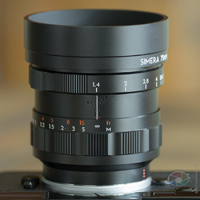
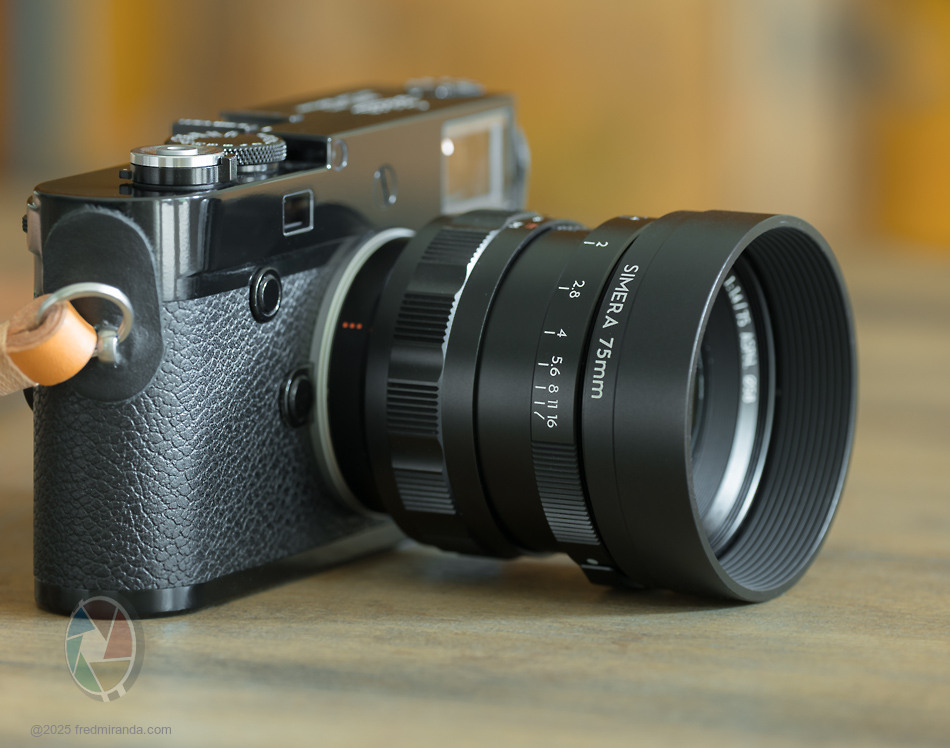
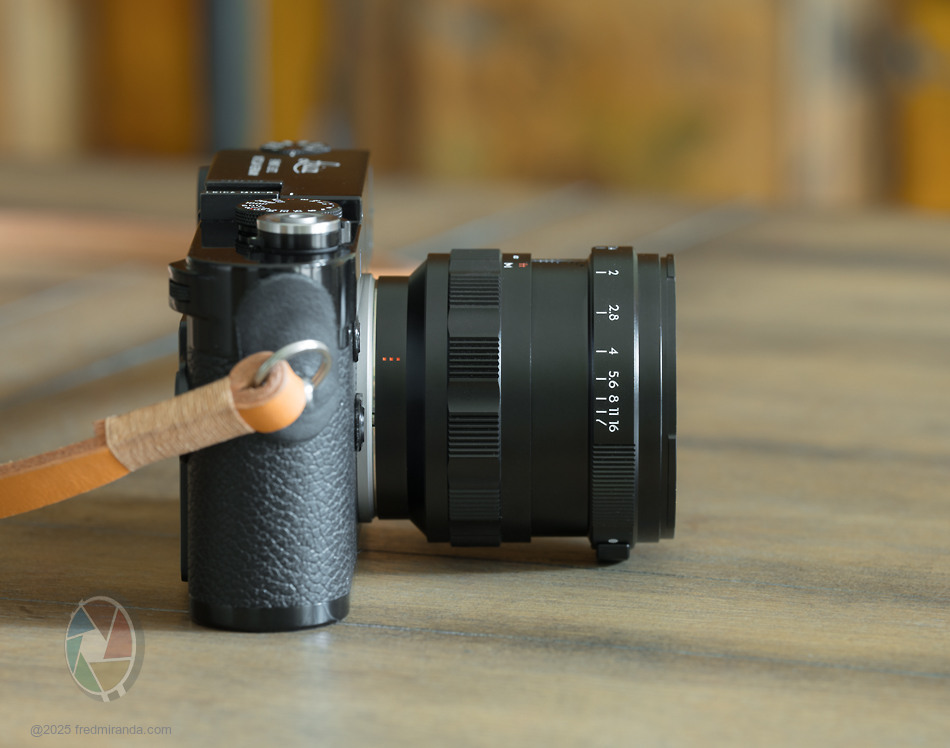
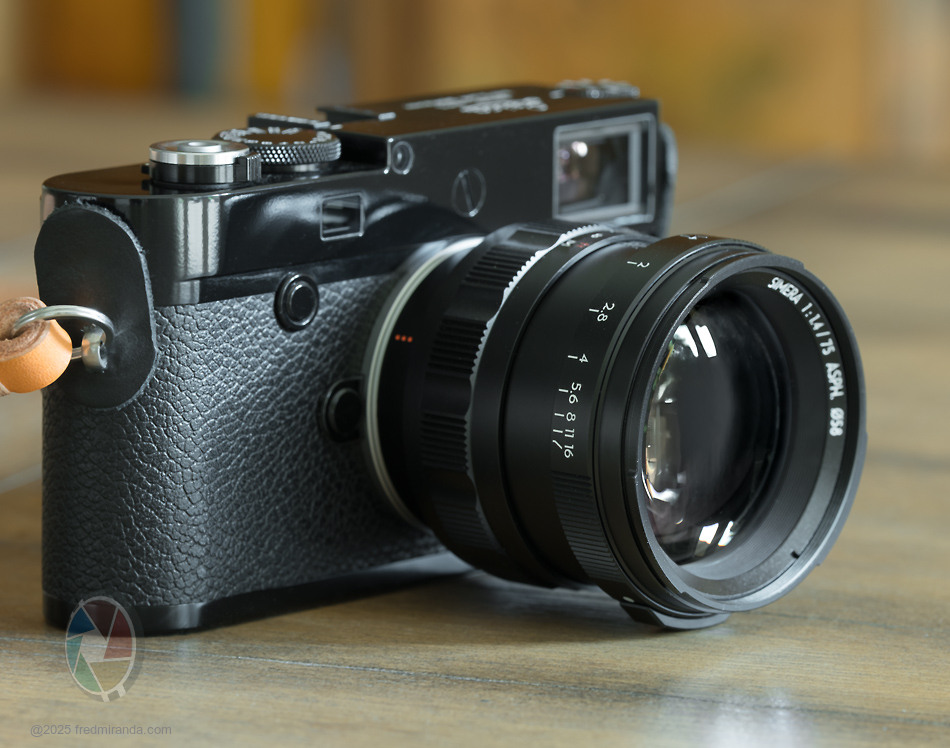
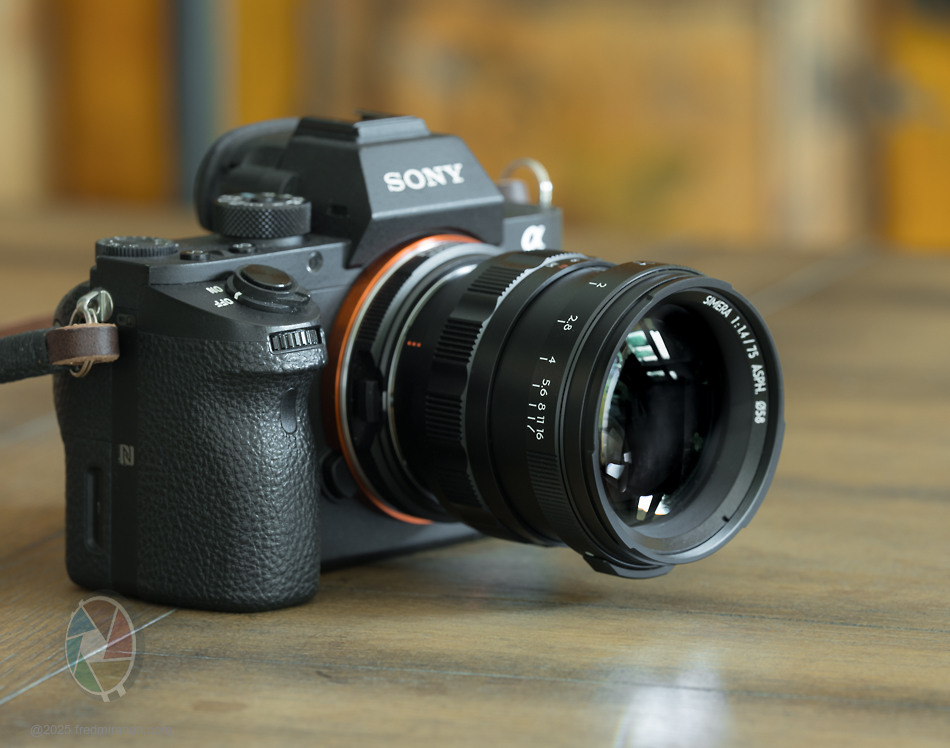
For a fast telephoto lens, the Simera 75mm f/1.4 is compact and lightweight, weighing 378 grams without the supplied metal hood. Its portability makes it a practical choice for hiking, landscapes, and could also be a valuable tool for wedding photographers. It feels well-balanced on the Leica M10-R, and without the hood, it barely intrudes on the 75mm framelines at infinity. At the minimum focusing distance, it slightly covers the lower right corner of the frame, which is typical for a fast 75mm f/1.4 lens.

Available in two aluminum finishes, Black and Silver, I will be reviewing the Black version. Unlike previous Simera lenses that accepted 49mm filters, this lens features a 58mm filter diameter and offers a minimum focusing distance of 0.6m for Live View focusing.


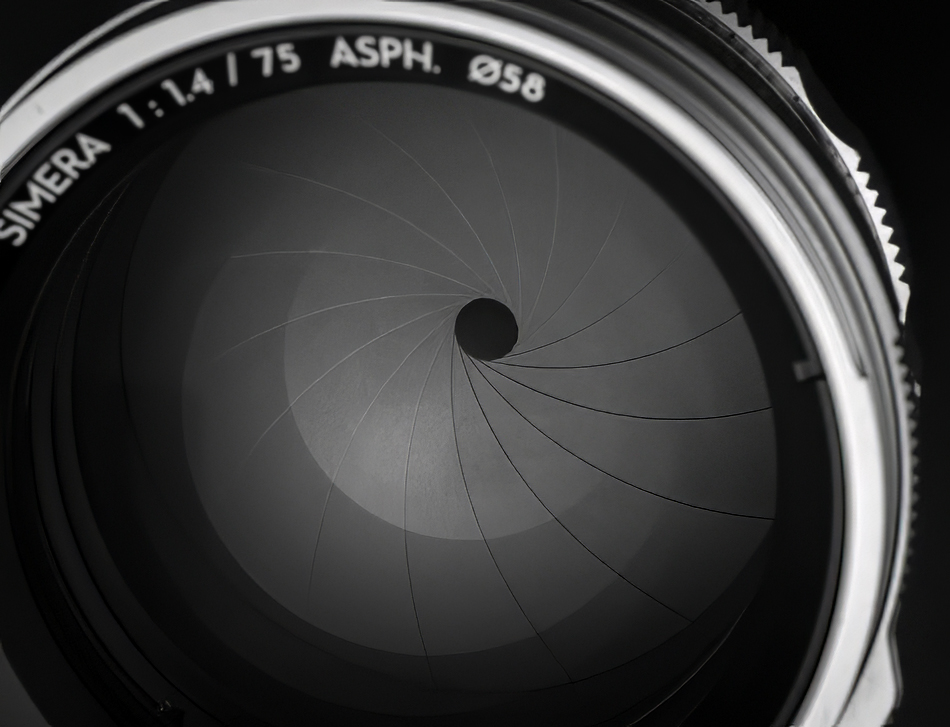
The Simera features 16 aperture blades, creating 16-point sunstars. This new aperture mechanism maintains a circular opening even when stopped down, which significantly enhances the lens’s rendering at smaller apertures. As a result, you can expect smooth, round specular highlights when shooting with the Simera at various aperture settings.


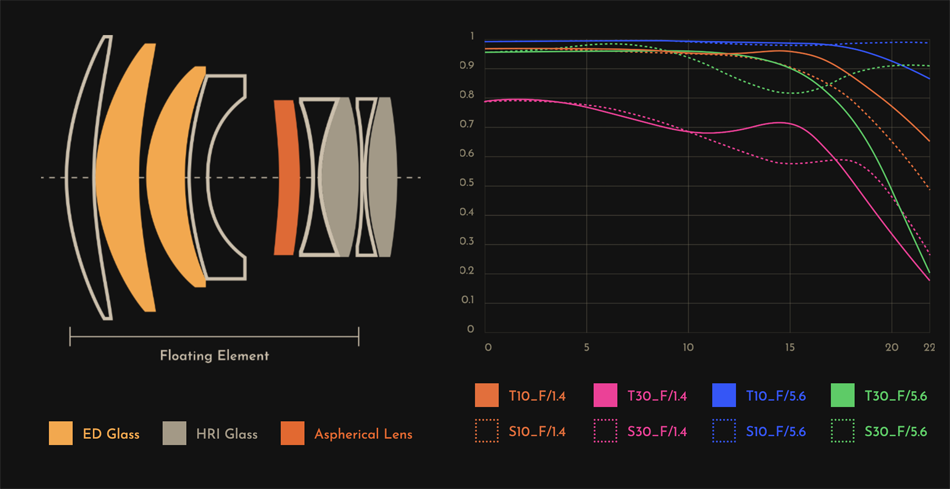
The Simera 75mm f/1.4 features an optical design of 9 elements in 8 groups, including two ED elements and one aspherical element. With its floating group, the lens is designed to deliver optimal performance across the entire focusing range, from close distances to infinity.


The focusing ring of the Simera lens rotates smoothly with just the right amount of resistance, making it very easy to focus with accuracty. Unlike the previous Simera lenses which feature internal focusing, the 75/1.4's barrel extends when focusing which is typical of telephoto lenses.

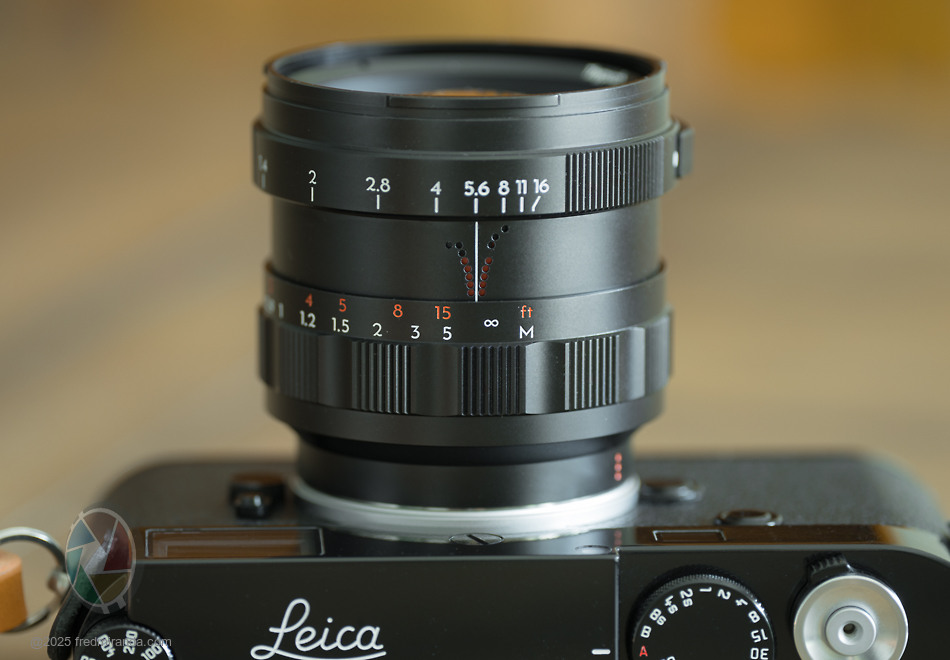
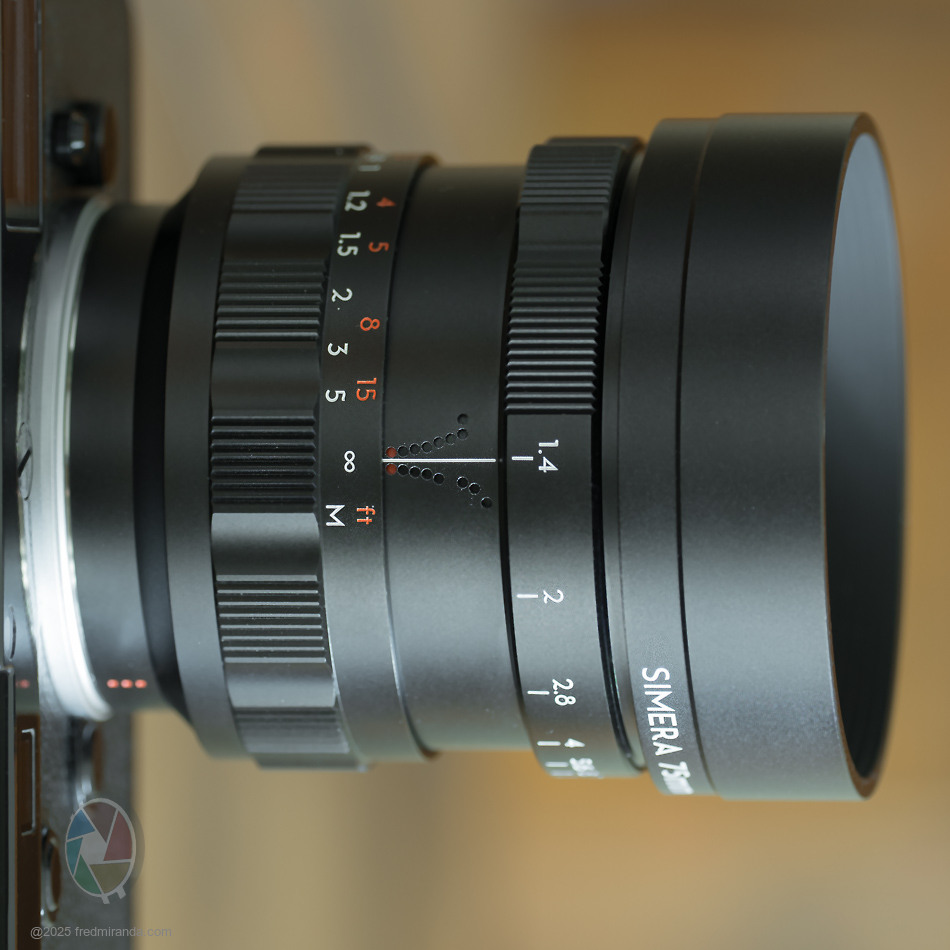
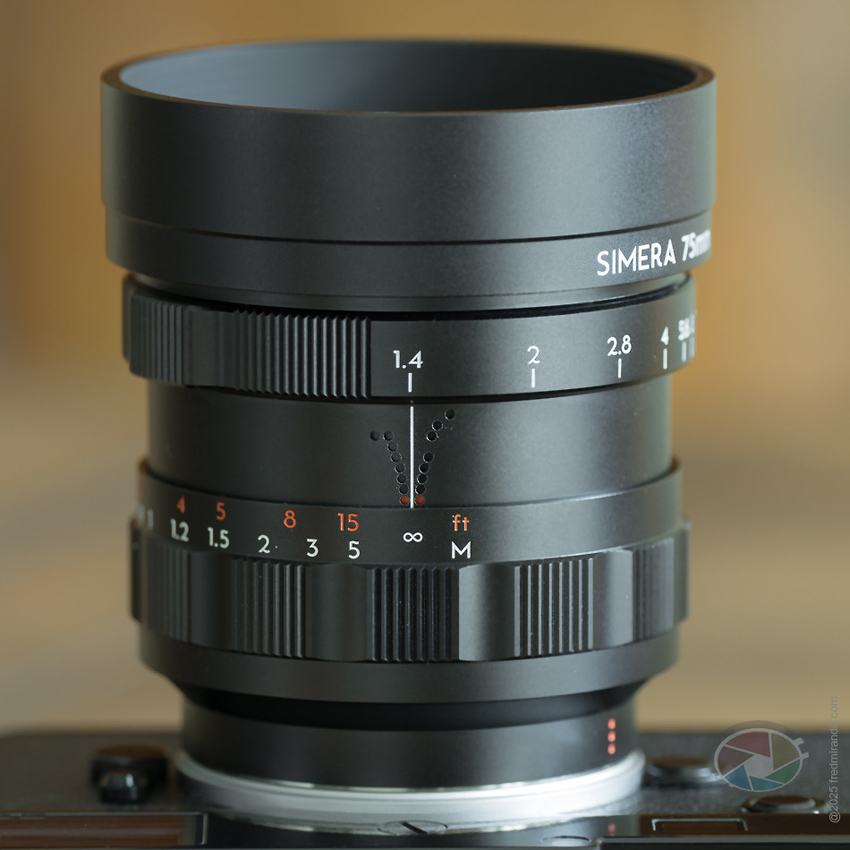
The aperture ring primarily features 1/4 stop increments, which is quite unusual for an M lens. Yes, you read that correctly. For example, the lens includes click stops for f/1.4, f/1.6, f/1.8, f/2, f/2.2, f/2.5, f/2.8, and so on. As you move from larger to smaller apertures, the numbers on the barrel become increasingly closer together.


I find this less appealing than lenses with evenly spaced markings, but at least Thypoch kept the design consistent with other lenses in the Simera series. Notably, the 1/4 stop increments extend up to f/4, then shift to 1/2 stops from f/4 to f/5.6, and finally switch to full stops from f/5.6 to f/16. While this variation is not ideal, it may be due to the barrel design and its mechanical depth-of-field indicator.


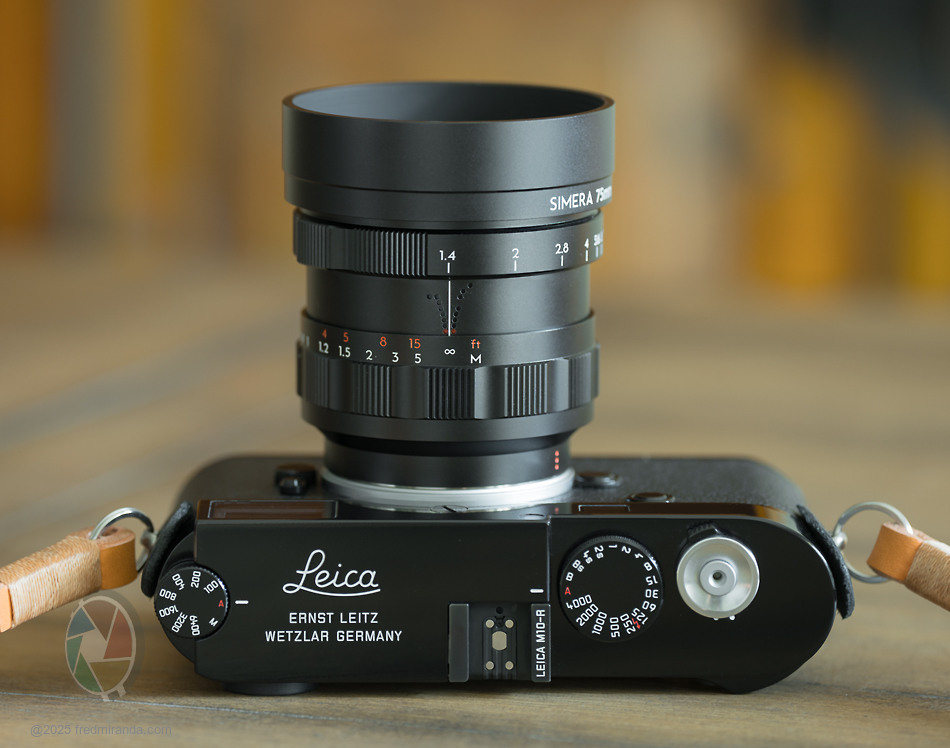
The Simera 75mm f/1.4 features a unique depth-of-field indicator with small rounded vents on the barrel. As you adjust the aperture, these vents change color from silver or black, depending on the lens finish, to red, clearly marking the in-focus area. The rounded design resembles tiny ball-shaped openings, adding a distinctive touch to the lens. This fully mechanical system offers a fresh take on traditional depth-of-field scales, making zone focusing easier. However, depth-of-field indicators are generally more practical on wider lenses like 28mm or 35mm, which naturally offer greater depth of field.

Another standout feature is the ability to de-click the aperture with a simple switch on the aperture ring. This allows for smooth and silent aperture adjustments, making the lens especially useful for videography.


The focus throw on the Simera 75mm f/1.4 is relatively short and typical for a telephoto lens, measuring around 90 degrees from 0.7m to infinity, which is standard for modern M-lenses. However, it extends to 120 degrees from its minimum focusing distance of 0.6m to infinity. This range allows for both fast and precise focusing, though achieving optimal focus requires the lens to be properly calibrated to the rangefinder.

Focusing all the way down to 0.6m enhances the lens’s close-up capabilities when using Live View. The lens also includes a tactile alert that signals when the rangefinder disengages after focusing beyond 0.7m, indicating that Live View will be required for focusing at greater distances. It’s great to see newer lenses incorporating this feature. However, be careful when focusing at close distances, as the focusing ring is very sensitive to even the slightest rotation.

A compact, bayonet-style metal hood is included, but it takes a bit of extra force to attach to the lens.


I personally prefer lenses with a longer focus throw for added precision, as even slight adjustments on the Simera can easily result in the subject going out of focus. While this design allows for fast focusing, it necessitates extra care and adjustment tolerance between the camera and rangefinder. Fortunately, my copy is well-centered and properly aligned with my Leica rangefinder cameras.

Next, I will also test the Simera 75mm f/1.4 ASPH. adapted to a Sony mirrorless camera to evaluate its performance in a different system.


The Thypoth Simera 75mm f/1.4 ASPH. offers an impressive set of features typically found in more expensive lenses. It includes a floating element system for consistent image quality from close range to infinity, close-focus capabilities down to 0.6m with Live View, and a convenient aperture de-clicking switch for smooth and silent adjustments. With 16 aperture blades for smooth, rounded bokeh, all packed into a compact and lightweight design, this lens delivers exceptional versatility at an affordable price.


Thypoch Simera 75mm f/1.4 ASPH. Specifications:

  1. Focal Length 75mm
  2. Maximum Aperture: f/1.4
  3. Minimum Aperture: f/16
  4. Lens Mount: Leica M
  5. Angle of View: 33°
  6. Minimum Focus Distance: 0.6m (0.7m rangefinder coupled)
  7. Optical Design: 9 Elements in 8 Groups
  8. Special glass: 2 ED and 1 Aspherical element
  9. Diaphragm Blades: 16 (rounded)
  10. Filter Size: 58 mm
  11. Length: 64 mm
  12. Weight 378g without hood (measured)
  13. Metal hood included (bayonette style)
  14. Finishes: Aluminum anodized Black, Silver


Mar 13, 2025 at 10:58 AM
Fred Miranda
Offline
Admin
Upload & Sell: On
p.1 #2 · Thypoch Simera 75mm f/1.4 ASPH. Review


Back to Quick Links

Resolution and Contrast: Thypoch Simera 75mm f/1.4 ASPH (60MP)

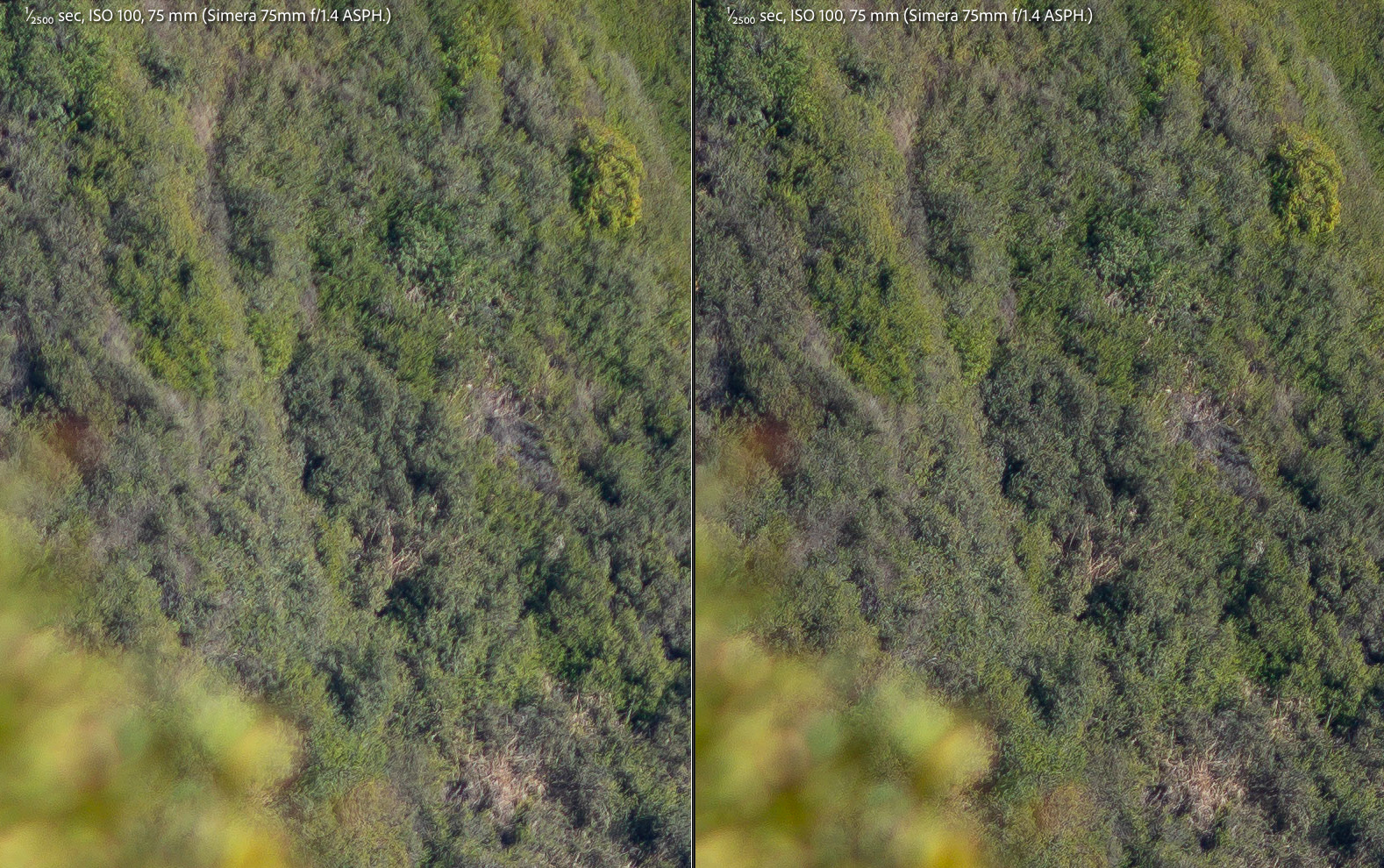
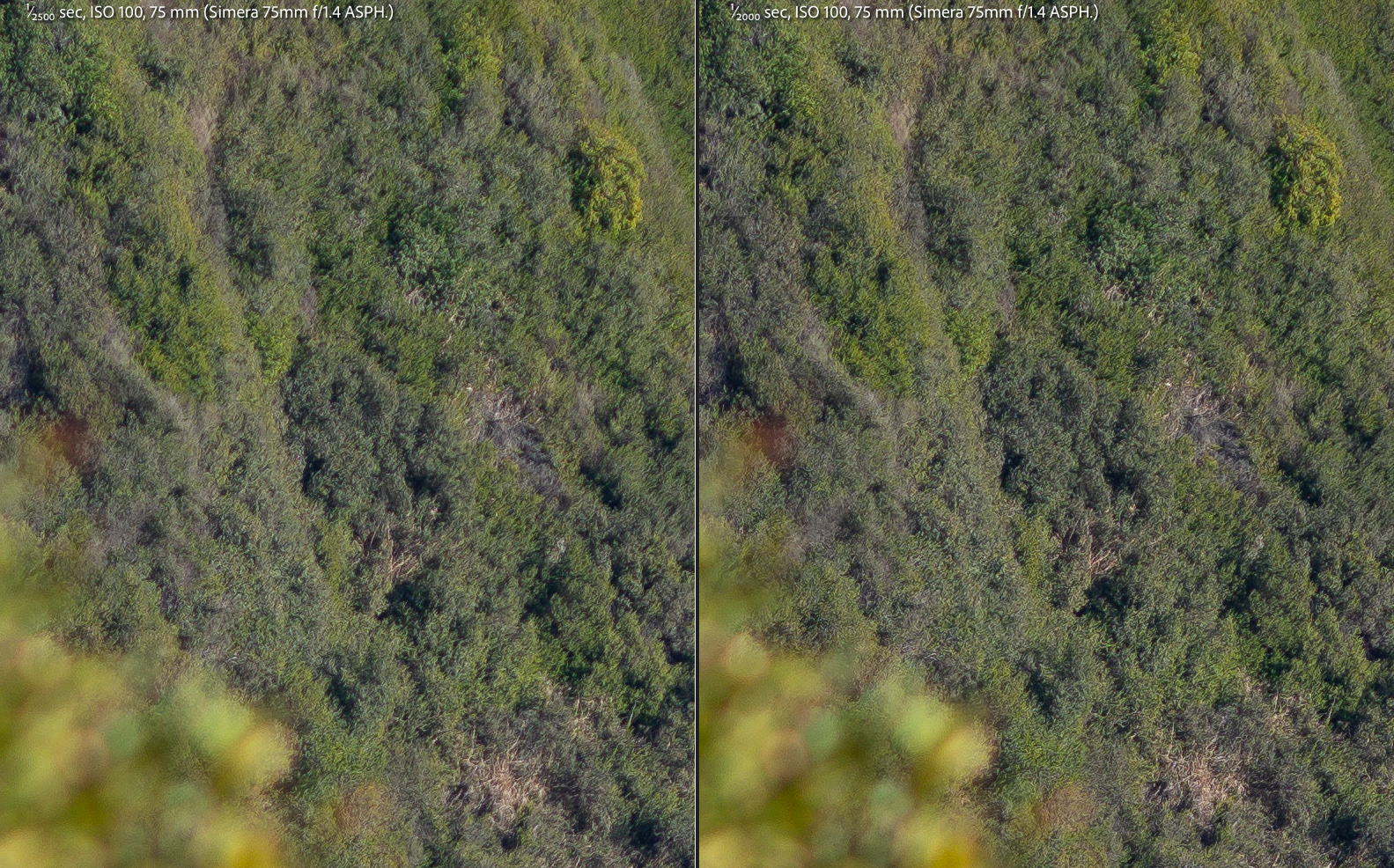
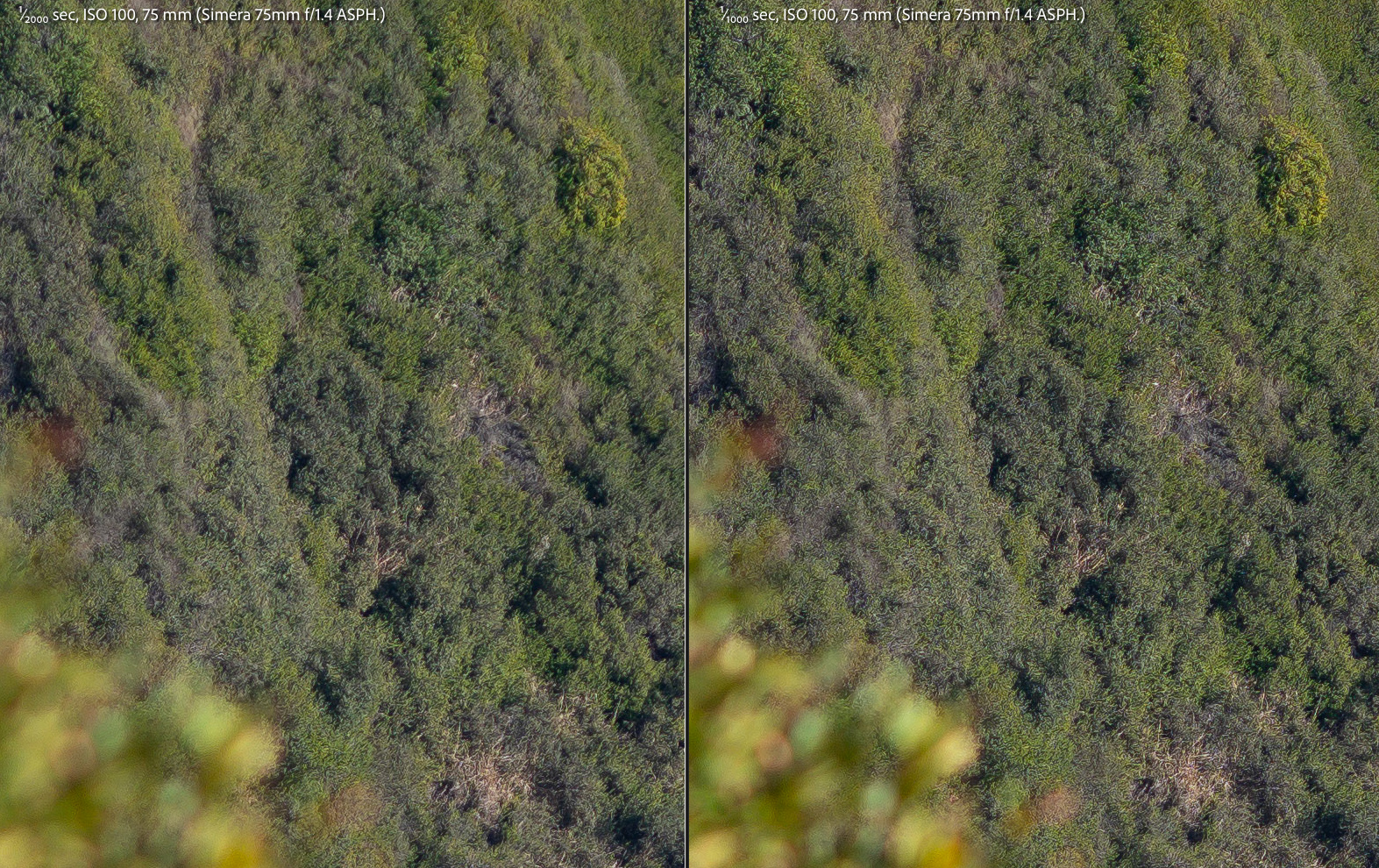
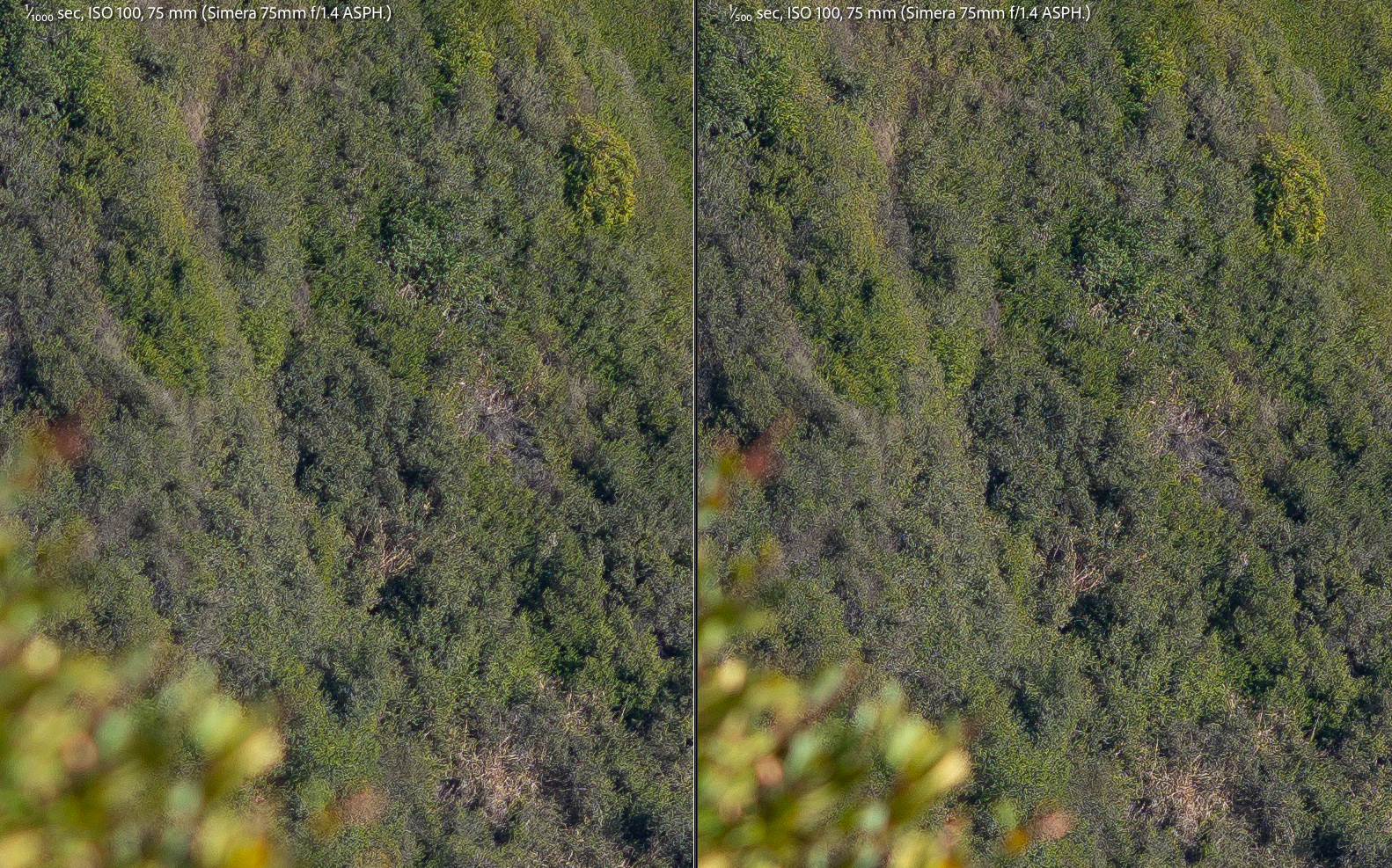
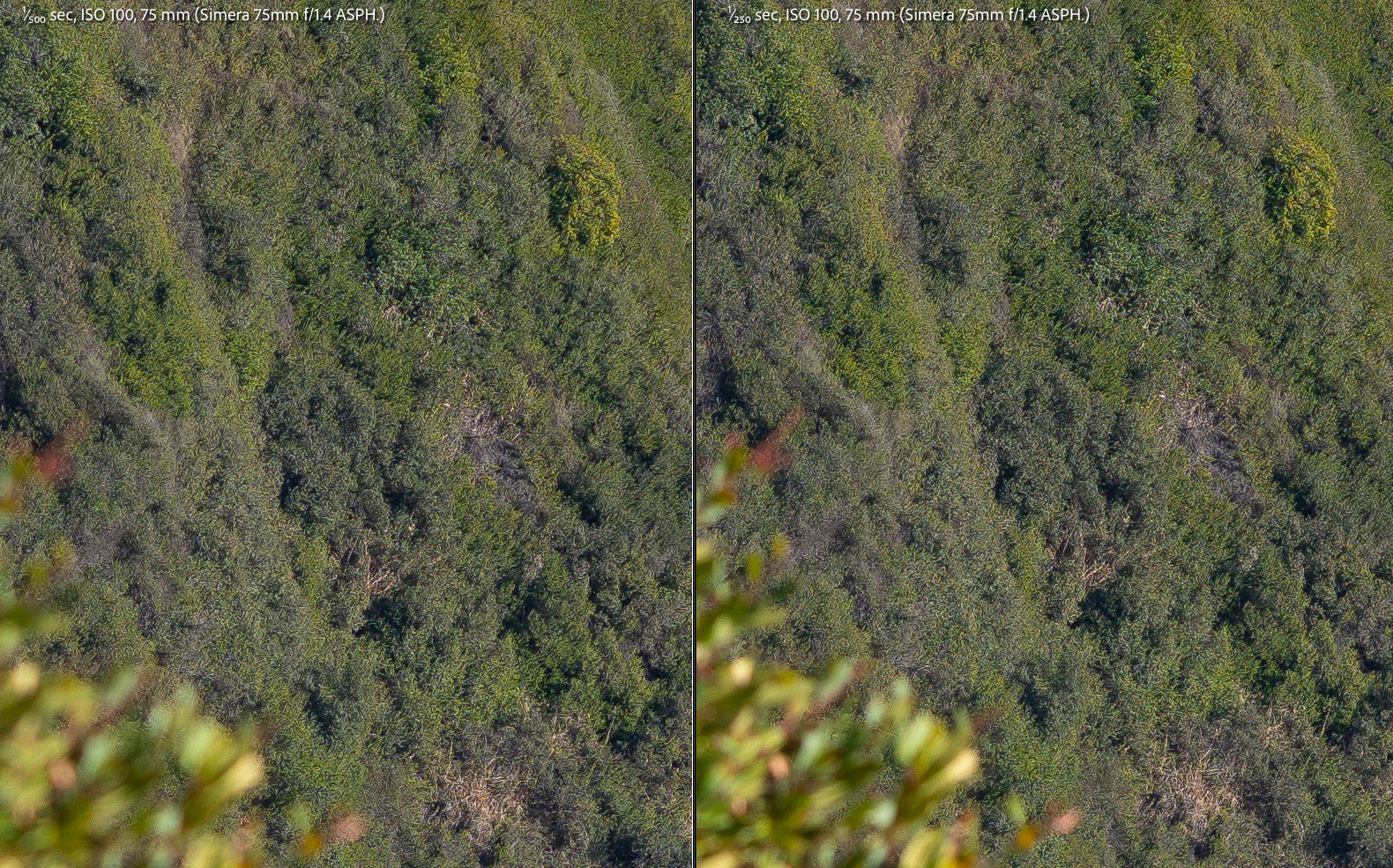
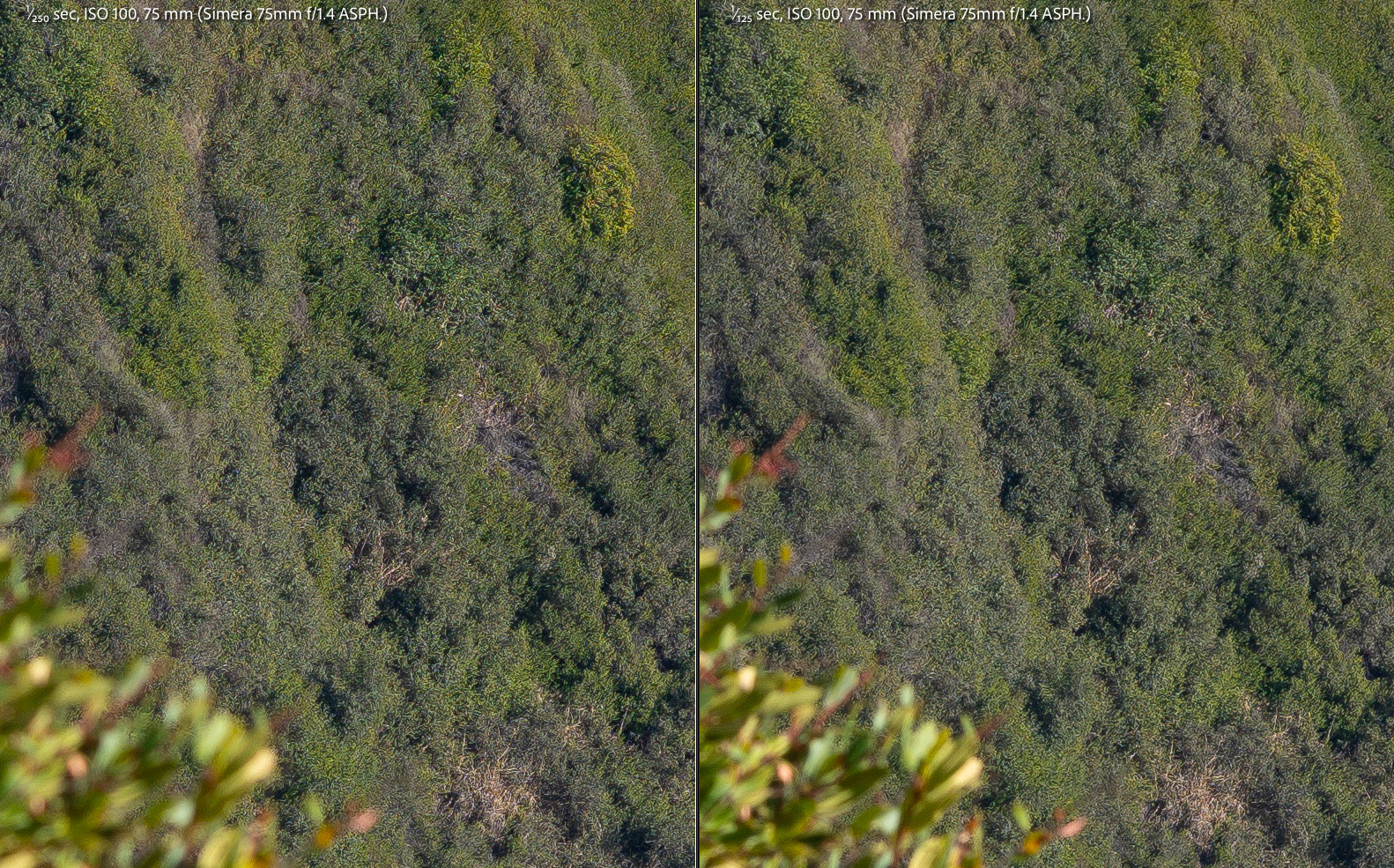
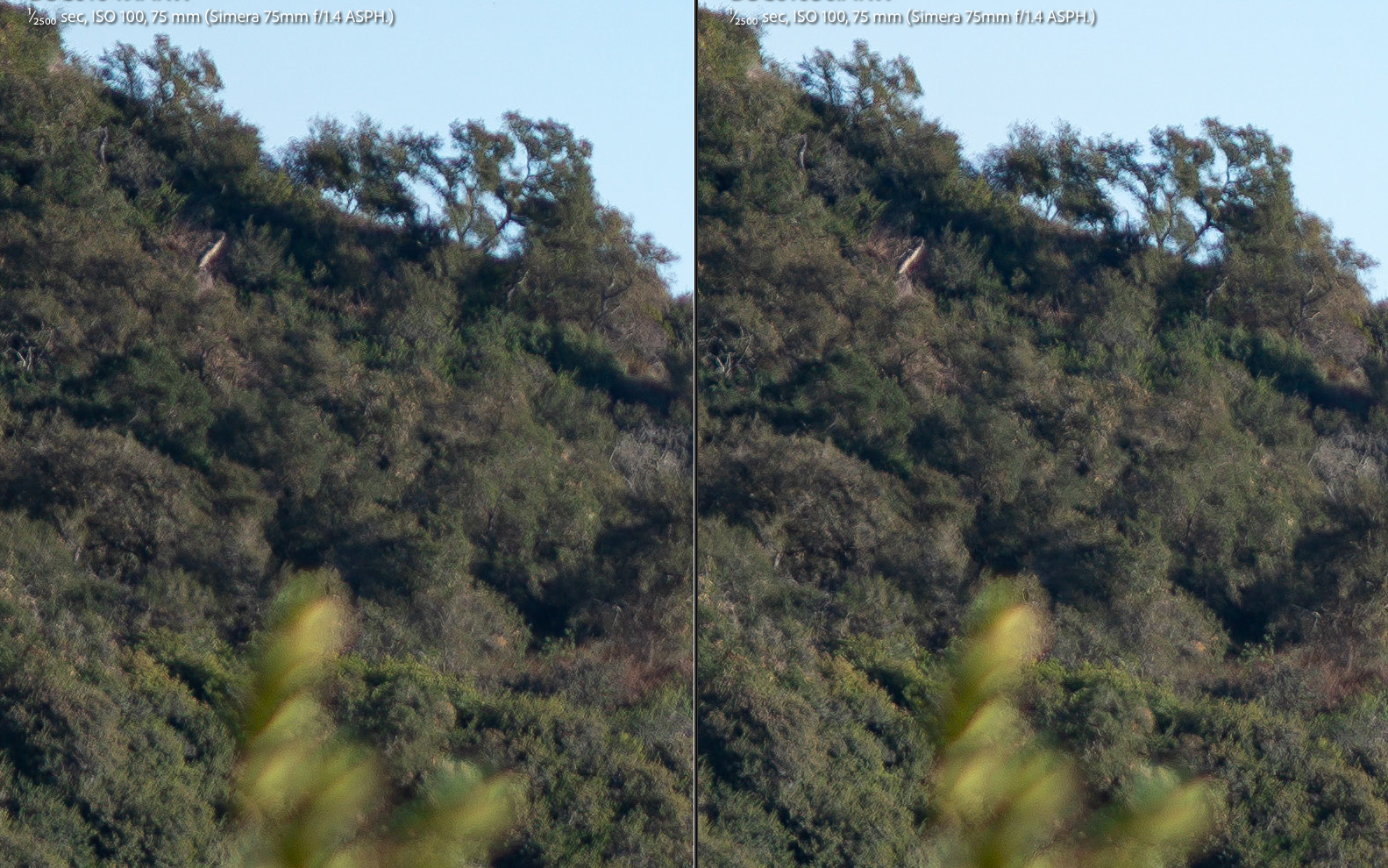
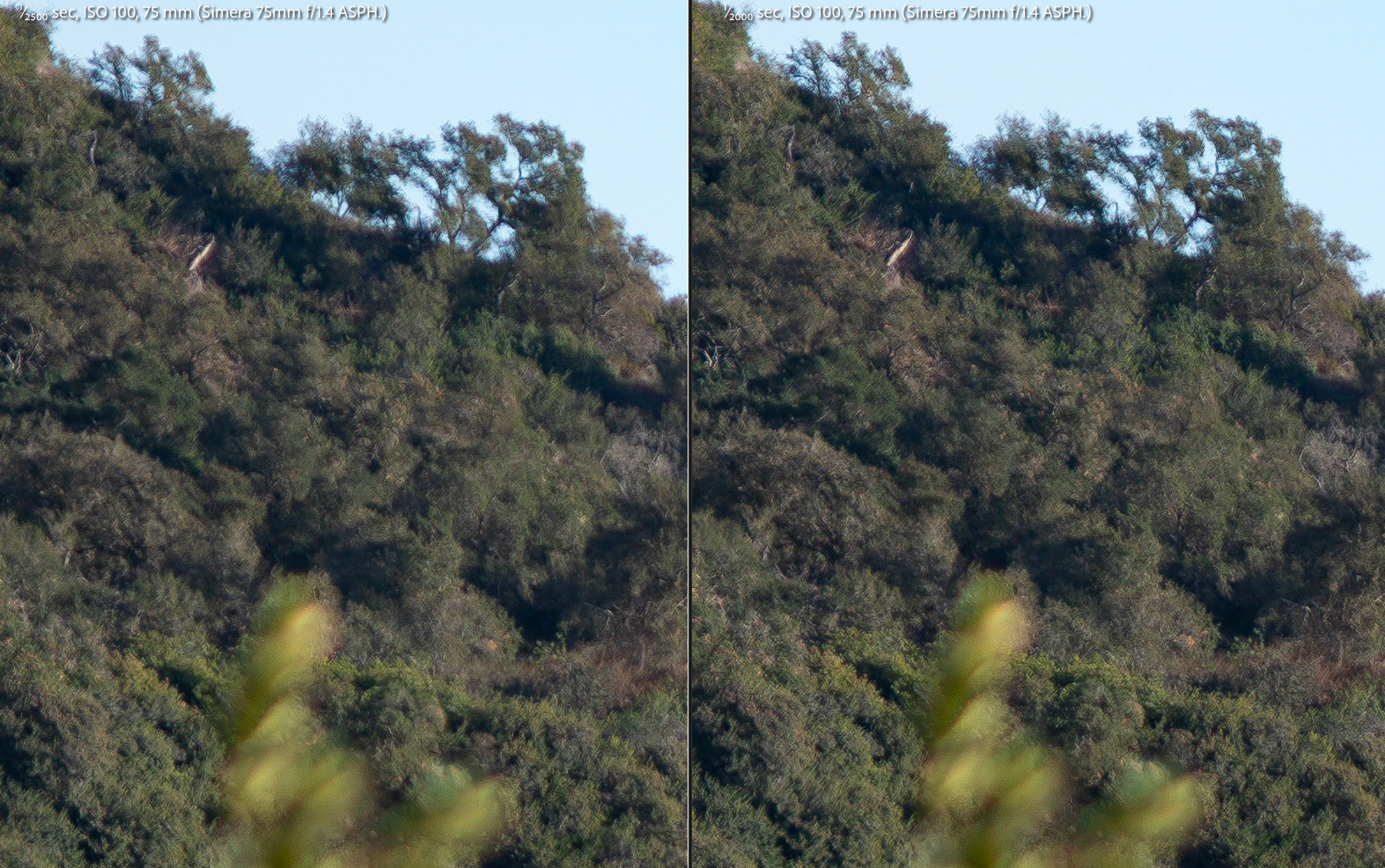
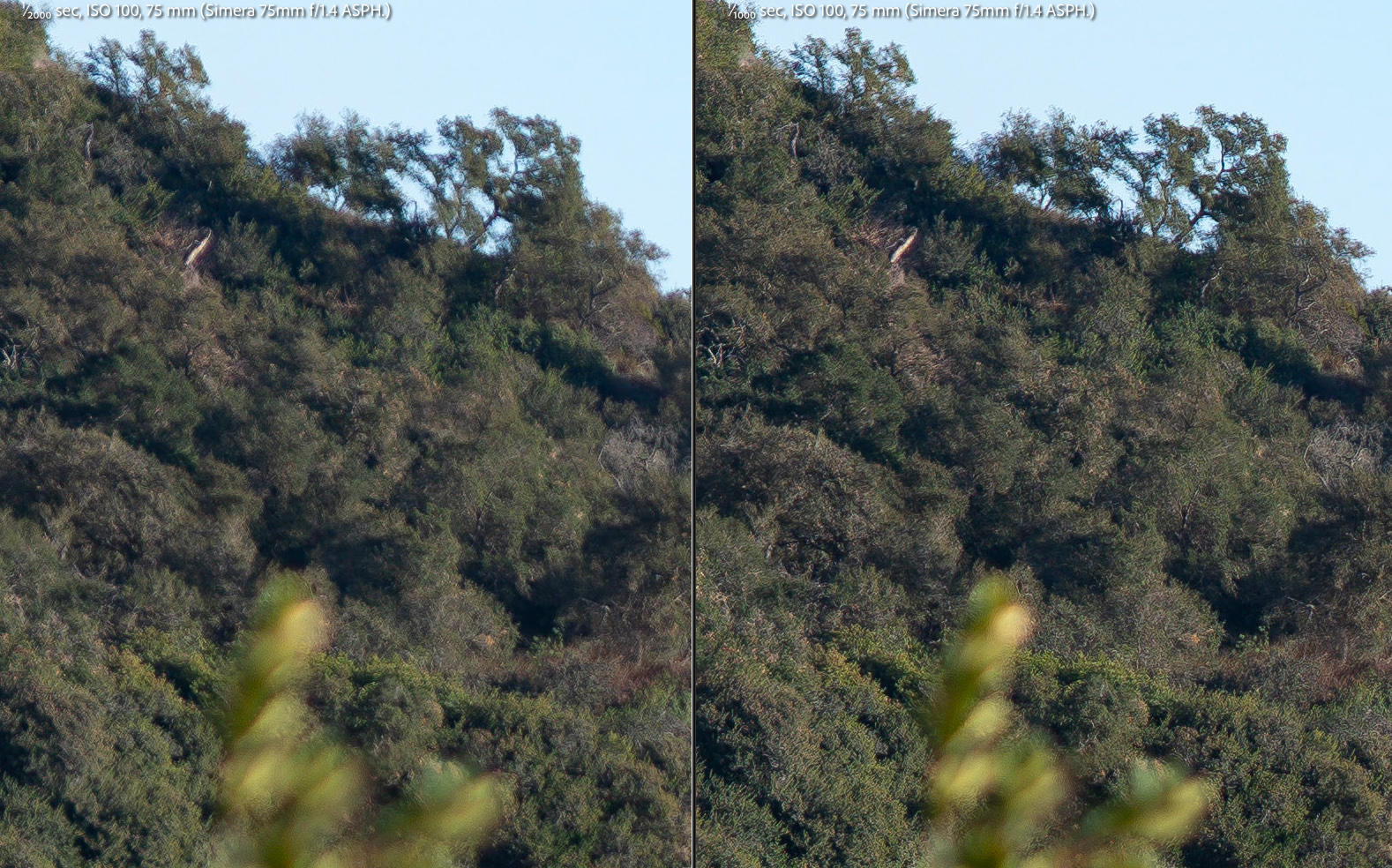
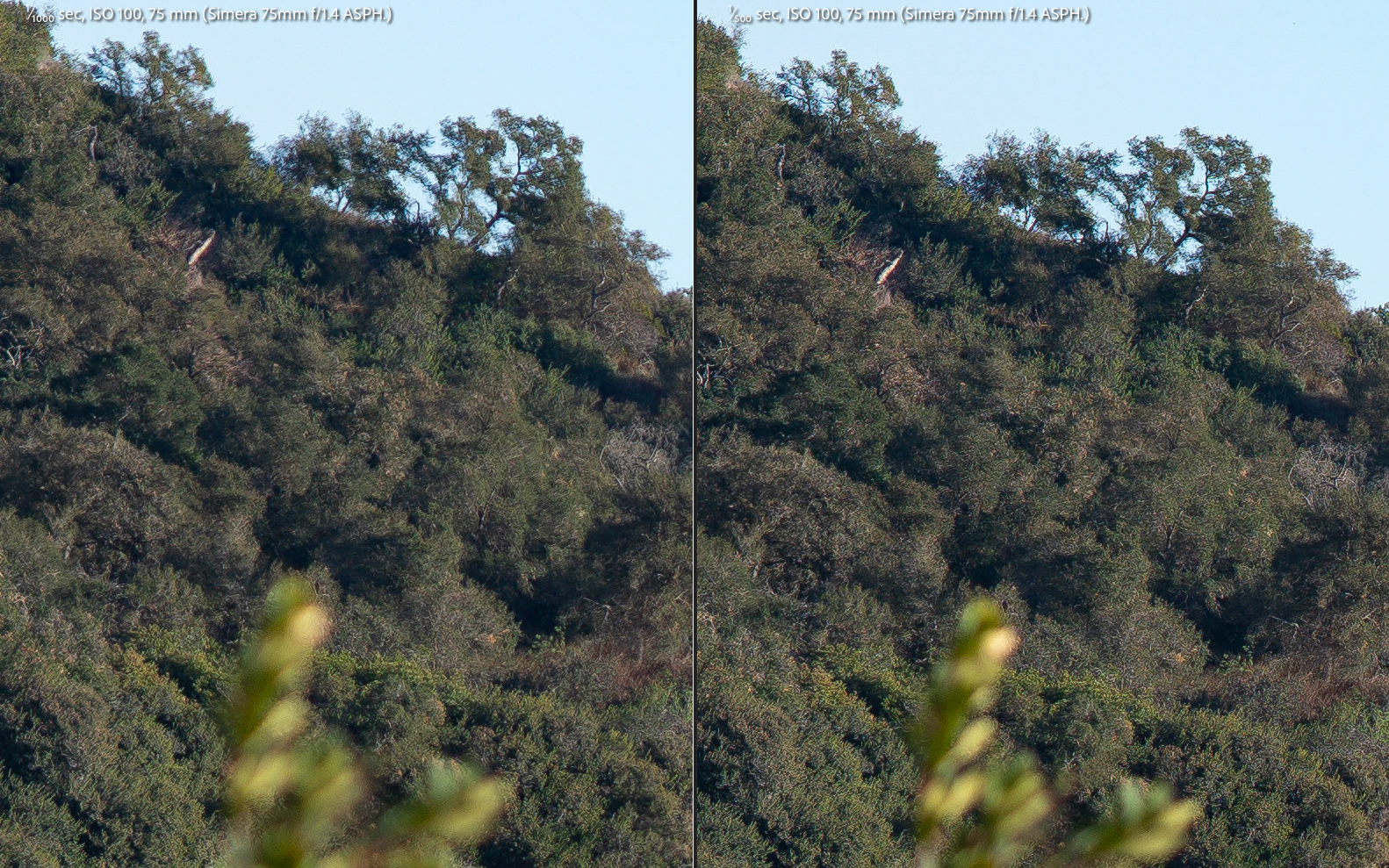
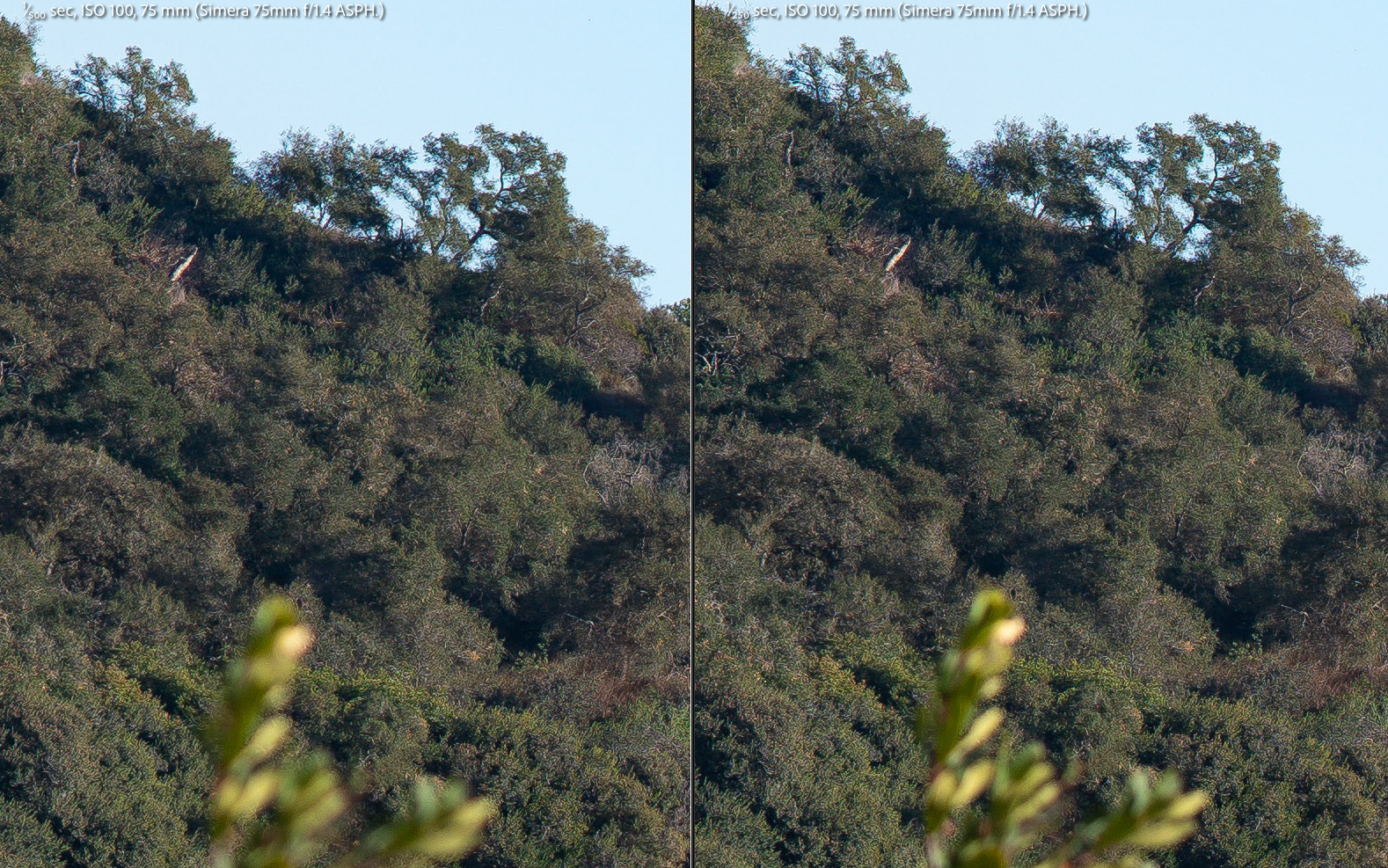
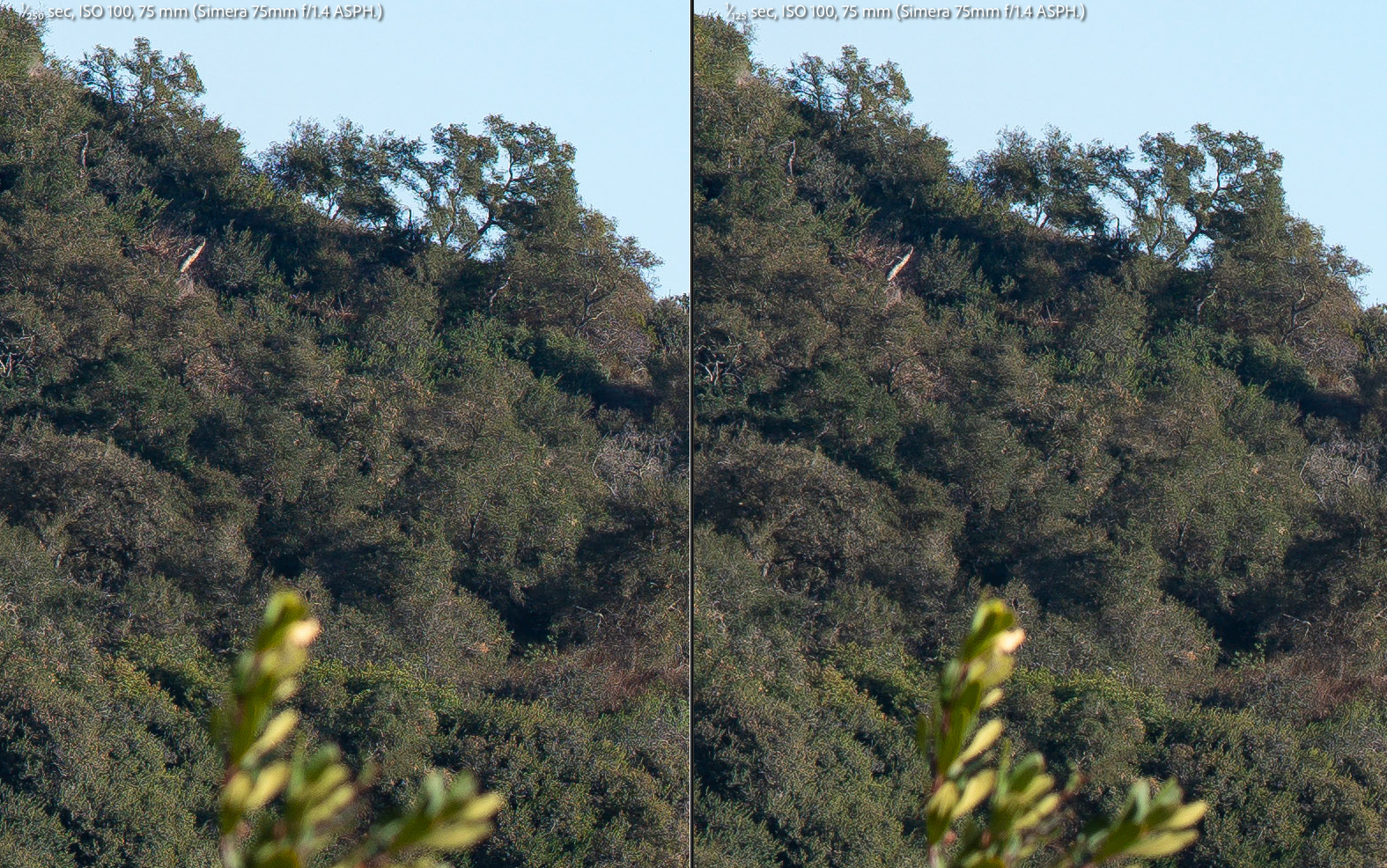
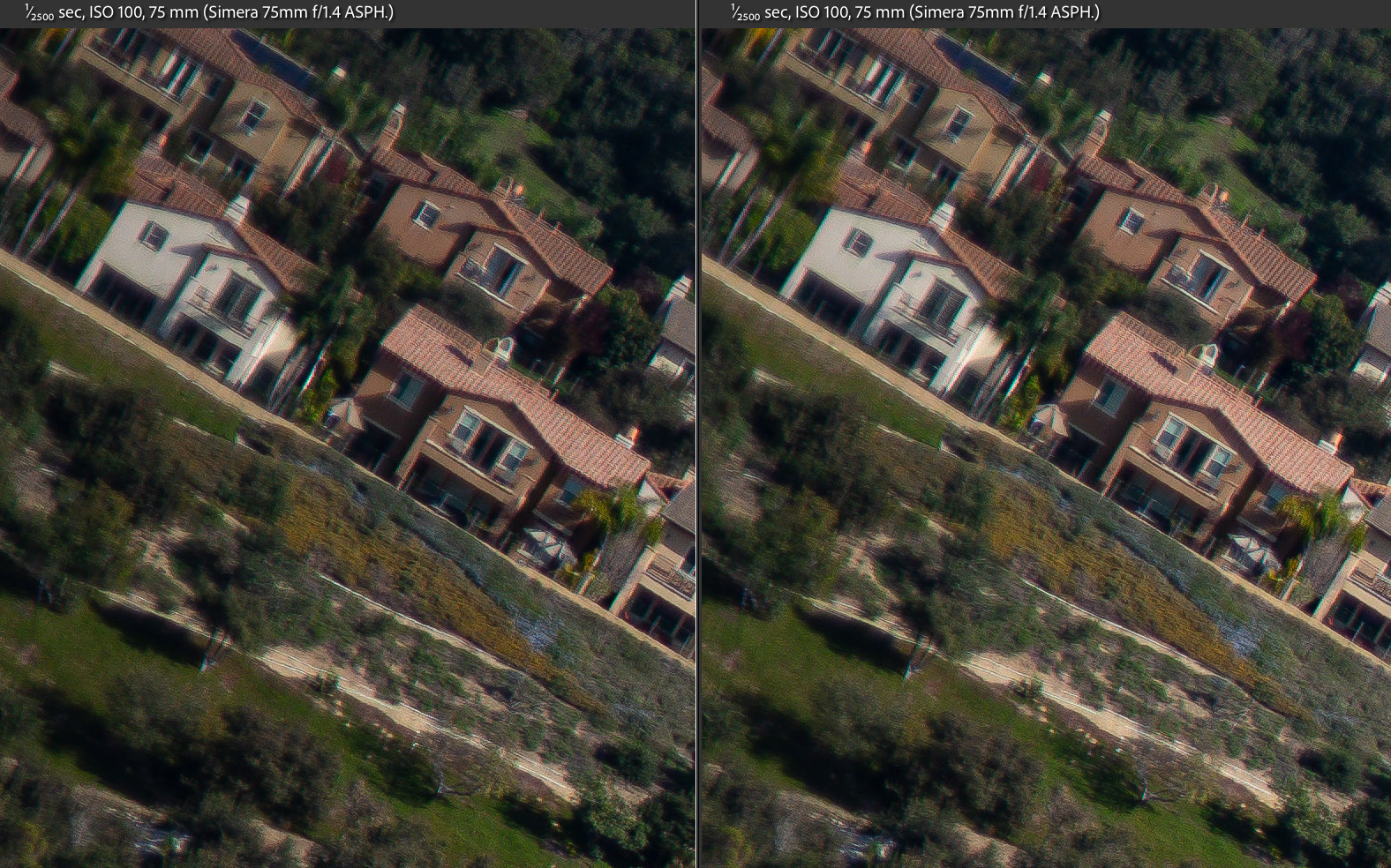
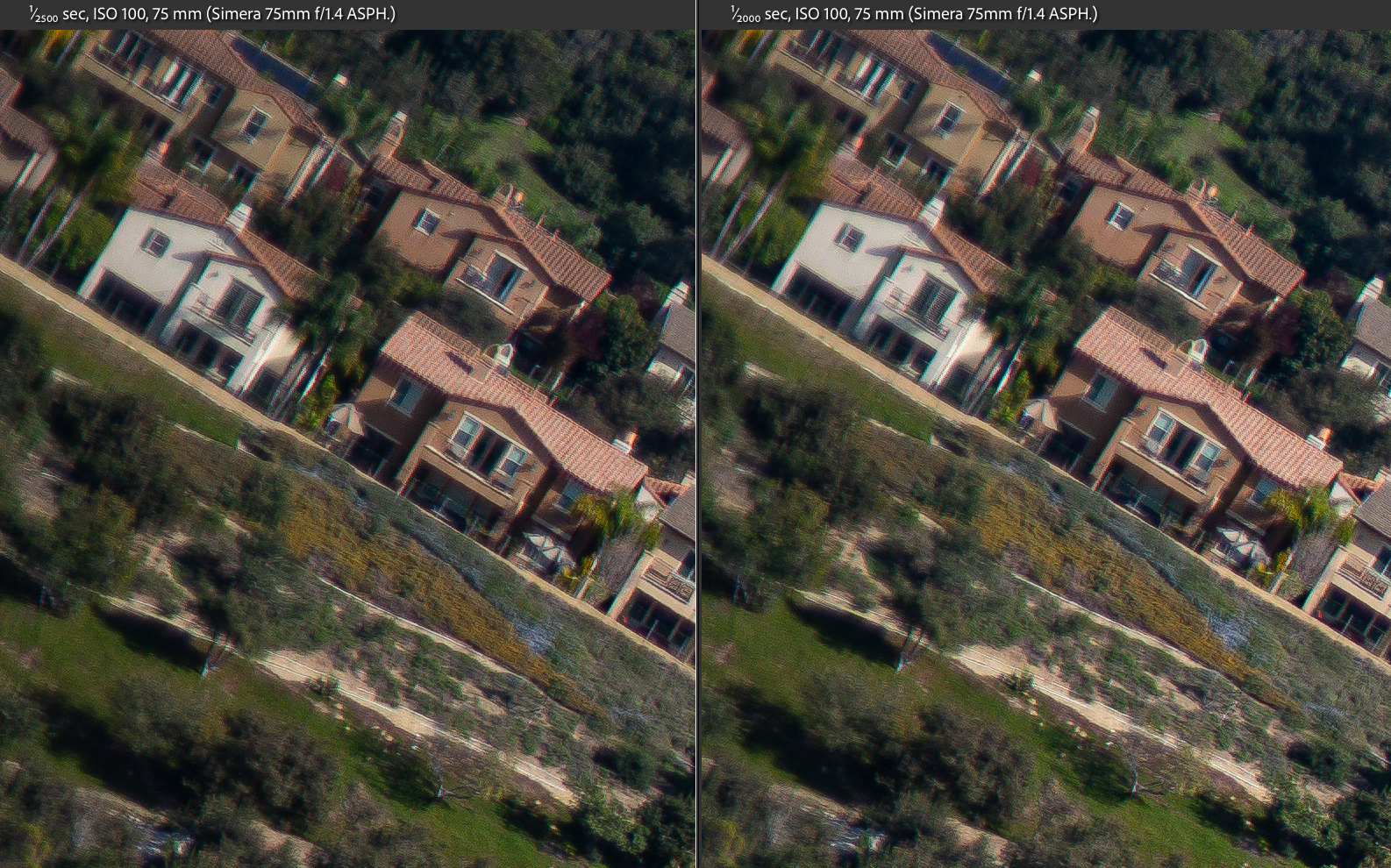
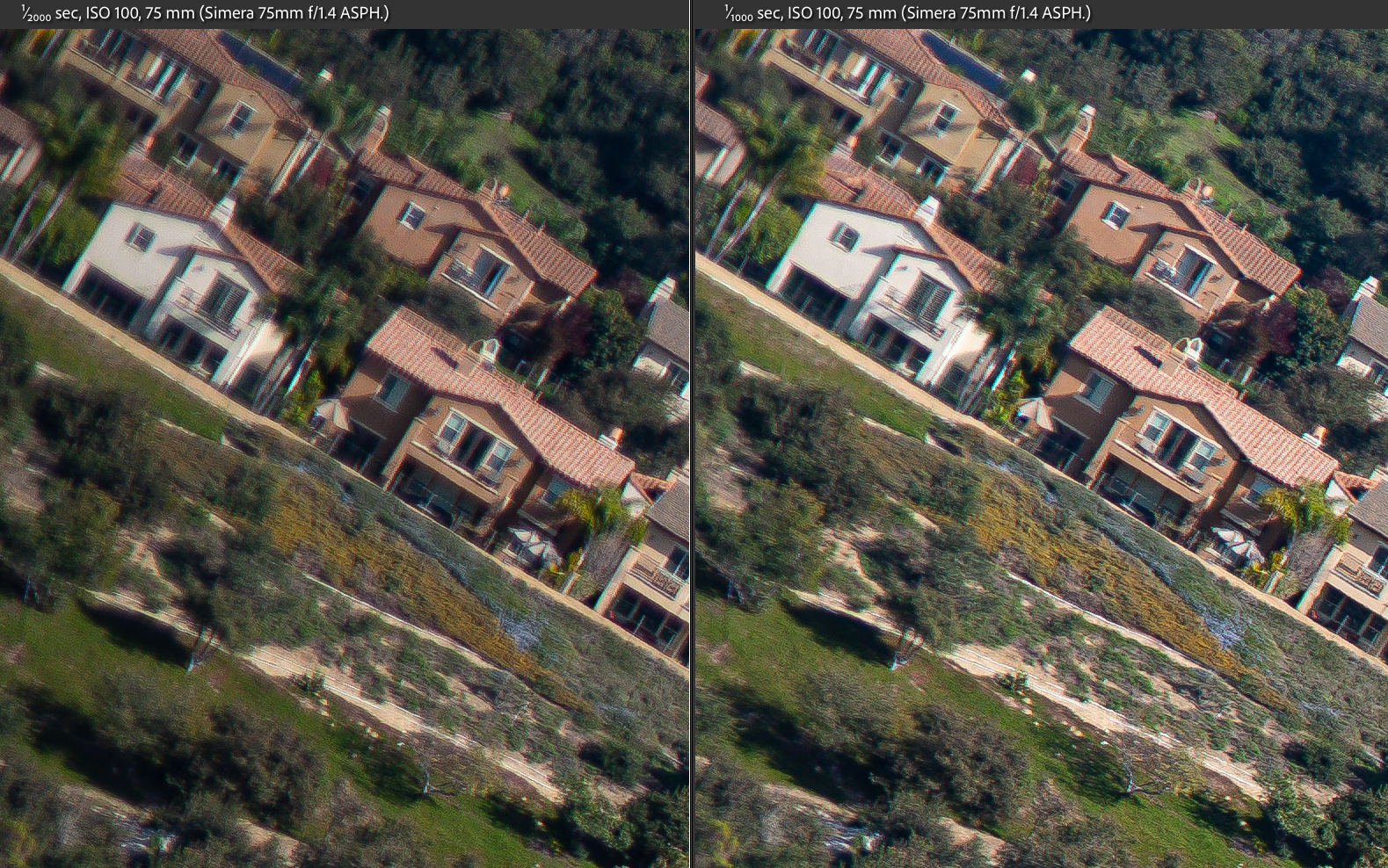
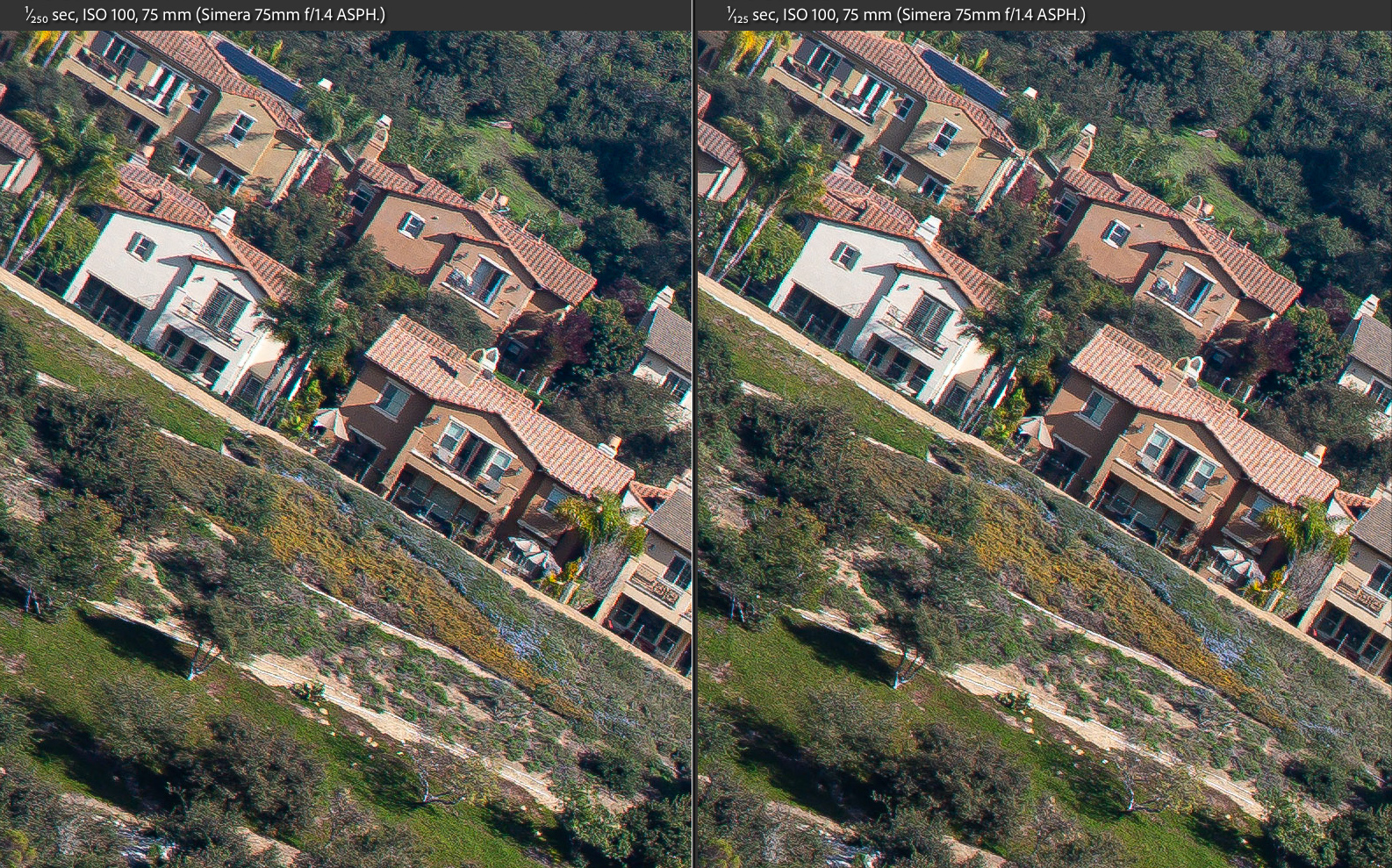
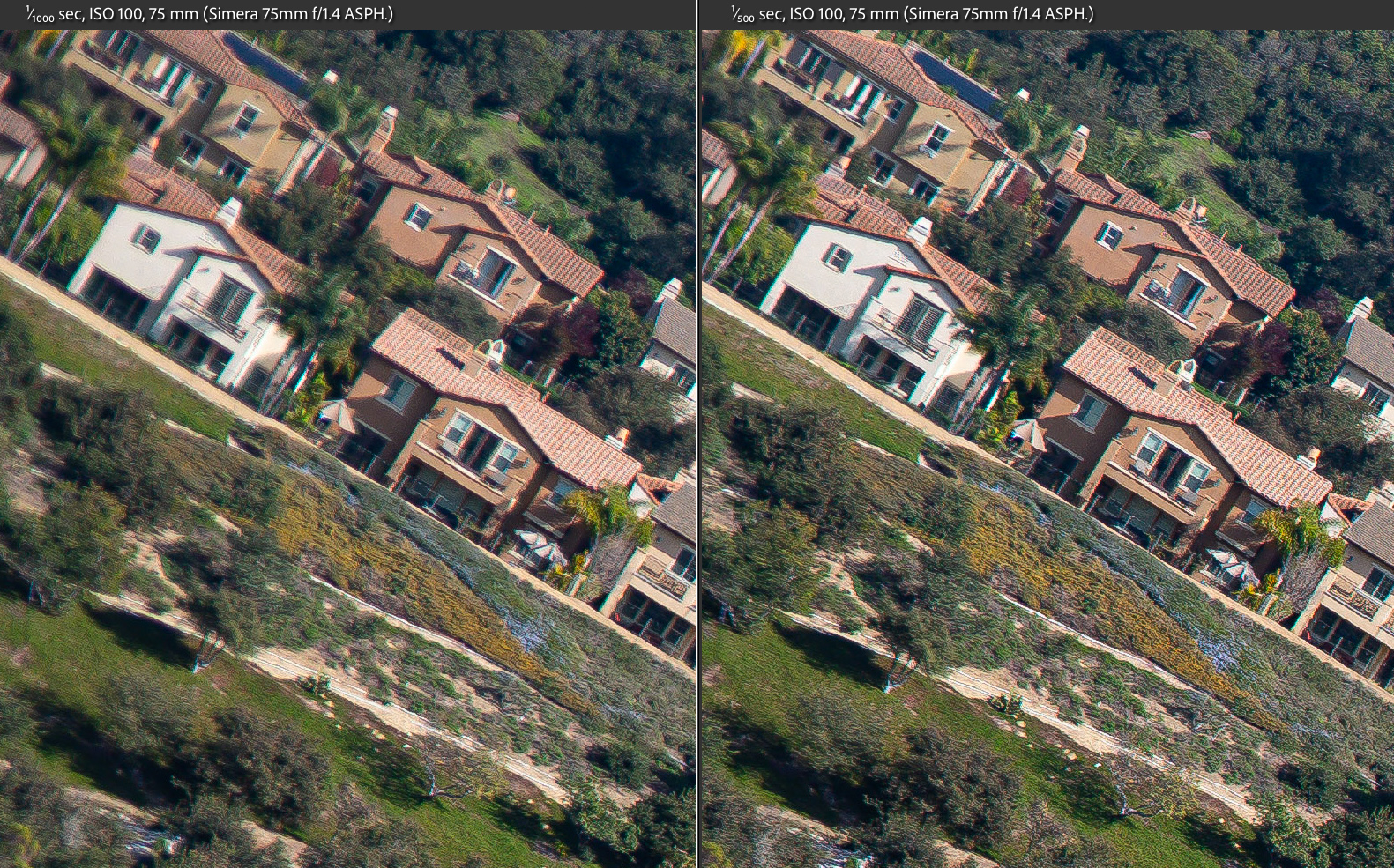
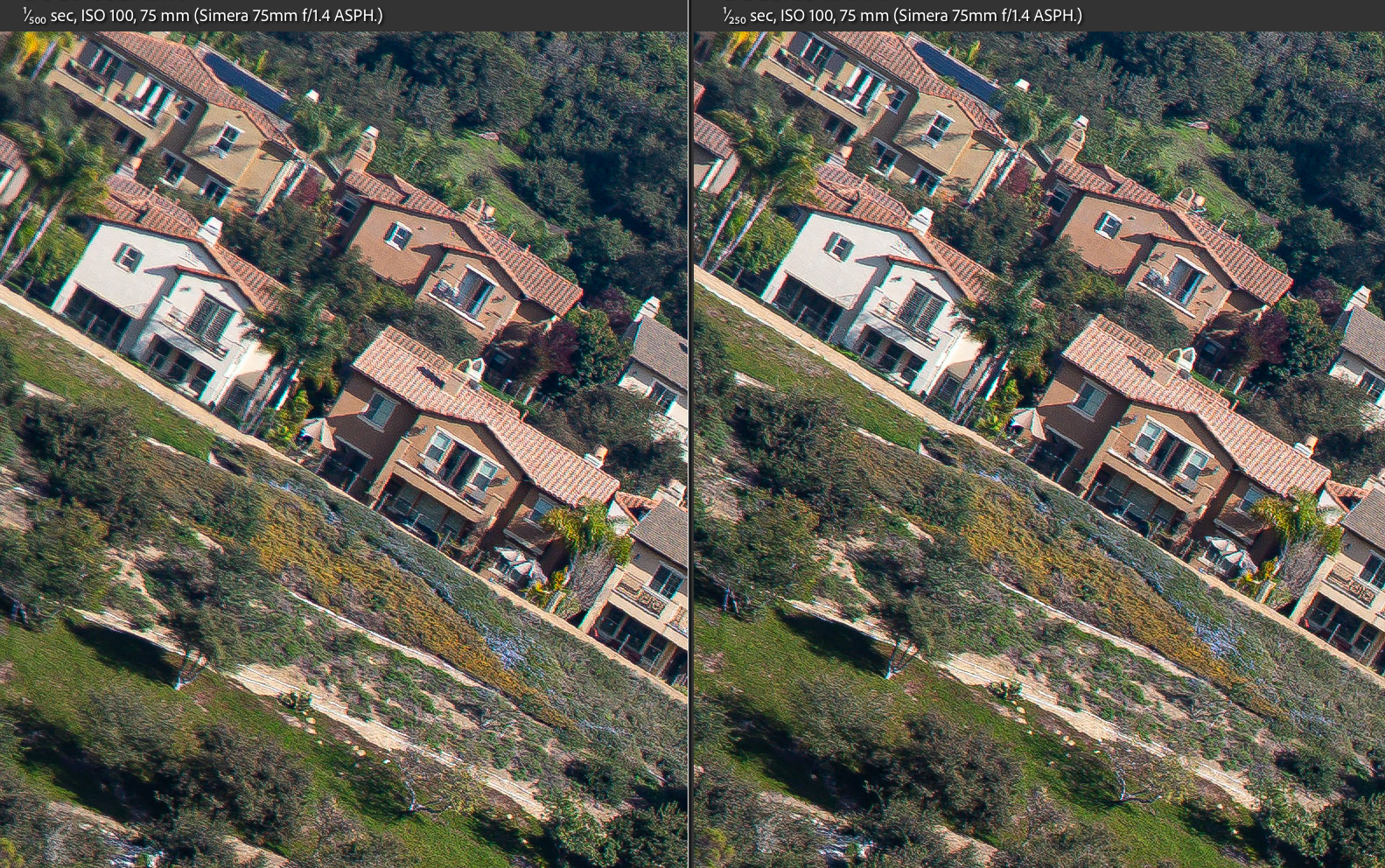
Upon receiving the Simera 75mm f/1.4 ASPH., my first test focused on evaluating resolution and contrast at infinity distance using the Leica M11. My initial impression is that the Simera performs well for an f/1.4 lens but, as expected, it is not optimal at wider apertures. At f/1.4, f/1.8, and f/2, the lens provides good resolution but does not capture the finest details. There is a slight but noticeable improvement from f/1.4 to f/1.8, and another small improvement from f/1.8 to f/2. Each aperture step brings a gradual but clear increase in resolution and contrast.

Performance improves noticeably as you stop down. By f/2.8 in the center, f/4 in the mid-zone, and f/5.6 in the extreme corners, resolution and contrast reach optimal levels. For the absolute peak, with consistently high resolution from edge to edge, the lens may need one more stop for the off-axis areas.

These results were somewhat expected, and I repeated the test several times to ensure accuracy. This particular copy of the Simera 75mm f/1.4 appears to be perfectly centered, suggesting it is an excellent sample. At infinity, I focused the lens at its hard stop to eliminate focusing errors and verified accuracy using Live View, confirming that the infinity stop was correctly calibrated.

Overall, the Simera 75mm f/1.4 ASPH. can resolve fine details effectively when stopped down. While it does not deliver exceptional performance wide open in terms of resolution and contrast, it becomes highly capable across the frame as the aperture is reduced. The optical design seems to serve a dual purpose, offering a softer, more character-driven rendering at wider apertures while delivering extremely high resolution and contrast when stopped down.


  1. Distance: Infinity
  2. Focus: Center - Best of three shots at maximum magnification
  3. White Balance: Daylight
  4. Both lenses are well centered, as verified with my decentering test.
  5. Software used: Lightroom with FM Default Landscape Sharpening; all other settings are at default.

    PS: Vignetting, Chromatic Aberration (CA), and distortion were not corrected either in post-processing or in-camera.


    Center Resolution and Contrast
    Resolution and Contrast: Thypoch Simera 75mm f/1.4 ASPH (60MP)
    (open the browser window to view entire image without resizing)


    f/1.4 vs f/1.8


    f/1.8 vs f/2


    f/2 vs f/2.8


    f/2.8 vs f/4


    f/4 vs f/5.6


    f/5.6 vs f/8


Mar 14, 2025 at 11:35 AM
Fred Miranda
Offline
Admin
Upload & Sell: On
p.1 #3 · Thypoch Simera 75mm f/1.4 ASPH. Review


Mid-zone Resolution and Contrast
Resolution and Contrast: Thypoch Simera 75mm f/1.4 ASPH (60MP)
(open the browser window to view entire image without resizing)


f/1.4 vs f/1.8


f/1.8 vs f/2


f/2 vs f/2.8


f/2.8 vs f/4


f/4 vs f/5.6


f/5.6 vs f/8


Mar 14, 2025 at 11:37 AM
Fred Miranda
Offline
Admin
Upload & Sell: On
p.1 #4 · Thypoch Simera 75mm f/1.4 ASPH. Review


Extreme Corner Resolution and Contrast
Resolution and Contrast: Thypoch Simera 75mm f/1.4 ASPH (60MP)
(open the browser window to view entire image without resizing)


f/1.4 vs f/1.8


f/1.8 vs f/2


f/2 vs f/2.8


f/2.8 vs f/4


f/4 vs f/5.6


f/5.6 vs f/8


Mar 14, 2025 at 11:39 AM
nehemiahphoto
Online
• • • • •
Upload & Sell: On
p.1 #5 · Thypoch Simera 75mm f/1.4 ASPH. Review


I like this lens is softer WO—great for a portrait lens! Will be curious is this performance is mirrored at shooting distances.

Does the lens have glow (SA)? I am not seeing any in the crops. Just wanting to check that.


Mar 14, 2025 at 12:32 PM
Fred Miranda
Offline
Admin
Upload & Sell: On
p.1 #6 · Thypoch Simera 75mm f/1.4 ASPH. Review


nehemiahphoto wrote:
I like this lens is softer WO—great for a portrait lens! Will be curious is this performance is mirrored at shooting distances.

Does the lens have glow (SA)? I am not seeing any in the crops. Just wanting to check that.


So far, I haven't seen much, so I can’t comment with certainty. At first glance, it seems to perform similarly to the Voigtlander 75mm f/1.5 Nokton, but its floating group may reduce SA at portrait distances. I will definitely test for this.


Mar 14, 2025 at 03:35 PM
Fred Miranda
Offline
Admin
Upload & Sell: On
p.1 #7 · Thypoch Simera 75mm f/1.4 ASPH. Review


Back to Quick Links

Distortion

I did not notice any distortion in the sample tests I conducted with the Simera 75mm f/1.4 ASPH. After officially testing for distortion, the lens continued to impress, showing only a slight pincushion effect. While pincushion distortion is common in telephoto optical designs, the Simera 75mm f/1.4 appears to control it well, making it a solid choice for both architecture and street photography.

The samples below show images taken with the Simera 75mm f/1.4 at f/5.6. The first image is uncorrected, followed by a version corrected for pincushion distortion in Lightroom using a -2 setting.


Mar 14, 2025 at 05:36 PM
Fred Miranda
Offline
Admin
Upload & Sell: On
p.1 #8 · Thypoch Simera 75mm f/1.4 ASPH. Review


Back to Quick Links

Sunstar rendering

The Simera 75mm f/1.4 ASPH differs from its 50mm f/1.4 ASPH counterpart in how it renders sunstars. While the 50mm produces well-defined sunstars starting at f/4 to f/5.6, the 75mm requires much smaller apertures, such as f/11 to f/16, to achieve similar clarity in its sunstar rays.

The 75mm f/1.4 ASPH features an aperture mechanism with 16 rounded blades, a design not typically ideal for well-defined sunstars. Instead, this configuration excels at creating round specular highlights, maintaining a circular aperture shape both wide open and when stopped down. This trade-off results in smooth, pleasing bokeh rather than the crisp sunstar effects some might prefer.

Preferences for sunstar rendering vary. Some photographers favor sharply defined rays, while others appreciate a softer, more natural look. The Simera 75mm f/1.4 ASPH caters to the latter, delivering less defined sunstars alongside natural, attractive specular highlights, even at narrower apertures.

The sunstar rays start to gain definition at f/11 and grow more distinct by f/16, where they achieve their peak definition. Even at f/8, they remain pleasing, offering a softer, more subtle definition.

Below is a sequence illustrating the sunstar shape of the Simera 75mm f/1.4 ASPH at various apertures, from f/1.4 to f/16 in 1-stop increments. With its 16 aperture blades, this lens produces 16-point sunstars, as detailed in the progression.


f/1.4

  LEICA M10-R    Simera 75mm f/1.4 ASPH. lens    75mm    f/2.0    1/4000s    100 ISO    -2.0 EV  


f/2

  LEICA M10-R    Simera 75mm f/1.4 ASPH. lens    75mm    f/2.0    1/4000s    100 ISO    -2.0 EV  


F/2.8

  LEICA M10-R    Simera 75mm f/1.4 ASPH. lens    75mm    f/2.0    1/3000s    100 ISO    -2.0 EV  


F/4

  LEICA M10-R    Simera 75mm f/1.4 ASPH. lens    75mm    f/2.0    1/1500s    100 ISO    -2.0 EV  


F/5.6

  LEICA M10-R    Simera 75mm f/1.4 ASPH. lens    75mm    f/2.0    1/750s    100 ISO    -2.0 EV  


F/8

  LEICA M10-R    Simera 75mm f/1.4 ASPH. lens    75mm    f/2.0    1/350s    100 ISO    -2.0 EV  


F/11

  LEICA M10-R    Simera 75mm f/1.4 ASPH. lens    75mm    f/2.0    1/180s    100 ISO    -2.0 EV  


F/16

  LEICA M10-R    Simera 75mm f/1.4 ASPH. lens    75mm    f/2.0    1/90s    100 ISO    -2.0 EV  


Mar 16, 2025 at 12:55 PM
nehemiahphoto
Online
• • • • •
Upload & Sell: On
p.1 #9 · Thypoch Simera 75mm f/1.4 ASPH. Review


Crickets in here so far...

I am enjoying the review and watching with curiosity. Thanks for posting this far Fred.

Happy we are not getting the pointy and highly-definded sunstars found in much current CV glass, including the 75/1.5. Good differentiation there by Thypoch. I do hope we'll get some SA at portrait distance.

Are you finding the lens to render warm or cool?


Mar 16, 2025 at 08:14 PM
rscheffler
Offline
• • • • • •
Upload & Sell: Off
p.1 #10 · Thypoch Simera 75mm f/1.4 ASPH. Review


nehemiahphoto wrote:
Crickets in here so far...


Agreed about sunstars. I dislike the highly defined ones typical of most CV lenses.

Waiting to see character/rendering at closer distances with OOF fore/backgrounds.

Fred: I think the wider aperture increments are 1/3 stop rather than 1/4 stop as there are two clicks between full stops. At least this is how my Canon system works when set up to 1/3 stop increments (f/1.4, 1.6, 1.8, 2.0, 2.2, 2.5, 2.8, 3.2, 3.5, 4.0....).


Mar 16, 2025 at 10:25 PM


Search in Used Dept. 

nehemiahphoto
Online
• • • • •
Upload & Sell: On
p.1 #11 · Thypoch Simera 75mm f/1.4 ASPH. Review


rscheffler wrote:
Agreed about sunstars. I dislike the highly defined ones typical of most CV lenses.

Waiting to see character/rendering at closer distances with OOF fore/backgrounds.

Fred: I think the wider aperture increments are 1/3 stop rather than 1/4 stop as there are two clicks between full stops. At least this is how my Canon system works when set up to 1/3 stop increments (f/1.4, 1.6, 1.8, 2.0, 2.2, 2.5, 2.8, 3.2, 3.5, 4.0....).


This is correct, or at least how it work on their other glass I have used.

I too am curious on rendering—wondering what/if any big differences we see aside from optical vignetting.


Mar 16, 2025 at 11:12 PM
Fred Miranda
Offline
Admin
Upload & Sell: On
p.1 #12 · Thypoch Simera 75mm f/1.4 ASPH. Review


nehemiahphoto wrote:
This is correct, or at least how it work on their other glass I have used.

I too am curious on rendering—wondering what/if any big differences we see aside from optical vignetting.


So far, this feels like a 75mm with the character we appreciate. It's not overly corrected or clinical. Instead, it allows veiling flare, shows some SA that reduces micro-contrast, and has visible CA and coma. Some might call it a modern vintage lens because of these traits, especially the veiling flare when shooting into the light, which gives a cinematic feel (like many Leica lenses).

For video, the main downsides are the short focus throw and noticeable focus breathing. The color temperature is a bit cooler than the Simera 35mm and 50mm I’ve tried. Highlights have a cat-eye shape, but they are not extreme and appear more circular than in many other fast 75mm lenses.

I will be getting the Voigtlander 75mm f/1.5 Nokton to compare. Compared to the CV 75mm f/1.8 Heliar, the Simera has smoother transitions, less outlining, and better off-axis resolution.


Mar 17, 2025 at 11:01 AM
nehemiahphoto
Online
• • • • •
Upload & Sell: On
p.1 #13 · Thypoch Simera 75mm f/1.4 ASPH. Review


Fred Miranda wrote:
So far, this feels like a 75mm with the character we appreciate. It's not overly corrected or clinical. Instead, it allows veiling flare, shows some SA that reduces micro-contrast, and has visible CA and coma. Some might call it a modern vintage lens because of these traits, especially the veiling flare when shooting into the light, which gives a cinematic feel (like many Leica lenses).

For video, the main downsides are the short focus throw and noticeable focus breathing. The color temperature is a bit cooler than the Simera 35mm and 50mm I’ve tried. Highlights have a cat-eye shape, but
...Show more

I find Thypoch’s marketing and lack of clarity extremely annoying. Having said that, I remain interested in their lenses.

I did not find the 50 and have not found seen the 28 to be very cinematic. To me, they seem like very modern design with smooth abstracted bokeh with not a lot of personality and consistent resolution distribution across the frame.

The 35 and 75 are shaping up to have more personality and be more “vintage.” Although it’s marketing, I think what Thypoch actually means by modern vintage is moderate contrast wide open and circular bokeh, as far as I can tell.

Excited to see the rendering here on the 75.


Mar 17, 2025 at 12:09 PM
Fred Miranda
Offline
Admin
Upload & Sell: On
p.1 #14 · Thypoch Simera 75mm f/1.4 ASPH. Review


nehemiahphoto wrote:
I find Thypoch’s marketing and lack of clarity extremely annoying. Having said that, I remain interested in their lenses.

I did not find the 50 and have not found seen the 28 to be very cinematic. To me, they seem like very modern design with smooth abstracted bokeh with not a lot of personality and consistent resolution distribution across the frame.

The 35 and 75 are shaping up to have more personality and be more “vintage.” Although it’s marketing, I think what Thypoch actually means by modern vintage is moderate contrast wide open and circular bokeh, as far as I can
...Show more

I don’t usually pay much attention to manufacturer marketing. They are trying to sell a lens, but the only way to truly know its performance and qualities is by testing it.

The Simera 50mm f/1.4 is essentially a Leica 50mm f/1.4 Summilux. There are some differences in micro-contrast, but if you like the Leica and want to save some money, it's definitely worth considering.

I haven't tried the Simera 28mm yet, but I have one on the way for review. It’s the new version (v2) with a focus tab and no infinity lock.


Mar 17, 2025 at 02:49 PM
nehemiahphoto
Online
• • • • •
Upload & Sell: On
p.1 #15 · Thypoch Simera 75mm f/1.4 ASPH. Review


Fred Miranda wrote:
I don’t usually pay much attention to manufacturer marketing. They are trying to sell a lens, but the only way to truly know its performance and qualities is by testing it. is by testing it.

The Simera 50mm f/1.4 is essentially a Leica 50mm f/1.4 Summilux. There are some differences in micro-contrast, but if you like the Leica and want to save some money, it's definitely worth considering.

I haven't tried the Simera 28mm yet, but I have one on the way for review. It’s the new version (v2) with a focus tab and no infinity lock.


Yes it is better to ignore marketing. But even these Simera related forms get spammed with Thypch marketing.

Anyway, in other news, water is wet. Excited to see the rest of the review


Mar 17, 2025 at 03:28 PM
Fred Miranda
Offline
Admin
Upload & Sell: On
p.1 #16 · Thypoch Simera 75mm f/1.4 ASPH. Review


Back to Quick Links

Field Curvature

Similar to the Simera 50mm f/1.4 ASPH. I reviewed earlier, the Simera 75mm f/1.4 ASPH. also features a mostly flat field curvature from close-up to infinity. Unlike many 75mm lenses that tend to cause the curvature to bow outward, the Simera keeps the curvature flatter throughout all distances.

A lens with flat field curvature ensures that the plane of focus stays consistent from the center to the corners of the frame. This means you get even sharpness across the entire image, rather than having areas that are softer, like with inward or outward curvatures. The flat field curvature of the Simera 75mm f/1.4 ASPH. makes it especially beneficial for landscape and architecture photography, or any other subject where consistent sharpness throughout the frame is important.

Here's a GIF animation that shows the focus area from close-up to long distance in several stages:


Mar 17, 2025 at 05:55 PM
RustyRus
Online
• • • •
Upload & Sell: On
p.1 #17 · Thypoch Simera 75mm f/1.4 ASPH. Review


Nothing is standing out with this lens yet-

My guess is its going to be one hell of a portrait lens once you get to it 16 blades and made for cienma-

Good stuff so far Fred!


Mar 17, 2025 at 06:02 PM
saxguy
Offline
• • •
Upload & Sell: On
p.1 #18 · Thypoch Simera 75mm f/1.4 ASPH. Review


RustyRus wrote:
Nothing is standing out with this lens yet-

My guess is its going to be one hell of a portrait lens once you get to it 16 blades and made for cienma-

Good stuff so far Fred!


I've had it since last week and haven't had anyone around willing to take photos. My cat doesn't sit still long enough for me to manually focus properly . Hopefully Fred will give us some portraiture samples soon.


Mar 17, 2025 at 06:20 PM
saxguy
Offline
• • •
Upload & Sell: On
p.1 #19 · Thypoch Simera 75mm f/1.4 ASPH. Review


The flat field will definitely render images differently than the CV 50 1.0. Depth of field should be similar, although falloff and glow may be significantly different.


Mar 17, 2025 at 06:23 PM
Steve Spencer
Offline
• • • • • • •
Upload & Sell: On
p.1 #20 · Thypoch Simera 75mm f/1.4 ASPH. Review


nehemiahphoto wrote:
I find Thypoch’s marketing and lack of clarity extremely annoying. Having said that, I remain interested in their lenses.

I did not find the 50 and have not found seen the 28 to be very cinematic. To me, they seem like very modern design with smooth abstracted bokeh with not a lot of personality and consistent resolution distribution across the frame.

The 35 and 75 are shaping up to have more personality and be more “vintage.” Although it’s marketing, I think what Thypoch actually means by modern vintage is moderate contrast wide open and circular bokeh, as far as I can
...Show more

I think the Thypoch lenses show a lot of notable similarities. They all seem to have pretty flat fields through much of the frame. They all have the 14 or 16 blade rounded apertures which looks nice and round stopped down yet creates nice sunstars at smaller apertures (you seem to get nice sunstars at f/4 or f/5.6 for the 14 bladed apertures and f/8 or f/11 on the 16 bladed aperture of the 75). They all have pretty low distortion that is corrected optically not with software. In general the bokeh is pretty smooth and much to my liking with nice focus transitions. They all perform pretty well at close distances and especially if you stop down just a little. They all have some correction for axial CA, but they don't completely suppress this aberration. They all show quite high coma. They all are moderately resistant to flare, but not as resistant as some competitors. They all have moderate contrast wide open.

That said there are some subtle but noticeable differences in the lenses. For my tastes the lenses are on the border of having enough sharpness and contrast wide open and I like that the 28 and 50 have just a little more of that sharpness and contrast than the 35 which I find a little more lacking. The 35 also seems to have the weakest control of axial CA and the worst performance up close, the floating element only partially controlling for focus shift. I am not yet sure about the 75 being reviewed here, but so far I like what I see but I think it has a little less contrast wide open and is a bit more like the 35 in that regard than the 28 or 50.

The package for these lenses make them quite compelling for people shots, IMO.To me they look less compelling, but still competent, for things like landscapes and nature photograph. My take for now and it is just from looking at samples and not from using the lenses. I am still waiting to see if they make E mount versions of the 50 or 75 and if the second generation versions of the 28 or 35 will come in E mount. My views may well change when I actual use the lenses.


Mar 18, 2025 at 06:29 AM
       2       3              6       7       end


FM Forums | Sony Forum | Join Upload & Sell

       2       3              6       7       end


Welcome back
Log in to your account