p.1 #1 · Your experience having a Sony camera converted to Monochrome?
I'm thinking of finding a second RX1R ii (I love the camera) or maybe an Rx1r to have the B&W conversion done. I know I can convert in post, however, I'd like a raw B&W file. I messed with the sample raw files in Lightroom on the https://monochromeimaging.com/ website and was impressed. The conversion of the fix lens RX1 series is no added cost (I wrote owner)
I'm not looking for alternative cameras, presets, etc. I already have great B&W conversion software, plug ins, and presets ....just experiences from those who have had a Sony body converted.
p.1 #3 · Your experience having a Sony camera converted to Monochrome?
I had an A7RIII converted to monochrome by Monochromeimaging a few years ago. The process was smooth and professional and that is the service that I would recommend for anyone getting a Sony body converted. You may know this but for anyone reading the thread you will need to use a program monochrom2dng to process the raw files so that they work with standard raw processing software. The program is inexpensive, works in batch mode and is reasonably quick so it is not an issue. The conversion process destroys the pdaf sensors so that only af-s is available. Manual focus including peaking etc is fine as well after conversion. The camera also tends to underexpose after conversion so I have about +1 1/3 stop ec applied by default. Zebras and other exposure aids still work so it is not hard to get a proper exposure.
The files do have a bit more detail, The A7RIII is 42mp I believe and these compare well with the files I get from the 60mp A7R5. The lack of the RGB filters gives you about a stop more light so low light performance is improved. So the files you get to work with are nice indeed and aside from the limitations listed above the converted camera fworks quite well.
BUT
Using the color information in a color raw file to control the B&W tonalities in monochrome images is a powerful tool that is lost when using a monochrome camera. When I was in my monochrome phase I also had a Leica Q2 Mono and took a workshop in digital B&W from a photographer who I knew owned and shot a Leica monochrome camera. I was surprised to learn that 80% of her monochorme work was from her color Leicas not her monochrome for the reason above. I have given monochrome shooting a serious try with both the Leica Q2 Mono and my converted A7RIII and have gotten some great images I am very happy with. But at the end of the day they are not any better than what I get from converting my color files. So even though I prefer to work in B&W fas much as possible my Sony mono gets very little use.
It very well may be that a monochrome camera is an itch that you just have to scratch but don't be surprised if the itch goes away after awhile.
p.1 #4 · Your experience having a Sony camera converted to Monochrome?
I've had monochrome cameras for much of the last 7-8 years and continue to use them for about 75% of the work I do.
There isn't a huge difference between images from a monochrome camera and converted images from a color camera,
except that the monochrome images look cleaner and slightly sharper to me. Contrast is more refined and midtones
really come out nicely.
It also takes me a lot less time to get the results I want when using the monochrome camera vs converting from color.
It's not for everyone, I decided to get one because I ended up converting all my color images, which got to be a hassle.
When I'm in the mood for color, I'll take color cameras, but I like that when I'm shooting in B&W, there's zero chance of color.
p.1 #5 · Your experience having a Sony camera converted to Monochrome?
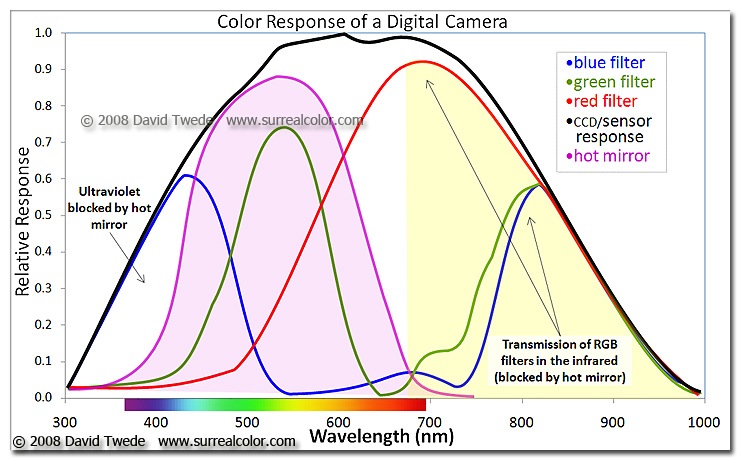
On the Monochromeimaging website he explains how a converted camera gains +1EV of sensitivity, and there's a screenshot of raw digger showing RGB values that essentially become their own pixels of various shades of gray.
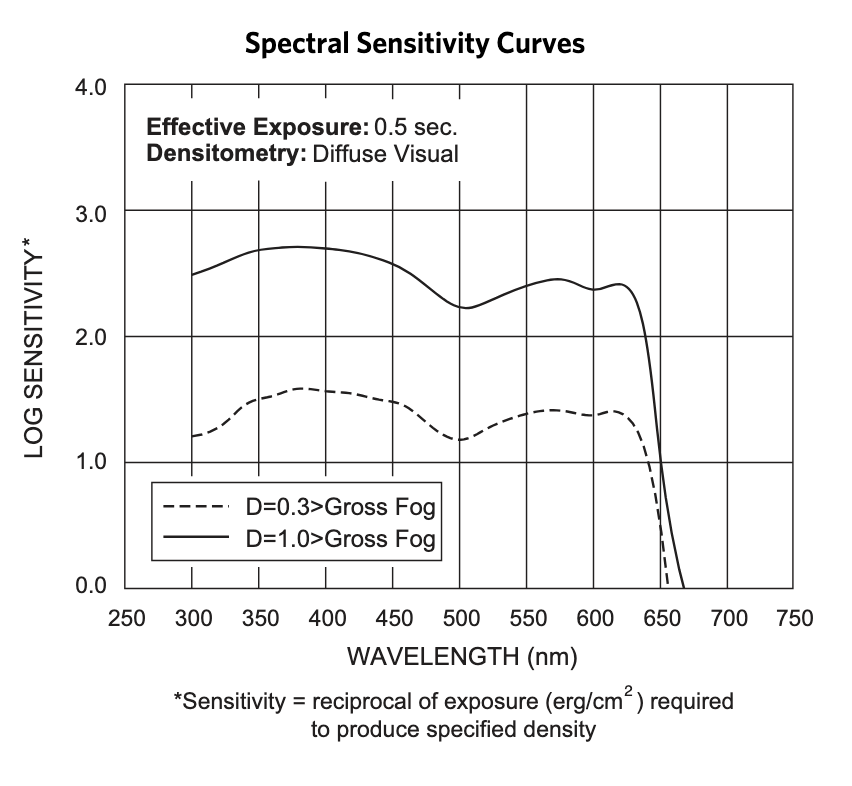
But that's not how B&W film responds to light. Different emulsions have different spectral sensitivity curves. They are narrower than a sensor's repsonse, and they are never as nice & symmetrical bell curves like shown on his "full spectrum" page. This is what gives film photographs that character, and you can replicate it by manipulating RGB curves + channel filtration in Photoshop when converting from color. That is why high-quality B&W profiles give you much nicer results than just dropping saturation to zero.
Unless I am missing something [1], a converted B&W digital camera produces results that aren't film-like at all, they're basically desaturated color images. For B&W portrait photography this is not going to be great, and perhaps for other subjects also, suggesting the need for heavy/creative use of optical filters.
[1] One thing I could be missing is what exactly Monochrome2DNG is doing. It could be applying film-like color filtration when producing a DNG file, I don't know.
p.1 #6 · Your experience having a Sony camera converted to Monochrome?
old-gregg wrote:
On the Monochromeimaging website he explains how a converted camera gains +1EV of sensitivity, and there's a screenshot of raw digger showing RGB values that essentially become their own pixels of various shades of gray.
But that's not how B&W film responds to light. Different emulsions have different spectral sensitivity curves. They are narrower than a sensor's repsonse, and they are never as nice & symmetrical bell curves like shown on his "full spectrum" page. This is what gives film photographs that character, and you can replicate it by manipulating RGB curves + channel filtration in Photoshop when converting from color. That is why high-quality B&W profiles give you much nicer results than just dropping saturation to zero.
Unless I am missing something [1], a converted B&W digital camera produces results that aren't film-like at all, they're basically desaturated color images. For B&W portrait photography this is not going to be great, and perhaps for other subjects also, suggesting the need for heavy/creative use of optical filters.
[1] One thing I could be missing is what exactly Monochrome2DNG is doing. It could be applying film-like color filtration when producing a DNG file, I don't know....Show more →
Actually, the unfiltered results from a mono conversion are very close to what you get from Tri-X and it's just as important to use filters if you're after something other than a tone map of grey.
Mono2DNG allows you to convert your RAW file from a mono converted camera without going through debayering, which can leave some funky edge effects.
p.1 #7 · Your experience having a Sony camera converted to Monochrome?
I've had my full-spectrum, coverglassless mono converted rII (done by David) for nearly six years now and it's still going strong. If anything happens to it, it will get replaced with the same.
First shot with the camera and the Minolta MC Rokkor-X 58/1.2...
p.1 #8 · Your experience having a Sony camera converted to Monochrome?
freaklikeme wrote:
Actually, the unfiltered results from a mono conversion are very close to what you get from Tri-X.
But how could that be? These curves look quite different to me (even ignoring the log-vs-linear representation). Tri-X dips in greens a bit, but the sensor does not.
p.1 #9 · Your experience having a Sony camera converted to Monochrome?
old-gregg wrote:
But how could that be? These curves look quite different to me (even ignoring the log-vs-linear representation). Tri-X dips in greens a bit, but the sensor does not.
The reason you're not doing an apples to apples comparison there is because the color camera camera tests include the CFA and all the glass layered over the sensor. You're not getting the sensor's actual spectral response.
But the reason it can be is because the information captured by the sensor still has at least a layer of post to go through before you see an image, and Mono2DNG and Adobe, at least, go with the same flat with wide dynamic range look you get with properly exposed Tri.
p.1 #10 · Your experience having a Sony camera converted to Monochrome?
freaklikeme wrote:
go with the same flat with wide dynamic range look you get with properly exposed Tri.
With black and white film, there's no such thing as "THE" right exposure. What's right for you depends on how you develop it, i.e., which gamma value you use. This depends on the subject contrast and, above all, on the way you process the negatives. Tri-X was NEVER known for a particularly flat gradation curve. It was simply as steep or flat as you developed it. Many people preferred to expose it at ASA 200 rather than ASA 400 and developed it accordingly shorter. I usually exposed at ASA 250 and developed it in D76 to a gamma of 0.65 because that best suited my mixed-light enlarger and my preferred paper, Fomatone MG FB. Flat curves are perhaps preferred today by people who then adjust the curve in digital post-production anyway. While flat-developed films reliably protect against blown-out highlights and shadows even in analogue settings, this naturally reduced the contrast in the center, which did more harm than good except in high-contrast scenes.
p.1 #11 · Your experience having a Sony camera converted to Monochrome?
Do those with a monochrome camera find they are spending less time in post? Aside from the initial mono2dng conversion, it doesn’t look like there’s much left to do processing wise. There’s no color to tweak, no b/w conversion, no channels to play with etc. I wouldn’t mind spending less time at the computer.
p.1 #12 · Your experience having a Sony camera converted to Monochrome?
jwpstl wrote:
Do those with a monochrome camera find they are spending less time in post? Aside from the initial mono2dng conversion, it doesn’t look like there’s much left to do processing wise. There’s no color to tweak, no b/w conversion, no channels to play with etc. I wouldn’t mind spending less time at the computer.
Less time, but much less flexibility. The ability to play with the channels to get the drama you want is priceless. It’s the reason why I would not look at a monochrome camera…the amount of options when converting from a colour image is just too great.
From my perspective it’s the difference between shooting jpegs ( monochrome image ) and raw.
Now I do have an infrared converted camera…but that’s totally different.
p.1 #13 · Your experience having a Sony camera converted to Monochrome?
Nifty Fifty wrote:
With black and white film, there's no such thing as "THE" right exposure. What's right for you depends on how you develop it, i.e., which gamma value you use. This depends on the subject contrast and, above all, on the way you process the negatives. Tri-X was NEVER known for a particularly flat gradation curve. It was simply as steep or flat as you developed it. Many people preferred to expose it at ASA 200 rather than ASA 400 and developed it accordingly shorter. I usually exposed at ASA 250 and developed it in D76 to a gamma of 0.65 because that best suited my mixed-light enlarger and my preferred paper, Fomatone MG FB. Flat curves are perhaps preferred today by people who then adjust the curve in digital post-production anyway. While flat-developed films reliably protect against blown-out highlights and shadows even in analogue settings, this naturally reduced the contrast in the center, which did more harm than good except in high-contrast scenes....Show more →
It's great that we have the kind of flexibility; I don't disagree. Still, there's use as designed by the manufacturer and then there's everything we can do with it. My use of "proper" intended to reflect exposure and development as designed.
p.1 #14 · Your experience having a Sony camera converted to Monochrome?
jwpstl wrote:
Do those with a monochrome camera find they are spending less time in post? Aside from the initial mono2dng conversion, it doesn’t look like there’s much left to do processing wise. There’s no color to tweak, no b/w conversion, no channels to play with etc. I wouldn’t mind spending less time at the computer.
Just like with a color camera, that depends on how prepared you are to get as much right in camera as possible and what you consider right. Most likely, you'll need some time to get accustom to the camera and how to achieve the results you seek before you start lessening your time spent in post.
p.1 #15 · Your experience having a Sony camera converted to Monochrome?
jwpstl wrote:
Do those with a monochrome camera find they are spending less time in post? Aside from the initial mono2dng conversion, it doesn’t look like there’s much left to do processing wise. There’s no color to tweak, no b/w conversion, no channels to play with etc. I wouldn’t mind spending less time at the computer.
Yes, much less time in post.
About 40% of the images I shoot come out looking great, very minimal adjustments are needed.
For the rest, most of the tones are there in the RAW file, so I'd say an average of 25-40 seconds are spent adjusting each image.
I only add exposure (I underexpose by 1 stop), some black and some mid-tone contrast.
If lighting conditions weren't ideal, I treat the images much as if I were in the darkroom and apply basic dodge and burn tools.
I don't usually create precise masks, just a semi-rough blob, mimicking the dodge/burn tools of the darkroom.
It's freedom for me, freedom from over-processing and a type of rigid control that I don't enjoy.
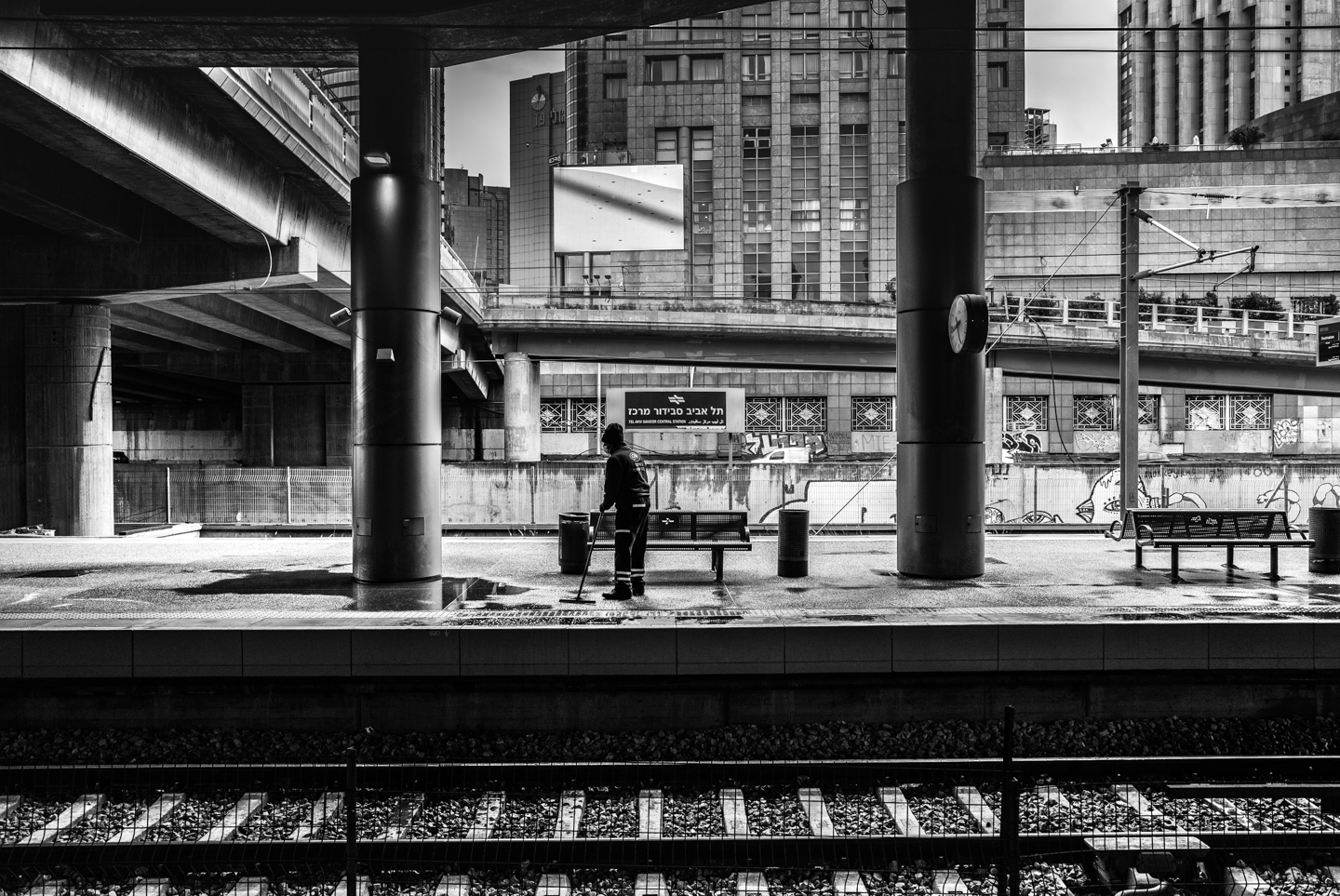
The image below needed three sliders to get what I wanted: exposure, blacks and clarity.
p.1 #16 · Your experience having a Sony camera converted to Monochrome?
chez wrote:
Less time, but much less flexibility. The ability to play with the channels to get the drama you want is priceless. It’s the reason why I would not look at a monochrome camera…the amount of options when converting from a colour image is just too great.
From my perspective it’s the difference between shooting jpegs ( monochrome image ) and raw.
Now I do have an infrared converted camera…but that’s totally different.
That should probably read "less time if you're either thrilled with the camera's output and processing software's presentation or have put in the time to get it to your level of right in camera" and "less flexibility if you're unwilling to learn how to process mono files" because the flexibility is there. It's just not catered to like color processing and converting.
I don't see a mono camera as a shortcut to B&W photography perfection. I think it's best viewed as an opportunity to learn a mono digital workflow, which is going to be very different from a color workflow.
p.1 #17 · Your experience having a Sony camera converted to Monochrome?
After thinking about this some more, I am placing myself in the camp of detractors. The two primary benefits of the monochrome conversion are: the resolution and additional sensitivity. However:
1. The resolution actually gets worse because the IR and other "wider spectrum" frequencies do not focus on the same plane. To avoid the resulting astigmatism one must use filters to shrink the spectrum back to the range a lens can focus. Basically this brings back the concept of light filtration.
2. Not only this is annoying, but you lose the extra sensitivity benefit.
3. You're also losing the flexibility to apply a "light filter" digitally which, as many have noted, is pure magic.
The only use case for which I am still considering a converted camera is scanning/digitizing B&W negatives. If I convert my Sony A7R V, I should be able to place a pure green filter on it and digitize using only green light for the highest possible resolution.
p.1 #18 · Your experience having a Sony camera converted to Monochrome?
old-gregg wrote:
After thinking about this some more, I am placing myself in the camp of detractors. The two primary benefits of the monochrome conversion are: the resolution and additional sensitivity. However:
1. The resolution actually gets worse because the IR and other "wider spectrum" frequencies do not focus on the same plane. To avoid the resulting astigmatism one must use filters to shrink the spectrum back to the range a lens can focus. Basically this brings back the concept of light filtration.
2. Not only this is annoying, but you lose the extra sensitivity benefit.
3. You're also losing the flexibility to apply a "light filter" digitally which, as many have noted, is pure magic.
The only use case for which I am still considering a converted camera is scanning/digitizing B&W negatives. If I convert my Sony A7R V, I should be able to place a pure green filter on it and digitize using only green light for the highest possible resolution....Show more →
You're making an assumption that the conversion has to be full-spectrum, which it doesn't. Even if it did, you can use a BG39 or 40 or B+W 486 to limit yourself to visible light with little impact to transmission compared to the original hot mirror. Resolution still improves, regardless.
p.1 #19 · Your experience having a Sony camera converted to Monochrome?
@freaklikeme The options of full or filtered conversions are both explained on the website. But the author advocates for unfiltered conversions. I am not making any assumptions, I am saying that this recommendation is not attractive because it comes with the usability annoyance of filtering light with lens filters.
One point I overlooked, and thank you for correcting, is that filtering out the invisible light doesn't affect exposure. But I'm still skeptical regarding the attractiveness of the spectral sensitivitiy of an unfiltered sensor. To achieve (for example) an attractive skintone or foilage a photographer will need to filter the visible light as well, so that extra sensitivity is not always going to be available.
p.1 #20 · Your experience having a Sony camera converted to Monochrome?
freaklikeme wrote:
You're making an assumption that the conversion has to be full-spectrum, which it doesn't. Even if it did, you can use a BG39 or 40 or B+W 486 to limit yourself to visible light with little impact to transmission compared to the original hot mirror. Resolution still improves, regardless.
I’ve never lacked resolution shooting my A7r3 and converting to b&w. This chasing the ultimate resolution game has extremely little impact on a photo.