A74me wrote:
you have misunderstood what im saying and dont understand what and where the op amp is.
The article explains that the dual gain occurs at the pixel level. I am not sure what you are claiming if you think that what is happening at the pixel level is happening on the sensor.
Steve Spencer wrote:
The article explains that the dual gain occurs at the pixel level. I am not sure what you are claiming if you think that what is happening at the pixel level is happening on the sensor.
its very bad wording calling the circut dual gain. because nothing is being "gained" the stored energy is just being recorded over longer time by a seperate capacitor ( may as well call it on sensor noise reduction because thats all its doing ). as the artical says theres really no gain because the extra transistor switch is taking taking up valuble area and reducing pixel size, also theres a voltage drop of .6v over any silicon switch.
Dec 25, 2024 at 05:43 PM
Steve Spencer Offline • • • • • • • Upload & Sell: On
A74me wrote:
its very bad wording calling the circut dual gain. because nothing is being "gained" the stored energy is just being recorded over longer time by a seperate capacitor ( may as well call it on sensor noise reduction because thats all its doing ). as the artical says theres really no gain because the extra transistor switch is taking taking up valuble area and reducing pixel size, also theres a voltage drop of .6v over any silicon switch.
Did you read the article? It certainly does not say there really is no gain and that the transistor is taking up valuable area reducing pixel size. You do realize this white paper is by Aptina that developed the technology and they certainly are not panning it in any way.
Steve Spencer wrote:
Did you read the article? It certainly does not say there really is no gain and that the transistor is taking up valuable area reducing pixel size. You do realize this white paper is by Aptina that developed the technology and they certainly are not panning it in any way.
its in the article Qoute: "This scheme requires an added transistor and capacitor
in the pixel layout, which can eat up real estate that
could otherwise be utilized to increase the photodiode
size. "
Dec 26, 2024 at 12:11 AM
Steve Spencer Offline • • • • • • • Upload & Sell: On
A74me wrote:
its in the article Qoute: "This scheme requires an added transistor and capacitor
in the pixel layout, which can eat up real estate that
could otherwise be utilized to increase the photodiode
size. "
Yes, you found something in the article that notes a drawback of this approach, but you missed that it really is only a problem with very tiny pixels. I think you have also missed that since this article was published in 2010, that this technology has been widely adopted for mirrorless cameras. Every Sony camera since the A7r II has had it. We aren't talking about anything new here. It is indeed old technology at this point, and yes all Sony cameras for the last decade have had it. The pixels on these cameras have two types of conversion gain, one for bright light that is used at base ISO and one that is used at lower light. There is a switch over point from the pixels using one type of conversion gain to the other type of conversion gain. This is what dclark was talking about with the A1 II. The switch over point, at least for the mechanical shutter, seems to be different for the A1 II than for the A1 original.
Steve Spencer wrote:
Yes, you found something in the article that notes a drawback of this approach, but you missed that it really is only a problem with very tiny pixels. I think you have also missed that since this article was published in 2010, that this technology has been widely adopted for mirrorless cameras. Every Sony camera since the A7r II has had it. We aren't talking about anything new here. It is indeed old technology at this point, and yes all Sony cameras for the last decade have had it. The pixels on these cameras have two types of conversion gain, one for bright light that is used at base ISO and one that is used at lower light. There is a switch over point from the pixels using one type of conversion gain to the other type of conversion gain. This is what dclark was talking about with the A1 II. The switch over point, at least for the mechanical shutter, seems to be different for the A1 II than for the A1 original....Show more →
On top of that, as I understand it, the issue of using up space is eliminated by the BSI architecture as well, at least from the perspective of reducing pixel size as a result of the added circuitry.
FYI, Most Sony sensors allow the dual gain point to be configured between two 1/3EV adjacent levels. For example, the Sony 24MP sensors allow either ISO 640 or 800 to be the dual gain ISO. Nikon switches between them based on the exposure. Panasonic lets you actually configure between them in a menu on their S5 II/IIx.
A74me wrote:
its very bad wording calling the circut dual gain. because nothing is being "gained" the stored energy is just being recorded over longer time by a seperate capacitor ( may as well call it on sensor noise reduction because thats all its doing ). as the artical says theres really no gain because the extra transistor switch is taking taking up valuble area and reducing pixel size, also theres a voltage drop of .6v over any silicon switch.
Do you understand how ISO works? It's all about amplification, and "gain" is the technical term used in electronics for amplifiers. So having a gain circuit is completely normal for ISO. And when you have 2 circuits, then calling the system "dual gain" makes perfect sense.
That article is from 2010 when sensors were FSI, therefore the wiring was placed before the photodiodes, meaning that extra circuitry caused less light gathering, but then Sony (and then everyone else) switched to BSI, which places photodiodes before the circuitry, so that already lessens the impact. And then stacked sensors like the one in the A1II are able to use even more space for circuitry because of the "stacks". In other words, that article is not relevant anymore. Technology has evolved.
The comment about "op amps" took me back the 80's when cameras actually used op amps and engineers would vehemently debate which op amps were best. Those were the good old days.
I think there is not a full appreciation about why increasing the gain of an amplifier is fundamentally different from changing the sense node capacitance. Back a few decades I always enjoyed delivering mini-lectures to engineers starting with the equipartition theorem. They loved it. When they saw me coming they would scatter.
It is unfortunate that we refer to "dual sense node capacitance" as "dual gain". It perpetuates some misconceptions.
dclark wrote:
The comment about "op amps" took me back the 80's when cameras actually used op amps and engineers would vehemently debate which op amps were best. Those were the good old days.
I think there is not a full appreciation about why increasing the gain of an amplifier is fundamentally different from changing the sense node capacitance. Back a few decades I always enjoyed delivering mini-lectures to engineers starting with the equipartition theorem. They loved it. When they saw me coming they would scatter.
It is unfortunate that we refer to "dual sense node capacitance" as "dual gain". It perpetuates some misconceptions. ...Show more →
Dual conversion gain is how the inventor of the technology (Aptina) refers to it in their whitepaper. I think it's a fairly accurate description for how the technology works.
dclark wrote:
The comment about "op amps" took me back the 80's when cameras actually used op amps and engineers would vehemently debate which op amps were best. Those were the good old days.
I think there is not a full appreciation about why increasing the gain of an amplifier is fundamentally different from changing the sense node capacitance. Back a few decades I always enjoyed delivering mini-lectures to engineers starting with the equipartition theorem. They loved it. When they saw me coming they would scatter.
It is unfortunate that we refer to "dual sense node capacitance" as "dual gain". It perpetuates some misconceptions. ...Show more →
I miss the old days of electronics. i run a repair business/radioshack back in the late 70s when i was 16 yold after studying at a local radio school (full ham). had a thriving business fixing car radios ,hifi, cb radio, making ilegal scanners and boosting RF beyond legal requirements. but it was like everything everyone wanted the best signal and were willing to pay big money back then. havnt done anything like that for 40 years and just understand the basics now "use it or loose it"
snapsy wrote:
FYI, Most Sony sensors allow the dual gain point to be configured between two 1/3EV adjacent levels. For example, the Sony 24MP sensors allow either ISO 640 or 800 to be the dual gain ISO. Nikon switches between them based on the exposure. Panasonic lets you actually configure between them in a menu on their S5 II/IIx.
What are the implications of exactly where the dual gain is located for shooting and choosing exposure or the ISO setting in different lighting circumstances?
dclark wrote:
@bclaff@ asked that I send him electronic shutter, ES, files to supplement the mechanical shutter files he had already analysed. This was to see if there was any difference in read noise. He just sent me a note saying the ES read noise is slightly higher, but the surprise was that the dual gain transition returned to ISO 500. I think he will publish that data on his site soon.
Do we know why Bill hasn't added the ES data to the A1II list yet? I would think this would be important as most A1II shooters are going to live in ES.
Also, do we know if the A1 was ever tested in MS? Could the A1 have been ISO 640 in MS and Bill only ever tested ES and got the ISO 500 we've all come to accept as the one and only dual-gain in the A1?
arbitrage wrote:
Do we know why Bill hasn't added the ES data to the A1II list yet? I would think this would be important as most A1II shooters are going to live in ES.
Also, do we know if the A1 was ever tested in MS? Could the A1 have been ISO 640 in MS and Bill only ever tested ES and got the ISO 500 we've all come to accept as the one and only dual-gain in the A1?
Geoff,
I sent him a note a couple of days ago asking about the ES data and he replied he was busy with some other projects. I sent him the files he needs and did some testing myself to verify that the MS and ES high conversion gain (HCG) points are 640 and 500. I have no idea why they are not the same. There was one point that created some confusion. In gathering the files for his analysis, black files are gathered for read noise measurements. His instructions say black files can be gathered either by putting on the lens cap, or removing the lens and putting a body cap on the camera. For some bizarre reason in ES mode the HCG is 500 with the lens attached and 640 without the lens attached. That created some confusion until I managed to figure out what was going on. The ES data will use data gathered with the lens attached.
FYI, I assume the A1 data on PhotonstoPhotos is for MS. Bill's instructions to people contributing files are detailed and he specified MS should be used. For the A1II I also sent some ES data which he took a look at and noticed the HCG difference.
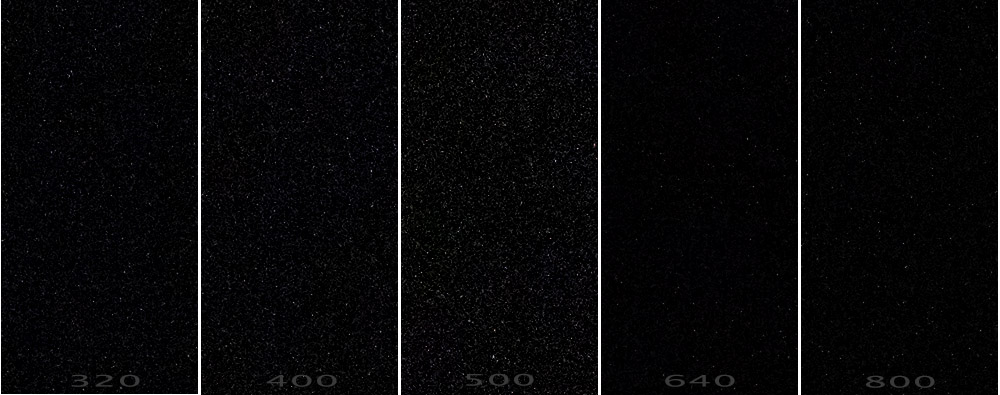
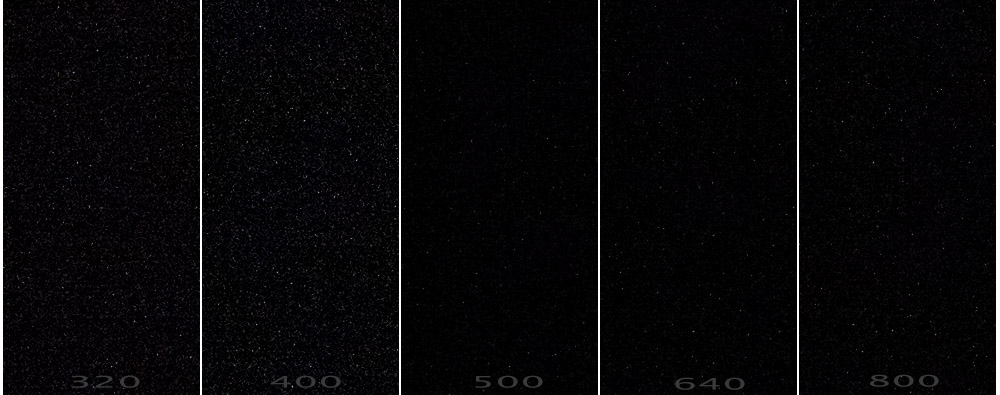
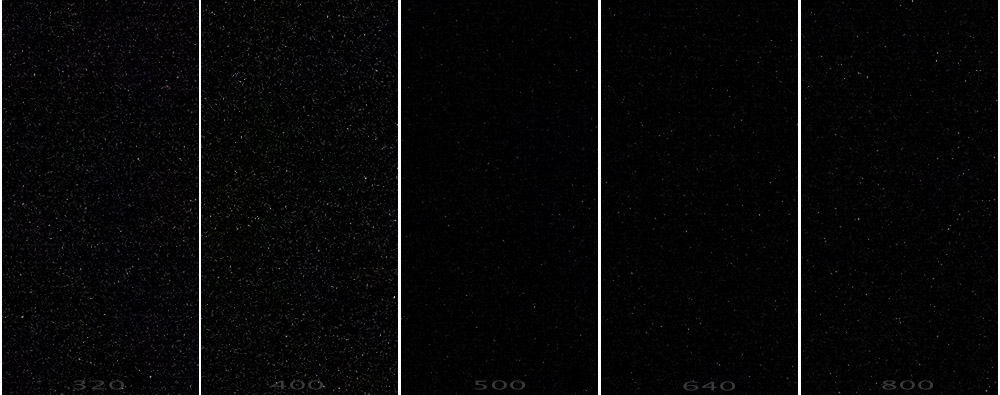
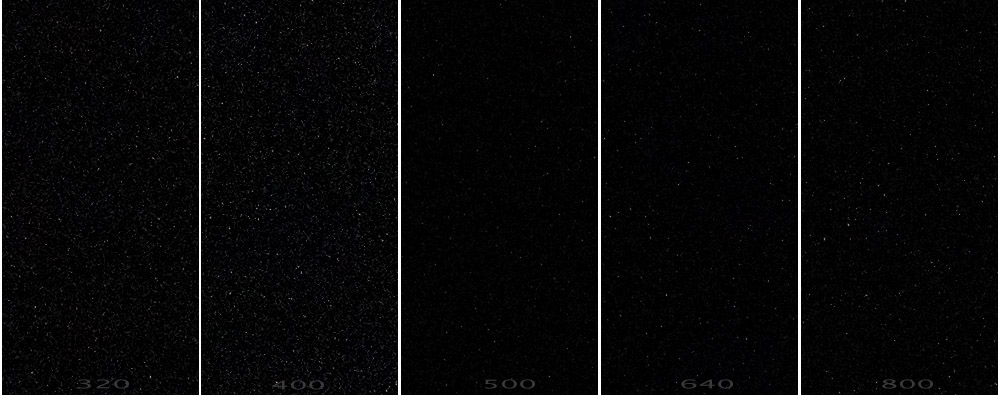
It is easy for you to check the HCG point yourself. Set up your camera with the lens cap on, SS set to something high (I use 1/8000). Take a series of black frames at different ISO's (e.g. 320, 400, 500, 640, 800). Load them into LrC, boost the exposure by +5 stops, and examine noise in each frame. You can easily see the drop in noise when the HCG ISO is reached. For the A1II MS that is ISO 640, for the A1II ES that is 500. Doing the same test for the A1 shows the HCG ISO is 500 for both MS and ES.
I expect Bill will eventually post both sets of data, but given the conflicts for his time it may be a while.
Dave
Edit: Added the charts below. All taken single frame, uncompressed.
Dave, thank you for your efforts in providing the data on this one. The A1 and A1ii are excellent from a sensor standpoint, but, as an engineer, I like to know the details.
Thank you for attaching the crops. The results are very obvious and very interesting. The reason for having this discrepancy between MS and ES is not obvious at all though. Given the correlation between noise and DR levels I wouldn’t expect much improvement in high iso noise when using the ES for action photography. Unless there was a “penalty” with ES in the a1 as well, which was never revealed/tested.
dclark wrote:
Geoff,
I sent him a note a couple of days ago asking about the ES data and he replied he was busy with some other projects. I sent him the files he needs and did some testing myself to verify that the MS and ES high conversion gain (HCG) points are 640 and 500. I have no idea why they are not the same. There was one point that created some confusion. In gathering the files for his analysis, black files are gathered for read noise measurements. His instructions say black files can be gathered either by putting on the lens cap, or removing the lens and putting a body cap on the camera. For some bizarre reason in ES mode the HCG is 500 with the lens attached and 640 without the lens attached. That created some confusion until I managed to figure out what was going on. The ES data will use data gathered with the lens attached.
FYI, I assume the A1 data on PhotonstoPhotos is for MS. Bill's instructions to people contributing files are detailed and he specified MS should be used. For the A1II I also sent some ES data which he took a look at and noticed the HCG difference.
It is easy for you to check the HCG point yourself. Set up your camera with the lens cap on, SS set to something high (I use 1/8000). Take a series of black frames at different ISO's (e.g. 320, 400, 500, 640, 800). Load them into LrC, boost the exposure by +5 stops, and examine noise in each frame. You can easily see the drop in noise when the HCG ISO is reached. For the A1II MS that is ISO 640, for the A1II ES that is 500. Doing the same test for the A1 shows the HCG ISO is 500 for both MS and ES.
I expect Bill will eventually post both sets of data, but given the conflicts for his time it may be a while.
Dave
Edit: Added the charts below. All taken single frame, uncompressed. ...Show more →
Regarding noise and the light/image capture pipeline, in Sony cameras I found this YouTube video by a guy named Dan Fox to be extremely helpful. He uses simplifying analogies and diagrams to point out how noise both occurs during the light gathering process in the sensor and how it is introduced through the image processing pipeline/process. He addresses topics like dual-gain ISO and ISO invariance.
I am not a hardware engineer (I was a software engineer ;-)) so I can't judge what Dan has to say. It is a bit nerdy but he walks through all this in a way that made a lot of sense to me. And for the electrical engineers out there it may seem overly simplistic. It is only about a year old and the original A1 had been out for a while when he put this together.


 When they saw me coming they would scatter.