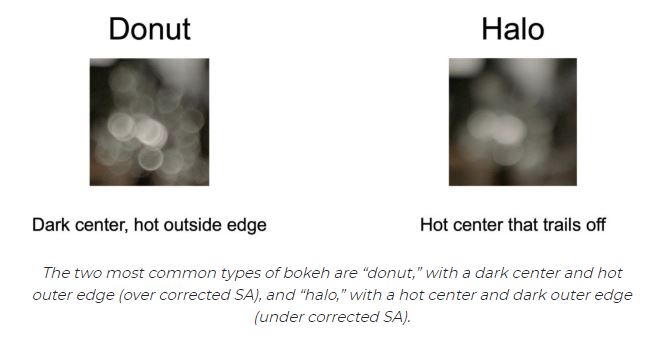
An example (near MFD) of modern vintage outer frame rendering, low contrast. Soft bokeh, evenly lit bokeh balls with haloing, abbreviated 'cats eye' forms. The Simeras I have (28,50) are if anything under-corrected for SA. I'm very glad they have FLE. Also a crop from an ARRI article explaining SA effects.
One of the major outlets for DZO/Thypoch in Australia told me: 'The Simera 21mm will be released in February, and the Simera 75mm will be released in March.' So I suppose we could say around four weeks (21/1.4) and around eight weeks (75/1.4).
The obvious competitors for these two are the Voigtlanders: VM 75/1.5 and VM 21/1.4. Both are big guns in the CV lineup. Both were released in late 2019.
philip_pj wrote:
An example (near MFD) of modern vintage outer frame rendering, low contrast. Soft bokeh, evenly lit bokeh balls with haloing, abbreviated 'cats eye' forms. The Simeras I have (28,50) are if anything under-corrected for SA. I'm very glad they have FLE. Also a crop from an ARRI article explaining SA effects.
Leica design goals generally strive for neutral bokeh if you believe Karbe.
philip_pj wrote:
One of the major outlets for DZO/Thypoch in Australia told me: 'The Simera 21mm will be released in February, and the Simera 75mm will be released in March.' So I suppose we could say around four weeks (21/1.4) and around eight weeks (75/1.4).
The obvious competitors for these two are the Voigtlanders: VM 75/1.5 and VM 21/1.4. Both are big guns in the CV lineup. Both were released in late 2019.
It's a shame that, if they release a 21mm Z version, it will likely be as bad in the corners as adapting the CV since Thypoch doesn't understand sensor thickness.
Where on earth is the Z CV version of the 21!
Jan 08, 2025 at 11:38 AM
Steve Spencer Offline • • • • • • • Upload & Sell: On
RoamingScott wrote:
It's a shame that, if they release a 21mm Z version, it will likely be as bad in the corners as adapting the CV since Thypoch doesn't understand sensor thickness.
Where on earth is the Z CV version of the 21!
Who says Thypoch doesn't understand sensor thickness. I think they do as their 50 f/1.4 M mount stills lens seems to perform differently than the 50 f/1.4 E mount lens cine lens. I know you don't believe E-mount lenses can be adapted to Nikon Z, but they can and if adapted well they perform well. The CV 21 f/1.4 in particular does well on Z mount cameras. When it has trouble it is because the registration distance is wrong and I assume if Thypoch makes a Z mount lens they will get the registration distance right.
Steve Spencer wrote:
Who says Thypoch doesn't understand sensor thickness. I think they do as their 50 f/1.4 M mount stills lens seems to perform differently than the 50 f/1.4 E mount lens cine lens. I know you don't believe E-mount lenses can be adapted to Nikon Z, but they can and if adapted well they perform well. The CV 21 f/1.4 in particular does well on Z mount cameras. When it has trouble it is because the registration distance is wrong and I assume if Thypoch makes a Z mount lens they will get the registration distance right.
You assume too much, Steve. The "native" Z Thypochs have been demonstrated to exhibit the same deformities that poorly adapted E>Z CV lenses show. Thypoch is NOT taking the Z sensor thickness into account, they are simply building in a poorly thought through adapter to the back of their M lenses. This is in addition, of course, to taking the cheap way out and making their Z lenses dumb for no good reason while charging CV prices
It's a shame, because they could be an excellent option for Z shooters looking for a secondary option outside of Voigt.
Flip side, some people might find the additional "character" of these misfit toys desirable, and more power to them.
Jan 08, 2025 at 01:46 PM
Steve Spencer Offline • • • • • • • Upload & Sell: On
RoamingScott wrote:
You assume too much, Steve. The "native" Z Thypochs have been demonstrated to exhibit the same deformities that poorly adapted E>Z CV lenses show. Thypoch is NOT taking the Z sensor thickness into account, they are simply building in a poorly thought through adapter to the back of their M lenses. This is in addition, of course, to taking the cheap way out and making their Z lenses dumb for no good reason while charging CV prices
It's a shame, because they could be an excellent option for Z shooters looking for a secondary option outside of Voigt.
Flip side, some people might find the additional "character" of these misfit toys desirable, and more power to them....Show more →
I don't think that is correct. The "native" E mount Thypoch 35 is bad on a Sony E mount camera, but it is worse on a thin sensor modified camera, and worse than the Leica M version on a thin sensor modified camera. It is clear that the mirrorless lenses do not perform the same as the Leica M versions of the lenses. There is still a lot to sort out with these lenses, but I think you may be confusing a poorly performing lens (which I think the 35mm is) with a poorly adapted lens.
The 50mm is a quite good performing lens on Leica M and the E mount cine version performs well on Sony E mount, I think we are going to have to wait until we get a Z mount version of what we know can be a good performing lens (e.g., the 50mm) before we know whether they have properly adjusted for the sensor glass thickness of mirrorless cameras.
Do you have any links to people using the E mount cine lenses on Nikon? I have not seen that yet, and it may give us a clue. Thypoch may not have adjusted the 28 and 35 stills lenses as they came out earlier, but did adjust the formula for the E mount cine lenses. IMO, there is still a lot to figure out about what Thypoch is doing about sensor thickness, but it is clear that at least some of the time they are doing something. They haven't mentioned what they are doing at all, however, and in response to questions about it they have been vague and contradictory. On the 28mm and 35mm thread, however, Nehemiah demonstrated pretty clearly that the 50mm E mount cine lens has been adjusted for mirrorless, so I think there is reason to hope they will get this right as they develop new versions of the lenses. Personally, I am not going to get any of their lenses for mirrorless until I am sure they are not negatively affected by cover glass thickness.
RoamingScott wrote:
This is in addition, of course, to taking the cheap way out and making their Z lenses dumb for no good reason while charging CV prices
It's a shame, because they could be an excellent option for Z shooters looking for a secondary option outside of Voigt.
Sure there's a good reason. To make lenses electronically compatible with Nikon's or Canon's or Sony's system, which I think we would all prefer, means entering a licensing agreement with each company. With Sony it's probably the easiest, but as we know, Nikon and Canon are being very picky about who they're allowing to produce lenses electronically compatible with their respective systems. This likely entails a lot of red tape, licensing fees and also higher development and manufacturing costs. Making a purely mechanical lens is certainly the easiest and least expensive 'way out' for a company like Thypoch/DZO, or whatever their parent company is, and guarantees they can access users from each mount/system without interference from those companies.
At ~$600 for a 28, 35 or 50/1.4, pricing is certainly in-line with their optical performance, which IMO is competitive not only with Cosina, but also Leica and a definite step above the likes of TTA or 7A. I think they know this and aren't looking to give away these lenses just to gain some 'cheap' brand recognition that will hurt them more than help in the longterm.
cbass wrote:
Leica design goals generally strive for neutral bokeh if you believe Karbe.
I do. What recent new 'non-vintage' Leica optical design does not produce neutral bokeh?
philip_pj wrote:
An example (near MFD) of modern vintage outer frame rendering, low contrast. Soft bokeh, evenly lit bokeh balls with haloing, abbreviated 'cats eye' forms. The Simeras I have (28,50) are if anything under-corrected for SA. I'm very glad they have FLE. Also a crop from an ARRI article explaining SA effects.
A couple of informative and lively Simera-C videos from Karasov. Subtitles are included. He uses (and labels) the five lenses currently in the cine range, so we can see the rendering of the 21mm and 75mm, as well as the existing 28-35-50 in stills form.
Do remember to look at the background from time to time.
..
Fred Miranda wrote:
<div id="field" name="field"></div>
<a href=https://www.fredmiranda.com/forum/topic/1878983/0#ql>Back to Quick Links</a>
Field Curvature
The Simera 50mm f/1.4 ASPH. maintains a mostly flat field curvature from close distances to infinity. Unlike most 50mm lenses that exhibit outward field curvature, the Simera's curvature is flatter. Both the Simera and Leica lenses display similar characteristics, with the field curvature extending outward at long distances but only in the very corners of the frame. However, the Simera is slightly flatter at infinity.
Here’s a GIF animation illustrating the focus area from close distance to infinity in four stages, first with the Leica and then with the Simera.
Wow. I have done this test for a number of my lenses, but never tried it at different distances. Didn't realize it would show a different curve as the distance extended by not all that much I'm guessing.
It's interesting what a good 21/1.4 can produce, especially if it has a short and functional MFD. This applies to 28/1.4 lenses as well, perhaps even more so, as 28s can shape faces well. It's great in low light environments. Here is a one minute video showing the difference in a 21/1.4 and a 50/1.4 (both Simeras):
philip_pj wrote:
It's interesting what a good 21/1.4 can produce, especially if it has a short and functional MFD. This applies to 28/1.4 lenses as well, perhaps even more so, as 28s can shape faces well.
I'm sure you meant to write that it can deform faces well.
Nifty Fifty wrote:
I'm sure you meant to write that it can deform faces well.
Deform has a negative connotation. Perhaps "its distortion can be flattering to faces". But I think what was originally said was plainly understandable to most of us.
highdesertmesa wroteDeform has a negative connotation. Perhaps "its distortion can be flattering to faces". But I think what was originally said was plainly understandable to most of us.
That was understandable for me too. I just wanted to say, somewhat jokingly, that I think the statement that 28mm can shape faces is complete nonsense, even if it says Typoch on the lens. But of course it fits seamlessly into the long list of flowery, unique and downright fantastic-seeming properties that are attributed to the current hype called Typoch.
Nifty Fifty wrote:
That was understandable for me too. I just wanted to say, somewhat jokingly, that I think the statement that 28mm can shape faces is complete nonsense, even if it says Typoch on the lens. But of course it fits seamlessly into the long list of flowery, unique and downright fantastic-seeming properties that are attributed to the current hype called Typoch.
It's just a general statement about mild pincushion versus mild barrel distortion.
However, different faces benefit from one versus the other – so I agree it's not a complete positive re: pincushion.
If anything this threads reminds you how far Leica really was ahead of the bell curve with lens design and focusing on the interesting design philosophies-
People can hate on Leica all they want but their stamp on lens design and influence is still showing today-