philip_pj wrote:
It's a non sequitur, isn't it, Steve? We take what we get in this low end corporate world. ALL my lens boxes are stored away, even the ones that look they contain a game boy device. I see it as a service to the next owner since we are just caretakers of long life equipment.
Zeiss never did anything like this, and now Cosina jams some folding paper in the store standard box to buffer the lens, lol. And the cheapest plastic wrap and cradle available to them.
And it's important also in psychology some may not understand. It shows you they care about their product and they care about the protection in transit of the expensive item, and beginning of their relationship.
Would you rather buy a ring for your wife that came in an industrial foam-filled, thin cardboard Zeiss box, or this lovely and durable Thypoch presentation standard box? Rhetorical question, I already know the answer. As with clothes, paintwork, wood and upholstery, presentation is a strong indicator of the quality of the contents. Aesthetics matter, unless you are cutting corners of course. ...Show more →
Well seing as how I own my own Gemstone mines of various kinds in Africa, and am a partner in a Diamond growing laboratory in India, my office safe is full of gems. My Wife just takes what she wants when she wants. Fine with me. But she doesn't get a box at all.
Since I sell stones to the trade primarily the only packaging they get is a small white folded paper, or transparent plastic container costing a few cents.
She is an industry leader in the beauty products industry. So she spends a lot of time on appropriate packaging to position her brands. So I understand the concepts well.
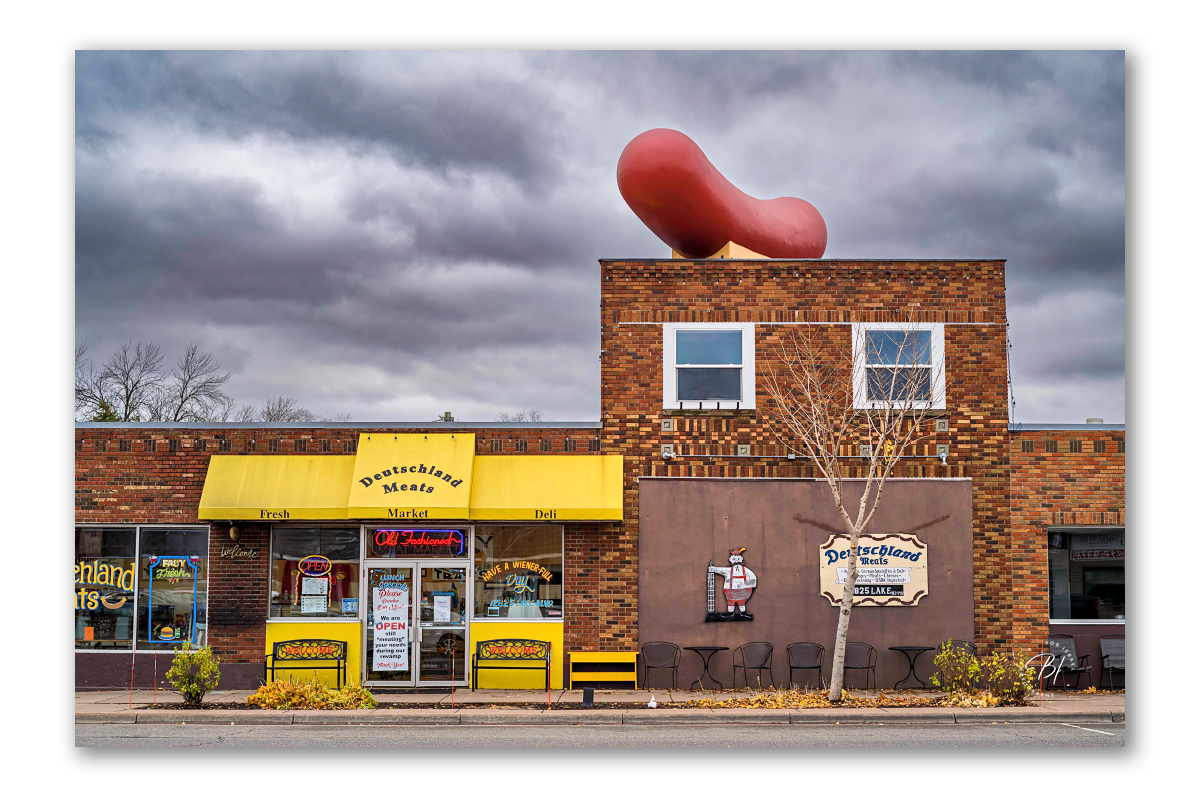
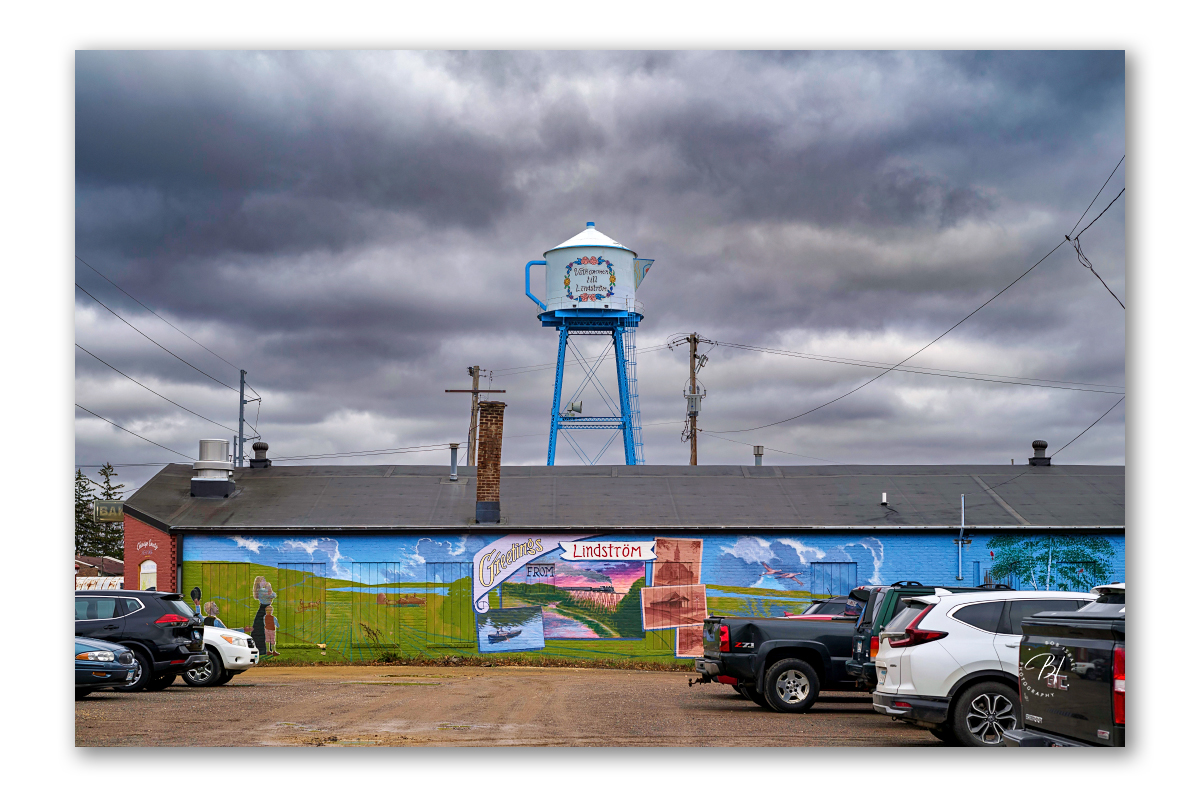
A visit to Midwest Camera Repair in Lindstrom, MN. Getting a CLA on my newly purchased Agfa Ambi Silette. I couldn't pass up the opportunity for some quick shots.
Fred Miranda wrote:
I like the scale on the Thypoch lenses; it sets them apart from other third-party options. They’ve got this unique mechanical way of doing zone focusing that I hope sticks around. With the 50mm f/1.4, I don’t use it much since the depth of field is narrow anyway, but I’m curious to try it with the Simera 28mm. I still use the depth of field scale for zone focusing and find it works well by just adding a stop to it, given that it's calibrated for the film era. Because of this, I prefer using it when shooting film.
If something is different it is not necessarily better, and imho this is one of these cases.
On the 50mm 1.4 the dots are completely useless. Between f/1.4 and f/5.6 their position is the same, they don't give away anything.
Further stopped down the dots are so far away from the scale, you are just guessing if the dot is where say the infinity symbol is.
The normal distance scales weren't broken, so there was no need to try and fix them, especially at the cost of worse ergonomics.
But yes, with wide angle lenses they are a bit more useful than they are for the 50mm.
Their optical designs are very solid, they don't need these gimmicks.
BastianK wrote:
If something is different it is not necessarily better, and imho this is one of these cases.
On the 50mm 1.4 the dots are completely useless. Between f/1.4 and f/5.6 their position is the same, they don't give away anything.
Further stopped down the dots are so far away from the scale, you are just guessing if the dot is where say the infinity symbol is.
The normal distance scales weren't broken, so there was no need to try and fix them, especially at the cost of worse ergonomics.
But yes, with wide angle lenses they are a bit more useful than they are for the 50mm.
Their optical designs are very solid, they don't need these gimmicks....Show more →
I get that you see the DOF scale (especially Simera’s version) as a bit of a gimmick, but I’m curious how many Simera shooters actually feel the same way. Sure, a lot of people don’t use DOF scales, whether it’s the classic ones or the dots, but I wonder how those who do use them feel about Simera’s take on it. Personally, I’m more into the mechanical scales than the digital ones on my SL2 or Batis lenses. They might be more accurate, but they definitely feel a bit too computerized for my taste.
We both agree it’s not super helpful on a 50mm lens, but I’ll be testing the Simera 28mm and relying only on the dots to see how it stacks up against classic DOF scales. It should give me a better idea if it’s actually useful or just a neat idea that doesn’t add much.
Fred Miranda wrote:
I get that you see the DOF scale (especially Simera’s version) as a bit of a gimmick, but I’m curious how many Simera shooters actually feel the same way. Sure, a lot of people don’t use DOF scales, whether it’s the classic ones or the dots, but I wonder how those who do use them feel about Simera’s take on it. Personally, I’m more into the mechanical scales than the digital ones on my SL2 or Batis lenses. They might be more accurate, but they definitely feel a bit too computerized for my taste.
We both agree it’s not super helpful on a 50mm lens, but I’ll be testing the Simera 28mm and relying only on the dots to see how it stacks up against classic DOF scales. It should give me a better idea if it’s actually useful or just a neat idea that doesn’t add much....Show more →
I use DOF scales a lot on my M cameras. I find this technique most useful when stopped down a bit, on 35mm and wider focal lengths when street style shooting, or when establishing the hyperfocal distance for landscapes. When shooting wide open on fast lenses, especially 50mm and up, I mostly rely on the range finder or other focusing methods.
I do prefer the standard DOF scales, and more uniform aperture setting systems of the Leica lenses over the Simera's creative but quirky implementations. I can live with them at 50mm and above. Below that I think I might find them objectionable. That being said, overall I do enjoy the shooting experience of the 50mm Simera. I am very much a fan of the optics. Enough that I am thinking of selling my 50mm Summicron v5.
BastianK wrote:
If something is different it is not necessarily better, and imho this is one of these cases.
On the 50mm 1.4 the dots are completely useless. Between f/1.4 and f/5.6 their position is the same, they don't give away anything.
Further stopped down the dots are so far away from the scale, you are just guessing if the dot is where say the infinity symbol is.
The normal distance scales weren't broken, so there was no need to try and fix them, especially at the cost of worse ergonomics.
But yes, with wide angle lenses they are a bit more useful than they are for the 50mm.
Their optical designs are very solid, they don't need these gimmicks....Show more →
Are the lighted dots a bit gimmicky, sure but I think they're cool and different from traditional.
Are they even needed on a 50mm? I probably will not use them often but it's nice to have the DOF there in any form.
Every camera and lens I've used has its own personality of use and ergonomics. The Simera is no different.
At the end of the day, we have a lens that is a fraction of the cost of the Leica with equivalent performance. For me, everything else is a marginal difference and part of the personality of this lens.
I found I used DOF information on the Leica SL and S1R because it is more readable, and I assume is more accurate for digital sensors.
On the M lenses the thin lines are so close together that you really have to stop and look very carefully, and counting the lines from one side to the other.
From a pure graphic design point of view I would favour the Simera approach. BastionK criticizes the Simera for providing little information between 1.4 and 5.6. Well neither does the thin close together lines on an M 35 1,4 for example.
The other thing about the two different options is that on an Leica M 35 1.4, for example, the method of showing DOF takes up a sizeable amount of real estate. This places the focus ring more to the front, and close then to the aperture ring. As previously noted this leads to the unintentional moving of rings.
The Simera method creates an empty bit of real estate, but in the centre of the lens, and allows the two rings to be well separated, therefore helping to avoid accidental movement, and a space where the fingers can support the lens better. This feature will prove to be even more important when using gloves which sadly I must use already.
Just my thoughts. Others may differ.
1bwana1 wrote:
I use DOF scales a lot on my M cameras. I find this technique most useful when stopped down a bit, on 35mm and wider focal lengths when street style shooting, or when establishing the hyperfocal distance for landscapes. When shooting wide open on fast lenses, especially 50mm and up, I mostly rely on the range finder or other focusing methods.
I do prefer the standard DOF scales, and more uniform aperture setting systems of the Leica lenses over the Simera's creative but quirky implementations. I can live with them at 50mm and above. Below that I think I might find them objectionable. That being said, overall I do enjoy the shooting experience of the 50mm Simera. I am very much a fan of the optics. Enough that I am thinking of selling my 50mm Summicron v5. ...Show more →
Personally, I find it super handy for zone focusing when shooting at smaller apertures. For street photography, especially with film, it’s a great tool. I really hope newer lenses keep this feature...it’s something I think a lot of street photographers rely on.
Even though the Simera displays it a bit differently, it still serves the same purpose. What I love most is that it’s unique and clearly the result of some clever engineering. It’s definitely not a gimmick because it actually works. I really hope lenses don’t get rid of this feature just because some people don’t use it. I could live without it on a 50mm+ focal length, but it’s great that the Simeara 28/35/50 lineup has kept it consistent. Not sure if it will be included on the new 75mm f/1.4 coming next year, though.
Fred Miranda wrote:
What I love most is that it’s unique and clearly the result of some clever engineering. It’s definitely not a gimmick because it actually works. I really hope lenses don’t get rid of this feature just because some people don’t use it. I could live without it on a 50mm+ focal length, but it’s great that the Simeara 28/35/50 lineup has kept it consistent. Not sure if it will be included on the new 75mm f/1.4 coming next year, though.
Agree, I don't think of it as a gimmick as much as a nod/ homage to the precisely engineered Kern/Alpa lenses that invented this technique well over half a century ago. For Thypoch to resurrect what was such a precise engineering marvel of design is somewhat remarkable. With these lenses, they are flexing not only their optical prowess but also overall engineering/ design capability. To do so with a rare, vintage design - that is still novel and useful- is pretty awesome.
It's well recognised among aficionados of vintage lenses, along with the now removed infinity lock. Someone there really knows their optical history and background.
I am in Canada and the site does not allow me to download the Image Upload App. Fred does not trust our Canadian dollar I assume.
Maybe he can do something. I would love to post on this great site.
Doug Ball wrote:
I am in Canada and the site does not allow me to download the Image Upload App. Fred does not trust our Canadian dollar I assume.
Maybe he can do something. I would love to post on this great site.
Of course, Doug, that’s not the case at all -- we love Canadians! The reason we don’t accept PayPal payments from outside the US is purely for security reasons. PayPal doesn’t provide the tools we need to effectively prevent scams.
However, there is an alternative for non-US customers. You can use a credit card through STRIPE, which is the second option on the Upload & Sell page.
I received my copy today, and I’ve just tested it against my Leica 50mm Summicron M. At f1.4 it is sharper and crisper than the Summicron at f2. At f2.8 the Summicron beats the Simera wide open. But stop the Simera down to f2.8 and it is again better in resolution and contrast. The testing was at about 30m.
Against my CV Nokton 50mm f1.5, there is no contest. It is considerably sharper and contrastier at 1.4 v 1.5. The Nokton catches up only at f2.8 centrally when it is compared to the Simera wide open. However, away from the centre just a little and the Simera at f1.4 has more resolution and contrast than the Nokton at f2.8. Only in the far corners is the Nokton at f2.8 holding more detail and contrast than the Simera at f1.4.
At f1.4 with the Simera there is a sharp fall off of detail in to the far corner. That would be enough to bother a landscape photographer shooting wide open. I am not that person.
On the camera it is almost the same length as my 35mm Summilux asph, slightly wider and but lighter.
Ergonomically it seems perfect, and the haptics are also really great - as good as any lens I own. This lens will probably replace my 50mm Summicron.
Tariq Gibran wrote:
Agree, I don't think of it as a gimmick as much as a nod/ homage to the precisely engineered Kern/Alpa lenses that invented this technique well over half a century ago. For Thypoch to resurrect what was such a precise engineering marvel of design is somewhat remarkable. With these lenses, they are flexing not only their optical prowess but also overall engineering/ design capability. To do so with a rare, vintage design - that is still novel and useful- is pretty awesome.
I received the Simera 28 today and really appreciate the mechanical DOF dots, especially since they’re more useful on a wide lens. However, I’m disappointed that it doesn’t come with a focusing tab. I don’t mind the infinity lock, but I wish it had the focusing tab like the 50mm.
It’s interesting that my Simera 50/1.4 matches almost exactly with the DOF scale results of my Leica and Voigtlander 50mm lenses. However, the Simera 28/1.4 shows one less stop compared to my other 28mm lenses. Based on these two copies, I’d say the Simera 28 was calibrated for digital, while the 50 was calibrated in a classic way, which works better for film. With the Simera 28, I don’t have to compensate when shooting with my digital M. I’m not sure if this applies to all copies, but that’s how my two lenses perform.
Got my 50mm delivered yesterday (I had tried a 28mm earlier in the year and seen bad light leaks on it and returned it mostly due to ergonomics.) The 50mm also has some amount of light leak in one corner, not sure how this doesn't get caught. I can live with it mostly.
My problem currently is a front focusing issue when focusing with M11 rangefinder. Has anyone dealt with this? I saw a Thypoch youtube video where they show how rangefinder focusing can be adjusted with shims, anyone tried that?
krdvg wrote:
Got my 50mm delivered yesterday (I had tried a 28mm earlier in the year and seen bad light leaks on it and returned it mostly due to ergonomics.) The 50mm also has some amount of light leak in one corner, not sure how this doesn't get caught. I can live with it mostly.
My problem currently is a front focusing issue when focusing with M11 rangefinder. Has anyone dealt with this? I saw a Thypoch youtube video where they show how rangefinder focusing can be adjusted with shims, anyone tried that?
It's quite common for lenses, especially fast ones, to either back-focus or front-focus relative to a well-calibrated rangefinder. This issue happens across all lens brands, including Leica. If the lens is not perfectly aligned with the rangefinder, it won't deliver optimal results. Also, if your rangefinder might be out of calibration, in which case it's not a lens issue...
If you are confident that your camera's rangefinder is perfectly calibrated, you need to determine if the lens is truly front or back-focusing. Here are some tests and notes I made for myself:
Quick Guide: Fixing Front-Focus or Back-Focus on Rangefinder Lenses
1. Focus using Live View (LV) for accurate focus.
2. Check the Rangefinder Patch – If it does not align, note the direction you must turn the focus ring to align it. (Ensure you are behind the camera in the normal shooting position).
Quick Rule of Thumb:
• If you turn the focus ring clockwise (CW) to align the patch, the lens is front-focusing – Remove shims.
• If you turn the focus ring counter-clockwise (CCW) to align the patch, the lens is back-focusing – Add shims or shave mount.
----
My Simera 50mm f/1.4 was perfectly calibrated, but the Simera 28mm f/1.4 I received yesterday was back-focusing. As noted earlier, back-focusing can be corrected by adding shims to either the lens mount or the section of the lens where shims calibrate for the rangefinder. Fortunately, in my case, both infinity and close distances were back-focusing, so I could easily fix it by adding a shim behind the lens mount. This required removing the rear mount. I calibrated it precisely by adding a 0.04mm shim. Now the lens focuses accurately at any distance. For front-focusing, shims need to be removed, but it's a trial and error process to determine the exact amount needed to achieve perfect focus with the rangefinder.
Fred Miranda wrote:
Thanks for the info on the Kern/Alpa.
I received the Simera 28 today and really appreciate the mechanical DOF dots, especially since they’re more useful on a wide lens. However, I’m disappointed that it doesn’t come with a focusing tab. I don’t mind the infinity lock, but I wish it had the focusing tab like the 50mm.
It’s interesting that my Simera 50/1.4 matches almost exactly with the DOF scale results of my Leica and Voigtlander 50mm lenses. However, the Simera 28/1.4 shows one less stop compared to my other 28mm lenses. Based on these two copies, I’d say the Simera 28 was calibrated for digital, while the 50 was calibrated in a classic way, which works better for film. With the Simera 28, I don’t have to compensate when shooting with my digital M. I’m not sure if this applies to all copies, but that’s how my two lenses perform....Show more →
Fred, I'm very much looking forward to your review of the Simera 28mm. I have held off on purchasing it - though I know optically I will probably love the rendering- as my previous experience with the infinity style lock has been frustrating in use when adapted to other bodies where infinity focus is sometimes a tiny bit closer than indicated. I understand Thypoch will eventually change this lens over to using the focusing style tab and I wish they would hurry it and do so. If you have a contact at Thypoch, perhaps you could ask them when this is expected.
Great info on the more conservative and practical use of the DOF scale with digital on the 28mm.