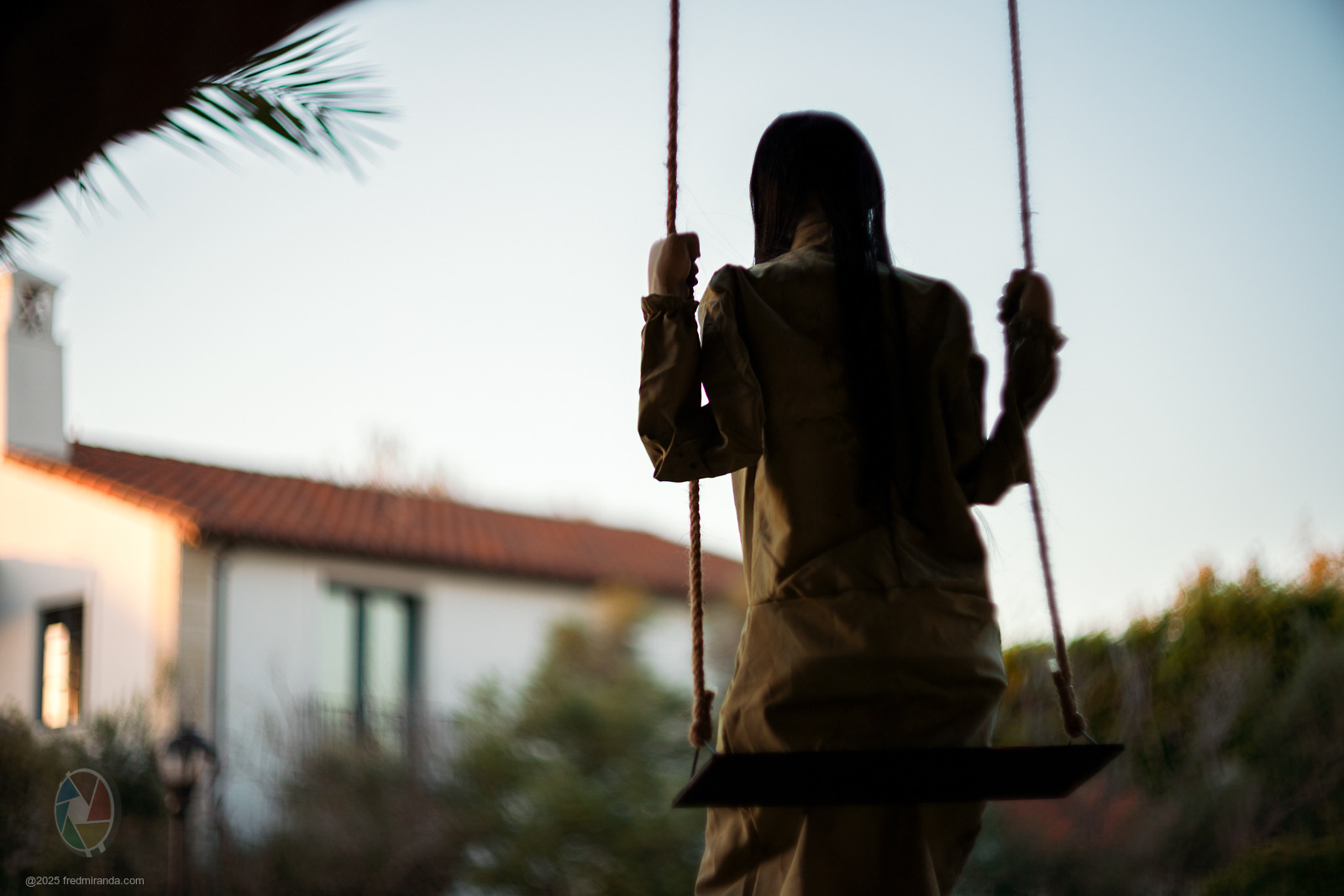
The Zeiss design is pretty clear in purpose...old school portraits.* Composition is work, but rewarding.
1) find/create spec highlights for background
2) the greater foreground & background separation, the better
2) compose foreground and background alignment
3) get as close as you can to the subject that framing/composition allows
3) center the part of subject you want sharp.
I'm always thinking of the background and how close I can get to the subject when I'm using it -- nothing new, but it forces you to carefully consider composition.
test shot
* Wide open at 1.5. It's has normal rendering at f/8, etc. But that's not what this lens is about...
fjablo wrote:
I was a bit surprised by the CA in your sample, as I hadn’t noticed that on my copy. But probably just a matter of not having shot in as contrasty light yet.
Shot two rolls of fall color on Portra 160 with this lens yesterday, can’t wait to see the results! (will shoot some more film this week and then drop it all off at once, so will be a while before I see the images..)
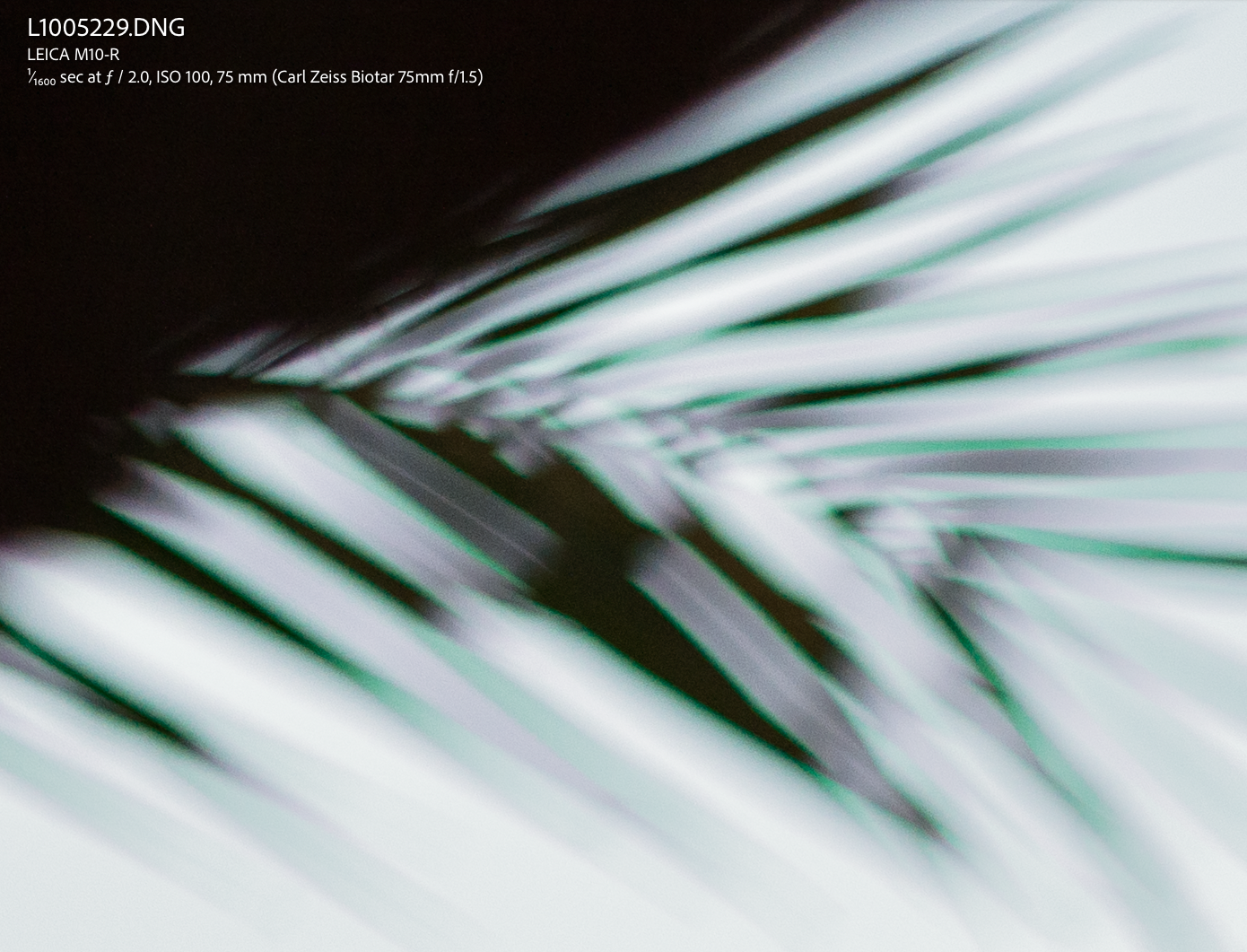
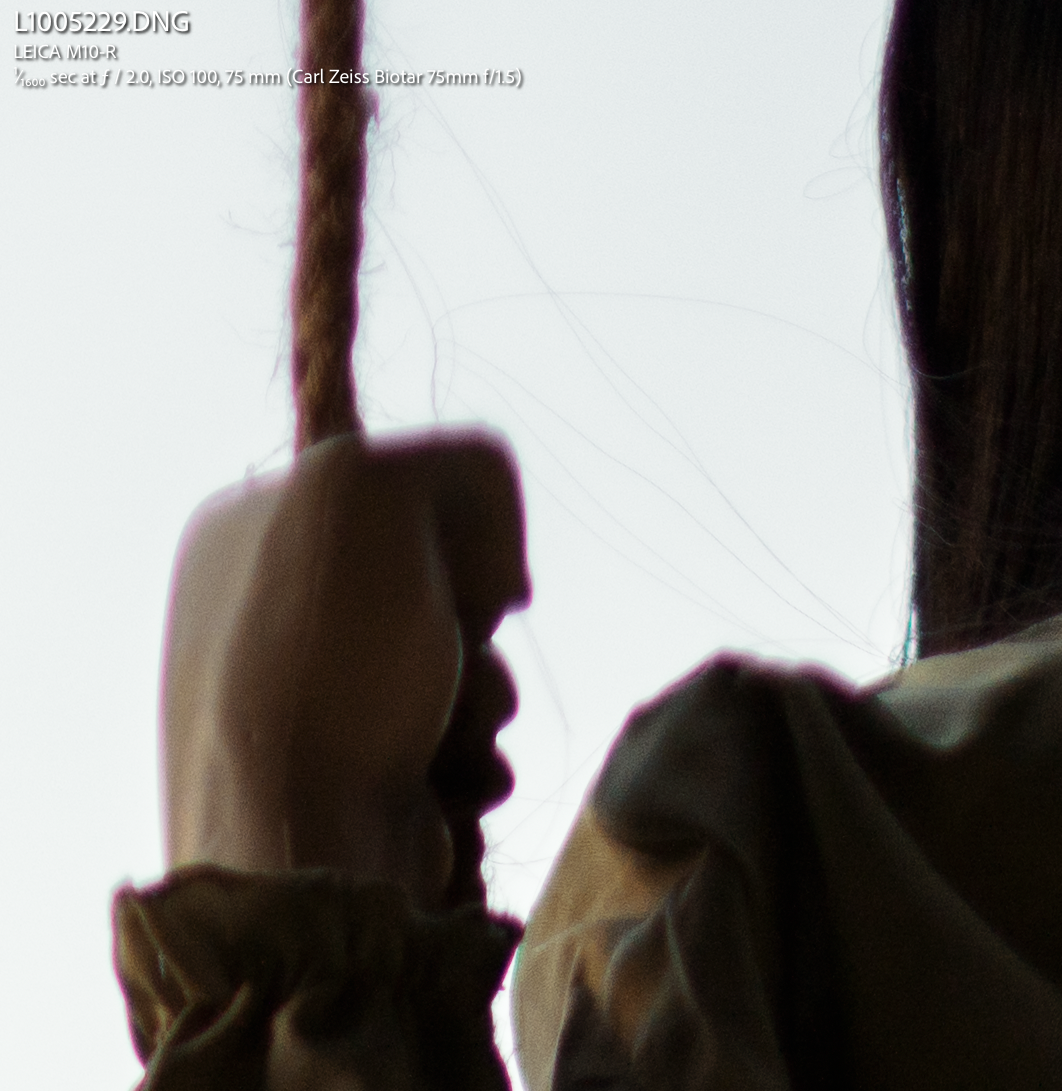
One downside of this lens is its strong axial CA. I suspect the original Zeiss wasn't well corrected either. The green fringing behind the focal plane is quite pronounced and difficult to remove completely. Here's a sample showing how visible it gets in high-contrast areas -- Lightroom de-fringing only reduces but can't effectually remove it.
LEICA M10-RCarl Zeiss Biotar 75mm f/1.5 lens75mmf/2.01/1600s100 ISO-1.0 EV
100% magnification from image above showing green fringing
100% magnification from image above showing purple fringing