p.1 #3 · We're talking a lot about 85mm lenses lately...
I agree with more than I disagree with, in the YT video above. The blur out look is for those who truly dislike their backgrounds, and my word there is no shortage of such photographers. So he is more or less a voice in the wilderness here.
Some of the issue is the market-manufactured jump between the 50mm region and the very, very different 85mm focal length. We see quite a number of 55mm and 58mm lenses, often for fast specialty lenses aiming at a pseudo portrait FL.
Interestingly, the 85mm group cannot shift shorter (in general, though Leica did an 80mm in R, Pentax did a 77mm) but they bleed off longer into 90mm now and then. And, given similar perspectives, even the 100-105mm group. Both outland directions enjoy little market success or differentiation, showing just how rusted on people are to 85mm.
His 85mm images tend to put too much distance to the human subjects, and are more difficult to arrange backgrounds for, and they still carry a fair degree of blur. And furthermore, they need excellent light - like what you see in Phillip Reeve's imagery, as as example FM people may have seen.
I opted for the road less travelled, which turned out to be the answer for my preferences. But 75mm lenses are a little touchy in design terms, so they require a steady hand at the design controls, and in management. They need lens speed to emulate the portrait length of 85mm and it helps if they can bring some innate individual qualities to the table there.
They also need excellent mid aperture performance and well-engineered fade to fully distance themselves from 85mm (which are often horrlble for landscapes, and require smaller diffraction-prone apertures) to fulfil the depth they are much more capable of.
And do bear in mind that many 85mm lenses suffer breathing which pushes their shorter camera-subject images out significantly. Many are actually operating as faux 90-95mm lenses at their most used focus distances.
So, designed with care, 75mm lenses can effectively deliver a kind of super 50mm lens rendering. A 75mm with little personality is going nowhere, meaning the focal length will remain a specialty offering, because the mainstream market framework for lens ranges is set in concrete, with an honourable exception being Leica (and of course Cosina).
PS There is a small trend to 60-65mm, often for some distinction from 50mm and to suit the rising 40mm class, but they are still very close and look much the same as the 50s. 60mm has a long history as the favoured short macro focal length, usually f2.8 and very sharp but not so flattering for human subjects.
p.1 #4 · We're talking a lot about 85mm lenses lately...
philip_pj wrote:
I agree with more than I disagree with, in the YT video above. The blur out look is for those who truly dislike their backgrounds, and my word there is no shortage of such photographers. So he is more or less a voice in the wilderness here.
...
I am one of those photographers, and proud. When you dislike your background the best option is often to hide it.
I often shoot in cluttered public places with lots of people and busy distracting backgrounds, yet I want the subject to stand out as much as possible, blurring the background as much as I am able to is certainly my preferred MOA. You also inevitably get background and context when the backgrounds are very close or busy. I rarely get images that look like they could have been shot against a plain studio backdrop, and that's not I want anyway.
As an aside, and relating to the video and using 85mm lenses rather than your comments, longer lenses obviously put you further from the subject and whilst 85 is still OK for full length you start getting into the territory where you are no longer in close communication with your subject. These longer images can look more like candid shots and often lack connection with the viewer (photographer). It's more the case with longer lenses, and one of the reasons I prefer the Leica R 80 over 100mm+ lenses.
p.1 #6 · We're talking a lot about 85mm lenses lately...
An 85mm lens has been my most used focal length since 2002 with 3 different camera systems; the Nikkor 85 f1.4 AF-D with Nikon DSLR’s, the Olympus 45 f1.8 then P/Leica 42.5 f1.2 Nocton with M4/3 starting in 2012 and now the Sony FE 85 f1.8 (1 year only) and Batis 85 f1.8 with Sony since 2018.
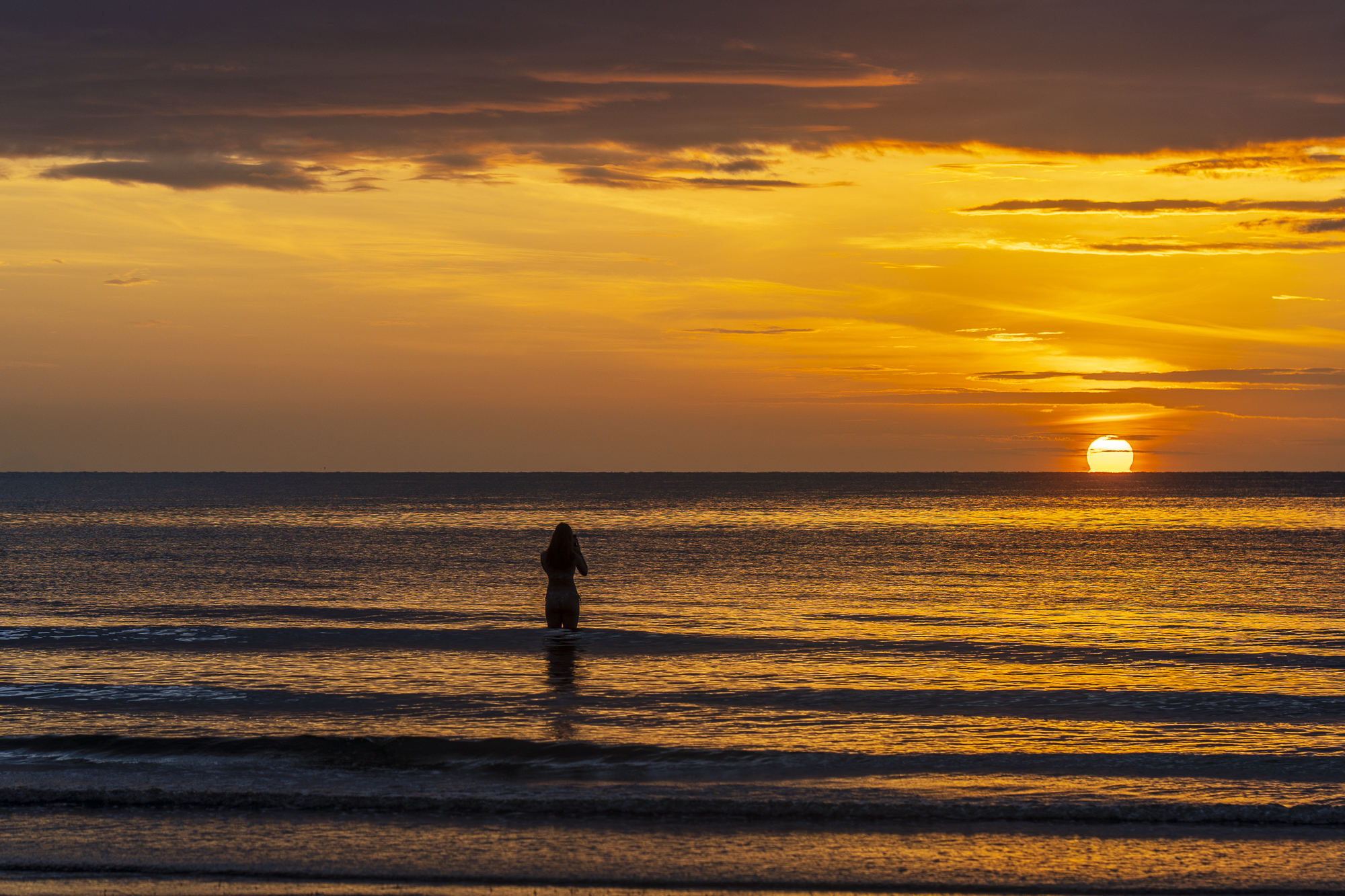
I shoot a lot of outdoor portraits and find the compression of the background with the 85mm a draw for me, same as explained in the video. I like, if setup properly, that features in the background appear larger. The photo below is with the Batis 85, and if this had been taken instead with my 35 or 50 f1.4 GM the rising Sun would just not nearly be as prominent, thus lessening its effect in the photo.
p.1 #7 · We're talking a lot about 85mm lenses lately...
Something that helps keep me sane is not caring what random talking heads on social media say to do or not do. This is your journey and your craft. His opinions are just that.
(sincerely, a person that is enjoying shooting his MF 85mm equivalent the way I want to )
p.1 #9 · We're talking a lot about 85mm lenses lately...
SpecFoto wrote:
An 85mm lens has been my most used focal length since 2002 with 3 different camera systems; the Nikkor 85 f1.4 AF-D with Nikon DSLR’s, the Olympus 45 f1.8 then P/Leica 42.5 f1.2 Nocton with M4/3 starting in 2012 and now the Sony FE 85 f1.8 (1 year only) and Batis 85 f1.8 with Sony since 2018.
I shoot a lot of outdoor portraits and find the compression of the background with the 85mm a draw for me, same as explained in the video. I like, if setup properly, that features in the background appear larger. The photo below is with the Batis 85, and if this had been taken instead with my 35 or 50 f1.4 GM the rising Sun would just not nearly be as prominent, thus lessening its effect in the photo. ...Show more →
p.1 #10 · We're talking a lot about 85mm lenses lately...
RoamingScott wrote:
Something that helps keep me sane is not caring what random talking heads on social media say to do or not do. This is your journey and your craft. His opinions are just that.
While true, that truth might be pretty obvious.
RoamingScott wrote:
(sincerely, a person that is enjoying shooting his MF 85mm equivalent the way I want to )
Some find it fun to share opinions. It could be a purpose of a forum.
p.1 #11 · We're talking a lot about 85mm lenses lately...
I never really enjoyed the long minimum focus distance of an 85, but something like a 75/1.5 Nokton now that's something I can get behind. I still think about that lens more than I should.
p.1 #12 · We're talking a lot about 85mm lenses lately...
Alan Parker wrote:
I never really enjoyed the long minimum focus distance of an 85, but something like a 75/1.5 Nokton now that's something I can get behind. I still think about that lens more than I should.
I have been looking at the new C/V 75mm f1.5 Nokton for Sony to go along with the C/V 21mm 3.5 and 35 f2 APO as a MF kit for the A7CR. Its minimum focus distance is 0.55m. My Batis 85 is 0.80m, so not that much different?
p.1 #13 · We're talking a lot about 85mm lenses lately...
Alan Parker wrote:
I never really enjoyed the long minimum focus distance of an 85,
RF 85mm f/2.0 IS stm is an exception, as it does a 0.5x magnification. AF is accurate but... unsticky (if that's an descriptor, but just don't try to chase running toddlers with it), but at least it has AF (not that it matters for that many cases), IQ is good, and IS is very good (for me IS matters). It's not a sports lens, it doesn't have the most beautiful rendering for portraits (it holds up contrast pretty well in back lit situations though), and for some reason Canon assumed it was very important to have almost no distortion in a portrait focal length lens (unlike the Sigma 65mm f/2.0 and Sigma 85mm f/1.4 DN or the crop Sigma 56mm f/1.4).
It's a little bit of a strange lens imo, however, if you like to combine 85mm for both (posed-)portraitisch and marcroïsh purposes, its good value for money imo.
Alan Parker wrote:
but something like a 75/1.5 Nokton now that's something I can get behind. I still think about that lens more than I should.
Maybe I've looked up the wrong lens, but 1:7.1 = 0.14x....
Sep 01, 2024 at 10:24 AM
Steve Spencer Offline • • • • • • • Upload & Sell: On
p.1 #14 · We're talking a lot about 85mm lenses lately...
steamtrain wrote:
RF 85mm f/2.0 IS stm is an exception, as it does a 0.5x magnification. AF is accurate but... unsticky (if that's an descriptor, but just don't try to chase running toddlers with it), but at least it has AF (not that it matters for that many cases), IQ is good, and IS is very good (for me IS matters). It's not a sports lens, it doesn't have the most beautiful rendering for portraits (it holds up contrast pretty well in back lit situations though), and for some reason Canon assumed it was very important to have almost no distortion in a portrait focal length lens (unlike the Sigma 65mm f/2.0 and Sigma 85mm f/1.4 DN or the crop Sigma 56mm f/1.4).
It's a little bit of a strange lens imo, however, if you like to combine 85mm for both (posed-)portraitisch and marcroïsh purposes, its good value for money imo.
Maybe I've looked up the wrong lens, but 1:7.1 = 0.14x.... ...Show more →
I think you looked up the Leica M mount version of the lens. Here is the Cosina page for the Sony E mount version:
The Canon RF and Nikon Z versions do slightly better at 1:4.8
Having used the Leica M version for a couple of years, however, you do see quite a bit of increase in SA (spherical aberrations) even at the longer Leica M mount MFD, so I am not sure how useful the shorter MFD/higher reproduction ratios for mirrorless mounts will be.
I would have liked to see Cosina use a floating elements design in this lens, but perhaps they figure if you want good close focus you can use the 65 f/2 APO macro, but I still would have liked to see the added capability in the 75mm lens.


 )
) from unprocessed raw