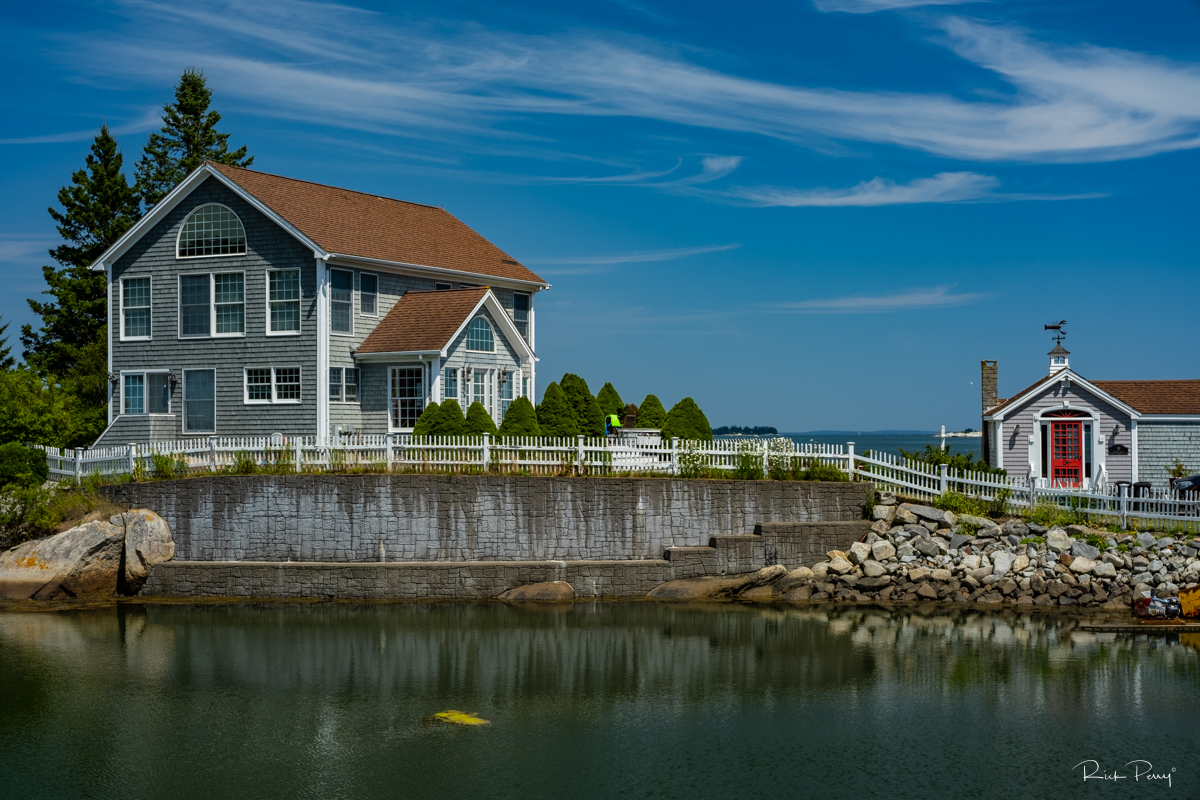
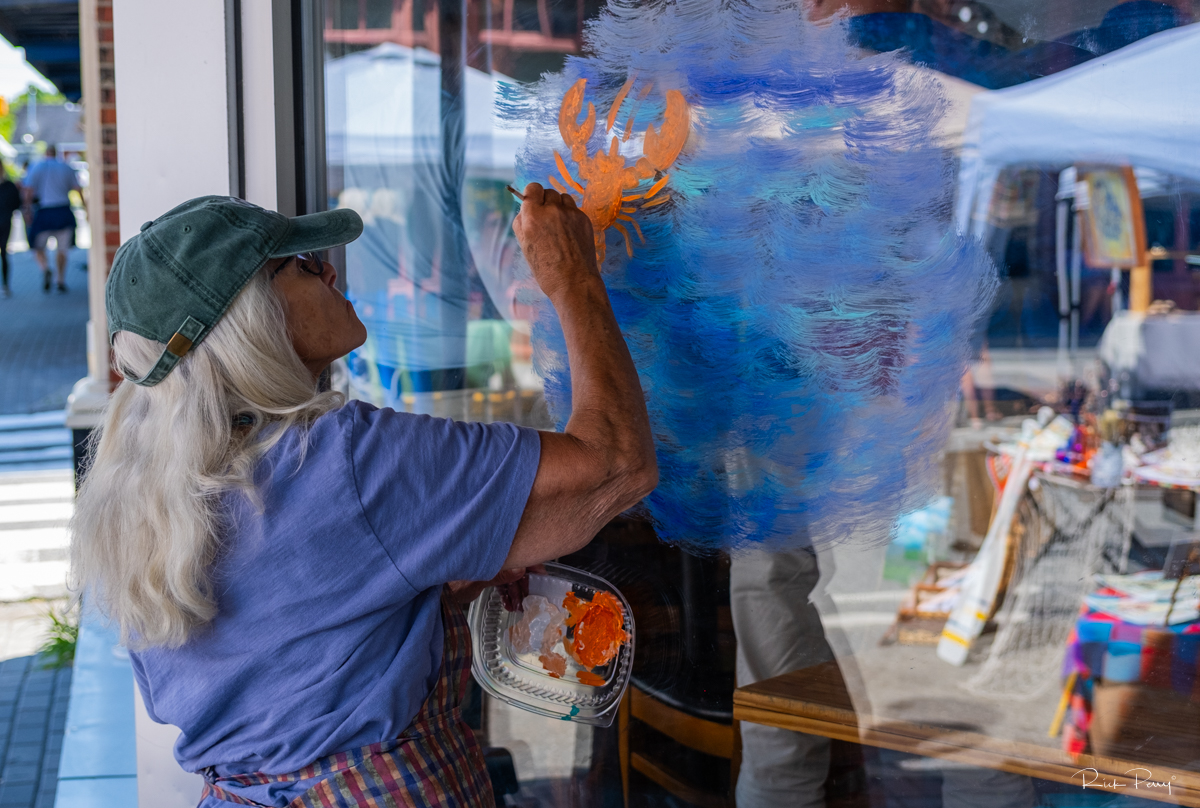
p.2 #2 · Voigtlander's "thing" is becoming more clear to me.
“Sharpness is a bourgeois concept” ... my favorite quote by Henri Cartier-Bresson (1908-2004), as I see it, one of the greatest photographers.
I have been talking about these Voigtlander X mount lenses for quite awhile. I usually say something like ‘the Voigtlander X mount lenses have a smooth rendering with great ‘color pop’ and are not quite as ‘clinical as the “modern” lenses.
The response is usually .something like ..’non-clinical lenses means ..’a bit soft’ don’t you think.’
No! I don’t think that at all.
I presently use the X 27 f 2 and the 35 APO f.2 macro, and in the past, have had the 23 f 1.2 and the 18 f2,8. They are all a joy to use, smooth rendering, displaying gorgeous color, and are plenty sharp enough imo.
I have been a photographer for over 60 years. I started with 4x5 view cameras right on through Zeiss, Linhof, Leica Hasselblad etc. As far as I am concerned .. Pixel peeping has little to do with ‘good photography’ at least for most of us. Hey, if your doing magazine covers.. go for it.
I enjoy using these Voigtlander lenses ..for several reasons.. as the OP mentioned..manual slows up the process which usually increases your attention to detail.which tends to make a better photo. Plus the results are in fact ‘less clinical’ than all the latest, lens offerings ..I call it 'smooth and sharp with true color'.
These lenses are made in Japan by Cosina .. that is a good thing!
Rick
X-T4VOIGTLANDER MACRO APO-ULTRON 35mm F2 lens35mmf/9.01/250s160 ISO0.0 EV
X-T4VOIGTLANDER ULTRON 27mm F2 lens27mmf/2.81/160s200 ISO0.0 EV
p.2 #3 · Voigtlander's "thing" is becoming more clear to me.
darwinphoto wrote:
Sadly, I've deleted almost all my A/B test photos. I did find this set though. Voigt 23 f/1.2 vs Fuji 23 f/1.4 R. Both shot wide open. Yes, the Fuji is sharper, but I find the Voigt renders with more 'depth'. The face seems a tad thinner in the Voigt image and background separation is better not only due to blur but vignetting.
the fuji feels just a tad "flatter" to me. The voigt pops just a bit more
p.2 #4 · Voigtlander's "thing" is becoming more clear to me.
RickPerry wrote:
“Sharpness is a bourgeois concept” ... my favorite quote by Henri Cartier-Bresson (1908-2004), as I see it, one of the greatest photographers.
This exact sentence has made the rounds on several other blogs and forums.
p.2 #6 · Voigtlander's "thing" is becoming more clear to me.
Ah - here are the Fuji users who shoot Voigtlanders. Not a ton of us around. I have the 18/2.8 Skopar, the 27/2 Ultron, 35/2 APO Ultron. I also have a few m-mounts that I use on my XT5: 12/5.6 v2, 50/2 APO Lanthar and the 75/1.9 Ultron. I keep thinking at some point I may pick up a FF camera so the M-mount lenses could be reused.
I have quite a few XF lenses including the 1.4 primes and zooms, but find myself reaching for the Voigtlander lenses more than the XF lenses.
I can probably pickup one more lens before the big trip to Rome & Athens. Every trip in the past has been with the 16-80 zoom for convenience. But the idea of traveling with the pancakes is pretty cool. Options for next lens: 50/1.2 X mount (get the electronic data and separation, although not really long for distant shots), the 50/1.5 II Vintage (great small size and common filter size), the 90/4 APO Lanthar (nice and small - great for reach and common filter size to the pancakes). Obviously not a total need purchase - just a fun purchase. I could use the 75/1.9 for the reach but not sure it would really be best.
p.2 #7 · Voigtlander's "thing" is becoming more clear to me.
bobby350z wrote:
I am not good in manual focus unless I am shooting landscapes with a TSE lens. So AF for me. When I had XF, I liked what 56mm f1.2 and APD versions could do.
Can you show examples differences between Voigtlander and Fuji? I wouldn't compare any prime to zooms. I don't know XF but Sigma has excellent primes for FF. Heck some even work very good on my GFX.
As a photographer who does things like street photography (and who has done this stuff since the age of MF-only lenses and who still MFs landscape photography) I’m mystified by the appeal of MF only lenses on small, handheld cameras.
Yes, you can shoot things like street with MF lenses. We did it for years. But a few things:
1. AF lenses are faster and more accurate for quickly evolving scenes and subjects than manual focus.
2. Not having to distract ourselves with the process of manually focusing frees us to pay more attention to things like framing and instantaneous moments from the subject.
3. Modern AF lenses still let you MF in situations in which you may need that.
I hear from some that the “pleasure” of manually focusing is the thing. While I sort of “get” the appeal of old gear and techniques (I still like to hold and handle some of the old, classic MF lenses), when it comes to actually making photographs I don’t get the appeal of working with one hand behind my back…
On a somewhat related subject: There’s more than a little chance of confirmation bias when considering the purported optical advantages of various lenses. We’re all subject to it. We get a new lens. We love the new thing. We feel like the quality of our photographs is noticeably better. It feels good!
But is that difference we feel really there or actually significant?* There’s a fun game you can play, one that I and fellow photographers actually engage in with various photographic tools and products. Take some photos using the supposedly very different gear. Print (or otherwise display them) for various viewers. Ideally, hand them prints made with both sources. Don’t tell them what the difference is. Just ask them to share what they see, whether they prefer one over the other, and why.
(A friend who is a very successful pro landscape photographer taught me about this. For example, with printers, he would show up with a stack with pairs of seemingly identical prints, hand them out, and ask, “tell me what you notice.” A half dozen of us, who also print our own work, would pore over them, discuss them, look back and forth at side by side examples, and more often than not be unable to consistently identify one as being better than the other. It was very instructive.)
YMMV.
*Over a bit more than two decades of using various high quality digital photography tools I have made a lot of photographs. At each advance in the technology I have been convinced that the next step was a lot better. In fact, it has been better. But I still find myself looking at an old print from a decade or more ago, long enough to forget which camera I used, and realizing that the differences are far smaller than we imagine.
p.2 #8 · Voigtlander's "thing" is becoming more clear to me.
gdanmitchell wrote:
As a photographer who does things like street photography (and who has done this stuff since the age of MF-only lenses and who still MFs landscape photography) I’m mystified by the appeal of MF only lenses on small, handheld cameras.
Yes, you can shoot things like street with MF lenses. We did it for years. But a few things:
1. AF lenses are faster and more accurate for quickly evolving scenes and subjects than manual focus.
2. Not having to distract ourselves with the process of manually focusing frees us to pay more attention to things like framing and instantaneous moments from the subject.
3. Modern AF lenses still let you MF in situations in which you may need that.
I hear from some that the “pleasure” of manually focusing is the thing. While I sort of “get” the appeal of old gear and techniques (I still like to hold and handle some of the old, classic MF lenses), when it comes to actually making photographs I don’t get the appeal of working with one hand behind my back…
On a somewhat related subject: There’s more than a little chance of confirmation bias when considering the purported optical advantages of various lenses. We’re all subject to it. We get a new lens. We love the new thing. We feel like the quality of our photographs is noticeably better. It feels good!
But is that difference we feel really there or actually significant?* There’s a fun game you can play, one that I and fellow photographers actually engage in with various photographic tools and products. Take some photos using the supposedly very different gear. Print (or otherwise display them) for various viewers. Ideally, hand them prints made with both sources. Don’t tell them what the difference is. Just ask them to share what they see, whether they prefer one over the other, and why.
(A friend who is a very successful pro landscape photographer taught me about this. For example, with printers, he would show up with a stack with pairs of seemingly identical prints, hand them out, and ask, “tell me what you notice.” A half dozen of us, who also print our own work, would pore over them, discuss them, look back and forth at side by side examples, and more often than not be unable to consistently identify one as being better than the other. It was very instructive.)
YMMV.
*Over a bit more than two decades of using various high quality digital photography tools I have made a lot of photographs. At each advance in the technology I have been convinced that the next step was a lot better. In fact, it has been better. But I still find myself looking at an old print from a decade or more ago, long enough to forget which camera I used, and realizing that the differences are far smaller than we imagine....Show more →
Totally get the advantages of AF and that the differences between lenses may not be as significant as we think - agree most viewers don't care which lens was used. I use my AF glass a lot in my portrait work - especially the 56 and the viltrox 75/1.2, in that setting it is a requirement because people tend to move and I trust eye focus to keep them in focus at narrow DoF. Also use my long AF glass for wildlife (have done a lot of predators around the world and AF is a requirement.)
I can definitely tell when I use my xf18/1.4 vs the 16-80 at 18mm, even at 5.6 there is a difference to me.
I've been shooting 50+ years, so I too remember the advent of AF. Walking around 10-12 hours in a foriegn city with the 18/2.8 and 27/2 in my pocket is a far cry different than walking around with the 18/1.4 or 16-55/2.8 and another couple big lenses in a bag on my shoulder. Gone are the days when I would happily slug around 2 pro Nikon bodies and the trinity of 2.8 zooms. That doesn't excite me anymore.
Plus, I just like the premium build feel. While I love MF with the voigtlanders or similar quality lenses, I really don't like MF on the XF lenses - just not the same experience for me.
Different tools for different situations. The small kit is for my travel when not shooting from the car.
p.2 #9 · Voigtlander's "thing" is becoming more clear to me.
pechance wrote:
Totally get the advantages of AF and that the differences between lenses may not be as significant as we think - agree most viewers don't care which lens was used. I use my AF glass a lot in my portrait work - especially the 56 and the viltrox 75/1.2, in that setting it is a requirement because people tend to move and I trust eye focus to keep them in focus at narrow DoF. Also use my long AF glass for wildlife (have done a lot of predators around the world and AF is a requirement.)
I can definitely tell when I use my xf18/1.4 vs the 16-80 at 18mm, even at 5.6 there is a difference to me.
I've been shooting 50+ years, so I too remember the advent of AF. Walking around 10-12 hours in a foriegn city with the 18/2.8 and 27/2 in my pocket is a far cry different than walking around with the 18/1.4 or 16-55/2.8 and another couple big lenses in a bag on my shoulder. Gone are the days when I would happily slug around 2 pro Nikon bodies and the trinity of 2.8 zooms. That doesn't excite me anymore.
Plus, I just like the premium build feel. While I love MF with the voigtlanders or similar quality lenses, I really don't like MF on the XF lenses - just not the same experience for me.
Different tools for different situations. The small kit is for my travel when not shooting from the car. ...Show more →
I certainly get it that sometimes MF is the best way to go. As I mentioned, I virtually always use MF when shooting landscape from the tripod, which is probably the majority of what I do. (But all of my landscape lenses but one are also AF lenses.) That's exactly in line with your different tools for different situations point — a.k.a. "horses for courses."
I also hear that people like the "premium build feel." On some level, I do understand that. (As I mentioned, I enjoy picking up some of the old classic gear I used decades ago, too.)
(As a long time photographer, I can't say that I "enjoy" using MF in situations where AF is simply faster and more accurate, though. The tool I most enjoy is the one that increases the chances that I'll successfully get the photograph that I'm trying to make.)
But part of the problem arises — and it goes back to the confirmation bias issue — when folks who buy this stuff because they like how it feels or looks too often then start talking about the supposed optical superiority of these lenses. I'm sure that some of them are excellent, but so are the OEM alternatives that most of us use.
Since I've probably said what needs to e said here, I'll try (but will I succeed? :-) to just leave this here as something for folks to consider.
p.2 #10 · Voigtlander's "thing" is becoming more clear to me.
mdude85 wrote:
This exact sentence has made the rounds on several other blogs and forums.
Yes, and on another thread here recently. A much mis used quotation. A simple Google search will inform. It's a joke to do with camera shake.
I don't see any particular overall Voigtlander ethos, other than to make money by providing excellent lenses at fairly reasonable prices. A 23/1.2 would naturally be bought if I wanted separation at wide apertures, typically for portraits in the middle of the frame. If I want great performance in the corners at 5.6 or 8 for architecture I would buy a 21/3.5. I can't think of any lens that would do both scenarios equally well,
I bought the first two Cosina Voigtlander LTM lenses they made, in the 90s I think, and still have the 15/4.5, and 4 other of those early releases. They made much more possible with my Leicas when I couldn't afford exotic focal lengths at Leica prices.