This topic is in the 2024 archive. You can read it and like its posts here. It is read only.
Archive 2024R3/R5 BIF take-off settings

p.1 #1R3/R5 BIF take-off settings
I see a lot of BIF photos around here, but not that many take-offs. My only feathered subject matter is owls, and there are some that are easier to shoot (Barn Owl, SEO, LEO, even GGO) because they fly over a field looking for food. Then there are others who hunt in the thicket of the trees, such as the Barred Owl or the GHO, so you either get incredibly lucky to see it fly over a more open space, or you get it at takeoff plus 1-2s after. Add to that the fact that you're shooting in the dark, ISO 51k @ f2.8 is not uncommon.
Here's a take-off sequence from yesterday, with the R5. I know from experience my R3 would have done slightly better but I had what I had. The light wasn't even half bad yet, I'd even say for a GHO flight shot it was exceptionally good. I was using eye focus at this point, and +0 / +2 on the AF settings. I have used zone and wide zone before and the results with both cameras are similar - takeoffs are hardly in focus.
In similar situations, what would other people suggest?
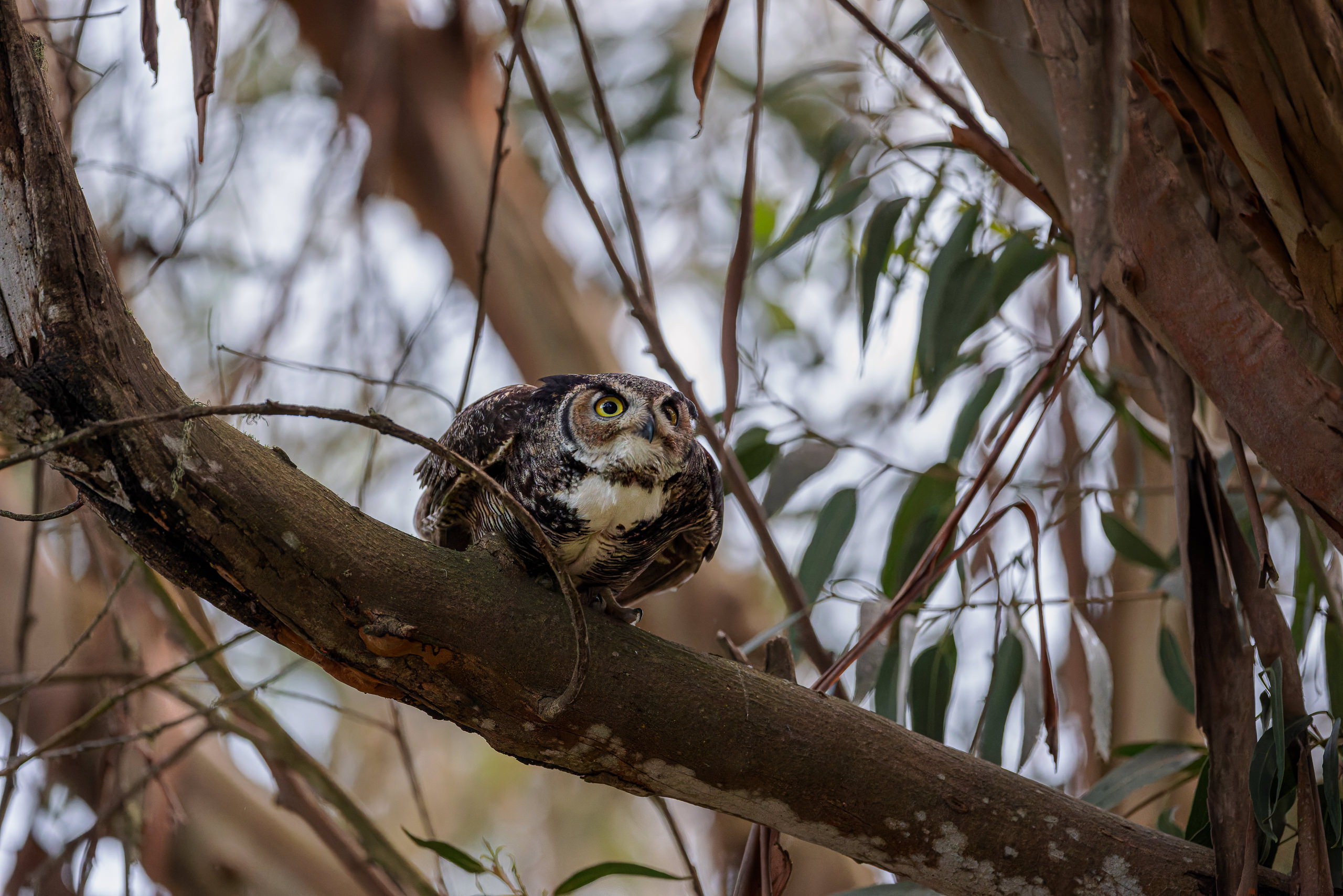
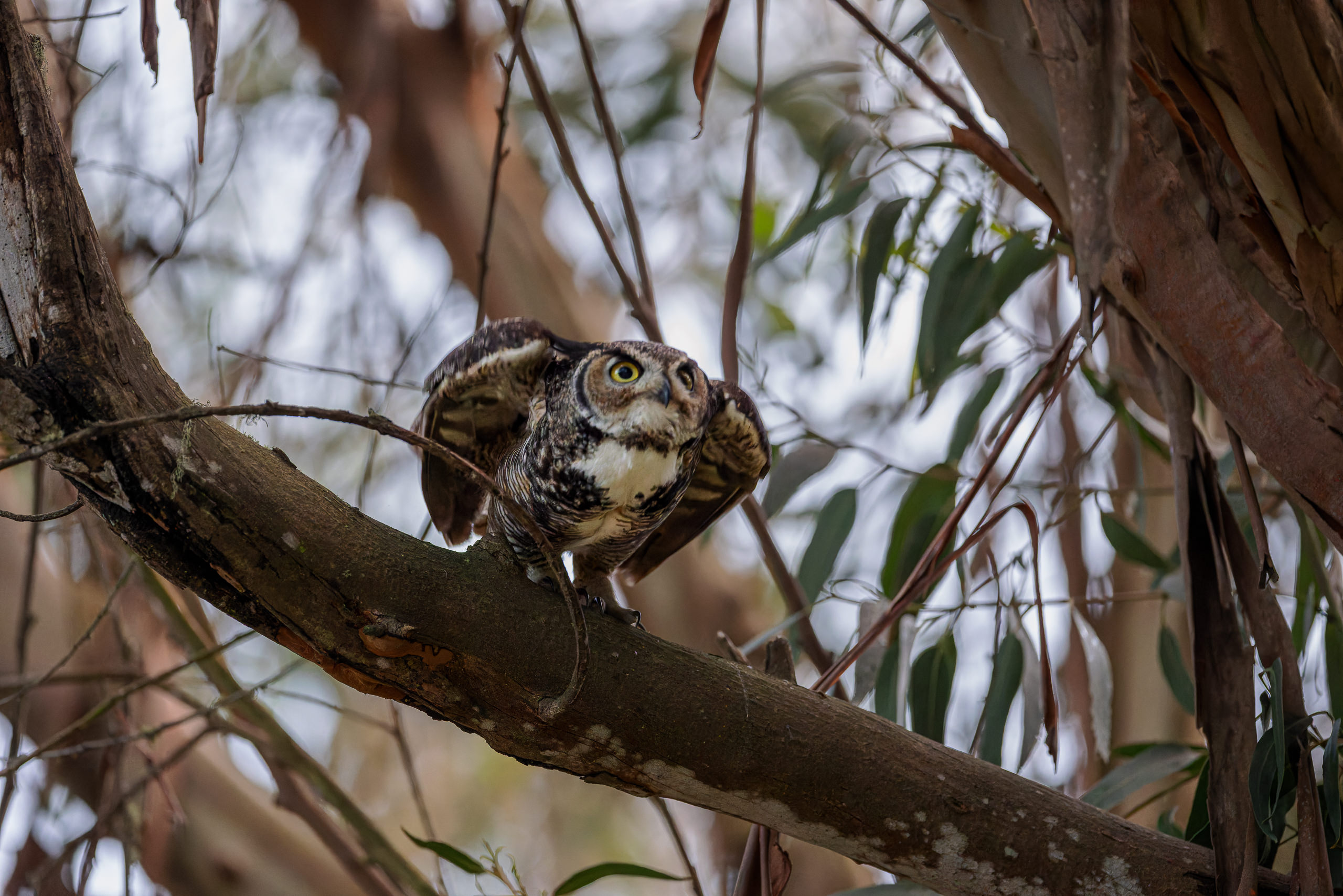
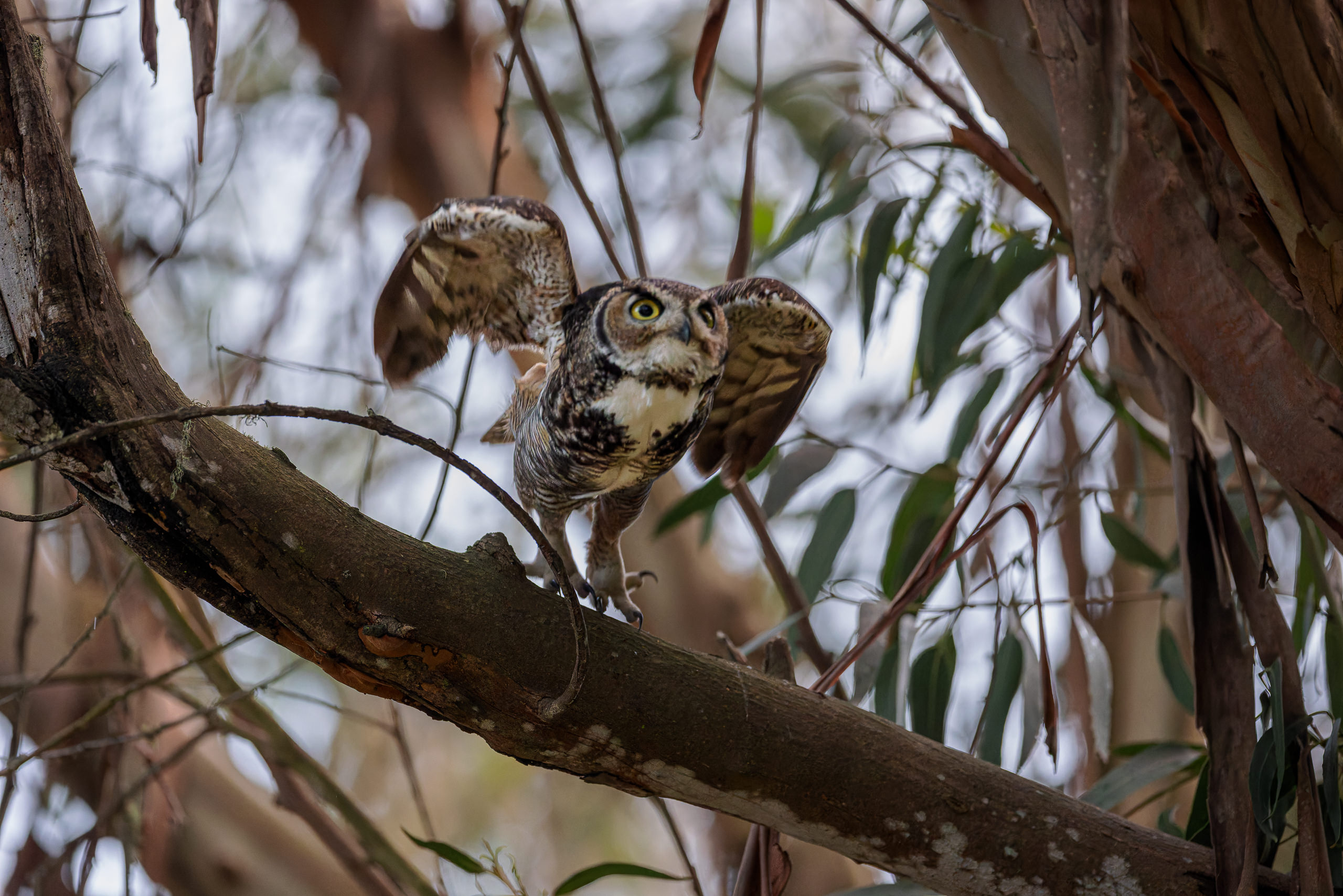
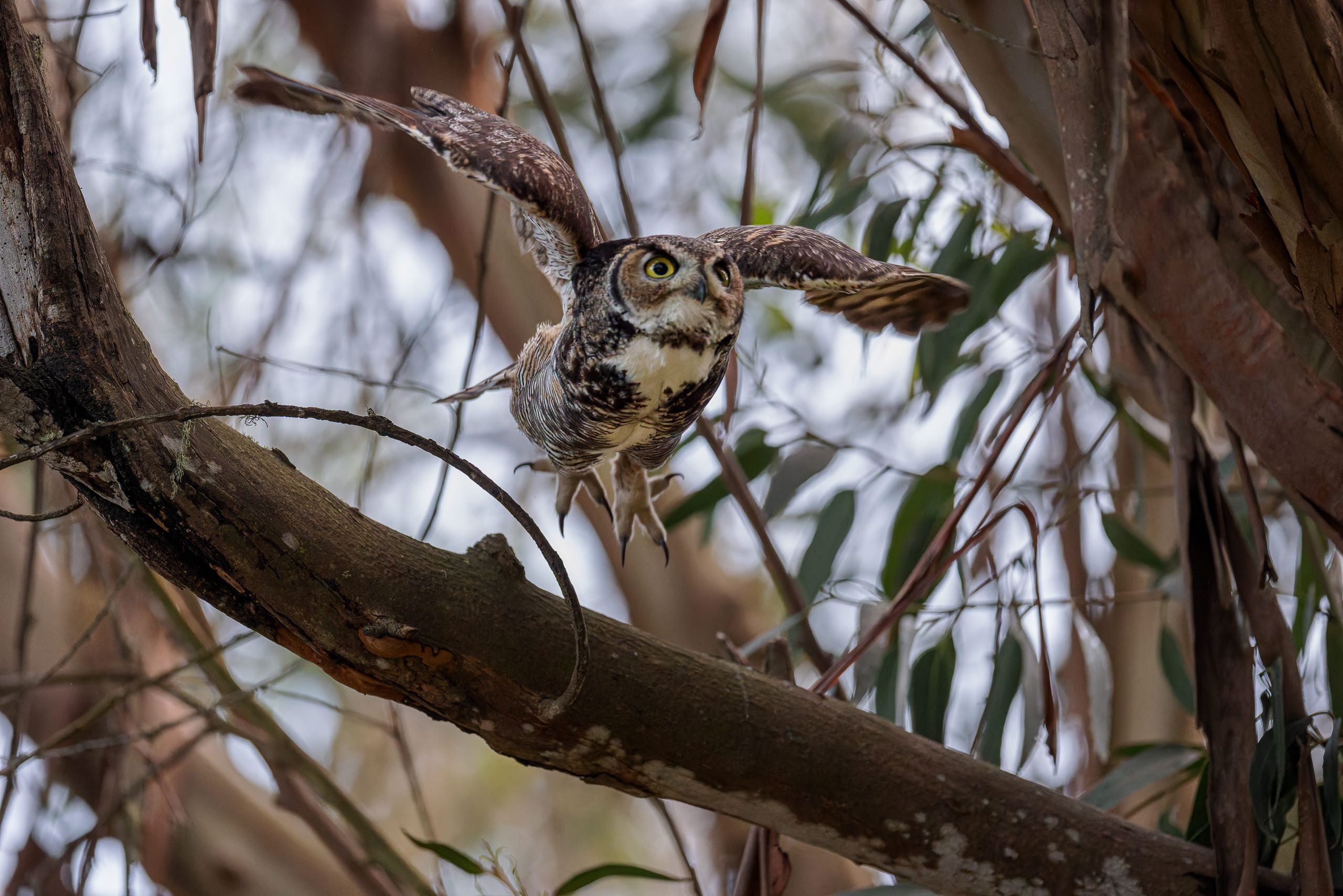
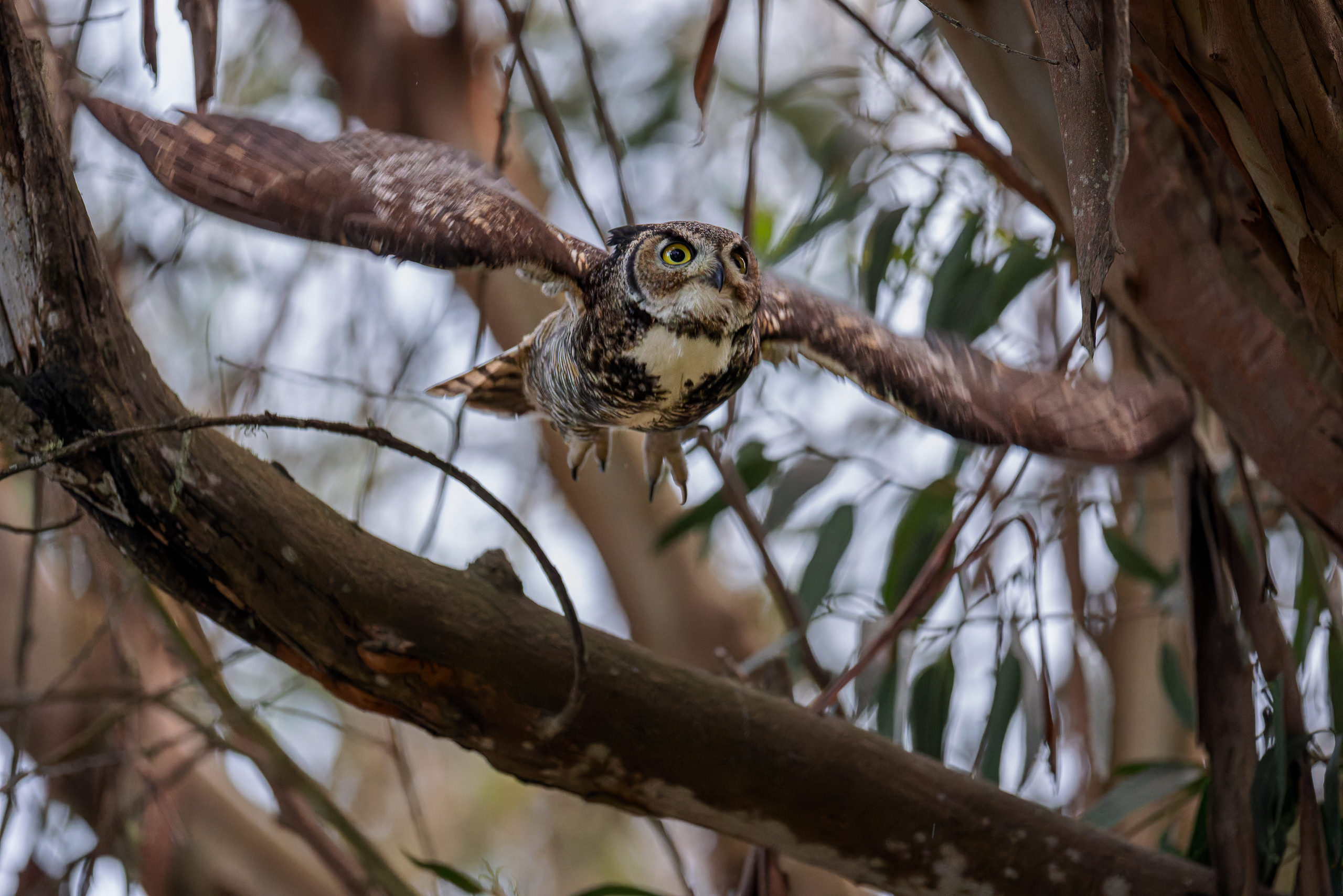
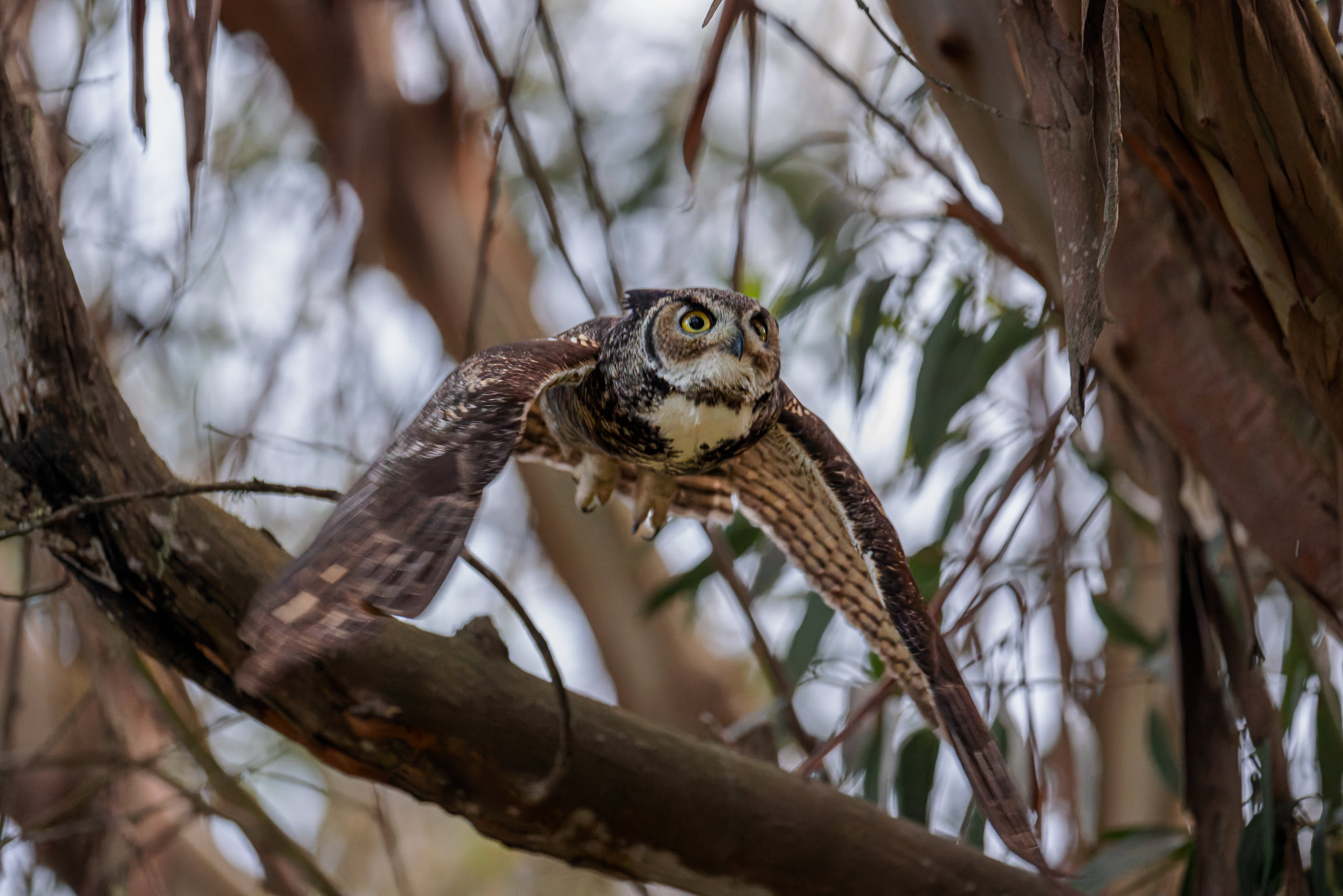
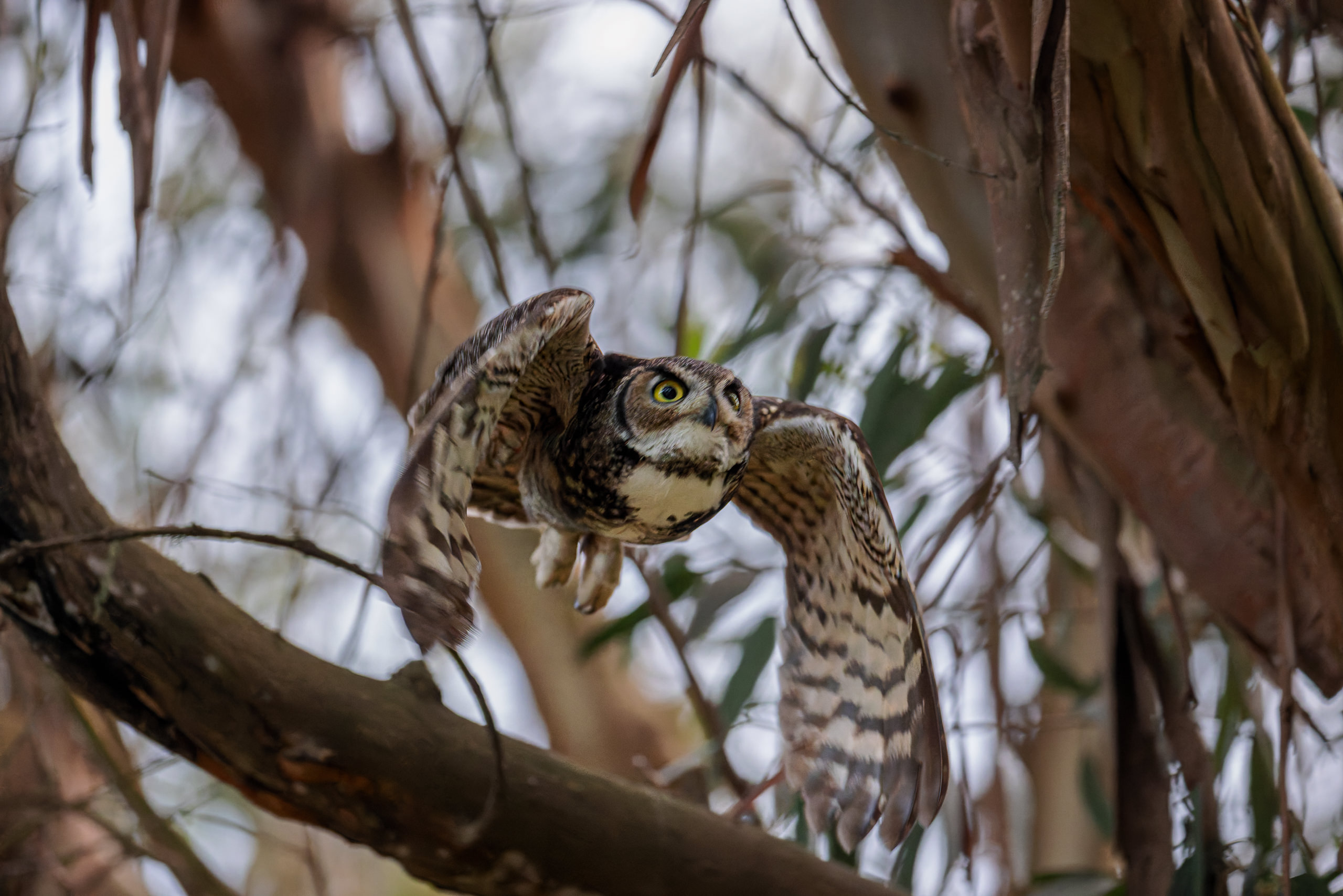
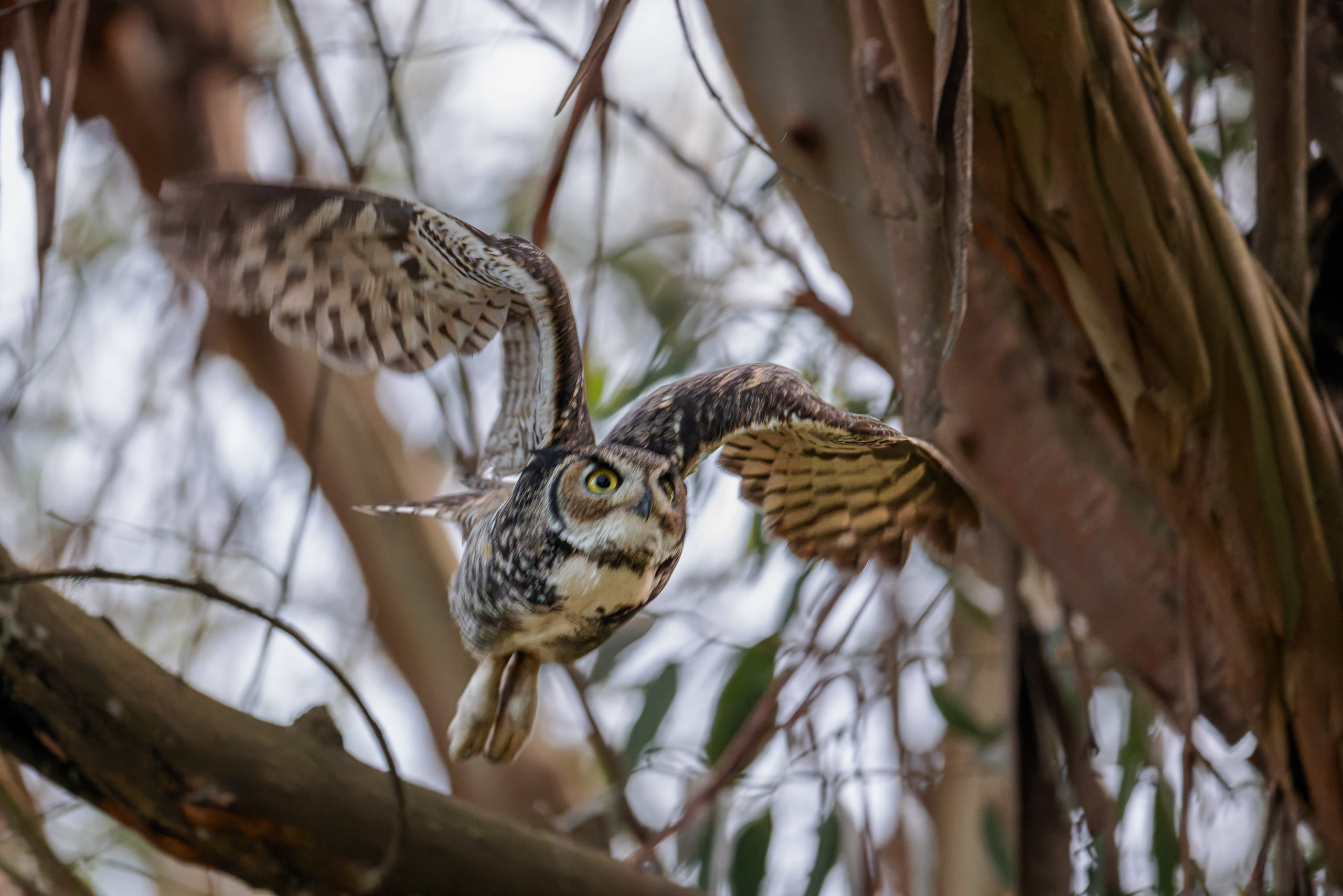
Here's a take-off sequence from yesterday, with the R5. I know from experience my R3 would have done slightly better but I had what I had. The light wasn't even half bad yet, I'd even say for a GHO flight shot it was exceptionally good. I was using eye focus at this point, and +0 / +2 on the AF settings. I have used zone and wide zone before and the results with both cameras are similar - takeoffs are hardly in focus.
In similar situations, what would other people suggest?
Canon EOS R5 RF400mm F2.8 L IS USM lens 400mm f/2.8 1/500s 12800 ISO +1.0 EV
Canon EOS R5 RF400mm F2.8 L IS USM lens 400mm f/2.8 1/500s 12800 ISO +1.0 EV
Canon EOS R5 RF400mm F2.8 L IS USM lens 400mm f/2.8 1/500s 12800 ISO +1.0 EV
Canon EOS R5 RF400mm F2.8 L IS USM lens 400mm f/2.8 1/500s 12800 ISO +1.0 EV
Canon EOS R5 RF400mm F2.8 L IS USM lens 400mm f/2.8 1/500s 12800 ISO +1.0 EV
Canon EOS R5 RF400mm F2.8 L IS USM lens 400mm f/2.8 1/500s 12800 ISO +1.0 EV
Canon EOS R5 RF400mm F2.8 L IS USM lens 400mm f/2.8 1/500s 12800 ISO +1.0 EV
Canon EOS R5 RF400mm F2.8 L IS USM lens 400mm f/2.8 1/400s 12800 ISO +1.0 EV
May 05, 2024 at 01:25 PM
p.1 #2R3/R5 BIF take-off settings
A smaller AF point kept perfectly on the eye. 
But as you no doubt know, with such a sudden movement (and the slight EVF delay), it would be really difficult to keep it on the eyes. This is where eye-detection is supposed to be better, and usually is in less challenging situations.
My experience is with sports and I find that face/eye tracking AF is somewhat less reliable than a manually selected AF point when shooting sequences (with the R6II). First frame is usually perfect but then subsequent frames are not guaranteed, particularly with indoor sports where I'm in a range probably about a 1-1.5 stops brighter than your example. Seems to depend a lot on light quality and subject contrast, etc.
With the owl example, I anticipate that the camera potentially prefers other areas of higher contrast near the eyes and giving it a wider AF zone to work with will probably exacerbate this tendency.
I know this is basically a non-answer. My gut feeling is it's going to be a matter of new hardware with faster processors and better algorithms that will improve the keeper rate. Next generation will be better, which will then be surpassed by the next generation. Rinse and repeat. In the meantime, a Sony? (joking, of course)
At least it appears you got a few that have 'good enough' focus and sharpness.
But as you no doubt know, with such a sudden movement (and the slight EVF delay), it would be really difficult to keep it on the eyes. This is where eye-detection is supposed to be better, and usually is in less challenging situations.
My experience is with sports and I find that face/eye tracking AF is somewhat less reliable than a manually selected AF point when shooting sequences (with the R6II). First frame is usually perfect but then subsequent frames are not guaranteed, particularly with indoor sports where I'm in a range probably about a 1-1.5 stops brighter than your example. Seems to depend a lot on light quality and subject contrast, etc.
With the owl example, I anticipate that the camera potentially prefers other areas of higher contrast near the eyes and giving it a wider AF zone to work with will probably exacerbate this tendency.
I know this is basically a non-answer. My gut feeling is it's going to be a matter of new hardware with faster processors and better algorithms that will improve the keeper rate. Next generation will be better, which will then be surpassed by the next generation. Rinse and repeat. In the meantime, a Sony?
(joking, of course)At least it appears you got a few that have 'good enough' focus and sharpness.
May 05, 2024 at 03:37 PM
p.1 #3R3/R5 BIF take-off settings
It's all about the shutter speed, and yours was too slow to do anything but a "pan" and get lucky, which it looks like you did, once.
AF is gonna suffer in low light, and in the conditions you're shooting in, there's not much more anyone can do. You're already pushing super high ISO and shooting wide open at 2.8.
AF is gonna suffer in low light, and in the conditions you're shooting in, there's not much more anyone can do. You're already pushing super high ISO and shooting wide open at 2.8.
May 05, 2024 at 03:57 PM
p.1 #4R3/R5 BIF take-off settings
At 1/400s you won't get sharp BIF photos unless panning. So it won't matter whether or not the bird is actually in focus.
May 05, 2024 at 04:01 PM
p.1 #5R3/R5 BIF take-off settings
Yes I understand this sequence had unfortunately an ISO limit of 12k, thus 1/400s. However rest assured the sequence would have looked the same at 1/1000s (ISO 30k) or 1/2000s (ISO 51k). I've done that before. Conversely I can pan a GHO at 1/250s, the challenge is getting it in focus. I understand the difference between motion blur and OOF, you can look at what's in focus and it's not the eye, it's the branch.
May 05, 2024 at 04:06 PM
p.1 #6R3/R5 BIF take-off settings
stanj wrote:
Yes I understand this sequence had unfortunately an ISO limit of 12k, thus 1/400s. However rest assured the sequence would have looked the same at 1/1000s (ISO 30k) or 1/2000s (ISO 51k). I've done that before. I understand the difference between motion blur and OOF, you can look at what's in focus and it's not the eye, it's the branch.
If Canon is anything like Nikon, Eye AF suffers in low light/low contrast situations especially in AF-C. You're better switching to a small zone with no subject detection as the fall back in some cases.
May 05, 2024 at 04:12 PM
p.1 #7R3/R5 BIF take-off settings
I’ve generally had the same experience. I can do a pretty decent job tracking birds in flight, but I’ve never felt like the Canon bodies track birds that are taking off from a perch very well, at least compared to what I see people routinely post from Sony bodies. I’ve only owned Canon (with the Exception of a Sony A9 and a 200-600 for a few months before I bought the R5 on launch day, so I may be thinking the grass is greener, but still, I’ve rarely been able to get anything decent in these situations.
stanj wrote:
Yes I understand this sequence had unfortunately an ISO limit of 12k, thus 1/400s. However rest assured the sequence would have looked the same at 1/1000s (ISO 30k) or 1/2000s (ISO 51k). I've done that before. I understand the difference between motion blur and OOF, you can look at what's in focus and it's not the eye, it's the branch.
May 05, 2024 at 04:12 PM
p.1 #8R3/R5 BIF take-off settings
I'm a newb at birds, but I'm uploading these photos as a data point for you. I don't claim they're good - but they are a stab at bird taking off.
KINGOFKNGS wrote:
I’ve generally had the same experience. I can do a pretty decent job tracking birds in flight, but I’ve never felt like the Canon bodies track birds that are taking off from a perch very well, at least compared to what I see people routinely post from Sony bodies. I’ve only owned Canon (with the Exception of a Sony A9 and a 200-600 for a few months before I bought the R5 on launch day, so I may be thinking the grass is greener, but still, I’ve rarely been able to get anything decent in these situations.
KINGOFKNGS wrote:
I’ve generally had the same experience. I can do a pretty decent job tracking birds in flight, but I’ve never felt like the Canon bodies track birds that are taking off from a perch very well, at least compared to what I see people routinely post from Sony bodies. I’ve only owned Canon (with the Exception of a Sony A9 and a 200-600 for a few months before I bought the R5 on launch day, so I may be thinking the grass is greener, but still, I’ve rarely been able to get anything decent in these situations.
stanj wrote
Yes I understand this sequence had unfortunately an ISO limit of 12k, thus 1/400s. However rest assured the sequence would have looked the same at 1/1000s (ISO 30k) or 1/2000s (ISO 51k). I've done that before. I understand the difference between motion blur and OOF, you can look at what's in focus and it's not the eye, it's the branch.May 07, 2024 at 07:21 PM
p.1 #9R3/R5 BIF take-off settings
If you want good take off shots the OM 1 Mk2 using pro capture is the setup you want.
May 13, 2024 at 09:41 AM
p.1 #10R3/R5 BIF take-off settings
Charlie52 wrote:
If you want good take off shots the OM 1 Mk2 using pro capture is the setup you want.
Thanks; I must have been unclear with my question. Pro capture is pre-buffering according to everything that I read about it. My challenge is not with missing the timing of the owl flying away (they're usually not the quickest, and they give plenty of body language before they depart), the problem is the AF tracking settings on the R5/R3. My question was if people had any suggestions on how to set up an R3/R5 for take-off. I will not switch to a different system for a feature that I don't need.
May 13, 2024 at 09:53 AM
p.1 #11R3/R5 BIF take-off settings
I have the R5 and it doesn't have pre-buffering. It has a burst mode but that is hardly the same. Any way my apologies for misunderstanding your question.
May 13, 2024 at 10:00 AM
p.1 #12R3/R5 BIF take-off settings
@stanj@ the problem with birds take offs is acceleration. The camera has no issues tracking BIF when the speed is more or less stable, but the first 0.2-0.3 seconds is always a pain unless the bird if flying on the XY plane. You can probably play with the AF acceleration settings (switch to "sudden acceleration"?) but I doubt it will change a lot. No idea about owls but for song birds 1/3200-1/4000s would be my starting point - these creatures are super fast. Increasing DoF also helps, and that's why the OM1 is great - even with the 150-400/4.5+1.4x you'd get an F/9 equivalent DoF and a pretty decent margin for AF error. Unfortunately this is not a solution for you since you're already at ISO 12800. What if you switch to MF, pre-focus and just hold the shutter button when the bird is flying away? You'd probably catch a frame or two.
May 13, 2024 at 01:25 PM
p.1 #13R3/R5 BIF take-off settings
docusync wrote:
@stanj@@ the problem with birds take offs is acceleration. The camera has no issues tracking BIF when the speed is more or less stable, but the first 0.2-0.3 seconds is always a pain unless the bird if flying on the XY plane. You can probably play with the AF acceleration settings (switch to "sudden acceleration"?) but I doubt it will change a lot. No idea about owls but for song birds 1/3200-1/4000s would be my starting point - these creatures are super fast. Increasing DoF also helps, and that's why the OM1 is great - even with the 150-400/4.5+1.4x you'd...Show more →
Thanks for the suggestions. I have AF set to the most aggressive acceleration already; faster shutter speed isn't really possible due to light. Pre-focus may work but then I won't get the other frames because I'm not that good with MF tracking I guess the solution is to simply get more flights, and some will be in focus. Last week I got four flyovers, one of which I completely botched (GHO is a slower flier than the BO that I'm "calibrated for" so I over-panned), but the other three gave me some decent results, one of which is in the Spring thread.
@stanj@@ the problem with birds take offs is acceleration. The camera has no issues tracking BIF when the speed is more or less stable, but the first 0.2-0.3 seconds is always a pain unless the bird if flying on the XY plane. You can probably play with the AF acceleration settings (switch to "sudden acceleration"?) but I doubt it will change a lot. No idea about owls but for song birds 1/3200-1/4000s would be my starting point - these creatures are super fast. Increasing DoF also helps, and that's why the OM1 is great - even with the 150-400/4.5+1.4x you'd...Show more →
Thanks for the suggestions. I have AF set to the most aggressive acceleration already; faster shutter speed isn't really possible due to light. Pre-focus may work but then I won't get the other frames because I'm not that good with MF tracking
I guess the solution is to simply get more flights, and some will be in focus. Last week I got four flyovers, one of which I completely botched (GHO is a slower flier than the BO that I'm "calibrated for" so I over-panned), but the other three gave me some decent results, one of which is in the Spring thread.May 13, 2024 at 01:47 PM
p.1 #14R3/R5 BIF take-off settings
I think the tracking did fairly well here. By the fifth frame it had caught up to the head of the owl. Frames 2-4 it was still back focusing on the body. The rest of the frames are only ruined by motion blur at 1/400s.
All cameras will have trouble with the first fraction of a second when the acceleration is so great compared to the static owl immediately before. Especially when it is coming towards you.
It has been a minute since I owned R5/R3 so I don't remember all the specific AF settings but all you could do is try to set everything to the most reactive, most erratic settings. Even then, it may not make any difference.
May 13, 2024 at 01:48 PM
p.1 #15R3/R5 BIF take-off settings
arbitrage wrote:
I think the tracking did fairly well here. By the fifth frame it had caught up to the head of the owl. Frames 2-4 it was still back focusing on the body. The rest of the frames are only ruined by motion blur at 1/400s.
All cameras will have trouble with the first fraction of a second when the acceleration is so great compared to the static owl immediately before. Especially when it is coming towards you.
It has been a minute since I owned R5/R3 so I don't remember all the specific AF settings but all you could do is try...Show more →
How's your A9III doing on the subject compared to the A1?
May 13, 2024 at 02:15 PM
p.1 #16R3/R5 BIF take-off settings
docusync wrote:
All cameras will have trouble with the first fraction of a second when the acceleration is so great compared to the static owl immediately before. Especially when it is coming towards you.
It has been a minute since I owned R5/R3 so I don't remember all the specific AF settings but all you could do is try to set everything to the most reactive, most erratic settings. Even then, it may not make any difference.How's your A9III doing on the subject compared to the A1?
Well the A9III makes it easier because of the higher FPS and the pre-capture. But I'm not sure if the AF is really anymore responsive or better at keeping focus than the A1. It is so hard to judge as I don't have repeatable subjects to test on. I've shot all sorts of subjects launching at me with the A1 and had good success but it still can run into the problem seen on this thread with the owl that the first few frames lag behind in AF. Usually I get my best shots after the AF catches up on the 3rd, 4th, 5th, whatever frame. With the A9III it seems to do the same thing....will often need a few frames to sort things and catch up. But with the A9III I've mostly only been trying it on backyard songbirds launching so that gets really tough for the AF. But I've got straight on shots of songbirds IF after launching with both the A9III and the A1. A9III just makes it a bit easier and higher success with FPS/precapture.
arbitrage wrote
I think the tracking did fairly well here. By the fifth frame it had caught up to the head of the owl. Frames 2-4 it was still back focusing on the body. The rest of the frames are only ruined by motion blur at 1/400s.All cameras will have trouble with the first fraction of a second when the acceleration is so great compared to the static owl immediately before. Especially when it is coming towards you.
It has been a minute since I owned R5/R3 so I don't remember all the specific AF settings but all you could do is try to set everything to the most reactive, most erratic settings. Even then, it may not make any difference.
Well the A9III makes it easier because of the higher FPS and the pre-capture. But I'm not sure if the AF is really anymore responsive or better at keeping focus than the A1. It is so hard to judge as I don't have repeatable subjects to test on. I've shot all sorts of subjects launching at me with the A1 and had good success but it still can run into the problem seen on this thread with the owl that the first few frames lag behind in AF. Usually I get my best shots after the AF catches up on the 3rd, 4th, 5th, whatever frame. With the A9III it seems to do the same thing....will often need a few frames to sort things and catch up. But with the A9III I've mostly only been trying it on backyard songbirds launching so that gets really tough for the AF. But I've got straight on shots of songbirds IF after launching with both the A9III and the A1. A9III just makes it a bit easier and higher success with FPS/precapture.
May 13, 2024 at 02:39 PM
p.1 #17R3/R5 BIF take-off settings
arbitrage wrote:
All cameras will have trouble with the first fraction of a second when the acceleration is so great compared to the static owl immediately before. Especially when it is coming towards you.
It has been a minute since I owned R5/R3 so I don't remember all the specific AF settings but all you could do is try to set everything to the most reactive, most erratic settings. Even then, it may not make any difference.How's your A9III doing on the subject compared to the A1?Well the A9III makes it easier because of the higher FPS and the pre-capture. But I'm not sure if the AF is really anymore responsive or better at keeping focus than the A1. It is so hard to judge as I don't have repeatable subjects to test on. I've shot all sorts of subjects launching at me with the A1 and had good success but it still can run into the problem seen on this thread with the owl that the first few frames lag behind in AF. Usually I get my best shots after the AF catches up on...Show more →
Thank you for the detailed response! I'm not a huge birder but your statement 100% corresponds to what I see, with the exception of having zero IF shots right after launching . Need to practice more...
docusync wrote
arbitrage wrote
I think the tracking did fairly well here. By the fifth frame it had caught up to the head of the owl. Frames 2-4 it was still back focusing on the body. The rest of the frames are only ruined by motion blur at 1/400s.All cameras will have trouble with the first fraction of a second when the acceleration is so great compared to the static owl immediately before. Especially when it is coming towards you.
It has been a minute since I owned R5/R3 so I don't remember all the specific AF settings but all you could do is try to set everything to the most reactive, most erratic settings. Even then, it may not make any difference.
Thank you for the detailed response! I'm not a huge birder but your statement 100% corresponds to what I see, with the exception of having zero IF shots right after launching
. Need to practice more...May 13, 2024 at 03:03 PM
p.1 #18R3/R5 BIF take-off settings
I don't mean to hijack the thread, but seeing this post of R5vsR3, would you guys who own an R3 still buy one now or wait for this R5 mark ii that has been rumored for over a year now?
May 14, 2024 at 12:11 PM
p.1 #19R3/R5 BIF take-off settings
UCTeeth wrote:
I don't mean to hijack the thread, but seeing this post of R5vsR3, would you guys who own an R3 still buy one now or wait for this R5 mark ii that has been rumored for over a year now?
Assuming it is really going to be announced in the next 4 weeks then I'd surely wait and see.
I recently had the chance to shoot a 24MP camera (A9III) for 2 weeks and even though I used to use 18-24MP FF cameras for all my wildlife photography I didn't get on well anymore with the lack of MPs. I've just gotten used to the higher MP sensors and I really missed the MPs. So for me, I'd be waiting for the R5II to see what it brings with new features in a high MP camera.
May 14, 2024 at 06:03 PM