Voigtlander 28mm f/1.5 Nokton Review
p.10 #1Voigtlander 28mm f/1.5 Nokton Review
lifeandmylens wrote:
Great shots. Do you happen to have the 28 ultron ii? Would love to see some comparisons with that lens. Trying to decide if I should upgrade.Thanks - I don't I'm sorry. Hopefully someone else here does.
Yes, measure mine. Exactly 440 grams without the rear cap.Mine is 436 grams without any caps.  Ohh, I got 4 extra grams of leica sauce

(...or my scale is off haha)
your lens' screws are made of brass! haha
Fred Miranda wrote
lifeandmylens wrote
photonc wrote
lifeandmylens wrote
28 Lux @ 1.4 vs CV 28/1.5 @ 1.5. Same ISO and shutter speed. Light transmission is very similar.philip_pj wrote
Is the Summilux 28mm really 440 grams?(...or my scale is off haha)
your lens' screws are made of brass! haha
Jan 28, 2024 at 02:56 PM
p.10 #2Voigtlander 28mm f/1.5 Nokton Review
photonc wrote:
Great shots. Do you happen to have the 28 ultron ii? Would love to see some comparisons with that lens. Trying to decide if I should upgrade.
I have the Ultron II and expect receiving my Nokton tomorrow or Tuesday. I will surely do some side-by-side shots and post here.
Great shots. Do you happen to have the 28 ultron ii? Would love to see some comparisons with that lens. Trying to decide if I should upgrade.
I have the Ultron II and expect receiving my Nokton tomorrow or Tuesday. I will surely do some side-by-side shots and post here.
Jan 28, 2024 at 03:36 PM
p.10 #3Voigtlander 28mm f/1.5 Nokton Review
LarsHP wrote:
I have the Ultron II and expect receiving my Nokton tomorrow or Tuesday. I will surely do some side-by-side shots and post here.
Awesome looking forward to that comparison!
photonc wrote
Great shots. Do you happen to have the 28 ultron ii? Would love to see some comparisons with that lens. Trying to decide if I should upgrade.Awesome looking forward to that comparison!
Jan 28, 2024 at 04:02 PM

p.10 #4Voigtlander 28mm f/1.5 Nokton Review
lifeandmylens wrote:
28 Lux @ 1.4 vs CV 28/1.5 @ 1.5. Same ISO and shutter speed. Light transmission is very similar.
+1
I spot checked several different areas for RGB values. I used point values, as well as different sized averaging areas, up to and including an entire image average. That included center, field and edge / corner areas (Zones, A / B / C) with multiple different points in both shadows, mids, highs.
The Voigt values are a tad bit darker, but they are mostly in the realm of +/- 7-10% variance (i.e. 50 vs. 55, 90 vs. 100, etc.), with the overall being a bit less. The outliers were around 12-15%, but not many of those could be found (and subject to FOV / AOV variance, i.e. margin of error). Which is pretty much exactly what you would expect for the difference between a f/1.5 vs. f/1.4 (7%)

Looks nothing like the difference between the 28 vs. 35 shown earlier, where a 0.5 stop difference was indicated ... which is a good thing.
28 Lux @ 1.4 vs CV 28/1.5 @ 1.5. Same ISO and shutter speed. Light transmission is very similar.
+1
I spot checked several different areas for RGB values. I used point values, as well as different sized averaging areas, up to and including an entire image average. That included center, field and edge / corner areas (Zones, A / B / C) with multiple different points in both shadows, mids, highs.
The Voigt values are a tad bit darker, but they are mostly in the realm of +/- 7-10% variance (i.e. 50 vs. 55, 90 vs. 100, etc.), with the overall being a bit less. The outliers were around 12-15%, but not many of those could be found (and subject to FOV / AOV variance, i.e. margin of error). Which is pretty much exactly what you would expect for the difference between a f/1.5 vs. f/1.4 (7%)
Looks nothing like the difference between the 28 vs. 35 shown earlier, where a 0.5 stop difference was indicated ... which is a good thing.
Jan 28, 2024 at 05:11 PM
p.10 #5Voigtlander 28mm f/1.5 Nokton Review
lifeandmylens wrote:
Ohh, I got 4 extra grams of leica sauce
(...or my scale is off haha)
Filter thread protection ring, maybe?
With no rings of any kind nor the hood nor rear cap, I'm measuring 404g for mine, ~437g with the square hood.... serial no. 424x. I wonder how!
Ohh, I got 4 extra grams of leica sauce
(...or my scale is off haha)
Filter thread protection ring, maybe?
With no rings of any kind nor the hood nor rear cap, I'm measuring 404g for mine, ~437g with the square hood.... serial no. 424x. I wonder how!
Jan 28, 2024 at 05:40 PM
p.10 #6Voigtlander 28mm f/1.5 Nokton Review
philipj wrote:
(...or my scale is off haha)Filter thread protection ring, maybe?
With no rings of any kind nor the hood nor rear cap, I'm measuring 404g for mine, ~437g with the square hood.... serial no. 424x. I wonder how!
Varying levels of paint and the screws used overtime will have slight variance. That could easily account for a few grams one way or the other.
lifeandmylens wrote
Ohh, I got 4 extra grams of leica sauce(...or my scale is off haha)
With no rings of any kind nor the hood nor rear cap, I'm measuring 404g for mine, ~437g with the square hood.... serial no. 424x. I wonder how!
Varying levels of paint and the screws used overtime will have slight variance. That could easily account for a few grams one way or the other.
Jan 28, 2024 at 05:45 PM
p.10 #7Voigtlander 28mm f/1.5 Nokton Review
Hi Bruce,
You're welcome, and I agree. After reviewing the Voigtlander 28mm f/2.8 Color-Skopar, I was so impressed that I swapped my CV 28/2 Ultron for it. It's remarkable how the new CV 28/1.5 Nokton can keep up with it and even has lower vignetting. Their lateral chromatic aberration correction is also similar. I'll post a section on chromatic aberration next.
Hi Fred,
I got my copy of Color-Skopar 28/2.8 type 1. It is a lovely lens. I wonder which is better in optical performance between type 1 and type 2. Maybe you have this answer
BTW, thanks for your reviews for so many lens since these would be lots of complicated works tediously. But that is GREAT!
Jan 28, 2024 at 07:55 PM
p.10 #8Voigtlander 28mm f/1.5 Nokton Review
david6908 wrote:
You're welcome, and I agree. After reviewing the Voigtlander 28mm f/2.8 Color-Skopar, I was so impressed that I swapped my CV 28/2 Ultron for it. It's remarkable how the new CV 28/1.5 Nokton can keep up with it and even has lower vignetting. Their lateral chromatic aberration correction is also similar. I'll post a section on chromatic aberration next.Hi Fred,
I got my copy of Color-Skopar 28/2.8 type 1. It is a lovely lens. I wonder which is better in optical performance between type 1 and type 2. Maybe you have this answer
BTW, thanks for your reviews for so many lens since these would be lots of complicated works tediously. But that is GREAT!
Thank you! The optical performance is identical. The main distinctions lie in construction and feel, with the Type II focusing closer. I thoroughly tested both in the review.
Earlier quote
Hi Bruce,You're welcome, and I agree. After reviewing the Voigtlander 28mm f/2.8 Color-Skopar, I was so impressed that I swapped my CV 28/2 Ultron for it. It's remarkable how the new CV 28/1.5 Nokton can keep up with it and even has lower vignetting. Their lateral chromatic aberration correction is also similar. I'll post a section on chromatic aberration next.
I got my copy of Color-Skopar 28/2.8 type 1. It is a lovely lens. I wonder which is better in optical performance between type 1 and type 2. Maybe you have this answer
BTW, thanks for your reviews for so many lens since these would be lots of complicated works tediously. But that is GREAT!
Thank you! The optical performance is identical. The main distinctions lie in construction and feel, with the Type II focusing closer. I thoroughly tested both in the review.
Jan 28, 2024 at 09:06 PM
p.10 #9Voigtlander 28mm f/1.5 Nokton Review
RustyRus wrote:
This kind of behavior in falloff is the exact thing I was referencing in my post above (p.8 #7), wrt to Voigtlander's signature characteristic vignetting being more pronounced (i.e. the smaller size of the lens than the Lux), such that the rated f/1.4 is limited to a very small, central portion of the scene. Therein lies some of the difference that seems (would like to see the blank wall, more shots, etc. to confirm transmission variance) to be a greater margin of difference than many of the other attributes in the Nokton vs. Lux comps.Thanks for reply. The reported aperture for CV was 2.0 as I used the 28 Summicron profile in LR, although that application did not play any role in the darker image.
If this less light transmission is inherent in this lens, the consequence is that a CV 28mm Nokton user needs to increase the brightness or shadow significantly more than a Leica 28mm Lux counterpart. As for my above examples, both images were already adjusted '+0.85' for brightness. And still, in order to match the Lux, I've to up the brightness of the CV to '+1.60', which introduced more noise as a consequence.
I understand this may affect cameras with lesser ISO capabilities (think M8, M9, or even M240 to some extent), while M10 and above users may not find this an issue.
However, pound for pound, the CV is like 1/8th of the 28 Lux price, which, to many, is a no-brainer. Think about this, how many times will we shoot in poor backlit situations (as above)? And if we understand the limitations of the CV, the user can simply increase the exposure during shooting in order to avoid pushing the brightness and shadows in post-processing.Umm- Correct me if I am wrong here-
The images should be darker- 12-20% darker. The difference between 1.4 and 1.5 is 12-20% or something like that. Not ready for math but we should see a noticeable difference in light between lenses at different apertures. There is a reason its an f 1.5 lens vs a 1.4
Sometimes the obvious answer is too obvious.
LeicaHermesBP wrote
RustyBug wrote
If the ISO was the same (640), the shutter speed was the same (1/60) and the aperture was the same (although reported as different in exif) f/1.4 ... then, there's nothing to really be "tricked" that I can think of.This kind of behavior in falloff is the exact thing I was referencing in my post above (p.8 #7), wrt to Voigtlander's signature characteristic vignetting being more pronounced (i.e. the smaller size of the lens than the Lux), such that the rated f/1.4 is limited to a very small, central portion of the scene. Therein lies some of the difference that seems (would like to see the blank wall, more shots, etc. to confirm transmission variance) to be a greater margin of difference than many of the other attributes in the Nokton vs. Lux comps.
If this less light transmission is inherent in this lens, the consequence is that a CV 28mm Nokton user needs to increase the brightness or shadow significantly more than a Leica 28mm Lux counterpart. As for my above examples, both images were already adjusted '+0.85' for brightness. And still, in order to match the Lux, I've to up the brightness of the CV to '+1.60', which introduced more noise as a consequence.
I understand this may affect cameras with lesser ISO capabilities (think M8, M9, or even M240 to some extent), while M10 and above users may not find this an issue.
However, pound for pound, the CV is like 1/8th of the 28 Lux price, which, to many, is a no-brainer. Think about this, how many times will we shoot in poor backlit situations (as above)? And if we understand the limitations of the CV, the user can simply increase the exposure during shooting in order to avoid pushing the brightness and shadows in post-processing.
The images should be darker- 12-20% darker. The difference between 1.4 and 1.5 is 12-20% or something like that. Not ready for math but we should see a noticeable difference in light between lenses at different apertures. There is a reason its an f 1.5 lens vs a 1.4
Sometimes the obvious answer is too obvious.
Jan 28, 2024 at 09:10 PM
p.10 #10Voigtlander 28mm f/1.5 Nokton Review
Fred Miranda wrote:
david6908 wrote
Earlier quote
Hi Bruce,You're welcome, and I agree. After reviewing the Voigtlander 28mm f/2.8 Color-Skopar, I was so impressed that I swapped my CV 28/2 Ultron for it. It's remarkable how the new CV 28/1.5 Nokton can keep up with it and even has lower vignetting. Their lateral chromatic aberration correction is also similar. I'll post a section on chromatic aberration next.
I got my copy of Color-Skopar 28/2.8 type 1. It is a lovely lens. I wonder which is better in optical performance between type 1 and type 2. Maybe you have this answer
BTW, thanks for your reviews for so many lens since these would be lots of complicated works tediously. But that is GREAT!
It is amazing since type I with 34mm filter thread is smaller but heavier than type II. The later has 39mm filter thread.
Jan 28, 2024 at 09:26 PM
|
p.10 #11Voigtlander 28mm f/1.5 Nokton Review
RustyBug wrote:
+1
I spot checked several different areas for RGB values. I used point values, as well as different sized averaging areas, up to and including an entire image average. That included center, field and edge / corner areas (Zones, A / B / C) with multiple different points in both shadows, mids, highs.
The Voigt values are a tad bit darker, but they are mostly in the realm of +/- 7-10% variance (i.e. 50 vs. 55, 90 vs. 100, etc.), with the overall being a bit less. The outliers were around 12-15%, but not many of those could be found (and subject...Show more →
Yes, from that sample from lifeandmylens, I can still see Leica being slightly brighter. Not a mathematician here. Perhaps this phenomenon is magnified when dealing with extreme backlighting situation.
And not to bash CV here, if one reads my original post, the CV is 1/8 of the price. I cannot really complain, but just to reiterate that I need to be careful with my exposure on M9 to avoid lifting too much shadows and introduce unnecessary noise. And not to mention the weight savings on the CV!
lifeandmylens wrote
28 Lux @ 1.4 vs CV 28/1.5 @ 1.5. Same ISO and shutter speed. Light transmission is very similar.I spot checked several different areas for RGB values. I used point values, as well as different sized averaging areas, up to and including an entire image average. That included center, field and edge / corner areas (Zones, A / B / C) with multiple different points in both shadows, mids, highs.
The Voigt values are a tad bit darker, but they are mostly in the realm of +/- 7-10% variance (i.e. 50 vs. 55, 90 vs. 100, etc.), with the overall being a bit less. The outliers were around 12-15%, but not many of those could be found (and subject...Show more →
Yes, from that sample from lifeandmylens, I can still see Leica being slightly brighter. Not a mathematician here. Perhaps this phenomenon is magnified when dealing with extreme backlighting situation.
And not to bash CV here, if one reads my original post, the CV is 1/8 of the price. I cannot really complain, but just to reiterate that I need to be careful with my exposure on M9 to avoid lifting too much shadows and introduce unnecessary noise. And not to mention the weight savings on the CV!
Jan 28, 2024 at 11:07 PM
p.10 #12Voigtlander 28mm f/1.5 Nokton Review
RustyRus wrote:
This kind of behavior in falloff is the exact thing I was referencing in my post above (p.8 #7), wrt to Voigtlander's signature characteristic vignetting being more pronounced (i.e. the smaller size of the lens than the Lux), such that the rated f/1.4 is limited to a very small, central portion of the scene. Therein lies some of the difference that seems (would like to see the blank wall, more shots, etc. to confirm transmission variance) to be a greater margin of difference than many of the other attributes in the Nokton vs. Lux comps.Thanks for reply. The reported aperture for CV was 2.0 as I used the 28 Summicron profile in LR, although that application did not play any role in the darker image.
If this less light transmission is inherent in this lens, the consequence is that a CV 28mm Nokton user needs to increase the brightness or shadow significantly more than a Leica 28mm Lux counterpart. As for my above examples, both images were already adjusted '+0.85' for brightness. And still, in order to match the Lux, I've to up the brightness of the CV to '+1.60', which introduced more noise as a consequence.
I understand this may affect cameras with lesser ISO capabilities (think M8, M9, or even M240 to some extent), while M10 and above users may not find this an issue.
However, pound for pound, the CV is like 1/8th of the 28 Lux price, which, to many, is a no-brainer. Think about this, how many times will we shoot in poor backlit situations (as above)? And if we understand the limitations of the CV, the user can simply increase the exposure during shooting in order to avoid pushing the brightness and shadows in post-processing.Umm- Correct me if I am wrong here-
The images should be darker- 12-20% darker. The difference between 1.4 and 1.5 is 12-20% or something like that. Not ready for math but we should see a noticeable difference in light between lenses at different apertures. There is a reason its an f 1.5 lens vs a 1.4
Hi, thanks for the insight wrt the 1.4 vs 1.5 difference. Perhaps it does play a role. But when I started this Leica vs CV thingy, was because of my experience with the 50 APO Lanthar vs Leica 50 APO. I had both lenses before, and shot side by side, the APO Lanthar was showing darker images in every scene, and even YouTube reviewers can confirm this. And in this case, it is f2 vs f2, so I hope you all get what I am trying to mean. Is the F2 transmission in the APO Lanthar really F2? Not forgetting that lens is bigger than the Leica version.
So my starting point for comparing Leica and CV is to find out whether is this phenomenon also present in the CV 28 Nokton? Before I tested I told myself even if CV 28 Nokton is really darker than Leica counterpart, the 1/8 price and the weight savings is definitely worth it. I am sure we all will not have sleepless night over this small issue.
LeicaHermesBP wrote
RustyBug wrote
If the ISO was the same (640), the shutter speed was the same (1/60) and the aperture was the same (although reported as different in exif) f/1.4 ... then, there's nothing to really be "tricked" that I can think of.This kind of behavior in falloff is the exact thing I was referencing in my post above (p.8 #7), wrt to Voigtlander's signature characteristic vignetting being more pronounced (i.e. the smaller size of the lens than the Lux), such that the rated f/1.4 is limited to a very small, central portion of the scene. Therein lies some of the difference that seems (would like to see the blank wall, more shots, etc. to confirm transmission variance) to be a greater margin of difference than many of the other attributes in the Nokton vs. Lux comps.
If this less light transmission is inherent in this lens, the consequence is that a CV 28mm Nokton user needs to increase the brightness or shadow significantly more than a Leica 28mm Lux counterpart. As for my above examples, both images were already adjusted '+0.85' for brightness. And still, in order to match the Lux, I've to up the brightness of the CV to '+1.60', which introduced more noise as a consequence.
I understand this may affect cameras with lesser ISO capabilities (think M8, M9, or even M240 to some extent), while M10 and above users may not find this an issue.
However, pound for pound, the CV is like 1/8th of the 28 Lux price, which, to many, is a no-brainer. Think about this, how many times will we shoot in poor backlit situations (as above)? And if we understand the limitations of the CV, the user can simply increase the exposure during shooting in order to avoid pushing the brightness and shadows in post-processing.
The images should be darker- 12-20% darker. The difference between 1.4 and 1.5 is 12-20% or something like that. Not ready for math but we should see a noticeable difference in light between lenses at different apertures. There is a reason its an f 1.5 lens vs a 1.4
Hi, thanks for the insight wrt the 1.4 vs 1.5 difference. Perhaps it does play a role. But when I started this Leica vs CV thingy, was because of my experience with the 50 APO Lanthar vs Leica 50 APO. I had both lenses before, and shot side by side, the APO Lanthar was showing darker images in every scene, and even YouTube reviewers can confirm this. And in this case, it is f2 vs f2, so I hope you all get what I am trying to mean. Is the F2 transmission in the APO Lanthar really F2? Not forgetting that lens is bigger than the Leica version.
So my starting point for comparing Leica and CV is to find out whether is this phenomenon also present in the CV 28 Nokton? Before I tested I told myself even if CV 28 Nokton is really darker than Leica counterpart, the 1/8 price and the weight savings is definitely worth it. I am sure we all will not have sleepless night over this small issue.
Jan 28, 2024 at 11:14 PM
p.10 #13Voigtlander 28mm f/1.5 Nokton Review
LeicaHermesBP wrote:
This kind of behavior in falloff is the exact thing I was referencing in my post above (p.8 #7), wrt to Voigtlander's signature characteristic vignetting being more pronounced (i.e. the smaller size of the lens than the Lux), such that the rated f/1.4 is limited to a very small, central portion of the scene. Therein lies some of the difference that seems (would like to see the blank wall, more shots, etc. to confirm transmission variance) to be a greater margin of difference than many of the other attributes in the Nokton vs. Lux comps.Thanks for reply. The reported aperture for CV was 2.0 as I used the 28 Summicron profile in LR, although that application did not play any role in the darker image.
If this less light transmission is inherent in this lens, the consequence is that a CV 28mm Nokton user needs to increase the brightness or shadow significantly more than a Leica 28mm Lux counterpart. As for my above examples, both images were already adjusted '+0.85' for brightness. And still, in order to match the Lux, I've to up the brightness of the CV to '+1.60', which introduced more noise as a consequence.
I understand this may affect cameras with lesser ISO capabilities (think M8, M9, or even M240 to some extent), while M10 and above users may not find this an issue.
However, pound for pound, the CV is like 1/8th of the 28 Lux price, which, to many, is a no-brainer. Think about this, how many times will we shoot in poor backlit situations (as above)? And if we understand the limitations of the CV, the user can simply increase the exposure during shooting in order to avoid pushing the brightness and shadows in post-processing.Umm- Correct me if I am wrong here-
The images should be darker- 12-20% darker. The difference between 1.4 and 1.5 is 12-20% or something like that. Not ready for math but we should see a noticeable difference in light between lenses at different apertures. There is a reason its an f 1.5 lens vs a 1.4Hi, thanks for the insight wrt the 1.4 vs 1.5 difference. Perhaps it does play a role. But when I started this Leica vs CV thingy, was because of my experience with the 50 APO Lanthar vs Leica 50 APO. I had both lenses before, and shot side by side, the APO Lanthar was showing darker images in every scene, and even YouTube reviewers can confirm this. And in this case, it is f2 vs f2, so I hope you all get what I am trying to mean. Is the F2 transmission in the APO Lanthar really F2? Not forgetting...Show more →
Light transmission is not measured in fstops, it's measured in tstops, even though in photography fstops is used for both, (this just to make things easier), is not really the same.
In video is important given you film scenes with different lenses, therefore tstops are important. In photography given the high iso capabilities of cameras and current dynamic range tstops are irrelevant and don't make a lens better or worst. So no just cause a lens has a tstop closer to its fstop measurement doesn't mean it's better. Pushing the exposure .5 ev to match exposures don't really make a difference. In real life this wont make a difference, nor makes the leica lens better.
Edited on Jan 28, 2024 at 11:56 PM · View previous versions
RustyRus wrote
LeicaHermesBP wrote
RustyBug wrote
If the ISO was the same (640), the shutter speed was the same (1/60) and the aperture was the same (although reported as different in exif) f/1.4 ... then, there's nothing to really be "tricked" that I can think of.This kind of behavior in falloff is the exact thing I was referencing in my post above (p.8 #7), wrt to Voigtlander's signature characteristic vignetting being more pronounced (i.e. the smaller size of the lens than the Lux), such that the rated f/1.4 is limited to a very small, central portion of the scene. Therein lies some of the difference that seems (would like to see the blank wall, more shots, etc. to confirm transmission variance) to be a greater margin of difference than many of the other attributes in the Nokton vs. Lux comps.
If this less light transmission is inherent in this lens, the consequence is that a CV 28mm Nokton user needs to increase the brightness or shadow significantly more than a Leica 28mm Lux counterpart. As for my above examples, both images were already adjusted '+0.85' for brightness. And still, in order to match the Lux, I've to up the brightness of the CV to '+1.60', which introduced more noise as a consequence.
I understand this may affect cameras with lesser ISO capabilities (think M8, M9, or even M240 to some extent), while M10 and above users may not find this an issue.
However, pound for pound, the CV is like 1/8th of the 28 Lux price, which, to many, is a no-brainer. Think about this, how many times will we shoot in poor backlit situations (as above)? And if we understand the limitations of the CV, the user can simply increase the exposure during shooting in order to avoid pushing the brightness and shadows in post-processing.
The images should be darker- 12-20% darker. The difference between 1.4 and 1.5 is 12-20% or something like that. Not ready for math but we should see a noticeable difference in light between lenses at different apertures. There is a reason its an f 1.5 lens vs a 1.4
Light transmission is not measured in fstops, it's measured in tstops, even though in photography fstops is used for both, (this just to make things easier), is not really the same.
In video is important given you film scenes with different lenses, therefore tstops are important. In photography given the high iso capabilities of cameras and current dynamic range tstops are irrelevant and don't make a lens better or worst. So no just cause a lens has a tstop closer to its fstop measurement doesn't mean it's better. Pushing the exposure .5 ev to match exposures don't really make a difference. In real life this wont make a difference, nor makes the leica lens better.
Edited on Jan 28, 2024 at 11:56 PM · View previous versions
Jan 28, 2024 at 11:52 PM
p.10 #14Voigtlander 28mm f/1.5 Nokton Review
I notice fast 28mm for M mount tend to have heavier vignette than the 35mm counterpart so the whole image looked darker, I guess that's the compromise to make 28mm as small as possible, so it's not fair to compare the 28 to the 35.
The lux vs CV yet with similar brightness is very impressive for the CV indeed despite having smaller aperture.
The lux vs CV yet with similar brightness is very impressive for the CV indeed despite having smaller aperture.
Jan 28, 2024 at 11:55 PM
p.10 #15Voigtlander 28mm f/1.5 Nokton Review
LeicaHermesBP wrote:
I need to be careful with my exposure on M9 to avoid lifting too much shadows and introduce unnecessary noise. And not to mention the weight savings on the CV!
The M9 appreciates good exposure but at the same time, there is no benefit to using in-camera ISO settings higher than 640.
Back when the M9 was current, a bunch of us in the Leica images thread came to this conclusion and it was confirmed by Jim Kasson in his blog.
"You’ll get the best results at ISO 160 with ETTR. If depth of field, subject or camera motion, or other things keep you from doing that, you’ll get slightly better results in the mids and higher tones by turning up the ISO to keep the histogram to the right than you will pushing equivalently in LR or ACR, and you’ll get essentially the same in the shadows. That’s only true up to ISO 640. After that, let the histogram go to the left and fix it in your raw developer program."
Regarding your dark VM28/1.5 images: you indicated that you set the 28 Cron profile in Lightroom. Did you set an in-camera lens code at time of exposure, or did you leave it off? If off, Lightroom will only apply distortion correction with the relevant M lens profile you selected for those images. It does not apply vignetting and edge color shift correction because that's what the in-camera correction, based on whatever lens code you would have selected, would have done. The assumption is that most will use the camera's auto profile selection via the 6-bit reader or set a lens code manually. Those profile corrections are baked into the DNG files, but only for vignetting and edge color shift corrections. Not distortion correction.
Using the Digital Color Meter app on my Mac, I sampled the area on the cat's chin in both images before LR adjustments were applied and the 35 Lux images were roughly in the 100 range while the VM was in the mid to lower 90s. This was in the very center of the image where vignetting would have the least effect. The difference is probably in-line with the difference between f/1.4 and f/1.5. IMO the periphery of the image is darker in the VM images because it appears you did not select an in-camera lens profile to be applied at time of exposure, whereas that was the case for the 35 Lux (likely auto-selected via the 6-bit reader). As I mentioned, the in-camera lens correction will affect vignetting and the LR profile will not to avoid unintentionally applying vignetting correction a second time (it can instead be dialed in manually).
Jan 29, 2024 at 01:26 AM
p.10 #16Voigtlander 28mm f/1.5 Nokton Review
rscheffler wrote:
The M9 appreciates good exposure but at the same time, there is no benefit to using in-camera ISO settings higher than 640.
Until the new non corrosive sensor came out. It's better to shoot at intended ISO for best results for new sensor. The old one indeed work well with ISO 640 method.
I had both and that was my experience.
Jan 29, 2024 at 03:05 AM
p.10 #17Voigtlander 28mm f/1.5 Nokton Review
Malabito wrote:
This kind of behavior in falloff is the exact thing I was referencing in my post above (p.8 #7), wrt to Voigtlander's signature characteristic vignetting being more pronounced (i.e. the smaller size of the lens than the Lux), such that the rated f/1.4 is limited to a very small, central portion of the scene. Therein lies some of the difference that seems (would like to see the blank wall, more shots, etc. to confirm transmission variance) to be a greater margin of difference than many of the other attributes in the Nokton vs. Lux comps.Thanks for reply. The reported aperture for CV was 2.0 as I used the 28 Summicron profile in LR, although that application did not play any role in the darker image.
If this less light transmission is inherent in this lens, the consequence is that a CV 28mm Nokton user needs to increase the brightness or shadow significantly more than a Leica 28mm Lux counterpart. As for my above examples, both images were already adjusted '+0.85' for brightness. And still, in order to match the Lux, I've to up the brightness of the CV to '+1.60', which introduced more noise as a consequence.
I understand this may affect cameras with lesser ISO capabilities (think M8, M9, or even M240 to some extent), while M10 and above users may not find this an issue.
However, pound for pound, the CV is like 1/8th of the 28 Lux price, which, to many, is a no-brainer. Think about this, how many times will we shoot in poor backlit situations (as above)? And if we understand the limitations of the CV, the user can simply increase the exposure during shooting in order to avoid pushing the brightness and shadows in post-processing.Umm- Correct me if I am wrong here-
The images should be darker- 12-20% darker. The difference between 1.4 and 1.5 is 12-20% or something like that. Not ready for math but we should see a noticeable difference in light between lenses at different apertures. There is a reason its an f 1.5 lens vs a 1.4Hi, thanks for the insight wrt the 1.4 vs 1.5 difference. Perhaps it does play a role. But when I started this Leica vs CV thingy, was because of my experience with the 50 APO Lanthar vs Leica 50 APO. I had both lenses before, and shot side by side, the APO Lanthar was showing darker images in every scene, and even YouTube reviewers can confirm this. And in this case, it is f2 vs f2, so I hope you all get what I am trying to mean. Is the F2 transmission in the APO Lanthar really F2? Not forgetting that lens is bigger than the Leica version.
So my starting point for comparing Leica and CV is to find out whether is this phenomenon also present in the CV 28 Nokton? Before I tested I told myself even if CV 28 Nokton is really darker than Leica counterpart, the 1/8 price and the weight savings is definitely worth it. I am sure we all will not have sleepless night over this small issue.Light transmission is not measured in fstops, it's measured in tstops, even though in photography fstops is used for both, (this just to make things easier), is not really the same.
In video is important given you film scenes with different lenses, therefore tstops are important. In photography given the high iso capabilities of cameras and current dynamic range tstops are irrelevant and don't make a lens better or worst. So no just cause a lens has a tstop closer to its fstop measurement doesn't mean it's better. Pushing the exposure .5 ev to match exposures don't really make a difference....Show more →
I think you misunderstand my point. I am not saying Leica is better. Just that my previous experience with the 50 APO Lanthar confirms that CV is darker than the Leica counterpart, but heck, at 1/8 of the cost? Is a no brainer I kept using the Lanther. Price-wise I cannot keep the Leica for long. The money has gone to other purposes.
As what you mentioned not important, I find that in the scene I used as example, I have to push EV more than the Leica, and I saw more noise. 'Won't make a difference' is dependent on what camera (M8 M9 comes to mind). Then again, I did not say Leica is better, just that if this is the characteristic of CV for backlight, I just need to be more careful. Why the 'better' word keeps appearing here and there? I think this will be my last post in this thread, if I stir the pot or something. I am keeping my CV, due to the price difference for 99% of the similarity to Leica. It has already been mentioned in those post, 99% = Leica is better?
LeicaHermesBP wrote
RustyRus wrote
LeicaHermesBP wrote
RustyBug wrote
If the ISO was the same (640), the shutter speed was the same (1/60) and the aperture was the same (although reported as different in exif) f/1.4 ... then, there's nothing to really be "tricked" that I can think of.This kind of behavior in falloff is the exact thing I was referencing in my post above (p.8 #7), wrt to Voigtlander's signature characteristic vignetting being more pronounced (i.e. the smaller size of the lens than the Lux), such that the rated f/1.4 is limited to a very small, central portion of the scene. Therein lies some of the difference that seems (would like to see the blank wall, more shots, etc. to confirm transmission variance) to be a greater margin of difference than many of the other attributes in the Nokton vs. Lux comps.
If this less light transmission is inherent in this lens, the consequence is that a CV 28mm Nokton user needs to increase the brightness or shadow significantly more than a Leica 28mm Lux counterpart. As for my above examples, both images were already adjusted '+0.85' for brightness. And still, in order to match the Lux, I've to up the brightness of the CV to '+1.60', which introduced more noise as a consequence.
I understand this may affect cameras with lesser ISO capabilities (think M8, M9, or even M240 to some extent), while M10 and above users may not find this an issue.
However, pound for pound, the CV is like 1/8th of the 28 Lux price, which, to many, is a no-brainer. Think about this, how many times will we shoot in poor backlit situations (as above)? And if we understand the limitations of the CV, the user can simply increase the exposure during shooting in order to avoid pushing the brightness and shadows in post-processing.
The images should be darker- 12-20% darker. The difference between 1.4 and 1.5 is 12-20% or something like that. Not ready for math but we should see a noticeable difference in light between lenses at different apertures. There is a reason its an f 1.5 lens vs a 1.4
So my starting point for comparing Leica and CV is to find out whether is this phenomenon also present in the CV 28 Nokton? Before I tested I told myself even if CV 28 Nokton is really darker than Leica counterpart, the 1/8 price and the weight savings is definitely worth it. I am sure we all will not have sleepless night over this small issue.
In video is important given you film scenes with different lenses, therefore tstops are important. In photography given the high iso capabilities of cameras and current dynamic range tstops are irrelevant and don't make a lens better or worst. So no just cause a lens has a tstop closer to its fstop measurement doesn't mean it's better. Pushing the exposure .5 ev to match exposures don't really make a difference....Show more →
I think you misunderstand my point. I am not saying Leica is better. Just that my previous experience with the 50 APO Lanthar confirms that CV is darker than the Leica counterpart, but heck, at 1/8 of the cost? Is a no brainer I kept using the Lanther. Price-wise I cannot keep the Leica for long. The money has gone to other purposes.
As what you mentioned not important, I find that in the scene I used as example, I have to push EV more than the Leica, and I saw more noise. 'Won't make a difference' is dependent on what camera (M8 M9 comes to mind). Then again, I did not say Leica is better, just that if this is the characteristic of CV for backlight, I just need to be more careful. Why the 'better' word keeps appearing here and there? I think this will be my last post in this thread, if I stir the pot or something. I am keeping my CV, due to the price difference for 99% of the similarity to Leica. It has already been mentioned in those post, 99% = Leica is better?
Jan 29, 2024 at 06:45 AM
p.10 #18Voigtlander 28mm f/1.5 Nokton Review
rscheffler wrote:
The M9 appreciates good exposure but at the same time, there is no benefit to using in-camera ISO settings higher than 640.
Back when the M9 was current, a bunch of us in the Leica images thread came to this conclusion and it was confirmed by Jim Kasson in his blog.
"You’ll get the best results at ISO 160 with ETTR. If depth of field, subject or camera motion, or other things keep you from doing that, you’ll get slightly better results in the mids and higher tones by turning up the ISO to keep the histogram to the right than you...Show more →
Thanks for your wonderful insight. To answer your post and assumption, I did set in-camera lens code at time of exposure.
LeicaHermesBP wrote
I need to be careful with my exposure on M9 to avoid lifting too much shadows and introduce unnecessary noise. And not to mention the weight savings on the CV!Back when the M9 was current, a bunch of us in the Leica images thread came to this conclusion and it was confirmed by Jim Kasson in his blog.
"You’ll get the best results at ISO 160 with ETTR. If depth of field, subject or camera motion, or other things keep you from doing that, you’ll get slightly better results in the mids and higher tones by turning up the ISO to keep the histogram to the right than you...Show more →
Thanks for your wonderful insight. To answer your post and assumption, I did set in-camera lens code at time of exposure.
Jan 29, 2024 at 06:47 AM
p.10 #19Voigtlander 28mm f/1.5 Nokton Review
photonc wrote:
Great shots. Do you happen to have the 28 ultron ii? Would love to see some comparisons with that lens. Trying to decide if I should upgrade.
LarsHP wrote:
I have the Ultron II and expect receiving my Nokton tomorrow or Tuesday. I will surely do some side-by-side shots and post here.
I had a CV 28/2 Ultron II lens that didn't perform well compared to the 28/1.5. I got a new one today, and it's much better – well-centered and sharp, just like the one I tested for my review. I'll compare it to the Voigtlander 28mm f/1.5 Nokton and share the results soon!
Jan 29, 2024 at 03:43 PM
p.10 #20Voigtlander 28mm f/1.5 Nokton Review
Back to Quick Links
Minimal Focus Distance performance
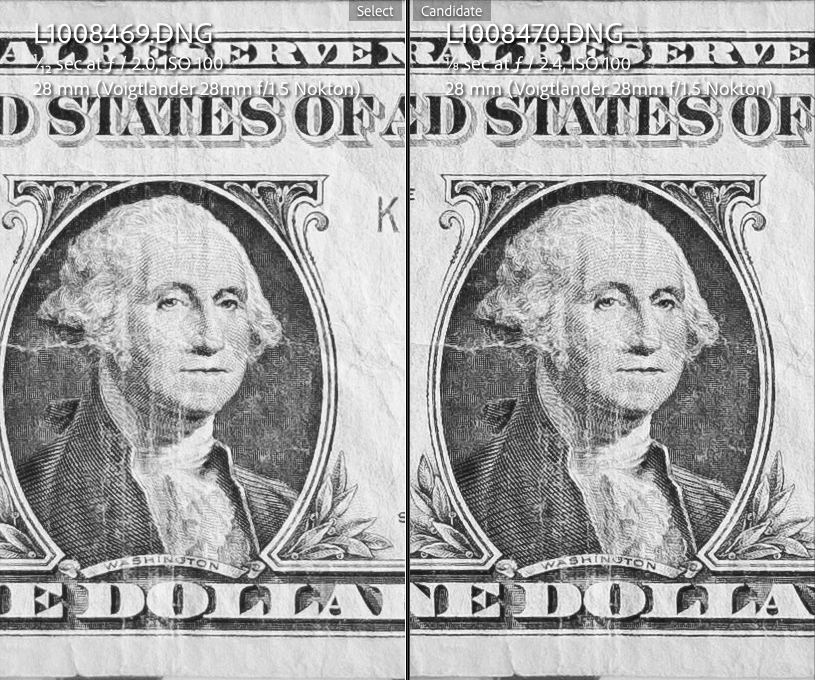
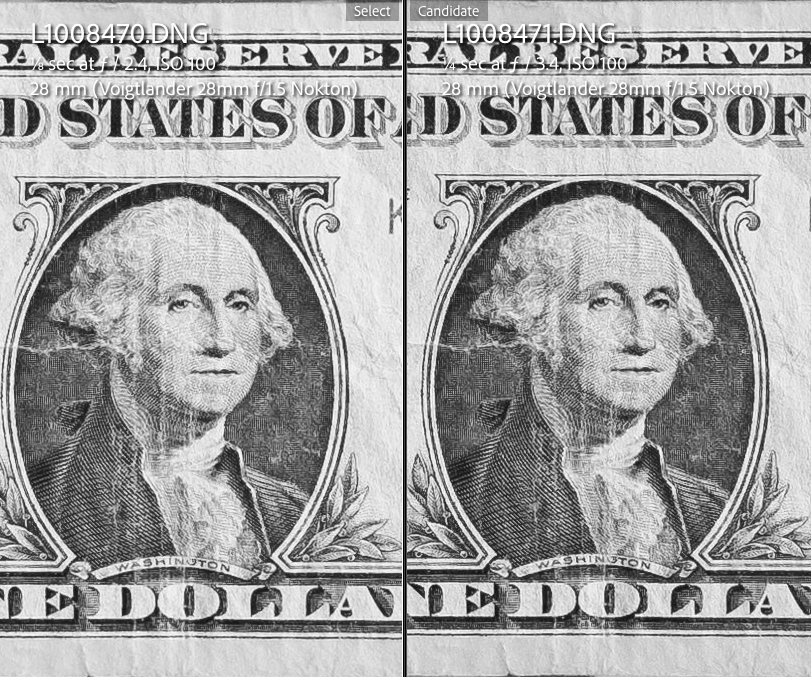
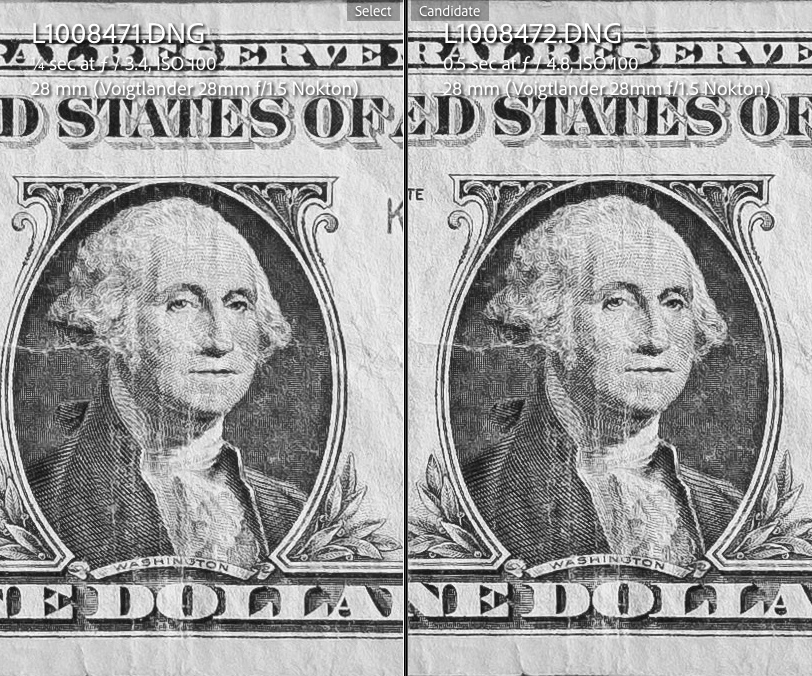
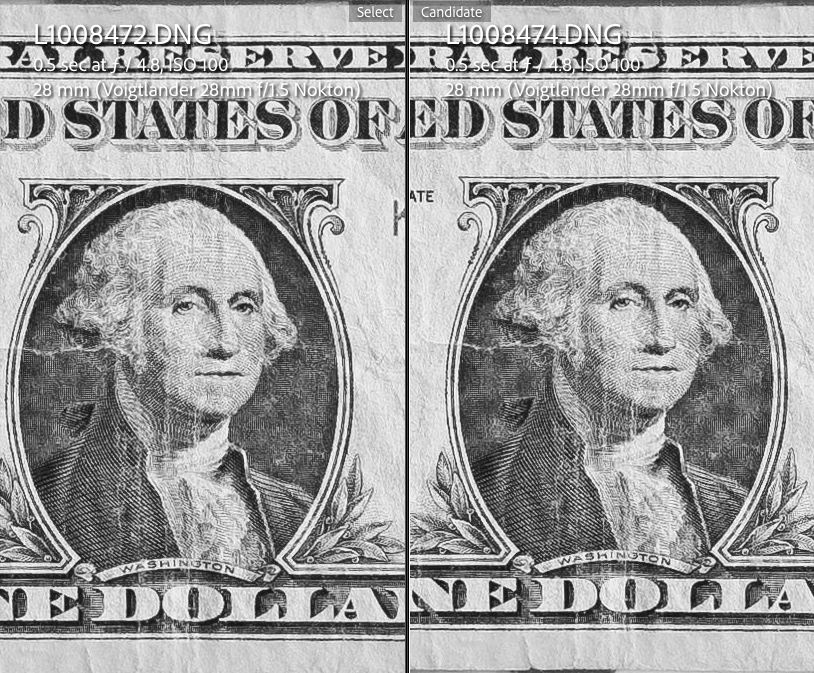
The Voigtlander 28mm f/1.5 Nokton lens is quite versatile. It can focus very close and maintains great resolution and contrast at its minimum focus distance (MFD), even though it lacks a floating element design.
One standout feature is its consistent sharpness across the aperture range. While there's a slight improvement in resolution and contrast with each aperture stop, the differences are relatively minor.
In general, this lens performs exceptionally, delivering sharp, detailed images with high contrast.
Check out this sequence from wide open to f/4, the aperture at which the lens performs optimally. The lens was initially focused at f/1.5, and subsequent aperture changes to f/2, f/2.8, and f/4 were made without refocusing. The last comparison crop shows the lens at f/4 compared to refocused at f/4, revealing minimal focus shift.
 |
||
 |
||
|
F/1.5 (LEFT) | f/2 (RIGHT)
|
||
 |
||
|
F/2 (LEFT) | f/2.8 (RIGHT)
|
||
 |
||
|
F/2.8 (LEFT) | f/4 (RIGHT)
|
||
 |
||
|
F/4 (LEFT) | Refocused at f/4 (RIGHT)
Jan 29, 2024 at 04:20 PM