Voigtlander 28mm f/1.5 Nokton Review
p.49 #1Voigtlander 28mm f/1.5 Nokton Review
The above is a pragmatic outline of the transition zone. Both models of 3D depend on this unremarked yet vital axial region of our images - the transition zone.
1. Zeiss and Leica promote a rapid fall-off into a deep bokeh field (a short transition zone they nevertheless promote as being 'smooth');
2. Some Chinese and a number of cine lens makers promote smoother and longer transition zones as aids to 3D perception, they want a gentle transform at the end of the transition zone, something you may not even notice. Quite a few use high blade apertures as a means of retaining visible structure in motifs inside the bokeh field (retaining circularity in the aperture is very important to doing this). All of them think it matters.
'Imagine two fast 50mm lenses (used on the same camera body), each taking the same f1.4 photograph of a person at a subject-camera distance of two metres. Lens A shows background content at a fairly advanced level of loss of identifiable shape at just three metres, whereas Lens B takes all of six metres to have its same content reach the same level of abstraction.
If image content were shown such that objects were shown at distances that correspond to their location in real life, which lens would display greater dimensionality, Lens A or Lens B? The one that rushes off to the blur field, or the one that shows much more image content in the much longer transition zone, each object shaped and sized according to its distance from the camera?'
The answer will tell you what you prefer and should look for in lenses. If dimensionality matters to what you shoot that is, in your mind.
Nov 24, 2025 at 11:01 PM
p.49 #2Voigtlander 28mm f/1.5 Nokton Review
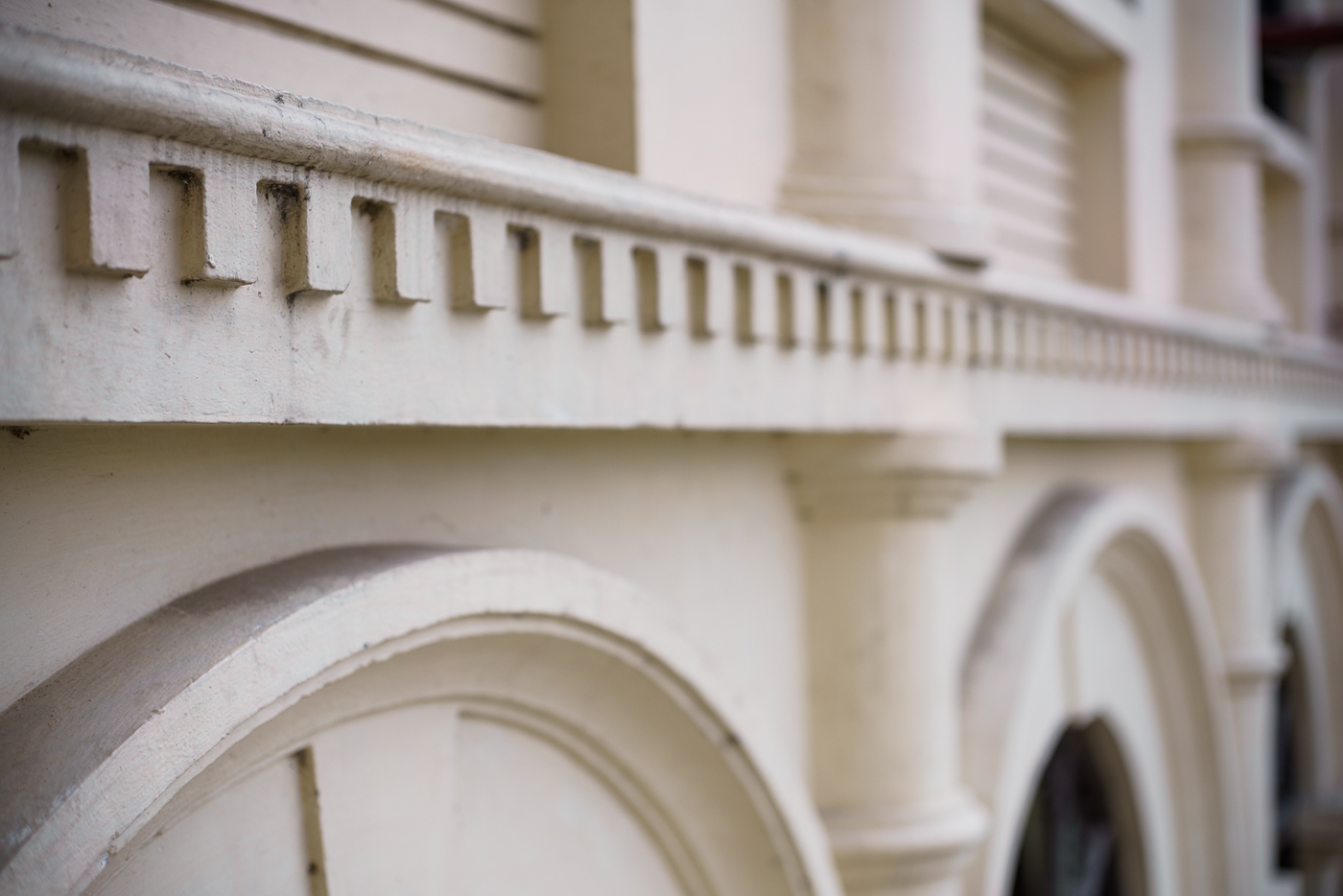
All lenses at 75mm and f1.4 focused at near distances from the camera will quickly produce out-of-focus content, as we see here. Focus fade is highly visible in this kind of exercise; it's one of the first things I do with lenses new to me.
1. Where is the onset of what you think of as 'bokeh' in the background, behind the focal point? Is the first pillar 'bokeh'? It looks more like 'I can see what it is, just with a smooth soft outline' than 'yes, that's blur'.
2. Viewing the screen at its diagonal length from your face, where would you think is where the zone of in-focus content ends? Then, try it by moving back to twice the diagonal of your screen. Then step back five metres and look.
The transition zone is highly variable, and dependent on final use and viewing distance.
In the 3D models, there is no right or wrong, but the entire background behind the plane of focus most definitely may be judged as aesthetic and showing pleasingly smoothed identifiable material; or as just the other part of the image from the sovereign subject, not so important and best presented as highly abstract and diffused and colorful amorphous entities.
Not to belabor the point unduly, but bokeh really matters. All of it: near-plane content; mid-distance transitional content, crossover content, early bokeh field, deep bokeh field.
 |
||
 |
||
|
Nov 24, 2025 at 11:52 PM
p.49 #3Voigtlander 28mm f/1.5 Nokton Review
https://shop.tahusa.co/product/square-lens-hood-for-voigtlander-35-40-50mm-black-aluminum-regular-shipping-only/
I can confirm it does vignette ever so slightly by default. However, since I don't fancy the larger LH-6 hood. I made the vignette go away with a dremel. 4mm notches in to the corners and 2mm of material off the sides.
Can you post a picture showing the lens with this hood? TIA.
Yup here it is. – https://i.imgur.com/5VwvDll.jpeg
the link has gone - would a repost be possible?
Nov 29, 2025 at 08:24 AM
p.49 #4Voigtlander 28mm f/1.5 Nokton Review
So it's just like the point after it's clearly in focus to some arbitrary point where it's too blurry to see finer details at most reasonable viewing distances before its full blurry glory.
When it starts to blur basically without a (very) well-defined cutoff point but perhaps still a rough one.
It's why I was thinking "transition" or "fall-off" makes more sense than "transition zone" but no big deal, I was looking at the right thing in the reviews at least (just wasn't sure at what depth I ought to stop to follow along a review's comments about the zone).
Nov 29, 2025 at 09:39 AM

p.49 #5Voigtlander 28mm f/1.5 Nokton Review
Ripolini wrote:
It's like a little under 1 stop difference.
The nokton has lovely fall-off at f1.6 to my eyes at 1-2m. And I also like the apo's more gradual falloff.
It helps give the APO more of a realism vibe (and feeling of a sharp image) at the same aperture, whereas the nokton is more subject focussed and it helps with isolation. You can do both with either to a nice level, perhaps not at all distances though).
-- I still don't get the concept of transition "zone" because at what point is something considered out of focus. It's either in-focus or it's out of focus to varying degrees, or am I wrong there?
Zone sounds to me like the person means to say there's a part where things are "kind of" in focus before they're "fully" out of focus - that seems hard to define, I usually struggle when the reviewers mention it to follow along exactly.
I'm probably being an idiot somehow but I've had this question for months now. Same with the lens markings for something being in-focus at x distance at a certain aperture. They mean perfectly in focus between those distances, or acceptable focus?The sharpness of the lens has its influence. A less sharp lens should reproduce a point (0 dimensional) with a larger size both on the focus plane and on out-of-focus planes as well, thus giving rise to more blurred oof subjects. Does this influence the 3D rendering? I'm not so sure.
As you correctly stated, the APO has more realism; i.e., a 3D look closer to reality. Unfortunately, people think that lenses with residual aberrations have a larger 3D pop. This might depend on their assumption that a more pictorial rendering translates into 3D pop. Actually, it's the opposite
+1
I think our terminology is a bit of an issue when folks talk about this.
To your point ... (imo) more "pop", means a more rapid, abrupt rate of transition from the focal plane.
In comparison that those folks who are talking about having a slower, longer or "more natural" transition as being more closely equitable to human vision's natural interpretation, their use of the term "3D" isn't the same as someone who is advocated for the abrupt "3D pop".
And, to that, I'll add that the "rate of transition" may encompass various attributes. To wit:
Focus vs. Blur
Contrast vs. Haze / Flare
Saturation vs. Haze / Flare
Luminance
Hue vs. Hue
Neutral vs. Cast
I mention this because the more "acute" something is, the greater the ability to depart from that acuteness. So, where APO has a more "acute" alignment of color wavelengths, the ability to deconstruct from that precision alignment is (potentially) more substantial than how rapidly we can depart from something that starts out with "less acute" aberrations (SA, etc.) as a means to control the rate of change.
The preference of folks regarding what / how / why they regard a "3D rendering" being defined as an abrupt, rapid rate of change vs. a longer slower natural rendering is highly subjective. Similarly, the amount of bokeh deconstruction of the BG is similarly a matter of taste, as some folks want the BG melted away, while others want it to retain more identity.
It would help the dialogue if we had better defined terms for discussion, moreover than the ubiquitous "3D" or "pop" (pop having a sudden, rapid or abrupt element to it, by definition).
Imo, folks are often more "impressed" by how rapidly a lens can differentiate planes in the scene. Classically, this is illustrated by a single subject, in a single focal plane, and a rapid rate of falloff. But, I think the discussion becomes divided when this gets assigned the moniker of "3D", whereas other scenes that depict the transitional depth of the scene are also given a moniker of "3D", as they reveal the differentiated planes (including when the DOF extends into multiple planes).
In that regard, Phillip's image doesn't show much of an abrupt, rapid rate of transition, "pop" to me, but it shows a more natural rendering of transition. Whether, one ascribes the term "3D" to the former vs. the latter is matter of ambiguous semantics. Some folks like a more intense, "fast and furious" pop, while others prefer the gentler, "long and slow" natural vision ... and yet, different folks call each "3D".

Yogifi wrote
I'm not sure if you guys are talking about the same thing and apologies if this is a hijack but with the CV APO 50mm f2 vs Nokton 50mm f1.2, at the same aperture, the nokton blurs faster than the apo, the apo is more gradual.It's like a little under 1 stop difference.
The nokton has lovely fall-off at f1.6 to my eyes at 1-2m. And I also like the apo's more gradual falloff.
It helps give the APO more of a realism vibe (and feeling of a sharp image) at the same aperture, whereas the nokton is more subject focussed and it helps with isolation. You can do both with either to a nice level, perhaps not at all distances though).
-- I still don't get the concept of transition "zone" because at what point is something considered out of focus. It's either in-focus or it's out of focus to varying degrees, or am I wrong there?
Zone sounds to me like the person means to say there's a part where things are "kind of" in focus before they're "fully" out of focus - that seems hard to define, I usually struggle when the reviewers mention it to follow along exactly.
I'm probably being an idiot somehow but I've had this question for months now. Same with the lens markings for something being in-focus at x distance at a certain aperture. They mean perfectly in focus between those distances, or acceptable focus?
As you correctly stated, the APO has more realism; i.e., a 3D look closer to reality. Unfortunately, people think that lenses with residual aberrations have a larger 3D pop. This might depend on their assumption that a more pictorial rendering translates into 3D pop. Actually, it's the opposite
+1
I think our terminology is a bit of an issue when folks talk about this.
To your point ... (imo) more "pop", means a more rapid, abrupt rate of transition from the focal plane.
In comparison that those folks who are talking about having a slower, longer or "more natural" transition as being more closely equitable to human vision's natural interpretation, their use of the term "3D" isn't the same as someone who is advocated for the abrupt "3D pop".
And, to that, I'll add that the "rate of transition" may encompass various attributes. To wit:
Focus vs. Blur
Contrast vs. Haze / Flare
Saturation vs. Haze / Flare
Luminance
Hue vs. Hue
Neutral vs. Cast
I mention this because the more "acute" something is, the greater the ability to depart from that acuteness. So, where APO has a more "acute" alignment of color wavelengths, the ability to deconstruct from that precision alignment is (potentially) more substantial than how rapidly we can depart from something that starts out with "less acute" aberrations (SA, etc.) as a means to control the rate of change.
The preference of folks regarding what / how / why they regard a "3D rendering" being defined as an abrupt, rapid rate of change vs. a longer slower natural rendering is highly subjective. Similarly, the amount of bokeh deconstruction of the BG is similarly a matter of taste, as some folks want the BG melted away, while others want it to retain more identity.
It would help the dialogue if we had better defined terms for discussion, moreover than the ubiquitous "3D" or "pop" (pop having a sudden, rapid or abrupt element to it, by definition).
Imo, folks are often more "impressed" by how rapidly a lens can differentiate planes in the scene. Classically, this is illustrated by a single subject, in a single focal plane, and a rapid rate of falloff. But, I think the discussion becomes divided when this gets assigned the moniker of "3D", whereas other scenes that depict the transitional depth of the scene are also given a moniker of "3D", as they reveal the differentiated planes (including when the DOF extends into multiple planes).
In that regard, Phillip's image doesn't show much of an abrupt, rapid rate of transition, "pop" to me, but it shows a more natural rendering of transition. Whether, one ascribes the term "3D" to the former vs. the latter is matter of ambiguous semantics. Some folks like a more intense, "fast and furious" pop, while others prefer the gentler, "long and slow" natural vision ... and yet, different folks call each "3D".
Nov 29, 2025 at 11:50 AM
p.49 #6Voigtlander 28mm f/1.5 Nokton Review
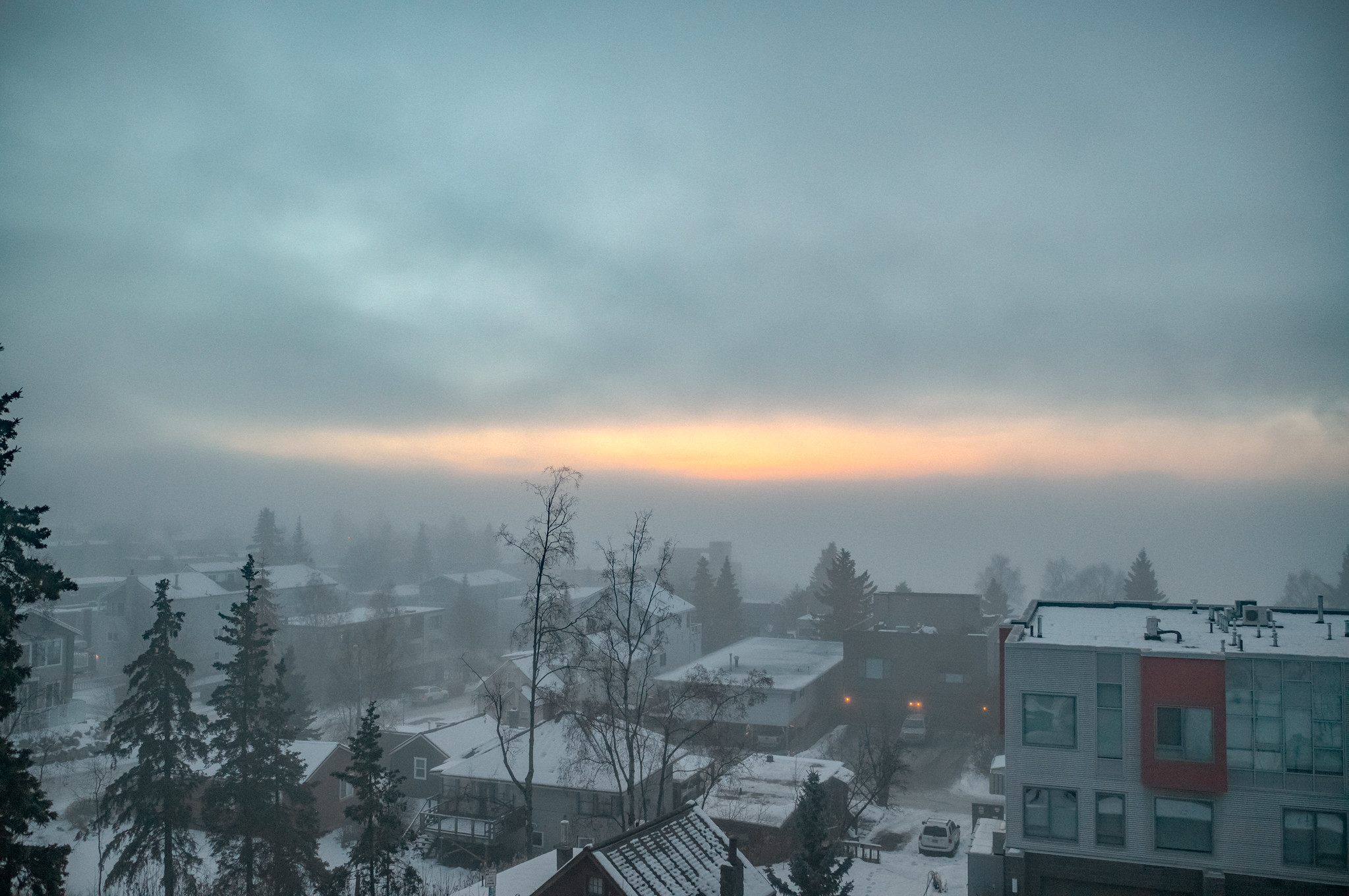
I really like this lens, along with the 21 and 50 1.2 Noktons, they are my go to during the winter months- this afternoon (gets dark at 4 pm so not really evening) Anchorage we had fog mist all day even just across the street the fog was apparent, in this view there is a bay out there, and mountains across the bay, but visibility was not far, there was a band of weak color as the Sunset cutting through the fog. The Noktons are not light especially the monster 21 mm but there are times when my light carry E39s including colorskopers are not going to cut it, and a winter day in Alaska is one of them. The lens does a good you are there capture. This is a M11P image.
Dec 01, 2025 at 09:39 PM
p.49 #7Voigtlander 28mm f/1.5 Nokton Review
Great review, Fred! Convinced me to pick it up vs other similar lenses, size is the best part for me.
Dec 08, 2025 at 11:20 PM
p.49 #8Voigtlander 28mm f/1.5 Nokton Review
nonon wrote:
Great review, Fred! Convinced me to pick it up vs other similar lenses, size is the best part for me.
I don't blame you at all. It actually replaced my trusty Leica 28/1.4 Summilux, since it delivers very similar IQ and rendering but in a much more compact package.
Great review, Fred! Convinced me to pick it up vs other similar lenses, size is the best part for me.
I don't blame you at all. It actually replaced my trusty Leica 28/1.4 Summilux, since it delivers very similar IQ and rendering but in a much more compact package.
Dec 14, 2025 at 06:11 PM
p.49 #9Voigtlander 28mm f/1.5 Nokton Review
I just picked up my second Voigtlander 28/1.5 but version I this time in silver for my M11-P Safari. My black version II is easily my most used and favorite lens. MAP Camera had it on sale but they were out of stock when I was there on Friday. I had already been to Yodobashi Camera Shinjuku and had seen that it was in stock there, but the price was a lot higher than MAP. I went back to Yodobashi Camera and asked if they would price match and to my surprise, they did! Never hurts to ask. I saved roughly $380 compared to the US price. Well worth the effort.
Here it is next to the Voigtlander 28/2 APO that I bought used from MAP Camera's eBay site.
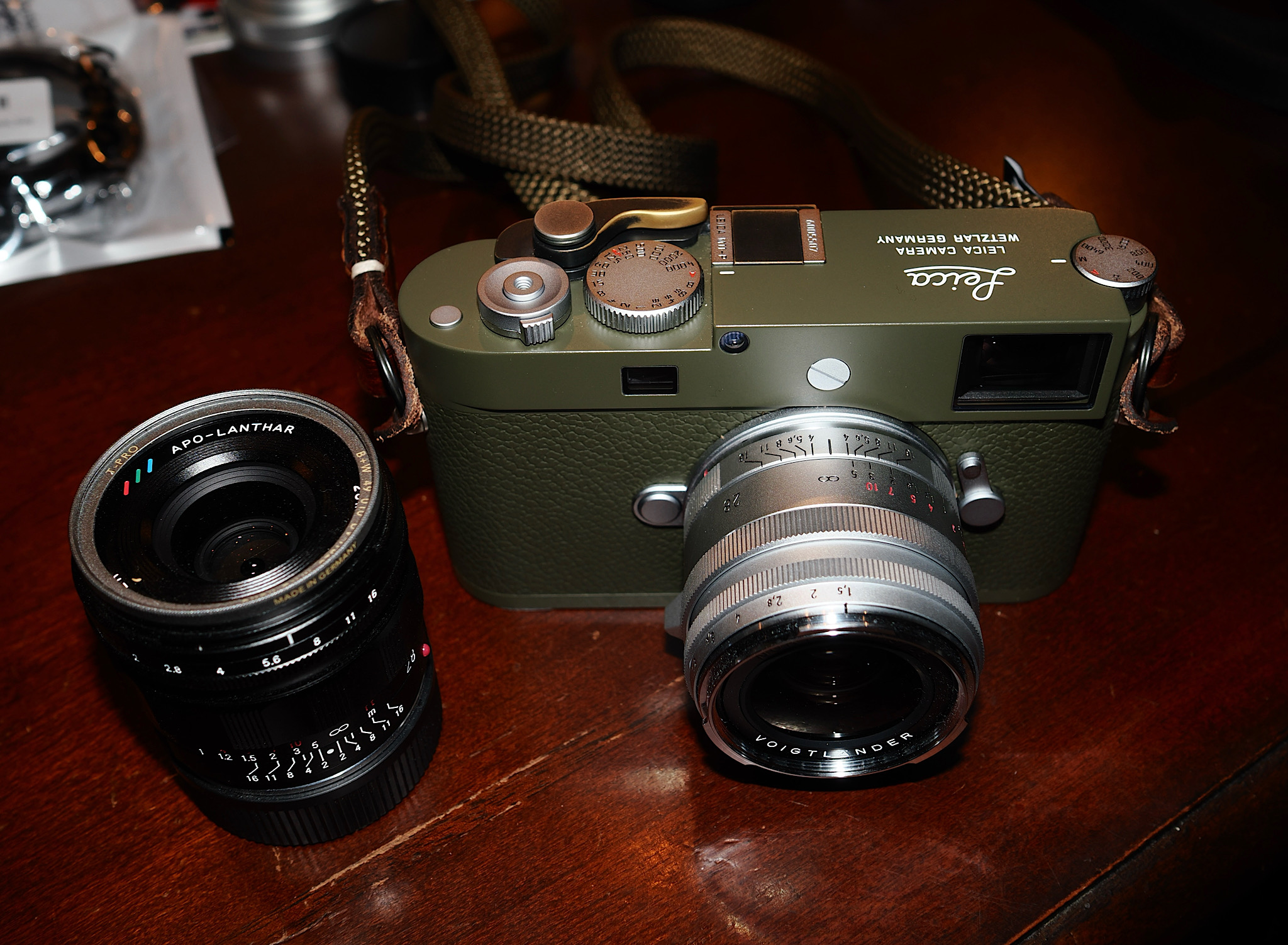
Here it is next to the Voigtlander 28/2 APO that I bought used from MAP Camera's eBay site.
Dec 14, 2025 at 07:40 PM
p.49 #10Voigtlander 28mm f/1.5 Nokton Review
First post here, registered a few weeks ago after lurking for a long time.
I purchased mine based on this excellent review. Thank you Fred!
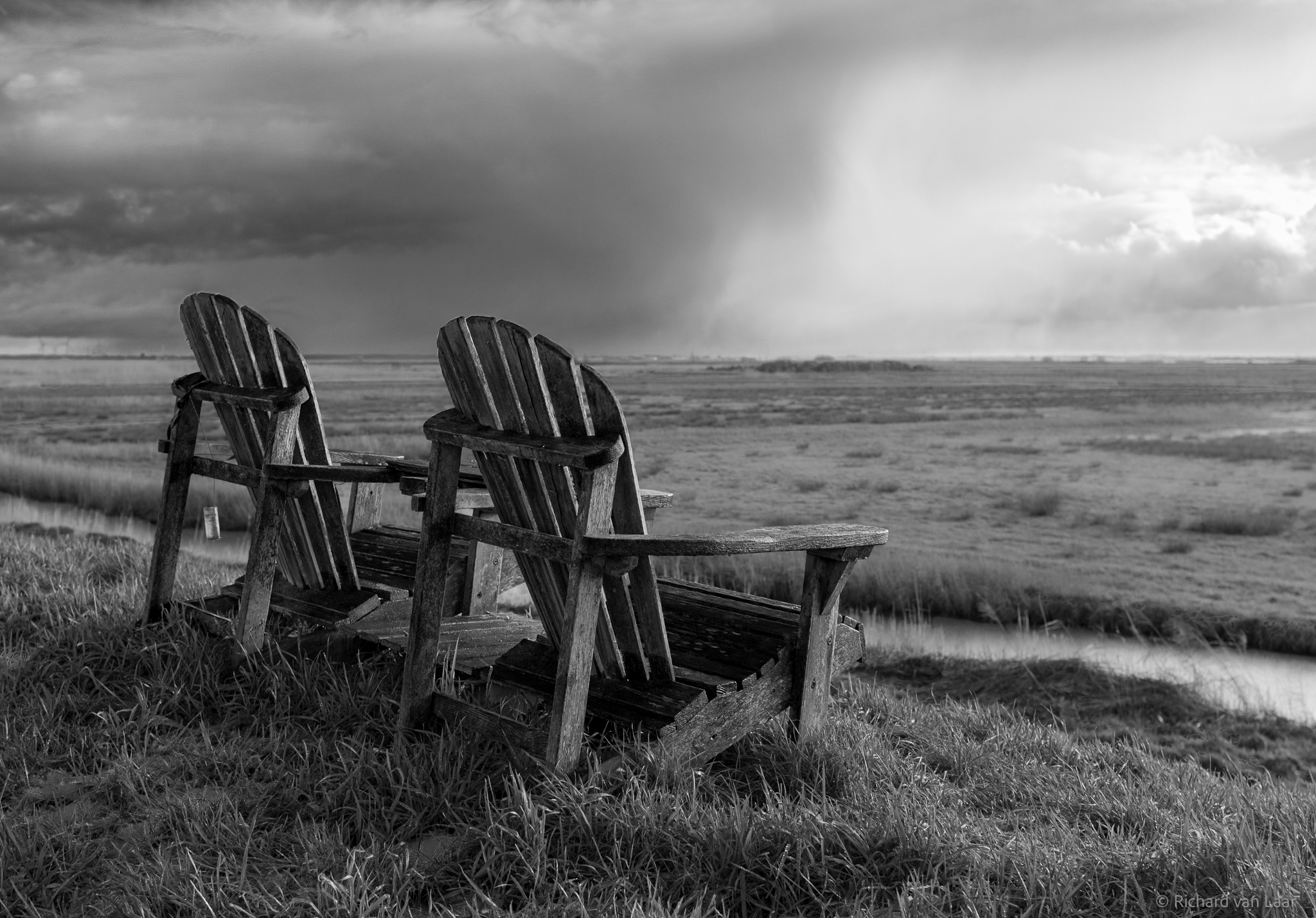
It lives on my M8.2 converting to a very nice 37/38mm focal length. This lens is awesome by any standard but taking the price vs. Leica into account it's jaw dropping imo.
I purchased mine based on this excellent review. Thank you Fred!
It lives on my M8.2 converting to a very nice 37/38mm focal length. This lens is awesome by any standard but taking the price vs. Leica into account it's jaw dropping imo.
 |
||
 |
||
|
Jan 11, 2026 at 04:33 AM
|
p.49 #11Voigtlander 28mm f/1.5 Nokton Review
LeicaM8.2 wrote:
First post here, registered a few weeks ago after lurking for a long time.
I purchased mine based on this excellent review. Thank you Fred!
It lives on my M8.2 converting to a very nice 37/38mm focal length. This lens is awesome by any standard but taking the price vs. Leica into account it's jaw dropping imo.
Welcome to FM.
Bring on the pics.
Jan 11, 2026 at 08:00 AM
p.49 #12Voigtlander 28mm f/1.5 Nokton Review
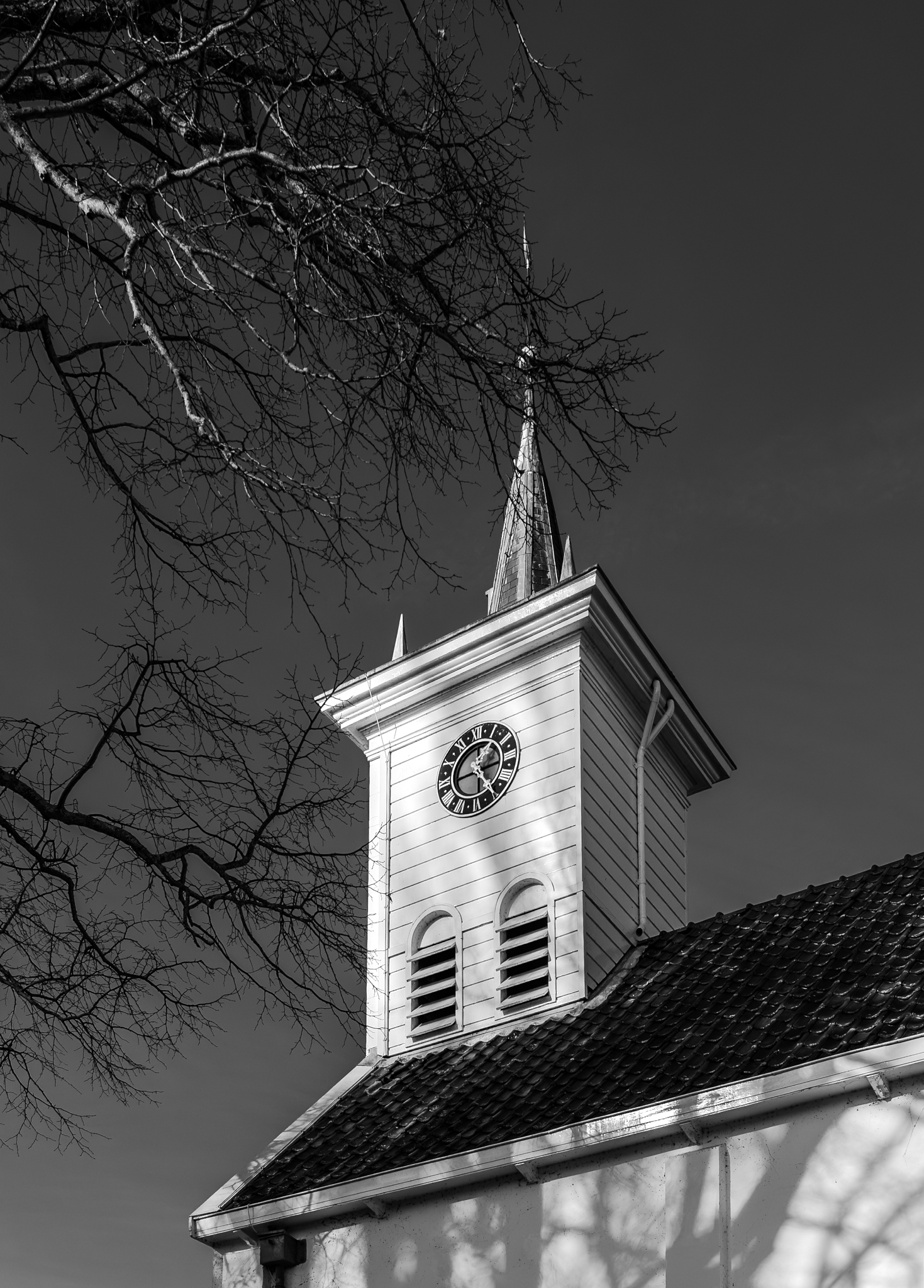
Really like this lens.
M8.2 - Voigtlander Nokton 28mm ⨍1.5 | ISO160 - ⨍5.6 - 1/500sec
Edited on Jan 17, 2026 at 10:31 PM · View previous versions
 |
||
 |
||
|
M8.2 - Voigtlander Nokton 28mm ⨍1.5 | ISO160 - ⨍5.6 - 1/500sec
Edited on Jan 17, 2026 at 10:31 PM · View previous versions
Jan 17, 2026 at 12:11 PM
p.49 #13Voigtlander 28mm f/1.5 Nokton Review
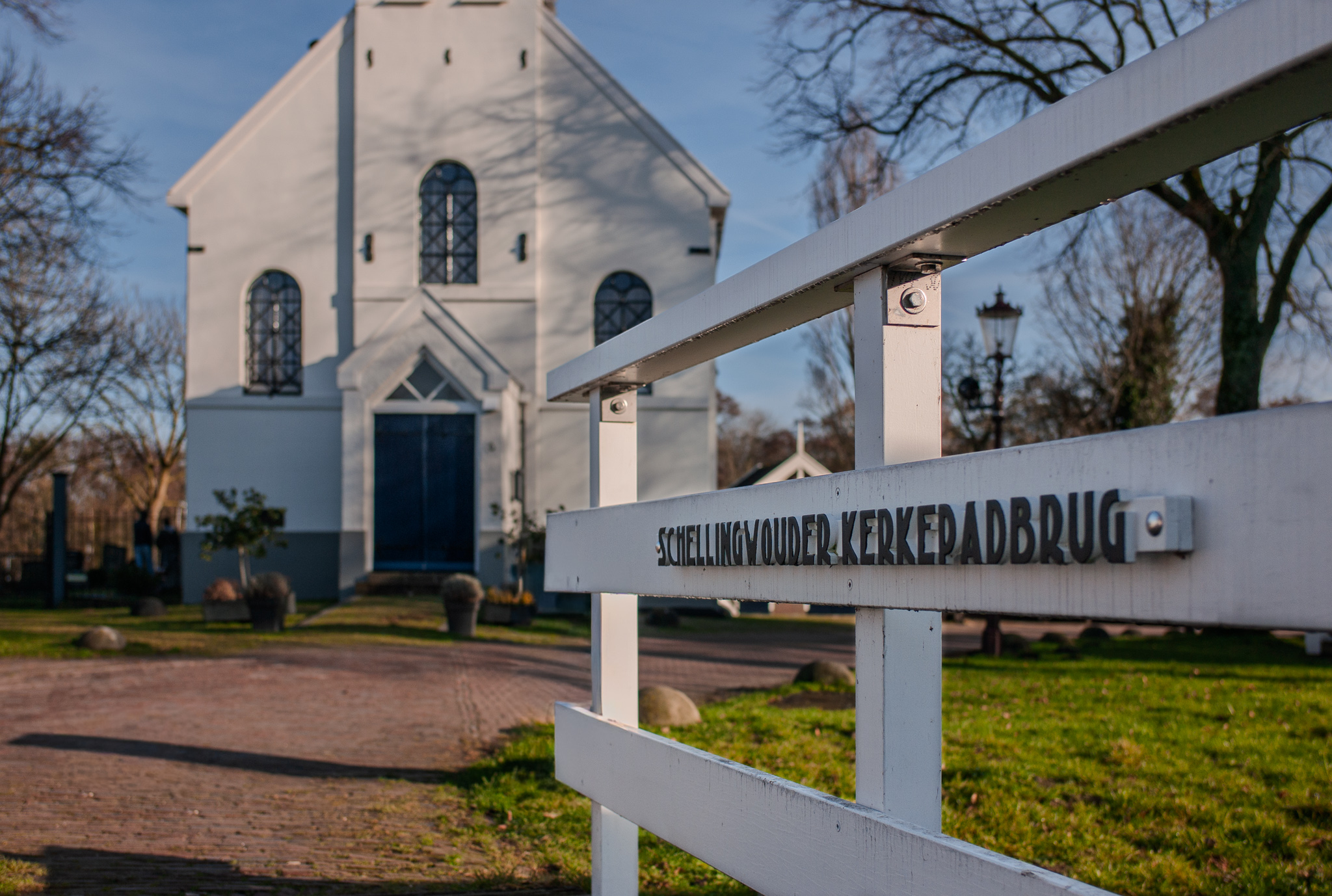
Same church (17th century)
M8.2 - Voigtlander Nokton 28mm ⨍1.5 | ISO160 - ⨍2.0 - 1/3000sec
|
||
 |
||
|
M8.2 - Voigtlander Nokton 28mm ⨍1.5 | ISO160 - ⨍2.0 - 1/3000sec
Jan 17, 2026 at 12:31 PM
p.49 #14Voigtlander 28mm f/1.5 Nokton Review
BruceRH wrote:
I just picked up my second Voigtlander 28/1.5 but version I this time in silver for my M11-P Safari. My black version II is easily my most used and favorite lens. MAP Camera had it on sale but they were out of stock when I was there on Friday. I had already been to Yodobashi Camera Shinjuku and had seen that it was in stock there, but the price was a lot higher than MAP. I went back to Yodobashi Camera and asked if they would price match and to my surprise, they did! Never hurts to ask. I saved...Show more →
The Voigtlander 28mm f/1.5 Nokton Type I "Silver" pairs really nicely with the Safari M and it's noticeably lighter than the Type II. I do love the glossy black paint on the Type II, but I've been considering the silver Type I for my M10-P Safari too!
I already have the Leica 50mm f/2 Summicron Safari, and while I did think about matching it with the 28mm f/2 Summicron Safari, I much prefer the Nokton's character and extra speed. What surprised me is how close the Nokton's barrel design feels to the 50 Summicron Safari, and they are even similar in size and weight.
Mar 30, 2026 at 07:26 PM
p.49 #15Voigtlander 28mm f/1.5 Nokton Review
I have a 28/1.5 and CV 50/1.5ii that cost used about 1k together. I use them on digital and also pack my film RF.
Incredibly light and capable set with some personality and superb ergo.

CV 28/1.5
Incredibly light and capable set with some personality and superb ergo.
CV 28/1.5
Mar 31, 2026 at 10:39 AM
p.49 #16Voigtlander 28mm f/1.5 Nokton Review
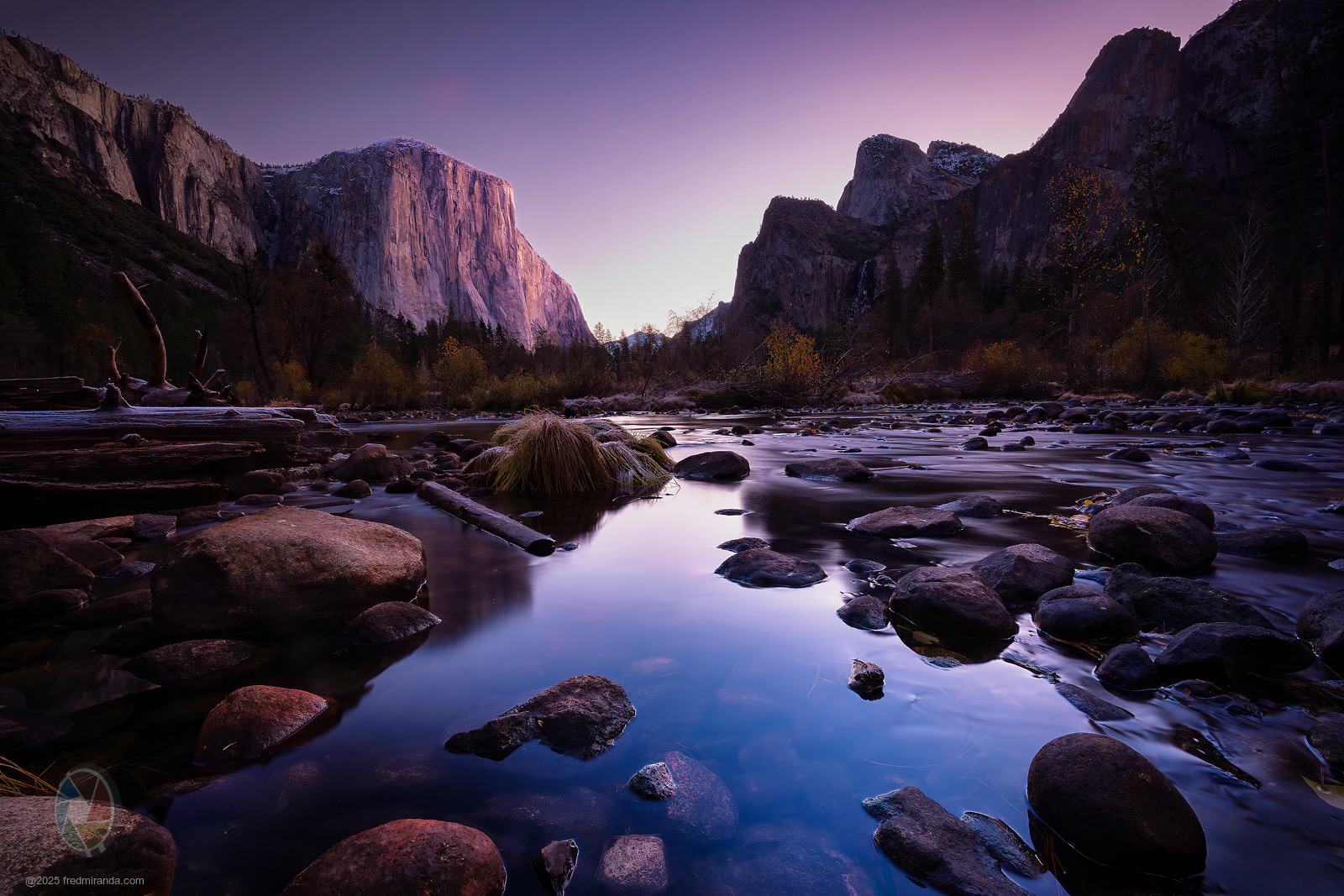
One stopped down, which this lens is also great for!
 |
||
 |
||
|
LEICA M10-R Voigtlander 28mm f/1.5 Nokton lens 28mm 8s 100 ISO -0.7 EV
Mar 31, 2026 at 05:40 PM
p.49 #17Voigtlander 28mm f/1.5 Nokton Review
Fred Miranda wrote:
One stopped down, which this lens is also great for!
Nice!
Did you focus stack this?
One stopped down, which this lens is also great for!
Nice!
Did you focus stack this?
Mar 31, 2026 at 07:08 PM
p.49 #18Voigtlander 28mm f/1.5 Nokton Review
Fred Miranda wrote:
One stopped down, which this lens is also great for!
Absolutely gorgeous, Fred!
One stopped down, which this lens is also great for!
Absolutely gorgeous, Fred!
Mar 31, 2026 at 07:11 PM
p.49 #19Voigtlander 28mm f/1.5 Nokton Review
Just ordered the Z mount version for my Zf, to pair up with the 40mm Nokton. Can't wait to test it out. 
Apr 01, 2026 at 01:39 AM
p.49 #20Voigtlander 28mm f/1.5 Nokton Review
nehemiahphoto wrote:
Nice!
Did you focus stack this?
It's a focus stack, just a bit unconventional since I have no heard anyone doing this. I take two shots, one at f/7.1 focused where I want maximum clarity, and another at f/18 to get the whole scene in focus. It's a quick way to make sure everything is covered.
The f/18 frame does take a hit from diffraction, but there are ways to bring it back a bit. Still, I'd rather guarantee everything is in focus than chase perfect sharpness everywhere. I then blend the two images manually. It's been a fast and reliable approach for me both in the field and during post. In the field, all it takes is to focus my primary subject at f/7.1 take a picture and rotate the aperture ring to f/18 or f/20 and take a second one.
Fred Miranda wrote
One stopped down, which this lens is also great for!Did you focus stack this?
It's a focus stack, just a bit unconventional since I have no heard anyone doing this. I take two shots, one at f/7.1 focused where I want maximum clarity, and another at f/18 to get the whole scene in focus. It's a quick way to make sure everything is covered.
The f/18 frame does take a hit from diffraction, but there are ways to bring it back a bit. Still, I'd rather guarantee everything is in focus than chase perfect sharpness everywhere. I then blend the two images manually. It's been a fast and reliable approach for me both in the field and during post. In the field, all it takes is to focus my primary subject at f/7.1 take a picture and rotate the aperture ring to f/18 or f/20 and take a second one.
Apr 01, 2026 at 02:06 PM