Voigtlander 28mm f/1.5 Nokton Review

p.46 #1Voigtlander 28mm f/1.5 Nokton Review
Yogifi wrote:
I can post those if people are curious.
I think my copy is fine. Perhaps not quite as good as Juha Kannisto's, although I haven't seen sample images across the net as good as his so he might have hit the jackpot there/ has great technique compared to me (highly likely), maybe the preset is helping a little too.
Anyway, some shots from today:
 https://i.postimg.cc/Bsr49J66/DSC04102.jpg
^^^ f/5.6 iso100 1/40 -- mostly posting fishing for comments about sharpness on the building
it was windy and it's a slower shutter speed so wouldnt pay much mind to the veg, focus was on the building too.
https://i.postimg.cc/X37yGccF/DSC04131.jpg
^^^ f/7.1 iso160 1/60 -- cropped the top and bottom a bit
The light was a lot less harsh today when I was out and I was much happier. I think this lens is really really suspectipble to CA and it gives it the funky look. It's not just the fringing CA with out of focus/in-focus. It's the other one too where the balance of colours is off a bit on details. And more noticeably is random yellows appearing very strong. I think harsh light makes it a lot worse, which makes sense I guess.
This stuck out to me, both at f5.6, taken 15 seconds apart when I was straightening up the shot, at 180% zoom:
https://i.postimg.cc/CwJNDLn1/Screenshot-2025-10-25-at-19-15-49.png">
Random poles on the boat, seemingly in the shade, turning completely yellow/green in one shot compared to the other. Blue bits and bobs on both, difficult to correct without affecting other parts of the image in lightroom.
I don't always love the background blur, sometimes it's nice, other times less so and would be nice to have smoother. But I also don't use 28mm like that very often...currently. So if the APO e-mount allows it to be sharper across the frame at f5.6, no less sharp than this in general, and has a cleaner image with the lack of CA, holds up in harsher light then I'm going to grab it but I think I'm happy to use this in the mean time, want to do some more testing with stronger light to see if I'm talking out of my ass or not.
And maybe the simera 28mm for portraits... but perhaps I can just get away with the 40mm f1.2 nokton instead for the environmental leaning ones. Not sure, in-doors especially at a restraunt or something the 28mm would be nice, but maybe I'd rather take the x100vi for those, though the image won't be as good but I'll feel less awkward. I dunno lets see, the simera is on sale right now, will lurk in that thread for more indoor closer-range portrait shots. I don't love it for full body with examples I saw, and would rather use something tighter.I think these shots look very good. Stopped down the lens looks sharp and I find the sharpness of the building that you asked about to be excellent. It also seems to me like you are learning to use the lens and learning some principles that will help you with any lens.
For the kinds of shots in this post, yes it does make sense to stop down and the lens is very nice stopped down. I think with use of the lens you will also find that especially at wider apertures that focus distance is important as the field curvature changes on this lens based on the focus distance as Fred demonstrated earlier in this thread in his review. If you learn the field curvature of this lens, and it takes awhile to learn it, then you can use it to help create the look of the shot that you would like. Also you seem to be starting to understand the bokeh of this lens, which isn't completely smooth and has some structure. Some don't like the bokeh, but I find it appealing especially on a wide lens like this one.
On the more general principles. I try not to shoot in harsh light, but when I do I typically look to shoot in the shade whenever possible to soften the light. I think another thing you are learning is that in the last boat shot, you are shooting into the sun, which can be a nice look, but it is tricky because of flare. You don't have major issues with flare in that shot and I think the lens is doing fine, but you can also expect some of the small blobs of discoloration as smaller impacts of flare. Flare is tricky as just a slight repositioning of the shot can change its impact pretty strongly. In such situations shooting several shots with slightly modified compositions to combat the flare is often a great strategy. You will have to live with imperfections, however, because even the best lenses are not going to be completely devoid of flare shooting into the sun.
Keep shooting and learn the lens as you do so. It will either grow on you or it won't. For me, it is a lens I very much enjoy using.Thanks Steve, appreciate the handholding after I threw my tantrum on day 1! There was a comment after the first impressions about satan gargling the light and spitting it back out, that I edited out to be a little more civil.
This 28mm on a full-frame camera is my first, most of my (still limited) experience has been at around 45-50mm, and mostly taking photos of family.
I did recently pick up the 35mm Sigma f2 but I barely touched it, it was just a great price brand new and figured it would be good to have something wider with autofocus and...Show more →
Now I see what you are concerned about and let me ask what RAW converter you are using and if you are correcting for lateral chromatic aberration (CA)? I think that is what you are pointing out, and it generally cleans up really well with most converters (I use adobe camera RAW to convert to either Lightroom or Photoshop and it handles this CA really well). Lateral CA (as opposed to axial aka longitudinal) CA does not reduce as you stop down the aperture, so it will be there even at small apertures. It is especially apparent in harsh light, so you will see it less with softer light and it should clean up well in post-processing.
If you tell us about your post-processing we may be able to help you get rid of it even in these images, but there is a bit of lateral CA with the CV 28 f/1.5, but I haven't found it a problem as I can correct for it well in post processing.
It can look pretty funky and is a real color problem when uncorrected, however. I think if you get lateral CA corrected well it may help with what is bothering you about this lens.
Steve Spencer wrote
Yogifi wrote
I did a quick comparison with the Sigma 35mm f2 DG DN and there was a small difference but it wasn't as big as I thought ... in this less harsh light. Sigma was a tiny bit sharper and more uniform and a little cleaner. Not a huge difference side-by-side.I can post those if people are curious.
I think my copy is fine. Perhaps not quite as good as Juha Kannisto's, although I haven't seen sample images across the net as good as his so he might have hit the jackpot there/ has great technique compared to me (highly likely), maybe the preset is helping a little too.
Anyway, some shots from today:
https://i.postimg.cc/Bsr49J66/DSC04102.jpgit was windy and it's a slower shutter speed so wouldnt pay much mind to the veg, focus was on the building too.
https://i.postimg.cc/X37yGccF/DSC04131.jpg
The light was a lot less harsh today when I was out and I was much happier. I think this lens is really really suspectipble to CA and it gives it the funky look. It's not just the fringing CA with out of focus/in-focus. It's the other one too where the balance of colours is off a bit on details. And more noticeably is random yellows appearing very strong. I think harsh light makes it a lot worse, which makes sense I guess.
This stuck out to me, both at f5.6, taken 15 seconds apart when I was straightening up the shot, at 180% zoom:
https://i.postimg.cc/CwJNDLn1/Screenshot-2025-10-25-at-19-15-49.png">
Random poles on the boat, seemingly in the shade, turning completely yellow/green in one shot compared to the other. Blue bits and bobs on both, difficult to correct without affecting other parts of the image in lightroom.
I don't always love the background blur, sometimes it's nice, other times less so and would be nice to have smoother. But I also don't use 28mm like that very often...currently. So if the APO e-mount allows it to be sharper across the frame at f5.6, no less sharp than this in general, and has a cleaner image with the lack of CA, holds up in harsher light then I'm going to grab it but I think I'm happy to use this in the mean time, want to do some more testing with stronger light to see if I'm talking out of my ass or not.
And maybe the simera 28mm for portraits... but perhaps I can just get away with the 40mm f1.2 nokton instead for the environmental leaning ones. Not sure, in-doors especially at a restraunt or something the 28mm would be nice, but maybe I'd rather take the x100vi for those, though the image won't be as good but I'll feel less awkward. I dunno lets see, the simera is on sale right now, will lurk in that thread for more indoor closer-range portrait shots. I don't love it for full body with examples I saw, and would rather use something tighter.
For the kinds of shots in this post, yes it does make sense to stop down and the lens is very nice stopped down. I think with use of the lens you will also find that especially at wider apertures that focus distance is important as the field curvature changes on this lens based on the focus distance as Fred demonstrated earlier in this thread in his review. If you learn the field curvature of this lens, and it takes awhile to learn it, then you can use it to help create the look of the shot that you would like. Also you seem to be starting to understand the bokeh of this lens, which isn't completely smooth and has some structure. Some don't like the bokeh, but I find it appealing especially on a wide lens like this one.
On the more general principles. I try not to shoot in harsh light, but when I do I typically look to shoot in the shade whenever possible to soften the light. I think another thing you are learning is that in the last boat shot, you are shooting into the sun, which can be a nice look, but it is tricky because of flare. You don't have major issues with flare in that shot and I think the lens is doing fine, but you can also expect some of the small blobs of discoloration as smaller impacts of flare. Flare is tricky as just a slight repositioning of the shot can change its impact pretty strongly. In such situations shooting several shots with slightly modified compositions to combat the flare is often a great strategy. You will have to live with imperfections, however, because even the best lenses are not going to be completely devoid of flare shooting into the sun.
Keep shooting and learn the lens as you do so. It will either grow on you or it won't. For me, it is a lens I very much enjoy using.
This 28mm on a full-frame camera is my first, most of my (still limited) experience has been at around 45-50mm, and mostly taking photos of family.
I did recently pick up the 35mm Sigma f2 but I barely touched it, it was just a great price brand new and figured it would be good to have something wider with autofocus and...Show more →
Now I see what you are concerned about and let me ask what RAW converter you are using and if you are correcting for lateral chromatic aberration (CA)? I think that is what you are pointing out, and it generally cleans up really well with most converters (I use adobe camera RAW to convert to either Lightroom or Photoshop and it handles this CA really well). Lateral CA (as opposed to axial aka longitudinal) CA does not reduce as you stop down the aperture, so it will be there even at small apertures. It is especially apparent in harsh light, so you will see it less with softer light and it should clean up well in post-processing.
If you tell us about your post-processing we may be able to help you get rid of it even in these images, but there is a bit of lateral CA with the CV 28 f/1.5, but I haven't found it a problem as I can correct for it well in post processing.
It can look pretty funky and is a real color problem when uncorrected, however. I think if you get lateral CA corrected well it may help with what is bothering you about this lens.
Oct 26, 2025 at 07:30 AM
p.46 #2Voigtlander 28mm f/1.5 Nokton Review
Steve Spencer wrote:
I can post those if people are curious.
I think my copy is fine. Perhaps not quite as good as Juha Kannisto's, although I haven't seen sample images across the net as good as his so he might have hit the jackpot there/ has great technique compared to me (highly likely), maybe the preset is helping a little too.
Anyway, some shots from today:
https://i.postimg.cc/Bsr49J66/DSC04102.jpg
^^^ f/5.6 iso100 1/40 -- mostly posting fishing for comments about sharpness on the building
it was windy and it's a slower shutter speed so wouldnt pay much mind to the veg, focus was on the building too.
https://i.postimg.cc/X37yGccF/DSC04131.jpg
^^^ f/7.1 iso160 1/60 -- cropped the top and bottom a bit
The light was a lot less harsh today when I was out and I was much happier. I think this lens is really really suspectipble to CA and it gives it the funky look. It's not just the fringing CA with out of focus/in-focus. It's the other one too where the balance of colours is off a bit on details. And more noticeably is random yellows appearing very strong. I think harsh light makes it a lot worse, which makes sense I guess.
This stuck out to me, both at f5.6, taken 15 seconds apart when I was straightening up the shot, at 180% zoom:
https://i.postimg.cc/CwJNDLn1/Screenshot-2025-10-25-at-19-15-49.png">
Random poles on the boat, seemingly in the shade, turning completely yellow/green in one shot compared to the other. Blue bits and bobs on both, difficult to correct without affecting other parts of the image in lightroom.
I don't always love the background blur, sometimes it's nice, other times less so and would be nice to have smoother. But I also don't use 28mm like that very often...currently. So if the APO e-mount allows it to be sharper across the frame at f5.6, no less sharp than this in general, and has a cleaner image with the lack of CA, holds up in harsher light then I'm going to grab it but I think I'm happy to use this in the mean time, want to do some more testing with stronger light to see if I'm talking out of my ass or not.
And maybe the simera 28mm for portraits... but perhaps I can just get away with the 40mm f1.2 nokton instead for the environmental leaning ones. Not sure, in-doors especially at a restraunt or something the 28mm would be nice, but maybe I'd rather take the x100vi for those, though the image won't be as good but I'll feel less awkward. I dunno lets see, the simera is on sale right now, will lurk in that thread for more indoor closer-range portrait shots. I don't love it for full body with examples I saw, and would rather use something tighter.I think these shots look very good. Stopped down the lens looks sharp and I find the sharpness of the building that you asked about to be excellent. It also seems to me like you are learning to use the lens and learning some principles that will help you with any lens.
For the kinds of shots in this post, yes it does make sense to stop down and the lens is very nice stopped down. I think with use of the lens you will also find that especially at wider apertures that focus distance is important as the field curvature changes on this lens based on the focus distance as Fred demonstrated earlier in this thread in his review. If you learn the field curvature of this lens, and it takes awhile to learn it, then you can use it to help create the look of the shot that you would like. Also you seem to be starting to understand the bokeh of this lens, which isn't completely smooth and has some structure. Some don't like the bokeh, but I find it appealing especially on a wide lens like this one.
On the more general principles. I try not to shoot in harsh light, but when I do I typically look to shoot in the shade whenever possible to soften the light. I think another thing you are learning is that in the last boat shot, you are shooting into the sun, which can be a nice look, but it is tricky because of flare. You don't have major issues with flare in that shot and I think the lens is doing fine, but you can also expect some of the small blobs of discoloration as smaller impacts of flare. Flare is tricky as just a slight repositioning of the shot can change its impact pretty strongly. In such situations shooting several shots with slightly modified compositions to combat the flare is often a great strategy. You will have to live with imperfections, however, because even the best lenses are not going to be completely devoid of flare shooting into the sun.
Keep shooting and learn the lens as you do so. It will either grow on you or it won't. For me, it is a lens I very much enjoy using.Thanks Steve, appreciate the handholding after I threw my tantrum on day 1! There was a comment after the first impressions about satan gargling the light and spitting it back out, that I edited out to be a little more civil.
This 28mm on a full-frame camera is my first, most of my (still limited) experience has been at around 45-50mm, and mostly taking photos of family.
I did recently pick up the 35mm Sigma f2 but I barely touched it, it was just a great price brand new and figured it would be good to have something wider with autofocus and I remember the threads with it performing well in the comparison. So these wider lenses on a full-frame camera are new to me.
With the first brick wall you can see all these really saturated yellows between the bricks, it doesn't exist in real life, it looks more like the fuji. With the x100 and the wide angle adaptor the light doesn't have this funky look to it. Whereas on this, in that stronger light, the bricks just looked funky, more so to the sides. Yes it had a lot more contrast but the sharpness I wasn't seeing it, when I look closely at the bricks they just look messy.
But with the fuji I'll never get sharpness like this longer distance, and there's definitely a lot of quirks with it at larger apertures.
I'm thinking maybe it's the focal length that might be adding to the funk in addition to the harsh light. Like with my 50s, every image is clean, even if some lenses have cleaner images than others, they're all pretty clean, across different light. With the 75's it's even more clean, especially the TTA f2. So maybe that has something to do with it, I'm not sure. I don't see it on the fuji.
Tonnes of issues with the fuji, but I don't feel the need to go past f8 on the apsc, unless I'm shooting something with tonnes of depth like this:
 https://www.fredmiranda.com/forum/topic/1842505/2#field -- this will look different with aperture right? So I'd assume that was wide-open to illustrate it best..]
So for something like this where it's a scene in close distance you'd use f16 if there was enough light? And maybe focus on the mid-point like the tree:
https://i.postimg.cc/SqFmhdTy/DSC04000.jpg
At f11 I feel like it wasn't enough and something like this sort of situation is going to be a frequent thing for me. I think apsc handles this with more ease ... in a way.
F11 with x100vi + wideangle:
https://i.postimg.cc/5fqvMpWD/X1001620.jpg
I don't mind the blob part of the flare, I see a very similar (single) small blue/red blob in many images where I shoot into the sun, it doesn't bother me:
https://i.postimg.cc/rmTX8g5s/image.png
It's cute. Get's more defined edges and saturated at smaller apertures. There are other parts to the flare sometimes that are bigger offenders, but flare in general I'm okay with.
But with the side-by-side of images taken seconds apart with the boats, blobs probably weren't the right description, it was like fringing I guess, let me get a bigger closeup so we're talking about the same thing:
https://i.postimg.cc/tgjnjQvv/image.png
And I was just not understanding why at infinity distance, with the boat in the shade, and a slight re-adjustment of the frame, why the pole (on the right-hand side) would be much more yellow in one shot and not in the other. And that random yellow showing up on things reminded me of the brick wall comparison against the fuji in the strong light.
With the shot of the building (thank you for commenting) I was happy with most of the front facing bricks at f5.6. Towards the right hand side, which is probably harder to see without opening the image in a new window to get the full res (pain to do with the host but at least it's available to zoom around), where the building starts to curve on the right - I saw an improvement going to f8. But I wasn't understanding why: if it's at infinity, then why does it matter. It was a small improvement at f8 on that side. Maybe that's to do with the FC?
F8 left, F5.6 right at around 400% - BUT, it wasn't on a tripod and this section on the F8 is a little more inwards (towards the centre) compared to the f5.6.
https://i.postimg.cc/YpMcy2tP/image.png
And just for reference, closer to the center at 200% with the a7cii:
https://i.postimg.cc/LmsLkL1W/image.png">
Most of this is minor and I don't want to put all this on Steve so you're more than forgiven if you leave me to figure it out
The main thing for me is going to be clean, sharp images in bright sunlight without the funk - that's what I want to focus on. And lots more where I set it to f5.6 and infinity focus and just see what I get.Now I see what you are concerned about and let me ask what RAW converter you are using and if you are correcting for lateral chromatic aberration (CA)? I think that is what you are pointing out, and it generally cleans up really well with most converters (I use adobe camera RAW to convert to either Lightroom or Photoshop and it handles this CA really well). Lateral CA (as opposed to axial aka longitudinal) CA does not reduce as you stop down the aperture, so it will be there even at small apertures. It is especially apparent in harsh...Show more →
Thank you, well with my A7cii, I plug in the memory card to the laptop and just import it into lightroom (not classic) using "Add Images" in the top-left hand side. They are ARW files from the sony in lightroom.
I don't see any difference using adobe's convertor to get a dng (camera raw 16) first then dropping it into lightroom.
Using the defringe tool to carefully adjust the range slider to pick the colours that are "fringing" with the smallest strength until it goes away does work to remove things like the yellow on that boat's pole - but it also removes colour from objects that then turn grey that had no fringing so I'm hesitant to use it unless I'm willing to carefully examine the photo...
Quick demonstration but the video expires after two days unfortunately:
https://streamable.com/exl2h3
On the brick wall with the defringing tool on the right:
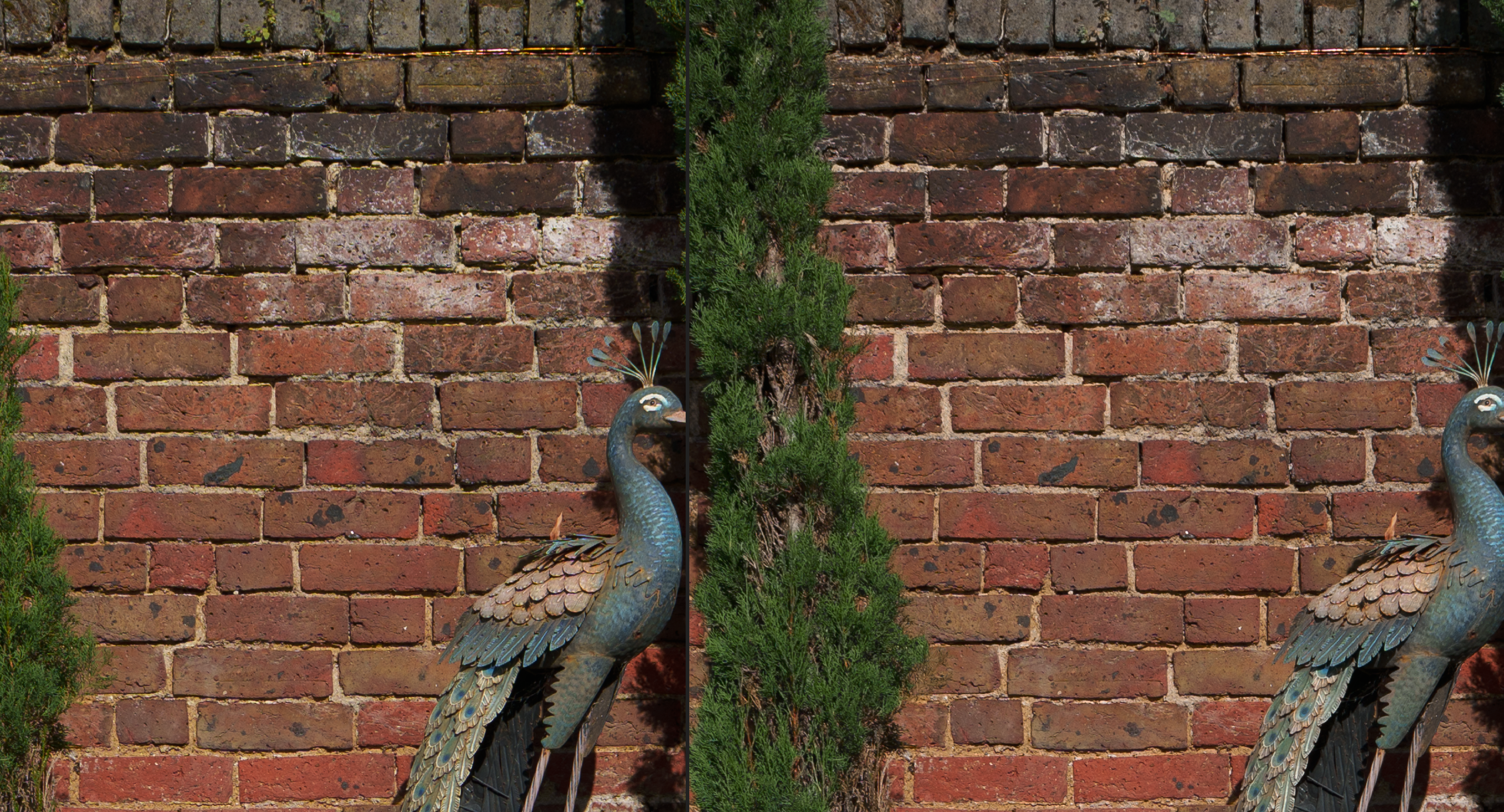
It does remove the excess yellow between the bricks. Might be harder to use in other images where it's less obvious / does other damage. Still a bit crunchy.
Despite the name of the tool that's not actually fringing right (longitudinal/axial), that's lateral CA? I dunno, it's CA.
I took another image of the wall today as well, and compared it to the first day with the stronger light. I didn't get the distance quite right, so I've had to zoom in more on the left which is today's cloudy light:
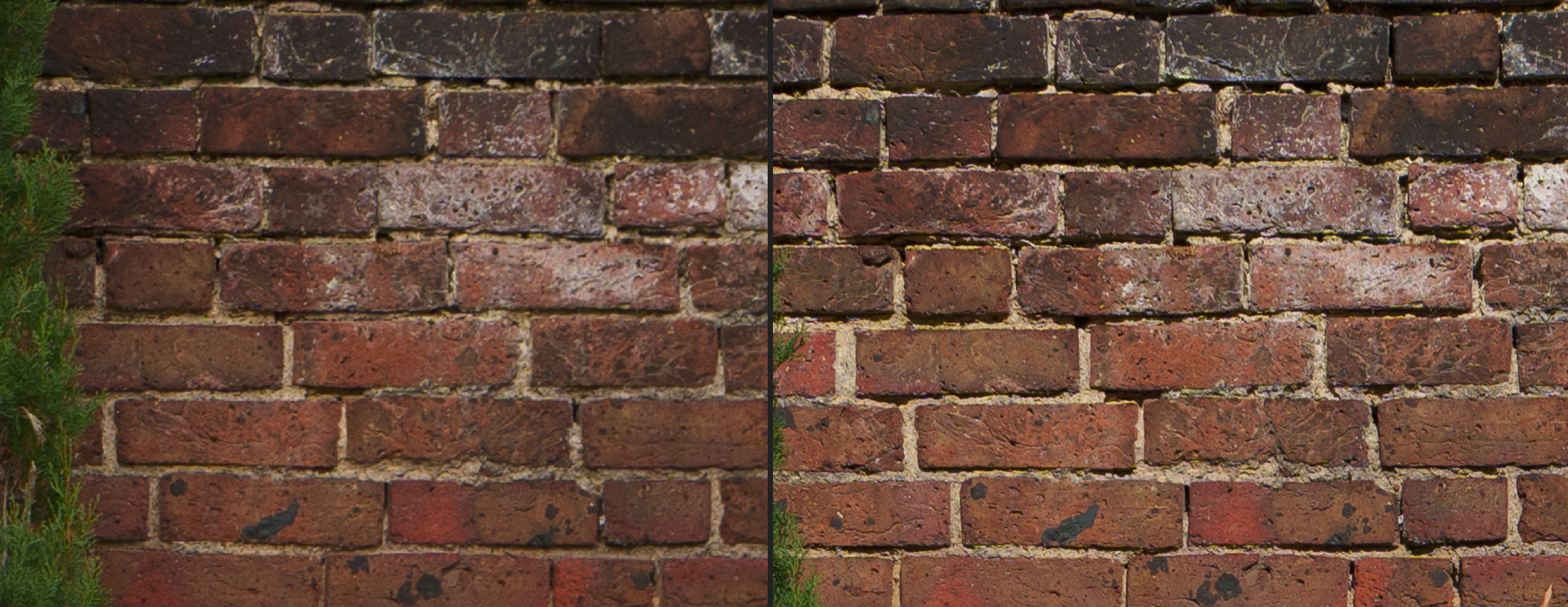
You can see in the cloudy light the yellows between the bricks aren't as cyberpunk.
After your comments I re-read Fred's post about lAca (https://www.fredmiranda.com/forum/topic/1842505/8#laca) and he mentions using the "remove chromatic abberation" option in lightroom with a demonstration at infinity.
I looked really, really closely with the brick wall above and it actually is doing something very minor in my example - the image looks a tiny bit less sharp but ever-so-slightly easier on the eyes. Side-by-side it looks similar, but when I toggle it on and off and zoom in I notice something minor changing. It's not enough though.
No profile in lightroom for the lens either but not a huge deal. And sorry for all the brick wall shots folks.
Let's see a few more bright sunny days (if we get any here) if I can get results I'm as happy with after a bit more experience with getting what I want in-focus. Perhaps that's just how it should look with harsh light and I'm a noob. Because I really do like the look of it in some f1.5 people shots. Not all but sometimes it's just perfect for the look, and I'm rather happy with it in cloud/shade/not as strong light.
Yogifi wrote
Steve Spencer wrote
Yogifi wrote
I did a quick comparison with the Sigma 35mm f2 DG DN and there was a small difference but it wasn't as big as I thought ... in this less harsh light. Sigma was a tiny bit sharper and more uniform and a little cleaner. Not a huge difference side-by-side.I can post those if people are curious.
I think my copy is fine. Perhaps not quite as good as Juha Kannisto's, although I haven't seen sample images across the net as good as his so he might have hit the jackpot there/ has great technique compared to me (highly likely), maybe the preset is helping a little too.
Anyway, some shots from today:
https://i.postimg.cc/Bsr49J66/DSC04102.jpgit was windy and it's a slower shutter speed so wouldnt pay much mind to the veg, focus was on the building too.
https://i.postimg.cc/X37yGccF/DSC04131.jpg
The light was a lot less harsh today when I was out and I was much happier. I think this lens is really really suspectipble to CA and it gives it the funky look. It's not just the fringing CA with out of focus/in-focus. It's the other one too where the balance of colours is off a bit on details. And more noticeably is random yellows appearing very strong. I think harsh light makes it a lot worse, which makes sense I guess.
This stuck out to me, both at f5.6, taken 15 seconds apart when I was straightening up the shot, at 180% zoom:
https://i.postimg.cc/CwJNDLn1/Screenshot-2025-10-25-at-19-15-49.png">
Random poles on the boat, seemingly in the shade, turning completely yellow/green in one shot compared to the other. Blue bits and bobs on both, difficult to correct without affecting other parts of the image in lightroom.
I don't always love the background blur, sometimes it's nice, other times less so and would be nice to have smoother. But I also don't use 28mm like that very often...currently. So if the APO e-mount allows it to be sharper across the frame at f5.6, no less sharp than this in general, and has a cleaner image with the lack of CA, holds up in harsher light then I'm going to grab it but I think I'm happy to use this in the mean time, want to do some more testing with stronger light to see if I'm talking out of my ass or not.
And maybe the simera 28mm for portraits... but perhaps I can just get away with the 40mm f1.2 nokton instead for the environmental leaning ones. Not sure, in-doors especially at a restraunt or something the 28mm would be nice, but maybe I'd rather take the x100vi for those, though the image won't be as good but I'll feel less awkward. I dunno lets see, the simera is on sale right now, will lurk in that thread for more indoor closer-range portrait shots. I don't love it for full body with examples I saw, and would rather use something tighter.
For the kinds of shots in this post, yes it does make sense to stop down and the lens is very nice stopped down. I think with use of the lens you will also find that especially at wider apertures that focus distance is important as the field curvature changes on this lens based on the focus distance as Fred demonstrated earlier in this thread in his review. If you learn the field curvature of this lens, and it takes awhile to learn it, then you can use it to help create the look of the shot that you would like. Also you seem to be starting to understand the bokeh of this lens, which isn't completely smooth and has some structure. Some don't like the bokeh, but I find it appealing especially on a wide lens like this one.
On the more general principles. I try not to shoot in harsh light, but when I do I typically look to shoot in the shade whenever possible to soften the light. I think another thing you are learning is that in the last boat shot, you are shooting into the sun, which can be a nice look, but it is tricky because of flare. You don't have major issues with flare in that shot and I think the lens is doing fine, but you can also expect some of the small blobs of discoloration as smaller impacts of flare. Flare is tricky as just a slight repositioning of the shot can change its impact pretty strongly. In such situations shooting several shots with slightly modified compositions to combat the flare is often a great strategy. You will have to live with imperfections, however, because even the best lenses are not going to be completely devoid of flare shooting into the sun.
Keep shooting and learn the lens as you do so. It will either grow on you or it won't. For me, it is a lens I very much enjoy using.
This 28mm on a full-frame camera is my first, most of my (still limited) experience has been at around 45-50mm, and mostly taking photos of family.
I did recently pick up the 35mm Sigma f2 but I barely touched it, it was just a great price brand new and figured it would be good to have something wider with autofocus and I remember the threads with it performing well in the comparison. So these wider lenses on a full-frame camera are new to me.
With the first brick wall you can see all these really saturated yellows between the bricks, it doesn't exist in real life, it looks more like the fuji. With the x100 and the wide angle adaptor the light doesn't have this funky look to it. Whereas on this, in that stronger light, the bricks just looked funky, more so to the sides. Yes it had a lot more contrast but the sharpness I wasn't seeing it, when I look closely at the bricks they just look messy.
But with the fuji I'll never get sharpness like this longer distance, and there's definitely a lot of quirks with it at larger apertures.
I'm thinking maybe it's the focal length that might be adding to the funk in addition to the harsh light. Like with my 50s, every image is clean, even if some lenses have cleaner images than others, they're all pretty clean, across different light. With the 75's it's even more clean, especially the TTA f2. So maybe that has something to do with it, I'm not sure. I don't see it on the fuji.
Tonnes of issues with the fuji, but I don't feel the need to go past f8 on the apsc, unless I'm shooting something with tonnes of depth like this:
https://www.fredmiranda.com/forum/topic/1842505/2#field -- this will look different with aperture right? So I'd assume that was wide-open to illustrate it best..]So for something like this where it's a scene in close distance you'd use f16 if there was enough light? And maybe focus on the mid-point like the tree:
https://i.postimg.cc/SqFmhdTy/DSC04000.jpg
At f11 I feel like it wasn't enough and something like this sort of situation is going to be a frequent thing for me. I think apsc handles this with more ease ... in a way.
F11 with x100vi + wideangle:
https://i.postimg.cc/5fqvMpWD/X1001620.jpg
I don't mind the blob part of the flare, I see a very similar (single) small blue/red blob in many images where I shoot into the sun, it doesn't bother me:
https://i.postimg.cc/rmTX8g5s/image.png
It's cute. Get's more defined edges and saturated at smaller apertures. There are other parts to the flare sometimes that are bigger offenders, but flare in general I'm okay with.
But with the side-by-side of images taken seconds apart with the boats, blobs probably weren't the right description, it was like fringing I guess, let me get a bigger closeup so we're talking about the same thing:
https://i.postimg.cc/tgjnjQvv/image.png
And I was just not understanding why at infinity distance, with the boat in the shade, and a slight re-adjustment of the frame, why the pole (on the right-hand side) would be much more yellow in one shot and not in the other. And that random yellow showing up on things reminded me of the brick wall comparison against the fuji in the strong light.
With the shot of the building (thank you for commenting) I was happy with most of the front facing bricks at f5.6. Towards the right hand side, which is probably harder to see without opening the image in a new window to get the full res (pain to do with the host but at least it's available to zoom around), where the building starts to curve on the right - I saw an improvement going to f8. But I wasn't understanding why: if it's at infinity, then why does it matter. It was a small improvement at f8 on that side. Maybe that's to do with the FC?
F8 left, F5.6 right at around 400% - BUT, it wasn't on a tripod and this section on the F8 is a little more inwards (towards the centre) compared to the f5.6.
https://i.postimg.cc/YpMcy2tP/image.png
And just for reference, closer to the center at 200% with the a7cii:
https://i.postimg.cc/LmsLkL1W/image.png">
Most of this is minor and I don't want to put all this on Steve so you're more than forgiven if you leave me to figure it out
The main thing for me is going to be clean, sharp images in bright sunlight without the funk - that's what I want to focus on. And lots more where I set it to f5.6 and infinity focus and just see what I get.
Thank you, well with my A7cii, I plug in the memory card to the laptop and just import it into lightroom (not classic) using "Add Images" in the top-left hand side. They are ARW files from the sony in lightroom.
I don't see any difference using adobe's convertor to get a dng (camera raw 16) first then dropping it into lightroom.
Using the defringe tool to carefully adjust the range slider to pick the colours that are "fringing" with the smallest strength until it goes away does work to remove things like the yellow on that boat's pole - but it also removes colour from objects that then turn grey that had no fringing so I'm hesitant to use it unless I'm willing to carefully examine the photo...
Quick demonstration but the video expires after two days unfortunately:
https://streamable.com/exl2h3
On the brick wall with the defringing tool on the right:
It does remove the excess yellow between the bricks. Might be harder to use in other images where it's less obvious / does other damage. Still a bit crunchy.
Despite the name of the tool that's not actually fringing right (longitudinal/axial), that's lateral CA? I dunno, it's CA.
I took another image of the wall today as well, and compared it to the first day with the stronger light. I didn't get the distance quite right, so I've had to zoom in more on the left which is today's cloudy light:
You can see in the cloudy light the yellows between the bricks aren't as cyberpunk.
After your comments I re-read Fred's post about lAca (https://www.fredmiranda.com/forum/topic/1842505/8#laca) and he mentions using the "remove chromatic abberation" option in lightroom with a demonstration at infinity.
I looked really, really closely with the brick wall above and it actually is doing something very minor in my example - the image looks a tiny bit less sharp but ever-so-slightly easier on the eyes. Side-by-side it looks similar, but when I toggle it on and off and zoom in I notice something minor changing. It's not enough though.
No profile in lightroom for the lens either but not a huge deal. And sorry for all the brick wall shots folks.
Let's see a few more bright sunny days (if we get any here) if I can get results I'm as happy with after a bit more experience with getting what I want in-focus. Perhaps that's just how it should look with harsh light and I'm a noob. Because I really do like the look of it in some f1.5 people shots. Not all but sometimes it's just perfect for the look, and I'm rather happy with it in cloud/shade/not as strong light.
Oct 26, 2025 at 07:36 AM
p.46 #3Voigtlander 28mm f/1.5 Nokton Review
First time out of the house with this lens and all I can say is, what a beautiful new way to look at the world.


Oct 26, 2025 at 08:02 PM
p.46 #4Voigtlander 28mm f/1.5 Nokton Review
Yogifi wrote:
I can post those if people are curious.
I think my copy is fine. Perhaps not quite as good as Juha Kannisto's, although I haven't seen sample images across the net as good as his so he might have hit the jackpot there/ has great technique compared to me (highly likely), maybe the preset is helping a little too.
Anyway, some shots from today:
https://i.postimg.cc/Bsr49J66/DSC04102.jpg
^^^ f/5.6 iso100 1/40 -- mostly posting fishing for comments about sharpness on the building
it was windy and it's a slower shutter speed so wouldnt pay much mind to the veg, focus was on the building too.
https://i.postimg.cc/X37yGccF/DSC04131.jpg
^^^ f/7.1 iso160 1/60 -- cropped the top and bottom a bit
The light was a lot less harsh today when I was out and I was much happier. I think this lens is really really suspectipble to CA and it gives it the funky look. It's not just the fringing CA with out of focus/in-focus. It's the other one too where the balance of colours is off a bit on details. And more noticeably is random yellows appearing very strong. I think harsh light makes it a lot worse, which makes sense I guess.
This stuck out to me, both at f5.6, taken 15 seconds apart when I was straightening up the shot, at 180% zoom:
https://i.postimg.cc/CwJNDLn1/Screenshot-2025-10-25-at-19-15-49.png">
Random poles on the boat, seemingly in the shade, turning completely yellow/green in one shot compared to the other. Blue bits and bobs on both, difficult to correct without affecting other parts of the image in lightroom.
I don't always love the background blur, sometimes it's nice, other times less so and would be nice to have smoother. But I also don't use 28mm like that very often...currently. So if the APO e-mount allows it to be sharper across the frame at f5.6, no less sharp than this in general, and has a cleaner image with the lack of CA, holds up in harsher light then I'm going to grab it but I think I'm happy to use this in the mean time, want to do some more testing with stronger light to see if I'm talking out of my ass or not.
And maybe the simera 28mm for portraits... but perhaps I can just get away with the 40mm f1.2 nokton instead for the environmental leaning ones. Not sure, in-doors especially at a restraunt or something the 28mm would be nice, but maybe I'd rather take the x100vi for those, though the image won't be as good but I'll feel less awkward. I dunno lets see, the simera is on sale right now, will lurk in that thread for more indoor closer-range portrait shots. I don't love it for full body with examples I saw, and would rather use something tighter.I think these shots look very good. Stopped down the lens looks sharp and I find the sharpness of the building that you asked about to be excellent. It also seems to me like you are learning to use the lens and learning some principles that will help you with any lens.
For the kinds of shots in this post, yes it does make sense to stop down and the lens is very nice stopped down. I think with use of the lens you will also find that especially at wider apertures that focus distance is important as the field curvature changes on this lens based on the focus distance as Fred demonstrated earlier in this thread in his review. If you learn the field curvature of this lens, and it takes awhile to learn it, then you can use it to help create the look of the shot that you would like. Also you seem to be starting to understand the bokeh of this lens, which isn't completely smooth and has some structure. Some don't like the bokeh, but I find it appealing especially on a wide lens like this one.
On the more general principles. I try not to shoot in harsh light, but when I do I typically look to shoot in the shade whenever possible to soften the light. I think another thing you are learning is that in the last boat shot, you are shooting into the sun, which can be a nice look, but it is tricky because of flare. You don't have major issues with flare in that shot and I think the lens is doing fine, but you can also expect some of the small blobs of discoloration as smaller impacts of flare. Flare is tricky as just a slight repositioning of the shot can change its impact pretty strongly. In such situations shooting several shots with slightly modified compositions to combat the flare is often a great strategy. You will have to live with imperfections, however, because even the best lenses are not going to be completely devoid of flare shooting into the sun.
Keep shooting and learn the lens as you do so. It will either grow on you or it won't. For me, it is a lens I very much enjoy using.Thanks Steve, appreciate the handholding after I threw my tantrum on day 1! There was a comment after the first impressions about satan gargling the light and spitting it back out, that I edited out to be a little more civil.
This 28mm on a full-frame camera is my first, most of my (still limited) experience has been at around 45-50mm, and mostly taking photos of family.
I did recently pick up the 35mm Sigma f2 but I barely touched it, it was just a great price brand new and figured it would be good to have something wider with autofocus and I remember the threads with it performing well in the comparison. So these wider lenses on a full-frame camera are new to me.
With the first brick wall you can see all these really saturated yellows between the bricks, it doesn't exist in real life, it looks more like the fuji. With the x100 and the wide angle adaptor the light doesn't have this funky look to it. Whereas on this, in that stronger light, the bricks just looked funky, more so to the sides. Yes it had a lot more contrast but the sharpness I wasn't seeing it, when I look closely at the bricks they just look messy.
But with the fuji I'll never get sharpness like this longer distance, and there's definitely a lot of quirks with it at larger apertures.
I'm thinking maybe it's the focal length that might be adding to the funk in addition to the harsh light. Like with my 50s, every image is clean, even if some lenses have cleaner images than others, they're all pretty clean, across different light. With the 75's it's even more clean, especially the TTA f2. So maybe that has something to do with it, I'm not sure. I don't see it on the fuji.
Tonnes of issues with the fuji, but I don't feel the need to go past f8 on the apsc, unless I'm shooting something with tonnes of depth like this:
https://www.fredmiranda.com/forum/topic/1842505/2#field -- this will look different with aperture right? So I'd assume that was wide-open to illustrate it best..]
So for something like this where it's a scene in close distance you'd use f16 if there was enough light? And maybe focus on the mid-point like the tree:
https://i.postimg.cc/SqFmhdTy/DSC04000.jpg
At f11 I feel like it wasn't enough and something like this sort of situation is going to be a frequent thing for me. I think apsc handles this with more ease ... in a way.
F11 with x100vi + wideangle:
https://i.postimg.cc/5fqvMpWD/X1001620.jpg
I don't mind the blob part of the flare, I see a very similar (single) small blue/red blob in many images where I shoot into the sun, it doesn't bother me:
https://i.postimg.cc/rmTX8g5s/image.png
It's cute. Get's more defined edges and saturated at smaller apertures. There are other parts to the flare sometimes that are bigger offenders, but flare in general I'm okay with.
But with the side-by-side of images taken seconds apart with the boats, blobs probably weren't the right description, it was like fringing I guess, let me get a bigger closeup so we're talking about the same thing:
https://i.postimg.cc/tgjnjQvv/image.png
And I was just not understanding why at infinity distance, with the boat in the shade, and a slight re-adjustment of the frame, why the pole (on the right-hand side) would be much more yellow in one shot and not in the other. And that random yellow showing up on things reminded me of the brick wall comparison against the fuji in the strong light.
With the shot of the building (thank you for commenting) I was happy with most of the front facing bricks at f5.6. Towards the right hand side, which is probably harder to see without opening the image in a new window to get the full res (pain to do with the host but at least it's available to zoom around), where the building starts to curve on the right - I saw an improvement going to f8. But I wasn't understanding why: if it's at infinity, then why does it matter. It was a small improvement at f8 on that side. Maybe that's to do with the FC?
F8 left, F5.6 right at around 400% - BUT, it wasn't on a tripod and this section on the F8 is a little more inwards (towards the centre) compared to the f5.6.
https://i.postimg.cc/YpMcy2tP/image.png
And just for reference, closer to the center at 200% with the a7cii:
https://i.postimg.cc/LmsLkL1W/image.png">
Most of this is minor and I don't want to put all this on Steve so you're more than forgiven if you leave me to figure it out
The main thing for me is going to be clean, sharp images in bright sunlight without the funk - that's what I want to focus on. And lots more where I set it to f5.6 and infinity focus and just see what I get.Now I see what you are concerned about and let me ask what RAW converter you are using and if you are correcting for lateral chromatic aberration (CA)? I think that is what you are pointing out, and it generally cleans up really well with most converters (I use adobe camera RAW to convert to either Lightroom or Photoshop and it handles this CA really well). Lateral CA (as opposed to axial aka longitudinal) CA does not reduce as you stop down the aperture, so it will be there even at small apertures. It is especially apparent in harsh light, so you will see it less with softer light and it should clean up well in post-processing.
If you tell us about your post-processing we may be able to help you get rid of it even in these images, but there is a bit of lateral CA with the CV 28 f/1.5, but I haven't found it a problem as I can correct for it well in post processing.
It can look pretty funky and is a real color problem when uncorrected, however. I think if you get lateral CA corrected well it may help with what is bothering you about this lens.Thank you, well with my A7cii, I plug in the memory card to the laptop and just import it into lightroom (not classic) using "Add Images" in the top-left hand side. They are ARW files from the sony in lightroom.
I don't see any difference using adobe's convertor to get a dng (camera raw 16) first then dropping it into lightroom.
Using the defringe tool to carefully adjust the range slider to pick the colours that are "fringing" with the smallest strength until it goes away does work to remove things like the yellow on that boat's pole - but it also...Show more →
I have a hard time evaluating brick walls. I wish I could help you more, but I will add a few comments in hopes of helping. Axial CA if that is what you are seeing, should dramatically reduce as you stop down. On this lens there should be very little at f/2.8 and basically none at f/4. In bright light unless you want shallow depth of field I would recommend shooting this lens at f/4 or a narrower aperture. The lens really shines for scenic shots with lots of depth of field at narrower apertures. You won't have any axial CA at those apertures and the lateral CA should totally clean up just by clicking the "remove CA" box in Lightroom and I would click that box as a default with this lens--I do.
If you want to shoot at shallower depth of field, then try hard to avoid harsh light. In my shooting I always try to avoid harsh light, but if the light in harsh and you want shallow depth of field do look to shoot in a shaded area. This lens does not do well with shallow depth of field in harsh light, but very few lenses do.
Also, spend some time learning the field curvature of this lens at different focus distances. I think understanding and using that field curvature with shallower depth of field is crucial to getting the most out of this lens and what is one of the things I really like about the lens. It is not for everyone as not everyone will like the look that the field curvature creates, but I do.
Finally, shoot some shallow depth of field shots to evaluate the bokeh. This lenses bokeh has a fair bit of structure that not everyone will like. If you like smoother bokeh, like from short and medium distances with the CV 50 f/1.2, then the bokeh of this lens may not be for you. Personally, I really like the bokeh, but again that is pretty subjective. And if you like the CV 50 f/1.2, then I have hope you will find the colors from this lens to be fine in the long run. I don't see much if any differences in color from the two lenses and think they are very similar in that regard.
Good luck as you continue to use the lens.
Steve Spencer wrote
Yogifi wrote
Steve Spencer wrote
Yogifi wrote
I did a quick comparison with the Sigma 35mm f2 DG DN and there was a small difference but it wasn't as big as I thought ... in this less harsh light. Sigma was a tiny bit sharper and more uniform and a little cleaner. Not a huge difference side-by-side.I can post those if people are curious.
I think my copy is fine. Perhaps not quite as good as Juha Kannisto's, although I haven't seen sample images across the net as good as his so he might have hit the jackpot there/ has great technique compared to me (highly likely), maybe the preset is helping a little too.
Anyway, some shots from today:
https://i.postimg.cc/Bsr49J66/DSC04102.jpgit was windy and it's a slower shutter speed so wouldnt pay much mind to the veg, focus was on the building too.
https://i.postimg.cc/X37yGccF/DSC04131.jpg
The light was a lot less harsh today when I was out and I was much happier. I think this lens is really really suspectipble to CA and it gives it the funky look. It's not just the fringing CA with out of focus/in-focus. It's the other one too where the balance of colours is off a bit on details. And more noticeably is random yellows appearing very strong. I think harsh light makes it a lot worse, which makes sense I guess.
This stuck out to me, both at f5.6, taken 15 seconds apart when I was straightening up the shot, at 180% zoom:
https://i.postimg.cc/CwJNDLn1/Screenshot-2025-10-25-at-19-15-49.png">
Random poles on the boat, seemingly in the shade, turning completely yellow/green in one shot compared to the other. Blue bits and bobs on both, difficult to correct without affecting other parts of the image in lightroom.
I don't always love the background blur, sometimes it's nice, other times less so and would be nice to have smoother. But I also don't use 28mm like that very often...currently. So if the APO e-mount allows it to be sharper across the frame at f5.6, no less sharp than this in general, and has a cleaner image with the lack of CA, holds up in harsher light then I'm going to grab it but I think I'm happy to use this in the mean time, want to do some more testing with stronger light to see if I'm talking out of my ass or not.
And maybe the simera 28mm for portraits... but perhaps I can just get away with the 40mm f1.2 nokton instead for the environmental leaning ones. Not sure, in-doors especially at a restraunt or something the 28mm would be nice, but maybe I'd rather take the x100vi for those, though the image won't be as good but I'll feel less awkward. I dunno lets see, the simera is on sale right now, will lurk in that thread for more indoor closer-range portrait shots. I don't love it for full body with examples I saw, and would rather use something tighter.
For the kinds of shots in this post, yes it does make sense to stop down and the lens is very nice stopped down. I think with use of the lens you will also find that especially at wider apertures that focus distance is important as the field curvature changes on this lens based on the focus distance as Fred demonstrated earlier in this thread in his review. If you learn the field curvature of this lens, and it takes awhile to learn it, then you can use it to help create the look of the shot that you would like. Also you seem to be starting to understand the bokeh of this lens, which isn't completely smooth and has some structure. Some don't like the bokeh, but I find it appealing especially on a wide lens like this one.
On the more general principles. I try not to shoot in harsh light, but when I do I typically look to shoot in the shade whenever possible to soften the light. I think another thing you are learning is that in the last boat shot, you are shooting into the sun, which can be a nice look, but it is tricky because of flare. You don't have major issues with flare in that shot and I think the lens is doing fine, but you can also expect some of the small blobs of discoloration as smaller impacts of flare. Flare is tricky as just a slight repositioning of the shot can change its impact pretty strongly. In such situations shooting several shots with slightly modified compositions to combat the flare is often a great strategy. You will have to live with imperfections, however, because even the best lenses are not going to be completely devoid of flare shooting into the sun.
Keep shooting and learn the lens as you do so. It will either grow on you or it won't. For me, it is a lens I very much enjoy using.
This 28mm on a full-frame camera is my first, most of my (still limited) experience has been at around 45-50mm, and mostly taking photos of family.
I did recently pick up the 35mm Sigma f2 but I barely touched it, it was just a great price brand new and figured it would be good to have something wider with autofocus and I remember the threads with it performing well in the comparison. So these wider lenses on a full-frame camera are new to me.
With the first brick wall you can see all these really saturated yellows between the bricks, it doesn't exist in real life, it looks more like the fuji. With the x100 and the wide angle adaptor the light doesn't have this funky look to it. Whereas on this, in that stronger light, the bricks just looked funky, more so to the sides. Yes it had a lot more contrast but the sharpness I wasn't seeing it, when I look closely at the bricks they just look messy.
But with the fuji I'll never get sharpness like this longer distance, and there's definitely a lot of quirks with it at larger apertures.
I'm thinking maybe it's the focal length that might be adding to the funk in addition to the harsh light. Like with my 50s, every image is clean, even if some lenses have cleaner images than others, they're all pretty clean, across different light. With the 75's it's even more clean, especially the TTA f2. So maybe that has something to do with it, I'm not sure. I don't see it on the fuji.
Tonnes of issues with the fuji, but I don't feel the need to go past f8 on the apsc, unless I'm shooting something with tonnes of depth like this:
https://www.fredmiranda.com/forum/topic/1842505/2#field -- this will look different with aperture right? So I'd assume that was wide-open to illustrate it best..]So for something like this where it's a scene in close distance you'd use f16 if there was enough light? And maybe focus on the mid-point like the tree:
https://i.postimg.cc/SqFmhdTy/DSC04000.jpg
At f11 I feel like it wasn't enough and something like this sort of situation is going to be a frequent thing for me. I think apsc handles this with more ease ... in a way.
F11 with x100vi + wideangle:
https://i.postimg.cc/5fqvMpWD/X1001620.jpg
I don't mind the blob part of the flare, I see a very similar (single) small blue/red blob in many images where I shoot into the sun, it doesn't bother me:
https://i.postimg.cc/rmTX8g5s/image.png
It's cute. Get's more defined edges and saturated at smaller apertures. There are other parts to the flare sometimes that are bigger offenders, but flare in general I'm okay with.
But with the side-by-side of images taken seconds apart with the boats, blobs probably weren't the right description, it was like fringing I guess, let me get a bigger closeup so we're talking about the same thing:
https://i.postimg.cc/tgjnjQvv/image.png
And I was just not understanding why at infinity distance, with the boat in the shade, and a slight re-adjustment of the frame, why the pole (on the right-hand side) would be much more yellow in one shot and not in the other. And that random yellow showing up on things reminded me of the brick wall comparison against the fuji in the strong light.
With the shot of the building (thank you for commenting) I was happy with most of the front facing bricks at f5.6. Towards the right hand side, which is probably harder to see without opening the image in a new window to get the full res (pain to do with the host but at least it's available to zoom around), where the building starts to curve on the right - I saw an improvement going to f8. But I wasn't understanding why: if it's at infinity, then why does it matter. It was a small improvement at f8 on that side. Maybe that's to do with the FC?
F8 left, F5.6 right at around 400% - BUT, it wasn't on a tripod and this section on the F8 is a little more inwards (towards the centre) compared to the f5.6.
https://i.postimg.cc/YpMcy2tP/image.png
And just for reference, closer to the center at 200% with the a7cii:
https://i.postimg.cc/LmsLkL1W/image.png">
Most of this is minor and I don't want to put all this on Steve so you're more than forgiven if you leave me to figure it out
The main thing for me is going to be clean, sharp images in bright sunlight without the funk - that's what I want to focus on. And lots more where I set it to f5.6 and infinity focus and just see what I get.
If you tell us about your post-processing we may be able to help you get rid of it even in these images, but there is a bit of lateral CA with the CV 28 f/1.5, but I haven't found it a problem as I can correct for it well in post processing.
It can look pretty funky and is a real color problem when uncorrected, however. I think if you get lateral CA corrected well it may help with what is bothering you about this lens.
I don't see any difference using adobe's convertor to get a dng (camera raw 16) first then dropping it into lightroom.
Using the defringe tool to carefully adjust the range slider to pick the colours that are "fringing" with the smallest strength until it goes away does work to remove things like the yellow on that boat's pole - but it also...Show more →
I have a hard time evaluating brick walls. I wish I could help you more, but I will add a few comments in hopes of helping. Axial CA if that is what you are seeing, should dramatically reduce as you stop down. On this lens there should be very little at f/2.8 and basically none at f/4. In bright light unless you want shallow depth of field I would recommend shooting this lens at f/4 or a narrower aperture. The lens really shines for scenic shots with lots of depth of field at narrower apertures. You won't have any axial CA at those apertures and the lateral CA should totally clean up just by clicking the "remove CA" box in Lightroom and I would click that box as a default with this lens--I do.
If you want to shoot at shallower depth of field, then try hard to avoid harsh light. In my shooting I always try to avoid harsh light, but if the light in harsh and you want shallow depth of field do look to shoot in a shaded area. This lens does not do well with shallow depth of field in harsh light, but very few lenses do.
Also, spend some time learning the field curvature of this lens at different focus distances. I think understanding and using that field curvature with shallower depth of field is crucial to getting the most out of this lens and what is one of the things I really like about the lens. It is not for everyone as not everyone will like the look that the field curvature creates, but I do.
Finally, shoot some shallow depth of field shots to evaluate the bokeh. This lenses bokeh has a fair bit of structure that not everyone will like. If you like smoother bokeh, like from short and medium distances with the CV 50 f/1.2, then the bokeh of this lens may not be for you. Personally, I really like the bokeh, but again that is pretty subjective. And if you like the CV 50 f/1.2, then I have hope you will find the colors from this lens to be fine in the long run. I don't see much if any differences in color from the two lenses and think they are very similar in that regard.
Good luck as you continue to use the lens.
Oct 27, 2025 at 05:07 AM
p.46 #5Voigtlander 28mm f/1.5 Nokton Review
Steve Spencer wrote:
I can post those if people are curious.
I think my copy is fine. Perhaps not quite as good as Juha Kannisto's, although I haven't seen sample images across the net as good as his so he might have hit the jackpot there/ has great technique compared to me (highly likely), maybe the preset is helping a little too.
Anyway, some shots from today:
https://i.postimg.cc/Bsr49J66/DSC04102.jpg
^^^ f/5.6 iso100 1/40 -- mostly posting fishing for comments about sharpness on the building
it was windy and it's a slower shutter speed so wouldnt pay much mind to the veg, focus was on the building too.
https://i.postimg.cc/X37yGccF/DSC04131.jpg
^^^ f/7.1 iso160 1/60 -- cropped the top and bottom a bit
The light was a lot less harsh today when I was out and I was much happier. I think this lens is really really suspectipble to CA and it gives it the funky look. It's not just the fringing CA with out of focus/in-focus. It's the other one too where the balance of colours is off a bit on details. And more noticeably is random yellows appearing very strong. I think harsh light makes it a lot worse, which makes sense I guess.
This stuck out to me, both at f5.6, taken 15 seconds apart when I was straightening up the shot, at 180% zoom:
https://i.postimg.cc/CwJNDLn1/Screenshot-2025-10-25-at-19-15-49.png">
Random poles on the boat, seemingly in the shade, turning completely yellow/green in one shot compared to the other. Blue bits and bobs on both, difficult to correct without affecting other parts of the image in lightroom.
I don't always love the background blur, sometimes it's nice, other times less so and would be nice to have smoother. But I also don't use 28mm like that very often...currently. So if the APO e-mount allows it to be sharper across the frame at f5.6, no less sharp than this in general, and has a cleaner image with the lack of CA, holds up in harsher light then I'm going to grab it but I think I'm happy to use this in the mean time, want to do some more testing with stronger light to see if I'm talking out of my ass or not.
And maybe the simera 28mm for portraits... but perhaps I can just get away with the 40mm f1.2 nokton instead for the environmental leaning ones. Not sure, in-doors especially at a restraunt or something the 28mm would be nice, but maybe I'd rather take the x100vi for those, though the image won't be as good but I'll feel less awkward. I dunno lets see, the simera is on sale right now, will lurk in that thread for more indoor closer-range portrait shots. I don't love it for full body with examples I saw, and would rather use something tighter.I think these shots look very good. Stopped down the lens looks sharp and I find the sharpness of the building that you asked about to be excellent. It also seems to me like you are learning to use the lens and learning some principles that will help you with any lens.
For the kinds of shots in this post, yes it does make sense to stop down and the lens is very nice stopped down. I think with use of the lens you will also find that especially at wider apertures that focus distance is important as the field curvature changes on this lens based on the focus distance as Fred demonstrated earlier in this thread in his review. If you learn the field curvature of this lens, and it takes awhile to learn it, then you can use it to help create the look of the shot that you would like. Also you seem to be starting to understand the bokeh of this lens, which isn't completely smooth and has some structure. Some don't like the bokeh, but I find it appealing especially on a wide lens like this one.
On the more general principles. I try not to shoot in harsh light, but when I do I typically look to shoot in the shade whenever possible to soften the light. I think another thing you are learning is that in the last boat shot, you are shooting into the sun, which can be a nice look, but it is tricky because of flare. You don't have major issues with flare in that shot and I think the lens is doing fine, but you can also expect some of the small blobs of discoloration as smaller impacts of flare. Flare is tricky as just a slight repositioning of the shot can change its impact pretty strongly. In such situations shooting several shots with slightly modified compositions to combat the flare is often a great strategy. You will have to live with imperfections, however, because even the best lenses are not going to be completely devoid of flare shooting into the sun.
Keep shooting and learn the lens as you do so. It will either grow on you or it won't. For me, it is a lens I very much enjoy using.Thanks Steve, appreciate the handholding after I threw my tantrum on day 1! There was a comment after the first impressions about satan gargling the light and spitting it back out, that I edited out to be a little more civil.
This 28mm on a full-frame camera is my first, most of my (still limited) experience has been at around 45-50mm, and mostly taking photos of family.
I did recently pick up the 35mm Sigma f2 but I barely touched it, it was just a great price brand new and figured it would be good to have something wider with autofocus and I remember the threads with it performing well in the comparison. So these wider lenses on a full-frame camera are new to me.
With the first brick wall you can see all these really saturated yellows between the bricks, it doesn't exist in real life, it looks more like the fuji. With the x100 and the wide angle adaptor the light doesn't have this funky look to it. Whereas on this, in that stronger light, the bricks just looked funky, more so to the sides. Yes it had a lot more contrast but the sharpness I wasn't seeing it, when I look closely at the bricks they just look messy.
But with the fuji I'll never get sharpness like this longer distance, and there's definitely a lot of quirks with it at larger apertures.
I'm thinking maybe it's the focal length that might be adding to the funk in addition to the harsh light. Like with my 50s, every image is clean, even if some lenses have cleaner images than others, they're all pretty clean, across different light. With the 75's it's even more clean, especially the TTA f2. So maybe that has something to do with it, I'm not sure. I don't see it on the fuji.
Tonnes of issues with the fuji, but I don't feel the need to go past f8 on the apsc, unless I'm shooting something with tonnes of depth like this:
https://www.fredmiranda.com/forum/topic/1842505/2#field -- this will look different with aperture right? So I'd assume that was wide-open to illustrate it best..]
So for something like this where it's a scene in close distance you'd use f16 if there was enough light? And maybe focus on the mid-point like the tree:
https://i.postimg.cc/SqFmhdTy/DSC04000.jpg
At f11 I feel like it wasn't enough and something like this sort of situation is going to be a frequent thing for me. I think apsc handles this with more ease ... in a way.
F11 with x100vi + wideangle:
https://i.postimg.cc/5fqvMpWD/X1001620.jpg
I don't mind the blob part of the flare, I see a very similar (single) small blue/red blob in many images where I shoot into the sun, it doesn't bother me:
https://i.postimg.cc/rmTX8g5s/image.png
It's cute. Get's more defined edges and saturated at smaller apertures. There are other parts to the flare sometimes that are bigger offenders, but flare in general I'm okay with.
But with the side-by-side of images taken seconds apart with the boats, blobs probably weren't the right description, it was like fringing I guess, let me get a bigger closeup so we're talking about the same thing:
https://i.postimg.cc/tgjnjQvv/image.png
And I was just not understanding why at infinity distance, with the boat in the shade, and a slight re-adjustment of the frame, why the pole (on the right-hand side) would be much more yellow in one shot and not in the other. And that random yellow showing up on things reminded me of the brick wall comparison against the fuji in the strong light.
With the shot of the building (thank you for commenting) I was happy with most of the front facing bricks at f5.6. Towards the right hand side, which is probably harder to see without opening the image in a new window to get the full res (pain to do with the host but at least it's available to zoom around), where the building starts to curve on the right - I saw an improvement going to f8. But I wasn't understanding why: if it's at infinity, then why does it matter. It was a small improvement at f8 on that side. Maybe that's to do with the FC?
F8 left, F5.6 right at around 400% - BUT, it wasn't on a tripod and this section on the F8 is a little more inwards (towards the centre) compared to the f5.6.
https://i.postimg.cc/YpMcy2tP/image.png
And just for reference, closer to the center at 200% with the a7cii:
https://i.postimg.cc/LmsLkL1W/image.png">
Most of this is minor and I don't want to put all this on Steve so you're more than forgiven if you leave me to figure it out
The main thing for me is going to be clean, sharp images in bright sunlight without the funk - that's what I want to focus on. And lots more where I set it to f5.6 and infinity focus and just see what I get.Now I see what you are concerned about and let me ask what RAW converter you are using and if you are correcting for lateral chromatic aberration (CA)? I think that is what you are pointing out, and it generally cleans up really well with most converters (I use adobe camera RAW to convert to either Lightroom or Photoshop and it handles this CA really well). Lateral CA (as opposed to axial aka longitudinal) CA does not reduce as you stop down the aperture, so it will be there even at small apertures. It is especially apparent in harsh light, so you will see it less with softer light and it should clean up well in post-processing.
If you tell us about your post-processing we may be able to help you get rid of it even in these images, but there is a bit of lateral CA with the CV 28 f/1.5, but I haven't found it a problem as I can correct for it well in post processing.
It can look pretty funky and is a real color problem when uncorrected, however. I think if you get lateral CA corrected well it may help with what is bothering you about this lens.Thank you, well with my A7cii, I plug in the memory card to the laptop and just import it into lightroom (not classic) using "Add Images" in the top-left hand side. They are ARW files from the sony in lightroom.
I don't see any difference using adobe's convertor to get a dng (camera raw 16) first then dropping it into lightroom.
Using the defringe tool to carefully adjust the range slider to pick the colours that are "fringing" with the smallest strength until it goes away does work to remove things like the yellow on that boat's pole - but it also removes colour from objects that then turn grey that had no fringing so I'm hesitant to use it unless I'm willing to carefully examine the photo...
Quick demonstration but the video expires after two days unfortunately:
 https://i.postimg.cc/FrQ8YJbb/image.png
It does remove the excess yellow between the bricks. Might be harder to use in other images where it's less obvious / does other damage. Still a bit crunchy.
Despite the name of the tool that's not actually fringing right (longitudinal/axial), that's lateral CA? I dunno, it's CA.
I took another image of the wall today as well, and compared it to the first day with the stronger light. I didn't get the distance quite right, so I've had to zoom in more on the left which is today's cloudy light:
https://i.postimg.cc/c0bmkdNn/image.png">
You can see in the cloudy light the yellows between the bricks aren't as cyberpunk.
After your comments I re-read Fred's post about lAca (https://www.fredmiranda.com/forum/topic/1842505/8#laca) and he mentions using the "remove chromatic abberation" option in lightroom with a demonstration at infinity.
I looked really, really closely with the brick wall above and it actually is doing something very minor in my example - the image looks a tiny bit less sharp but ever-so-slightly easier on the eyes. Side-by-side it looks similar, but when I toggle it on and off and zoom in I notice something minor changing. It's not enough though.
No profile in lightroom for the lens either but not a huge deal. And sorry for all the brick wall shots folks.
Let's see a few more bright sunny days (if we get any here) if I can get results I'm as happy with after a bit more experience with getting what I want in-focus. Perhaps that's just how it should look with harsh light and I'm a noob. Because I really do like the look of it in some f1.5 people shots. Not all but sometimes it's just perfect for the look, and I'm rather happy with it in cloud/shade/not as strong light.I have a hard time evaluating brick walls. I wish I could help you more, but I will add a few comments in hopes of helping. Axial CA if that is what you are seeing, should dramatically reduce as you stop down. On this lens there should be very little at f/2.8 and basically none at f/4. In bright light unless you want shallow depth of field I would recommend shooting this lens at f/4 or a narrower aperture. The lens really shines for scenic shots with lots of depth of field at narrower apertures. You won't have any...Show more →
Thank you Steve, in those examples the brick wall shots are at f5.6, and even at f8 it shows the funky yellows between the bricks, so I was thinking it was the lateral CA. It wasn't about the sharpness so much, just the easiest way I had to show the colours.
Just for reference on, the viltrox 50mm f2 air (accidentally in apsc mode) on that same section of the brick wall but in softer light:
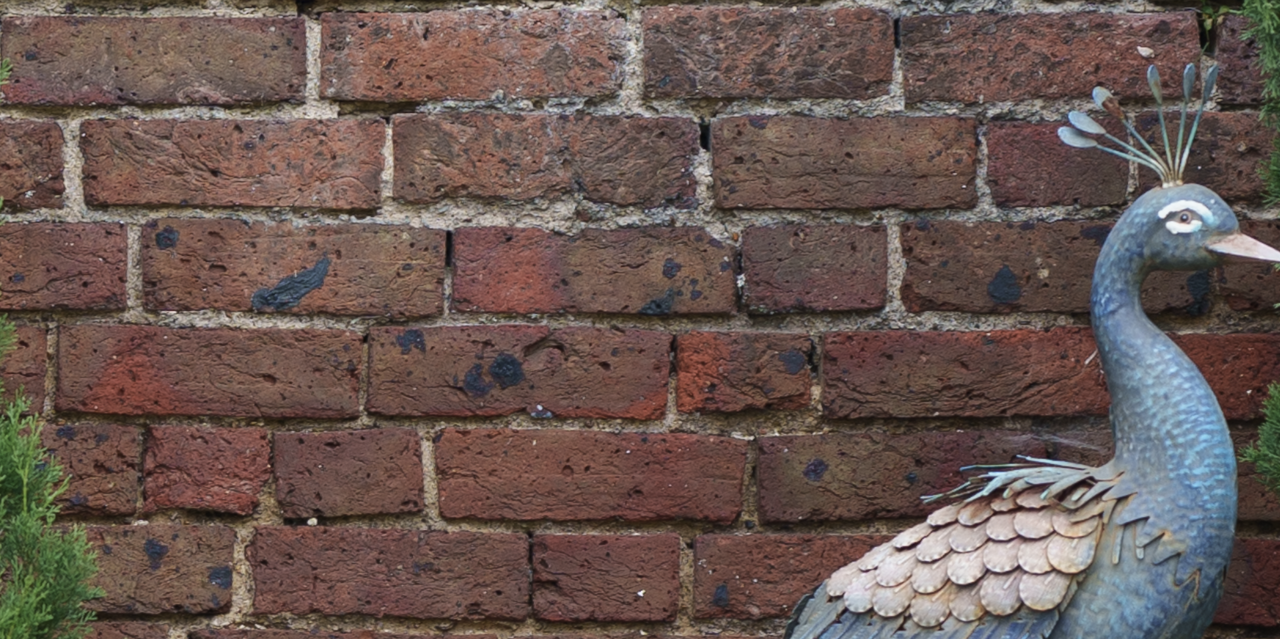
Barely any strong yellows between the bricks. Those bright yellows in the harsh light with the nokton are definitely artifacts ---- I think it's lAca. Can you get copy variation with lateral CA? Probably, right.
The defringing tool does work somewhat to improve it and in softer light I don't think there's any issue.
This was a learning experience about the significance of CA correction (will pay close attention to lateral from now on for out-and-about lenses) and how the light will affect that.
Even though I've read it before, even by Fred in this thread, I didn't internalise it or understand the significance. I think most examples show it at infinity distance.
With axial, I'm less bothered about it, I see it in the 50mmf1.2 and many other lenses I have and it's not that big of a deal for me.
Going through my 50mmf1.2 examples I've barely taken any where there's a lot of harsh light, usually I'm using it for people.
That might be part of getting a bit of a shock on the first day.
I've not shot the lens much below f5.6, unless it's at f1.5/f2 for the DOF. I'll keep the field curvature gif in mind where it curves upwards at closer distances to then curving downwards further away but I don't think I've noticed the significance of it yet.
Yogifi wrote
Steve Spencer wrote
Yogifi wrote
Steve Spencer wrote
Yogifi wrote
I did a quick comparison with the Sigma 35mm f2 DG DN and there was a small difference but it wasn't as big as I thought ... in this less harsh light. Sigma was a tiny bit sharper and more uniform and a little cleaner. Not a huge difference side-by-side.I can post those if people are curious.
I think my copy is fine. Perhaps not quite as good as Juha Kannisto's, although I haven't seen sample images across the net as good as his so he might have hit the jackpot there/ has great technique compared to me (highly likely), maybe the preset is helping a little too.
Anyway, some shots from today:
https://i.postimg.cc/Bsr49J66/DSC04102.jpgit was windy and it's a slower shutter speed so wouldnt pay much mind to the veg, focus was on the building too.
https://i.postimg.cc/X37yGccF/DSC04131.jpg
The light was a lot less harsh today when I was out and I was much happier. I think this lens is really really suspectipble to CA and it gives it the funky look. It's not just the fringing CA with out of focus/in-focus. It's the other one too where the balance of colours is off a bit on details. And more noticeably is random yellows appearing very strong. I think harsh light makes it a lot worse, which makes sense I guess.
This stuck out to me, both at f5.6, taken 15 seconds apart when I was straightening up the shot, at 180% zoom:
https://i.postimg.cc/CwJNDLn1/Screenshot-2025-10-25-at-19-15-49.png">
Random poles on the boat, seemingly in the shade, turning completely yellow/green in one shot compared to the other. Blue bits and bobs on both, difficult to correct without affecting other parts of the image in lightroom.
I don't always love the background blur, sometimes it's nice, other times less so and would be nice to have smoother. But I also don't use 28mm like that very often...currently. So if the APO e-mount allows it to be sharper across the frame at f5.6, no less sharp than this in general, and has a cleaner image with the lack of CA, holds up in harsher light then I'm going to grab it but I think I'm happy to use this in the mean time, want to do some more testing with stronger light to see if I'm talking out of my ass or not.
And maybe the simera 28mm for portraits... but perhaps I can just get away with the 40mm f1.2 nokton instead for the environmental leaning ones. Not sure, in-doors especially at a restraunt or something the 28mm would be nice, but maybe I'd rather take the x100vi for those, though the image won't be as good but I'll feel less awkward. I dunno lets see, the simera is on sale right now, will lurk in that thread for more indoor closer-range portrait shots. I don't love it for full body with examples I saw, and would rather use something tighter.
For the kinds of shots in this post, yes it does make sense to stop down and the lens is very nice stopped down. I think with use of the lens you will also find that especially at wider apertures that focus distance is important as the field curvature changes on this lens based on the focus distance as Fred demonstrated earlier in this thread in his review. If you learn the field curvature of this lens, and it takes awhile to learn it, then you can use it to help create the look of the shot that you would like. Also you seem to be starting to understand the bokeh of this lens, which isn't completely smooth and has some structure. Some don't like the bokeh, but I find it appealing especially on a wide lens like this one.
On the more general principles. I try not to shoot in harsh light, but when I do I typically look to shoot in the shade whenever possible to soften the light. I think another thing you are learning is that in the last boat shot, you are shooting into the sun, which can be a nice look, but it is tricky because of flare. You don't have major issues with flare in that shot and I think the lens is doing fine, but you can also expect some of the small blobs of discoloration as smaller impacts of flare. Flare is tricky as just a slight repositioning of the shot can change its impact pretty strongly. In such situations shooting several shots with slightly modified compositions to combat the flare is often a great strategy. You will have to live with imperfections, however, because even the best lenses are not going to be completely devoid of flare shooting into the sun.
Keep shooting and learn the lens as you do so. It will either grow on you or it won't. For me, it is a lens I very much enjoy using.
This 28mm on a full-frame camera is my first, most of my (still limited) experience has been at around 45-50mm, and mostly taking photos of family.
I did recently pick up the 35mm Sigma f2 but I barely touched it, it was just a great price brand new and figured it would be good to have something wider with autofocus and I remember the threads with it performing well in the comparison. So these wider lenses on a full-frame camera are new to me.
With the first brick wall you can see all these really saturated yellows between the bricks, it doesn't exist in real life, it looks more like the fuji. With the x100 and the wide angle adaptor the light doesn't have this funky look to it. Whereas on this, in that stronger light, the bricks just looked funky, more so to the sides. Yes it had a lot more contrast but the sharpness I wasn't seeing it, when I look closely at the bricks they just look messy.
But with the fuji I'll never get sharpness like this longer distance, and there's definitely a lot of quirks with it at larger apertures.
I'm thinking maybe it's the focal length that might be adding to the funk in addition to the harsh light. Like with my 50s, every image is clean, even if some lenses have cleaner images than others, they're all pretty clean, across different light. With the 75's it's even more clean, especially the TTA f2. So maybe that has something to do with it, I'm not sure. I don't see it on the fuji.
Tonnes of issues with the fuji, but I don't feel the need to go past f8 on the apsc, unless I'm shooting something with tonnes of depth like this:
https://www.fredmiranda.com/forum/topic/1842505/2#field -- this will look different with aperture right? So I'd assume that was wide-open to illustrate it best..]So for something like this where it's a scene in close distance you'd use f16 if there was enough light? And maybe focus on the mid-point like the tree:
https://i.postimg.cc/SqFmhdTy/DSC04000.jpg
At f11 I feel like it wasn't enough and something like this sort of situation is going to be a frequent thing for me. I think apsc handles this with more ease ... in a way.
F11 with x100vi + wideangle:
https://i.postimg.cc/5fqvMpWD/X1001620.jpg
I don't mind the blob part of the flare, I see a very similar (single) small blue/red blob in many images where I shoot into the sun, it doesn't bother me:
https://i.postimg.cc/rmTX8g5s/image.png
It's cute. Get's more defined edges and saturated at smaller apertures. There are other parts to the flare sometimes that are bigger offenders, but flare in general I'm okay with.
But with the side-by-side of images taken seconds apart with the boats, blobs probably weren't the right description, it was like fringing I guess, let me get a bigger closeup so we're talking about the same thing:
https://i.postimg.cc/tgjnjQvv/image.png
And I was just not understanding why at infinity distance, with the boat in the shade, and a slight re-adjustment of the frame, why the pole (on the right-hand side) would be much more yellow in one shot and not in the other. And that random yellow showing up on things reminded me of the brick wall comparison against the fuji in the strong light.
With the shot of the building (thank you for commenting) I was happy with most of the front facing bricks at f5.6. Towards the right hand side, which is probably harder to see without opening the image in a new window to get the full res (pain to do with the host but at least it's available to zoom around), where the building starts to curve on the right - I saw an improvement going to f8. But I wasn't understanding why: if it's at infinity, then why does it matter. It was a small improvement at f8 on that side. Maybe that's to do with the FC?
F8 left, F5.6 right at around 400% - BUT, it wasn't on a tripod and this section on the F8 is a little more inwards (towards the centre) compared to the f5.6.
https://i.postimg.cc/YpMcy2tP/image.png
And just for reference, closer to the center at 200% with the a7cii:
https://i.postimg.cc/LmsLkL1W/image.png">
Most of this is minor and I don't want to put all this on Steve so you're more than forgiven if you leave me to figure it out
The main thing for me is going to be clean, sharp images in bright sunlight without the funk - that's what I want to focus on. And lots more where I set it to f5.6 and infinity focus and just see what I get.
If you tell us about your post-processing we may be able to help you get rid of it even in these images, but there is a bit of lateral CA with the CV 28 f/1.5, but I haven't found it a problem as I can correct for it well in post processing.
It can look pretty funky and is a real color problem when uncorrected, however. I think if you get lateral CA corrected well it may help with what is bothering you about this lens.
I don't see any difference using adobe's convertor to get a dng (camera raw 16) first then dropping it into lightroom.
Using the defringe tool to carefully adjust the range slider to pick the colours that are "fringing" with the smallest strength until it goes away does work to remove things like the yellow on that boat's pole - but it also removes colour from objects that then turn grey that had no fringing so I'm hesitant to use it unless I'm willing to carefully examine the photo...
Quick demonstration but the video expires after two days unfortunately:
It does remove the excess yellow between the bricks. Might be harder to use in other images where it's less obvious / does other damage. Still a bit crunchy.
Despite the name of the tool that's not actually fringing right (longitudinal/axial), that's lateral CA? I dunno, it's CA.
I took another image of the wall today as well, and compared it to the first day with the stronger light. I didn't get the distance quite right, so I've had to zoom in more on the left which is today's cloudy light:
https://i.postimg.cc/c0bmkdNn/image.png">
You can see in the cloudy light the yellows between the bricks aren't as cyberpunk.
After your comments I re-read Fred's post about lAca (https://www.fredmiranda.com/forum/topic/1842505/8#laca) and he mentions using the "remove chromatic abberation" option in lightroom with a demonstration at infinity.
I looked really, really closely with the brick wall above and it actually is doing something very minor in my example - the image looks a tiny bit less sharp but ever-so-slightly easier on the eyes. Side-by-side it looks similar, but when I toggle it on and off and zoom in I notice something minor changing. It's not enough though.
No profile in lightroom for the lens either but not a huge deal. And sorry for all the brick wall shots folks.
Let's see a few more bright sunny days (if we get any here) if I can get results I'm as happy with after a bit more experience with getting what I want in-focus. Perhaps that's just how it should look with harsh light and I'm a noob. Because I really do like the look of it in some f1.5 people shots. Not all but sometimes it's just perfect for the look, and I'm rather happy with it in cloud/shade/not as strong light.
Thank you Steve, in those examples the brick wall shots are at f5.6, and even at f8 it shows the funky yellows between the bricks, so I was thinking it was the lateral CA. It wasn't about the sharpness so much, just the easiest way I had to show the colours.
Just for reference on, the viltrox 50mm f2 air (accidentally in apsc mode) on that same section of the brick wall but in softer light:
Barely any strong yellows between the bricks. Those bright yellows in the harsh light with the nokton are definitely artifacts ---- I think it's lAca. Can you get copy variation with lateral CA? Probably, right.
The defringing tool does work somewhat to improve it and in softer light I don't think there's any issue.
This was a learning experience about the significance of CA correction (will pay close attention to lateral from now on for out-and-about lenses) and how the light will affect that.
Even though I've read it before, even by Fred in this thread, I didn't internalise it or understand the significance. I think most examples show it at infinity distance.
With axial, I'm less bothered about it, I see it in the 50mmf1.2 and many other lenses I have and it's not that big of a deal for me.
Going through my 50mmf1.2 examples I've barely taken any where there's a lot of harsh light, usually I'm using it for people.
That might be part of getting a bit of a shock on the first day.
I've not shot the lens much below f5.6, unless it's at f1.5/f2 for the DOF. I'll keep the field curvature gif in mind where it curves upwards at closer distances to then curving downwards further away but I don't think I've noticed the significance of it yet.
Oct 27, 2025 at 05:42 AM
p.46 #6Voigtlander 28mm f/1.5 Nokton Review
Yogifi wrote:
For the kinds of shots in this post, yes it does make sense to stop down and the lens is very nice stopped down. I think with use of the lens you will also find that especially at wider apertures that focus distance is important as the field curvature changes on this lens based on the focus distance as Fred demonstrated earlier in this thread in his review. If you learn the field curvature of this lens, and it takes awhile to learn it, then you can use it to help create the look of the shot that you would like. Also you seem to be starting to understand the bokeh of this lens, which isn't completely smooth and has some structure. Some don't like the bokeh, but I find it appealing especially on a wide lens like this one.
On the more general principles. I try not to shoot in harsh light, but when I do I typically look to shoot in the shade whenever possible to soften the light. I think another thing you are learning is that in the last boat shot, you are shooting into the sun, which can be a nice look, but it is tricky because of flare. You don't have major issues with flare in that shot and I think the lens is doing fine, but you can also expect some of the small blobs of discoloration as smaller impacts of flare. Flare is tricky as just a slight repositioning of the shot can change its impact pretty strongly. In such situations shooting several shots with slightly modified compositions to combat the flare is often a great strategy. You will have to live with imperfections, however, because even the best lenses are not going to be completely devoid of flare shooting into the sun.
Keep shooting and learn the lens as you do so. It will either grow on you or it won't. For me, it is a lens I very much enjoy using.Thanks Steve, appreciate the handholding after I threw my tantrum on day 1! There was a comment after the first impressions about satan gargling the light and spitting it back out, that I edited out to be a little more civil.
This 28mm on a full-frame camera is my first, most of my (still limited) experience has been at around 45-50mm, and mostly taking photos of family.
I did recently pick up the 35mm Sigma f2 but I barely touched it, it was just a great price brand new and figured it would be good to have something wider with autofocus and I remember the threads with it performing well in the comparison. So these wider lenses on a full-frame camera are new to me.
With the first brick wall you can see all these really saturated yellows between the bricks, it doesn't exist in real life, it looks more like the fuji. With the x100 and the wide angle adaptor the light doesn't have this funky look to it. Whereas on this, in that stronger light, the bricks just looked funky, more so to the sides. Yes it had a lot more contrast but the sharpness I wasn't seeing it, when I look closely at the bricks they just look messy.
But with the fuji I'll never get sharpness like this longer distance, and there's definitely a lot of quirks with it at larger apertures.
I'm thinking maybe it's the focal length that might be adding to the funk in addition to the harsh light. Like with my 50s, every image is clean, even if some lenses have cleaner images than others, they're all pretty clean, across different light. With the 75's it's even more clean, especially the TTA f2. So maybe that has something to do with it, I'm not sure. I don't see it on the fuji.
Tonnes of issues with the fuji, but I don't feel the need to go past f8 on the apsc, unless I'm shooting something with tonnes of depth like this:
https://www.fredmiranda.com/forum/topic/1842505/2#field -- this will look different with aperture right? So I'd assume that was wide-open to illustrate it best..]
So for something like this where it's a scene in close distance you'd use f16 if there was enough light? And maybe focus on the mid-point like the tree:
https://i.postimg.cc/SqFmhdTy/DSC04000.jpg
At f11 I feel like it wasn't enough and something like this sort of situation is going to be a frequent thing for me. I think apsc handles this with more ease ... in a way.
F11 with x100vi + wideangle:
https://i.postimg.cc/5fqvMpWD/X1001620.jpg
I don't mind the blob part of the flare, I see a very similar (single) small blue/red blob in many images where I shoot into the sun, it doesn't bother me:
https://i.postimg.cc/rmTX8g5s/image.png
It's cute. Get's more defined edges and saturated at smaller apertures. There are other parts to the flare sometimes that are bigger offenders, but flare in general I'm okay with.
But with the side-by-side of images taken seconds apart with the boats, blobs probably weren't the right description, it was like fringing I guess, let me get a bigger closeup so we're talking about the same thing:
https://i.postimg.cc/tgjnjQvv/image.png
And I was just not understanding why at infinity distance, with the boat in the shade, and a slight re-adjustment of the frame, why the pole (on the right-hand side) would be much more yellow in one shot and not in the other. And that random yellow showing up on things reminded me of the brick wall comparison against the fuji in the strong light.
With the shot of the building (thank you for commenting) I was happy with most of the front facing bricks at f5.6. Towards the right hand side, which is probably harder to see without opening the image in a new window to get the full res (pain to do with the host but at least it's available to zoom around), where the building starts to curve on the right - I saw an improvement going to f8. But I wasn't understanding why: if it's at infinity, then why does it matter. It was a small improvement at f8 on that side. Maybe that's to do with the FC?
F8 left, F5.6 right at around 400% - BUT, it wasn't on a tripod and this section on the F8 is a little more inwards (towards the centre) compared to the f5.6.
https://i.postimg.cc/YpMcy2tP/image.png
And just for reference, closer to the center at 200% with the a7cii:
https://i.postimg.cc/LmsLkL1W/image.png">
Most of this is minor and I don't want to put all this on Steve so you're more than forgiven if you leave me to figure it out
The main thing for me is going to be clean, sharp images in bright sunlight without the funk - that's what I want to focus on. And lots more where I set it to f5.6 and infinity focus and just see what I get.Now I see what you are concerned about and let me ask what RAW converter you are using and if you are correcting for lateral chromatic aberration (CA)? I think that is what you are pointing out, and it generally cleans up really well with most converters (I use adobe camera RAW to convert to either Lightroom or Photoshop and it handles this CA really well). Lateral CA (as opposed to axial aka longitudinal) CA does not reduce as you stop down the aperture, so it will be there even at small apertures. It is especially apparent in harsh light, so you will see it less with softer light and it should clean up well in post-processing.
If you tell us about your post-processing we may be able to help you get rid of it even in these images, but there is a bit of lateral CA with the CV 28 f/1.5, but I haven't found it a problem as I can correct for it well in post processing.
It can look pretty funky and is a real color problem when uncorrected, however. I think if you get lateral CA corrected well it may help with what is bothering you about this lens.Thank you, well with my A7cii, I plug in the memory card to the laptop and just import it into lightroom (not classic) using "Add Images" in the top-left hand side. They are ARW files from the sony in lightroom.
I don't see any difference using adobe's convertor to get a dng (camera raw 16) first then dropping it into lightroom.
Using the defringe tool to carefully adjust the range slider to pick the colours that are "fringing" with the smallest strength until it goes away does work to remove things like the yellow on that boat's pole - but it also removes colour from objects that then turn grey that had no fringing so I'm hesitant to use it unless I'm willing to carefully examine the photo...
Quick demonstration but the video expires after two days unfortunately:
https://i.postimg.cc/FrQ8YJbb/image.png
It does remove the excess yellow between the bricks. Might be harder to use in other images where it's less obvious / does other damage. Still a bit crunchy.
Despite the name of the tool that's not actually fringing right (longitudinal/axial), that's lateral CA? I dunno, it's CA.
I took another image of the wall today as well, and compared it to the first day with the stronger light. I didn't get the distance quite right, so I've had to zoom in more on the left which is today's cloudy light:
https://i.postimg.cc/c0bmkdNn/image.png">
You can see in the cloudy light the yellows between the bricks aren't as cyberpunk.
After your comments I re-read Fred's post about lAca (https://www.fredmiranda.com/forum/topic/1842505/8#laca) and he mentions using the "remove chromatic abberation" option in lightroom with a demonstration at infinity.
I looked really, really closely with the brick wall above and it actually is doing something very minor in my example - the image looks a tiny bit less sharp but ever-so-slightly easier on the eyes. Side-by-side it looks similar, but when I toggle it on and off and zoom in I notice something minor changing. It's not enough though.
No profile in lightroom for the lens either but not a huge deal. And sorry for all the brick wall shots folks.
Let's see a few more bright sunny days (if we get any here) if I can get results I'm as happy with after a bit more experience with getting what I want in-focus. Perhaps that's just how it should look with harsh light and I'm a noob. Because I really do like the look of it in some f1.5 people shots. Not all but sometimes it's just perfect for the look, and I'm rather happy with it in cloud/shade/not as strong light.I have a hard time evaluating brick walls. I wish I could help you more, but I will add a few comments in hopes of helping. Axial CA if that is what you are seeing, should dramatically reduce as you stop down. On this lens there should be very little at f/2.8 and basically none at f/4. In bright light unless you want shallow depth of field I would recommend shooting this lens at f/4 or a narrower aperture. The lens really shines for scenic shots with lots of depth of field at narrower apertures. You won't have any axial CA at those apertures and the lateral CA should totally clean up just by clicking the "remove CA" box in Lightroom and I would click that box as a default with this lens--I do.
If you want to shoot at shallower depth of field, then try hard to avoid harsh light. In my shooting I always try to avoid harsh light, but if the light in harsh and you want shallow depth of field do look to shoot in a shaded area. This lens does not do well with shallow depth of field in harsh light, but very few lenses do.
Also, spend some time learning the field curvature of this lens at different focus distances. I think understanding and using that field curvature with shallower depth of field is crucial to getting the most out of this lens and what is one of the things I really like about the lens. It is not for everyone as not everyone will like the look that the field curvature creates, but I do.
Finally, shoot some shallow depth of field shots to evaluate the bokeh. This lenses bokeh has a fair bit of structure that not everyone will like. If you like smoother bokeh, like from short and medium distances with the CV 50 f/1.2, then the bokeh of this lens may not be for you. Personally, I really like the bokeh, but again that is pretty subjective. And if you like the CV 50 f/1.2, then I have hope you will find the colors from this lens to be fine in the long run. I don't see much if any differences in color from the two lenses and think they are very similar in that regard.
Good luck as you continue to use the lens.Thank you Steve, in those examples the brick wall shots are at f5.6, and even at f8 it shows the funky yellows between the bricks, so I was thinking it was the lateral CA.
The defringing tool does work to remove it and in softer light I don't think there's any issue.
Just for reference on, the viltrox 50mm f2 air (accidentally in apsc mode) on that same section of the brick wall but in softer light:
Those yellows in the harsh light with the nokton are definitely artifacts ---- I think it's lAca. Can you get copy variation with lateral...Show more →
I am not sure what is creating the yellow that you are noticing in the brick wall test. It shouldn't be and I don't think is axial CA. It shouldn't be lateral CA if you click the remove CA box in Lightroom, any remaining CA after clicking that box should be minimal at most. I wouldn't read much into the defringe tool affecting it. That tool as you have seen affects a lot of things in the image and not just axial CA. I rarely find that tool useful and I can get the same effect just by playing with the colors more generally. I mostly avoid doing that.
So, what is that yellow cast in your shots? My guess, but it is just a guess is that it is a white balance issue and has more to do with the camera than the lens. Sony's auto white balance isn't that great even in their most recent cameras. I suspect if you used auto WB, then it is responsible for that cast and it can randomly make the color a bit weird. Try shooting with an appropriate set WB and see if you get the same results and try shooting another lens at the same time with that same appropriate WB. If you see the same color cast problem, only for the CV 28 f/1.5, only then would I start to worry about the colors from the lens. Otherwise I suspect it is an auto WB issue and you likely would get the same issues with another lens as well. It may be a camera issue, inconsistent and slightly off auto WB, and not really a lens issue at all.
Steve Spencer wrote
Yogifi wrote
Steve Spencer wrote
Yogifi wrote
Steve Spencer wrote
I think these shots look very good. Stopped down the lens looks sharp and I find the sharpness of the building that you asked about to be excellent. It also seems to me like you are learning to use the lens and learning some principles that will help you with any lens.For the kinds of shots in this post, yes it does make sense to stop down and the lens is very nice stopped down. I think with use of the lens you will also find that especially at wider apertures that focus distance is important as the field curvature changes on this lens based on the focus distance as Fred demonstrated earlier in this thread in his review. If you learn the field curvature of this lens, and it takes awhile to learn it, then you can use it to help create the look of the shot that you would like. Also you seem to be starting to understand the bokeh of this lens, which isn't completely smooth and has some structure. Some don't like the bokeh, but I find it appealing especially on a wide lens like this one.
On the more general principles. I try not to shoot in harsh light, but when I do I typically look to shoot in the shade whenever possible to soften the light. I think another thing you are learning is that in the last boat shot, you are shooting into the sun, which can be a nice look, but it is tricky because of flare. You don't have major issues with flare in that shot and I think the lens is doing fine, but you can also expect some of the small blobs of discoloration as smaller impacts of flare. Flare is tricky as just a slight repositioning of the shot can change its impact pretty strongly. In such situations shooting several shots with slightly modified compositions to combat the flare is often a great strategy. You will have to live with imperfections, however, because even the best lenses are not going to be completely devoid of flare shooting into the sun.
Keep shooting and learn the lens as you do so. It will either grow on you or it won't. For me, it is a lens I very much enjoy using.
This 28mm on a full-frame camera is my first, most of my (still limited) experience has been at around 45-50mm, and mostly taking photos of family.
I did recently pick up the 35mm Sigma f2 but I barely touched it, it was just a great price brand new and figured it would be good to have something wider with autofocus and I remember the threads with it performing well in the comparison. So these wider lenses on a full-frame camera are new to me.
With the first brick wall you can see all these really saturated yellows between the bricks, it doesn't exist in real life, it looks more like the fuji. With the x100 and the wide angle adaptor the light doesn't have this funky look to it. Whereas on this, in that stronger light, the bricks just looked funky, more so to the sides. Yes it had a lot more contrast but the sharpness I wasn't seeing it, when I look closely at the bricks they just look messy.
But with the fuji I'll never get sharpness like this longer distance, and there's definitely a lot of quirks with it at larger apertures.
I'm thinking maybe it's the focal length that might be adding to the funk in addition to the harsh light. Like with my 50s, every image is clean, even if some lenses have cleaner images than others, they're all pretty clean, across different light. With the 75's it's even more clean, especially the TTA f2. So maybe that has something to do with it, I'm not sure. I don't see it on the fuji.
Tonnes of issues with the fuji, but I don't feel the need to go past f8 on the apsc, unless I'm shooting something with tonnes of depth like this:
https://www.fredmiranda.com/forum/topic/1842505/2#field -- this will look different with aperture right? So I'd assume that was wide-open to illustrate it best..]So for something like this where it's a scene in close distance you'd use f16 if there was enough light? And maybe focus on the mid-point like the tree:
https://i.postimg.cc/SqFmhdTy/DSC04000.jpg
At f11 I feel like it wasn't enough and something like this sort of situation is going to be a frequent thing for me. I think apsc handles this with more ease ... in a way.
F11 with x100vi + wideangle:
https://i.postimg.cc/5fqvMpWD/X1001620.jpg
I don't mind the blob part of the flare, I see a very similar (single) small blue/red blob in many images where I shoot into the sun, it doesn't bother me:
https://i.postimg.cc/rmTX8g5s/image.png
It's cute. Get's more defined edges and saturated at smaller apertures. There are other parts to the flare sometimes that are bigger offenders, but flare in general I'm okay with.
But with the side-by-side of images taken seconds apart with the boats, blobs probably weren't the right description, it was like fringing I guess, let me get a bigger closeup so we're talking about the same thing:
https://i.postimg.cc/tgjnjQvv/image.png
And I was just not understanding why at infinity distance, with the boat in the shade, and a slight re-adjustment of the frame, why the pole (on the right-hand side) would be much more yellow in one shot and not in the other. And that random yellow showing up on things reminded me of the brick wall comparison against the fuji in the strong light.
With the shot of the building (thank you for commenting) I was happy with most of the front facing bricks at f5.6. Towards the right hand side, which is probably harder to see without opening the image in a new window to get the full res (pain to do with the host but at least it's available to zoom around), where the building starts to curve on the right - I saw an improvement going to f8. But I wasn't understanding why: if it's at infinity, then why does it matter. It was a small improvement at f8 on that side. Maybe that's to do with the FC?
F8 left, F5.6 right at around 400% - BUT, it wasn't on a tripod and this section on the F8 is a little more inwards (towards the centre) compared to the f5.6.
https://i.postimg.cc/YpMcy2tP/image.png
And just for reference, closer to the center at 200% with the a7cii:
https://i.postimg.cc/LmsLkL1W/image.png">
Most of this is minor and I don't want to put all this on Steve so you're more than forgiven if you leave me to figure it out
The main thing for me is going to be clean, sharp images in bright sunlight without the funk - that's what I want to focus on. And lots more where I set it to f5.6 and infinity focus and just see what I get.
If you tell us about your post-processing we may be able to help you get rid of it even in these images, but there is a bit of lateral CA with the CV 28 f/1.5, but I haven't found it a problem as I can correct for it well in post processing.
It can look pretty funky and is a real color problem when uncorrected, however. I think if you get lateral CA corrected well it may help with what is bothering you about this lens.
I don't see any difference using adobe's convertor to get a dng (camera raw 16) first then dropping it into lightroom.
Using the defringe tool to carefully adjust the range slider to pick the colours that are "fringing" with the smallest strength until it goes away does work to remove things like the yellow on that boat's pole - but it also removes colour from objects that then turn grey that had no fringing so I'm hesitant to use it unless I'm willing to carefully examine the photo...
Quick demonstration but the video expires after two days unfortunately:
It does remove the excess yellow between the bricks. Might be harder to use in other images where it's less obvious / does other damage. Still a bit crunchy.
Despite the name of the tool that's not actually fringing right (longitudinal/axial), that's lateral CA? I dunno, it's CA.
I took another image of the wall today as well, and compared it to the first day with the stronger light. I didn't get the distance quite right, so I've had to zoom in more on the left which is today's cloudy light:
https://i.postimg.cc/c0bmkdNn/image.png">
You can see in the cloudy light the yellows between the bricks aren't as cyberpunk.
After your comments I re-read Fred's post about lAca (https://www.fredmiranda.com/forum/topic/1842505/8#laca) and he mentions using the "remove chromatic abberation" option in lightroom with a demonstration at infinity.
I looked really, really closely with the brick wall above and it actually is doing something very minor in my example - the image looks a tiny bit less sharp but ever-so-slightly easier on the eyes. Side-by-side it looks similar, but when I toggle it on and off and zoom in I notice something minor changing. It's not enough though.
No profile in lightroom for the lens either but not a huge deal. And sorry for all the brick wall shots folks.
Let's see a few more bright sunny days (if we get any here) if I can get results I'm as happy with after a bit more experience with getting what I want in-focus. Perhaps that's just how it should look with harsh light and I'm a noob. Because I really do like the look of it in some f1.5 people shots. Not all but sometimes it's just perfect for the look, and I'm rather happy with it in cloud/shade/not as strong light.
If you want to shoot at shallower depth of field, then try hard to avoid harsh light. In my shooting I always try to avoid harsh light, but if the light in harsh and you want shallow depth of field do look to shoot in a shaded area. This lens does not do well with shallow depth of field in harsh light, but very few lenses do.
Also, spend some time learning the field curvature of this lens at different focus distances. I think understanding and using that field curvature with shallower depth of field is crucial to getting the most out of this lens and what is one of the things I really like about the lens. It is not for everyone as not everyone will like the look that the field curvature creates, but I do.
Finally, shoot some shallow depth of field shots to evaluate the bokeh. This lenses bokeh has a fair bit of structure that not everyone will like. If you like smoother bokeh, like from short and medium distances with the CV 50 f/1.2, then the bokeh of this lens may not be for you. Personally, I really like the bokeh, but again that is pretty subjective. And if you like the CV 50 f/1.2, then I have hope you will find the colors from this lens to be fine in the long run. I don't see much if any differences in color from the two lenses and think they are very similar in that regard.
Good luck as you continue to use the lens.
The defringing tool does work to remove it and in softer light I don't think there's any issue.
Just for reference on, the viltrox 50mm f2 air (accidentally in apsc mode) on that same section of the brick wall but in softer light:
Those yellows in the harsh light with the nokton are definitely artifacts ---- I think it's lAca. Can you get copy variation with lateral...Show more →
I am not sure what is creating the yellow that you are noticing in the brick wall test. It shouldn't be and I don't think is axial CA. It shouldn't be lateral CA if you click the remove CA box in Lightroom, any remaining CA after clicking that box should be minimal at most. I wouldn't read much into the defringe tool affecting it. That tool as you have seen affects a lot of things in the image and not just axial CA. I rarely find that tool useful and I can get the same effect just by playing with the colors more generally. I mostly avoid doing that.
So, what is that yellow cast in your shots? My guess, but it is just a guess is that it is a white balance issue and has more to do with the camera than the lens. Sony's auto white balance isn't that great even in their most recent cameras. I suspect if you used auto WB, then it is responsible for that cast and it can randomly make the color a bit weird. Try shooting with an appropriate set WB and see if you get the same results and try shooting another lens at the same time with that same appropriate WB. If you see the same color cast problem, only for the CV 28 f/1.5, only then would I start to worry about the colors from the lens. Otherwise I suspect it is an auto WB issue and you likely would get the same issues with another lens as well. It may be a camera issue, inconsistent and slightly off auto WB, and not really a lens issue at all.
Oct 27, 2025 at 06:01 AM
p.46 #7Voigtlander 28mm f/1.5 Nokton Review
Steve Spencer wrote:
This 28mm on a full-frame camera is my first, most of my (still limited) experience has been at around 45-50mm, and mostly taking photos of family.
I did recently pick up the 35mm Sigma f2 but I barely touched it, it was just a great price brand new and figured it would be good to have something wider with autofocus and I remember the threads with it performing well in the comparison. So these wider lenses on a full-frame camera are new to me.
With the first brick wall you can see all these really saturated yellows between the bricks, it doesn't exist in real life, it looks more like the fuji. With the x100 and the wide angle adaptor the light doesn't have this funky look to it. Whereas on this, in that stronger light, the bricks just looked funky, more so to the sides. Yes it had a lot more contrast but the sharpness I wasn't seeing it, when I look closely at the bricks they just look messy.
But with the fuji I'll never get sharpness like this longer distance, and there's definitely a lot of quirks with it at larger apertures.
I'm thinking maybe it's the focal length that might be adding to the funk in addition to the harsh light. Like with my 50s, every image is clean, even if some lenses have cleaner images than others, they're all pretty clean, across different light. With the 75's it's even more clean, especially the TTA f2. So maybe that has something to do with it, I'm not sure. I don't see it on the fuji.
Tonnes of issues with the fuji, but I don't feel the need to go past f8 on the apsc, unless I'm shooting something with tonnes of depth like this:
https://www.fredmiranda.com/forum/topic/1842505/2#field -- this will look different with aperture right? So I'd assume that was wide-open to illustrate it best..]
So for something like this where it's a scene in close distance you'd use f16 if there was enough light? And maybe focus on the mid-point like the tree:
https://i.postimg.cc/SqFmhdTy/DSC04000.jpg
At f11 I feel like it wasn't enough and something like this sort of situation is going to be a frequent thing for me. I think apsc handles this with more ease ... in a way.
F11 with x100vi + wideangle:
https://i.postimg.cc/5fqvMpWD/X1001620.jpg
I don't mind the blob part of the flare, I see a very similar (single) small blue/red blob in many images where I shoot into the sun, it doesn't bother me:
https://i.postimg.cc/rmTX8g5s/image.png
It's cute. Get's more defined edges and saturated at smaller apertures. There are other parts to the flare sometimes that are bigger offenders, but flare in general I'm okay with.
But with the side-by-side of images taken seconds apart with the boats, blobs probably weren't the right description, it was like fringing I guess, let me get a bigger closeup so we're talking about the same thing:
https://i.postimg.cc/tgjnjQvv/image.png
And I was just not understanding why at infinity distance, with the boat in the shade, and a slight re-adjustment of the frame, why the pole (on the right-hand side) would be much more yellow in one shot and not in the other. And that random yellow showing up on things reminded me of the brick wall comparison against the fuji in the strong light.
With the shot of the building (thank you for commenting) I was happy with most of the front facing bricks at f5.6. Towards the right hand side, which is probably harder to see without opening the image in a new window to get the full res (pain to do with the host but at least it's available to zoom around), where the building starts to curve on the right - I saw an improvement going to f8. But I wasn't understanding why: if it's at infinity, then why does it matter. It was a small improvement at f8 on that side. Maybe that's to do with the FC?
F8 left, F5.6 right at around 400% - BUT, it wasn't on a tripod and this section on the F8 is a little more inwards (towards the centre) compared to the f5.6.
https://i.postimg.cc/YpMcy2tP/image.png
And just for reference, closer to the center at 200% with the a7cii:
https://i.postimg.cc/LmsLkL1W/image.png">
Most of this is minor and I don't want to put all this on Steve so you're more than forgiven if you leave me to figure it out
The main thing for me is going to be clean, sharp images in bright sunlight without the funk - that's what I want to focus on. And lots more where I set it to f5.6 and infinity focus and just see what I get.Now I see what you are concerned about and let me ask what RAW converter you are using and if you are correcting for lateral chromatic aberration (CA)? I think that is what you are pointing out, and it generally cleans up really well with most converters (I use adobe camera RAW to convert to either Lightroom or Photoshop and it handles this CA really well). Lateral CA (as opposed to axial aka longitudinal) CA does not reduce as you stop down the aperture, so it will be there even at small apertures. It is especially apparent in harsh light, so you will see it less with softer light and it should clean up well in post-processing.
If you tell us about your post-processing we may be able to help you get rid of it even in these images, but there is a bit of lateral CA with the CV 28 f/1.5, but I haven't found it a problem as I can correct for it well in post processing.
It can look pretty funky and is a real color problem when uncorrected, however. I think if you get lateral CA corrected well it may help with what is bothering you about this lens.Thank you, well with my A7cii, I plug in the memory card to the laptop and just import it into lightroom (not classic) using "Add Images" in the top-left hand side. They are ARW files from the sony in lightroom.
I don't see any difference using adobe's convertor to get a dng (camera raw 16) first then dropping it into lightroom.
Using the defringe tool to carefully adjust the range slider to pick the colours that are "fringing" with the smallest strength until it goes away does work to remove things like the yellow on that boat's pole - but it also removes colour from objects that then turn grey that had no fringing so I'm hesitant to use it unless I'm willing to carefully examine the photo...
Quick demonstration but the video expires after two days unfortunately:
https://i.postimg.cc/FrQ8YJbb/image.png
It does remove the excess yellow between the bricks. Might be harder to use in other images where it's less obvious / does other damage. Still a bit crunchy.
Despite the name of the tool that's not actually fringing right (longitudinal/axial), that's lateral CA? I dunno, it's CA.
I took another image of the wall today as well, and compared it to the first day with the stronger light. I didn't get the distance quite right, so I've had to zoom in more on the left which is today's cloudy light:
https://i.postimg.cc/c0bmkdNn/image.png">
You can see in the cloudy light the yellows between the bricks aren't as cyberpunk.
After your comments I re-read Fred's post about lAca (https://www.fredmiranda.com/forum/topic/1842505/8#laca) and he mentions using the "remove chromatic abberation" option in lightroom with a demonstration at infinity.
I looked really, really closely with the brick wall above and it actually is doing something very minor in my example - the image looks a tiny bit less sharp but ever-so-slightly easier on the eyes. Side-by-side it looks similar, but when I toggle it on and off and zoom in I notice something minor changing. It's not enough though.
No profile in lightroom for the lens either but not a huge deal. And sorry for all the brick wall shots folks.
Let's see a few more bright sunny days (if we get any here) if I can get results I'm as happy with after a bit more experience with getting what I want in-focus. Perhaps that's just how it should look with harsh light and I'm a noob. Because I really do like the look of it in some f1.5 people shots. Not all but sometimes it's just perfect for the look, and I'm rather happy with it in cloud/shade/not as strong light.I have a hard time evaluating brick walls. I wish I could help you more, but I will add a few comments in hopes of helping. Axial CA if that is what you are seeing, should dramatically reduce as you stop down. On this lens there should be very little at f/2.8 and basically none at f/4. In bright light unless you want shallow depth of field I would recommend shooting this lens at f/4 or a narrower aperture. The lens really shines for scenic shots with lots of depth of field at narrower apertures. You won't have any axial CA at those apertures and the lateral CA should totally clean up just by clicking the "remove CA" box in Lightroom and I would click that box as a default with this lens--I do.
If you want to shoot at shallower depth of field, then try hard to avoid harsh light. In my shooting I always try to avoid harsh light, but if the light in harsh and you want shallow depth of field do look to shoot in a shaded area. This lens does not do well with shallow depth of field in harsh light, but very few lenses do.
Also, spend some time learning the field curvature of this lens at different focus distances. I think understanding and using that field curvature with shallower depth of field is crucial to getting the most out of this lens and what is one of the things I really like about the lens. It is not for everyone as not everyone will like the look that the field curvature creates, but I do.
Finally, shoot some shallow depth of field shots to evaluate the bokeh. This lenses bokeh has a fair bit of structure that not everyone will like. If you like smoother bokeh, like from short and medium distances with the CV 50 f/1.2, then the bokeh of this lens may not be for you. Personally, I really like the bokeh, but again that is pretty subjective. And if you like the CV 50 f/1.2, then I have hope you will find the colors from this lens to be fine in the long run. I don't see much if any differences in color from the two lenses and think they are very similar in that regard.
Good luck as you continue to use the lens.Thank you Steve, in those examples the brick wall shots are at f5.6, and even at f8 it shows the funky yellows between the bricks, so I was thinking it was the lateral CA.
The defringing tool does work to remove it and in softer light I don't think there's any issue.
Just for reference on, the viltrox 50mm f2 air (accidentally in apsc mode) on that same section of the brick wall but in softer light:
Those yellows in the harsh light with the nokton are definitely artifacts ---- I think it's lAca. Can you get copy variation with lateral CA? Probably, right.
Going through my 50mmf1.2 examples I've barely taken any where there's a lot of harsh light, usually I'm using it for people.
That might be part of getting a bit of a shock with the colours.
I've not shot the lens much below f5.6, unless it's at f1.5/f2 for the DOF. I'll keep the field curvature gif in mind where it curves upwards at closer distances to then curving downwards further away.
This was a learning experience about the significance of CA correction and how the light will affect that for sure.
Even though I've read it before, even by Fred in this thread, I didn't internalise it or understand the significance. I think most examples show it at infinity distance.I am not sure what is creating the yellow that you are noticing in the brick wall test. It shouldn't be and I don't think is axial CA. It shouldn't be lateral CA if you click the remove CA box in Lightroom, any remaining CA after clicking that box should be minimal at most. I wouldn't read much into the defringe tool affecting it. That tool as you have seen affects a lot of things in the image and not just axial CA. I rarely find that tool useful and I can get the same effect just by playing...Show more →
Appreciate your patience with this. I don't think it's white balance unfortunately.
I recorded a short narrated video over lightroom just to save both further time:
https://streamable.com/1wbg7j
It does compare it with the fuji taken at the same time and I show the effects of the remove chromatic abberation toggle and white balance adjustment.
Yogifi wrote
Steve Spencer wrote
Yogifi wrote
Steve Spencer wrote
Yogifi wrote
Thanks Steve, appreciate the handholding after I threw my tantrum on day 1! There was a comment after the first impressions about satan gargling the light and spitting it back out, that I edited out to be a little more civil.This 28mm on a full-frame camera is my first, most of my (still limited) experience has been at around 45-50mm, and mostly taking photos of family.
I did recently pick up the 35mm Sigma f2 but I barely touched it, it was just a great price brand new and figured it would be good to have something wider with autofocus and I remember the threads with it performing well in the comparison. So these wider lenses on a full-frame camera are new to me.
With the first brick wall you can see all these really saturated yellows between the bricks, it doesn't exist in real life, it looks more like the fuji. With the x100 and the wide angle adaptor the light doesn't have this funky look to it. Whereas on this, in that stronger light, the bricks just looked funky, more so to the sides. Yes it had a lot more contrast but the sharpness I wasn't seeing it, when I look closely at the bricks they just look messy.
But with the fuji I'll never get sharpness like this longer distance, and there's definitely a lot of quirks with it at larger apertures.
I'm thinking maybe it's the focal length that might be adding to the funk in addition to the harsh light. Like with my 50s, every image is clean, even if some lenses have cleaner images than others, they're all pretty clean, across different light. With the 75's it's even more clean, especially the TTA f2. So maybe that has something to do with it, I'm not sure. I don't see it on the fuji.
Tonnes of issues with the fuji, but I don't feel the need to go past f8 on the apsc, unless I'm shooting something with tonnes of depth like this:
https://www.fredmiranda.com/forum/topic/1842505/2#field -- this will look different with aperture right? So I'd assume that was wide-open to illustrate it best..]So for something like this where it's a scene in close distance you'd use f16 if there was enough light? And maybe focus on the mid-point like the tree:
https://i.postimg.cc/SqFmhdTy/DSC04000.jpg
At f11 I feel like it wasn't enough and something like this sort of situation is going to be a frequent thing for me. I think apsc handles this with more ease ... in a way.
F11 with x100vi + wideangle:
https://i.postimg.cc/5fqvMpWD/X1001620.jpg
I don't mind the blob part of the flare, I see a very similar (single) small blue/red blob in many images where I shoot into the sun, it doesn't bother me:
https://i.postimg.cc/rmTX8g5s/image.png
It's cute. Get's more defined edges and saturated at smaller apertures. There are other parts to the flare sometimes that are bigger offenders, but flare in general I'm okay with.
But with the side-by-side of images taken seconds apart with the boats, blobs probably weren't the right description, it was like fringing I guess, let me get a bigger closeup so we're talking about the same thing:
https://i.postimg.cc/tgjnjQvv/image.png
And I was just not understanding why at infinity distance, with the boat in the shade, and a slight re-adjustment of the frame, why the pole (on the right-hand side) would be much more yellow in one shot and not in the other. And that random yellow showing up on things reminded me of the brick wall comparison against the fuji in the strong light.
With the shot of the building (thank you for commenting) I was happy with most of the front facing bricks at f5.6. Towards the right hand side, which is probably harder to see without opening the image in a new window to get the full res (pain to do with the host but at least it's available to zoom around), where the building starts to curve on the right - I saw an improvement going to f8. But I wasn't understanding why: if it's at infinity, then why does it matter. It was a small improvement at f8 on that side. Maybe that's to do with the FC?
F8 left, F5.6 right at around 400% - BUT, it wasn't on a tripod and this section on the F8 is a little more inwards (towards the centre) compared to the f5.6.
https://i.postimg.cc/YpMcy2tP/image.png
And just for reference, closer to the center at 200% with the a7cii:
https://i.postimg.cc/LmsLkL1W/image.png">
Most of this is minor and I don't want to put all this on Steve so you're more than forgiven if you leave me to figure it out
The main thing for me is going to be clean, sharp images in bright sunlight without the funk - that's what I want to focus on. And lots more where I set it to f5.6 and infinity focus and just see what I get.
If you tell us about your post-processing we may be able to help you get rid of it even in these images, but there is a bit of lateral CA with the CV 28 f/1.5, but I haven't found it a problem as I can correct for it well in post processing.
It can look pretty funky and is a real color problem when uncorrected, however. I think if you get lateral CA corrected well it may help with what is bothering you about this lens.
I don't see any difference using adobe's convertor to get a dng (camera raw 16) first then dropping it into lightroom.
Using the defringe tool to carefully adjust the range slider to pick the colours that are "fringing" with the smallest strength until it goes away does work to remove things like the yellow on that boat's pole - but it also removes colour from objects that then turn grey that had no fringing so I'm hesitant to use it unless I'm willing to carefully examine the photo...
Quick demonstration but the video expires after two days unfortunately:
It does remove the excess yellow between the bricks. Might be harder to use in other images where it's less obvious / does other damage. Still a bit crunchy.
Despite the name of the tool that's not actually fringing right (longitudinal/axial), that's lateral CA? I dunno, it's CA.
I took another image of the wall today as well, and compared it to the first day with the stronger light. I didn't get the distance quite right, so I've had to zoom in more on the left which is today's cloudy light:
https://i.postimg.cc/c0bmkdNn/image.png">
You can see in the cloudy light the yellows between the bricks aren't as cyberpunk.
After your comments I re-read Fred's post about lAca (https://www.fredmiranda.com/forum/topic/1842505/8#laca) and he mentions using the "remove chromatic abberation" option in lightroom with a demonstration at infinity.
I looked really, really closely with the brick wall above and it actually is doing something very minor in my example - the image looks a tiny bit less sharp but ever-so-slightly easier on the eyes. Side-by-side it looks similar, but when I toggle it on and off and zoom in I notice something minor changing. It's not enough though.
No profile in lightroom for the lens either but not a huge deal. And sorry for all the brick wall shots folks.
Let's see a few more bright sunny days (if we get any here) if I can get results I'm as happy with after a bit more experience with getting what I want in-focus. Perhaps that's just how it should look with harsh light and I'm a noob. Because I really do like the look of it in some f1.5 people shots. Not all but sometimes it's just perfect for the look, and I'm rather happy with it in cloud/shade/not as strong light.
If you want to shoot at shallower depth of field, then try hard to avoid harsh light. In my shooting I always try to avoid harsh light, but if the light in harsh and you want shallow depth of field do look to shoot in a shaded area. This lens does not do well with shallow depth of field in harsh light, but very few lenses do.
Also, spend some time learning the field curvature of this lens at different focus distances. I think understanding and using that field curvature with shallower depth of field is crucial to getting the most out of this lens and what is one of the things I really like about the lens. It is not for everyone as not everyone will like the look that the field curvature creates, but I do.
Finally, shoot some shallow depth of field shots to evaluate the bokeh. This lenses bokeh has a fair bit of structure that not everyone will like. If you like smoother bokeh, like from short and medium distances with the CV 50 f/1.2, then the bokeh of this lens may not be for you. Personally, I really like the bokeh, but again that is pretty subjective. And if you like the CV 50 f/1.2, then I have hope you will find the colors from this lens to be fine in the long run. I don't see much if any differences in color from the two lenses and think they are very similar in that regard.
Good luck as you continue to use the lens.
The defringing tool does work to remove it and in softer light I don't think there's any issue.
Just for reference on, the viltrox 50mm f2 air (accidentally in apsc mode) on that same section of the brick wall but in softer light:
Those yellows in the harsh light with the nokton are definitely artifacts ---- I think it's lAca. Can you get copy variation with lateral CA? Probably, right.
Going through my 50mmf1.2 examples I've barely taken any where there's a lot of harsh light, usually I'm using it for people.
That might be part of getting a bit of a shock with the colours.
I've not shot the lens much below f5.6, unless it's at f1.5/f2 for the DOF. I'll keep the field curvature gif in mind where it curves upwards at closer distances to then curving downwards further away.
This was a learning experience about the significance of CA correction and how the light will affect that for sure.
Even though I've read it before, even by Fred in this thread, I didn't internalise it or understand the significance. I think most examples show it at infinity distance.
Appreciate your patience with this. I don't think it's white balance unfortunately.
I recorded a short narrated video over lightroom just to save both further time:
https://streamable.com/1wbg7j
It does compare it with the fuji taken at the same time and I show the effects of the remove chromatic abberation toggle and white balance adjustment.
Oct 27, 2025 at 07:19 AM
p.46 #8Voigtlander 28mm f/1.5 Nokton Review
Yogifi wrote:
If you tell us about your post-processing we may be able to help you get rid of it even in these images, but there is a bit of lateral CA with the CV 28 f/1.5, but I haven't found it a problem as I can correct for it well in post processing.
It can look pretty funky and is a real color problem when uncorrected, however. I think if you get lateral CA corrected well it may help with what is bothering you about this lens.Thank you, well with my A7cii, I plug in the memory card to the laptop and just import it into lightroom (not classic) using "Add Images" in the top-left hand side. They are ARW files from the sony in lightroom.
I don't see any difference using adobe's convertor to get a dng (camera raw 16) first then dropping it into lightroom.
Using the defringe tool to carefully adjust the range slider to pick the colours that are "fringing" with the smallest strength until it goes away does work to remove things like the yellow on that boat's pole - but it also removes colour from objects that then turn grey that had no fringing so I'm hesitant to use it unless I'm willing to carefully examine the photo...
Quick demonstration but the video expires after two days unfortunately:
https://i.postimg.cc/FrQ8YJbb/image.png
It does remove the excess yellow between the bricks. Might be harder to use in other images where it's less obvious / does other damage. Still a bit crunchy.
Despite the name of the tool that's not actually fringing right (longitudinal/axial), that's lateral CA? I dunno, it's CA.
I took another image of the wall today as well, and compared it to the first day with the stronger light. I didn't get the distance quite right, so I've had to zoom in more on the left which is today's cloudy light:
https://i.postimg.cc/c0bmkdNn/image.png">
You can see in the cloudy light the yellows between the bricks aren't as cyberpunk.
After your comments I re-read Fred's post about lAca (https://www.fredmiranda.com/forum/topic/1842505/8#laca) and he mentions using the "remove chromatic abberation" option in lightroom with a demonstration at infinity.
I looked really, really closely with the brick wall above and it actually is doing something very minor in my example - the image looks a tiny bit less sharp but ever-so-slightly easier on the eyes. Side-by-side it looks similar, but when I toggle it on and off and zoom in I notice something minor changing. It's not enough though.
No profile in lightroom for the lens either but not a huge deal. And sorry for all the brick wall shots folks.
Let's see a few more bright sunny days (if we get any here) if I can get results I'm as happy with after a bit more experience with getting what I want in-focus. Perhaps that's just how it should look with harsh light and I'm a noob. Because I really do like the look of it in some f1.5 people shots. Not all but sometimes it's just perfect for the look, and I'm rather happy with it in cloud/shade/not as strong light.I have a hard time evaluating brick walls. I wish I could help you more, but I will add a few comments in hopes of helping. Axial CA if that is what you are seeing, should dramatically reduce as you stop down. On this lens there should be very little at f/2.8 and basically none at f/4. In bright light unless you want shallow depth of field I would recommend shooting this lens at f/4 or a narrower aperture. The lens really shines for scenic shots with lots of depth of field at narrower apertures. You won't have any axial CA at those apertures and the lateral CA should totally clean up just by clicking the "remove CA" box in Lightroom and I would click that box as a default with this lens--I do.
If you want to shoot at shallower depth of field, then try hard to avoid harsh light. In my shooting I always try to avoid harsh light, but if the light in harsh and you want shallow depth of field do look to shoot in a shaded area. This lens does not do well with shallow depth of field in harsh light, but very few lenses do.
Also, spend some time learning the field curvature of this lens at different focus distances. I think understanding and using that field curvature with shallower depth of field is crucial to getting the most out of this lens and what is one of the things I really like about the lens. It is not for everyone as not everyone will like the look that the field curvature creates, but I do.
Finally, shoot some shallow depth of field shots to evaluate the bokeh. This lenses bokeh has a fair bit of structure that not everyone will like. If you like smoother bokeh, like from short and medium distances with the CV 50 f/1.2, then the bokeh of this lens may not be for you. Personally, I really like the bokeh, but again that is pretty subjective. And if you like the CV 50 f/1.2, then I have hope you will find the colors from this lens to be fine in the long run. I don't see much if any differences in color from the two lenses and think they are very similar in that regard.
Good luck as you continue to use the lens.Thank you Steve, in those examples the brick wall shots are at f5.6, and even at f8 it shows the funky yellows between the bricks, so I was thinking it was the lateral CA.
The defringing tool does work to remove it and in softer light I don't think there's any issue.
Just for reference on, the viltrox 50mm f2 air (accidentally in apsc mode) on that same section of the brick wall but in softer light:
Those yellows in the harsh light with the nokton are definitely artifacts ---- I think it's lAca. Can you get copy variation with lateral CA? Probably, right.
Going through my 50mmf1.2 examples I've barely taken any where there's a lot of harsh light, usually I'm using it for people.
That might be part of getting a bit of a shock with the colours.
I've not shot the lens much below f5.6, unless it's at f1.5/f2 for the DOF. I'll keep the field curvature gif in mind where it curves upwards at closer distances to then curving downwards further away.
This was a learning experience about the significance of CA correction and how the light will affect that for sure.
Even though I've read it before, even by Fred in this thread, I didn't internalise it or understand the significance. I think most examples show it at infinity distance.I am not sure what is creating the yellow that you are noticing in the brick wall test. It shouldn't be and I don't think is axial CA. It shouldn't be lateral CA if you click the remove CA box in Lightroom, any remaining CA after clicking that box should be minimal at most. I wouldn't read much into the defringe tool affecting it. That tool as you have seen affects a lot of things in the image and not just axial CA. I rarely find that tool useful and I can get the same effect just by playing with the colors more generally. I mostly avoid doing that.
So, what is that yellow cast in your shots? My guess, but it is just a guess is that it is a white balance issue and has more to do with the camera than the lens. Sony's auto white balance isn't that great even in their most recent cameras. I suspect if you used auto WB, then it is responsible for that cast and it can randomly make the color a bit weird. Try shooting with an appropriate set WB and see if you get the same results and try shooting another lens at the same time with that same appropriate WB. If you see the same color cast problem, only for the CV 28 f/1.5, only then would I start to worry about the colors from the lens. Otherwise I suspect it is an auto WB issue and you likely would get the same issues with another lens as well. It may be a camera issue, inconsistent and slightly off auto WB, and not really a lens issue at all.Appreciate your patience with this. I don't think it's white balance unfortunately.
I recorded a short narrated video over lightroom just to save both further time:
https://streamable.com/1wbg7j
It does compare it with the fuji taken at the same time and I show the effects of the remove chromatic abberation toggle and white balance adjustment.
If it's not WB, then you got me stumped. As I said, if it is shot at f/5.6, it should not be axial CA, and if you clicked the removed chromatic aberration toggle it should not be lateral CA. So, I don't know what is causing it if it isn't WB. Do know that Fuji and Sony have very different auto WB behavior (I have both Fuji and Sony cameras). Sometimes I prefer Sony and sometimes I prefer Fuji, and sometimes they both work and sometimes they both suck, but they often produce fairly different auto WB results.
Steve Spencer wrote
Yogifi wrote
Steve Spencer wrote
Yogifi wrote
Steve Spencer wrote
Now I see what you are concerned about and let me ask what RAW converter you are using and if you are correcting for lateral chromatic aberration (CA)? I think that is what you are pointing out, and it generally cleans up really well with most converters (I use adobe camera RAW to convert to either Lightroom or Photoshop and it handles this CA really well). Lateral CA (as opposed to axial aka longitudinal) CA does not reduce as you stop down the aperture, so it will be there even at small apertures. It is especially apparent in harsh light, so you will see it less with softer light and it should clean up well in post-processing.If you tell us about your post-processing we may be able to help you get rid of it even in these images, but there is a bit of lateral CA with the CV 28 f/1.5, but I haven't found it a problem as I can correct for it well in post processing.
It can look pretty funky and is a real color problem when uncorrected, however. I think if you get lateral CA corrected well it may help with what is bothering you about this lens.
I don't see any difference using adobe's convertor to get a dng (camera raw 16) first then dropping it into lightroom.
Using the defringe tool to carefully adjust the range slider to pick the colours that are "fringing" with the smallest strength until it goes away does work to remove things like the yellow on that boat's pole - but it also removes colour from objects that then turn grey that had no fringing so I'm hesitant to use it unless I'm willing to carefully examine the photo...
Quick demonstration but the video expires after two days unfortunately:
It does remove the excess yellow between the bricks. Might be harder to use in other images where it's less obvious / does other damage. Still a bit crunchy.
Despite the name of the tool that's not actually fringing right (longitudinal/axial), that's lateral CA? I dunno, it's CA.
I took another image of the wall today as well, and compared it to the first day with the stronger light. I didn't get the distance quite right, so I've had to zoom in more on the left which is today's cloudy light:
https://i.postimg.cc/c0bmkdNn/image.png">
You can see in the cloudy light the yellows between the bricks aren't as cyberpunk.
After your comments I re-read Fred's post about lAca (https://www.fredmiranda.com/forum/topic/1842505/8#laca) and he mentions using the "remove chromatic abberation" option in lightroom with a demonstration at infinity.
I looked really, really closely with the brick wall above and it actually is doing something very minor in my example - the image looks a tiny bit less sharp but ever-so-slightly easier on the eyes. Side-by-side it looks similar, but when I toggle it on and off and zoom in I notice something minor changing. It's not enough though.
No profile in lightroom for the lens either but not a huge deal. And sorry for all the brick wall shots folks.
Let's see a few more bright sunny days (if we get any here) if I can get results I'm as happy with after a bit more experience with getting what I want in-focus. Perhaps that's just how it should look with harsh light and I'm a noob. Because I really do like the look of it in some f1.5 people shots. Not all but sometimes it's just perfect for the look, and I'm rather happy with it in cloud/shade/not as strong light.
If you want to shoot at shallower depth of field, then try hard to avoid harsh light. In my shooting I always try to avoid harsh light, but if the light in harsh and you want shallow depth of field do look to shoot in a shaded area. This lens does not do well with shallow depth of field in harsh light, but very few lenses do.
Also, spend some time learning the field curvature of this lens at different focus distances. I think understanding and using that field curvature with shallower depth of field is crucial to getting the most out of this lens and what is one of the things I really like about the lens. It is not for everyone as not everyone will like the look that the field curvature creates, but I do.
Finally, shoot some shallow depth of field shots to evaluate the bokeh. This lenses bokeh has a fair bit of structure that not everyone will like. If you like smoother bokeh, like from short and medium distances with the CV 50 f/1.2, then the bokeh of this lens may not be for you. Personally, I really like the bokeh, but again that is pretty subjective. And if you like the CV 50 f/1.2, then I have hope you will find the colors from this lens to be fine in the long run. I don't see much if any differences in color from the two lenses and think they are very similar in that regard.
Good luck as you continue to use the lens.
The defringing tool does work to remove it and in softer light I don't think there's any issue.
Just for reference on, the viltrox 50mm f2 air (accidentally in apsc mode) on that same section of the brick wall but in softer light:
Those yellows in the harsh light with the nokton are definitely artifacts ---- I think it's lAca. Can you get copy variation with lateral CA? Probably, right.
Going through my 50mmf1.2 examples I've barely taken any where there's a lot of harsh light, usually I'm using it for people.
That might be part of getting a bit of a shock with the colours.
I've not shot the lens much below f5.6, unless it's at f1.5/f2 for the DOF. I'll keep the field curvature gif in mind where it curves upwards at closer distances to then curving downwards further away.
This was a learning experience about the significance of CA correction and how the light will affect that for sure.
Even though I've read it before, even by Fred in this thread, I didn't internalise it or understand the significance. I think most examples show it at infinity distance.
So, what is that yellow cast in your shots? My guess, but it is just a guess is that it is a white balance issue and has more to do with the camera than the lens. Sony's auto white balance isn't that great even in their most recent cameras. I suspect if you used auto WB, then it is responsible for that cast and it can randomly make the color a bit weird. Try shooting with an appropriate set WB and see if you get the same results and try shooting another lens at the same time with that same appropriate WB. If you see the same color cast problem, only for the CV 28 f/1.5, only then would I start to worry about the colors from the lens. Otherwise I suspect it is an auto WB issue and you likely would get the same issues with another lens as well. It may be a camera issue, inconsistent and slightly off auto WB, and not really a lens issue at all.
I recorded a short narrated video over lightroom just to save both further time:
https://streamable.com/1wbg7j
It does compare it with the fuji taken at the same time and I show the effects of the remove chromatic abberation toggle and white balance adjustment.
If it's not WB, then you got me stumped. As I said, if it is shot at f/5.6, it should not be axial CA, and if you clicked the removed chromatic aberration toggle it should not be lateral CA. So, I don't know what is causing it if it isn't WB. Do know that Fuji and Sony have very different auto WB behavior (I have both Fuji and Sony cameras). Sometimes I prefer Sony and sometimes I prefer Fuji, and sometimes they both work and sometimes they both suck, but they often produce fairly different auto WB results.
Oct 27, 2025 at 07:52 AM
p.46 #9Voigtlander 28mm f/1.5 Nokton Review
Steve Spencer wrote:
I don't see any difference using adobe's convertor to get a dng (camera raw 16) first then dropping it into lightroom.
Using the defringe tool to carefully adjust the range slider to pick the colours that are "fringing" with the smallest strength until it goes away does work to remove things like the yellow on that boat's pole - but it also removes colour from objects that then turn grey that had no fringing so I'm hesitant to use it unless I'm willing to carefully examine the photo...
Quick demonstration but the video expires after two days unfortunately:
https://i.postimg.cc/FrQ8YJbb/image.png
It does remove the excess yellow between the bricks. Might be harder to use in other images where it's less obvious / does other damage. Still a bit crunchy.
Despite the name of the tool that's not actually fringing right (longitudinal/axial), that's lateral CA? I dunno, it's CA.
I took another image of the wall today as well, and compared it to the first day with the stronger light. I didn't get the distance quite right, so I've had to zoom in more on the left which is today's cloudy light:
https://i.postimg.cc/c0bmkdNn/image.png">
You can see in the cloudy light the yellows between the bricks aren't as cyberpunk.
After your comments I re-read Fred's post about lAca (https://www.fredmiranda.com/forum/topic/1842505/8#laca) and he mentions using the "remove chromatic abberation" option in lightroom with a demonstration at infinity.
I looked really, really closely with the brick wall above and it actually is doing something very minor in my example - the image looks a tiny bit less sharp but ever-so-slightly easier on the eyes. Side-by-side it looks similar, but when I toggle it on and off and zoom in I notice something minor changing. It's not enough though.
No profile in lightroom for the lens either but not a huge deal. And sorry for all the brick wall shots folks.
Let's see a few more bright sunny days (if we get any here) if I can get results I'm as happy with after a bit more experience with getting what I want in-focus. Perhaps that's just how it should look with harsh light and I'm a noob. Because I really do like the look of it in some f1.5 people shots. Not all but sometimes it's just perfect for the look, and I'm rather happy with it in cloud/shade/not as strong light.I have a hard time evaluating brick walls. I wish I could help you more, but I will add a few comments in hopes of helping. Axial CA if that is what you are seeing, should dramatically reduce as you stop down. On this lens there should be very little at f/2.8 and basically none at f/4. In bright light unless you want shallow depth of field I would recommend shooting this lens at f/4 or a narrower aperture. The lens really shines for scenic shots with lots of depth of field at narrower apertures. You won't have any axial CA at those apertures and the lateral CA should totally clean up just by clicking the "remove CA" box in Lightroom and I would click that box as a default with this lens--I do.
If you want to shoot at shallower depth of field, then try hard to avoid harsh light. In my shooting I always try to avoid harsh light, but if the light in harsh and you want shallow depth of field do look to shoot in a shaded area. This lens does not do well with shallow depth of field in harsh light, but very few lenses do.
Also, spend some time learning the field curvature of this lens at different focus distances. I think understanding and using that field curvature with shallower depth of field is crucial to getting the most out of this lens and what is one of the things I really like about the lens. It is not for everyone as not everyone will like the look that the field curvature creates, but I do.
Finally, shoot some shallow depth of field shots to evaluate the bokeh. This lenses bokeh has a fair bit of structure that not everyone will like. If you like smoother bokeh, like from short and medium distances with the CV 50 f/1.2, then the bokeh of this lens may not be for you. Personally, I really like the bokeh, but again that is pretty subjective. And if you like the CV 50 f/1.2, then I have hope you will find the colors from this lens to be fine in the long run. I don't see much if any differences in color from the two lenses and think they are very similar in that regard.
Good luck as you continue to use the lens.Thank you Steve, in those examples the brick wall shots are at f5.6, and even at f8 it shows the funky yellows between the bricks, so I was thinking it was the lateral CA.
The defringing tool does work to remove it and in softer light I don't think there's any issue.
Just for reference on, the viltrox 50mm f2 air (accidentally in apsc mode) on that same section of the brick wall but in softer light:
Those yellows in the harsh light with the nokton are definitely artifacts ---- I think it's lAca. Can you get copy variation with lateral CA? Probably, right.
Going through my 50mmf1.2 examples I've barely taken any where there's a lot of harsh light, usually I'm using it for people.
That might be part of getting a bit of a shock with the colours.
I've not shot the lens much below f5.6, unless it's at f1.5/f2 for the DOF. I'll keep the field curvature gif in mind where it curves upwards at closer distances to then curving downwards further away.
This was a learning experience about the significance of CA correction and how the light will affect that for sure.
Even though I've read it before, even by Fred in this thread, I didn't internalise it or understand the significance. I think most examples show it at infinity distance.I am not sure what is creating the yellow that you are noticing in the brick wall test. It shouldn't be and I don't think is axial CA. It shouldn't be lateral CA if you click the remove CA box in Lightroom, any remaining CA after clicking that box should be minimal at most. I wouldn't read much into the defringe tool affecting it. That tool as you have seen affects a lot of things in the image and not just axial CA. I rarely find that tool useful and I can get the same effect just by playing with the colors more generally. I mostly avoid doing that.
So, what is that yellow cast in your shots? My guess, but it is just a guess is that it is a white balance issue and has more to do with the camera than the lens. Sony's auto white balance isn't that great even in their most recent cameras. I suspect if you used auto WB, then it is responsible for that cast and it can randomly make the color a bit weird. Try shooting with an appropriate set WB and see if you get the same results and try shooting another lens at the same time with that same appropriate WB. If you see the same color cast problem, only for the CV 28 f/1.5, only then would I start to worry about the colors from the lens. Otherwise I suspect it is an auto WB issue and you likely would get the same issues with another lens as well. It may be a camera issue, inconsistent and slightly off auto WB, and not really a lens issue at all.Appreciate your patience with this. I don't think it's white balance unfortunately.
I recorded a short narrated video over lightroom just to save both further time:
https://streamable.com/1wbg7j
It does compare it with the fuji taken at the same time and I show the effects of the remove chromatic abberation toggle and white balance adjustment.If it's not WB, then you got me stumped. As I said, if it is shot at f/5.6, it should not be axial CA, and if you clicked the removed chromatic aberration toggle it should not be lateral CA. So, I don't know what is causing it if it isn't WB. Do know that Fuji and Sony have very different auto WB behavior (I have both Fuji and Sony cameras). Sometimes I prefer Sony and sometimes I prefer Fuji, and sometimes they both work and sometimes they both suck, but they often produce fairly different auto WB results.
I'm can't rule out that it's not the camera/sensor, will compare it with the sigma 35mm f2 on the wall next time it's harsh lighting.
But if it was white balance it should be affecting the entire image not just bright yellow/neon slithers.
Maybe the lateral CA was so strong it confused lightroom...or only one wavelength was seeping through more than the others... I have no idea.
Anyway, thanks again for your help wtih this, will give the folks a break from this.
Yogifi wrote
Steve Spencer wrote
Yogifi wrote
Steve Spencer wrote
Yogifi wrote
Thank you, well with my A7cii, I plug in the memory card to the laptop and just import it into lightroom (not classic) using "Add Images" in the top-left hand side. They are ARW files from the sony in lightroom.I don't see any difference using adobe's convertor to get a dng (camera raw 16) first then dropping it into lightroom.
Using the defringe tool to carefully adjust the range slider to pick the colours that are "fringing" with the smallest strength until it goes away does work to remove things like the yellow on that boat's pole - but it also removes colour from objects that then turn grey that had no fringing so I'm hesitant to use it unless I'm willing to carefully examine the photo...
Quick demonstration but the video expires after two days unfortunately:
It does remove the excess yellow between the bricks. Might be harder to use in other images where it's less obvious / does other damage. Still a bit crunchy.
Despite the name of the tool that's not actually fringing right (longitudinal/axial), that's lateral CA? I dunno, it's CA.
I took another image of the wall today as well, and compared it to the first day with the stronger light. I didn't get the distance quite right, so I've had to zoom in more on the left which is today's cloudy light:
https://i.postimg.cc/c0bmkdNn/image.png">
You can see in the cloudy light the yellows between the bricks aren't as cyberpunk.
After your comments I re-read Fred's post about lAca (https://www.fredmiranda.com/forum/topic/1842505/8#laca) and he mentions using the "remove chromatic abberation" option in lightroom with a demonstration at infinity.
I looked really, really closely with the brick wall above and it actually is doing something very minor in my example - the image looks a tiny bit less sharp but ever-so-slightly easier on the eyes. Side-by-side it looks similar, but when I toggle it on and off and zoom in I notice something minor changing. It's not enough though.
No profile in lightroom for the lens either but not a huge deal. And sorry for all the brick wall shots folks.
Let's see a few more bright sunny days (if we get any here) if I can get results I'm as happy with after a bit more experience with getting what I want in-focus. Perhaps that's just how it should look with harsh light and I'm a noob. Because I really do like the look of it in some f1.5 people shots. Not all but sometimes it's just perfect for the look, and I'm rather happy with it in cloud/shade/not as strong light.
If you want to shoot at shallower depth of field, then try hard to avoid harsh light. In my shooting I always try to avoid harsh light, but if the light in harsh and you want shallow depth of field do look to shoot in a shaded area. This lens does not do well with shallow depth of field in harsh light, but very few lenses do.
Also, spend some time learning the field curvature of this lens at different focus distances. I think understanding and using that field curvature with shallower depth of field is crucial to getting the most out of this lens and what is one of the things I really like about the lens. It is not for everyone as not everyone will like the look that the field curvature creates, but I do.
Finally, shoot some shallow depth of field shots to evaluate the bokeh. This lenses bokeh has a fair bit of structure that not everyone will like. If you like smoother bokeh, like from short and medium distances with the CV 50 f/1.2, then the bokeh of this lens may not be for you. Personally, I really like the bokeh, but again that is pretty subjective. And if you like the CV 50 f/1.2, then I have hope you will find the colors from this lens to be fine in the long run. I don't see much if any differences in color from the two lenses and think they are very similar in that regard.
Good luck as you continue to use the lens.
The defringing tool does work to remove it and in softer light I don't think there's any issue.
Just for reference on, the viltrox 50mm f2 air (accidentally in apsc mode) on that same section of the brick wall but in softer light:
Those yellows in the harsh light with the nokton are definitely artifacts ---- I think it's lAca. Can you get copy variation with lateral CA? Probably, right.
Going through my 50mmf1.2 examples I've barely taken any where there's a lot of harsh light, usually I'm using it for people.
That might be part of getting a bit of a shock with the colours.
I've not shot the lens much below f5.6, unless it's at f1.5/f2 for the DOF. I'll keep the field curvature gif in mind where it curves upwards at closer distances to then curving downwards further away.
This was a learning experience about the significance of CA correction and how the light will affect that for sure.
Even though I've read it before, even by Fred in this thread, I didn't internalise it or understand the significance. I think most examples show it at infinity distance.
So, what is that yellow cast in your shots? My guess, but it is just a guess is that it is a white balance issue and has more to do with the camera than the lens. Sony's auto white balance isn't that great even in their most recent cameras. I suspect if you used auto WB, then it is responsible for that cast and it can randomly make the color a bit weird. Try shooting with an appropriate set WB and see if you get the same results and try shooting another lens at the same time with that same appropriate WB. If you see the same color cast problem, only for the CV 28 f/1.5, only then would I start to worry about the colors from the lens. Otherwise I suspect it is an auto WB issue and you likely would get the same issues with another lens as well. It may be a camera issue, inconsistent and slightly off auto WB, and not really a lens issue at all.
I recorded a short narrated video over lightroom just to save both further time:
https://streamable.com/1wbg7j
It does compare it with the fuji taken at the same time and I show the effects of the remove chromatic abberation toggle and white balance adjustment.
I'm can't rule out that it's not the camera/sensor, will compare it with the sigma 35mm f2 on the wall next time it's harsh lighting.
But if it was white balance it should be affecting the entire image not just bright yellow/neon slithers.
Maybe the lateral CA was so strong it confused lightroom...or only one wavelength was seeping through more than the others... I have no idea.
Anyway, thanks again for your help wtih this, will give the folks a break from this.
Oct 27, 2025 at 08:07 AM
p.46 #10Voigtlander 28mm f/1.5 Nokton Review
Yogifi wrote:
If you want to shoot at shallower depth of field, then try hard to avoid harsh light. In my shooting I always try to avoid harsh light, but if the light in harsh and you want shallow depth of field do look to shoot in a shaded area. This lens does not do well with shallow depth of field in harsh light, but very few lenses do.
Also, spend some time learning the field curvature of this lens at different focus distances. I think understanding and using that field curvature with shallower depth of field is crucial to getting the most out of this lens and what is one of the things I really like about the lens. It is not for everyone as not everyone will like the look that the field curvature creates, but I do.
Finally, shoot some shallow depth of field shots to evaluate the bokeh. This lenses bokeh has a fair bit of structure that not everyone will like. If you like smoother bokeh, like from short and medium distances with the CV 50 f/1.2, then the bokeh of this lens may not be for you. Personally, I really like the bokeh, but again that is pretty subjective. And if you like the CV 50 f/1.2, then I have hope you will find the colors from this lens to be fine in the long run. I don't see much if any differences in color from the two lenses and think they are very similar in that regard.
Good luck as you continue to use the lens.Thank you Steve, in those examples the brick wall shots are at f5.6, and even at f8 it shows the funky yellows between the bricks, so I was thinking it was the lateral CA.
The defringing tool does work to remove it and in softer light I don't think there's any issue.
Just for reference on, the viltrox 50mm f2 air (accidentally in apsc mode) on that same section of the brick wall but in softer light:
Those yellows in the harsh light with the nokton are definitely artifacts ---- I think it's lAca. Can you get copy variation with lateral CA? Probably, right.
Going through my 50mmf1.2 examples I've barely taken any where there's a lot of harsh light, usually I'm using it for people.
That might be part of getting a bit of a shock with the colours.
I've not shot the lens much below f5.6, unless it's at f1.5/f2 for the DOF. I'll keep the field curvature gif in mind where it curves upwards at closer distances to then curving downwards further away.
This was a learning experience about the significance of CA correction and how the light will affect that for sure.
Even though I've read it before, even by Fred in this thread, I didn't internalise it or understand the significance. I think most examples show it at infinity distance.I am not sure what is creating the yellow that you are noticing in the brick wall test. It shouldn't be and I don't think is axial CA. It shouldn't be lateral CA if you click the remove CA box in Lightroom, any remaining CA after clicking that box should be minimal at most. I wouldn't read much into the defringe tool affecting it. That tool as you have seen affects a lot of things in the image and not just axial CA. I rarely find that tool useful and I can get the same effect just by playing with the colors more generally. I mostly avoid doing that.
So, what is that yellow cast in your shots? My guess, but it is just a guess is that it is a white balance issue and has more to do with the camera than the lens. Sony's auto white balance isn't that great even in their most recent cameras. I suspect if you used auto WB, then it is responsible for that cast and it can randomly make the color a bit weird. Try shooting with an appropriate set WB and see if you get the same results and try shooting another lens at the same time with that same appropriate WB. If you see the same color cast problem, only for the CV 28 f/1.5, only then would I start to worry about the colors from the lens. Otherwise I suspect it is an auto WB issue and you likely would get the same issues with another lens as well. It may be a camera issue, inconsistent and slightly off auto WB, and not really a lens issue at all.Appreciate your patience with this. I don't think it's white balance unfortunately.
I recorded a short narrated video over lightroom just to save both further time:
https://streamable.com/1wbg7j
It does compare it with the fuji taken at the same time and I show the effects of the remove chromatic abberation toggle and white balance adjustment.If it's not WB, then you got me stumped. As I said, if it is shot at f/5.6, it should not be axial CA, and if you clicked the removed chromatic aberration toggle it should not be lateral CA. So, I don't know what is causing it if it isn't WB. Do know that Fuji and Sony have very different auto WB behavior (I have both Fuji and Sony cameras). Sometimes I prefer Sony and sometimes I prefer Fuji, and sometimes they both work and sometimes they both suck, but they often produce fairly different auto WB results.I'm can't rule out that it's not the camera/sensor, will compare it with the sigma 35mm f2 on the wall next time it's harsh lighting.
But if it was white balance it should be affecting the entire image not just bright yellow/neon slithers.
Maybe the lateral CA was so strong it confused lightroom...or only one wavelength was seeping through more than the others... I have no idea.
Anyway, thanks again for your help wtih this, will give the folks a break from this.
WB is a setting for the whole image, but it can affect only some wavelengths or at least some wavelengths a lot more than others. I am still betting it is a WB issue, but if you can do that further testing and set a WB instead of using auto, then you ought to be able to either rule out WB or see it as the cause.
Steve Spencer wrote
Yogifi wrote
Steve Spencer wrote
Yogifi wrote
Steve Spencer wrote
I have a hard time evaluating brick walls. I wish I could help you more, but I will add a few comments in hopes of helping. Axial CA if that is what you are seeing, should dramatically reduce as you stop down. On this lens there should be very little at f/2.8 and basically none at f/4. In bright light unless you want shallow depth of field I would recommend shooting this lens at f/4 or a narrower aperture. The lens really shines for scenic shots with lots of depth of field at narrower apertures. You won't have any axial CA at those apertures and the lateral CA should totally clean up just by clicking the "remove CA" box in Lightroom and I would click that box as a default with this lens--I do.If you want to shoot at shallower depth of field, then try hard to avoid harsh light. In my shooting I always try to avoid harsh light, but if the light in harsh and you want shallow depth of field do look to shoot in a shaded area. This lens does not do well with shallow depth of field in harsh light, but very few lenses do.
Also, spend some time learning the field curvature of this lens at different focus distances. I think understanding and using that field curvature with shallower depth of field is crucial to getting the most out of this lens and what is one of the things I really like about the lens. It is not for everyone as not everyone will like the look that the field curvature creates, but I do.
Finally, shoot some shallow depth of field shots to evaluate the bokeh. This lenses bokeh has a fair bit of structure that not everyone will like. If you like smoother bokeh, like from short and medium distances with the CV 50 f/1.2, then the bokeh of this lens may not be for you. Personally, I really like the bokeh, but again that is pretty subjective. And if you like the CV 50 f/1.2, then I have hope you will find the colors from this lens to be fine in the long run. I don't see much if any differences in color from the two lenses and think they are very similar in that regard.
Good luck as you continue to use the lens.
The defringing tool does work to remove it and in softer light I don't think there's any issue.
Just for reference on, the viltrox 50mm f2 air (accidentally in apsc mode) on that same section of the brick wall but in softer light:
Those yellows in the harsh light with the nokton are definitely artifacts ---- I think it's lAca. Can you get copy variation with lateral CA? Probably, right.
Going through my 50mmf1.2 examples I've barely taken any where there's a lot of harsh light, usually I'm using it for people.
That might be part of getting a bit of a shock with the colours.
I've not shot the lens much below f5.6, unless it's at f1.5/f2 for the DOF. I'll keep the field curvature gif in mind where it curves upwards at closer distances to then curving downwards further away.
This was a learning experience about the significance of CA correction and how the light will affect that for sure.
Even though I've read it before, even by Fred in this thread, I didn't internalise it or understand the significance. I think most examples show it at infinity distance.
So, what is that yellow cast in your shots? My guess, but it is just a guess is that it is a white balance issue and has more to do with the camera than the lens. Sony's auto white balance isn't that great even in their most recent cameras. I suspect if you used auto WB, then it is responsible for that cast and it can randomly make the color a bit weird. Try shooting with an appropriate set WB and see if you get the same results and try shooting another lens at the same time with that same appropriate WB. If you see the same color cast problem, only for the CV 28 f/1.5, only then would I start to worry about the colors from the lens. Otherwise I suspect it is an auto WB issue and you likely would get the same issues with another lens as well. It may be a camera issue, inconsistent and slightly off auto WB, and not really a lens issue at all.
I recorded a short narrated video over lightroom just to save both further time:
https://streamable.com/1wbg7j
It does compare it with the fuji taken at the same time and I show the effects of the remove chromatic abberation toggle and white balance adjustment.
But if it was white balance it should be affecting the entire image not just bright yellow/neon slithers.
Maybe the lateral CA was so strong it confused lightroom...or only one wavelength was seeping through more than the others... I have no idea.
Anyway, thanks again for your help wtih this, will give the folks a break from this.
WB is a setting for the whole image, but it can affect only some wavelengths or at least some wavelengths a lot more than others. I am still betting it is a WB issue, but if you can do that further testing and set a WB instead of using auto, then you ought to be able to either rule out WB or see it as the cause.
Oct 27, 2025 at 08:14 AM
|
p.46 #11Voigtlander 28mm f/1.5 Nokton Review
Steve Spencer wrote:
The defringing tool does work to remove it and in softer light I don't think there's any issue.
Just for reference on, the viltrox 50mm f2 air (accidentally in apsc mode) on that same section of the brick wall but in softer light:
Those yellows in the harsh light with the nokton are definitely artifacts ---- I think it's lAca. Can you get copy variation with lateral CA? Probably, right.
Going through my 50mmf1.2 examples I've barely taken any where there's a lot of harsh light, usually I'm using it for people.
That might be part of getting a bit of a shock with the colours.
I've not shot the lens much below f5.6, unless it's at f1.5/f2 for the DOF. I'll keep the field curvature gif in mind where it curves upwards at closer distances to then curving downwards further away.
This was a learning experience about the significance of CA correction and how the light will affect that for sure.
Even though I've read it before, even by Fred in this thread, I didn't internalise it or understand the significance. I think most examples show it at infinity distance.I am not sure what is creating the yellow that you are noticing in the brick wall test. It shouldn't be and I don't think is axial CA. It shouldn't be lateral CA if you click the remove CA box in Lightroom, any remaining CA after clicking that box should be minimal at most. I wouldn't read much into the defringe tool affecting it. That tool as you have seen affects a lot of things in the image and not just axial CA. I rarely find that tool useful and I can get the same effect just by playing with the colors more generally. I mostly avoid doing that.
So, what is that yellow cast in your shots? My guess, but it is just a guess is that it is a white balance issue and has more to do with the camera than the lens. Sony's auto white balance isn't that great even in their most recent cameras. I suspect if you used auto WB, then it is responsible for that cast and it can randomly make the color a bit weird. Try shooting with an appropriate set WB and see if you get the same results and try shooting another lens at the same time with that same appropriate WB. If you see the same color cast problem, only for the CV 28 f/1.5, only then would I start to worry about the colors from the lens. Otherwise I suspect it is an auto WB issue and you likely would get the same issues with another lens as well. It may be a camera issue, inconsistent and slightly off auto WB, and not really a lens issue at all.Appreciate your patience with this. I don't think it's white balance unfortunately.
I recorded a short narrated video over lightroom just to save both further time:
https://streamable.com/1wbg7j
It does compare it with the fuji taken at the same time and I show the effects of the remove chromatic abberation toggle and white balance adjustment.If it's not WB, then you got me stumped. As I said, if it is shot at f/5.6, it should not be axial CA, and if you clicked the removed chromatic aberration toggle it should not be lateral CA. So, I don't know what is causing it if it isn't WB. Do know that Fuji and Sony have very different auto WB behavior (I have both Fuji and Sony cameras). Sometimes I prefer Sony and sometimes I prefer Fuji, and sometimes they both work and sometimes they both suck, but they often produce fairly different auto WB results.I'm can't rule out that it's not the camera/sensor, will compare it with the sigma 35mm f2 on the wall next time it's harsh lighting.
But if it was white balance it should be affecting the entire image not just bright yellow/neon slithers.
Maybe the lateral CA was so strong it confused lightroom...or only one wavelength was seeping through more than the others... I have no idea.
Anyway, thanks again for your help wtih this, will give the folks a break from this.WB is a setting for the whole image, but it can affect only some wavelengths or at least some wavelengths a lot more than others. I am still betting it is a WB issue, but if you can do that further testing and set a WB instead of using auto, then you ought to be able to either rule out WB or see it as the cause.
Just to avoid all potential confusion, this stuff is what I'm referring to (I know the brick wall isn't the most pristine and it might be causing some confusion with what I'm actually talking about):
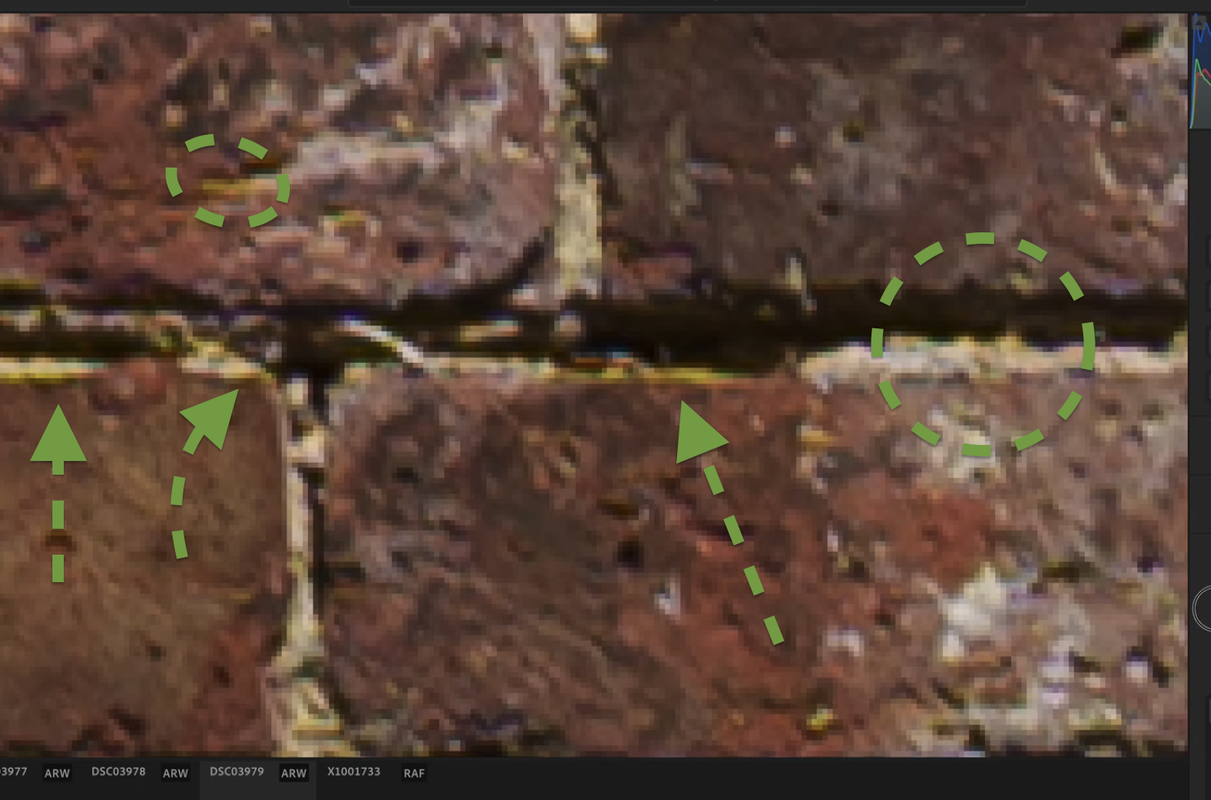
It's like what was happening with the boat pole in the distance on the previous page. That doesn't exist like that in real life. The viltrox f2 air photo I posted earlier on this page resembles what it should like. Or the example with this nokton but in daylight. Those random neon yellows shouldn't be there.
I see what you mean about the wb targetting certain colours... forgive me but with raw files, if I shoot with a custom white balance on camera or adjust it later in post, isn't it the same thing?
I adjusted the white balance temperature to be as blue as a smurf and the funky yellow artefacts still appear:
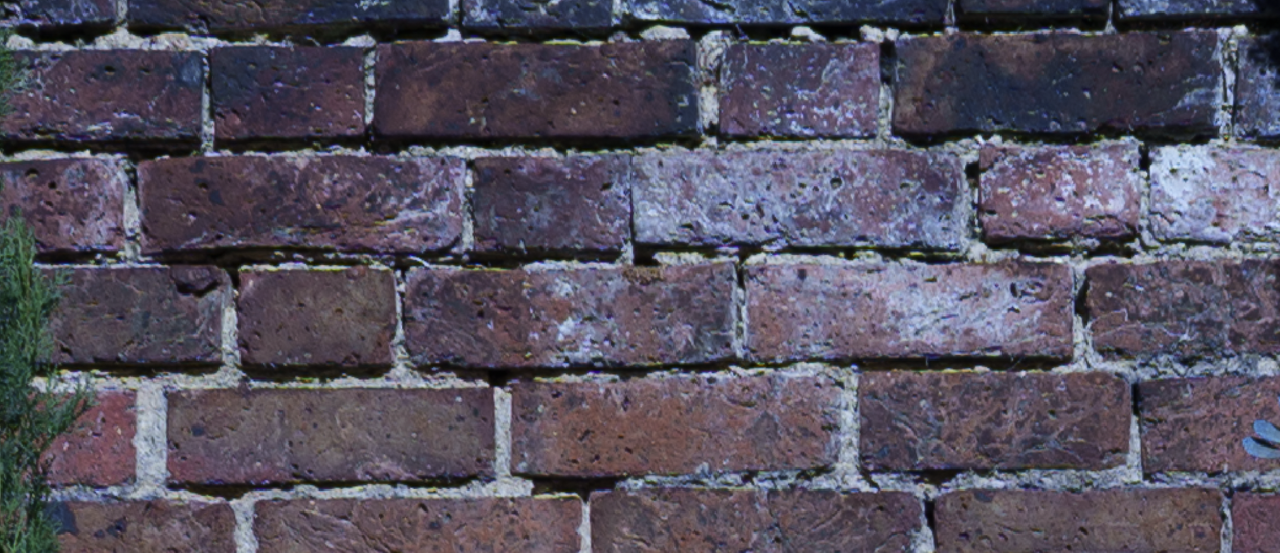
tungsten:
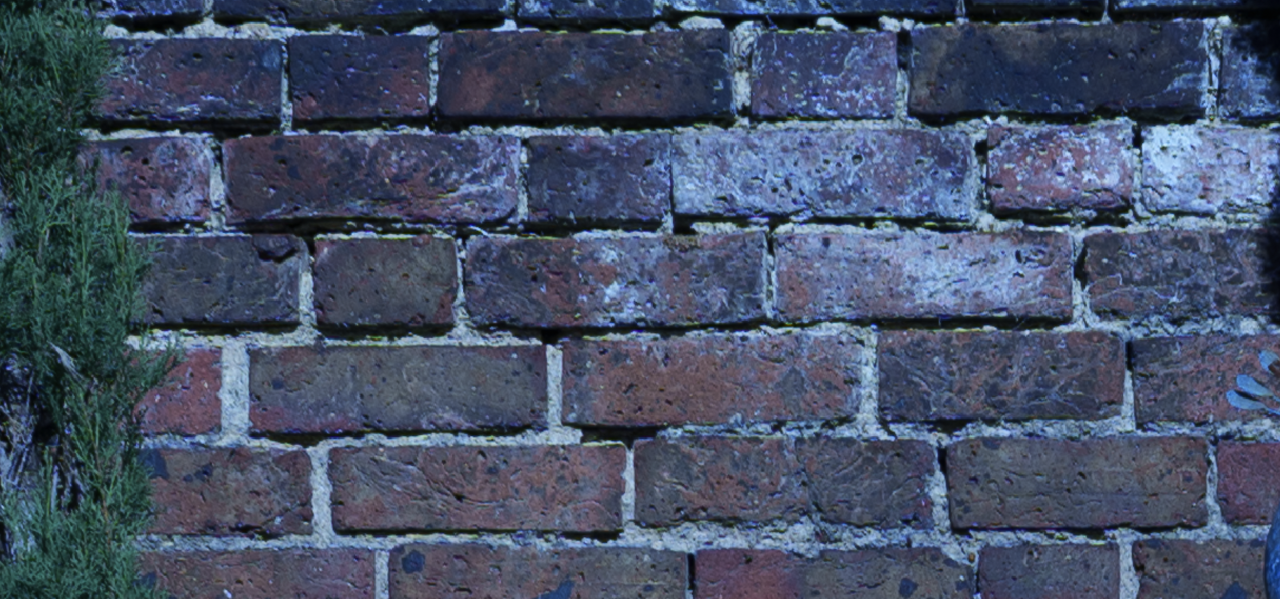
This is with the toggle for remove chromatic abberation on as well. I can see that option working quite well on the fuji for the same shot but it can't handle this.
I uploaded the video to youtube unlisted in case people couldn't access the streamable site:
Just out of interest, what camera are you using with this e-mount lens? I'm on the a7cii.
Yogifi wrote
Steve Spencer wrote
Yogifi wrote
Steve Spencer wrote
Yogifi wrote
Thank you Steve, in those examples the brick wall shots are at f5.6, and even at f8 it shows the funky yellows between the bricks, so I was thinking it was the lateral CA.The defringing tool does work to remove it and in softer light I don't think there's any issue.
Just for reference on, the viltrox 50mm f2 air (accidentally in apsc mode) on that same section of the brick wall but in softer light:
Those yellows in the harsh light with the nokton are definitely artifacts ---- I think it's lAca. Can you get copy variation with lateral CA? Probably, right.
Going through my 50mmf1.2 examples I've barely taken any where there's a lot of harsh light, usually I'm using it for people.
That might be part of getting a bit of a shock with the colours.
I've not shot the lens much below f5.6, unless it's at f1.5/f2 for the DOF. I'll keep the field curvature gif in mind where it curves upwards at closer distances to then curving downwards further away.
This was a learning experience about the significance of CA correction and how the light will affect that for sure.
Even though I've read it before, even by Fred in this thread, I didn't internalise it or understand the significance. I think most examples show it at infinity distance.
So, what is that yellow cast in your shots? My guess, but it is just a guess is that it is a white balance issue and has more to do with the camera than the lens. Sony's auto white balance isn't that great even in their most recent cameras. I suspect if you used auto WB, then it is responsible for that cast and it can randomly make the color a bit weird. Try shooting with an appropriate set WB and see if you get the same results and try shooting another lens at the same time with that same appropriate WB. If you see the same color cast problem, only for the CV 28 f/1.5, only then would I start to worry about the colors from the lens. Otherwise I suspect it is an auto WB issue and you likely would get the same issues with another lens as well. It may be a camera issue, inconsistent and slightly off auto WB, and not really a lens issue at all.
I recorded a short narrated video over lightroom just to save both further time:
https://streamable.com/1wbg7j
It does compare it with the fuji taken at the same time and I show the effects of the remove chromatic abberation toggle and white balance adjustment.
But if it was white balance it should be affecting the entire image not just bright yellow/neon slithers.
Maybe the lateral CA was so strong it confused lightroom...or only one wavelength was seeping through more than the others... I have no idea.
Anyway, thanks again for your help wtih this, will give the folks a break from this.
Just to avoid all potential confusion, this stuff is what I'm referring to (I know the brick wall isn't the most pristine and it might be causing some confusion with what I'm actually talking about):
It's like what was happening with the boat pole in the distance on the previous page. That doesn't exist like that in real life. The viltrox f2 air photo I posted earlier on this page resembles what it should like. Or the example with this nokton but in daylight. Those random neon yellows shouldn't be there.
I see what you mean about the wb targetting certain colours... forgive me but with raw files, if I shoot with a custom white balance on camera or adjust it later in post, isn't it the same thing?
I adjusted the white balance temperature to be as blue as a smurf and the funky yellow artefacts still appear:
tungsten:
This is with the toggle for remove chromatic abberation on as well. I can see that option working quite well on the fuji for the same shot but it can't handle this.
I uploaded the video to youtube unlisted in case people couldn't access the streamable site:
Just out of interest, what camera are you using with this e-mount lens? I'm on the a7cii.
Oct 27, 2025 at 08:18 AM
p.46 #12Voigtlander 28mm f/1.5 Nokton Review
Yogifi wrote:
So, what is that yellow cast in your shots? My guess, but it is just a guess is that it is a white balance issue and has more to do with the camera than the lens. Sony's auto white balance isn't that great even in their most recent cameras. I suspect if you used auto WB, then it is responsible for that cast and it can randomly make the color a bit weird. Try shooting with an appropriate set WB and see if you get the same results and try shooting another lens at the same time with that same appropriate WB. If you see the same color cast problem, only for the CV 28 f/1.5, only then would I start to worry about the colors from the lens. Otherwise I suspect it is an auto WB issue and you likely would get the same issues with another lens as well. It may be a camera issue, inconsistent and slightly off auto WB, and not really a lens issue at all.Appreciate your patience with this. I don't think it's white balance unfortunately.
I recorded a short narrated video over lightroom just to save both further time:
https://streamable.com/1wbg7j
It does compare it with the fuji taken at the same time and I show the effects of the remove chromatic abberation toggle and white balance adjustment.If it's not WB, then you got me stumped. As I said, if it is shot at f/5.6, it should not be axial CA, and if you clicked the removed chromatic aberration toggle it should not be lateral CA. So, I don't know what is causing it if it isn't WB. Do know that Fuji and Sony have very different auto WB behavior (I have both Fuji and Sony cameras). Sometimes I prefer Sony and sometimes I prefer Fuji, and sometimes they both work and sometimes they both suck, but they often produce fairly different auto WB results.I'm can't rule out that it's not the camera/sensor, will compare it with the sigma 35mm f2 on the wall next time it's harsh lighting.
But if it was white balance it should be affecting the entire image not just bright yellow/neon slithers.
Maybe the lateral CA was so strong it confused lightroom...or only one wavelength was seeping through more than the others... I have no idea.
Anyway, thanks again for your help wtih this, will give the folks a break from this.WB is a setting for the whole image, but it can affect only some wavelengths or at least some wavelengths a lot more than others. I am still betting it is a WB issue, but if you can do that further testing and set a WB instead of using auto, then you ought to be able to either rule out WB or see it as the cause.Just to avoid all potential confusion, this stuff is what I'm referring to (I know the brick wall isn't the most pristine and it's probably causing some confusion):
It's like what was happening with the boat pole in the distance on the previous page. That doesn't exist like that in real life-- it's like the viltrox picture. Or the example with this nokton but in daylight.
I see what you mean about the wb targetting certain colours... forgive me but with raw files, if I shoot with a custom white balance on camera or adjust it later in post, isn't it the...Show more →
I am going to bow out at this point. I am stumped. I agree that with RAW you can adjust WB in post and WB setting should not affect the RAW file as captured. What I am not sure about is when the RAW file is opened in Lightroom in your case whether the WB setting affects the colors in Lightroom in a way that changing the WB setting in Lightroom creates a file that would be the same as using that WB from the start. I don't know what the software is doing. It obviously uses WB when the RAW file is read into Lightroom. Does it go back to the RAW file when you change WB in Lightroom or does it work from the file that is created. Like I said, I just don't know and I am not a software programmer or even close, so I am not the one to ask. You seem to be assuming that it goes back to the RAW file or the equivalent and you get the same thing you would have got if the RAW file would have been read into Lightroom with the new WB. That may be happening, but I wonder if it actually is. I really don't know.
What I do know as I have said is that I don't think what you are seeing is axial CA and I don't think it is lateral CA either. If it isn't WB, then I don't know what it is. I don't think it is from the lens, but I could be wrong.
Steve Spencer wrote
Yogifi wrote
Steve Spencer wrote
Yogifi wrote
Steve Spencer wrote
I am not sure what is creating the yellow that you are noticing in the brick wall test. It shouldn't be and I don't think is axial CA. It shouldn't be lateral CA if you click the remove CA box in Lightroom, any remaining CA after clicking that box should be minimal at most. I wouldn't read much into the defringe tool affecting it. That tool as you have seen affects a lot of things in the image and not just axial CA. I rarely find that tool useful and I can get the same effect just by playing with the colors more generally. I mostly avoid doing that.So, what is that yellow cast in your shots? My guess, but it is just a guess is that it is a white balance issue and has more to do with the camera than the lens. Sony's auto white balance isn't that great even in their most recent cameras. I suspect if you used auto WB, then it is responsible for that cast and it can randomly make the color a bit weird. Try shooting with an appropriate set WB and see if you get the same results and try shooting another lens at the same time with that same appropriate WB. If you see the same color cast problem, only for the CV 28 f/1.5, only then would I start to worry about the colors from the lens. Otherwise I suspect it is an auto WB issue and you likely would get the same issues with another lens as well. It may be a camera issue, inconsistent and slightly off auto WB, and not really a lens issue at all.
I recorded a short narrated video over lightroom just to save both further time:
https://streamable.com/1wbg7j
It does compare it with the fuji taken at the same time and I show the effects of the remove chromatic abberation toggle and white balance adjustment.
But if it was white balance it should be affecting the entire image not just bright yellow/neon slithers.
Maybe the lateral CA was so strong it confused lightroom...or only one wavelength was seeping through more than the others... I have no idea.
Anyway, thanks again for your help wtih this, will give the folks a break from this.
It's like what was happening with the boat pole in the distance on the previous page. That doesn't exist like that in real life-- it's like the viltrox picture. Or the example with this nokton but in daylight.
I see what you mean about the wb targetting certain colours... forgive me but with raw files, if I shoot with a custom white balance on camera or adjust it later in post, isn't it the...Show more →
 https://i.postimg.cc/T3W4Jznd/image.png">
I am going to bow out at this point. I am stumped. I agree that with RAW you can adjust WB in post and WB setting should not affect the RAW file as captured. What I am not sure about is when the RAW file is opened in Lightroom in your case whether the WB setting affects the colors in Lightroom in a way that changing the WB setting in Lightroom creates a file that would be the same as using that WB from the start. I don't know what the software is doing. It obviously uses WB when the RAW file is read into Lightroom. Does it go back to the RAW file when you change WB in Lightroom or does it work from the file that is created. Like I said, I just don't know and I am not a software programmer or even close, so I am not the one to ask. You seem to be assuming that it goes back to the RAW file or the equivalent and you get the same thing you would have got if the RAW file would have been read into Lightroom with the new WB. That may be happening, but I wonder if it actually is. I really don't know.
What I do know as I have said is that I don't think what you are seeing is axial CA and I don't think it is lateral CA either. If it isn't WB, then I don't know what it is. I don't think it is from the lens, but I could be wrong.
Oct 27, 2025 at 09:01 AM
p.46 #13Voigtlander 28mm f/1.5 Nokton Review
No problem at all, I understand, thank you. And I have no idea either about in-software vs in-camera white balance.
Just for science(ish), f5.6 vs f8 similar white balance in the harsh light:
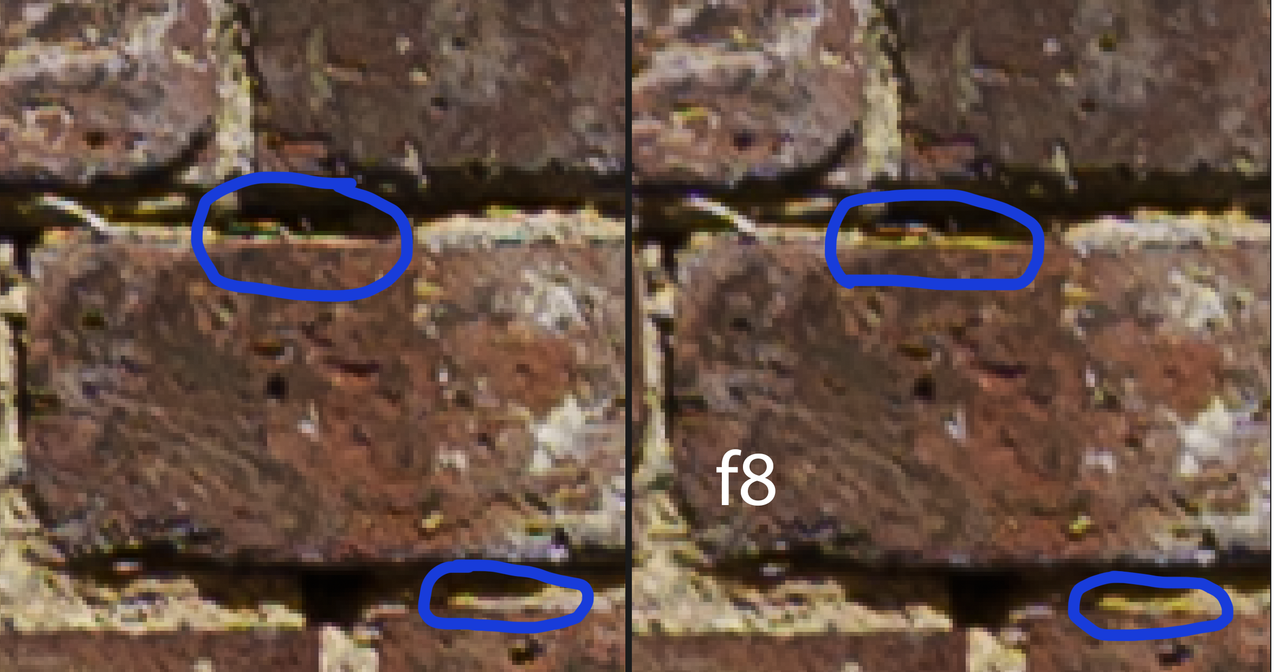
I don't think a smaller aperture makes it worse (maybe, who knows), but more showing that the two shots produced slightly different artefacts.
Maybe someone knows what they are. Perhaps it's sensor related and not actually the lens.
I only noticed it in harsh light. But despite posting a bunch of bricks with a million magnification, I could see something on the image wasn't quite right without even going to 100% - soon as I opened it in lightroom, just trying to show what I'm referring to.
Defringe tool basically the only solution when it happens and does help quite a bit. Side-effects of using it aren't as noticeable as not using it.
--- In the youtube video, when looking at the shot with the fuji in similar light and disabling "remove chromatic abberation" you can see similar areas give off a faint highlight, but it's less saturated. When you enable the removal, it does a pretty good job clearing it. So I'm thinking it is lateral CA, if that tool is designed to correct for it. It's just struggling with the nokton. But I'm not sure if it's just the lens or the sensor too.
Fuji x100vi @ f5.6, left "Remove Chromatic Abberation" On, right = OFF
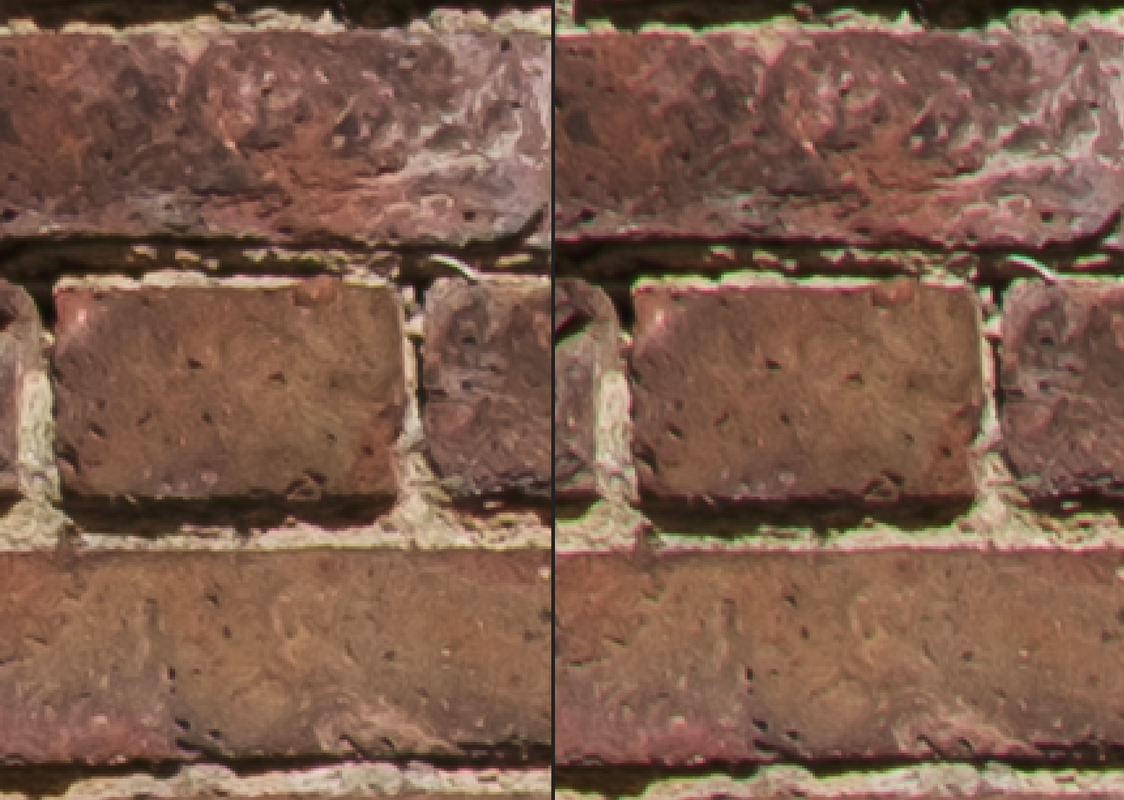
Anyway, still early days with the lens and I'm very happy to have it but I did order the simera while it's on sale to compare, and will likely get the APO in the future.
Thinking 28mm apo + 50mm apo when going solo with manual focus and ideally only one out of the simera and nokton when going with people for a dual-purpose lens, paired with the 50mmf1.2 nokton.
Just for science(ish), f5.6 vs f8 similar white balance in the harsh light:
I don't think a smaller aperture makes it worse (maybe, who knows), but more showing that the two shots produced slightly different artefacts.
Maybe someone knows what they are. Perhaps it's sensor related and not actually the lens.
I only noticed it in harsh light. But despite posting a bunch of bricks with a million magnification, I could see something on the image wasn't quite right without even going to 100% - soon as I opened it in lightroom, just trying to show what I'm referring to.
Defringe tool basically the only solution when it happens and does help quite a bit. Side-effects of using it aren't as noticeable as not using it.
--- In the youtube video, when looking at the shot with the fuji in similar light and disabling "remove chromatic abberation" you can see similar areas give off a faint highlight, but it's less saturated. When you enable the removal, it does a pretty good job clearing it. So I'm thinking it is lateral CA, if that tool is designed to correct for it. It's just struggling with the nokton. But I'm not sure if it's just the lens or the sensor too.
Fuji x100vi @ f5.6, left "Remove Chromatic Abberation" On, right = OFF
Anyway, still early days with the lens and I'm very happy to have it but I did order the simera while it's on sale to compare, and will likely get the APO in the future.
Thinking 28mm apo + 50mm apo when going solo with manual focus and ideally only one out of the simera and nokton when going with people for a dual-purpose lens, paired with the 50mmf1.2 nokton.
Oct 27, 2025 at 09:15 AM
p.46 #14Voigtlander 28mm f/1.5 Nokton Review
Hmmm, I shoot in strong light all the time (it's a thing here in Nevada) and haven't seen anything like this with my E-mounty 28m Nokton. I have taken similar shots here and haven't noticed anything similar. I do use Capture 1 Pro vs Lightroom and maybe that has something to do with it. To be honest, my first reaction is that you are capture small amounts of moss in the wall. I will be out of town for a couple days, but when I get back I'll try to replicate what you have shared.
FWIW - I'm very happy with the e-mount 28mm Nokton and have been quite pleased with its performance.
FWIW - I'm very happy with the e-mount 28mm Nokton and have been quite pleased with its performance.
Oct 27, 2025 at 03:25 PM
p.46 #15Voigtlander 28mm f/1.5 Nokton Review
Kevner wrote:
Hmmm, I shoot in strong light all the time (it's a thing here in Nevada) and haven't seen anything like this with my E-mounty 28m Nokton. I have taken similar shots here and haven't noticed anything similar. I do use Capture 1 Pro vs Lightroom and maybe that has something to do with it. To be honest, my first reaction is that you are capture small amounts of moss in the wall. I will be out of town for a couple days, but when I get back I'll try to replicate what you have shared.
FWIW - I'm very happy with...Show more →
Thank you Kevner, I'd appreciate that a lot! I haven't been able to get much strong sunlight here since the first day when I got it to compare with other lenses to rule out the camera itself.
Are you also using it with the A7Cii?
I thought it was moss too at first, had to go check the wall, it's not .. unfortunately I took it again in more chill light and it didn't show up. When I took it the first day, I compared with the fuji and I can see it there too but to a much lower degree and it's corrected to a decent level by lightroom's remove CA.
Could be I got a bit unlucky with my copy perhaps, not sure how variation on CA works... or the sun was particularly angry that day, or perhaps something with the a7cii sensor, I dunno - but I know I'm not (fully) crazy.
Would be interesting to see if capture one can handle it better, they do have a 7 day trial.
Hmmm, I shoot in strong light all the time (it's a thing here in Nevada) and haven't seen anything like this with my E-mounty 28m Nokton. I have taken similar shots here and haven't noticed anything similar. I do use Capture 1 Pro vs Lightroom and maybe that has something to do with it. To be honest, my first reaction is that you are capture small amounts of moss in the wall. I will be out of town for a couple days, but when I get back I'll try to replicate what you have shared.
FWIW - I'm very happy with...Show more →
Thank you Kevner, I'd appreciate that a lot! I haven't been able to get much strong sunlight here since the first day when I got it to compare with other lenses to rule out the camera itself.
Are you also using it with the A7Cii?
I thought it was moss too at first, had to go check the wall, it's not .. unfortunately
I took it again in more chill light and it didn't show up. When I took it the first day, I compared with the fuji and I can see it there too but to a much lower degree and it's corrected to a decent level by lightroom's remove CA.Could be I got a bit unlucky with my copy perhaps, not sure how variation on CA works... or the sun was particularly angry that day, or perhaps something with the a7cii sensor, I dunno - but I know I'm not (fully) crazy.
Would be interesting to see if capture one can handle it better, they do have a 7 day trial.
Oct 27, 2025 at 03:42 PM
p.46 #16Voigtlander 28mm f/1.5 Nokton Review
Yogifi wrote:
FWIW - I'm very happy with the e-mount 28mm Nokton and have been quite pleased with its performance.Thank you Kevner, I'd appreciate that a lot! I haven't been able to get much strong sunlight here since the first day when I got it to compare with other lenses to rule out the camera itself.
Are you also using it with the A7Cii?
I thought it was moss too at first, had to go check the wall, it's not .. unfortunately I took it again in more chill light and it didn't show up. When I took it the first day, I compared with the fuji and I can see it there too but to a much lower degree...Show more →
I'm using an A7RV
Kevner wrote
Hmmm, I shoot in strong light all the time (it's a thing here in Nevada) and haven't seen anything like this with my E-mounty 28m Nokton. I have taken similar shots here and haven't noticed anything similar. I do use Capture 1 Pro vs Lightroom and maybe that has something to do with it. To be honest, my first reaction is that you are capture small amounts of moss in the wall. I will be out of town for a couple days, but when I get back I'll try to replicate what you have shared.FWIW - I'm very happy with the e-mount 28mm Nokton and have been quite pleased with its performance.
Are you also using it with the A7Cii?
I thought it was moss too at first, had to go check the wall, it's not .. unfortunately
I took it again in more chill light and it didn't show up. When I took it the first day, I compared with the fuji and I can see it there too but to a much lower degree...Show more →I'm using an A7RV
Oct 27, 2025 at 04:30 PM
p.46 #17Voigtlander 28mm f/1.5 Nokton Review
I've been shooting both the nokton and the thypoch this year(both e-mount), here are some random snaps this year from both lenses, can anyone tell which were shot on which lens? I wouldn't worry too much about IQ from either lens. The exif data and smaller size of the nokton are tough to beat even if I might prefer the very slightly smoother draw of the thypoch a bit.


Oct 27, 2025 at 04:32 PM
p.46 #18Voigtlander 28mm f/1.5 Nokton Review
cxpics wrote:
I've been shooting both the nokton and the thypoch this year(both e-mount), here are some random snaps this year from both lenses, can anyone tell which were shot on which lens? I wouldn't worry too much about IQ from either lens. The exif data and smaller size of the nokton are tough to beat even if I might prefer the very slightly smoother draw of the thypoch a bit.
https://photos.smugmug.com/photos/i-mdg6bkd/0/KPCchGXF9G3LBP5nvGQW3VwCdNGq9kCPxQp8TTkts/X4/i-mdg6bkd-X4.jpg
https://photos.smugmug.com/photos/i-BTXtg4K/0/NTtXcDQ2dLVcdSjvBbkCMG6JRKxVVnsPRs4Tsnwgb/X4/i-BTXtg4K-X4.jpg
https://photos.smugmug.com/photos/i-BkwXXzK/0/LSm4fbHKm6TqPqxGsrpt7m9BFN8PM3vHsW9DJPs57/X4/i-BkwXXzK-X4.jpg
https://photos.smugmug.com/photos/i-q93bn7H/0/NBgprNvDvLjFnHsvTfsj84kvGTVnKvrBjzmD7kPDQ/X4/i-q93bn7H-X4.jpg
https://photos.smugmug.com/photos/i-wxHbL53/0/Lk3KgPRqtRMffLz3rhPtZFJ6R697hp3tZsXdqtwDP/4K/i-wxHbL53-4K.jpg
https://photos.smugmug.com/photos/i-XMpjsJL/0/MHHkNqn4kTNdGS4kJpkjR3cpzLwnzfR7BrpkBbK5f/4K/i-XMpjsJL-4K.jpg
https://photos.smugmug.com/photos/i-wPWXfD3/0/Kb9LXRDbpXkKXpzrZMTLJvBKcS6wZ8XCZ5QSFhDjm/X4/i-wPWXfD3-X4.jpg
https://photos.smugmug.com/photos/i-gWV4tPV/0/NSHBwk9x2vsQLT9DVbQsxb33vSbN4ZPrf8MvBVwLb/X4/i-gWV4tPV-X4.jpg
https://photos.smugmug.com/photos/i-99gxZp4/0/NBvz7mkMkwmVw3JV3tmVffVfGnbnLJbqG8TzX6ngx/X4/i-99gxZp4-X4.jpg
Can you tell me which lens was #3, #4 and #6? I find the bokeh extremely distracting in those three
I've been shooting both the nokton and the thypoch this year(both e-mount), here are some random snaps this year from both lenses, can anyone tell which were shot on which lens? I wouldn't worry too much about IQ from either lens. The exif data and smaller size of the nokton are tough to beat even if I might prefer the very slightly smoother draw of the thypoch a bit.
https://photos.smugmug.com/photos/i-mdg6bkd/0/KPCchGXF9G3LBP5nvGQW3VwCdNGq9kCPxQp8TTkts/X4/i-mdg6bkd-X4.jpg
https://photos.smugmug.com/photos/i-BTXtg4K/0/NTtXcDQ2dLVcdSjvBbkCMG6JRKxVVnsPRs4Tsnwgb/X4/i-BTXtg4K-X4.jpg
https://photos.smugmug.com/photos/i-BkwXXzK/0/LSm4fbHKm6TqPqxGsrpt7m9BFN8PM3vHsW9DJPs57/X4/i-BkwXXzK-X4.jpg
https://photos.smugmug.com/photos/i-q93bn7H/0/NBgprNvDvLjFnHsvTfsj84kvGTVnKvrBjzmD7kPDQ/X4/i-q93bn7H-X4.jpg
https://photos.smugmug.com/photos/i-wxHbL53/0/Lk3KgPRqtRMffLz3rhPtZFJ6R697hp3tZsXdqtwDP/4K/i-wxHbL53-4K.jpg
https://photos.smugmug.com/photos/i-XMpjsJL/0/MHHkNqn4kTNdGS4kJpkjR3cpzLwnzfR7BrpkBbK5f/4K/i-XMpjsJL-4K.jpg
https://photos.smugmug.com/photos/i-wPWXfD3/0/Kb9LXRDbpXkKXpzrZMTLJvBKcS6wZ8XCZ5QSFhDjm/X4/i-wPWXfD3-X4.jpg
https://photos.smugmug.com/photos/i-gWV4tPV/0/NSHBwk9x2vsQLT9DVbQsxb33vSbN4ZPrf8MvBVwLb/X4/i-gWV4tPV-X4.jpg
https://photos.smugmug.com/photos/i-99gxZp4/0/NBvz7mkMkwmVw3JV3tmVffVfGnbnLJbqG8TzX6ngx/X4/i-99gxZp4-X4.jpg
Can you tell me which lens was #3, #4 and #6? I find the bokeh extremely distracting in those three
Oct 27, 2025 at 06:31 PM
p.46 #19Voigtlander 28mm f/1.5 Nokton Review
I really love the colors in your shots here ✨🙌
Especially the one with the dogs on the couch 🐶🐶
What camera did you use? Any adjustments in post?
Especially the one with the dogs on the couch 🐶🐶
What camera did you use? Any adjustments in post?
Oct 28, 2025 at 12:57 AM
p.46 #20Voigtlander 28mm f/1.5 Nokton Review
Lovely images as always, cxpics.
Btw about what I was posting earlier, although I haven't had sun for a while... that thing on the bricks, I noticed it on shots from the apo lanthar Juha kindly shared from the VM apo-lanthar 28mm f2. So it's probably not a lens issue, also with the a7cii. A user suggested it could be moire, also affected by high contrast areas. Just wanted to add that in as I know I gave you all a headache over it.
Btw about what I was posting earlier, although I haven't had sun for a while... that thing on the bricks, I noticed it on shots from the apo lanthar Juha kindly shared from the VM apo-lanthar 28mm f2. So it's probably not a lens issue, also with the a7cii. A user suggested it could be moire, also affected by high contrast areas. Just wanted to add that in as I know I gave you all a headache over it.
Oct 30, 2025 at 08:44 PM