Any recommendations for a table that I can mount on top of a C stand or lighting stand? I see a lot of cheap tripod-based ones like this Pyle PRPTS2 ($40 including the tripod on Amazon): https://pyleusa.com/products/plpts2
I have plenty of C stands I trust, so I’d be happy with just the table top. Is there something similar to the Tether Tools product that’s less expensive?
What do you want to use this thing for? A laptop stand? Still life subject matter to be photographed? It's hard to recommend anything without knowing the intended use.
I want a stand to hold still lifes for painting and taking photographs. I’d probably build a cardboard shadow box to fit it. It needs to be fairly small, to fit next to my easel.
Nope, those are too big and inflexible. I need something I can nestle between my easel and my palette table for painting, and can adjust the height of so it’s at the same level as my canvas. I already have two pieces of acrylic that I have used as a surface for product photography; the stand would make it easier to set up such shots wherever I want.
what's wrong with the pyle stand? small footprint with adjustable height!
there're similar designs at cheaper prices online! search "Universal Adjustable Tripod Design DJ Laptop Device Stand Holder", or "sculpture table".
Can't find one to your liking, then diy one!
Repurpose an old swivel barstool with adjustable height. you can also attach a lazy susan bearing to flat board and attach the setup to a fix stool. This is how i made a sculpture table.
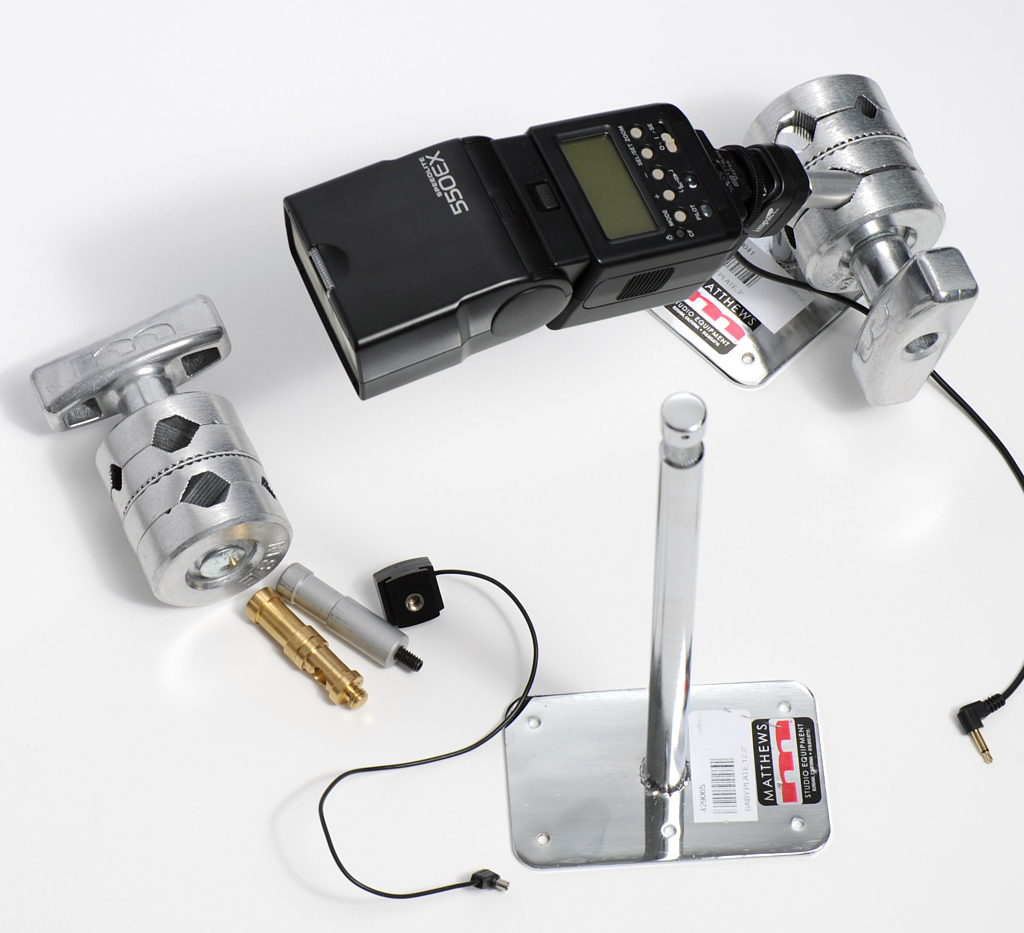
I used a baby pin receiver plate, mounted to a rectangular piece of wood I got from the scraps area at my local wood store.
Covered the wood with black fabric. I use it with my short C-stand as a posing table. Also as a mobile tether table for my laptop by removing the C stand turtle base and using a Kupo runway base.
@tntcorp1 I just want to know what I’m sacrificing with the cheap stand. Clearly materials, but perhaps the cheap ones fall apart quickly. I don’t mind spending more for quality equipment out the gate—which is why I have a bunch of Matthews grip equipment in my apartment.
Funny enough, I stopped in at Guitar Center to pick up their equivalent of the Pyle stand, and they couldn’t sell me the one they had because their inventory system didn’t think it existed. So I guess I’ll get it from Amazon and go for a more expensive option if and when it fails.
@ronchau and @rico, that sounds like a good plan if the Pyle stand turns out to be crap. I was planning to get some pigeons anyway to mount lights on the wall.
kleriq wrote:
@tntcorp1@ I just want to know what I’m sacrificing with the cheap stand. Clearly materials, but perhaps the cheap ones fall apart quickly. I don’t mind spending more for quality equipment out the gate—which is why I have a bunch of Matthews grip equipment in my apartment.
Funny enough, I stopped in at Guitar Center to pick up their equivalent of the Pyle stand, and they couldn’t sell me the one they had because their inventory system didn’t think it existed. So I guess I’ll get it from Amazon and go for a more expensive option if and when it fails.
the construction of the pyle stand looked sturdy enough. large diameters tubing with adjustable height. the only questionable issue is stability with the low tripod legs. heavier objects on the platform, if not properly balanced, may cause the rig to tip over.
I usually use a 26" square table top with rounded corners that my son picked up at a Flea Market. It has a maroon Formica on the top and around the edge, but never had legs mounted to it. In use I put it on top of a tall wooden stool with a piece of the tool box liner foam sheet between them to keep the top from sliding easily. Now that age is creeping up with me and I can no longer work low any more, I use bed risers under the legs of the stool to raise the table top to an easier working height of 33". I bought table cloths in many different colors, one or two of each, to use on this shooting table. Not being an actual table lets me take it apart quickly and store it's parts in several places, yet be able to re-assemble it in just a few minutes when I do need it. I have supported small backdrops (additional table cloths) around it for some shots, but usually just position it in the center of my shooting space and add props until I'm happy with the result.
I tend to like the darker, but carefully lit "still life" shots of just a bottle of wine, two wine glasses, maybe a plate of cheese or grapes with only what is on the table visible and surrounded with black is what I usually do, but scenes like a morning breakfast for two with Sunlight shining through a multi-pane window and diagonally across the corner of the table is another typical kind of shot. For this Sunlight image or something similar to this, I use a 1000 w/s studio strobe with a focusing lens and a laser cut stainless steel pattern of the multi pane window. A gel colors it to look more like morning Sunlight. (Higher strobe power is required for the light losses due to the laser etched pattern and large focusing lens).
I recently shot three red roses in a tall thin vase, where only the roses themselves were brightly lit. The tall green vase and table with red table cloth are barely visible, but give orientation and mystery to the shot. I used a 400 w/s studio strobe and 7" reflector with a 10 deg grid 54" from the roses to get the light area around the roses down to about 12" in diameter, so only the roses were brightly lit. So this was a very simple setup, but a shot that has had considerable interest by those who see a print of it.
I would post this shot, but I am no longer a contributor, so I don't think that I have the ability. If someone knows a way I would appreciate knowing. A full resolution copy of this photo (200 meg file size) exists on this computer. I can adjust it to any size/resolution, but won't put it on public photo site so it can be linked.
I had a local metal fabricator cut a 15" square piece of 1/4" steel and weld a short length of 1/4x20 threaded rod to the bottom. I also had him paint it black to prevent rust. I screwed an adapter to that rod that attaches to the top of a light stand (I happen to use Kupo stands bu any will work). I also use a 24"x30" piece of 3/4" plywood on top of the steel platform to have a larger table top to work with. The steel plate was $30 and the adapter was less than $5 if I recall. The plywood was leftover wood laying around from another project so it was basically free.
When I'm shooting "still life" I prefer a larger table surface, so I can place pieces of foam core, either black or white depending on the need to reflect bits of light or block it. I just clamp the bottom edge of the foam core to pieces of scrap wood like 1 X 2" and of different lengths. This makes them stand up and hold their position well. Sometimes a small piece of black foam core needs to be position above and in front of the lens to reduce lens flare, and if these need to be supported, I use chemistry stands, again sitting out of camera sight on the table surface. When all else fails I'll cover the metal parts of these that are causing reflections that are being seen by the camera, I'll use small pieces of black fabric and metal clamps from the stationery store to hold them in place, or pieces of black Gaffer Tape to cover the reflecting surfaces. Fine tuning your still life shots takes time, but is so much worth the effort.
i recently came across a channel on YouTube of a guy shooting "Still Life" much the same as me and he is very worth watching, if "Still Life Photography" is your interest. He taught me a few things too.
Don't be intimidated by his Profoto and ARRI gear. It can be done with much less. My lights are Godox/Flashpoint and camera is a Canon 90D so not the best of the best, and it can be done with less than this too. His channel on Youtube is "Camera Club Live". He is a great teacher who shows step by step exactly how to do it. You will be amazed at the results that he can get.