bobby350z wrote:
Any reasons for a separate thread? It is same old 100MP sensors IMHO.
Edited:- I see the older thread is also GFX100s specific so OK to keep it separate. Sorry for my complaining.
the sensor and processor are different GFX100 II offers a new 102 megapixel GFX 102MP CMOS II HS sensor with a readout speed approximately twice as fast as the GFX100S. Redesigned microlenses improve light capture at the corners of the sensor, offering better quality of the image and greater AF precision even in the peripheral areas of the image.
Karmal wrote:
the sensor and processor are different GFX100 II offers a new 102 megapixel GFX 102MP CMOS II HS sensor with a readout speed approximately twice as fast as the GFX100S. Redesigned microlenses improve light capture at the corners of the sensor, offering better quality of the image and greater AF precision even in the peripheral areas of the image.
Having both cameras and having used them in a variety of circumstances side by side, I can say emphatically that there is no discernible difference between the two. The faster readout time is Fuji marketing hype and only happens under a specific setting which you are probably unlikely to use. I have seen zero difference in a variety of lenses in corner optical performance. On relatively static subjects like shooting people in the studio or when i shot Kait Dunton's concert at The Baked Potato - y'know - live music in low light, there was no difference in autofocus performance.
It's a real shame that Fuji chose to go the b.s. route when hyping this camera, and while there are some improvements, there are just as many head scratchers like moving the remote release from the accessible right side to the crammed left side and deciding not to include an adapter to be able to use the release and moving the position of the USB-C port, both of which make shooting vertically with an L-Bracket, how do you say, challenging.
The "improved" viewfinder, which was touted bigly in their marketing hype turns out to be a mixed bag. Yes, it's brighter and has smaller pixels, but it's no easier to focus and it's also far less accurate in terms or predicting your exposure. In other words, it's too bright and just knocking down the brightness control two or three ticks does not fix it. That only seems to knock down the whites in a linear fashion rather than some sort of a gamma curve which is what's needed.
So lots of difference except where it really matters - in image quality, which remains very very good, but still the same, so Bobby's comment remains relevant.
Peter Figen wrote:
Having both cameras and having used them in a variety of circumstances side by side, I can say emphatically that there is no discernible difference between the two. The faster readout time is Fuji marketing hype and only happens under a specific setting which you are probably unlikely to use. I have seen zero difference in a variety of lenses in corner optical performance. On relatively static subjects like shooting people in the studio or when i shot Kait Dunton's concert at The Baked Potato - y'know - live music in low light, there was no difference in autofocus performance.
It's a real shame that Fuji chose to go the b.s. route when hyping this camera, and while there are some improvements, there are just as many head scratchers like moving the remote release from the accessible right side to the crammed left side and deciding not to include an adapter to be able to use the release and moving the position of the USB-C port, both of which make shooting vertically with an L-Bracket, how do you say, challenging.
The "improved" viewfinder, which was touted bigly in their marketing hype turns out to be a mixed bag. Yes, it's brighter and has smaller pixels, but it's no easier to focus and it's also far less accurate in terms or predicting your exposure. In other words, it's too bright and just knocking down the brightness control two or three ticks does not fix it. That only seems to knock down the whites in a linear fashion rather than some sort of a gamma curve which is what's needed.
So lots of difference except where it really matters - in image quality, which remains very very good, but still the same, so Bobby's comment remains relevant.
...Show more →
You had the opportunity to shoot at 80 ISO and control the dynamic range, which you can't do with the gfx 100 s, you had the opportunity to take two perfectly identical shots, same optics, same moment to say that nothing has changed, you can see the improvements provided they are in these conditions, regarding the viewfinder it depends on how it is calibrated for me and a big step forward with the possibility of tilting it and shooting without black out in burst another improvement not to mention the operating speed... then obviously on static photos everything is fine..as far as vertical shots are concerned, I'm happy with this one https://reallyrightstuff.com/fujifilm-gfx100ii-l-set/
I came from a gfx100 which was subsequently replaced with two gfx 100s because it was too bulky then on September 26th I got a gfx100 II I was so impressed that I sold the two gfx100s and got another gfx 100II and I would never go back
MaTiHH wrote:
Well - a pictures thread for a camera isn't only for showing the image quality, it also serves to show the possibilities of the camera.
Since this photo would only be achievable by pure luck on a 100s I plea for keeping separate threads.
But in fact they are two very different cameras, in ergonomics in the performance of the 80 ISO sensor in the operating speed with the new processor in the much faster buffer combined with the c express to the completely removable and more defined viewfinder and many other goodies on the video side..
Karmal wrote:
You had the opportunity to shoot at 80 ISO and control the dynamic range, which you can't do with the gfx 100 s, you had the opportunity to take two perfectly identical shots, same optics, same moment to say that nothing has changed, you can see the improvements provided they are in these conditions, regarding the viewfinder it depends on how it is calibrated for me and a big step forward with the possibility of tilting it and shooting without black out in burst another improvement not to mention the operating speed... then obviously on static photos everything is fine..as far as vertical shots are concerned, I'm happy with this one https://reallyrightstuff.com/fujifilm-gfx100ii-l-set/
I came from a gfx100 which was subsequently replaced with two gfx 100s because it was too bulky then on September 26th I got a gfx100 II I was so impressed that I sold the two gfx100s and got another gfx 100II and I would never go back https://i.imgur.com/dz0PVf7.jpg ...Show more →
If there are any real differences in dynamic range I have not seen them at all. ISO 80 and 100 both appear to be equal and remember they're only claiming something like a third of a stop, so it ain't much, plus Jim Kasson has already shown how they arrived at that conclusion - through dark field subtraction and just lopping off the left side of the dark field noise at the zero point. So, in the real word, no difference. I have the tilt adapter for the viewfinder and, so far, it doesn't impress me very much other than feeling very vulnerable to bumping and really kinda flimsy. There will be some uses for it but I'd say about ninety-nine percent of the time, if not more, I will not be using it. For how *I* use the cameras, there is precious little difference, but for you it might seem worth it, just remember not to fully buy into Fuji's half truths in regards to their marketing, but that's your choice too.
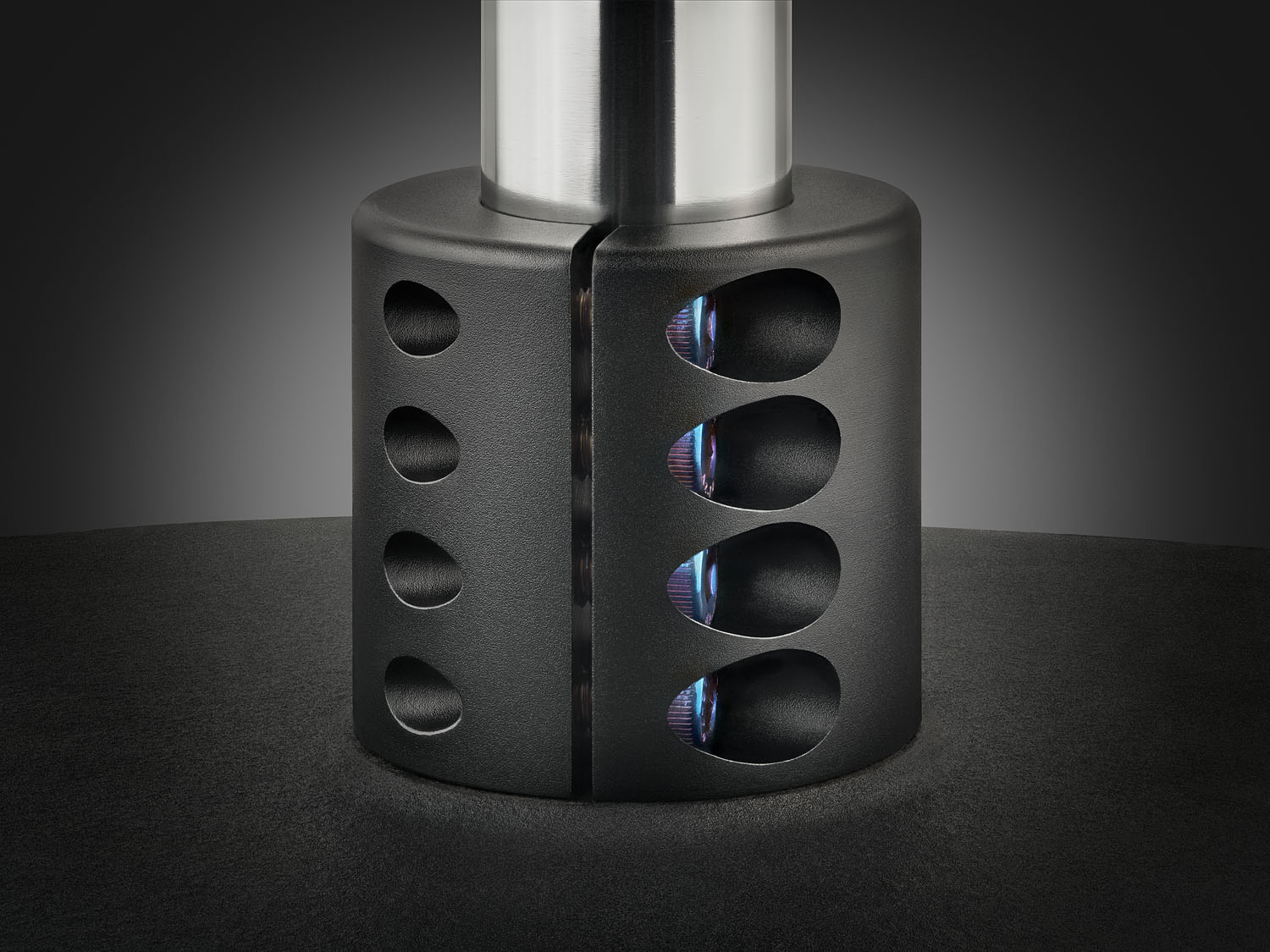
The base of a Triad-Orbit mic stand with its rather unique attachment method which turned out to be quite beautiful in its own right. This is one where I shot an earlier version on the 100s and then this version on the 100 II, and there was no difference anywhere of note, but if it makes you feel better to claim there is, then have at it. Still the same beautiful tones and gradations on both cameras. Same corner sharpness on every lens I've tried so far but wtf to I know. I only use this stuff. It's all about lighting and post processing capabilities for me anyway.
GFX100 IICanon TS-E 135mm f/4L lens135mmf/11.01s100 ISO0.0 EV
Peter Figen wrote:
The base of a Triad-Orbit mic stand with its rather unique attachment method which turned out to be quite beautiful in its own right. This is one where I shot an earlier version on the 100s and then this version on the 100 II, and there was no difference anywhere of note, but if it makes you feel better to claim there is, then have at it. Still the same beautiful tones and gradations on both cameras. Same corner sharpness on every lens I've tried so far but wtf to I know. I only use this stuff. It's all about lighting and post processing capabilities for me anyway. ...Show more →
Sorry but I don't see the same photo taken with gfx 100s and then what should you see with this photo regarding the angles? Then excuse me Kasson does laboratory tests but then in the real photos he tested this If so with the same perspective? ? And above all how he checked that the gfx100s / II sensor renders equally at the corners.