Steve Spencer
Offline
• • • • • • •
Upload & Sell: On
|
 p.42 #13 · Nikon Zf as a platform for adapted/native manual focus lenses p.42 #13 · Nikon Zf as a platform for adapted/native manual focus lenses | |
Vento wrote:
This does not correspond to my statement and is taken out of context.
The original question was whether Cosina/Voigtlander E-mount lenses can be adapted to Z without hesitation, or whether there are restrictions to consider and unfortunately this cannot be ruled out due to the different filter stacks and has already been stated in reviews for various E-mount lenses.
14/1.8 GM, 20/1.8 GM, at photographylife, but also the article from philipreeve.net shows not only the effects with some M-mount lenses, but also visible performance losses in the peripheral areas with various E-mount lenses that are adapted to a Z6, such as the Loxia 21/2.8 E.
The user snapsy also demonstrated this a while ago with a Sony 20/1.8, where there were also visible performance losses in the corners when adapting the lens to Z-mount.
But I also know it from my own experience with the 21/1.4 Nokton for E-mount, which a good friend uses with Sony E-body and Nikon Z and which also shows visible worth corner performance on Z-mount
In this context, my statement was that in these price ranges, where I spend big money for a single lens, adaptation is no longer an option for me under these circumstances, where it is known that the filter stacks of Nikon Z and Sony E diverge and thus, especially in the wide-angle range, there is a proven loss of performance with some lenses.
If I put big money on the table for a lens that costs that much, among other things, because it has outstanding optical correction in addition to the key data, then I don't want to experiment or find out later that the lens with the filter stack of my Z-body performs significantly worse in the peripheral areas than native, or even, as described here by a user with the CV 50/2 AL-E, adapted to a Z-body, slight field curvature can be seen, which is non-existent when used with a native body.
Especially with regard to Z-mount, there is a clear lack of experience.
FM may be a good source when it comes to whether M-mount harmonizes with E-mount and even there we see some massive losses with some lenses, see the philipreeve article, but Z-mount is usually left out and you fish much more in the dark, in the unknown.
Only now that some reviewers have addressed the topic of filter stack and its effects when adapting lenses, it is becoming clear that it is not flawless.
So again, I have no problem at all with adapting lenses, the majority of my lenses are adapted, but for me personally there is no point in buying high-performance lenses that do not harmonize optimally with the filter stack of my Z-body, especially not if the identical optics are also available as a native Z-mount version.
I can now get a Sony 14/1.8 GM for Astro for my Z, but the performance I get for this type of photography in the corners, see the pictures in the linked review, has nothing to do with what you buy such a specialized and expensive lens for.
https://photographylife.com/reviews/sony-fe-14mm-f-1-8-gm/2...Show more →
When you used the CV E mount 21 f/1.4 on Nikon did you pay close attention to the flange distance? Jman13 and I both found that having the right flange distance for this lens is very important when adapting it to Z mount. We both found worse corner performance with this lens on Z mount with an adapter that was too thin, but little if any decrease in performance if we were careful to get the flange distance right. You can look at the Voigtlander on Nikon Z thread and see that Lightsearcher has put this lens to wonderful use as well. The lens has floating elements (i.e., FLE) focus which keeps the rear element in the same position when focussing, so it makes sense that it might be especially sensitive to adapter thickness.
Lens rentals blog identified two aspects of lenses that impair performance and described the optical design issues behind each and demonstrated the effects in several blog posts. Here are the two most relevant ones:
https://www.lensrentals.com/blog/2014/06/sensor-stack-thickness-when-does-it-matter/
https://www.lensrentals.com/blog/2014/07/sensor-stack-thickness-part-iii-the-summary/
One issue is simply that faster lenses will have more issues with adapting and this affects the whole frame but if the sensor thickness differences are modest as they are for Sony E-mount cameras vs. Nikon Z-mount cameras the effects are modest at most with apertures between f/1.4 and f/2 and will likely have no effect with apertures of f/2 or smaller. So there is more reason to be concerned with wider aperture lenses.
Second they described how lenses with shorter exit pupils (and shorter focal length lenses to tend to have shorter exit pupils but not always) have worse performance towards the corners especially at wider apertures the bigger the difference in sensor glass thickness.
So, the Voigtlander 21 f/1.4 which has both a wide aperture and a somewhat short exit pupil (but perhaps not that short for a 21mm lens) and has a floating element seems to have a number of strikes against it when adapting to Nikon Z mount. That said some of us have been able to use it if we get the adapter thickness right. Why is that? I think the answer lies again with those nice articles from lens rentals blog. They detail that until the sensor glass is about a 1mm difference in thickness the two affects they describe tend to be small. If the exit pupil is really short, however, or if the aperture is really large (f/1.2 or less) some effects start to emerge with only .5mm difference in sensor glass thickness. We don't know the exact measurements of sensor glass differences, however, so it is hard to use this information.
Another issue with Sony lenses is that some (and these are particularly the G, but much less so the GM lenses) rely heavily on software correction being applied automatically. If you use those lenses on a Nikon camera the straight out of camera results without the software correction may look surprisingly bad. You could probably do a bunch of post processing correction to emulate what you get on Sony automatically, but I don't know who would want to do that--I certainly wouldn't. The Sony 20 f/1.8G is one of those lenses that I believe relies heavily on automatic software correction, so it isn't too surprising that it doesn't adapt very well. It also likely has a short exit pupil and it has a pretty fast aperture.
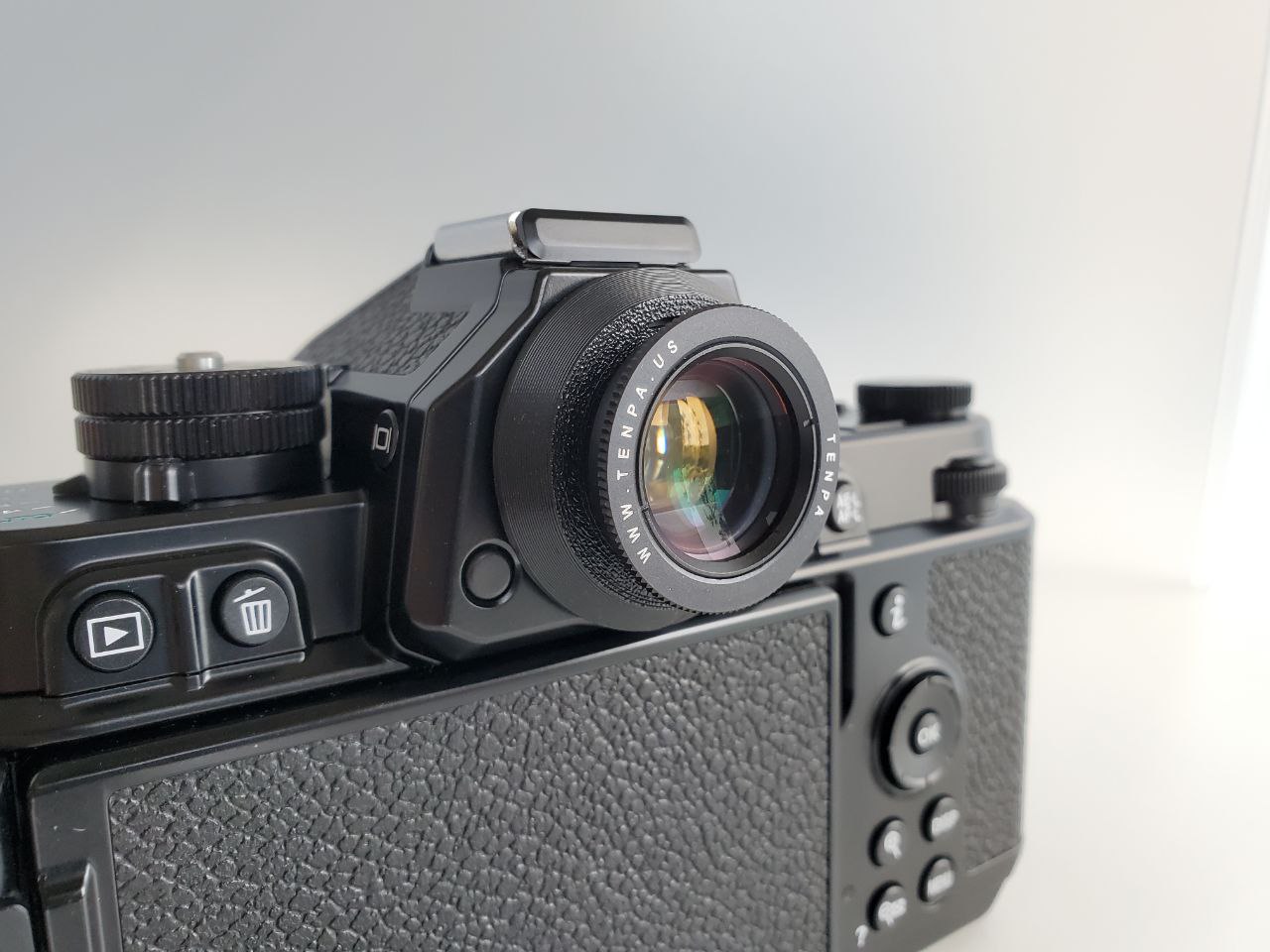
The Nikon Zf is a great camera set up for manual focus glass, IMO, so it is natural to want to adapt manual lenses for it. Many of the Voigtlander lenses can be used with it including some for Sony E mount, but people should understand the risks and potential limitations. That said some of those lenses can be really useful with this camera and I think that if you get the adapter thickness right, then the Voigtlander 21 f/1.4 is one of them. It is from my experience, of course, YMMV.
|