philip_pj wrote:
Taking focus stacking by itself, I'm sure many here would like to see excellent examples of the technique, for non-macro / closeup imagery - using say, 50-100mm lenses. Quite surprisingly, the vendors seem to feature many photos of spiders, shot with macro lenses (you know, those ugly hairy blob-covered creatures only a female of the species could be interested in). Is focus stacking the current age's HDR fad?
Nor could I find anything on this site in the way of 'focus stacking image thread' or the like - other than chat about using this widely championed method of improving one's landscapes. Members should not be shy about posting their work using this terrific innovation, if indeed this is what it is. The online video crews simply want to demonstrate the technique rather than provide copious evidence (image comparisons) it is actually worth doing.
I have serious reservations on the matter, as the viewing eye quite naturally expects to see resolution fade with increasing distance, and our better lenses deliver very fine focus fade which complements those areas close enough to the focal plane to be considered 'in-focus'. One could counter-argue that taut rendition of fade character is more appealing in many images than an overload of relentless acutance.
The all-in-focus notion also risks inessential content competing, and stealing the attention from the major subject of each image, and burying it in a welter of subject clutter - the 'major subject' is generally the reason why you decided to take it in the first place, unless you enjoy vast spaces of sand grains, or perhaps blades of grass. And you may often not want that pipe in the foreground to be super sharp.
I imagine issues also arise often, regarding: field curvature (which changes with focal distance), outer frame fall-off (a zoom specialty), subject movement/mismatches (especially water in streams etc.), increased chroma errors, atmospheric haze/dust/mirage, in addition to the sheer lack of natural appearance about such images.
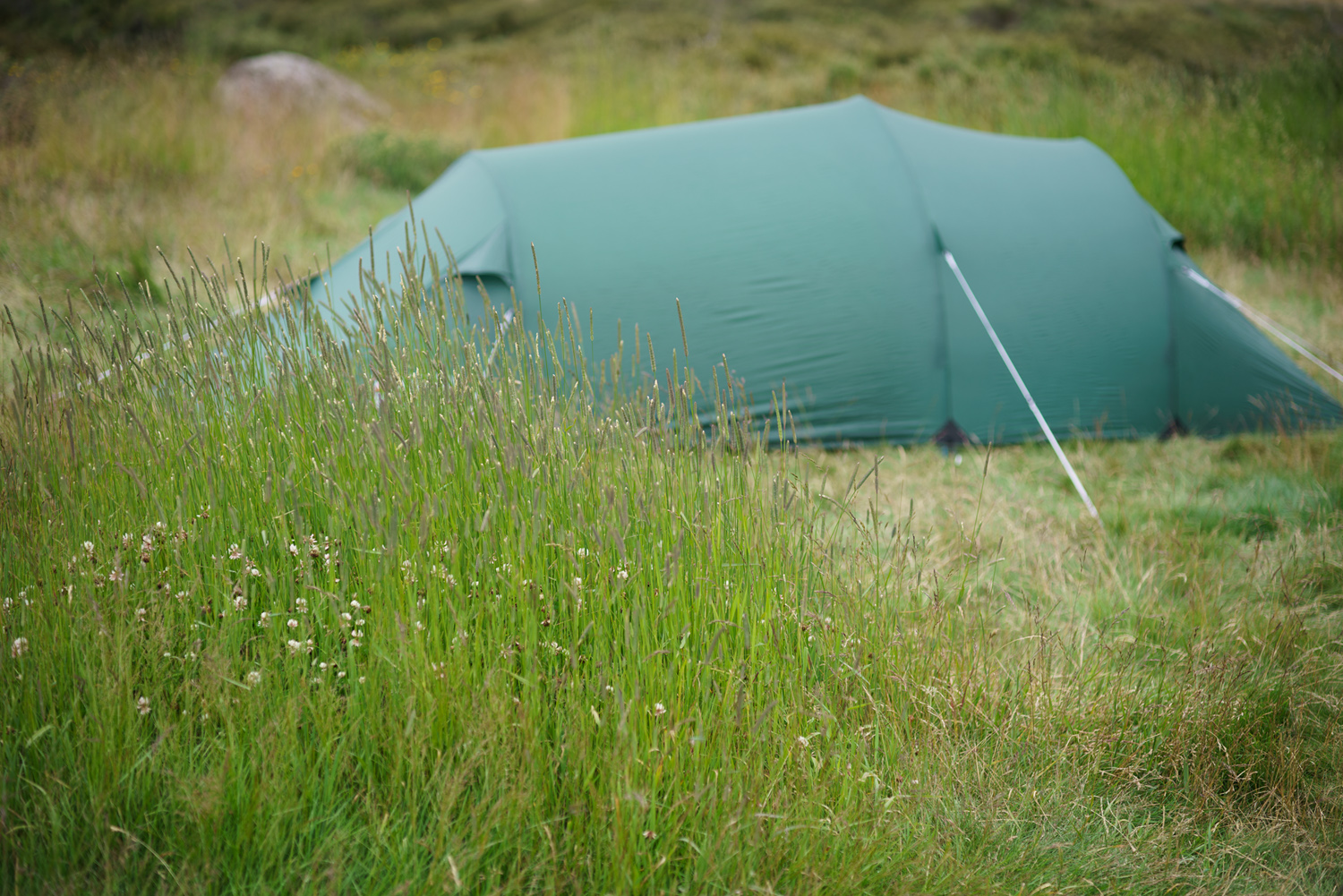
Some pretty sad zoom lens outer frame fall-off examples below, these look far from ideal f8 options, being designed for super central (and often outer frame!) zones, wide open :
You clammer on about lack of examples in real images that show the advantage of focus stacking…yet you resort to graphs and chart to show short comings of some zooms. Proofs is the pudding in my books…and charts are not proof of anything.
Philip_pj, once one spends some time learning the details of the technique, there are answers to your concerns. One need not use the last few images in the stack. If they go to infinity, you can leave them "soft." I often make conscious decisions about which images to choose for a given image. I also agree that sharpness can be overrated but usually one wants the important parts of the image to be sharp.
I grew up photographically with a view camera and learned to like the idea of using lens tilt to shift the plane of focus to get what I wanted artistically. FWIW Lord Ansel used tilts and shifts to get what he wanted. Sometimes the laws of physics make some images almost impossible. Focus stacking does not always work. But, when it works like any other technique, it can be helpful, even if misunderstood by some and overused by others.
doc4x5 wrote:
Philip_pj, once one spends some time learning the details of the technique, there are answers to your concerns. One need not use the last few images in the stack. If they go to infinity, you can leave them "soft." I often make conscious decisions about which images to choose for a given image. I also agree that sharpness can be overrated but usually one wants the important parts of the image to be sharp.
I grew up photographically with a view camera and learned to like the idea of using lens tilt to shift the plane of focus to get what I wanted artistically. FWIW Lord Ansel used tilts and shifts to get what he wanted. Sometimes the laws of physics make some images almost impossible. Focus stacking does not always work. But, when it works like any other technique, it can be helpful, even if misunderstood by some and overused by others....Show more →
Well said gentleman. I too used a view camera for years, and 6x7 Bronicas and loved it, for me its the process. I don't hear a lot about zooms having a LOOK to them, it seems mostly applied to vintage glass or Voitlanders, Zeiss, etc, im after a certain look. I want my images sharp, but its not the most important thing, the overall feel of the image is more important to me.
Well, i got my Voigtlander today and went out in the front yard and took a few shots. I missed focus on some and nailed it on others, i think i like the zoom 12.5 x and focus peaking, going to have to practice more and see which i prefer to nail focus.
Califmike33 wrote:
Well, i got my Voigtlander today and went out in the front yard and took a few shots. I missed focus on some and nailed it on others, i think i like the zoom 12.5 x and focus peaking, going to have to practice more and see which i prefer to nail focus.
Any tips?
I am using Voigtlanders on an A7Rii, like you are, and what works best for me is two things: 1) focus magnification (I assign it to one of my custom buttons), and 2) shoot in raw, and set the camera to shoot in black and white. The raws will still be in color. When you view the EVF in black and white, and you attain focus, the in focus portion will "shimmer" a little bit, and this is a better indication (for me) that I am in focus than focus peaking. Between the focus magnification and the "shimmer" I have had good luck (after a good bit of practice) focusing quickly enough to make me happy, at least.
The black and white EVF really does make a difference, and also helps me concentrate on composition over color.
osogris wrote:
I am using Voigtlanders on an A7Rii like you are, and what works best for me is two things: 1) focus magnification (I assign it to one of my custom buttons), and 2) shoot in raw, and set the camera to shoot in black and white. The raws will still be in color. When you view the EVF in black and white, and you attain focus, the in-focus portion will "shimmer" a little bit, and this is a better indication (for me) that I am in focus than focus peaking. Between the focus magnification and the "shimmer," I have had good luck (after a good bit of practice) focusing quickly enough to make me happy, at least.
The black and white EVF does make a difference and also helps me concentrate on composition over color.
I tried just the magnification and there is a very small window to nail it, it goes in focus to out of focus fast, i find adding focus peaking with the magnification works best for me, but I'm still playing with it. I do love the look of the 50mm f2 voitlander for sure.
Califmike33 wrote:
I tried just the magnification and there is a very small window to nail it, it goes in focus to out of focus fast, i find adding focus peaking with the magnification works best for me, but I'm still playing with it. I do love the look of the 50mm f2 voitlander for sure.
I am hoping to get that lens in a few months myself, so glad to hear you like it. I have the 110 and am really impressed with it.
Unless you have your mind set on the 110mm for macro (it's very heavy and large), a terrific alt portrait lens (among other things it does) is the VM 75/1.5. Very light at 385 grams on a Novoflex adapter for Sony, very easy to focus.
Dreamlike rendering. A good match for the 50/2 as well. An underrated thing about manual focus lenses is that you often see other compositions as you turn the focus ring; particularly if the lens produces great bokeh.
Have you done a lot of manual focus previously on other cameras? Wondering what kind of tips you might be looking for.
That looks like an interesting lens. Only manual focusing I've done is on film cameras where you have no choice. I don't know I guess any kind of pointers as far as the Sony goes but I think I'm liking the focus peaking with the magnification I did take about 10 images using the combination of both seems to work pretty well.