Opinions…..is there one better than the other in terms of noise quality on low lit gyms and fields for volleyball basketball football baseball. Using fast glass (400 2.8, 24-70 2.8, 70-200 2.8)
If you took the same high ISO photo with each and then just opened them and zoomed to 100% then the D5/6 will look much cleaner. However, if you downsize the 45MP Z9 file to 21MP to match the D5/6 they would be much closer to each other and the Z9 will probably hold more detail still.
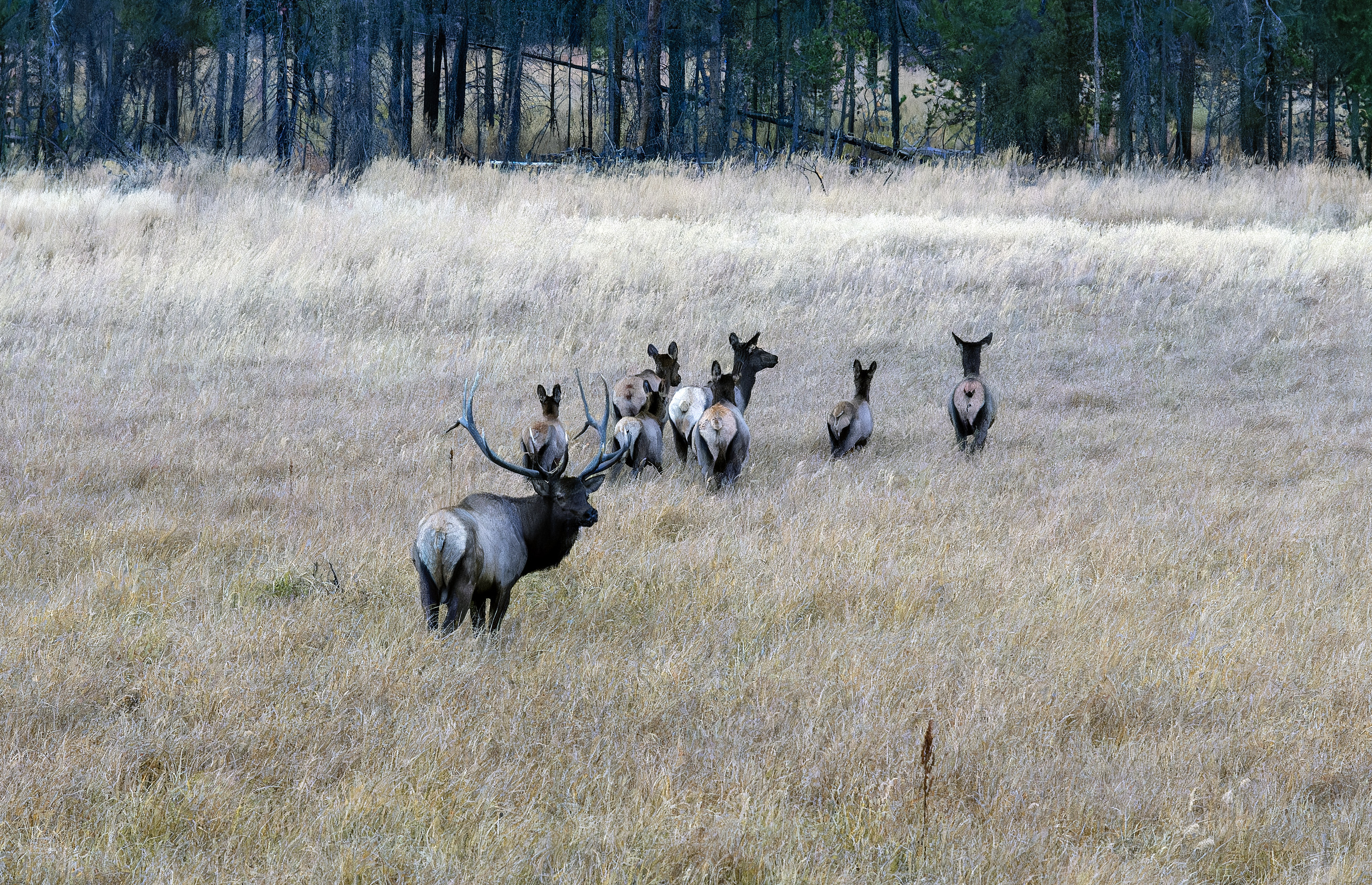
I have a Z9 and still own a D5. I don't find High ISO to be a limitation on the z9 at all. I think people make a bigger deal out of it then really is. I am sure there are test charts that dispute that but I don't find it true in real life scenarios that I have experienced. Here is a picture for reference. Straight out of camera jpg from a z9 @8000 ISO.
carl_g wrote:
I have a Z9 and still own a D5. I don't find High ISO to be a limitation on the z9 at all. I think people make a bigger deal out of it then really is. I am sure there are test charts that dispute that but I don't find it true in real life scenarios that I have experienced. Here is a picture for reference. Straight out of camera jpg from a z9 @8000 ISO.
I'm with carl_g here. I only shoot RAW for FNL football and even though the Z9 files from ISO 3200 and upwards look noisy, they clean up quite we'll within LRC's denoise feature. To date, for low-light sports, I'm only using all f2.8 F-mount glass with the FTZII with zero issues.
I still have my D5 and use it interchangeably with the Z9 during games and honestly, it's two total different experiences and workflows at the camera level (which I'm not liking and questioning using both at the same time). I've come to enjoy the brighter and customizable viewfinder (constantly monitoring histogram to manage clipping), 20 FPS, different AF tracking modes, customizable i-menu, ability to flip between FX-DX mode with a button tap, and the 45mpx resolution of the Z9 really makes it hard to use a different camera, albeit, I do use the D5 being sparingly.
D5/6 images at high ISO have very nice color and tonality. The Nikons with 45 MP sensors (including Z8/9) are great at low to mid ISO but the tonality is a bit thin at high ISO, and shadows are clipped to pitch black. Having shot figure skating side by side with D850 and D6 did end up preferring the latter. However, it is a tradeoff between tonality, color and detail at intermediate/moderately high ISO (1250-3200) while at very high ISO (12800-25600) the 20 MP images are also more detailed than the 45 MP, which might seem paradoxical but it's there.
However the Z9 (and Z8) are silent and that can be a nice feature when shooting at events, so the shutter clicking is absent. If you are shooting anything in bright daylight the image quality (from the 45 MP Nikons) is better (than the 20 MP D5/6). The Z 24-70/2.8 is a great lens and I think it's worth having a Z camera just for that one lens.
arbitrage wrote:
If you took the same high ISO photo with each and then just opened them and zoomed to 100% then the D5/6 will look much cleaner. However, if you downsize the 45MP Z9 file to 21MP to match the D5/6 they would be much closer to each other and the Z9 will probably hold more detail still.
Not according to the data, e.g., published by photonstophotos.com. In these data, signal to noise ratio is independent of sensor resolution, and the D5/D6 has a better signal to noise ratio at high ISO values.
Whether the difference is meaningful for a given use case, and how well noise reduction works for that use case (with regard to actually reducing noise and preserving details) is another matter and must be answered separately from the raw data.
bernardl wrote:
Comparisons should be done with raw files converted by DxO PL6.
There is basically no difference between Z9/Z8 and D5/D6 when converting raw data this way.
Cheers,
Bernard
PL6? They're now at PL7, for what it's worth.
If the OP is shooting sports for a living, the speed of delivery is likely to be key, and raw processors that take a long time to process the images and not include cataloging / organizing large quantities of images might not be the best choice.
Post-processing can only reduce the scene information content in the images (or in a theoretical (and extremely unlikely) best case, keep it the same), not increase it. If the superior dynamic range of D5/D6 files over Z8/Z9 at high ISO is lost in DXO PL6 then it's the software doing more damage to the former than the latter that is causing the equalization. In practice I don't believe that this would happen with a mainstream software (unless the user purposefully clips the shadows) and most likely the differences are still there, but not everyone knows what to look for and different photographers want different things from their images.
ilkka_nissila wrote:
PL6? They're now at PL7, for what it's worth.
If the OP is shooting sports for a living, the speed of delivery is likely to be key, and raw processors that take a long time to process the images and not include cataloging / organizing large quantities of images might not be the best choice.
Post-processing can only reduce the scene information content in the images (or in a theoretical (and extremely unlikely) best case, keep it the same), not increase it. If the superior dynamic range of D5/D6 files over Z8/Z9 at high ISO is lost in DXO PL6 then it's the software doing more damage to the former than the latter that is causing the equalization. In practice I don't believe that this would happen with a mainstream software (unless the user purposefully clips the shadows) and most likely the differences are still there, but not everyone knows what to look for and different photographers want different things from their images. ...Show more →
and that update can be worth a bit. im on the road at the moment and will install it probably tonight.
ilkka_nissila wrote:
PL6? They're now at PL7, for what it's worth.
If the OP is shooting sports for a living, the speed of delivery is likely to be key, and raw processors that take a long time to process the images and not include cataloging / organizing large quantities of images might not be the best choice.
Post-processing can only reduce the scene information content in the images (or in a theoretical (and extremely unlikely) best case, keep it the same), not increase it. If the superior dynamic range of D5/D6 files over Z8/Z9 at high ISO is lost in DXO PL6 then it's the software doing more damage to the former than the latter that is causing the equalization. In practice I don't believe that this would happen with a mainstream software (unless the user purposefully clips the shadows) and most likely the differences are still there, but not everyone knows what to look for and different photographers want different things from their images. ...Show more →
by the way, anything you do in post to an image is potentially "destructive". so what do you do? in the end in reality there is no "out" in that predicament. somethings got to give. what are you willing to "sacrifice"?
oh, in the world of sports. generally, you shoot and put it in your computer on site and edit. then you send out a finished image. then its off to your employer. at least that what i do along with a room full of other shooters doing the same thing when i do that work. you can talk to so called tech to death, but it isn't going to change.
you will never beat a live transmission. you are after the beauty shot or the killer moment. we are another source.
ASchaef wrote:
Opinions…..is there one better than the other in terms of noise quality on low lit gyms and fields for volleyball basketball football baseball. Using fast glass (400 2.8, 24-70 2.8, 70-200 2.8)
Normalized ISO performance is very similar, and the Z9 is just going to perform better in other areas as well. I don't see a reason not to get the Z9 if it's within budget. If you like the small file size of the D5, the Z9 has a solution for that too with the HE RAWs.
I don't know what ISOs you're shooting at, but the Z9 sensor will hold onto detail better and the really fine noise grain gives a more pleasing result in my opinion. NR software also works better with higher resolution files.
arbitrage wrote:
If you took the same high ISO photo with each and then just opened them and zoomed to 100% then the D5/6 will look much cleaner. However, if you downsize the 45MP Z9 file to 21MP to match the D5/6 they would be much closer to each other and the Z9 will probably hold more detail still.
This ^^^
Plus the Z9's af is significantly better in typical gym lighting.
Plus the Z9 can capture 20 FPS at full resolution, which does tend to capture more "key action" moments than the D5/6 12/14...
Plus the Z9 is definitely going to be more future-proof.
Plus one more, although subjective, I personally find the Z9 color rendering the best of the entire Nikon digital family, and especially so at high ISO.
Plus the Z9 in-cam jpegs are so darn good, you may not need to bother converting raws for typical school sports events.
But the D5/6 are still very capable, and F lenses are a relative bargain right now.
But then you can utilize the F lenses as well or better on the Z9 with an FTZ...
DPR use a much better Z mount lens than the F-mount lens for the studio comparisons thus these images give the advantage to the Z camera. If the test is repeated with 70-200/2.8 FL and 400/2.8 FL for the D5, I suspect the D5 would have the edge at ISO 12800-25600 and above. At least that is my own experience when using the same lens in practical applications with 20 MP vs. 45 MP cameras. Also lighting plays a role, as daylight has more blue and so it's more forgiving than eg. tungsten.
Here are the crops of a face in the studio comparison tool for ISO 102400 from D5, Z9, D850 and Z6 II. You can see the impact of the better lens (85/1.8 S vs G, presumably) but also this shows more clearly what is going with color and tonality in the shadows; the very high ISO simply brings them more out and easier to see:
I have and use them both. I often shoot in the 4000 - 5000 ISO range and both stand up very well. I think your use case is best determined on the camera features because both will handle low light very well.
If money is no object the Z9 has better functionality for frame rate, EVF real time exposure view and focus.
If money is an issue the D5 is more than up to the task at a lower price.