This topic is in the 2023 archive. You can read it and like its posts here. It is read only.
Archive 2023RF 50mm f1.8 STM vs Sigma 40mm f1.4 Art HSM (Comparison pictures)
p.2 #1RF 50mm f1.8 STM vs Sigma 40mm f1.4 Art HSM (Comparison pictures)
jaygould wrote:
Yeah, and I honestly don't think the Sigma is better. The difference in sharpness is negligible (although a bit more noticeable wide open), but the pictures look a little bit different. I do still think I see more "3D pop" in the Canon lens. The Sigma is more clinical. Both will have their place for different purposes.
I can't send the Sigma back at this point, but it's fine. This experiment has taught me that glass doesn't actually matter (for most of my shooting and purposes). So it will likely save me a lot of money down the line. Will get...Show more →
Its a good reminder that lens selection is personal. I would disagree that the Sigma isn't better, and by a pretty fair margin, but if its not better for your shooting style, then its not better for you, and that's all that matters. There's a reason they call these sort of lenses a "nifty fifty" and for a lot of people, its a fantastic option. I own this one as well, so I'm not putting the lens down in any way.
To be fair, your test setup doesn't really push either lens or show you what makes the 40mm special, but none of that matters if you aren't pushing the 40mm in your day to day shooting. The 40mm is a beast, and expensive, so no need toting it around if you don't need what it offers. For me, I'd set up more of environmental portrait, with some backlight and busier background to see what happened, as this would challenge the lens, but that's what I'm used to shooting, so that's what I'd need to see. For me, especially when I walk in closer, I can usually spot the differences in the eyelashes when the lens is sharp and when its less so.
Tests show that the sigma is much sharper, especially wide open, but test are test and you see what you see so who cares what a test says. Sigma, at least in my experience, has shipped more dud lenses that I've had to exchange, but I'm not sure that's what happened here. Canon's quality control and consistency is excellent.
https://www.the-digital-picture.com/Reviews/ISO-12233-Sample-Crops.aspx?Lens=1392&Camera=979&Sample=0&FLI=0&API=0&LensComp=1528&CameraComp=0&FLIComp=0&APIComp=0
comotionfilms wrote
Honestly, no reason to spend the big bucks on the sigma if you are mostly shooting a f4. At f4, most any modern lens will be sharp. The blurred trees do look better with the sigma in your 1.8 shot, but at f4 or f8, it’s all sharp anyways.I can't send the Sigma back at this point, but it's fine. This experiment has taught me that glass doesn't actually matter (for most of my shooting and purposes). So it will likely save me a lot of money down the line. Will get...Show more →
Its a good reminder that lens selection is personal. I would disagree that the Sigma isn't better, and by a pretty fair margin, but if its not better for your shooting style, then its not better for you, and that's all that matters. There's a reason they call these sort of lenses a "nifty fifty" and for a lot of people, its a fantastic option. I own this one as well, so I'm not putting the lens down in any way.
To be fair, your test setup doesn't really push either lens or show you what makes the 40mm special, but none of that matters if you aren't pushing the 40mm in your day to day shooting. The 40mm is a beast, and expensive, so no need toting it around if you don't need what it offers. For me, I'd set up more of environmental portrait, with some backlight and busier background to see what happened, as this would challenge the lens, but that's what I'm used to shooting, so that's what I'd need to see. For me, especially when I walk in closer, I can usually spot the differences in the eyelashes when the lens is sharp and when its less so.
Tests show that the sigma is much sharper, especially wide open, but test are test and you see what you see so who cares what a test says. Sigma, at least in my experience, has shipped more dud lenses that I've had to exchange, but I'm not sure that's what happened here. Canon's quality control and consistency is excellent.
https://www.the-digital-picture.com/Reviews/ISO-12233-Sample-Crops.aspx?Lens=1392&Camera=979&Sample=0&FLI=0&API=0&LensComp=1528&CameraComp=0&FLIComp=0&APIComp=0
Feb 28, 2023 at 10:14 AM
AmbientMike
Offline
Activity
[X]
Details
p.2 #2RF 50mm f1.8 STM vs Sigma 40mm f1.4 Art HSM (Comparison pictures)
Not to be too critical of your lens test, they are a bit of a hassle. But really you'd be better off posting, say, a 600x900 or so pixel crop of the center or the area in focus (100% crop.) Taking several on each lens and posting the sharpness. The pillow on the chair looks like it has quite a bit of detail you might use that
I usually stop down, and I'm still using the older 50 1.8 v2, as mentioned previously. 2.6 lbs generally too heavy, although I've considered 50 Art for portraits recently. But that's probably <2.8 a lot of the time, and I don't do many portraits anyway.
I use a zoom mostly and tend to be around f/8. I'm not seeing much difference between the 50 & 40 at 5.6 on the link above. Hard to pull it up on my phone anyway
Feb 28, 2023 at 10:38 AM
p.2 #3RF 50mm f1.8 STM vs Sigma 40mm f1.4 Art HSM (Comparison pictures)
AmbientMike wrote:
I use a zoom mostly and tend to be around f/8. I'm not seeing much difference between the 50 & 40 at 5.6 on the link above. Hard to pull it up on my phone anyway
Honestly, at a 5.6 or 8, you older nifty fifty is probably pretty close as well. I believe the Sigma 40mm was initially designed from the ground up for the cinema market and then adapted to the stills world, which was the opposite approach to most of their other lenses. Because of that, weight and cost weren't a huge consideration.
Feb 28, 2023 at 11:11 AM
AmbientMike
Offline
Activity
[X]
Details
p.2 #4RF 50mm f1.8 STM vs Sigma 40mm f1.4 Art HSM (Comparison pictures)
comotionfilms wrote:
Honestly, at a 5.6 or 8, you older nifty fifty is probably pretty close as well. I believe the Sigma 40mm was initially designed from the ground up for the cinema market and then adapted to the stills world, which was the opposite approach to most of their other lenses. Because of that, weight and cost weren't a huge consideration.
It's great that you can get super performance wide open on 50mm or so lenses today. I like the older 1.8-2 lenses but wide open isn't too great. Stopped down they're generally as good as I'm going to need, imo though. Excellent lenses
AmbientMike wrote
I use a zoom mostly and tend to be around f/8. I'm not seeing much difference between the 50 & 40 at 5.6 on the link above. Hard to pull it up on my phone anywayIt's great that you can get super performance wide open on 50mm or so lenses today. I like the older 1.8-2 lenses but wide open isn't too great. Stopped down they're generally as good as I'm going to need, imo though. Excellent lenses
Feb 28, 2023 at 08:43 PM
p.2 #5RF 50mm f1.8 STM vs Sigma 40mm f1.4 Art HSM (Comparison pictures)
Canon Canada had $40 off the 50 STM recently and decided to pick one up for kicks. Can use it when I want a very compact option, etc.
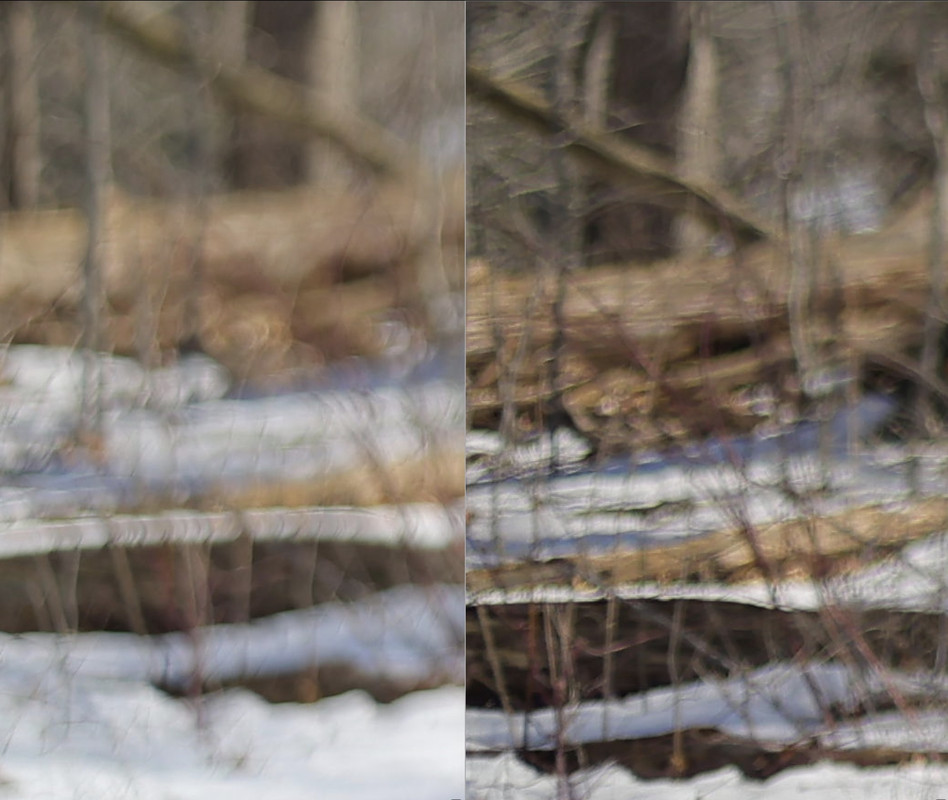
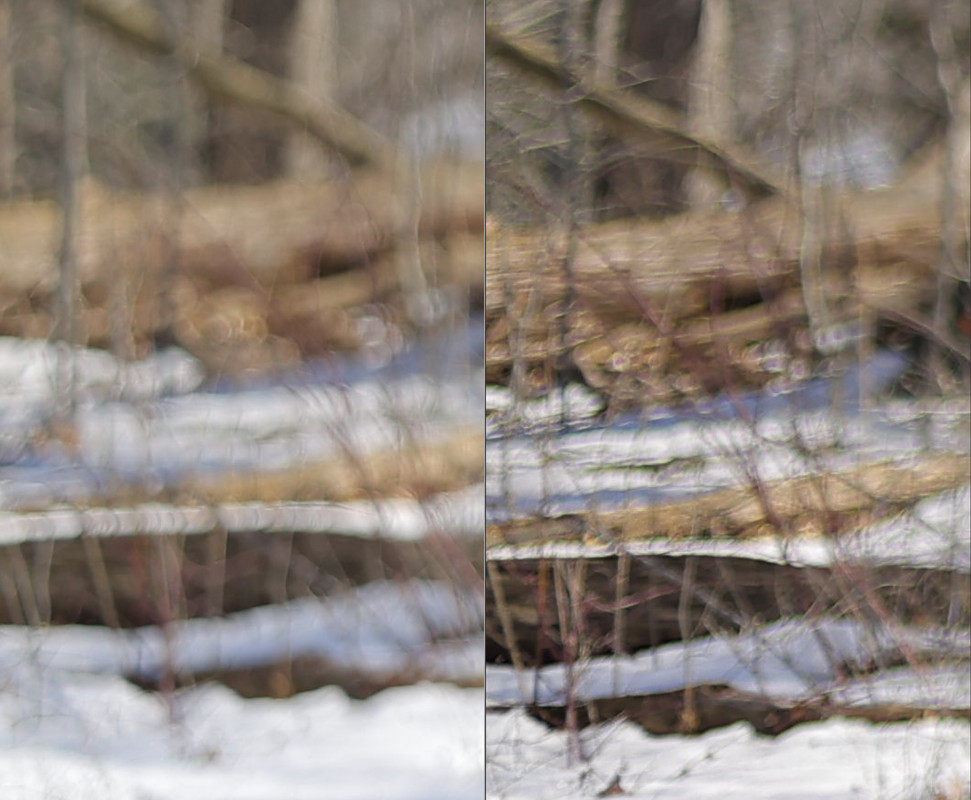
For fun, I compared it today against the RF 28-70/2 at 50mm. The STM is as sharp or sharper centrally but the big differences are in the way images are rendered in the periphery. The STM appears to show more depth of field, or has field curvature away from the camera going into the corners. Meaning background blur diminishes off-axis. The STM also exhibits a lot more LoCA and bokeh color fringing. On 24MP (R6II) the STM is very sharp across the frame at f/5.6 though extreme corners still suffer. At f/4 the periphery is somewhat softer, which worsens as it's opened up.
Here's an example image where you can see how the STM trails the 28-70 in quality of blur in the periphery:
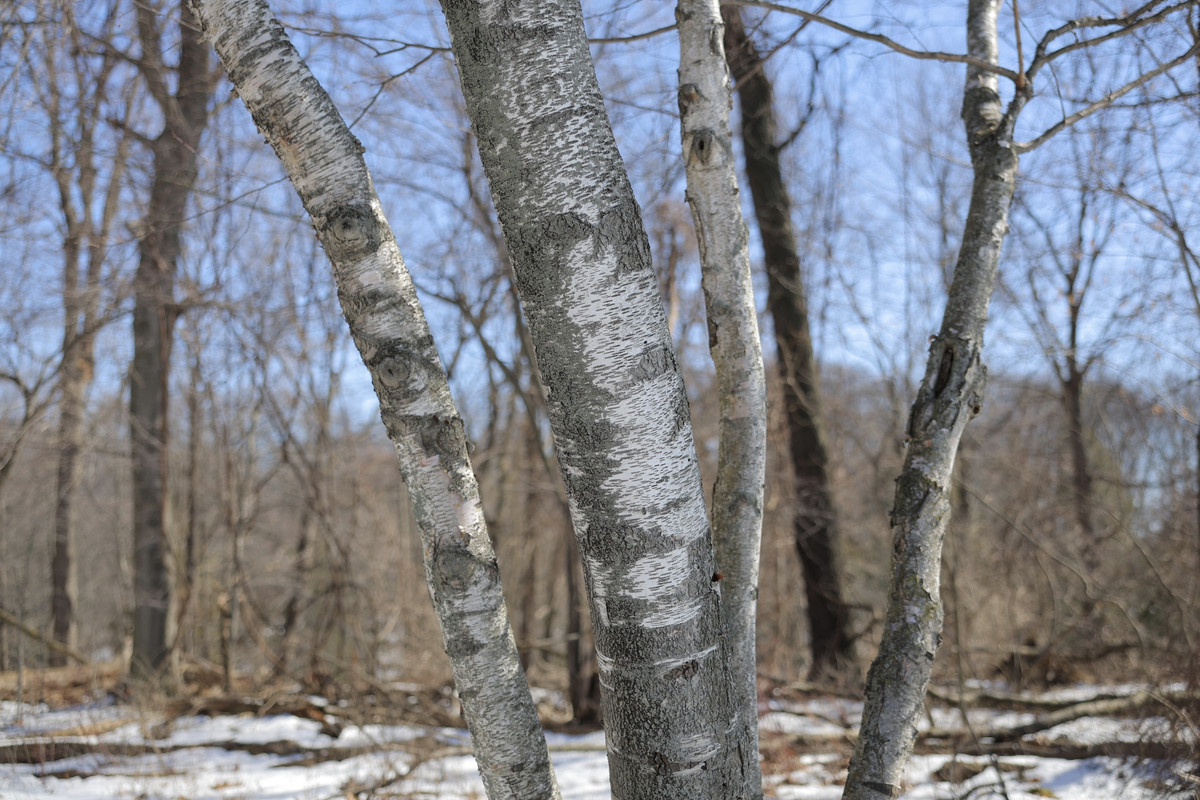
Full image 28-70 @ 50mm f/2:
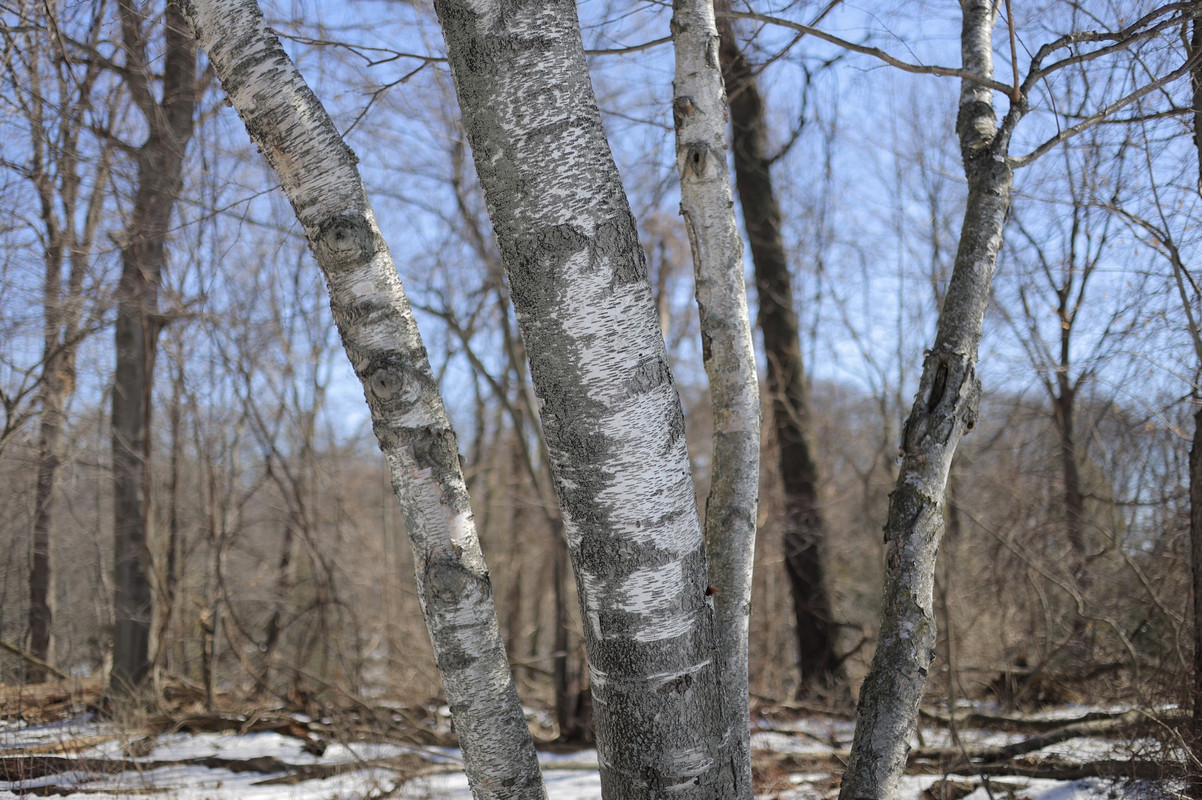
Full image 50 STM f/2
Lower left crop @ f/2, 50 STM on the right:
Lower left crop @ f/2.8, 50 STM on the right:
Upper left crop @ f/2, 50 STM on the right:
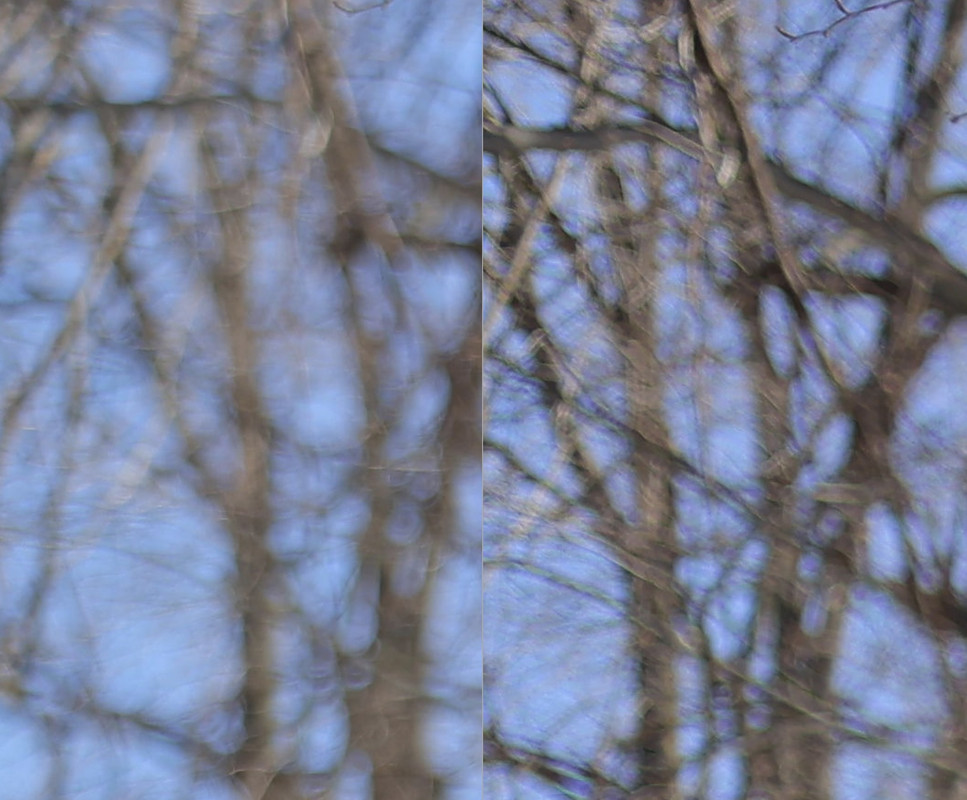
Upper left crop @ f/2.8, 50 STM on the right:
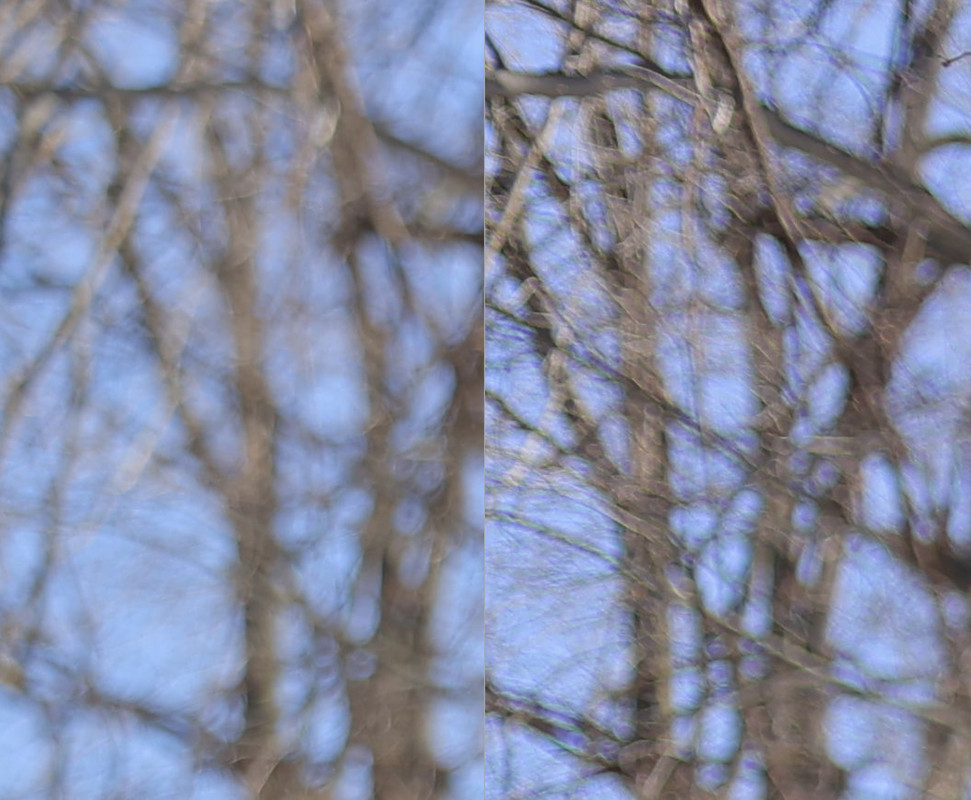
Lower right crop @ f/2, 50 STM on the right:
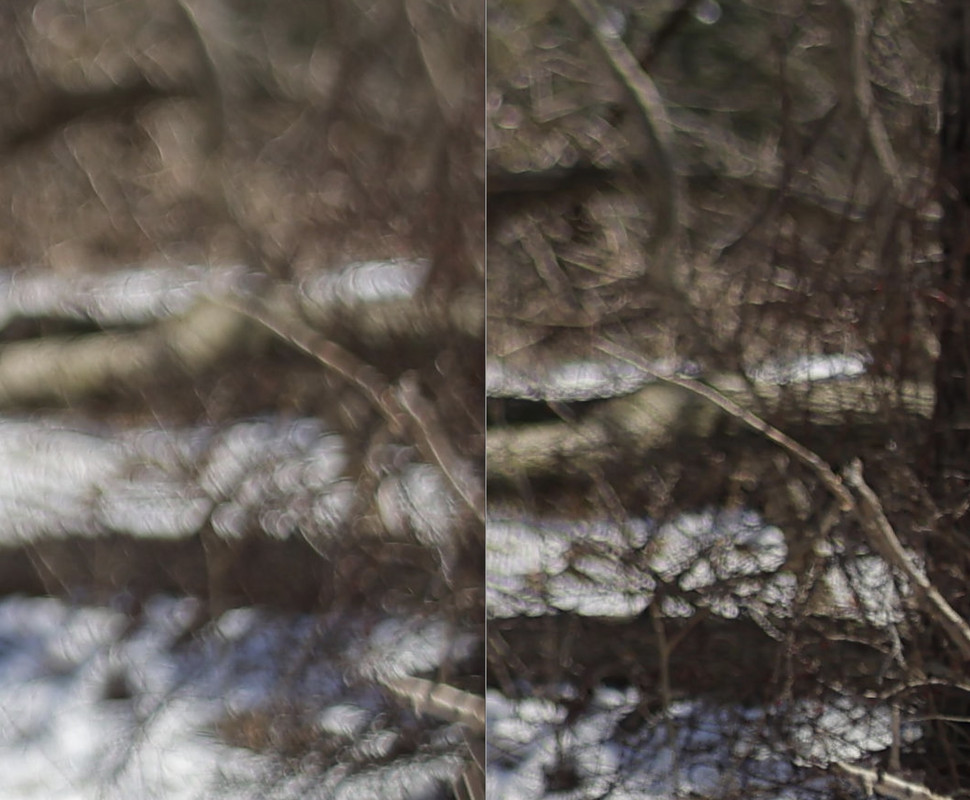
Lower right crop @ f/2.8, 50 STM on the right:
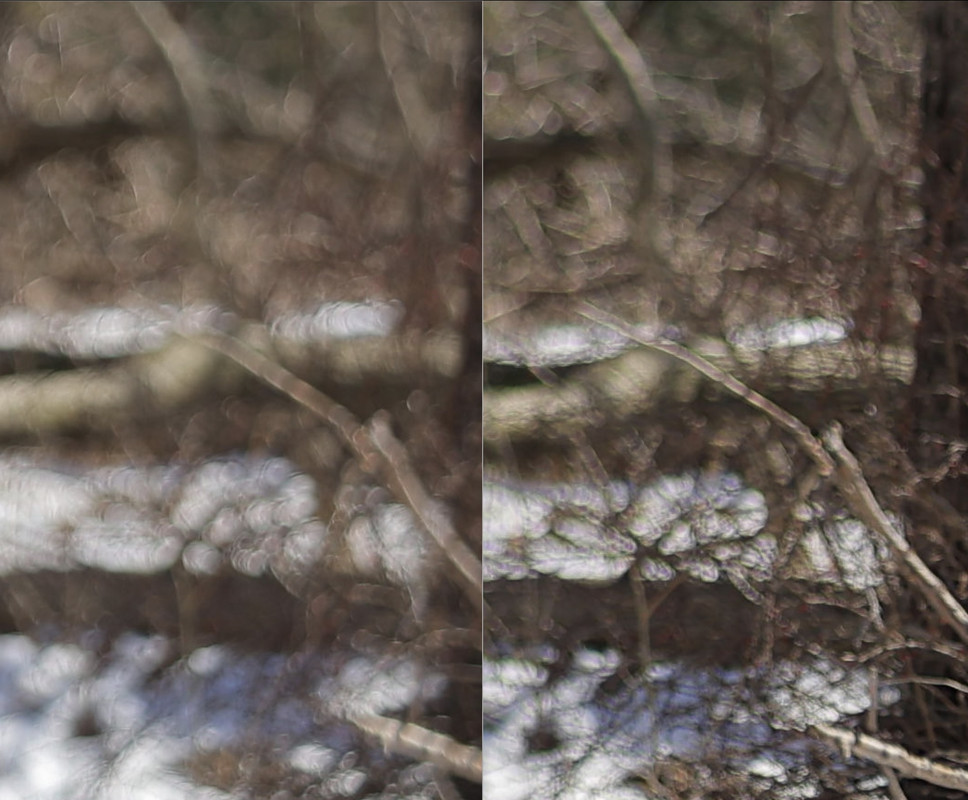
Middle right edge crop @ f/2, 50 STM on the right:
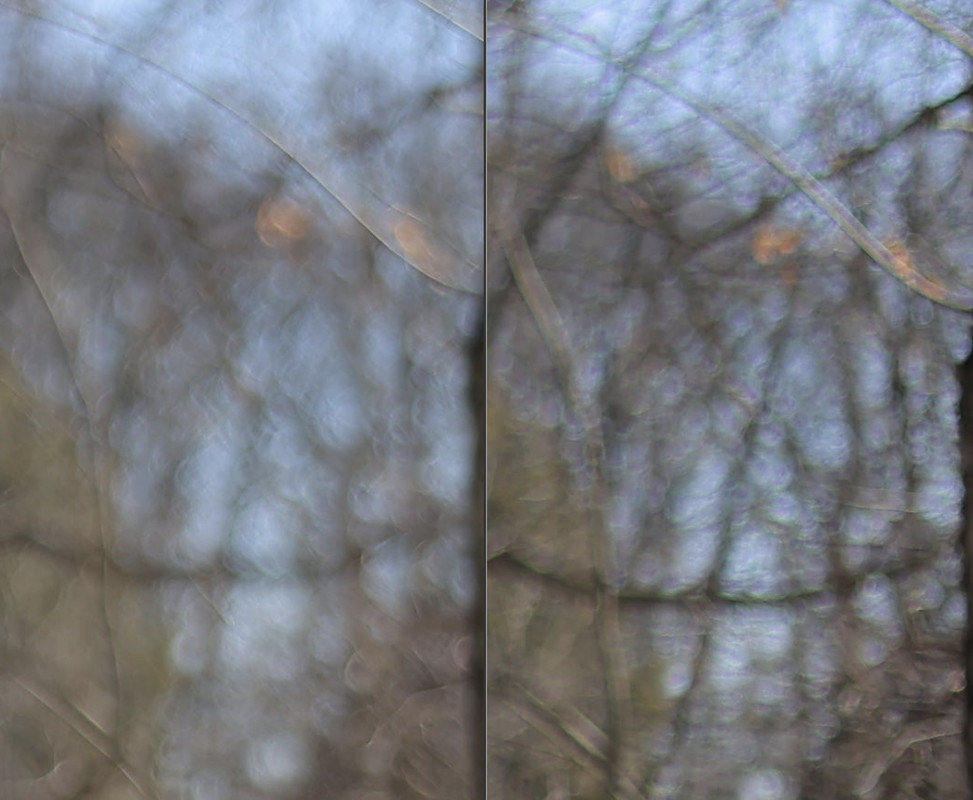
Middle right edge crop @ f/2.8, 50 STM on the right:
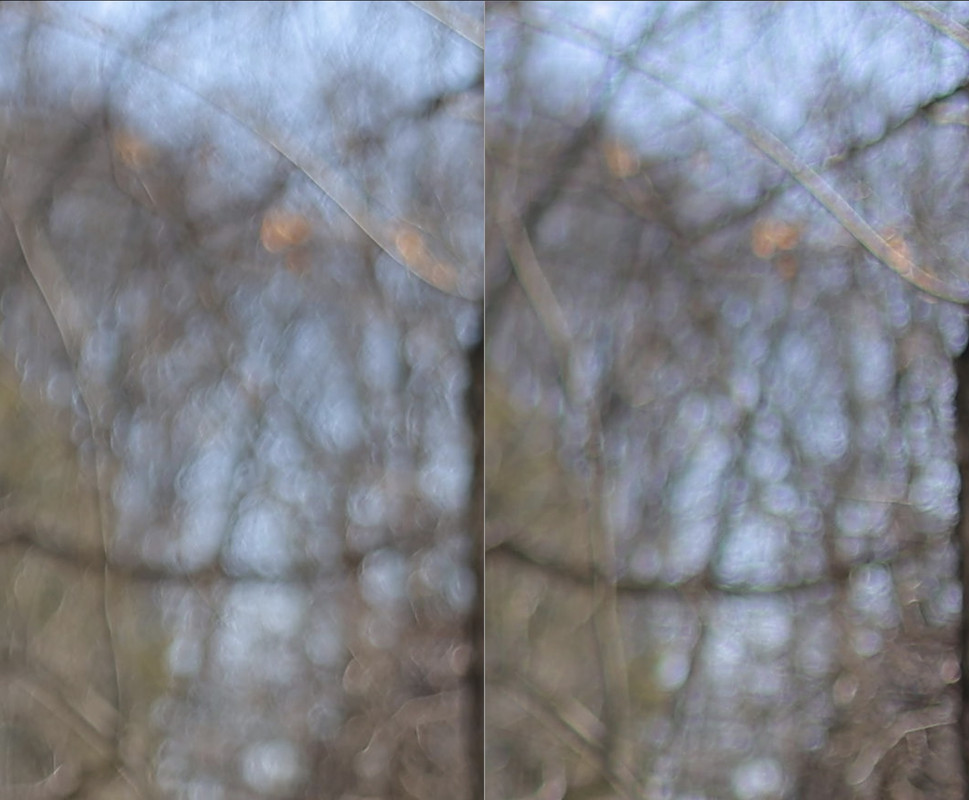
For fun, I compared it today against the RF 28-70/2 at 50mm. The STM is as sharp or sharper centrally but the big differences are in the way images are rendered in the periphery. The STM appears to show more depth of field, or has field curvature away from the camera going into the corners. Meaning background blur diminishes off-axis. The STM also exhibits a lot more LoCA and bokeh color fringing. On 24MP (R6II) the STM is very sharp across the frame at f/5.6 though extreme corners still suffer. At f/4 the periphery is somewhat softer, which worsens as it's opened up.
Here's an example image where you can see how the STM trails the 28-70 in quality of blur in the periphery:
Full image 28-70 @ 50mm f/2:
Full image 50 STM f/2
Lower left crop @ f/2, 50 STM on the right:
Lower left crop @ f/2.8, 50 STM on the right:
Upper left crop @ f/2, 50 STM on the right:
Upper left crop @ f/2.8, 50 STM on the right:
Lower right crop @ f/2, 50 STM on the right:
Lower right crop @ f/2.8, 50 STM on the right:
Middle right edge crop @ f/2, 50 STM on the right:
Middle right edge crop @ f/2.8, 50 STM on the right:
Mar 08, 2023 at 05:35 PM
p.2 #6RF 50mm f1.8 STM vs Sigma 40mm f1.4 Art HSM (Comparison pictures)
Here's another one - RF 28-70/2 @ 50mm vs. 50 STM.
Full image 50 STM f/2:
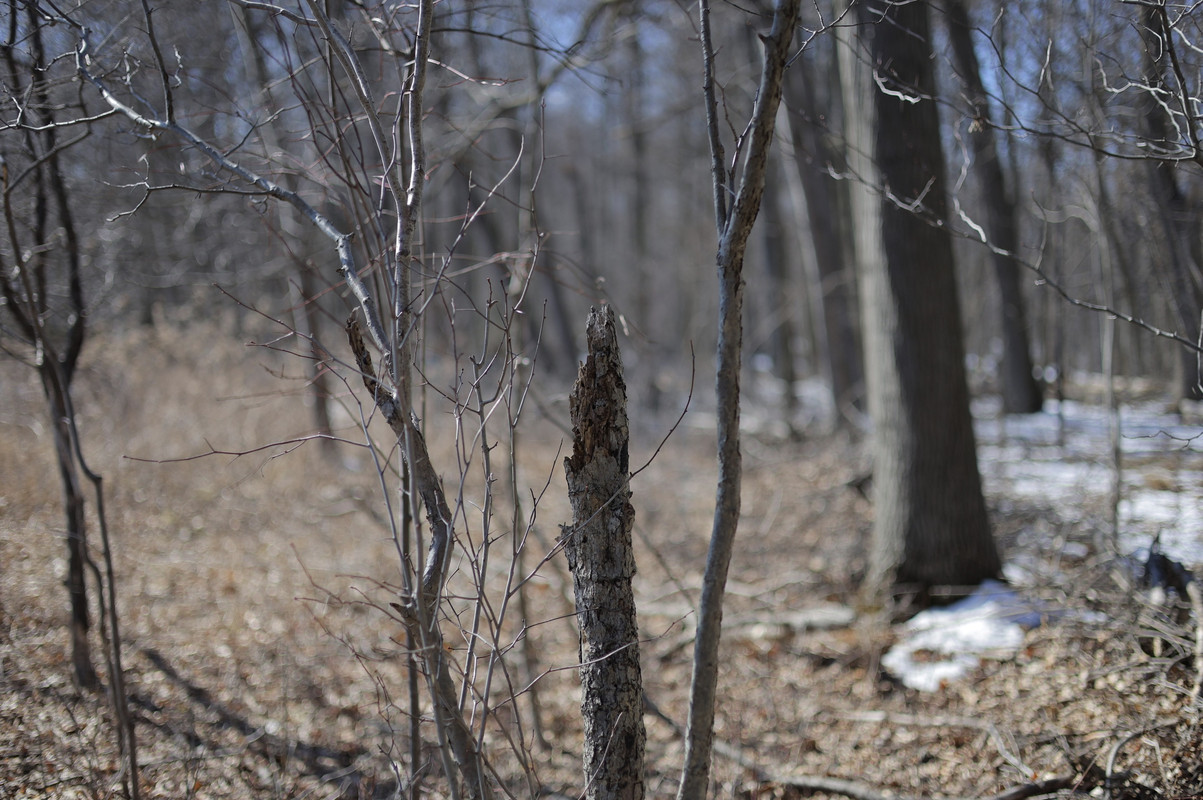
Full image 28-70 @ 50mm f/2:
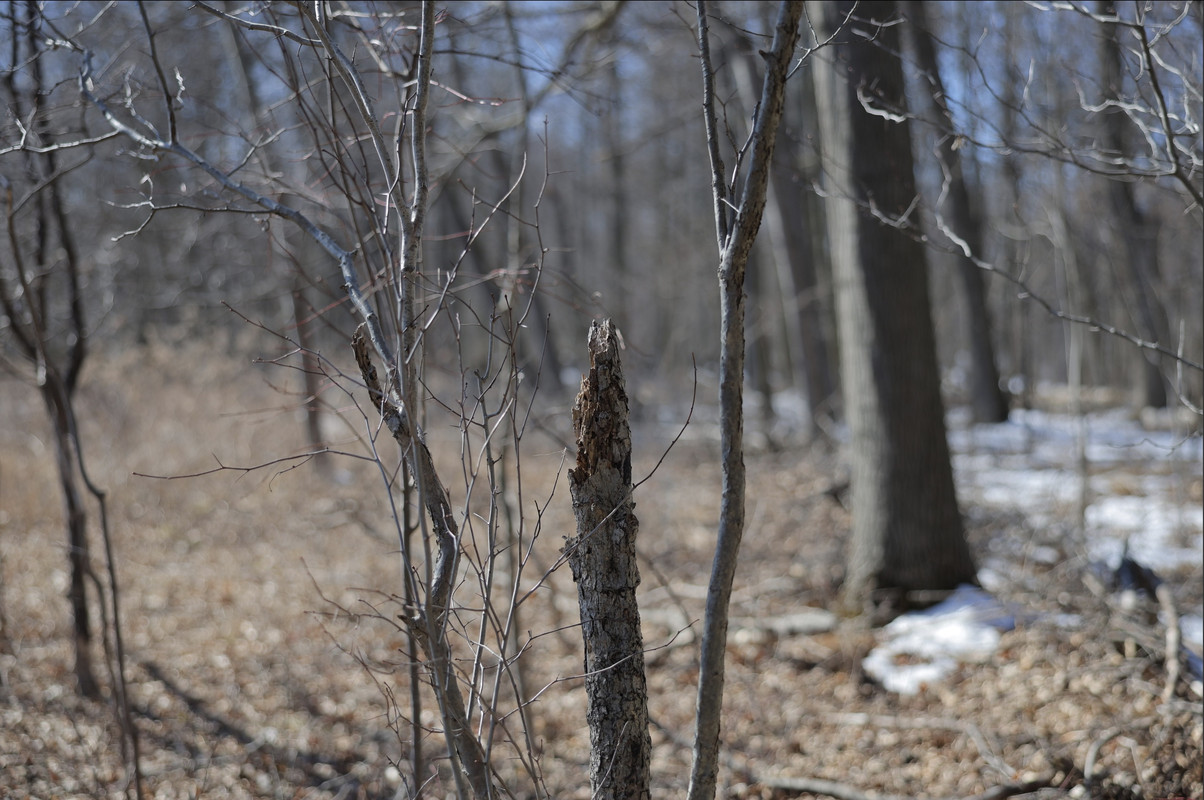
Lower right corner crop @ f/2, 50 STM on left:
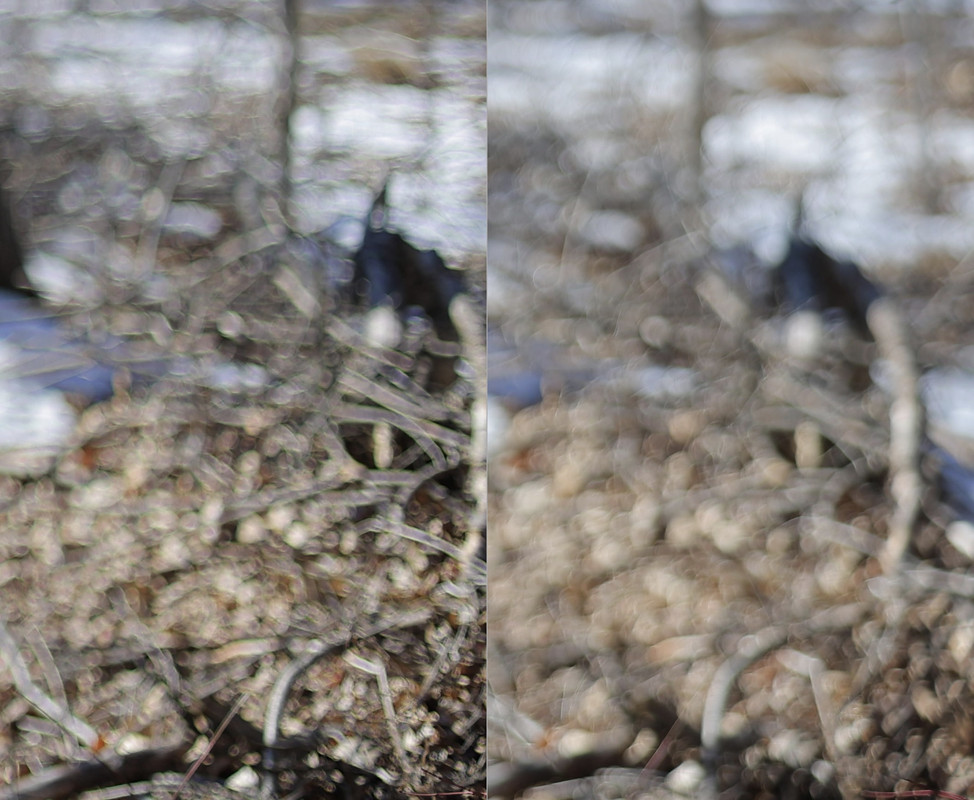
Lower right corner crop @ f/2.8, 50 STM on left:
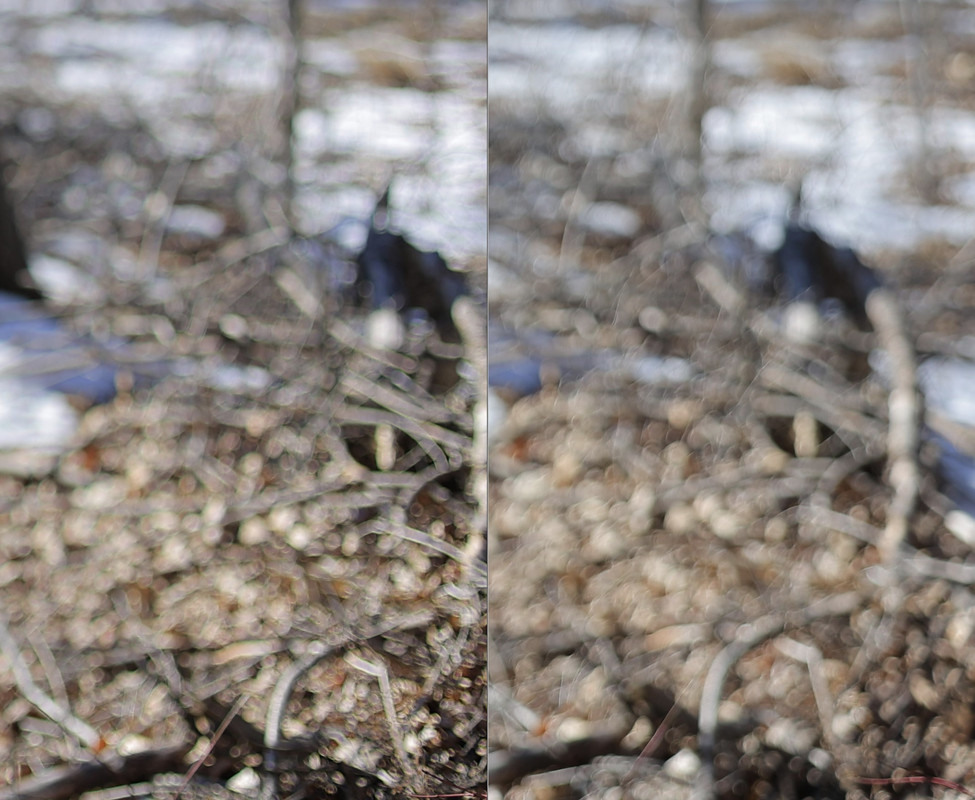
Lower right corner crop @ f/4, 50 STM on left:
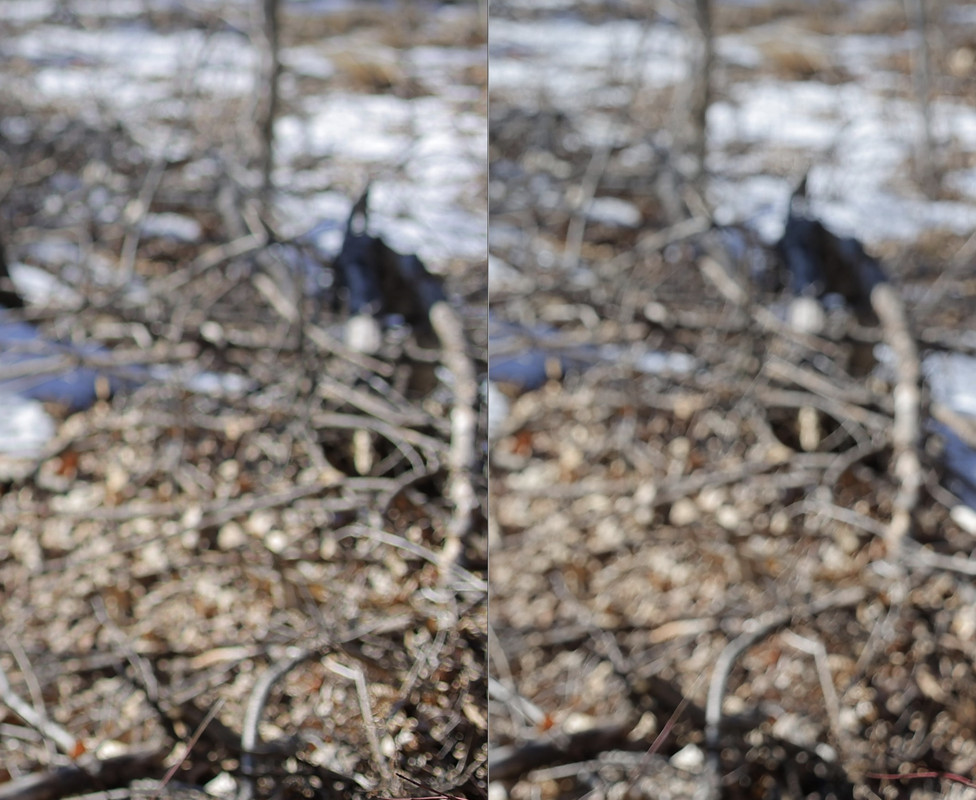
Lower left corner crop @ f/2, 50 STM on left:
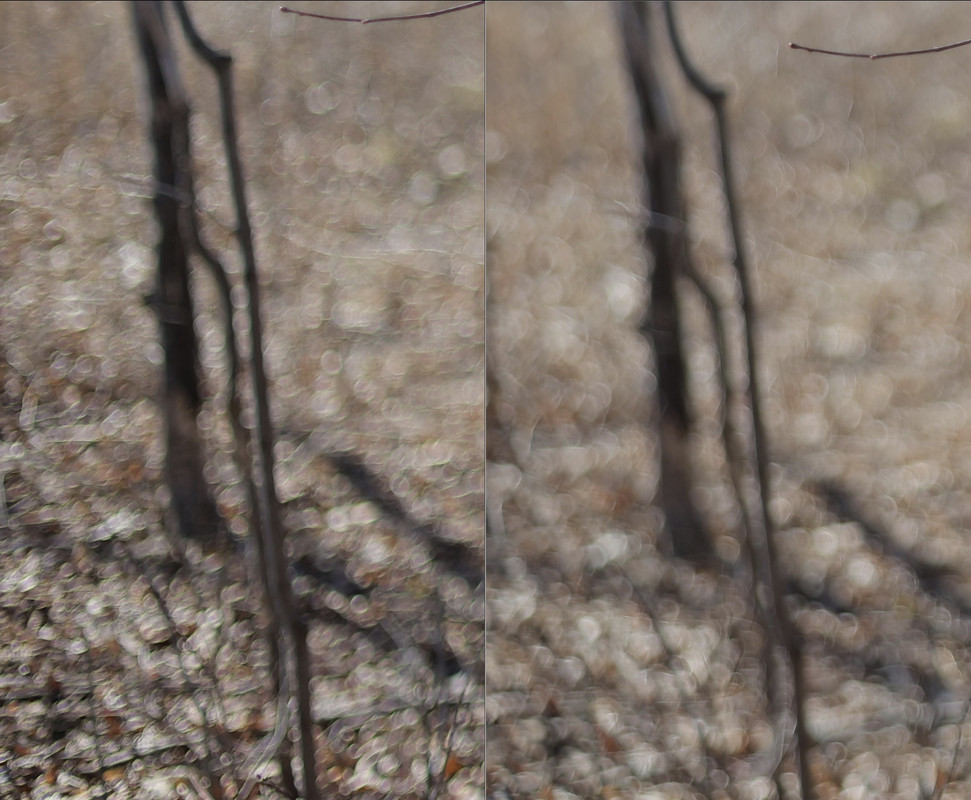
Lower left corner crop @ f/2.8, 50 STM on left:
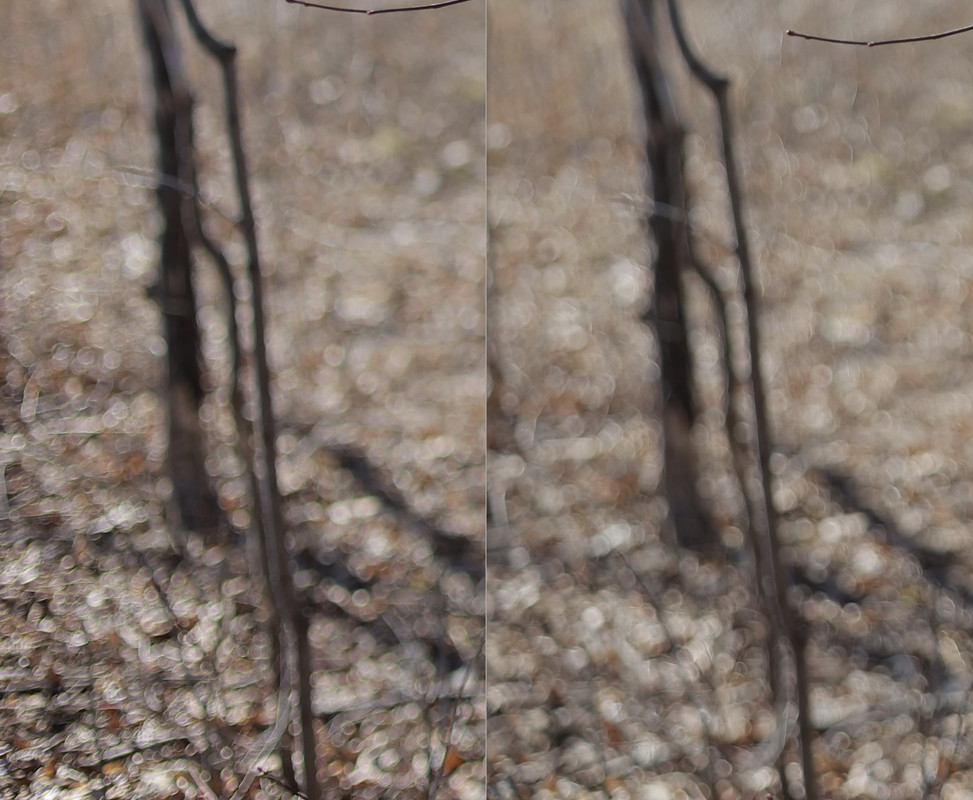
Lower left corner crop @ f/4, 50 STM on left:
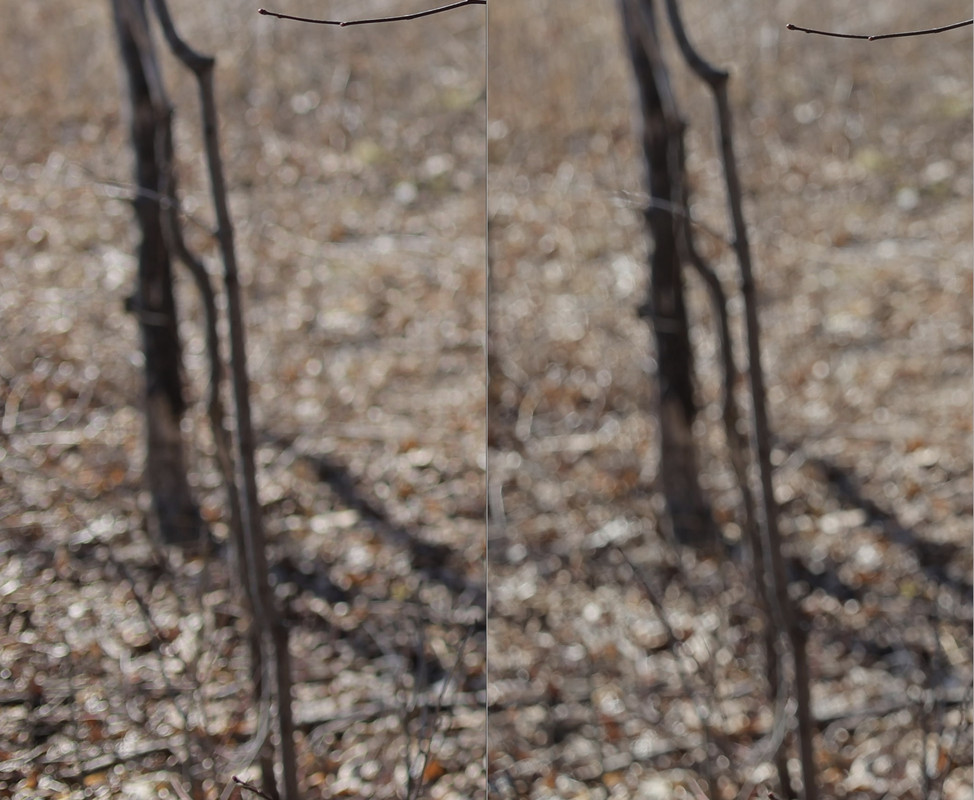
The lower right at f/2 again but screen-grabbed at 200% instead, which better shows the bokeh color fringing of the STM:
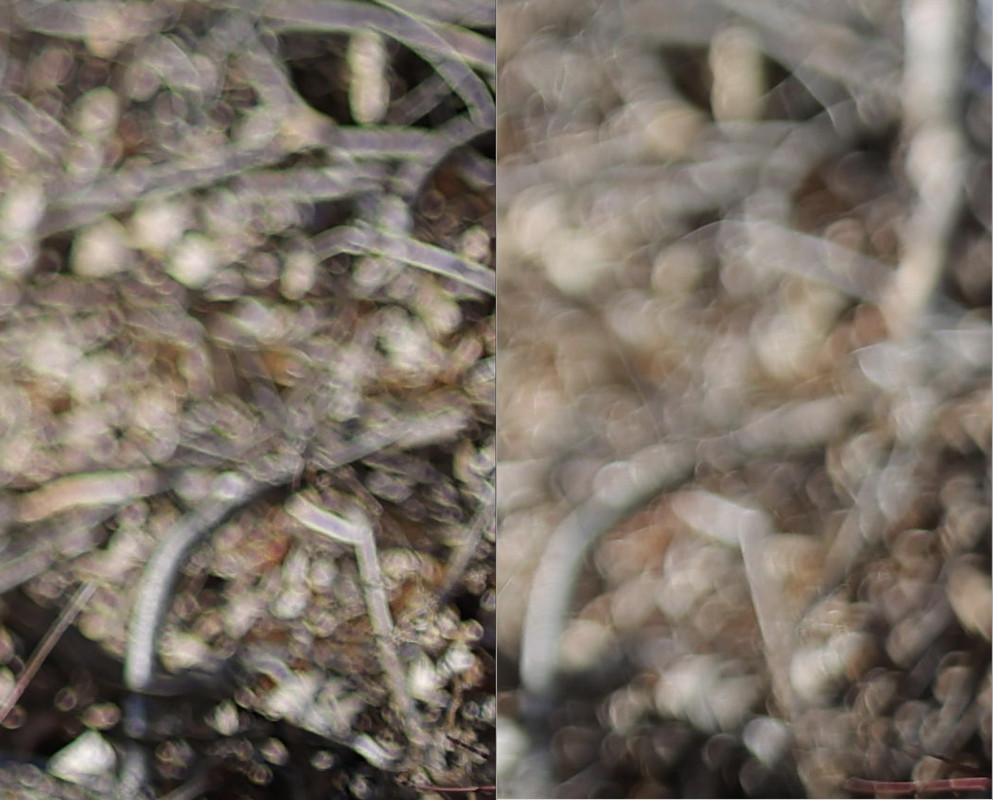
Full image 50 STM f/2:
Full image 28-70 @ 50mm f/2:
Lower right corner crop @ f/2, 50 STM on left:
Lower right corner crop @ f/2.8, 50 STM on left:
Lower right corner crop @ f/4, 50 STM on left:
Lower left corner crop @ f/2, 50 STM on left:
Lower left corner crop @ f/2.8, 50 STM on left:
Lower left corner crop @ f/4, 50 STM on left:
The lower right at f/2 again but screen-grabbed at 200% instead, which better shows the bokeh color fringing of the STM:
Mar 08, 2023 at 09:00 PM
p.2 #7RF 50mm f1.8 STM vs Sigma 40mm f1.4 Art HSM (Comparison pictures)
That’s crazy, thanks for sharing!
Mar 08, 2023 at 09:15 PM
AmbientMike
Offline
Activity
[X]
Details
p.2 #8RF 50mm f1.8 STM vs Sigma 40mm f1.4 Art HSM (Comparison pictures)
rscheffler wrote:
Canon Canada had $40 off the 50 STM recently and decided to pick one up for kicks. Can use it when I want a very compact option, etc.
For fun, I compared it today against the RF 28-70/2 at 50mm. The STM is as sharp or sharper centrally but the big differences are in the way images are rendered in the periphery. The STM appears to show more depth of field, or has field curvature away from the camera going into the corners. Meaning background blur diminishes off-axis. The STM also exhibits a lot more LoCA and bokeh color fringing. On...Show more →
Surprised how much more detail you get out of the 50/1.8. Not as bad as I thought at f/2 & 2.8. The 28-70/2 is really blurry not sure if that's better bokeh or just blurry.
But if I was concerned about the extreme corners, probably not shooting 50/1.8 at <f/4. 28-70/2 doesn't look too hot either.
Mar 08, 2023 at 09:32 PM
p.2 #9RF 50mm f1.8 STM vs Sigma 40mm f1.4 Art HSM (Comparison pictures)
The crops are to show background blur characteristics. The 28-70 shows more blur in the corners, which is a good thing, because that blur is more similar to the blur quality in the center of the image, though it does have harder outlining off-axis than at center. To my eyes, the much more uniform across-frame background blur of the 28-70 across all its focal lengths is one of the reasons I bought it, and a reason IMO why it's worth the big $$$$. It's a sharp lens wide open, for what it is, but I don't think it's amazingly sharp stopped down (the 50 STM might be better). It's good, but that's not how I will usually use it. The $$$$ is for its wide open performance.
The 50 STM's edge/corner blur quality is considerably harsher and the amount of blur appears less than in the center. This is either due to field curvature towards the background when off-axis, astigmatism, and/or optical vignetting, which effectively works like a smaller aperture value, resulting in more depth of field in this area, thus decreasing background blur. This phenomena is common with a lot of small but fast lenses (very common with rangefinder lenses).
It got me thinking about why the 28-70 is so large and takes 95mm filters compared to, for example, the Leica 28/2 M-series lens, which I used to own, and took 46mm filters. Voigtlander has a 28/2 with only 39mm filter size, but with somewhat harsher/swirlier background rendering than the Leica. At the other end of the 28-70's zoom range, Voigtlander recently released a 75/1.9 rangefinder lens with 49mm filter. One reason the Canon is so large is probably to reduce optical vignetting, as this is the only 24/28-70 style zoom I've used that has minimal cats eye bokeh balls into the corners. Canon probably also put effort into keeping the plane of focus consistently flat through the zoom range, which again seems to be better than most 24/28-70 zooms and keeps the background blur quality more consistent across the frame.
The 50 STM doesn't compare favorably if one wants the best possible background smoothness off-axis, particularly on FF. It's also not that sharp off-axis wide open. As mentioned, it progressively improves and is very good at f/5.6. If your primary use is stopped down, there's not much to dislike about the look of the STM. And that's primarily how I will probably use it outside its main role as a back up lens to the 28-70. Since its background blur is noticeably smoother in the center of the image, the STM likely makes a decent 80mm equivalent crop portrait lens on APS-C. The only thing here I don't like about it so far is that its wide open focus doesn't seem to be as consistent as the 28-70. I've noticed it's sometimes slightly back focused.
Mar 08, 2023 at 11:23 PM
p.2 #10RF 50mm f1.8 STM vs Sigma 40mm f1.4 Art HSM (Comparison pictures)
. This experiment has taught me that glass doesn't actually matter (for most of my shooting and purposes). So it will likely save me a lot of money down the line. Will get more of Canon's cheaper lenses.
This is indeed true. Unbiased viewers (non-photographers, non Canon photographers etc etc) will be even more unlikely to tell the difference. 3-D pop (whatever that is) difference is probably due to the difference in focal length not due to differences in optical quality.
This is indeed true. Unbiased viewers (non-photographers, non Canon photographers etc etc) will be even more unlikely to tell the difference. 3-D pop (whatever that is) difference is probably due to the difference in focal length not due to differences in optical quality.
Mar 09, 2023 at 09:35 AM
p.2 #11RF 50mm f1.8 STM vs Sigma 40mm f1.4 Art HSM (Comparison pictures)
If you ever decided to dabble in astro/night photography, you'd find a significant difference.
Mar 10, 2023 at 12:06 PM
p.2 #12RF 50mm f1.8 STM vs Sigma 40mm f1.4 Art HSM (Comparison pictures)
Jeff wrote:
If you ever decided to dabble in astro/night photography, you'd find a significant difference.
I'm guessing due to coma? My RF 50 1.8 STM has plenty of coma along the periphery when wide open. It's mostly gone by F2.8 and pretty much nil by F4.
If you ever decided to dabble in astro/night photography, you'd find a significant difference.
I'm guessing due to coma? My RF 50 1.8 STM has plenty of coma along the periphery when wide open. It's mostly gone by F2.8 and pretty much nil by F4.
Mar 10, 2023 at 01:46 PM
AmbientMike
Offline
Activity
[X]
Details
p.2 #13RF 50mm f1.8 STM vs Sigma 40mm f1.4 Art HSM (Comparison pictures)
rscheffler wrote:
The crops are to show background blur characteristics. The 28-70 shows more blur in the corners, which is a good thing, because that blur is more similar to the blur quality in the center of the image, though it does have harder outlining off-axis than at center. To my eyes, the much more uniform across-frame background blur of the 28-70 across all its focal lengths is one of the reasons I bought it, and a reason IMO why it's worth the big $$$$. It's a sharp lens wide open, for what it is, but I don't think it's amazingly sharp...Show more →
I'm not one to expect to get much oof using 50/1.8 so I haven't looked at the bokeh much. I'm used to stopping them down to get best performance. Sure, one can get nice stuff at <2.8, but I think that might be a good use for the super performance lenses like rf 50 1.2, 40/1.4 sigma, 50 art, etc. We look at 50 1.8 a lot differently.
I find the 28-70/2 weight to be reasonable since it's f/2. Not that I really want to carry a 3 lb lens particularly. But even the 24-70/2.8 is like 1.75lbs or something. And it's slower. I have to give them a pass since it's f/2. Pretty amazing, really.
Mar 10, 2023 at 09:45 PM
p.2 #14RF 50mm f1.8 STM vs Sigma 40mm f1.4 Art HSM (Comparison pictures)
Actually Mike, we have more similar reasons than differences for wanting the RF 50/1.8. I will mostly use it stopped down. But the OP titled this as a 'comparison' thread, which in my mind means I want to show differences, rather than similarities, and the biggest difference I saw with the 50/1.8 was how it handled background character vs. other 'higher end' 50s. What I didn't post was how poorly it performs off-center wide open in the plane of focus, but that can also be used to effect, if desired.
When Canon first announced the 28-70/2 I thought it was ridiculous and didn't take it seriously - huge and heavy. Then I saw results from it, and instantly changed my mind. To me, the key factors are it looks/renders like f/2 primes and has what appears to be a flat and consistently flat plane of focus across the zoom range. From prior experience with Canon's 24-70 zooms, all have had some degree of field curvature change throughout the zoom range, which always annoyed me.
We had a blizzard yesterday and I was out in it with the 28-70 for several hours and simply enjoyed it. Size and weight wasn't really a factor, perhaps because the environment was fun and keeping my attention on it instead of the fact I was lugging around a large heavy standard zoom.
Mar 11, 2023 at 09:23 AM
p.2 #15RF 50mm f1.8 STM vs Sigma 40mm f1.4 Art HSM (Comparison pictures)
Jeff wrote:
If you ever decided to dabble in astro/night photography, you'd find a significant difference.
Gochugogi wrote:
I'm guessing due to coma? My RF 50 1.8 STM has plenty of coma along the periphery when wide open. It's mostly gone by F2.8 and pretty much nil by F4.
Primarily, yes. Secondarily, the amount of vignetting a lens exhibits also very much works into it, since having increased noise in the corners can be hard to mitigate in post without taking multiple exposures, which can be very time-consuming for foregrounds (both in the field, and in post).
The RF50/1.2 is also a stellar lens, but not value-wise compared to the 40 Art, especially if you catch a sale (all my Art lenses save one were purchased during ~40% off sales).
Mar 11, 2023 at 09:35 AM