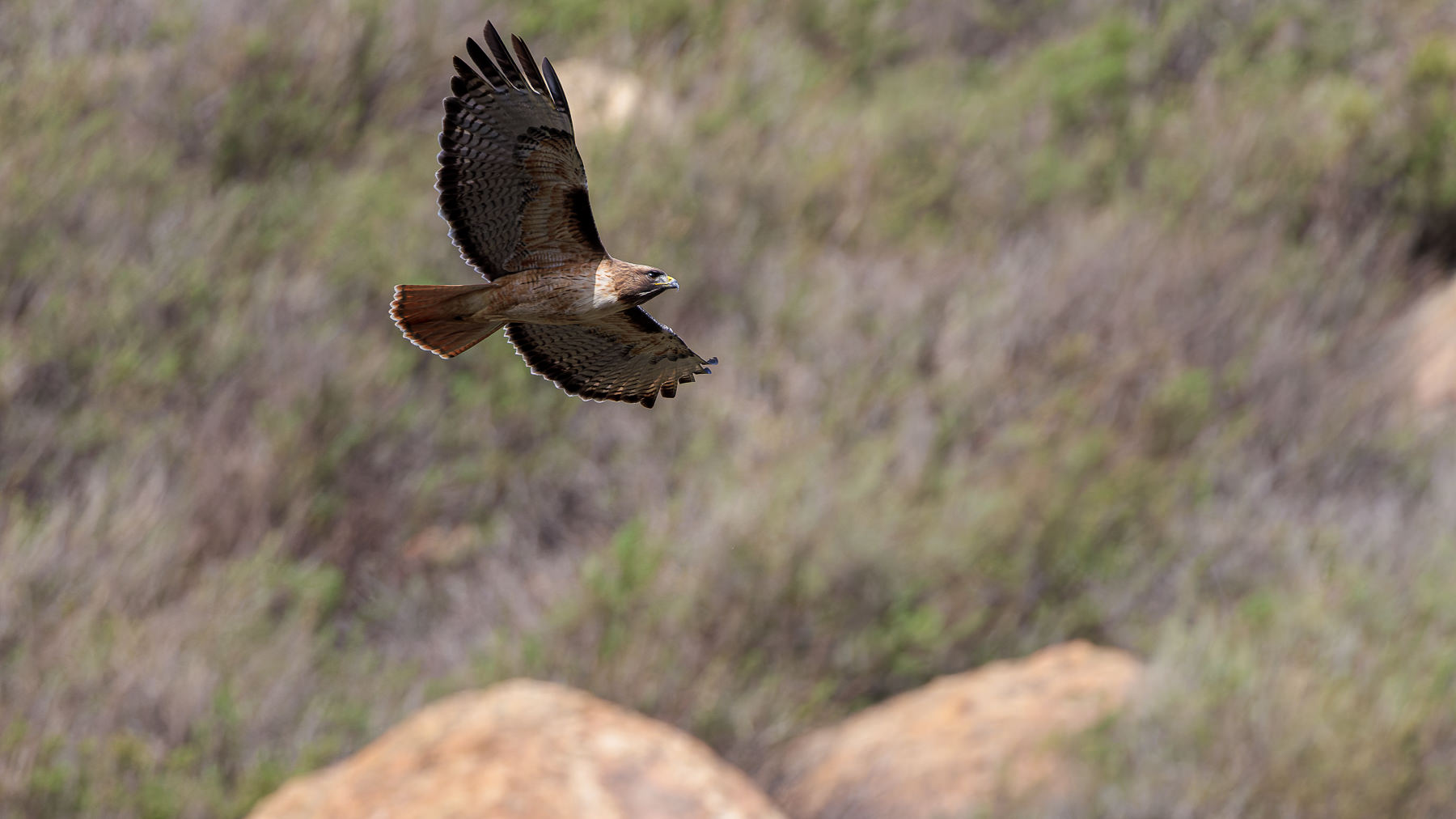
I verified its EFCS as I installed exiftool. You would think these days with 3 modes how hard would it be for Canon to add that to DPP's exif. It has to be in the top 5 of valuable shooting information.
There is an old R7 thread with a range of discussions, including shutter shock not compensated by IBIS. My post is here but I have not bothered to re-read the discussion.
Here were my shutter shock observations:
"I tried this with the (EF) 135 handheld, but braced, at 1/100 and various shutter modes, frame rates and IBIS settings. H+ frame rate with full mechanical and EFCS both resulted in shutter shock. If IBIS was set to activate only for exposure, results were slightly better, particularly with EFCS, but the majority of images in a sequence showed some blur due to shutter shock. All of the lower frame rate options resulted in much better sharpness."
rscheffler wrote:
There is an old R7 thread with a range of discussions, including shutter shock not compensated by IBIS. My post is here but I have not bothered to re-read the discussion.
Here were my shutter shock observations:
"I tried this with the (EF) 135 handheld, but braced, at 1/100 and various shutter modes, frame rates and IBIS settings. H+ frame rate with full mechanical and EFCS both resulted in shutter shock. If IBIS was set to activate only for exposure, results were slightly better, particularly with EFCS, but the majority of images in a sequence showed some blur due to shutter shock. All of the lower frame rate options resulted in much better sharpness."
This is what I do as well. I can quickly hone in on the subject and as long as the body is in focus the eye will snap in. I can quickly move from bird to bird using this pre-focus technique. I don't even use the joystick which I disabled or the LCD to move the AF point/s around. Too slow for me. I physically move the camera so the AF point/s land on the bird. I have * mapped for Zone AF for BIF.
I'm quite embarrassed to ask this but what is AED? I know what is being talked about I just got a brain fart on the abbreviation.
I do have a query about AED. I used the pre-focus technique almost all of the time with my R5 if it didn't find the subject quickly. After getting the body in focus and I went back to AED and if it didn't find an eye it found the head or body and would go back to the eye when conditions were favourable so I just kept training and shooting. Is it better to turn eye focus off? I've mapped the 4 buttons around the Q/Set button but have not really experimented with it.
You'll probably have to test this. Someone else (Jeff Nolten??) in this or a similar thread commented that with the R7 they got better shot to shot AF tracking consistency with eye detection turned off. I didn't have access to the R7 long enough, nor did I photograph any wildlife, to be able to comment on this.
Eye AF is greatest invention since sliced bread. Today’s camera is not worth its pixel if it doesn’t have reliable eye AF or eye detection.
rscheffler wrote:
You'll probably have to test this. Someone else (Jeff Nolten??) in this or a similar thread commented that with the R7 they got better shot to shot AF tracking consistency with eye detection turned off. I didn't have access to the R7 long enough, nor did I photograph any wildlife, to be able to comment on this.
rscheffler wrote:
You'll probably have to test this. Someone else (Jeff Nolten??) in this or a similar thread commented that with the R7 they got better shot to shot AF tracking consistency with eye detection turned off. I didn't have access to the R7 long enough, nor did I photograph any wildlife, to be able to comment on this.
Not me. I remember it being mentioned, I think in reference to the R5.?. I would be very interested knowing more. I believe it was mentioned that turning off eye detection conserved processing cycles which helped with animal face/head tracking. This needs testing.
bobbytan wrote:
Eye AF is greatest invention since sliced bread. Today’s camera is not worth its pixel if it doesn’t have reliable eye AF or eye detection.
I agree and that's why it stuck in my brain that someone claimed they got better tracking with it disabled.
---------------------------------------------
Jeff Nolten wrote:
Not me. I remember it being mentioned, I think in reference to the R5.?. I would be very interested knowing more. I believe it was mentioned that turning off eye detection conserved processing cycles which helped with animal face/head tracking. This needs testing.
OK, thanks. I just read it recently again while going through an older thread and just can't remember who posted it... Maybe it was R5 related...
Even if this true I would never turn off eye detection (unless I am shooting landscapes) as eye AF/detection is godsend for people and wildlife photography.
Jeff Nolten wrote:
Not me. I remember it being mentioned, I think in reference to the R5.?. I would be very interested knowing more. I believe it was mentioned that turning off eye detection conserved processing cycles which helped with animal face/head tracking. This needs testing.
I keep animal eye focus on a button so I can quickly toggle it on/off. I rarely take pictures of people—mostly macro and landscape—but once on a while a lizard, bird or other wee critter appears and I'm ready. I sometimes forget to disable eye focus but I haven't noticed it slowing down focus for other things, at least on my R7 and R6 MK II.
I have eye detection enabled on both my cameras. I have a button that toggles servo mode since in my experience so far, tracking either works or it doesn't. I guess I'm not discriminating enough to know if looking for eyes is affecting other tracking performance. It can often find eyes on fairly distance critters and toggles between eyes and heads faster than I can react. I'll just let it do its job.
Gochugogi wrote:
I thought AED was a medical condition. But, yeah, most Canon shooters simply refer to this feature as eye focus.
EB-1 wrote:
An AED is a Class III medical device (US), not a medical condition.
Gochu is probably thinking of ADD (attention deficit disorder). But then there is ADA (Americans with Disabilities Act). When I was in the Navy there was a book titled "DicNavAb", Dictionary of Naval Abbreviations. Someone needs to write a DicCamAb. I think EBH is just the person to do it. It should be a web site like Google's translate or convert functions.