fredmiranda.com
Login

Moderated by: Fred Miranda
  New fredmiranda.com Mobile Site
  New Feature: SMS Notification alert
  New Feature: Buy & Sell Watchlist
  

FM Forums | Micro Four Thirds Forum | Join Upload & Sell

       2       end
  

Archive 2022 · Has anyone done hummingbird multiflash photography with Olympus?


GrandNagus50
Offline
• •
Upload & Sell: Off
p.1 #1 · Has anyone done hummingbird multiflash photography with Olympus?


I currently am using two different camera systems, Nikon and Olympus. More and more, however, I gravitate toward Olympus, as the combination of the 150-400mm zoom and now the new OM-1 make the M43 system incredibly versatile and high-quality. I have no immediate plans to get rid of my Nikon gear, however, and one consideration here relates to the opportunities on some guided trips for hummingbird multiflash photography. In the past, the leaders of these trips have offered compatibility with Nikon and Canon flashes and gear, and I am guessing that now, Sony users are accommodated, as well

In my limited experience, the TTL fill-flash capabilities of M43 are inferior to those of the full-frame systems. Correct me (with some supporting detail) if I am wrong. I have read online that Joe McDonald has used Olympus for multiflash hummingbird photography; I am wondering if anyone else has done so.

Even if there is adequate technical support for using my Olympus rig(s) with this kind of setup, it's possible that a trip leader will not bring the necessary adapters I would need to participate in a group multiflash session. I am guessing that Godox and Phottix gear are compatible, so I could get my own adapter(s) if needed. Of course, if need be I could bring along a Nikon body and lens (e.g., the new100-400mm. zoom) just for that purpose.

Any experiences to share?
Doug Greenberg


Mar 18, 2022 at 10:49 AM
Cliff L.
Offline
• • • • • • •
Upload & Sell: On
p.1 #2 · Has anyone done hummingbird multiflash photography with Olympus?


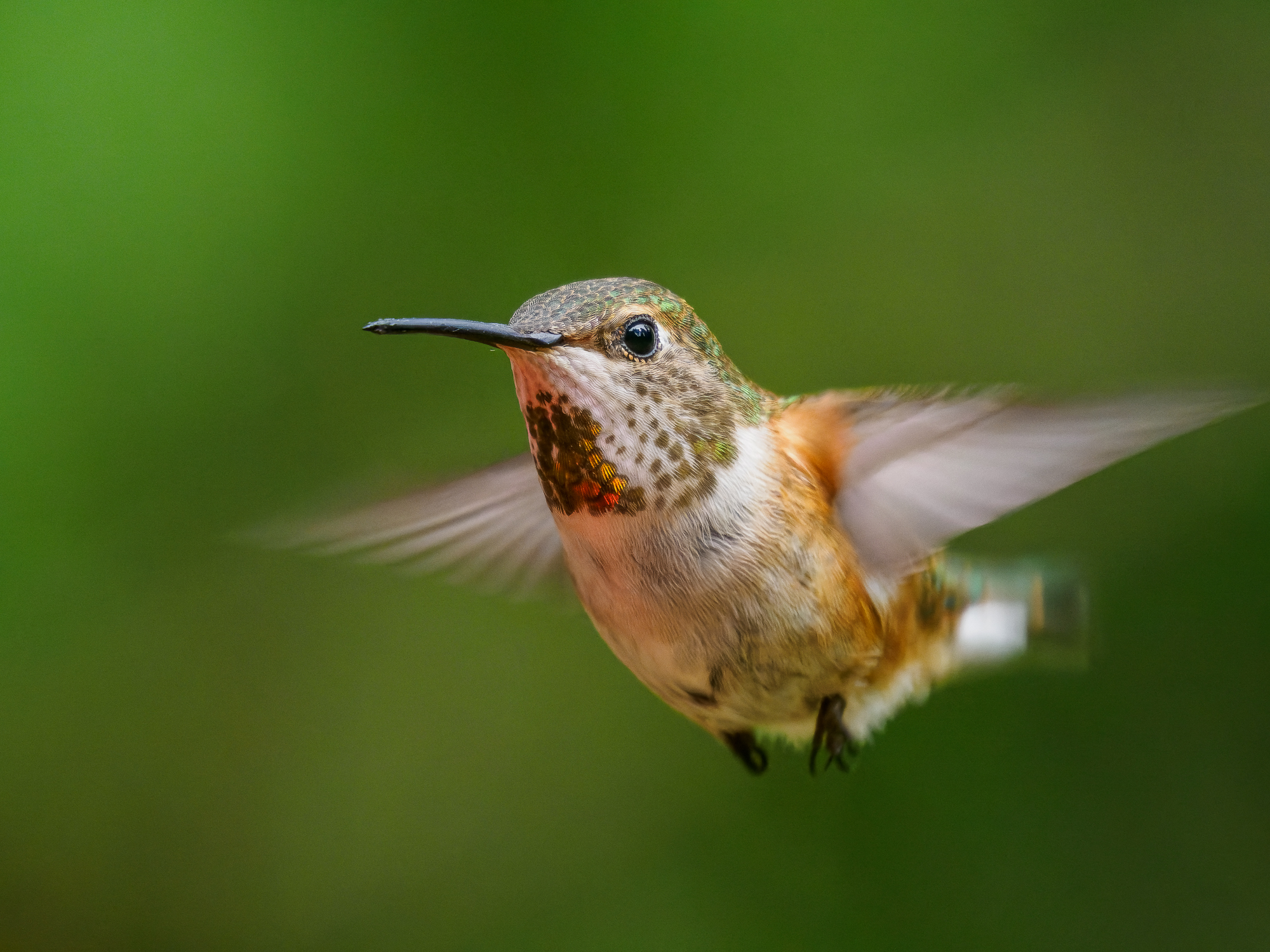
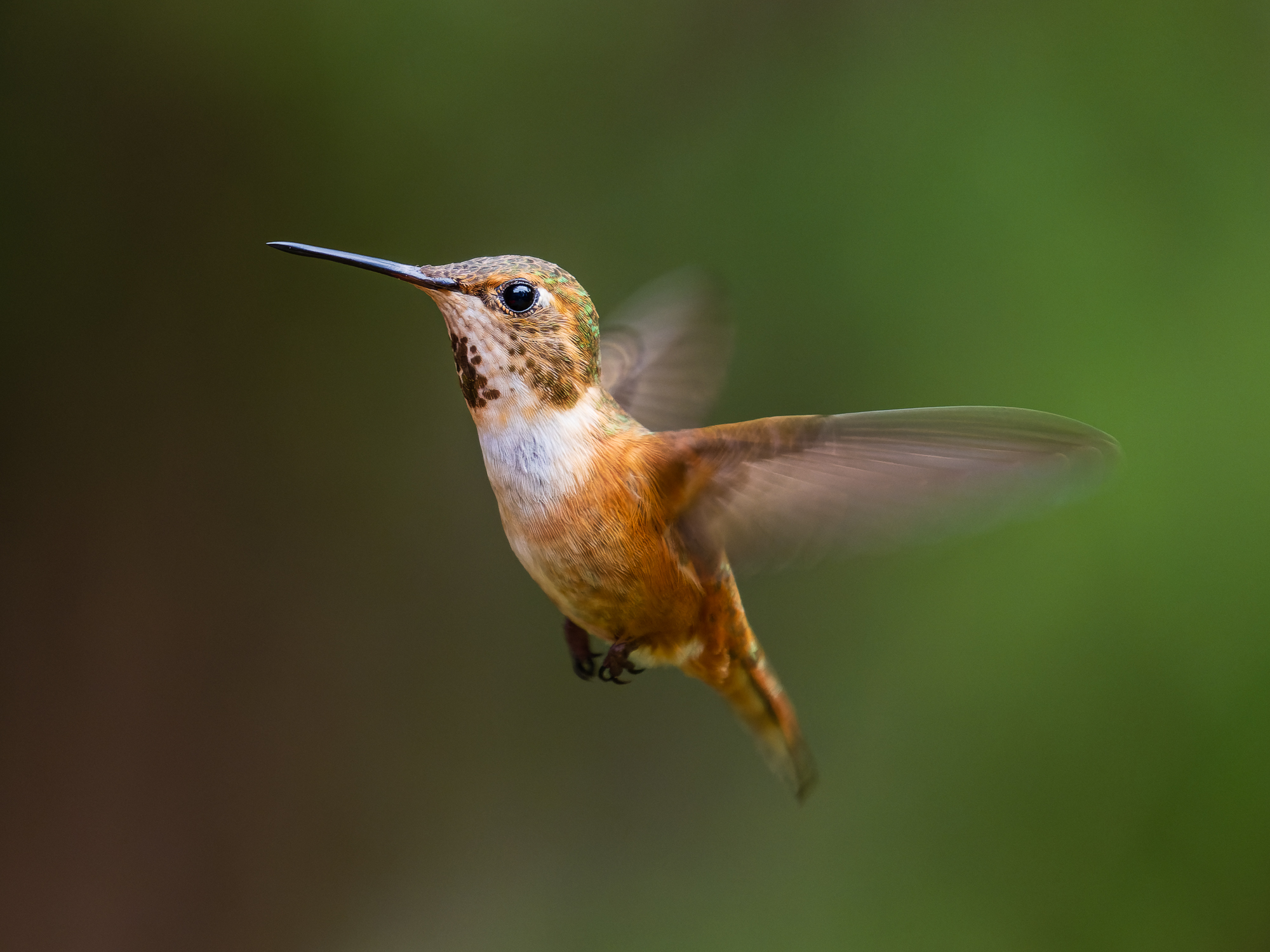
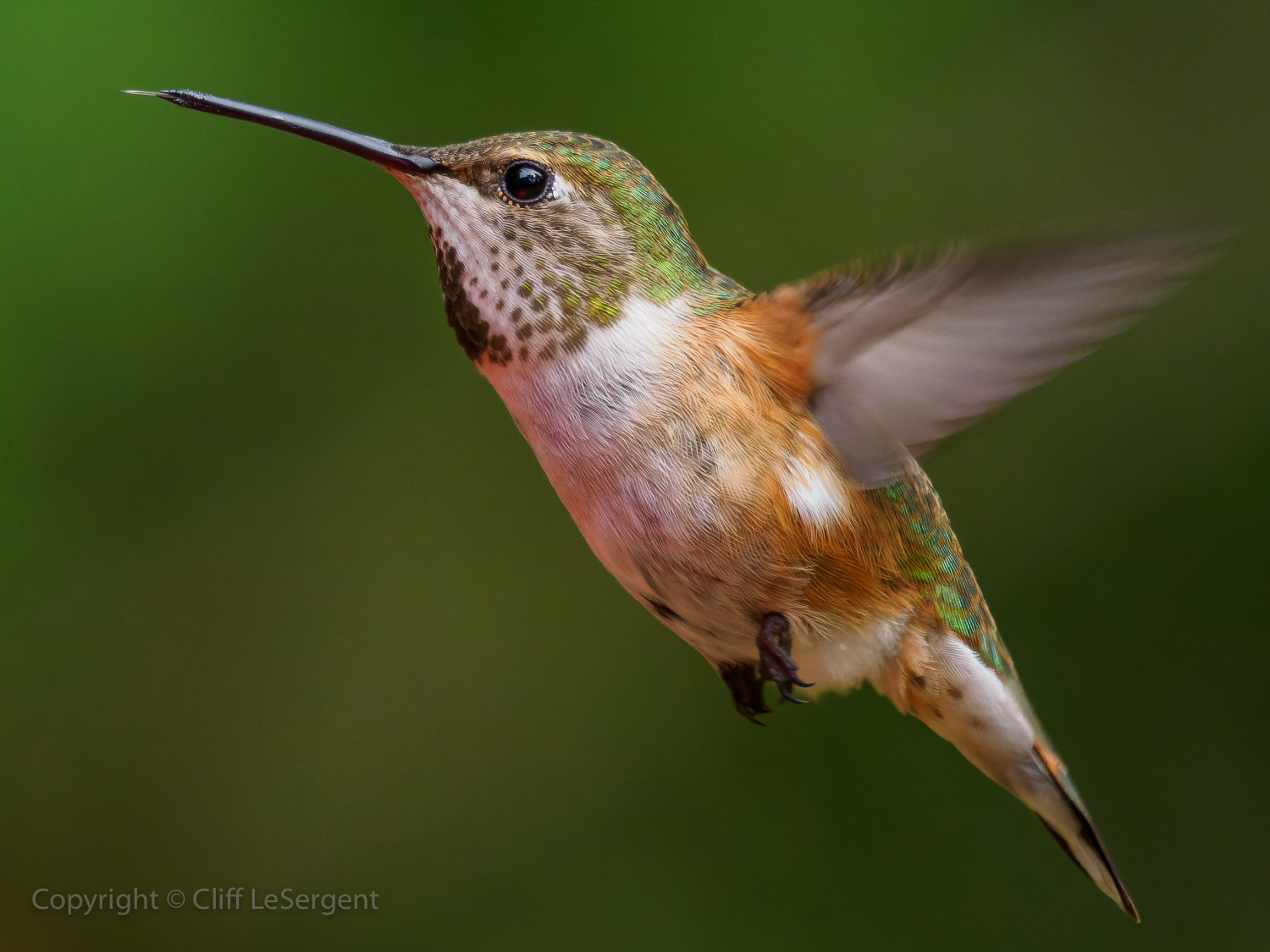
I can't coax the birds into my studio, so I shoot with available light.


Mar 18, 2022 at 11:02 AM
GrandNagus50
Offline
• •
Upload & Sell: Off
p.1 #3 · Has anyone done hummingbird multiflash photography with Olympus?


Nice photos. I have no qualms about available light photography, but when in Rome . . . . If a group is shooting multiflash, that's what's up at that moment. I understand that Godox has an Olympus-compatible trigger, whereas Phottix does not.

Even in the absence of a multiflash setup, using fill flash in the field for tropical bird photography (especially around feeder setups) is a nice option to have.


Mar 18, 2022 at 01:01 PM
PV Hiker
Offline
• • •
Upload & Sell: Off
p.1 #4 · Has anyone done hummingbird multiflash photography with Olympus?


My gal just came back from Costa Rica. She shot hummers at a set up. It does not matter what flash brands were used. A trigger was provided and put it on the flash shoe. Press the shutter and flashes were fired. She was using Oly M1X

There were 4 flash triggers and they were passed around in the group. Those worked for all brands there.


Mar 18, 2022 at 01:04 PM
Paul_100A
Offline
• • •
Upload & Sell: Off
p.1 #5 · Has anyone done hummingbird multiflash photography with Olympus?


molson wrote:
I can't coax the birds into my studio, so I shoot with available light.


geeze those are impressive and especially so with the 2X


Mar 18, 2022 at 07:24 PM
FrankA373
Offline
• • •
Upload & Sell: Off
p.1 #6 · Has anyone done hummingbird multiflash photography with Olympus?


Google high speed flash sync for hummingbirds. You can use any flash that works on your camera.


Mar 19, 2022 at 10:09 AM
Genes Home
Offline
• • •
Upload & Sell: Off
p.1 #7 · Has anyone done hummingbird multiflash photography with Olympus?


Not sure about your question.......are you talking about "fill flash" where the flash system is providing supplemental light to an otherwise available light exposure; or about a multi-flash "outdoor studio" type setup where the flash array provides all the light for the exposure?

The latter is what nearly all the multi-flash hummer shoots do, and the flashes (and camera) are set in manual mode. As PV Hiker above stated, in this situation you just need an Olympus compatible trigger mounted on your camera flash shoe. Just about all the radio trigger companies make a compatible trigger/transmitter, so you just need to check with the workshop leader to make sure they have one (or you can provide your own).

If you are talking true "fill flash" where the camera and flash(es) communicate with each other to determine the amount of fill exposure on the subject, that's a different kettle of fish. Your results will depend on the competency of the camera and flash to calculate the amount of light on the subject and to include/exclude the rest of the image frame. To my experience Nikon and Canon can do this well even in PF (high shutter speed) modes, but Olympus and Sony and Panasonic are behind the technology curve in this arena.


Mar 19, 2022 at 10:40 AM
galenapass
Offline
• • • • •
Upload & Sell: On
p.1 #8 · Has anyone done hummingbird multiflash photography with Olympus?


molson wrote:
I can't coax the birds into my studio, so I shoot with available light.


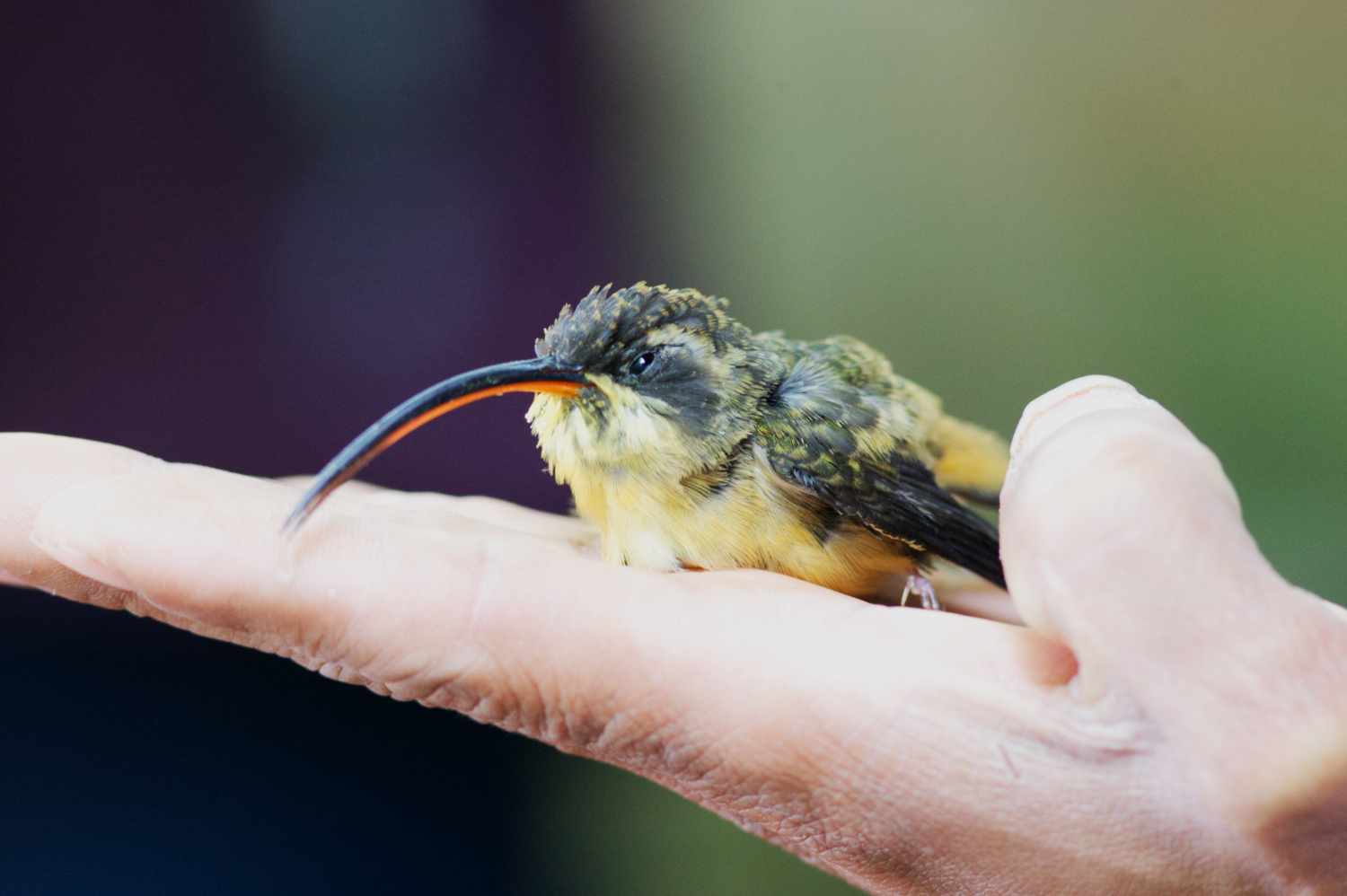
Agree. There is no need to use flash for hummingbirds IMO. Flash is good for that nice dark background. It makes the subject really standout. However, I stopped using flash after an incident in the cloud forest outside of Quito. The hermit below was flashed by a photographer, which scared him badly and he flew into a window as a result. Luckily, he was OK after ~ 15 minutes of rest. The photographer that caused the incident just kept on shooting while some of us were attending to the hermit.


Mar 19, 2022 at 12:58 PM
Genes Home
Offline
• • •
Upload & Sell: Off
p.1 #9 · Has anyone done hummingbird multiflash photography with Olympus?


This event (galenapass, above) is a good description of being aware of your equipment's technical characteristics in relationship to your subject. For instance, when using an "outdoor studio" of multiple flashes set in manual the general goal is to light a very small area with a very short cycle light that will come close to stopping the bird's motion. Commonly the flashes are firing at very low power (1/16th or less) with a flash duration of 1/20,000 of a second or even faster. Even then, you will see some hummer species that respond to the flash with a flinch or fly-away, and you know you have to go to a larger f/stop and reduced flash setting to get below their response threshold. With "regular" TTL or ITTL fill flash you are often actually flooding a large area with a huge amount of VERY bright light, which means a long duration - sometimes up to 1/1,000 or 1/900th of a second. This absolutely affects every hummer species and, as galenapass says, is best avoided. When I do use fill flash it is generally with the flash set on manual at low power. If I start to get ghosting then I change my shooting angle.


Mar 20, 2022 at 11:09 AM
GrandNagus50
Offline
• •
Upload & Sell: Off
p.1 #10 · Has anyone done hummingbird multiflash photography with Olympus?


I was talking about outdoor multiflash setups, usually using a fake green background as part of the arrangement. Some tropical workshops do these routinely. There usually are four flashes set manually and yes, what you need is a camera-specific trigger for your make of camera. Not all of the companies making these triggers make one for Olympus (Godox does, Phottix apparently does not).

And yes, an alternative is usually single-flash fill flash, used by many bird photographers in the tropics, where light tends to be harsh. I have done this type of bird photography using Nikon gear, but my limited experience with Olympus flash technology is that it is not as good as Nikon's (or Canon's) in this area of high-speed synch flash performance.

Of course there are always ethical issues related to "exploiting" birds to get photos, and our first obligation is to not harm the birds we photograph. I know this can get to be a very contentious area of discussion.


Mar 20, 2022 at 09:49 PM
Cliff L.
Offline
• • • • • • •
Upload & Sell: On
p.1 #11 · Has anyone done hummingbird multiflash photography with Olympus?


GrandNagus50 wrote:
I have done this type of bird photography using Nikon gear, but my limited experience with Olympus flash technology is that it is not as good as Nikon's (or Canon's) in this area of high-speed synch flash performance.


I suspect the difference in flash performance is more of a DSLR vs. mirrorless thing, rather than a Canon/Nikoon vs. Olympus thing. After all, Olympus invented TTL flash...


Mar 20, 2022 at 11:41 PM
BidinTime
Offline
• •
[X]
p.1 #12 · Has anyone done hummingbird multiflash photography with Olympus?


galenapass wrote:
Agree. There is no need to use flash for hummingbirds IMO. Flash is good for that nice dark background. It makes the subject really standout. However, I stopped using flash after an incident in the cloud forest outside of Quito. The hermit below was flashed by a photographer, which scared him badly and he flew into a window as a result. Luckily, he was OK after ~ 15 minutes of rest. The photographer that caused the incident just kept on shooting while some of us were attending to the hermit.


Yep, there are those who care about birds and those who care about themselves.

I disdain anyone's use of flash on wildlife.
The bird you described may have not survived after what you witnessed. You saw it fly away but you don't know how it might have been affected, longterm.

The Audubon Society says to use flash very sparingly, which is to say "don't", and it says to never use flash on birds that are active at night (most birds migrate at night BTW).

I never use flash on birds. Never. I think it's cruel. I'd give up bird photography if that was the only option.


Mar 24, 2022 at 05:09 PM
Cliff L.
Offline
• • • • • • •
Upload & Sell: On
p.1 #13 · Has anyone done hummingbird multiflash photography with Olympus?


It's almost as bad as the people who bait owls to get those dramatic flight shots...


Mar 24, 2022 at 08:51 PM
Genes Home
Offline
• • •
Upload & Sell: Off
p.1 #14 · Has anyone done hummingbird multiflash photography with Olympus?


......or bait them into feeders and faked posing scenes, especially in winter, where they become dependent on an artificial feeding habitat.


Mar 25, 2022 at 09:42 AM
GrandNagus50
Offline
• •
Upload & Sell: Off
p.1 #15 · Has anyone done hummingbird multiflash photography with Olympus?


Ok, my comments here are not intended to start a big fight, just to suggest a different point of view from the previous few posts.

Let's face it: taking photos of birds disturbs them, almost inevitably. Unless we always hide in blinds or else have developed cloaks of invisibility, our presence with our rigs makes birds nervous and the closer we get the more likely they are to flee from us. We all become quite familiar with the "alert distance" for different kinds of birds. At best they tolerate our presence warily. We can rationalize that our creation of beautiful bird images promotes bird welfare somehow, but really, we are exploiting them for our own benefit, not theirs.

Within this context, people using electronic fill flash in daylight situations seems like a very small threat to bird welfare. Birds in the field and at feeding setups are largely focused on feeding or on interacting with other birds, they are not staring at our flash units and the flashes are peripheral to their awareness usually (not always; yes, we all have seen birds exhibit the startle response, but even then they usually come to ignore the flash after a few repetitions). The research that has been done on this subject has concluded that daylight fill flash with a single flash is not harmful to the birds (see, for example, https://www.naturettl.com/does-flash-photography-harm-animals/). It is pointed out here that many animals respond more negatively the mirror slap of a DSLR than to flash; should we ban the usage of DSLRs for bird photography? Actually, in group blind situations people using silent mirrorless cameras seem increasingly prone to being irritated by the 'rat-tat-tat' of DSLRs, especially if they are trying to take video.

I would argue that hummingbird multiflash is not particularly harmful to them, either. Hummingbirds are pugnacious by nature and the biggest issue in these setups is the artificially cultivated aggression between birds trying to access and dominate the food source. The setups are (in all cases I know of) quite temporary and I doubt they affect the birds long-term. The case cited of a bird hitting a window is of concern, but who has not seen birds hit windows without any role played by a camera flash? Who can be sure that the flash in the bird's eyes was the reason it hit the window at all? Birds hitting windows is a big concern quite separately from fill flash use.

I do think that using flash at night on owls and nightjars and such is ethically questionable and I don't do it myself. What concerns me here is the vehemence of the condemnation of people using flash when the evidence for the harm done is anecdotal and flimsy, and then the associated trip down the slippery slope where this practice is (it seems) equated with all forms of artificial baiting. It is even suggested (maybe I am misinterpreting) that people setting up feeders in their yards is bad because it is "artificial," this within the context of all of the harm humans have done to birds' habitats and food sources otherwise.

We all make our individual ethical choices, but I think we might be more tolerant of choices made by other people, especially in cases where the alleged harm to wildlife is questionable.


Mar 25, 2022 at 10:49 AM
Cliff L.
Offline
• • • • • • •
Upload & Sell: On
p.1 #16 · Has anyone done hummingbird multiflash photography with Olympus?


Unfortunately, in this part of the world, the Anna's hummingbirds no longer migrate because so many homeowners have been putting out feeders for the past several decades. Now that they have become habituated to over-wintering, most of them would not survive without the availability of feeders. They don't hang around just because a few photographers feed them.


Mar 25, 2022 at 07:15 PM
GrandNagus50
Offline
• •
Upload & Sell: Off
p.1 #17 · Has anyone done hummingbird multiflash photography with Olympus?


I looked this up; it's true that the Anna's has expanded its range northward, apparently in association with people feeding them. It's always been a very short-distance migrant over its overall range. The period in most of California during winter in which there are no natural flowers at all is fairly short, after all. Even now, overwintering Anna's have artificially planted flowering plants to feed from in addition to actual hummingbird feeders in most places in California.

Certainly there are issues associated with people feeding birds, most notably, that diseases can be spread if the feeders and feeding areas are not kept sufficiently clean. Just about every year there are reports of communicable diseases that afflict birds like House finches and Pine siskins. Moreover, in some feeding situations people are unaware that they are setting up birds to be easily picked off by domestic cats, another problem/issue in its own right.

I guess my point is that human activity has done an awful lot to drastically reduce bird populations overall; one can quibble over the scale of the numbers here, but there is no doubt that bird populations have been drastically reduced. Some species benefit, of course but an awful lot do not. In this context, people feeding birds seems to me to be a positive thing overall, and the role of photographers in all of this is quite small, actually.

I know that in some tropical countries (e.g., Brazil), there is pressure from wildlife managers for ecolodges NOT to put up feeders, which are a real attraction for photographers. Anyone who has visited Laguna Lagarto in Costa Rica or who used to visit Asa Wright Nature Centre in Trinidad before it closed know how fantastic bird feeding centers can be for photographers. Yes, these are artificial and they undoubtedly affect (in a very small way) the balance of species, etc. But really, do a few feeding setups at nature lodges pose a "danger" to these bird populations, this within the context of the wholesale wiping out of tropical forests in say, Brazil?


Mar 26, 2022 at 09:25 AM
BidinTime
Offline
• •
[X]
p.1 #18 · Has anyone done hummingbird multiflash photography with Olympus?


GrandNagus50 wrote:
Ok, my comments here are not intended to start a big fight, just to suggest a different point of view from the previous few posts.

Let's face it: taking photos of birds disturbs them, almost inevitably. Unless we always hide in blinds or else have developed cloaks of invisibility, our presence with our rigs makes birds nervous and the closer we get the more likely they are to flee from us. We all become quite familiar with the "alert distance" for different kinds of birds. At best they tolerate our presence warily. We can rationalize that our creation of beautiful
...Show more

Great example of whatsboutism. The topic is artificial lighting on birds. Not feeders, windows, or climate change. You're free to start another thread on those distractions, if you wish.

As far as I'm concerned, whitewashing harm (or even potential harm) to wildlife or the environment has no "opposing point of view." It's as invalid as accepting that "the earth could be flat but we really don't know." Although flat-earthers don't cause harm, unless you hurt yourself laughing at them.

There is absolutely no way that science can determine that flash is safe to use on any birds. We know that flash on us humans is a distraction, even when we know the causes and are prepared.

Birds walk a thin line for survival every minute of every day. Even a slight distraction can cause them to miss a feeding or mating opportunity, or be at risk from predators.

If you use flash on a bird and it eventually dies as a result, you won't know. You'll be at your computer doing post. BTW, birds in the wild seldom recover from their injuries. They just die or are more quickly/easily killed by predators.

Your "research" cites a photography website, not a birding site. What do you think they're going to say?

The Audubon Society says to use flash "sparingly" on birds, and not at all on nocturnal hunters. The Audubon Society has contests sponsored by companies that sell camera equipment, including flashes. IMO, that's why there is not a total recommendation against using flash. It's definitely a conflict of interest.

You're free to twist yourself onto knots to justify your actions. People do that all the time to continue poor behavior.

As an ethical nature photographer I feel it's important to learn about my subjects and use techniques that do no harm. Learning about your subjects is a great way to improve your photography, too.

Your bird pictures don't do anything whatsoever that helps the birds. Absolutely nothing. So why not do what you can to prevent harm?

If you take care to ensure birds' survival then it may not be as hard to find them.


Apr 07, 2022 at 10:56 PM
jcisaacs
Offline

Upload & Sell: Off
p.1 #19 · Has anyone done hummingbird multiflash photography with Olympus?


I have shot in many multi-format shoots. For most of these, the flashes are set to manual. All that is needed is a trigger, and many triggers will work with manual mode flashes. Some will not, however, especially if they implement brand specific wake-from-sleep interfaces.

The key is to determine what equipment is being used, and whether it is compatible with Olympus.

Sony compatibility is often a matter of interfacing with the different hot shoe interface.

Olympus and Panasonic have pins similar to Canon. I have seen lots of compatibility issues with various triggers that were designed for Nikon in multi-flash setups. Frequently, flashes just won't fire.

A safe bet is to use Nikon or Canon if that is what the flash setup is designed for. Be aware that Nikon changed the flash protocol with the Z cameras, and broke many third party flash triggers, such as my Phottix Odin. I sold them, because they were too old to be updated. Many of my Godox triggers and flashes needed firmware updates to be compatible with the Z cameras, but Godox eventually made all of them available.

Note also that there is a difference between Olympus and Panasonic flash protocols. This was apparent with the release of Quantum and PocketWizard triggers for Panasonic that were not compatible with Olympus.

I think Yongnuo can be used on Olympus and Panasonic to trigger manual mode flashes. I have used Nissin, Godox, and Cactus, as well as manual PocketWizard and manual CyberSync systems. So there are a lot of options, but it depends on the actual hardware being used.


Apr 13, 2022 at 11:02 PM
Imagemaster
Offline
• • • • • • •
Upload & Sell: On
p.1 #20 · Has anyone done hummingbird multiflash photography with Olympus?


BidinTime wrote:
Great example of whatsboutism. The topic is artificial lighting on birds. Not feeders, windows, or climate change. You're free to start another thread on those distractions, if you wish.


The old pot calling the kettle black. The OP asked about what gear to use, not a dissertation about the ethics of using flash on hummingbirds. There are plenty of birds and animals, including hummingbirds, that are not bothered one bit by flash. I guess you have proof that all the hummers photographed during guided trips for hummingbird multiflash photography were bothered or killed by those flash episodes?

Just because you don't want someone else to discuss the much greater harm and deaths caused by feeders, windows, climate change, wind turbines, pollution, artificial night lights, etc., etc. does not mean others can't.

Flash from all the paparazzi does not seem to frighten or harm celebrities either.

https://www.naturettl.com/does-flash-photography-harm-animals/


Apr 14, 2022 at 01:25 AM
       2       end


FM Forums | Micro Four Thirds Forum | Join Upload & Sell

       2       end


Welcome back
Log in to your account