This topic is in the 2021 archive. You can read it and like its posts here. It is read only.
Archive 2021African safari talk...recommendations?
berimbolo
Offline
Activity
[X]
Details
p.66 #1African safari talk...recommendations?
Does anyone have a complete list of conservancies in the Mara? It looks like there are a few smaller conservancies (like Ripoi mentioned earlier).
Sep 08, 2024 at 03:33 AM
p.66 #2African safari talk...recommendations?
artsupreme wrote:
Great safari report, I'm glad you ended up loving your 300mm prime and also that you didn't get stuck in the NP for two weeks as you would have missed out on a lot.
You will find this experience is the same at nearly all mid to top tier camps in the Kenya conservancies. The guides are local Maasai people and they are the true experts who put you in the right spot and educate you along the way. You will likely have the same comments above for every camp you stay at. This is the reason why we had...Show more →
It really is amazing how much difference there is between being in a quieter area and areas where there is a lot of vehicle traffic. It simply feels nicer to be in a quieter area and to be honest, sometimes the large numbers of vehicles around specific animals was not good - I will write more below regarding a leopard.
The vultures were indeed fun to watch and it was a kind of spectacle all its own to see that feeding frenzy. The bickering and fighting together with the intensity in which they went for food was incredible - almost mesmerizing in a weird way. And you are do right about the vultures wanting to be the king of the hill. They fought over that until a jackal appeared and took over.
I did see two leopards during my time there. One was in the Maasai Mara National Reserve in a quieter area in the north. The leopard had left a kill in a tree and was taking a nap in some bushes. All I really saw were spots in the bushes. The second leopard was in Serengeti National Park. It was in a tree and many vehicles had gathered around to see the leopard but were keeping a reasonable distance away, although it was apparent that even at that distance, the leopard was not comfortable with all of the vehicles. Then, one driver took off toward the tree and most of the rest (including our driver, unfortunately) did the same. The leopard did not like it at all and got down from the tree and disappeared. Our driver, while he did approach the tree like everyone else, was not happy with the situation. I was not either and some of the other people with us were unhappy about it as well. The leopard was clearly stressed and in all honestly, I felt (and still do) bad about being a part of it. While yes, I really wanted to see a leopard, I don't feel that my desire to see one should impinge to that extent on the animal. Granted, it was a collective approach of vehicles, but still, each one contributes.
Great safari report, I'm glad you ended up loving your 300mm prime and also that you didn't get stuck in the NP for two weeks as you would have missed out on a lot.
Abuttolph wrote
All of the staff at the camp, including the guides, are Maasai. They have an incredibly deep connection with the land and wildlife and it is very apparent. Our guides, Salaash and Fred, were incredible. They know the area like the back of their hands. Their knowledge of pretty much everything was impressive and they were more than happy to give information and share their knowledge. .
Abuttolph wrote
We also saw a vulture feeding frenzy that was unlike anything that I have ever witnessedAbuttolph wrote
We also saw a cheetah hunt a hare and that was the only cheetah hunt that I saw during my trip.It really is amazing how much difference there is between being in a quieter area and areas where there is a lot of vehicle traffic. It simply feels nicer to be in a quieter area and to be honest, sometimes the large numbers of vehicles around specific animals was not good - I will write more below regarding a leopard.
The vultures were indeed fun to watch and it was a kind of spectacle all its own to see that feeding frenzy. The bickering and fighting together with the intensity in which they went for food was incredible - almost mesmerizing in a weird way. And you are do right about the vultures wanting to be the king of the hill. They fought over that until a jackal appeared and took over.
I did see two leopards during my time there. One was in the Maasai Mara National Reserve in a quieter area in the north. The leopard had left a kill in a tree and was taking a nap in some bushes. All I really saw were spots in the bushes. The second leopard was in Serengeti National Park. It was in a tree and many vehicles had gathered around to see the leopard but were keeping a reasonable distance away, although it was apparent that even at that distance, the leopard was not comfortable with all of the vehicles. Then, one driver took off toward the tree and most of the rest (including our driver, unfortunately) did the same. The leopard did not like it at all and got down from the tree and disappeared. Our driver, while he did approach the tree like everyone else, was not happy with the situation. I was not either and some of the other people with us were unhappy about it as well. The leopard was clearly stressed and in all honestly, I felt (and still do) bad about being a part of it. While yes, I really wanted to see a leopard, I don't feel that my desire to see one should impinge to that extent on the animal. Granted, it was a collective approach of vehicles, but still, each one contributes.
Sep 08, 2024 at 09:25 AM
p.66 #3African safari talk...recommendations?
ajamils wrote:
You guys are killing me  . I bought the 24-140 specifically for this trip as I am looking to shed some weigh to accommodate another body (RX10 IV) and an action cam but I understand your logic as well and it does make sense.Yeah, my short lens on all 4 trips was the 70-200 f/2.8. Last trip I did throw the RF 16mm f/2.8 (couldn't resist it at $179) in a jacket pocket and used it twice out of about 20k photos.---------------------------------------------
The best advice I learned was to get low - to create background and not shoot into the ground. Also helpful was to get some wide shots and not always close ups. I am shooting with the Sony A7R5, Sony 300 2.8 + 1.4 extender (mainly, but also have a second A7R5, 70-200 2.8, and 16-35 2.8), and the Smallrig cage with top handle. I have been hanging over the window edge of the vehicle and using the swivel LCD. The Smallrig cage is perfect. Anyway, here are a few of the shots so far. We have 1 more drive this afternoon, and then we leave for Tanzania and then next week Rwanda. This has been the trip of a lifetime so far, particularly the Cheetah live chase and kill today. Saw the chase through binoculars and was too stunned as I watched live to grab the rig (would have missed it had I done that anyway). We got to the kill site 2 minutes later.
Such a great time. Thanks for viewing!---------------------------------------------
Upon arriving in Nairobi, I spent three days at Ololo Lodge in Nairobi National Park. This time was mainly to get over the worst of the jet lag coming from the western US, but also to get into safari shooting mode. The decision to spend time there was a good one. The lodge is really nice and the staff are terrific. Nairobi National Park was the only place on my trip where I saw rhinos, both black and southern white rhinos. Another highlight was watching a serval hunt a rat then take it back to her two kittens to play with. I was over the moon about that because I actually did not expect to see servals at all, then saw three just a couple of days into the trip. Little did I know that I would be fortunate enough to see more both in Maasai Mara and Serengeti.
For the Maasai Mara portion of the trip, I signed up for two successive weeks with David Lloyd. We were originally supposed to be at Entim Camp the full time but the camp cancelled the reservations and David found other camps at the last minute. This turned out to be a very fortunate change. The first week was spent in the Ripoi Conservancy and we stayed at Mara Siana Camp. During two of the days, we went into the Maasai Mara National Reserve to shoot the river crossings, but otherwise stayed in the Ripoi Conservancy. I absolutely loved both the camp and the Ripoi Conservancy. All of the staff at the camp, including the guides, are Maasai. They have an incredibly deep connection with the land and wildlife and it is very apparent. Our guides, Salaash and Fred, were incredible. They know the area like the back of their hands. Their knowledge of pretty much everything was impressive and they were more than happy to give information and share their knowledge.
Ripoi Conservancy is new and at this point, the wildlife is still getting used to visitors. Planning for the conservancy has been aimed at keeping the number of people low with a maximum of one guest per 350 acres. This was terrific as we never saw a single other vehicle while there. Photography there was excellent. Highlights for me were lions, including cubs, cheetah, elephants, and giraffe. We also saw a vulture feeding frenzy that was unlike anything that I have ever witnessed. It was a pulsing, seething, noisy, bickering mass of vultures on zebra corpse. It proved to be a challenging situation for my cameras autofocus, but I got a few good shots although I really don't think that still photos captured the way that the feeding frenzy seemed to have its own life. If I had to choose a favorite place from this trip, it would be the Mara Siana Camp and the Ripoi Conservancy.
During two days that that we ventured into the Maasai Mara National Reserve, we did see a pretty good river crossing, although there were so many vehicles that the dust was incredible and some of the drivers broke off the chain of wildebeest which cut the crossing shorter than it probably otherwise would have been. We also saw a cheetah hunt a hare and that was the only cheetah hunt that I saw during my trip.
For the second week with David, we moved to the northern Maasai Mara and stayed at Mara Tangulia. As with the previous camp, all of the staff and guides were Maasai, so there was definitely a consistency with the level of knowledge and the approach taken to game drives. Highlights from this area were the Marsh Pride, a male lion who is not part of the Marsh Pride, elephants, servals (two kittens, did not see the mom), baboons, mongoose, and various birds with a particularly not shy lilac breasted roller. There was one baby elephant that was a real character and so much fun to watch and photograph.
The week in Tanzania was handled differently and we moved to a different place nearly every night. This part was run by a different operator (Primaland Safaris and Inscape Photo Tours) and was a more budget friendly safari. During this part of the trip, we visited Arusha National Park, Ngorongoro Crater, and Serengeti National Park. We saw a couple of Mara River crossings but with the vehicle competition for spots, I was never in a particularly good position for photos. Admittedly, this seemed to be a problem everywhere and was not a fault of the driver/guide. Plus, it seemed that in Tanzania, vehicles were restricted to a further distance from the river. The best photographic opportunities that we had were cheetahs (both single and in a coalition of three) and lions. One lion pride had at least 16 individuals including eight cubs that were still nursing. With another group of lions, we had the opportunity to photograph a little cub that had climbed on top of a rock outcrop and did some posing for us. There was also a serval and for the life of me, I don't know how the guides knew where to turn off to find it but they did. The Serengeti was incredibly dusty and definitely in general, more dusty than the Maasai Mara area.
As discussed previously in this thread, the national parks see far more vehicle traffic than the conservancies. It was much more pleasurable to be in the conservancies where there were fewer vehicles. This also goes for areas of the parks that are not so busy as well. If I am fortunate enough to go again, I keep time in the national parks to a minimum and spend the majority of time in the less frequented areas.
On gear, I took a little more than needed, but I did use almost everything that I packed. Here is the list, with comments on usage:
Three Sony A1 bodies (used extensively, obviously)
Sony 300mm f2.8 prime lens - used extensively and more than any other lens, both with and without the 1.4x and 2.0x teleconverters
Sony 1.4x and 2.0 x teleconverters (see above - used extensively)
Sony 200-600mm lens - used extensively during the first part of the trip and less so later on, mostly because I wanted to simplify while in the vehicle. I was able to get some images with this lens that I would not have been able to otherwise without the zoom.
Sony 70-200 f2.8 GM II - used a lot
Sony 24-70 - used infrequently
Tamron 17-28 - did not use
Monopod - used infrequently to get low angle shots (had some trouble with the AF using my cable release and finally gave up)
I have not yet had time to work on editing images but hope to do so in the coming weeks. Have a lot on my plate with other things right now but will try to upload as I can.---------------------------------------------
Thanks for the report. Based on your reply and others, is it safe to assume that I should leave UWA (14-30 F4) at home as it is not needed? My widest FL would be 35mm (Tamron 35-150) and longest would be 600 mm (Nikon 180-600 and Sony RX10 IV)
Yes, I would say leave your UWA at home. There may be opportunities to use it, but it probably would not be worth carrying with you - at least in my limited experience.
Alan Kefauver wrote
ajamils wrote
Earlier quote
I would also go with the 35-150. On safari you are much more likely to want to shoot at 120-150mm than you are at 24-35mm. The 35-150's fast aperture also gives you a faster option at the beginning and end of the day when many good sightings occur. My "short" lens on safari is a 70-200 2.8. If there was a 35-150 available for Canon R I would take that. The rare times when I need to go wider I use my iPhone.. I bought the 24-140 specifically for this trip as I am looking to shed some weigh to accommodate another body (RX10 IV) and an action cam but I understand your logic as well and it does make sense.anotherhobby wrote
Well the trip is finally here! After a year of planning my wife and I arrived at Masai Mara a few days ago to start our safari journey. So far we have been on 4 drives and I have been able to practice the amazing advice I learned on this forum after reading the entire thread months ago which took many weeks to read.The best advice I learned was to get low - to create background and not shoot into the ground. Also helpful was to get some wide shots and not always close ups. I am shooting with the Sony A7R5, Sony 300 2.8 + 1.4 extender (mainly, but also have a second A7R5, 70-200 2.8, and 16-35 2.8), and the Smallrig cage with top handle. I have been hanging over the window edge of the vehicle and using the swivel LCD. The Smallrig cage is perfect. Anyway, here are a few of the shots so far. We have 1 more drive this afternoon, and then we leave for Tanzania and then next week Rwanda. This has been the trip of a lifetime so far, particularly the Cheetah live chase and kill today. Saw the chase through binoculars and was too stunned as I watched live to grab the rig (would have missed it had I done that anyway). We got to the kill site 2 minutes later.
Such a great time. Thanks for viewing!
Abuttolph wrote
I returned home a week ago from a month in Kenya and Tanzania and it was an exceptional experience. Before launching into the trip report, I want to thank those FM members who so generously offered advice and guidance for this trip. The information was invaluable and helped to make the trip as successful as possible.Upon arriving in Nairobi, I spent three days at Ololo Lodge in Nairobi National Park. This time was mainly to get over the worst of the jet lag coming from the western US, but also to get into safari shooting mode. The decision to spend time there was a good one. The lodge is really nice and the staff are terrific. Nairobi National Park was the only place on my trip where I saw rhinos, both black and southern white rhinos. Another highlight was watching a serval hunt a rat then take it back to her two kittens to play with. I was over the moon about that because I actually did not expect to see servals at all, then saw three just a couple of days into the trip. Little did I know that I would be fortunate enough to see more both in Maasai Mara and Serengeti.
For the Maasai Mara portion of the trip, I signed up for two successive weeks with David Lloyd. We were originally supposed to be at Entim Camp the full time but the camp cancelled the reservations and David found other camps at the last minute. This turned out to be a very fortunate change. The first week was spent in the Ripoi Conservancy and we stayed at Mara Siana Camp. During two of the days, we went into the Maasai Mara National Reserve to shoot the river crossings, but otherwise stayed in the Ripoi Conservancy. I absolutely loved both the camp and the Ripoi Conservancy. All of the staff at the camp, including the guides, are Maasai. They have an incredibly deep connection with the land and wildlife and it is very apparent. Our guides, Salaash and Fred, were incredible. They know the area like the back of their hands. Their knowledge of pretty much everything was impressive and they were more than happy to give information and share their knowledge.
Ripoi Conservancy is new and at this point, the wildlife is still getting used to visitors. Planning for the conservancy has been aimed at keeping the number of people low with a maximum of one guest per 350 acres. This was terrific as we never saw a single other vehicle while there. Photography there was excellent. Highlights for me were lions, including cubs, cheetah, elephants, and giraffe. We also saw a vulture feeding frenzy that was unlike anything that I have ever witnessed. It was a pulsing, seething, noisy, bickering mass of vultures on zebra corpse. It proved to be a challenging situation for my cameras autofocus, but I got a few good shots although I really don't think that still photos captured the way that the feeding frenzy seemed to have its own life. If I had to choose a favorite place from this trip, it would be the Mara Siana Camp and the Ripoi Conservancy.
During two days that that we ventured into the Maasai Mara National Reserve, we did see a pretty good river crossing, although there were so many vehicles that the dust was incredible and some of the drivers broke off the chain of wildebeest which cut the crossing shorter than it probably otherwise would have been. We also saw a cheetah hunt a hare and that was the only cheetah hunt that I saw during my trip.
For the second week with David, we moved to the northern Maasai Mara and stayed at Mara Tangulia. As with the previous camp, all of the staff and guides were Maasai, so there was definitely a consistency with the level of knowledge and the approach taken to game drives. Highlights from this area were the Marsh Pride, a male lion who is not part of the Marsh Pride, elephants, servals (two kittens, did not see the mom), baboons, mongoose, and various birds with a particularly not shy lilac breasted roller. There was one baby elephant that was a real character and so much fun to watch and photograph.
The week in Tanzania was handled differently and we moved to a different place nearly every night. This part was run by a different operator (Primaland Safaris and Inscape Photo Tours) and was a more budget friendly safari. During this part of the trip, we visited Arusha National Park, Ngorongoro Crater, and Serengeti National Park. We saw a couple of Mara River crossings but with the vehicle competition for spots, I was never in a particularly good position for photos. Admittedly, this seemed to be a problem everywhere and was not a fault of the driver/guide. Plus, it seemed that in Tanzania, vehicles were restricted to a further distance from the river. The best photographic opportunities that we had were cheetahs (both single and in a coalition of three) and lions. One lion pride had at least 16 individuals including eight cubs that were still nursing. With another group of lions, we had the opportunity to photograph a little cub that had climbed on top of a rock outcrop and did some posing for us. There was also a serval and for the life of me, I don't know how the guides knew where to turn off to find it but they did. The Serengeti was incredibly dusty and definitely in general, more dusty than the Maasai Mara area.
As discussed previously in this thread, the national parks see far more vehicle traffic than the conservancies. It was much more pleasurable to be in the conservancies where there were fewer vehicles. This also goes for areas of the parks that are not so busy as well. If I am fortunate enough to go again, I keep time in the national parks to a minimum and spend the majority of time in the less frequented areas.
On gear, I took a little more than needed, but I did use almost everything that I packed. Here is the list, with comments on usage:
Three Sony A1 bodies (used extensively, obviously)
Sony 300mm f2.8 prime lens - used extensively and more than any other lens, both with and without the 1.4x and 2.0x teleconverters
Sony 1.4x and 2.0 x teleconverters (see above - used extensively)
Sony 200-600mm lens - used extensively during the first part of the trip and less so later on, mostly because I wanted to simplify while in the vehicle. I was able to get some images with this lens that I would not have been able to otherwise without the zoom.
Sony 70-200 f2.8 GM II - used a lot
Sony 24-70 - used infrequently
Tamron 17-28 - did not use
Monopod - used infrequently to get low angle shots (had some trouble with the AF using my cable release and finally gave up)
I have not yet had time to work on editing images but hope to do so in the coming weeks. Have a lot on my plate with other things right now but will try to upload as I can.
Thanks for the report. Based on your reply and others, is it safe to assume that I should leave UWA (14-30 F4) at home as it is not needed? My widest FL would be 35mm (Tamron 35-150) and longest would be 600 mm (Nikon 180-600 and Sony RX10 IV)
Yes, I would say leave your UWA at home. There may be opportunities to use it, but it probably would not be worth carrying with you - at least in my limited experience.
Sep 08, 2024 at 09:40 AM
p.66 #4African safari talk...recommendations?
Primus wrote:
Upon arriving in Nairobi, I spent three days at Ololo Lodge in Nairobi National Park. This time was mainly to get over the worst of the jet lag coming from the western US, but also to get into safari shooting mode. The decision to spend time there was a good one. The lodge is really nice and the staff are terrific. Nairobi National Park was the only place on my trip where I saw rhinos, both black and southern white rhinos. Another highlight was watching a serval hunt a rat then take it back to her two kittens to play with. I was over the moon about that because I actually did not expect to see servals at all, then saw three just a couple of days into the trip. Little did I know that I would be fortunate enough to see more both in Maasai Mara and Serengeti.
For the Maasai Mara portion of the trip, I signed up for two successive weeks with David Lloyd. We were originally supposed to be at Entim Camp the full time but the camp cancelled the reservations and David found other camps at the last minute. This turned out to be a very fortunate change. The first week was spent in the Ripoi Conservancy and we stayed at Mara Siana Camp. During two of the days, we went into the Maasai Mara National Reserve to shoot the river crossings, but otherwise stayed in the Ripoi Conservancy. I absolutely loved both the camp and the Ripoi Conservancy. All of the staff at the camp, including the guides, are Maasai. They have an incredibly deep connection with the land and wildlife and it is very apparent. Our guides, Salaash and Fred, were incredible. They know the area like the back of their hands. Their knowledge of pretty much everything was impressive and they were more than happy to give information and share their knowledge.
Ripoi Conservancy is new and at this point, the wildlife is still getting used to visitors. Planning for the conservancy has been aimed at keeping the number of people low with a maximum of one guest per 350 acres. This was terrific as we never saw a single other vehicle while there. Photography there was excellent. Highlights for me were lions, including cubs, cheetah, elephants, and giraffe. We also saw a vulture feeding frenzy that was unlike anything that I have ever witnessed. It was a pulsing, seething, noisy, bickering mass of vultures on zebra corpse. It proved to be a challenging situation for my cameras autofocus, but I got a few good shots although I really don't think that still photos captured the way that the feeding frenzy seemed to have its own life. If I had to choose a favorite place from this trip, it would be the Mara Siana Camp and the Ripoi Conservancy.
During two days that that we ventured into the Maasai Mara National Reserve, we did see a pretty good river crossing, although there were so many vehicles that the dust was incredible and some of the drivers broke off the chain of wildebeest which cut the crossing shorter than it probably otherwise would have been. We also saw a cheetah hunt a hare and that was the only cheetah hunt that I saw during my trip.
For the second week with David, we moved to the northern Maasai Mara and stayed at Mara Tangulia. As with the previous camp, all of the staff and guides were Maasai, so there was definitely a consistency with the level of knowledge and the approach taken to game drives. Highlights from this area were the Marsh Pride, a male lion who is not part of the Marsh Pride, elephants, servals (two kittens, did not see the mom), baboons, mongoose, and various birds with a particularly not shy lilac breasted roller. There was one baby elephant that was a real character and so much fun to watch and photograph.
The week in Tanzania was handled differently and we moved to a different place nearly every night. This part was run by a different operator (Primaland Safaris and Inscape Photo Tours) and was a more budget friendly safari. During this part of the trip, we visited Arusha National Park, Ngorongoro Crater, and Serengeti National Park. We saw a couple of Mara River crossings but with the vehicle competition for spots, I was never in a particularly good position for photos. Admittedly, this seemed to be a problem everywhere and was not a fault of the driver/guide. Plus, it seemed that in Tanzania, vehicles were restricted to a further distance from the river. The best photographic opportunities that we had were cheetahs (both single and in a coalition of three) and lions. One lion pride had at least 16 individuals including eight cubs that were still nursing. With another group of lions, we had the opportunity to photograph a little cub that had climbed on top of a rock outcrop and did some posing for us. There was also a serval and for the life of me, I don't know how the guides knew where to turn off to find it but they did. The Serengeti was incredibly dusty and definitely in general, more dusty than the Maasai Mara area.
As discussed previously in this thread, the national parks see far more vehicle traffic than the conservancies. It was much more pleasurable to be in the conservancies where there were fewer vehicles. This also goes for areas of the parks that are not so busy as well. If I am fortunate enough to go again, I keep time in the national parks to a minimum and spend the majority of time in the less frequented areas.
On gear, I took a little more than needed, but I did use almost everything that I packed. Here is the list, with comments on usage:
Three Sony A1 bodies (used extensively, obviously)
Sony 300mm f2.8 prime lens - used extensively and more than any other lens, both with and without the 1.4x and 2.0x teleconverters
Sony 1.4x and 2.0 x teleconverters (see above - used extensively)
Sony 200-600mm lens - used extensively during the first part of the trip and less so later on, mostly because I wanted to simplify while in the vehicle. I was able to get some images with this lens that I would not have been able to otherwise without the zoom.
Sony 70-200 f2.8 GM II - used a lot
Sony 24-70 - used infrequently
Tamron 17-28 - did not use
Monopod - used infrequently to get low angle shots (had some trouble with the AF using my cable release and finally gave up)
I have not yet had time to work on editing images but hope to do so in the coming weeks. Have a lot on my plate with other things right now but will try to upload as I can..
Looks like you had an awesome time, thanks for the report. Look forward to seeing some photos as well. PMd you separately about the Ripoi Conservancy, it sounds really promising.
I think the hardest thing for us to experience well is a river crossing. With the climate changing so much, it is such a hit and miss, even more than it used to be. And the crowds are ever increasing. The one and only crossing I've seen was on my very first visit to Africa, in 2007. In all my trips since, despite being there in season, there was...Show more →
It sounds like the crossing that you saw was spectacular. And with only a few cars too. That would be really hard to duplicate at this point in time, I think. You are fortunate to have been able to witness that and to photograph the croc with the wildebeest in its jaws! You experience is probably quite a rare one.
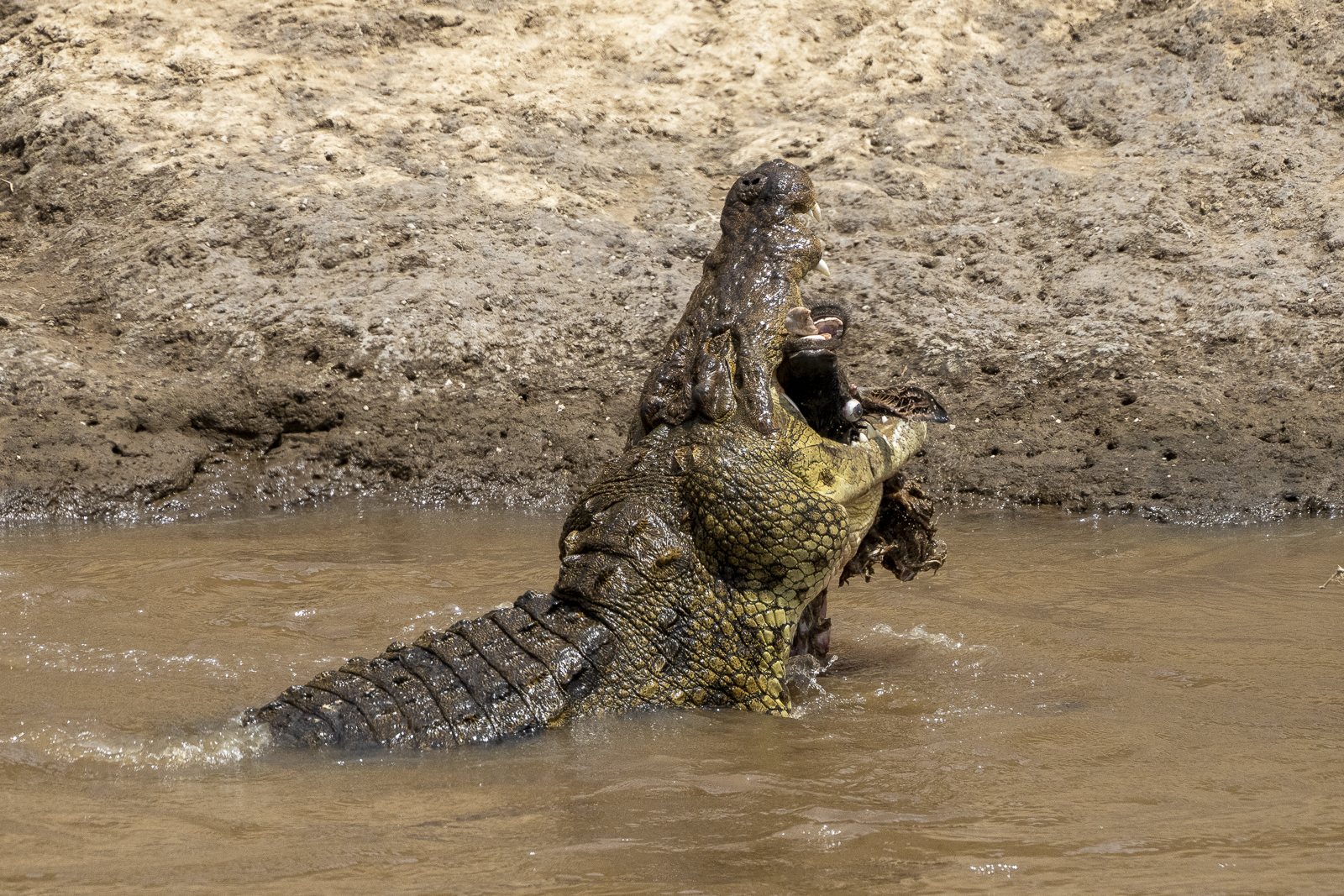
During the first and best crossing that I saw, a crocodile did take a wildebeest. I did photograph it, but it was far enough away that the crocodile and wildebeest were fairly small in the frame. However, the story did not end there. The crocodile brought the wildebeest to a spot just across the river from where we were parked. Another croc tried to take it away. I don't know which one won, but the winner took the wildebeest downstream. Then, about an hour and a half later, it brought the head back and stopped right across the river from us again and tossed the head into the air to get a better grip on it I guess. I did not capture the head in the air, but started shooting just after that. It was a little shocking to see when I reviewed the images, but here is the most powerful one (cropped image) - it looks like something out of a horror movie. I am glad that my other images don't look like this one, even though it is a very real situation there.
I will post other images once I get them ready - they will be more normal than this one.
Abuttolph wrote
I returned home a week ago from a month in Kenya and Tanzania and it was an exceptional experience. Before launching into the trip report, I want to thank those FM members who so generously offered advice and guidance for this trip. The information was invaluable and helped to make the trip as successful as possible.Upon arriving in Nairobi, I spent three days at Ololo Lodge in Nairobi National Park. This time was mainly to get over the worst of the jet lag coming from the western US, but also to get into safari shooting mode. The decision to spend time there was a good one. The lodge is really nice and the staff are terrific. Nairobi National Park was the only place on my trip where I saw rhinos, both black and southern white rhinos. Another highlight was watching a serval hunt a rat then take it back to her two kittens to play with. I was over the moon about that because I actually did not expect to see servals at all, then saw three just a couple of days into the trip. Little did I know that I would be fortunate enough to see more both in Maasai Mara and Serengeti.
For the Maasai Mara portion of the trip, I signed up for two successive weeks with David Lloyd. We were originally supposed to be at Entim Camp the full time but the camp cancelled the reservations and David found other camps at the last minute. This turned out to be a very fortunate change. The first week was spent in the Ripoi Conservancy and we stayed at Mara Siana Camp. During two of the days, we went into the Maasai Mara National Reserve to shoot the river crossings, but otherwise stayed in the Ripoi Conservancy. I absolutely loved both the camp and the Ripoi Conservancy. All of the staff at the camp, including the guides, are Maasai. They have an incredibly deep connection with the land and wildlife and it is very apparent. Our guides, Salaash and Fred, were incredible. They know the area like the back of their hands. Their knowledge of pretty much everything was impressive and they were more than happy to give information and share their knowledge.
Ripoi Conservancy is new and at this point, the wildlife is still getting used to visitors. Planning for the conservancy has been aimed at keeping the number of people low with a maximum of one guest per 350 acres. This was terrific as we never saw a single other vehicle while there. Photography there was excellent. Highlights for me were lions, including cubs, cheetah, elephants, and giraffe. We also saw a vulture feeding frenzy that was unlike anything that I have ever witnessed. It was a pulsing, seething, noisy, bickering mass of vultures on zebra corpse. It proved to be a challenging situation for my cameras autofocus, but I got a few good shots although I really don't think that still photos captured the way that the feeding frenzy seemed to have its own life. If I had to choose a favorite place from this trip, it would be the Mara Siana Camp and the Ripoi Conservancy.
During two days that that we ventured into the Maasai Mara National Reserve, we did see a pretty good river crossing, although there were so many vehicles that the dust was incredible and some of the drivers broke off the chain of wildebeest which cut the crossing shorter than it probably otherwise would have been. We also saw a cheetah hunt a hare and that was the only cheetah hunt that I saw during my trip.
For the second week with David, we moved to the northern Maasai Mara and stayed at Mara Tangulia. As with the previous camp, all of the staff and guides were Maasai, so there was definitely a consistency with the level of knowledge and the approach taken to game drives. Highlights from this area were the Marsh Pride, a male lion who is not part of the Marsh Pride, elephants, servals (two kittens, did not see the mom), baboons, mongoose, and various birds with a particularly not shy lilac breasted roller. There was one baby elephant that was a real character and so much fun to watch and photograph.
The week in Tanzania was handled differently and we moved to a different place nearly every night. This part was run by a different operator (Primaland Safaris and Inscape Photo Tours) and was a more budget friendly safari. During this part of the trip, we visited Arusha National Park, Ngorongoro Crater, and Serengeti National Park. We saw a couple of Mara River crossings but with the vehicle competition for spots, I was never in a particularly good position for photos. Admittedly, this seemed to be a problem everywhere and was not a fault of the driver/guide. Plus, it seemed that in Tanzania, vehicles were restricted to a further distance from the river. The best photographic opportunities that we had were cheetahs (both single and in a coalition of three) and lions. One lion pride had at least 16 individuals including eight cubs that were still nursing. With another group of lions, we had the opportunity to photograph a little cub that had climbed on top of a rock outcrop and did some posing for us. There was also a serval and for the life of me, I don't know how the guides knew where to turn off to find it but they did. The Serengeti was incredibly dusty and definitely in general, more dusty than the Maasai Mara area.
As discussed previously in this thread, the national parks see far more vehicle traffic than the conservancies. It was much more pleasurable to be in the conservancies where there were fewer vehicles. This also goes for areas of the parks that are not so busy as well. If I am fortunate enough to go again, I keep time in the national parks to a minimum and spend the majority of time in the less frequented areas.
On gear, I took a little more than needed, but I did use almost everything that I packed. Here is the list, with comments on usage:
Three Sony A1 bodies (used extensively, obviously)
Sony 300mm f2.8 prime lens - used extensively and more than any other lens, both with and without the 1.4x and 2.0x teleconverters
Sony 1.4x and 2.0 x teleconverters (see above - used extensively)
Sony 200-600mm lens - used extensively during the first part of the trip and less so later on, mostly because I wanted to simplify while in the vehicle. I was able to get some images with this lens that I would not have been able to otherwise without the zoom.
Sony 70-200 f2.8 GM II - used a lot
Sony 24-70 - used infrequently
Tamron 17-28 - did not use
Monopod - used infrequently to get low angle shots (had some trouble with the AF using my cable release and finally gave up)
I have not yet had time to work on editing images but hope to do so in the coming weeks. Have a lot on my plate with other things right now but will try to upload as I can.
Looks like you had an awesome time, thanks for the report. Look forward to seeing some photos as well. PMd you separately about the Ripoi Conservancy, it sounds really promising.
I think the hardest thing for us to experience well is a river crossing. With the climate changing so much, it is such a hit and miss, even more than it used to be. And the crowds are ever increasing. The one and only crossing I've seen was on my very first visit to Africa, in 2007. In all my trips since, despite being there in season, there was...Show more →
It sounds like the crossing that you saw was spectacular. And with only a few cars too. That would be really hard to duplicate at this point in time, I think. You are fortunate to have been able to witness that and to photograph the croc with the wildebeest in its jaws! You experience is probably quite a rare one.
During the first and best crossing that I saw, a crocodile did take a wildebeest. I did photograph it, but it was far enough away that the crocodile and wildebeest were fairly small in the frame. However, the story did not end there. The crocodile brought the wildebeest to a spot just across the river from where we were parked. Another croc tried to take it away. I don't know which one won, but the winner took the wildebeest downstream. Then, about an hour and a half later, it brought the head back and stopped right across the river from us again and tossed the head into the air to get a better grip on it I guess. I did not capture the head in the air, but started shooting just after that. It was a little shocking to see when I reviewed the images, but here is the most powerful one (cropped image) - it looks like something out of a horror movie. I am glad that my other images don't look like this one, even though it is a very real situation there.
I will post other images once I get them ready - they will be more normal than this one.
ILCE-1 FE 300mm F2.8 GM OSS + 2X Teleconverter lens 600mm f/7.1 1/4000s 1000 ISO 0.0 EV
Sep 08, 2024 at 09:58 AM
p.66 #5African safari talk...recommendations?
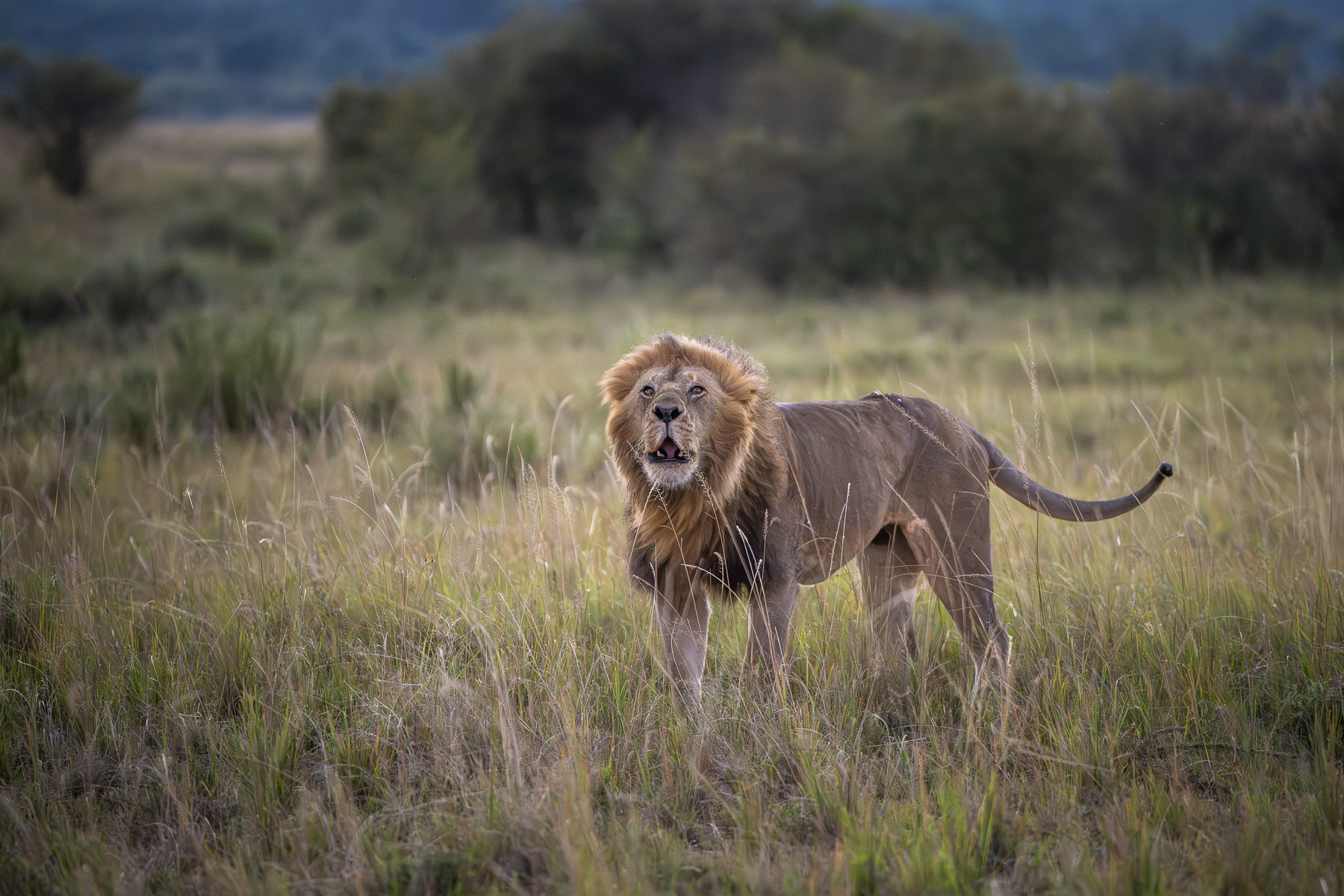
I went ahead and posted some of my initially selected images to the Nature & Wildlife thread: https://www.fredmiranda.com/forum/topic/1872478/0?year=current#lastmessage
ILCE-1 FE 70-200mm F2.8 GM OSS II lens 197mm f/2.8 1/640s 12800 ISO 0.0 EV
Sep 08, 2024 at 12:44 PM
p.66 #6African safari talk...recommendations?
berimbolo wrote:
Does anyone have a complete list of conservancies in the Mara? It looks like there are a few smaller conservancies (like Ripoi mentioned earlier).
This is a decent map of the greater Mara conservancies and shows many of the camps in each conservancy.
Note that Olare Orok and Motorogi have merged into Olare Motorogi and is one of the premier conservancies.
https://maraconservancies.org/mara-conservancies-map/
Sep 08, 2024 at 03:45 PM
p.66 #7African safari talk...recommendations?
Visually Oriented wrote:
berimbolo wrote
Does anyone have a complete list of conservancies in the Mara? It looks like there are a few smaller conservancies (like Ripoi mentioned earlier).Note that Olare Orok and Motorogi have merged into Olare Motorogi and is one of the premier conservancies.
https://maraconservancies.org/mara-conservancies-map/
The far South East corner along the Sand River border with Tanzania is my favorite area. Beautiful geography, rich in wildlife, relatively sparse in tourists. You can see that there are few camps in the area, and the tourist busses don't like the long rough drive. For even more fun do some wild camping just outside the park boundaries. Still plenty of wildlife there.
Sep 08, 2024 at 04:53 PM
p.66 #8African safari talk...recommendations?
Abuttolph wrote:
Upon arriving in Nairobi, I spent three days at Ololo Lodge in Nairobi National Park. This time was mainly to get over the worst of the jet lag coming from the western US, but also to get into safari shooting mode. The decision to spend time there was a good one. The lodge is really nice and the staff are terrific. Nairobi National Park was the only place on my trip where I saw rhinos, both black and southern white rhinos. Another highlight was watching a serval hunt a rat then take it back to her two kittens to play with. I was over the moon about that because I actually did not expect to see servals at all, then saw three just a couple of days into the trip. Little did I know that I would be fortunate enough to see more both in Maasai Mara and Serengeti.
For the Maasai Mara portion of the trip, I signed up for two successive weeks with David Lloyd. We were originally supposed to be at Entim Camp the full time but the camp cancelled the reservations and David found other camps at the last minute. This turned out to be a very fortunate change. The first week was spent in the Ripoi Conservancy and we stayed at Mara Siana Camp. During two of the days, we went into the Maasai Mara National Reserve to shoot the river crossings, but otherwise stayed in the Ripoi Conservancy. I absolutely loved both the camp and the Ripoi Conservancy. All of the staff at the camp, including the guides, are Maasai. They have an incredibly deep connection with the land and wildlife and it is very apparent. Our guides, Salaash and Fred, were incredible. They know the area like the back of their hands. Their knowledge of pretty much everything was impressive and they were more than happy to give information and share their knowledge.
Ripoi Conservancy is new and at this point, the wildlife is still getting used to visitors. Planning for the conservancy has been aimed at keeping the number of people low with a maximum of one guest per 350 acres. This was terrific as we never saw a single other vehicle while there. Photography there was excellent. Highlights for me were lions, including cubs, cheetah, elephants, and giraffe. We also saw a vulture feeding frenzy that was unlike anything that I have ever witnessed. It was a pulsing, seething, noisy, bickering mass of vultures on zebra corpse. It proved to be a challenging situation for my cameras autofocus, but I got a few good shots although I really don't think that still photos captured the way that the feeding frenzy seemed to have its own life. If I had to choose a favorite place from this trip, it would be the Mara Siana Camp and the Ripoi Conservancy.
During two days that that we ventured into the Maasai Mara National Reserve, we did see a pretty good river crossing, although there were so many vehicles that the dust was incredible and some of the drivers broke off the chain of wildebeest which cut the crossing shorter than it probably otherwise would have been. We also saw a cheetah hunt a hare and that was the only cheetah hunt that I saw during my trip.
For the second week with David, we moved to the northern Maasai Mara and stayed at Mara Tangulia. As with the previous camp, all of the staff and guides were Maasai, so there was definitely a consistency with the level of knowledge and the approach taken to game drives. Highlights from this area were the Marsh Pride, a male lion who is not part of the Marsh Pride, elephants, servals (two kittens, did not see the mom), baboons, mongoose, and various birds with a particularly not shy lilac breasted roller. There was one baby elephant that was a real character and so much fun to watch and photograph.
The week in Tanzania was handled differently and we moved to a different place nearly every night. This part was run by a different operator (Primaland Safaris and Inscape Photo Tours) and was a more budget friendly safari. During this part of the trip, we visited Arusha National Park, Ngorongoro Crater, and Serengeti National Park. We saw a couple of Mara River crossings but with the vehicle competition for spots, I was never in a particularly good position for photos. Admittedly, this seemed to be a problem everywhere and was not a fault of the driver/guide. Plus, it seemed that in Tanzania, vehicles were restricted to a further distance from the river. The best photographic opportunities that we had were cheetahs (both single and in a coalition of three) and lions. One lion pride had at least 16 individuals including eight cubs that were still nursing. With another group of lions, we had the opportunity to photograph a little cub that had climbed on top of a rock outcrop and did some posing for us. There was also a serval and for the life of me, I don't know how the guides knew where to turn off to find it but they did. The Serengeti was incredibly dusty and definitely in general, more dusty than the Maasai Mara area.
As discussed previously in this thread, the national parks see far more vehicle traffic than the conservancies. It was much more pleasurable to be in the conservancies where there were fewer vehicles. This also goes for areas of the parks that are not so busy as well. If I am fortunate enough to go again, I keep time in the national parks to a minimum and spend the majority of time in the less frequented areas.
On gear, I took a little more than needed, but I did use almost everything that I packed. Here is the list, with comments on usage:
Three Sony A1 bodies (used extensively, obviously)
Sony 300mm f2.8 prime lens - used extensively and more than any other lens, both with and without the 1.4x and 2.0x teleconverters
Sony 1.4x and 2.0 x teleconverters (see above - used extensively)
Sony 200-600mm lens - used extensively during the first part of the trip and less so later on, mostly because I wanted to simplify while in the vehicle. I was able to get some images with this lens that I would not have been able to otherwise without the zoom.
Sony 70-200 f2.8 GM II - used a lot
Sony 24-70 - used infrequently
Tamron 17-28 - did not use
Monopod - used infrequently to get low angle shots (had some trouble with the AF using my cable release and finally gave up)
I have not yet had time to work on editing images but hope to do so in the coming weeks. Have a lot on my plate with other things right now but will try to upload as I can..
Looks like you had an awesome time, thanks for the report. Look forward to seeing some photos as well. PMd you separately about the Ripoi Conservancy, it sounds really promising.
I think the hardest thing for us to experience well is a river crossing. With the climate changing so much, it is such a hit and miss, even more than it used to be. And the crowds are ever increasing. The one and only crossing I've seen was on my very first visit to Africa, in 2007. In all my trips since, despite being there in season, there was no crossing. Luck of course is a big factor. On that first trip, our team leader who had been to Africa 16 times already, was just as excited because it was the best event he had seen. Thousands upon thousands of animals were crossing in front of us, I even managed to photograph a crocodile catching a wildbeest in its jaws! And the best part of it - there were no more than 3-4 cars - at the crossing near Mara Serena!
I would certainly love to see it again but not sure where to go.It sounds like the crossing that you saw was spectacular. And with only a few cars too. That would be really hard to duplicate at this point in time, I think. You are fortunate to have been able to witness that and to photograph the croc with the wildebeest in its jaws! You experience is probably quite a rare one.
During the first and best crossing that I saw, a crocodile did take a wildebeest. I did photograph it, but it was far enough away that the crocodile and wildebeest were fairly small in the frame. However, the story did not...Show more →
Oh wow, this does look disturbing, but nature is what it is. On my last visit to Kenya I witnessed a cheetah kill for the first time. The wildebeest calf was still alive and trying to get up when one of the cheetahs began feeding from the back end. It remained alive for a long time after that. Difficult to watch and one family member with me who was in Africa for the first time was badly grossed out.
Thanks for sharing the photos, no matter what the subject matter is, these are difficult to take and a reflection of our natural world, warts and all.
Primus wrote
Abuttolph wrote
I returned home a week ago from a month in Kenya and Tanzania and it was an exceptional experience. Before launching into the trip report, I want to thank those FM members who so generously offered advice and guidance for this trip. The information was invaluable and helped to make the trip as successful as possible.Upon arriving in Nairobi, I spent three days at Ololo Lodge in Nairobi National Park. This time was mainly to get over the worst of the jet lag coming from the western US, but also to get into safari shooting mode. The decision to spend time there was a good one. The lodge is really nice and the staff are terrific. Nairobi National Park was the only place on my trip where I saw rhinos, both black and southern white rhinos. Another highlight was watching a serval hunt a rat then take it back to her two kittens to play with. I was over the moon about that because I actually did not expect to see servals at all, then saw three just a couple of days into the trip. Little did I know that I would be fortunate enough to see more both in Maasai Mara and Serengeti.
For the Maasai Mara portion of the trip, I signed up for two successive weeks with David Lloyd. We were originally supposed to be at Entim Camp the full time but the camp cancelled the reservations and David found other camps at the last minute. This turned out to be a very fortunate change. The first week was spent in the Ripoi Conservancy and we stayed at Mara Siana Camp. During two of the days, we went into the Maasai Mara National Reserve to shoot the river crossings, but otherwise stayed in the Ripoi Conservancy. I absolutely loved both the camp and the Ripoi Conservancy. All of the staff at the camp, including the guides, are Maasai. They have an incredibly deep connection with the land and wildlife and it is very apparent. Our guides, Salaash and Fred, were incredible. They know the area like the back of their hands. Their knowledge of pretty much everything was impressive and they were more than happy to give information and share their knowledge.
Ripoi Conservancy is new and at this point, the wildlife is still getting used to visitors. Planning for the conservancy has been aimed at keeping the number of people low with a maximum of one guest per 350 acres. This was terrific as we never saw a single other vehicle while there. Photography there was excellent. Highlights for me were lions, including cubs, cheetah, elephants, and giraffe. We also saw a vulture feeding frenzy that was unlike anything that I have ever witnessed. It was a pulsing, seething, noisy, bickering mass of vultures on zebra corpse. It proved to be a challenging situation for my cameras autofocus, but I got a few good shots although I really don't think that still photos captured the way that the feeding frenzy seemed to have its own life. If I had to choose a favorite place from this trip, it would be the Mara Siana Camp and the Ripoi Conservancy.
During two days that that we ventured into the Maasai Mara National Reserve, we did see a pretty good river crossing, although there were so many vehicles that the dust was incredible and some of the drivers broke off the chain of wildebeest which cut the crossing shorter than it probably otherwise would have been. We also saw a cheetah hunt a hare and that was the only cheetah hunt that I saw during my trip.
For the second week with David, we moved to the northern Maasai Mara and stayed at Mara Tangulia. As with the previous camp, all of the staff and guides were Maasai, so there was definitely a consistency with the level of knowledge and the approach taken to game drives. Highlights from this area were the Marsh Pride, a male lion who is not part of the Marsh Pride, elephants, servals (two kittens, did not see the mom), baboons, mongoose, and various birds with a particularly not shy lilac breasted roller. There was one baby elephant that was a real character and so much fun to watch and photograph.
The week in Tanzania was handled differently and we moved to a different place nearly every night. This part was run by a different operator (Primaland Safaris and Inscape Photo Tours) and was a more budget friendly safari. During this part of the trip, we visited Arusha National Park, Ngorongoro Crater, and Serengeti National Park. We saw a couple of Mara River crossings but with the vehicle competition for spots, I was never in a particularly good position for photos. Admittedly, this seemed to be a problem everywhere and was not a fault of the driver/guide. Plus, it seemed that in Tanzania, vehicles were restricted to a further distance from the river. The best photographic opportunities that we had were cheetahs (both single and in a coalition of three) and lions. One lion pride had at least 16 individuals including eight cubs that were still nursing. With another group of lions, we had the opportunity to photograph a little cub that had climbed on top of a rock outcrop and did some posing for us. There was also a serval and for the life of me, I don't know how the guides knew where to turn off to find it but they did. The Serengeti was incredibly dusty and definitely in general, more dusty than the Maasai Mara area.
As discussed previously in this thread, the national parks see far more vehicle traffic than the conservancies. It was much more pleasurable to be in the conservancies where there were fewer vehicles. This also goes for areas of the parks that are not so busy as well. If I am fortunate enough to go again, I keep time in the national parks to a minimum and spend the majority of time in the less frequented areas.
On gear, I took a little more than needed, but I did use almost everything that I packed. Here is the list, with comments on usage:
Three Sony A1 bodies (used extensively, obviously)
Sony 300mm f2.8 prime lens - used extensively and more than any other lens, both with and without the 1.4x and 2.0x teleconverters
Sony 1.4x and 2.0 x teleconverters (see above - used extensively)
Sony 200-600mm lens - used extensively during the first part of the trip and less so later on, mostly because I wanted to simplify while in the vehicle. I was able to get some images with this lens that I would not have been able to otherwise without the zoom.
Sony 70-200 f2.8 GM II - used a lot
Sony 24-70 - used infrequently
Tamron 17-28 - did not use
Monopod - used infrequently to get low angle shots (had some trouble with the AF using my cable release and finally gave up)
I have not yet had time to work on editing images but hope to do so in the coming weeks. Have a lot on my plate with other things right now but will try to upload as I can.
Looks like you had an awesome time, thanks for the report. Look forward to seeing some photos as well. PMd you separately about the Ripoi Conservancy, it sounds really promising.
I think the hardest thing for us to experience well is a river crossing. With the climate changing so much, it is such a hit and miss, even more than it used to be. And the crowds are ever increasing. The one and only crossing I've seen was on my very first visit to Africa, in 2007. In all my trips since, despite being there in season, there was no crossing. Luck of course is a big factor. On that first trip, our team leader who had been to Africa 16 times already, was just as excited because it was the best event he had seen. Thousands upon thousands of animals were crossing in front of us, I even managed to photograph a crocodile catching a wildbeest in its jaws! And the best part of it - there were no more than 3-4 cars - at the crossing near Mara Serena!
I would certainly love to see it again but not sure where to go.
During the first and best crossing that I saw, a crocodile did take a wildebeest. I did photograph it, but it was far enough away that the crocodile and wildebeest were fairly small in the frame. However, the story did not...Show more →
Oh wow, this does look disturbing, but nature is what it is. On my last visit to Kenya I witnessed a cheetah kill for the first time. The wildebeest calf was still alive and trying to get up when one of the cheetahs began feeding from the back end. It remained alive for a long time after that. Difficult to watch and one family member with me who was in Africa for the first time was badly grossed out.
Thanks for sharing the photos, no matter what the subject matter is, these are difficult to take and a reflection of our natural world, warts and all.
Sep 08, 2024 at 05:31 PM
p.66 #9African safari talk...recommendations?
Hi we are going back to Zambia next year, South Luangwa
We last went to Zambia in 2013 and stayed at Kafunta who were excellent this time we are staying at flat dogs
Is off careful track game driving still allowed ?
Our guide was able to get us into good positions for photography, he was careful and didn’t get too close to the animals
If I understand the situation correctly it’s not allowed officially but careful and considerate positioning of vehicles is ok and tolerated
Sep 09, 2024 at 02:44 AM
p.66 #10African safari talk...recommendations?
Well there’s no such thing as “careful off track” driving in South Luangwa or any national park. Even well before 2013 it wasn’t allowed when I visited in 1995.
The reality is the further you go from the area around the Mfuwe gate, the less the rules are adhered to. You still take the risk if you get caught—just get ready to pay the rangers in USD —no matter what your drive says. Remember the guides and drivers want to make you happy since you’re the client even if it’s not allowed. Hope you have a wonderful time.
350lcpete wrote:
Hi we are going back to Zambia next year, South Luangwa
We last went to Zambia in 2013 and stayed at Kafunta who were excellent this time we are staying at flat dogs
Is off careful track game driving still allowed ?
Our guide was able to get us into good positions for photography, he was careful and didn’t get too close to the animals
If I understand the situation correctly it’s not allowed officially but careful and considerate positioning of vehicles is ok and tolerated
Sep 09, 2024 at 09:31 AM
p.66 #11African safari talk...recommendations?
robert_in_ca wrote:
Well there’s no such thing as “careful off track” driving in South Luangwa or any national park. Even well before 2013 it wasn’t allowed when I visited in 1995.
The reality is the further you go from the area around the Mfuwe gate, the less the rules are adhered to. You still take the risk if you get caught—just get ready to pay the rangers in USD —no matter what your drive says. Remember the guides and drivers want to make you happy since you’re the client even if it’s not allowed. Hope you have a wonderful time.
We last went to Zambia in 2013 and stayed at Kafunta who were excellent this time we are staying at flat dogs
Is off careful track game driving still allowed ?
Our guide was able to get us into good positions for photography, he was careful and didn’t get too close to the animals
If I understand the situation correctly it’s not allowed officially but careful and considerate positioning of vehicles is ok and tolerated
I am booked for a trip to Zambia next year in June. Staying at the Kaingo camp in the SLNP then moving to Lower Zambesi for a few days.
Never been there so it is exciting, however, this is the most expensive safari I will have ever done, so a bit apprehensive about value for money. Can only know once I get there. It is not a conservancy so cannot predict vehicle traffic, hopefully will not be too much where we will be. I did not know there is no off-roading, but it is what it is I suppose.
Well there’s no such thing as “careful off track” driving in South Luangwa or any national park. Even well before 2013 it wasn’t allowed when I visited in 1995.
The reality is the further you go from the area around the Mfuwe gate, the less the rules are adhered to. You still take the risk if you get caught—just get ready to pay the rangers in USD —no matter what your drive says. Remember the guides and drivers want to make you happy since you’re the client even if it’s not allowed. Hope you have a wonderful time.
350lcpete wrote
Hi we are going back to Zambia next year, South LuangwaWe last went to Zambia in 2013 and stayed at Kafunta who were excellent this time we are staying at flat dogs
Is off careful track game driving still allowed ?
Our guide was able to get us into good positions for photography, he was careful and didn’t get too close to the animals
If I understand the situation correctly it’s not allowed officially but careful and considerate positioning of vehicles is ok and tolerated
I am booked for a trip to Zambia next year in June. Staying at the Kaingo camp in the SLNP then moving to Lower Zambesi for a few days.
Never been there so it is exciting, however, this is the most expensive safari I will have ever done, so a bit apprehensive about value for money. Can only know once I get there. It is not a conservancy so cannot predict vehicle traffic, hopefully will not be too much where we will be. I did not know there is no off-roading, but it is what it is I suppose.
Sep 09, 2024 at 11:11 AM
p.66 #12African safari talk...recommendations?
Any suggestions or recommendations for Pilanesberg National Park? Planning to be there for a day and half.
Sep 09, 2024 at 11:15 AM
p.66 #13African safari talk...recommendations?
Primus wrote:
Upon arriving in Nairobi, I spent three days at Ololo Lodge in Nairobi National Park. This time was mainly to get over the worst of the jet lag coming from the western US, but also to get into safari shooting mode. The decision to spend time there was a good one. The lodge is really nice and the staff are terrific. Nairobi National Park was the only place on my trip where I saw rhinos, both black and southern white rhinos. Another highlight was watching a serval hunt a rat then take it back to her two kittens to play with. I was over the moon about that because I actually did not expect to see servals at all, then saw three just a couple of days into the trip. Little did I know that I would be fortunate enough to see more both in Maasai Mara and Serengeti.
For the Maasai Mara portion of the trip, I signed up for two successive weeks with David Lloyd. We were originally supposed to be at Entim Camp the full time but the camp cancelled the reservations and David found other camps at the last minute. This turned out to be a very fortunate change. The first week was spent in the Ripoi Conservancy and we stayed at Mara Siana Camp. During two of the days, we went into the Maasai Mara National Reserve to shoot the river crossings, but otherwise stayed in the Ripoi Conservancy. I absolutely loved both the camp and the Ripoi Conservancy. All of the staff at the camp, including the guides, are Maasai. They have an incredibly deep connection with the land and wildlife and it is very apparent. Our guides, Salaash and Fred, were incredible. They know the area like the back of their hands. Their knowledge of pretty much everything was impressive and they were more than happy to give information and share their knowledge.
Ripoi Conservancy is new and at this point, the wildlife is still getting used to visitors. Planning for the conservancy has been aimed at keeping the number of people low with a maximum of one guest per 350 acres. This was terrific as we never saw a single other vehicle while there. Photography there was excellent. Highlights for me were lions, including cubs, cheetah, elephants, and giraffe. We also saw a vulture feeding frenzy that was unlike anything that I have ever witnessed. It was a pulsing, seething, noisy, bickering mass of vultures on zebra corpse. It proved to be a challenging situation for my cameras autofocus, but I got a few good shots although I really don't think that still photos captured the way that the feeding frenzy seemed to have its own life. If I had to choose a favorite place from this trip, it would be the Mara Siana Camp and the Ripoi Conservancy.
During two days that that we ventured into the Maasai Mara National Reserve, we did see a pretty good river crossing, although there were so many vehicles that the dust was incredible and some of the drivers broke off the chain of wildebeest which cut the crossing shorter than it probably otherwise would have been. We also saw a cheetah hunt a hare and that was the only cheetah hunt that I saw during my trip.
For the second week with David, we moved to the northern Maasai Mara and stayed at Mara Tangulia. As with the previous camp, all of the staff and guides were Maasai, so there was definitely a consistency with the level of knowledge and the approach taken to game drives. Highlights from this area were the Marsh Pride, a male lion who is not part of the Marsh Pride, elephants, servals (two kittens, did not see the mom), baboons, mongoose, and various birds with a particularly not shy lilac breasted roller. There was one baby elephant that was a real character and so much fun to watch and photograph.
The week in Tanzania was handled differently and we moved to a different place nearly every night. This part was run by a different operator (Primaland Safaris and Inscape Photo Tours) and was a more budget friendly safari. During this part of the trip, we visited Arusha National Park, Ngorongoro Crater, and Serengeti National Park. We saw a couple of Mara River crossings but with the vehicle competition for spots, I was never in a particularly good position for photos. Admittedly, this seemed to be a problem everywhere and was not a fault of the driver/guide. Plus, it seemed that in Tanzania, vehicles were restricted to a further distance from the river. The best photographic opportunities that we had were cheetahs (both single and in a coalition of three) and lions. One lion pride had at least 16 individuals including eight cubs that were still nursing. With another group of lions, we had the opportunity to photograph a little cub that had climbed on top of a rock outcrop and did some posing for us. There was also a serval and for the life of me, I don't know how the guides knew where to turn off to find it but they did. The Serengeti was incredibly dusty and definitely in general, more dusty than the Maasai Mara area.
As discussed previously in this thread, the national parks see far more vehicle traffic than the conservancies. It was much more pleasurable to be in the conservancies where there were fewer vehicles. This also goes for areas of the parks that are not so busy as well. If I am fortunate enough to go again, I keep time in the national parks to a minimum and spend the majority of time in the less frequented areas.
On gear, I took a little more than needed, but I did use almost everything that I packed. Here is the list, with comments on usage:
Three Sony A1 bodies (used extensively, obviously)
Sony 300mm f2.8 prime lens - used extensively and more than any other lens, both with and without the 1.4x and 2.0x teleconverters
Sony 1.4x and 2.0 x teleconverters (see above - used extensively)
Sony 200-600mm lens - used extensively during the first part of the trip and less so later on, mostly because I wanted to simplify while in the vehicle. I was able to get some images with this lens that I would not have been able to otherwise without the zoom.
Sony 70-200 f2.8 GM II - used a lot
Sony 24-70 - used infrequently
Tamron 17-28 - did not use
Monopod - used infrequently to get low angle shots (had some trouble with the AF using my cable release and finally gave up)
I have not yet had time to work on editing images but hope to do so in the coming weeks. Have a lot on my plate with other things right now but will try to upload as I can..
Looks like you had an awesome time, thanks for the report. Look forward to seeing some photos as well. PMd you separately about the Ripoi Conservancy, it sounds really promising.
I think the hardest thing for us to experience well is a river crossing. With the climate changing so much, it is such a hit and miss, even more than it used to be. And the crowds are ever increasing. The one and only crossing I've seen was on my very first visit to Africa, in 2007. In all my trips since, despite being there in season, there was no crossing. Luck of course is a big factor. On that first trip, our team leader who had been to Africa 16 times already, was just as excited because it was the best event he had seen. Thousands upon thousands of animals were crossing in front of us, I even managed to photograph a crocodile catching a wildbeest in its jaws! And the best part of it - there were no more than 3-4 cars - at the crossing near Mara Serena!
I would certainly love to see it again but not sure where to go.It sounds like the crossing that you saw was spectacular. And with only a few cars too. That would be really hard to duplicate at this point in time, I think. You are fortunate to have been able to witness that and to photograph the croc with the wildebeest in its jaws! You experience is probably quite a rare one.
During the first and best crossing that I saw, a crocodile did take a wildebeest. I did photograph it, but it was far enough away that the crocodile and wildebeest were fairly small in the frame. However, the story did not end there. The crocodile brought the wildebeest to a spot just across the river from where we were parked. Another croc tried to take it away. I don't know which one won, but the winner took the wildebeest downstream. Then, about an hour and a half later, it brought the head back and stopped right across the river from us again and tossed the head into the air to get a better grip on it I guess. I did not capture the head in the air, but started shooting just after that. It was a little shocking to see when I reviewed the images, but here is the most powerful one (cropped image) - it looks like something out of a horror movie. I am glad that my other images don't look like this one, even though it is a very real situation there.
I will post other images once I get them ready - they will be more normal than this one.Oh wow, this does look disturbing, but nature is what it is. On my last visit to Kenya I witnessed a cheetah kill for the first time. The wildebeest calf was still alive and trying to get up when one of the cheetahs began feeding from the back end. It remained alive for a long time after that. Difficult to watch and one family member with me who was in Africa for the first time was badly grossed out.
Thanks for sharing the photos, no matter what the subject matter is, these are difficult to take and a reflection of...Show more →
The sighting of the wildebeest being eaten alive must have been difficult to watch as well. It would have been for me. However, as you said, that is nature and it is like that whether we witness it or not. What makes it hard, I think, is to put ourselves in the place of the prey on some level.
Because of the nature of the image of the wildebeest head in the crocodile's mouth, I really was on the fence about posting it even while I was still in Kenya. However, other members of the group that I was with put it in the same perspective as you - this is the reality of the natural world. So, in the end, I decided to post it.
Abuttolph wrote
Primus wrote
Abuttolph wrote
I returned home a week ago from a month in Kenya and Tanzania and it was an exceptional experience. Before launching into the trip report, I want to thank those FM members who so generously offered advice and guidance for this trip. The information was invaluable and helped to make the trip as successful as possible.Upon arriving in Nairobi, I spent three days at Ololo Lodge in Nairobi National Park. This time was mainly to get over the worst of the jet lag coming from the western US, but also to get into safari shooting mode. The decision to spend time there was a good one. The lodge is really nice and the staff are terrific. Nairobi National Park was the only place on my trip where I saw rhinos, both black and southern white rhinos. Another highlight was watching a serval hunt a rat then take it back to her two kittens to play with. I was over the moon about that because I actually did not expect to see servals at all, then saw three just a couple of days into the trip. Little did I know that I would be fortunate enough to see more both in Maasai Mara and Serengeti.
For the Maasai Mara portion of the trip, I signed up for two successive weeks with David Lloyd. We were originally supposed to be at Entim Camp the full time but the camp cancelled the reservations and David found other camps at the last minute. This turned out to be a very fortunate change. The first week was spent in the Ripoi Conservancy and we stayed at Mara Siana Camp. During two of the days, we went into the Maasai Mara National Reserve to shoot the river crossings, but otherwise stayed in the Ripoi Conservancy. I absolutely loved both the camp and the Ripoi Conservancy. All of the staff at the camp, including the guides, are Maasai. They have an incredibly deep connection with the land and wildlife and it is very apparent. Our guides, Salaash and Fred, were incredible. They know the area like the back of their hands. Their knowledge of pretty much everything was impressive and they were more than happy to give information and share their knowledge.
Ripoi Conservancy is new and at this point, the wildlife is still getting used to visitors. Planning for the conservancy has been aimed at keeping the number of people low with a maximum of one guest per 350 acres. This was terrific as we never saw a single other vehicle while there. Photography there was excellent. Highlights for me were lions, including cubs, cheetah, elephants, and giraffe. We also saw a vulture feeding frenzy that was unlike anything that I have ever witnessed. It was a pulsing, seething, noisy, bickering mass of vultures on zebra corpse. It proved to be a challenging situation for my cameras autofocus, but I got a few good shots although I really don't think that still photos captured the way that the feeding frenzy seemed to have its own life. If I had to choose a favorite place from this trip, it would be the Mara Siana Camp and the Ripoi Conservancy.
During two days that that we ventured into the Maasai Mara National Reserve, we did see a pretty good river crossing, although there were so many vehicles that the dust was incredible and some of the drivers broke off the chain of wildebeest which cut the crossing shorter than it probably otherwise would have been. We also saw a cheetah hunt a hare and that was the only cheetah hunt that I saw during my trip.
For the second week with David, we moved to the northern Maasai Mara and stayed at Mara Tangulia. As with the previous camp, all of the staff and guides were Maasai, so there was definitely a consistency with the level of knowledge and the approach taken to game drives. Highlights from this area were the Marsh Pride, a male lion who is not part of the Marsh Pride, elephants, servals (two kittens, did not see the mom), baboons, mongoose, and various birds with a particularly not shy lilac breasted roller. There was one baby elephant that was a real character and so much fun to watch and photograph.
The week in Tanzania was handled differently and we moved to a different place nearly every night. This part was run by a different operator (Primaland Safaris and Inscape Photo Tours) and was a more budget friendly safari. During this part of the trip, we visited Arusha National Park, Ngorongoro Crater, and Serengeti National Park. We saw a couple of Mara River crossings but with the vehicle competition for spots, I was never in a particularly good position for photos. Admittedly, this seemed to be a problem everywhere and was not a fault of the driver/guide. Plus, it seemed that in Tanzania, vehicles were restricted to a further distance from the river. The best photographic opportunities that we had were cheetahs (both single and in a coalition of three) and lions. One lion pride had at least 16 individuals including eight cubs that were still nursing. With another group of lions, we had the opportunity to photograph a little cub that had climbed on top of a rock outcrop and did some posing for us. There was also a serval and for the life of me, I don't know how the guides knew where to turn off to find it but they did. The Serengeti was incredibly dusty and definitely in general, more dusty than the Maasai Mara area.
As discussed previously in this thread, the national parks see far more vehicle traffic than the conservancies. It was much more pleasurable to be in the conservancies where there were fewer vehicles. This also goes for areas of the parks that are not so busy as well. If I am fortunate enough to go again, I keep time in the national parks to a minimum and spend the majority of time in the less frequented areas.
On gear, I took a little more than needed, but I did use almost everything that I packed. Here is the list, with comments on usage:
Three Sony A1 bodies (used extensively, obviously)
Sony 300mm f2.8 prime lens - used extensively and more than any other lens, both with and without the 1.4x and 2.0x teleconverters
Sony 1.4x and 2.0 x teleconverters (see above - used extensively)
Sony 200-600mm lens - used extensively during the first part of the trip and less so later on, mostly because I wanted to simplify while in the vehicle. I was able to get some images with this lens that I would not have been able to otherwise without the zoom.
Sony 70-200 f2.8 GM II - used a lot
Sony 24-70 - used infrequently
Tamron 17-28 - did not use
Monopod - used infrequently to get low angle shots (had some trouble with the AF using my cable release and finally gave up)
I have not yet had time to work on editing images but hope to do so in the coming weeks. Have a lot on my plate with other things right now but will try to upload as I can.
Looks like you had an awesome time, thanks for the report. Look forward to seeing some photos as well. PMd you separately about the Ripoi Conservancy, it sounds really promising.
I think the hardest thing for us to experience well is a river crossing. With the climate changing so much, it is such a hit and miss, even more than it used to be. And the crowds are ever increasing. The one and only crossing I've seen was on my very first visit to Africa, in 2007. In all my trips since, despite being there in season, there was no crossing. Luck of course is a big factor. On that first trip, our team leader who had been to Africa 16 times already, was just as excited because it was the best event he had seen. Thousands upon thousands of animals were crossing in front of us, I even managed to photograph a crocodile catching a wildbeest in its jaws! And the best part of it - there were no more than 3-4 cars - at the crossing near Mara Serena!
I would certainly love to see it again but not sure where to go.
During the first and best crossing that I saw, a crocodile did take a wildebeest. I did photograph it, but it was far enough away that the crocodile and wildebeest were fairly small in the frame. However, the story did not end there. The crocodile brought the wildebeest to a spot just across the river from where we were parked. Another croc tried to take it away. I don't know which one won, but the winner took the wildebeest downstream. Then, about an hour and a half later, it brought the head back and stopped right across the river from us again and tossed the head into the air to get a better grip on it I guess. I did not capture the head in the air, but started shooting just after that. It was a little shocking to see when I reviewed the images, but here is the most powerful one (cropped image) - it looks like something out of a horror movie. I am glad that my other images don't look like this one, even though it is a very real situation there.
I will post other images once I get them ready - they will be more normal than this one.
Thanks for sharing the photos, no matter what the subject matter is, these are difficult to take and a reflection of...Show more →
The sighting of the wildebeest being eaten alive must have been difficult to watch as well. It would have been for me. However, as you said, that is nature and it is like that whether we witness it or not. What makes it hard, I think, is to put ourselves in the place of the prey on some level.
Because of the nature of the image of the wildebeest head in the crocodile's mouth, I really was on the fence about posting it even while I was still in Kenya. However, other members of the group that I was with put it in the same perspective as you - this is the reality of the natural world. So, in the end, I decided to post it.
Sep 09, 2024 at 12:09 PM
p.66 #14African safari talk...recommendations?
Abuttolph wrote:
Upon arriving in Nairobi, I spent three days at Ololo Lodge in Nairobi National Park. This time was mainly to get over the worst of the jet lag coming from the western US, but also to get into safari shooting mode. The decision to spend time there was a good one. The lodge is really nice and the staff are terrific. Nairobi National Park was the only place on my trip where I saw rhinos, both black and southern white rhinos. Another highlight was watching a serval hunt a rat then take it back to her two kittens to play with. I was over the moon about that because I actually did not expect to see servals at all, then saw three just a couple of days into the trip. Little did I know that I would be fortunate enough to see more both in Maasai Mara and Serengeti.
For the Maasai Mara portion of the trip, I signed up for two successive weeks with David Lloyd. We were originally supposed to be at Entim Camp the full time but the camp cancelled the reservations and David found other camps at the last minute. This turned out to be a very fortunate change. The first week was spent in the Ripoi Conservancy and we stayed at Mara Siana Camp. During two of the days, we went into the Maasai Mara National Reserve to shoot the river crossings, but otherwise stayed in the Ripoi Conservancy. I absolutely loved both the camp and the Ripoi Conservancy. All of the staff at the camp, including the guides, are Maasai. They have an incredibly deep connection with the land and wildlife and it is very apparent. Our guides, Salaash and Fred, were incredible. They know the area like the back of their hands. Their knowledge of pretty much everything was impressive and they were more than happy to give information and share their knowledge.
Ripoi Conservancy is new and at this point, the wildlife is still getting used to visitors. Planning for the conservancy has been aimed at keeping the number of people low with a maximum of one guest per 350 acres. This was terrific as we never saw a single other vehicle while there. Photography there was excellent. Highlights for me were lions, including cubs, cheetah, elephants, and giraffe. We also saw a vulture feeding frenzy that was unlike anything that I have ever witnessed. It was a pulsing, seething, noisy, bickering mass of vultures on zebra corpse. It proved to be a challenging situation for my cameras autofocus, but I got a few good shots although I really don't think that still photos captured the way that the feeding frenzy seemed to have its own life. If I had to choose a favorite place from this trip, it would be the Mara Siana Camp and the Ripoi Conservancy.
During two days that that we ventured into the Maasai Mara National Reserve, we did see a pretty good river crossing, although there were so many vehicles that the dust was incredible and some of the drivers broke off the chain of wildebeest which cut the crossing shorter than it probably otherwise would have been. We also saw a cheetah hunt a hare and that was the only cheetah hunt that I saw during my trip.
For the second week with David, we moved to the northern Maasai Mara and stayed at Mara Tangulia. As with the previous camp, all of the staff and guides were Maasai, so there was definitely a consistency with the level of knowledge and the approach taken to game drives. Highlights from this area were the Marsh Pride, a male lion who is not part of the Marsh Pride, elephants, servals (two kittens, did not see the mom), baboons, mongoose, and various birds with a particularly not shy lilac breasted roller. There was one baby elephant that was a real character and so much fun to watch and photograph.
The week in Tanzania was handled differently and we moved to a different place nearly every night. This part was run by a different operator (Primaland Safaris and Inscape Photo Tours) and was a more budget friendly safari. During this part of the trip, we visited Arusha National Park, Ngorongoro Crater, and Serengeti National Park. We saw a couple of Mara River crossings but with the vehicle competition for spots, I was never in a particularly good position for photos. Admittedly, this seemed to be a problem everywhere and was not a fault of the driver/guide. Plus, it seemed that in Tanzania, vehicles were restricted to a further distance from the river. The best photographic opportunities that we had were cheetahs (both single and in a coalition of three) and lions. One lion pride had at least 16 individuals including eight cubs that were still nursing. With another group of lions, we had the opportunity to photograph a little cub that had climbed on top of a rock outcrop and did some posing for us. There was also a serval and for the life of me, I don't know how the guides knew where to turn off to find it but they did. The Serengeti was incredibly dusty and definitely in general, more dusty than the Maasai Mara area.
As discussed previously in this thread, the national parks see far more vehicle traffic than the conservancies. It was much more pleasurable to be in the conservancies where there were fewer vehicles. This also goes for areas of the parks that are not so busy as well. If I am fortunate enough to go again, I keep time in the national parks to a minimum and spend the majority of time in the less frequented areas.
On gear, I took a little more than needed, but I did use almost everything that I packed. Here is the list, with comments on usage:
Three Sony A1 bodies (used extensively, obviously)
Sony 300mm f2.8 prime lens - used extensively and more than any other lens, both with and without the 1.4x and 2.0x teleconverters
Sony 1.4x and 2.0 x teleconverters (see above - used extensively)
Sony 200-600mm lens - used extensively during the first part of the trip and less so later on, mostly because I wanted to simplify while in the vehicle. I was able to get some images with this lens that I would not have been able to otherwise without the zoom.
Sony 70-200 f2.8 GM II - used a lot
Sony 24-70 - used infrequently
Tamron 17-28 - did not use
Monopod - used infrequently to get low angle shots (had some trouble with the AF using my cable release and finally gave up)
I have not yet had time to work on editing images but hope to do so in the coming weeks. Have a lot on my plate with other things right now but will try to upload as I can..
Looks like you had an awesome time, thanks for the report. Look forward to seeing some photos as well. PMd you separately about the Ripoi Conservancy, it sounds really promising.
I think the hardest thing for us to experience well is a river crossing. With the climate changing so much, it is such a hit and miss, even more than it used to be. And the crowds are ever increasing. The one and only crossing I've seen was on my very first visit to Africa, in 2007. In all my trips since, despite being there in season, there was no crossing. Luck of course is a big factor. On that first trip, our team leader who had been to Africa 16 times already, was just as excited because it was the best event he had seen. Thousands upon thousands of animals were crossing in front of us, I even managed to photograph a crocodile catching a wildbeest in its jaws! And the best part of it - there were no more than 3-4 cars - at the crossing near Mara Serena!
I would certainly love to see it again but not sure where to go.It sounds like the crossing that you saw was spectacular. And with only a few cars too. That would be really hard to duplicate at this point in time, I think. You are fortunate to have been able to witness that and to photograph the croc with the wildebeest in its jaws! You experience is probably quite a rare one.
During the first and best crossing that I saw, a crocodile did take a wildebeest. I did photograph it, but it was far enough away that the crocodile and wildebeest were fairly small in the frame. However, the story did not end there. The crocodile brought the wildebeest to a spot just across the river from where we were parked. Another croc tried to take it away. I don't know which one won, but the winner took the wildebeest downstream. Then, about an hour and a half later, it brought the head back and stopped right across the river from us again and tossed the head into the air to get a better grip on it I guess. I did not capture the head in the air, but started shooting just after that. It was a little shocking to see when I reviewed the images, but here is the most powerful one (cropped image) - it looks like something out of a horror movie. I am glad that my other images don't look like this one, even though it is a very real situation there.
I will post other images once I get them ready - they will be more normal than this one.Oh wow, this does look disturbing, but nature is what it is. On my last visit to Kenya I witnessed a cheetah kill for the first time. The wildebeest calf was still alive and trying to get up when one of the cheetahs began feeding from the back end. It remained alive for a long time after that. Difficult to watch and one family member with me who was in Africa for the first time was badly grossed out.
Thanks for sharing the photos, no matter what the subject matter is, these are difficult to take and a reflection of our natural world, warts and all.The sighting of the wildebeest being eaten alive must have been difficult to watch as well. It would have been for me. However, as you said, that is nature and it is like that whether we witness it or not. What makes it hard, I think, is to put ourselves in the place of the prey on some level.
Because of the nature of the image of the wildebeest head in the crocodile's mouth, I really was on the fence about posting it even while I was still in Kenya. However, other members of the group that I was with...Show more →
And thank you for posting, it is another one of those rare moments.
Yes, a lof of what we see in Africa is not for the squeamish. My first trip in 2007, the lion kill in the morning was so 'fresh' they hadn't yet opened the body when we got there and in the morning cold it was steaming when they did. Surreal sight in the morning mist.
Despite all my bravado, I doubt I could watch an elephant or a girafffe being taken down, or even a buffalo give up his life after a long battle. But again, that too is part of the every day struggle in the wild.
Primus wrote
Abuttolph wrote
Primus wrote
Abuttolph wrote
I returned home a week ago from a month in Kenya and Tanzania and it was an exceptional experience. Before launching into the trip report, I want to thank those FM members who so generously offered advice and guidance for this trip. The information was invaluable and helped to make the trip as successful as possible.Upon arriving in Nairobi, I spent three days at Ololo Lodge in Nairobi National Park. This time was mainly to get over the worst of the jet lag coming from the western US, but also to get into safari shooting mode. The decision to spend time there was a good one. The lodge is really nice and the staff are terrific. Nairobi National Park was the only place on my trip where I saw rhinos, both black and southern white rhinos. Another highlight was watching a serval hunt a rat then take it back to her two kittens to play with. I was over the moon about that because I actually did not expect to see servals at all, then saw three just a couple of days into the trip. Little did I know that I would be fortunate enough to see more both in Maasai Mara and Serengeti.
For the Maasai Mara portion of the trip, I signed up for two successive weeks with David Lloyd. We were originally supposed to be at Entim Camp the full time but the camp cancelled the reservations and David found other camps at the last minute. This turned out to be a very fortunate change. The first week was spent in the Ripoi Conservancy and we stayed at Mara Siana Camp. During two of the days, we went into the Maasai Mara National Reserve to shoot the river crossings, but otherwise stayed in the Ripoi Conservancy. I absolutely loved both the camp and the Ripoi Conservancy. All of the staff at the camp, including the guides, are Maasai. They have an incredibly deep connection with the land and wildlife and it is very apparent. Our guides, Salaash and Fred, were incredible. They know the area like the back of their hands. Their knowledge of pretty much everything was impressive and they were more than happy to give information and share their knowledge.
Ripoi Conservancy is new and at this point, the wildlife is still getting used to visitors. Planning for the conservancy has been aimed at keeping the number of people low with a maximum of one guest per 350 acres. This was terrific as we never saw a single other vehicle while there. Photography there was excellent. Highlights for me were lions, including cubs, cheetah, elephants, and giraffe. We also saw a vulture feeding frenzy that was unlike anything that I have ever witnessed. It was a pulsing, seething, noisy, bickering mass of vultures on zebra corpse. It proved to be a challenging situation for my cameras autofocus, but I got a few good shots although I really don't think that still photos captured the way that the feeding frenzy seemed to have its own life. If I had to choose a favorite place from this trip, it would be the Mara Siana Camp and the Ripoi Conservancy.
During two days that that we ventured into the Maasai Mara National Reserve, we did see a pretty good river crossing, although there were so many vehicles that the dust was incredible and some of the drivers broke off the chain of wildebeest which cut the crossing shorter than it probably otherwise would have been. We also saw a cheetah hunt a hare and that was the only cheetah hunt that I saw during my trip.
For the second week with David, we moved to the northern Maasai Mara and stayed at Mara Tangulia. As with the previous camp, all of the staff and guides were Maasai, so there was definitely a consistency with the level of knowledge and the approach taken to game drives. Highlights from this area were the Marsh Pride, a male lion who is not part of the Marsh Pride, elephants, servals (two kittens, did not see the mom), baboons, mongoose, and various birds with a particularly not shy lilac breasted roller. There was one baby elephant that was a real character and so much fun to watch and photograph.
The week in Tanzania was handled differently and we moved to a different place nearly every night. This part was run by a different operator (Primaland Safaris and Inscape Photo Tours) and was a more budget friendly safari. During this part of the trip, we visited Arusha National Park, Ngorongoro Crater, and Serengeti National Park. We saw a couple of Mara River crossings but with the vehicle competition for spots, I was never in a particularly good position for photos. Admittedly, this seemed to be a problem everywhere and was not a fault of the driver/guide. Plus, it seemed that in Tanzania, vehicles were restricted to a further distance from the river. The best photographic opportunities that we had were cheetahs (both single and in a coalition of three) and lions. One lion pride had at least 16 individuals including eight cubs that were still nursing. With another group of lions, we had the opportunity to photograph a little cub that had climbed on top of a rock outcrop and did some posing for us. There was also a serval and for the life of me, I don't know how the guides knew where to turn off to find it but they did. The Serengeti was incredibly dusty and definitely in general, more dusty than the Maasai Mara area.
As discussed previously in this thread, the national parks see far more vehicle traffic than the conservancies. It was much more pleasurable to be in the conservancies where there were fewer vehicles. This also goes for areas of the parks that are not so busy as well. If I am fortunate enough to go again, I keep time in the national parks to a minimum and spend the majority of time in the less frequented areas.
On gear, I took a little more than needed, but I did use almost everything that I packed. Here is the list, with comments on usage:
Three Sony A1 bodies (used extensively, obviously)
Sony 300mm f2.8 prime lens - used extensively and more than any other lens, both with and without the 1.4x and 2.0x teleconverters
Sony 1.4x and 2.0 x teleconverters (see above - used extensively)
Sony 200-600mm lens - used extensively during the first part of the trip and less so later on, mostly because I wanted to simplify while in the vehicle. I was able to get some images with this lens that I would not have been able to otherwise without the zoom.
Sony 70-200 f2.8 GM II - used a lot
Sony 24-70 - used infrequently
Tamron 17-28 - did not use
Monopod - used infrequently to get low angle shots (had some trouble with the AF using my cable release and finally gave up)
I have not yet had time to work on editing images but hope to do so in the coming weeks. Have a lot on my plate with other things right now but will try to upload as I can.
Looks like you had an awesome time, thanks for the report. Look forward to seeing some photos as well. PMd you separately about the Ripoi Conservancy, it sounds really promising.
I think the hardest thing for us to experience well is a river crossing. With the climate changing so much, it is such a hit and miss, even more than it used to be. And the crowds are ever increasing. The one and only crossing I've seen was on my very first visit to Africa, in 2007. In all my trips since, despite being there in season, there was no crossing. Luck of course is a big factor. On that first trip, our team leader who had been to Africa 16 times already, was just as excited because it was the best event he had seen. Thousands upon thousands of animals were crossing in front of us, I even managed to photograph a crocodile catching a wildbeest in its jaws! And the best part of it - there were no more than 3-4 cars - at the crossing near Mara Serena!
I would certainly love to see it again but not sure where to go.
During the first and best crossing that I saw, a crocodile did take a wildebeest. I did photograph it, but it was far enough away that the crocodile and wildebeest were fairly small in the frame. However, the story did not end there. The crocodile brought the wildebeest to a spot just across the river from where we were parked. Another croc tried to take it away. I don't know which one won, but the winner took the wildebeest downstream. Then, about an hour and a half later, it brought the head back and stopped right across the river from us again and tossed the head into the air to get a better grip on it I guess. I did not capture the head in the air, but started shooting just after that. It was a little shocking to see when I reviewed the images, but here is the most powerful one (cropped image) - it looks like something out of a horror movie. I am glad that my other images don't look like this one, even though it is a very real situation there.
I will post other images once I get them ready - they will be more normal than this one.
Thanks for sharing the photos, no matter what the subject matter is, these are difficult to take and a reflection of our natural world, warts and all.
Because of the nature of the image of the wildebeest head in the crocodile's mouth, I really was on the fence about posting it even while I was still in Kenya. However, other members of the group that I was with...Show more →
And thank you for posting, it is another one of those rare moments.
Yes, a lof of what we see in Africa is not for the squeamish. My first trip in 2007, the lion kill in the morning was so 'fresh' they hadn't yet opened the body when we got there and in the morning cold it was steaming when they did. Surreal sight in the morning mist.
Despite all my bravado, I doubt I could watch an elephant or a girafffe being taken down, or even a buffalo give up his life after a long battle. But again, that too is part of the every day struggle in the wild.
Sep 09, 2024 at 01:05 PM
p.66 #15African safari talk...recommendations?
Around Mfuwe will be busy, but outside that area it really won’t be. Even so, it won’t be nearly as busy as other NP in Africa. Off road or not you’ll have a wonderful time.
Primus wrote:
The reality is the further you go from the area around the Mfuwe gate, the less the rules are adhered to. You still take the risk if you get caught—just get ready to pay the rangers in USD —no matter what your drive says. Remember the guides and drivers want to make you happy since you’re the client even if it’s not allowed. Hope you have a wonderful time.
We last went to Zambia in 2013 and stayed at Kafunta who were excellent this time we are staying at flat dogs
Is off careful track game driving still allowed ?
Our guide was able to get us into good positions for photography, he was careful and didn’t get too close to the animals
If I understand the situation correctly it’s not allowed officially but careful and considerate positioning of vehicles is ok and toleratedI am booked for a trip to Zambia next year in June. Staying at the Kaingo camp in the SLNP then moving to Lower Zambesi for a few days.
Never been there so it is exciting, however, this is the most expensive safari I will have ever done, so a bit apprehensive about value for money. Can only know once I get there. It is not a conservancy so cannot predict vehicle traffic, hopefully will not be too much where we will be. I did not know there is no off-roading, but it is what it is I suppose.
Primus wrote:
robert_in_ca wrote
Well there’s no such thing as “careful off track” driving in South Luangwa or any national park. Even well before 2013 it wasn’t allowed when I visited in 1995.The reality is the further you go from the area around the Mfuwe gate, the less the rules are adhered to. You still take the risk if you get caught—just get ready to pay the rangers in USD —no matter what your drive says. Remember the guides and drivers want to make you happy since you’re the client even if it’s not allowed. Hope you have a wonderful time.
350lcpete wrote
Hi we are going back to Zambia next year, South LuangwaWe last went to Zambia in 2013 and stayed at Kafunta who were excellent this time we are staying at flat dogs
Is off careful track game driving still allowed ?
Our guide was able to get us into good positions for photography, he was careful and didn’t get too close to the animals
If I understand the situation correctly it’s not allowed officially but careful and considerate positioning of vehicles is ok and tolerated
Never been there so it is exciting, however, this is the most expensive safari I will have ever done, so a bit apprehensive about value for money. Can only know once I get there. It is not a conservancy so cannot predict vehicle traffic, hopefully will not be too much where we will be. I did not know there is no off-roading, but it is what it is I suppose.
Sep 09, 2024 at 01:51 PM
p.66 #16African safari talk...recommendations?
Abuttolph wrote:
Upon arriving in Nairobi, I spent three days at Ololo Lodge in Nairobi National Park. This time was mainly to get over the worst of the jet lag coming from the western US, but also to get into safari shooting mode. The decision to spend time there was a good one. The lodge is really nice and the staff are terrific. Nairobi National Park was the only place on my trip where I saw rhinos, both black and southern white rhinos. Another highlight was watching a serval hunt a rat then take it back to her two kittens to play with. I was over the moon about that because I actually did not expect to see servals at all, then saw three just a couple of days into the trip. Little did I know that I would be fortunate enough to see more both in Maasai Mara and Serengeti.
For the Maasai Mara portion of the trip, I signed up for two successive weeks with David Lloyd. We were originally supposed to be at Entim Camp the full time but the camp cancelled the reservations and David found other camps at the last minute. This turned out to be a very fortunate change. The first week was spent in the Ripoi Conservancy and we stayed at Mara Siana Camp. During two of the days, we went into the Maasai Mara National Reserve to shoot the river crossings, but otherwise stayed in the Ripoi Conservancy. I absolutely loved both the camp and the Ripoi Conservancy. All of the staff at the camp, including the guides, are Maasai. They have an incredibly deep connection with the land and wildlife and it is very apparent. Our guides, Salaash and Fred, were incredible. They know the area like the back of their hands. Their knowledge of pretty much everything was impressive and they were more than happy to give information and share their knowledge.
Ripoi Conservancy is new and at this point, the wildlife is still getting used to visitors. Planning for the conservancy has been aimed at keeping the number of people low with a maximum of one guest per 350 acres. This was terrific as we never saw a single other vehicle while there. Photography there was excellent. Highlights for me were lions, including cubs, cheetah, elephants, and giraffe. We also saw a vulture feeding frenzy that was unlike anything that I have ever witnessed. It was a pulsing, seething, noisy, bickering mass of vultures on zebra corpse. It proved to be a challenging situation for my cameras autofocus, but I got a few good shots although I really don't think that still photos captured the way that the feeding frenzy seemed to have its own life. If I had to choose a favorite place from this trip, it would be the Mara Siana Camp and the Ripoi Conservancy.
During two days that that we ventured into the Maasai Mara National Reserve, we did see a pretty good river crossing, although there were so many vehicles that the dust was incredible and some of the drivers broke off the chain of wildebeest which cut the crossing shorter than it probably otherwise would have been. We also saw a cheetah hunt a hare and that was the only cheetah hunt that I saw during my trip.
For the second week with David, we moved to the northern Maasai Mara and stayed at Mara Tangulia. As with the previous camp, all of the staff and guides were Maasai, so there was definitely a consistency with the level of knowledge and the approach taken to game drives. Highlights from this area were the Marsh Pride, a male lion who is not part of the Marsh Pride, elephants, servals (two kittens, did not see the mom), baboons, mongoose, and various birds with a particularly not shy lilac breasted roller. There was one baby elephant that was a real character and so much fun to watch and photograph.
The week in Tanzania was handled differently and we moved to a different place nearly every night. This part was run by a different operator (Primaland Safaris and Inscape Photo Tours) and was a more budget friendly safari. During this part of the trip, we visited Arusha National Park, Ngorongoro Crater, and Serengeti National Park. We saw a couple of Mara River crossings but with the vehicle competition for spots, I was never in a particularly good position for photos. Admittedly, this seemed to be a problem everywhere and was not a fault of the driver/guide. Plus, it seemed that in Tanzania, vehicles were restricted to a further distance from the river. The best photographic opportunities that we had were cheetahs (both single and in a coalition of three) and lions. One lion pride had at least 16 individuals including eight cubs that were still nursing. With another group of lions, we had the opportunity to photograph a little cub that had climbed on top of a rock outcrop and did some posing for us. There was also a serval and for the life of me, I don't know how the guides knew where to turn off to find it but they did. The Serengeti was incredibly dusty and definitely in general, more dusty than the Maasai Mara area.
As discussed previously in this thread, the national parks see far more vehicle traffic than the conservancies. It was much more pleasurable to be in the conservancies where there were fewer vehicles. This also goes for areas of the parks that are not so busy as well. If I am fortunate enough to go again, I keep time in the national parks to a minimum and spend the majority of time in the less frequented areas.
On gear, I took a little more than needed, but I did use almost everything that I packed. Here is the list, with comments on usage:
Three Sony A1 bodies (used extensively, obviously)
Sony 300mm f2.8 prime lens - used extensively and more than any other lens, both with and without the 1.4x and 2.0x teleconverters
Sony 1.4x and 2.0 x teleconverters (see above - used extensively)
Sony 200-600mm lens - used extensively during the first part of the trip and less so later on, mostly because I wanted to simplify while in the vehicle. I was able to get some images with this lens that I would not have been able to otherwise without the zoom.
Sony 70-200 f2.8 GM II - used a lot
Sony 24-70 - used infrequently
Tamron 17-28 - did not use
Monopod - used infrequently to get low angle shots (had some trouble with the AF using my cable release and finally gave up)
I have not yet had time to work on editing images but hope to do so in the coming weeks. Have a lot on my plate with other things right now but will try to upload as I can..
Looks like you had an awesome time, thanks for the report. Look forward to seeing some photos as well. PMd you separately about the Ripoi Conservancy, it sounds really promising.
I think the hardest thing for us to experience well is a river crossing. With the climate changing so much, it is such a hit and miss, even more than it used to be. And the crowds are ever increasing. The one and only crossing I've seen was on my very first visit to Africa, in 2007. In all my trips since, despite being there in season, there was no crossing. Luck of course is a big factor. On that first trip, our team leader who had been to Africa 16 times already, was just as excited because it was the best event he had seen. Thousands upon thousands of animals were crossing in front of us, I even managed to photograph a crocodile catching a wildbeest in its jaws! And the best part of it - there were no more than 3-4 cars - at the crossing near Mara Serena!
I would certainly love to see it again but not sure where to go.It sounds like the crossing that you saw was spectacular. And with only a few cars too. That would be really hard to duplicate at this point in time, I think. You are fortunate to have been able to witness that and to photograph the croc with the wildebeest in its jaws! You experience is probably quite a rare one.
During the first and best crossing that I saw, a crocodile did take a wildebeest. I did photograph it, but it was far enough away that the crocodile and wildebeest were fairly small in the frame. However, the story did not end there. The crocodile brought the wildebeest to a spot just across the river from where we were parked. Another croc tried to take it away. I don't know which one won, but the winner took the wildebeest downstream. Then, about an hour and a half later, it brought the head back and stopped right across the river from us again and tossed the head into the air to get a better grip on it I guess. I did not capture the head in the air, but started shooting just after that. It was a little shocking to see when I reviewed the images, but here is the most powerful one (cropped image) - it looks like something out of a horror movie. I am glad that my other images don't look like this one, even though it is a very real situation there.
I will post other images once I get them ready - they will be more normal than this one.Oh wow, this does look disturbing, but nature is what it is. On my last visit to Kenya I witnessed a cheetah kill for the first time. The wildebeest calf was still alive and trying to get up when one of the cheetahs began feeding from the back end. It remained alive for a long time after that. Difficult to watch and one family member with me who was in Africa for the first time was badly grossed out.
Thanks for sharing the photos, no matter what the subject matter is, these are difficult to take and a reflection of our natural world, warts and all.The sighting of the wildebeest being eaten alive must have been difficult to watch as well. It would have been for me. However, as you said, that is nature and it is like that whether we witness it or not. What makes it hard, I think, is to put ourselves in the place of the prey on some level.
Because of the nature of the image of the wildebeest head in the crocodile's mouth, I really was on the fence about posting it even while I was still in Kenya. However, other members of the group that I was with...Show more →
Don't sweat posting that image, I'm glad you posted it. Before I had been to Africa it would bother me seeing animals get taken down on TV in safari videos. But once I got there and saw my first kill in person I learned it didn't bother me as much because you realize this is how the food chain works and it happens every day out there. My first kill experience was a poor zebra that was taken down by a female lion. She held her down while struggling without fully suffocating her for quite some time while she waited for the male lion to show up so he could eat first. I was about 15ft away and down wind...I can't describe the smell as I had never smelled it previously, but it was a smell of warm fresh meat on another level. And the loud sounds they make while tearing into the muscle and bones...it's much louder than one would expect.
The thing that will always bother me is watching the babies get hassled or taken. Watched a Topi being born and while the Mom was trying to clean her two Jackals show up and start pestering and snapping at the baby for a couple hours. Also saw a baby giraffe and impala in the same situation. Those are not fun to watch, but it's likely you'll see something like this while on safari.
Primus wrote
Abuttolph wrote
Primus wrote
Abuttolph wrote
I returned home a week ago from a month in Kenya and Tanzania and it was an exceptional experience. Before launching into the trip report, I want to thank those FM members who so generously offered advice and guidance for this trip. The information was invaluable and helped to make the trip as successful as possible.Upon arriving in Nairobi, I spent three days at Ololo Lodge in Nairobi National Park. This time was mainly to get over the worst of the jet lag coming from the western US, but also to get into safari shooting mode. The decision to spend time there was a good one. The lodge is really nice and the staff are terrific. Nairobi National Park was the only place on my trip where I saw rhinos, both black and southern white rhinos. Another highlight was watching a serval hunt a rat then take it back to her two kittens to play with. I was over the moon about that because I actually did not expect to see servals at all, then saw three just a couple of days into the trip. Little did I know that I would be fortunate enough to see more both in Maasai Mara and Serengeti.
For the Maasai Mara portion of the trip, I signed up for two successive weeks with David Lloyd. We were originally supposed to be at Entim Camp the full time but the camp cancelled the reservations and David found other camps at the last minute. This turned out to be a very fortunate change. The first week was spent in the Ripoi Conservancy and we stayed at Mara Siana Camp. During two of the days, we went into the Maasai Mara National Reserve to shoot the river crossings, but otherwise stayed in the Ripoi Conservancy. I absolutely loved both the camp and the Ripoi Conservancy. All of the staff at the camp, including the guides, are Maasai. They have an incredibly deep connection with the land and wildlife and it is very apparent. Our guides, Salaash and Fred, were incredible. They know the area like the back of their hands. Their knowledge of pretty much everything was impressive and they were more than happy to give information and share their knowledge.
Ripoi Conservancy is new and at this point, the wildlife is still getting used to visitors. Planning for the conservancy has been aimed at keeping the number of people low with a maximum of one guest per 350 acres. This was terrific as we never saw a single other vehicle while there. Photography there was excellent. Highlights for me were lions, including cubs, cheetah, elephants, and giraffe. We also saw a vulture feeding frenzy that was unlike anything that I have ever witnessed. It was a pulsing, seething, noisy, bickering mass of vultures on zebra corpse. It proved to be a challenging situation for my cameras autofocus, but I got a few good shots although I really don't think that still photos captured the way that the feeding frenzy seemed to have its own life. If I had to choose a favorite place from this trip, it would be the Mara Siana Camp and the Ripoi Conservancy.
During two days that that we ventured into the Maasai Mara National Reserve, we did see a pretty good river crossing, although there were so many vehicles that the dust was incredible and some of the drivers broke off the chain of wildebeest which cut the crossing shorter than it probably otherwise would have been. We also saw a cheetah hunt a hare and that was the only cheetah hunt that I saw during my trip.
For the second week with David, we moved to the northern Maasai Mara and stayed at Mara Tangulia. As with the previous camp, all of the staff and guides were Maasai, so there was definitely a consistency with the level of knowledge and the approach taken to game drives. Highlights from this area were the Marsh Pride, a male lion who is not part of the Marsh Pride, elephants, servals (two kittens, did not see the mom), baboons, mongoose, and various birds with a particularly not shy lilac breasted roller. There was one baby elephant that was a real character and so much fun to watch and photograph.
The week in Tanzania was handled differently and we moved to a different place nearly every night. This part was run by a different operator (Primaland Safaris and Inscape Photo Tours) and was a more budget friendly safari. During this part of the trip, we visited Arusha National Park, Ngorongoro Crater, and Serengeti National Park. We saw a couple of Mara River crossings but with the vehicle competition for spots, I was never in a particularly good position for photos. Admittedly, this seemed to be a problem everywhere and was not a fault of the driver/guide. Plus, it seemed that in Tanzania, vehicles were restricted to a further distance from the river. The best photographic opportunities that we had were cheetahs (both single and in a coalition of three) and lions. One lion pride had at least 16 individuals including eight cubs that were still nursing. With another group of lions, we had the opportunity to photograph a little cub that had climbed on top of a rock outcrop and did some posing for us. There was also a serval and for the life of me, I don't know how the guides knew where to turn off to find it but they did. The Serengeti was incredibly dusty and definitely in general, more dusty than the Maasai Mara area.
As discussed previously in this thread, the national parks see far more vehicle traffic than the conservancies. It was much more pleasurable to be in the conservancies where there were fewer vehicles. This also goes for areas of the parks that are not so busy as well. If I am fortunate enough to go again, I keep time in the national parks to a minimum and spend the majority of time in the less frequented areas.
On gear, I took a little more than needed, but I did use almost everything that I packed. Here is the list, with comments on usage:
Three Sony A1 bodies (used extensively, obviously)
Sony 300mm f2.8 prime lens - used extensively and more than any other lens, both with and without the 1.4x and 2.0x teleconverters
Sony 1.4x and 2.0 x teleconverters (see above - used extensively)
Sony 200-600mm lens - used extensively during the first part of the trip and less so later on, mostly because I wanted to simplify while in the vehicle. I was able to get some images with this lens that I would not have been able to otherwise without the zoom.
Sony 70-200 f2.8 GM II - used a lot
Sony 24-70 - used infrequently
Tamron 17-28 - did not use
Monopod - used infrequently to get low angle shots (had some trouble with the AF using my cable release and finally gave up)
I have not yet had time to work on editing images but hope to do so in the coming weeks. Have a lot on my plate with other things right now but will try to upload as I can.
Looks like you had an awesome time, thanks for the report. Look forward to seeing some photos as well. PMd you separately about the Ripoi Conservancy, it sounds really promising.
I think the hardest thing for us to experience well is a river crossing. With the climate changing so much, it is such a hit and miss, even more than it used to be. And the crowds are ever increasing. The one and only crossing I've seen was on my very first visit to Africa, in 2007. In all my trips since, despite being there in season, there was no crossing. Luck of course is a big factor. On that first trip, our team leader who had been to Africa 16 times already, was just as excited because it was the best event he had seen. Thousands upon thousands of animals were crossing in front of us, I even managed to photograph a crocodile catching a wildbeest in its jaws! And the best part of it - there were no more than 3-4 cars - at the crossing near Mara Serena!
I would certainly love to see it again but not sure where to go.
During the first and best crossing that I saw, a crocodile did take a wildebeest. I did photograph it, but it was far enough away that the crocodile and wildebeest were fairly small in the frame. However, the story did not end there. The crocodile brought the wildebeest to a spot just across the river from where we were parked. Another croc tried to take it away. I don't know which one won, but the winner took the wildebeest downstream. Then, about an hour and a half later, it brought the head back and stopped right across the river from us again and tossed the head into the air to get a better grip on it I guess. I did not capture the head in the air, but started shooting just after that. It was a little shocking to see when I reviewed the images, but here is the most powerful one (cropped image) - it looks like something out of a horror movie. I am glad that my other images don't look like this one, even though it is a very real situation there.
I will post other images once I get them ready - they will be more normal than this one.
Thanks for sharing the photos, no matter what the subject matter is, these are difficult to take and a reflection of our natural world, warts and all.
Because of the nature of the image of the wildebeest head in the crocodile's mouth, I really was on the fence about posting it even while I was still in Kenya. However, other members of the group that I was with...Show more →
Don't sweat posting that image, I'm glad you posted it. Before I had been to Africa it would bother me seeing animals get taken down on TV in safari videos. But once I got there and saw my first kill in person I learned it didn't bother me as much because you realize this is how the food chain works and it happens every day out there. My first kill experience was a poor zebra that was taken down by a female lion. She held her down while struggling without fully suffocating her for quite some time while she waited for the male lion to show up so he could eat first. I was about 15ft away and down wind...I can't describe the smell as I had never smelled it previously, but it was a smell of warm fresh meat on another level. And the loud sounds they make while tearing into the muscle and bones...it's much louder than one would expect.
The thing that will always bother me is watching the babies get hassled or taken. Watched a Topi being born and while the Mom was trying to clean her two Jackals show up and start pestering and snapping at the baby for a couple hours. Also saw a baby giraffe and impala in the same situation. Those are not fun to watch, but it's likely you'll see something like this while on safari.
Sep 09, 2024 at 02:31 PM
p.66 #17African safari talk...recommendations?
I’ve seen a number of kills and as exciting as one might think it is to see it’s also very humbling. One of the hardest things I saw was a leopard take a lion cub (as it was calling for its mother) up into a tree and slowly kill it, and then drop it from about 15-20 feet to the ground. Predators will kill each other and especially the young within a territory as they are seen as competing for the same food source. But either way it’s tough.
artsupreme wrote:
Upon arriving in Nairobi, I spent three days at Ololo Lodge in Nairobi National Park. This time was mainly to get over the worst of the jet lag coming from the western US, but also to get into safari shooting mode. The decision to spend time there was a good one. The lodge is really nice and the staff are terrific. Nairobi National Park was the only place on my trip where I saw rhinos, both black and southern white rhinos. Another highlight was watching a serval hunt a rat then take it back to her two kittens to play with. I was over the moon about that because I actually did not expect to see servals at all, then saw three just a couple of days into the trip. Little did I know that I would be fortunate enough to see more both in Maasai Mara and Serengeti.
For the Maasai Mara portion of the trip, I signed up for two successive weeks with David Lloyd. We were originally supposed to be at Entim Camp the full time but the camp cancelled the reservations and David found other camps at the last minute. This turned out to be a very fortunate change. The first week was spent in the Ripoi Conservancy and we stayed at Mara Siana Camp. During two of the days, we went into the Maasai Mara National Reserve to shoot the river crossings, but otherwise stayed in the Ripoi Conservancy. I absolutely loved both the camp and the Ripoi Conservancy. All of the staff at the camp, including the guides, are Maasai. They have an incredibly deep connection with the land and wildlife and it is very apparent. Our guides, Salaash and Fred, were incredible. They know the area like the back of their hands. Their knowledge of pretty much everything was impressive and they were more than happy to give information and share their knowledge.
Ripoi Conservancy is new and at this point, the wildlife is still getting used to visitors. Planning for the conservancy has been aimed at keeping the number of people low with a maximum of one guest per 350 acres. This was terrific as we never saw a single other vehicle while there. Photography there was excellent. Highlights for me were lions, including cubs, cheetah, elephants, and giraffe. We also saw a vulture feeding frenzy that was unlike anything that I have ever witnessed. It was a pulsing, seething, noisy, bickering mass of vultures on zebra corpse. It proved to be a challenging situation for my cameras autofocus, but I got a few good shots although I really don't think that still photos captured the way that the feeding frenzy seemed to have its own life. If I had to choose a favorite place from this trip, it would be the Mara Siana Camp and the Ripoi Conservancy.
During two days that that we ventured into the Maasai Mara National Reserve, we did see a pretty good river crossing, although there were so many vehicles that the dust was incredible and some of the drivers broke off the chain of wildebeest which cut the crossing shorter than it probably otherwise would have been. We also saw a cheetah hunt a hare and that was the only cheetah hunt that I saw during my trip.
For the second week with David, we moved to the northern Maasai Mara and stayed at Mara Tangulia. As with the previous camp, all of the staff and guides were Maasai, so there was definitely a consistency with the level of knowledge and the approach taken to game drives. Highlights from this area were the Marsh Pride, a male lion who is not part of the Marsh Pride, elephants, servals (two kittens, did not see the mom), baboons, mongoose, and various birds with a particularly not shy lilac breasted roller. There was one baby elephant that was a real character and so much fun to watch and photograph.
The week in Tanzania was handled differently and we moved to a different place nearly every night. This part was run by a different operator (Primaland Safaris and Inscape Photo Tours) and was a more budget friendly safari. During this part of the trip, we visited Arusha National Park, Ngorongoro Crater, and Serengeti National Park. We saw a couple of Mara River crossings but with the vehicle competition for spots, I was never in a particularly good position for photos. Admittedly, this seemed to be a problem everywhere and was not a fault of the driver/guide. Plus, it seemed that in Tanzania, vehicles were restricted to a further distance from the river. The best photographic opportunities that we had were cheetahs (both single and in a coalition of three) and lions. One lion pride had at least 16 individuals including eight cubs that were still nursing. With another group of lions, we had the opportunity to photograph a little cub that had climbed on top of a rock outcrop and did some posing for us. There was also a serval and for the life of me, I don't know how the guides knew where to turn off to find it but they did. The Serengeti was incredibly dusty and definitely in general, more dusty than the Maasai Mara area.
As discussed previously in this thread, the national parks see far more vehicle traffic than the conservancies. It was much more pleasurable to be in the conservancies where there were fewer vehicles. This also goes for areas of the parks that are not so busy as well. If I am fortunate enough to go again, I keep time in the national parks to a minimum and spend the majority of time in the less frequented areas.
On gear, I took a little more than needed, but I did use almost everything that I packed. Here is the list, with comments on usage:
Three Sony A1 bodies (used extensively, obviously)
Sony 300mm f2.8 prime lens - used extensively and more than any other lens, both with and without the 1.4x and 2.0x teleconverters
Sony 1.4x and 2.0 x teleconverters (see above - used extensively)
Sony 200-600mm lens - used extensively during the first part of the trip and less so later on, mostly because I wanted to simplify while in the vehicle. I was able to get some images with this lens that I would not have been able to otherwise without the zoom.
Sony 70-200 f2.8 GM II - used a lot
Sony 24-70 - used infrequently
Tamron 17-28 - did not use
Monopod - used infrequently to get low angle shots (had some trouble with the AF using my cable release and finally gave up)
I have not yet had time to work on editing images but hope to do so in the coming weeks. Have a lot on my plate with other things right now but will try to upload as I can..
Looks like you had an awesome time, thanks for the report. Look forward to seeing some photos as well. PMd you separately about the Ripoi Conservancy, it sounds really promising.
I think the hardest thing for us to experience well is a river crossing. With the climate changing so much, it is such a hit and miss, even more than it used to be. And the crowds are ever increasing. The one and only crossing I've seen was on my very first visit to Africa, in 2007. In all my trips since, despite being there in season, there was no crossing. Luck of course is a big factor. On that first trip, our team leader who had been to Africa 16 times already, was just as excited because it was the best event he had seen. Thousands upon thousands of animals were crossing in front of us, I even managed to photograph a crocodile catching a wildbeest in its jaws! And the best part of it - there were no more than 3-4 cars - at the crossing near Mara Serena!
I would certainly love to see it again but not sure where to go.It sounds like the crossing that you saw was spectacular. And with only a few cars too. That would be really hard to duplicate at this point in time, I think. You are fortunate to have been able to witness that and to photograph the croc with the wildebeest in its jaws! You experience is probably quite a rare one.
During the first and best crossing that I saw, a crocodile did take a wildebeest. I did photograph it, but it was far enough away that the crocodile and wildebeest were fairly small in the frame. However, the story did not end there. The crocodile brought the wildebeest to a spot just across the river from where we were parked. Another croc tried to take it away. I don't know which one won, but the winner took the wildebeest downstream. Then, about an hour and a half later, it brought the head back and stopped right across the river from us again and tossed the head into the air to get a better grip on it I guess. I did not capture the head in the air, but started shooting just after that. It was a little shocking to see when I reviewed the images, but here is the most powerful one (cropped image) - it looks like something out of a horror movie. I am glad that my other images don't look like this one, even though it is a very real situation there.
I will post other images once I get them ready - they will be more normal than this one.Oh wow, this does look disturbing, but nature is what it is. On my last visit to Kenya I witnessed a cheetah kill for the first time. The wildebeest calf was still alive and trying to get up when one of the cheetahs began feeding from the back end. It remained alive for a long time after that. Difficult to watch and one family member with me who was in Africa for the first time was badly grossed out.
Thanks for sharing the photos, no matter what the subject matter is, these are difficult to take and a reflection of our natural world, warts and all.The sighting of the wildebeest being eaten alive must have been difficult to watch as well. It would have been for me. However, as you said, that is nature and it is like that whether we witness it or not. What makes it hard, I think, is to put ourselves in the place of the prey on some level.
Because of the nature of the image of the wildebeest head in the crocodile's mouth, I really was on the fence about posting it even while I was still in Kenya. However, other members of the group that I was with put it in the same perspective as you - this is the reality of the natural world. So, in the end, I decided to post it.Don't sweat posting that image, I'm glad you posted it. Before I had been to Africa it would bother me seeing animals get taken down on TV in safari videos. But once I got there and saw my first kill in person I learned it didn't bother me as much because you realize this is how the food chain works and it happens every day out there. My first kill experience was a poor zebra that was taken down by a female lion. She held her down while struggling without fully suffocating her for quite some time while she waited...Show more →
artsupreme wrote:
Abuttolph wrote
Primus wrote
Abuttolph wrote
Primus wrote
Abuttolph wrote
I returned home a week ago from a month in Kenya and Tanzania and it was an exceptional experience. Before launching into the trip report, I want to thank those FM members who so generously offered advice and guidance for this trip. The information was invaluable and helped to make the trip as successful as possible.Upon arriving in Nairobi, I spent three days at Ololo Lodge in Nairobi National Park. This time was mainly to get over the worst of the jet lag coming from the western US, but also to get into safari shooting mode. The decision to spend time there was a good one. The lodge is really nice and the staff are terrific. Nairobi National Park was the only place on my trip where I saw rhinos, both black and southern white rhinos. Another highlight was watching a serval hunt a rat then take it back to her two kittens to play with. I was over the moon about that because I actually did not expect to see servals at all, then saw three just a couple of days into the trip. Little did I know that I would be fortunate enough to see more both in Maasai Mara and Serengeti.
For the Maasai Mara portion of the trip, I signed up for two successive weeks with David Lloyd. We were originally supposed to be at Entim Camp the full time but the camp cancelled the reservations and David found other camps at the last minute. This turned out to be a very fortunate change. The first week was spent in the Ripoi Conservancy and we stayed at Mara Siana Camp. During two of the days, we went into the Maasai Mara National Reserve to shoot the river crossings, but otherwise stayed in the Ripoi Conservancy. I absolutely loved both the camp and the Ripoi Conservancy. All of the staff at the camp, including the guides, are Maasai. They have an incredibly deep connection with the land and wildlife and it is very apparent. Our guides, Salaash and Fred, were incredible. They know the area like the back of their hands. Their knowledge of pretty much everything was impressive and they were more than happy to give information and share their knowledge.
Ripoi Conservancy is new and at this point, the wildlife is still getting used to visitors. Planning for the conservancy has been aimed at keeping the number of people low with a maximum of one guest per 350 acres. This was terrific as we never saw a single other vehicle while there. Photography there was excellent. Highlights for me were lions, including cubs, cheetah, elephants, and giraffe. We also saw a vulture feeding frenzy that was unlike anything that I have ever witnessed. It was a pulsing, seething, noisy, bickering mass of vultures on zebra corpse. It proved to be a challenging situation for my cameras autofocus, but I got a few good shots although I really don't think that still photos captured the way that the feeding frenzy seemed to have its own life. If I had to choose a favorite place from this trip, it would be the Mara Siana Camp and the Ripoi Conservancy.
During two days that that we ventured into the Maasai Mara National Reserve, we did see a pretty good river crossing, although there were so many vehicles that the dust was incredible and some of the drivers broke off the chain of wildebeest which cut the crossing shorter than it probably otherwise would have been. We also saw a cheetah hunt a hare and that was the only cheetah hunt that I saw during my trip.
For the second week with David, we moved to the northern Maasai Mara and stayed at Mara Tangulia. As with the previous camp, all of the staff and guides were Maasai, so there was definitely a consistency with the level of knowledge and the approach taken to game drives. Highlights from this area were the Marsh Pride, a male lion who is not part of the Marsh Pride, elephants, servals (two kittens, did not see the mom), baboons, mongoose, and various birds with a particularly not shy lilac breasted roller. There was one baby elephant that was a real character and so much fun to watch and photograph.
The week in Tanzania was handled differently and we moved to a different place nearly every night. This part was run by a different operator (Primaland Safaris and Inscape Photo Tours) and was a more budget friendly safari. During this part of the trip, we visited Arusha National Park, Ngorongoro Crater, and Serengeti National Park. We saw a couple of Mara River crossings but with the vehicle competition for spots, I was never in a particularly good position for photos. Admittedly, this seemed to be a problem everywhere and was not a fault of the driver/guide. Plus, it seemed that in Tanzania, vehicles were restricted to a further distance from the river. The best photographic opportunities that we had were cheetahs (both single and in a coalition of three) and lions. One lion pride had at least 16 individuals including eight cubs that were still nursing. With another group of lions, we had the opportunity to photograph a little cub that had climbed on top of a rock outcrop and did some posing for us. There was also a serval and for the life of me, I don't know how the guides knew where to turn off to find it but they did. The Serengeti was incredibly dusty and definitely in general, more dusty than the Maasai Mara area.
As discussed previously in this thread, the national parks see far more vehicle traffic than the conservancies. It was much more pleasurable to be in the conservancies where there were fewer vehicles. This also goes for areas of the parks that are not so busy as well. If I am fortunate enough to go again, I keep time in the national parks to a minimum and spend the majority of time in the less frequented areas.
On gear, I took a little more than needed, but I did use almost everything that I packed. Here is the list, with comments on usage:
Three Sony A1 bodies (used extensively, obviously)
Sony 300mm f2.8 prime lens - used extensively and more than any other lens, both with and without the 1.4x and 2.0x teleconverters
Sony 1.4x and 2.0 x teleconverters (see above - used extensively)
Sony 200-600mm lens - used extensively during the first part of the trip and less so later on, mostly because I wanted to simplify while in the vehicle. I was able to get some images with this lens that I would not have been able to otherwise without the zoom.
Sony 70-200 f2.8 GM II - used a lot
Sony 24-70 - used infrequently
Tamron 17-28 - did not use
Monopod - used infrequently to get low angle shots (had some trouble with the AF using my cable release and finally gave up)
I have not yet had time to work on editing images but hope to do so in the coming weeks. Have a lot on my plate with other things right now but will try to upload as I can.
Looks like you had an awesome time, thanks for the report. Look forward to seeing some photos as well. PMd you separately about the Ripoi Conservancy, it sounds really promising.
I think the hardest thing for us to experience well is a river crossing. With the climate changing so much, it is such a hit and miss, even more than it used to be. And the crowds are ever increasing. The one and only crossing I've seen was on my very first visit to Africa, in 2007. In all my trips since, despite being there in season, there was no crossing. Luck of course is a big factor. On that first trip, our team leader who had been to Africa 16 times already, was just as excited because it was the best event he had seen. Thousands upon thousands of animals were crossing in front of us, I even managed to photograph a crocodile catching a wildbeest in its jaws! And the best part of it - there were no more than 3-4 cars - at the crossing near Mara Serena!
I would certainly love to see it again but not sure where to go.
During the first and best crossing that I saw, a crocodile did take a wildebeest. I did photograph it, but it was far enough away that the crocodile and wildebeest were fairly small in the frame. However, the story did not end there. The crocodile brought the wildebeest to a spot just across the river from where we were parked. Another croc tried to take it away. I don't know which one won, but the winner took the wildebeest downstream. Then, about an hour and a half later, it brought the head back and stopped right across the river from us again and tossed the head into the air to get a better grip on it I guess. I did not capture the head in the air, but started shooting just after that. It was a little shocking to see when I reviewed the images, but here is the most powerful one (cropped image) - it looks like something out of a horror movie. I am glad that my other images don't look like this one, even though it is a very real situation there.
I will post other images once I get them ready - they will be more normal than this one.
Thanks for sharing the photos, no matter what the subject matter is, these are difficult to take and a reflection of our natural world, warts and all.
Because of the nature of the image of the wildebeest head in the crocodile's mouth, I really was on the fence about posting it even while I was still in Kenya. However, other members of the group that I was with put it in the same perspective as you - this is the reality of the natural world. So, in the end, I decided to post it.
Sep 09, 2024 at 03:17 PM
p.66 #18African safari talk...recommendations?
Thanks looking forward to it we had leopard sightings every day except 1
Last time was a general wildlife trip with 9 people in the jeep but still managed some nice images this time we’re going on a specific guided photography tour so should be good
Last time was a general wildlife trip with 9 people in the jeep but still managed some nice images this time we’re going on a specific guided photography tour so should be good
Sep 10, 2024 at 03:06 AM
p.66 #19African safari talk...recommendations?
Primus wrote:
The reality is the further you go from the area around the Mfuwe gate, the less the rules are adhered to. You still take the risk if you get caught—just get ready to pay the rangers in USD —no matter what your drive says. Remember the guides and drivers want to make you happy since you’re the client even if it’s not allowed. Hope you have a wonderful time.
We last went to Zambia in 2013 and stayed at Kafunta who were excellent this time we are staying at flat dogs
Is off careful track game driving still allowed ?
Our guide was able to get us into good positions for photography, he was careful and didn’t get too close to the animals
If I understand the situation correctly it’s not allowed officially but careful and considerate positioning of vehicles is ok and toleratedI am booked for a trip to Zambia next year in June. Staying at the Kaingo camp in the SLNP then moving to Lower Zambesi for a few days.
Never been there so it is exciting, however, this is the most expensive safari I will have ever done, so a bit apprehensive about value for money. Can only know once I get there. It is not a conservancy so cannot predict vehicle traffic, hopefully will not be too much where we will be. I did not know there is no off-roading, but it is what it is I suppose.
I stayed at Kaingo in 2019 and absolutely loved it. Had wonderful leopard and wild dog sightings there and great guiding. When I was there we rarely saw other vehicles, it felt quite remote and wild. I hope you have as great a time as I did!
robert_in_ca wrote
Well there’s no such thing as “careful off track” driving in South Luangwa or any national park. Even well before 2013 it wasn’t allowed when I visited in 1995.The reality is the further you go from the area around the Mfuwe gate, the less the rules are adhered to. You still take the risk if you get caught—just get ready to pay the rangers in USD —no matter what your drive says. Remember the guides and drivers want to make you happy since you’re the client even if it’s not allowed. Hope you have a wonderful time.
350lcpete wrote
Hi we are going back to Zambia next year, South LuangwaWe last went to Zambia in 2013 and stayed at Kafunta who were excellent this time we are staying at flat dogs
Is off careful track game driving still allowed ?
Our guide was able to get us into good positions for photography, he was careful and didn’t get too close to the animals
If I understand the situation correctly it’s not allowed officially but careful and considerate positioning of vehicles is ok and tolerated
Never been there so it is exciting, however, this is the most expensive safari I will have ever done, so a bit apprehensive about value for money. Can only know once I get there. It is not a conservancy so cannot predict vehicle traffic, hopefully will not be too much where we will be. I did not know there is no off-roading, but it is what it is I suppose.
I stayed at Kaingo in 2019 and absolutely loved it. Had wonderful leopard and wild dog sightings there and great guiding. When I was there we rarely saw other vehicles, it felt quite remote and wild. I hope you have as great a time as I did!
Sep 10, 2024 at 09:09 AM
p.66 #20African safari talk...recommendations?
What lodges in the Okavango Delta and Chobe NP do people recommend? Is March a good time for Botswana?
Sep 13, 2024 at 11:15 AM