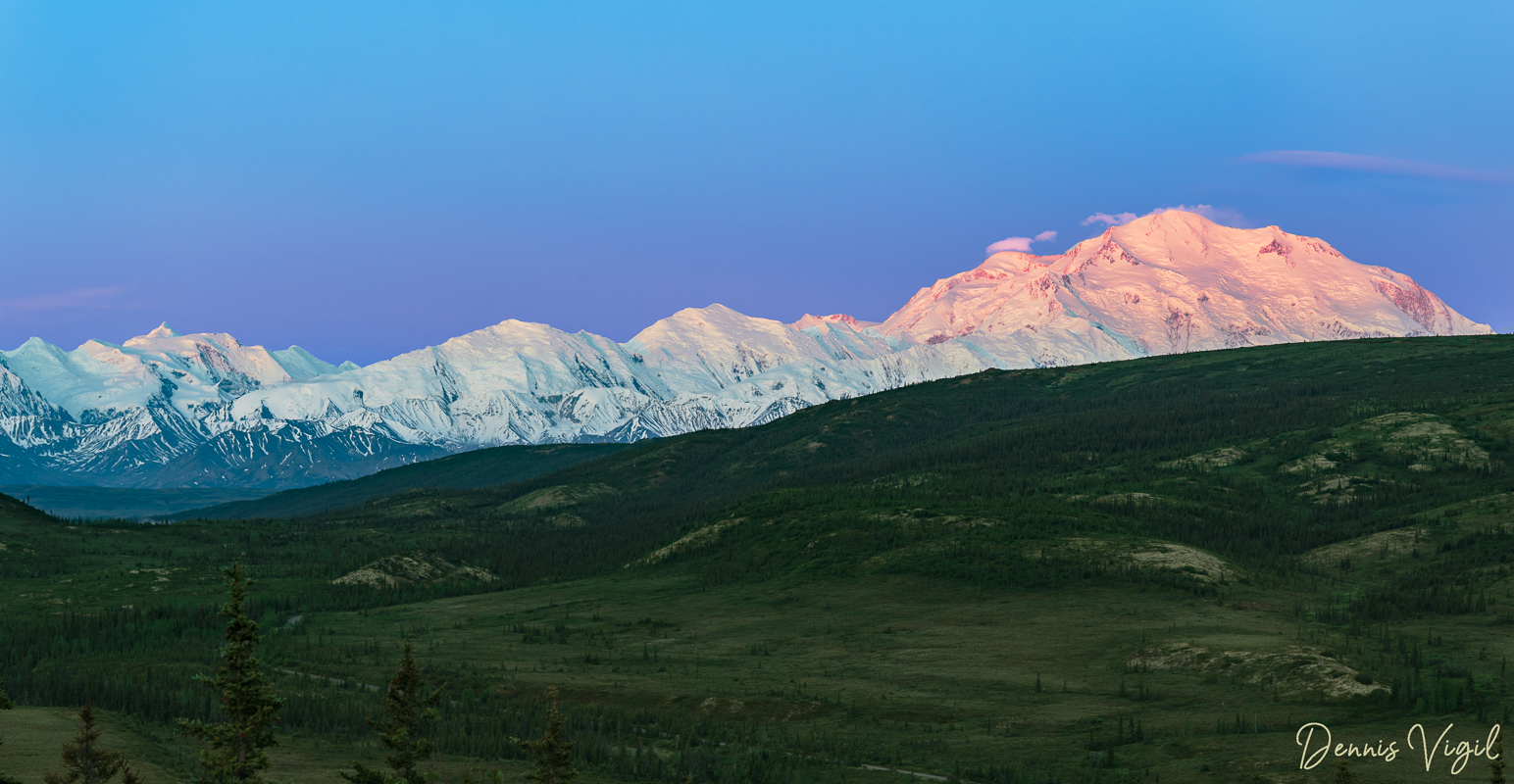
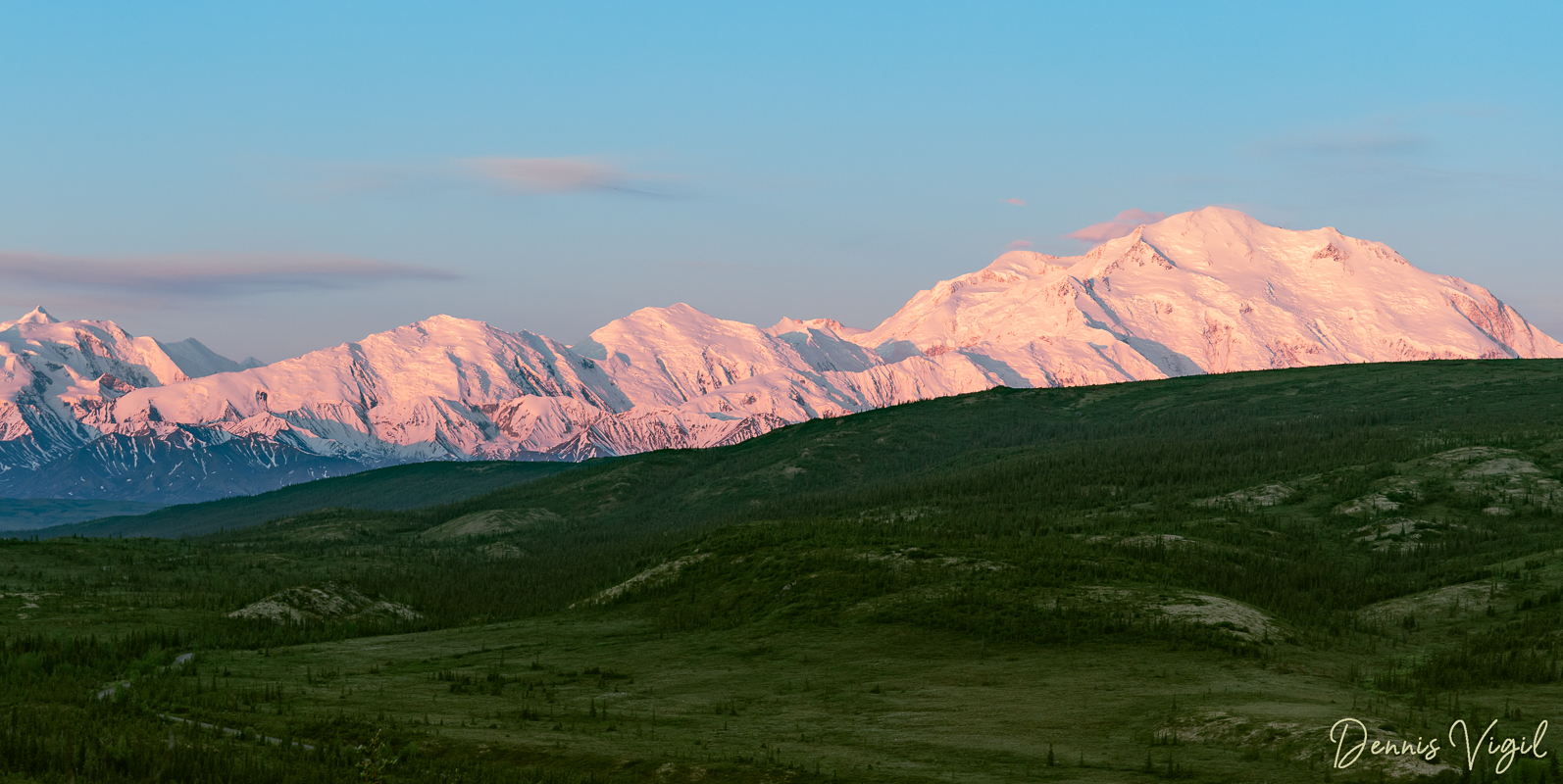
Spent 4 nights in DNP and was fortunate that the mountain was out every day except one. The day that it was hidden was mostly due to smoke from a lightning-caused fire, but rain came in and stopped the fire and cleared the air. More original compositions with good light require backpacking, but I was happy with the opportunities I had. At my age, getting up at 2 or 3 am is a common thing, and as the cabin I was in had an outhouse and I was there near the solstice, I was able to see if the mountain was out for sunrise, and I captured images #1 and #2 the last morning I was there. Thanks for your comments/suggestions and thanks for taking the time to look.
richrwk wrote:
All great, last one my favorite. I like that it kind of leaves you wondering, "what else is there I'm not seeing ".
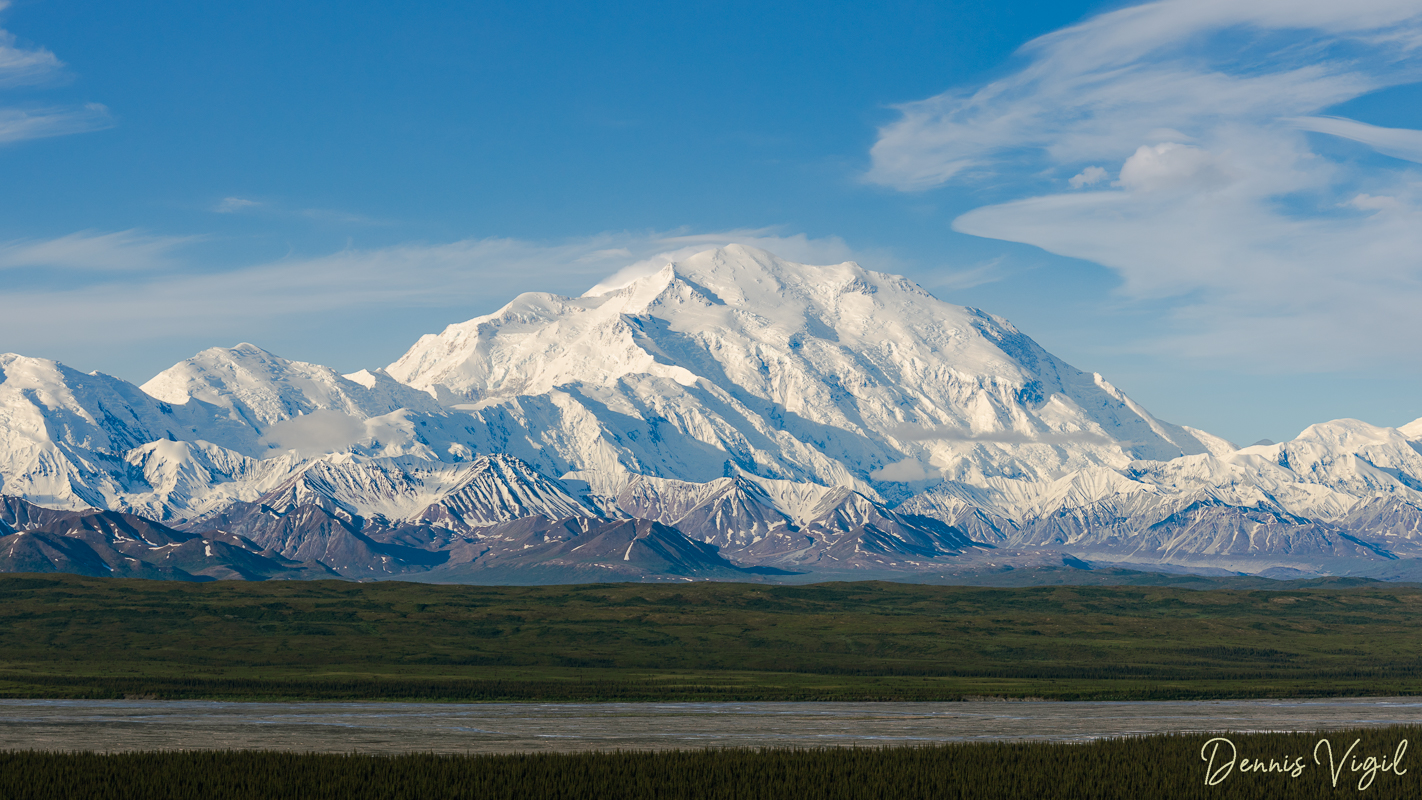
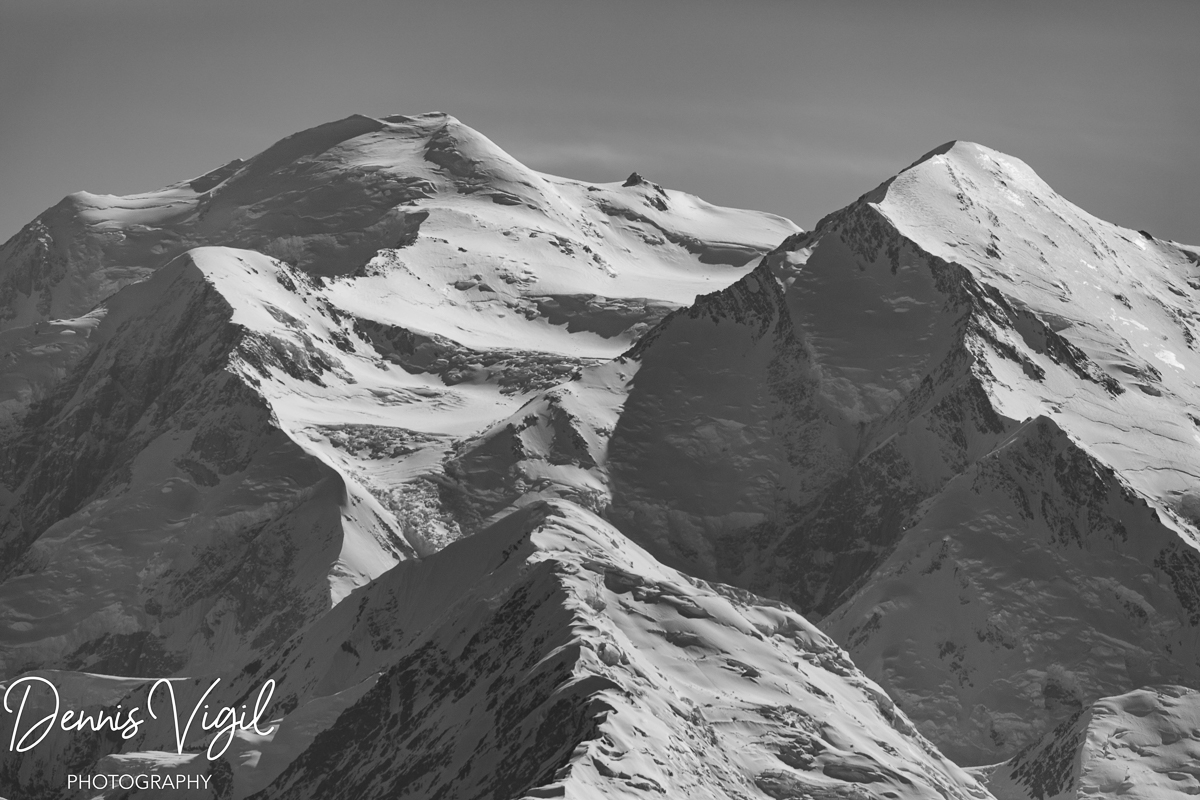
Thanks richrwk. I like telephoto shots of big mountains as well. You are actually seeing alot in that shot, with much of the upper route of the first ascent in 1913 visible. On the left is the summit (south peak) and on the right is the north peak of Denali. In between them is the Harper glacier (which becomes the Muldrow glacier at a lower elevation). Just to the left of the Harper icefall mid-left frame is Karstens ridge. The foreground peak is Mount Koven at an elevation of 12,210 ft. For a sense of scale and perspective, by comparison the south peak of Denali is at 20,310 ft.
I love the last one (black and white), when I look at the first two, I can't help but want to tilt my head lol. I'm fairly new to landscape photography, but aren't they usually supposed to be straight?
terryeaton wrote:
I love the last one (black and white), when I look at the first two, I can't help but want to tilt my head lol. I'm fairly new to landscape photography, but aren't they usually supposed to be straight?
Hi Terry, thanks for your feedback. The first two images are actually level, at least with respect to the gravitational field, as they were captured with the camera level. Those images are very "heavy" on the right side, which contributes to the tilted feeling.
Lobohowler wrote:
Hi Terry, thanks for your feedback. The first two images are actually level, at least with respect to the gravitational field, as they were captured with the camera level. Those images are very "heavy" on the right side, which contributes to the tilted feeling.
Lobohowler wrote:
Thanks richrwk. I like telephoto shots of big mountains as well. You are actually seeing alot in that shot, with much of the upper route of the first ascent in 1913 visible. On the left is the summit (south peak) and on the right is the north peak of Denali. In between them is the Harper glacier (which becomes the Muldrow glacier at a lower elevation). Just to the left of the Harper icefall mid-left frame is Karstens ridge. The foreground peak is Mount Koven at an elevation of 12,210 ft. For a sense of scale and perspective, by comparison the south peak of Denali is at 20,310 ft. ...Show more →
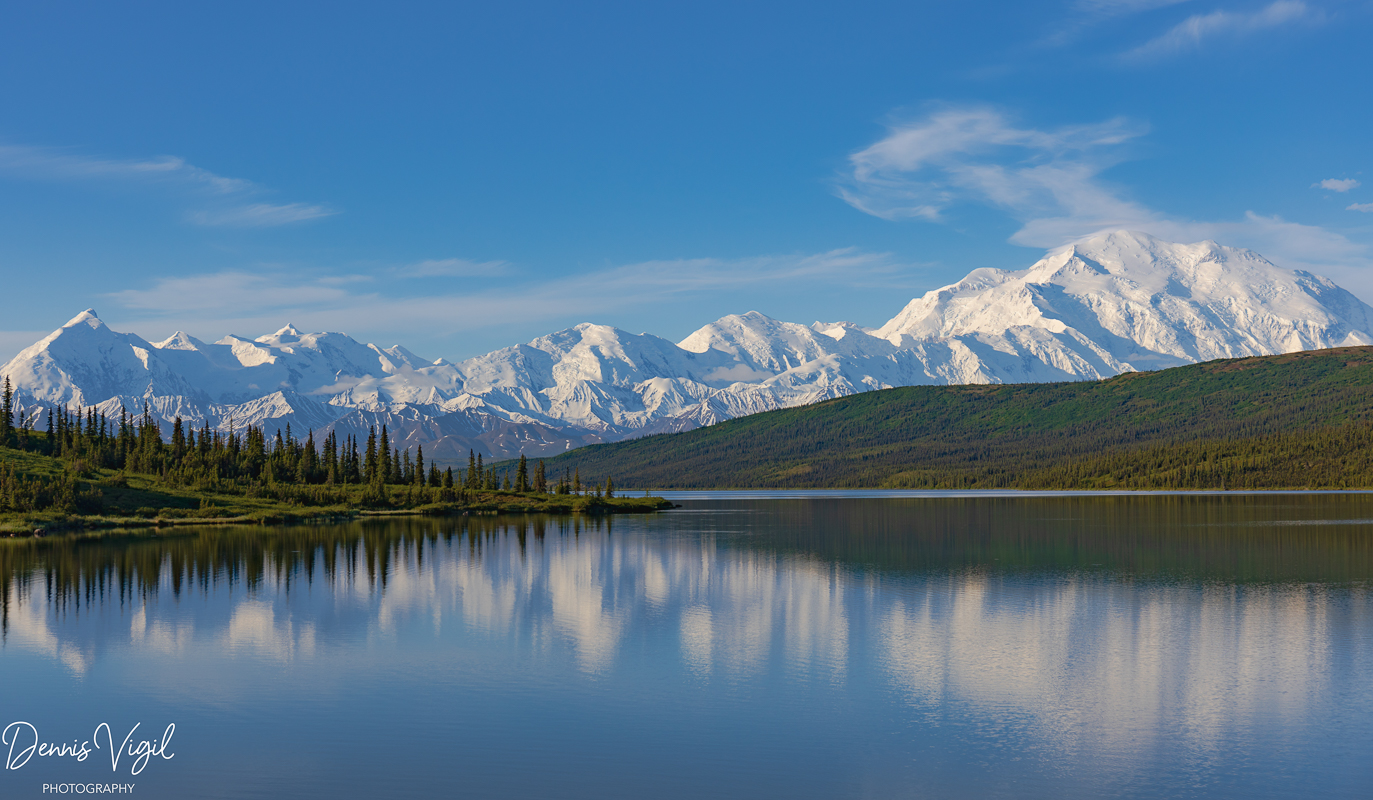
Beautiful. The colors are striking, and I really like #3 and 4, especially the photo with Wonder Lake in the foreground. So lucky to see Denali unobstructed!