I have read this lens is amazingly sharp, and that it is the least deserving of the "S" moniker.... hoping to get some real responses from those that have shot with Nikon's other high end ultrawides over the years. I owned the 14-24mm 2.8G for a decade, Nikon 24mm1.4g, 24mm 1.8g and Nikon's 28mm 1.8E and am curious how others think it compares to those lenses and others in the ultrawide space.
**Please no snarky "go look it up, or plenty of thread" responses ... I wouldn't have posted this if those answered my question.
I have it and like it a lot. I use it on my Z7ii which is hard on lenses and find it quite good even at f4, and of course it sharpens up when stopped down. I use mostly as a landscape lens where I want DoF, so am generally at f8 or smaller. The lens is good enough you can see diffraction creeping in between f5.6 and f8, so it's about as good as it gets optically, especially for my needs. I would only goto the 14-24/2.8 if I had a specific use for the faster glass like for astro, but then I'd probably spring for the 20/1.8 instead due its stunning wide open performance. It does weaken a bit compared to the 24-70's after about 25mm. Don't get me wrong, it's still quite good and I'd say about equal to the 24-200 down there, so just not quite up to par with the others in that last range -- but that overlap is also hugely convenient when working with 2 bodies and I never hesitate to use it there.
Hope this helps!
PS: This site is not Retina display aware in some browsers, so these crops may appear at 200% instead of 100% -- they are 2048px dimension, so scale your view to that.
Here is a 100% edge crop from the lens at 25.5mm and f10 basically "as-shot" in a Z7:
Here is a 100% almost down to the full corner crop from the lens at 14mm and f9, also as shot from a Z7:
Thank you!! I really appreciate it! How is the build quality? Does it feel cheap?
gear-nut wrote:
I have it and like it a lot. I use it on my Z7ii which is hard on lenses and find it quite good even at f4, and of course it sharpens up when stopped down. I use mostly as a landscape lens where I want DoF, so am generally at f8 or smaller. The lens is good enough you can see diffraction creeping in between f5.6 and f8, so it's about as good as it gets optically, especially for my needs. I would only goto the 14-24/2.8 if I had a specific use for the faster glass like for astro, but then I'd probably spring for the 20/1.8 instead due its stunning wide open performance. It does weaken a bit compared to the 24-70's after about 25mm. Don't get me wrong, it's still quite good and I'd say about equal to the 24-200 down there, so just not quite up to par with the others in that last range -- but that overlap is also hugely convenient when working with 2 bodies and I never hesitate to use it there.
Hope this helps!
Here is a 100% edge crop from the lens at 25.5mm and f10 basically "as-shot" in a Z7:
the best i can say to a rather subjective question is of course is a subjective opinion. i too have used and still own the 14-24/2.8G from the month it come out. so lets say about as long as you have. since i shoot pretty much only zooms i can't opinionate on any on any of the primes.
i see the 14-30/4 S as a sharp highly portable piece of optics that has served my needs very well so far. it is one of the 3 lenses i carry all the time. i got to give it what i referred to a a good workout at the Marsh, Billings, Rockefeller Estate for a particular job in an area not accessed normally and relatively compact in volume and not normally accessible by the public when i first got it. With the addition of DxO's Viewpoint 3 it did a good job in the spaces. doesn't feel cheap to me.
The Z 14–30 is a great ultrawide zoom. It is sharp from f/4, and tests seem to indicate that it is sharpest at f/5.6 (in the center). My own use reflects that, but I had a hard time telling the difference in sharpness between f/5.6–f/11. You'll want to stop down to keep vignetting at bay. I never found the edges/corners at the widest focal lengths to be an issue, though for some the distortion corrections are too much. Some RAW developers allow you to turn off corrections, but I never felt this was worth the hassle.
The 14–30 is a very well behaved ultrawide, in my experience much easier to use than most of the fast utrawides available. You can pretty much just shoot with no thought given to the effects of focus point placement, field curvature, etc. Even the Z 14–24 2.8 needs a bit more consideration to get the most out of it, although it is better than the F-mount ultrawides.
Performance wise, the 14–30 is not quite as good as the best F-mount ultrawide zooms, such as the Sigma 14–24 2.8, but as good if not better than Nikon's F-mount 14–24. What you do get is very good performance, an easy shooting experience, ability to use reasonably-sized screw-in filters, and vastly smaller size and weight. The 14–30 feels cheap next to the dense ultrawides available for F-mount, but it never let me down in any kind of weather, including heavy rain, snow, dusty/dirty construction sites... though I was always hesitant about taking anywhere sand might get into the extending barrel, that was never a problem. After a few outings with the 14–30, I did not miss lugging around larger F-mount ultrawides, even if they could deliver slightly better performance.
Feels solid. Not a fan of the locking system type lenses but works well. Best ultra wide lens for the price (f4 for landscapes is what I use it for). Nice colors and mine was sharp across all focal lengths
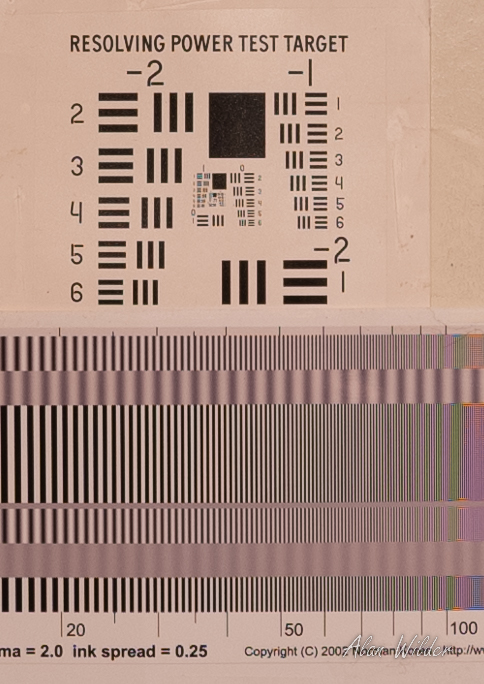
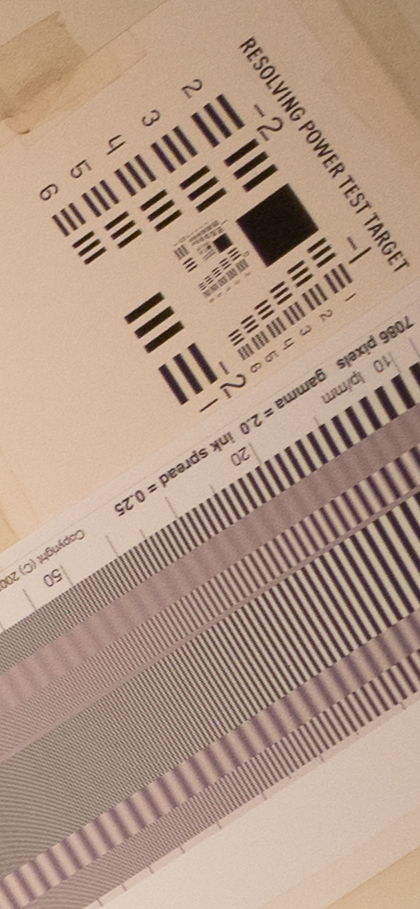
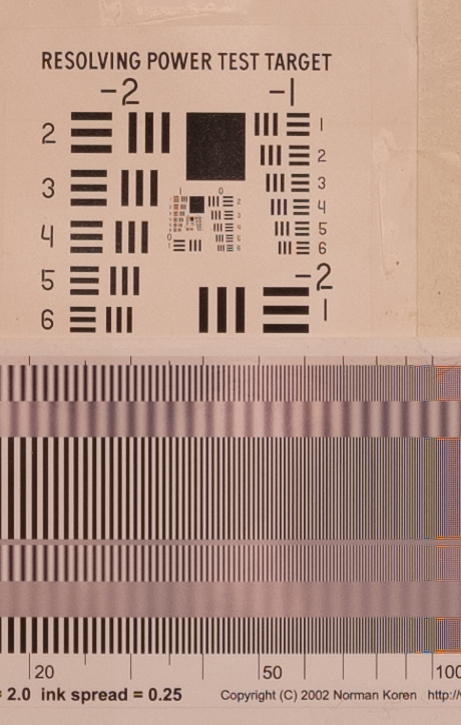
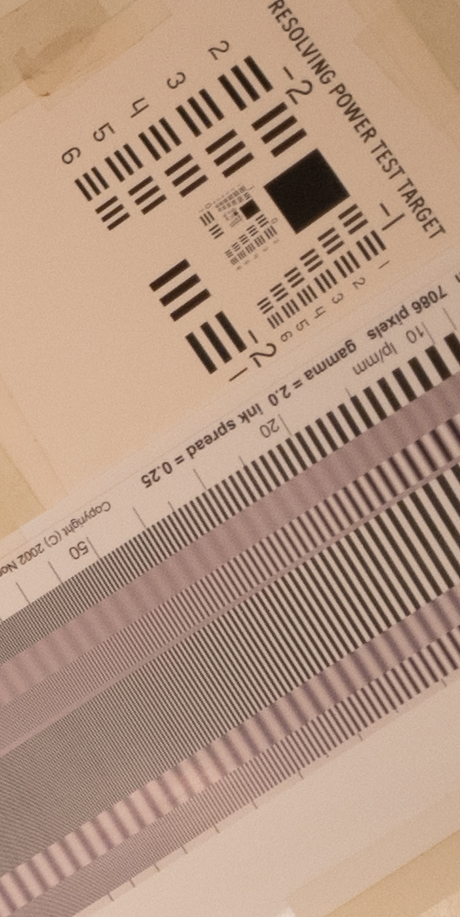
I purchased this lens (sr. #2002xxxx) from another FMer based on reporting it was a good sample that didn't suffer from poor edge/corner IQ that afflicted some samples. This was likely due to element decentration as reported by some respected online reviews and may have been more common with earlier samples. Sure enough, testing this lens with my USAF resolution charts and Norman Koren's MTF charts confirmed it was indeed a very good sample that appeared to closely match Nikon's MTF charts and was sharper than my previous 14-24/2.8. Sharpness on the left and right edges were also very similar. Due to lower astigmatism, edge/corner sharpness was better at 30 but 14 had slightly higher central contrast). Overall a great lens worthy of the S designation. Below are some cropped test shots wide open at 100% from my Z9 @ 1:51 repro ratio where group 0,6 is 88 lp/mm and 0,2 is 56 lp/mm as a reference. The only manipulation was exposure compensation for light fall off.
If you consider the last F mount 14-24 a good lens, the 14-30 is better.
I have own the 14-24 for years and I do not miss it a bit. The 14-30 has a more useful range, optical very good, very portable, takes filters even at 14mm and f/4 is not an issue in real life.
I also have 14 - 30 and I can't complain about it - is very good lens, small, light, no problem with 82 mm filters.
Locking mechanism is the only thing I really dislike about S lenses like 14-30 or 24-70
Before I have used Nikon 14-24 2.8 for 10 years and Canon 16 - 35 f4 for maybe 4 years
I can't find anything in 14-30 what is at least not as good as in 2 previous lenses ( but they were already amazing ) and for me 14 - 30 is more useful comparing to very limited 14 - 24
Love this lens, whose greatest strength lies in the overall balance imho.
Optical performance in relation to it's small size and weight, 82mm filter, the whole package is just right, that's what makes this lens a winner.
If it's all about optical performance, the Z 14-24 f/2.8 S is probably the way to go, but the Z 14-30 f/4 S has the perfect balance for my needs.
Compared to the predecessors, it is an amazing achievement to get this level of performance out of these dimensions.
As others have noted, it is the WA lens that most Z6x/Z7x users should own if they are shooting casually. IQ wise the lens has some liabilities in the extreme corners on the wide end but only if you pixel peep. In moderately good light there is not much more to ask for. Its size and the fact that it takes 82mm filters makes it my goto lens when size and weight matter.
It does have some meaningful liabilities for more demanding use.
1) It has in excess of 2 stops of light falloff in the uncorrected raw data. This is corrected in the Adobe lens profile whether you want it or not. 90% of the time this is not a problem. However if you shoot into the sun a lot, your shadows are probably already 3 stops in the dark, and now you are adding another 2 stops of falloff in the corners which starts manifesting itself midway through the frame. There is no way you are pulling up those shadows without some significant noise. You either have to bracket and/or use Topaz to rescue such images. If you do a lot of this shooting you have to ask is the hassle worth it. I can't think of any other Nikon lens in this price range that has this behavior, but that is likely the result of the design goals - compact FF UWA that takes standard screw on filters.
2) The sunstars are busy, and IMO fugly. This is clearly seen in the images fotografur posted. Opinions on whether they are acceptable can vary, but for me they are too distracting. This is THE reason I exchanged the 24-70/4 for a 24-120/4, which has passable sunstars. The sunstars on the 12-24/2.8S are, as you might expect, quite nice.
If the above two are not something that will significantly impede you, the 14-30/4 is a great lens. If I were buying it now I would get it used off the B&S forum. It does not seem to be a lens that is loved so the prices can be attractive.
I really appreciate this lens for several reasons:
1. It goes up to 30mm, it seems a lot of ultrawides only go to 24mm. Having that extra 6mm often means not having to make a lens change, or even temporarily shooting in DX mode to get 45mm is an option to avoid changing lenses for some shots.
2. It focuses relatively close, not macro close but close enough to get close up shots that will do without changing lenses.
3. The price is reasonable when compared to other options such as the 14-24/2.8. I seldom need or want f/2.8 in this focal range so I’d rather have the cheaper option.
4. The weight & size are much more reasonable than f2.8 options.
5. You can use standard filters as there is no bulbous front element.
6. It makes a nice travel kit lens. I pair it with a Z5, 24-200 & 40/2 which makes for a nice travel kit. I actually use the 14-30 when traveling more than any other time.
Web-sized samples aren't going to tell you anything you don't already know. The best advice is always going to be to rent it and see for yourself where you can properly evaluate full sized RAWs taken under the conditions you shoot in. I spend a lot of time renting lenses, but my LCS allows you to put rental fees towards a purchase, so it works out well in my particular case - not sure if you have a similar option available.
I've had this lens for while now and I am very happy with it. My copy is extremely sharp edge to edge across the focal length range. Long story short, anyone coming from a Nikon 16-35/4 is going to be thrilled with it and it is about as good as the F 14-24/2.8 without the downsizes (flare, bulbous front element, size/weight, shorter zoom range). I use it for professional real estate photography as well as general landscapes.
Most of the advantages have already been mentioned, but there is no other lens like it. The zoom range is really nice (14-30), it doesn't have a bulbous element to worry about, it's a very compact lens, and it takes regular screw-on filters despite being 14mm which is an advantage that in my opinion cannot be overstated. It is also a true 14mm after correction (it's distortion is very easy to correct) which cannot be said about every UWA.
I personally haven't noticed any issues whatsoever correcting light falloff, and any modern sensor can easily handle the correction especially at base ISO where you are likely shooting your landscapes. I've shot thousands of images with it and it simply has not been an issue for me anyway.
As for the sunstars, I think that is more personal preference as some professional reviews go as far as listing that as an advantage of the lens. I think they look just fine but of course YMMV if you're after a very specific look. Dpreview also has a sunstar comparison video with a variety of other lenses and they like the stars from the 14-30. If sunstars are something you are very particular about, again renting it would be ideal.
If you don't need F2.8, it's a no-brainer for the price/size/performance combination you get. All UWAs have higher than average sample variation and are more susceptible to decentered elements, so I would buy it from somewhere with a return policy you are comfortable with just in case. Shoot some flat textured surfaces when you get it (like a fence or a garage door) at various focal lengths and make sure it's even across the frame.
Nikon also likes to put it on the rebate list, I think I saved $200 when I bought mine early last year.
Aside from all the spot on commentary above, I’ll add that I think the 14-30 is a no-brainer lens for most Z users. The falloff cited above is prevalent but can be overcome readily if you expose at the limit of the highlights and then use the proper profile.
I like the 14-30 far more than I ever did the bulky and easy to knock out of adjustment 14-24mm 2.8G.
PS I agree that the ergonomics of this lens relative to the 14-24/2.8G are excellent. I always hated the extremely bulky Wanderpana filter adapters for the F mount lens, to say nothing of the weight. However the 14-24/2.8S is an entirely different beast. It is meaningfully lighter than than the G cousin. Optically it is noticeably better in extreme contrast situations than the 14-30S. Those who say otherwise have likely not pushed the limits. No matter how well you expose to the right, you are not bringing shadows that are 3+ stops darker back from the corners of the 14-30 frame without a meaningful impact to IQ.
Filters on the 14-24S are also surprisingly easy. Buy the aluminum NiSi filter holder, use an angle grinder to take off the pointless vestigial petals (why do companies even try to put a hood on a lens this wide? who are they trying to fool that it does anything whatsoever?), and buy a 112mm center pinch cap from B-H for a few bucks. Now you have a compact light-ish top of the line optic... admittedly costing 2x what the 14-30 costs. I have never looked at this carefully, but it is very likely than over 70% of the images on my website from the last 3 years are from the 14-24S. Before that came out the same percentage was from the 14-30S.


 ... I wouldn't have posted this if those answered my question.