Congratulations to Peter Figen for winning Feature Thread of the Week with 6 votes - View Previous Winners
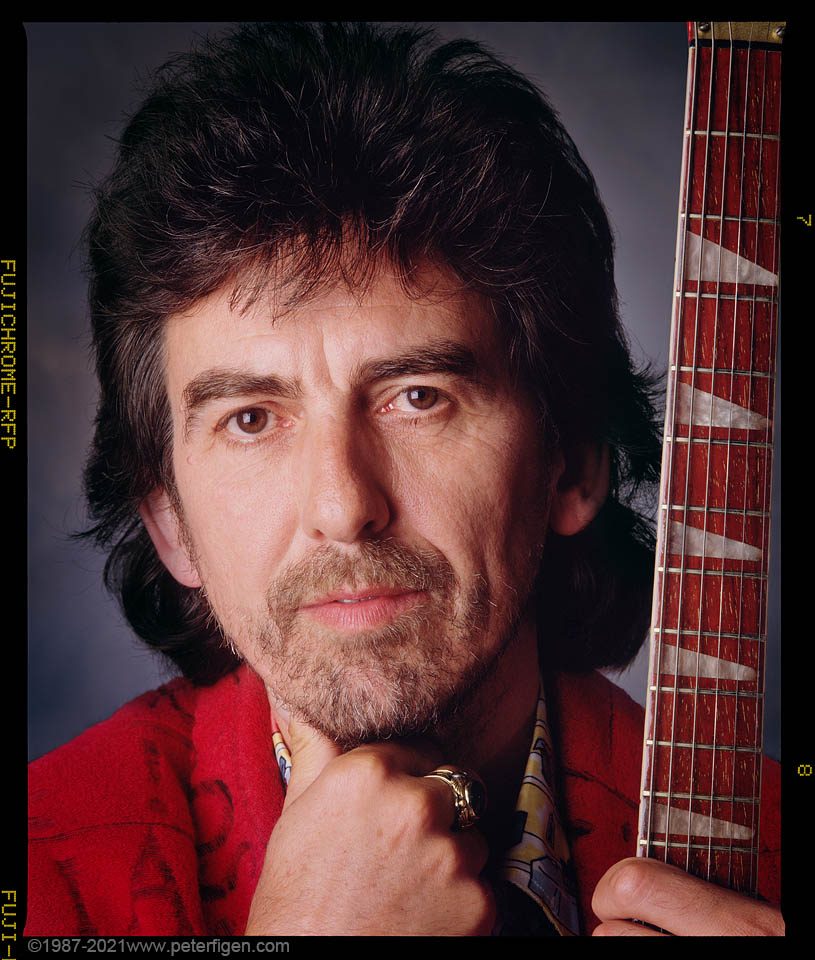
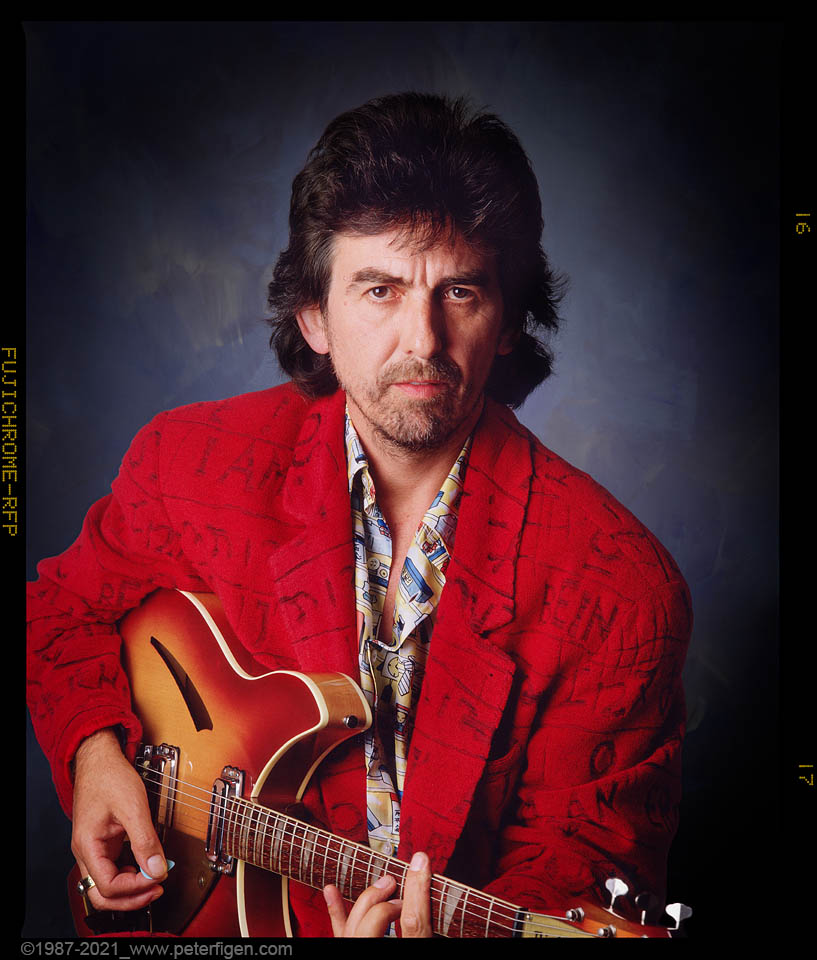
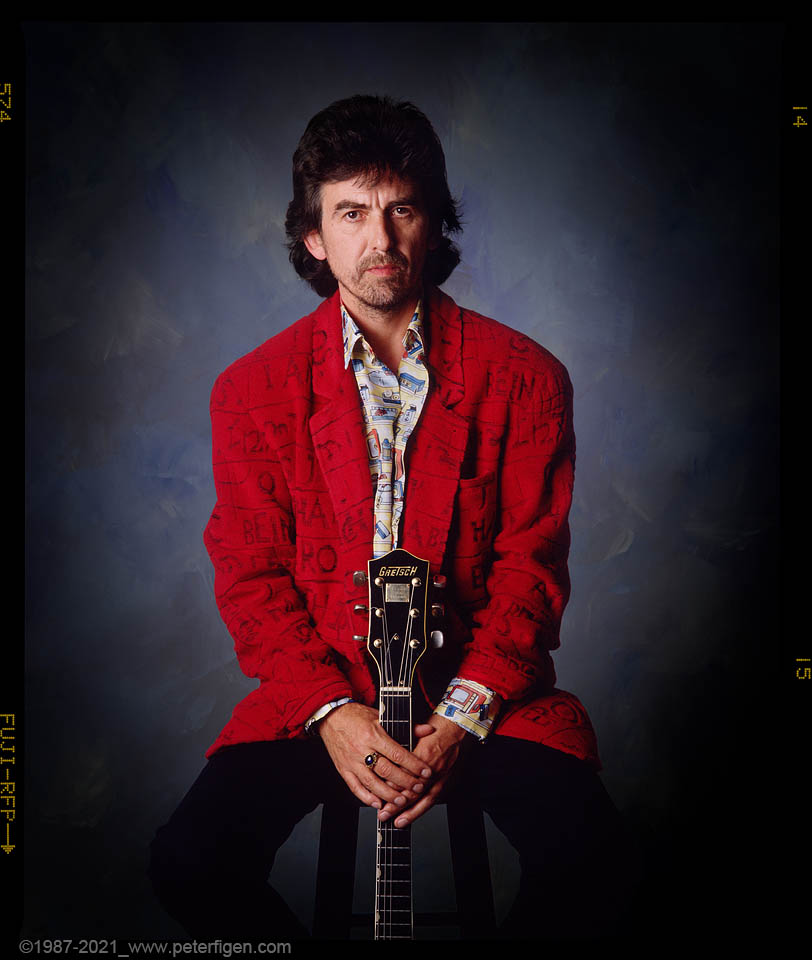
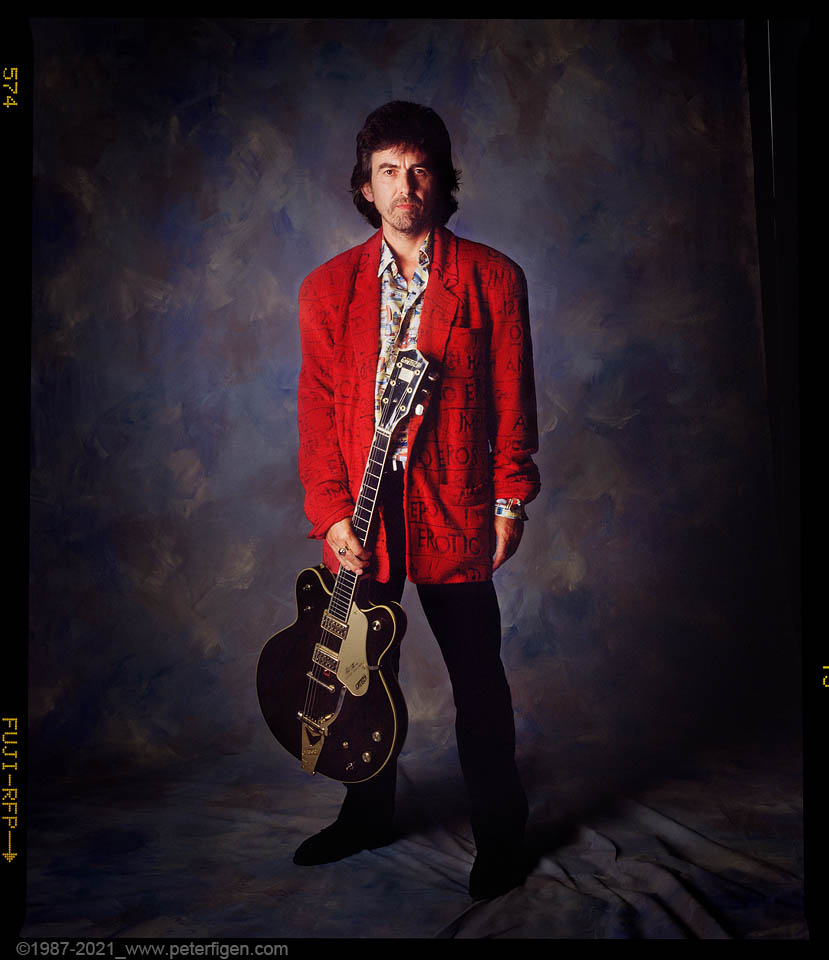
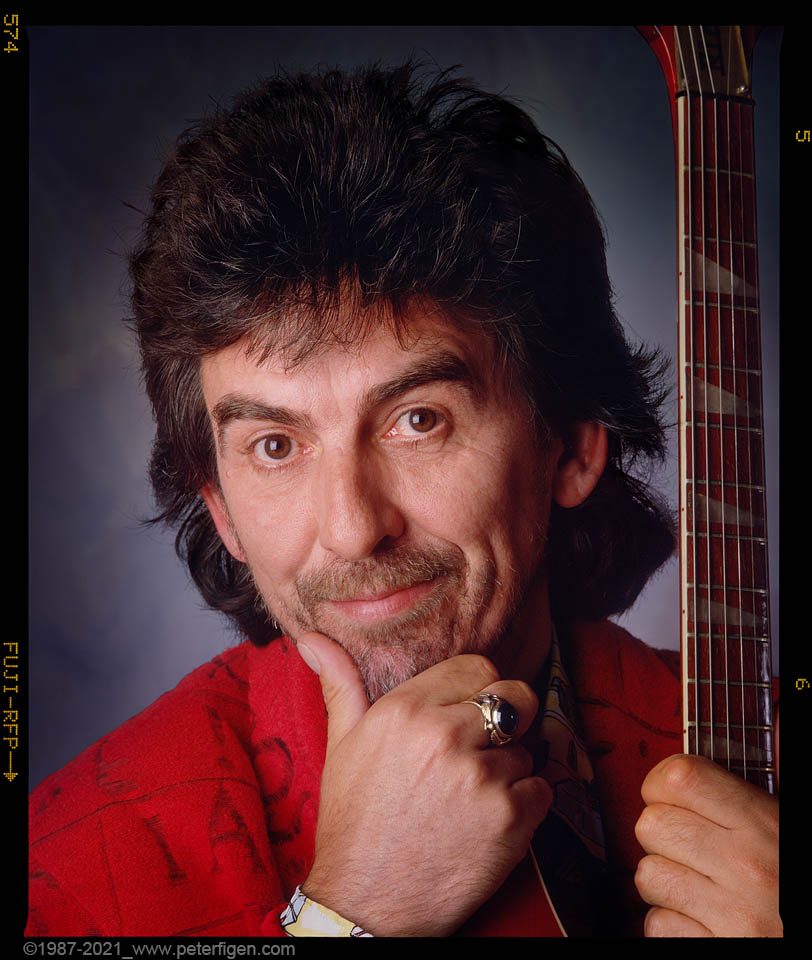
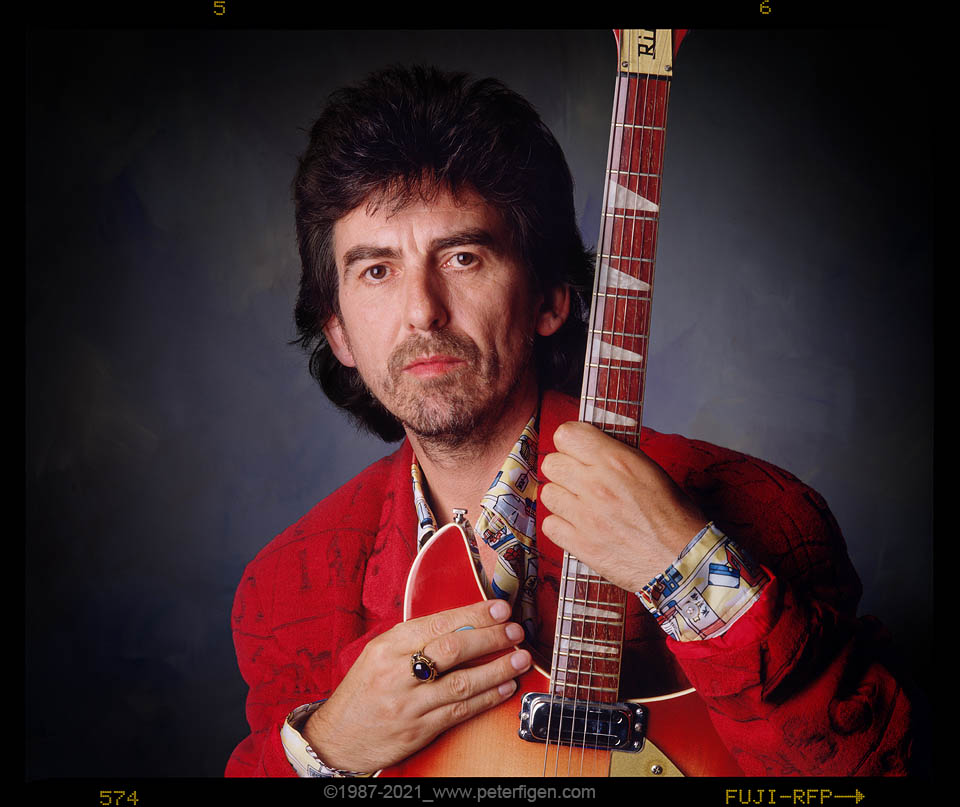
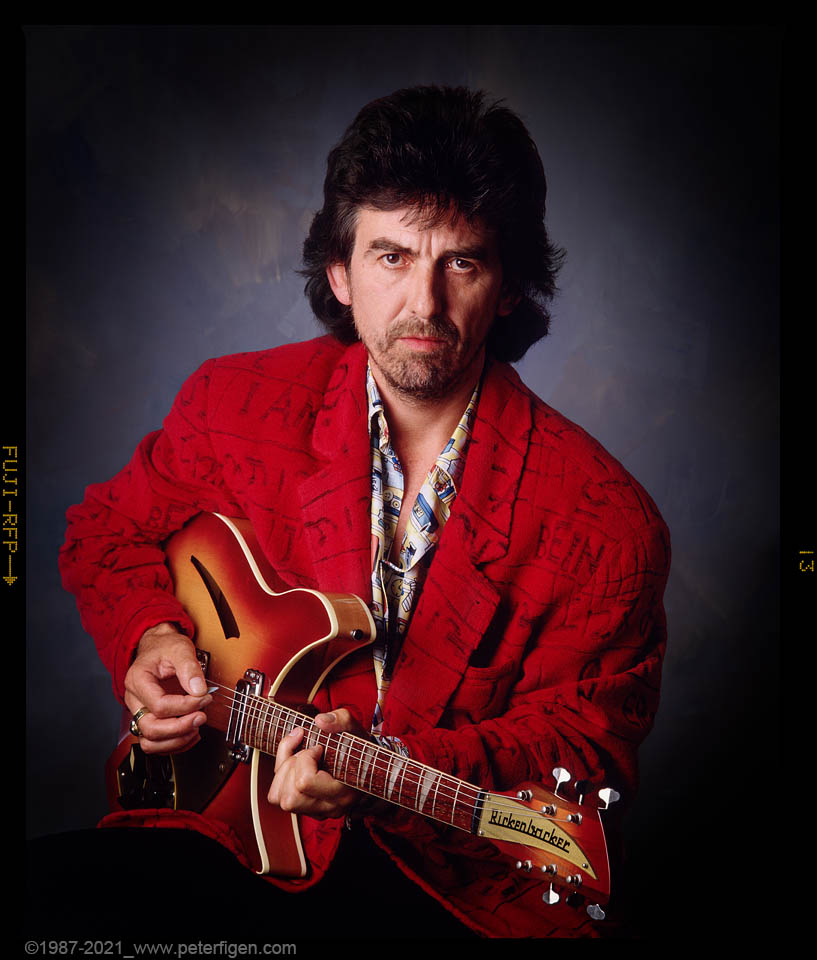
So I got this call in Sept of '87 from Peggy Shea, art director for Guitar Player Magazine. Cover photo of George Harrison for the November issue. Put off a vacation to Yosemite and immediately said yes. All she told me was she wanted a blue-ish background and that we were shooting at Warner Bros in Burbank. Dan Forte, the writer had seen my shots of David Lindley earlier in the year for Frets Magazine and told Peggy he wanted "that" guy for George. George was polite and gracious and apologized for smoking cigarettes. We were told that we had an hour and a half for Dan's interview AND the photo session. Dan claimed the first hour and fifteen for himself leaving me a paltry fifteen minutes. Norm Harris from Norman's Rare Guitars brought over a Rickenbacker and a Gretsch for George and I was able to set up a backdrop and lights first. There were quite a few people in the room from Warner - this was a big deal record release for them and when it came time for the photos, I told everyone that they were welcome to stay but they had to sit down in the chairs in the back and shut up as we had so little time. I did not recognize him at the time but John Fogerty was one of those in the room. Fifteen minutes got stretched to just over twenty and then we were done. The enormity of the shoot didn't hit me until I got home that night and realized I had just photographed a freaking Beatle. These are the images that opened so so many doors after that and I'll be forever grateful for the folks at Guitar Player to trust a kid barely out of school with this assignment. And not to forget Kate Burroughs who assisted me and straighted up George's collars and sleeves between shots.
These were all shot on film, of course, with a Mamiya RB67 (don't think I had the RZ or the 210 APO yet) and a Mamiya-Sekor 180mm 4.5 lens although probably switched to a 90mm 3.8 for the full length. Isn't is great that there was no meta data back then so you can just make stuff up now and no one knows the difference. Film, as you can see if Fuji RFP, which I believe was ISO 50, the precursor to Provia.
I kinda revisited these in the last couple of weeks and re-scanned most of them that had not been scanned at full res. All scans are on my Howtek Hi-Resolve 8000 drum scanner, which I've spoken about often elsewhere.
Thanks Rajan. Focus is fine on the high res. These are only 960 px tall so who knows. Actually, I'm amazed at how few times over the years I missed manually focusing those lenses. They knew how to make focusing screens back then.
Peter, excellent work on your site, and in this post. Personally, I think you led with the strongest image - which image did Guitar Player Magazine choose for their cover?
James - Yes, I put my favorite first. I believe that the cover was the sort of semi-smiling shot with his hand on his chin. Magazines are funny that way. Dan Forte and I had a recent FB exchange and he remember the one I mentioned as being the cover image. I'm not even sure that I have a copy anymore. I posted these and a few more to FB, and they're just going nuts over there. Kinda funny to see.
Really solid work, and what an experience! Celebrities are a very interesting type of person to photograph and work with. You never know what to expect but you sure as heck better be ready for anything!
If I were to presume that I could critique, I guess my only nit-pick would be the way his bright red coat casts a red reflection back onto his face. I imagine someone else was in charge of wardrobe though, and while the cast can be corrected with modern photo editing software I have no idea if that would have been possible in 1987. Speaking of 1987, this photo is the same age as I am!
George was in charge of his own wardrobe. No hair stylist. No makeup artist. No red reflecting into his face. I chose the skin tones after drum scanning. I mean, they're more or less there, but they do get accentuated once you range the image, which is why I often use - and did on all of these - a Curves Adjustment Layer set to Luminosity blend mode for the punch up in the face.
Peter Figen wrote:
George was in charge of his own wardrobe. No hair stylist. No makeup artist. No red reflecting into his face. I chose the skin tones after drum scanning. I mean, they're more or less there, but they do get accentuated once you range the image, which is why I often use - and did on all of these - a Curves Adjustment Layer set to Luminosity blend mode for the punch up in the face.
Regardless of how the saturated red tones got there, it's pretty noticeable on his skin to me. The adjustment layer may have helped, but if you're taking to time to edit these then I would perhaps consider reducing the over saturated reds on his face with an adjustment layer mask. Either way it's still good work and earned my vote.
Peter, Photo editors always have some other criteria on image selection, and I rarely agreed with my editors choices. It seemed they would
get stuck on the mask overlay with banners, features inside, and other necessary information they would put over the photo. I use to keep the
masks for all the different products my department created on hand so I could crop accordingly. It left the editors less opportunity to screw
up a good photo.
Jim
Peter Figen wrote:
James - Yes, I put my favorite first. I believe that the cover was the sort of semi-smiling shot with his hand on his chin. Magazines are funny that way. Dan Forte and I had a recent FB exchange and he remember the one I mentioned as being the cover image. I'm not even sure that I have a copy anymore. I posted these and a few more to FB, and they're just going nuts over there. Kinda funny to see.
Great work! I hate time constraints like that, plus knowing you're working with a celebrity. Did you get his autograph? I look back at the opportunities for autographs that I missed.
Peter Figen wrote:
Thanks Rajan. Focus is fine on the high res. These are only 960 px tall so who knows. Actually, I'm amazed at how few times over the years I missed manually focusing those lenses. They knew how to make focusing screens back then.