These tests now make me really consider whether I want to pick up the 28-200. I was hoping for more consistent performance at all focal lengths even if they were not quite as good as Tamron's trilogy.
aldburg wrote:
These tests now make me really consider whether I want to pick up the 28-200. I was hoping for more consistent performance at all focal lengths even if they were not quite as good as Tamron's trilogy.
I would reiterate that the wider focal lengths are being examined at 400% on the background just you can see ANYTHING which is pretty useless for real purposes. I may do some examining of my handheld tests, which were shot at midrange to see if that makes a difference (I think it probably will). Also remember to check out real processed sample pics from others to understand how this really works. I just confirmed for myself this is not actually a "landscape" lens, but what we obviously knew it was at this size and price point: a convenient all-arounder that others are already making beautiful images with and it can make landscape images when at the more extreme ends of the focal range or in the middle when significant enlargement is not involved. It's light and great for when lens changes are not an option. For ME, the ultimate test will be is it NOTICEABLY better than the 18-135 APSC setup. Because I love the images I get with that and never bother pixel peeping them. I just make them and enjoy them. That is the real test for me (and it will have to wait a few days), but this will be my deciding factor if I keep it. I just slightly miss how insanely "maleable" the files from my A7riii are and the INSANE dynamic range that I only partially get with APSC. If the full frame version of this is a step up in resolution I think the dynamic range benefits are worth carrying the extra weight over APSC sometimes
Luballs wrote:
I would reiterate that the wider focal lengths are being examined at 400% on the background just you can see ANYTHING which is pretty useless for real purposes. I may do some examining of my handheld tests, which were shot at midrange to see if that makes a difference (I think it probably will). Also remember to check out real processed sample pics from others to understand how this really works. I just confirmed for myself this is not actually a "landscape" lens, but what we obviously knew it was at this size and price point: a convenient all-arounder that others are already making beautiful images with and it can make landscape images when at the more extreme ends of the focal range or in the middle when significant enlargement is not involved. It's light and great for when lens changes are not an option. For ME, the ultimate test will be is it NOTICEABLY better than the 18-135 APSC setup. Because I love the images I get with that and never bother pixel peeping them. I just make them and enjoy them. That is the real test for me (and it will have to wait a few days), but this will be my deciding factor if I keep it. I just slightly miss how insanely "maleable" the files from my A7riii are and the INSANE dynamic range that I only partially get with APSC. If the full frame version of this is a step up in resolution I think the dynamic range benefits are worth carrying the extra weight over APSC sometimes ...Show more →
I was hoping for something more along the lines of the 24-105 for quality. I think for landscapes I might get the 70-180 to go along with my 21 and 40mm Voigtlander primes.
From other reviews I’m surprised it trails by THAT much though. Just totally falls apart. Makes me wish they did a 35-150 for mirrorless but then that’s a large chunk of glass too.
Be curious to see what else you find comparing. I’m still debating the 28-200.
Luballs wrote:
I would reiterate that the wider focal lengths are being examined at 400% on the background just you can see ANYTHING which is pretty useless for real purposes. I may do some examining of my handheld tests, which were shot at midrange to see if that makes a difference (I think it probably will). Also remember to check out real processed sample pics from others to understand how this really works. I just confirmed for myself this is not actually a "landscape" lens, but what we obviously knew it was at this size and price point: a convenient all-arounder that others are already making beautiful images with and it can make landscape images when at the more extreme ends of the focal range or in the middle when significant enlargement is not involved. It's light and great for when lens changes are not an option. For ME, the ultimate test will be is it NOTICEABLY better than the 18-135 APSC setup. Because I love the images I get with that and never bother pixel peeping them. I just make them and enjoy them. That is the real test for me (and it will have to wait a few days), but this will be my deciding factor if I keep it. I just slightly miss how insanely "maleable" the files from my A7riii are and the INSANE dynamic range that I only partially get with APSC. If the full frame version of this is a step up in resolution I think the dynamic range benefits are worth carrying the extra weight over APSC sometimes ...Show more →
Thank you for these tests. Pretty much what I expected from the 28-200. It looks decent, super handy if quality is not the primary concern. Similar to the 24-240 that I owned for a while and enjoyed, but better past 100mm. Surprisingly good at the long end.
I suspected that there is a catch with the 28-200.
I watched some early reviews of it, and now I can see why they all concentrate on performance at 28mm and 200mm,but leave out the middle focal lengths which are the Achilles heel of the lens.
Perhaps the reviewers who got prerelease copies even had to sign an agreement that they don't look into the middle FLs so much.
For me, the lens is now out of debate. 35-70 is a very important FL range,and a zoom must deliver there.
grahamgibson wrote:
Thank you for these tests. Pretty much what I expected from the 28-200. It looks decent, super handy if quality is not the primary concern. Similar to the 24-240 that I owned for a while and enjoyed, but better past 100mm. Surprisingly good at the long end.
Indeed this could be viewed as a 28mm prime and a very competent 100-200 at a good size and price. I doubt the 70-200 f4 beats it past 100mm (and i love that lens)
AdaptedLenses wrote:
From other reviews I’m surprised it trails by THAT much though. Just totally falls apart. Makes me wish they did a 35-150 for mirrorless but then that’s a large chunk of glass too.
I would buy a 35-150 mirrorless version so freaking fast! Part of the flaring may be due to the adapter (dustin Abbott speculated as much). This lens has premium performance and no truly weak focal lengths
These samples are massively enlarged. A 200-400% crop from an A7rIII is a little piece of a very large print. I suspect that the 28-200 will be very good for most outdoor uses.
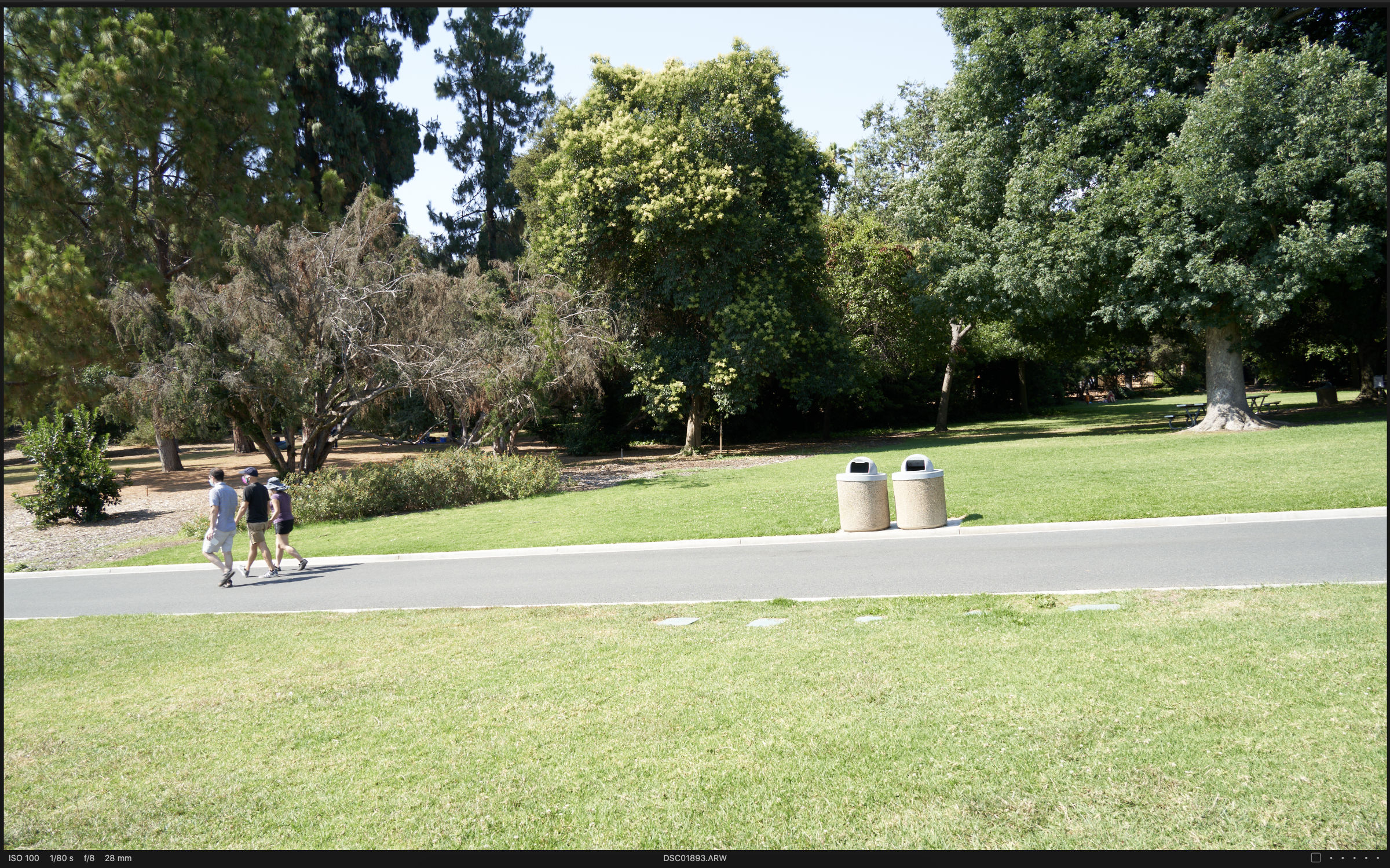
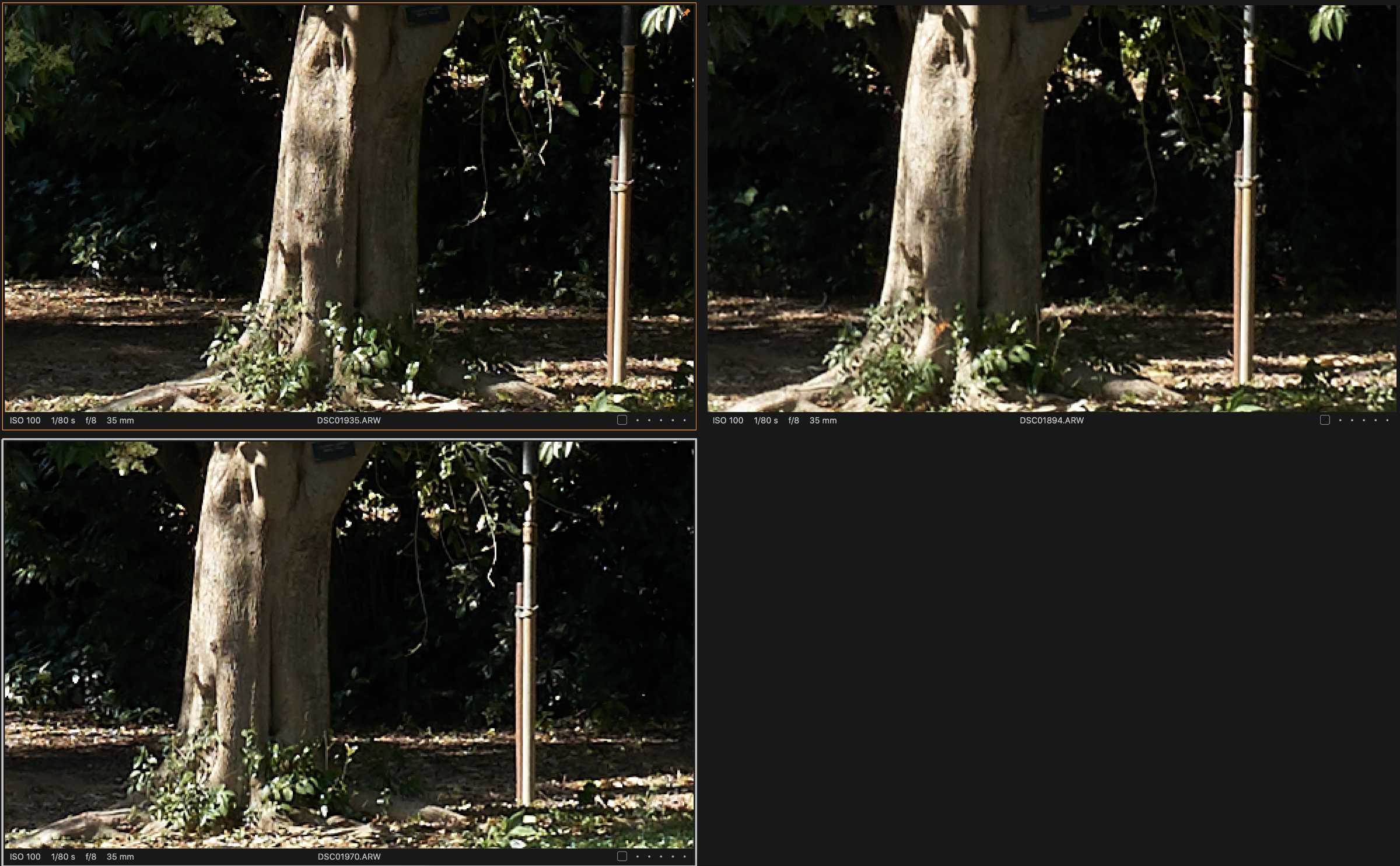
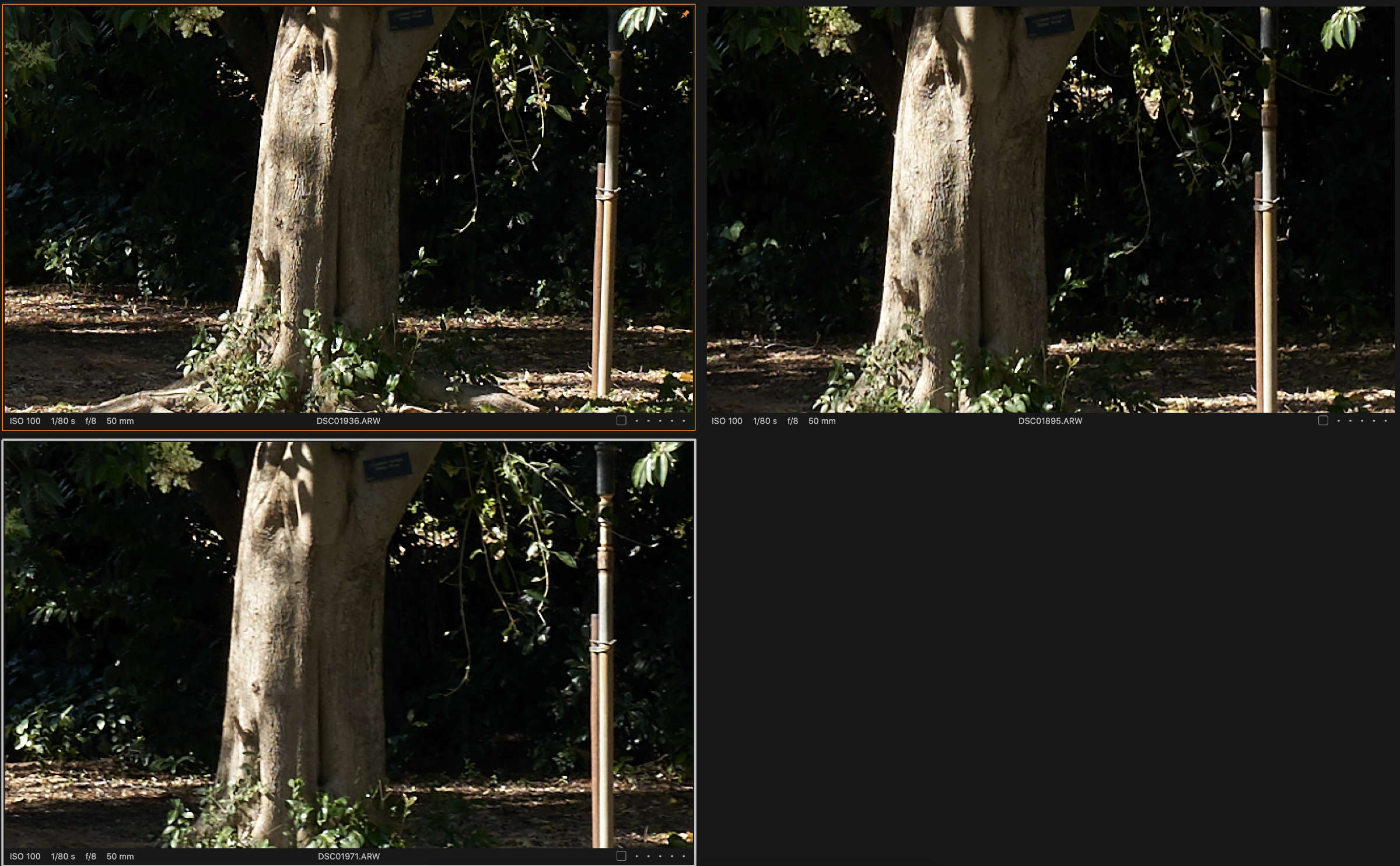
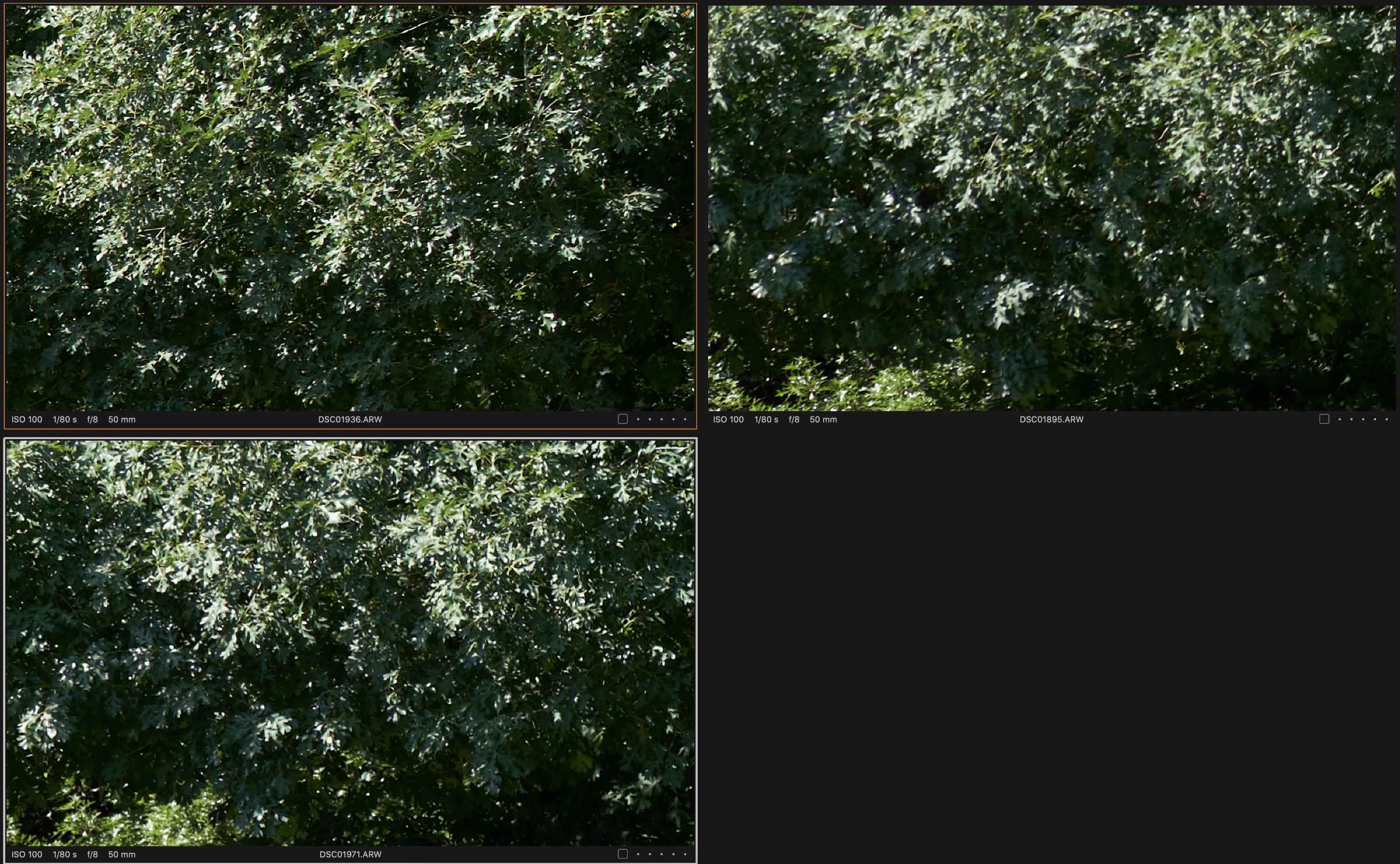
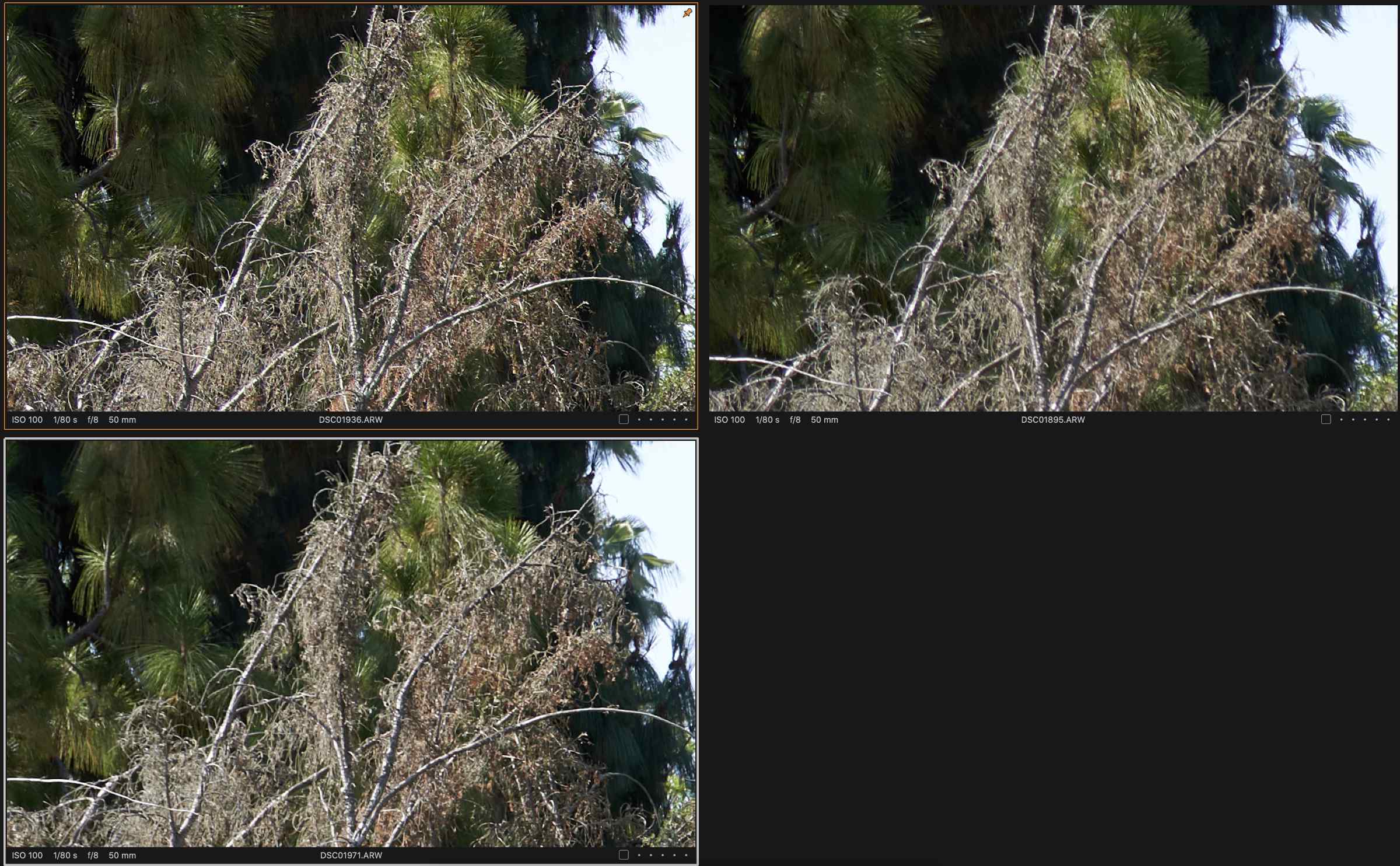
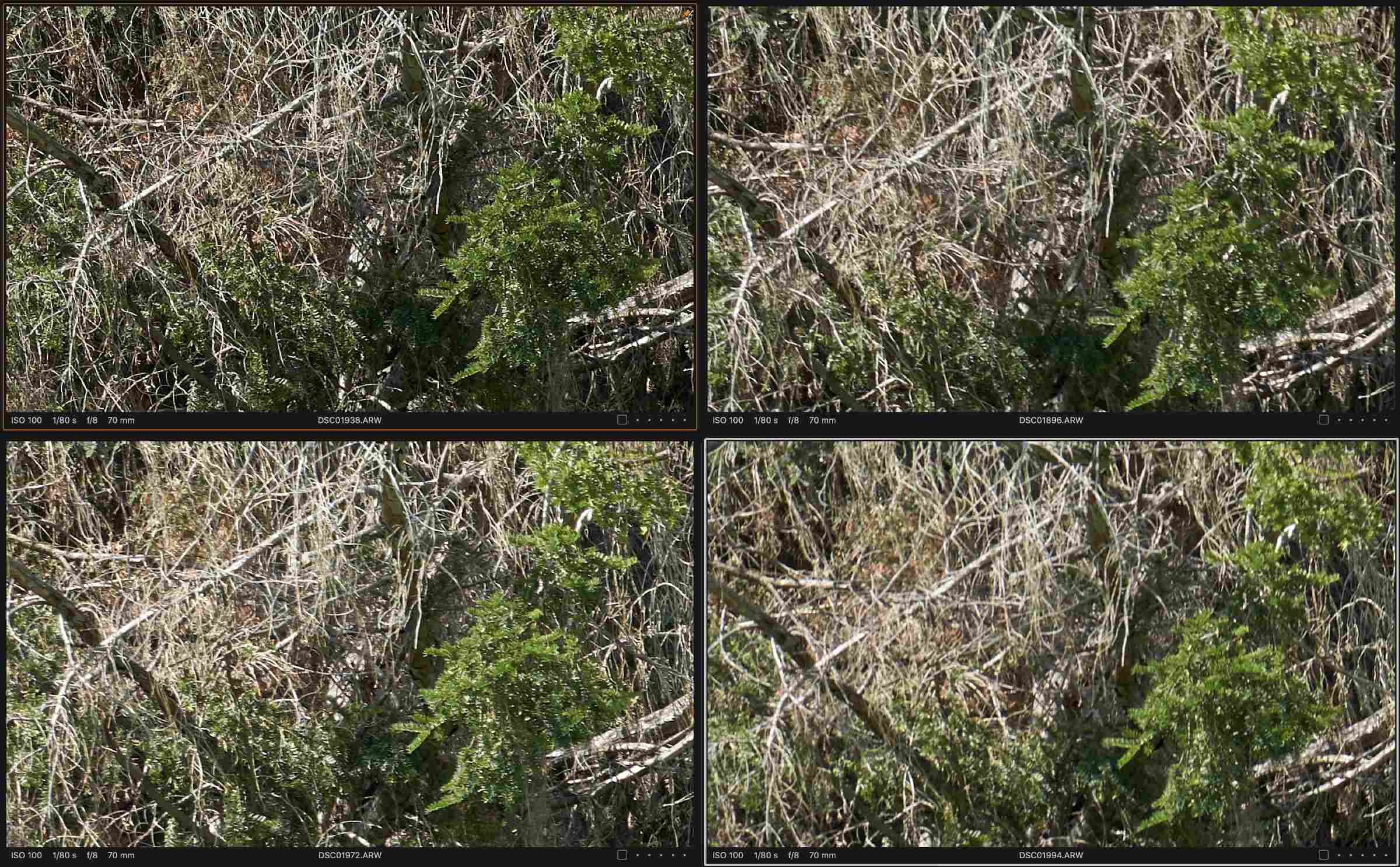
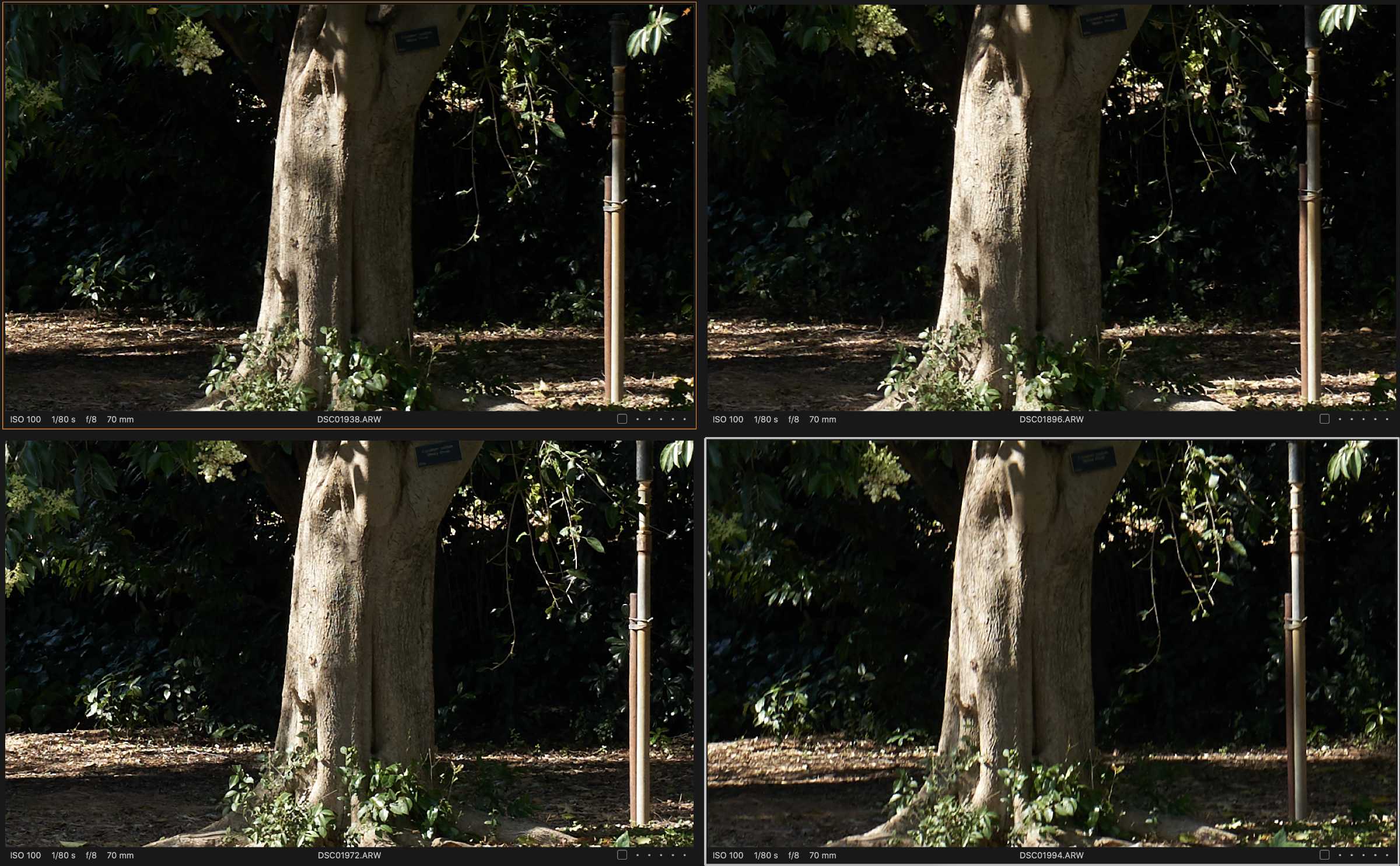
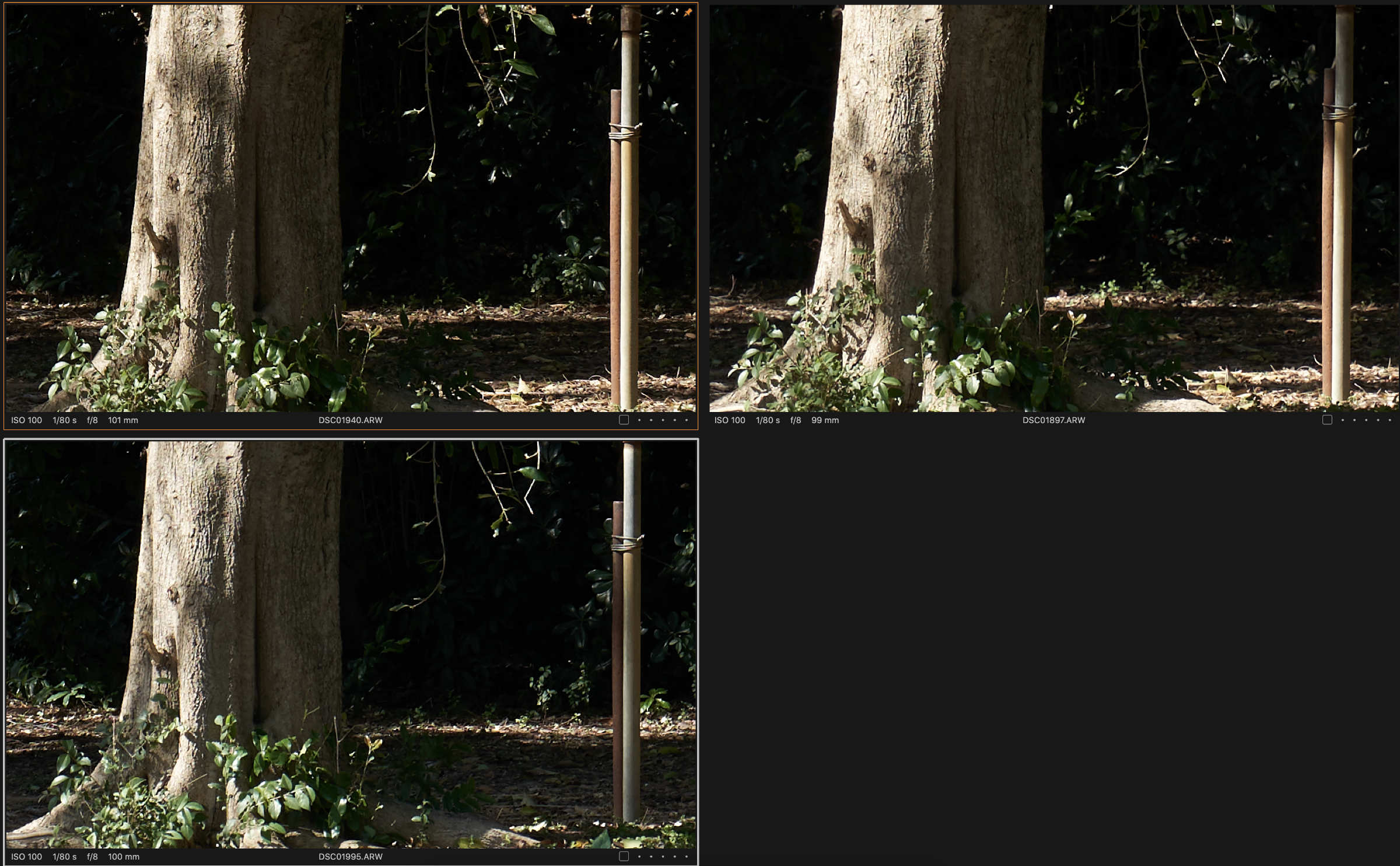
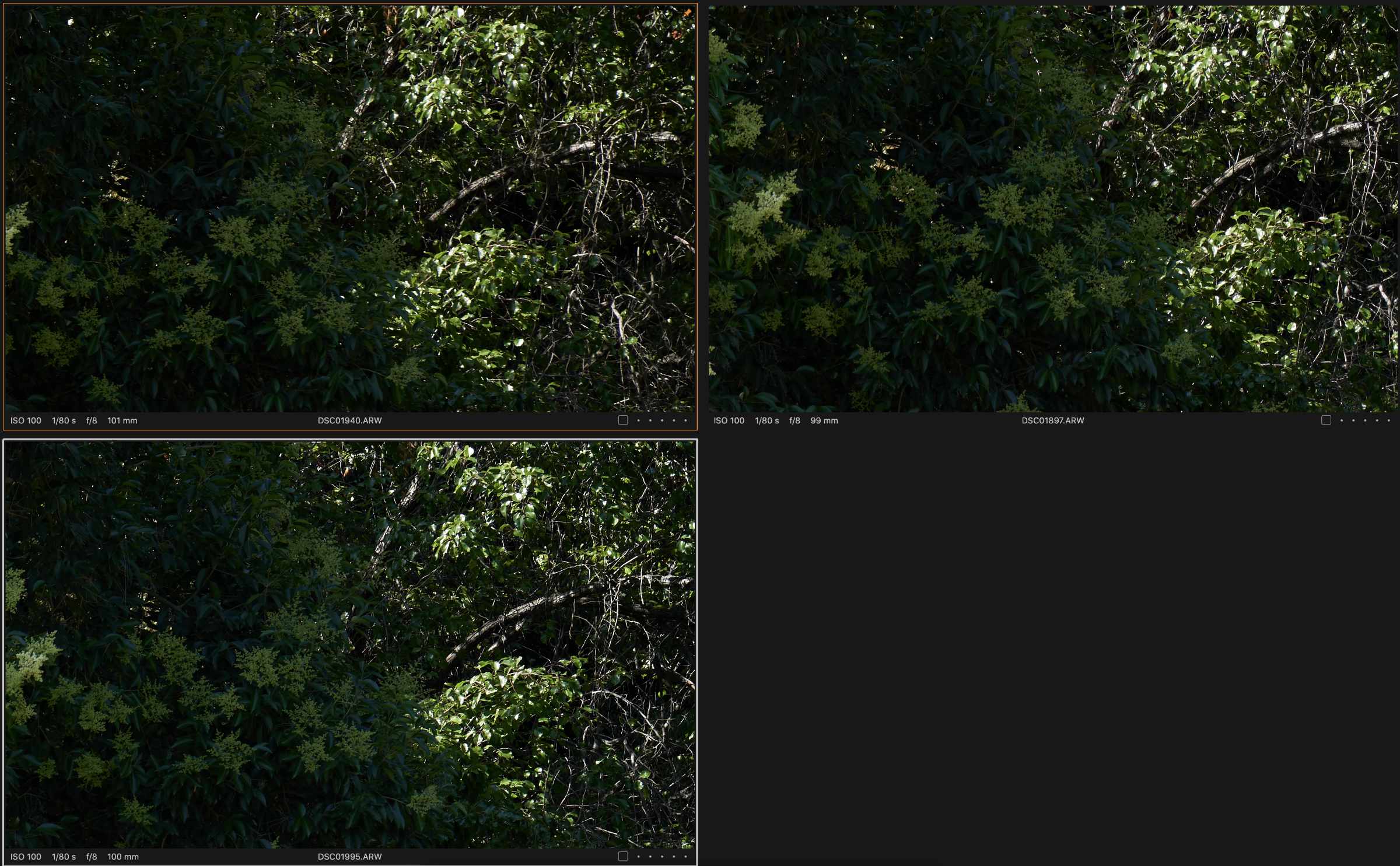
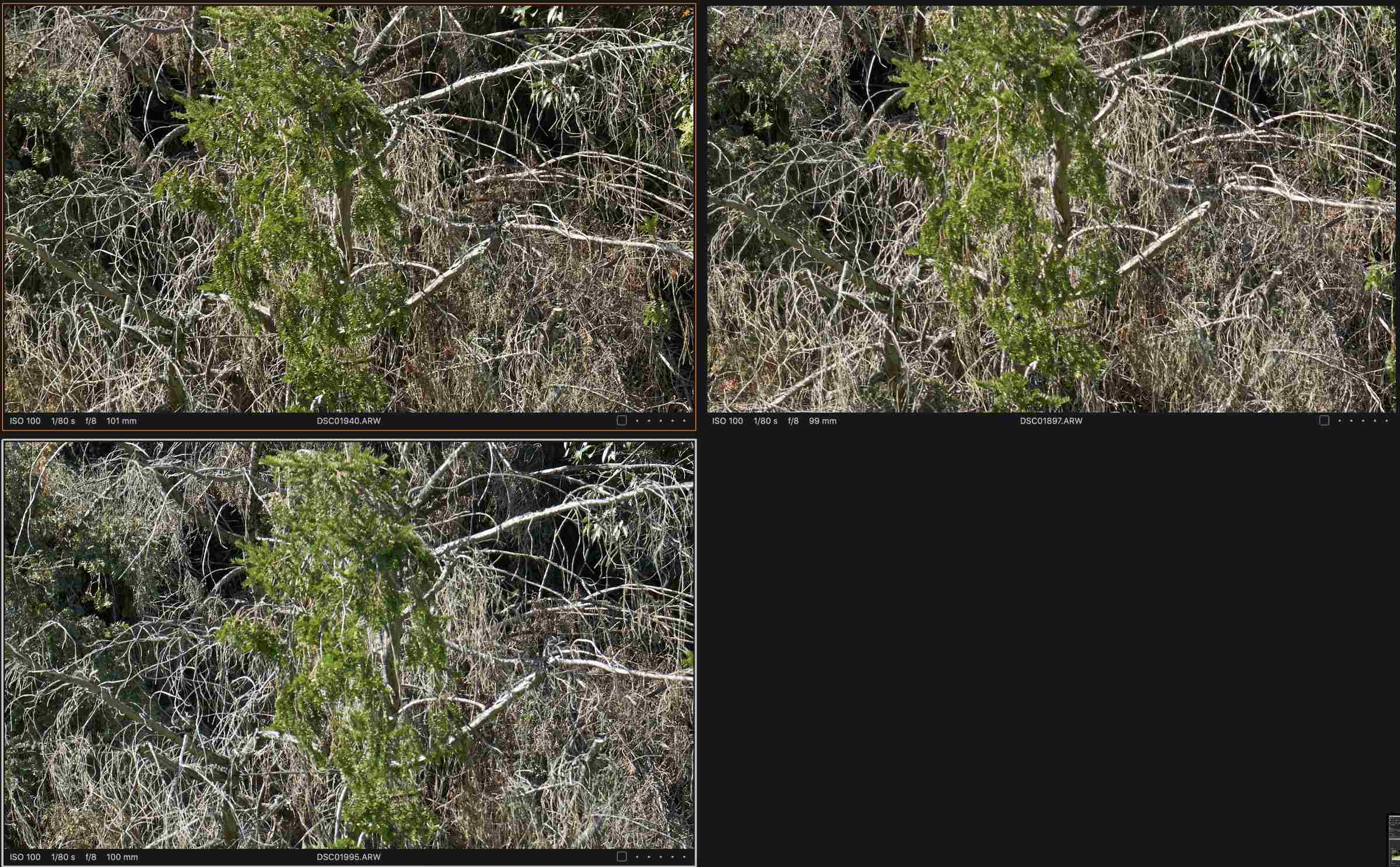
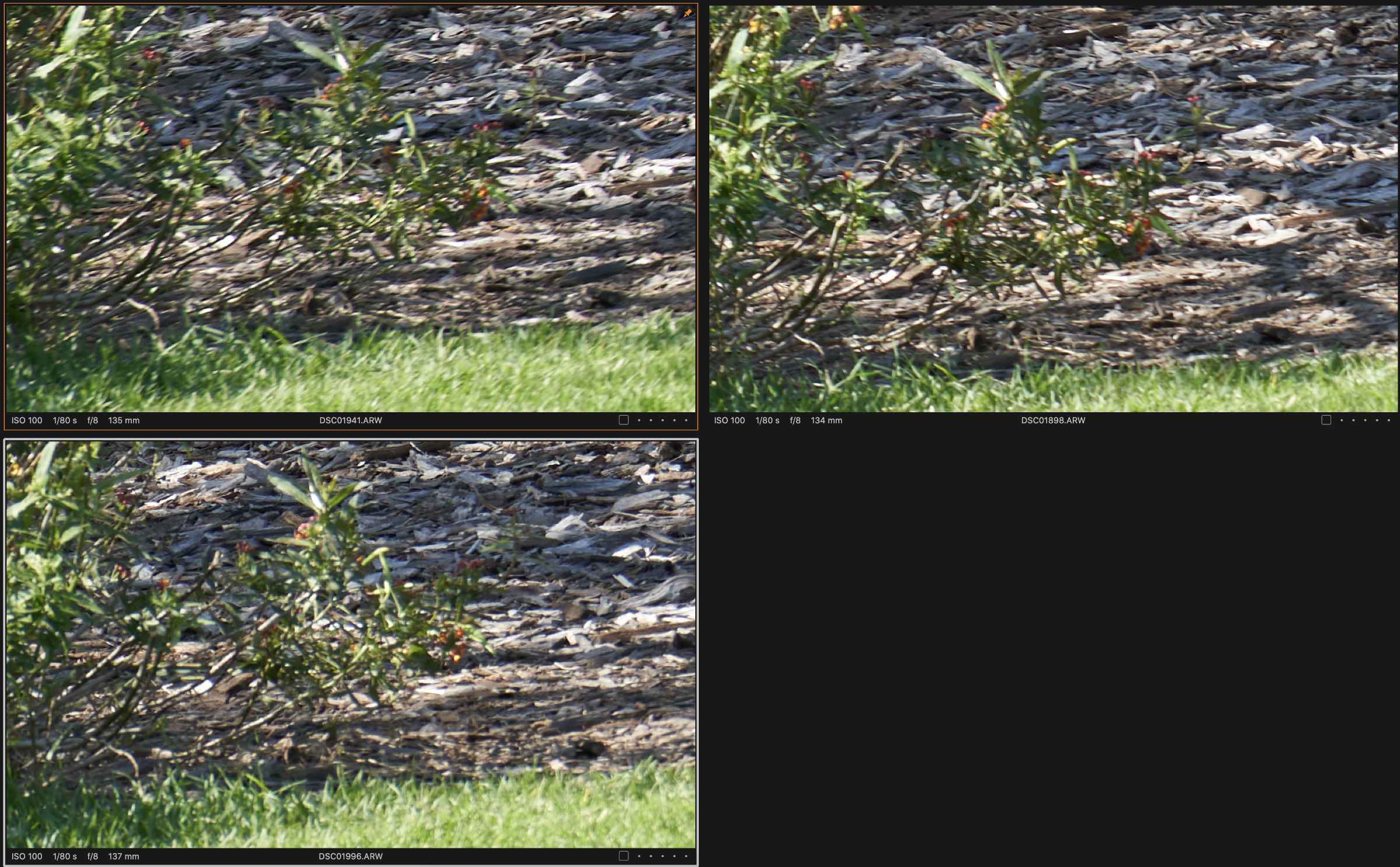
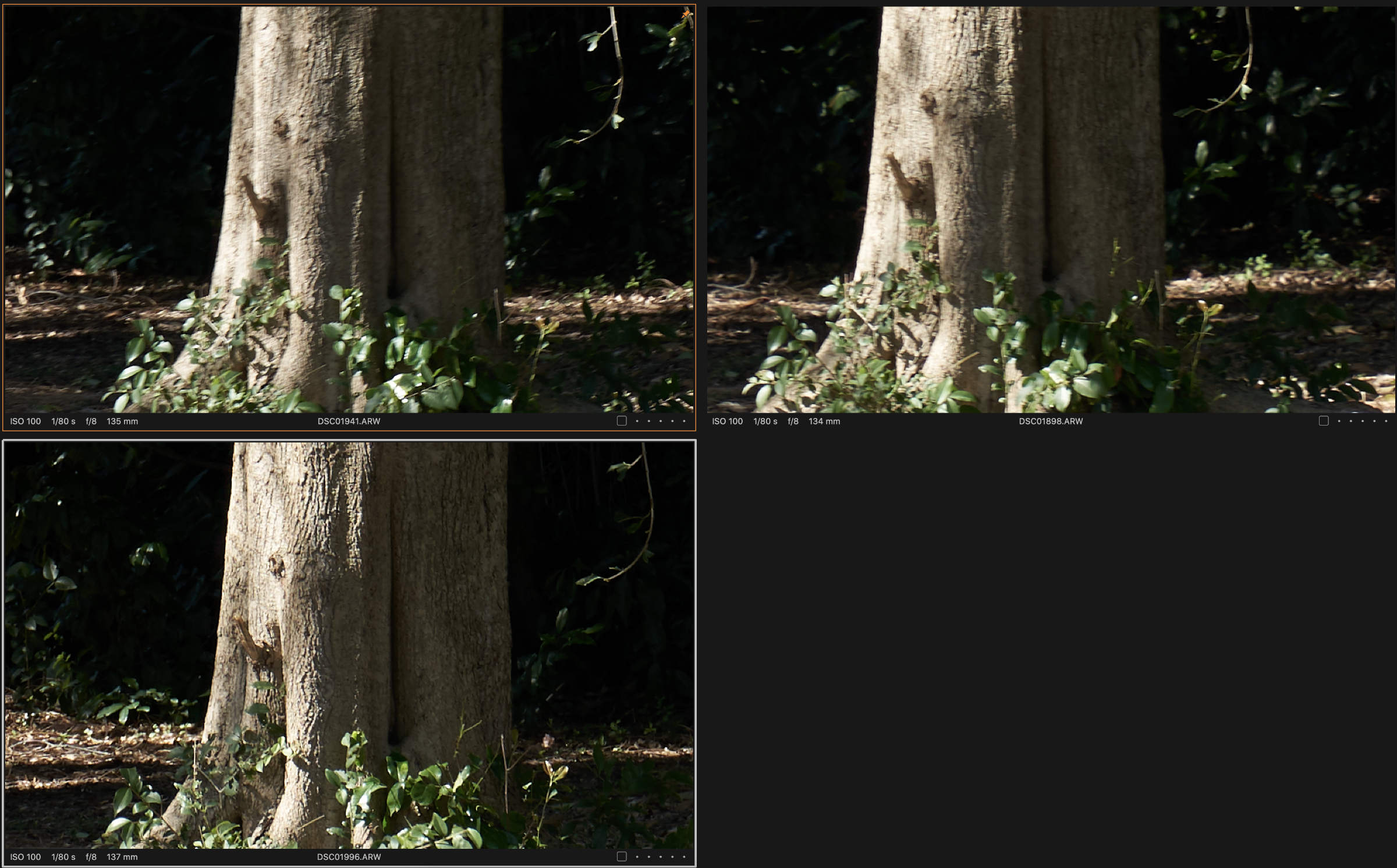
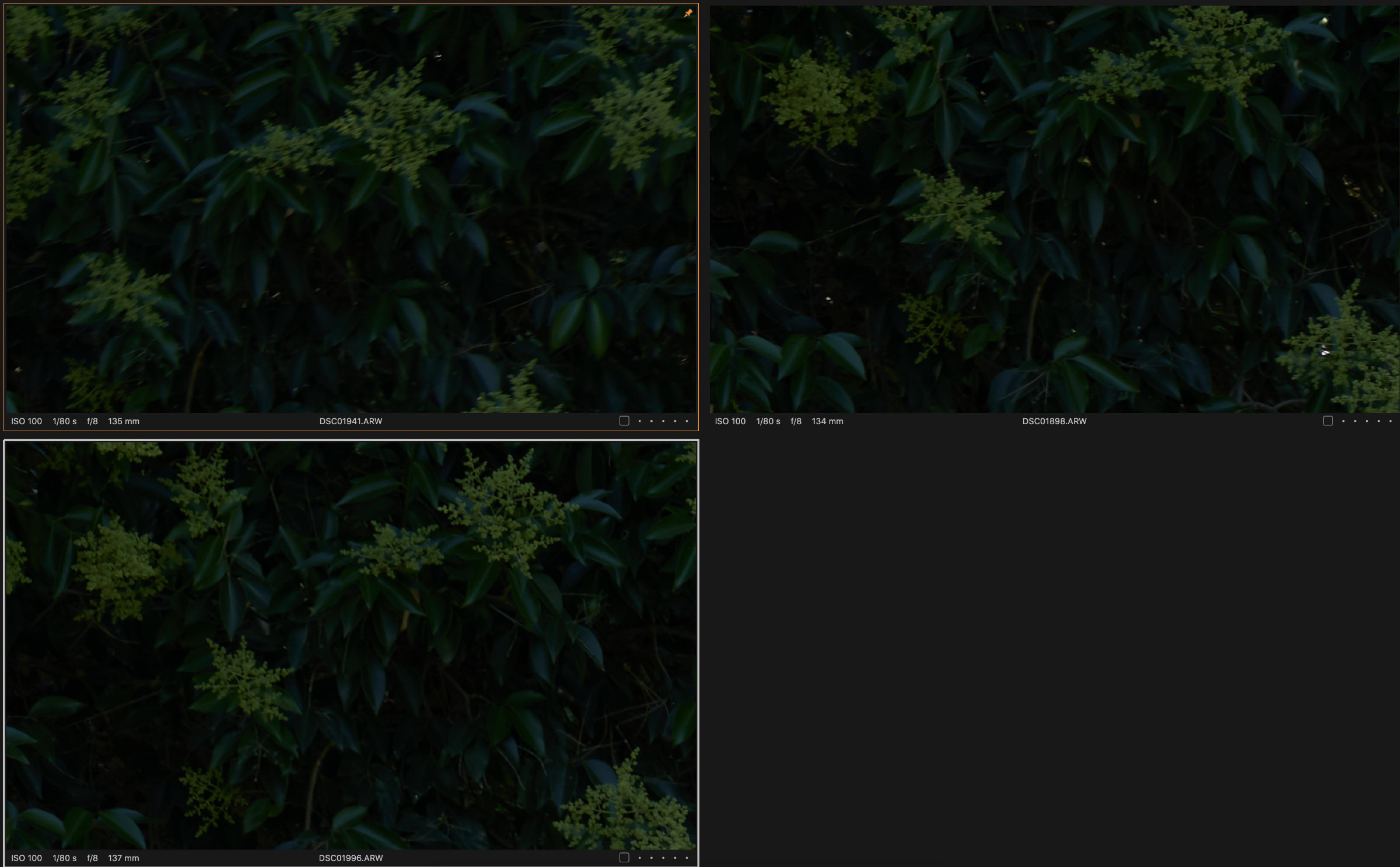
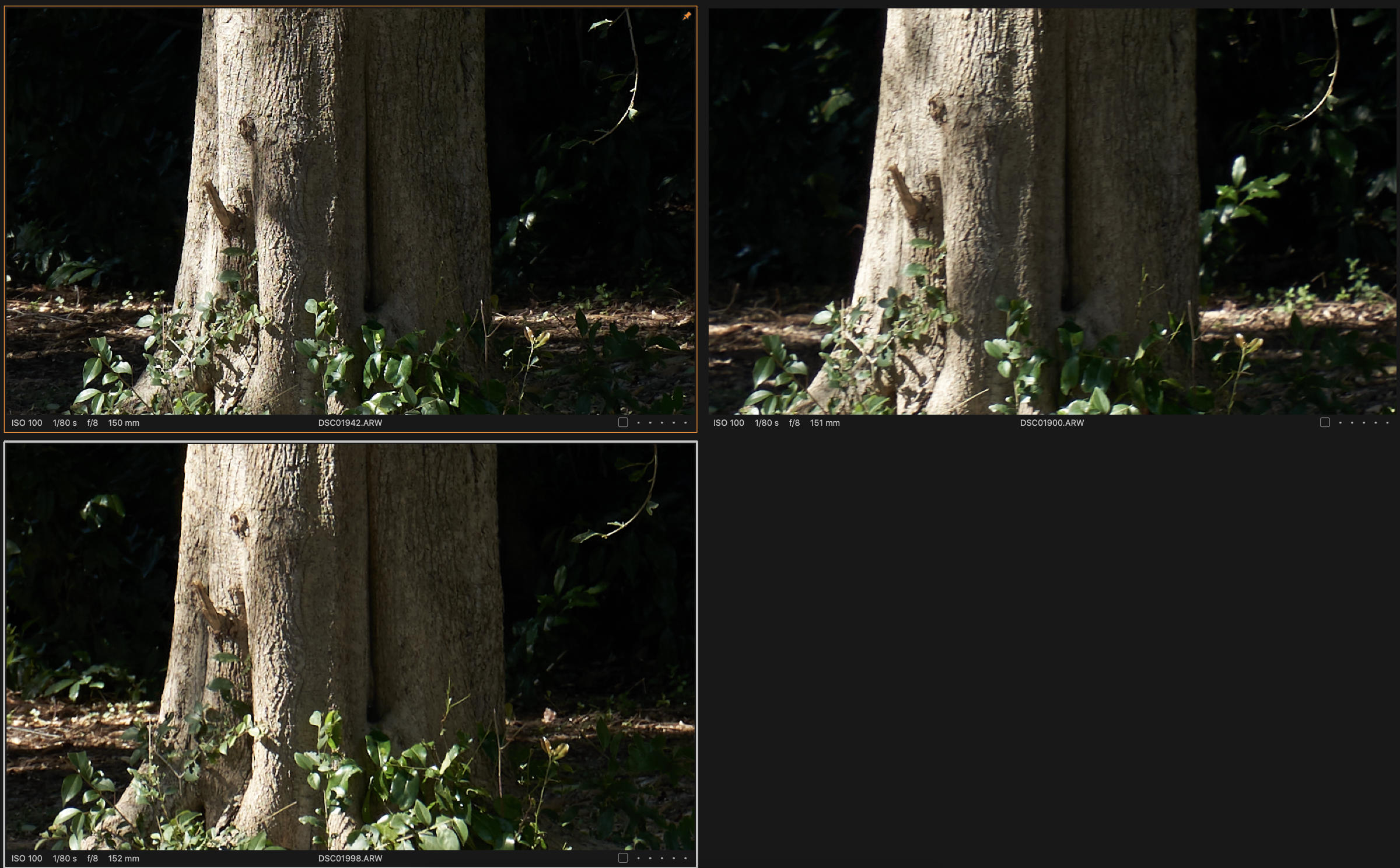
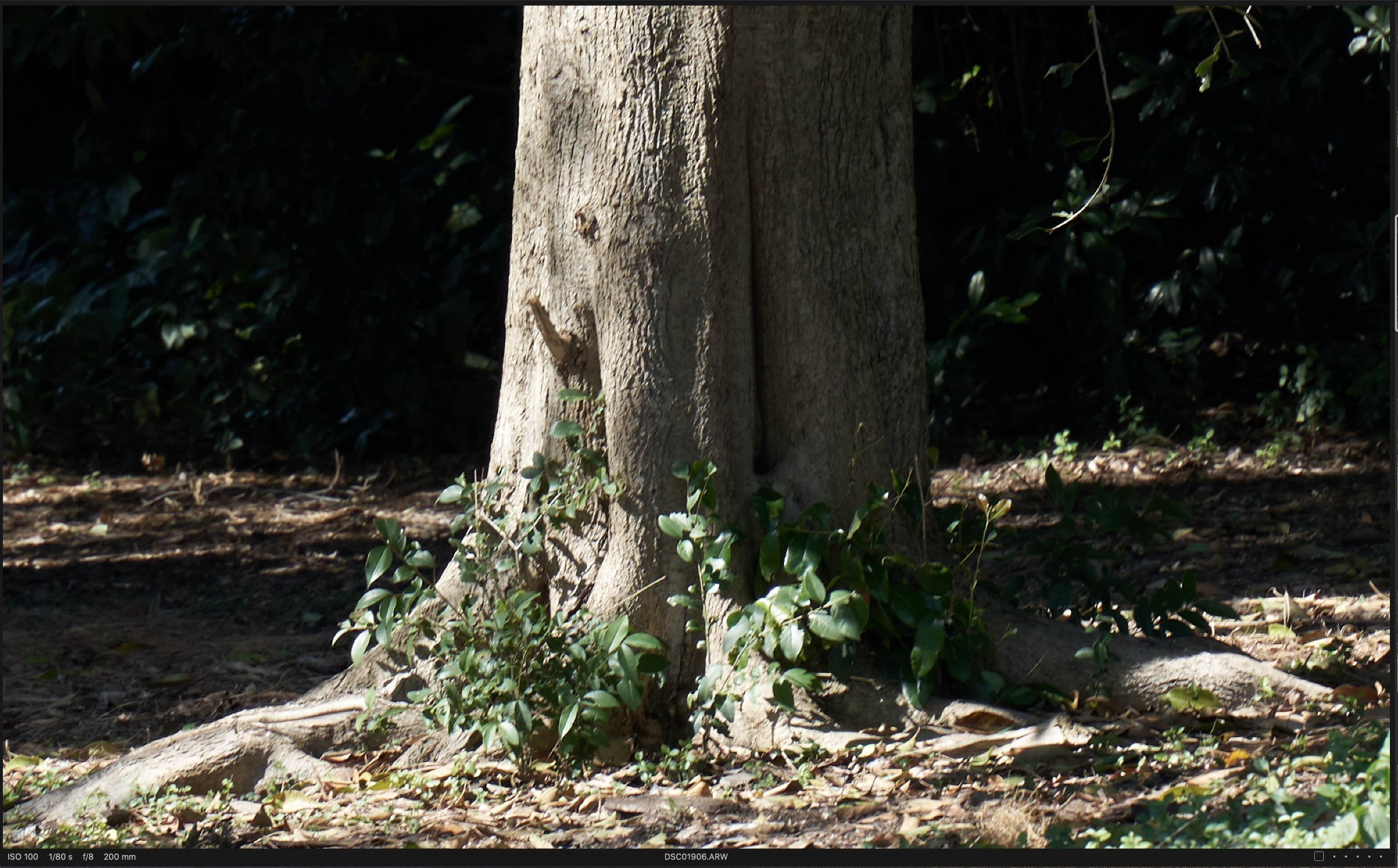
So i shot all these tests within about an hour of each other (and with a 3.5 month old with me, no less!), but I questioned my desire/stamina/interest in evaluating them all in depth for the sake of this thread. But here are the last of my tests, which were designed to simulate handheld midrange to see the effectiveness of IBIS without lens stabilization. I shot everything using my very average techinque (elbows in, eye to the viewfinder, wide stance, slow exhale) and only shot each focal length once. I assumed any camera shake vs poor lens sharpness would show up when comparing two adjacent focal lengths in the series (135 vs 100 and 150mm, for example). I used AF-S in 12.8x magnification on the very center tree trunk for each shot (except the adapted 35-150, which needs to be MF in 12.8x for accuracy). I shot manual exposure 100 ISO, f8, and a very realistic but somewhat slow for the longer tele lengths 1/80 second. Same processing as before and 100-400% magnification used for various different focal lengths and parts of the frame. Here was the global image, which was much closer than the initial infinity tests.
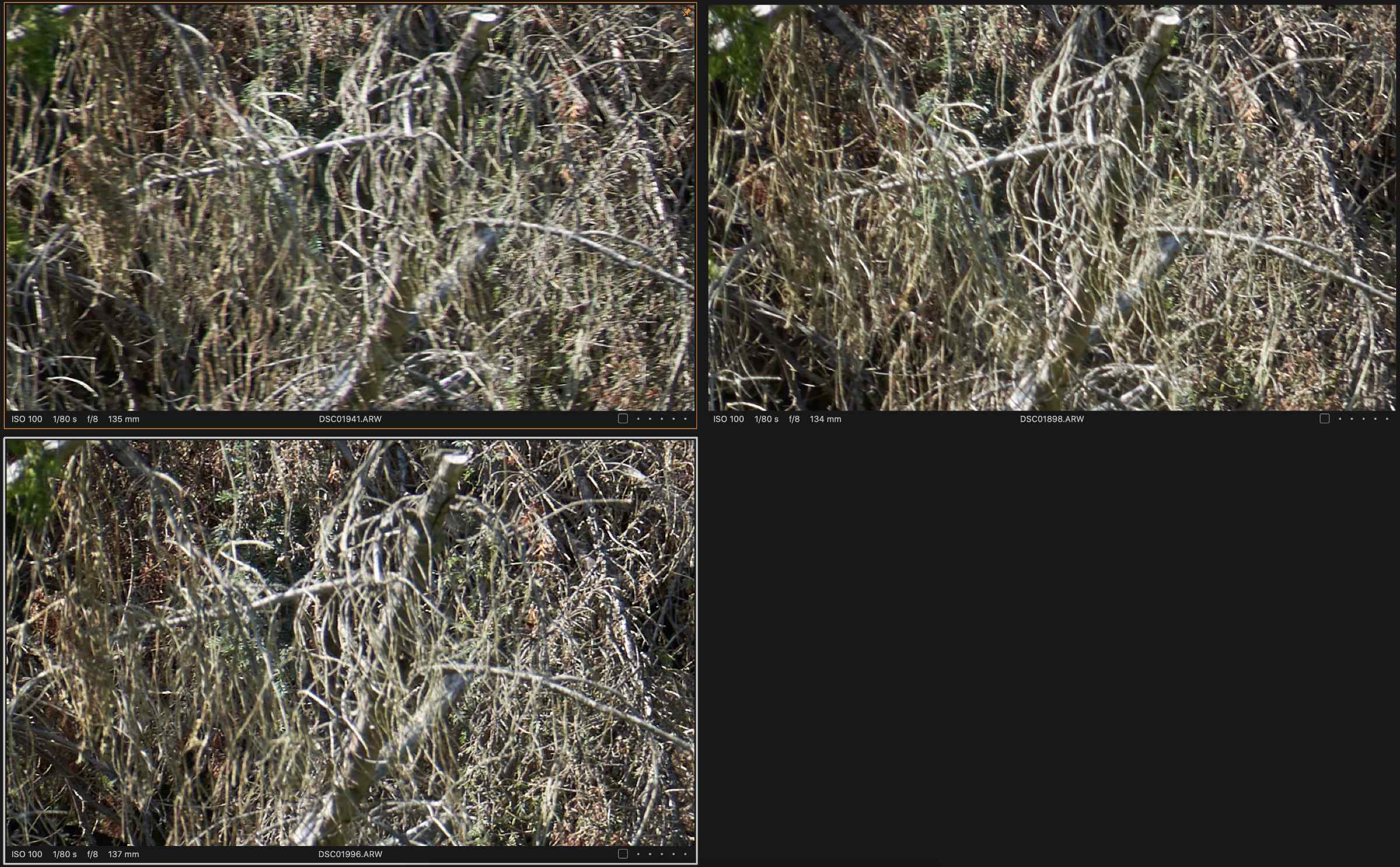
NOTE: I had to export extremely low quality jpegs to get the file sizes down this time (much, much lower than my infinity tripod tests for some reason), so take the absolute sharpness of the following images with a grain of salt and simply compare the lenses to each other in this format
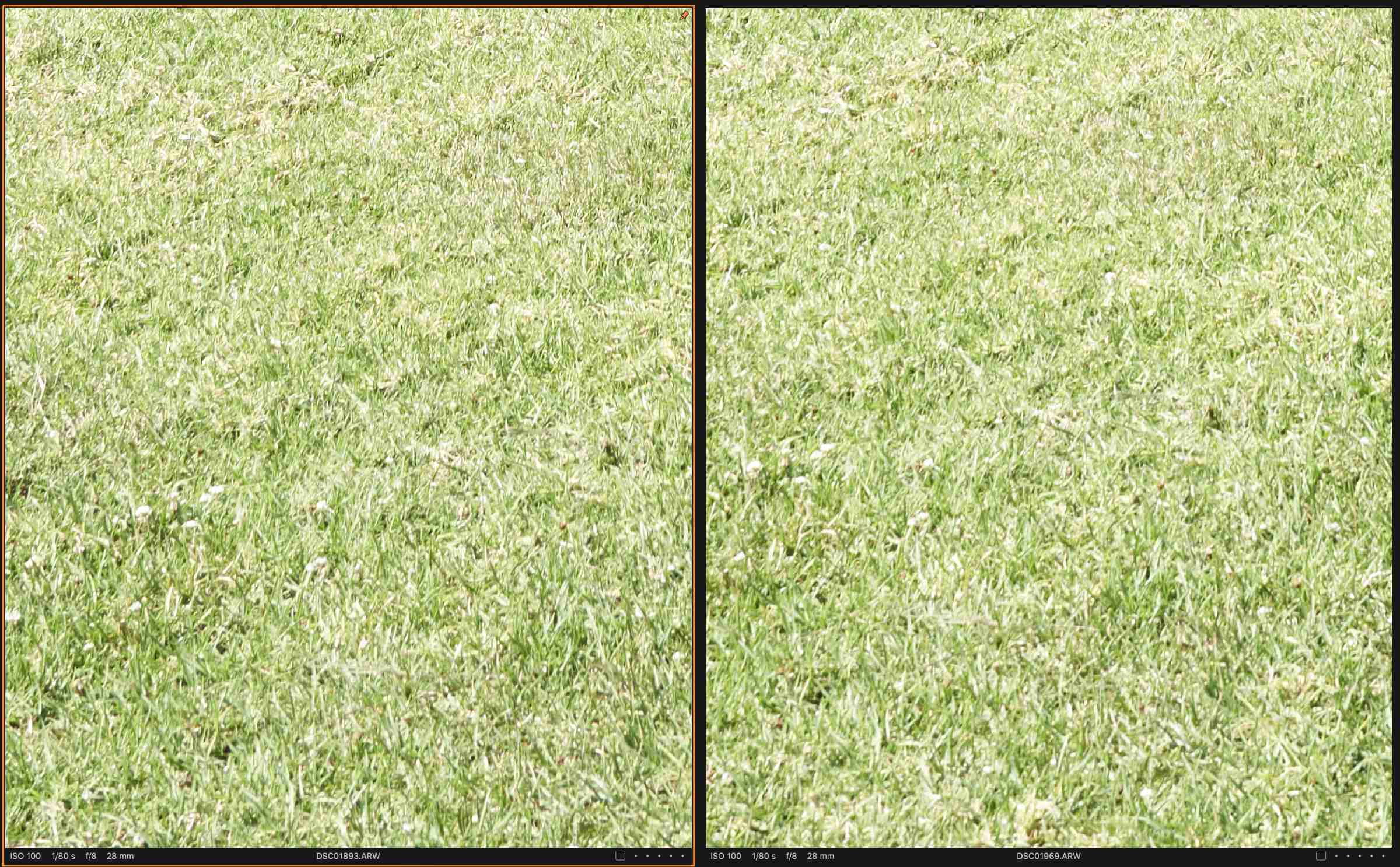
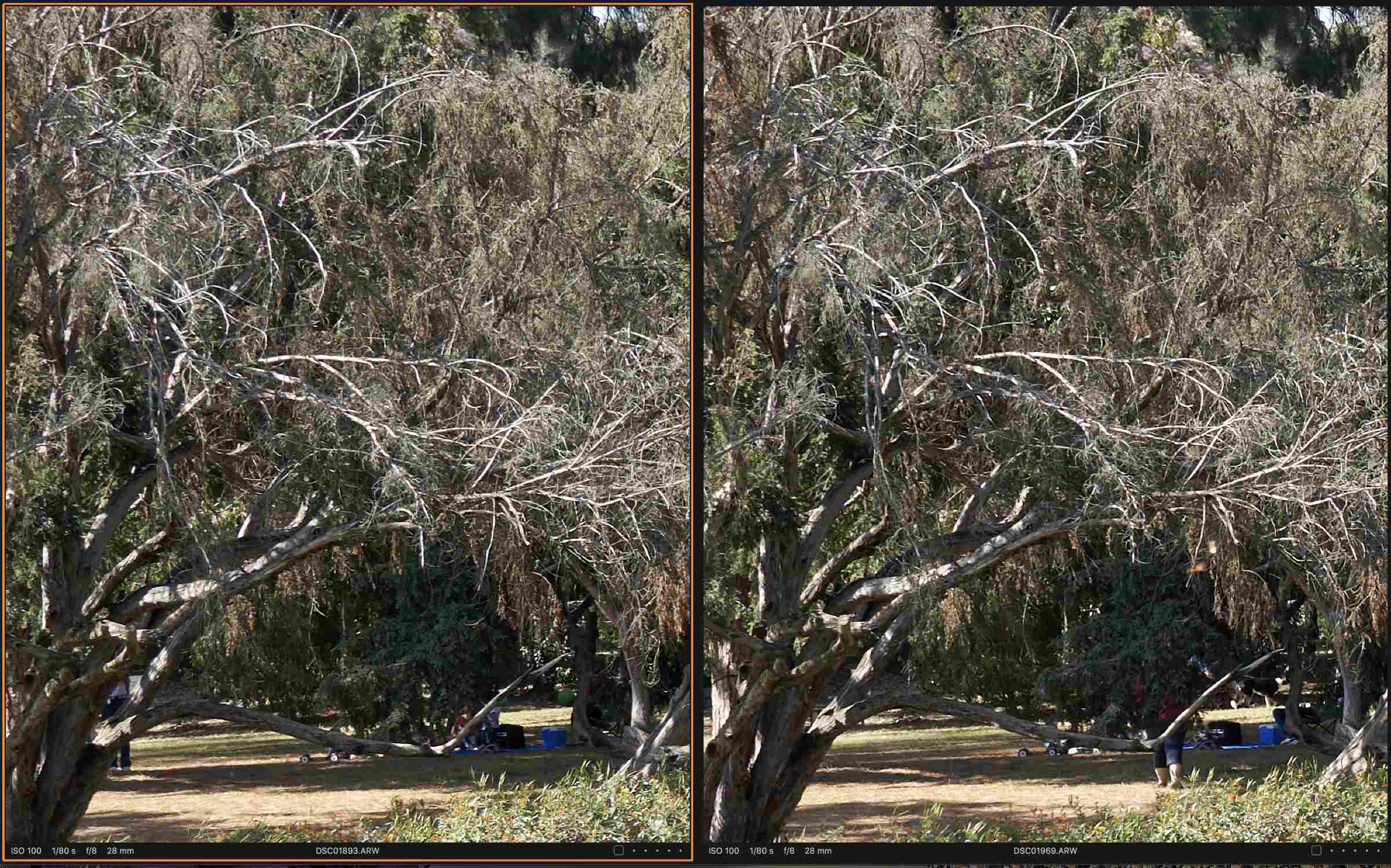
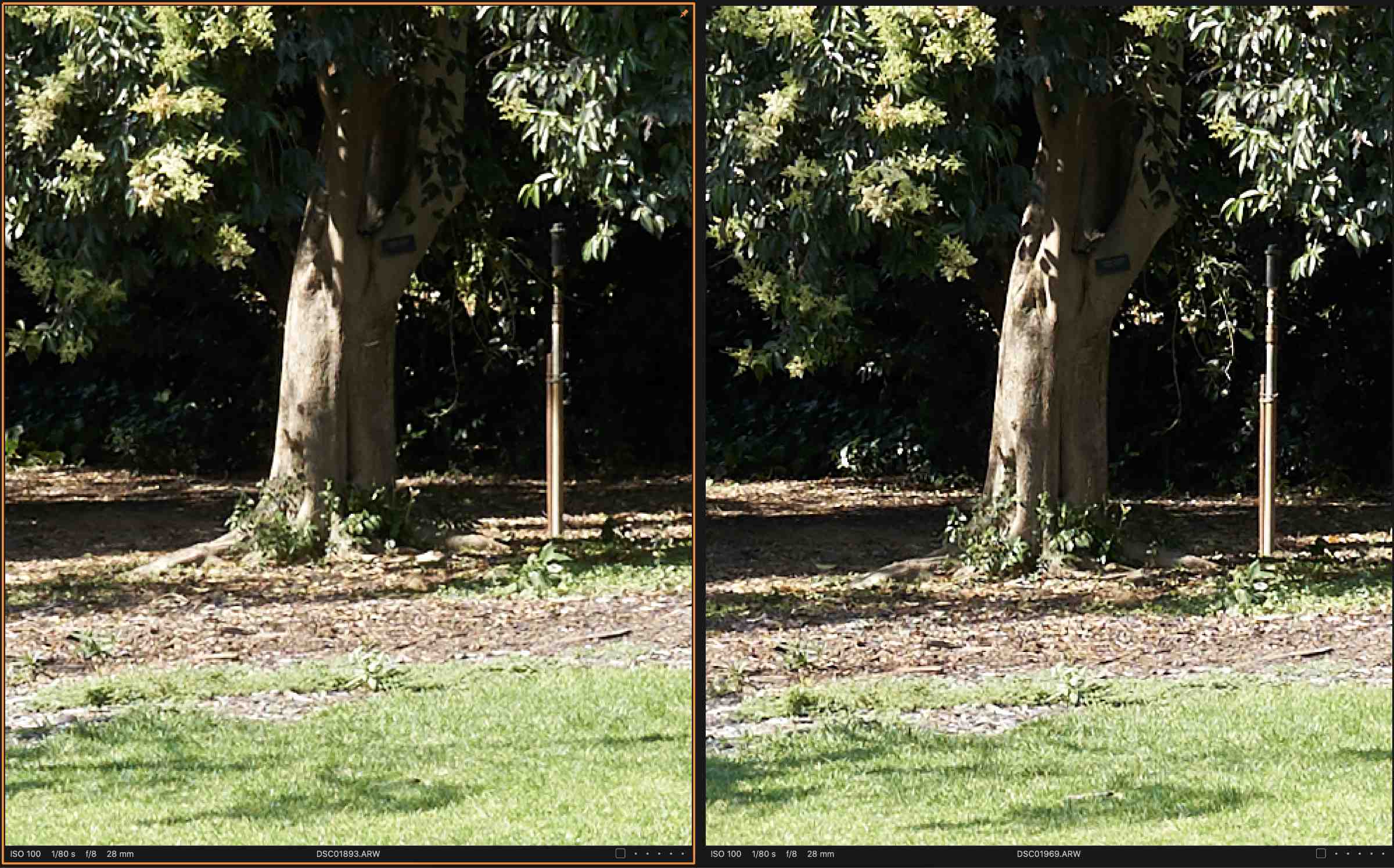
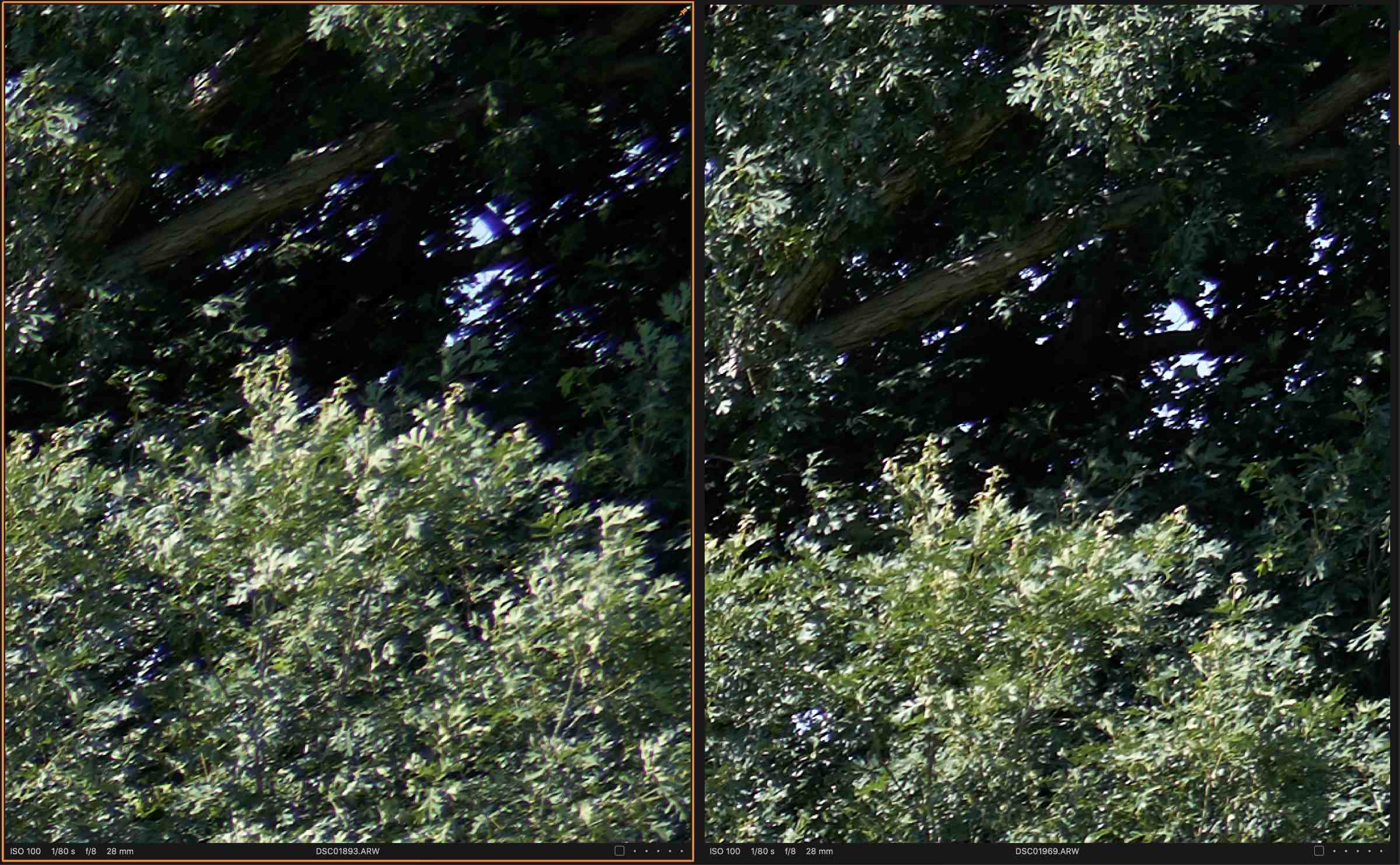
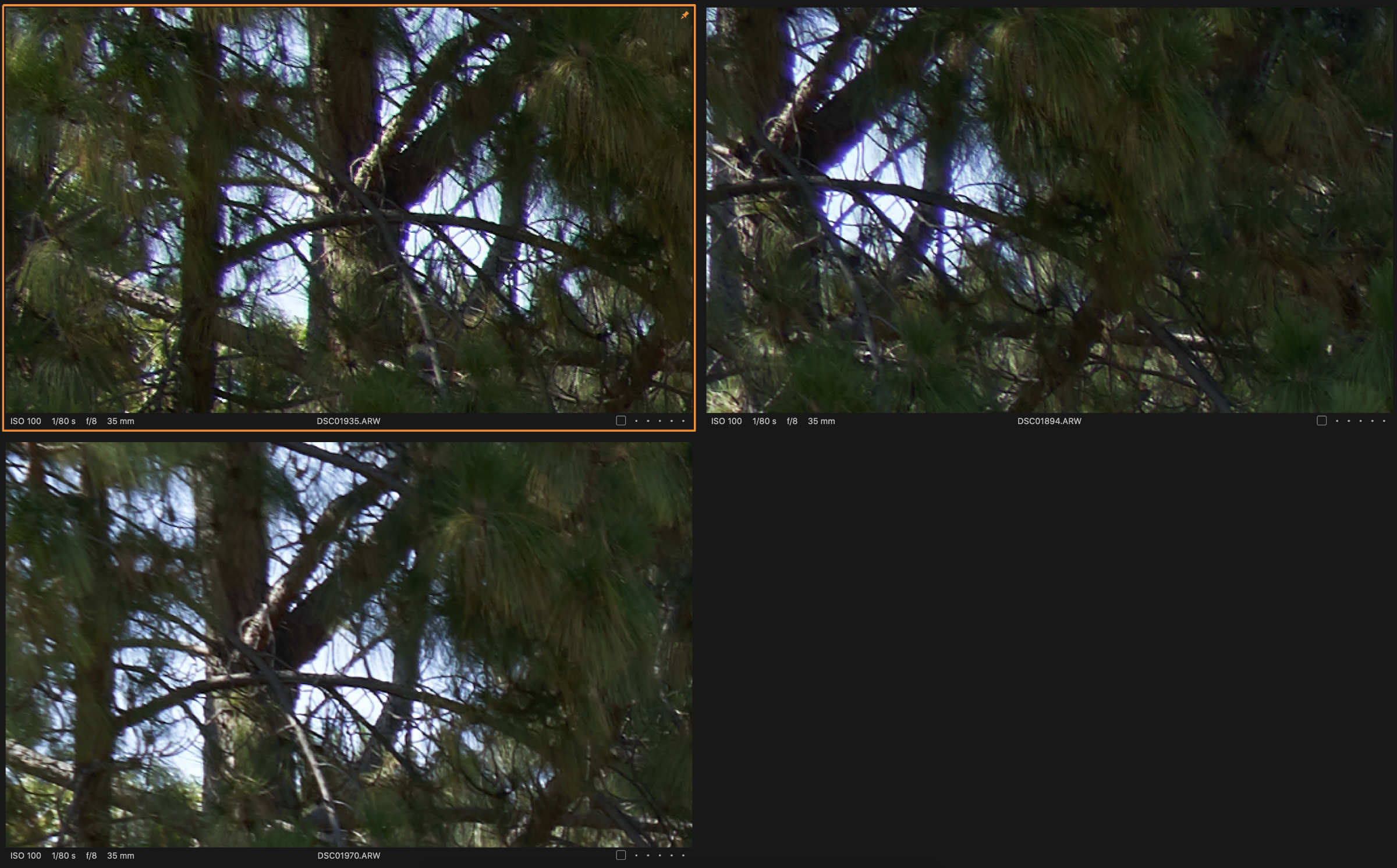
I believe once again that these are a tie and both are truly excellent. they are the same in foreground, midframe, center, and one slightly wins one corner while the other slightly wins the other corner. The 28-200 mega purple fringes at 28mm, but it does clean up with a slider.
I do not believe either lens suffers from lack of lens stabilization here.
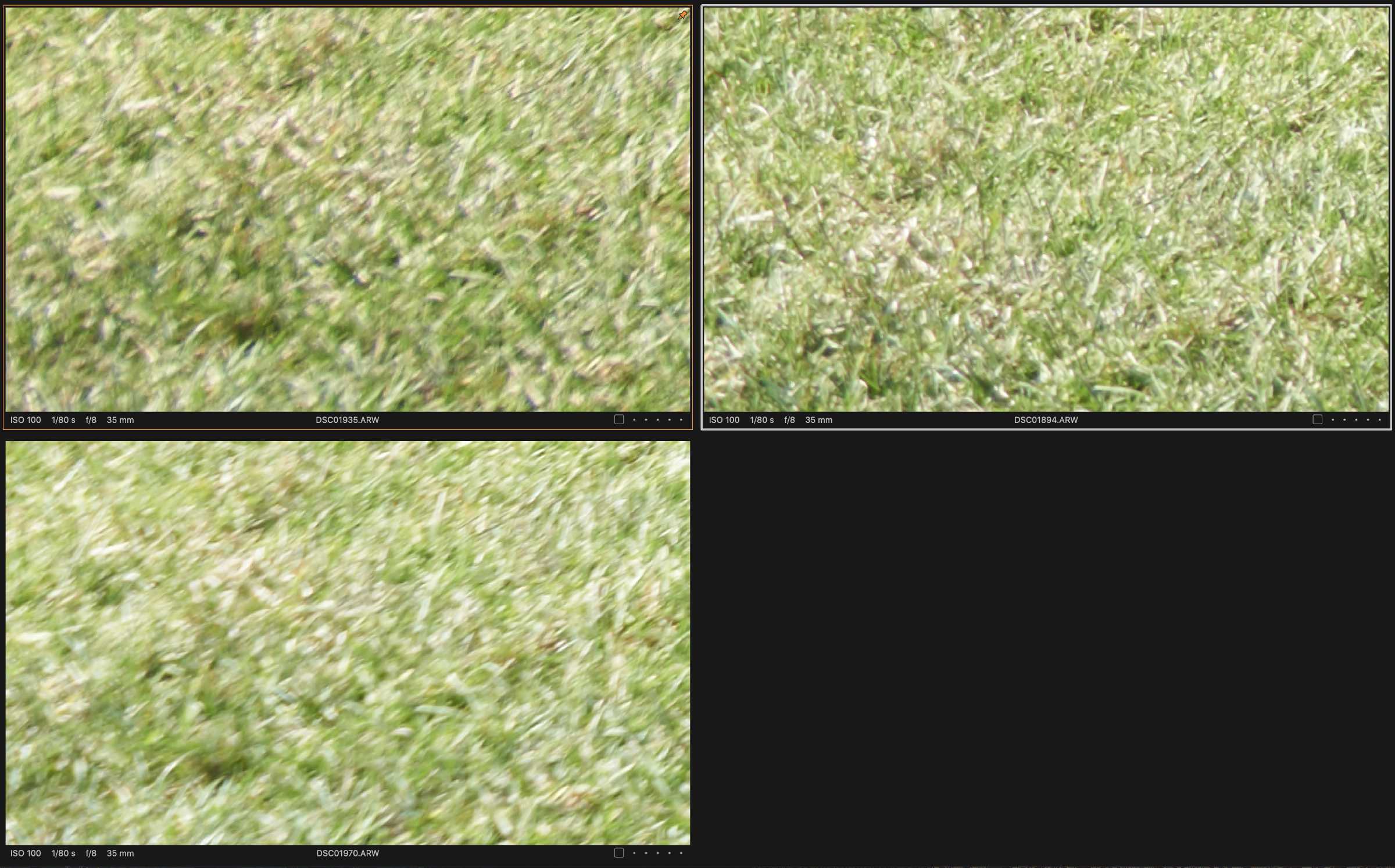
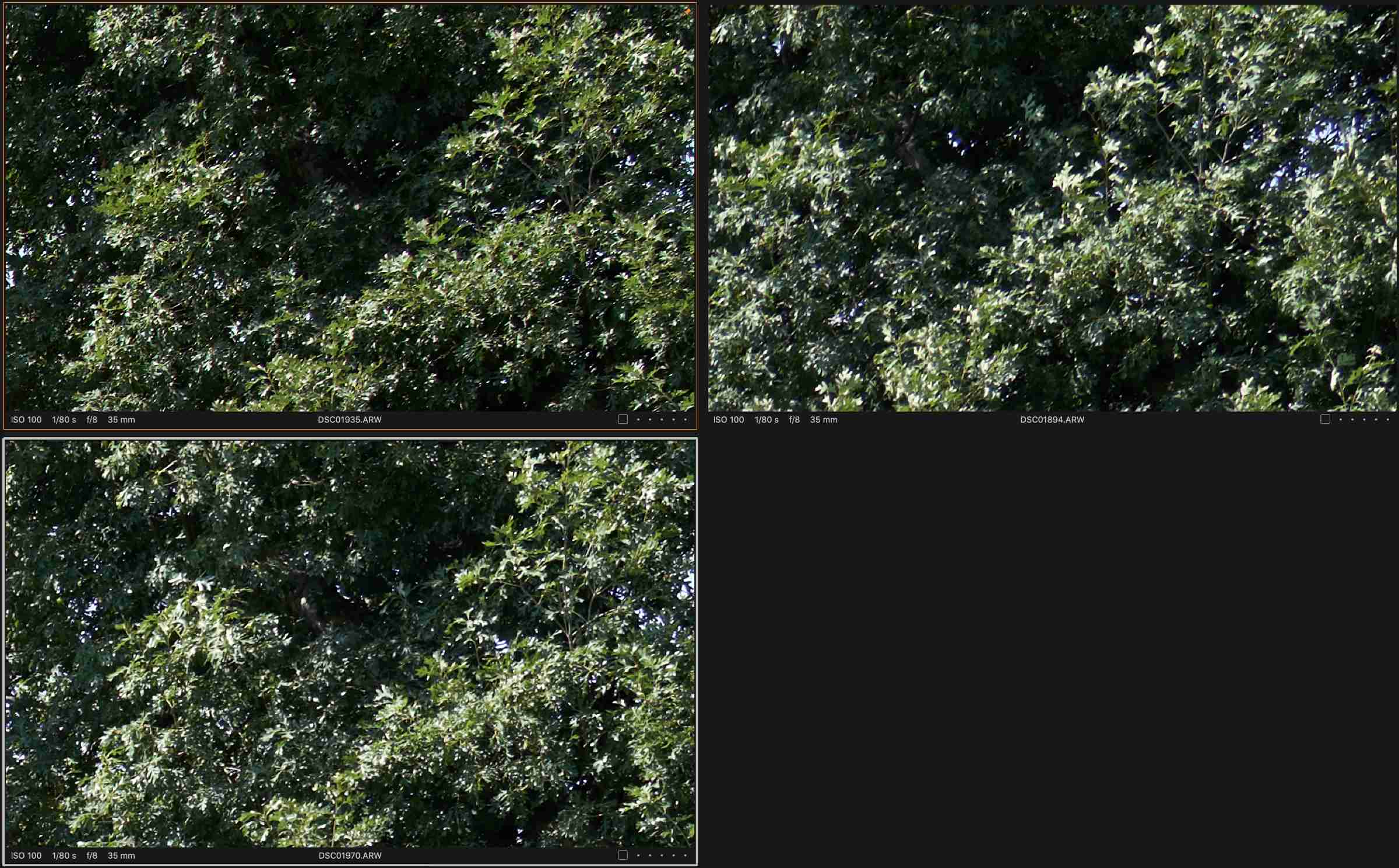
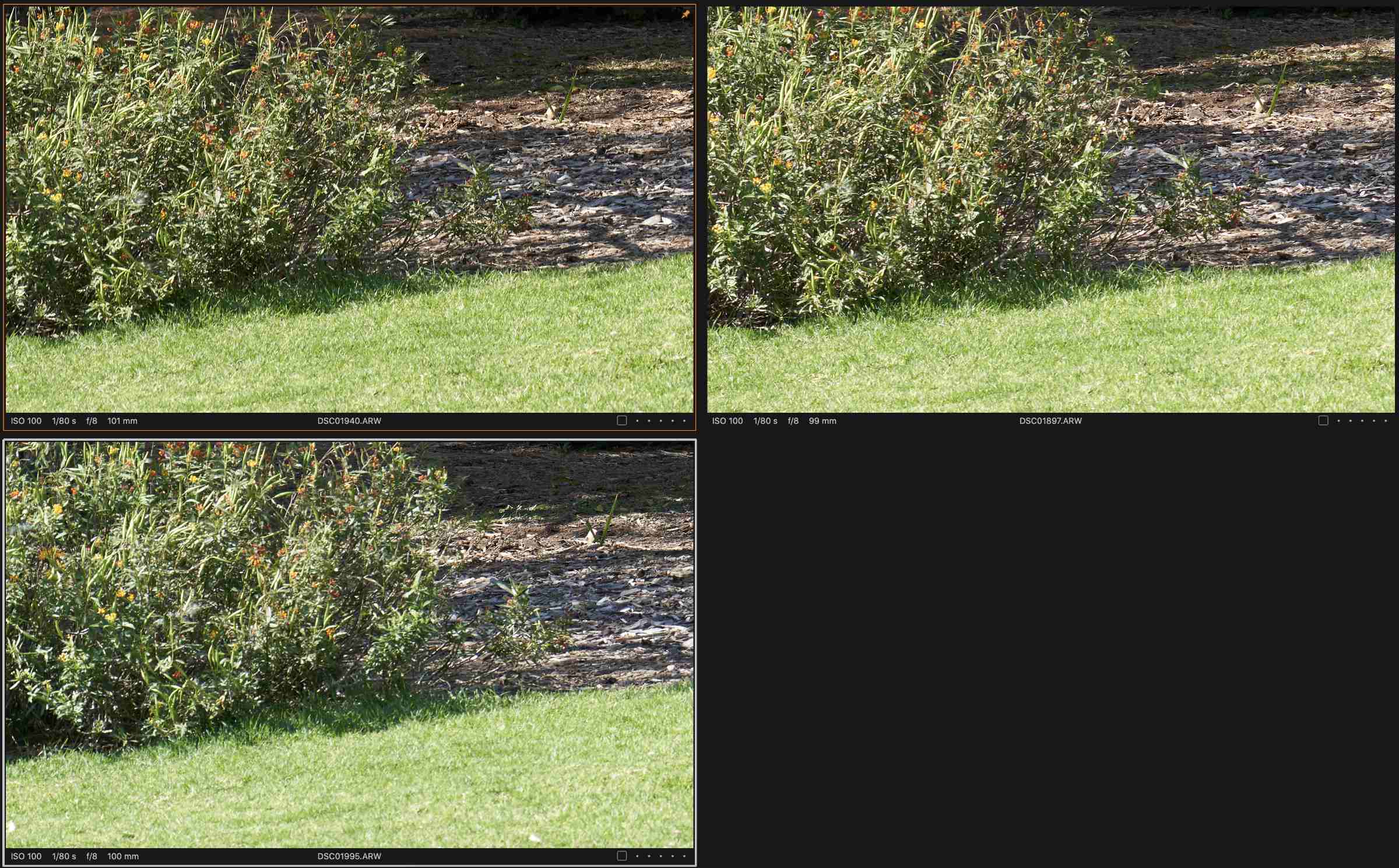
the picture of the grass is the extreme LL corner where the 28-200 handily wins in this particular part of the frame. it illustrates something interesting I found. The 28-75 and 35-150 beat the 28-200 in the very center of the foreground quite easily (not pictured due to file size limitation), but the 28-200 significantly improved in both LL and LR corners while the other two lenses significantly worsened moving into the corners. Over the rest of the image the 35-150 is definitely the overall winner, but not by much. In some places the 28-75 is slightly better and others it is definitely slightly worse, but the 28-200 does much, much better here than it did on my tripod infinity tests. It definitely still lags some at center and midframe, but it actually keeps up very competitively in the UL and UR corners and easily winning the LL and LR corners. The 35-150 and 28-200 are still purple fringing in the corners quite a bit.
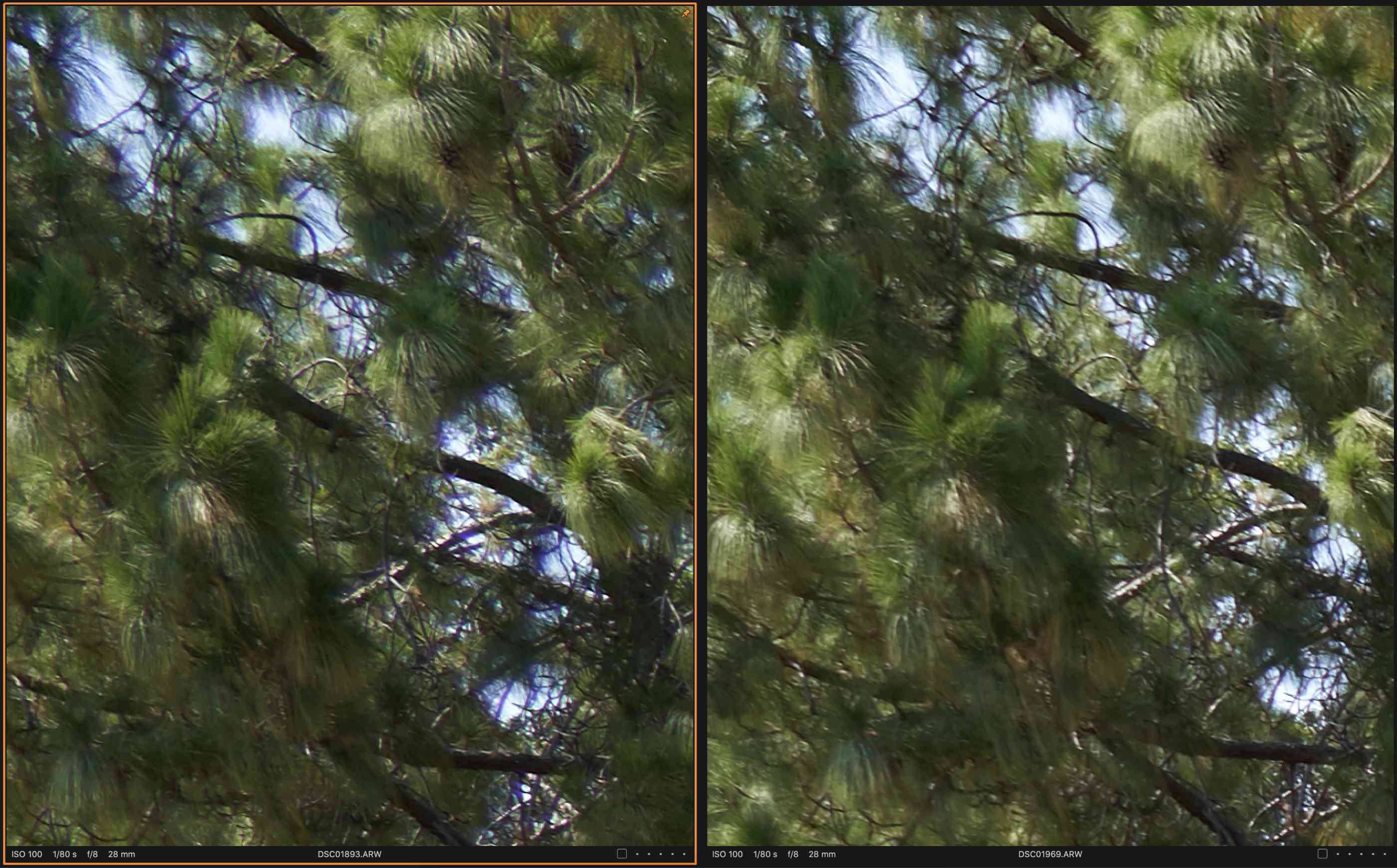
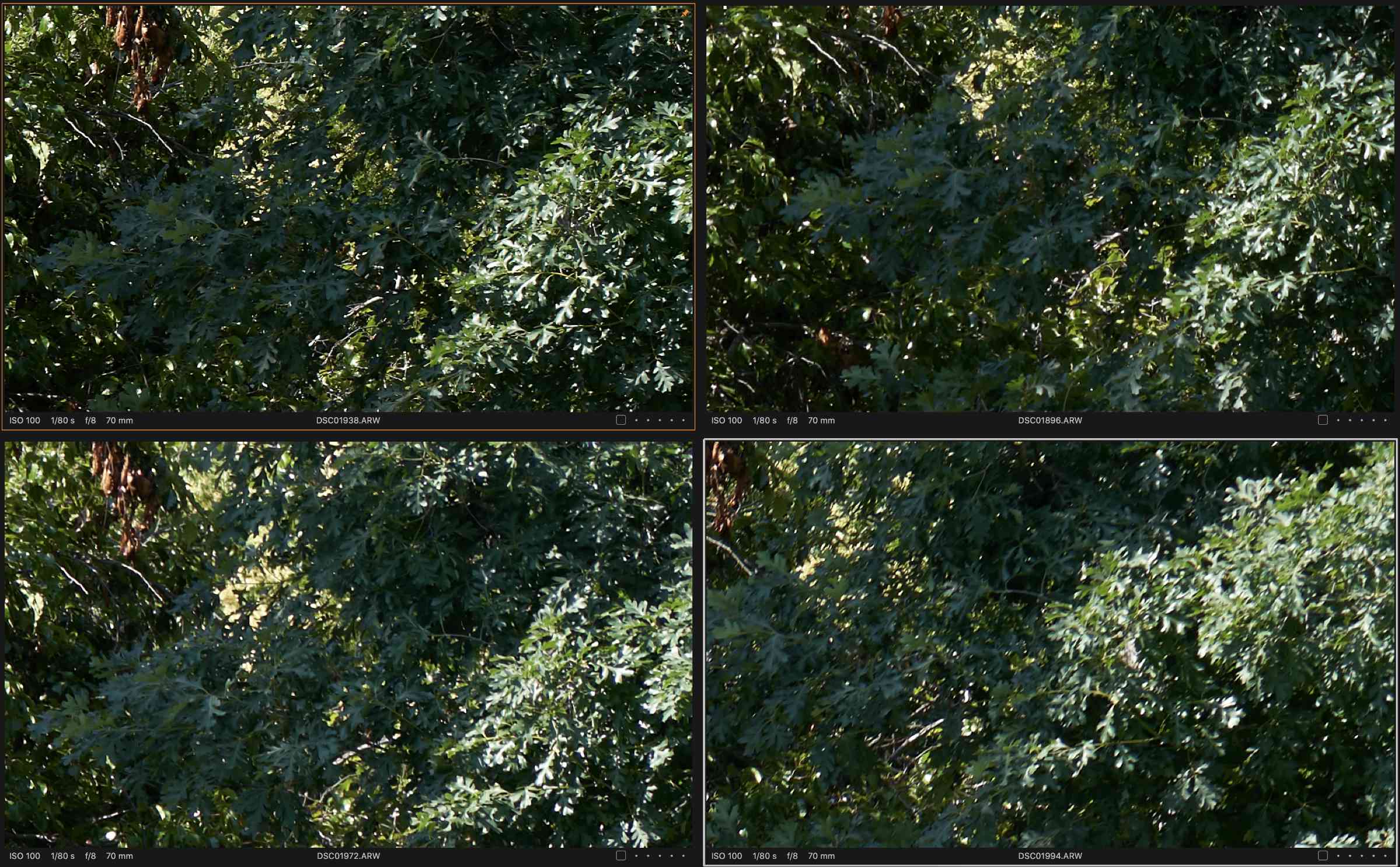
Neither the 28-200 or the 28-75 suffer from lack of lens stabilization here (the 35-150 has it), and they all range from pretty good to great
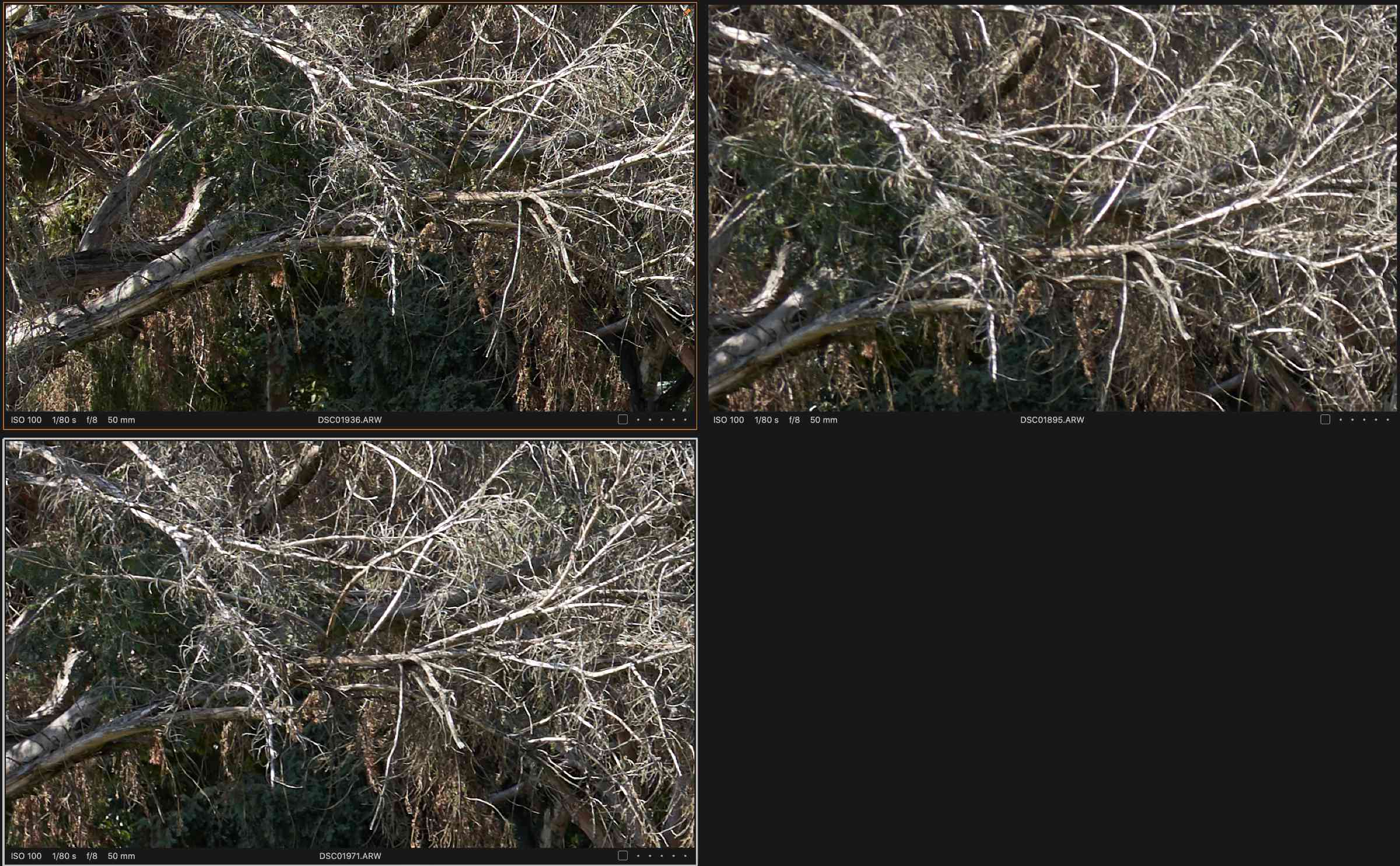
The 35-150 is the definite and clear winner and is excellent. The 28-75 is close behind in the corners and midframe, but is noticeably the worst at center. The 28-200 is the second best at center but definitely the worst at midframe. It does lag both the 35-150 and 28-75 in the UL and UR corners, but not by nearly as much as my infinity tests on a tripod. Once again, these are respectable showings and not quite "the mid-range focal lengths completely fall apart" narrative that my initial tests suggested.
The 28-75 and 28-200 still do not seem to suffer from lack of lens stabilization (the 35-150 has it)
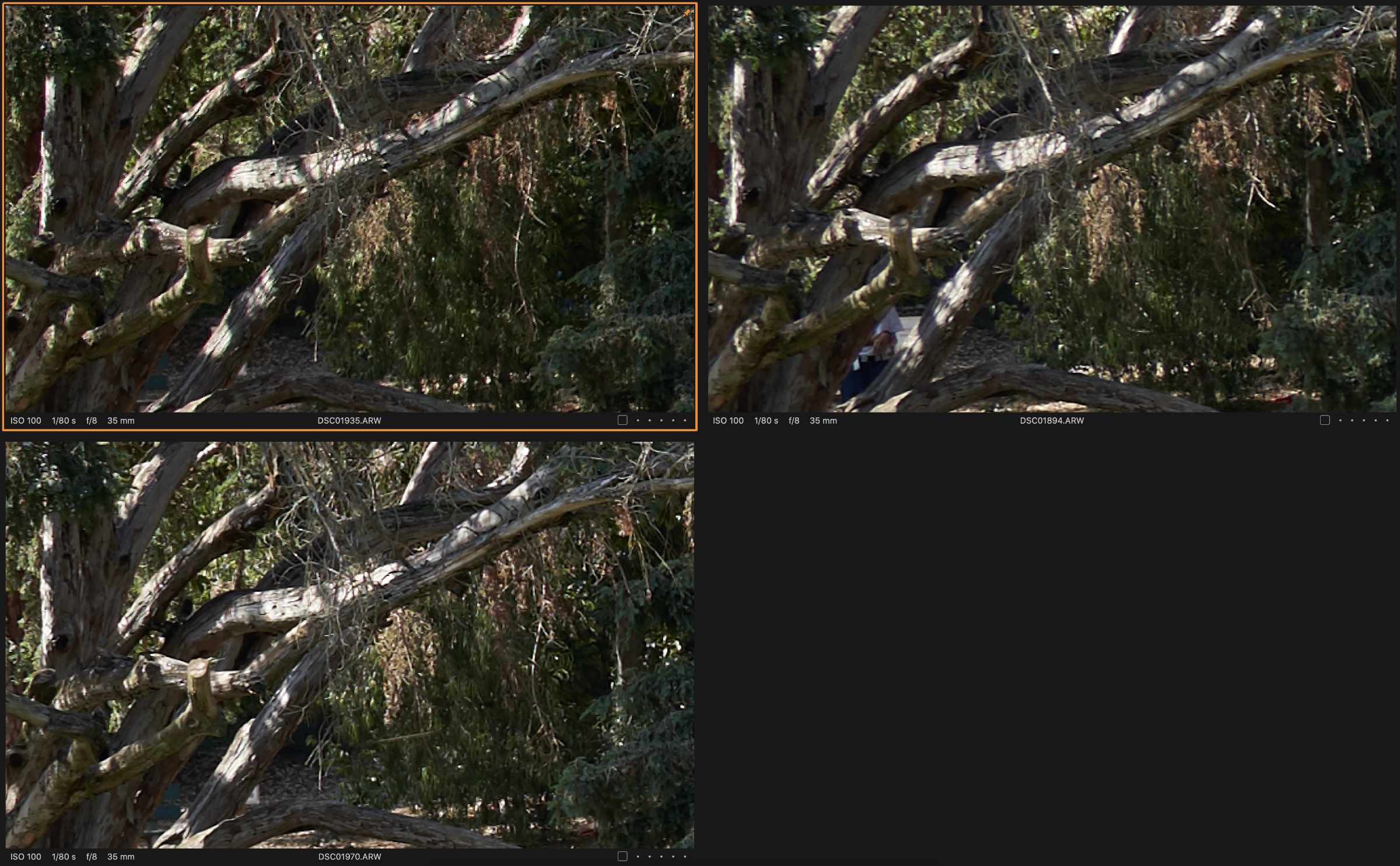
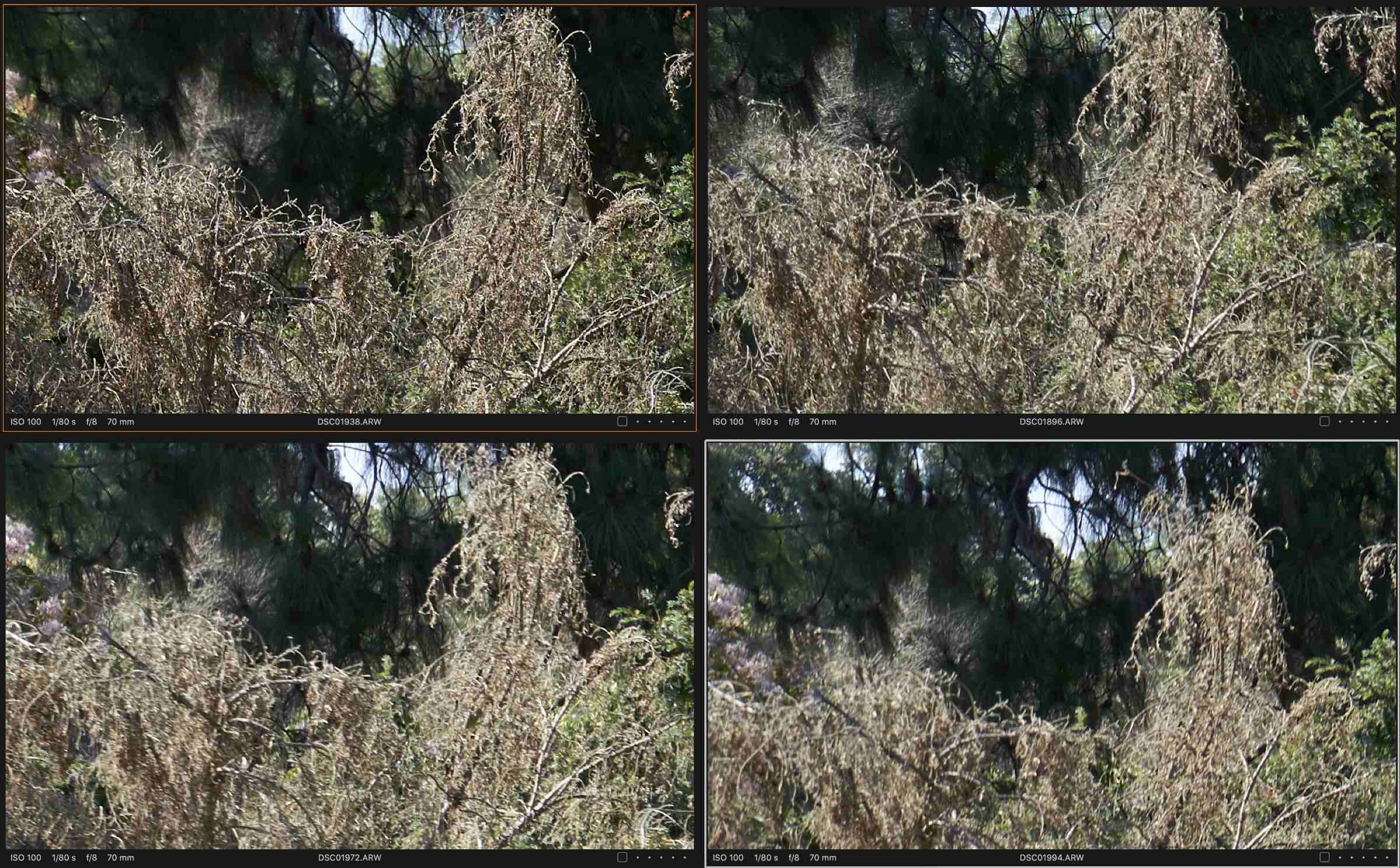
THIS ONE IS SUPER INTERESTING! The 35-150 wins. full stop. but the 28-75 and 28-200 trade blows the whole way with one winning in one area and the other winning in another, but they both are respectably close to the 35-150 for the most part. the 70-180 loses here. everywhere. Some places by a little and some by a lot. but see my lack of lens stabilization conclusions below.
I don't think the 28-75 or 28-200 suffer much from lack of lens stabilization here (the 35-150 has it). But i could DEFINITELY and noticeably discern that IBIS was having an ESPECIALLY hard time stabilizing the 70-180 at 70mm for some reason. It actually was very difficult to focus in 12.8x magnification at 70mm, but it seemed to clear right back up and behave like the other lenses at 100mm. This was noticeable as it was happening and not something I have noticed any other time. weird...
WHAT A TREAT!!! All three lenses performed flawlessly here. across the whole frame they are all absolutely and exceptionally good. There is no winner as anyone should be happy with the across the frame performance of any of these lenses this time.
the 70-180 seemed to behave normally again with IBIS. neither the 70-180 or 28-200 gave up anything to the 35-150 and it's lens stabilization this time
the 70-180 takes the cake on this one in every area. The 28-200 and 35-150 are both decent but noticeably behind at center and midframe, but the 28-200 comes much closer to the 70-180 in the corners and does quite decent. the 35-150 has a real miss-step here and i am wondering it this might have been one flubbed shot for this lens. hopefully just a mulligan?
the lack of lens stabilization clearly not a HUGE detriment yet, as the 70-180 wins, the 28-200 takes second, and the 35-150 (with lens stabilization) loses this round. However, each lens took a noticeable step back versus its own performance at 100mm, so maybe this is the point where it starts to actually matter some.
All three lenses look really good again. the 35-150 wins the center by a small margin, the 28-200 wins the UR by a small margin and the 70-180 wins the UL by a small margin. Each lens wins one area, comes in second in one area, and loses one area, so let's just call it a draw.
I feel like the lenses without stabilization are doing ok again, and the 35-150 has recovered from it's awful 135mm showing, so I am gonna rule that singular shot a fluke on my part.
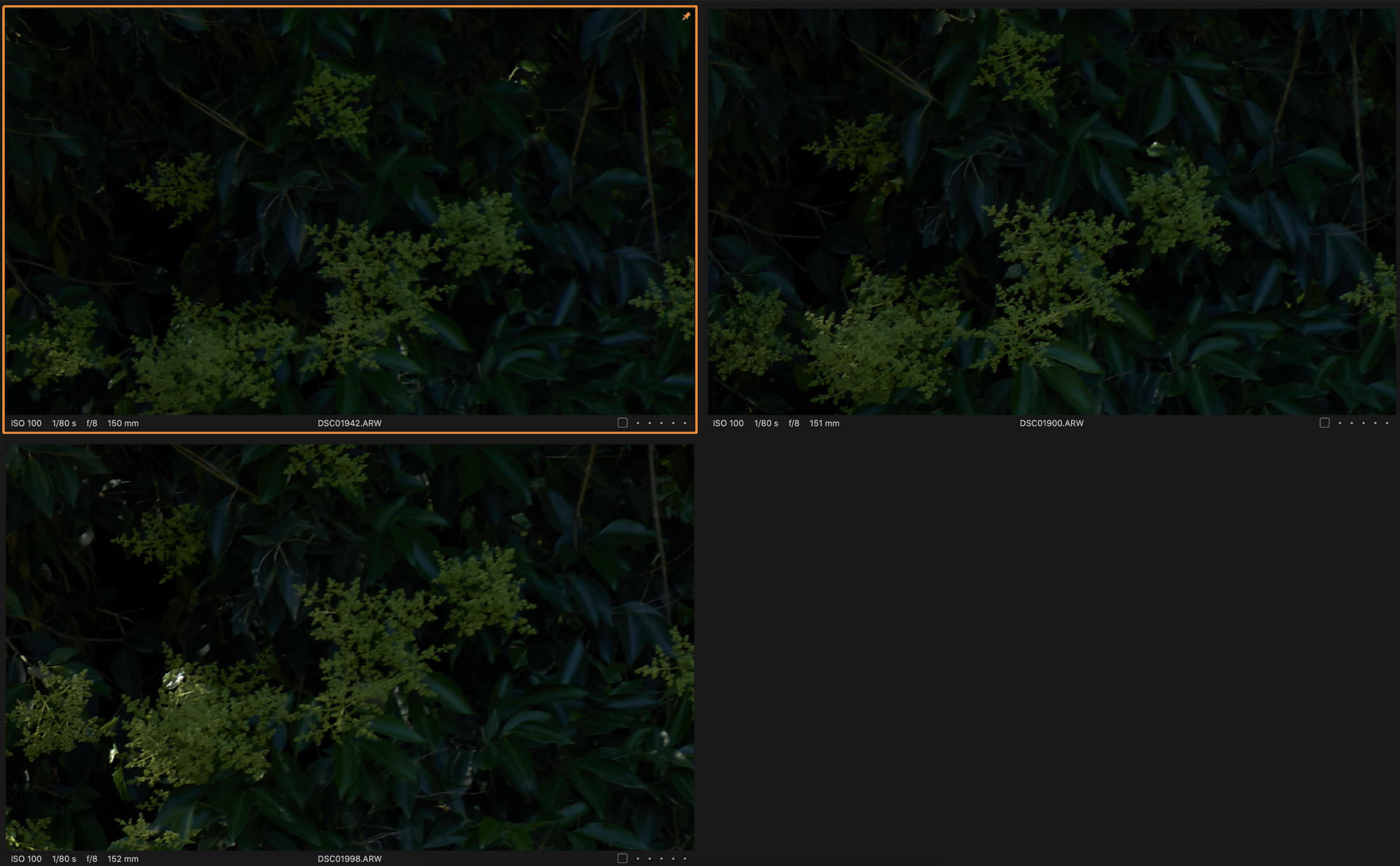
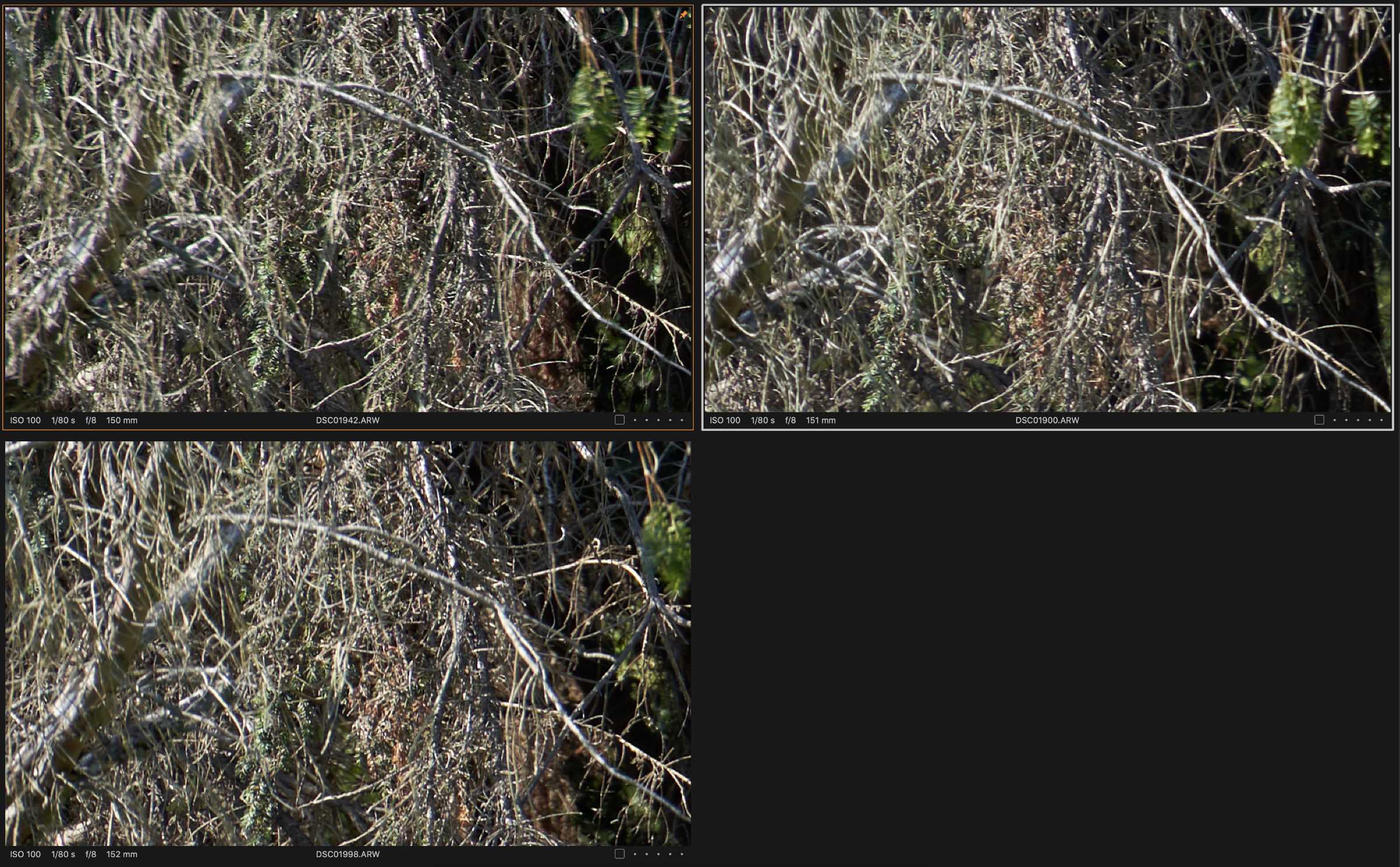
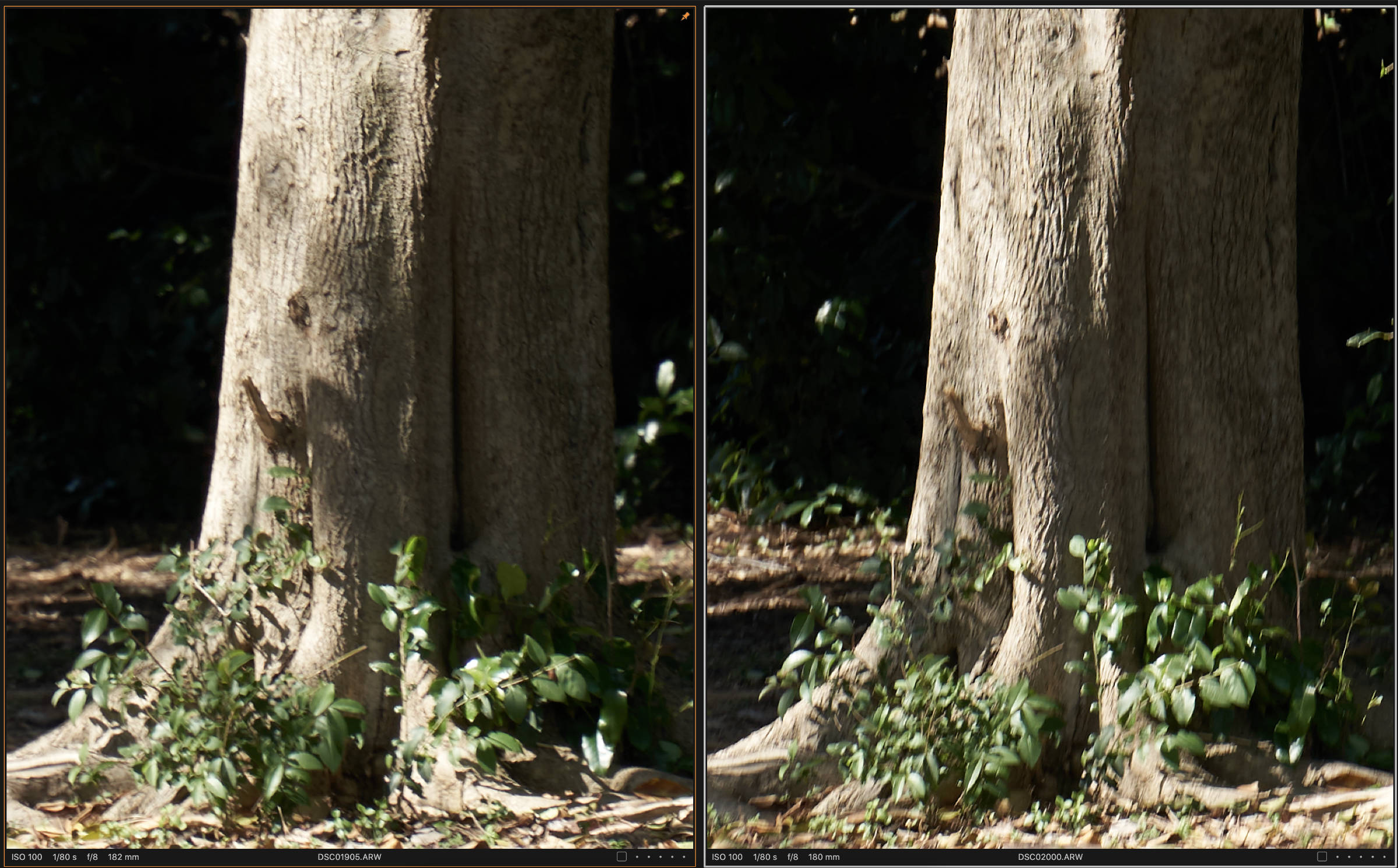
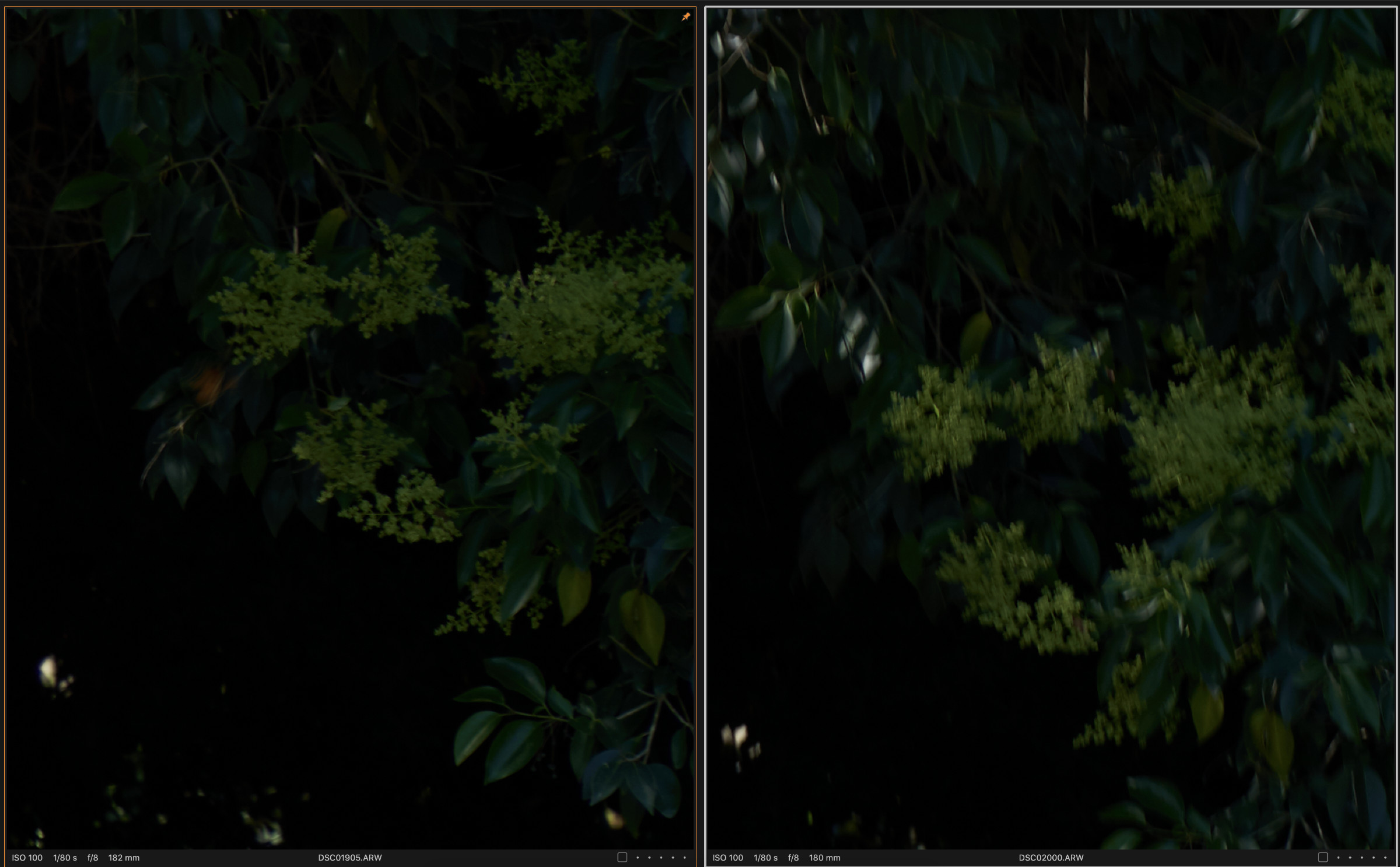
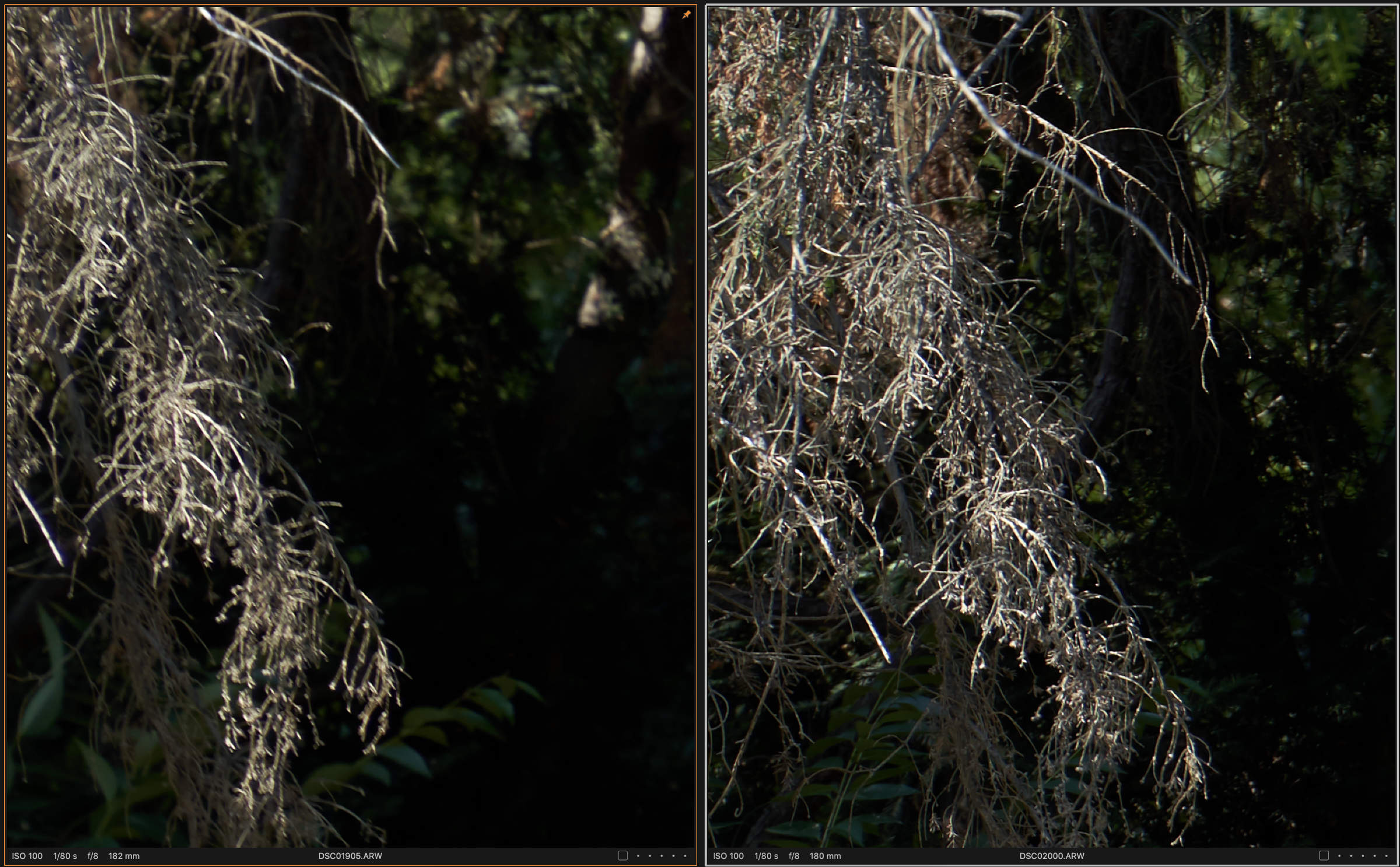
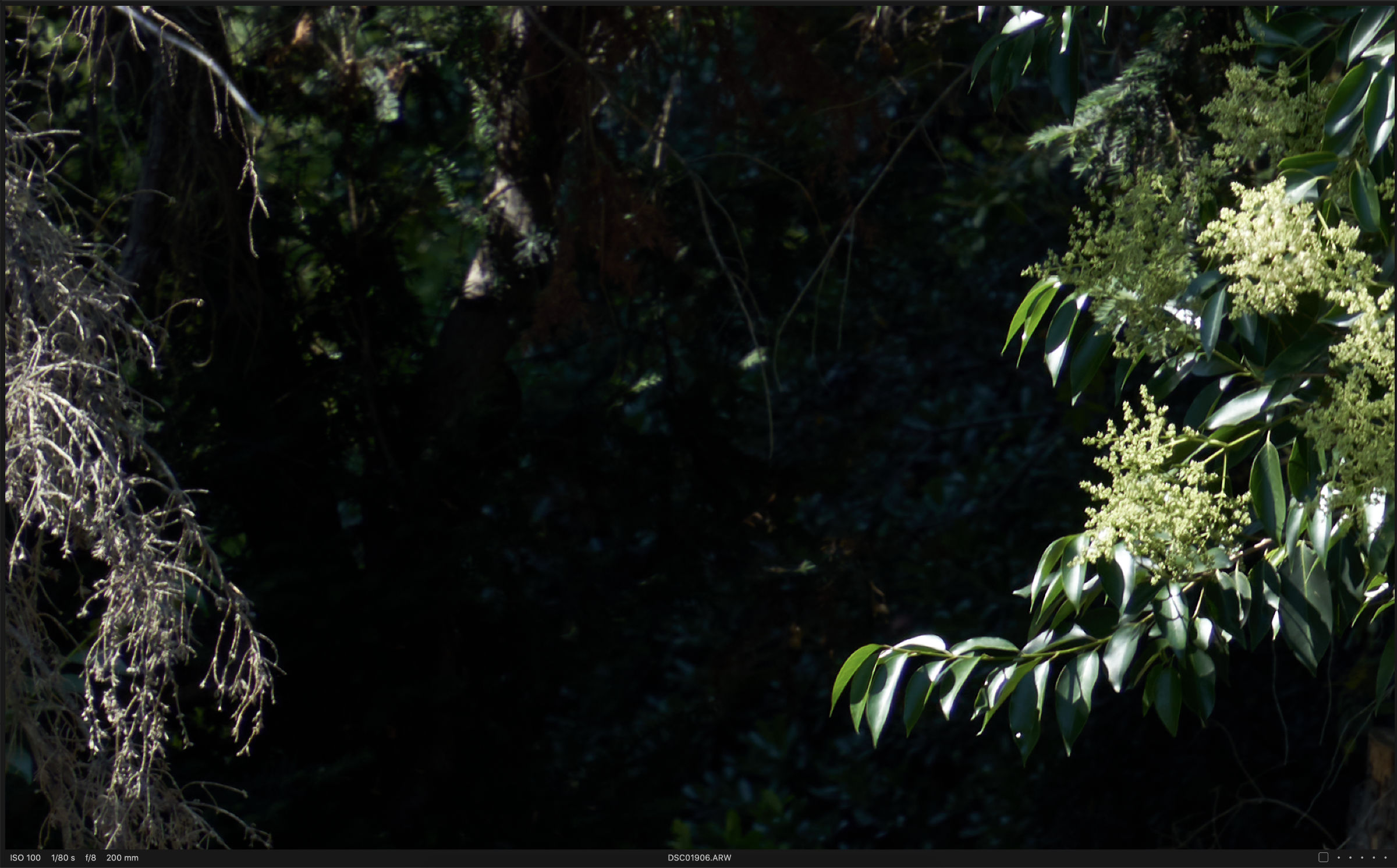
lack of lens stabilization is almost certainly a factor now, but something weird is going on. They both look pretty crappy here, with the 28-200 really bad at center and the 70-180 just pretty bad at center. However something really weird is happening. The 70-180 is excellent in the UL and the 28-200 is pretty awful here. The 28-200 is pretty decent in the UR and the 70-180 is pretty awful here. Can IBIS without lens stabilization render only one small portion/side of the frame in focus and everything else blurry? if there were NO sharp parts of the fame I would label both as clear camera shake/motion blur from lack of image stabilization. This is largely the case but each lens also has ONE small portion that is sharp...
I don't know what's going on, but I don't like it. I am pretty confident there isn't some gross decentering of either lens, as nothing like this showed up in my tripod tests. Globally the images look kinda ok, but the lack of OSS and this longer focal length are definitely not looking great here. Maybe if I shot 5-10 shots I'd find a great one or two, but I only shot one shot each as that's how I realistically shoot landscapes.
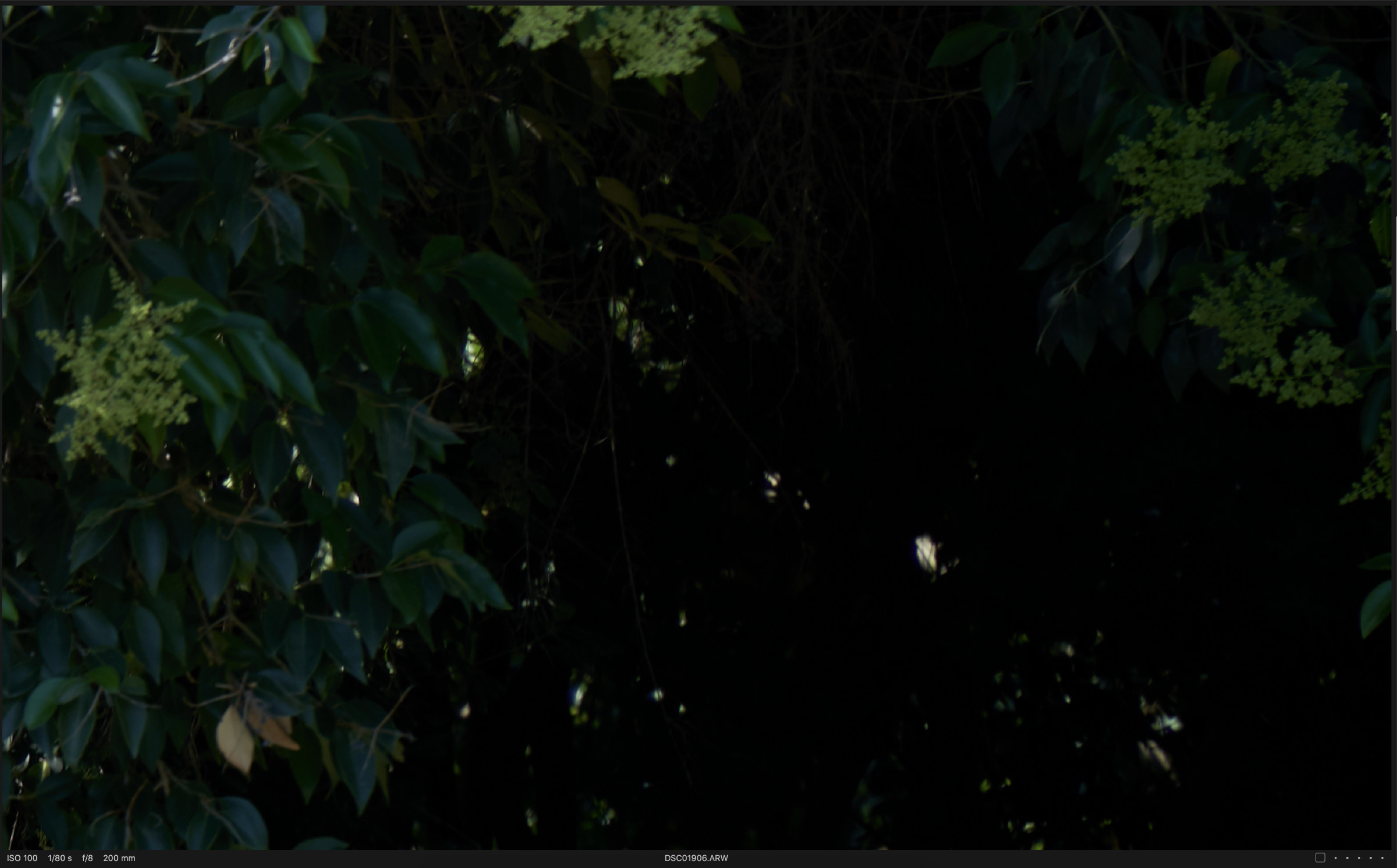
the 28-200 definitely looks better here than it did at 180mm. In some parts of the frame it looks very respectable and other parts it looks just mediocre. It's not bad anywhere, but once again I think the lack of lens stabilization is once again somewhat contributing to these kinda "meh" closeup crops.
To summarize my handheld tests at medium distance, I definitely think the lack of lens stabilization can play a factor below 1/100 of a second when you approach 150-200mm on any of the non-stabilized lenses. I also think the 28-200 fares much better against the competition than it did on the tripod at infinity. I think that 35-50mm is definitely still a little weak (but less-so than the infinity tests). However, it is now very good from 28mm and 70-150mm, whereas before it was more like 28mm and 100-200mm and pretty dang lousy 35-70mm in my last test. Things did get weird at 180-200mm at this shutter speed and my skill level and this level of magnification though. So as I suspected this lens does seem to do better at a little bit closer distances and I think the more you fill the frame with your subject and keep shutter speeds up the more this lens will compete in those middle focal lengths that looked pretty bad at first when at infinity.
The only test left to do is try this fullframe setup vs it's APSC counterpart (a6400 w/ 18-135mm) and see if there's a discernable difference.