dolina wrote:
The MTF chart should be nearly 1 as this would be using year 2020 materials science and this being 1st party lens it needs to be distinguished enough for people to buy.
Unfortunately this is impossible because the lens MTF is reduced by diffraction at f/11.
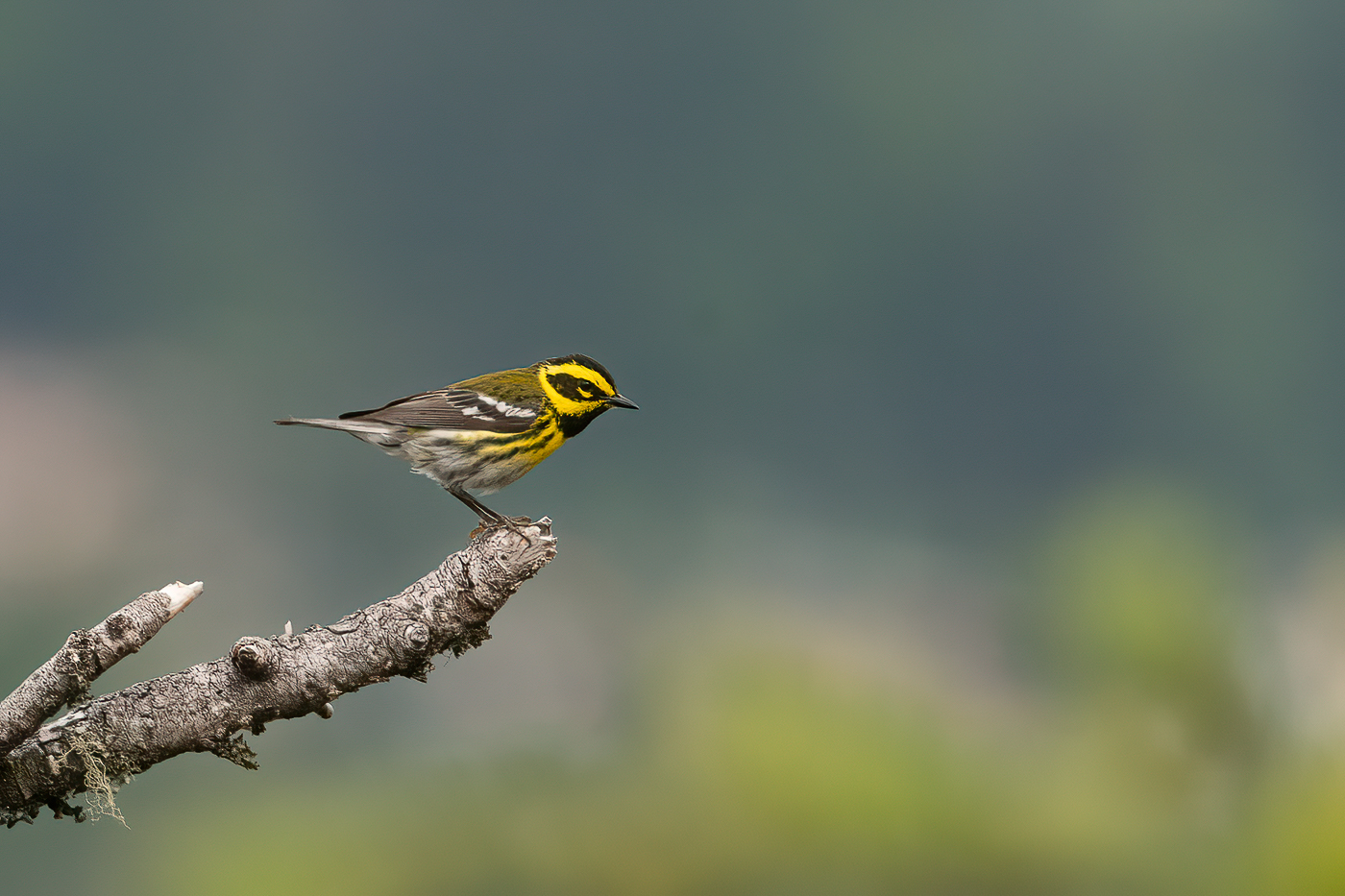
Canon 5D mark IV - Canon EF 600mm f/4L IS II USM + 2x III
1200mm | f11 | 1/1250 | ISO 1600
In good light and free posing conditions, narrow apertures are ok.
But how many times you have this luxury as a wildlife photographer.
I also didn't see anyone talking about diffraction yet... (correction, the poster above did)
cpe1991 wrote:
I bought a used D850 to get the wider field of view for DIF .
I assume a wider field for viewing/tracking the subject in the viewfinder, not because it allows you to take the DIF picture from closer distance as suggested a few posts back
I would consider the D850 if it were significantly lighter; even the D500 is already a bit heavier than I like. Maybe D850 would still work thanks to the lighter PF lenses and good VR, but I have no way to try it in practice in my shooting conditions, and D850 is too expensive to take a gamble. There is no one in my area that I know of who uses a D850 for wildlife (and just one person using D500, but with the slower Nikon 80-400 and not for "action" shots).
Today I had several Emperor dragonflies battling in the air over me for some time, and I tried taking pictures with my 80D and 2.8/200 lens using MF. But none of the many images was really sharp, they move so fast that MF doesn't work, even if you shoot a small burst in almost every case all images are out of focus (front or back). I would love to see if D500 or D850 AF can handle this; with the background far away this should be easy for GroupAF but I don't know if locking/tracking is fast enough for this subject. With my 80D it makes no sense to try AF - AF is so slow that by the time the AF tries to lock on the subject the dragonfly is already way out of the frame, so the AF moves focus to the background (infinity), fails to lock and it's impossible to take a picture
technic wrote:
I assume a wider field for viewing/tracking the subject in the viewfinder, not because it allows you to take the DIF picture from closer distance as suggested a few posts back
I would consider the D850 if it were significantly lighter; even the D500 is already a bit heavier than I like. Maybe D850 would still work thanks to the lighter PF lenses and good VR, but I have no way to try it in practice in my shooting conditions, and D850 is too expensive to take a gamble. There is no one in my area that I know of who uses a D850 for wildlife (and just one person using D500, but with the slower Nikon 80-400 and not for "action" shots).
Today I had several Emperor dragonflies battling in the air over me for some time, and I tried taking pictures with my 80D and 2.8/200 lens using MF. But none of the many images was really sharp, they move so fast that MF doesn't work, even if you shoot a small burst in almost every case all images are out of focus (front or back). I would love to see if D500 or D850 AF can handle this; with the background far away this should be easy for GroupAF but I don't know if locking/tracking is fast enough for this subject. With my 80D it makes no sense to try AF - AF is so slow that by the time the AF tries to lock on the subject the dragonfly is already way out of the frame, so the AF moves focus to the background (infinity), fails to lock and it's impossible to take a picture ...Show more →
I don't post images here, unfortunately, but I do a lot in canonrumors as AlanF. There are lots of my shots of dragonflies in flight there. The earlier ones are with the 5DIV or 5DSR and 100-400mm II and most recently with the D850 and 500PF - see https://www.canonrumors.com/forum/index.php?threads/dragonflies-and-damselflies.35543/page-30 of an Emperor and Four-spotted Chaser flying.
Yes exactly the type of shot I mentioned many pages ago. Outer branch, distant background.
As for diffraction, of course it exists but I don’t believe it is shot ruining or even noticeable at f/11 after a little extra sharpening. These days with Topaz Denoise and Sharpen AI you can pretty much use a coke bottle and get sharp/clean shots at any ISO
Canon 5D mark IV - Canon EF 600mm f/4L IS II USM + 2x III
1200mm | f11 | 1/1250 | ISO 1600
In good light and free posing conditions, narrow apertures are ok.
But how many times you have this luxury as a wildlife photographer.
I also didn't see anyone talking about diffraction yet... (correction, the poster above did)
Sharpening sharpens subject detail but it also sharpens noise at the same time (making the noise more visible). You can apply algorithms to reduce the noise but they always reduce the information in the image. There is a tradeoff between noise and subject detail (when processing a given image), and a faster lens gives an edge in that respect. Of course, if you want to shoot at f/11 or f/16 for depth of field or to get slow shutter speed for intentional movement blur, or if you need the mobility of the lighter lens, then why not.
cpe1991 wrote:
I don't post images here, unfortunately, but I do a lot in canonrumors as AlanF. There are lots of my shots of dragonflies in flight there. The earlier ones are with the 5DIV or 5DSR and 100-400mm II and most recently with the D850 and 500PF - see https://www.canonrumors.com/forum/index.php?threads/dragonflies-and-damselflies.35543/page-30 of an Emperor and Four-spotted Chaser flying.
Those D850 DIF images are a good start but some of your older 100-400 Emperor images are better IMHO, I think focus on the recent shots could be better.
As you already mention in that CR thread there are many issues with DIF like you need to have the dragonfly moving in or parallel to the focus plane, otherwise the AF system may focus on the wrong part. The main problem when using AF is to have the camera lock focus fast enough (and to keep the dragonfly in the frame when it is moving quickly ...). If AF gets a lock having the camera track is the next issue but that's irrelevant for my 80D because it only locks on hovering or gliding dragonflies (and even that is tricky).
There are some great DIF images in that CR thread, will have to check the full thread later on (I may have posted there some years ago, not sure though). Apparently a 1DX2 with the right L lenses works pretty well for DIF shots but that's quite expensive and heavy gear. Haven't been able to see what gear others in the thread are using. Most dragonfly photographers I know who shoot DIF use an APS-C Canon DSLR (Rebel, 80D, 7D2) with the Canon 4/300IS lens and manual focus, similar to what I do. Photographers tend to use pretty modest (often a bit older) equipment for dragonfly photography, quite different from what you see with e.g. birding. But I noticed a few photographers are now using the D500 or D850 with the 300PF(+TC) or 500PF for DIF, and they have some great shots.
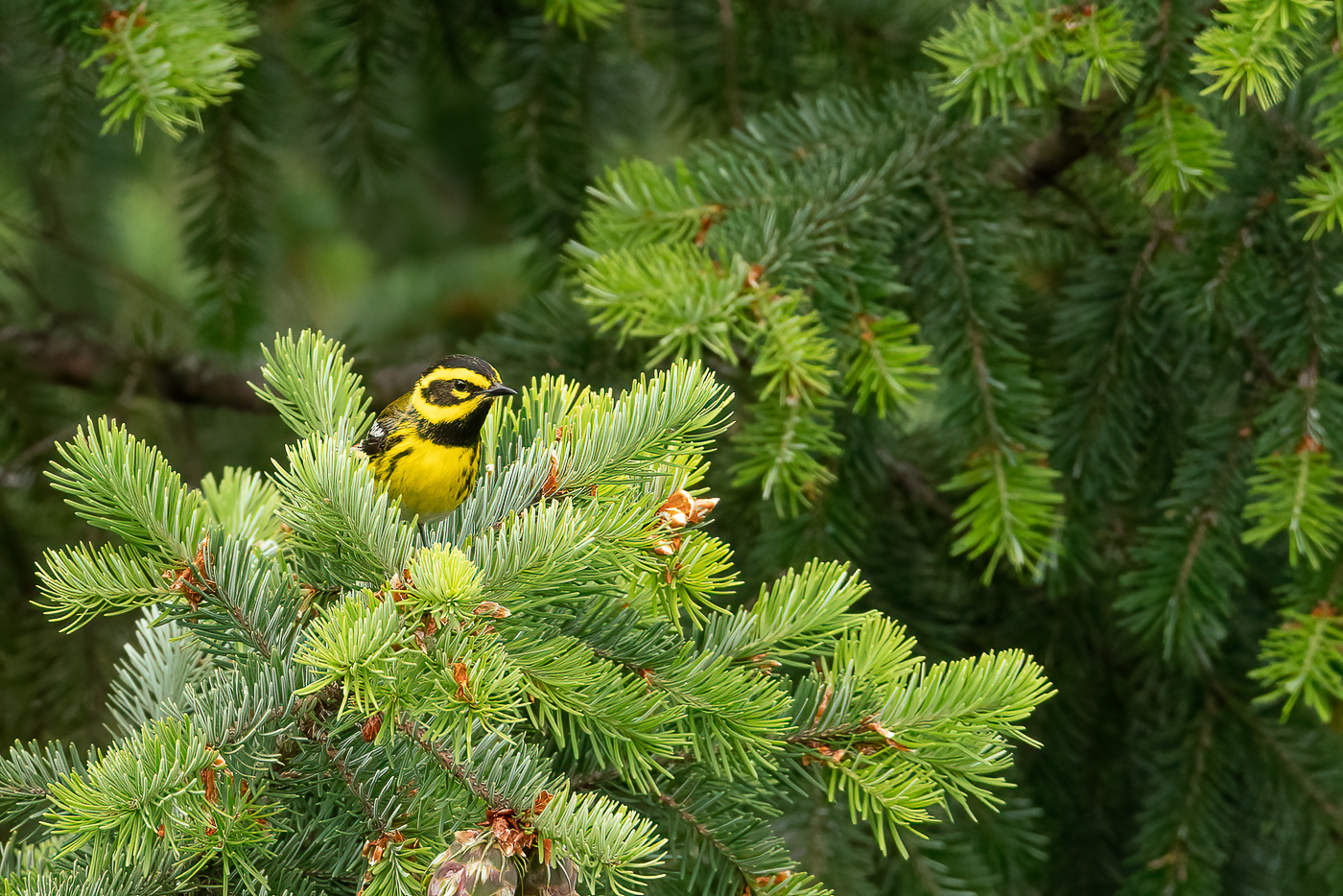
Day 2 of the f/11 challenge....I think I'll stop here. My only point is that with patience and picking your battles that one could have good success even with an 800/11 lens (or 600/11). Sure it isn't going to cut it for some (many) subjects, locations, etc but it isn't hopeless.
Can't wait to see how Canon markets these and what they actually look like, weigh and cost.
arbitrage wrote:
Day 2 of the f/11 challenge....I think I'll stop here. My only point is that with patience and picking your battles that one could have good success even with an 800/11 lens (or 600/11). Sure it isn't going to cut it for some (many) subjects, locations, etc but it isn't hopeless.
Can't wait to see how Canon markets these and what they actually look like, weigh and cost.
Looks good indeed, in the right hands and for suitable subject/locations.
I think you already helped Canon a bit with their marketing
arbitrage wrote:
Day 2 of the f/11 challenge....I think I'll stop here. My only point is that with patience and picking your battles that one could have good success even with an 800/11 lens (or 600/11). Sure it isn't going to cut it for some (many) subjects, locations, etc but it isn't hopeless.
Can't wait to see how Canon markets these and what they actually look like, weigh and cost.
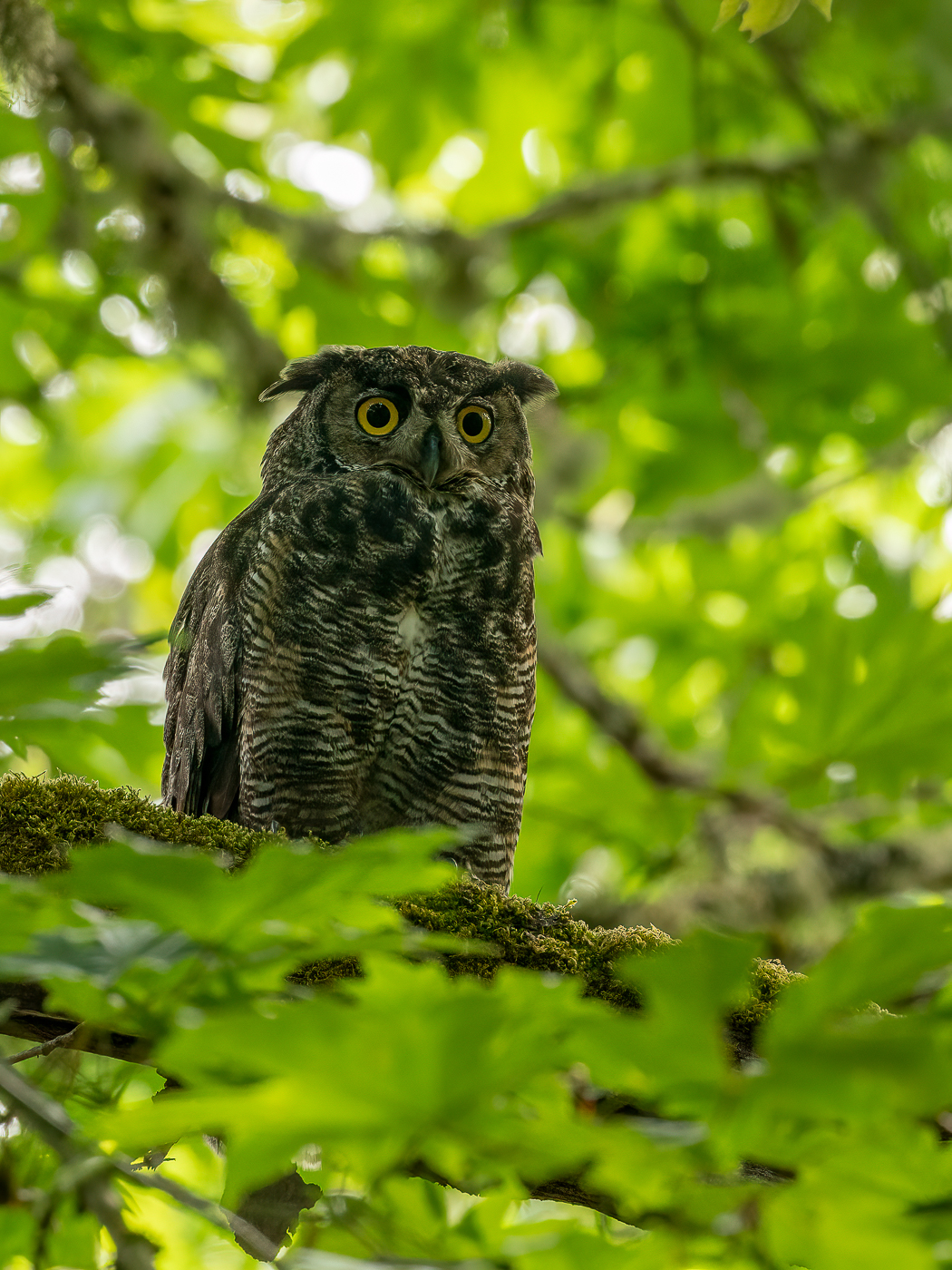
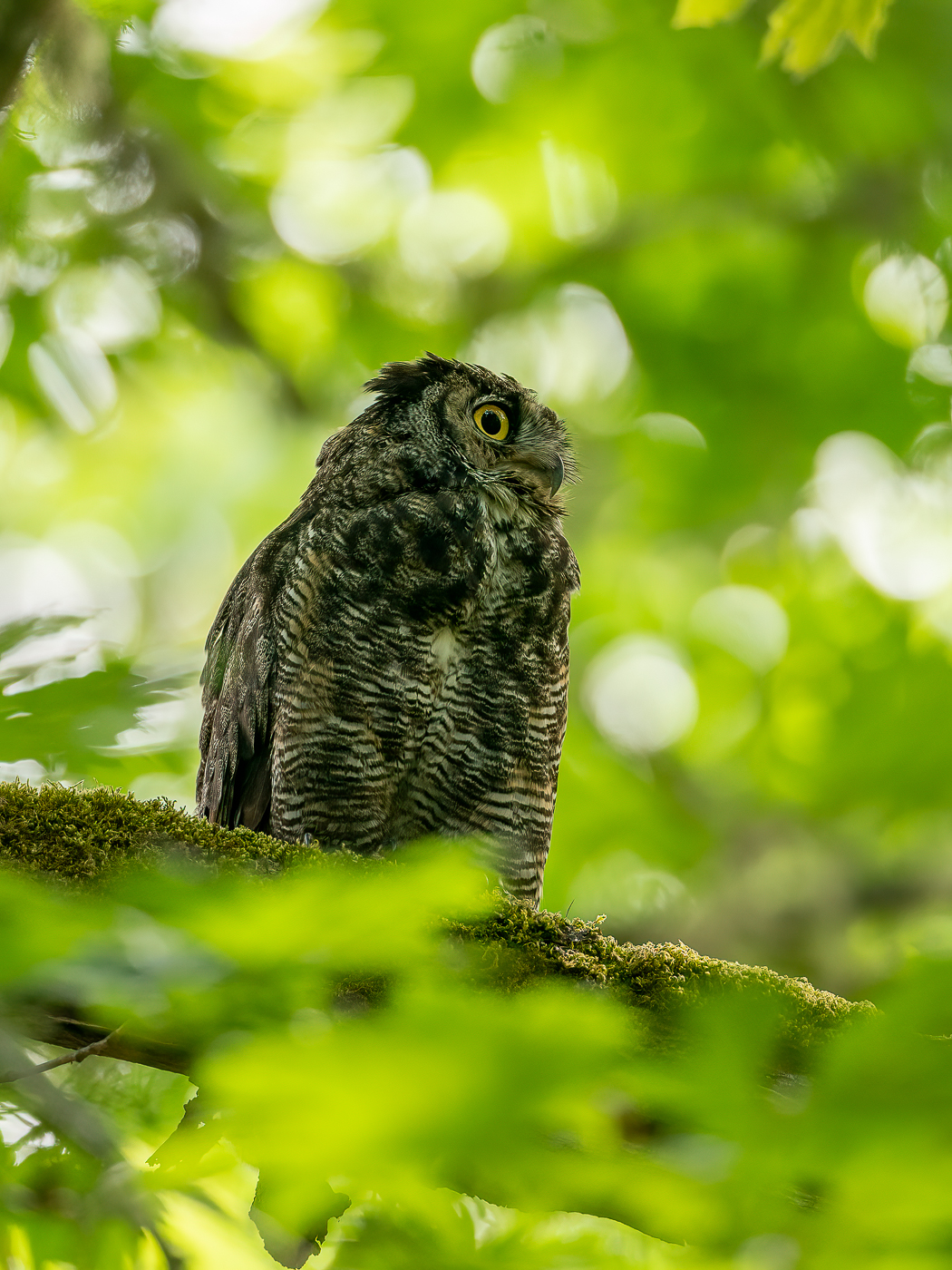
Is that the owl Pius and Colin posted before? Lucky you. Lovely owl. But, I don't like the 600 F11 shots tbh. You showed that it's not impossible to make it work in some cases, but I think we all agree it's a huge risk taking such a light hungry lens to many wildlife challenges. In my eyes it's a beginner lens for people that like to grow their interest in wildlife photography. I'm a little dissapointed that with the R5 we don't have a great fast RF supertele yet, not even a Sony 200-600 competitor.
therealthings wrote:
Is that the owl Pius and Colin posted before? Lucky you. Lovely owl. But, I don't like the 600 F11 shots tbh. You showed that it's not impossible to make it work in some cases, but I think we all agree it's a huge risk taking such a light hungry lens to many wildlife challenges. In my eyes it's a beginner lens for people that like to grow their interest in wildlife photography. I'm a little dissapointed that with the R5 we don't have a great fast RF supertele yet, not even a Sony 200-600 competitor.
Colin has never photographed this owl. Pius has and was there today but Pius also had another GHO location he has shot recently so a number of his shots are from the other owl, lower perches etc.
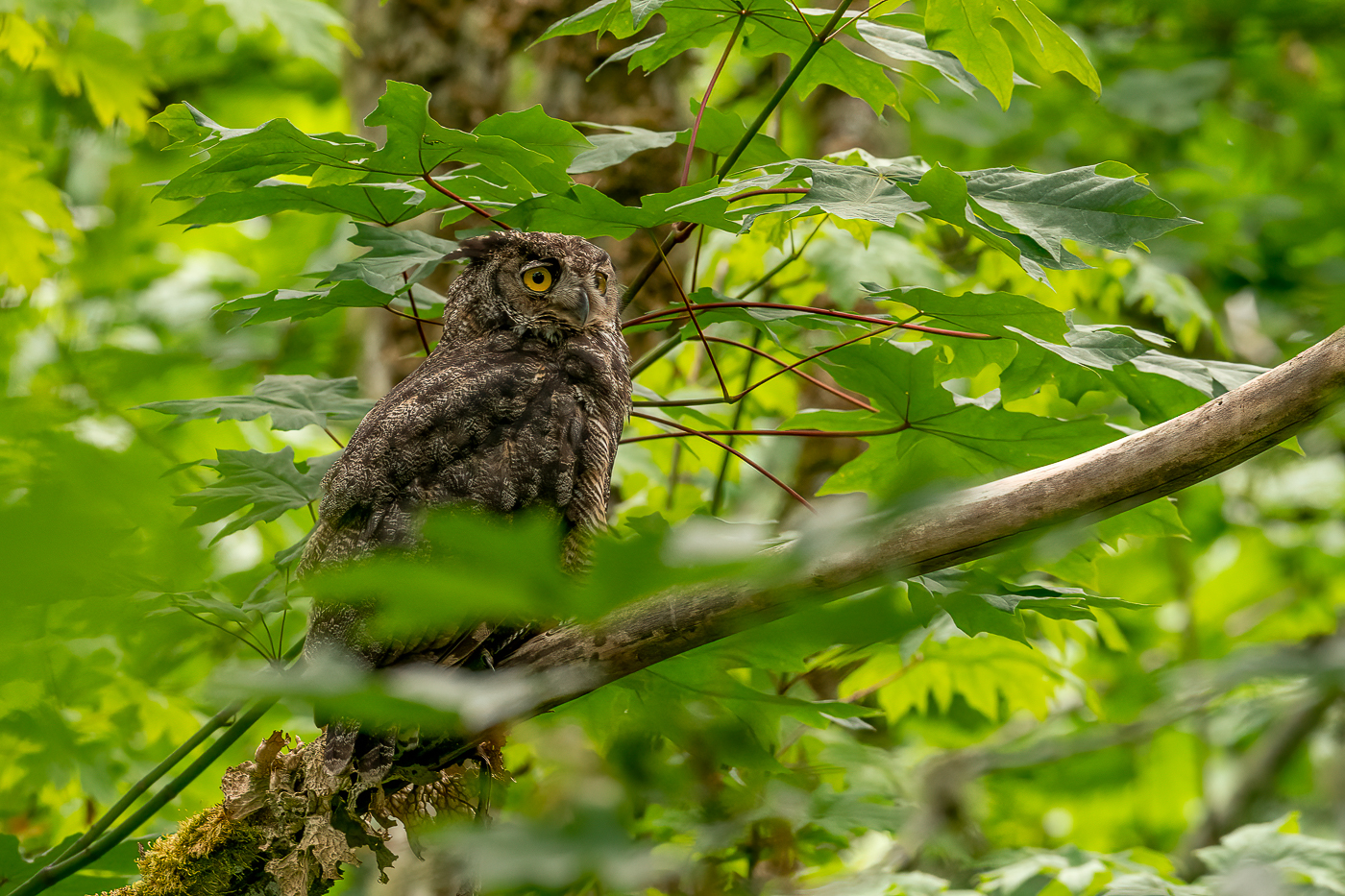
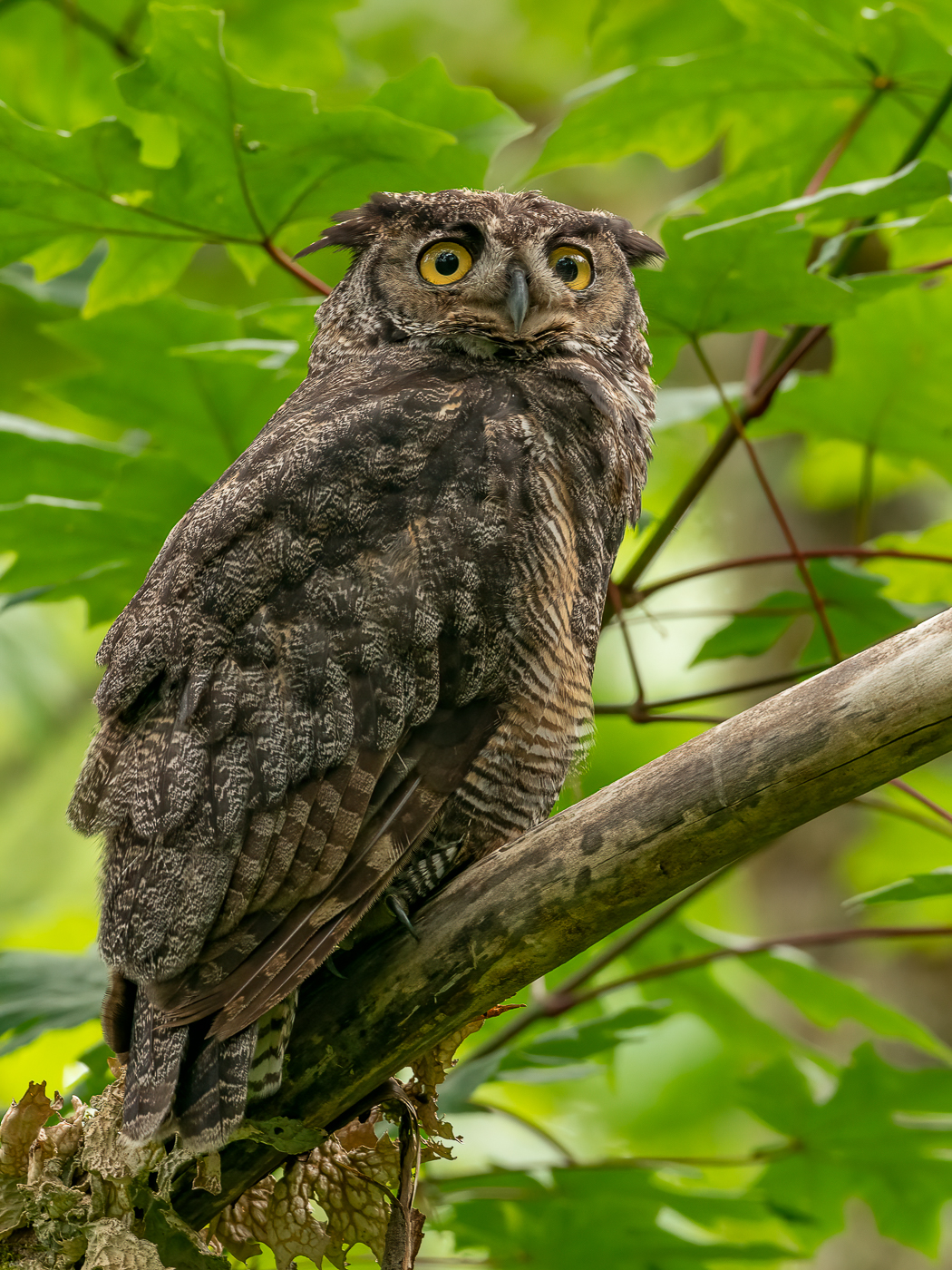
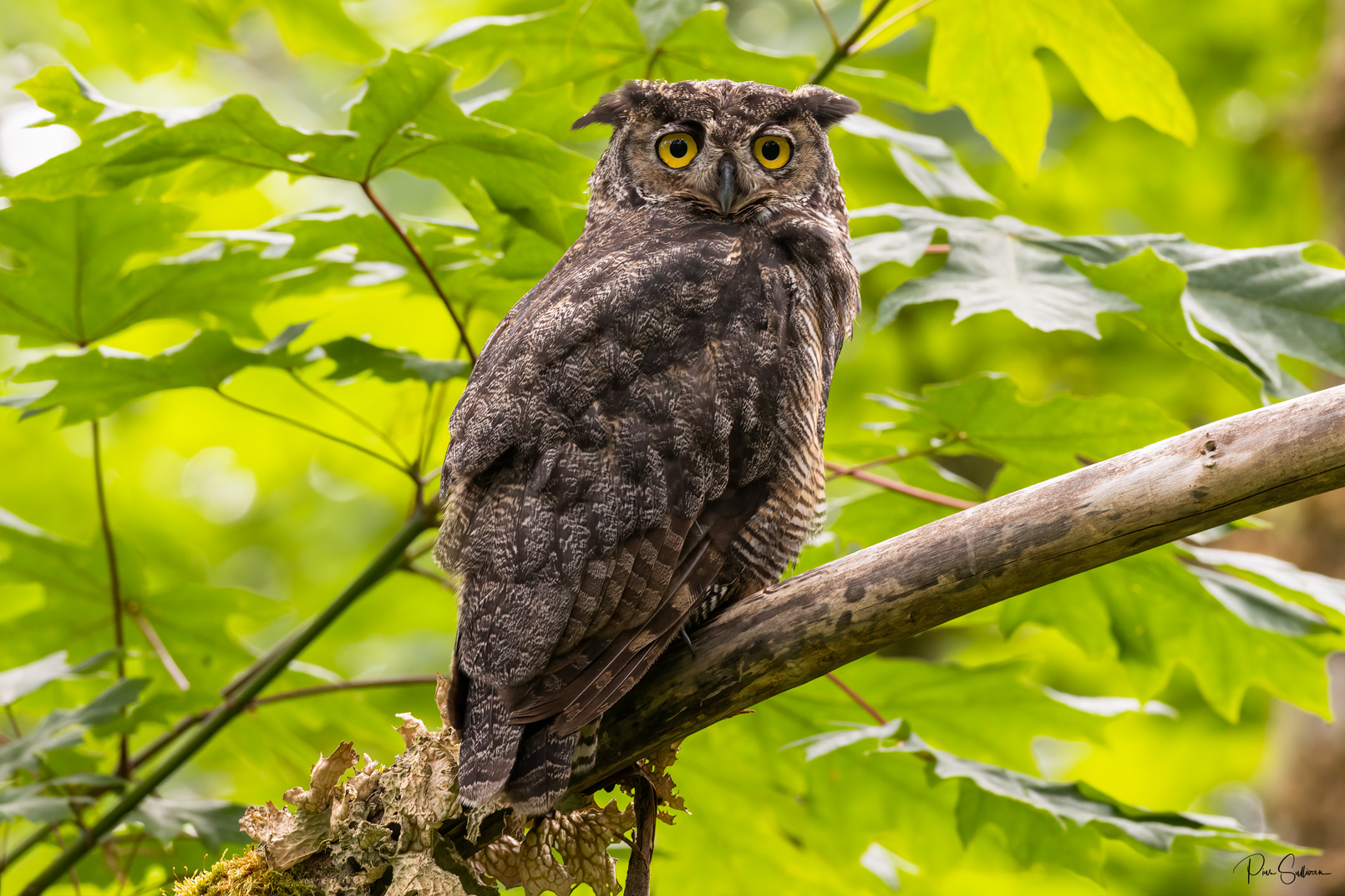
Today the owl stayed fairly high and most of the time I didn't play the f/11 game...shot 840/5.6 and 600/4 and 200-600/6.3 most of the time. I'm not sure what part of the shots you don't like but does it have to do with the f/11 rendering? Because that was really the only point of this. The owl goes where it wants so harsh shadow, high perch and specular canopy are against you no matter if you are at f/4 or f/11.
Here is the same shot as the first one above at f/4 (shot seconds before but he didn't look my way). Not sure if I like the f/4 render because of how distracting it makes the bright bokeh balls from the openings in the canopy...
therealthings wrote:
Is that the owl Pius and Colin posted before? Lucky you. Lovely owl. But, I don't like the 600 F11 shots tbh. You showed that it's not impossible to make it work in some cases, but I think we all agree it's a huge risk taking such a light hungry lens to many wildlife challenges. In my eyes it's a beginner lens for people that like to grow their interest in wildlife photography. I'm a little dissapointed that with the R5 we don't have a great fast RF supertele yet, not even a Sony 200-600 competitor.
Even though we don't have a fast RF super tele lens yet, we still have the entire EF lens catalogue that adapts with little to no detriment from what people have reported on the R. Now maybe there will be some meaningful advantages to a native RF lens on the R5 (like faster AF communication or better EVF performance) and then it will matter. But if adapted EF works as similar to RF as it does on the current R and RP then I won't complain much about only having the amazing EF super tele lineup to choose from for the short term.
I'm sure some of the EF lenses will never have an RF version like 400DOII, 800L, 200-400 (or at least not for a long time) so I think we are still pretty lucky to be able to have mostly flawless adaptation of EF glass to R cameras.
Why would anyone even want to look at the 600/11 DO lens when you can buy the RF 100-500mm f/4.5-7.1L zoom lens for about $2,000 and that will take a TC? I am, of course, assuming that this L-lens will be comparable in size, image quality and price to the Sony 200-600 lens. The 600/11 DO lens will be dead on arrival.
bobbytan wrote:
Why would anyone even want to look at the 600/11 DO lens when you can buy the RF 100-500mm f/4.5-7.1L zoom lens for about $2,000 and that will take a TC? I am, of course, assuming that this L-lens will be comparable in size, image quality and price to the Sony 200-600 lens. The 600/11 DO lens will be dead on arrival.
That is actually a really good question. I think the 100-500 will be priced just like the EF 100-400II at around $2200. I think this 600DO f/11 will have to be priced under $1500 to make any sense. Same with the 800DO.
With the 100-500 and 1.4TC you will end up with a 700 f/10 so I guess price and weight will be the factors in favour of the 600 prime??
*Although RF pricing can be a bit crazy...if we look at the 70-200/2.8 that is $1899 for EF and $2699 for RF...so who knows where the 100-500 or DO primes will fall....
arbitrage wrote:
Colin has never photographed this owl. Pius has and was there today but Pius also had another GHO location he has shot recently so a number of his shots are from the other owl, lower perches etc.
Today the owl stayed fairly high and most of the time I didn't play the f/11 game...shot 840/5.6 and 600/4 and 200-600/6.3 most of the time. I'm not sure what part of the shots you don't like but does it have to do with the f/11 rendering? Because that was really the only point of this. The owl goes where it wants so harsh shadow, high perch and specular canopy are against you no matter if you are at f/4 or f/11.
Here is the same shot as the first one above at f/4 (shot seconds before but he didn't look my way). Not sure if I like the f/4 render because of how distracting it makes the bright bokeh balls from the openings in the canopy......Show more →
I see, it looked similar to Colin's GHO photo's. Either way, great find and opportunities. Unfortunately they don't live in Europe, beautiful species. I agree that the larger aperture does not work well in that shot. That is why i never like to shoot upwards when there is sky behind the subject.
But this shot above wouldn't have popped like it did now when shot at F11. I have searched through my image database and only have a hand full F10< shots above 200mm throughout the years. F8/F9 is the farthest i have gone in all those years.
arbitrage wrote:
That is actually a really good question. I think the 100-500 will be priced just like the EF 100-400II at around $2200. I think this 600DO f/11 will have to be priced under $1500 to make any sense. Same with the 800DO.
With the 100-500 and 1.4TC you will end up with a 700 f/10 so I guess price and weight will be the factors in favour of the 600 prime??
*Although RF pricing can be a bit crazy...if we look at the 70-200/2.8 that is $1899 for EF and $2699 for RF...so who knows where the 100-500 or DO primes will fall.......Show more →
The 100-500 plus TC is probably going to weigh 1.8 to 2 kg (haven't seen specs yet). They should be able to make those dim DO lenses a lot lighter (1.2-1.5 kg) if they have relatively simple construction, which makes them more attractive for casual shooters. Question is what will be sacrificed in order to get there (AF speed, weather sealing, decent MF, build quality, optics quality?).
Apparently Canon thinks they can strike a good compromise otherwise they would not start with two of these lenses right away. But maybe it is just because these lenses are VERY cheap to produce; by now DO might be cheaper than traditional lens elements of similar spec.


 .
.