p.2 #2 · Canon 1dx III electronic read issues with (ES)
speedmaster20d wrote:
you lost me what is H and H+?
I think by frame insertion you mean the "stutter effect" with mechanical shutter when shooting a burst(?). I think this is a synchronization issue. the camera has to sync the EVF / LCD video feed with the shutter opening and closing and it struggle do that when the frame rate is high, which leads to a finite delay between the time shutter closes and the EVF/LCD images is refreshed. in the extreme case like the Nikon Z or the Fuji camera it feels like a slide show from the past...
in a DSLR there was never such delay since the the finder works at the speed of light! I much prefer the traditional mirror blackout of the DSLR to the EVF lag since I can't pan accurately with the latter. IMO all mirrorless cameras should focus on e-shutter and let go of mechanical shutter altogether. Sony A9II has almost solved the rolling shutter issue and it will only get better with newer models. I think the argument for a pro sports/wildlife mirrorless holds with a 100% electronic shutter with zero lag and rolling shutter artifacts, not to mentioned not worrying about shutter count. it will make the cameras a bit lighter and also reduce the cost and improve reliability (0 moving parts besides IBIS)
The A7RIV has H+, H, M, L for its drive speed. H+ is 10FPS. In H+ you do not get a "live feed" to the EVF. You get frame insertion which creates a delay to what you are seeing on top of the inherent EVF delay that is there even on the A9's blackout free e-shutter EVF.
On the A9 and A9II the FPS is controlled by the physical dial (the A7 series doesn't have that dial and all is controlled in the menus). On the A9 there is no "H+" on the dial. in E-shutter H is 20FPS, M is 10FPS and L is 5FPS. In e-shutter there is no frame insertion (ie slideshow) on the A9(II) even at 20FPS (ie the blackout free EVF). However, in mechanical shutter mode H is 10FPS, M is 8FPS and L is 3FPS. I had thought when I typed my reply yesterday that in H at 10FPS on the A9 it is performing the same as the A7RIV in H+ at 10FPS (ie doing frame insertion).
However, I just did a read through the A9II and the A7RIV manual. The A7RIV distinctly points out that H+ (10FPS) is not a live feed (ie it is using frame insertion). But there is no mention of this in the A9II manual in regards to H (10FPS) in Mechanical. Therefore, the delay you are seeing is probably just the EVF delay and not the frame insertion that plagues every other MILC I know of at the highest FPS settings. I've never used the A9 or A9II in mechanical so wasn't aware of how it behaves compared to the A7RIV which I shoot in Mechanical 90% of the time.
What I should probably do today is actually switch the A9II into Mechanical and just compare it to the A7RIV to see how the EVF behaves at 10FPS between them.
p.2 #4 · Canon 1dx III electronic read issues with (ES)
arbitrage wrote:
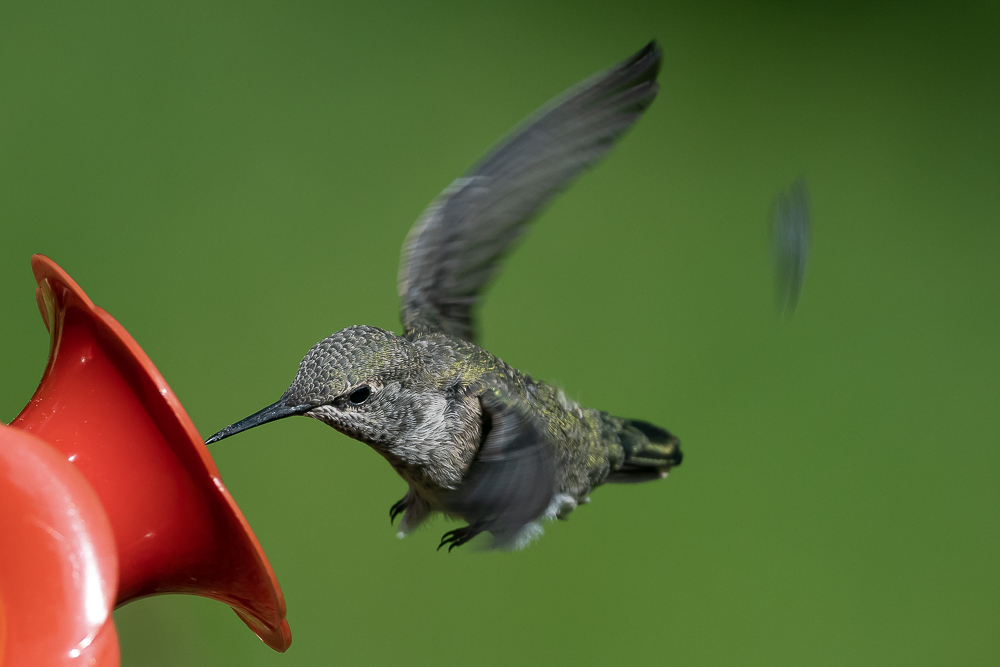
FWIW here are some extreme examples shot in e-shutter on the Z50 and A7RIV with very fast wings to show just how bad this stuff can get...
p.2 #5 · Canon 1dx III electronic read issues with (ES)
arbitrage wrote:
The A7RIV has H+, H, M, L for its drive speed. H+ is 10FPS. In H+ you do not get a "live feed" to the EVF. You get frame insertion which creates a delay to what you are seeing on top of the inherent EVF delay that is there even on the A9's blackout free e-shutter EVF.
On the A9 and A9II the FPS is controlled by the physical dial (the A7 series doesn't have that dial and all is controlled in the menus). On the A9 there is no "H+" on the dial. in E-shutter H is 20FPS, M is 10FPS and L is 5FPS. In e-shutter there is no frame insertion (ie slideshow) on the A9(II) even at 20FPS (ie the blackout free EVF). However, in mechanical shutter mode H is 10FPS, M is 8FPS and L is 3FPS. I had thought when I typed my reply yesterday that in H at 10FPS on the A9 it is performing the same as the A7RIV in H+ at 10FPS (ie doing frame insertion).
However, I just did a read through the A9II and the A7RIV manual. The A7RIV distinctly points out that H+ (10FPS) is not a live feed (ie it is using frame insertion). But there is no mention of this in the A9II manual in regards to H (10FPS) in Mechanical. Therefore, the delay you are seeing is probably just the EVF delay and not the frame insertion that plagues every other MILC I know of at the highest FPS settings. I've never used the A9 or A9II in mechanical so wasn't aware of how it behaves compared to the A7RIV which I shoot in Mechanical 90% of the time.
What I should probably do today is actually switch the A9II into Mechanical and just compare it to the A7RIV to see how the EVF behaves at 10FPS between them....Show more →
Thanks Geofff so the A7R IV 10 FPS is pretty much a useless slide show. I guess it might work if you are not panning and don’t need to see what’s happening. Why in the world would you use the a7 over the D850 then ?
I tried my a9II with mechanical shutter. the sync lag is quite unacceptable at 10fps... not sure if I can pan action with it, it is frustrating and just can’t keep up. The camera is pretty much useless without the e shutter for me
p.2 #7 · Canon 1dx III electronic read issues with (ES)
speedmaster20d wrote:
Thanks Geofff so the A7R IV 10 FPS is pretty much a useless slide show. I guess it might work if you are not panning and don’t need to see what’s happening. Why in the world would you use the a7 over the D850 then ?
I tried my a9II with mechanical shutter. the sync lag is quite unacceptable at 10fps... not sure if I can pan action with it, it is frustrating and just can’t keep up. The camera is pretty much useless without the e shutter for me
I've actually found I can shoot BIF with the A7RIV at 10FPS...I managed swallows with it and ducks etc. Obviously not nearly as good as using the A9 or a nice DSLR OVF but it is manageable. The Z7 and Z50 were much more difficult in their high FPS slideshow mode.
p.2 #8 · Canon 1dx III electronic read issues with (ES)
Pius Sullivan wrote:
Hmm... that's bad....
Yeah, I think these cameras have read speeds in the 1/15-1/30 range. But I shoot both of them in mechanical modes to avoid this type of stuff. Even the A9 in e-shutter can occasionally show a little distortion of the outer wing tip of a hummingbird but 90% of the time the images are fine...only if it happens to catch the frame at the fastest point of movement does it sometimes look a little distorted. Of course hummingbird wings can look all kinds of weird depending on one's chosen SS anyways. Lots of cool effects you can get by changing up the SS you shoot hovering hummers at.
p.2 #9 · Canon 1dx III electronic read issues with (ES)
arbitrage wrote:
I've actually found I can shoot BIF with the A7RIV at 10FPS...I managed swallows with it and ducks etc. Obviously not nearly as good as using the A9 or a nice DSLR OVF but it is manageable. The Z7 and Z50 were much more difficult in their high FPS slideshow mode.
But why would one want to pain themselves ? It’s seems to me besides a9 the rest of these cameras aren’t ready for prime time
p.2 #11 · Canon 1dx III electronic read issues with (ES)
arbitrage wrote:
Yeah, I think these cameras have read speeds in the 1/15-1/30 range. But I shoot both of them in mechanical modes to avoid this type of stuff. Even the A9 in e-shutter can occasionally show a little distortion of the outer wing tip of a hummingbird but 90% of the time the images are fine...only if it happens to catch the frame at the fastest point of movement does it sometimes look a little distorted. Of course hummingbird wings can look all kinds of weird depending on one's chosen SS anyways. Lots of cool effects you can get by changing up the SS you shoot hovering hummers at....Show more →
thanks for these examples; good to know that the e-shutter on these cameras is useless for me
p.2 #13 · Canon 1dx III electronic read issues with (ES)
Pius Sullivan wrote:
I took this photo in live view mode with the hoodman loupe attached using electronic shutter.
Would this be an example of rolling shutter on the 1dx III?
Just a note on terminology, "rolling shutter" is a mechanical issue dating back to when curtain shutters were introduced. It's particularly noticed when panning on a fast subject with a low shutter speed , depending upon the direction of curtain one part of the subject will be blurred even with perfect panning.
Electronic read issues are completely different and also occur at high shutter speeds as you've discovered.
p.2 #14 · Canon 1dx III electronic read issues with (ES)
luminaire wrote:
Just a note on terminology, "rolling shutter" is a mechanical issue dating back to when curtain shutters were introduced. It's particularly noticed when panning on a fast subject with a low shutter speed , depending upon the direction of curtain one part of the subject will be blurred even with perfect panning.
Electronic read issues are completely different and also occur at high shutter speeds as you've discovered.
I agree it should be called something else like "e-shutter distortion artifact" but it's too late to change the terminology that has become too common and convenient to use
p.2 #15 · Canon 1dx III electronic read issues with (ES)
to add to this thread I have now shot about 10K BIF frames with the A9II. out of these I have found the e-shutter artifact in 3 frames out of 10K, all of these three frames were deleted because bird was too close and partially clipped any way. So overall safe to ignore and forget about it in this camera for avian subjects at least....


 can't imagine holding it like a cell phone!
  Would be a piece of cake hand holding the sony a9 and 600 f/4...