This topic is in the 2020 archive. You can read it and like its posts here. It is read only.
Archive 2020Nikon PC-Nikkor 28mm f/3.5 shift lens question
p.2 #1Nikon PC-Nikkor 28mm f/3.5 shift lens question
rdeloe wrote:
I think I'm more forgiving of flawed things than most people.
Were I a working pro who shot architecture, I would have moved on from this lens too because it has some limitations that would be challenging when time is money. However, in the photography I do for work and myself, I have the time to work around the limitations of the tools.
This lens is far from perfect, but on my GFX-based digital view camera, there really aren't any other choices I can see (and afford!) at this focal length. Yes, I could use Canon TS-E lenses with...Show more →
Not trying to rain on your parade. I've certainly made the same efforts over the years and enjoyed the experimenting.
My Nikon 35 and 28 PC lenses both had severe lens aberrations all tied to the lens design. These aberrations were intertwined with no way of isolating or fully correcting -- modern PP practices can greatly improve the image quality, but the underlying lens design makes corrections limited. I found 1) strong vignetting, 2) color shift in outer edges accompanying the vignetting, combined with 3) edge softness (even unshifted), and 4) distortion. The Canon 35 T/S was always superior in these areas, but the original 24 TSE was even better than these completely manual non-electronic designs. (The original Canon 24 TSE can be had for $500 or less, plus adapter to Fuji 50/100 bodies.)
With your Toyo hybrid set-up, the electronic Canon and Nikon T/S lenses would not be easy to use for adjustable aperture to function.
My preferred would always be the newer electronic lenses, or manual focus medium format 6x4.5 lenses on shifting adapters, on a FF (or larger) body (I find Sony is most versatile). The downside is the lack of ultra-wide angle lenses of 17-24mm, which I find essential focal lengths for architecture and landscape.
These days, with the easy perspective correction tools in LR, I seldom use my T/S lenses. With high MP sensors in FF bodies, I simply get my camera moderately level, shoot with a wider lens, and complete the perspective correction and cropping in PP. Today's modern lenses have such great correction of aberrations, even zoom lenses like Sony's 12-24G and the new Sigma 14-24 Art can be easily used.
That said, my current T/S arsenal is Canon 17 TSE, Canon 24 TSE II, Canon 45 TSE, and Nikon 45 PCE. On sale here on FM B&S are a few of my Mamiya 645 lenses with Kipon shift adapter that I've decided to move away from.
More often these days I'm using lenses from Canon, Sony, Sigma Art, and Zeiss Loxia and ZE , dealing with all perspective issues in LR.
Here's a recent 2-shot hand held (overhead) pano on Sony a7R4, combined and straightened in LR. The second photo is a single shot hand held, straightened vertically, and cropped in LR. Both used Canon 16-35/4L IS lens mounted with Sigma MC-11 electronic adapter, completely avoiding any need for T/S lens in most normal shooting.
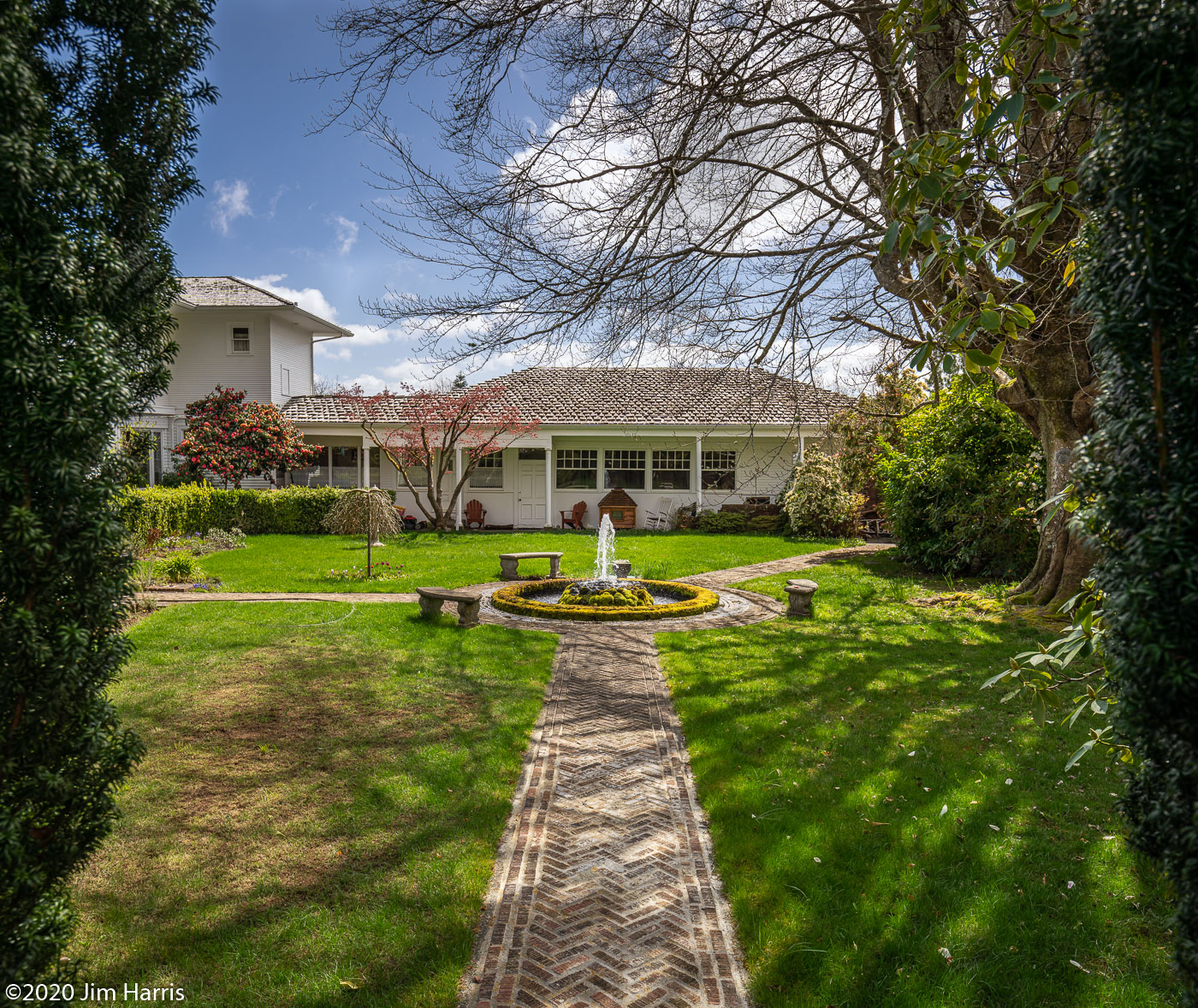
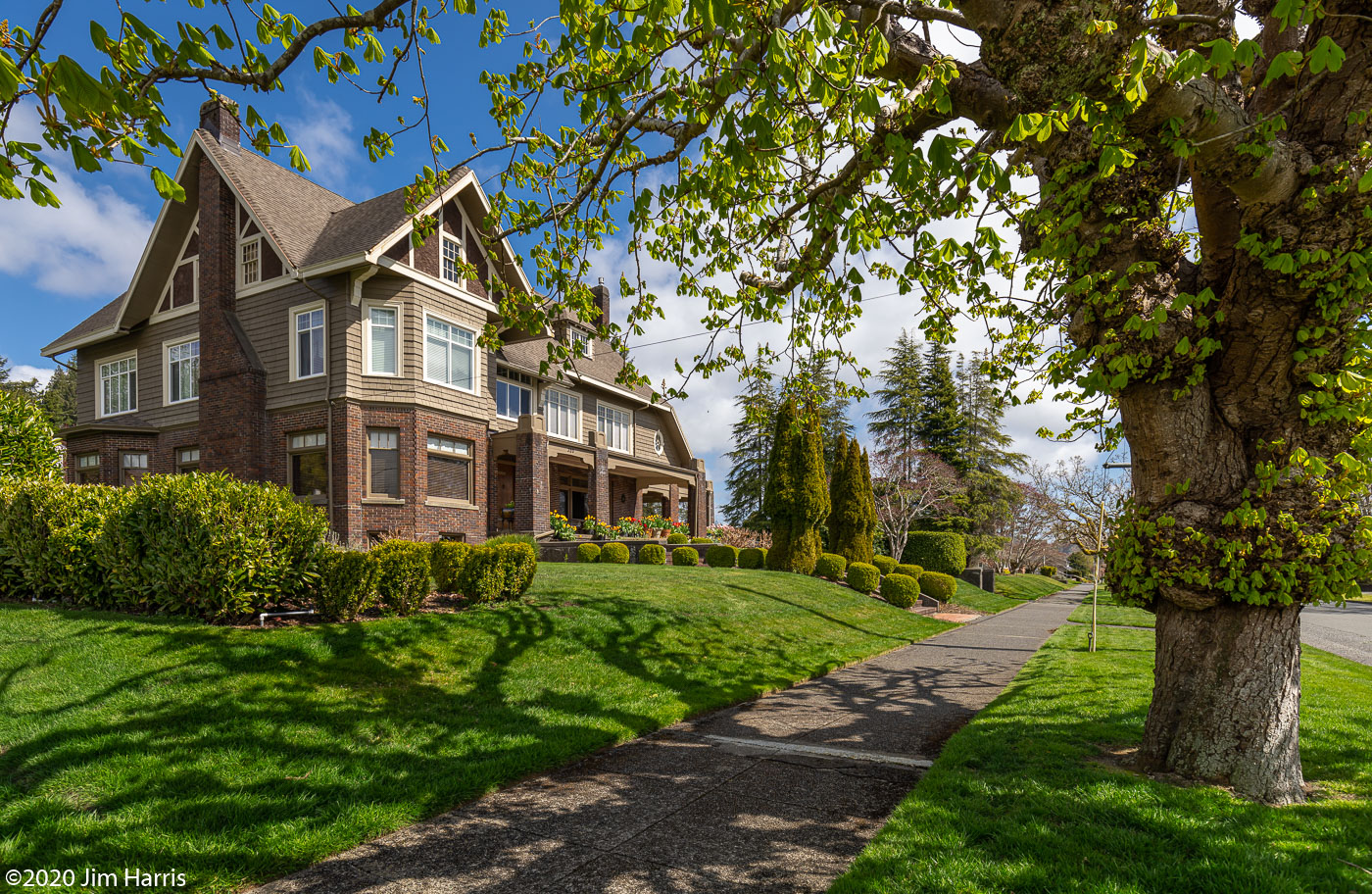
I think I'm more forgiving of flawed things than most people.
Were I a working pro who shot architecture, I would have moved on from this lens too because it has some limitations that would be challenging when time is money. However, in the photography I do for work and myself, I have the time to work around the limitations of the tools.
This lens is far from perfect, but on my GFX-based digital view camera, there really aren't any other choices I can see (and afford!) at this focal length. Yes, I could use Canon TS-E lenses with...Show more →
Not trying to rain on your parade. I've certainly made the same efforts over the years and enjoyed the experimenting.
My Nikon 35 and 28 PC lenses both had severe lens aberrations all tied to the lens design. These aberrations were intertwined with no way of isolating or fully correcting -- modern PP practices can greatly improve the image quality, but the underlying lens design makes corrections limited. I found 1) strong vignetting, 2) color shift in outer edges accompanying the vignetting, combined with 3) edge softness (even unshifted), and 4) distortion. The Canon 35 T/S was always superior in these areas, but the original 24 TSE was even better than these completely manual non-electronic designs. (The original Canon 24 TSE can be had for $500 or less, plus adapter to Fuji 50/100 bodies.)
With your Toyo hybrid set-up, the electronic Canon and Nikon T/S lenses would not be easy to use for adjustable aperture to function.
My preferred would always be the newer electronic lenses, or manual focus medium format 6x4.5 lenses on shifting adapters, on a FF (or larger) body (I find Sony is most versatile). The downside is the lack of ultra-wide angle lenses of 17-24mm, which I find essential focal lengths for architecture and landscape.
These days, with the easy perspective correction tools in LR, I seldom use my T/S lenses. With high MP sensors in FF bodies, I simply get my camera moderately level, shoot with a wider lens, and complete the perspective correction and cropping in PP. Today's modern lenses have such great correction of aberrations, even zoom lenses like Sony's 12-24G and the new Sigma 14-24 Art can be easily used.
That said, my current T/S arsenal is Canon 17 TSE, Canon 24 TSE II, Canon 45 TSE, and Nikon 45 PCE. On sale here on FM B&S are a few of my Mamiya 645 lenses with Kipon shift adapter that I've decided to move away from.
More often these days I'm using lenses from Canon, Sony, Sigma Art, and Zeiss Loxia and ZE , dealing with all perspective issues in LR.
Here's a recent 2-shot hand held (overhead) pano on Sony a7R4, combined and straightened in LR. The second photo is a single shot hand held, straightened vertically, and cropped in LR. Both used Canon 16-35/4L IS lens mounted with Sigma MC-11 electronic adapter, completely avoiding any need for T/S lens in most normal shooting.
Apr 20, 2020 at 07:21 AM
p.2 #2Nikon PC-Nikkor 28mm f/3.5 shift lens question
Gunzorro wrote:
Not trying to rain on your parade. I've certainly made the same efforts over the years and enjoyed the experimenting.
My Nikon 35 and 28 PC lenses both had severe lens aberrations all tied to the lens design. These aberrations were intertwined with no way of isolating or fully correcting -- modern PP practices can greatly improve the image quality, but the underlying lens design makes corrections limited. I found 1) strong vignetting, 2) color shift in outer edges accompanying the vignetting, combined with 3) edge softness (even unshifted), and 4) distortion. The Canon 35 T/S was always superior in...Show more →
No worries Jim. I hope I didn't sound defensive -- not my intention at all. Lenses are tools, nothing more, nothing less.
This is definitely a tool with some flaws. On my GFX 50R, it's basically an f/11 lens that works well at f/16 and should be used at f/8 only in emergencies. I can see how that alone would make it unsuitable for many people. For my needs, I can get by with this.
It's interesting that the vignetting, distortion, edge softness and colour shifts you're describing from use on full frame sensors are largely absent (or quite manageable in the case of the mild barrel distortion) at f/11 on my GFX. Some of these problems do show up when shifting, but Lightroom's Flat Field Correction tool largely eliminates the light falloff and colour shift.
Even with its limitations, my copy of the PC-Nikkor 28/3.5 works for me because of my highly specific use case. I needed a lens wider than 35mm that can tilt, and shift a wee bit on my VX23D with GFX 50R. I also had to deal with the fact that normally you can't use lenses with such a short flange focal distance on a VX23D with a GFX 50R, so physically I had to be able to mount it to deal with that. Fortunately, the way the PC-Nikkor 28/3.5 is built allowed me to do that.
https://i.ibb.co/P4ZvhVw/image.jpg
There definitely are better choices for someone using a GFX camera normally or with other adapters, but with my VX23D setup, the PC-Nikkor 28/3.5 is the only practical and affordable choice around 28mm. As you correctly point out, lenses with electronic aperture controls are not usable on my VX23D.
Cheers, Rob
Apr 20, 2020 at 08:00 AM
p.2 #3Nikon PC-Nikkor 28mm f/3.5 shift lens question
rdeloe wrote:
As you correctly point out, lenses with electronic aperture controls are not usable on my VX23D.
I know you know this, but for the benefit of others (and at the risk of being pedantic), I'll point out it's actually quite easy to use many lenses having electronically controlled apertures on a VX23D simply by presetting the aperture using another camera body and then mounting it on the VX23D. Or using a smart adapter with the same camera body that's mounted on the VX23D (although this can require a bit of juggling at times.)
I know this, because I have done / do it myself so I can use my Contax N and Contax 645 lenses and VX23D hybrid view camera setup.
In fact, this approach works surprisingly well for a lot of -- but not all -- photographic situations, although I wouldn't recommend it if one has other options.
Apr 20, 2020 at 09:00 AM
p.2 #4Nikon PC-Nikkor 28mm f/3.5 shift lens question
Gunzorro wrote:
These days, with the easy perspective correction tools in LR, I seldom use my T/S lenses. With high MP sensors in FF bodies, I simply get my camera moderately level, shoot with a wider lens, and complete the perspective correction and cropping in PP. Today's modern lenses have such great correction of aberrations, even zoom lenses like Sony's 12-24G and the new Sigma 14-24 Art can be easily used.
One of the unseen and unknown benefits of using zoom lenses as pseudo-T/S lenses is that many of them project oversize image circles across their focal length range. In fact, at some focal lengths, a surprising number of them will offer an even greater range of movement than a gen-u-ine T/S lens!
And while it's true that one can achieve many of the benefits of using a T/S lens by correcting perspective using software during post-processing and results that are good enough for many purposes, the fact remains there are still some situations -- I might even claim many situations, but I'm probably pickier than most in these matters -- where only in-camera movements can truly do this job well. (If you've ever tried to correct perspective in post-processing while maintaining a scrupulously accurate height-to-width ratio of a building, you'll know what I mean.)
So as is often the case, it comes down to choosing the correct horse for a course. And in some situations, there is simply no alternative to using in-camera movements pre-exposure in order to achieve the desired results.
Apr 20, 2020 at 09:10 AM
p.2 #5Nikon PC-Nikkor 28mm f/3.5 shift lens question
Audii-Dudii wrote:
And while it's true that one can achieve many of the benefits of using a T/S lens by correcting perspective using software during post-processing and results that are good enough for many purposes, the fact remains there are still some situations -- I might even claim many situations, but I'm probably pickier than most in these matters -- where only in-camera movements can truly do this job well.
Indeed -- tilt for one!
One of the reasons my ugly duckling PC-Nikkor 28/3.5 works for me is I use tilt to control where the plane of focus is vastly more than I use shift for perspective correction. Tilt it does quite well, and it's a function that can't (yet) be replicated in software.
Yes, one can use focus stacking to increase depth of field, but that's a blunt instrument in comparison. I use tilt because I want to control where the plane of focus is, not necessarily because I want everything in focus. Plus I shoot in a lot of situations where focus stacking simply isn't an option.
This kind of picture is a classic example of what I mean. I wanted the water in the background to have this particular look. And I wanted the plane of sharpest focus to run up this mess of branches that was leaning out over the water, so that the clumps of flood wrack would be in focus and the water would be softer.
Whether or not it works as a photograph is a whole other question, but from a technical point of view there was no other way to do this.
https://i.ibb.co/z7WJGCH/Flood-wrack.jpg
Apr 20, 2020 at 09:21 AM
p.2 #6Nikon PC-Nikkor 28mm f/3.5 shift lens question
I'm interested in tabletop so both my t/s lenses are long and tilt is the attraction, not shift. The Canon TS-E 135 is unbeatable at its game: modern performance, great blur, rotation mechanisms fore and aft of the shift function, 1:2 macro capability with floating elements, internal focus. A great optic that, along with its 50/90 siblings, moves beyond Nikon offerings. The electronic aperture is annoying for alt use although the MC-11 works fine for Alpha 7. On my Z6, I need the secondary-body shenanigans—TechArt is not getting a good review for their EF/Z adapter and I don't like the price either.
Apr 20, 2020 at 10:50 AM

p.2 #7Nikon PC-Nikkor 28mm f/3.5 shift lens question
rico wrote:
I'm interested in tabletop so both my t/s lenses are long and tilt is the attraction, not shift. The Canon TS-E 135 is unbeatable at its game: modern performance, great blur, rotation mechanisms fore and aft of the shift function, 1:2 macro capability with floating elements, internal focus. A great optic that, along with its 50/90 siblings, moves beyond Nikon offerings. The electronic aperture is annoying for alt use although the MC-11 works fine for Alpha 7. On my Z6, I need the secondary-body shenanigans—TechArt is not getting a good review for their EF/Z adapter and I don't like the...Show more →
Fringer also has a Canon EF to Nikon Z electronic adapter and I expect that to be a lot better than the TechArt adapter based on both companies previous adapters. I am hopeful it will work well with these very nice Canon TSE lenses.
Apr 20, 2020 at 11:10 AM
p.2 #8Nikon PC-Nikkor 28mm f/3.5 shift lens question
rdeloe wrote:
My Nikon 35 and 28 PC lenses both had severe lens aberrations all tied to the lens design. These aberrations were intertwined with no way of isolating or fully correcting -- modern PP practices can greatly improve the image quality, but the underlying lens design makes corrections limited. I found 1) strong vignetting, 2) color shift in outer edges accompanying the vignetting, combined with 3) edge softness (even unshifted), and 4) distortion. The Canon 35 T/S was always superior in these areas, but the original 24 TSE was even better than these completely manual non-electronic designs. (The original Canon 24 TSE can be had for $500 or less, plus adapter to Fuji 50/100 bodies.)
With your Toyo hybrid set-up, the electronic Canon and Nikon T/S lenses would not be easy to use for adjustable aperture to function.
My preferred would always be the newer electronic lenses, or manual focus medium format 6x4.5 lenses on shifting adapters, on a FF (or larger) body (I find Sony is most versatile). The downside is the lack of ultra-wide angle lenses of 17-24mm, which I find essential focal lengths for architecture and landscape.
These days, with the easy perspective correction tools in LR, I seldom use my T/S lenses. With high MP sensors in FF bodies, I simply get my camera moderately level, shoot with a wider lens, and complete the perspective correction and cropping in PP. Today's modern lenses have such great correction of aberrations, even zoom lenses like Sony's 12-24G and the new Sigma 14-24 Art can be easily used.
That said, my current T/S arsenal is Canon 17 TSE, Canon 24 TSE II, Canon 45 TSE, and Nikon 45 PCE. On sale here on FM B&S are a few of my Mamiya 645 lenses with Kipon shift adapter that I've decided to move away from.
More often these days I'm using lenses from Canon, Sony, Sigma Art, and Zeiss Loxia and ZE , dealing with all perspective issues in LR.
Here's a recent 2-shot hand held (overhead) pano on Sony a7R4, combined and straightened in LR. The second photo is a single shot hand held, straightened vertically, and cropped in LR. Both used Canon 16-35/4L IS lens mounted with Sigma MC-11 electronic adapter, completely avoiding any need for T/S lens in most normal shooting.No worries Jim. I hope I didn't sound defensive -- not my intention at all. Lenses are tools, nothing more, nothing less.
This is definitely a tool with some flaws. On my GFX 50R, it's basically an f/11 lens that works well at f/16 and should be used at f/8 only in emergencies. I can see how that alone would make it unsuitable for many people. For my needs, I can get by with this.
It's interesting that the vignetting, distortion, edge softness and colour shifts you're describing from use on full frame sensors are largely absent (or quite manageable...Show more →
No, Rob, I didn't take your posts as defensive at all. I appreciate these sorts of in depth discussions and hope they remain interesting to all readers exploring more advanced means of image capture. The helpful and collegial tone you have set has attracted others to contribute and post their experiences. Thank you for accepting my remarks in a similar vein.
Gunzorro wrote
Not trying to rain on your parade. I've certainly made the same efforts over the years and enjoyed the experimenting.My Nikon 35 and 28 PC lenses both had severe lens aberrations all tied to the lens design. These aberrations were intertwined with no way of isolating or fully correcting -- modern PP practices can greatly improve the image quality, but the underlying lens design makes corrections limited. I found 1) strong vignetting, 2) color shift in outer edges accompanying the vignetting, combined with 3) edge softness (even unshifted), and 4) distortion. The Canon 35 T/S was always superior in these areas, but the original 24 TSE was even better than these completely manual non-electronic designs. (The original Canon 24 TSE can be had for $500 or less, plus adapter to Fuji 50/100 bodies.)
With your Toyo hybrid set-up, the electronic Canon and Nikon T/S lenses would not be easy to use for adjustable aperture to function.
My preferred would always be the newer electronic lenses, or manual focus medium format 6x4.5 lenses on shifting adapters, on a FF (or larger) body (I find Sony is most versatile). The downside is the lack of ultra-wide angle lenses of 17-24mm, which I find essential focal lengths for architecture and landscape.
These days, with the easy perspective correction tools in LR, I seldom use my T/S lenses. With high MP sensors in FF bodies, I simply get my camera moderately level, shoot with a wider lens, and complete the perspective correction and cropping in PP. Today's modern lenses have such great correction of aberrations, even zoom lenses like Sony's 12-24G and the new Sigma 14-24 Art can be easily used.
That said, my current T/S arsenal is Canon 17 TSE, Canon 24 TSE II, Canon 45 TSE, and Nikon 45 PCE. On sale here on FM B&S are a few of my Mamiya 645 lenses with Kipon shift adapter that I've decided to move away from.
More often these days I'm using lenses from Canon, Sony, Sigma Art, and Zeiss Loxia and ZE , dealing with all perspective issues in LR.
Here's a recent 2-shot hand held (overhead) pano on Sony a7R4, combined and straightened in LR. The second photo is a single shot hand held, straightened vertically, and cropped in LR. Both used Canon 16-35/4L IS lens mounted with Sigma MC-11 electronic adapter, completely avoiding any need for T/S lens in most normal shooting.
This is definitely a tool with some flaws. On my GFX 50R, it's basically an f/11 lens that works well at f/16 and should be used at f/8 only in emergencies. I can see how that alone would make it unsuitable for many people. For my needs, I can get by with this.
It's interesting that the vignetting, distortion, edge softness and colour shifts you're describing from use on full frame sensors are largely absent (or quite manageable...Show more →
No, Rob, I didn't take your posts as defensive at all. I appreciate these sorts of in depth discussions and hope they remain interesting to all readers exploring more advanced means of image capture. The helpful and collegial tone you have set has attracted others to contribute and post their experiences. Thank you for accepting my remarks in a similar vein.
Apr 20, 2020 at 12:13 PM
p.2 #9Nikon PC-Nikkor 28mm f/3.5 shift lens question
I was reminded of this thread today because someone liked one of the earlier posts. I should close the circle.
Alas, the circle closes on a downbeat note. In the end I sold PC-Nikkor 28/3.5 lens because I became increasingly unsatisfied with its performance on my GFX 50R. Shot straight-on (no shift, no tilt), it's OK. Not great, not awful, but OK. If you need something in this focal length and you don't want to spring for the 30mm GF lens, this could work for you.
However, I needed a lens that shifts well. I stopped using the PC-Nikkor 28/3.5 because out towards the edge of the image circle, when shifting, I found the rendering unpleasant. It's fine for posting to the Internet, but magnified, and on larger prints, I didn't like it. It's hard to describe in words: coarse, rough, a bit jittery.
My SMC Pentax-A 645 35/3.5 is miles better. For times when I absolutely need something wider, I can stitch together a couple shifted portrait-orientation frames with that lens and achieve roughly the angle of view of a 28mm lens.
This was a bit of a downer because 28mm is a focal length I really would like in a lens for GFX that I can tilt and shift on my VX23D. So it goes.
Nov 24, 2020 at 12:04 PM
p.2 #10Nikon PC-Nikkor 28mm f/3.5 shift lens question
That's a good consolation prize. The 35 was my favorite lens on the 645D and Z.
Nov 25, 2020 at 09:43 PM
p.2 #11Nikon PC-Nikkor 28mm f/3.5 shift lens question
freaklikeme wrote:
That's a good consolation prize. The 35 was my favorite lens on the 645D and Z.
It's remarkably good, as well as being small and light (for medium format anyway). I am very glad to have this one because it's far and away the best option on my outfit below 60mm. I can get 10mm of high quality shift on a 33mm x 44mm sensor with this lens (and a bit more if the far-shifted side of the frame lacks detail, like a sky).
I've examined test files from people who have done side-by-side tests of the A version and the D-FA version, and don't need to spend money on the latter; in my opinion it wasn't significantly better than the old A lens.
Nov 26, 2020 at 08:11 AM