Steve Spencer
Offline
• • • • • • •
Upload & Sell: On
|
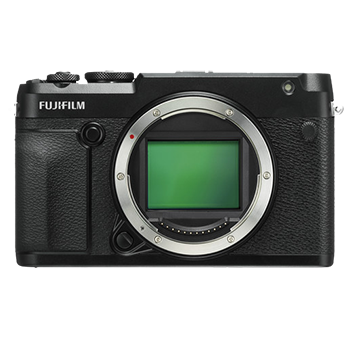
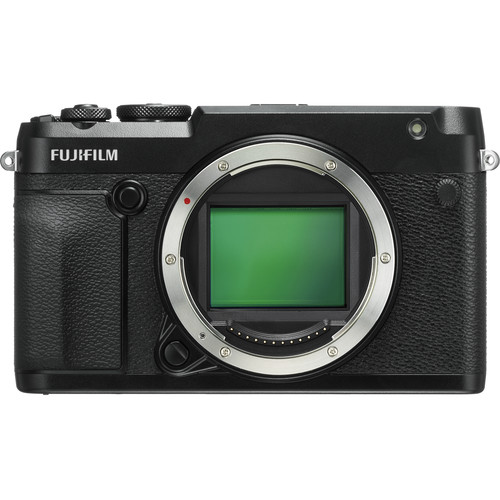
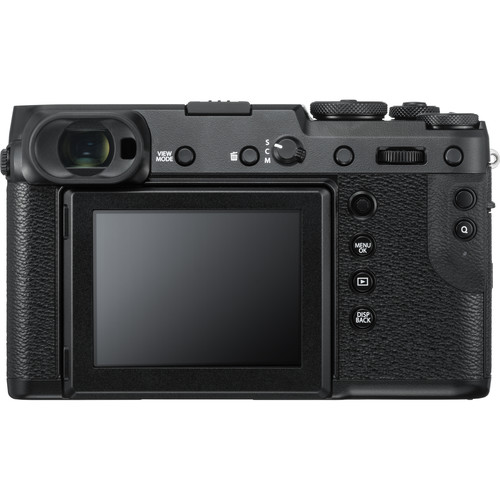
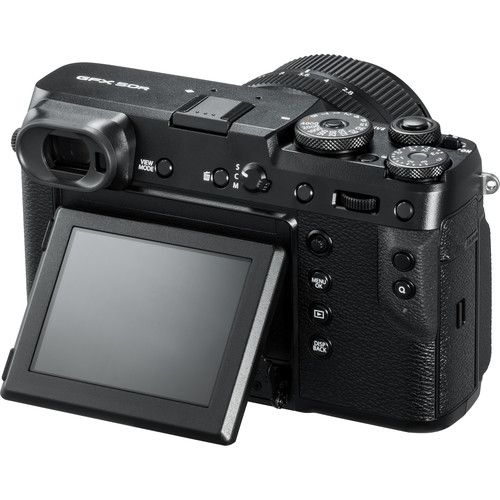
 p.1 #13 · Fujifilm GFX 50R Medium Format for only $3,499! ($1000 Off) p.1 #13 · Fujifilm GFX 50R Medium Format for only $3,499! ($1000 Off) | |
gdanmitchell wrote:
I'll preface this by noting that I have a good friend (a noted landscape photographer) who has the GFX 100 and likes the output. He got there on a path that came from LF film to Phase One backs to the Pentax 645z to the GFX 50S and the the GFX 100. He also thinks highly of the 32-64mm and 100-200mm Fujifilm lenses, and extends those by using other MF lenses via adapters. In a weak moment he did say that he wasn't sure the results were really significant better than what he got from a previous miniMF system, but he still likes it, or at least did when we last spoke about it. (We shot together for a week last summer in the Sierra backcountry.)
I was — and potentially still am — a candidate for one of the miniMF systems, but that value proposition issue remains a serious sticking point for me.
Last year I tested the GFX 50S with the 32-64mm lens against my Canon 5DsR with the 24-70mm f/2.8L II. There was a lot to like about the Fujifilm. The ergonomics seemed quite good and the overall package felt similar to using the Canon in many ways. My previously familiarity with the Fujifilm interface (I do half of my photography with the XPro2) meant that I adapted very quickly to the camera.
A friend and I set up a side-by-side comparison between the two systems, making a series of photographs of some (very boring) test subjects. I took the files from the tests and made sample prints at a range of print sizes. (Actually, I printed letter-sized sections out of what would have been quite large prints.) I shared the results in the form of physical prints and files that folks could view online or print for themselves, but I anonymized the files so that they did not know which camera each sample came from. I asked them to note differences and express preferences.
At print sizes below 30" x 40" the folks who took my test were unable to distinguish between the files/prints consistently. (I couldn't either, and I had to resort to labeling them to keep track of which were which.) Somewhere around 30" x 40"(equivalent to 30" x 45 on the Canon FF system) the ability to select the miniMF sourced images as being better started to appear, but only when people looked really, really closely at side-by-side samples. Both cameras still produced excellent quality images, but folks who knew what to look for could start to see subtle differences.
What this told me is that the differences between the outputs of excellent FF systems and the fine Fujifilm 50MP mniMF systems were real but subtle, and that they would not be visible unless one produces very large prints and controls all of the other variables that affect image quality.
When I started this process, I was hoping/expecting that the tests would give me an excuse to move to the larger-sensor system, but the more I looked at it the less it made sense, at least for someone in my situation. While the difference in system image quality is real, it is also small and comes at a cost.
About the cost, for me it meant that I would have to give up some optical options that I rely heavily on in my photography. My landscape photography is done with focal lengths from 16mm to 400mm, sometimes longer with the addition of a TC. I strongly prefer zoom lenses since they allow me to avoid image quality loss through cropping while still giving me the maximum compositional flexibility.
But I can't cover that focal length range with the GFX system, so there would be things that I regularly do with my FF system that I could no longer do with the GFX.
I especially have to wonder about the real-world value of putting a small prime (no doubt an excellent lens) on the GFX R to do things like handheld street photography. It would be very rare to see any resolution advantage at this level from shooting handheld, it seems to me, and you would give up the ability to use excellent smaller systems for a genre in which small and light are often important.
There are, no doubt, some folks for whom this could be just the right camera. I just think that is a fairly small group...
Dan...Show more →
A couple of things to note about Dan's test as I participated. Not only was subject boring (someone's fence in their backyard with bushes directly in front of it), but the light was very flat. It was a very low dynamic range setting he was testing. I have a lot of doubts that his test says anything about other situations in which the subject has more detail and the lighting is less flat (i.e., has higher dynamic range). I definitely don't think it necessarily represents results from a typical landscape shot during golden hour for example. Neither does it represent a high ISO situation like when shooting in a dark environment indoors. So do take his results with a big grain of salt. That said, the IQ advantages of the 50MP 44 X 33 sensor over the new 45,47,50, 61 MP FF 35mm sensors is not dramatic. The IQ advantages of the 100MP 44 X 33 sensor, however, are. They should be easy to see in almost any type of shooting.
Now when we think of the GFX 50r and the 50, we are talking a pretty small package. The IQ advantages may be modest over FF 35mm systems, but they are not over the Fuji X system. So, especially a Fuji user might appreciate the upgrade. The system now covers 17 -250 (in FF 35mm equivalent) quite well and we will get a new lens this year and one next year according to the roadmap that will provide even more options. That lens availability might not fit Dan's needs, but I don't think it is a tiny fraction of people either. I think the real hang up with the Fuji system is the price. It is expensive (especially if you step up to the GFX 100), but you do get clearly increased performance for the increase in price. So, in the end I agree with Dan that the market is not large for the GFX camera and GF lenses, but I think the market is mainly restricted by price and not by performance. Still I think Fuji will make decent money on these cameras and because the price the niche will be profitable.
|