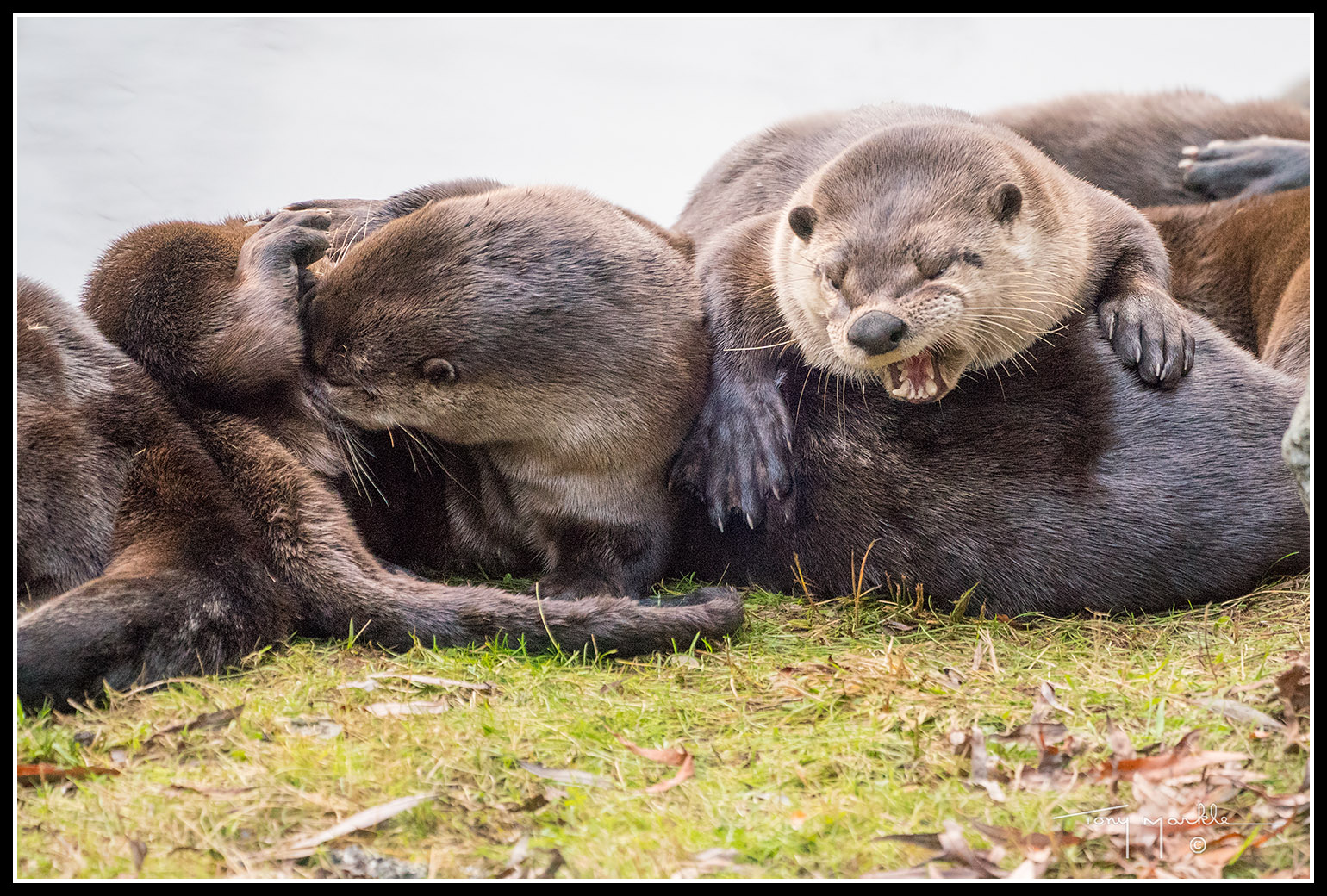
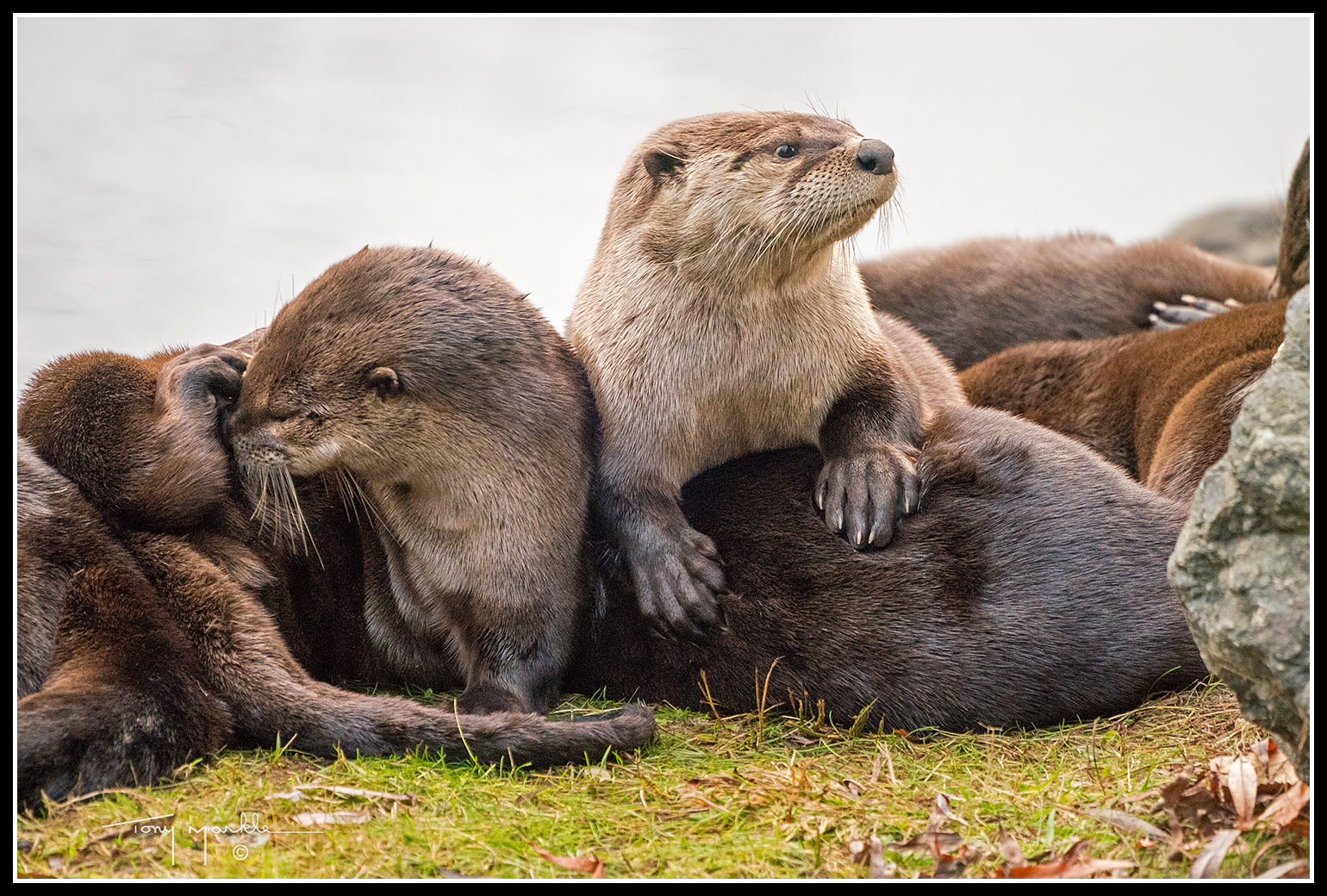
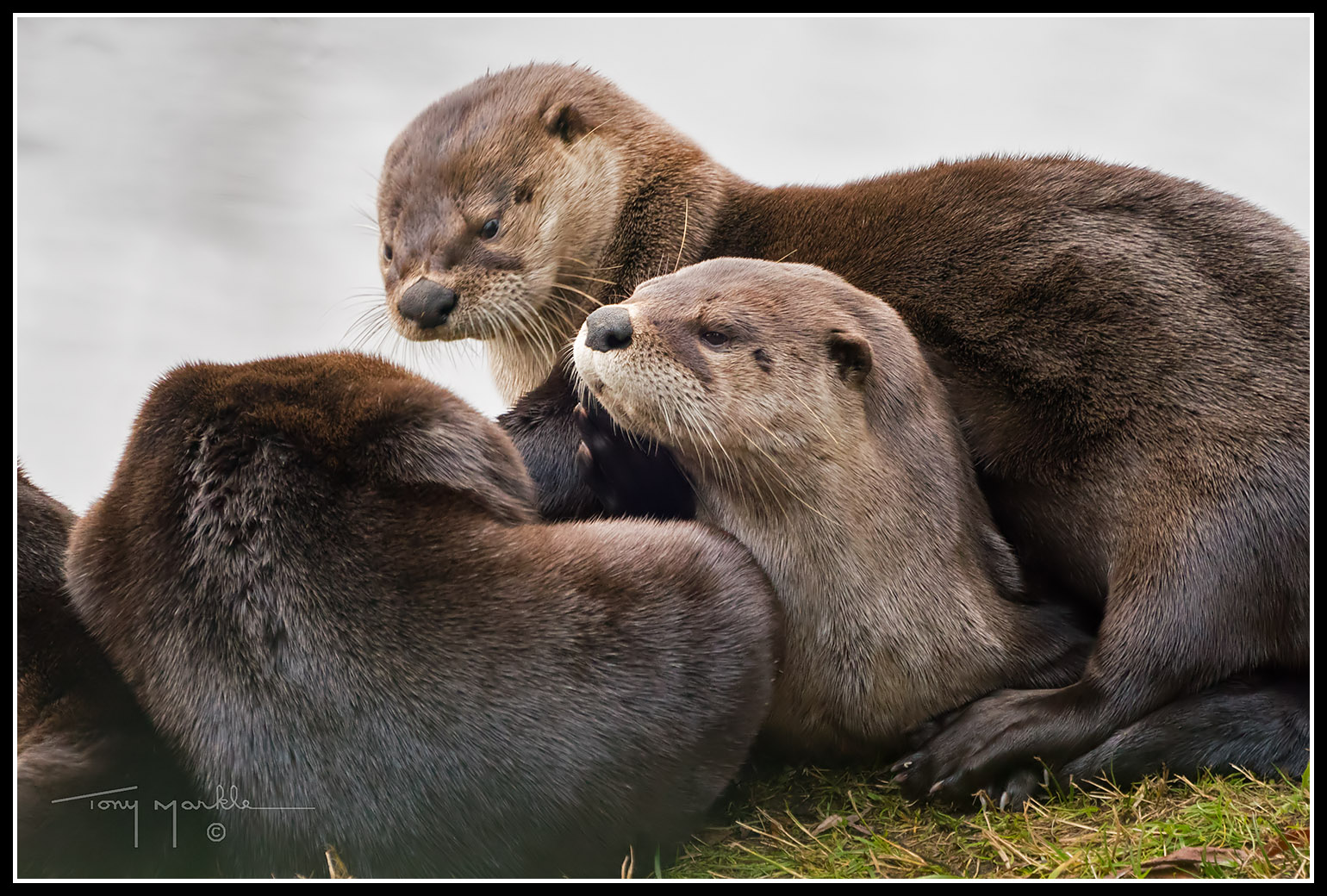
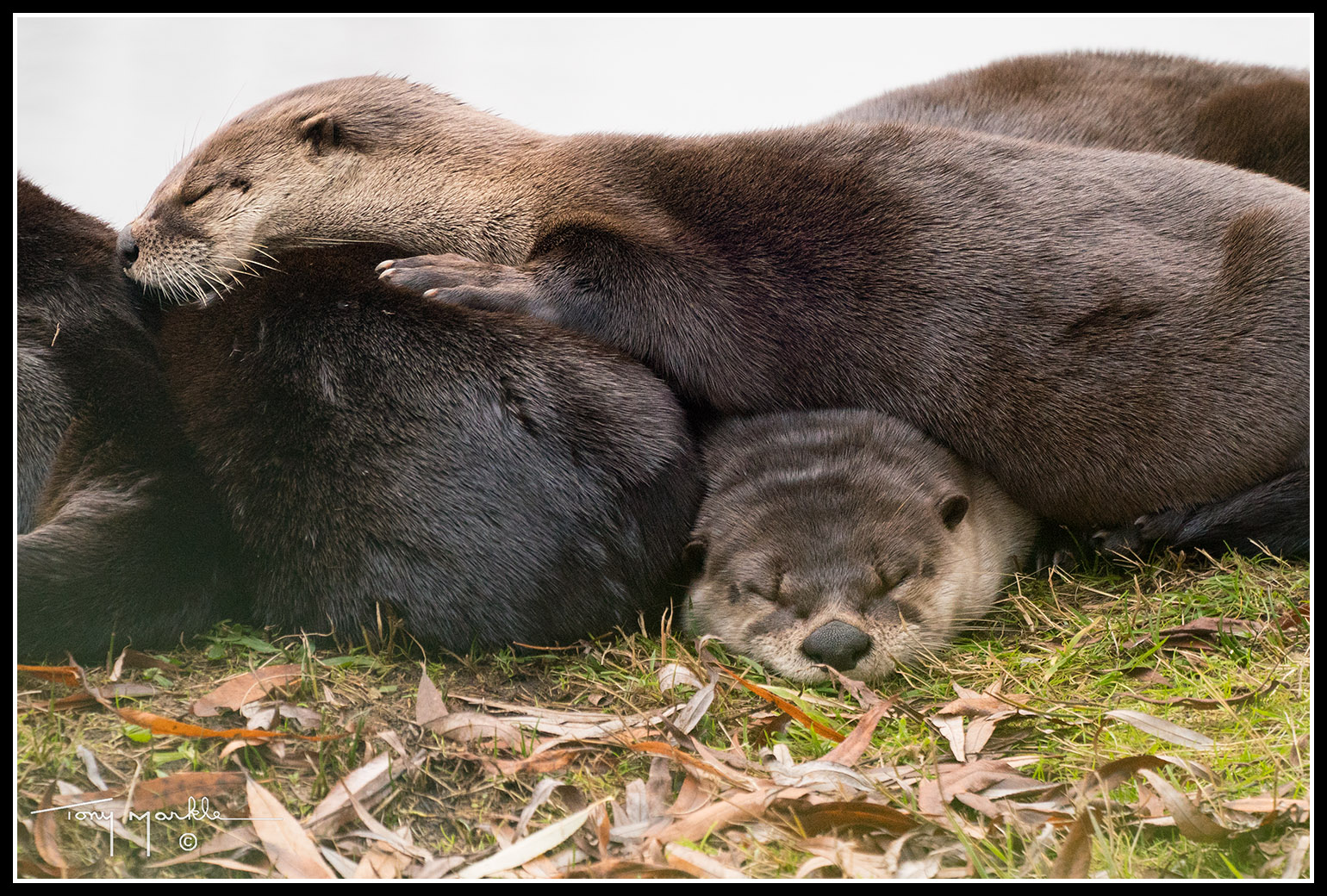
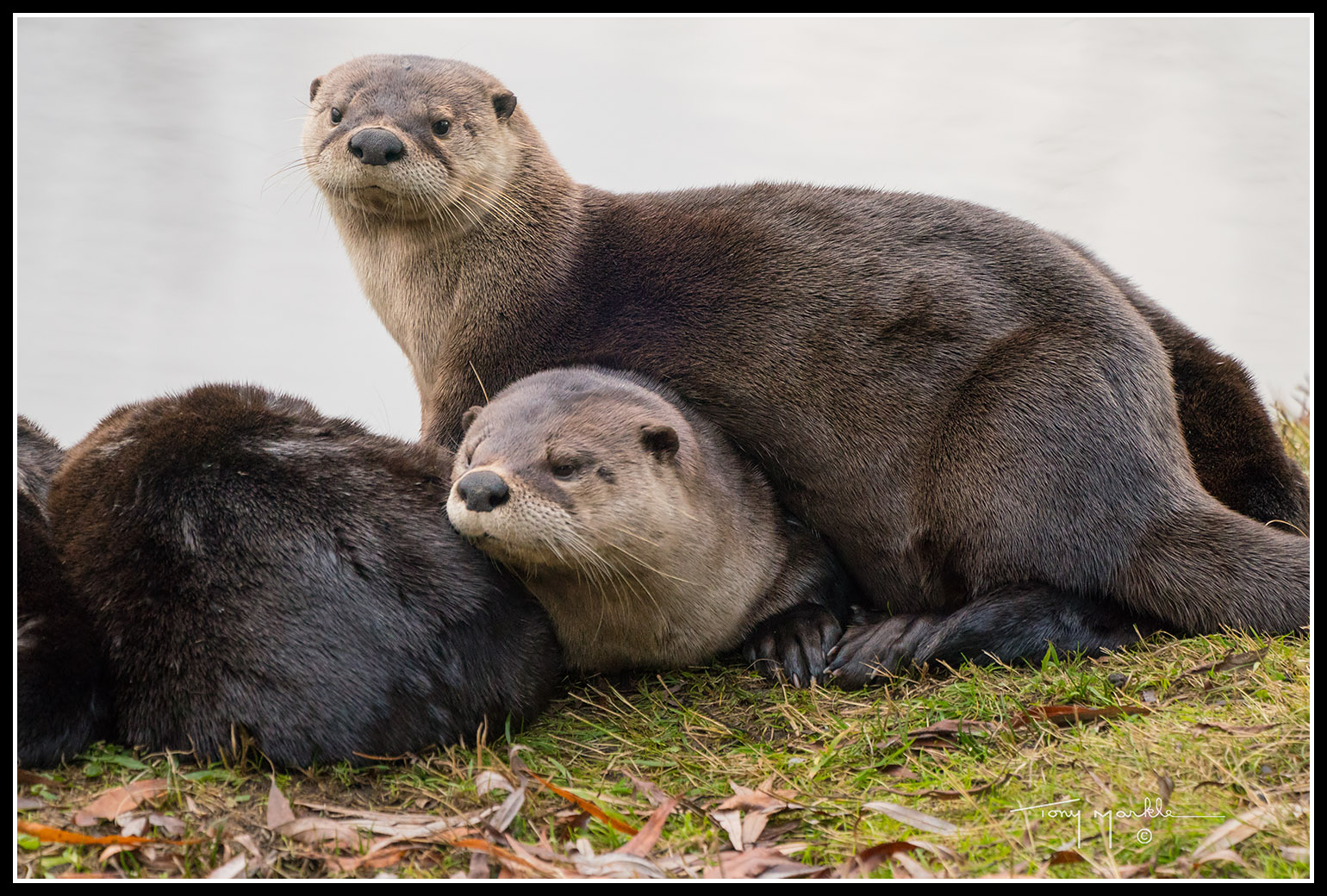
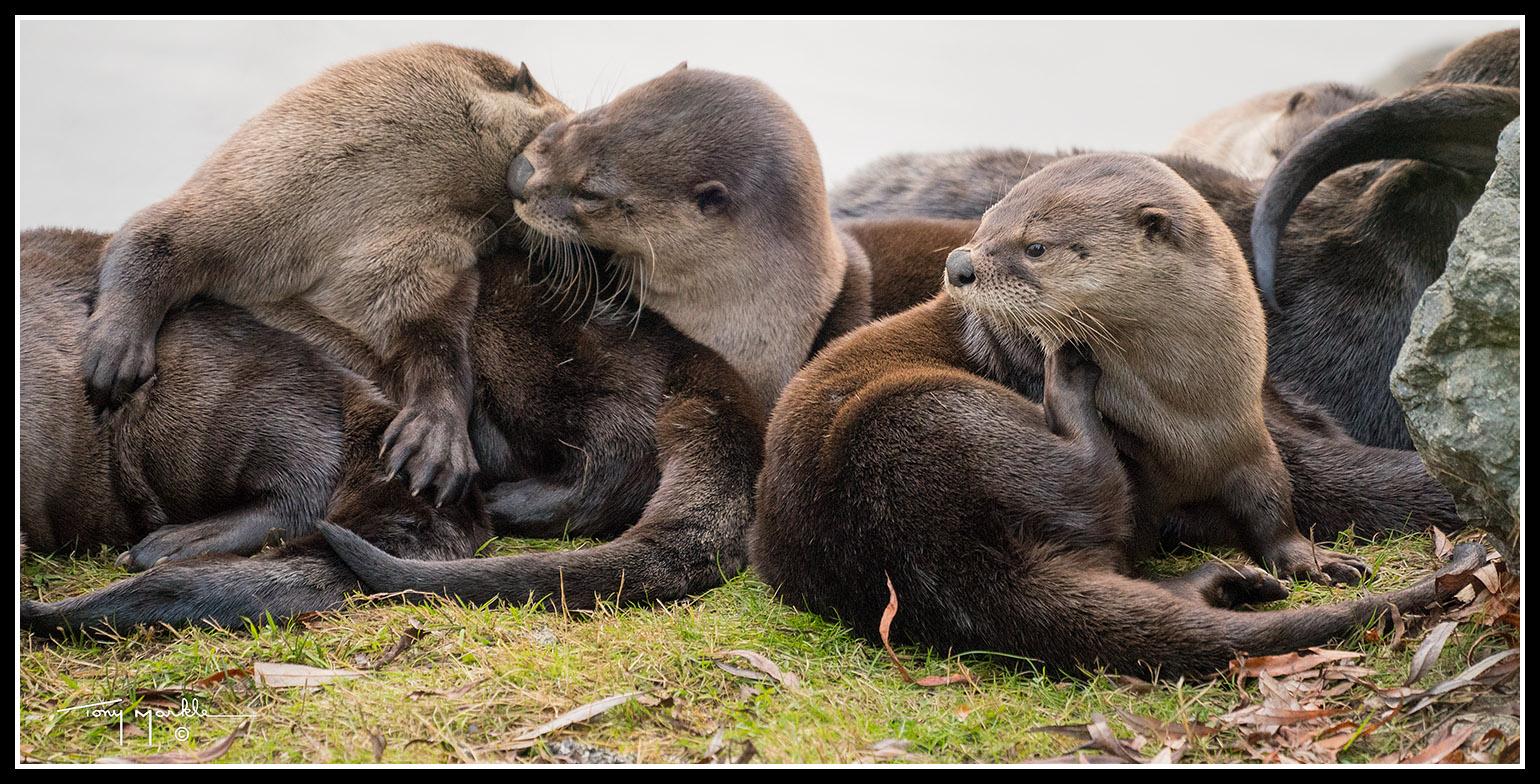
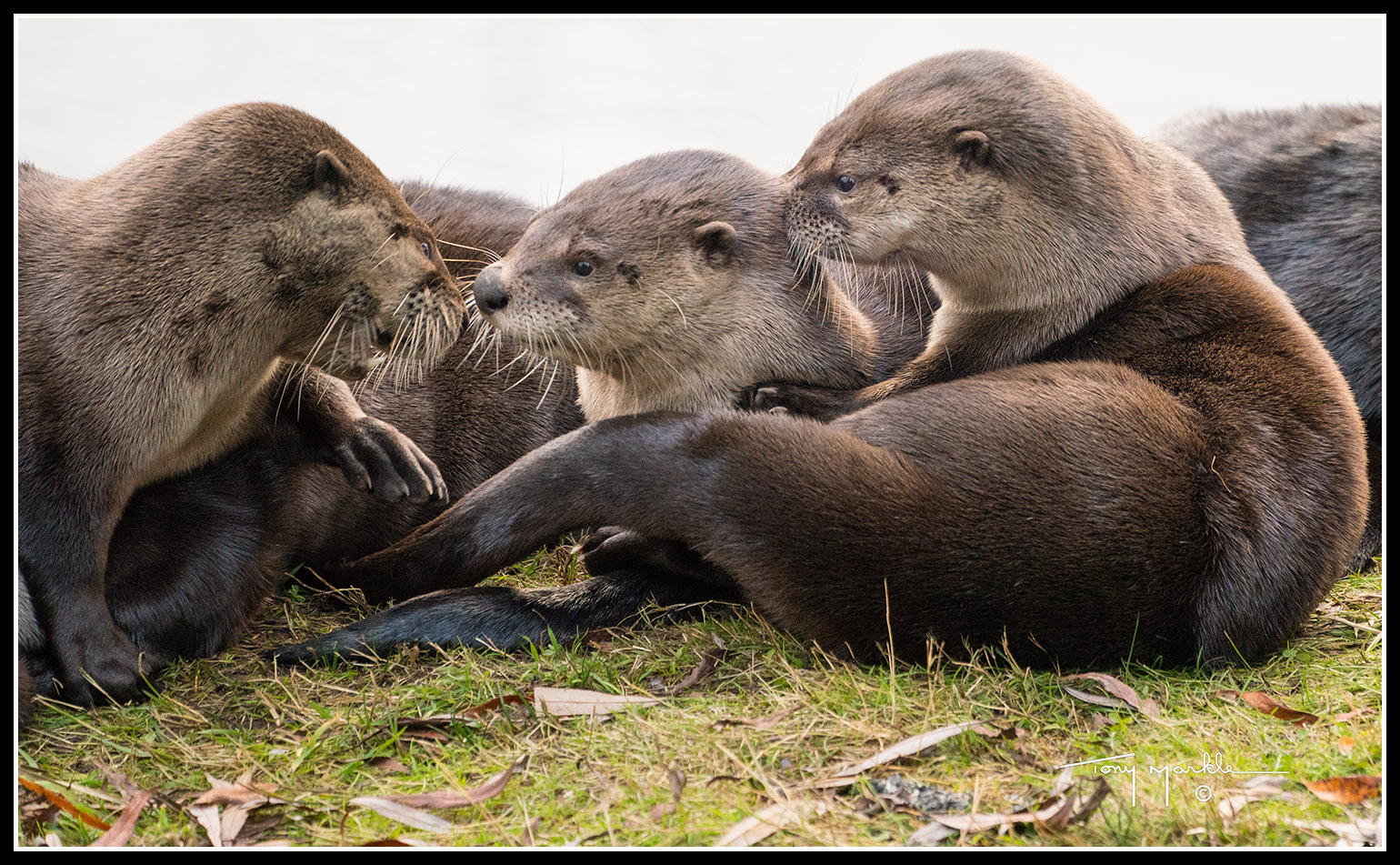
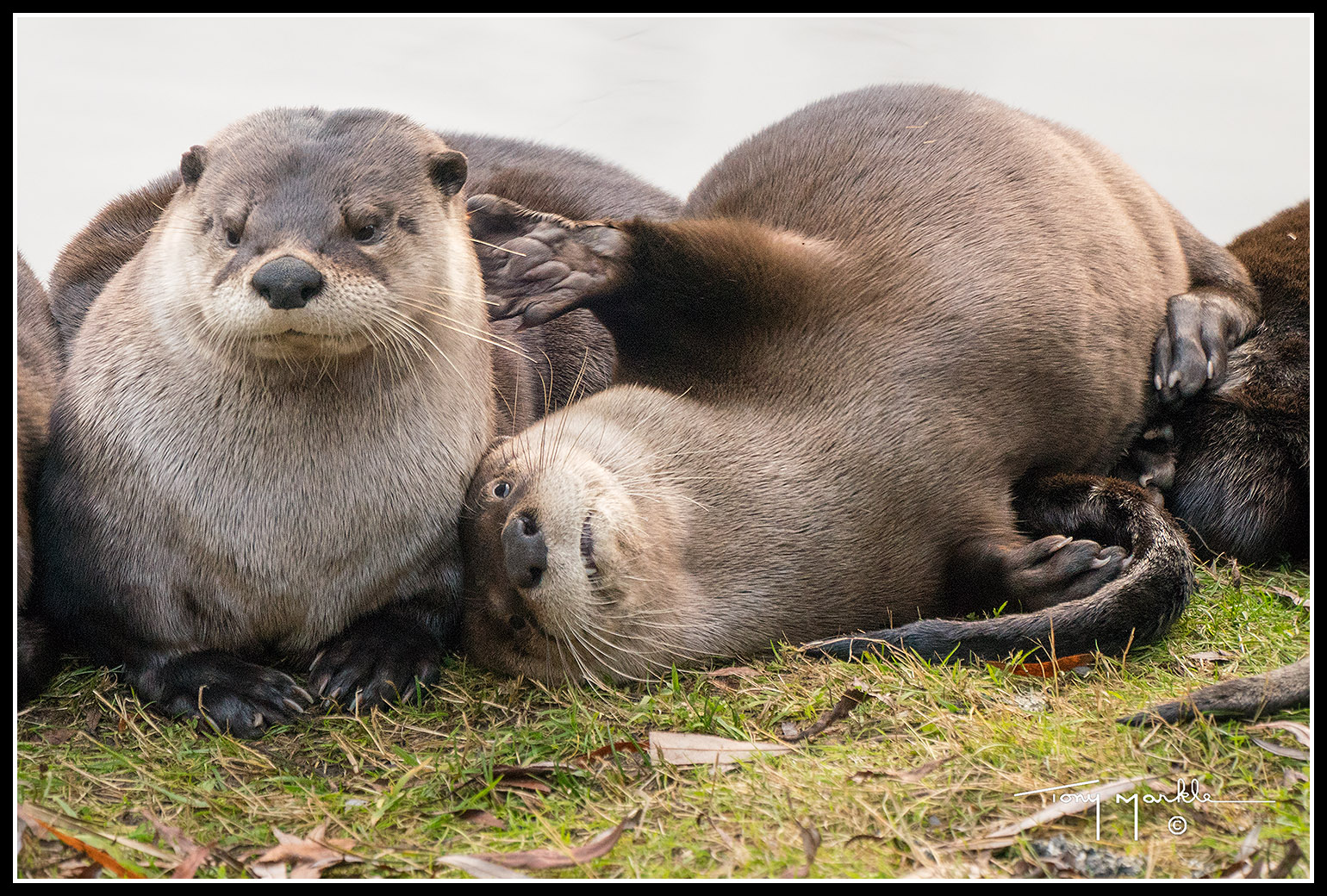
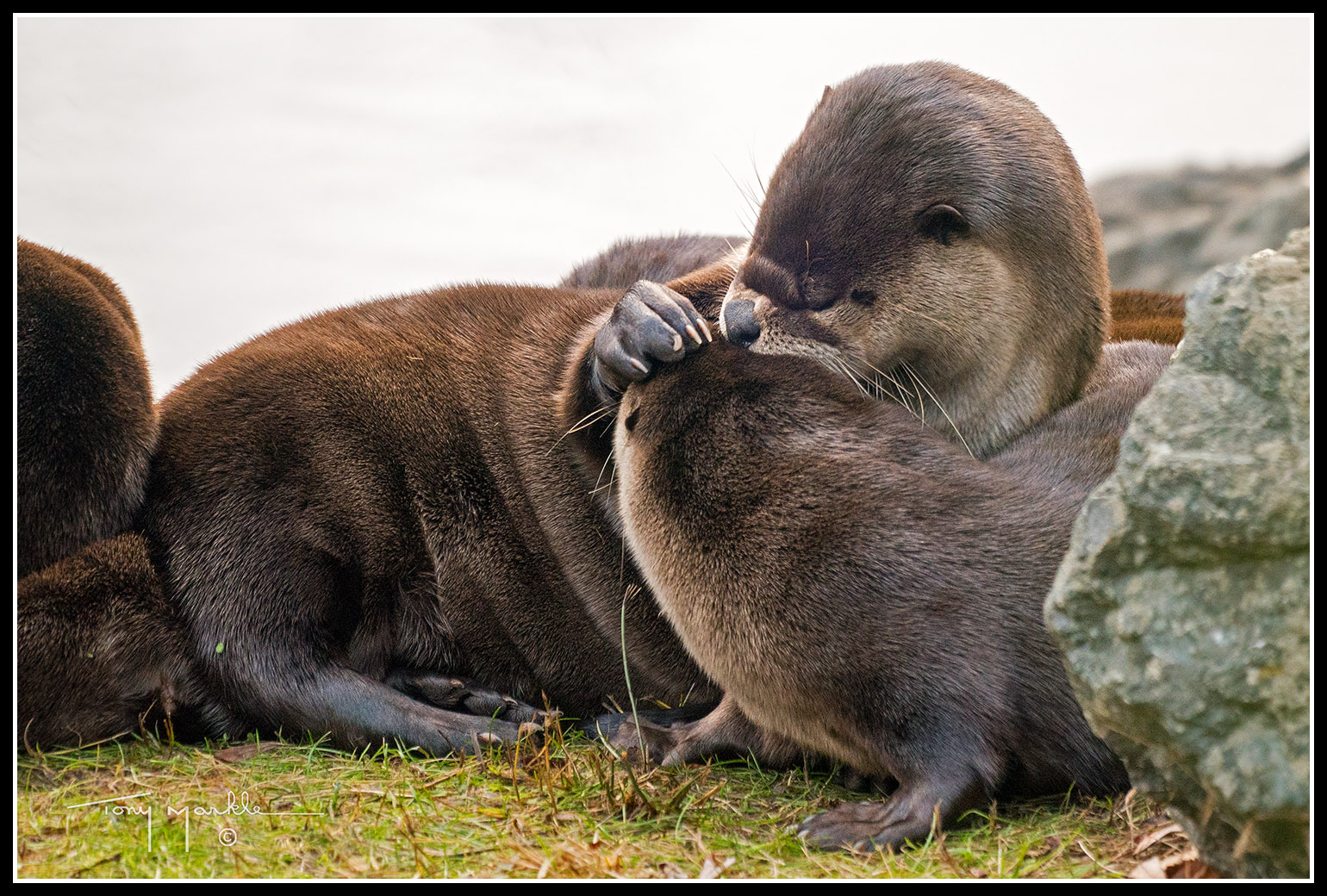
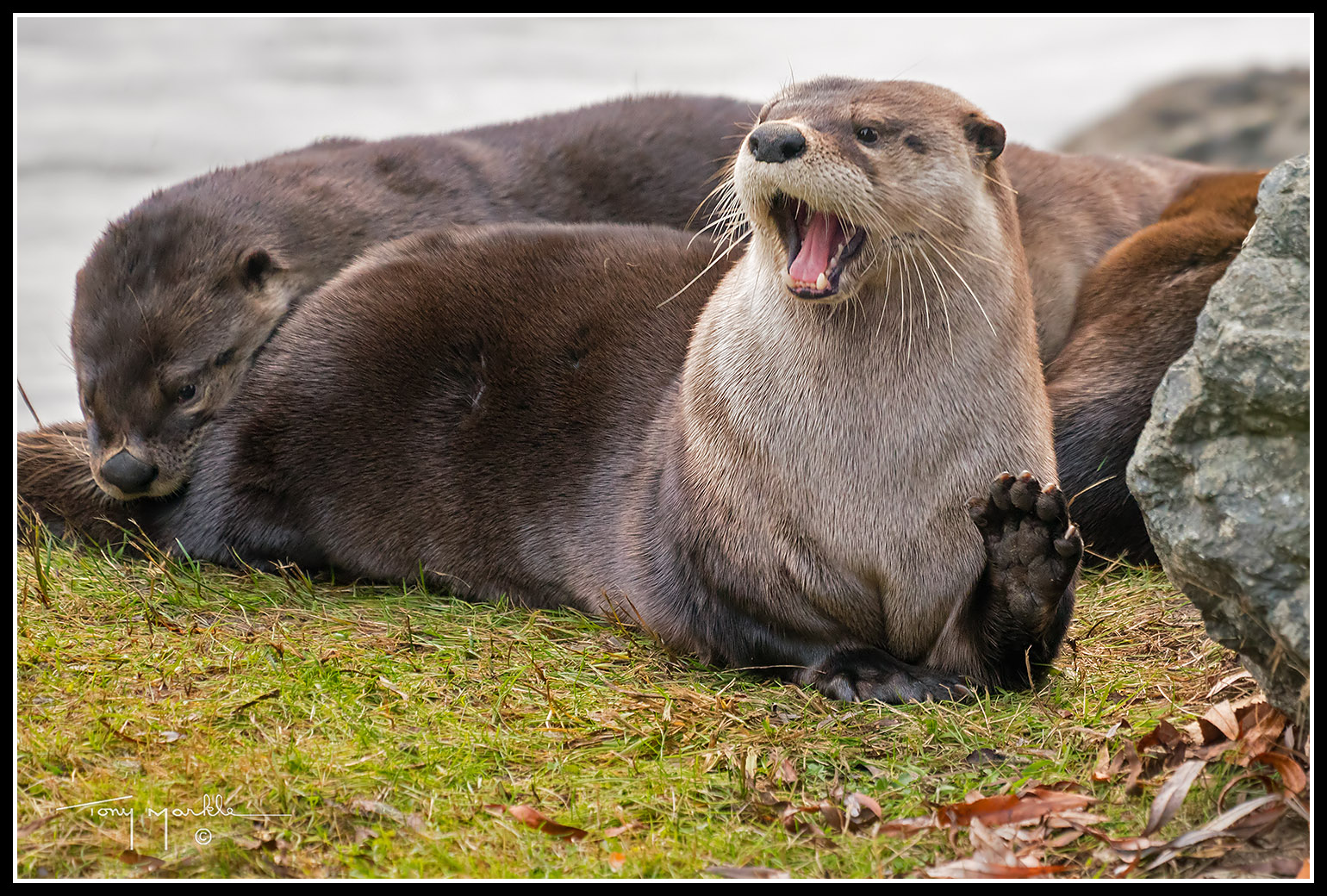
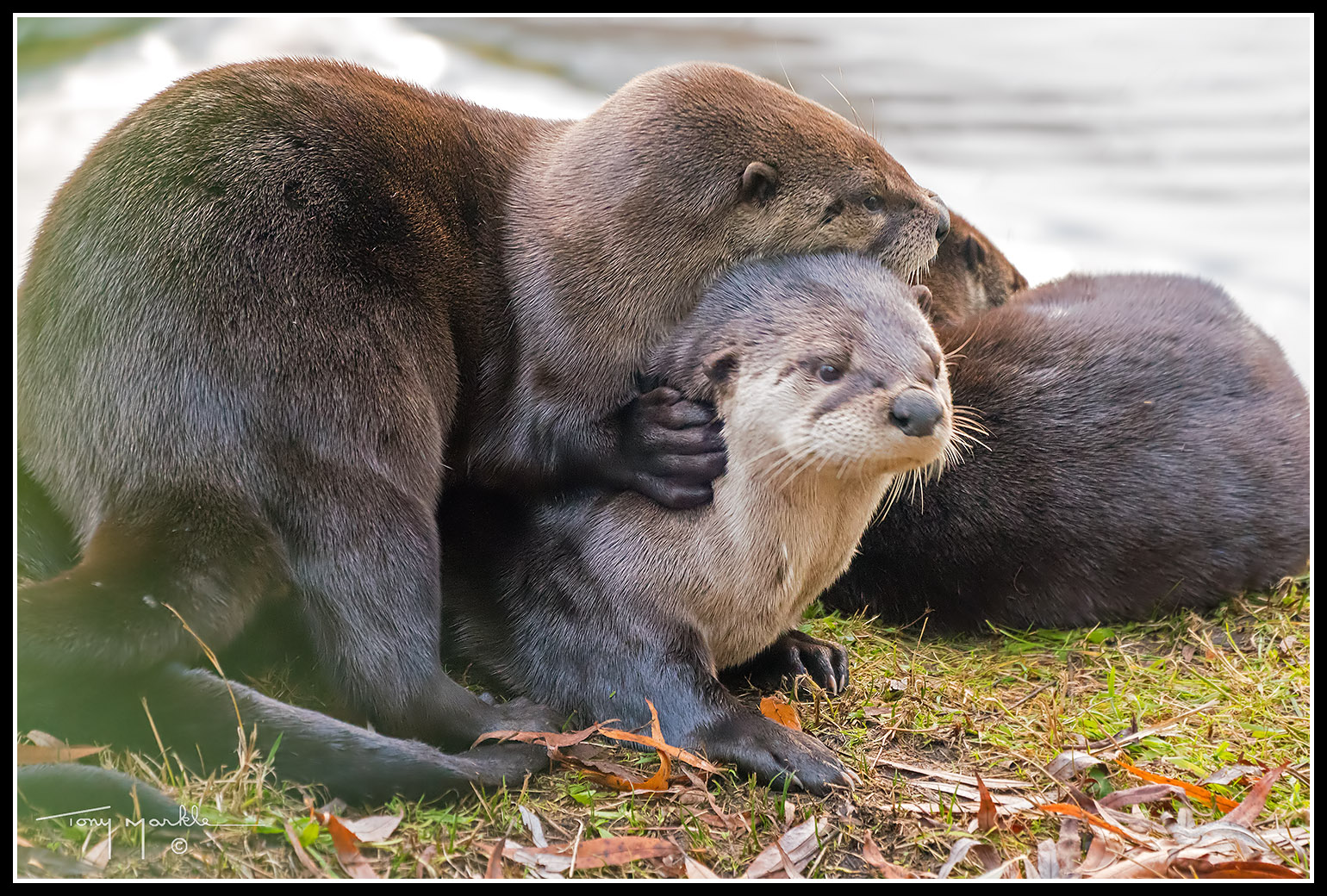
Eight river otters (2 moms with 6 pups) have been in our ponds for the last couple of days hunting and eating hundreds of koi (carp). When they came out of the pond for a rest, I was able to sneak up close enough to photograph them without disturbing them. I had to shoot through the branches of a fir tree and could not move more than a few inches in any direction without them seeing me. All handheld shots using silent shutter.
When on land, they just love to pile on top of each other to play or rest. A lot of nuzzling goes on, where one will nuzzle the back of the neck of the other and vice-versa.
Found in both saltwater and freshwater, a river otter lounges around riverbanks and swims with its belly down, keeping the majority of its body submerged below the water. Sea otters, conversely, are found only in salt water and rarely go on land. Sea otters have the habit of floating on their backs, even while they’re eating, and have been known to hold hands with each other while sleeping so they don’t drift apart.
Sea otters use their two webbed hind feet and tail to propel them through the water, the four webbed feet of river otters are what enable them to swim efficiently. River otters can dive to around 60 feet deep, whereas sea otters can dive to several hundred feet to forage for food.
River otters keep their young safe by their side and in dens that they build on riverbanks, while sea otter moms typically keep their pups nestled on their stomachs as they float until they are old enough to swim on their own.
The sea otter is a success story in progress on Vancouver Island. Totally extirpated through hunting by the early 1900s, a reintroduction of 89 individuals in 1969 has now grown to an estimated 3,000 individuals living from Cape Scott to Barkley Sound on the west coast of the island. They are the largest member of the weasel family (Mustelidae), but one of the smallest marine mammals, and they rely on their incredibly dense fur coat to trap air as insulation.
The only otters on the east coast of Vancouver Island are river otters.
The 1989 Exxon Valdez spill in Alaska immediately killed over 1,000 sea otters, and removed hundreds of kilometers of habitat from their potential range.
Great photographs and interesting information about otters. They are a success story. Thanks for posting.
Voted. I recall reading that you don't care about getting votes, but I voted anyway.
dclark wrote:
Great photographs and interesting information about otters. They are a success story. Thanks for posting.
Voted. I recall reading that you don't care about getting votes, but I voted anyway.
Dave
Thanks Dave. I could ask Fred to refund your vote.
Always enjoy viewing your images and reading the information you often include about your subjects.
Great set and some very nice reading Tony!
Thanks for sharing and taking the time to write about them.
lighthound wrote:
Always enjoy viewing your images and reading the information you often include about your subjects.
Great set and some very nice reading Tony!
Thanks for sharing and taking the time to write about them.
Dave
Thanks Dave. It is always extra special when they are out of the water and I can photograph them without disturbing them.
lighthound wrote:
Always enjoy viewing your images and reading the information you often include about your subjects.
Great set and some very nice reading Tony!
Thanks for sharing and taking the time to write about them.