Voigtlander 50mm f/2 APO-Lanthar Review
p.54 #1Voigtlander 50mm f/2 APO-Lanthar Review
Awesome comparison between the 50 and 65! They look so identical. 😁 Both pretty amazing lenses. I think a 21 and 50/65 would be a nice combo. The 65 is actually $100 off at adorama 😊
Feb 01, 2020 at 07:40 PM
p.54 #2Voigtlander 50mm f/2 APO-Lanthar Review
Well my daughter and family units moved back in to buy a new home . After 3 months with us I was over that sooooo I sold them our house. Lol
This is so much better. Downsizing is better than I thought. No stress
This is so much better. Downsizing is better than I thought. No stress
Feb 01, 2020 at 08:09 PM
p.54 #3Voigtlander 50mm f/2 APO-Lanthar Review
tsdevine wrote:
Any need to see f/4 and f/5.6?
There's no need, but I'd be interested to see the comparisons if you have time or can provide a link. Thanks.
Any need to see f/4 and f/5.6?
There's no need, but I'd be interested to see the comparisons if you have time or can provide a link. Thanks.
Feb 01, 2020 at 10:24 PM
p.54 #4Voigtlander 50mm f/2 APO-Lanthar Review
Will try to post them tomorrow.
zugzwang2 wrote:
tsdevine wrote
Any need to see f/4 and f/5.6?Feb 01, 2020 at 10:27 PM
p.54 #5Voigtlander 50mm f/2 APO-Lanthar Review
Fred Miranda wrote:
I prefer using an extension tube with the CV 50/2 APO.'
Which extension tube are you using Fred?An extension tube is just a tube, but some of the cheapest ones have mechanisms which can jam potentially damage contacts. So it’s probably worth getting the kenko ones, which are also flocked which is handy, and saves you flocking them yourself.Thanks for your reply David - I will check out the Kenko ones.
My question to Fred was more along the lines of: which length of tube he uses? has he tried multiple lengths and found one to be the 'best' overall compromise in performance? and why he thinks an extension tube is better than an achromat close-up lens in the case of the Voigt 50mm f2?I think that close-up lenses are more practical with telephoto lenses. With wide angle and normal lenses, extension tube(s) make more sense as you don't need that much extension to get high magnification.
In the case of a 50mm lens native 0.15x magnification, one would need a very strong 5+ diopter to get to half-life size (1:2) while a short 16mm extension already gets you there. It depends on how strong a lens performs at MFD but in general terms, we should strive for the shortest tube or weaker diopter to achieve the highest IQ for equal magnification.
Thanks Fred; so you are using the Kenko branded ones as well?
Petegh wrote
DavidBM wrote
Petegh wrote
'Same here. I find that I need to step down the 50/2 APO to f/4 for great off-axis performance. (Still not as good as CV 65/2 APO wide open)I prefer using an extension tube with the CV 50/2 APO.'
Which extension tube are you using Fred?
My question to Fred was more along the lines of: which length of tube he uses? has he tried multiple lengths and found one to be the 'best' overall compromise in performance? and why he thinks an extension tube is better than an achromat close-up lens in the case of the Voigt 50mm f2?
In the case of a 50mm lens native 0.15x magnification, one would need a very strong 5+ diopter to get to half-life size (1:2) while a short 16mm extension already gets you there. It depends on how strong a lens performs at MFD but in general terms, we should strive for the shortest tube or weaker diopter to achieve the highest IQ for equal magnification.
Thanks Fred; so you are using the Kenko branded ones as well?
Feb 02, 2020 at 12:27 AM


p.54 #8Voigtlander 50mm f/2 APO-Lanthar Review
Well the press this lens is getting is excellent. The sharpest 50mm across the entire frame....
https://sonyalpha.blog/2020/01/30/voigtlander-50mm-f2-apo-lanthar/
https://sonyalpha.blog/2020/01/30/voigtlander-50mm-f2-apo-lanthar/
Feb 02, 2020 at 08:30 AM
p.54 #9Voigtlander 50mm f/2 APO-Lanthar Review
tsdevine wrote:
Same @ f/2.8
CV 50/2 @ f/2.8
https://live.staticflickr.com/65535/49474769042_140534e5e8_h.jpg
Full Size
CV 65/2 @ f/2.8
https://live.staticflickr.com/65535/49474545466_f5bef86f4b_h.jpg
Full Size
FE 55/1.8 @ f/2.8
https://live.staticflickr.com/65535/49474768777_73272df1e4_h.jpg
Full Size
Bonus shot, different focus point.
Tamron 35/2.8 @ f/2.8
https://live.staticflickr.com/65535/49474205713_a825bd9d67_h.jpg
Full Size
Any need to see f/4 and f/5.6?
-Tim
Sharpness is excellent, but there is a little magenta color shift in the corners at f/2 and even f/2.8. I don't see it on the 65 or the 55.
Feb 02, 2020 at 10:58 AM
p.54 #10Voigtlander 50mm f/2 APO-Lanthar Review
tsdevine wrote:
CV 50/2 @ f/5.6
https://live.staticflickr.com/65535/49477493401_9805d9dc7c_h.jpg
Full Size
CV 65/2 @ f/5.6
https://live.staticflickr.com/65535/49477009533_d6c9d13274_h.jpg
Full Size
FE 55/1.8 @ f/5.6
https://live.staticflickr.com/65535/49477712607_973a84ea4a_h.jpg
Full Size
Maybe even still hint of those magenta corners at f/5.6
Feb 02, 2020 at 11:00 AM
|
p.54 #11Voigtlander 50mm f/2 APO-Lanthar Review
Maybe it's just my inability to discern color, but I'm not seeing any substantial magenta shading in any of the shots. I have to believe that whatever you are seeing would easily be corrected via a profile. Also, I didn't spend a lot of time trying to match color in each of these shots.
In any case, I don't see anything here that should scare someone away from the lens.
-Tim
Feb 02, 2020 at 12:03 PM
p.54 #12Voigtlander 50mm f/2 APO-Lanthar Review
Petegh wrote:
I prefer using an extension tube with the CV 50/2 APO.'
Which extension tube are you using Fred?An extension tube is just a tube, but some of the cheapest ones have mechanisms which can jam potentially damage contacts. So it’s probably worth getting the kenko ones, which are also flocked which is handy, and saves you flocking them yourself.Thanks for your reply David - I will check out the Kenko ones.
My question to Fred was more along the lines of: which length of tube he uses? has he tried multiple lengths and found one to be the 'best' overall compromise in performance? and why he thinks an extension tube is better than an achromat close-up lens in the case of the Voigt 50mm f2?I think that close-up lenses are more practical with telephoto lenses. With wide angle and normal lenses, extension tube(s) make more sense as you don't need that much extension to get high magnification.
In the case of a 50mm lens native 0.15x magnification, one would need a very strong 5+ diopter to get to half-life size (1:2) while a short 16mm extension already gets you there. It depends on how strong a lens performs at MFD but in general terms, we should strive for the shortest tube or weaker diopter to achieve the highest IQ for equal magnification.Thanks Fred; so you are using the Kenko branded ones as well?
Yes, I have the Kenko tubes and they get the job done.
Build quality is not perfect but it's flocked and reliable.
Fred Miranda wrote
Petegh wrote
DavidBM wrote
Petegh wrote
'Same here. I find that I need to step down the 50/2 APO to f/4 for great off-axis performance. (Still not as good as CV 65/2 APO wide open)I prefer using an extension tube with the CV 50/2 APO.'
Which extension tube are you using Fred?
My question to Fred was more along the lines of: which length of tube he uses? has he tried multiple lengths and found one to be the 'best' overall compromise in performance? and why he thinks an extension tube is better than an achromat close-up lens in the case of the Voigt 50mm f2?
In the case of a 50mm lens native 0.15x magnification, one would need a very strong 5+ diopter to get to half-life size (1:2) while a short 16mm extension already gets you there. It depends on how strong a lens performs at MFD but in general terms, we should strive for the shortest tube or weaker diopter to achieve the highest IQ for equal magnification.
Yes, I have the Kenko tubes and they get the job done.
Build quality is not perfect but it's flocked and reliable.
Feb 03, 2020 at 09:43 AM
p.54 #13Voigtlander 50mm f/2 APO-Lanthar Review
Hmm really thinking about getting the 50mm instead of the 65 to use more for landscape panoramas. Still the dual purpose of being able to get semi macro shots with the 65 is really a nice plus. This lightweight 50mm would definitely be more appealing to hike around with. Kind of reminds me of the crazy sharpness levels I got with the sigma 40 1.4 which was definitely not fun to take around for landscape shots! Still miss that sigma a lot. This will go really well with my voigtlander 21 nokton 1.4 which I love!
Decisions
Decisions
Feb 03, 2020 at 11:17 AM
p.54 #14Voigtlander 50mm f/2 APO-Lanthar Review
Darn it. After much consideration between the voigtlander 65 f2 and 50 f2 I went with the 50 f2! Just placed order on B&H. They were out of stock on Adorama. Those night city shots totally sold me on it. Well! I have a nice combo now!! 21/1.4 and 50/2. The voigtlander bug bit me!! 
Well! I have a nice combo now!! 21/1.4 and 50/2. The voigtlander bug bit me!! Feb 04, 2020 at 05:58 PM
p.54 #15Voigtlander 50mm f/2 APO-Lanthar Review
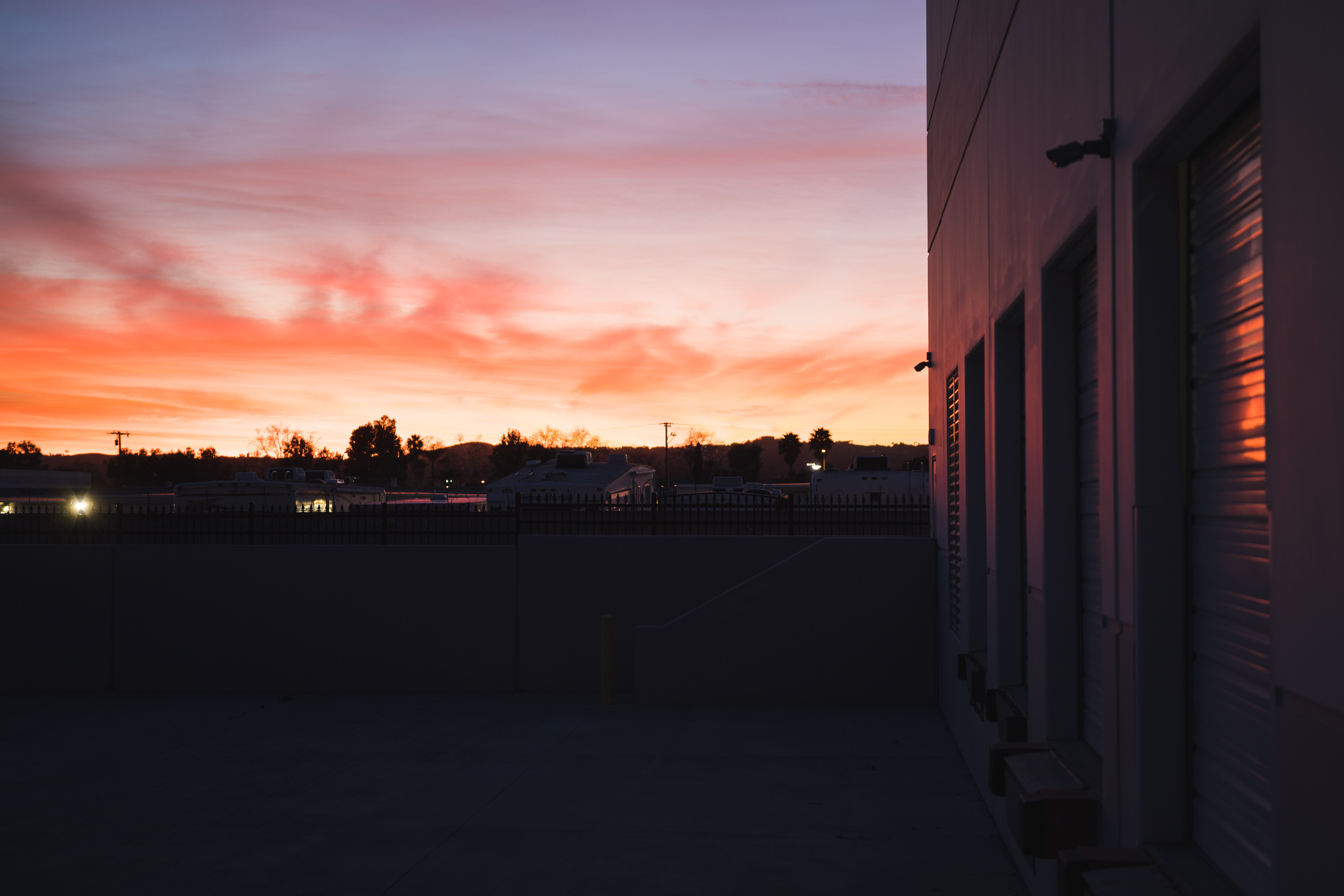
Sunset colors behind the warehouse.
 |
||
 |
||
|
Feb 04, 2020 at 08:58 PM
p.54 #17Voigtlander 50mm f/2 APO-Lanthar Review
Fred Miranda wrote:
I prefer using an extension tube with the CV 50/2 APO.'
Which extension tube are you using Fred?An extension tube is just a tube, but some of the cheapest ones have mechanisms which can jam potentially damage contacts. So it’s probably worth getting the kenko ones, which are also flocked which is handy, and saves you flocking them yourself.Thanks for your reply David - I will check out the Kenko ones.
My question to Fred was more along the lines of: which length of tube he uses? has he tried multiple lengths and found one to be the 'best' overall compromise in performance? and why he thinks an extension tube is better than an achromat close-up lens in the case of the Voigt 50mm f2?I think that close-up lenses are more practical with telephoto lenses. With wide angle and normal lenses, extension tube(s) make more sense as you don't need that much extension to get high magnification.
In the case of a 50mm lens native 0.15x magnification, one would need a very strong 5+ diopter to get to half-life size (1:2) while a short 16mm extension already gets you there. It depends on how strong a lens performs at MFD but in general terms, we should strive for the shortest tube or weaker diopter to achieve the highest IQ for equal magnification.Thanks Fred; so you are using the Kenko branded ones as well?Yes, I have the Kenko tubes and they get the job done.
Build quality is not perfect but it's flocked and reliable.
Yeah as Fred says they aren’t perfect (every set I have used have annoying rotational play). But rotational play is the least bad kind of error ... it doesn’t affect alignment. And they are better than any others I’ve seen.
Petegh wrote
Fred Miranda wrote
Petegh wrote
DavidBM wrote
Petegh wrote
'Same here. I find that I need to step down the 50/2 APO to f/4 for great off-axis performance. (Still not as good as CV 65/2 APO wide open)I prefer using an extension tube with the CV 50/2 APO.'
Which extension tube are you using Fred?
My question to Fred was more along the lines of: which length of tube he uses? has he tried multiple lengths and found one to be the 'best' overall compromise in performance? and why he thinks an extension tube is better than an achromat close-up lens in the case of the Voigt 50mm f2?
In the case of a 50mm lens native 0.15x magnification, one would need a very strong 5+ diopter to get to half-life size (1:2) while a short 16mm extension already gets you there. It depends on how strong a lens performs at MFD but in general terms, we should strive for the shortest tube or weaker diopter to achieve the highest IQ for equal magnification.
Build quality is not perfect but it's flocked and reliable.
Yeah as Fred says they aren’t perfect (every set I have used have annoying rotational play). But rotational play is the least bad kind of error ... it doesn’t affect alignment. And they are better than any others I’ve seen.
Feb 05, 2020 at 05:29 AM
p.54 #18Voigtlander 50mm f/2 APO-Lanthar Review
DavidBM wrote:
Thanks for your reply David - I will check out the Kenko ones.
My question to Fred was more along the lines of: which length of tube he uses? has he tried multiple lengths and found one to be the 'best' overall compromise in performance? and why he thinks an extension tube is better than an achromat close-up lens in the case of the Voigt 50mm f2?I think that close-up lenses are more practical with telephoto lenses. With wide angle and normal lenses, extension tube(s) make more sense as you don't need that much extension to get high magnification.
In the case of a 50mm lens native 0.15x magnification, one would need a very strong 5+ diopter to get to half-life size (1:2) while a short 16mm extension already gets you there. It depends on how strong a lens performs at MFD but in general terms, we should strive for the shortest tube or weaker diopter to achieve the highest IQ for equal magnification.Thanks Fred; so you are using the Kenko branded ones as well?Yes, I have the Kenko tubes and they get the job done.
Build quality is not perfect but it's flocked and reliable.Yeah as Fred says they aren’t perfect (every set I have used have annoying rotational play). But rotational play is the least bad kind of error ... it doesn’t affect alignment. And they are better than any others I’ve seen.
David, are you saying that the rotational play is bad enough that it occurs when you adjust focus or aperture on the lens?
Fred Miranda wrote
Petegh wrote
Fred Miranda wrote
Petegh wrote
DavidBM wrote
An extension tube is just a tube, but some of the cheapest ones have mechanisms which can jam potentially damage contacts. So it’s probably worth getting the kenko ones, which are also flocked which is handy, and saves you flocking them yourself.My question to Fred was more along the lines of: which length of tube he uses? has he tried multiple lengths and found one to be the 'best' overall compromise in performance? and why he thinks an extension tube is better than an achromat close-up lens in the case of the Voigt 50mm f2?
In the case of a 50mm lens native 0.15x magnification, one would need a very strong 5+ diopter to get to half-life size (1:2) while a short 16mm extension already gets you there. It depends on how strong a lens performs at MFD but in general terms, we should strive for the shortest tube or weaker diopter to achieve the highest IQ for equal magnification.
Build quality is not perfect but it's flocked and reliable.
David, are you saying that the rotational play is bad enough that it occurs when you adjust focus or aperture on the lens?
Feb 06, 2020 at 12:50 AM
p.54 #19Voigtlander 50mm f/2 APO-Lanthar Review
Petegh wrote:
My question to Fred was more along the lines of: which length of tube he uses? has he tried multiple lengths and found one to be the 'best' overall compromise in performance? and why he thinks an extension tube is better than an achromat close-up lens in the case of the Voigt 50mm f2?I think that close-up lenses are more practical with telephoto lenses. With wide angle and normal lenses, extension tube(s) make more sense as you don't need that much extension to get high magnification.
In the case of a 50mm lens native 0.15x magnification, one would need a very strong 5+ diopter to get to half-life size (1:2) while a short 16mm extension already gets you there. It depends on how strong a lens performs at MFD but in general terms, we should strive for the shortest tube or weaker diopter to achieve the highest IQ for equal magnification.Thanks Fred; so you are using the Kenko branded ones as well?Yes, I have the Kenko tubes and they get the job done.
Build quality is not perfect but it's flocked and reliable.Yeah as Fred says they aren’t perfect (every set I have used have annoying rotational play). But rotational play is the least bad kind of error ... it doesn’t affect alignment. And they are better than any others I’ve seen.David, are you saying that the rotational play is bad enough that it occurs when you adjust focus or aperture on the lens?
No; just if you twist one tube against another. Doesn’t occur when only using one tube. Really no relevant except for not giving that lovely premium feel. And of course they might have sorted it by now!
DavidBM wrote
Fred Miranda wrote
Petegh wrote
Fred Miranda wrote
Petegh wrote
Thanks for your reply David - I will check out the Kenko ones.My question to Fred was more along the lines of: which length of tube he uses? has he tried multiple lengths and found one to be the 'best' overall compromise in performance? and why he thinks an extension tube is better than an achromat close-up lens in the case of the Voigt 50mm f2?
In the case of a 50mm lens native 0.15x magnification, one would need a very strong 5+ diopter to get to half-life size (1:2) while a short 16mm extension already gets you there. It depends on how strong a lens performs at MFD but in general terms, we should strive for the shortest tube or weaker diopter to achieve the highest IQ for equal magnification.
Build quality is not perfect but it's flocked and reliable.
No; just if you twist one tube against another. Doesn’t occur when only using one tube. Really no relevant except for not giving that lovely premium feel. And of course they might have sorted it by now!
Feb 06, 2020 at 02:13 AM
p.54 #20Voigtlander 50mm f/2 APO-Lanthar Review
DavidBM wrote:
In the case of a 50mm lens native 0.15x magnification, one would need a very strong 5+ diopter to get to half-life size (1:2) while a short 16mm extension already gets you there. It depends on how strong a lens performs at MFD but in general terms, we should strive for the shortest tube or weaker diopter to achieve the highest IQ for equal magnification.Thanks Fred; so you are using the Kenko branded ones as well?Yes, I have the Kenko tubes and they get the job done.
Build quality is not perfect but it's flocked and reliable.Yeah as Fred says they aren’t perfect (every set I have used have annoying rotational play). But rotational play is the least bad kind of error ... it doesn’t affect alignment. And they are better than any others I’ve seen.David, are you saying that the rotational play is bad enough that it occurs when you adjust focus or aperture on the lens?No; just if you twist one tube against another. Doesn’t occur when only using one tube. Really no relevant except for not giving that lovely premium feel. And of course they might have sorted it by now!
The tubes off little extension by themselves, so I taped mine together. That took care of the rotational play.
Petegh wrote
DavidBM wrote
Fred Miranda wrote
Petegh wrote
Fred Miranda wrote
I think that close-up lenses are more practical with telephoto lenses. With wide angle and normal lenses, extension tube(s) make more sense as you don't need that much extension to get high magnification.In the case of a 50mm lens native 0.15x magnification, one would need a very strong 5+ diopter to get to half-life size (1:2) while a short 16mm extension already gets you there. It depends on how strong a lens performs at MFD but in general terms, we should strive for the shortest tube or weaker diopter to achieve the highest IQ for equal magnification.
Build quality is not perfect but it's flocked and reliable.
The tubes off little extension by themselves, so I taped mine together. That took care of the rotational play.
Feb 06, 2020 at 01:39 PM