Steve Spencer wrote:
Yep, quite a bit of CA in those shots; more than I would be happy with. Does that suggest the APO label is misleading? Not at all as we covered earlier in this thread the APO label is not about the absence of CA, it is about the number of wavelengths that focus exactly on the focus plane. Simply put your CA test is not testing what the APO label is about.
Indeed. While apochromats usually have less axial CA than achromats, being apochromatic is no guarantee of no CA. Indeed you can be a superachromat, a higher degree of correction yet than an apochromat, and still have CA.
Having said that this cv has better ca correction than any other 50 I’ve used, even if not quite as good as the 65.
alphanumeric wrote:
It was actually a trick question. The image above was shot on the new 47MP Leica SL2 with the $8,795 Leica APO-Summicron-M 50mm f/2.
I just wanted to illustrate how overblown the prior discussions were regarding the Voigtlander's CA performance. That not even the best from Leica is without some flaws at this focal length.
alphanumeric wrote:
It was actually a trick question. The image above was shot on the new 47MP Leica SL2 with the $8,795 Leica APO-Summicron-M 50mm f/2.
I just wanted to illustrate how overblown the prior discussions were regarding the Voigtlander's CA performance. That not even the best from Leica is without some flaws at this focal length.
I'm not an expert by any means, but does the APO 50 Summicron-M perform slightly different on the SL2 since an adapter is needed for M glass? I know Leica has implemented some design features on the SL2 to get the best performance of the M lenses on it, but will the lens do the same thing mounted to the M10?
Leica makes a specific APO 50 Summicron for the SL. From what I've read it will perform better than the 50 APO Summicron-M with that system. I had a preorder for the SL2 and the APO 50 Summicron-SL but ultimately decided the tradeoff in AF technology wasn't worth it over using my a7r iv and 50 1.4 ZA for AF needs. I was a little concerned about the color science difference, but manual WB helped with that a bit and, now with the CV50 APO, I find I need to do very little in post to get the colors I like.
DavidBM wrote:
Having said that this cv has better ca correction than any other 50 I’ve used, even if not quite as good as the 65.
We've got really spoiled by the Voigtlander 65 and 110mm's level of axial color correction and I think it's a mistake to assume that wider focal lengths could approach similar performance and still remain reasonably affordable.
It does beg the question about the likelihood of a true wide APO Voigtlander: 28 or 35.
Fred Miranda wrote:
We've got really spoiled by the Voigtlander 65 and 110mm's level of axial color correction and I think it's a mistake to assume that wider focal lengths could approach similar performance and still remain reasonably affordable.
Fred Miranda wrote:
Should we remove the "APO" label from the Zeiss 55/1.4 Otus as well?
No we cannot do that (Guy's dremel may differ), but we can stop interpreting it as a predictor for CA performance, especially with lens of certain brands.
Justin Stone wrote:
It does beg the question about the likelihood of a true wide APO Voigtlander: 28 or 35.
Pretty sure they can make it APO, but gotta remember true APO does not mean perfect colour correction, like I said before not even superachro/superapo guarantees that.
If they can make a 2/28 that approaches the Otus 1.4/28 (which is true APO but not as well colour corrected as it’s longer siblings) I’ll be deliriously happy,,,
keepcoding wrote:
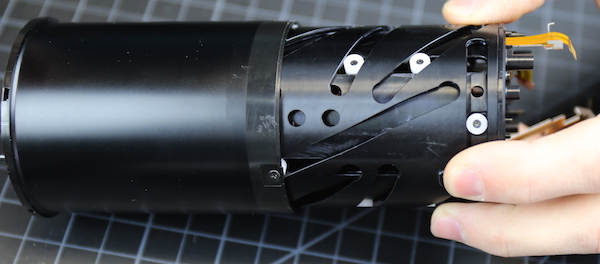
I am wondering why the focus throw on Voigtlander lenses is linear.
I think it would make the focus experience better if they would apply a non-linear focus speed (e.g. below 1m double the focus speed). Even on the CV 50/2 I sometimes think the focus throw is on the long side when switching from infinity to close focus.
How do you manage that with a physical helicoid gear?
If the comparisons standards are the old “Voigtlander” APO zoom made for the Sony A mount (it even came with AF!), this lens aces it.
DavidBM wrote:
Pretty sure they can make it APO, but gotta remember true APO does not mean perfect colour correction, like I said before not even superachro/superapo guarantees that.
Jan 26, 2020 at 01:07 PM
Steve Spencer Offline • • • • • • • Upload & Sell: On
saxguy wrote:
I'm not an expert by any means, but does the APO 50 Summicron-M perform slightly different on the SL2 since an adapter is needed for M glass? I know Leica has implemented some design features on the SL2 to get the best performance of the M lenses on it, but will the lens do the same thing mounted to the M10?
Leica makes a specific APO 50 Summicron for the SL. From what I've read it will perform better than the 50 APO Summicron-M with that system. I had a preorder for the SL2 and the APO 50 Summicron-SL but ultimately decided the tradeoff in AF technology wasn't worth it over using my a7r iv and 50 1.4 ZA for AF needs. I was a little concerned about the color science difference, but manual WB helped with that a bit and, now with the CV50 APO, I find I need to do very little in post to get the colors I like.
I haven't shot the Leica M 50 f/2 APO on the Leica SL or SL2, but I have on the Sony A7rII and Leica M10. On the M10 it has very little CA and even on the Sony the CA was very low. Without side by side comparisons, however, it is hard to say how it compares to other lenses. On the Sony the Leica M 50 f/2 APO had very similar CA to the Zeiss Otus 55 f/1.4 APO at similar apertures. The CV 50 f/2 APO seems to be very much in the same class (maybe a tiny bit worse, but again without side by side comparisons it is very hard to tell) as these much more expensive lenses.
If the slots are straight, the movement of the lens elements is linear. Make thcurved to for variable focus speed.
It’s possible @lightskyland was momentarily confused (as I was) because “linear” is often taken to mean the amount of throw per angular movement is constant relative to the *speed* of the angular movement (especially relevant for focus by wire lenses where speed of movement often is designed to increase throw), Non linearity in that sense couldn’t be achieved with helicoids. But of course you mean by “linear” the amount of throw per angular movement is constant over different ranges, and varying that is possible by designing curved helicoids.
Petegh wrote:
'Same here. I find that I need to step down the 50/2 APO to f/4 for great off-axis performance. (Still not as good as CV 65/2 APO wide open)
I prefer using an extension tube with the CV 50/2 APO.'
Which extension tube are you using Fred?
An extension tube is just a tube, but some of the cheapest ones have mechanisms which can jam potentially damage contacts. So it’s probably worth getting the kenko ones, which are also flocked which is handy, and saves you flocking them yourself.
Yep a cheap extension tube damaged my A7R3 contact pins. Don’t go cheap, not worth it.
DavidBM wrote:
An extension tube is just a tube, but some of the cheapest ones have mechanisms which can jam potentially damage contacts. So it’s probably worth getting the kenko ones, which are also flocked which is handy, and saves you flocking them yourself.
TakenWild wrote:
Yep a cheap extension tube damaged my A7R3 contact pins. Don’t go cheap, not worth it.
Interesting, never thought that could be an issue. Do you happen to remember which brand it was?
I use a cheap extension tube (Meike), but it does have a slight angle at the mount towards the contacts, so I don't think it will break a pin...


 )
)