catacore wrote:
I do hope this is a sign that the lens has reached its end-of-life, and that a version 2 is in the works.
What needs changing? Performance is still class leading. If you want less vignetting you'd end up with a larger lens. The styling is vintage but that style knurling feels great in the hand.
I'm not fond of the 'lizard skin' diamond knurling on the new 28mm Apo Lanthar.
catacore wrote:
Dimensions. Make it Leica size (I'm talking here about the M-mount version).
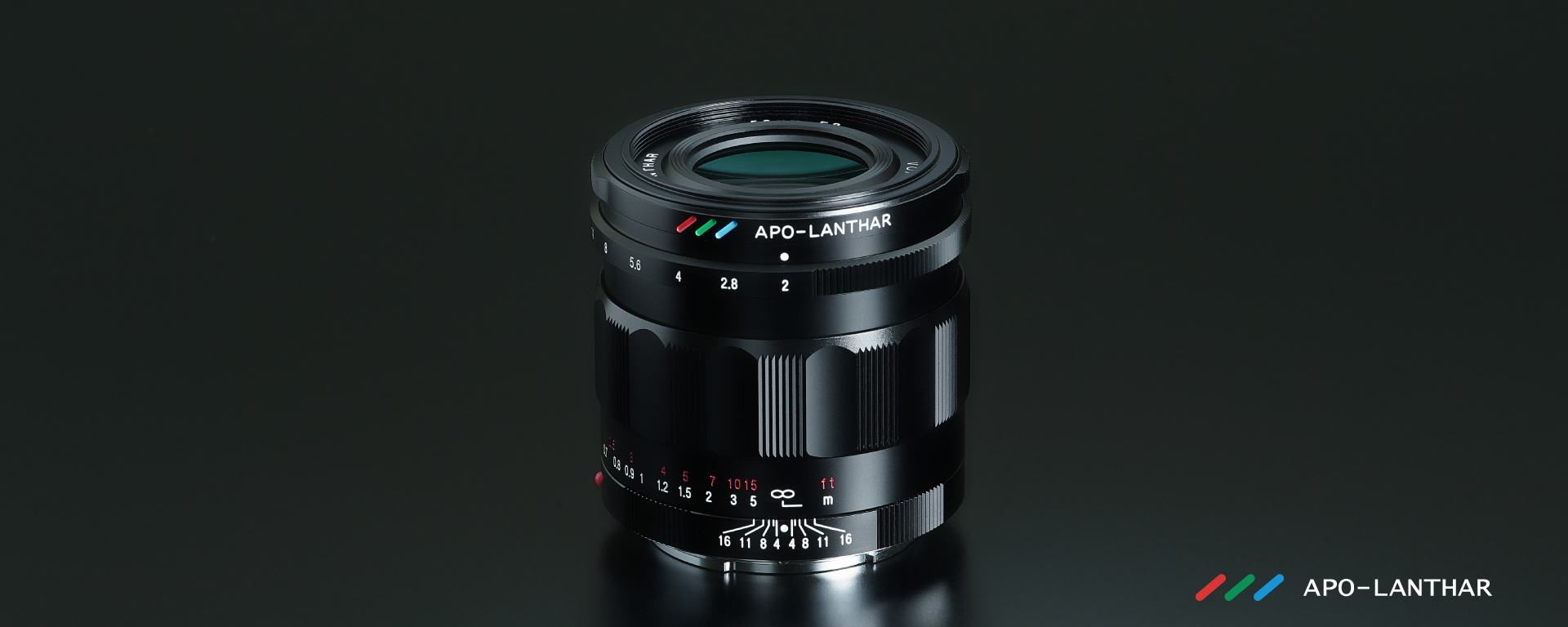
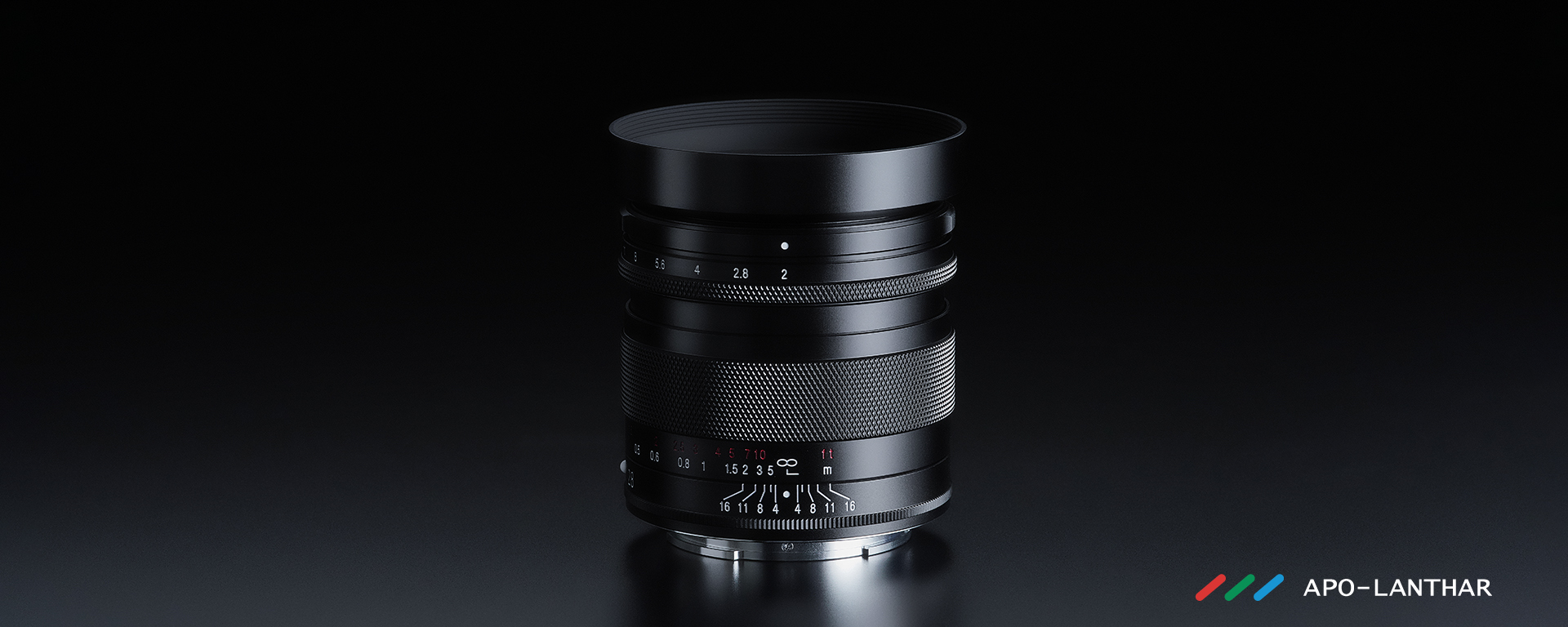
The VM 50/2 Apo Lanthar (10 elements in 8 groups) measures 62x61 mm and weighs 364 g. The Leica Apo Summicron 50/2 ASPH (8 elements in 5 groups) measures 53x47 mm and weighs 300 g.
The Apo-Lanthar is 1-1.5 cm larger/longer and weighs 64 grams more.
Is this a huge difference, considering the 6X price difference?
Ripolini wrote:
Is this a huge difference, considering the 6X price difference?
It is not a huge difference. And I like the Voigtlander's price. But I was just suggesting, in case the guys at Cosina are wondering what lens should they do next
I am not interested in any other focal lenghts, be they APO, Noktons or whatever
OscarF wrote:
Use an achromatic closeup lens when you want to get closer...
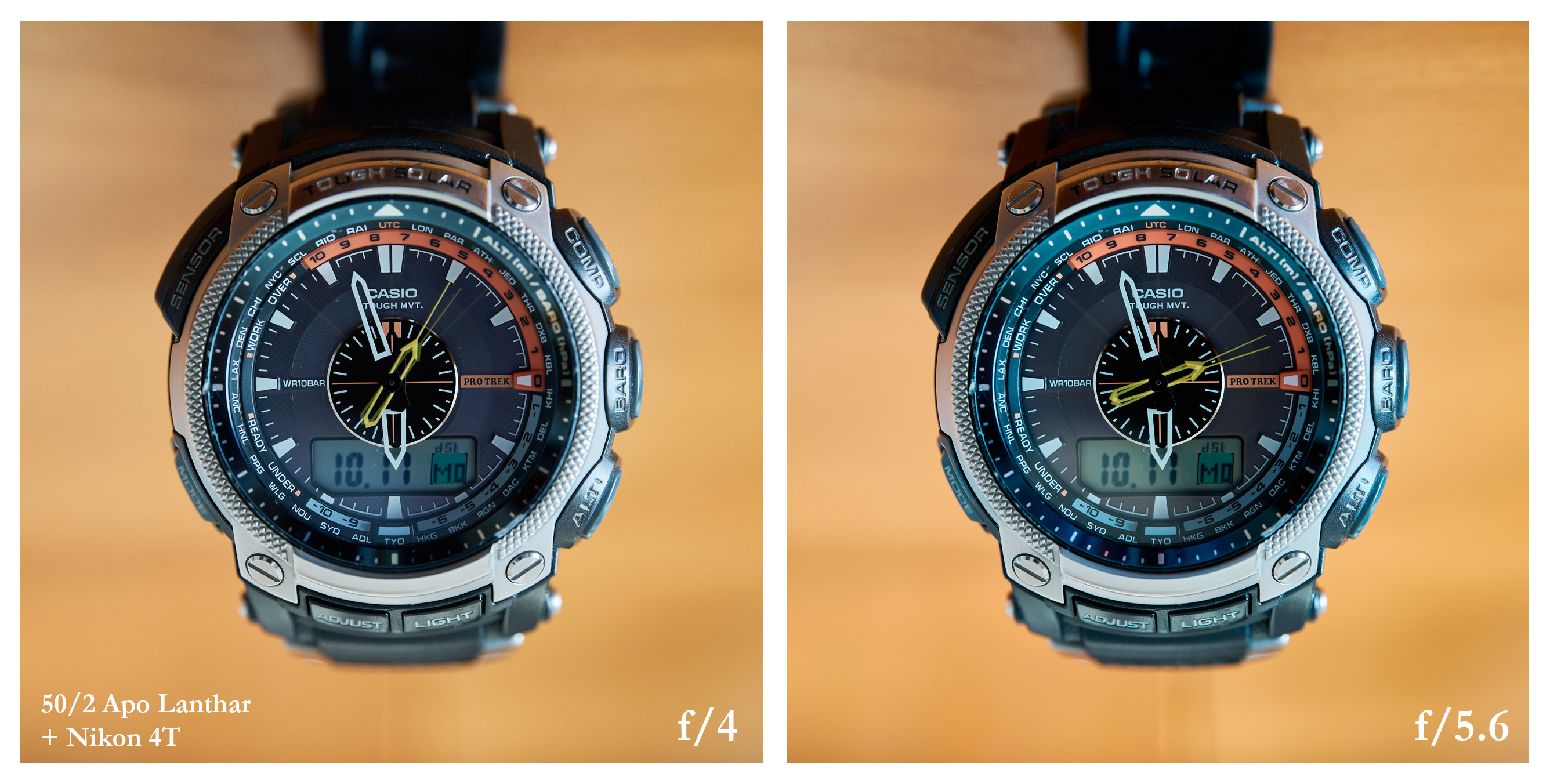
I tried my Nikon 4T achromat (2.9 diopters) with 50/2 AL.
Magnifications are in the 1:6.9-1:3.2 (0.145-0.313) range. However, the achromatic close-up lens induces i) quite evident field curvature (if I focus in the center, the borders are visibly out of focus, and vice-versa) and ii) spherical aberration with consequent focus shift (it's better to focus at the set aperture). Corners are never sharp enough; so other aberrations are induced by the close-up attachment filter.
Probably the more expensive Leica Elpro 52 could reduce such aberrations. However, the Elpro 52 is a 7.7 diopters close-up lens, and magnifications are most likely restricted to the same values attainable with the Leica Apo 50/2 ASPH, i.e. 1:2-1:2.6. A rather limited range.
Juha Kannisto wrote:
Fujiya Camera will release a limited edition Black Paint version of CV 50/2 APO-Lanthar VM on 20th of December to celebrate their 80th anniversary. Only 100 copies will be made. It also comes with a unique hood. I've never seen them release such special collaboration products before, but Map Camera has been doing such releases for a while with Cosina and some other companies.
Voigtlander APO-LANTHAR 50mm F2 Aspherical VM Black Paint Fujiya Camera 80th Anniversary Model | New Fujiya Camera Online Store https://share.google/zFyLLCojjMvvkBC1d
Reservations will start tomorrow 10am JST and price is not shown yet. I don't think they ship these internationally though maybe some Japanese Proxy exporter could work out....Show more →
the normal and black paint version has that "they're the same picture" The Office meme vibe. they could have at least made the filter ring blacked out (which is the common complaint on the current VM lenses)...somewhat disappointing.
dalegaspi wrote:
the normal and black paint version has that "they're the same picture" The Office meme vibe. they could have at least made the filter ring blacked out (which is the common complaint on the current VM lenses)...somewhat disappointing.
Apparently the black paint version is very glossy black, but on some product pics I agree that it looks quite similar to original. Probably depends on light conditions. The mounting part and the front hood attachment part are nickel-plated on this limited edition version but again it's not extremely noticeable difference in some product pics and might not solve all potential reflection issues.
I think they made this limited edition a bit too expensive at 178K yen (at least it comes with a hood in the box, and that is also similar glossy BP) while the original is 115200 (without hood). I thought it would cost just below 150K or something like that.
Personally I don't have any M-mount cameras and I have E-mount version of this lens so I'm not considering to buy this limited edition VM.
@OscarF + @Ripolini
At infinity, the CV50/2 has an FL of 50.3mm, according to Cosina's datasheet.
MFD is a measured 44.5cm, resulting in 1:6.3 and a FL of 52.5mm.
Here are magnifications for various pairings - values in brackets are calculated, the rest is measured.+10mm extension tube
infinity: (1:5)
MFD: (1:2.9)
Being a floating element lens, results with extension tubes are useable but not great. Off-axis astigmatism as well as field curvature becomes troublesome.
Results with the +0.75, +2 and +2.44 diopter achromat lenses are very good. There is some induced field curvature but it appears to be pretty minor.
While I haven't really compared them, I feel like the Canon 500D produces better results than the Leica Elpro 1 - but the Elpro 1 is much more pocketable.I use a 49-55mm step-up ring,
Egg Salad wrote:
Results with the +0.75, +2 and +2.44 diopter achromat lenses are very good. There is some induced field curvature but it appears to be pretty minor.
While I haven't really compared them, I feel like the Canon 500D produces better results than the Leica Elpro 1 - but the Elpro 1 is much more pocketable.I use a 49-55mm step-up ring,
Thanks for the great breakdown, Egg Salad!
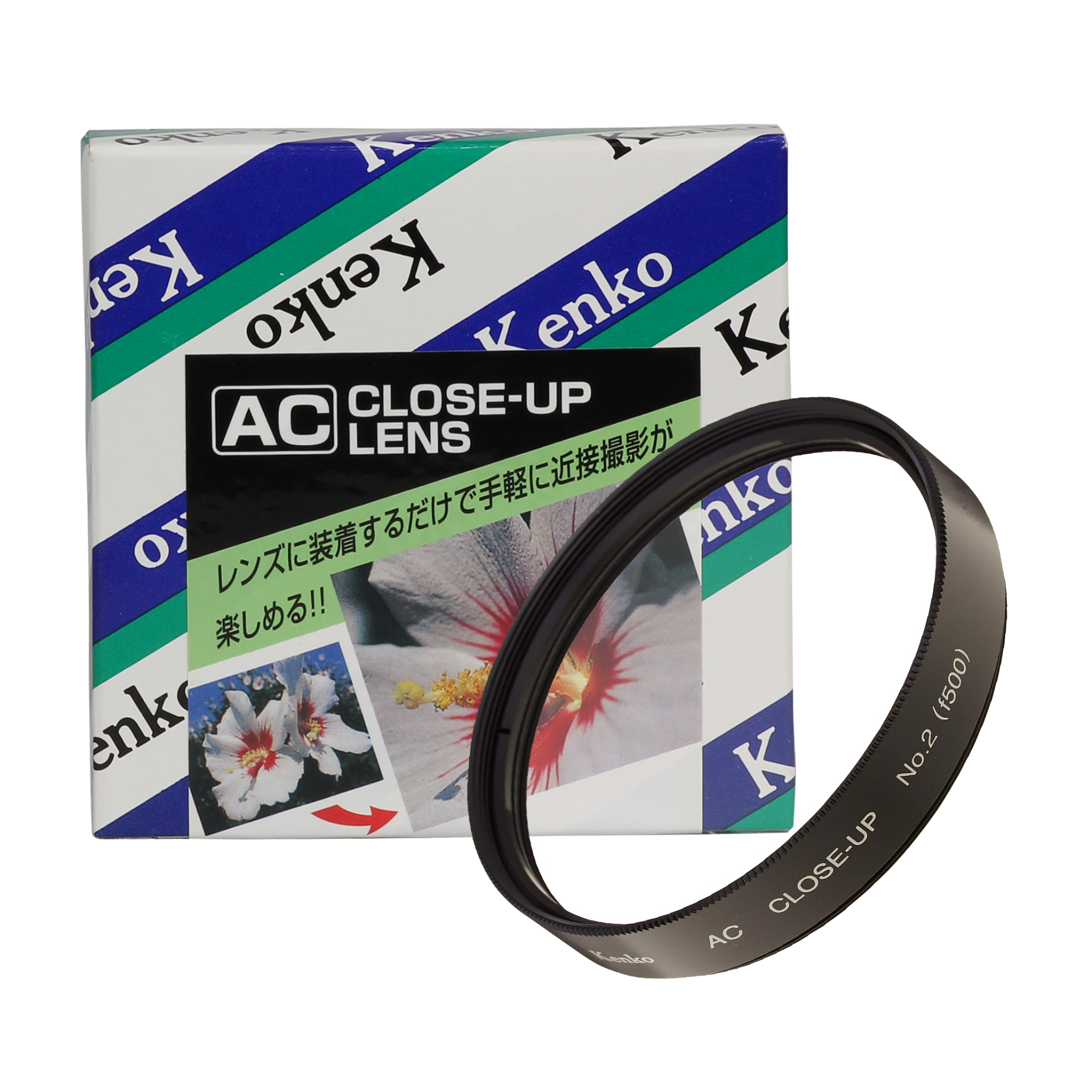
I just ordered the Kenko(/Tokina/Hoya>Ricoh/Pentax) Achromatic close up lens +2 diopter/49mm for $19.99 (sale + free shipping).
I'm curious to see how good or bad it is on a 50mm Apo Lanthar. For that price...?
jaygould wrote:
Has this lens been made obsolete by the Viltrox Air? The Viltrox has the same sharpness but is lighter, smaller, cheaper and has autofocus. Of course, if you really enjoy manual focus, the Voigtlander will give you a nicer experience... but other than that, does the CV do anything better that justifies the price tag?
It seems that edge to edge sharpness is no longer a premium feature. You can get it in many sub $200 lenses these days.
I have the Viltrox Air, it's a Tri-X lens, lots of crushed deep blacks with little detail. Nice toy if you can live with the AF limitations which are significant in AF-C, I'm enjoying it actually for its specific 'look' but not comparable in any way whatsoever to a Voigtlander Apo (my experience is with the 65mm) or indeed most higher end lenses for tonality. Sharpness and contrast do not make a lens except on test charts.
Lenses have their own character, but you may need plenty of side-by-sides to see differences in most everyday usage. Evidence matters for our claims, I believe, perhaps you could post an image here of lens-induced poor shadow detail?
It is likely the APO label will very soon mean even less than it currently does, particularly for general photography, and certainly for people work. It's because of the concept of 'acceptance thresholds' - once all lenses in a certain genre rise above that level of your performance criteria, the remaining differences mean less and less. When even pixel peepers have to multiply 100s of percent zoom to perceive a difference..
So many factors influence tonality and almost all can be ameliorated in post. APOs have a reputation for being unforgiving due to very high lens contrast. Tonal range is actually a feature of many new age Chinese lenses at all price points, due (I believe) to their copious use of dedicated HRI glass. And, probably, lead oxide. And lens symmetry.
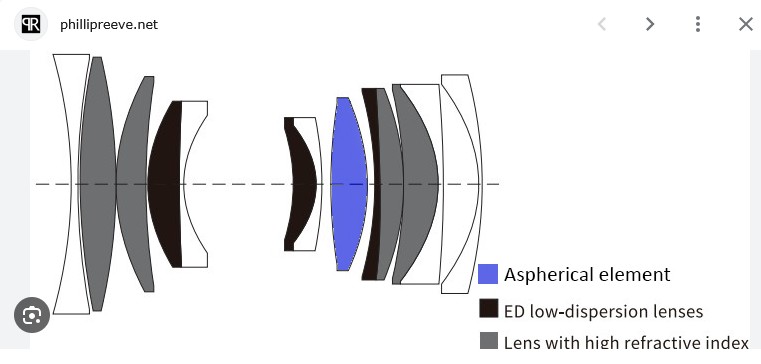
The Viltrox PRO 85mm f1,4, as an example, uses all of nine HRI elements with just three ED elements on the low dispersion side of the equation. The HRI comes last in the lens, indicating how much the company prioritises that part of the optical preparation. APOs are all about the last percent of color correction, at the expense of all else. This is apparent in the lens block diagrams of the 50/2 and 65/2 CV lenses, see all the APD glass under 'specifications':
Here is a rare side-by-side, of the AIR 50/2 and Sony's GM 50/1.2 (at f2):
..
..
These are all great lenses, but I don't like to see any of them dissed unfairly. They are very far from being toys, even if they don't suit your needs.
By the way, the price is low on many Chinese lenses because their economy is built around supply chain and production efficiencies, and increasing productivity. These naturally translate to lower production costs. These are passed on to consumers in the form of lower prices. Price is not an indicator of excellence here. The AIR series is well-positioned as an entry level lens to the Viltrox system and by extrapolation, the Chinese optical aesthetic. This broadens the field of photographic lenses, some of us think this greater choice is a good thing.
Below, we see in the AIR lens's block diagram a fine symmetry, and this is another frequently seen Chinese optical trait - they steadily correct the lens throughout the lens design using distributed HRI/ED glass. The diagram shows the group structure of the lens - each ED element is balanced in an achromat doublet by normal optical grade glass (two of them) and a HRI element (the other one). The high refractive index glass begins and ends the design, with two elements of it at each end.
It's a very different signature to those used by the established lens makers. ED needs careful handling, as does APD (a related dispersion reduction method). Especially if 3D matters to you. A 13/9 lens gave them plenty of correction via element progression, where the CV 50/2 APO is a 10/8 design made less complex primarily for Leica M (the 'target mount'), as are all recent FF Cosina lenses. The AIR gets a 58mm filter against the 49mm filter of the Voigtlander - larger diameter lenses are easier to design, see Otus, SL, pro primes, etc.
..
philip_pj wrote:
A 13/9 lens gave them plenty of correction via element progression, where the CV 50/2 APO is a 10/8 design made less complex primarily for Leica M (the 'target mount'), as are all recent FF Cosina lenses.
You're kind of breezing past the fact that the Leica M (the 'target mount') CV 50/2 APO design had considerably less ED glass than the Sony mount redesign. And Japanese brands never indicate HRI elements in their optical diagrams so one doesn't know how their glasses are balanced or what the progression might be.