Light Lens Lab (LLL) replica lenses discussion & image thread
p.71 #1Light Lens Lab (LLL) replica lenses discussion & image thread
I thought it was pretty cool that my lens has the serial number 105/300, and it’s the same one LLL used for a titanium sample image on their site! 
https://lightlenslab.com/products/light-lens-lab-50mm-1-2-asph-1966
https://lightlenslab.com/products/light-lens-lab-50mm-1-2-asph-1966
Feb 12, 2025 at 08:56 PM
p.71 #2Light Lens Lab (LLL) replica lenses discussion & image thread
Fred Miranda wrote:
Surprisingly, the Titanium version is not much heavier than the Black Aluminum. I just weighed it, and it is only 473 grams (lens only).
Is it actually made from titanium, or just titanium finish?
Surprisingly, the Titanium version is not much heavier than the Black Aluminum. I just weighed it, and it is only 473 grams (lens only).
Is it actually made from titanium, or just titanium finish?
Feb 12, 2025 at 10:29 PM
p.71 #3Light Lens Lab (LLL) replica lenses discussion & image thread
Fred Miranda wrote:
Just picked up an LLL 50/1.2 Noctilux Titanium from a fellow FM member and received it just now. The weather is miserable here in San Clemente, but I still took it out in light rain for a quick test. Snapped three shots and really like the rendering so far. (No post-processing, just used Adobe 'Color' profile)
Focus transitions are smoother than the Leica 50/1 Noct, but this also makes the extreme field curvature more noticeable. There is definitely some CA.
The build quality is impeccable. Perfect RF alignment, and the focusing ring is buttery smooth. Unlike my Leica 50/1 Noct, even...Show more →
Congratulations on the lens, I have the black aluminium version and am very fond of it, it’s my main lens on the Zf now. Its rendering is gorgeous and is making me appreciate a more creamy bokeh than what I usually like. The draw is exquisite with that one and it orangeflares at all apertures, what a treat.
Feb 13, 2025 at 03:00 AM
p.71 #4Light Lens Lab (LLL) replica lenses discussion & image thread
rscheffler wrote:
Is it actually made from titanium, or just titanium finish?
Hi Ron,
It feels different from aluminum. According to Light Lens Lab, the lens body is made of titanium and painted titanium gray. This sets it apart from many Leica 'Titanium' lenses, which are actually aluminum with a gray paint finish.
Fred Miranda wrote
Surprisingly, the Titanium version is not much heavier than the Black Aluminum. I just weighed it, and it is only 473 grams (lens only).Hi Ron,
It feels different from aluminum. According to Light Lens Lab, the lens body is made of titanium and painted titanium gray. This sets it apart from many Leica 'Titanium' lenses, which are actually aluminum with a gray paint finish.
Feb 13, 2025 at 08:56 AM
p.71 #5Light Lens Lab (LLL) replica lenses discussion & image thread
_jim_ wrote:
I received my copy of the LLL '1966' 50mm f/1.2 yesterday. It's a bit dreary this time of year in the beautiful Pacific Northwest, so it might be a few days before I can shoot/develop/scan photos. Here are my initial impressions of the lens, in-hand and as shot on a Sony A7rII. I have a black paint brass copy.
https://live.staticflickr.com/65535/53432008710_d21fa2b810_b.jpgLLL 1966 50mm f/1.2 by Jim Fischer, on Flickr
https://live.staticflickr.com/65535/53430654867_b905301727_b.jpgLLL 1966 50mm f/1.2 by Jim Fischer, on Flickr
Build Quality:
Exceptional. This is the nicest of the LLL lenses I have used. Tolerances are tight. The engraving and painting is clean. The quality of the...Show more →
Hi Jim,
I was revisiting your initial impressions of the LLL 50/1.2 now that I have one as well. That is a great breakdown of the pros and cons!
So far, I think much of the character comes from the strong coma, astigmatism, and pronounced field curvature. I found the outlining of specular highlights to be well controlled for a double-Gauss design. I have not noticed onion rings yet, but I know they will show up in high-contrast lighting. To me, it is obvious this was a characteristic of the original Leica, since only modern grinding techniques have minimized aspherical structure. In that sense, I feel it is part of the original character and something to embrace.
It is funny how LLL got the weight wrong on their website. Maybe they included the hood in their measurements. Your brass version weighs 560g, but they list it at 632g. Mine is titanium, supposedly 506g, but it actually weighs 473g. Not that I am complaining.
One more thing I noticed is that the LLL version seems to have 15 aperture blades, not 16 like everyone keeps saying.
Feb 13, 2025 at 09:14 AM
p.71 #6Light Lens Lab (LLL) replica lenses discussion & image thread
Fred Miranda wrote:
https://live.staticflickr.com/65535/53432008710_d21fa2b810_b.jpgLLL 1966 50mm f/1.2 by Jim Fischer, on Flickr
https://live.staticflickr.com/65535/53430654867_b905301727_b.jpgLLL 1966 50mm f/1.2 by Jim Fischer, on Flickr
Build Quality:
Exceptional. This is the nicest of the LLL lenses I have used. Tolerances are tight. The engraving and painting is clean. The quality of the black paint is not glossy (like the 8-Element), but beautifully matte. The 16-blade aperture is smooth with good resistance and distinct clicks (unlike my 8-Element and Elcan copies...more like the SPII I handled). The focus ring turns very smoothly with good resistance, as well. The lens caps (both front and back) appear to made of brass (unlike the prior LLL lenses which have aluminum caps). The included hood is brass and beautifully made (albeit true to the original and comically large). Without caps/hood, the lens weighs almost 560 grams. It ships with an ND4 (in it's own case), a hood (w/ Series VIII UV filter), and a light fawn colored leather case (which is also very attractive). The impression, in-hand, is of a very dense, compact lens of the highest construction standards.
Initial Impression Image Pros:
* Extremely smooth, but intensely characterful bokeh. Other than the appealing size, this is the raison d'etre for this lens. There is swirl and vignetting and the wildest astigmatism (that is extremely divergent in the sagittal and tangential planes...I feel like this is a big part of the look).
* Enough resolution on-center, wide-open with a bit of glow. Unlike, say, the Nikkor 50mm f/1.2 ai-s, the jump between 1.2 and 1.4 on the LLL is obvious. Image contrast and resolution are markedly better at 1.4 on the '1966.' It is also quite sharp stopped down.
* Focus shift is not apparent (this is a relief).
* Decent flare resistance for a single-coated large aperture lens.
Initial Impression Image Cons:
* Onion Rings. I was a little afraid of this. I don't know if the original Leica 50mm f/1.2 exhibited this degree of aspherical structure in the out-of-focus highlights, but the Leica re-issue does not (at least from what I've seen). Perhaps, this is the trade-off of hand-grinding aspheres. It reminds of some images I've seen from the Noct-Nikkor and Canon K35 Cine lenses (specifically the 35mm). I don't want to post samples yet, but it reminds me of my previous-most-onion-ringy lens - the Voigtlander 35mm f/1.2 Nokton V1...which looked like this:
https://live.staticflickr.com/3291/2415617630_df46ca8bfb_b.jpgJenny at Salsa La by Jim Fischer, on Flickr
Zeiss Ikon ZM, Voigtlander 35mm f/1.2 Nokton V1, Kodak NC 160.
And, I guess, I didn't even know to fret over such things when I took this image in 2008. Lol. Perhaps I can learn to not worry about the the rings in my new LLL lens.
*Geometric distortion. I knew to expect this. It's a lot, but probably won't distract much in most cases.
At any rate, the pros seem to out weight the cons (at least initially). I am excited to get out and use the lens. LLL should be very proud of what they've accomplished. This is a seriously beautiful optic.Hi Jim,
I was revisiting your initial impressions of the LLL 50/1.2 now that I have one as well. That is a great breakdown of the pros and cons!
My take so far is that much of the character comes from the high coma, astigmatism, and extreme field curvature. I thought outlining was pretty well controlled for a double-Gauss design. I have not noticed onion rings yet, but I know they will show up in high-contrast lighting. To me, it is obvious this was a characteristic of the original Leica, since only modern grinding techniques have minimized aspherical structure. In that...Show more →
Wow! You are 1,000% correct - 15 blades. I guess I never took the time to count
I am excited to see your results. I think it will play very nice with digital where you can have instant feedback for focusing. On film, I find it hard to consistently hit focus. I have way fewer issues with the f/1 Nokton or the f/1 Noctilux. That being said, the image quality is completely unique. I can't imagine ever selling it.
 Jenny by Jim Fischer, on Flickr
 Jenny by Jim Fischer, on Flickr
 Jenny by Jim Fischer, on Flickr
 Jenny by Jim Fischer, on Flickr
Leica M5, Light Lens Lab 50mm f/1.2 '1966,' Flic Film Aurora 800.
_jim_ wrote
I received my copy of the LLL '1966' 50mm f/1.2 yesterday. It's a bit dreary this time of year in the beautiful Pacific Northwest, so it might be a few days before I can shoot/develop/scan photos. Here are my initial impressions of the lens, in-hand and as shot on a Sony A7rII. I have a black paint brass copy.https://live.staticflickr.com/65535/53432008710_d21fa2b810_b.jpgLLL 1966 50mm f/1.2 by Jim Fischer, on Flickr
https://live.staticflickr.com/65535/53430654867_b905301727_b.jpgLLL 1966 50mm f/1.2 by Jim Fischer, on Flickr
Build Quality:
Exceptional. This is the nicest of the LLL lenses I have used. Tolerances are tight. The engraving and painting is clean. The quality of the black paint is not glossy (like the 8-Element), but beautifully matte. The 16-blade aperture is smooth with good resistance and distinct clicks (unlike my 8-Element and Elcan copies...more like the SPII I handled). The focus ring turns very smoothly with good resistance, as well. The lens caps (both front and back) appear to made of brass (unlike the prior LLL lenses which have aluminum caps). The included hood is brass and beautifully made (albeit true to the original and comically large). Without caps/hood, the lens weighs almost 560 grams. It ships with an ND4 (in it's own case), a hood (w/ Series VIII UV filter), and a light fawn colored leather case (which is also very attractive). The impression, in-hand, is of a very dense, compact lens of the highest construction standards.
Initial Impression Image Pros:
* Extremely smooth, but intensely characterful bokeh. Other than the appealing size, this is the raison d'etre for this lens. There is swirl and vignetting and the wildest astigmatism (that is extremely divergent in the sagittal and tangential planes...I feel like this is a big part of the look).
* Enough resolution on-center, wide-open with a bit of glow. Unlike, say, the Nikkor 50mm f/1.2 ai-s, the jump between 1.2 and 1.4 on the LLL is obvious. Image contrast and resolution are markedly better at 1.4 on the '1966.' It is also quite sharp stopped down.
* Focus shift is not apparent (this is a relief).
* Decent flare resistance for a single-coated large aperture lens.
Initial Impression Image Cons:
* Onion Rings. I was a little afraid of this. I don't know if the original Leica 50mm f/1.2 exhibited this degree of aspherical structure in the out-of-focus highlights, but the Leica re-issue does not (at least from what I've seen). Perhaps, this is the trade-off of hand-grinding aspheres. It reminds of some images I've seen from the Noct-Nikkor and Canon K35 Cine lenses (specifically the 35mm). I don't want to post samples yet, but it reminds me of my previous-most-onion-ringy lens - the Voigtlander 35mm f/1.2 Nokton V1...which looked like this:
https://live.staticflickr.com/3291/2415617630_df46ca8bfb_b.jpgJenny at Salsa La by Jim Fischer, on Flickr
Zeiss Ikon ZM, Voigtlander 35mm f/1.2 Nokton V1, Kodak NC 160.
And, I guess, I didn't even know to fret over such things when I took this image in 2008. Lol. Perhaps I can learn to not worry about the the rings in my new LLL lens.
*Geometric distortion. I knew to expect this. It's a lot, but probably won't distract much in most cases.
At any rate, the pros seem to out weight the cons (at least initially). I am excited to get out and use the lens. LLL should be very proud of what they've accomplished. This is a seriously beautiful optic.
I was revisiting your initial impressions of the LLL 50/1.2 now that I have one as well. That is a great breakdown of the pros and cons!
My take so far is that much of the character comes from the high coma, astigmatism, and extreme field curvature. I thought outlining was pretty well controlled for a double-Gauss design. I have not noticed onion rings yet, but I know they will show up in high-contrast lighting. To me, it is obvious this was a characteristic of the original Leica, since only modern grinding techniques have minimized aspherical structure. In that...Show more →
Wow! You are 1,000% correct - 15 blades. I guess I never took the time to count
I am excited to see your results. I think it will play very nice with digital where you can have instant feedback for focusing. On film, I find it hard to consistently hit focus. I have way fewer issues with the f/1 Nokton or the f/1 Noctilux. That being said, the image quality is completely unique. I can't imagine ever selling it.
Jenny by Jim Fischer, on FlickrJenny by Jim Fischer, on FlickrJenny by Jim Fischer, on FlickrJenny by Jim Fischer, on FlickrLeica M5, Light Lens Lab 50mm f/1.2 '1966,' Flic Film Aurora 800.
Feb 13, 2025 at 10:09 AM
p.71 #7Light Lens Lab (LLL) replica lenses discussion & image thread
_jim_ wrote:
https://live.staticflickr.com/65535/53432008710_d21fa2b810_b.jpgLLL 1966 50mm f/1.2 by Jim Fischer, on Flickr
https://live.staticflickr.com/65535/53430654867_b905301727_b.jpgLLL 1966 50mm f/1.2 by Jim Fischer, on Flickr
Build Quality:
Exceptional. This is the nicest of the LLL lenses I have used. Tolerances are tight. The engraving and painting is clean. The quality of the black paint is not glossy (like the 8-Element), but beautifully matte. The 16-blade aperture is smooth with good resistance and distinct clicks (unlike my 8-Element and Elcan copies...more like the SPII I handled). The focus ring turns very smoothly with good resistance, as well. The lens caps (both front and back) appear to made of brass (unlike the prior LLL lenses which have aluminum caps). The included hood is brass and beautifully made (albeit true to the original and comically large). Without caps/hood, the lens weighs almost 560 grams. It ships with an ND4 (in it's own case), a hood (w/ Series VIII UV filter), and a light fawn colored leather case (which is also very attractive). The impression, in-hand, is of a very dense, compact lens of the highest construction standards.
Initial Impression Image Pros:
* Extremely smooth, but intensely characterful bokeh. Other than the appealing size, this is the raison d'etre for this lens. There is swirl and vignetting and the wildest astigmatism (that is extremely divergent in the sagittal and tangential planes...I feel like this is a big part of the look).
* Enough resolution on-center, wide-open with a bit of glow. Unlike, say, the Nikkor 50mm f/1.2 ai-s, the jump between 1.2 and 1.4 on the LLL is obvious. Image contrast and resolution are markedly better at 1.4 on the '1966.' It is also quite sharp stopped down.
* Focus shift is not apparent (this is a relief).
* Decent flare resistance for a single-coated large aperture lens.
Initial Impression Image Cons:
* Onion Rings. I was a little afraid of this. I don't know if the original Leica 50mm f/1.2 exhibited this degree of aspherical structure in the out-of-focus highlights, but the Leica re-issue does not (at least from what I've seen). Perhaps, this is the trade-off of hand-grinding aspheres. It reminds of some images I've seen from the Noct-Nikkor and Canon K35 Cine lenses (specifically the 35mm). I don't want to post samples yet, but it reminds me of my previous-most-onion-ringy lens - the Voigtlander 35mm f/1.2 Nokton V1...which looked like this:
https://live.staticflickr.com/3291/2415617630_df46ca8bfb_b.jpgJenny at Salsa La by Jim Fischer, on Flickr
Zeiss Ikon ZM, Voigtlander 35mm f/1.2 Nokton V1, Kodak NC 160.
And, I guess, I didn't even know to fret over such things when I took this image in 2008. Lol. Perhaps I can learn to not worry about the the rings in my new LLL lens.
*Geometric distortion. I knew to expect this. It's a lot, but probably won't distract much in most cases.
At any rate, the pros seem to out weight the cons (at least initially). I am excited to get out and use the lens. LLL should be very proud of what they've accomplished. This is a seriously beautiful optic.Hi Jim,
I was revisiting your initial impressions of the LLL 50/1.2 now that I have one as well. That is a great breakdown of the pros and cons!
My take so far is that much of the character comes from the high coma, astigmatism, and extreme field curvature. I thought outlining was pretty well controlled for a double-Gauss design. I have not noticed onion rings yet, but I know they will show up in high-contrast lighting. To me, it is obvious this was a characteristic of the original Leica, since only modern grinding techniques have minimized aspherical structure. In that sense, I feel it is part of the original character and something to embrace.
It is funny how LLL got the weight wrong on their website. Maybe they included the hood in their measurements. Your brass version weighs 560g, but they list it at 632g. Mine is titanium, supposedly 506g, but it actually weighs 473g. Not that I am complaining.
One more thing I noticed is that the LLL version seems to have 15 aperture blades, not 16 like everyone keeps saying.Wow! You are 1,000% correct - 15 blades. I guess I never took the time to count
I am excited to see your results. I think it will play very nice with digital where you can have instant feedback for focusing. On film, I find it hard to consistently hit focus. I have way fewer issues with the f/1 Nokton or the f/1 Noctilux. That being said, the image quality is completely unique. I can't imagine ever selling it.
https://live.staticflickr.com/65535/54158387664_6493ac673a_b.jpgJenny by Jim Fischer, on Flickr
https://live.staticflickr.com/65535/54158182545_faaac39c99_b.jpgJenny by Jim Fischer, on Flickr
https://live.staticflickr.com/65535/54158555495_99f2844e29_b.jpgJenny by Jim Fischer, on Flickr
https://live.staticflickr.com/65535/54153381297_c22ef4b3a7_b.jpgJenny by Jim Fischer, on...Show more →
Your film images look great. I can’t wait to try the lens on my Leica M3.
I did a bit of searching and found images from the original Leica 50/1.2 Noct, which also show structure in the specular highlights. In that regard, the Light Lens Lab version should render closer to the original than the reissue, even though it is not a characteristic most people prefer. The same goes for axial CA, which also seems to replicate the original.
Here is some samples showing the onion ring pattern from the original Leica 50/1.2 Noct:
https://www.flickr.com/photos/49945028@N06/8002902900/sizes/k/
https://www.flickr.com/photos/49945028@N06/8116331267/sizes/k/
https://www.flickr.com/photos/fotopiahk/9424522623/sizes/3k/
Fred Miranda wrote
_jim_ wrote
I received my copy of the LLL '1966' 50mm f/1.2 yesterday. It's a bit dreary this time of year in the beautiful Pacific Northwest, so it might be a few days before I can shoot/develop/scan photos. Here are my initial impressions of the lens, in-hand and as shot on a Sony A7rII. I have a black paint brass copy.https://live.staticflickr.com/65535/53432008710_d21fa2b810_b.jpgLLL 1966 50mm f/1.2 by Jim Fischer, on Flickr
https://live.staticflickr.com/65535/53430654867_b905301727_b.jpgLLL 1966 50mm f/1.2 by Jim Fischer, on Flickr
Build Quality:
Exceptional. This is the nicest of the LLL lenses I have used. Tolerances are tight. The engraving and painting is clean. The quality of the black paint is not glossy (like the 8-Element), but beautifully matte. The 16-blade aperture is smooth with good resistance and distinct clicks (unlike my 8-Element and Elcan copies...more like the SPII I handled). The focus ring turns very smoothly with good resistance, as well. The lens caps (both front and back) appear to made of brass (unlike the prior LLL lenses which have aluminum caps). The included hood is brass and beautifully made (albeit true to the original and comically large). Without caps/hood, the lens weighs almost 560 grams. It ships with an ND4 (in it's own case), a hood (w/ Series VIII UV filter), and a light fawn colored leather case (which is also very attractive). The impression, in-hand, is of a very dense, compact lens of the highest construction standards.
Initial Impression Image Pros:
* Extremely smooth, but intensely characterful bokeh. Other than the appealing size, this is the raison d'etre for this lens. There is swirl and vignetting and the wildest astigmatism (that is extremely divergent in the sagittal and tangential planes...I feel like this is a big part of the look).
* Enough resolution on-center, wide-open with a bit of glow. Unlike, say, the Nikkor 50mm f/1.2 ai-s, the jump between 1.2 and 1.4 on the LLL is obvious. Image contrast and resolution are markedly better at 1.4 on the '1966.' It is also quite sharp stopped down.
* Focus shift is not apparent (this is a relief).
* Decent flare resistance for a single-coated large aperture lens.
Initial Impression Image Cons:
* Onion Rings. I was a little afraid of this. I don't know if the original Leica 50mm f/1.2 exhibited this degree of aspherical structure in the out-of-focus highlights, but the Leica re-issue does not (at least from what I've seen). Perhaps, this is the trade-off of hand-grinding aspheres. It reminds of some images I've seen from the Noct-Nikkor and Canon K35 Cine lenses (specifically the 35mm). I don't want to post samples yet, but it reminds me of my previous-most-onion-ringy lens - the Voigtlander 35mm f/1.2 Nokton V1...which looked like this:
https://live.staticflickr.com/3291/2415617630_df46ca8bfb_b.jpgJenny at Salsa La by Jim Fischer, on Flickr
Zeiss Ikon ZM, Voigtlander 35mm f/1.2 Nokton V1, Kodak NC 160.
And, I guess, I didn't even know to fret over such things when I took this image in 2008. Lol. Perhaps I can learn to not worry about the the rings in my new LLL lens.
*Geometric distortion. I knew to expect this. It's a lot, but probably won't distract much in most cases.
At any rate, the pros seem to out weight the cons (at least initially). I am excited to get out and use the lens. LLL should be very proud of what they've accomplished. This is a seriously beautiful optic.
I was revisiting your initial impressions of the LLL 50/1.2 now that I have one as well. That is a great breakdown of the pros and cons!
My take so far is that much of the character comes from the high coma, astigmatism, and extreme field curvature. I thought outlining was pretty well controlled for a double-Gauss design. I have not noticed onion rings yet, but I know they will show up in high-contrast lighting. To me, it is obvious this was a characteristic of the original Leica, since only modern grinding techniques have minimized aspherical structure. In that sense, I feel it is part of the original character and something to embrace.
It is funny how LLL got the weight wrong on their website. Maybe they included the hood in their measurements. Your brass version weighs 560g, but they list it at 632g. Mine is titanium, supposedly 506g, but it actually weighs 473g. Not that I am complaining.
One more thing I noticed is that the LLL version seems to have 15 aperture blades, not 16 like everyone keeps saying.
I am excited to see your results. I think it will play very nice with digital where you can have instant feedback for focusing. On film, I find it hard to consistently hit focus. I have way fewer issues with the f/1 Nokton or the f/1 Noctilux. That being said, the image quality is completely unique. I can't imagine ever selling it.
https://live.staticflickr.com/65535/54158387664_6493ac673a_b.jpgJenny by Jim Fischer, on Flickr
https://live.staticflickr.com/65535/54158182545_faaac39c99_b.jpgJenny by Jim Fischer, on Flickr
https://live.staticflickr.com/65535/54158555495_99f2844e29_b.jpgJenny by Jim Fischer, on Flickr
https://live.staticflickr.com/65535/54153381297_c22ef4b3a7_b.jpgJenny by Jim Fischer, on...Show more →
Your film images look great. I can’t wait to try the lens on my Leica M3.
I did a bit of searching and found images from the original Leica 50/1.2 Noct, which also show structure in the specular highlights. In that regard, the Light Lens Lab version should render closer to the original than the reissue, even though it is not a characteristic most people prefer. The same goes for axial CA, which also seems to replicate the original.
Here is some samples showing the onion ring pattern from the original Leica 50/1.2 Noct:
https://www.flickr.com/photos/49945028@N06/8002902900/sizes/k/
https://www.flickr.com/photos/49945028@N06/8116331267/sizes/k/
https://www.flickr.com/photos/fotopiahk/9424522623/sizes/3k/
Feb 13, 2025 at 10:20 AM
p.71 #8Light Lens Lab (LLL) replica lenses discussion & image thread
Fred Miranda wrote:
https://live.staticflickr.com/65535/53432008710_d21fa2b810_b.jpgLLL 1966 50mm f/1.2 by Jim Fischer, on Flickr
https://live.staticflickr.com/65535/53430654867_b905301727_b.jpgLLL 1966 50mm f/1.2 by Jim Fischer, on Flickr
Build Quality:
Exceptional. This is the nicest of the LLL lenses I have used. Tolerances are tight. The engraving and painting is clean. The quality of the black paint is not glossy (like the 8-Element), but beautifully matte. The 16-blade aperture is smooth with good resistance and distinct clicks (unlike my 8-Element and Elcan copies...more like the SPII I handled). The focus ring turns very smoothly with good resistance, as well. The lens caps (both front and back) appear to made of brass (unlike the prior LLL lenses which have aluminum caps). The included hood is brass and beautifully made (albeit true to the original and comically large). Without caps/hood, the lens weighs almost 560 grams. It ships with an ND4 (in it's own case), a hood (w/ Series VIII UV filter), and a light fawn colored leather case (which is also very attractive). The impression, in-hand, is of a very dense, compact lens of the highest construction standards.
Initial Impression Image Pros:
* Extremely smooth, but intensely characterful bokeh. Other than the appealing size, this is the raison d'etre for this lens. There is swirl and vignetting and the wildest astigmatism (that is extremely divergent in the sagittal and tangential planes...I feel like this is a big part of the look).
* Enough resolution on-center, wide-open with a bit of glow. Unlike, say, the Nikkor 50mm f/1.2 ai-s, the jump between 1.2 and 1.4 on the LLL is obvious. Image contrast and resolution are markedly better at 1.4 on the '1966.' It is also quite sharp stopped down.
* Focus shift is not apparent (this is a relief).
* Decent flare resistance for a single-coated large aperture lens.
Initial Impression Image Cons:
* Onion Rings. I was a little afraid of this. I don't know if the original Leica 50mm f/1.2 exhibited this degree of aspherical structure in the out-of-focus highlights, but the Leica re-issue does not (at least from what I've seen). Perhaps, this is the trade-off of hand-grinding aspheres. It reminds of some images I've seen from the Noct-Nikkor and Canon K35 Cine lenses (specifically the 35mm). I don't want to post samples yet, but it reminds me of my previous-most-onion-ringy lens - the Voigtlander 35mm f/1.2 Nokton V1...which looked like this:
https://live.staticflickr.com/3291/2415617630_df46ca8bfb_b.jpgJenny at Salsa La by Jim Fischer, on Flickr
Zeiss Ikon ZM, Voigtlander 35mm f/1.2 Nokton V1, Kodak NC 160.
And, I guess, I didn't even know to fret over such things when I took this image in 2008. Lol. Perhaps I can learn to not worry about the the rings in my new LLL lens.
*Geometric distortion. I knew to expect this. It's a lot, but probably won't distract much in most cases.
At any rate, the pros seem to out weight the cons (at least initially). I am excited to get out and use the lens. LLL should be very proud of what they've accomplished. This is a seriously beautiful optic.Hi Jim,
I was revisiting your initial impressions of the LLL 50/1.2 now that I have one as well. That is a great breakdown of the pros and cons!
My take so far is that much of the character comes from the high coma, astigmatism, and extreme field curvature. I thought outlining was pretty well controlled for a double-Gauss design. I have not noticed onion rings yet, but I know they will show up in high-contrast lighting. To me, it is obvious this was a characteristic of the original Leica, since only modern grinding techniques have minimized aspherical structure. In that sense, I feel it is part of the original character and something to embrace.
It is funny how LLL got the weight wrong on their website. Maybe they included the hood in their measurements. Your brass version weighs 560g, but they list it at 632g. Mine is titanium, supposedly 506g, but it actually weighs 473g. Not that I am complaining.
One more thing I noticed is that the LLL version seems to have 15 aperture blades, not 16 like everyone keeps saying.Wow! You are 1,000% correct - 15 blades. I guess I never took the time to count
I am excited to see your results. I think it will play very nice with digital where you can have instant feedback for focusing. On film, I find it hard to consistently hit focus. I have way fewer issues with the f/1 Nokton or the f/1 Noctilux. That being said, the image quality is completely unique. I can't imagine ever selling it.
https://live.staticflickr.com/65535/54158387664_6493ac673a_b.jpgJenny by Jim Fischer, on Flickr
https://live.staticflickr.com/65535/54158182545_faaac39c99_b.jpgJenny by Jim Fischer, on Flickr
https://live.staticflickr.com/65535/54158555495_99f2844e29_b.jpgJenny by Jim Fischer, on Flickr
https://live.staticflickr.com/65535/54153381297_c22ef4b3a7_b.jpgJenny by Jim Fischer, on Flickr
Leica M5, Light Lens Lab 50mm f/1.2 '1966,' Flic Film Aurora 800.Your film images look great. I can’t wait to try the lens on my Leica M3.
I did a bit of searching and found images from the original Leica 50/1.2 Noct, which also show structure in the specular highlights. In that regard, the Light Lens Lab version should render closer to the original than the reissue, even though it is not a characteristic most people prefer. The same goes for axial CA, which also seems to replicate the original.
Here is a sample from the original:
https://www.flickr.com/photos/49945028@N06/8002902900/sizes/k/
Interesting! So few of the originals exist...so it has been hard to find much photographic output from them. Thanks for sharing this image.
_jim_ wrote
Fred Miranda wrote
_jim_ wrote
I received my copy of the LLL '1966' 50mm f/1.2 yesterday. It's a bit dreary this time of year in the beautiful Pacific Northwest, so it might be a few days before I can shoot/develop/scan photos. Here are my initial impressions of the lens, in-hand and as shot on a Sony A7rII. I have a black paint brass copy.https://live.staticflickr.com/65535/53432008710_d21fa2b810_b.jpgLLL 1966 50mm f/1.2 by Jim Fischer, on Flickr
https://live.staticflickr.com/65535/53430654867_b905301727_b.jpgLLL 1966 50mm f/1.2 by Jim Fischer, on Flickr
Build Quality:
Exceptional. This is the nicest of the LLL lenses I have used. Tolerances are tight. The engraving and painting is clean. The quality of the black paint is not glossy (like the 8-Element), but beautifully matte. The 16-blade aperture is smooth with good resistance and distinct clicks (unlike my 8-Element and Elcan copies...more like the SPII I handled). The focus ring turns very smoothly with good resistance, as well. The lens caps (both front and back) appear to made of brass (unlike the prior LLL lenses which have aluminum caps). The included hood is brass and beautifully made (albeit true to the original and comically large). Without caps/hood, the lens weighs almost 560 grams. It ships with an ND4 (in it's own case), a hood (w/ Series VIII UV filter), and a light fawn colored leather case (which is also very attractive). The impression, in-hand, is of a very dense, compact lens of the highest construction standards.
Initial Impression Image Pros:
* Extremely smooth, but intensely characterful bokeh. Other than the appealing size, this is the raison d'etre for this lens. There is swirl and vignetting and the wildest astigmatism (that is extremely divergent in the sagittal and tangential planes...I feel like this is a big part of the look).
* Enough resolution on-center, wide-open with a bit of glow. Unlike, say, the Nikkor 50mm f/1.2 ai-s, the jump between 1.2 and 1.4 on the LLL is obvious. Image contrast and resolution are markedly better at 1.4 on the '1966.' It is also quite sharp stopped down.
* Focus shift is not apparent (this is a relief).
* Decent flare resistance for a single-coated large aperture lens.
Initial Impression Image Cons:
* Onion Rings. I was a little afraid of this. I don't know if the original Leica 50mm f/1.2 exhibited this degree of aspherical structure in the out-of-focus highlights, but the Leica re-issue does not (at least from what I've seen). Perhaps, this is the trade-off of hand-grinding aspheres. It reminds of some images I've seen from the Noct-Nikkor and Canon K35 Cine lenses (specifically the 35mm). I don't want to post samples yet, but it reminds me of my previous-most-onion-ringy lens - the Voigtlander 35mm f/1.2 Nokton V1...which looked like this:
https://live.staticflickr.com/3291/2415617630_df46ca8bfb_b.jpgJenny at Salsa La by Jim Fischer, on Flickr
Zeiss Ikon ZM, Voigtlander 35mm f/1.2 Nokton V1, Kodak NC 160.
And, I guess, I didn't even know to fret over such things when I took this image in 2008. Lol. Perhaps I can learn to not worry about the the rings in my new LLL lens.
*Geometric distortion. I knew to expect this. It's a lot, but probably won't distract much in most cases.
At any rate, the pros seem to out weight the cons (at least initially). I am excited to get out and use the lens. LLL should be very proud of what they've accomplished. This is a seriously beautiful optic.
I was revisiting your initial impressions of the LLL 50/1.2 now that I have one as well. That is a great breakdown of the pros and cons!
My take so far is that much of the character comes from the high coma, astigmatism, and extreme field curvature. I thought outlining was pretty well controlled for a double-Gauss design. I have not noticed onion rings yet, but I know they will show up in high-contrast lighting. To me, it is obvious this was a characteristic of the original Leica, since only modern grinding techniques have minimized aspherical structure. In that sense, I feel it is part of the original character and something to embrace.
It is funny how LLL got the weight wrong on their website. Maybe they included the hood in their measurements. Your brass version weighs 560g, but they list it at 632g. Mine is titanium, supposedly 506g, but it actually weighs 473g. Not that I am complaining.
One more thing I noticed is that the LLL version seems to have 15 aperture blades, not 16 like everyone keeps saying.
I am excited to see your results. I think it will play very nice with digital where you can have instant feedback for focusing. On film, I find it hard to consistently hit focus. I have way fewer issues with the f/1 Nokton or the f/1 Noctilux. That being said, the image quality is completely unique. I can't imagine ever selling it.
https://live.staticflickr.com/65535/54158387664_6493ac673a_b.jpgJenny by Jim Fischer, on Flickr
https://live.staticflickr.com/65535/54158182545_faaac39c99_b.jpgJenny by Jim Fischer, on Flickr
https://live.staticflickr.com/65535/54158555495_99f2844e29_b.jpgJenny by Jim Fischer, on Flickr
https://live.staticflickr.com/65535/54153381297_c22ef4b3a7_b.jpgJenny by Jim Fischer, on Flickr
Leica M5, Light Lens Lab 50mm f/1.2 '1966,' Flic Film Aurora 800.
I did a bit of searching and found images from the original Leica 50/1.2 Noct, which also show structure in the specular highlights. In that regard, the Light Lens Lab version should render closer to the original than the reissue, even though it is not a characteristic most people prefer. The same goes for axial CA, which also seems to replicate the original.
Here is a sample from the original:
https://www.flickr.com/photos/49945028@N06/8002902900/sizes/k/
Interesting! So few of the originals exist...so it has been hard to find much photographic output from them. Thanks for sharing this image.
Feb 13, 2025 at 10:24 AM
p.71 #9Light Lens Lab (LLL) replica lenses discussion & image thread
Here's a blog that contains quite a few images from an original 50/1.2. They definitely show out of focus highlights with some onion ring pattern. I still contend that my '1966' shows a stronger pattern, but without doing a side-by-side comparison it's impossible to say for sure.
https://www.streetsilhouettes.com/home/2018/1/15/leica-35mm-f14-summilux-aa-or-leica-50mm-f12-noctilux-aa?rq=1.2%20noctilux
https://www.streetsilhouettes.com/home/2018/1/15/leica-35mm-f14-summilux-aa-or-leica-50mm-f12-noctilux-aa?rq=1.2%20noctilux
Feb 13, 2025 at 12:24 PM
p.71 #10Light Lens Lab (LLL) replica lenses discussion & image thread
_jim_ wrote:
Here's a blog that contains quite a few images from an original 50/1.2. They definitely show out of focus highlights with some onion ring pattern. I still contend that my '1966' shows a stronger pattern, but without doing a side-by-side comparison it's impossible to say for sure.
https://www.streetsilhouettes.com/home/2018/1/15/leica-35mm-f14-summilux-aa-or-leica-50mm-f12-noctilux-aa?rq=1.2%20noctilux
Based on the samples I posted above, it seems the original Leica exhibits this characteristic as well. So, the LLL 1966 is a more consistent "reissue" as it captures both the pros and cons of the original Leica. The Leica reissue version likely uses multi coatings and precision grinding for the aspherical elements.
Feb 13, 2025 at 12:40 PM
|
p.71 #11Light Lens Lab (LLL) replica lenses discussion & image thread
Fred Miranda wrote:
https://www.streetsilhouettes.com/home/2018/1/15/leica-35mm-f14-summilux-aa-or-leica-50mm-f12-noctilux-aa?rq=1.2%20noctiluxBased on the samples I posted above, it seems the original Leica exhibits this characteristic as well. So, the LLL 1966 is a more consistent "reissue" as it captures both the pros and cons of the original Leica. The Leica reissue version likely uses multi coatings and precision grinding for the aspherical elements.
Yes. And this quote from Mr. Zhou seems to indicate that Leica is one of the major producers of these precision grinding machines:
"'As of now, the majority of camera manufacturers have the ASPH process. However, there are only three significant suppliers for the ASPH CNC polishing and grinding machines. One is LOH (which is Leica’s proprietary machine), the others are Schneider Kreuznach, and Lockheed Martin (which is not for civilian use).'"
From here:
https://www.macfilos.com/2023/08/23/lll-50mm-f12-review-the-march-of-the-nocticlones/
_jim_ wrote
Here's a blog that contains quite a few images from an original 50/1.2. They definitely show out of focus highlights with some onion ring pattern. I still contend that my '1966' shows a stronger pattern, but without doing a side-by-side comparison it's impossible to say for sure.https://www.streetsilhouettes.com/home/2018/1/15/leica-35mm-f14-summilux-aa-or-leica-50mm-f12-noctilux-aa?rq=1.2%20noctilux
Yes. And this quote from Mr. Zhou seems to indicate that Leica is one of the major producers of these precision grinding machines:
"'As of now, the majority of camera manufacturers have the ASPH process. However, there are only three significant suppliers for the ASPH CNC polishing and grinding machines. One is LOH (which is Leica’s proprietary machine), the others are Schneider Kreuznach, and Lockheed Martin (which is not for civilian use).'"
From here:
https://www.macfilos.com/2023/08/23/lll-50mm-f12-review-the-march-of-the-nocticlones/
Feb 13, 2025 at 12:48 PM
p.71 #12Light Lens Lab (LLL) replica lenses discussion & image thread
_jim_ wrote:
Here's a blog that contains quite a few images from an original 50/1.2. They definitely show out of focus highlights with some onion ring pattern. I still contend that my '1966' shows a stronger pattern, but without doing a side-by-side comparison it's impossible to say for sure.
https://www.streetsilhouettes.com/home/2018/1/15/leica-35mm-f14-summilux-aa-or-leica-50mm-f12-noctilux-aa?rq=1.2%20noctilux
I think it largely depends on the reflected light. In this sample, the original 50/1.2 AA shows quite a bit of inner structure.
(Resized images tend to reduce the effect.)
I think it should be more noticeable on digital than on film due to the grain structure.
 |
||
 |
||
|
Feb 13, 2025 at 06:33 PM
p.71 #13Light Lens Lab (LLL) replica lenses discussion & image thread
By the way, with the LLL 50/1.2 1966, focusing and recomposing from the center still retains some sharpness off-axis due to its outward field curvature. Not sure if the same applies to the Leica reissue version.
Feb 13, 2025 at 06:36 PM
p.71 #14Light Lens Lab (LLL) replica lenses discussion & image thread
Fred,
Just for clarification the titanium finished Mandler lenses are all are machined from brass not aluminum, plus the titanium finish is not paint instead it is done through a kind of electrically charged titanium particles which then through current become attached to the brass bodies. Added benefit to the 35mm 1.4 pre-asph Summilux titanium is it focuses down to .8M vs the standard black alloy bodies at 1m, plus the 50mm 1.4 V3 pre-asph summilux titanium focuses down to .5M vs the .7m of the standard black aluminum copies. These two particular titanium lenses for me rank near the top of my absolute favorites of every Leica lens I own or have ever owned as they are exceptionally well built, provide a wonderful artistic rendering and focus closer than their alloy bodied counterparts, plus the 35mm 1.4 pre-asph is noticeably sharper with better contrast than its identical black alloy bodied German copy. I am not alone on these discoveries as on the Leica forum these differences/advantages have been covered at length.
Just for clarification the titanium finished Mandler lenses are all are machined from brass not aluminum, plus the titanium finish is not paint instead it is done through a kind of electrically charged titanium particles which then through current become attached to the brass bodies. Added benefit to the 35mm 1.4 pre-asph Summilux titanium is it focuses down to .8M vs the standard black alloy bodies at 1m, plus the 50mm 1.4 V3 pre-asph summilux titanium focuses down to .5M vs the .7m of the standard black aluminum copies. These two particular titanium lenses for me rank near the top of my absolute favorites of every Leica lens I own or have ever owned as they are exceptionally well built, provide a wonderful artistic rendering and focus closer than their alloy bodied counterparts, plus the 35mm 1.4 pre-asph is noticeably sharper with better contrast than its identical black alloy bodied German copy. I am not alone on these discoveries as on the Leica forum these differences/advantages have been covered at length.
Feb 14, 2025 at 03:49 PM
p.71 #15Light Lens Lab (LLL) replica lenses discussion & image thread
insideline wrote:
Fred,
Just for clarification the titanium finished Mandler lenses are all are machined from brass not aluminum, plus the titanium finish is not paint instead it is done through a kind of electrically charged titanium particles which then through current become attached to the brass bodies. Added benefit to the 35mm 1.4 pre-asph Summilux titanium is it focuses down to .8M vs the standard black alloy bodies at 1m, plus the 50mm 1.4 V3 pre-asph summilux titanium focuses down to .5M vs the .7m of the standard black aluminum copies. These two particular titanium lenses for me rank near the top...Show more →
Thanks for clarifying this. The Leica titanium lenses have a brass construction, while the Light Lens Lab versions use actual titanium. That likely explains why the LLL titanium lenses are not as heavy as the brass ones but still weigh more than the aluminum versions.
I didn't realize the Leica 50mm f/1.4 Lux V3 Titanium focuses down to 0.5m! I own the regular black aluminum version and love that it’s the lightest 50mm Lux ever produced (273g with hood measured). I can definitely feel the weight difference when it’s mounted on my camera compared to the Leica 50mm f/1.4 Lux ASPH in black.
Interestingly, the Pre-ASPH V2 with the infinity lock is sharper than the later V2 versions with the plastic tab, even though it was produced earlier.
I compared the V2 infinity lock against the 35mm f/1.4 Steel Rim reissue, and the infinity lock version is actually slightly sharper in the center. The main difference is that the Steel Rim has slightly higher contrast due to its updated coatings. If I reduce the contrast by -20 in Lightroom, the Steel Rim matches the V2 infinity lock in contrast, and their rendering becomes very similar.
Feb 21, 2025 at 11:19 AM
p.71 #16Light Lens Lab (LLL) replica lenses discussion & image thread
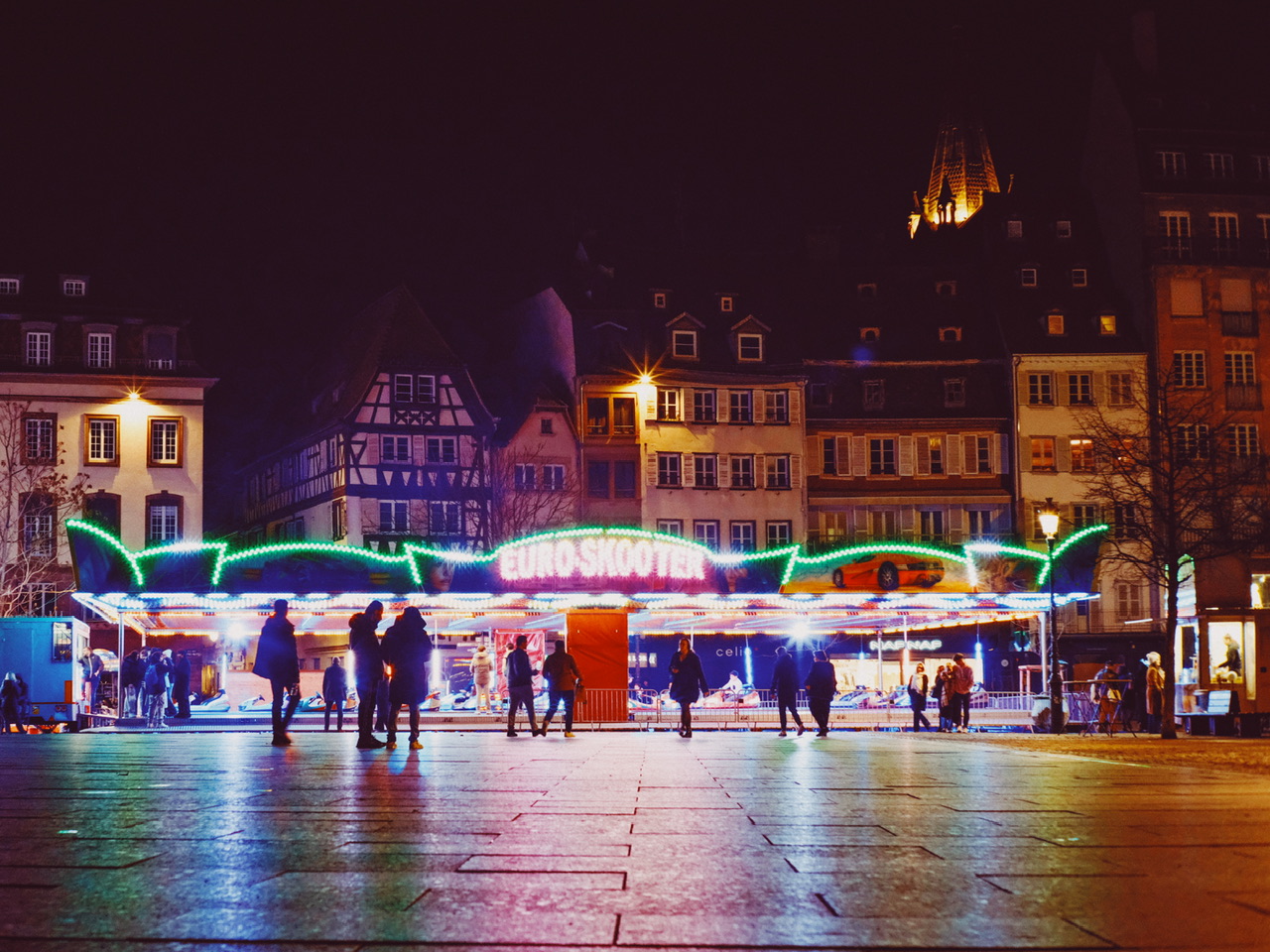
Feb 26, 2025 at 01:27 PM
p.71 #17Light Lens Lab (LLL) replica lenses discussion & image thread
Back to our usual lens development: 50mm f/1.5 Z21 announcement soon 
 mmexport1736867670009 by David Chen, on Flickr
Feb 26, 2025 at 07:44 PM
p.71 #18Light Lens Lab (LLL) replica lenses discussion & image thread
insideline wrote:
Added benefit to the 35mm 1.4 pre-asph Summilux titanium is it focuses down to .8M vs the standard black alloy bodies at 1m, plus the 50mm 1.4 V3 pre-asph summilux titanium focuses down to .5M vs the .7m of the standard black aluminum copies.
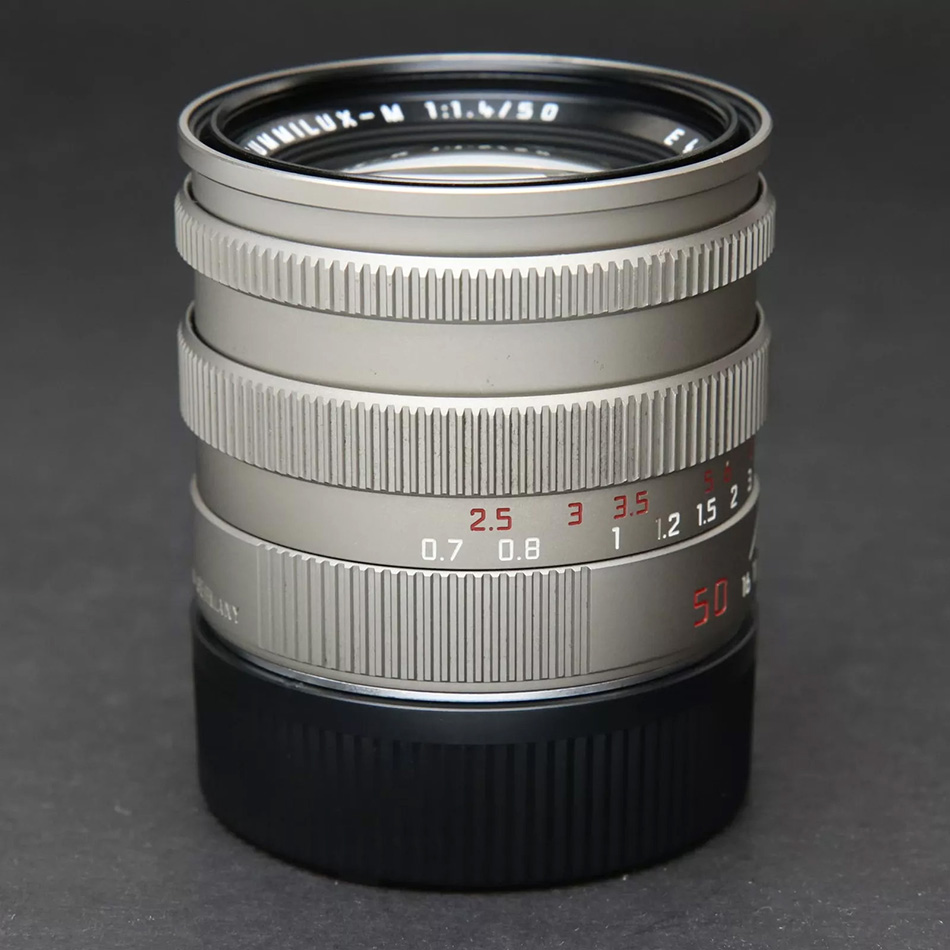
Can you provide any source confirming that the 50mm f/1.4 Summilux pre-ASPH "Titanium" focuses down to 0.5m? Everything I have read, along with images of the lens, indicates a minimum focusing distance of 0.7m, similar to other version 3 pre-ASPH models.
Leica 50mm f/1.4 Summilux pre-ASPH Titanium
Added benefit to the 35mm 1.4 pre-asph Summilux titanium is it focuses down to .8M vs the standard black alloy bodies at 1m, plus the 50mm 1.4 V3 pre-asph summilux titanium focuses down to .5M vs the .7m of the standard black aluminum copies.
Can you provide any source confirming that the 50mm f/1.4 Summilux pre-ASPH "Titanium" focuses down to 0.5m? Everything I have read, along with images of the lens, indicates a minimum focusing distance of 0.7m, similar to other version 3 pre-ASPH models.
 |
||
 |
||
|
Leica 50mm f/1.4 Summilux pre-ASPH Titanium
Feb 26, 2025 at 09:48 PM
p.71 #19Light Lens Lab (LLL) replica lenses discussion & image thread
LightLensLab wrote:
Back to our usual lens development: 50mm f/1.5 Z21 announcement soon
https://live.staticflickr.com/65535/54353252781_04b74a2a20_b.jpgmmexport1736867670009 by David Chen, on Flickr
Is it a replica of the P. Angenieux Paris lens?
Back to our usual lens development: 50mm f/1.5 Z21 announcement soon
https://live.staticflickr.com/65535/54353252781_04b74a2a20_b.jpgmmexport1736867670009 by David Chen, on Flickr
Is it a replica of the P. Angenieux Paris lens?
Feb 26, 2025 at 11:23 PM
p.71 #20Light Lens Lab (LLL) replica lenses discussion & image thread
LightLensLab wrote:
Back to our usual lens development: 50mm f/1.5 Z21 announcement soon
Could you share a comparison with the original Angenieux 50mm f1.5 S21?
Edited on Mar 14, 2025 at 03:39 PM · View previous versions
Back to our usual lens development: 50mm f/1.5 Z21 announcement soon
Could you share a comparison with the original Angenieux 50mm f1.5 S21?
Edited on Mar 14, 2025 at 03:39 PM · View previous versions
Feb 27, 2025 at 12:14 AM