Voigtlander 21mm f/1.4 Nokton Review
p.30 #1Voigtlander 21mm f/1.4 Nokton Review
Recent shot from Death Valley. This lens continues to really impress me! 

F/11, ISO 50, 1/8 sec.
F/11, ISO 50, 1/8 sec.
Apr 09, 2020 at 10:18 PM
p.30 #2Voigtlander 21mm f/1.4 Nokton Review
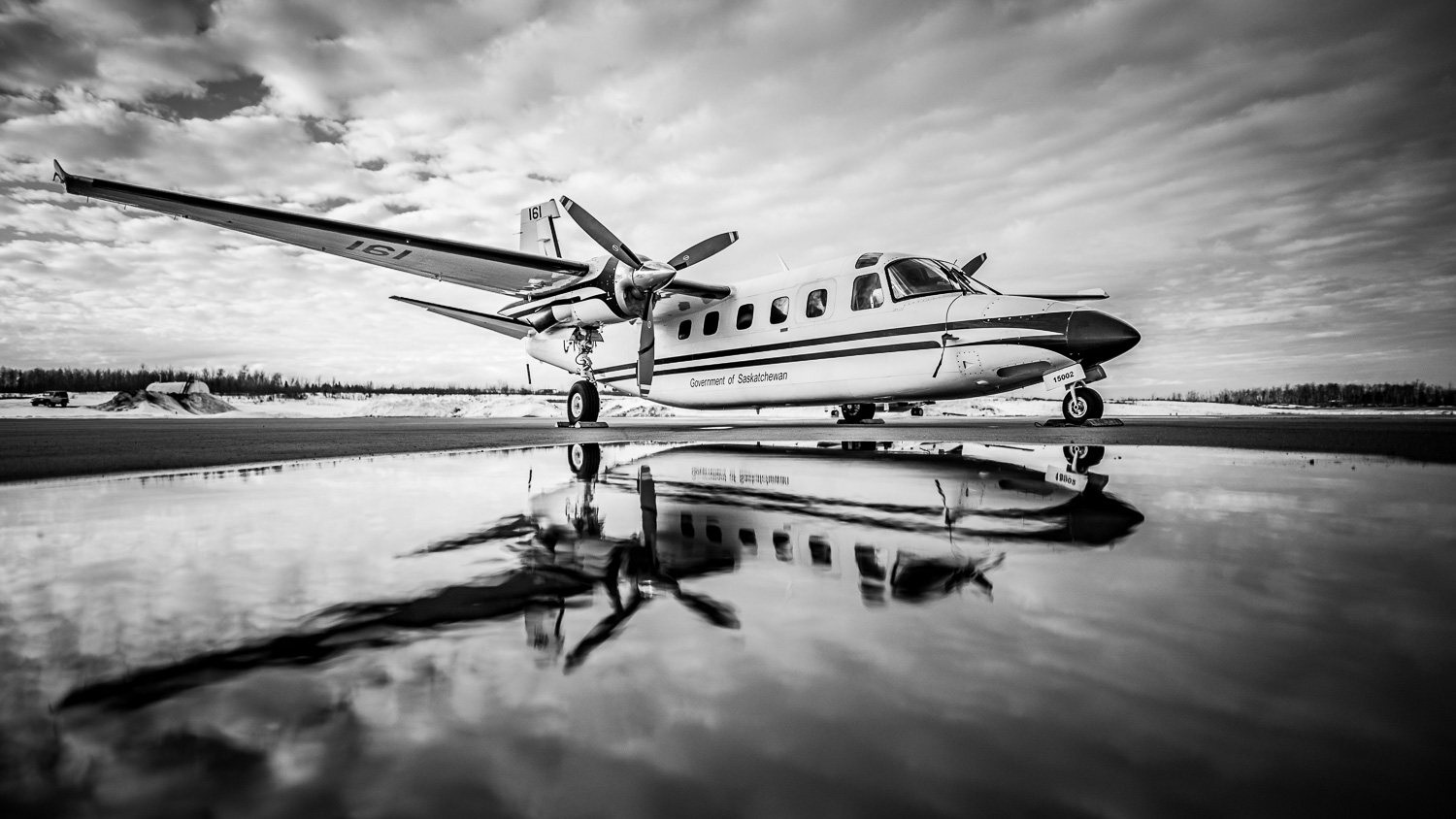
Forgot to post recent picture I got with this awesome lens  Really windy and cold day but gorgeous clouds and sun.


Really windy and cold day but gorgeous clouds and sun.Apr 24, 2020 at 12:22 PM
p.30 #4Voigtlander 21mm f/1.4 Nokton Review
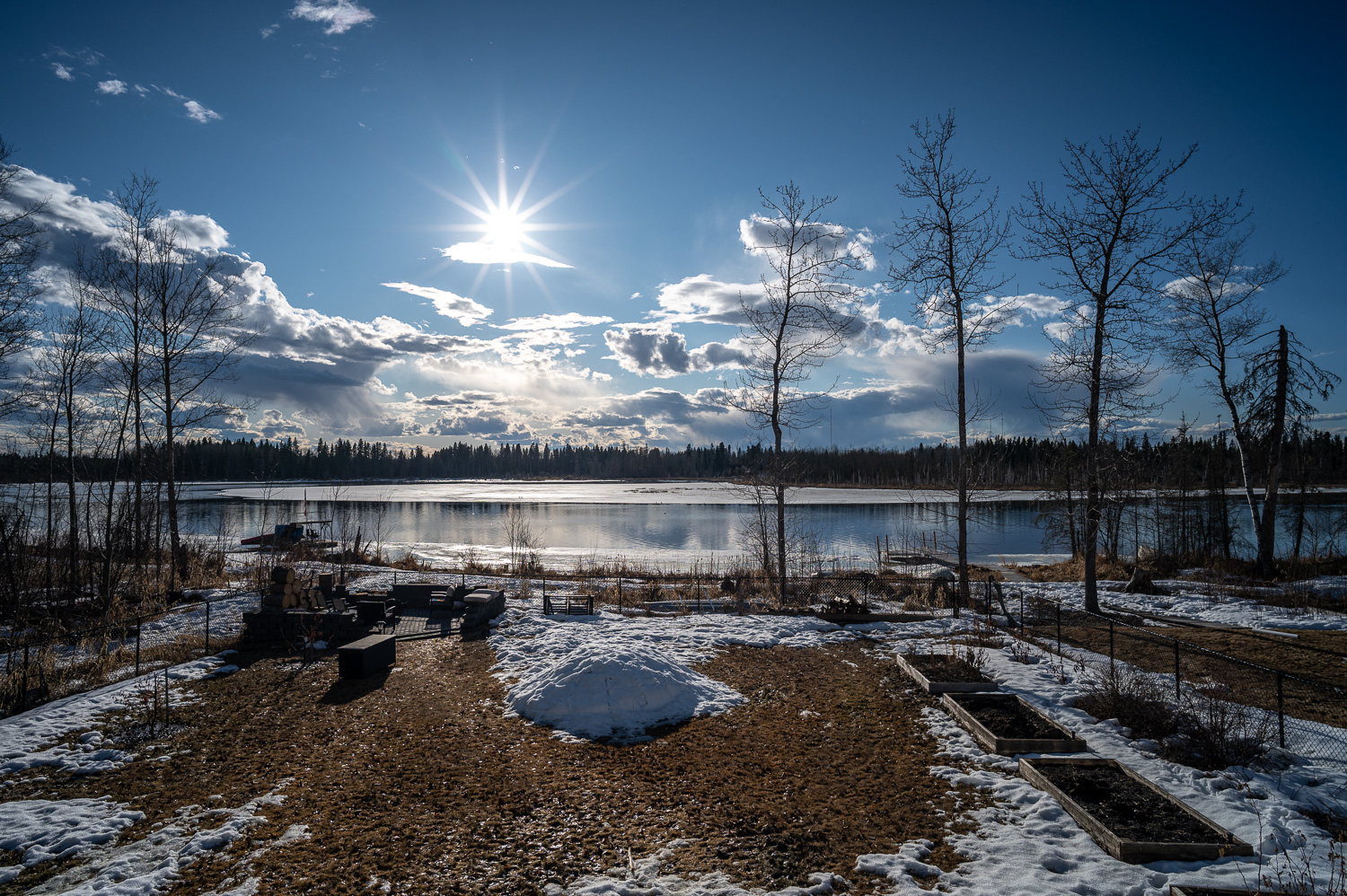
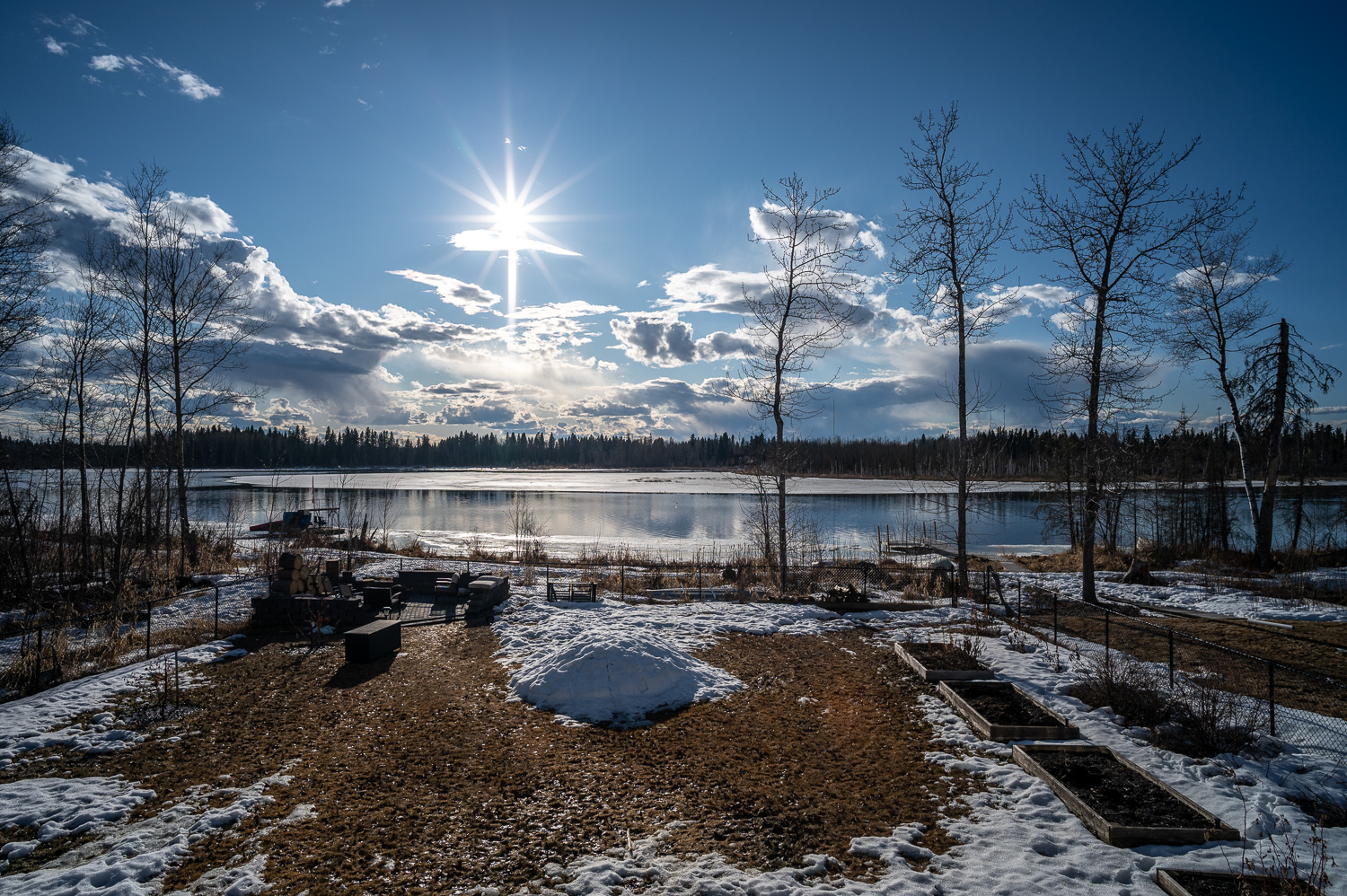
I'm using a Nikon Z6 and have run into a bit of an issue and was wondering if it existed on the Sony system as well.
Looking directly into the sun, using a mechanical front curtain shutter, the one ray of the sun star facing down is elongated. I fixed the problem by shooting with an electronic first curtain.
Has anyone else run into this?
Electronic First Curtain Shutter
Mechanical Shutter
Looking directly into the sun, using a mechanical front curtain shutter, the one ray of the sun star facing down is elongated. I fixed the problem by shooting with an electronic first curtain.
Has anyone else run into this?
 |
||
 |
||
|
Electronic First Curtain Shutter
|
||
 |
||
|
Mechanical Shutter
Apr 30, 2020 at 10:01 AM
p.30 #5Voigtlander 21mm f/1.4 Nokton Review
HelBen85 wrote:
My third Voigtlander is now superior to my Zeiss, actually over the whole frame (at least 90 percent of it) from f2.8 to f8.
As with the Loxia, there seem to be significant differences between the various copies.There is field curvature to take in consideration though.
All copies of the loxia 21/2.8 I've tried, had the extreme corners perfectly focused when using the lens' infinity hard stop while the center plane of focus is achieved a tad before the hard stop.
Optimal sharpness at infinity can only be achieved 'between' these two focus positions and by stopping the lens down to allow depth of field to mask field curvature.
In the case of the Voigtlander 21/1.4, the field curvature is towards the mid-field instead.Frankly, I see it differently.
If I remember correctly, I had 3 Loxias 21mm lenses at home and in use around the world for over 3 years.
I also tested 2 more at the store where I bought the Loxia.
All 5 lenses had the same problem, in different forms, they had clearly (!) visible blurring in a more or less large part of the photo, regardless of the focus and aperture. I got the same result with all my Sony Cameras in this period (A7II/A7RII/A7III/A7RIII).
For all 5 lenses, it was best to get an evenly sharp image if you held the focus...Show more →
Do you have crops to show this? I am interested as I shoot wides often, and I test them. I'd like to see how large, how soft and exactly where the soft area is so I can keep an eye out myself. And I owned a couple Loxia 21's, so I am curious.
Fred Miranda wrote
HelBen85 wrote
Most of the Zeiss Loxia 21mm lenses seem to have their infinity stop too early. This is something that many reviewers do not notice because they do not test the lenses in suitable, even very distant sceneries that can show these problems.My third Voigtlander is now superior to my Zeiss, actually over the whole frame (at least 90 percent of it) from f2.8 to f8.
As with the Loxia, there seem to be significant differences between the various copies.
All copies of the loxia 21/2.8 I've tried, had the extreme corners perfectly focused when using the lens' infinity hard stop while the center plane of focus is achieved a tad before the hard stop.
Optimal sharpness at infinity can only be achieved 'between' these two focus positions and by stopping the lens down to allow depth of field to mask field curvature.
In the case of the Voigtlander 21/1.4, the field curvature is towards the mid-field instead.
If I remember correctly, I had 3 Loxias 21mm lenses at home and in use around the world for over 3 years.
I also tested 2 more at the store where I bought the Loxia.
All 5 lenses had the same problem, in different forms, they had clearly (!) visible blurring in a more or less large part of the photo, regardless of the focus and aperture. I got the same result with all my Sony Cameras in this period (A7II/A7RII/A7III/A7RIII).
For all 5 lenses, it was best to get an evenly sharp image if you held the focus...Show more →
Do you have crops to show this? I am interested as I shoot wides often, and I test them. I'd like to see how large, how soft and exactly where the soft area is so I can keep an eye out myself. And I owned a couple Loxia 21's, so I am curious.
Apr 30, 2020 at 10:31 AM
p.30 #6Voigtlander 21mm f/1.4 Nokton Review
HelBen85 wrote:
My third Voigtlander is now superior to my Zeiss, actually over the whole frame (at least 90 percent of it) from f2.8 to f8.
As with the Loxia, there seem to be significant differences between the various copies.There is field curvature to take in consideration though.
All copies of the loxia 21/2.8 I've tried, had the extreme corners perfectly focused when using the lens' infinity hard stop while the center plane of focus is achieved a tad before the hard stop.
Optimal sharpness at infinity can only be achieved 'between' these two focus positions and by stopping the lens down to allow depth of field to mask field curvature.
In the case of the Voigtlander 21/1.4, the field curvature is towards the mid-field instead.Frankly, I see it differently.
If I remember correctly, I had 3 Loxias 21mm lenses at home and in use around the world for over 3 years.
I also tested 2 more at the store where I bought the Loxia.
All 5 lenses had the same problem, in different forms, they had clearly (!) visible blurring in a more or less large part of the photo, regardless of the focus and aperture. I got the same result with all my Sony Cameras in this period (A7II/A7RII/A7III/A7RIII).
For all 5 lenses, it was best to get an evenly sharp image if you held the focus...Show more →
You've just described how field curvature works. Unfortunately "optimal" sharpness across the field at wide apertures in not possible with lenses with moderate field curvature. At wide apertures, one needs to choose center, midfield or extreme corner to be critically sharp. If you focus at center, the mid and extreme corner on the Loxia 21 will be slightly OOF whereas if you focus at the extreme corners (hard stop) or mid field, the center will be a bit blurry. The best focus is a compromise and can be done by stopping the lens down to f/5.6 and focus very slightly before the hard stop.
The Voigtlander 21/1.4 is not free of field curvature either but the shape is different. It's wavy whereas the Loxia is inwards. So, with the Voigtlander you will get sharp center and extreme corners while mid-field will be slightly OOF. (and vice versa)
Again, stopping the lens down will help mitigate this.
Pick your poison.
Fred Miranda wrote
HelBen85 wrote
Most of the Zeiss Loxia 21mm lenses seem to have their infinity stop too early. This is something that many reviewers do not notice because they do not test the lenses in suitable, even very distant sceneries that can show these problems.My third Voigtlander is now superior to my Zeiss, actually over the whole frame (at least 90 percent of it) from f2.8 to f8.
As with the Loxia, there seem to be significant differences between the various copies.
All copies of the loxia 21/2.8 I've tried, had the extreme corners perfectly focused when using the lens' infinity hard stop while the center plane of focus is achieved a tad before the hard stop.
Optimal sharpness at infinity can only be achieved 'between' these two focus positions and by stopping the lens down to allow depth of field to mask field curvature.
In the case of the Voigtlander 21/1.4, the field curvature is towards the mid-field instead.
If I remember correctly, I had 3 Loxias 21mm lenses at home and in use around the world for over 3 years.
I also tested 2 more at the store where I bought the Loxia.
All 5 lenses had the same problem, in different forms, they had clearly (!) visible blurring in a more or less large part of the photo, regardless of the focus and aperture. I got the same result with all my Sony Cameras in this period (A7II/A7RII/A7III/A7RIII).
For all 5 lenses, it was best to get an evenly sharp image if you held the focus...Show more →
You've just described how field curvature works. Unfortunately "optimal" sharpness across the field at wide apertures in not possible with lenses with moderate field curvature. At wide apertures, one needs to choose center, midfield or extreme corner to be critically sharp. If you focus at center, the mid and extreme corner on the Loxia 21 will be slightly OOF whereas if you focus at the extreme corners (hard stop) or mid field, the center will be a bit blurry. The best focus is a compromise and can be done by stopping the lens down to f/5.6 and focus very slightly before the hard stop.
The Voigtlander 21/1.4 is not free of field curvature either but the shape is different. It's wavy whereas the Loxia is inwards. So, with the Voigtlander you will get sharp center and extreme corners while mid-field will be slightly OOF. (and vice versa)
Again, stopping the lens down will help mitigate this.
Pick your poison.
Apr 30, 2020 at 10:41 AM
p.30 #7Voigtlander 21mm f/1.4 Nokton Review
nehemiahphoto wrote:
Do you have crops to show this? I am interested as I shoot wides often, and I test them. I'd like to see how large, how soft and exactly where the soft area is so I can keep an eye out myself. And I owned a couple Loxia 21's, so I am curious.
Of course, I took several hundred test pictures and compared several copies of both lenses.
Unfortunately, for professional reasons, I often (like this weekend) have limited access to my image database. And when I'm at home, I prefer to take pictures rather than discussing faulty test procedures with others.
In the following the desired crops (uncompressed raws in LR/ unprocessed/ f8 / triopod / best focus setting / remote control / IS deactivated / best of 5). These are 100 percent view crops with a Full HD screen resolution (i.e. approximately 200 percent view on an Imac 5k):
The uesed Zeiss Loxia 21mm is the best of the many that I had here. It was sent to me directly by Zeiss after I complained to Zeiss about exactly this (with all Zeiss Loxia 21mm lenses that I tried it had this problem).


You can see that with this Zeiss Loxia 21mm there is a (relatively) blurred area at the top right of the picture, but the corner of the picture is again sharp. All other parts of the image (within the DOF) are sharper, including the area at the top left of the image. By the way, the blurred area on the right is a bit larger (longer than in the screenshot).
At f8, the Voigtlander is minimally sharper over large parts of the image except the very corners. Most important for me, however, the Voigtlander has no areas in the picture that fall off clearly as with the Loxia.
That's the only reason I switched.
By the way, there was no way to sharpen this area with all my Loxias, regardless of aperture and focus setting. The best result in the blurred area of the image was achieved with all copies when I turned the focus ring directly to the hard stop. Fred`s recommended foucssing a tad before infinity leads to worse results in this area.
I tried this with several cameras, but not with the A7RIV.
I have found the best 21mm for me. And sorry, but in my opinion Fred is wrong here. He has already corrected his conclusion about the comparison of Loxia and Voigtlander, initially it was said that the Voigtlander would show less field curvature
For clarification:
All my Loxia 21mm 2.8 lenses had such a blurred area, but unfortunately this was not always in the same place. With some lenses, for example, it was on the left side of the pictures.
It is interesting, however, that the 4 corners were always sharp with all lenses and that the problematic area was only ever visible on one side of the image.
To rule out an error with my camera, I tested the Loxias with many different cameras, for example A7, A7R, A7II, A7III, A7RIII, ...
A test procedure with an oblique test Picture (like Fred's) would not have shown the error with any of my Loxia lenses, because it was never on the diagonal.
Do you have crops to show this? I am interested as I shoot wides often, and I test them. I'd like to see how large, how soft and exactly where the soft area is so I can keep an eye out myself. And I owned a couple Loxia 21's, so I am curious.
Of course, I took several hundred test pictures and compared several copies of both lenses.
Unfortunately, for professional reasons, I often (like this weekend) have limited access to my image database. And when I'm at home, I prefer to take pictures rather than discussing faulty test procedures with others.
In the following the desired crops (uncompressed raws in LR/ unprocessed/ f8 / triopod / best focus setting / remote control / IS deactivated / best of 5). These are 100 percent view crops with a Full HD screen resolution (i.e. approximately 200 percent view on an Imac 5k):
The uesed Zeiss Loxia 21mm is the best of the many that I had here. It was sent to me directly by Zeiss after I complained to Zeiss about exactly this (with all Zeiss Loxia 21mm lenses that I tried it had this problem).
You can see that with this Zeiss Loxia 21mm there is a (relatively) blurred area at the top right of the picture, but the corner of the picture is again sharp. All other parts of the image (within the DOF) are sharper, including the area at the top left of the image. By the way, the blurred area on the right is a bit larger (longer than in the screenshot).
At f8, the Voigtlander is minimally sharper over large parts of the image except the very corners. Most important for me, however, the Voigtlander has no areas in the picture that fall off clearly as with the Loxia.
That's the only reason I switched.
By the way, there was no way to sharpen this area with all my Loxias, regardless of aperture and focus setting. The best result in the blurred area of the image was achieved with all copies when I turned the focus ring directly to the hard stop. Fred`s recommended foucssing a tad before infinity leads to worse results in this area.
I tried this with several cameras, but not with the A7RIV.
I have found the best 21mm for me. And sorry, but in my opinion Fred is wrong here. He has already corrected his conclusion about the comparison of Loxia and Voigtlander, initially it was said that the Voigtlander would show less field curvature
For clarification:
All my Loxia 21mm 2.8 lenses had such a blurred area, but unfortunately this was not always in the same place. With some lenses, for example, it was on the left side of the pictures.
It is interesting, however, that the 4 corners were always sharp with all lenses and that the problematic area was only ever visible on one side of the image.
To rule out an error with my camera, I tested the Loxias with many different cameras, for example A7, A7R, A7II, A7III, A7RIII, ...
A test procedure with an oblique test Picture (like Fred's) would not have shown the error with any of my Loxia lenses, because it was never on the diagonal.
May 01, 2020 at 06:13 AM
p.30 #8Voigtlander 21mm f/1.4 Nokton Review
DaveFP wrote:
http://www.cosina.co.jp/seihin/voigtlander/vm-mount/vm-21mm1_4/index.html
Street price (ref Map Camera) is 133200 yen (including 10% tax):
https://www.mapcamera.com/item/4530076132399
It's slightly less than the E-mount version.
According to product description it includes the "floating element design" same as E-mount which I think Cosina hasn't done before with any of their VM lenses.I wonder if the new M-mount hood will also fit the E-mount since they share the same 62mm filter thread:Well, I experimented the third party screw-in hood on the CV 21 and the SIgma 24-70. The 62mm hood adds dark corners to the CV 21. the 82mm hood also adds dark corners at 24mm of the Sigma but it's gone after 24mm, I deem it unusable.
The sole reason I want to use this type of screw-in hood is to be able to rotate the CPL by just rotating the hood, without removing the hood to rotate the CPL and putting the hood back on.Do wide shallow hoods like that really provide significant shading?I am not sure. Even the OEM hoods for WA lenses look pretty shallow and wide too.True. I sometimes carry a small umbrella for the times I really need shade.
That's a really great idea - just tossed a tiny umbrella in my backpack
kdrk888 wrote
DaveFP wrote
kdrk888 wrote
Fred Miranda wrote
Juha Kannisto wrote
Product page was added in Cosina's website:http://www.cosina.co.jp/seihin/voigtlander/vm-mount/vm-21mm1_4/index.html
Street price (ref Map Camera) is 133200 yen (including 10% tax):
https://www.mapcamera.com/item/4530076132399
It's slightly less than the E-mount version.
According to product description it includes the "floating element design" same as E-mount which I think Cosina hasn't done before with any of their VM lenses.
The sole reason I want to use this type of screw-in hood is to be able to rotate the CPL by just rotating the hood, without removing the hood to rotate the CPL and putting the hood back on.
. Even the OEM hoods for WA lenses look pretty shallow and wide too.That's a really great idea - just tossed a tiny umbrella in my backpack
May 01, 2020 at 06:31 AM

p.30 #10Voigtlander 21mm f/1.4 Nokton Review
HelBen85 wrote:
Another example: The Voigtlander on the left, the Zeiss on the right.
https://live.staticflickr.com/65535/49841674602_50ce475c18_k.jpg
Thank you for posting! More noticeable at 200% than I had anticipated. I'll keep it eye out for this in the future.
Another example: The Voigtlander on the left, the Zeiss on the right.
https://live.staticflickr.com/65535/49841674602_50ce475c18_k.jpg
Thank you for posting! More noticeable at 200% than I had anticipated. I'll keep it eye out for this in the future.
May 01, 2020 at 10:52 AM
|

p.30 #11Voigtlander 21mm f/1.4 Nokton Review
HelBen85 wrote:
Of course, I took several hundred test pictures and compared several copies of both lenses.
Unfortunately, for professional reasons, I often (like this weekend) have limited access to my image database. And when I'm at home, I prefer to take pictures rather than discussing faulty test procedures with others.
In the following the desired crops (uncompressed raws in LR/ unprocessed/ f8 / triopod / best focus setting / remote control / IS deactivated / best of 5). These are 100 percent view crops with a Full HD screen resolution (i.e. approximately 200 percent view on an Imac 5k):
The uesed Zeiss Loxia 21mm...Show more →
I don't see what you are seeing when I look at these samples. I see a just noticeable difference (I had to switch to my big monitor to see it and couldn't see it at all on my laptop) in favor of the Voigtlander over the Loxia, but it is a small difference and to me it seems consistent across all the shots you posted. I don't see that the difference is bigger in the first pair of shots than the others. And given the general difference, the difference between lenses could just as easily be slight difference in focus (after all the differences between lenses is really small here) or in the specific copies of the two lenses you have, perhaps you got a particularly stellar Voigt 21 f/1.4. Note I have had the Voigtlander 21 f/1.4 since it was first available and I had the Loxia 21 f/2.8 for a long time and just got it again. I like both lenses a lot. My experience is that they are both fine optics. I am keeping both. I will use the Voigt 21 f/1.4 when I want the wider aperture, but when I have to carry the lenses at all and I am shooting landscapes I will take the Loxia 21 because I do notice its smaller size. These samples are consistent with my experience that trying to pick one of these lenses over the other on the basis of stopped down image quality is to the level of asking how many angels can dance on the head of a pin. Any tiny differences just are not worth my worrying about and both lenses are fantastic.
Edited on May 01, 2020 at 11:48 AM · View previous versions
nehemiahphoto wrote
Do you have crops to show this? I am interested as I shoot wides often, and I test them. I'd like to see how large, how soft and exactly where the soft area is so I can keep an eye out myself. And I owned a couple Loxia 21's, so I am curious.Unfortunately, for professional reasons, I often (like this weekend) have limited access to my image database. And when I'm at home, I prefer to take pictures rather than discussing faulty test procedures with others.
In the following the desired crops (uncompressed raws in LR/ unprocessed/ f8 / triopod / best focus setting / remote control / IS deactivated / best of 5). These are 100 percent view crops with a Full HD screen resolution (i.e. approximately 200 percent view on an Imac 5k):
The uesed Zeiss Loxia 21mm...Show more →
I don't see what you are seeing when I look at these samples. I see a just noticeable difference (I had to switch to my big monitor to see it and couldn't see it at all on my laptop) in favor of the Voigtlander over the Loxia, but it is a small difference and to me it seems consistent across all the shots you posted. I don't see that the difference is bigger in the first pair of shots than the others. And given the general difference, the difference between lenses could just as easily be slight difference in focus (after all the differences between lenses is really small here) or in the specific copies of the two lenses you have, perhaps you got a particularly stellar Voigt 21 f/1.4. Note I have had the Voigtlander 21 f/1.4 since it was first available and I had the Loxia 21 f/2.8 for a long time and just got it again. I like both lenses a lot. My experience is that they are both fine optics. I am keeping both. I will use the Voigt 21 f/1.4 when I want the wider aperture, but when I have to carry the lenses at all and I am shooting landscapes I will take the Loxia 21 because I do notice its smaller size. These samples are consistent with my experience that trying to pick one of these lenses over the other on the basis of stopped down image quality is to the level of asking how many angels can dance on the head of a pin. Any tiny differences just are not worth my worrying about and both lenses are fantastic.
Edited on May 01, 2020 at 11:48 AM · View previous versions
May 01, 2020 at 11:40 AM
p.30 #12Voigtlander 21mm f/1.4 Nokton Review
HelBen85 wrote:
Another example: The Voigtlander on the left, the Zeiss on the right.
https://live.staticflickr.com/65535/49841674602_50ce475c18_k.jpg
Ok, this difference is quite noticeable, but the Loxia shot is way worse than any of my well focussed Loxia shots. Either the focus wasn't quite right or the lenses isn't performing up to its typical level in this shot. If it was one you sent back for not working well I could see that, but a well focussed Loxia shot should look better than that.
May 01, 2020 at 11:42 AM
p.30 #13Voigtlander 21mm f/1.4 Nokton Review
I generally agree with you. Both lenses are very good.
But, I tried at least 5 Loxias and they all had an area/spot/square in the picture that was significantly less sharp than the rest of the picture and always in the same place and only when the photographed object was far away from me (focussing towards infinity), i.e. when taking landscape pictures .
I have quite a lot of landscape shots that have therefore become unusable for my requirements. I see the difference very clearly, when I'm back home, I can also upload some landscape shots where you can see the result in practice.
I know that some people won't see the difference. But I can see it and I want evenly sharp pictures. My new Voigtländer can do that from f 5.6. My Loxias could not do this, not even after the exchange by Zeiss, neither at f2.8 nor at f16 and regardless of the selected focus.
I only presented these screenshots based on demand, usually I want to avoid the following discussions.
I just wanted to give a tip to the forum members that I think that a good Voigtländer Nokton 21mm is better than a good Zeiss Loxia 21mm, combined with the advice to check the Zeiss for possible blurring in the image.
May 01, 2020 at 11:59 AM
p.30 #14Voigtlander 21mm f/1.4 Nokton Review
Steve Spencer wrote:
https://live.staticflickr.com/65535/49841674602_50ce475c18_k.jpgOk, this difference is quite noticeable, but the Loxia shot is way worse than any of my well focussed Loxia shots. Either the focus wasn't quite right or the lenses isn't performing up to its typical level in this shot. If it was one you sent back for not working well I could see that, but a well focussed Loxia shot should look better than that.
No, it is just that spot, all other parts of the image are perfectly sharp, even the extreme corners.
How can focussing be incorrect when everything else is perfectly sharp?
In 99 out of 100 pictures you don't notice the problem at all, because the unsharp spot is relatively small, only recognizable against infinity and of course only when there is no sky at this spot.
(My last Loxia had that spot just on the right side of the image, my second Loxia had it just on the left,...)
I sent 2 Loxias back. Then I went to the shop and there they allowed me to try all Loxias there and all had this problem.
Then I spoke to Zeiss and got a new one from Zeiss. The new one was clearly better than the others, but it also had this problem, albeit weaker than the others before.
The crops are from my last one (the best one) which I used for years all over the world. But I was aware of that problem and waiting for a better 21mm lens.
Back to the Voigtlander 21mm f1.4 Nokton, some shots from the last weeks:


HelBen85 wrote
Another example: The Voigtlander on the left, the Zeiss on the right.https://live.staticflickr.com/65535/49841674602_50ce475c18_k.jpg
No, it is just that spot, all other parts of the image are perfectly sharp, even the extreme corners.
How can focussing be incorrect when everything else is perfectly sharp?
In 99 out of 100 pictures you don't notice the problem at all, because the unsharp spot is relatively small, only recognizable against infinity and of course only when there is no sky at this spot.
(My last Loxia had that spot just on the right side of the image, my second Loxia had it just on the left,...)
I sent 2 Loxias back. Then I went to the shop and there they allowed me to try all Loxias there and all had this problem.
Then I spoke to Zeiss and got a new one from Zeiss. The new one was clearly better than the others, but it also had this problem, albeit weaker than the others before.
The crops are from my last one (the best one) which I used for years all over the world. But I was aware of that problem and waiting for a better 21mm lens.
Back to the Voigtlander 21mm f1.4 Nokton, some shots from the last weeks:
May 01, 2020 at 12:06 PM
p.30 #15Voigtlander 21mm f/1.4 Nokton Review
HelBen85 wrote:
https://live.staticflickr.com/65535/49841674602_50ce475c18_k.jpgOk, this difference is quite noticeable, but the Loxia shot is way worse than any of my well focussed Loxia shots. Either the focus wasn't quite right or the lenses isn't performing up to its typical level in this shot. If it was one you sent back for not working well I could see that, but a well focussed Loxia shot should look better than that.No, it is just that spot, all other parts of the image are perfectly sharp, even the extreme corners.
How can focussing be incorrect when everything else is perfectly sharp?
In 99 out of 100 pictures you don't notice the problem at all, because the unsharp spot is relatively small, only recognizable against infinity and of course only when there is no sky at this spot.
(My last Loxia had that spot just on the right side of the image, my second Loxia had it just on the left,...)
I sent 2 Loxias back. Then I went to the shop and there they allowed...Show more →
I appreciate that you have posted crops/proof. People have opinions but no crops to back it up, which happened several times in the Sony G 20 thread. Not too interested in claims without proofs, or even attempted proofs. I personally owned and loved the Loxia 21 a couple times, and never had issues with sharpness even at 42MP, but I am of the thought the the current crop of modern wides are more than sufficient sharpness wise, and I am interested in color, flare, contrast, price, size and haptics.
I would own this lens if the coma correction was great to superb. It's looks like a great option, I see more spacial seperation (3-D) with this CV 21/1.4, but given the AF, small size and super coma, I opted to keep my GM 24. Good times with so many capable wides.
Steve Spencer wrote
HelBen85 wrote
Another example: The Voigtlander on the left, the Zeiss on the right.https://live.staticflickr.com/65535/49841674602_50ce475c18_k.jpg
How can focussing be incorrect when everything else is perfectly sharp?
In 99 out of 100 pictures you don't notice the problem at all, because the unsharp spot is relatively small, only recognizable against infinity and of course only when there is no sky at this spot.
(My last Loxia had that spot just on the right side of the image, my second Loxia had it just on the left,...)
I sent 2 Loxias back. Then I went to the shop and there they allowed...Show more →
I appreciate that you have posted crops/proof. People have opinions but no crops to back it up, which happened several times in the Sony G 20 thread. Not too interested in claims without proofs, or even attempted proofs. I personally owned and loved the Loxia 21 a couple times, and never had issues with sharpness even at 42MP, but I am of the thought the the current crop of modern wides are more than sufficient sharpness wise, and I am interested in color, flare, contrast, price, size and haptics.
I would own this lens if the coma correction was great to superb. It's looks like a great option, I see more spacial seperation (3-D) with this CV 21/1.4, but given the AF, small size and super coma, I opted to keep my GM 24. Good times with so many capable wides.
May 01, 2020 at 01:19 PM
p.30 #16Voigtlander 21mm f/1.4 Nokton Review
HelBen85 wrote:
https://live.staticflickr.com/65535/49841674602_50ce475c18_k.jpgOk, this difference is quite noticeable, but the Loxia shot is way worse than any of my well focussed Loxia shots. Either the focus wasn't quite right or the lenses isn't performing up to its typical level in this shot. If it was one you sent back for not working well I could see that, but a well focussed Loxia shot should look better than that.No, it is just that spot, all other parts of the image are perfectly sharp, even the extreme corners.
How can focussing be incorrect when everything else is perfectly sharp?
In 99 out of 100 pictures you don't notice the problem at all, because the unsharp spot is relatively small, only recognizable against infinity and of course only when there is no sky at this spot.
(My last Loxia had that spot just on the right side of the image, my second Loxia had it just on the left,...)
I sent 2 Loxias back. Then I went to the shop and there they allowed...Show more →
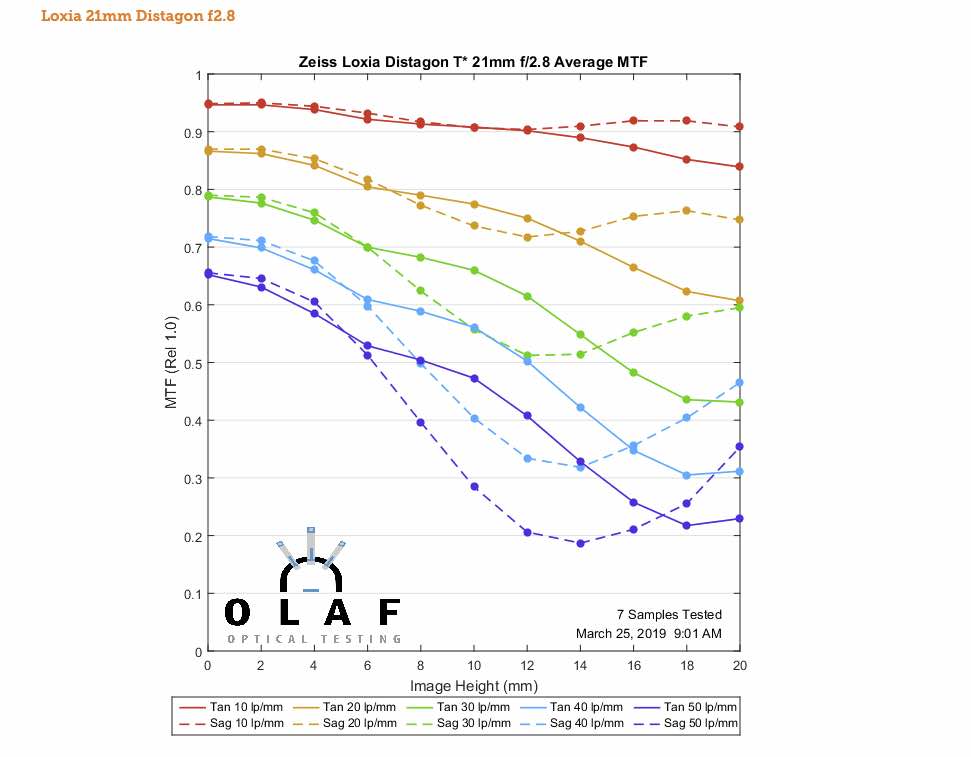
Very nice shots. I will just say my experience differs from yours and I would never say one lens clearly has better sharpness or rendering from the other lens. They are both great. If you want to evaluate sharpness, then I find MTF charts to be a really good guide. In the attached chart you will see the MTF from lens rental blog for the Loxia 21. One of the nice things about these tests is that they are the average of at least 10 real lenses, so they are measuring the performance across different copies. One of the drawbacks of these tests is that they are at wide open aperture, so here f/2.8. You do see a mild dip in MTF at about 14mm from the image center in the saggital direction at high lp/mm (30, 40, & 50), but the dip is mild and almost certainly reduces on stopping down (almost all such midzone dips get smaller as lenses stop down). I really think based on that evidence and Zeiss' own MTFs that questioning the sharpness of the lens doesn't make a lot of sense to me, but of course your experience and interpretation may vary.
Steve Spencer wrote
HelBen85 wrote
Another example: The Voigtlander on the left, the Zeiss on the right.https://live.staticflickr.com/65535/49841674602_50ce475c18_k.jpg
How can focussing be incorrect when everything else is perfectly sharp?
In 99 out of 100 pictures you don't notice the problem at all, because the unsharp spot is relatively small, only recognizable against infinity and of course only when there is no sky at this spot.
(My last Loxia had that spot just on the right side of the image, my second Loxia had it just on the left,...)
I sent 2 Loxias back. Then I went to the shop and there they allowed...Show more →
Very nice shots. I will just say my experience differs from yours and I would never say one lens clearly has better sharpness or rendering from the other lens. They are both great. If you want to evaluate sharpness, then I find MTF charts to be a really good guide. In the attached chart you will see the MTF from lens rental blog for the Loxia 21. One of the nice things about these tests is that they are the average of at least 10 real lenses, so they are measuring the performance across different copies. One of the drawbacks of these tests is that they are at wide open aperture, so here f/2.8. You do see a mild dip in MTF at about 14mm from the image center in the saggital direction at high lp/mm (30, 40, & 50), but the dip is mild and almost certainly reduces on stopping down (almost all such midzone dips get smaller as lenses stop down). I really think based on that evidence and Zeiss' own MTFs that questioning the sharpness of the lens doesn't make a lot of sense to me, but of course your experience and interpretation may vary.
May 01, 2020 at 02:59 PM
p.30 #17Voigtlander 21mm f/1.4 Nokton Review
I'm a little unsure how you can get a small unsharp spot in different places in a set of copies of a lens. Yet, if that were the case, the averaging over that set of lenses (and over 360 degrees angle in every copy) may obsure such a phenomenon. (It would also obscure non-symmetric components of field curvature and astigmatism in general, and even symmetric ones if there is copy variation not just with regard to some tilt of optical elements, but the optical elements themselves.)
Steve Spencer wrote:
https://live.staticflickr.com/65535/49841674602_50ce475c18_k.jpgOk, this difference is quite noticeable, but the Loxia shot is way worse than any of my well focussed Loxia shots. Either the focus wasn't quite right or the lenses isn't performing up to its typical level in this shot. If it was one you sent back for not working well I could see that, but a well focussed Loxia shot should look better than that.No, it is just that spot, all other parts of the image are perfectly sharp, even the extreme corners.
How can focussing be incorrect when everything else is perfectly sharp?
In 99 out of 100 pictures you don't notice the problem at all, because the unsharp spot is relatively small, only recognizable against infinity and of course only when there is no sky at this spot.
(My last Loxia had that spot just on the right side of the image, my second Loxia had it just on the left,...)
I sent 2 Loxias back. Then I went to the shop and there they allowed me to try all Loxias there and all had this problem.
Then I spoke to Zeiss and got a new one from Zeiss. The new one was clearly better than the others, but it also had this problem, albeit weaker than the others before.
The crops are from my last one (the best one) which I used for years all over the world. But I was aware of that problem and waiting for a better 21mm lens.
Back to the Voigtlander 21mm f1.4 Nokton, some shots from the last weeks:
https://live.staticflickr.com/65535/49842629606_47f357a352_h.jpg
https://live.staticflickr.com/65535/49842933097_88f814401a_h.jpg
https://live.staticflickr.com/65535/49842630131_dc8536c178_h.jpg
https://live.staticflickr.com/65535/49842097633_0c4f17549f_h.jpg
https://live.staticflickr.com/65535/49842942152_5282405893_h.jpgVery nice shots. I will just say my experience differs from yours and I would never say one lens clearly has better sharpness or rendering from the other lens. They are both great. If you want to evaluate sharpness, then I find MTF charts to be a really good guide. In the attached chart you will see the MTF from lens rental blog for the Loxia 21. One of the nice things about these tests is that they are the average of at least 10 real lenses, so they are measuring the performance across different copies. One of the...Show more →
Steve Spencer wrote:
HelBen85 wrote
Steve Spencer wrote
HelBen85 wrote
Another example: The Voigtlander on the left, the Zeiss on the right.https://live.staticflickr.com/65535/49841674602_50ce475c18_k.jpg
How can focussing be incorrect when everything else is perfectly sharp?
In 99 out of 100 pictures you don't notice the problem at all, because the unsharp spot is relatively small, only recognizable against infinity and of course only when there is no sky at this spot.
(My last Loxia had that spot just on the right side of the image, my second Loxia had it just on the left,...)
I sent 2 Loxias back. Then I went to the shop and there they allowed me to try all Loxias there and all had this problem.
Then I spoke to Zeiss and got a new one from Zeiss. The new one was clearly better than the others, but it also had this problem, albeit weaker than the others before.
The crops are from my last one (the best one) which I used for years all over the world. But I was aware of that problem and waiting for a better 21mm lens.
Back to the Voigtlander 21mm f1.4 Nokton, some shots from the last weeks:
https://live.staticflickr.com/65535/49842629606_47f357a352_h.jpg
https://live.staticflickr.com/65535/49842933097_88f814401a_h.jpg
https://live.staticflickr.com/65535/49842630131_dc8536c178_h.jpg
https://live.staticflickr.com/65535/49842097633_0c4f17549f_h.jpg
https://live.staticflickr.com/65535/49842942152_5282405893_h.jpg
May 01, 2020 at 04:19 PM
p.30 #18Voigtlander 21mm f/1.4 Nokton Review
HelBen85 wrote:
Of course, I took several hundred test pictures and compared several copies of both lenses.
Unfortunately, for professional reasons, I often (like this weekend) have limited access to my image database. And when I'm at home, I prefer to take pictures rather than discussing faulty test procedures with others.
In the following the desired crops (uncompressed raws in LR/ unprocessed/ f8 / triopod / best focus setting / remote control / IS deactivated / best of 5). These are 100 percent view crops with a Full HD screen resolution (i.e. approximately 200 percent view on an Imac 5k):
The uesed Zeiss Loxia 21mm...Show more →
Here are a few suggestions to you:
1) Find out if the copies you are testing are well centered before posting final conclusions.
Here is the test I personally use and trust: https://www.fredmiranda.com/forum/topic/1534737/0?keyword=decentering#14396658
It does not matter how many copies you test or where they came from. The only way to know for sure is to test for this.
2) Understand how the field curvature amount and 'shape' affects resolution at different areas of the image field. If you want to show how a lens performs at the corners, perhaps it's a good idea to focus on that area in order to remove the field curvature variable from the equation. Later on, you could demonstrate how field curvature affects resolution on several areas when focusing at center.
3) I have encountered well-centered copies of the Loxia 21/2.8 that didn't perform optimally towards the corners (with higher astigmatism) even when focusing on it. So, your individual results are not the final say, it's just another report which I personally find valuable.
nehemiahphoto wrote
Do you have crops to show this? I am interested as I shoot wides often, and I test them. I'd like to see how large, how soft and exactly where the soft area is so I can keep an eye out myself. And I owned a couple Loxia 21's, so I am curious.Unfortunately, for professional reasons, I often (like this weekend) have limited access to my image database. And when I'm at home, I prefer to take pictures rather than discussing faulty test procedures with others.
In the following the desired crops (uncompressed raws in LR/ unprocessed/ f8 / triopod / best focus setting / remote control / IS deactivated / best of 5). These are 100 percent view crops with a Full HD screen resolution (i.e. approximately 200 percent view on an Imac 5k):
The uesed Zeiss Loxia 21mm...Show more →
Here are a few suggestions to you:
1) Find out if the copies you are testing are well centered before posting final conclusions.
Here is the test I personally use and trust: https://www.fredmiranda.com/forum/topic/1534737/0?keyword=decentering#14396658
It does not matter how many copies you test or where they came from. The only way to know for sure is to test for this.
2) Understand how the field curvature amount and 'shape' affects resolution at different areas of the image field. If you want to show how a lens performs at the corners, perhaps it's a good idea to focus on that area in order to remove the field curvature variable from the equation. Later on, you could demonstrate how field curvature affects resolution on several areas when focusing at center.
3) I have encountered well-centered copies of the Loxia 21/2.8 that didn't perform optimally towards the corners (with higher astigmatism) even when focusing on it. So, your individual results are not the final say, it's just another report which I personally find valuable.
May 03, 2020 at 01:50 PM
p.30 #19Voigtlander 21mm f/1.4 Nokton Review
You don't have to believe what I write, it is just my opinion and of course I can have made numerous mistakes in my conclusion.
But it is bold to always assume that I have made any mistakes.
But, of course I also did a centering test. Of course I have tested focussing on center and compared the results with focussing on the corners. The problem was most obvious when focusing on the center and least visible when focusing on the corners (directly at the hardstop).
(Again, the whole pictures with my Loxia 21mm lenses were sharp, the center, the 4 corners, the midfield, but there was one (small) unsharp spot/area, only one, on one side of the pictures. Again, this happened when focussing on center, on miedfield, on corners, but I got the best result for this spot and so the most equally sharp picture when focus was directly at the hardstop. Same with all testet Loxia 21mm lenses.)
(No problems with my Loxia 50mm, from f.5.6 on completely and equally sharp over the entire image when focussed a tad before the hardstop.)
Both the dealer and later Zeiss themselves took the lenses back and replaced them as defective, based on my description of the error and my test pictures.
Zeiss first checked the lens itself extensively and first claimed that the error was due to a mechanical effect on the lens I sent in and that it could be repaired. Of course there was no mechanical impact. When I then sent Zeiss the additional test images, which I made immediately upon receipt of the lens and of other (Zeiss Loxia 21mm) lenses, I received a checked new goodwill replacement copy without further comment.
The exchange copy had the same problem, but not nearly as bad and noticeable as the others.
Again, because it somehow doesn't seem clear for you: I don't care whether it's a lens design flaw or a technical problem on my part or what's the reason for.
With all 21mm Loxias it was impossible to get a completely sharp landscape photo (with very good sharpness from about 2 meters away to infinity). No matter which aperture, no matter what was focused on.
The Voigtlander can do that. I test my lenses so that the entire image is filled with fine structures at a greater distance, so I can also find small blured areas/spots. The Voigtländer does not have this. Of course, the Voigtländer has not the same amount of sharpness over the entire image, but the less sharper parts are not that bad than with the Zeiss. I also tested several different Voigtlander 21mm Noktons, one was poorly centered and another one was generally less sharp than the Loxia. However, none of the Voigtlanders had that problem.
So now I finally have a 21mm lens that - if I focus it properly - is (reasonably) evenly sharp over the whole image.
If you can do that with the Loxia, congratulations.
But believe me, I had at least one Loxia here (checked directly by Zeiss and checked directly by my contact person at Zeiss) that Zeiss considered to be error-free and I was not able with that to do what is possible with the Voigtländer and you wouldn't have that either because I've tried focussing on every distance.
May 04, 2020 at 07:30 AM
p.30 #20Voigtlander 21mm f/1.4 Nokton Review
HelBen85 wrote:
...
Maybe a stretch, but did you perform flashlight tests on the lenses for debris, grease, and so on?
May 04, 2020 at 08:13 AM