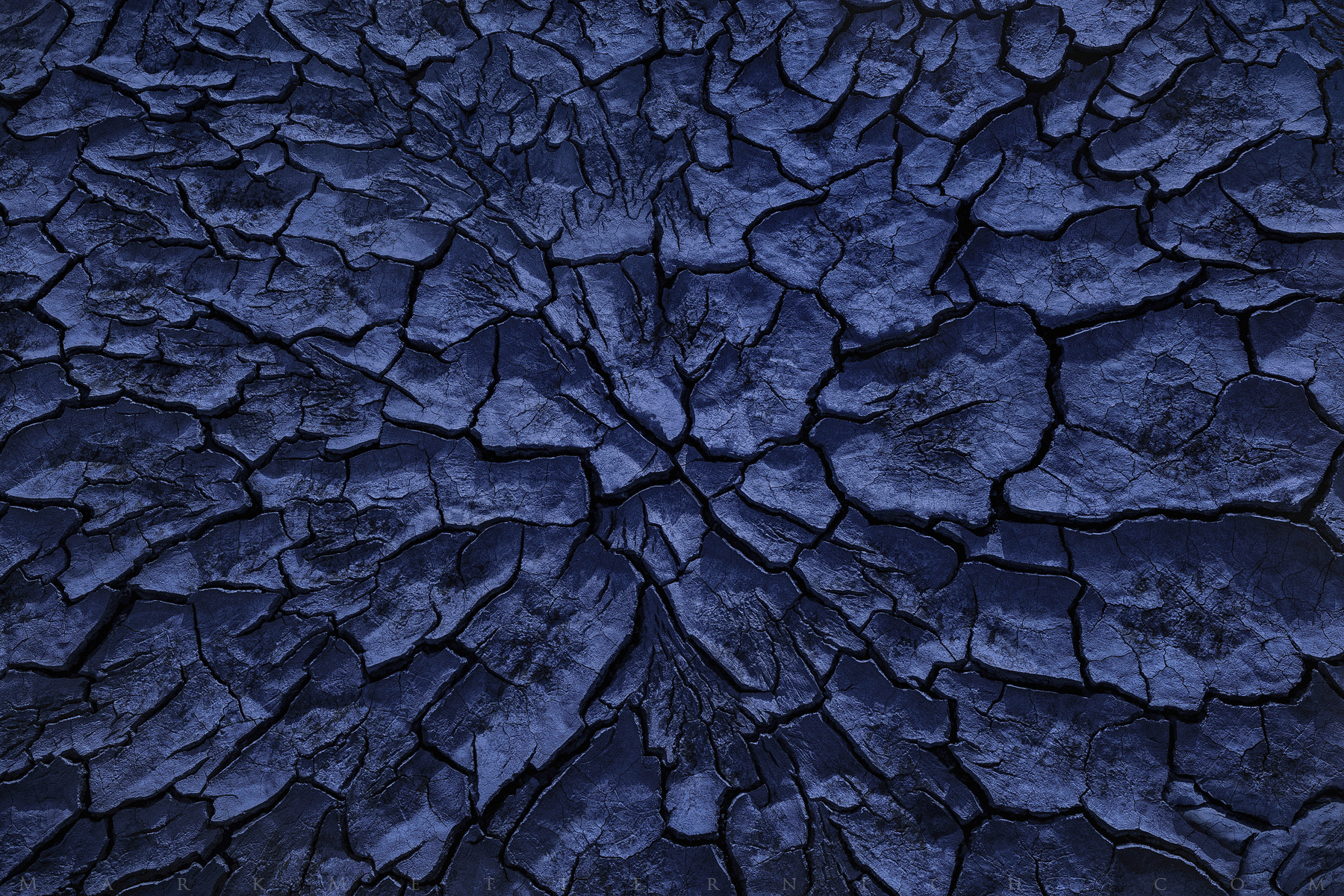
Oregon desert playa under the moonlight. After spending the last 16 years traveling the all over the world for photography, I'm still convinced its all in Oregon!
I hope everyone is enjoying photographing Fall/Autumn as its peak moves along, leaving beauty everywhere.
A few techie notes below the image for the more inquisitive.
After "The Ultimate Mastering Fine Art PrintmakingWorkshop" (2) and seeing FM member and top print guru Robert B Park's brand new innovative (no one is doing this) sharpening techniques, I have thrown a few of my own innovations at them and the combination has been absolutely incredible. The bottom line is this: image sharpening creates artifacts (artifacting). This means stuff that we do not want in our images. But up to a certain threshold (just like almost everything, like contrast...), there is a very noticeable improvement. But then the improvement sharply stops and if you keep increasing it, and the image will look worse and worse after that...
BUT, WHAT it is that we very first see that causes our brain to recognize the sharpening artifacts?
It is the Light side of the sharpening halos it creates (around micro edges). Not to be confused with other types of halos. Yes, sharpening is artificial edge detection, and then the application of extremely micro contrast applied to both the darker and lighter side of micro edges.
SO...
CONTROL the lighter side of all edge halos, and now sharpening (the sheer quality of discernable detail) can be brought further (improved substantially) before artifacting can be seen. Of course, excellence in print sharpening is a multi-step protocol, and Web sharpening is totally different! But the Same principle can be applied to both.
For those who follow me on Facebook or Youtube, lots of NEW stuff is on this is coming out before the end of the year.
Lastly, many photographers do not know how critical Noise Profile is to the quality of detail. This becomes especially true if you want to make enlargements. I have a Freebie I send out to everyone on my mailing list/newsletter all about this. It usually makes people fall over when they see the examples of how massively even a little color noise (even when reduced or removed by the color noise slider in Lightroom) hinders the ultimate quality of detail in prints/enlargements!
THE IMAGE:
Oregon Desert Playa (cracked mud)
Sony A7R2
Canon 24-70@ 30mm
5 seconds
50 ISO (ISO expansion for lower noise profile)
Shot during the blue hour under the moonlight.
f/11
This is a spot I really liked in the desert playa I found after driving many miles and hours. Most of the processing was quite basic and most of it was done in Lightroom. The bulk of it was extremely subtle work equalizing out slight imbalances.
A little tip when you think your image is done is to FLIP IT 180 degrees (or upside down or other ways) in Photoshop, and then continue removing distracting elements and tonal imbalances. Then after you are done, flip it back on the original and see if it is an improvement (at some level of opacity). Often the brain CANNOT see things left to right, that it can see when flipped! It is weird how this works but sometimes can really improve an image!
All the best to you and yours, and GREAT LIGHT to you!
adittam wrote:
Pretty rad, Mark. I'm not *usually* a big fan of the more abstract stuff, but this one definitely works for me! Nicely done!
Matt
Huge thank you Matt!
JimKied wrote:
Pretty cool Mark. I like how the cracks seem to converge to a central point. The amount of detail is amazing.
Thank you very much Jim!
After 3 months of constant travels, I am finally home (Florida) and can reply!
I was out here again about a week ago (Oregon) and could not find anything like this composition in miles and miles of Playa.
BTW, the sharpening/detail has to do with a NEW method one might call dark sharpening. It has been innovated by master printmaker (FM member) Robert Park (Nevada Art Printers and the maker of Lumachrome - the current best high gloss printing method in the world). It has nothing to do with sharpening dark areas more than lighter. It is an amazing technique where we can now control the light side of sharpening contrast details, to allow images to get sharper without artifacting. It is off the charts cool and when people start catching on, I think the entire industry might change in this area.
Here I am trying a twist of it on a web image (as opposed to print - which it was designed for). It got sharper than any other method out there.
Mark Metternich wrote:
Oregon desert playa under the moonlight. After spending the last 16 years traveling the all over the world for photography, I'm still convinced its all in Oregon!
Wow. You may have just sold Oregon as a destination on my photography list based on your consistently fine output and now endorsement of Oregon as the place to be.