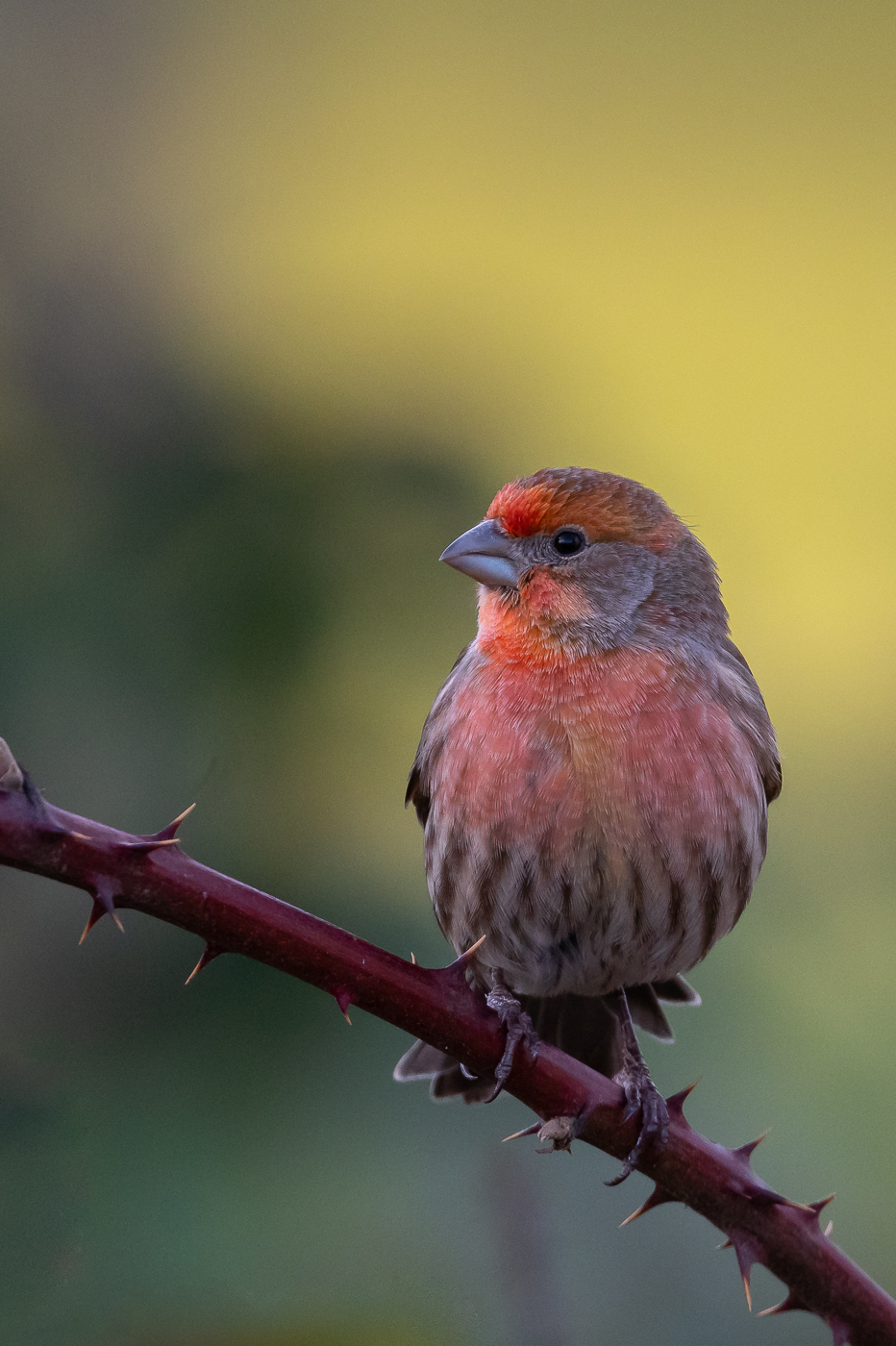
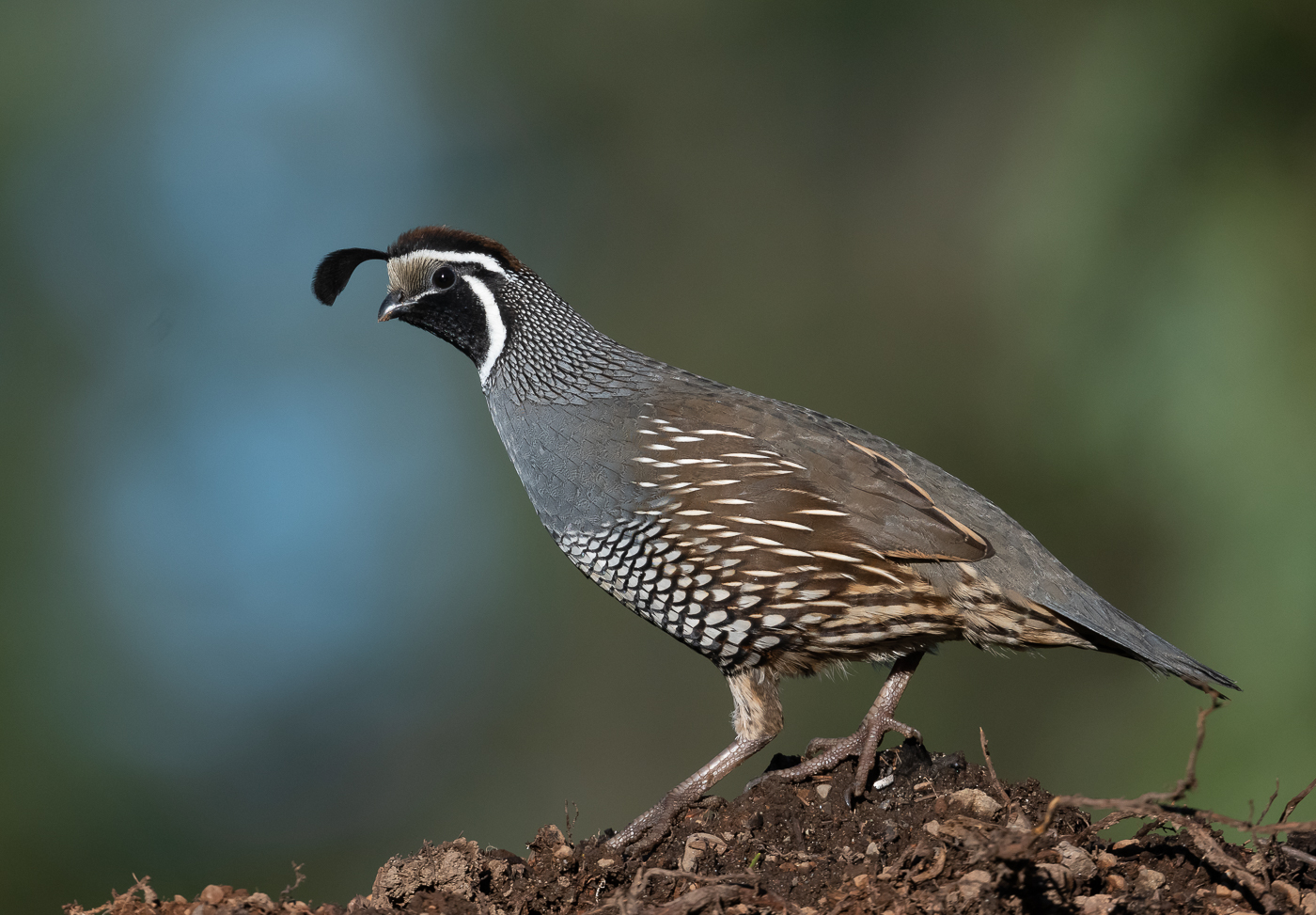
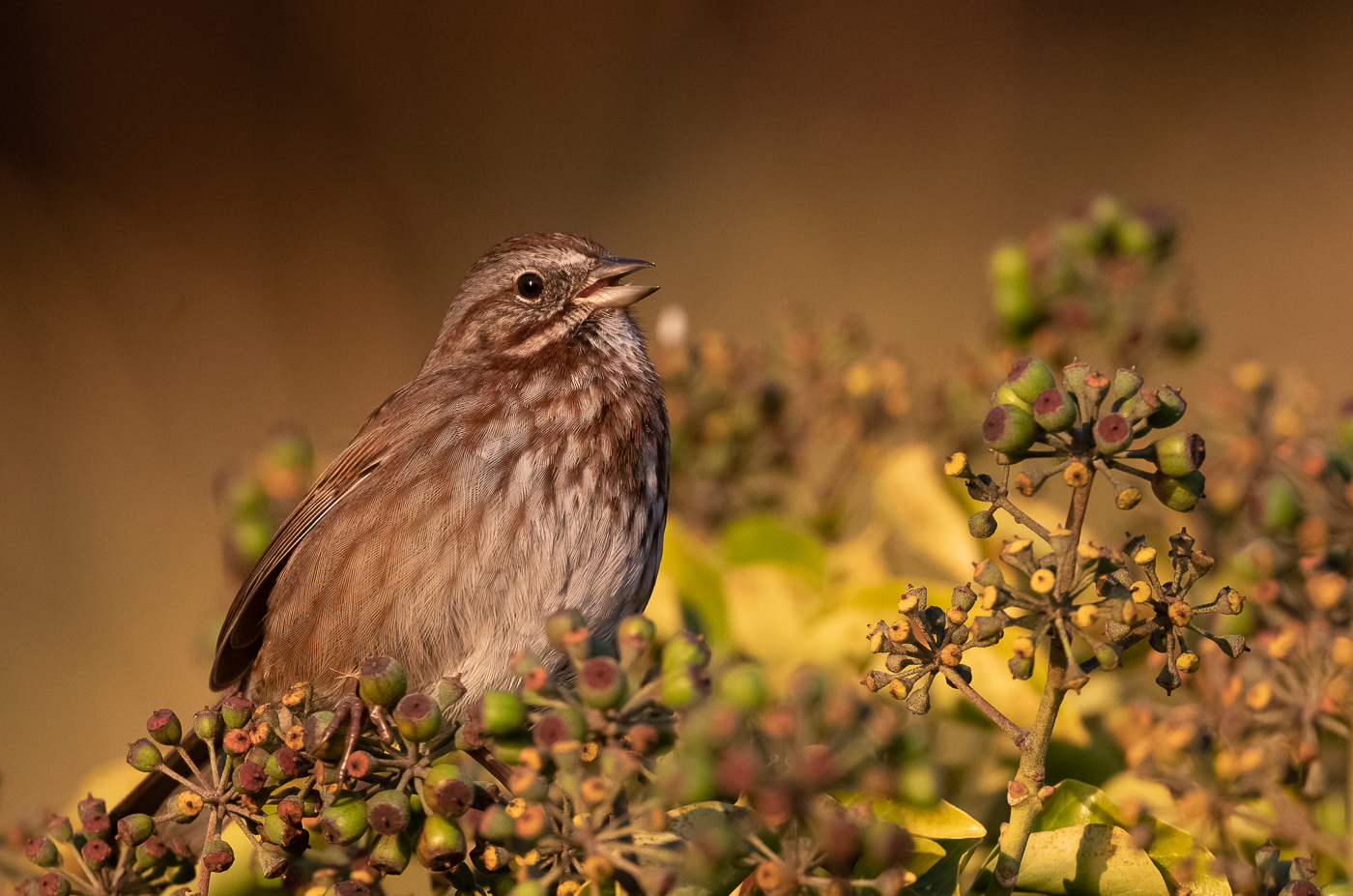
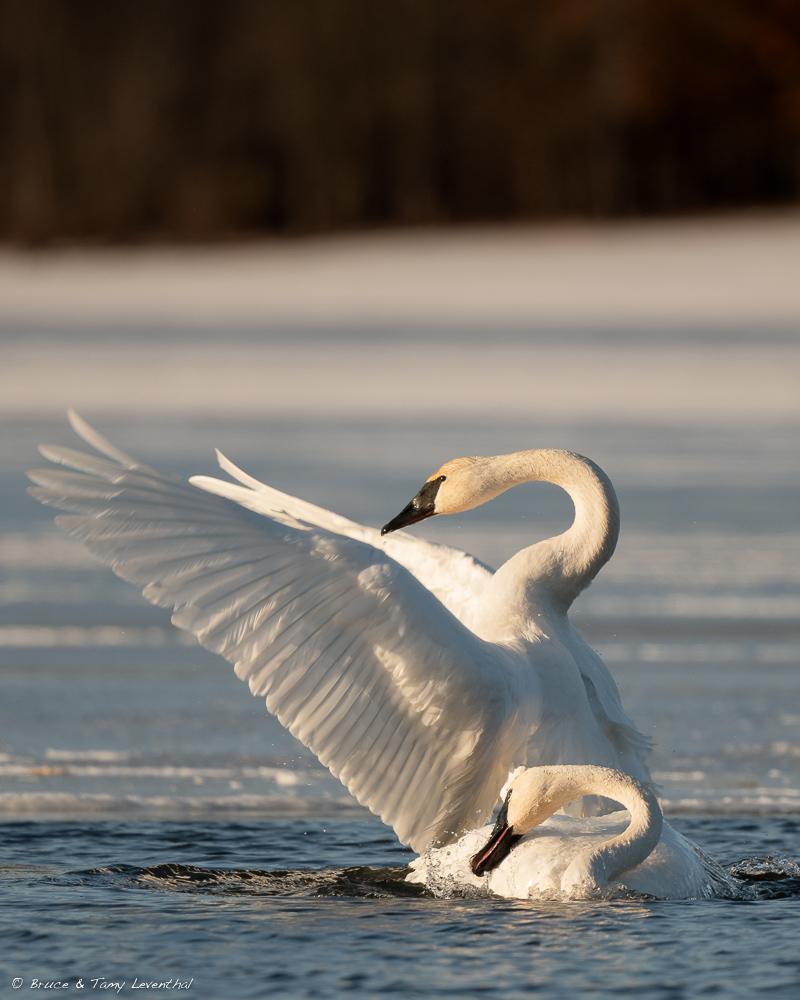
Bruce I feel your pain with light.
Here in the mountains we get 300+ days of cloud/rain/show/sleet/gloom.
I only get to enjoy lots of Sun when we travel.
I'm really impressed with the recent shots with the 1.4 TC that I've been seeing. The 500 PF is really showing its versatility (as long as there is enough light).
telyt wrote:
It's not entirely a matter of distances. Certainly awareness of these distances and their effects can be important but also the optical properties of the lens is another factor. A lens that produces a blur circle with brighter rims than center will produce harsher background blur than if the blur circle has even light distribution or brighter central than edge light distribution. Control of spherical aberration is a big factor in the light distribution of the blur circle.
I understand what you mean. My point was that the undesirable effect(s) (whether caused by the TC itself, increased DOF, distance, brightness of background objects or the combination of any of these) can be alleviated with extra precautions with respect to distances (subject close, distant background) and favourable conditions. Arbitrage's nice bokehs above are a good example (I am assuming there is no PP on the background).
That said, I personally prefer not to use a TC because of these limitations.
The double edges you were referring to (on earlier images posted in this thread) remind me of what I observed when I briefly tried the Canon 100-400II with the 1.4xIII.
fpoet wrote:
I understand what you mean. My point was that the undesirable effect(s) (whether caused by the TC itself, increased DOF, distance, brightness of background objects or the combination of any of these) can be alleviated with extra precautions with respect to distances (subject close, distant background) and favourable conditions.
Yes I agree. However I'd rather not have to avoid certain subject/background/lighting combinations if I can help it. Eliminating the lens' optical contributions to the situations I want to avoid means there are fewer subject/background/lighting combinations to avoid.
A lot of theory and talk of the 1.4TCiii+500PF.
I wish I could entertain the thought processi, but if I fretted over
the performance of the 1.4TCiii and the 500PF I'd come home with little from our last trip
Nikon D500
500.0 mm f/5.6
ƒ/8.0 700.0 mm 1/2500 560
Good effort Geoff.
I've seen 'bokeh' issues with almost every lens at one time or another, rare with some, hideous with others, but all will have it in one circumstance or another.
As far as the bokeh with the 500PF, my back, knees, and feet are really good with it.
MedicineMan404 wrote:
7 pounds or 3.2 pounds. It was a no-brainer for me
Seriously I can't answer your question having never own any other Nikon except the 300PF.
From what I've seen of Nikkor lenses you can't go wrong with any of those you listed. Just
go with either your heart or wallet, or in my case your joints. Great images can be had with
any of them.
Thanks Bruce much appreciated, the 200-500 has been serving me well, I certainly have no complaints at the price. I would like to upgrade at some point ideally something that IQ holds up better at longer distances, faster focus and sharper at the edges etc . Something that makes a worthwhile upgrade , one option was a used 500mm f4G but I’ve heard varying reports long distance objects suffer CA etc and not so good . Used 500mm f4G’s can be had for not a huge amount more than a new 500mm f5.6 PF. I live in the UK so lighting is usually an issue but I’d only occasionally use a TC-14e iii
OwlsEyes wrote:
I know that others will disagree, but if you shoot in low contrast light (see just about all of my photos) and are planning on using the 500PF with a converter more than 25% of the time, I'd buy a 500mm f/4. My 500PF has been sharp bare (though I can't figure out the best resolution to demonstrate that here), but AF has struggled under some conditions (for example... the pair of does between trees ^). If AF struggles with soft and low contrast light, it will have even greater difficulties when a 1.4x is attached.
I have seen a lot of nice pictures here with the 500PF + 1.4x, but I do not know anything about the keeper rate. In addition, you will need to be extra careful about looking for distracting backgrounds... the additional depth of filed will increase the background clutter.
multibit wrote:
Thanks Bruce much appreciated, the 200-500 has been serving me well, I certainly have no complaints at the price. I would like to upgrade at some point ideally something that IQ holds up better at longer distances, faster focus and sharper at the edges etc . Something that makes a worthwhile upgrade , one option was a used 500mm f4G but I’ve heard varying reports long distance objects suffer CA etc and not so good . Used 500mm f4G’s can be had for not a huge amount more than a new 500mm f5.6 PF. I live in the UK so lighting is usually an issue but I’d only occasionally use a TC-14e iii ...Show more →
If you don't mind the 3.9kg weight of the lens and mostly would use it with a tripod and gimbal or fluid head, I can't imagine being disappointed with the image quality from the 500mm f/4G VR.
For long distance photography with a 500mm lens, you can expect a lot of atmospheric disturbances in the images at the pixel level. It isn't really a lens problem as such. Some lenses may be more optimized for long distances than others, but in any case the atmospherics magnified by a 500mm lens are usually a problem with long-distance photography. I suppose it's possible to minimize the effect by avoiding shooting over water and areas where (or times when) heat causes significant evaporation.
I read a comment a while ago that suggested that the use of a larger aperture helps alleviate atmospheric degradation because the photon trajectories that hit the different parts of the front element are more different from each other than when using a smaller aperture lens (where the front element is smaller). The atmospheric fluctuations would then be averaged over these paths and so the effect would potentially be reduced when using the larger aperture lens (assuming here that both are used wide open, but adjusting the diaphragm would have a similar effect on the results). I don't know how realistic this is and whether the difference would be noticeable, but it's an interesting idea.
Anyway, either the 500/4G VR or the 500/5.6E PF would result in a significant improvement in image sharpness over the 200-500/5.6E VR at 500mm, but the f/4 may produce better results in backlit situations, gives a stronger (and better quality) separation of the subject from an out-of-focus surround, and gives 1 stop faster shutter speeds or lower ISO compared to the 500/5.6E PF.
The autofocus of the 500 PF is significantly faster than that of the 200-500. How much difference there is between 500 PF and 500/4G VR, I wouldn't be able to tell without a careful side by side comparison.
What I do know is that the 500 PF is a lot of fun to work with because of its small size, low weight, and excellent sharpness in the short to mid distance range. For long distance, I believe someone posted a comparison with the f/4E VR a few months ago and the latter came out noticeably sharper. But it is substantially more expensive than either the f/4G VR or the 500/5.6E PF.
ilkka_nissila wrote:
If you don't mind the 3.9kg weight of the lens and mostly would use it with a tripod and gimbal or fluid head, I can't imagine being disappointed with the image quality from the 500mm f/4G VR.
For long distance photography with a 500mm lens, you can expect a lot of atmospheric disturbances in the images at the pixel level. It isn't really a lens problem as such. Some lenses may be more optimized for long distances than others, but in any case the atmospherics magnified by a 500mm lens are usually a problem with long-distance photography. I suppose it's possible to minimize the effect by avoiding shooting over water and areas where (or times when) heat causes significant evaporation.
I read a comment a while ago that suggested that the use of a larger aperture helps alleviate atmospheric degradation because the photon trajectories that hit the different parts of the front element are more different from each other than when using a smaller aperture lens (where the front element is smaller). The atmospheric fluctuations would then be averaged over these paths and so the effect would potentially be reduced when using the larger aperture lens (assuming here that both are used wide open, but adjusting the diaphragm would have a similar effect on the results). I don't know how realistic this is and whether the difference would be noticeable, but it's an interesting idea.
Anyway, either the 500/4G VR or the 500/5.6E PF would result in a significant improvement in image sharpness over the 200-500/5.6E VR at 500mm, but the f/4 may produce better results in backlit situations, gives a stronger (and better quality) separation of the subject from an out-of-focus surround, and gives 1 stop faster shutter speeds or lower ISO compared to the 500/5.6E PF.
The autofocus of the 500 PF is significantly faster than that of the 200-500. How much difference there is between 500 PF and 500/4G VR, I wouldn't be able to tell without a careful side by side comparison.
What I do know is that the 500 PF is a lot of fun to work with because of its small size, low weight, and excellent sharpness in the short to mid distance range. For long distance, I believe someone posted a comparison with the f/4E VR a few months ago and the latter came out noticeably sharper. But it is substantially more expensive than either the f/4G VR or the 500/5.6E PF....Show more →
I've shot with 500/4G for about 5 years. I haven't seen any comparison between PF and G yet. Honestly I won't be surprised if PF come out sharper. I DO think so. G never worked great for me with TC-14E II or III. You can't beat the bokeh of f/4. Otherwise PF is going to be better than G.
I shot most Sand-hills on the trip with the Sony, at the first big pool at Bosque they were close enough for the 100-400. When looking for Harriers which were always far off I used the Nikon to nab this crane and as almost always with the 1.4