Mathieu, you wrote "Luminosity also isn't affected by tonality and the corresponding bayer filter, and no demosaicing needs to be done." That sounds like an important benefit. However, I'm curious about how much difference it really makes. There's not much to be learned from people posting up JPEGs to support points like this. You seem to have done lots of experimenting with monochrome sensors. By any chance do you have sample RAW files that you'd be willing to share with us?
Ideally in these two files everything has been kept constant except the sensor, e.g., an image made with a "stock" A7 and an image made from a modified A7, same scene, roughly same light, same lens. I checked the Imaging Resources website to see if they had a Leica Monochrom RAW and one from a comparable Leica, but sadly they don't; that would have been a good way to see for myself.
Your other point is that "Results of color filters in post can be reproduced with actual filters". I'm not sure how that would work. For instance, with a regular RAW file, two pixels might have the same gray value after B&W conversion, but based on different colours. Using the channel mixer in LR, I can change the tone of one pixel but not the other after monochrome conversion. How would that work when there's no colour information in the RAW file?
Rob
Mathieu18 wrote:
I 100% understand why someone would want to convert color into B&W, but if you want B&W, I'd argue the gains are more than small. Luminosity also isn't affected by tonality and the corresponding bayer filter, and no demosaicing needs to be done. Results of color filters in post can be reproduced with actual filters, and probably with smoother results. Its certainly a "slower" camera to me, so I don't see the draw back to using a color filter, I already have red and deep red etc.
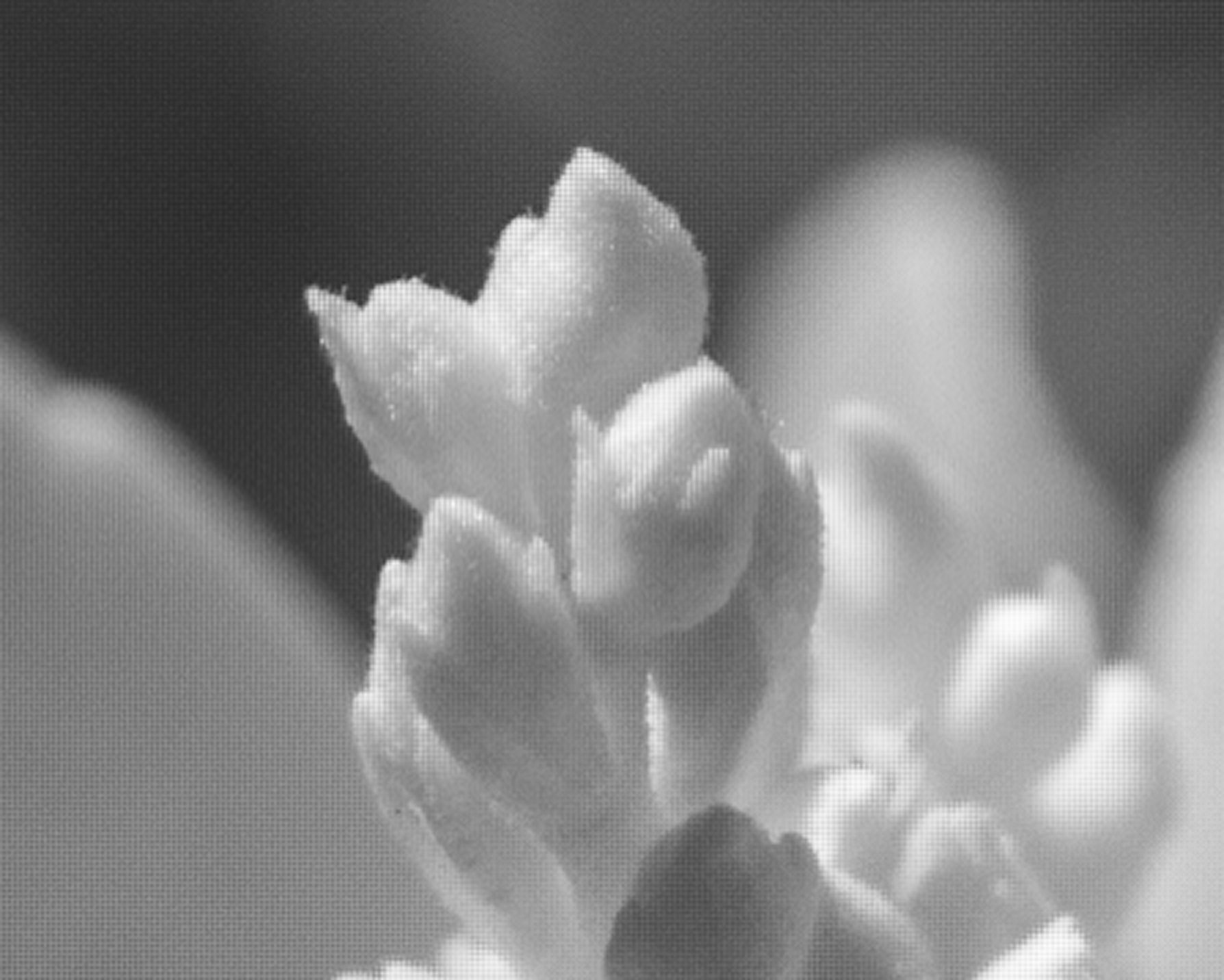
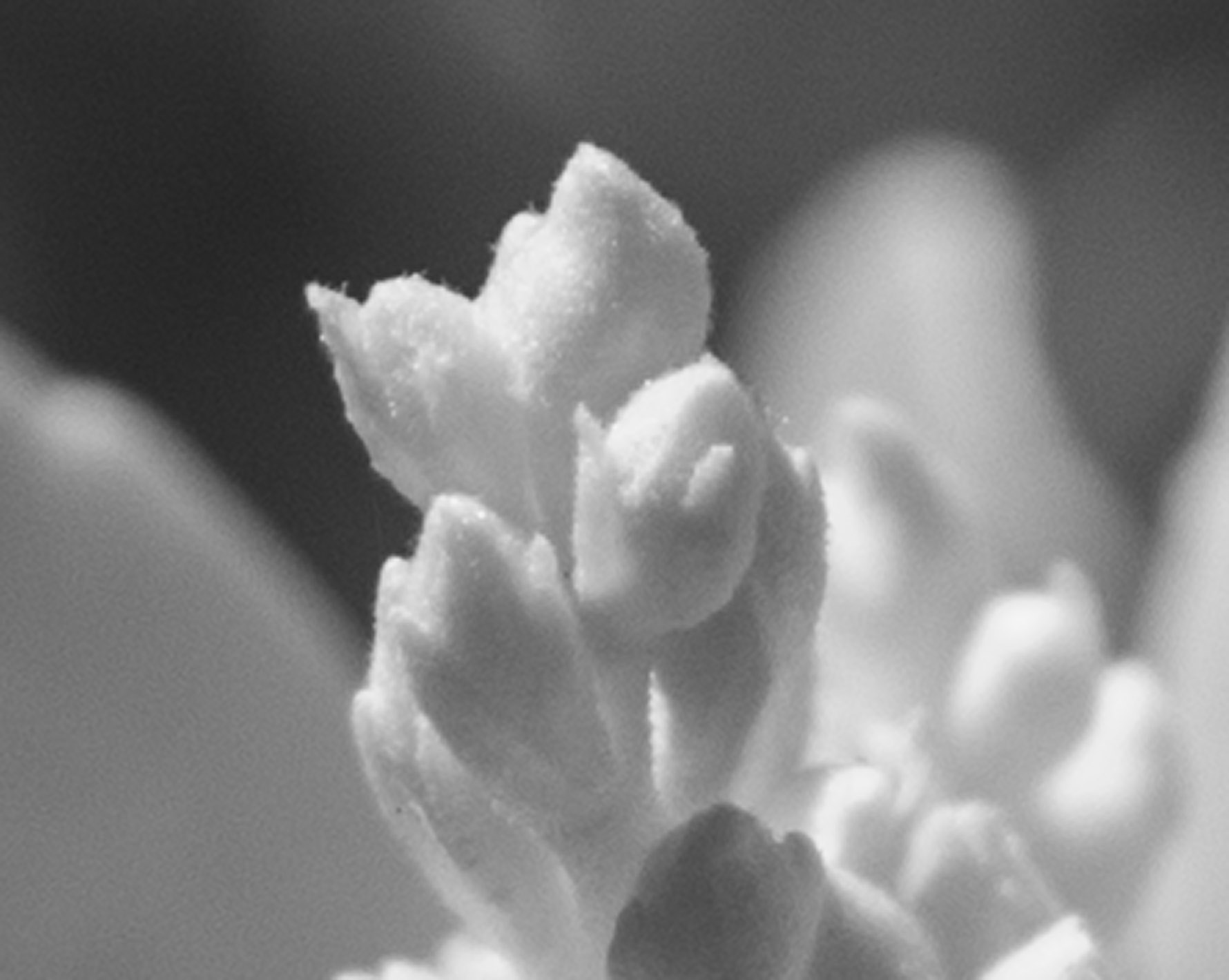
If blue light hits a pixel with a red bayer filter over it, it will record the luminosity as darker than it is in reality. Then it has to go through the demosaic process process to sort all that out between the different color pixels on the bayer array. To give you an idea, I was playing with the converter with a full spectrum, non monochrome image. Skipping the demosaic process, you can see the difference in luminosity on adjacent pixels. Second shot is that same image with normal conversion.
I have an old NEX-5N laying around that I'm sending to Daniel to be modified (monochrome, full spectrum). Thanks all for the pointers and tips: I've been wanting a monochrome camera for a long time! If this goes well, I'll have to find an A7II or something similar to modify.
The monochrome conversion options are all great, but if you are willing to vest the time developing and digitizing B&W film on your own, I still need to be convinced that digital monochrome is actually advantageous - I highly doubt it, in fact with B&W film I have more options to tweak on greyscale/tonal range and contrast (plus grain if desired). For the price to convert a digital FF MLC to monochrome I can shoot a lot of film, too....
Finally, instead of just lurking, I joined this august forum system because of the interest shown here in monochrome conversions. Sent a A7RM2 off to Daniel Morrison for full-spectrum conversion.
There are certainly lots of trade offs. To simulate pan film with this rig you need two filters, the UV-IR cut filter and whatever B/W filter you want, so there will surely be some filter-stack degradation of the image. But if you want to fool around with monochrome IR as well, that's the price you pay.
I've loved playing with B/W conversion of ordinary Bayer raws in Lightroom, but if you push the color sliders too far you can get halos, etc.
One can be concerned at how effective the coatings on the cover glass will be, given the wide wavelength range involved. Will the dreaded hot spots be a problem?
I'm not sure I'm aiming to emulate film: I've shot a bit of B&W film in various formats, and I'd like to see what straight digital conversion does for me. I would think of it as different rather than better or worse than film. One thing that will be better though is low-light sensitivity, which is one thing I'd like to experiment with to see how things turn out.
Sigma Merrill users can also kind of get the same taste of this stuff by converting to B&W just from the top blue layer except low light performance is terrible. When I've done this I actually preferred the look from using all 3 layers instead of just the top, so who knows?
I've been running an Epson 1430 with Paul Roark's B&W inks for the last two years with my own profiles, and I'd like to feed it some higher quality B&W inputs too, so this will be an all-digital workflow until ink is laid onto paper.
retro, how do you have more options with film? I'm not a film basher, with good scans I could see it being roughly equal, but don't see how it's better. I don't have the time or space to develop my own film easier. Maybe someday but it'll be several years.
Steve, Kolari just released a new filter that's supposed to be great for eliminating hot spots. Still it seems to me the lens is still more important in that regard than the filter?
AZSteve wrote:
Finally, instead of just lurking, I joined this august forum system because of the interest shown here in monochrome conversions. Sent a A7RM2 off to Daniel Morrison for full-spectrum conversion.
There are certainly lots of trade offs. To simulate pan film with this rig you need two filters, the UV-IR cut filter and whatever B/W filter you want, so there will surely be some filter-stack degradation of the image. But if you want to fool around with monochrome IR as well, that's the price you pay.
I've loved playing with B/W conversion of ordinary Bayer raws in Lightroom, but if you push the color sliders too far you can get halos, etc.
One can be concerned at how effective the coatings on the cover glass will be, given the wide wavelength range involved. Will the dreaded hot spots be a problem?...Show more →
I use a clip-on hot mirror filter on the sensor of my a7R(m) to avoid the lens filter hassle. Just pop out the hot mirror when using IR or UV pass filters on the lens.
Hey, Scho, thanks for the internal filter tip, worth the forum price of admission already. Vignetting? Effect on hot spots?
As to hot spots, I was vaguely supposing reflection off the sensor/internal filter was at least partially involved, and the Kolari site seems to provide some support for that idea, although there must be more going on.
Scho wrote:
I use a clip-on hot mirror filter on the sensor of my a7R(m) to avoid the lens filter hassle. Just pop out the hot mirror when using IR or UV pass filters on the lens.
Mathieu18 wrote:
retro, how do you have more options with film? I'm not a film basher, with good scans I could see it being roughly equal, but don't see how it's better. I don't have the time or space to develop my own film easier. Maybe someday but it'll be several years.
Steve, Kolari just released a new filter that's supposed to be great for eliminating hot spots. Still it seems to me the lens is still more important in that regard than the filter?
I don't want to make this thread a film vs. digital thread because this isn't the point - two different media which can complement each other. You are right that by scanning you will lose some of the original tonal range fixed on the negative - but even a darkroom print will change contrast and tonal latitude in the final print (normally grain is less visible). Similar things happen in a scan of the negative - as stated you will lose some of contrast and tonal latitude, and grain will be more visible due to the reflection of the silver grain. This will always remain a catch and compromise of some sort no matter if purely analog or hybrid with scanning. But the difference to a digital monochrome will always be visible IMO - some films might be closer how a digital monochrome looks (for example XP2 400 film) while others will always have a lot more tonality (PanF+ 50 film). And especially highlight effects will look very different on film, too - something I personally like a lot in B&W. For me it is worth the effort working with film .
Agreed, and wasn't trying to go down that road either, more curious, I do shoot some film, and usually prefer B&W when doing so, but it's a lot more effort, and a digital monochrome is still an enticing proposition at least to me (and apparently a few others). I really just need to pick a body now and send it off, but I'm indecisive.
retrofocus wrote:
I don't want to make this thread a film vs. digital thread because this isn't the point - two different media which can complement each other. You are right that by scanning you will lose some of the original tonal range fixed on the negative - but even a darkroom print will change contrast and tonal latitude in the final print (normally grain is less visible). Similar things happen in a scan of the negative - you will lose some of contrast and tonal latitude, and grain will be more visible due to the reflection of the silver grain. This will always remain a catch and compromise of some sort no matter if purely analog or hybrid with scanning. But the difference to a digital monochrome will always be visible IMO - some films might be closer how a digital monochrome looks (for example XP2 400 film) while others will always have a lot more tonality (PanF+ 50 film). And especially highlight effects will look very different on film, too - something I personally like a lot in B&W. For me it is worth the effort working with film ....Show more →
I can't say enough good things about Paul Roark and his work. Piezography (Jon Cone's turnkey system) is apparently great stuff... but Paul's open source carbon on cotton approach is a fantastic, and extremely inexpensive, option for people who want total control. I'm using Paul's "Eboni Variable Tone" formula in my Epson 3880 with cotton rag papers.
Andre Y wrote:
I've been running an Epson 1430 with Paul Roark's B&W inks for the last two years with my own profiles, and I'd like to feed it some higher quality B&W inputs too, so this will be an all-digital workflow until ink is laid onto paper.
Mathieu18 wrote:
Agreed, and wasn't trying to go down that road either, more curious, I do shoot some film, and usually prefer B&W when doing so, but it's a lot more effort, and a digital monochrome is still an enticing proposition at least to me (and apparently a few others). I really just need to pick a body now and send it off, but I'm indecisive.
Absolutely - film requires more time and IMO especially patience. I also love digital monochrome for specific applications, for example monochrome infrared which I do all digital. For high contrast monochrome images (like most IR photos) digital is as good or even better than film. I converted a 5D MkII to infrared several years ago and never regretted this move. I believe a monochrome MLC can be a lot of fun, too - nothing wrong with it!
Mathieu18 wrote:
If blue light hits a pixel with a red bayer filter over it, it will record the luminosity as darker than it is in reality. Then it has to go through the demosaic process process to sort all that out between the different color pixels on the bayer array. To give you an idea, I was playing with the converter with a full spectrum, non monochrome image. Skipping the demosaic process, you can see the difference in luminosity on adjacent pixels. Second shot is that same image with normal conversion.
I think I understand, but I'm not quite sure how much of benefit (quantifiably) a monochrome conversion's increased sensitivity and resolution provide. Do we have a estimated amount? For example, does a monochrome A7r (36M) provide more resolution and/or sensitivity than a A7rII (42MP) image converted to B&W?
+1 and also for Roy Harrington's pioneering work on QTR. I worked closely with both Roy and Paul on some of the early B+W printing development.
rdeloe wrote:
I can't say enough good things about Paul Rorak and his work. Piezography (Jon Cone's turnkey system) is apparently great stuff... but Paul's open source carbon on cotton approach is a fantastic, and extremely inexpensive, option for people who want total control. I'm using Paul's "Eboni Variable Tone" formula in my Epson 3880 with cotton rag papers.
grahamgibson wrote:
I think I understand, but I'm not quite sure how much of benefit (quantifiably) a monochrome conversion's increased sensitivity and resolution provide. Do we have a estimated amount? For example, does a monochrome A7r (36M) provide more resolution and/or sensitivity than a A7rII (42MP) image converted to B&W?
For me it is less about absolute resolution and more to do with perceived tonal transition smoothness and dynamic range that allows greater detail and noise control in both shadows and highlights.


 .
.