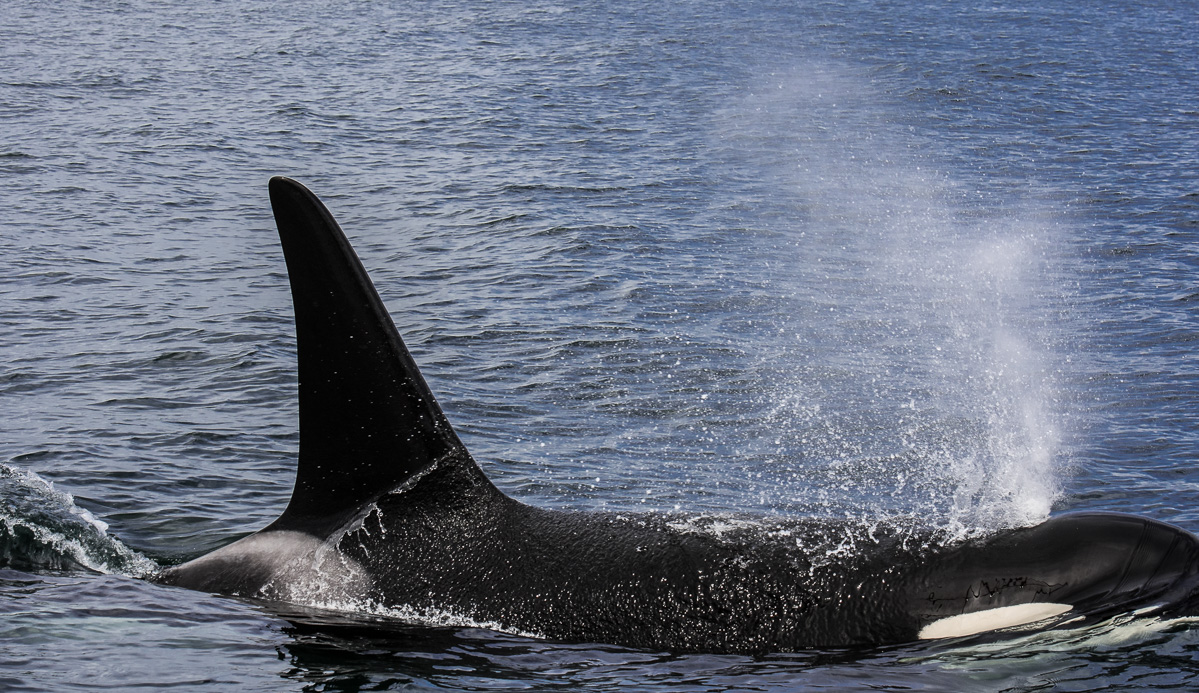
Taking my 850 out for a whale watching tour in Maui this week. Bringing my Nikon AF-S NIKKOR 200-500mm F/5.6E ED VR Lens (since it's a large less maneuverable boat). Was thinking Shutter priority Manual 1500'ish, Auto ISO. VR on/off? Maybe crop it down to DX to get more reach. Any advice VERY appreciated. Marry Christmas.
Make sure you have your rig strapped around your upper torso (similar to a Black Rapid).
You may find yourself much closer than you now anticipate. And you can't back up! If it is me, I am bringing enough glass to cover wide angle, all the way to my 200-500. I like high quality zooms.
And I always bring a backup body.
Manual, AUTO ISO and do frequent checks. I would go higher on the shutter speed. I like 3200th. Splashing water moves fast, and I like to freeze it. But that's just me. Some like the motion look.
I would choose the base ISO just as low as I could go. 400...maybe lower? Here in Maine, I feel lucky to get down to 640.
I love VR. If you are not on a tripod, why even consider not using VR? I never shoot without VR on. I sometimes forget it is on, even while on the tripod. There is no loss of image quality. And VR is of benefit, even at very high shutter speeds. It dampens the apparent movement of the subject in the viewfinder.
If you have a second body, I would put a 70-200-ish lens on it to be sure.
VR is of no use above 1/1000, it's probably counterproductive.
Manual 1/1500, F5.6 Auto ISO. If necessary you can change that on the flight.
No reason to us DX-crop, you can always crop in PP. Be sure to have enough cards; 64Gb is about 600 images on a D850.
In my case I would go with D500+70-200E and D850+200-500E and probably use the D500 combination the most.
I spent a week (+) on a boat photographing whales, sea lions, seals, otters and birds. I shot big whales from the deck of a sail boat and smaller stuff from a zodiac. My wife and I brought a lot of kit, but found that the 24-120, 70-200 and 300mm pf were used more than our bigger/longer lenses. Whale photography is super challenging because the animals disappear and reappear in unexpected locations. After a while, you get better at predicting where they will surface, but these predictions will be wrong more often than right... my point? Shoot wide and plan to crop. High pixel density cameras and fast frame rates will be your friend. Also, if you get a chance, stay low on your boat to avoid a top-down view of your subject.... Whale/dolphin photography is loads of fun but be prepared to spend some serious time behind the computer doing edits and trashing misfires.
cheers,
bruce
Don't put your camera on DX, but do that later in pp. Moving target, moving boat, so the chance that the whale is out of the DX-frame but stil in the FX one is possible.
I returned from my whale / marine mammals excursion on August 23rd and am still trying to cut my files down to something manageable. I believe I took about 8500 shots during 7 days of photography. While I have had similar output during other travels, the edit has been easier in the past. Selecting bests from nuanced positions of whale bodies has been a challenge.
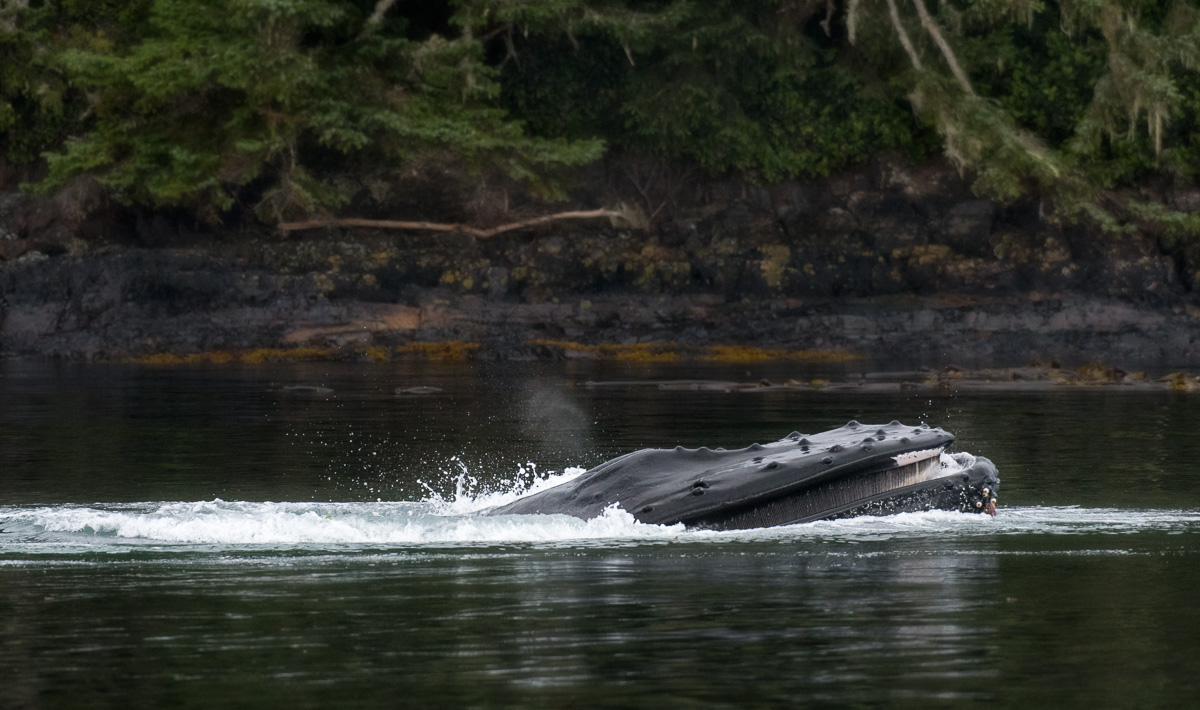
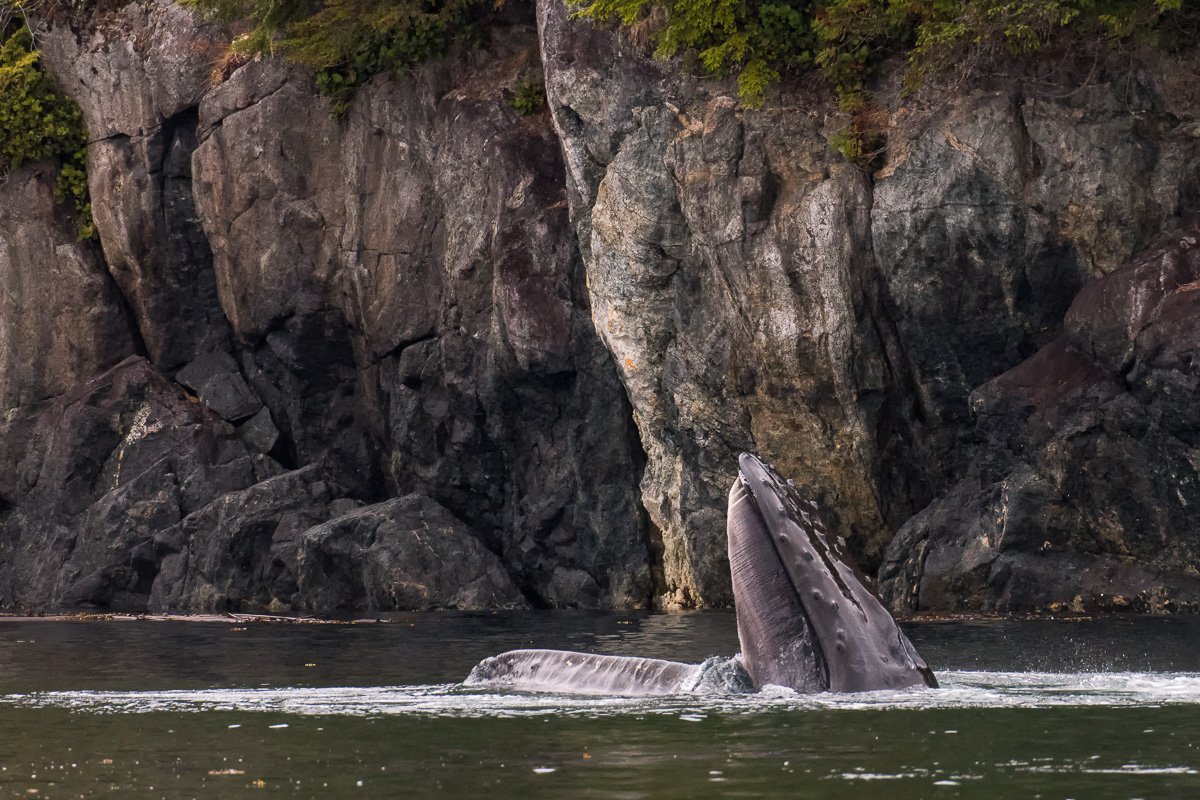
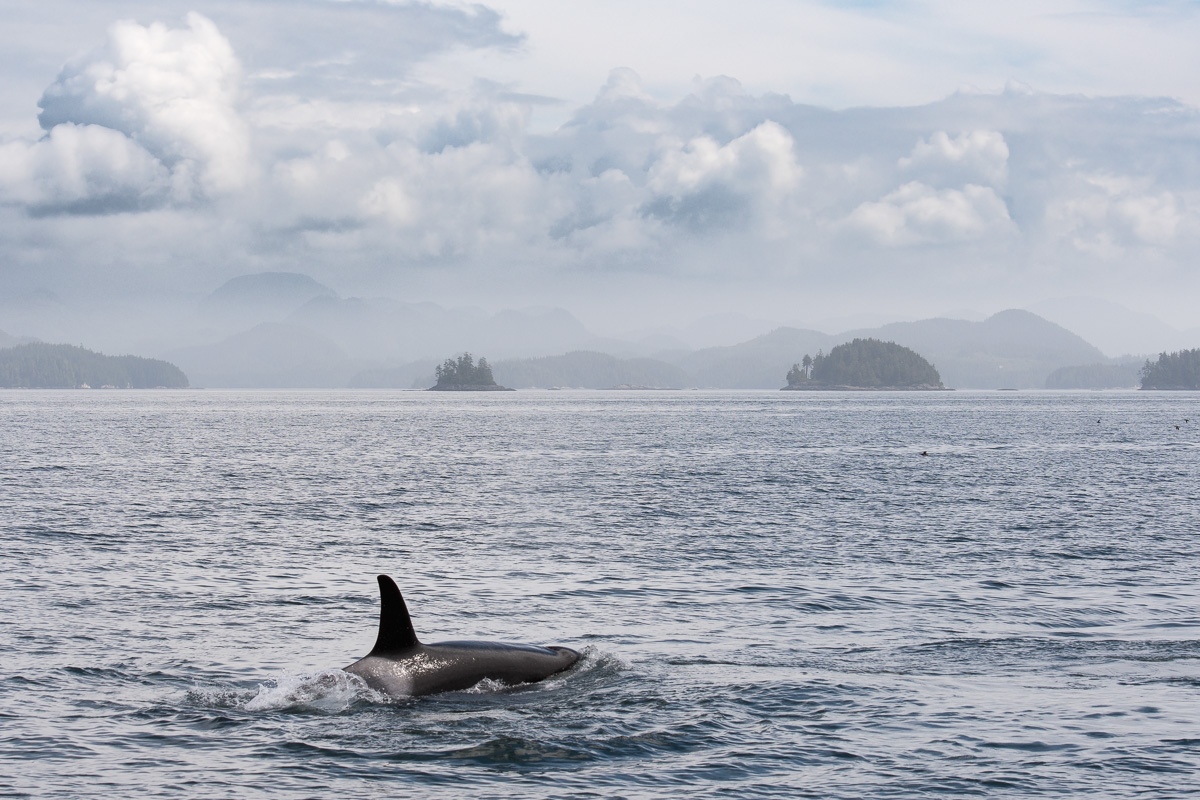
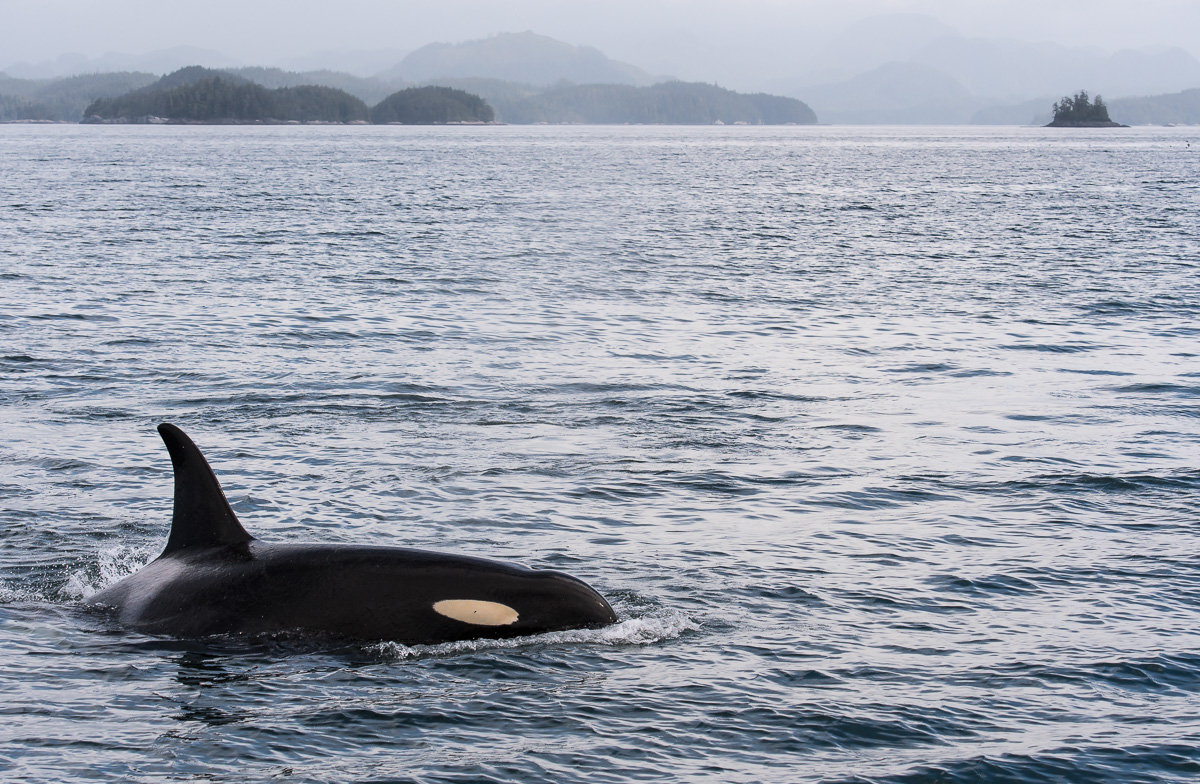
Anyway, here is a selection of orcas and humpbacks from my first two days on the sailboat.
have fun...
bruce
All good advice. Shooting whales is all about the variables. Everything is moving, the whale, the boat and you (even a big boat will have some movement). I've shot in shutter priority, aperture priority and manual with pre-selected shutter and aperture. Always with VR on regardless of shutter speed. And always auto ISO. Over 300mm can be problematic since the greater magnification adds to the movement and it can be difficult to find the subject in the view finder.
Whales are surprisingly fast, they usually only surface to breath, when you see them exhale they are already starting to dive again. A lot will depend on the weather and the tour operator. I've not been to Maui but I doubt there will be any smooth water. They may stop the boat or not. Federal law prohibits approaching closer than 100 yards, however if the whales come to you its ok.
I traveled to Frederick Sound from 2012 to 2016 specifically for the whales. Frederick Sound is in the Alaskan inside passage, south of Juneau. Its usually calmer water since its protected from the open ocean. All of the shots in the link below were shot from a 28 ft boat.
OwlsEyes wrote:
I returned from my whale / marine mammals excursion on August 23rd and am still trying to cut my files down to something manageable. I believe I took about 8500 shots during 7 days of photography. While I have had similar output during other travels, the edit has been easier in the past. Selecting bests from nuanced positions of whale bodies has been a challenge.
Anyway, here is a selection of orcas and humpbacks from my first two days on the sailboat.
have fun...
bruce
I looked at the shots in your link. Great images! Exciting! Tight images! Never have seen that breathing hole. Wow!
And +1 on your VR and Auto ISO comment. 100%
I am going to the Inside Passage soon. I think it is top priority for me.
We must protect those places at all cost.
Thank you
Robert
Dale Kirchhofe wrote:
All good advice. Shooting whales is all about the variables. Everything is moving, the whale, the boat and you (even a big boat will have some movement). I've shot in shutter priority, aperture priority and manual with pre-selected shutter and aperture. Always with VR on regardless of shutter speed. And always auto ISO. Over 300mm can be problematic since the greater magnification adds to the movement and it can be difficult to find the subject in the view finder.
Whales are surprisingly fast, they usually only surface to breath, when you see them exhale they are already starting to dive again. A lot will depend on the weather and the tour operator. I've not been to Maui but I doubt there will be any smooth water. They may stop the boat or not. Federal law prohibits approaching closer than 100 yards, however if the whales come to you its ok.
I traveled to Frederick Sound from 2012 to 2016 specifically for the whales. Frederick Sound is in the Alaskan inside passage, south of Juneau. Its usually calmer water since its protected from the open ocean. All of the shots in the link below were shot from a 28 ft boat.
Thanks Robert,
My trip was in and around Johnstone Straight and extended to the northern tip of Vancouver Island. The photography was nothing short of amazing. We were a small group and we focused on animal landscapes rather than portraiture. The BC coast is so dramatic with its mountains and fog that the whales just become a part of the landscape rather than the focus of the image.
The Pacific Coast is a North American treasure and it deserves better protection than it gets... the biodiversity is staggering. Sadly, fish farms, industry and shipping now threatens the coast's stability.
On your Maui trip, bring a plastic bag that you can get the camera into quickly. Often the boats are close to the whales and water can make it onto the boat.
"The BC coast is so dramatic with its mountains and fog that the whales just become a part of the landscape rather than the focus of the image." Insightful
"The Pacific Coast is a North American treasure and it deserves better protection than it gets... the biodiversity is staggering. Sadly, fish farms, industry and shipping now threatens the coast's stability." Yes, a NA treasure. Abundant rain, magnificent geography, high biodiversity. And I am sure it goes on and on.
Two thoughts Bruce:
1. A tenet of ecology: "The stability of an ecosystem is directly related to the diversity of its native species." I only added the word "native" because we are now moving species around the planet at an ever-increasing rate.
2. We have to make political leaders begin to consider working toward curbing the continual, ongoing, unbridled human population growth. Without that, we have no chance.
“It's coming home to roost over the next 50 years or so. It's not just climate change; it's sheer space, places to grow food for this enormous horde. Either we limit our population growth or the natural world will do it for us, and the natural world is doing it for us right now” … Sir David Attenborough
Anyone who loves nature should be doing their part to save what is left.
I donate to the Center for Biological Diversity. This is because the game has changed over the decades. I got into wildlife conservation back with the creation of ANWA (even before that), the place that Republican party has managed to place on the Tax Bill so that drilling can start. But it ain't over till its over, and it ain't over.
I like CBD, because today, it takes law suits.
The CBD has a bunch of young, Environmental Attorneys. I just love that!
Thanks for the kind words. On my trips to Alaska I stay in Petersburg (south of Frederick Sound). The tour operators out of Juneau don't travel to the Sound and the boats tend to be larger (more people). Early August seems to be the optimal time for whales. Here are some links to whet your appetite.
I normally stay for 7-10 days with an overnight in Seattle both ways. Alaska has a direct flight from KC to Seattle every day, then they have a daily from Seattle to Anchorage and back.
I rent a car so I can get around on the island although a car is not necessary depending where you stay. The B&B has kitchen facilities so you can cook for yourself. Petersburg population is approximately 3200, cruise ships can't get there (channel not deep enough) so there is no influx of 1000's of people.
The tour operator last year charged $375 for a whale watch trip. Its a full day, leave around 8:30-9:00 and return around 5:00. His boat has a heated cabin and enclosed bathroom, pack your own lunch. He can take up to 14 people, last year on the first trip there were 7 of us, second trip only 3 of us. He also does 4 hour trips to Le Conte glacier, its the southern most tidewater glacier in the US.
As you can probably tell I really like this location. Its not very "touristy" so its not crowded, a very laid back small town. If you have any questions I'll do my best to tell you what I know and have experienced. I think you would like it.
The tight cropped shots were just a bit of luck. I had my 200mm F2 mounted when the whale crossed in front of the boat, maybe a 100 feet out. Driver stopped the boat to see where it was going. Surprisingly it came towards the boat and swam under it from side to side 4-5 times then popped up behind us and continued to swim by the side of the boat for a few minutes, maybe about 15 feet out, far enough to get past the MFD of the lens. I had my 24-70 with me but no time to change lenses. I had no problem filling the frame.
The whale shots are very dramatic against the background, great work. Are the orcas a resident pod or transients ?
Perhaps I'll get an opportunity to see some one day. I'm told some transients show up near Petersburg, AK occasionally. I've not been to the Vancouver area but hope to one day, looks marvelous.
My one and only whale watching experience was out in Victoria BC in 2010 -- at the time, I was shooting a D7000 with 70-200VRI, and I got some excellent shots of a humpback whale.... great experience! Have fun.
I would just sit back, crack open a cold brew and enjoy the whale activities without taking pics. Plenty of them on the internet, and perhaps much better than I would be able to take. Cheers!
The whale shots are very dramatic against the background, great work. Are the orcas a resident pod or transients ?
Perhaps I'll get an opportunity to see some one day. I'm told some transients show up near Petersburg, AK occasionally. I've not been to the Vancouver area but hope to one day, looks marvelous.
dale
Hi Dale,
Thanks for your comments. We saw 84 (not a typo) orca in one day. Most were resident salmon eaters. The resident pod in the Vancouver Island area is one of the largest sub-populations in record. None of the whales pictured are transient (seal eaters) that we had seen. The area also sees a pelagic pod once in a while. If you love to watch marine mammals, this is a must see destination .
Bruce
Chris Dees wrote:
If you have a second body, I would put a 70-200-ish lens on it to be sure.
VR is of no use above 1/1000, it's probably counterproductive.
Manual 1/1500, F5.6 Auto ISO. If necessary you can change that on the flight.
No reason to us DX-crop, you can always crop in PP. Be sure to have enough cards; 64Gb is about 600 images on a D850.
In my case I would go with D500+70-200E and D850+200-500E and probably use the D500 combination the most.
Why not flip them, doesn’t the way you listed make them pretty close in focal range?
The d500 becomes a 140-300, coming close too and covering a lot of the 200-500’s range.
Flipped you get a 70-200 and a 300-750, you miss 205-295 but you don’t have so much shared range.
You only gain 140-195 the way you mention shooting them?