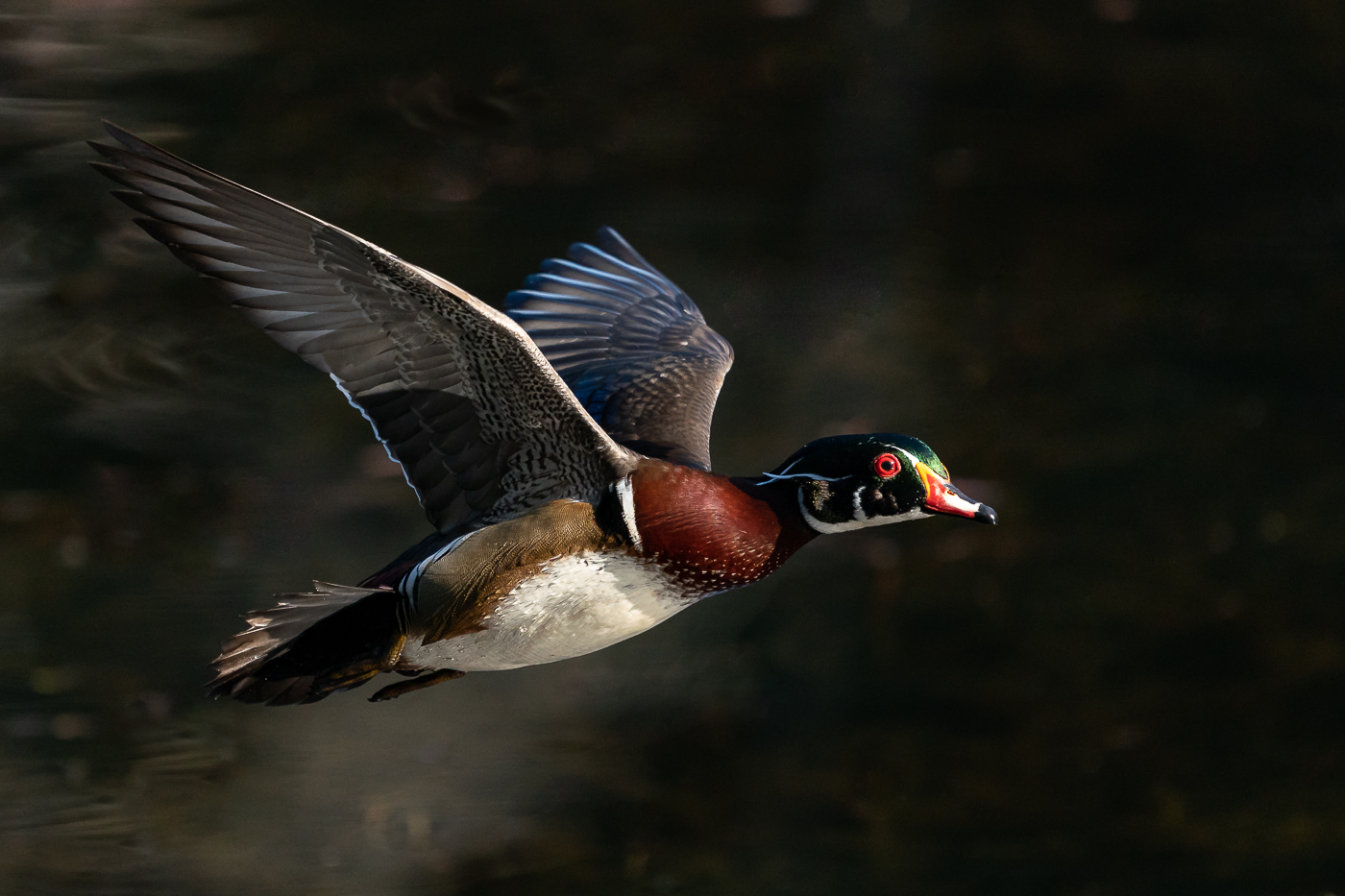
Shutter lubricant spray on the sensor has been a problem for the Canon 1Dx and 1Dx2 cameras. The 1Dx2 was worst, but this could have been a particular body. I wonder if this problem exists with high-end Nikons. The D600 was a disaster and Nikon had a silent camera replacement for the D600 owners.
The current EVF technology is useless for action, especially BIF, while distortions of colours and tonal values a hard compromise when a lighter gear is desired.
rezphotography wrote:
I'm not sure that I will go for the "Mark III" whenever it comes out, if Canon doesn't show a serious effort to solve those issues.
I will report this thread to the Dutch CPS guy (unless it's been done before? I saw some posts by Dutch guys here, but haven't found if they've reported this topic).
I have already decided that my 1DX Mark II will be the last 1D camera I purchase from Canon. I'll look elsewhere if I need an equivalent camera in the future. Canon has absolutely burned me on these cameras, and their response has been astonishingly poor.
You can contact therealthing here on Fred Miranda. He is in Holland, and he's been battle with Canon Germany for months and months over these issues.
garyvot wrote:
Just as a reminder (in case it hasn't come up before in this thread), Canon cameras have an automated dust removal feature that can help when you are stuck in the field and have no way to deal with this any other way.
You record a reference frame using the camera and it registers dust (or oil) spots and writes metadata to subsequent images. You can re-record the dust delete data as often as is needed to stay current with condition of the sensor.
It requires use of DPP for an automated dust removal workflow, and there is probably a practical limit to what it can achieve before introducing artifacts, but it is at least something.
This won't help if the amount of spatter dots is in the hundreds, which is often the case with this model. It'd be an enormous waste of time trying to map the spots all out, and by the time you use the camera again there'll be dozens more spots to contend with. Unfortunately, this isn't a practical solution.
No, I never contacted PetaPixel or DPReview, and it's certainly an idea going forward. I had many phone conversations and e-mails back and forth with both Canon Canada and CanonUSA to absolutely no avail. Arthur Morris' attempts at dealing with Canon Canada and CanonUSA were also futile. The best I could get out of Canon Canada was an admission that they could see the same pattern on all the files (from over 30 different cameras) I sent in -- i.e., that they could see oil splatter predominately in the upper left-hand corner of the frame. From there, their reaction was quite ingenious -- they simply said without examining those exact cameras they have no way of determining what's causing the 'phenomenon'. The files I sent were from owners scattered all over the globe; there was no way I could arrange them examining all those cameras.
I suggested they go try their own CPS stockpile, but didn't get very far on that. I even sent my camera in for them to fire off 200 shots on and they still claimed there was no problem. Having just used my camera at the bird sanctuary here the other day, I can tell you right now that I have many more spots than I did before the day's outing began...so Canon is just denying the issue and how fast the accumulation of spots occurs.
Honestly, at this point there's really two only options left for potentially getting any satisfaction:
1) Having a big and well known website like PetaPixel or DPReview pick the story up and make light of it, or
2) Starting a class action lawsuit and see where it gets us. This is definitely lawsuit material...but honestly, who wants to fight a lawsuit? I certainly don't have time at the moment, and it would be a nightmare even if I did.
unintended1 wrote:
Hi Chimping,
I know that you have put a lot of effort into collecting examples on this topic and had no luck getting a satisfactory response from Canon. Have you tried contacting PetaPixel or DPReview about it? Canon should be addressing this issue and maybe if a site like that took it up they might listen...
Chimping wrote:
This won't help if the amount of spatter dots is in the hundreds, which is often the case with this model. It'd be an enormous waste of time trying to map the spots all out, and by the time you use the camera again there'll be dozens more spots to contend with. Unfortunately, this isn't a practical solution.
Sure, in that case. I was making an assumption that the "hundreds" of splatter spots is not typical of every camera (without in any way suggesting that your experience is wrong). It feels to me like this would have blown up a lot more by now given that this model has been on the market for a couple of years.
For what it's worth, I do see a few spots (2-3) on both of my cameras when shooting a blank sky at f/22. Both bodies are only a few weeks old with maybe a couple thousand frames through each of them. The 5D4 I tested as a control (and which I've owned for more than a year), came up spotless by comparison.
A few spots I can live with, given that I never shoot below f/5.6 for the work that do (in which case the spots are completely invisible). So I'm not too concerned--yet. Had I not seen this thread I would likely never have detected the issue.
That said, I'll certainly be watching to see if this worsens. Hopefully I won't be back here in a few weeks or months with a similar experience to yours.
Lan11 wrote:
I wonder if this problem exists with high-end Nikons. The D600 was a disaster and Nikon had a silent camera replacement for the D600 owners.
I haven't heard complaints about this issue on other Nikons than the D600.
I typically clean once per year with a low powered vacuum (some cameras such as the D5 I have not needed to clean in 22 months of use). I don't apply aggressive filtering to amplify possible issues, I just shoot normally. My typical use for the D5 is at wide apertures but when I have shot stopped down (e.g. groups), I haven't found spots. I am not saying there can't be a few but I haven't found them yet.
I have noticed that when I have service clean the camera, it stays spotless for months. I realized that to achieve this one has to clean more than just the sensor surface. I tried the vacuum approach and it really made a difference. But be really careful and use only very low power. Blowing air into the mirror box won't remove the dust permanently as it can just move it into the corners from which it can be recycled and end up on the sensor again.
Lan11 wrote:
Shutter lubricant spray on the sensor has been a problem for the Canon 1Dx and 1Dx2 cameras. The 1Dx2 was worst, but this could have been a particular body. I wonder if this problem exists with high-end Nikons. The D600 was a disaster and Nikon had a silent camera replacement for the D600 owners.
The current EVF technology is useless for action, especially BIF, while distortions of colours and tonal values a hard compromise when a lighter gear is desired.
The EVF on an A9 is amazingly good for action, especially BIF. Granted it is the only one I've used that is suitable...
Lan11 wrote:
Shutter lubricant spray on the sensor has been a problem for the Canon 1Dx and 1Dx2 cameras. The 1Dx2 was worst, but this could have been a particular body. I wonder if this problem exists with high-end Nikons. The D600 was a disaster and Nikon had a silent camera replacement for the D600 owners.
The current EVF technology is useless for action, especially BIF, while distortions of colours and tonal values a hard compromise when a lighter gear is desired.
Yeah, totally useless for action, whether it's birds in flight or high level sports. Totally useless.
I suspect another person who has never held an a9.
Chimping wrote:
I have already decided that my 1DX Mark II will be the last 1D camera I purchase from Canon. I'll look elsewhere if I need an equivalent camera in the future. Canon has absolutely burned me on these cameras, and their response has been astonishingly poor.
You can contact therealthing here on Fred Miranda. He is in Holland, and he's been battle with Canon Germany for months and months over these issues.
I'll deal with all this when I am back... Now I'm off shooting in the midnight sun with a scratched sensor, yey...
I'd look elsewhere as well if I didn't already have thousands of $ invested in lenses....
- sensor dirt.
There are 2 distinct & separate issues: the lubricant spray & dust. Both affected the 1Dx2 more than 1Dx, but I’m not talking about hundreds of spots and nothing that showed in the pictures. Yet, a dirty sensor is a dirty sensor to be cleaned. After factory recall for re-lubrication and subsequent lubricant spray, the 1Dx sensor is now clean & probably comparable to the Nikon D5, assuming comparable frequency of the lens switching and camera use by the user who replied. Thanks for the input.
- EVF for action & BIF.
The above photos are irrelevant to my comment about the EVF. The A9 improvement over other mirrorless is due to the fps rate & number and spread of the AF points. Those who “Spray & pray” will be spending less on prayer books and much, much more on the shutter replacement. Sports, air shows etc. are not actions in my books, though there may be plenty of activities :-)
Lan11 wrote:
- EVF for action & BIF.
The above photos are irrelevant to my comment about the EVF. The A9 improvement over other mirrorless is due to the fps rate & number and spread of the AF points. Those who “Spray & pray” will be spending less on prayer books and much, much more on the shutter replacement. Sports, air shows etc. are not actions in my books, though there may be plenty of activities :-)
A few comments to address these points:
"Action", would love to know what is action in your books. If sports, air shows and BIF aren't action I'm not sure what else is out there that is?
Shutter Replacement: I've shot maybe 3000 images on my A9....only 10 of those used the shutter because I just wanted to hear what it sounds like.
The A9 improvements over other mirrorless is fps and spread.....this one I respectfully disagree with. The only reason I bought an A9 was for the EVF improvements and silent shooting to not disturb my subjects as much. I've tried other EVFs including the A7R3....I could never deal with the blackout and lag when shooting things moving or when I had to pan along with a BIF. The A9 is the first and only EVF I've used that solved this problem for me because it doesn't blackout at all and I can pan as fast as possible and it keeps a clear picture on the bird...all of this completely silent and never using the shutter. The things I didn't buy the A9 for were FPS and AF Spread although I'm happy to have both of them as needed.
The things I still don't like about even the top of the line EVF in the A9 are that it still doesn't give as nice of a view (ie too digital, contrasty, lacking detail) when looking through it trying to spot or ID a bird. I have to take a photo and zoom in (but at least I can do that with eye to the EVF the whole time). Also the way I shoot I will often be sitting there just watching the subjects through the OVF of my DSLRs and waiting for a good moment to get some action or interesting shot. Doing this with the A9 is a battery drain. I also understand that even though the A9 EVF is finally something I can deal with for my shooting it still won't satisfy everyone who prefers a good OVF. I'd still rather be looking through an OVF most of the time but I valued what the A9 brought to the table enough to add it to my DLSRs.
Oh and the A9 (likely all Sony mirrorless) collect dust easier than I've ever seen in my DSLRs (including my 1DX and 1DX2, not counting the oil)....but the good thing is it is really easy to get it off with the sensor being so close to you.
arbitrage wrote:
Oh and the A9 (likely all Sony mirrorless) collect dust easier than I've ever seen in my DSLRs (including my 1DX and 1DX2, not counting the oil)....but the good thing is it is really easy to get it off with the sensor being so close to you.
Interesting, because my 1dx2 stays way dirtier than my a9, but I've only had my a9 for about 5 months now, but so far, it has stayed clean (or the cleaning cycles are taking care of it automatically) and I've not seen any dirt on the sensor in my images. But, time may change that view.
timgangloff wrote:
Interesting, because my 1dx2 stays way dirtier than my a9, but I've only had my a9 for about 5 months now, but so far, it has stayed clean (or the cleaning cycles are taking care of it automatically) and I've not seen any dirt on the sensor in my images. But, time may change that view.
I need to check if my cleaning cycle is even on? I just noticed 2 or 3 spots after one day of shooting and when I used Mitesh's A9 in Florida it was absolutely filthy.
When I post, I always expect some readers to disagree respectfully or disrespectfully and I’m never wrong :-)
The activities I mentioned, fall into a routine category. This was written with full recognition that people love what they do and no intention of criticism.
Once upon a time, a guy with his Graflex camera loaded with Ansco 12 ASA film guesstimating the exposure and distance awaited arrival of the competitors at the finish line. If he consistently delivered goodies to the agency he was a hero. Today, we see a cluster of tripods with cameras aimed at the spot of the impending hectic tumult (mistaken for action) with some photographers sitting away with remotes. My friend, a hockey photographer, quit the most boring job he had (in his own words).
Action photography is something beyond ordinary or predictable like: WL activities, night birding with a bend-held camera without flash, strange birds in strange places, jumping fleas done with a macro lens… etc.
Here’re samples of: BIF, night birding and a strange bird visit at the Buckingham Palace (no idea who’s the photographer, but I can immediately recognize a great birder).
I don’t need to “hold” the A9. A small camera with fiddly controls, EVF and impenetrable menus which I can’t operate even without gloves doesn’t qualify. Sony should include a printed prayer books with the A9 despite the e-shutter. The only EVF improvement is black-out reduction. All other problems remain. A mirrorless camera with small AF coverage will often fail to focus and even show a small moving target in the VF. That’s why Canons offer the zone AF option. The A9 with close to 100% coverage made the camera usable.
Reports of sensor dirt vary between users due to their habits and application. “Baked-in lubricant” is a good horror story to tell, but a blob of dried lubricant will be removed by wetting. The pollen is another matter and should be cleaned by Canon. No idea why the A9 would be more prone to dust. The EM5 was exceptionally clean.
Hopefully more people will switch to the competition forcing Canon off the pot. Over 25 yrs. old lenses still in production is a disgrace.
How do you know you can’t operate it if you’ve never held it?
The menus are laid out exactly like Canons. Almost like they copied them after all the complaints in the earlier cameras
They also have a MyMenu like Canon so after that is set I’ve never gone back into the main menu system.
Adding to that are many more customizable buttons including options that go beyond even what Canon offers (already well beyond Nikon) on how you can customize a BBF button.
The EVF has been improved in more ways than just blackout. How about higher refresh rates and higher resolution?
I would agree that more AF points and AF options are usually a good thing. Sony has the most AF modes (compared to CaNikon) and the AF system IMO is about equal on its effectiveness to Nikon’s current system. Both of which have left Canons system behind especially for unexpected action as you have described. Nikon’s is still best for low light owls though.
I would recommend getting some first hand experience with these systems if you want to discuss them more on these forums. Otherwise all you have accomplished is to spread further FUD onto the interwebs 🤔
Lan11 wrote:
When I post, I always expect some readers to disagree respectfully or disrespectfully and I’m never wrong :-)
The activities I mentioned, fall into a routine category. This was written with full recognition that people love what they do and no intention of criticism.
Once upon a time, a guy with his Graflex camera loaded with Ansco 12 ASA film guesstimating the exposure and distance awaited arrival of the competitors at the finish line. If he consistently delivered goodies to the agency he was a hero. Today, we see a cluster of tripods with cameras aimed at the spot of the impending hectic tumult (mistaken for action) with some photographers sitting away with remotes. My friend, a hockey photographer, quit the most boring job he had (in his own words).
Action photography is something beyond ordinary or predictable like: WL activities, night birding with a bend-held camera without flash, strange birds in strange places, jumping fleas done with a macro lens… etc.
Here’re samples of: BIF, night birding and a strange bird visit at the Buckingham Palace (no idea who’s the photographer, but I can immediately recognize a great birder).
I don’t need to “hold” the A9. A small camera with fiddly controls, EVF and impenetrable menus which I can’t operate even without gloves doesn’t qualify. Sony should include a printed prayer books with the A9 despite the e-shutter. The only EVF improvement is black-out reduction. All other problems remain. A mirrorless camera with small AF coverage will often fail to focus and even show a small moving target in the VF. That’s why Canons offer the zone AF option. The A9 with close to 100% coverage made the camera usable.
Reports of sensor dirt vary between users due to their habits and application. “Baked-in lubricant” is a good horror story to tell, but a blob of dried lubricant will be removed by wetting. The pollen is another matter and should be cleaned by Canon. No idea why the A9 would be more prone to dust. The EM5 was exceptionally clean.
Hopefully more people will switch to the competition forcing Canon off the pot. Over 25 yrs. old lenses still in production is a disgrace.
- “If sports, air shows and BIF aren't action I'm not sure what else is out there that is?
BIF? Looks like careless reading.
- “The EVF has been improved in more ways than just blackout. How about higher refresh rates and higher resolution?”
Double counting or misunderstanding? Higher refresh rate = reduced black-out.
- “How do you know you can’t operate it if you’ve never held it?”
Experience my Dear Watson, experience :-)
I’ll quote myself: ““A small camera with fiddly controls, EVF and impenetrable menus which I can’t operate even without gloves doesn’t qualify.”
Parameter limits determine gear usefulness.
Canon probably has the best of the poorly designed menu structure. Addition of “My menu”, is a work-around the problem. Despite some shortcomings Canon equipment is excellent as the results consistently confirm this. Minolta, later Sony, tried unsuccessfully to break Canon-Nikon duopoly. Kudos to Sony for trying. The competition benefits consumers, but unfortunately for me Canon has been the best game in town for some time.
Conclusion: the thread title smacks of cheap sensationalism calling for attention. Canon sensors are not more or less dirty than competition. They all need periodical cleaning. When done properly it will not damage the sensor, but sensors with stabilization need extra care.
Im not sure how the reviewer off the previous page could possibly call the 1DxMk2 the “perfect camera” given reports from at least two people in the world that it sucks.
Does anyone have any sensor swabs?
Lan11 wrote:
“A small camera with fiddly controls, EVF and impenetrable menus which I can’t operate even without gloves doesn’t qualify.”
The first two are the biggest problem for me but I have larger hands. When I had a chance to use the A9 with 100-400 my hand was just too scrunched up and the grip/lens gap way too narrow. Not a comfortable hand position for a 5-6 hour event. My hand position on the 1DX2 is way more neutral and the arc that my thumb travels hits all the buttons I need with no bending into contortions.
I have no idea if Sony will ever release a somewhat larger A9 but I hope so as I think the other aspects of it are quite good.
One really nice thing about the Sony 100-400 is the zoom ring right next to the body. Something I never liked about the Canon version.
Lan11 wrote:
sensors are not more or less dirty than competition. They all need periodical cleaning.
In my hands even the 5D bodies are very uncomfortable. Sony would have to offer a comparable lens selection, a true Pro grade camera and most of all a real Pro support to lure a serious photographer. I don’t see it happening anytime soon.
What I see here is a clumsy attempt of plagiarism. I’m referring to the funny story of the “baby 1Dx”, when a 3rd tear Canon camera was hyped for those who “pray & spray” and looked for a high density sensor, as close to the 1D series performance. The A9 is allegedly even more marvellous.
Where is the forum Censor(or Sensor?)-in-Chief, PetKal to sanitize the forum sending the Sony fun club boys to the proper nook? Being a “proud” owner of the “baby 1Dx” he should have additional incentive :-)