This topic is in the 2017 archive. You can read it and like its posts here. It is read only.
Archive 2017Official Nikon D850 image & resource hub thread ...
brian_sp
Offline
Activity
[X]
Details
p.171 #1Official Nikon D850 image & resource hub thread ( images picture )
from friday evening, before the harrier


Apr 19, 2020 at 11:45 PM
brian_sp
Offline
Activity
[X]
Details
p.171 #2Official Nikon D850 image & resource hub thread ( images picture )
at the airport again and another first, first time seeing a first time pictures
a short eared owl, i was watching him on the opposite side of the field from where i go, a good distance off

i was watching the owl hoping he would fly closer and this guy comes flying in, so i adjusted my camera setting to grab some prop blur


feeling all cocky because i got sharp shots at 1/80 @ 700mm handheld i headed to the other side of the field to see if the owl was still around, right after i got there he showed up and i blasted off a bunch of what would of been nice shots of another first for me, except i forgot to readjust my settings
i got one, artsy fartsy shot though

as Arnie says.........."I'll be back"
a short eared owl, i was watching him on the opposite side of the field from where i go, a good distance off
i was watching the owl hoping he would fly closer and this guy comes flying in, so i adjusted my camera setting to grab some prop blur
feeling all cocky because i got sharp shots at 1/80 @ 700mm handheld i headed to the other side of the field to see if the owl was still around, right after i got there he showed up and i blasted off a bunch of what would of been nice shots of another first for me, except i forgot to readjust my settings
i got one, artsy fartsy shot though
as Arnie says.........."I'll be back"
Apr 22, 2020 at 01:06 AM
p.171 #3Official Nikon D850 image & resource hub thread ( images picture )
brian_sp wrote:
at the airport again and another first, first time seeing a first time pictures
a short eared owl, i was watching him on the opposite side of the field from where i go, a good distance off
https://live.staticflickr.com/65535/49804638441_def95a488d_h.jpg
i was watching the owl hoping he would fly closer and this guy comes flying in, so i adjusted my camera setting to grab some prop blur
https://live.staticflickr.com/65535/49804945537_5fe1c1c951_h.jpg
https://live.staticflickr.com/65535/49804637746_20dcbb89af_h.jpg
https://live.staticflickr.com/65535/49804945672_358f1e7b54_h.jpg
feeling all cocky because i got sharp shots at 1/80 @ 700mm handheld i headed to the other side of the field to see if the owl was still around, right after i got there he showed up and...Show more →
Great work. You nailed his eye even on the "artsy fartsy shot"
Apr 22, 2020 at 02:24 AM
brian_sp
Offline
Activity
[X]
Details
p.171 #4Official Nikon D850 image & resource hub thread ( images picture )
Lance B wrote:
Great work. You nailed his eye even on the "artsy fartsy shot"
Thank you Lance, it is a very little conciliation for the shots i lost
but i am more impressed with the shots of the helicopter, i was never much of a fan of the 1.4 tc at distant shots but i spent a bit of time just before shooting these micro adjusting and i was impressed with the shots i got
Apr 22, 2020 at 03:14 AM
p.171 #5Official Nikon D850 image & resource hub thread ( images picture )
Based on images taken with the D850 and the 105mm macro lens:
https://photos.smugmug.com/Things/Small-things/i-RSsMw9T/0/298adb8a/X2/2020-04-23%2016-50-50%20%28C%2CSmoothing4%29-Edit-X2.jpg
https://photos.smugmug.com/Things/Small-things/i-RSsMw9T/0/298adb8a/X2/2020-04-23%2016-50-50%20%28C%2CSmoothing4%29-Edit-X2.jpg
Apr 25, 2020 at 12:59 AM
p.171 #6Official Nikon D850 image & resource hub thread ( images picture )
kwilliam8 wrote:
Based on images taken with the D850 and the 105mm macro lens:
https://photos.smugmug.com/Things/Small-things/i-RSsMw9T/0/298adb8a/X2/2020-04-23%2016-50-50%20%28C%2CSmoothing4%29-Edit-X2.jpg
Looks like a CD?
Based on images taken with the D850 and the 105mm macro lens:
https://photos.smugmug.com/Things/Small-things/i-RSsMw9T/0/298adb8a/X2/2020-04-23%2016-50-50%20%28C%2CSmoothing4%29-Edit-X2.jpg
Looks like a CD?
Apr 26, 2020 at 03:29 AM
p.171 #7Official Nikon D850 image & resource hub thread ( images picture )
brian_sp wrote:
Thank you Lance, it is a very little conciliation for the shots i lost
but i am more impressed with the shots of the helicopter, i was never much of a fan of the 1.4 tc at distant shots but i spent a bit of time just before shooting these micro adjusting and i was impressed with the shots i got
very nice shots. the color of the plane enriched the scene as green and orange like warm and cold colors.
what was your aperture setting. I can see the tires in focus and the front of the plane as well in focus. I assume around f/11 or even 16
Lance B wrote
Great work. You nailed his eye even on the "artsy fartsy shot"but i am more impressed with the shots of the helicopter, i was never much of a fan of the 1.4 tc at distant shots but i spent a bit of time just before shooting these micro adjusting and i was impressed with the shots i got
very nice shots. the color of the plane enriched the scene as green and orange like warm and cold colors.
what was your aperture setting. I can see the tires in focus and the front of the plane as well in focus. I assume around f/11 or even 16
Apr 26, 2020 at 05:16 AM
p.171 #8Official Nikon D850 image & resource hub thread ( images picture )
Cabin wrote:
https://photos.smugmug.com/Things/Small-things/i-RSsMw9T/0/298adb8a/X2/2020-04-23%2016-50-50%20%28C%2CSmoothing4%29-Edit-X2.jpgLooks like a CD?
Actually, an unwritten DVD, with water drops on top. I shot 34 images at f/14, using the focus shift shooting feature of the D850, and then merged those images in Helicon Focus. I used the Nikon R1C1 macro flash system, which drew out the rainbow colors in the DVD (natural light had some colors, but they were very dull). I find it fascinating that the rainbow colors in the DVD run vertically, while the rainbow colors in the water drops run horizontally. That was not what I was expecting!
Keith W.
kwilliam8 wrote
Based on images taken with the D850 and the 105mm macro lens:https://photos.smugmug.com/Things/Small-things/i-RSsMw9T/0/298adb8a/X2/2020-04-23%2016-50-50%20%28C%2CSmoothing4%29-Edit-X2.jpg
Actually, an unwritten DVD, with water drops on top. I shot 34 images at f/14, using the focus shift shooting feature of the D850, and then merged those images in Helicon Focus. I used the Nikon R1C1 macro flash system, which drew out the rainbow colors in the DVD (natural light had some colors, but they were very dull). I find it fascinating that the rainbow colors in the DVD run vertically, while the rainbow colors in the water drops run horizontally. That was not what I was expecting!
Keith W.
Apr 26, 2020 at 09:36 AM
brian_sp
Offline
Activity
[X]
Details
p.171 #9Official Nikon D850 image & resource hub thread ( images picture )
NissanPatrol wrote:
very nice shots. the color of the plane enriched the scene as green and orange like warm and cold colors.
what was your aperture setting. I can see the tires in focus and the front of the plane as well in focus. I assume around f/11 or even 16
Thank you, yes it was F16, 1/80 ss, iso 80
very nice shots. the color of the plane enriched the scene as green and orange like warm and cold colors.
what was your aperture setting. I can see the tires in focus and the front of the plane as well in focus. I assume around f/11 or even 16
Thank you, yes it was F16, 1/80 ss, iso 80
Apr 26, 2020 at 09:38 AM
brian_sp
Offline
Activity
[X]
Details
p.171 #10Official Nikon D850 image & resource hub thread ( images picture )


Apr 26, 2020 at 12:50 PM
p.171 #11Official Nikon D850 image & resource hub thread ( images picture )
Australian Boobook:
D850+Tamron 150-600mm G1
D850+Tamron 150-600mm G1
 |
||
| https://a4.pbase.com/o12/23/1148723/1/170661131.dFBRubcZ._D8D0404C.jpg | ||
|
Apr 27, 2020 at 08:24 PM
brian_sp
Offline
Activity
[X]
Details
p.171 #12Official Nikon D850 image & resource hub thread ( images picture )


Apr 28, 2020 at 06:30 PM
p.171 #13Official Nikon D850 image & resource hub thread ( images picture )
Out the Window
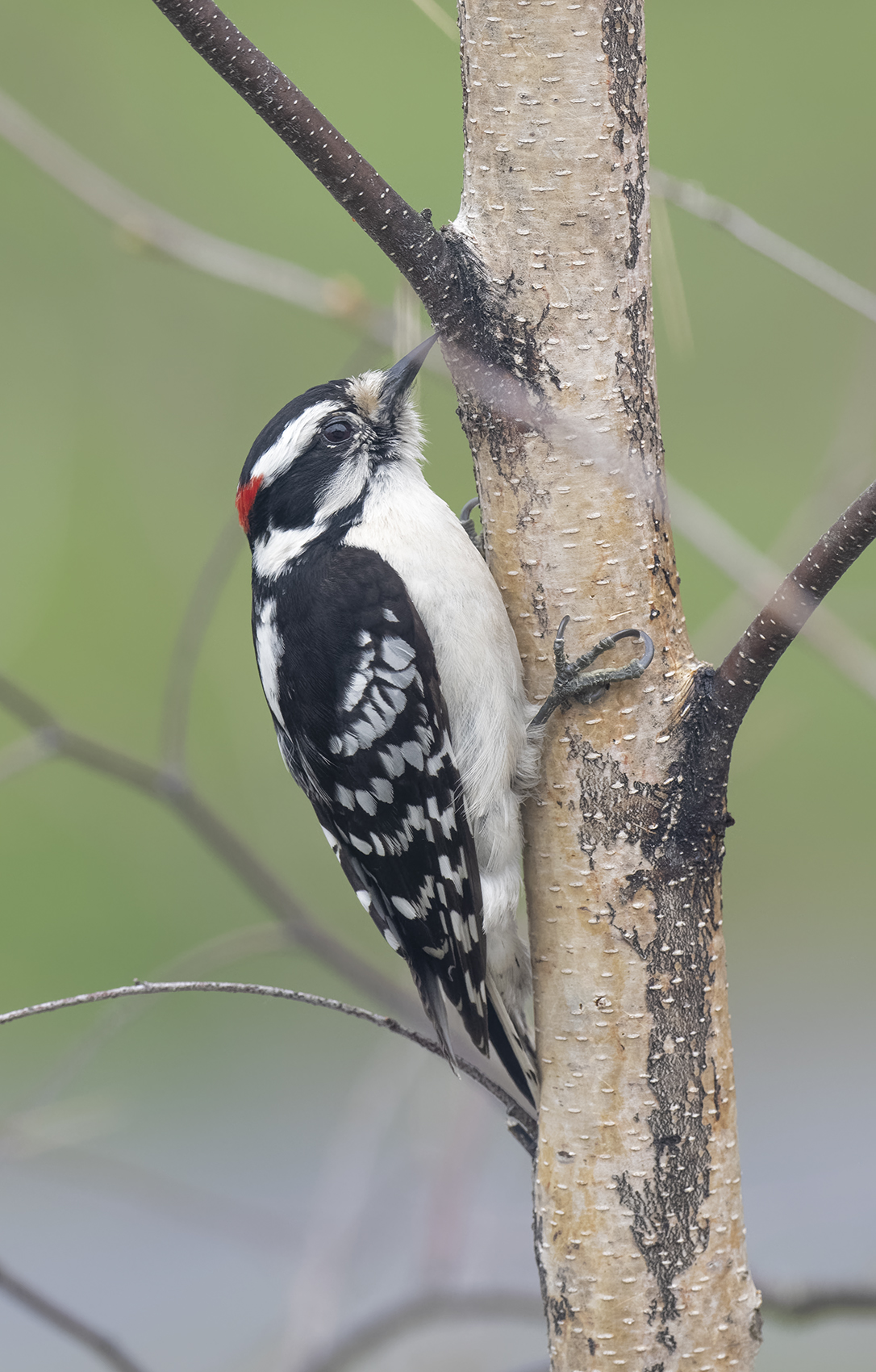
Hairy Woodpecker on a Gray Birch
Hairy Woodpecker on a Gray Birch
Apr 29, 2020 at 12:59 PM
p.171 #14Official Nikon D850 image & resource hub thread ( images picture )
from last August at a pond of my boyhood
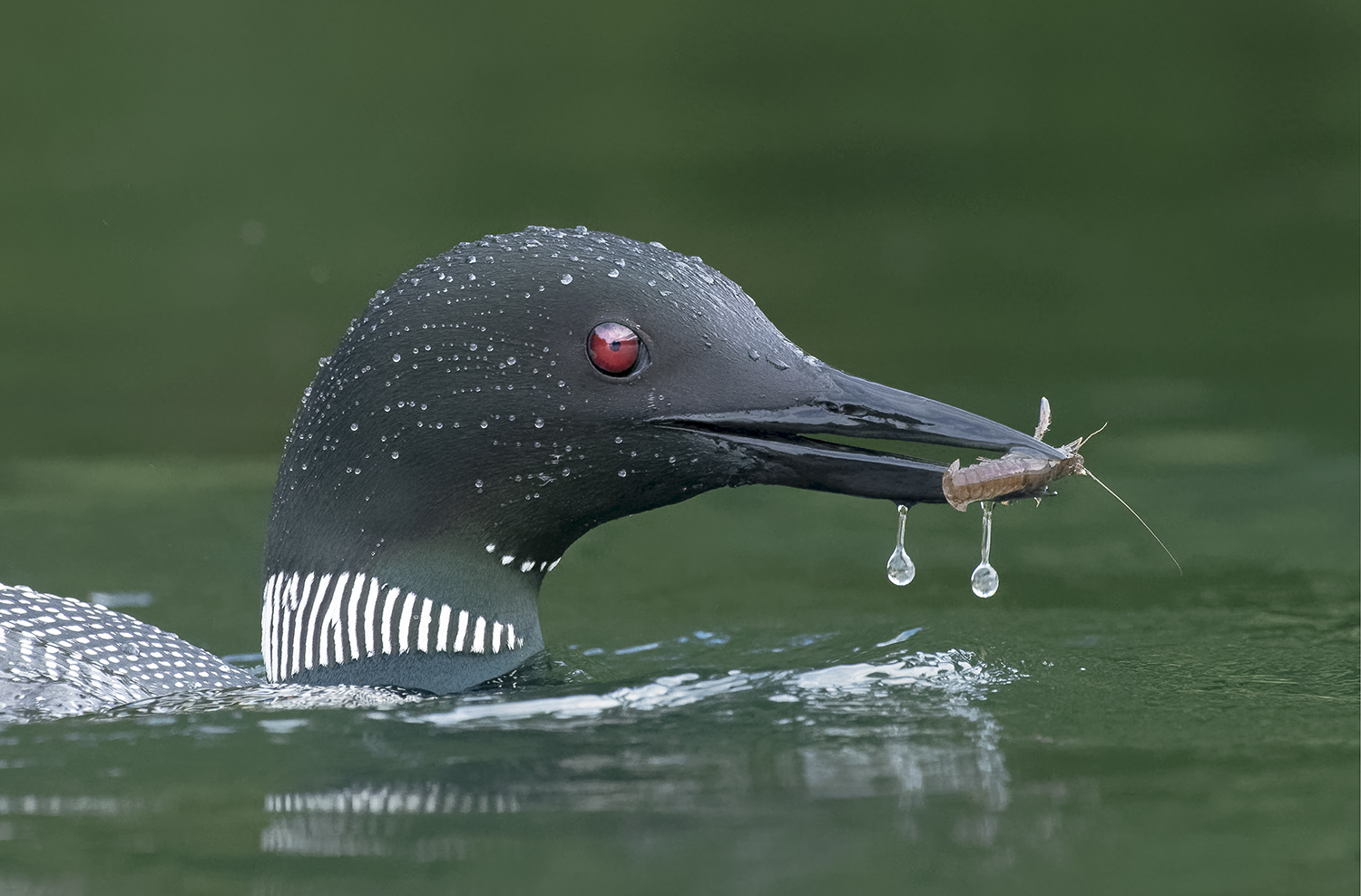
mother Common Loon carrying crayfish to her chick
mother Common Loon carrying crayfish to her chick
Apr 29, 2020 at 02:56 PM
p.171 #15Official Nikon D850 image & resource hub thread ( images picture )
I found this bullfrog under brush that was overhanging the pond’s edge. By choosing to remain under this brush, purposely or by chance, this Bullfrog greatly increased its chance of survival.
The spring-emergence of Bullfrogs is quite closely synchronized with the emergence of aquatic plants. The frog must have the vegetation for escape cover.
Bullfrogs fall prey mostly to the Great Blue Heron (GBH), and both NA Bass species (Mycropterus spp.). Overwhelmingly, its greatest danger is the GBH. A bullfrog in the open waters of a marsh is easy prey for the ever-present GBH. Over a period of weeks, one or two Great Blue Herons are capable of finding every last Bullfrog on a pond.
Big bass cruise just outside the outer edge of the emergent, aquatic vegetation and into dusk they venture into and through that vegetation, *right up to the shoreline*. Frogs have no chance if they swim into open water, out past the edge of the vegetation in the littoral zone. Bullfrogs stay very tight to the shore and take their chances with the GBH.
But over a period of weeks, eventually I find I am unable to re-find most bullfrogs that I previously photographed. They disappear. I believe their disappearance is mostly due to the efficiency of the GBH’s that I see hunting these shallows day after day, throughout the spring-summer.
At best, bullfrogs have a poor escape mechanism. I’ve studied nature my entire life. Even within the cover of aquatic vegetation, I've always found any frog easy to spot and catch-by-hand, if I search for the frog just after it has submerged. I cannot recall ever seeing a Bullfrog attempt an escape onto the shoreline. And venturing into open water beyond the shallow vegetation would be certain death. So, when escaping perceived danger, Bullfrogs go directly to the bottom, not moving too far laterally. On the bottom, they shut their eyes and simply do not move. With their eyes closed and feeling secure as they rely on surrounding vegetation, they are oblivious to anything around them.
Btw, this is the same escape mechanism the American Alligator uses in the Everglades. Both animals feel completely secure within their escape cover. And as with the gator in shallow Everglades waters, once submerged, and with its eyes shut, the Bullfrog has no idea if it is being watched from above.
I suspect that if a GBH spots a bullfrog just as it submerges, the frog has little chance for survival.
GBH's are highly effective hunters. Their long toes keep them buoyant on the soft and deep detritus. Their long legs, body and neck, give their color-vision eyes a very lofty perspective of any faunal activity occurring in the shallows. And the GBH will spend most of its hunting-time standing absolutely still, with no head movement whatsoever, as it intensely scrutinizes the shallow vegetation for any movements. And to any aquatic fauna that is looking upward, the GBH's plumage is cryptically colored against similarly colored foliage along the water's edge.
Btw, the Great Blue Heron will kill and eat any living animal that it is capable of subduing and even some that it finds too large to swallow.
Among North American wading birds, the Great Blue Heron is the most assailing, by far! There's an abundance of documentations of the GBH attacking and trying to swallow mammals that are just too large to swallow. I once knew a GBH that made its living (day in and out) in upland fields by spearing/swallowing Boreal Red-backed Voles.
This year I will again love attempting to locate/photograph Bullfrogs in the shallows.
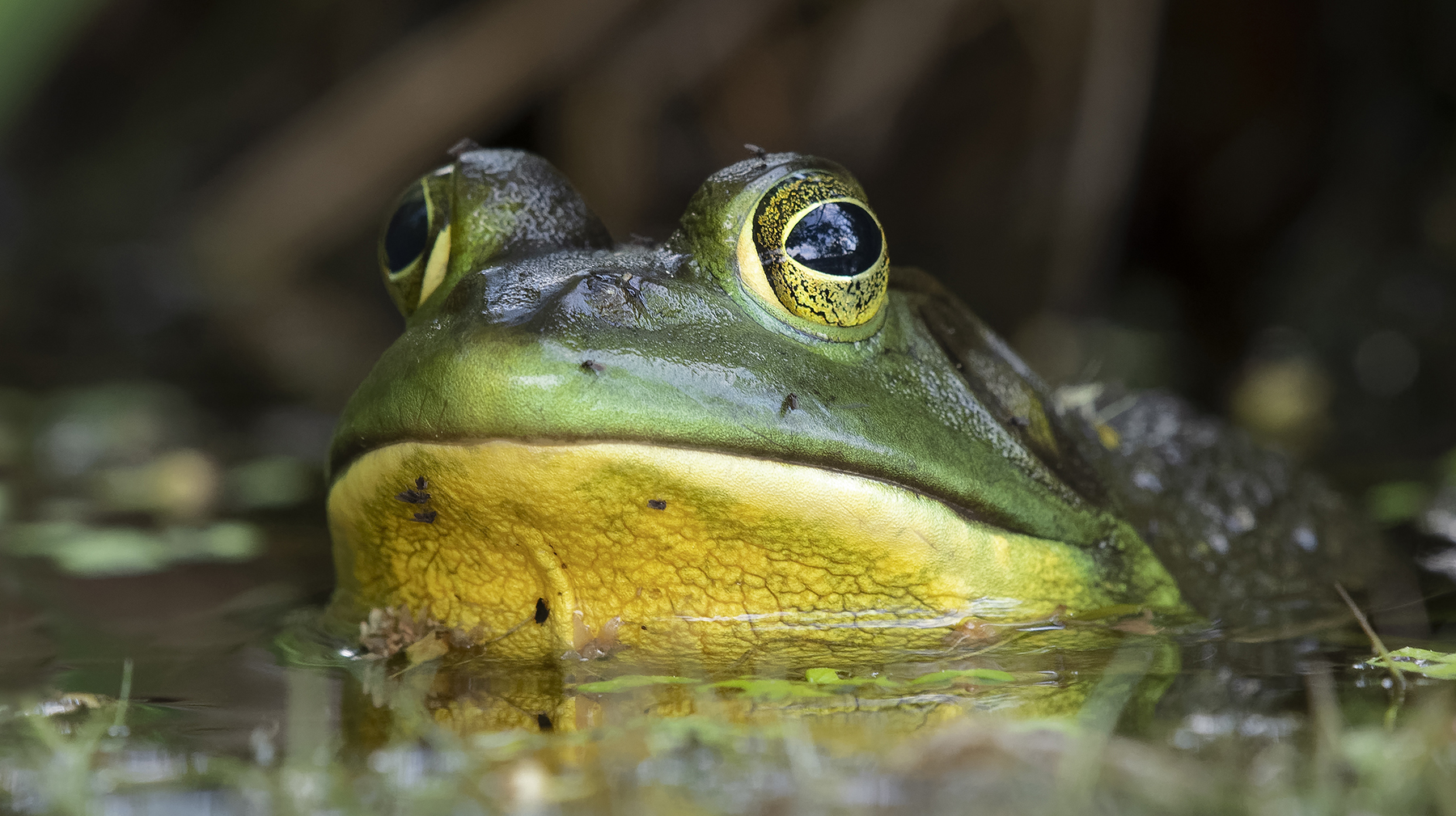
Bullfrog (Rana catesbeiana)
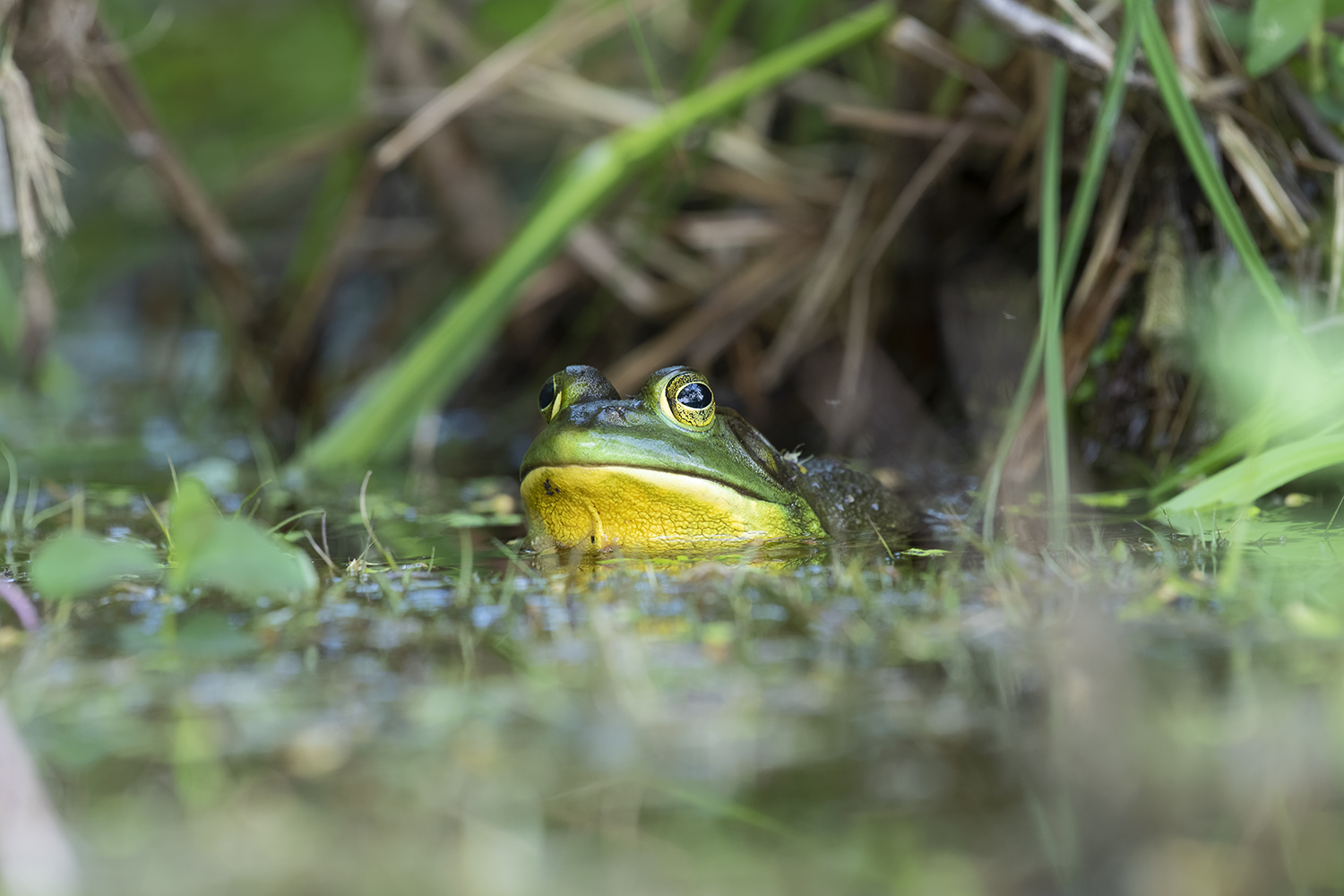
Edited on May 03, 2020 at 01:48 AM · View previous versions
The spring-emergence of Bullfrogs is quite closely synchronized with the emergence of aquatic plants. The frog must have the vegetation for escape cover.
Bullfrogs fall prey mostly to the Great Blue Heron (GBH), and both NA Bass species (Mycropterus spp.). Overwhelmingly, its greatest danger is the GBH. A bullfrog in the open waters of a marsh is easy prey for the ever-present GBH. Over a period of weeks, one or two Great Blue Herons are capable of finding every last Bullfrog on a pond.
Big bass cruise just outside the outer edge of the emergent, aquatic vegetation and into dusk they venture into and through that vegetation, *right up to the shoreline*. Frogs have no chance if they swim into open water, out past the edge of the vegetation in the littoral zone. Bullfrogs stay very tight to the shore and take their chances with the GBH.
But over a period of weeks, eventually I find I am unable to re-find most bullfrogs that I previously photographed. They disappear. I believe their disappearance is mostly due to the efficiency of the GBH’s that I see hunting these shallows day after day, throughout the spring-summer.
At best, bullfrogs have a poor escape mechanism. I’ve studied nature my entire life. Even within the cover of aquatic vegetation, I've always found any frog easy to spot and catch-by-hand, if I search for the frog just after it has submerged. I cannot recall ever seeing a Bullfrog attempt an escape onto the shoreline. And venturing into open water beyond the shallow vegetation would be certain death. So, when escaping perceived danger, Bullfrogs go directly to the bottom, not moving too far laterally. On the bottom, they shut their eyes and simply do not move. With their eyes closed and feeling secure as they rely on surrounding vegetation, they are oblivious to anything around them.
Btw, this is the same escape mechanism the American Alligator uses in the Everglades. Both animals feel completely secure within their escape cover. And as with the gator in shallow Everglades waters, once submerged, and with its eyes shut, the Bullfrog has no idea if it is being watched from above.
I suspect that if a GBH spots a bullfrog just as it submerges, the frog has little chance for survival.
GBH's are highly effective hunters. Their long toes keep them buoyant on the soft and deep detritus. Their long legs, body and neck, give their color-vision eyes a very lofty perspective of any faunal activity occurring in the shallows. And the GBH will spend most of its hunting-time standing absolutely still, with no head movement whatsoever, as it intensely scrutinizes the shallow vegetation for any movements. And to any aquatic fauna that is looking upward, the GBH's plumage is cryptically colored against similarly colored foliage along the water's edge.
Btw, the Great Blue Heron will kill and eat any living animal that it is capable of subduing and even some that it finds too large to swallow.
Among North American wading birds, the Great Blue Heron is the most assailing, by far! There's an abundance of documentations of the GBH attacking and trying to swallow mammals that are just too large to swallow. I once knew a GBH that made its living (day in and out) in upland fields by spearing/swallowing Boreal Red-backed Voles.
This year I will again love attempting to locate/photograph Bullfrogs in the shallows.
Bullfrog (Rana catesbeiana)
Edited on May 03, 2020 at 01:48 AM · View previous versions
Apr 29, 2020 at 03:09 PM
p.171 #16Official Nikon D850 image & resource hub thread ( images picture )
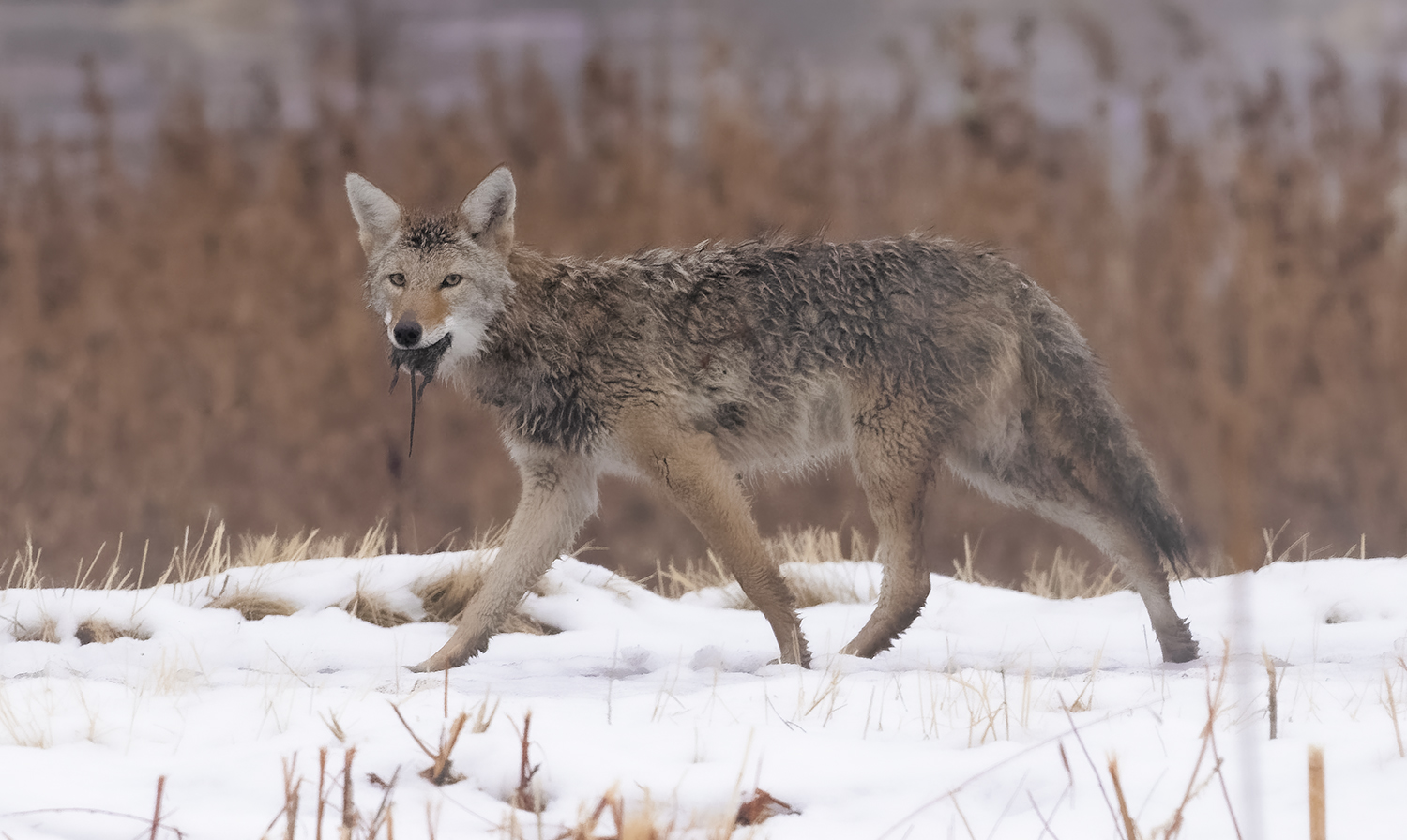
Coyote near dusk with rodent prey.
4000 ISO, (DXO PhotoLab 3 in post)
Edited on May 03, 2020 at 01:49 AM · View previous versions
4000 ISO, (DXO PhotoLab 3 in post)
Edited on May 03, 2020 at 01:49 AM · View previous versions
Apr 29, 2020 at 03:38 PM
brian_sp
Offline
Activity
[X]
Details
p.171 #17Official Nikon D850 image & resource hub thread ( images picture )


Apr 30, 2020 at 12:15 PM
p.171 #18Official Nikon D850 image & resource hub thread ( images picture )
I have not been out on the ponds yet this season. I thought I would post a few from the last few years. This image was taken July 8, 2019, at a pond of my boyhood.
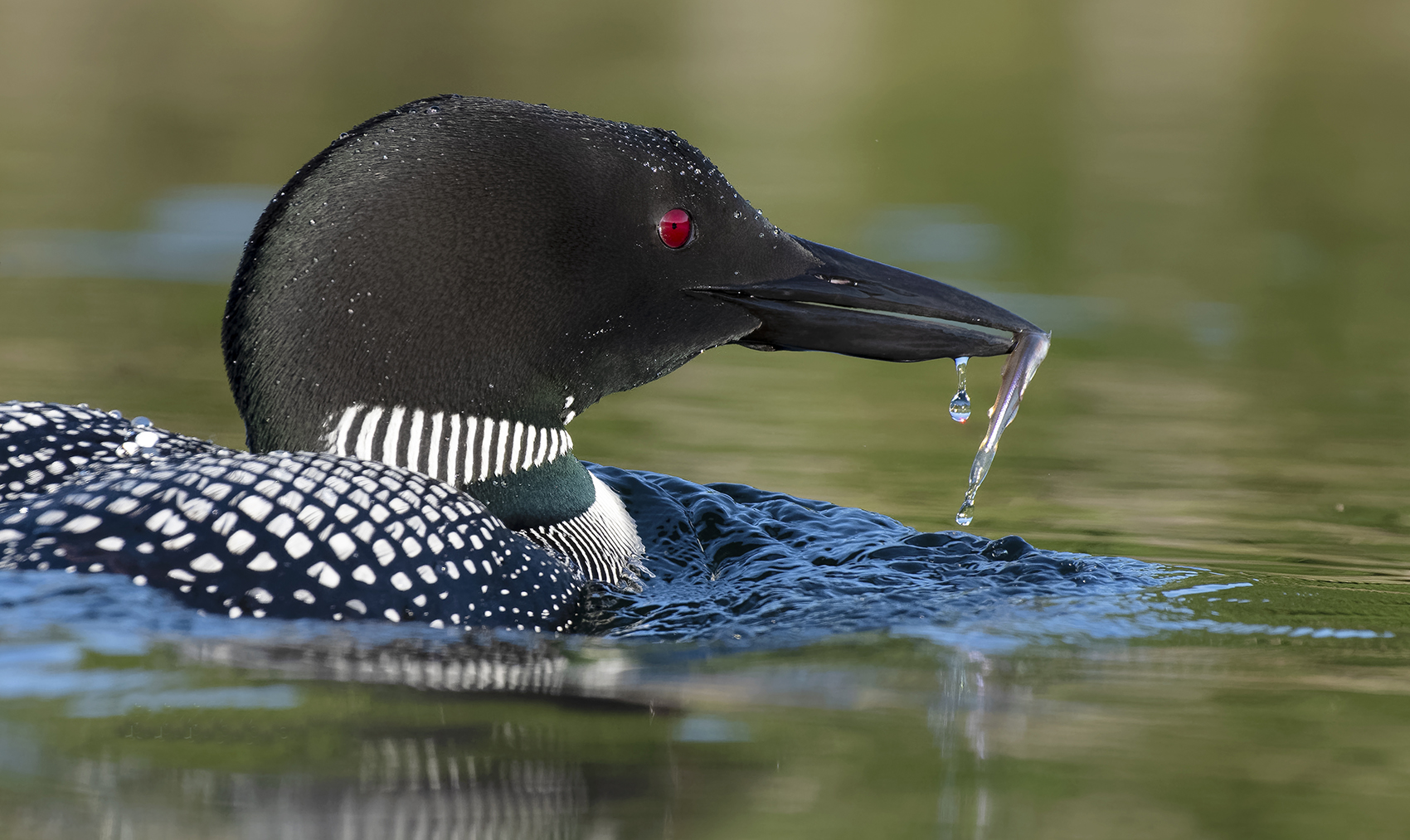
Common Loon parent carrying a small Rainbow Smelt (Osmerus mordax) to its 8-days-of-age baby.
Common Loon parent carrying a small Rainbow Smelt (Osmerus mordax) to its 8-days-of-age baby.
Apr 30, 2020 at 12:49 PM
p.171 #19Official Nikon D850 image & resource hub thread ( images picture )
About 100 shots taken with a D850 internal focus shift system and stacked in Zerene.
Hope you like it.
J.

Up close and very personal with a Bluebell
Nikon 105mm macro lens, 68mm of extension tubes and a raynox DCR-250.
Hope you like it.
J.
Up close and very personal with a Bluebell
Nikon 105mm macro lens, 68mm of extension tubes and a raynox DCR-250.
May 02, 2020 at 04:42 AM
p.171 #20Official Nikon D850 image & resource hub thread ( images picture )
Walked a horse up a hill like a dog today...
https://live.staticflickr.com/65535/49847229756_891ca0f38e_k.jpg
https://live.staticflickr.com/65535/49847229756_891ca0f38e_k.jpg
May 02, 2020 at 02:48 PM