Steve Spencer wrote:
Lee as I noted above you don't have to go that way. You can just buy the Fringer adapter.
True, but the Fringer adapter does not allow the Contax 645 lenses to be used on a camera with movements, such as the Cambo Actus-GFX.
Which, of course, is a very specialized application and not one that everybody wants or needs (but thanks to the size of the image circles projected by most of the C645 lenses, one that is technically possible without too much effort or expense.)
Mind you, although I happen to like them and use them, I wasn't advocating for everybody to use C645 lenses, only pointing out that it is possible to do so (and as part of a tilt-and-shift solution) if one really wants to do so and is willing to employ a workaround procedure.
Overall, I agree with you (now that owning a native Fuji lens isn't required to use it) that the Fringer adapter is clearly the best solution for most prospective users of Contax 645 lenses.
I don't know. For Leica user, there is some incentive to use contax lens as they are a lot cheaper to cover the missing focal length. And contax645 lens on S body actually has less shutter delay because fast aperture close and open.
For Fuji, the native lens asking price is pretty reasonable and also have faster glass, better AF, smaller size, even better optics, I don't see clear reason to do so. 120 contax is great but so is Fuji 120.
Audii-Dudii wrote:
True, but the Fringer adapter does not allow the Contax 645 lenses to be used on a camera with movements, such as the Cambo Actus-GFX.
Which, of course, is a very specialized application and not one that everybody wants or needs (but thanks to the size of the image circles projected by most of the C645 lenses, one that is technically possible without too much effort or expense.)
Mind you, although I happen to like them and use them, I wasn't advocating for everybody to use C645 lenses, only pointing out that it is possible to do so (and as part of a tilt-and-shift solution) if one really wants to do so and is willing to employ a workaround procedure.
Overall, I agree with you (now that owning a native Fuji lens isn't required to use it) that the Fringer adapter is clearly the best solution for most prospective users of Contax 645 lenses. ...Show more →
There is another way to use the Contax 645 lenses for tilt/shift on the Cambo Actus. You can get the Fringer Canon EF adapter and use it with the Cambo EF lens plate. You could then either control the aperture with a inexpensive and fairly small Canon Rebel or Red Rock Micro even makes a quite small device that is powered by a 9 volt battery that can also control the aperture on Canon lenses. It should work with the Fringer Contax 645 to EOS EF adapter. You would have to unmount the lens to change the aperture, but it should be not too much of a hassle.
Of course if you find the hassle too much you could also buy the super expensive Cambo EF lens plate that let's you control the aperture, then with the Fringer EF adapter you could change the aperture without unmounting and remounting the lens.
Personally, I think the Contax 645 lenses offer some very nice options, but I am sticking with 6 X 6, 6 X 7, and large format lenses for tilt/shift. I am planning on buying at least a couple of the Contax 645 lenses to use directly on the camera, however.
Steve Spencer wrote:
There is another way to use the Contax 645 lenses for tilt/shift on the Cambo Actus. You can get the Fringer Canon EF adapter and use it with the Cambo EF lens plate. You could then either control the aperture with a inexpensive and fairly small Canon Rebel or Red Rock Micro even makes a quite small device that is powered by a 9 volt battery that can also control the aperture on Canon lenses. It should work with the Fringer Contax 645 to EOS EF adapter. You would have to unmount the lens to change the aperture, but it should be not too much of a hassle....Show more →
It's funny you mention this, because I have owned the Red Rock Micro device since it was first introduced. Whether it will work as you propose depends on how happily the firmware of the various adapter devices will play together, as I've learned the hard way that not all electronic adapters using the same camera mount will work in every situation and circumstance.
I'm also not sure that buying both a Fringer adapter and a Cambo or other EOS EF adapter is economically justifiable as compared to buying an inexpensive used Contax N-series body and NAM-1 adapter. (As a data point, I paid $100 for a used Contax NX body and $400 for a NAM-1 adapter, so $500 in total, which is a small fraction of what it will cost to buy both a Fringer and Cambo EOS adapter.)
And although I advocated this approach, the truth is that for some types of photography -- unfortunately, including the nighttime photography I do almost exclusively -- it's not possible to compose and focus a photo with the lens aperture already stopped down to the shooting aperture, so it's necessary to do so after the photo has been composed and the lens focused, which means one must be very, very careful not to knock it out of adjustment in the process.
Although I was successful in splitting apart a Kipon Contax N to Sony adapter so I could mount my Contax N lenses on my modified Toyo VX23D view camera and control the aperture remotely from my Sony A7R body, this isn't nearly as easily done using a Fringer adapter, because instead of using separate circuit boards adn flexible ribbon cables to connect the contact pins on each side of the adapter to the circuit board inside it, he instead solders the contact pins directly to the main circuit board, which complicates matters considerably for an amateur camera hacker such as myself.
But it's not impossible and I'm sure that somebody, somewhere will soon gut a Fringer adapter and incorporate its guts into a Cambo GFX and live happily ever after using their GFX body with Contax 645 lenses.
zhangyue wrote:
I don't know. For Leica user, there is some incentive to use contax lens as they are a lot cheaper to cover the missing focal length. And contax645 lens on S body actually has less shutter delay because fast aperture close and open.
For Fuji, the native lens asking price is pretty reasonable and also have faster glass, better AF, smaller size, even better optics, I don't see clear reason to do so. 120 contax is great but so is Fuji 120.
For me, I have little interest in AF, so I actually prefer the Contax 645 120 f/4 over the Fuji, and I can get the Contax for at least $1,500 less. That easily pays for the Fringer adapter with at least $750 left over. I also like the rendering of the Contax 645 45 f/2.8 a lot too and I can get that for about $700. Perhaps the Fuji will be better, but it won't be near that price, so I am likely to pick that up as well. I am on the fence about the Contax 80 f/2 as I have the Hassy HC 100 f/2.2 and I am not sure I want both, but the Contax 645 80 f/2 is another pretty uniquely rendering lens. So, I think it is really nice to have the Contax 645 lenses available and I am very glad that Fringer made the adapter. I think they can save some money and provide some quality options. Sure they won't save as much as they do compared to Leica S lenses, but you can easily save a couple thousand if you buy 2 or 3 compared to the Fuji G lenses.
Steve Spencer wrote:
For me, I have little interest in AF, so I actually prefer the Contax 645 120 f/4 over the Fuji, and I can get the Contax for at least $1,500 less. That easily pays for the Fringer adapter with at least $750 left over. I also like the rendering of the Contax 645 45 f/2.8 a lot too and I can get that for about $700. Perhaps the Fuji will be better, but it won't be near that price, so I am likely to pick that up as well. I am on the fence about the Contax 80 f/2 as I have the Hassy HC 100 f/2.2 and I am not sure I want both, but the Contax 645 80 f/2 is another pretty uniquely rendering lens. So, I think it is really nice to have the Contax 645 lenses available and I am very glad that Fringer made the adapter. I think they can save some money and provide some quality options. Sure they won't save as much as they do compared to Leica S lenses, but you can easily save a couple thousand if you buy 2 or 3 compared to the Fuji G lenses. ...Show more →
FYI, the Contax 645 55 f/3.5 is a real gem of a lens. It was one of, it not the last lens released by Contax for the 645 body, so it's somewhat scarce because not many were sold, but it is capable of creating some absolutely amazing results. I also have the 45 f/2.8 lens and at least with my copies, there is no comparison between the two. If the 55mm focal length appeals to you, I encourage you to check it out!
Also, although not a Contax 645 lens, a good copy of the Arsat 30/f3.5 fisheye lens is a lot of fun to play with. Mine has a Pentacon 6 mount, which can then be adapted to the Contax 645 via an inexpensive dumb adapter. Be warned that there is quite a bit of variability among these lenses and for every good one, there is at lest one clunker.
Lastly, the late versions of Mamiya's 50/f4 PC lens are also quite good performers if you need a shift lens in this focal length range. Mine was modified to work on a Hasselblad V body, so I used it with Contax's adapter on my Contax 645 bodies and was very impressed by its performance. Of course, it will be redundant once you acquire a Cambo Actus-GFX, but as a temporary measure, I recommend it highly.
Steve Spencer wrote:
For me, I have little interest in AF, so I actually prefer the Contax 645 120 f/4 over the Fuji, and I can get the Contax for at least $1,500 less. That easily pays for the Fringer adapter with at least $750 left over. I also like the rendering of the Contax 645 45 f/2.8 a lot too and I can get that for about $700. Perhaps the Fuji will be better, but it won't be near that price, so I am likely to pick that up as well. I am on the fence about the Contax 80 f/2 as I have the Hassy HC 100 f/2.2 and I am not sure I want both, but the Contax 645 80 f/2 is another pretty uniquely rendering lens. So, I think it is really nice to have the Contax 645 lenses available and I am very glad that Fringer made the adapter. I think they can save some money and provide some quality options. Sure they won't save as much as they do compared to Leica S lenses, but you can easily save a couple thousand if you buy 2 or 3 compared to the Fuji G lenses. ...Show more →
It makes sense. Contax 120 is one of my favorite lens in terms of rendering. and 45mm is also slowly gain my love. 140 has one of best short tele Bokeh, unfortunately also lots of CA. 45 and 140 are sharp in center at wide aperture, so even not necessary a nice landscape lens but perfect usable for everyday stuff. 80f2 need 645 format to be really shine. and its price seems go up a lot in past a year or 2 make it a hard sell for me at least. (not supported AF lens)
Don't know if Fuji lenses are focus by wire? Contax 645 AF lens have real focus ring. .
zhangyue wrote:
It makes sense. Contax 120 is one of my favorite lens in terms of rendering. and 45mm is also slowly gain my love. 140 has one of best short tele Bokeh, unfortunately also lots of CA. 45 and 140 are sharp in center at wide aperture, so even not necessary a nice landscape lens but perfect usable for everyday stuff. 80f2 need 645 format to be really shine. and its price seems go up a lot in past a year or 2 make it a hard sell for me at least. (not supported AF lens)
Don't know if Fuji lenses are focus by wire? Contax 645 AF lens have real focus ring. . ...Show more →
Unfortunately Fuji lenses are focus by wire, which is a big part of the reason I likely won't get any, and the real focus ring is definitely a selling point for me and I know you know, but for those who don't the 120 is a manual focus lens which for me is a big plus. By the way thanks for your opinions on the 45, 80, and 140. I trust your judgment a lot. I was afraid the 80 needed the larger format. It certainly seems a little softer wide open (the MTFs suggest that too). I have a Leica M adapter for the GFX and I am hoping the Leica M 75 f/1.4 will work well, if it doesn't I still may try the 80 f/2, but I may try the Pentax 67 75 f/2.8 first. That was the last Pentax 67 lens made and although difficult to find, it looks like and interesting option, and I do have the Hassy HC 100 f/2.2 which is a lovely lens, so I am not in a huge need for a 75/80 anyway. I am planning to get the 45 soon and your description fits very well my exceptions. I think I will like it.
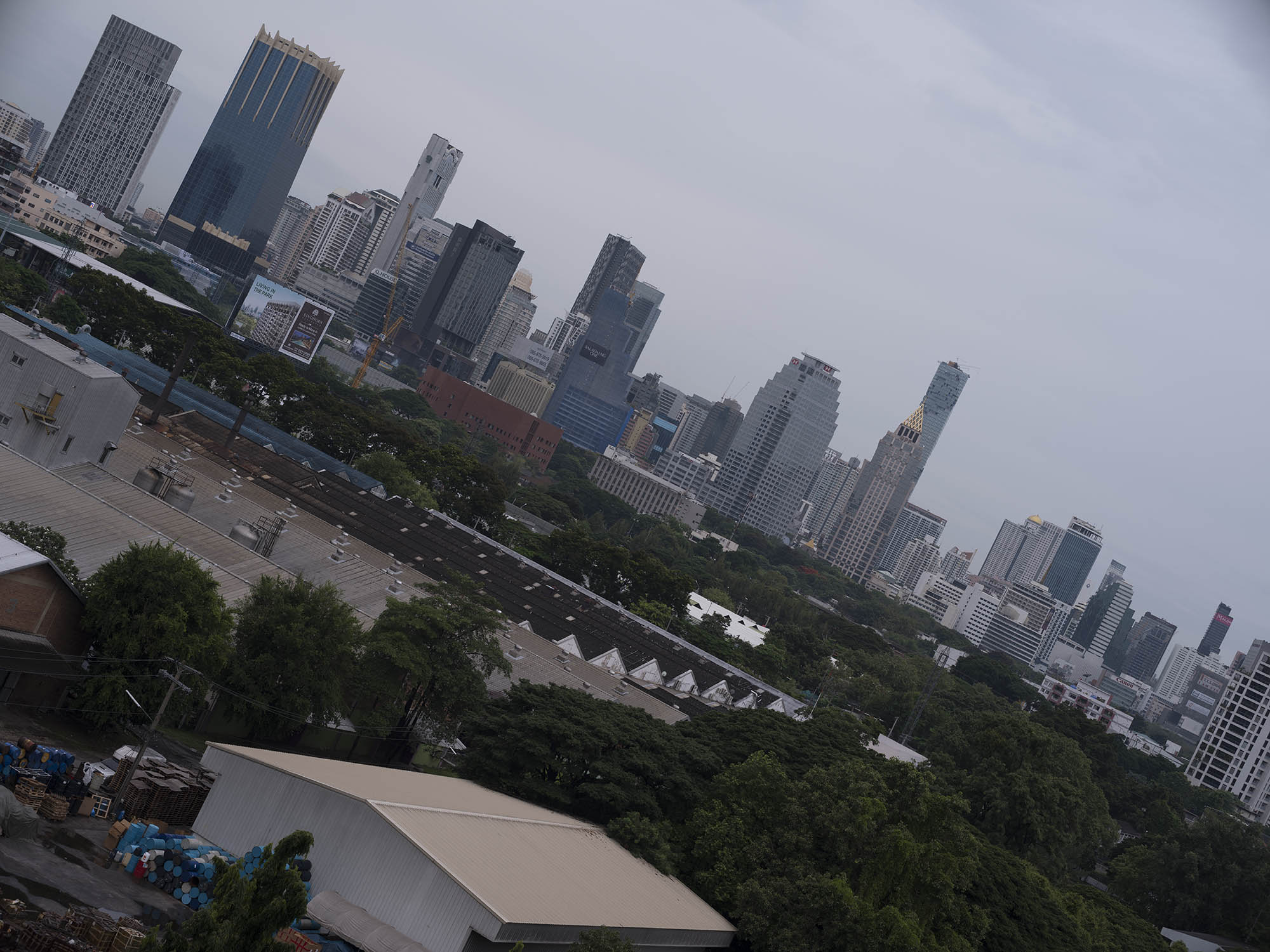
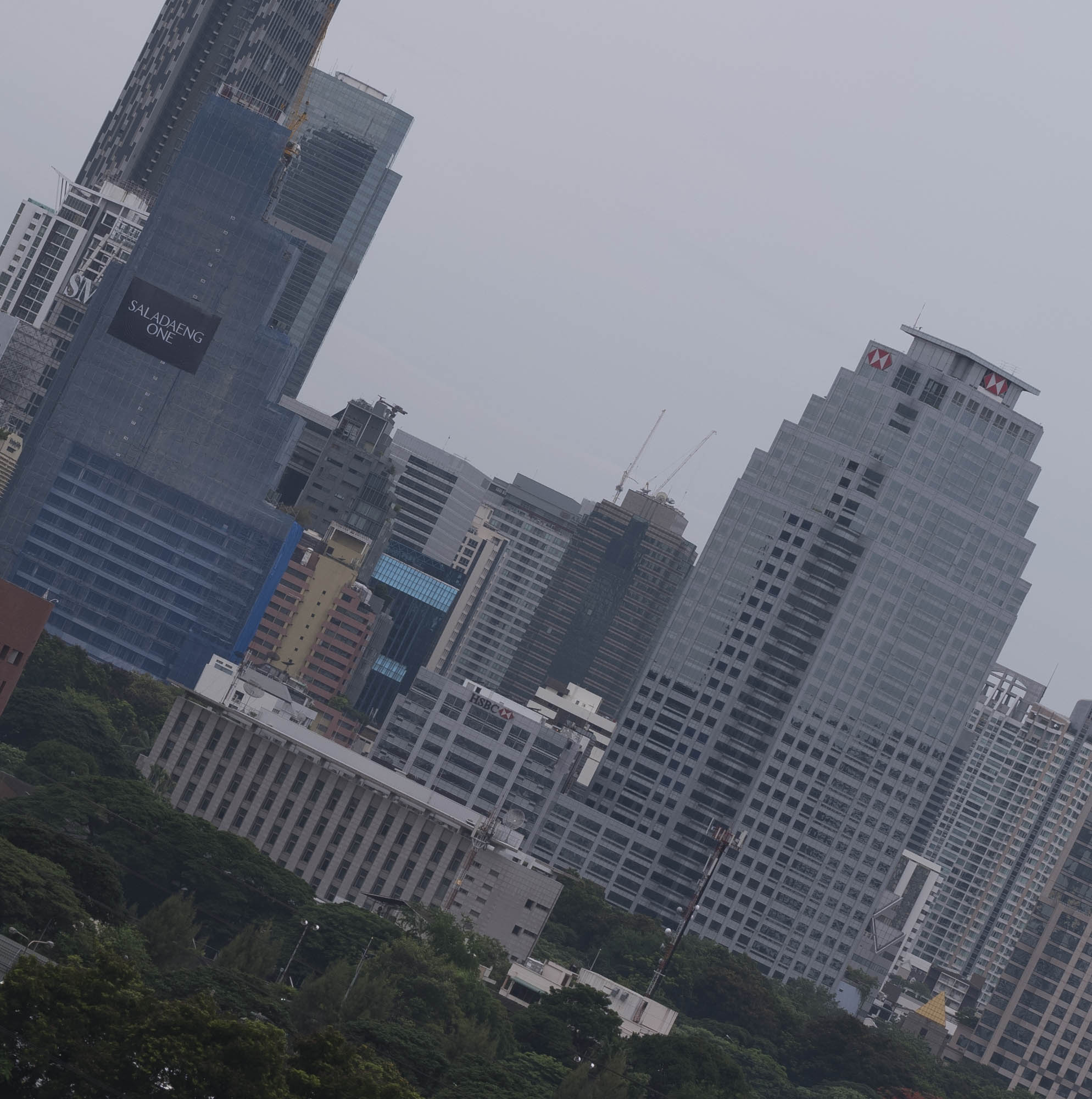
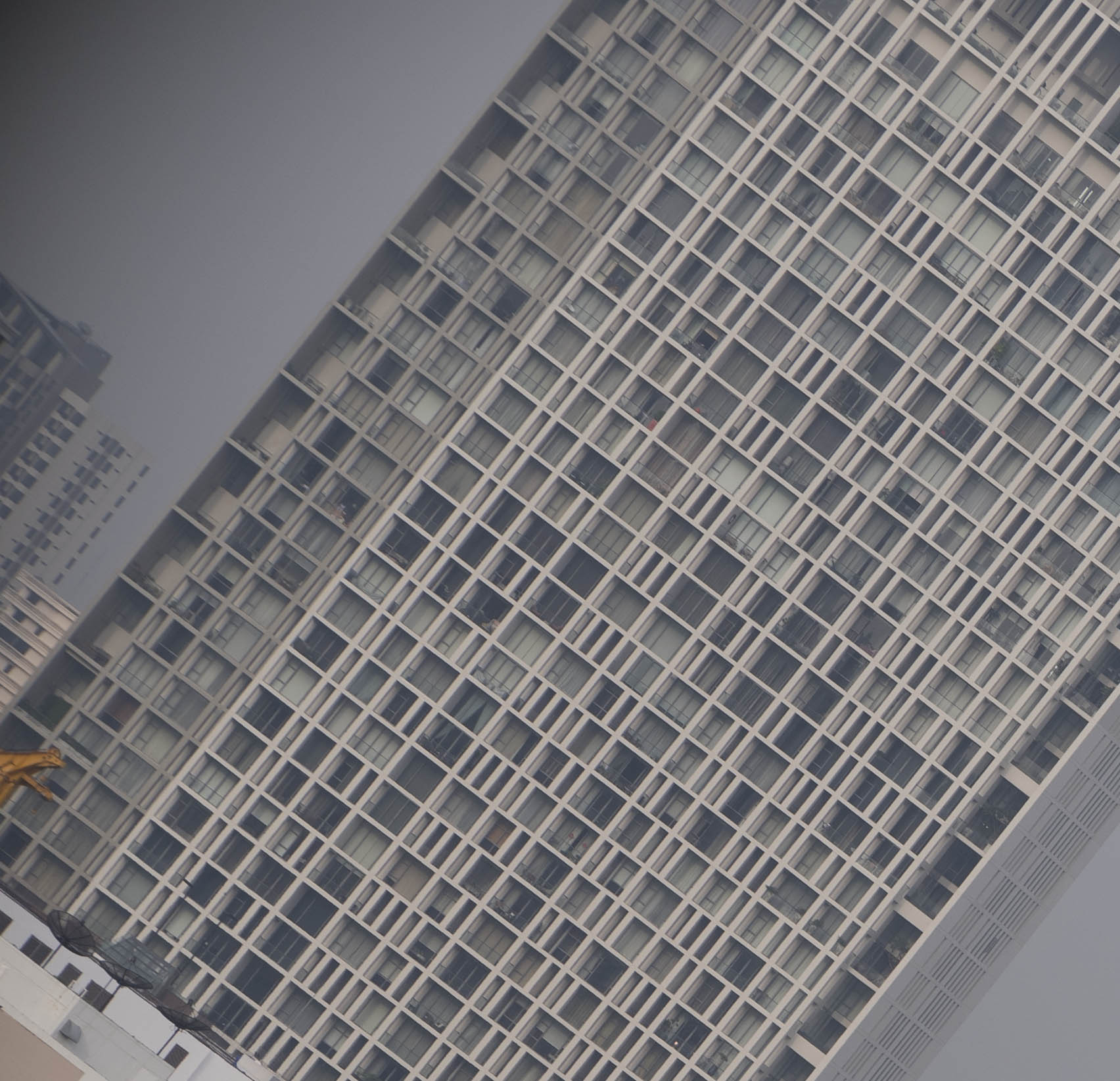
I tested Otus 85/1.4 with GFX with fotodiox adapter. Here is at landscape distance, f8.
I imported raw file into PS for making 100% crop and resize the main picture only. I did not correct vignette or made any other adjustment.
at f1.4 there are some visible vignette but as you step down, vignette almost all disappeared and what's left can be corrected in post quite easily.
Corner resolution at f8 is bettern looking than what I could get with A7r ii or D810 with any lenses with similar effective focal lenght that I tried for this shots.
suteetat wrote:
I tested Otus 85/1.4 with GFX with fotodiox adapter. Here is at landscape distance, f8.
I imported raw file into PS for making 100% crop and resize the main picture only. I did not correct vignette or made any other adjustment.
at f1.4 there are some visible vignette but as you step down, vignette almost all disappeared and what's left can be corrected in post quite easily.
Corner resolution at f8 is bettern looking than what I could get with A7r ii or D810 with any lenses with similar effective focal lenght that I tried for this shots....Show more →
I am impressed with the performance in these samples. It looks right up there with the Mills 135 f/2 APO. I think it could very well be useable for landscapes. And although the I like my Milvus 85 f/1.4 on a Sony for landscapes and portraits, I think it really only works for portraits on the GFX.
I had a little time today so I tried the same shots with a few other lenses. Here are all the corner shots of the same scene as in the Otus shots above.
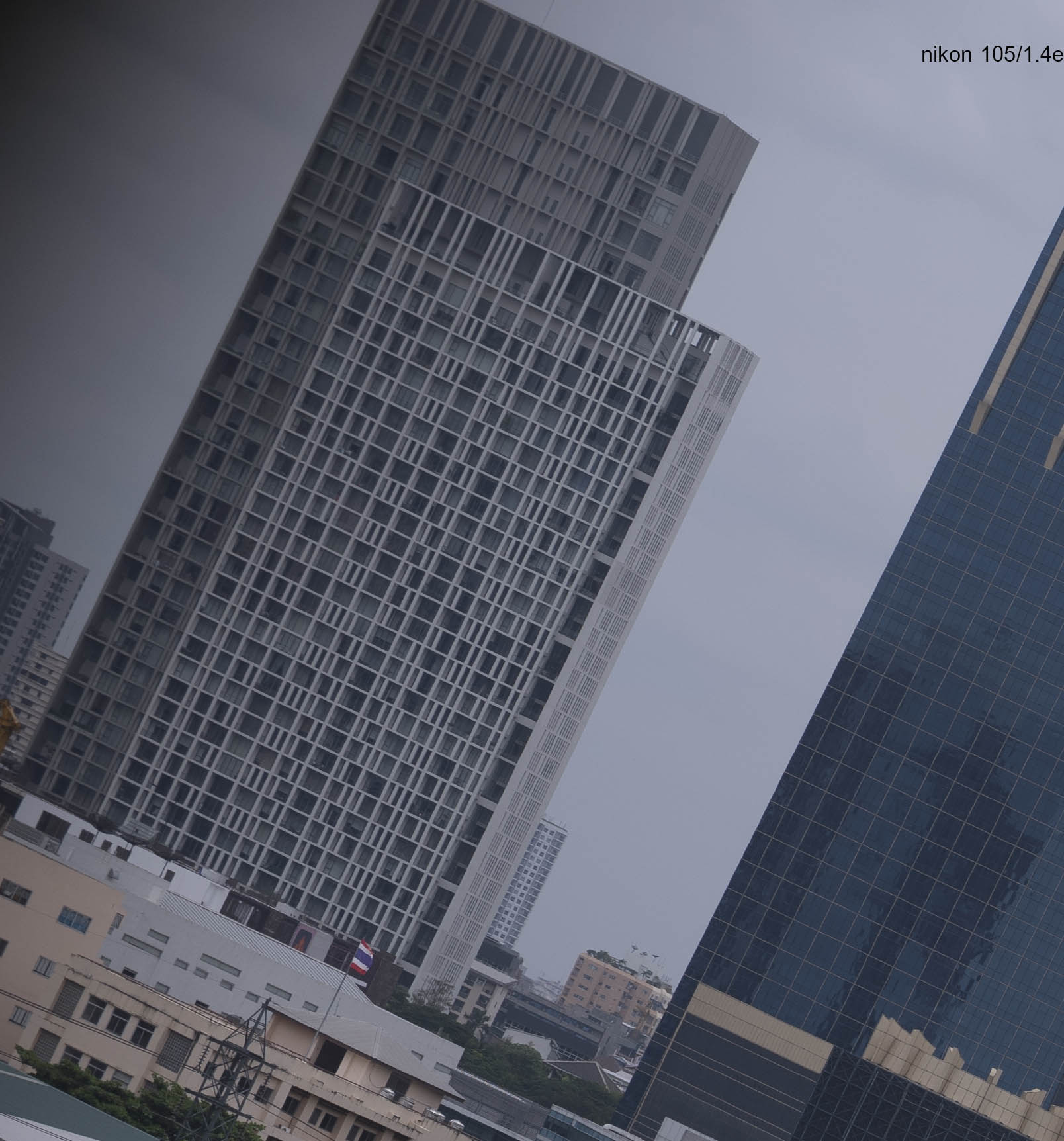
Nikon 105/1.4e @ f8, pretty much all Nikon lenses that I tried will have a certain degree of vignette that does not disappear stepping down. Vignette correction does not get rid off vignette completely for 105/1.4 but only very tiny vignette in the corner is left which does not bother me too much and just a little cropping will get rid of it completely nikon 105 test by Suteetat S, on Flickr
I like the results with the zeiss 135mm. I have used mine and found it performs extremely well. I compared it to the Fuji macro and mid distance and infinity.
suteetat wrote:
I had a little time today so I tried the same shots with a few other lenses. Here are all the corner shots of the same scene as in the Otus shots above.
Nikon 105/1.4e @ f8, pretty much all Nikon lenses that I tried will have a certain degree of vignette that does not disappear stepping down. Vignette correction does not get rid off vignette completely for 105/1.4 but only very tiny vignette in the corner is left which does not bother me too much and just a little cropping will get rid of it completely https://farm5.staticflickr.com/4406/36001935530_4405820462_o.jpgnikon 105 test by Suteetat S, on Flickr...Show more →
Suteetat, how do you control the aperture on the Nikon? Do you have a second camera along? I think a couple of the E mount Nikon lenses look quite interesting on the Fuji GFX (particularly the 105 and the 19 tilt/shift) but I was under the impression they had to be shot wide open. I would be more interested if I knew it was fairly easy to control the aperture.
To my eyes, on these shots the Nikon seems quite a bit behind the Fuji 110, but the Zeiss 135 is pretty close. I did think the 135 could be quite nice for landscapes and these shots seem to confirm that. My own experience is that it shows a bit of weakness in the far corners of a 4 X 3 crop (i.e., full image) but no weakness at all in even a 3 X 2 crop.
Steve Spencer wrote:
Suteetat, how do you control the aperture on the Nikon? Do you have a second camera along? I think a couple of the E mount Nikon lenses look quite interesting on the Fuji GFX (particularly the 105 and the 19 tilt/shift) but I was under the impression they had to be shot wide open. I would be more interested if I knew it was fairly easy to control the aperture.
To my eyes, on these shots the Nikon seems quite a bit behind the Fuji 110, but the Zeiss 135 is pretty close. I did think the 135 could be quite nice for landscapes and these shots seem to confirm that. My own experience is that it shows a bit of weakness in the far corners of a 4 X 3 crop (i.e., full image) but no weakness at all in even a 3 X 2 crop. ...Show more →
Steve, I used a Nikon body to set aperture first. Not the most convenient way, I supposed but since I was doing this from home, it was no big deal. Yes, I also think Nikon is a bit behind the rest of the pack but it is still an excellent lens for portrait. To be fair, none of these lenses are optimized for f8 and is probably sharpest somewhere around f4 to f5.6, I don't really remember all these details any more and f1.4 lens probably is at a disadvantage here slightly.
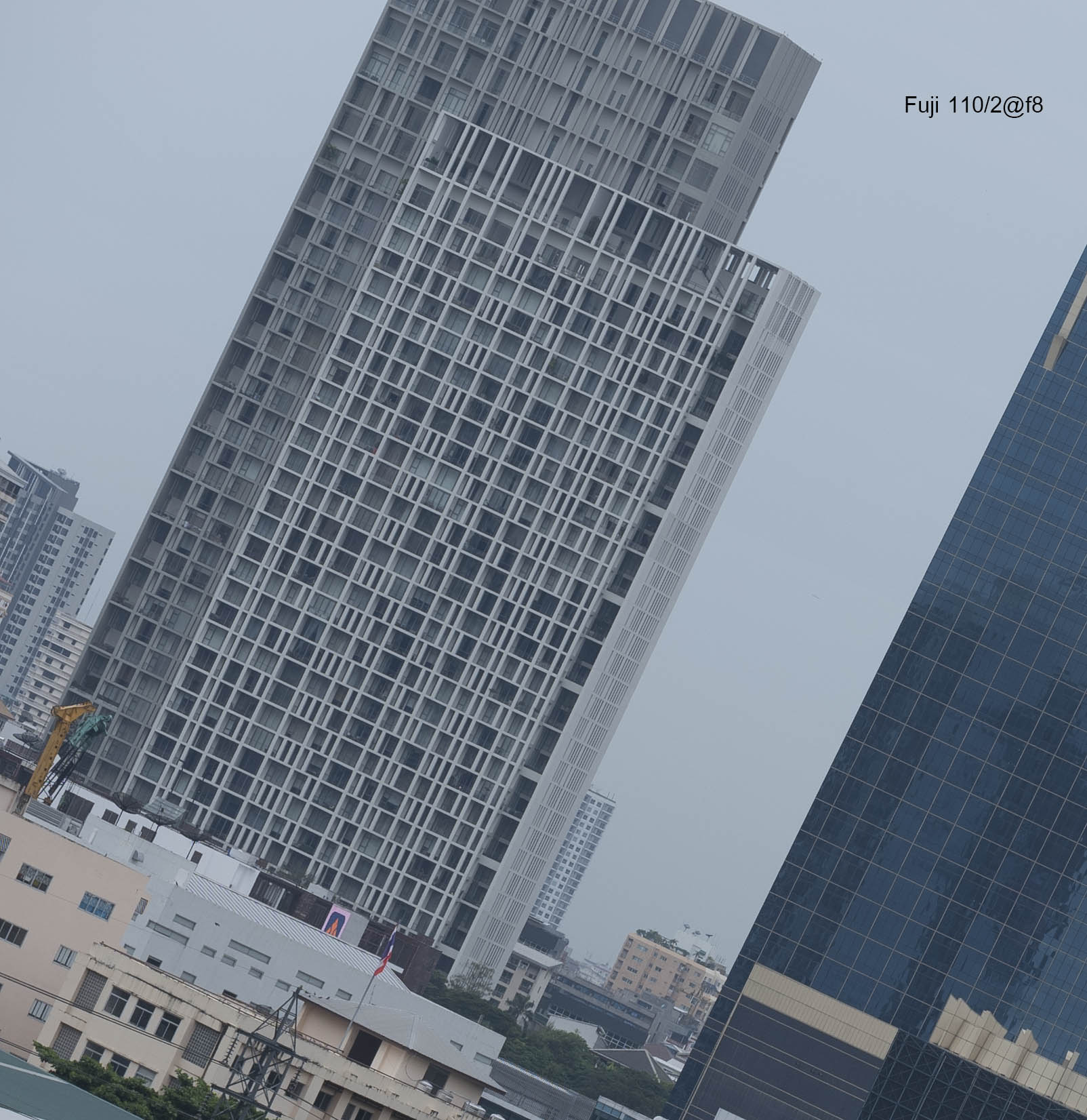
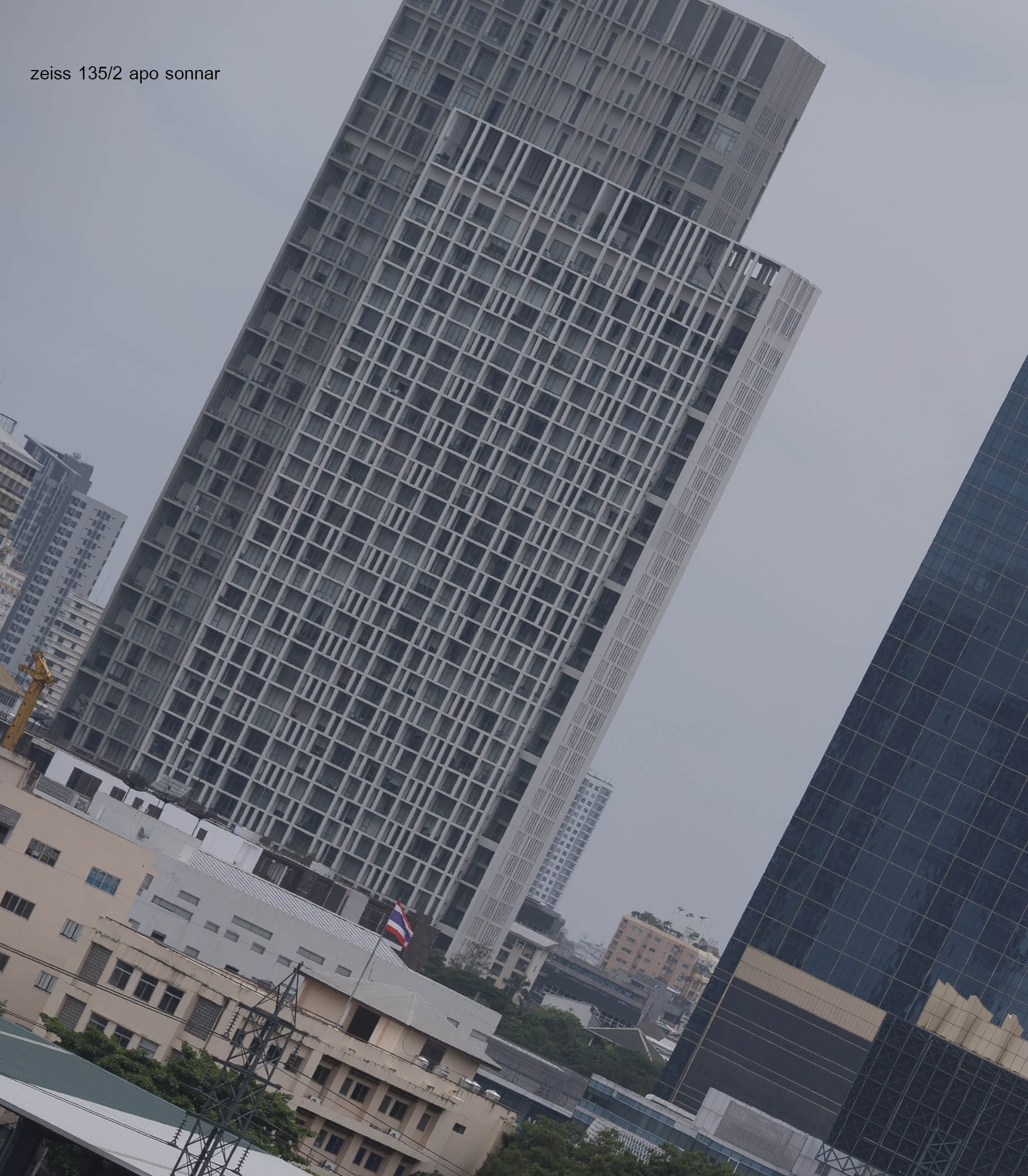
135/2 apo is very good at this distance but for me,
Hasselblad Zeiss 120/4 Makro Planar is a touch better and Fuji 120/4 Macro has a very slight edge
over 120/4 Makro Planar. However, neither Fuji or apo sonnar has very nice sunstar unlike the Makro Planar.
This corner happened to have the least vignette that is easily corrected.
However,upper and lower right corner has much stronger vignette that would require a bit of cropping to get rid off vignette unfortunately.
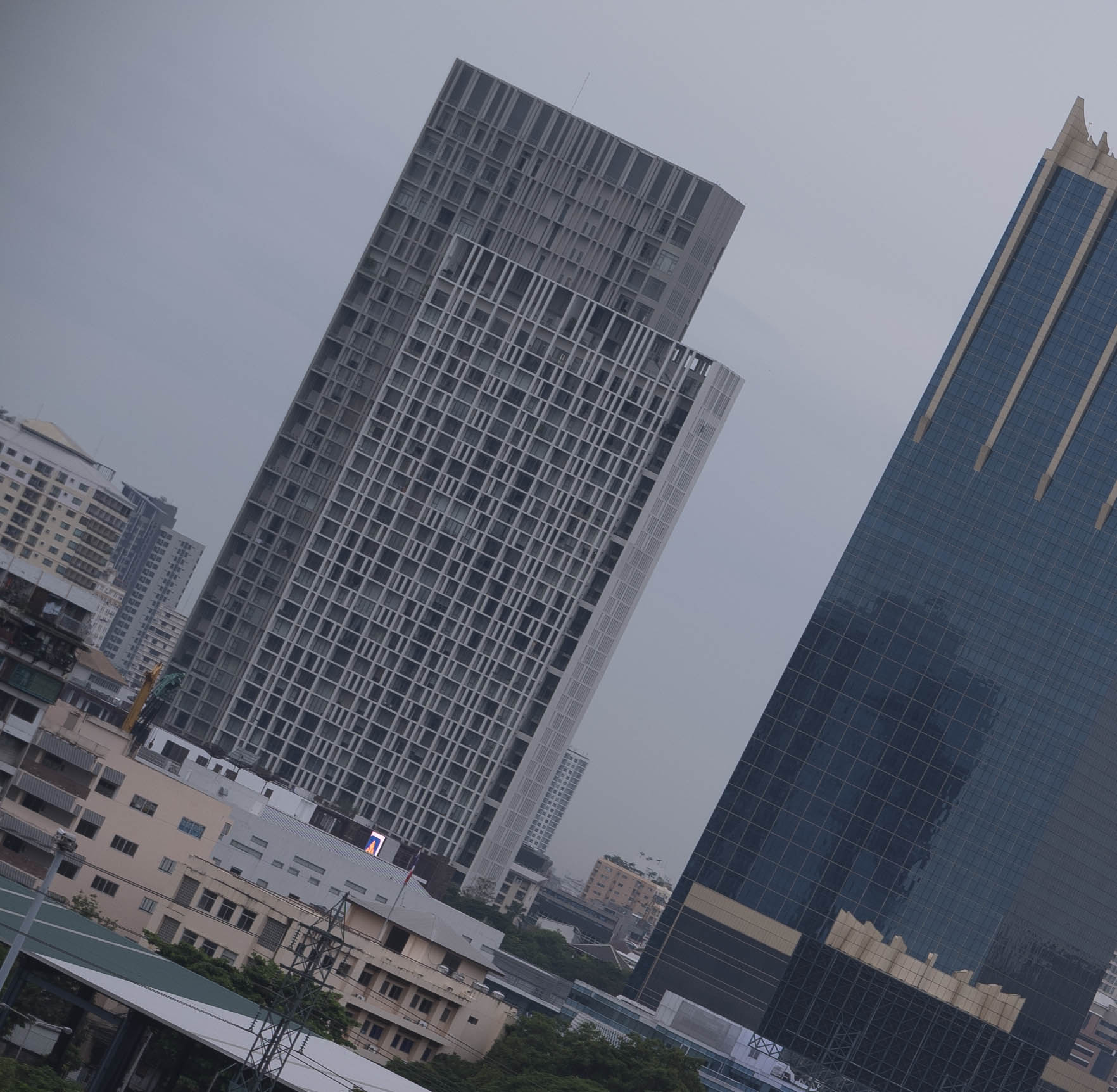
Here I took the same picture with Otus 85 and A7r ii.
It is a bit difficult to compare as focal lenght become different. GFX on the left A7r ii on the right. F8, on tripod, iso 100, cable release with GFX but I could not find my trigger cable for A7r ii so I used 2s delay shutter instead.
suteetat wrote:
Here I took the same picture with Otus 85 and A7r ii.
It is a bit difficult to compare as focal lenght become different. GFX on the left A7r ii on the right. F8, on tripod, iso 100, cable release with GFX but I could not find my trigger cable for A7r ii so I used 2s delay shutter instead.
Center is very close but if anything, I think GFX corner actually looks better than on A7r ii.
I agree the GFX is better especially in the corner. I think what we are seeing here may be diffraction limiting the A7rII more than the GFX. At f/8 diffraction is likely to be affecting the smaller denser packed Sony sensor more.
Steve Spencer wrote:
I agree the GFX is better especially in the corner. I think what we are seeing here may be diffraction limiting the A7rII more than the GFX. At f/8 diffraction is likely to be affecting the smaller denser packed Sony sensor more.
Yes, it could be diffraction problem with A7r ii. However, at the very least, after this little experiment, I would say that I am perfectly happy with using dslr lenses on GFX and vignette is really the only problem. Certainly no real issue with portrait type shots and I would not hesitate to use some of the lenses for landscape as well.
suteetat wrote:
Yes, it could be diffraction problem with A7r ii. However, at the very least, after this little experiment, I would say that I am perfectly happy with using dslr lenses on GFX and vignette is really the only problem. Certainly no real issue with portrait type shots and I would not hesitate to use some of the lenses for landscape as well.
Totally agree. I think a number of FF 35mm lenses can be used for portraits and some like the Otus 85 and Milvus 135 seem to do quite well even for landscapes, which is among the tougher challenges.