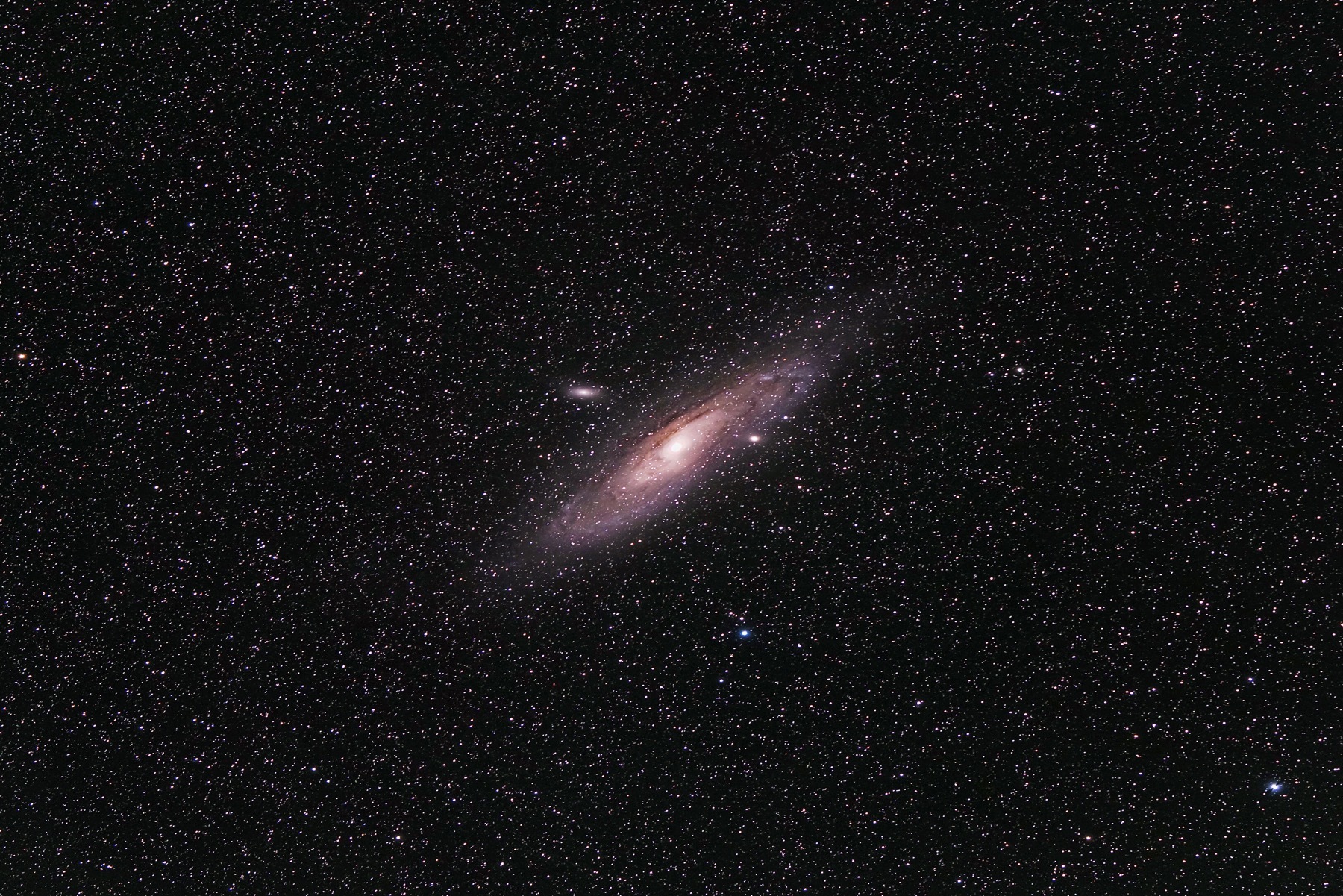
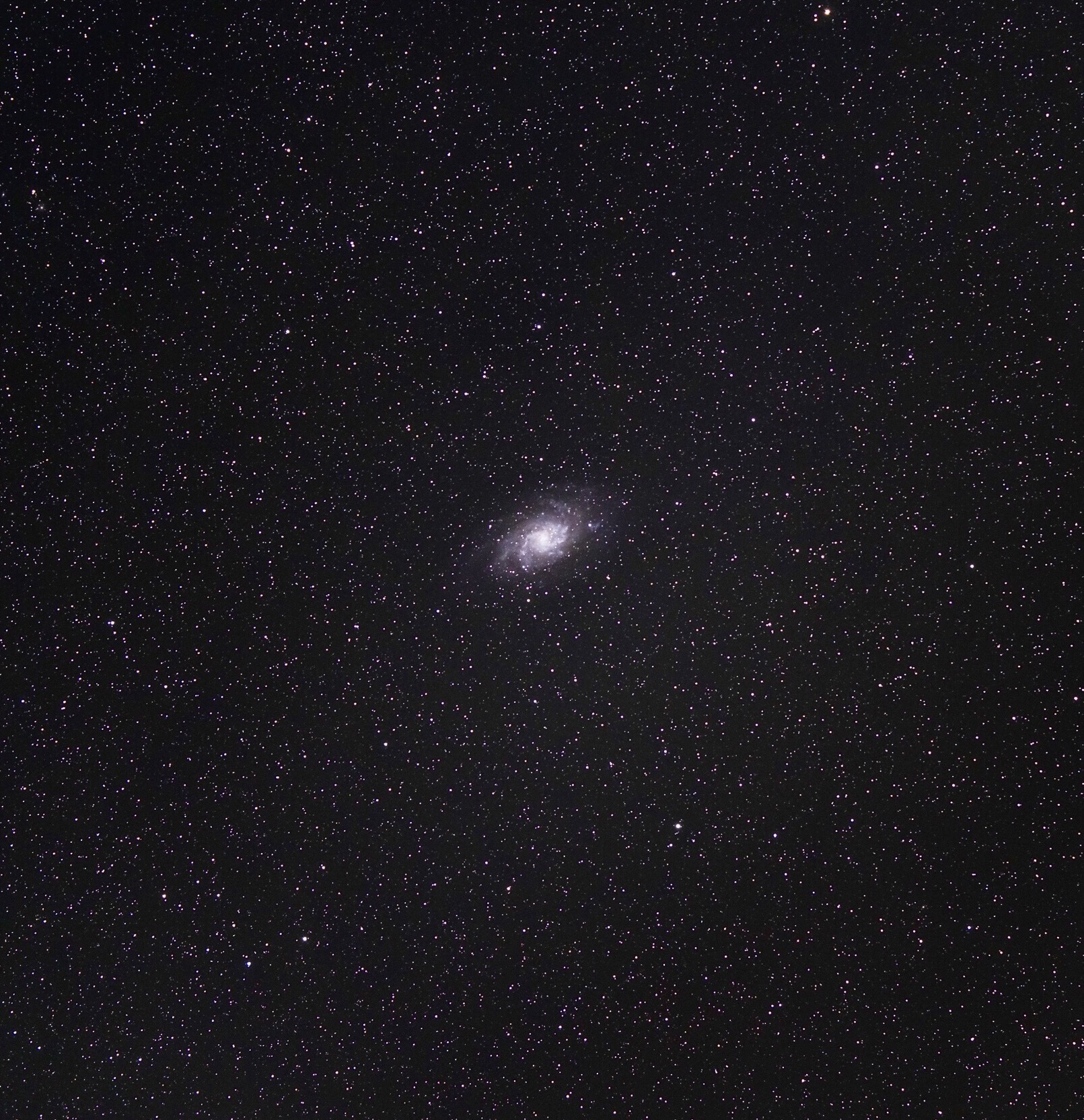
M31, Andromeda galaxy and M33, the pinwheel galaxy taken last night at a star party in Burnet, Tx. Used the Sigma lens wide open on these. Camera was guided on my AstroTrac. 60-70% crops. Both are single exposures.
Todd wrote:
M31, Andromeda galaxy and M33, the pinwheel galaxy taken last night at a star party in Burnet, Tx. Used the Sigma lens wide open on these. Camera was guided on my AstroTrac. 60-70% crops. Both are single exposures.
There are two ways to look at this earth. Some people look at this world and say, 'You know it's amazing! A 'Big Bang' made this from nothing!' That's the Humanist worldview which says, 'Man is god.'
Other people look at the world and say, 'You know its incredible design! There must be a smart designer.' That's the Creationist worldview which says, 'God is God.'
What's fascinating is that there's a very rough estimate of 10 trillion galaxies in the universe. Multiplying that by the Milky Way's estimated 100 billion stars results in a large number indeed: 1,000,000,000,000,000,000,000,000 stars, or a "1" with 24 zeros after it.
It's nice to see and know that you share the same faith in God as I do! God gave me a passion for photography and astronomy and being able to photograph galaxies 2.8 & 2.4 million light years away is great. We are looking back in time 2.8 million years ago...those galaxies are visible now as they were 2.8 million years ago since that's how long it takes the light to get here, I'm sure you knew that though. Anyway, thanks for the reply and sharing your faith.
T.
Elijah wrote:
There are two ways to look at this earth. Some people look at this world and say, 'You know it's amazing! A 'Big Bang' made this from nothing!' That's the Humanist worldview which says, 'Man is god.'
Other people look at the world and say, 'You know its incredible design! There must be a smart designer.' That's the Creationist worldview which says, 'God is God.'
What's fascinating is that there's a very rough estimate of 10 trillion galaxies in the universe. Multiplying that by the Milky Way's estimated 100 billion stars results in a large number indeed: 1,000,000,000,000,000,000,000,000 stars, or a "1" with 24 zeros after it.
Todd wrote:
It's nice to see and know that you share the same faith in God as I do! God gave me a passion for photography and astronomy and being able to photograph galaxies 2.8 & 2.4 million light years away is great. We are looking back in time 2.8 million years ago...those galaxies are visible now as they were 2.8 million years ago since that's how long it takes the light to get here, I'm sure you knew that though. Anyway, thanks for the reply and sharing your faith.
T.
Unfortunately I am going to disagree with you. I don't believe in "millions and millions" of years theory.
God created everything in six literal days, INCLUDING the stars, just like the book of Genesis says.
Add all of the ages of people that lived in the bible up to the time of Jesus and add 2017 to that, it comes out to roughly 6,000 years.
Romans 10:17 tells us "So then faith cometh by hearing, and hearing by the word of God." In other words, the word of God comes from the scriptures. So if you don't believe what the scripture (bible) tells us in terms of a literal six days creation, then I can't help you there
Anyways, this is not a place to discuss this, how are you still keeping both 135A and 105E? are they that much different?
Todd wrote:
M31, Andromeda galaxy and M33, the pinwheel galaxy taken last night at a star party in Burnet, Tx. Used the Sigma lens wide open on these. Camera was guided on my AstroTrac. 60-70% crops. Both are single exposures.
Very sharp and clear images Todd. Are you using deepskystacker as your post processing?
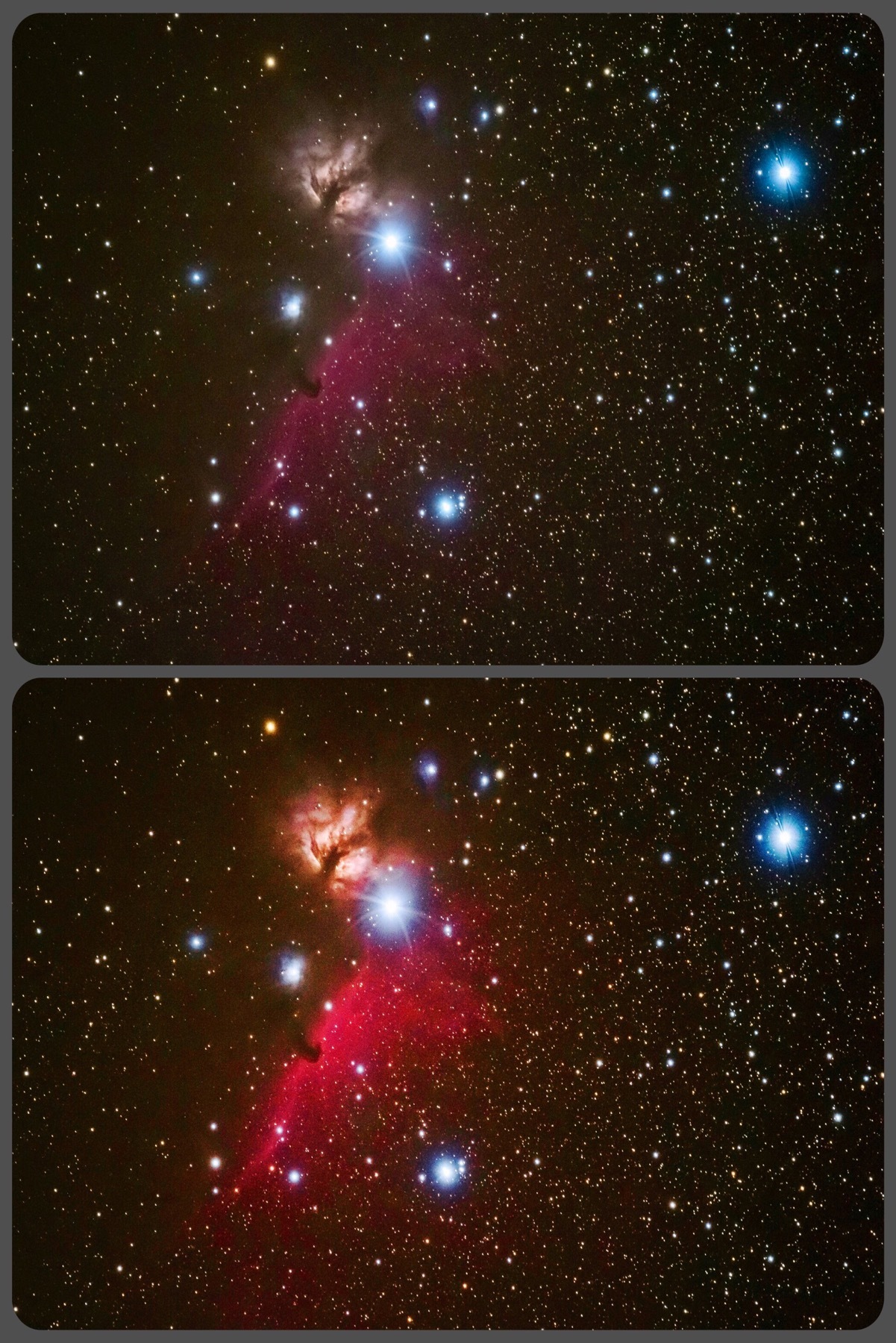
Thanks.. no, just Lightroom and an app on my iPad called Polarr. Currently my astrophotos are single exposures, if I do stack any, I do it in camera using the multiple exposure mode. But, my polar alignment must be spot on as those images are stacked in camera. But if I keep my exposures short, it works well with about 5 images. I've gone as high as 8 so far, but the law of diminishing returns kicks in and I don't see any difference after 5 shots. Here is a sample of how the polarr app works and how I can enhance the photo
Fred Miranda wrote:
Very sharp and clear images Todd. Are you using deepskystacker as your post processing?
Todd wrote:
Thanks.. no, just Lightroom and an app on my iPad called Polarr. Currently my astrophotos are single exposures, if I do stack any, I do it in camera using the multiple exposure mode. But, my polar alignment must be spot on as those images are stacked in camera. But if I keep my exposures short, it works well with about 5 images. I've gone as high as 8 so far, but the law of diminishing returns kicks in and I don't see any difference after 5 shots. Here is a sample of how the polarr app works and how I can enhance the photo
Sure! You should try using it again. I'm hoping my Preordered D850 comes soon. I'd like to use it on the sky and compare it to my D810 files...
Fred Miranda wrote:
Multiple exposure in-camera is a great idea when using a tracker Todd. Thanks for the tip.
I have the astrotrac but have not used it for ages!
Nah, those are out of focus birds flying over. I saw them as they passed and thought they would add to the shot, but they sort of did, at least for me anyway since I know what they are.
shekarn64 wrote:
Is that dust on the sensor or something else in the first picture? (Top)