fredmiranda.com
Login

Moderated by: Fred Miranda
  New fredmiranda.com Mobile Site
  New Feature: SMS Notification alert
  New Feature: Buy & Sell Watchlist
  

FM Forums | Leica & Alternative Gear | Join Upload & Sell

1              3              18       19       end
  

Archive 2016 · First Sighting: A7rii Thin filter in action


realVivek
Offline
• • • •
Upload & Sell: Off
p.2 #1 · First Sighting: A7rii Thin filter in action


MJKoski wrote:
While good, modded R2 did not fully reach M9 quality towards edges with 21/4.5 which is the "magic bullet". M9 sensor is built differently - microlenses?


I would be more interested in an A7S/A7S II mod than the tiny pixel A7R II when it comes to using old Leica/RF lenses. Yes, i think that (pixel area) makes a big difference.


Dec 16, 2016 at 10:10 AM
uhoh7
Offline
• • • •
Upload & Sell: Off
p.2 #2 · First Sighting: A7rii Thin filter in action


MJKoski wrote:
While good, modded R2 did not fully reach M9 quality towards edges with 21/4.5 which is the "magic bullet". M9 sensor is built differently - microlenses?


Actually most feel the M9 is well behind film with that particular Lens. The CV 21/4 suffers in the same way on the M9: I have shot it a lot, do I know Nico manages to coax good edges, I'm pretty sure he is stopped way down.

Sam noted some older lenses might be better suited to less pixels, but that leaves many lenses including strong older lenses, of which there are many, where honestly I think the jury is still out. You really need to shoot them side-by-side M9VR2, downsize the R2 to M9 dimensions, then look.

I've seen some do the math, and say the sensors, even at 42, will not beat the optics. This is not a settled issue. But maybe we will be able to settle it ;-) I'm pretty confident the V4 50 Cron, 28 Cron, ZM 18, all SEMs, are not going to be out-resolved, and I guess the very best LTM lenses, like the Nikkor 85/2, or canon 100/2, are also going to be very good.

However, I've been wrong before ;-)


Edited on Dec 16, 2016 at 12:46 PM · View previous versions


Dec 16, 2016 at 12:40 PM
Steve Spencer
Offline
• • • • • • •
Upload & Sell: On
p.2 #3 · First Sighting: A7rii Thin filter in action


realVivek wrote:
I would be more interested in an A7S/A7S II mod than the tiny pixel A7R II when it comes to using old Leica/RF lenses. Yes, i think that (pixel area) makes a big difference.


If I was getting a mod with fat pixels, however, I would want an AA filter. Some of the stuff I shoot I have to worry about moire and 12MP full frame without an AA filter you are asking for moire. On the flip side the diffraction that occurs with 42MP will act as a naturally AA filter, so for an A7rII I would prefer not to have an AA filter.


Dec 16, 2016 at 12:40 PM
uhoh7
Offline
• • • •
Upload & Sell: Off
p.2 #4 · First Sighting: A7rii Thin filter in action


Steve Spencer wrote:
If I was getting a mod with fat pixels, however, I would want an AA filter. Some of the stuff I shoot I have to worry about moire and 12MP full frame without an AA filter you are asking for moire. On the flip side the diffraction that occurs with 42MP will act as a naturally AA filter, so for an A7rII I would prefer not to have an AA filter.


Do we have some data comparing diffraction 42 MP versus 18 MP?

Obviously, it's going to happen sooner, but again it's the downsize to 18 MP, and a direct comparison to M9 which is really going to tell. theory versus the real world,

With the RX 1R2, diffraction at F11 is not an issue, which makes me suspect the issue is overblown.


Dec 16, 2016 at 12:48 PM
brendans
Offline
• •
Upload & Sell: Off
p.2 #5 · First Sighting: A7rii Thin filter in action


I had a Kolari A7rII for a while but ended up selling it and going back to stock. I think its a fine solution if you already have a collection of lenses that will benefit but at least for landscape work they still won't beat most of the native options, and while some of the native lenses work ok, they're still compromised. For the money the compromises weren't worth it to me. I was mostly using an elmar 24 and ZM18 on the wide end and frankly I'm quite a bit happier with my Loxia 21 and CV15III.


Dec 16, 2016 at 12:55 PM
uhoh7
Offline
• • • •
Upload & Sell: Off
p.2 #6 · First Sighting: A7rii Thin filter in action


brendans wrote:
I had a Kolari A7rII for a while but ended up selling it and going back to stock. I think its a fine solution if you already have a collection of lenses that will benefit but at least for landscape work they still won't beat most of the native options, and while some of the native lenses work ok, they're still compromised. For the money the compromises weren't worth it to me. I was mostly using an elmar 24 and ZM18 on the wide end and frankly I'm quite a bit happier with my Loxia 21 and CV15III.


There are many perspectives. Nobody is trying to say everyone should put a thin filter on their A7x. This is a personal choice, and there is not a "right answer". I think there are plenty of people who would be happy to forgo the natives if they can get top performance with Canikon, High-end film lenses, and M/LTM.

I hope we won't turn this into a debate about that choice. The thread is not to tell you what to do, but to show what is possible. It's not really a choice if you don't understand the options, and this is the first thin filter A7r2 I've seen, so the performance is not yet well documented. Those who have made up their mind: it's fine. Personally I'm always learning and revising my opinion as information and choices improve.

But this thread is not required reading or someplace to "take a stand", or at least I hope we don't go there. If we start saying: oh the Loxia 21 is so good, I can't imagine not having that option, then I have to step in and say: I'll put my money on the SEM 21 for both performance at 42mp (with mod)and form factor. Then we both get excited .

I'm happy you are happy, but this is about what is possible to achieve and how it may be evolving. What comes out of the box and native performance is well documented.

On the other hand, Sam's is the first A7r2 thin filter I've seen anywhere, and his mod is unique. The view count tells me I'm not the only person interested

Why? It's not only that Sam is the first we've seen with r2 sensor, He may be the first to equal M240 performance across the frame with a non-leica digital body, and if we followed Sam Lee's suggestion and used the new .5mm STC Sony AWB IR cut in LPF2....well it's history in the making.


Dec 16, 2016 at 07:56 PM
brendans
Offline
• •
Upload & Sell: Off
p.2 #7 · First Sighting: A7rii Thin filter in action


uhoh7 wrote:
There are many perspectives. Nobody is trying to say everyone should put a thin filter on their A7x. This is a personal choice, and there is not a "right answer". I think there are plenty of people who would be happy to forgo the natives if they can get top performance with Canikon, High-end film lenses, and M/LTM.

I hope we won't turn this into a debate about that choice. The thread is not to tell you what to do, but to show what is possible. It's not really a choice if you don't understand the options, and this is
...Show more

I agree, and not at all trying to dissuade anyone from doing it. I think it's fantastic that people have had the curiosity and talent to pull something like this off. My point is mostly for folks like me who, as someone who shoots largely landscapes while backpacking and places an absolute premium on size and weight, thought that a Kolari A7rII could match a stock cam with smaller rf lenses. I didn't find that to be the case. I love the experimentation factor and for people that have a lot of lenses that would benefit or aren't shooting landscapes I think it's awesome, especially as used prices get cheaper.

I do agree that the BSI sensor of the mkII is great for the mod and makes things easier colorshift/vignetting-wise (I still found the color to be a bit of a pain, though fairly easy to deal with with profiles it still adds another step).

Also, at least me and one other person (can't remember which user) had some a7rii mod pics in the FE images thread and the big Kolari threads.


Dec 16, 2016 at 09:45 PM
naturephoto1
Offline
• • • • • •
Upload & Sell: Off
p.2 #8 · First Sighting: A7rii Thin filter in action


brendans wrote:
I agree, and not at all trying to dissuade anyone from doing it. I think it's fantastic that people have had the curiosity and talent to pull something like this off. My point is mostly for folks like me who, as someone who shoots largely landscapes while backpacking and places an absolute premium on size and weight, thought that a Kolari A7rII could match a stock cam with smaller rf lenses. I didn't find that to be the case. I love the experimentation factor and for people that have a lot of lenses that would benefit or aren't shooting landscapes
...Show more

Hi Brendan,

I am not sure that that is the case. Also, unless I am mistaken the Leica M 24mm f3.8 Elmar Asph lens is probably fairly close in performance with the Zeiss Loxia 21 f2.8. Additionally, others including Fred found that his Leica M WATE was close to the performance of his Loxia 21mm lens when used with his A7rII.

I have been using my Sony A7rM V3 with both my Leica M 24mm f3.8 Elmar Asph (certainly smaller and lighter with adapter than the Loxia 21mm) and my Zeiss 35mm f1.4 Distagon ZM and have had excellent results, however, I do need to use CornerFix with both these lenses. I still have to try to use my WATE with my A7rM but it is supposed to perform slightly better with the modified A7rM than my stock A7r. By the way, the WATE is smaller and lighter than the Loxia 21mm f2.8 lens even with my Hawk's Factory V5 Helicoid. Additionally, the WATE certainly is smaller and lighter than both the Loxia 21mm f2.8 and the CV 15mm III together that you are using.

Rich


Dec 16, 2016 at 10:19 PM
Fred Miranda
Offline
Admin
Upload & Sell: On
p.2 #9 · First Sighting: A7rii Thin filter in action


I think that after the release of the Loxia 21, Batis 18 and CV 15 III natives, the need for the Kolari mod became less attractive. I agree that if you already have an array of m-mount lenses, it still probably makes sense and the price is very fair. It's just a great option to have.

Regarding the WATE's performance on the A7RII: it's really great at f/8 and it's almost as good as the Loxia 21/2.8 at this aperture (center and edges) but there is a visible mid-field dip. I'm not sure if this is a characteristic of this lens or it's exacerbated by the thicker sensor stack.


Dec 16, 2016 at 11:20 PM
naturephoto1
Offline
• • • • • •
Upload & Sell: Off
p.2 #10 · First Sighting: A7rii Thin filter in action


Fred Miranda wrote:
I think that after the release of the Loxia 21, Batis 18 and CV 15 III natives, the need for the Kolari mod became less attractive. I agree that if you already have an array of m-mount lenses, it still probably makes sense and the price is very fair. It's just a great option to have.

Regarding the WATE's performance on the A7RII: it's really great at f/8 and it's almost as good as the Loxia 21/2.8 at this aperture (center and edges) but there is a visible mid-field dip. I'm not sure if this is a characteristic of this
...Show more

Hi Fred,

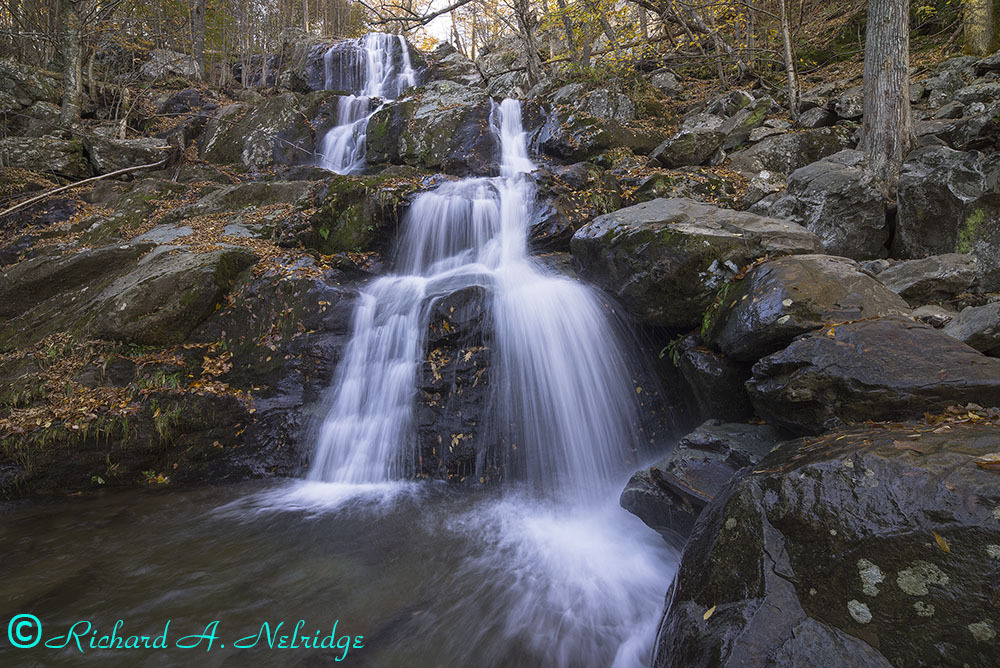
I am not sure if the thicker sensor stack is an issue or if the lens suffers from a mid-field dip. Below is an image taken with my A7r prior to its modification to the A7rM V3 and my WATE set to ISO 50, f8, 1/3 second at 18mm. Focus was on the Yellow leaf on the left side othe rock in the lower right corner. Perhaps I have not checked the image as carerully as Fred, but I have found the image extremely sharp throughout the image from corner to corner (even at 100%). The image was processed in LR6.4 and used the Lens Profile for the Leica M WATE set to 18mm.

Rich


Edited on Dec 17, 2016 at 01:24 AM · View previous versions


Dec 16, 2016 at 11:42 PM
Fred Miranda
Offline
Admin
Upload & Sell: On
p.2 #11 · First Sighting: A7rii Thin filter in action


naturephoto1 wrote:
Hi Fred,

I am not sure if the thicker sensor stack is an issue or if the lens suffers from a mid-field dip. Below is an image taken with my A7r prior to its modification to the A7rM V3 and my WATE set to ISO 50, f8, 1/3 second at 18mm. Focus was on the Yellow leaf on the left side othe rock in the lower right corner. Perhaps I have not checked the image as carerully as Fred, but I have found the limage extremely sharp throughout the image from corner to corner (even ar 100%). The image was processed
...Show more

Rich,
I meant at infinity distances and the mid-field dip is only mild. However, It's there if you really look closely.
The lens MTF confirms this as well with the Meridional (concentric) lines, so I believe it's a characteristic of the lens that perhaps gets amplified with the wrong sensor stack.


Dec 17, 2016 at 12:36 AM
realVivek
Offline
• • • •
Upload & Sell: Off
p.2 #12 · First Sighting: A7rii Thin filter in action


uhoh7 wrote:
With the RX 1R2, diffraction at F11 is not an issue, which makes me suspect the issue is overblown.


Digital massaging minimizes the diffraction effects. It will show when non system lenses are used stopped down.


Dec 17, 2016 at 12:56 AM
brendans
Offline
• •
Upload & Sell: Off
p.2 #13 · First Sighting: A7rii Thin filter in action


naturephoto1 wrote:
Hi Brendan,

I am not sure that that is the case. Also, unless I am mistaken the Leica M 24mm f3.8 Elmar Asph lens is probably fairly close in performance with the Zeiss Loxia 21 f2.8. Additionally, others including Fred found that his Leica M WATE was close to the performance of his Loxia 21mm lens when used with his A7rII.

I have been using my Sony A7rM V3 with both my Leica M 24mm f3.8 Elmar Asph (certainly smaller and lighter with adapter than the Loxia 21mm) and my Zeiss 35mm f1.4 Distagon ZM and have had excellent results, however, I
...Show more

I did enjoy the 24 Elmar for landscapes, but FC was a bit more pronounced and it doesn't quite have the closer up/wide open rendering that the loxia has (though to be fair the Loxia 21 might be my favorite lens I've used so a lot of personal preference there...I find it absolutely magical and love its versatility). WATE is out of my price range and still good on a stock cam (though better on a Kolari).

Again if you already have those lenses the mod makes sense but as Fred notes with the expanding lens range available for Sony it's less appealing. I'm not meaning to rain on the parade, just sharing my experience with a modded a7rii. I'll also add for anyone considering going this route that I found Kolari outstanding to work with. Extremely prompt, helpful and professional.


Dec 17, 2016 at 10:07 AM
uhoh7
Offline
• • • •
Upload & Sell: Off
p.2 #14 · First Sighting: A7rii Thin filter in action


I think we have two subjects here:
1) how is the very reliable v2 Kolari mod looking on A7r2? Frankly I see little testing of interesting lenses so far. Digilloyd showed the SEM18 as great, at 240 level basically, but that lens is extremely friendly to the v2 mod, as Jim Kasson showed. Rich brings up a really good point, is there less colorshift with A7r2, "smearing" aside?

We need to see the v2 (which is what Kolari is using at the moment for thin-filter) on a bunch of other M/LTM wides to really see how it compares to A7ii and other A7 flavors. But I expect it's very much similar to A7ii. Way better than stock, but M240 is still well ahead with many lenses, like the ZM35/2.

2)Much more mouth-watering: better mods.

llija has been loving this discussion and is very open to new ways of modding the A7r2. He is now looking at a very thin filter for the LPF2 possibly as thin as .2mm yet still with functional IR cut.

Sam has shown the Taiwan Master's completely different alternative to the LPF2 method, actually removing the base coverglass which is glued to the sensor. Sam is very positive about the results, and believes if you do this, that 1mm in the LPF2 is fine, and with the right glass WB is really no problem. The Taiwan Master has done this to probably 10 different A7 cameras, of various kinds. Its a completely different way to get the evil glass out of the path for our sweet film lenses. It's entirely possible that this is already equal to M240 or better with all M/LTM lenses. His shots with that 21/4.5: really something.

llija has himself removed the base coverglass on sensors. Besides it usually being more risky to the sensor (perhaps there are multiple ways to do this) what he noticed was dust could be a real issue, tiny particles which get on the sensor during the removal of the glass, or perhaps might find their way there later. So I've asked Sam Lee to do some shots of the sky at F/22 or F/16 to see if anything can be seen. And I asked: once you put LPF2 back over the sensor (now without glass) is it a tight seal? Could dust get there later, and either way what's the best method, if there is one to clean a bare sensor?

As far as level of interest in a A7r2 mod, I believe if an option that hits the M240 benchmark or exceeds it becomes available---not just with a few lenses but across the board---there is going to be plenty of interest, regardless of the new Sony UWA natives. Many people all around the world love RF lenses, for character, history, size and performance. A practical mod to make the Sony BSI 42mp really shoot them like the M9 will be quite interesting.

If Zeiss or Sony understood the marketing potential of the deep film/ALT/RF culture they would simply do a production run of a few hundred A7r2s with an ultra thin cover of some sort, sensor moved forward accordingly and updated firmware to let a user tune the processor to lenses, and allow easy switching and see what happens. They would be heros to a very influential group of photographers and collectors-who BTW made the NEX-5 famous much faster than would have otherwise been the case. Would not cost them much. Put a nice paint job on the r2 and call it a Ikon or Hexar--instant multi millions in free advertising for them. A techart style adapter really well done with eye-AF working well--how hard would that be for Sony or Zeiss? But I can't hold my breath till common sense and power of tradition dawns on corporate committees: life is short, and alternatives are increasing, thanks to great folks like llija and the Taiwan Master


Dec 18, 2016 at 10:27 PM
Steve Spencer
Offline
• • • • • • •
Upload & Sell: On
p.2 #15 · First Sighting: A7rii Thin filter in action


uhoh7 wrote:
I think we have two subjects here:
1) how is the very reliable v2 Kolari mod looking on A7r2? Frankly I see little testing of interesting lenses so far. Digilloyd showed the SEM18 as great, at 240 level basically, but that lens is extremely friendly to the v2 mod, as Jim Kasson showed. Rich brings up a really good point, is there less colorshift with A7r2, "smearing" aside?

We need to see the v2 (which is what Kolari is using at the moment for thin-filter) on a bunch of other M/LTM wides to really see how it compares to A7ii and other
...Show more

I know personally, I would never feel comfortable with taking off that epoxied cover glass. I would worry about dust on that open sensor that would be permanent and ruin the camera.What we don't know is the long-term viability of such a camera. Will it last five years? Three? Two? What happens if you take it to the dessert?

I think there is another issue as well. I don't think we can treat all RF lenses as the same. It is clear that Leica and even Zeiss with the ZM 35 f/1.4 are designing lenses with the cover glass in mind. So if you consider a lens like the Leica M 28 f/1.4 ASPH which Sean Reid finds does better on the Leica SL than the Leica M240, then we can't expect a lens like that to do best on a camera with the thinnest sensor stack possible. I have that lens and it really does quite well on an unmodified A7rII. I think it may well lose performance if you make the mod have thinner glass.

Another issue that has just been raised is whether front end filters can be used as alternative to modifying the sensor cover glass. There is an active thread on the first page of the alt forum with some quite promising results will all kinds of lenses using this approach. Including great results from the Contax G 21mm f/2.8--not a lens i would have expected to be easy to adapt for better performance. There is also very positive results for the ZM 35 f/1.4 with this approach and I will probably modify mine in this way, and the beauty is the modification can be reversed simply by unscrewing the filter on the front of the lens.

I hope that Ilja in the future can offer mods with different cover glass. I can see someone who only shoots film lenses wanting a camera with the LPF1 at about .5mm and the LPF2 at about .2mm (and maybe even the epoxied cover glass on the sensor removed--but again I would have to know that isn't going to ruin my camera in a year or less if I went to the dessert). I do think as thin a filter as possible makes sense with a lens designed for film.

I can see a very different approach, however, if you want to use the modern Leica M lenses designed for digital. These lenses probably include the SEM 18, the WATE, the SEM 21, the 21 lux, the 24 Elmar ASPH, the 24 lux, the 28 lux, the newest 28 cron, the newest 28 elmarit, the 35 Lux ASPH FLE, the newest 35 cron, the 50 Noctilux f/.095, the 50 AA, probably the 50 f/1.4 ASPH, and the 75 AA. For these lenses I would want a slightly thicker cover glass probably just like the current Kolari v2.

I would even like to see a different version that would strike a balance between the modern Leica lenses and the native Sony lenses. I think there is a substantial group of people that would like to both use the modern Leica lenses and use a bunch of Sony FE lenses. I think such a camera would have cover glass that was halfway between the stock cover glass and Kolari v2. I think a number of Leica M lenses would do well with such a camera and it wouldn't hurt Sony FE lenses much if any. Good Leica M lenses I think would likely include the WATE, the 21 lux, the 24 lux, the 28 lux, the ZM 35 f/1.4, the 35 lux FLE, the 50 AA, the 75AA, the 90AA, and the 135 APO. All these lenses already do pretty well on a stock A7rII, but would like improve noticeably with such a camera. I don't think the change would affect Sony FE lenses much at all either. I may be the only one, but I don't think so, and this is the camera that I would like.


Dec 18, 2016 at 11:46 PM
artur5
Offline
• • •
Upload & Sell: Off
p.2 #16 · First Sighting: A7rii Thin filter in action


Good points, Steve/uhoh7.. and well put.
My five cents on this matter is that a filter thinner than that of the M240 shouldn’t damage, to practical effects, the performances with modern Leica/Zeiss glass designed for digital. I seem to recall that the digital Leica Ms have different filters: 0.5mm thick for the M8, 0.7mm the M9 and 0.9mm the M240 ( I might be wrong; it’s been quite a while since I read this information somewhere ). Logically Leica must design their glass with all their cameras in mind, so that the lenses work equally well with a M8, a M9 or a M240 (and future Ms). I doubt very much that the filter of the Taiwan Master mod is thinner than 0.5mm. So, IMHO, I wouldn’t worry for this matter.
Another thing is the vulnerability of a Sony sensor when we remove that last glass cover bonded to the sensor. Let’s see what the experts think about it but, yes, it might be problematic for medium/long term reliability (or maybe not).
I’m also following the external filter mod thread. It has undeniable advantages over the Kolari mod (cheaper, reversible, not affecting native lenses performance,.. ) but also some drawbacks (center sharpness a bit lower, added distortion and CA, more risk of flare/reflections). None of the two methods is perfect and the external filter system still needs a lot of trial and error for assessing the best filter for each lens. It would be easier if Leica/Zeiss/Voigtlander disclosed the basic optical parameters of those lenses, but it’s very unlikely that they oblige.


Dec 19, 2016 at 10:57 AM
carlitos
Offline
• • •
Upload & Sell: Off
p.2 #17 · First Sighting: A7rii Thin filter in action


uhoh7 wrote:
I think we have two subjects here:
1) how is the very reliable v2 Kolari mod looking on A7r2? Frankly I see little testing of interesting lenses so far. Digilloyd showed the SEM18 as great, at 240 level basically, but that lens is extremely friendly to the v2 mod, as Jim Kasson showed. Rich brings up a really good point, is there less colorshift with A7r2, "smearing" aside?

We need to see the v2 (which is what Kolari is using at the moment for thin-filter) on a bunch of other M/LTM wides to really see how it compares to A7ii and other
...Show more

You might think that one of the other majors might go down this mirrorless road since they don't have a vested interest in lenses designed for thicker glass. And do have legacy RF glass.


Dec 19, 2016 at 12:59 PM
Steve Spencer
Offline
• • • • • • •
Upload & Sell: On
p.2 #18 · First Sighting: A7rii Thin filter in action


artur5 wrote:
Good points, Steve/uhoh7.. and well put.
My five cents on this matter is that a filter thinner than that of the M240 shouldn�t damage, to practical effects, the performances with modern Leica/Zeiss glass designed for digital. I seem to recall that the digital Leica Ms have different filters: 0.5mm thick for the M8, 0.7mm the M9 and 0.9mm the M240 ( I might be wrong; it�s been quite a while since I read this information somewhere ). Logically Leica must design their glass with all their cameras in mind, so that the lenses work equally well with a M8, a
...Show more

I think what you say mostly makes sense, but won't apply to all lenses and maybe not the the one's Leica makes going forward. The Leica SL has even thicker cover glass than the M240--we don't know how much thicker--but we do know from Sean Reid's tests show that the 28 Lux (which is the newest lens in the M line) works a bit better on the Leica SL than the M240. So, I don't think for that lens we can assume that it would be just fine on a camera with a very thin filter stack designed to optimize lenses made for film as much as possible.


Dec 19, 2016 at 02:57 PM
uhoh7
Offline
• • • •
Upload & Sell: Off
p.2 #19 · First Sighting: A7rii Thin filter in action


Steve Spencer wrote:
I know personally, I would never feel comfortable with taking off that epoxied cover glass. I would worry about dust on that open sensor that would be permanent and ruin the camera.What we don't know is the long-term viability of such a camera. Will it last five years? Three? Two? What happens if you take it to the dessert?


It's certainly a concern, but why not wait to you understand the process before using words like "never"?

Sam Lee:
"for the dust issues, Taiwan master done at anti-dust room. All his mod camera can guarantee at F16 there is no dust. For my camera I have already tested at F32 without any dust.Basally, he resume there is no dust at F16. U can add money to ensure there is no dust at F22 or F32.
The STC thin filter is alreay have anti-dust coating, it is easy to remove the dust.
so I think remove cover glass+ stable thin filter[1mm STC Sony AWB] is good enough solution. Retro design wide lenses or 90's wide lenes will be much better."

I'm so impressed with these guys

I think there is another issue as well. I don't think we can treat all RF lenses as the same. It is clear that Leica and even Zeiss with the ZM 35 f/1.4 are designing lenses with the cover glass in mind. So if you consider a lens like the Leica M 28 f/1.4 ASPH which Sean Reid finds does better on the Leica SL than the Leica M240, then we can't expect a lens like that to do best on a camera with the thinnest sensor stack possible. I have that lens and it really does quite well on an...Show more

Wake me when there is an entire M lens set which does better on SL than 240 or M9

Another issue that has just been raised is whether front end filters can be used as alternative to modifying the sensor cover glass.

You think a simple front filter can compensate for everything that's happening from exit pupil to sensor array, like simply removing the problem at the source? First let's see the head to head vs M240 with external filter on an interesting lens. Yes, I know it's easier. I don't think it's a free lunch. But I'm happy to be wrong.

I do think as thin a filter as possible makes sense with a lens designed for film.

We are totally on the same page here. I never try to say everybody wants/likes this. But what an option! Not to mention it would not be hard to make a camera with an adjustable stack.

I would even like to see a different version that would strike a balance between the modern Leica lenses and the native Sony lenses.

The v2 is pretty close. But I know llija is very open, and thicker is easy.

Now, I have another revelation:

I've been asking what type is the coverglass made out of [this term all should know by now, means the glass below the stacks glued to the sensor]? My thought was: why not just put the IR cut right there, and forget the whole stack?

Let me quote a friend who knows [my source base is growing]:
"The cover glass itself is just clear glass[on Sony, Canikon]. I tried to convert an M246 once and it actually was set up like you say, with the cover glass itself being the IR cut filter. I think in general the clear glass is easier to manufacture for a few reasons. 1) This is the standard that CMOS/CCD factories use, 2) The clear glass can be a higher quality. The clear glass is probably a more durable variety than filter glass, which is notoriously soft. This makes it easier to polish it to a perfect surface finish before gluing it down. Along this same logic, clear glass can be made with something like synthetic quartz, which is a chrystiline structure that naturally excludes trapped internal bubbles. Filter glass on the other hand is prone to small bubble inclusions. The big ones can be screened out, but the smaller ones might only be caught in a downstream quality control step. For a factory, I would guess that a defective cover glass would be a lost sensor, while a defective cover glass is replaceable. 3) The durable cover glass cuts down repair costs. On the M246, if you break or scratch the IR filter (like I did), they have to replace the whole sensor. Nikon/Canon/Sony can replace just the glass. Funny enough those service centers charge you for a whole new sensor actually, but I am betting they send off the good sensors to the factory to refurbish with new glass."

So I have to ask: is this also true on the M240 and is this the real Leica "secret"? Put the IR cut right in the cover glass! Is there a stack at all?

replied:
"The M246 uses just that as the single sensor filter, no LPF1/2 on top. The M240 I would expect does the same thing."

Bingo!


Dec 19, 2016 at 04:27 PM
Steve Spencer
Offline
• • • • • • •
Upload & Sell: On
p.2 #20 · First Sighting: A7rii Thin filter in action


uhoh7 wrote:
It's certainly a concern, but why not wait to you understand the process before using words like "never"?

Sam Lee:
"for the dust issues, Taiwan master done at anti-dust room. All his mod camera can guarantee at F16 there is no dust. For my camera I have already tested at F32 without any dust.Basally, he resume there is no dust at F16. U can add money to ensure there is no dust at F22 or F32.
The STC thin filter is alreay have anti-dust coating, it is easy to remove the dust.
so I think remove cover glass+ stable thin filter[1mm STC
...Show more

Charlie, I think we actually agree more than we disagree. I think we agree that it would be nice to see a camera with as thin of a filter as possible for lenses designed for film. I think we also probably agree a great way to do that would be to get rid of LPF1 and LPF2 and replace the cover glass with something with an IR cut filter as thin as is practical. I think we also probably agree that having a different camera mod similar to the Kolari V2 probably makes sense for the Leica M lenses designed for digital. There are a lot of these and all of them work pretty well on the Kolari V2 modded camera. Maybe not quite as well as an M240, but close.These plus the longer lenses that are less affected by the cover glass (e.g., the 90 cron AA; the 135 telyt APO, etc.) can make a great kit and some might like things like the dust shaker remaining intact. I think we agree on all that.
I think we mostly agree on a bunch of other stuff too. We both see some concern in removing the epoxied cover glass, but I am more worried about this such that I can't really see ever doing it mainly because the mistake would be irreversible and wreck the camera. I think we both also see some promise in front end filters. I probably see more promise there, but I think they might be a nice add on to your extreme mod for film. What if that extreme mod didn't filter out enough IR light--adding an IR cut filter like many people did for the M8 would be a nice patch. What if the extreme mod let in too much UV light for some situation--again you could address this with a front filter. Finally what if you are getting moire with an AA less mod--I image you could even craft a front end AA filter of sorts for those situations in which you get moire that is problematic. No a front end filter will never be a perfect solution, but it does offer a lot of flexibility in implementation that could be helpful regardless of the camera it is used on.
So let me say thanks for this thread. It has taught me a lot and I appreciate your efforts in putting all this together. We may not always agree, but I see no reason we can't be supportive of each others efforts in this forum. Best wishes and Happy Holidays.


Dec 19, 2016 at 08:46 PM
1              3              18       19       end


FM Forums | Leica & Alternative Gear | Join Upload & Sell

1              3              18       19       end


Welcome back
Log in to your account