alundeb wrote:
Knowing the magnification is crucial for evaluating lens sharpness. Just look at the tests at TDP and select a camera (1DSIII) with lower resolution, and hence lower magnification at 100% crops, and the 24-105 II suddenly looks sharper than the other lenses we compare it to on the 5DS R.
The last crop shows what to expect from an average lens. I don't think we can say much about the lens quality in relation to the version 1. What we can say, and this is generally true, is that an average quality lens can sometimes be used to make photographs with high resolution. ...Show more →
I'm not sure where (or if?) you think we are in disagreement. My presumption is also that the presence of aliasing indicates a sharp lens, not a soft lens.
arbitrage wrote:
John, to make a true 100% crop first decide what size you will export as. Then crop to those same pixel dimensions. That will be a 100% crop. So if you export at 1200 wide then crop to 1200 wide.
Thank you, I know, but can you tell me where in the LR Develop module, while actively cropping, I can get a live read-out of the pixel dimensions?
You can cycle through the info details using "I". The cropped pixel dimensions is one of them. While you crop these won't change "live" but if you cycle through them they will get refreshed.
arbitrage wrote:
John, to make a true 100% crop first decide what size you will export as. Then crop to those same pixel dimensions. That will be a 100% crop. So if you export at 1200 wide then crop to 1200 wide.
Thanks for that. Added it to the Info overlay and it works real time.
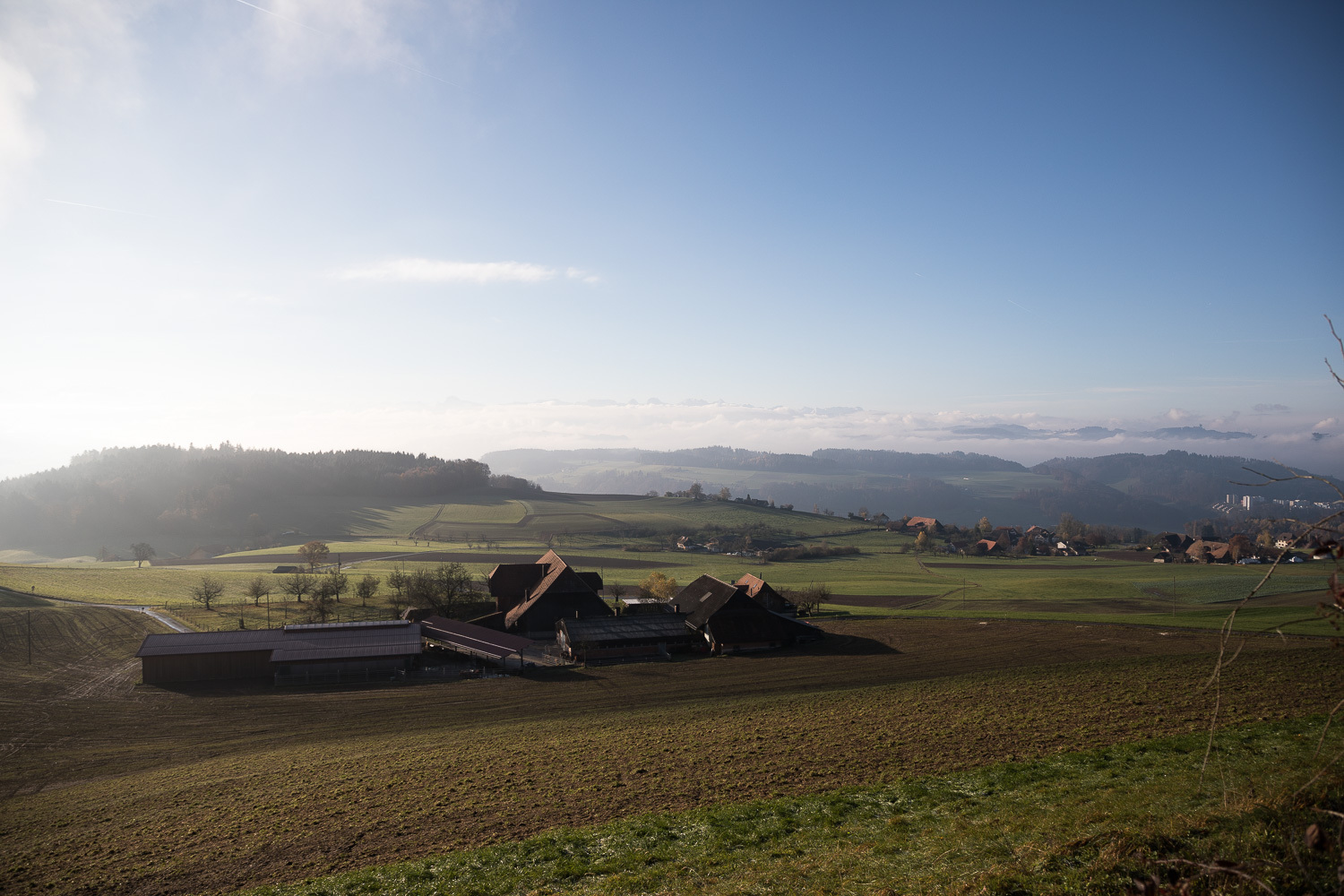
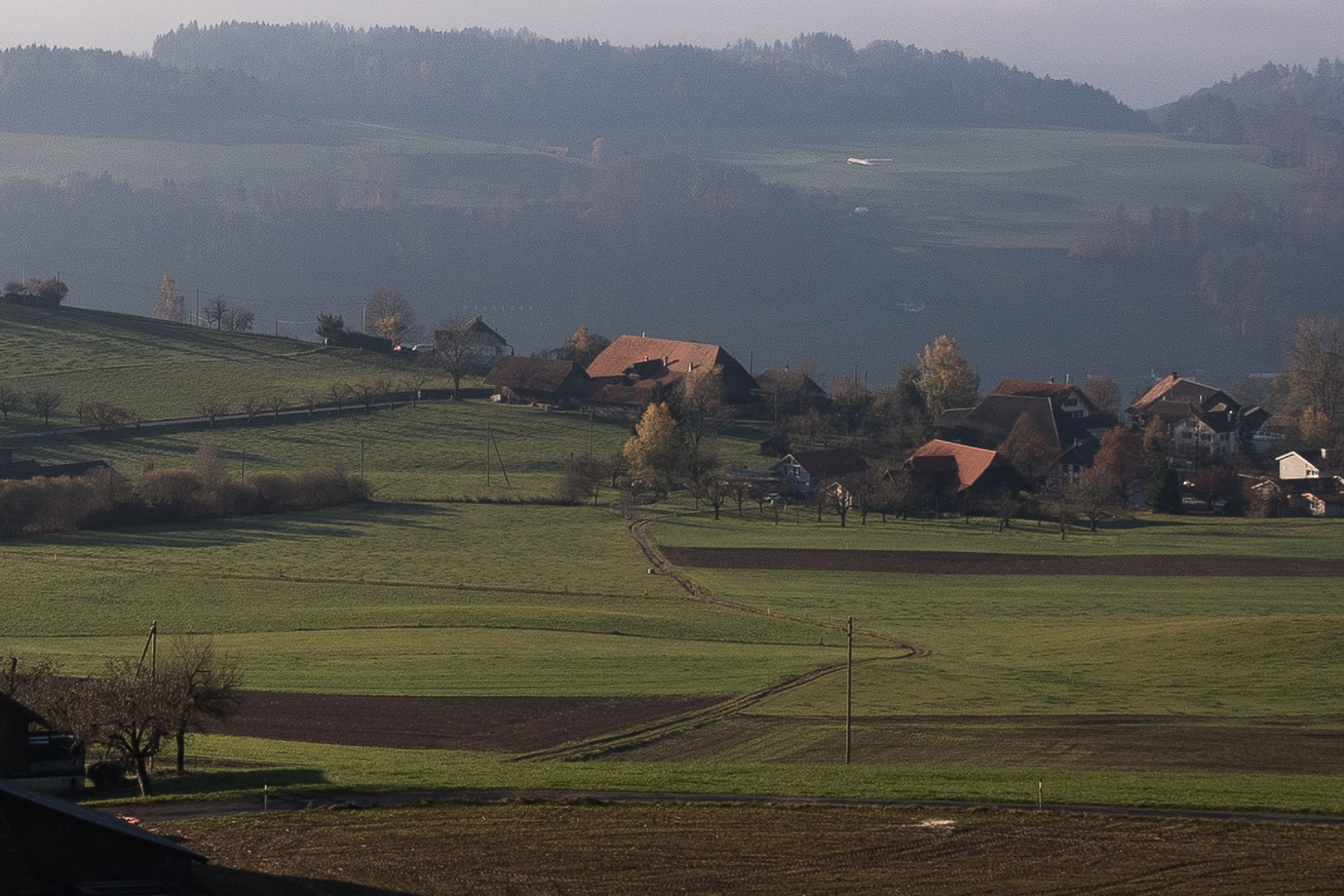
The 100% plus crop of the 105mm shot is 992x661 pixels posted at 1500x1000.
This is 24mm at full frame and at approx 1500x1000 crop posted at 1500x1000. I don't have a shot at 35mm
John_T wrote:
Thank you, I know, but can you tell me where in the LR Develop module, while actively cropping, I can get a live read-out of the pixel dimensions?
I see you got it figured out. I've tried to find a way in LR to actually type in the pixels for my crop but have never found a way. My info display in the top left overlaid over the picture shows the dimensions but I have to just move the crop by small increments to get to the size I want. I'm sure in PS you can just type in the crop values you want.
If anyone knows a way in LR to type in the crop dimensions you want by pixels please let me know.
...well... I'm not trying to sell anything, just sharing what I got. YMMV.
A few comments:
- modern lenses are no longer just opto-mechanical devices. They have a whole electronic and software side that may integrate better with some bodies and settings (and people) than others
- I can imagine that state of the art manufacturing of today produces far fewer copy variances than in the past, so if you think you got a bad copy you might make a greater effort to see if there is some other reason for the badness, maybe it's you. My initial shots with the 5D4 and 24-105 II were terrible, but rapidly became consistently what you have seen of what I have posted here
- Post processing of RAW files may be different for different body and lens combos that you have experienced previously, so you might be open for experimenting and getting creative
- PS, LR, DPP and other friends may not be as up to date and slick as they think themselves to be, so problems may belong at their addresses as much or more than the hardware
I borrowed a 24-105v1 from a friend yesterday and just loaded up some images I shot with it today. There is a substantial difference in sharpness at 24mm: the borrowed lens is a lot sharper than my own copy that I sold two months ago. This confirms my idea that my lens was a bad sample. This borrowed lens has pretty bad CA wide open at 24mm, but so far LR can correct it all. Use a little sharpening in LR (up to say 50%) and centre sharpness is as good as my 16-35/4IS unsharpened. The edges of the 24-105 @24mm f/4 are still soft no matter what I do in post. But @f/5.6 it's mostly gone and @f/8 it's quite good. So good in fact that I would not mind leaving my 16-35/4IS at home on casual outings.
My test was on a 5DsR, examined at 1:1 and even 2:1. I'm never ever going to notice any of these sharpness differences unless printed very large. Distortion wasn't very bad at 24mm. The 16-35 has some too. Contrast is undeniably better on the 16-35/4IS but most of that can be adjusted in post with a careful approach.
My opinion of the 24-105v1 has improved considerably. These lenses go for about 400-450. I may try to snatch a good one once the v2 starts selling. For the one I have here now 450 is a real bargain!
EB-1 wrote:
Why would Canon design a new 24-105 II to be worse than the 2005 version?
They would have to be mental.
EBH
If the 24-105mm II was intended to dovetail as a pair with the EF 16-35mm f/4L IS USM, I can see sacrificing the wide-end overlap on the 24-105mm II to bolster the long-end.
Just a theory. I too am concerned that the 24-105mm II seems less adequate as a single-lens-solution than the original.
John_T wrote:
...well... I'm not trying to sell anything, just sharing what I got. YMMV.
A few comments:
- modern lenses are no longer just opto-mechanical devices. They have a whole electronic and software side that may integrate better with some bodies and settings (and people) than others
- I can imagine that state of the art manufacturing of today produces far fewer copy variances than in the past, so if you think you got a bad copy you might make a greater effort to see if there is some other reason for the badness, maybe it's you. My initial shots with the 5D4 and 24-105 II were terrible, but rapidly became consistently what you have seen of what I have posted here
- Post processing of RAW files may be different for different body and lens combos that you have experienced previously, so you might be open for experimenting and getting creative
- PS, LR, DPP and other friends may not be as up to date and slick as they think themselves to be, so problems may belong at their addresses as much or more than the hardware
A sharp lens should be pretty obvious upon testing with an ISO 12233 chart, USAF 1951 chart, etc. The main value that special PP would bring is to improve on a mediocre result. Canon already has plenty of normal zoom with various annoying aberrations.
A 5D IV is OK for testing, but a 5Ds would be more meaningful to distinguish optical properties between lenses.
EB-1 wrote:
Why would Canon design a new 24-105 II to be worse than the 2005 version?
They would have to be mental.
EBH
Of course they design it to be better. But it not always is. LR tested numerous 24-70/2.8v1 and v2 lenses. If you take a look at their graphs you will see the best v1 samples are about the same as the worst v2 samples. Yes the v2 average is better than the v1 average but with lots of sample variation if you're lucky or persistent you can get away with a good bargain. This may or may not be the case with the 24-105ii.
The 24-105v1 I sold was close to rubbish. The one I just borrowed is so much better that I could happily shoot it and forget about the v2. I mean good enough, no need to upgrade at all for my intended use.
Thanks for all the great info everyone. I had the original for 6 years and sold its to get the 24-70 II. I do miss the range but not sure I'll make another move.
...I get some bizarre ideas sometimes, whether a camera/lens have an unofficial, undocumented break-in period before they run smooth and flawlessly. Lots of mechanical parts, shutter, IS, AF, AI Servo, etc. under the hood there.
My car, for example, redlines at 9,000 RPM. The official break-in is 1,200 km, however it was up to 20,000 km before it redlined smoothly and effortlessly, suspension was smooth and glued to the road, before I was at home driving it, etc.
Why not the same for camera/lens before it has the hiccups and inconsistencies behind it?
It has happened before that the lens group for image stabilisation is "parked" in a position not giving a sharp image when the IS is turned off for use on a tripod, like Bryan did in his review.
Maybe it is some lissue like this that is causing the dealy.
I don't think there is any 'break in period'. they are either good out of the box or they raise some worries. So a good test is worthwhile when first used. After that it depends on how the lens is looked after. I do think that the quality of some lenses change over their production run. This is probably true of cameras too. As the production run proceeds it might be that it is possible to tighten some tolerances, make small changes in design, all to improve the product. Of course the opposite may also be true, a screw not tight enough or a lens seating distorted.
John_T wrote:
...I get some bizarre ideas sometimes, whether a camera/lens have an unofficial, undocumented break-in period before they run smooth and flawlessly. Lots of mechanical parts, shutter, IS, AF, AI Servo, etc. under the hood there.
My car, for example, redlines at 9,000 RPM. The official break-in is 1,200 km, however it was up to 20,000 km before it redlined smoothly and effortlessly, suspension was smooth and glued to the road, before I was at home driving it, etc.
Why not the same for camera/lens before it has the hiccups and inconsistencies behind it?
It's not at all like some old internal combustion engine. It's more like a modern electric that just goes. If anything a lens sometimes gets worse over time due to wear. Alignment issues can occur from rough handling as well.