Given Zeiss published MTF is "A" and my simulation MTF is "B", how good Combined MTF "C"= A & B is?
I understand that is your question.
C is, most likely, min(A, B). And sometimes worse than it.
Theoretically, there is also a quite small possibility that C is better than min(A, B) when those abberations cancel each other, but don't expect too much.
If B is better than A everywhere, and B is higher than 50% everywhere, it is highly likely that PCX can recover visibly 100% original performance,
except the distortion and the transmission/reflection loss that are not included in A nor B.
When B is not so good (under 50%), C's uncertainty grows, that means C is pefhaps much worse than both A and B in this case.
Only Zeiss can get deterministic value of C because they have all of master lens parameters.
We will never get those parameters so by using perfect lens instead, we can only tell C's probability.
Well, only test images tell truth. I appriciate everybody posting any test results here
That sounded like a political campaign debate. Lol
HaruhikoT wrote:
Given Zeiss published MTF is "A" and my simulation MTF is "B", how good Combined MTF "C"= A & B is?
I understand that is your question.
C is, most likely, min(A, B). And sometimes worse than it.
Theoretically, there is also a quite small possibility that C is better than min(A, B) when those abberations cancel each other, but don't expect too much.
If B is better than A everywhere, and B is higher than 50% everywhere, it is highly likely that PCX can recover visibly 100% original performance,
except the distortion and the transmission/reflection loss that are not included in A nor B.
When B is not so good (under 50%), C's uncertainty grows, that means C is pefhaps much worse than both A and B in this case.
Only Zeiss can get deterministic value of C because they have all of master lens parameters.
We will never get those parameters so by using perfect lens instead, we can only tell C's probability.
Well, only test images tell truth. I appriciate everybody posting any test results here ...Show more →
GMPhotography wrote:
Rob check the mid frame on them compared to the lens the other way.
Don't take this to the bank either, but I think that it might be slightly better. In any event, I'm going to leave the PCX in its current orientation for now--convex side facing backwards.
HaruhikoT wrote:
Given Zeiss published MTF is "A" and my simulation MTF is "B", how good Combined MTF "C"= A & B is?
I understand that is your question.
C is, most likely, min(A, B). And sometimes worse than it.
Theoretically, there is also a quite small possibility that C is better than min(A, B) when those abberations cancel each other, but don't expect too much.
If B is better than A everywhere, and B is higher than 50% everywhere, it is highly likely that PCX can recover visibly 100% original performance,
except the distortion and the transmission/reflection loss that are not included in A nor B.
When B is not so good (under 50%), C's uncertainty grows, that means C is pefhaps much worse than both A and B in this case.
Only Zeiss can get deterministic value of C because they have all of master lens parameters.
We will never get those parameters so by using perfect lens instead, we can only tell C's probability.
Well, only test images tell truth. I appriciate everybody posting any test results here ...Show more →
Thanks Harukiho, that's exactly what I was wondering!
So your guess is that (with other exceptions) it's roughly whichever is worst of the original value at a point and the simulated value.
It is meant for infinity shooting with Optosigma 5m lens in front of ZM 35mm 1.4.
Any feedback is welcome, as I didn't have that many shots to check its quality and
it might only work well for my combination of Step-Up and Step-Down rings.
Hey,
Just tried to download this profile, but Dropbox says no file present. Try again?
Thx much for this!
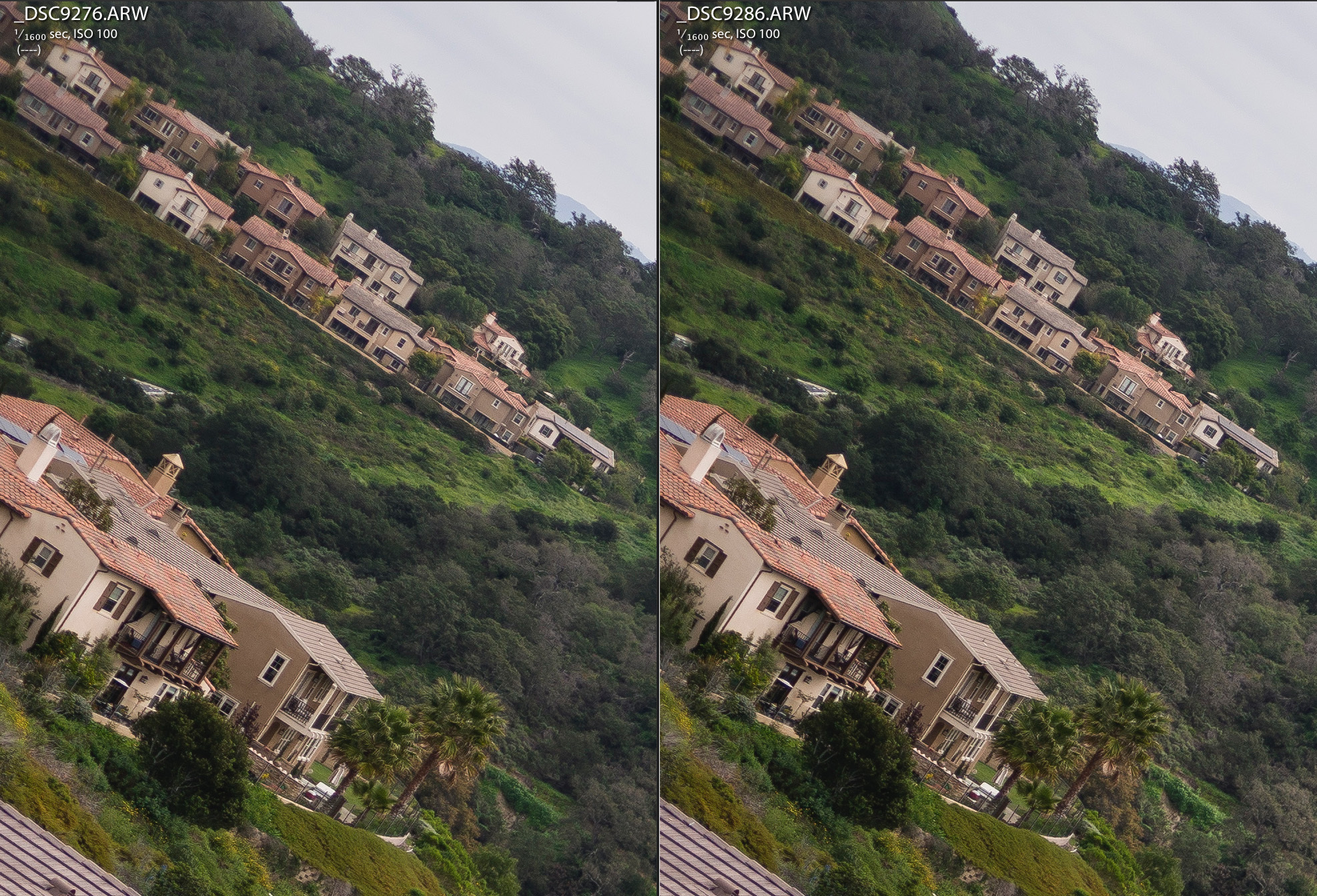
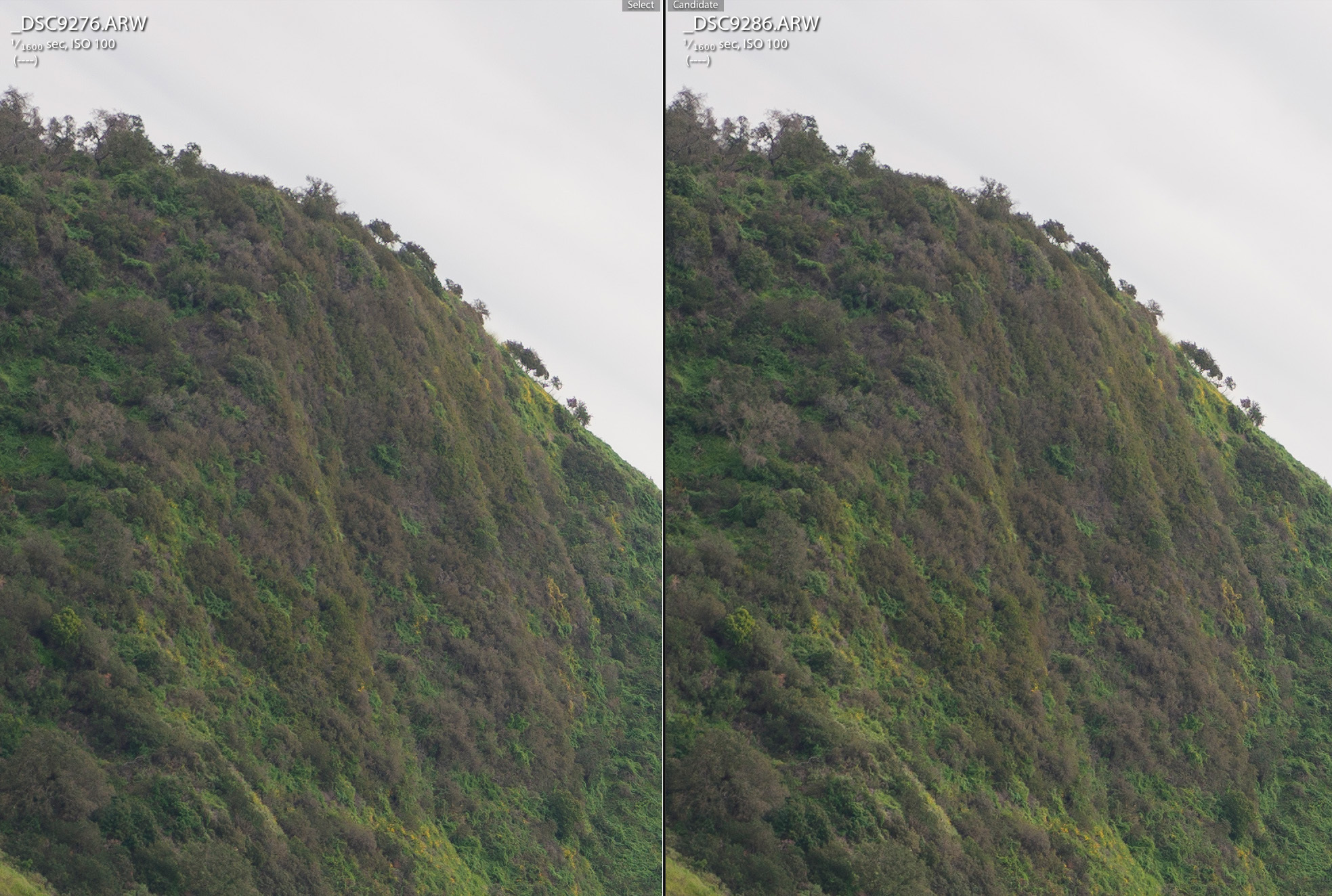
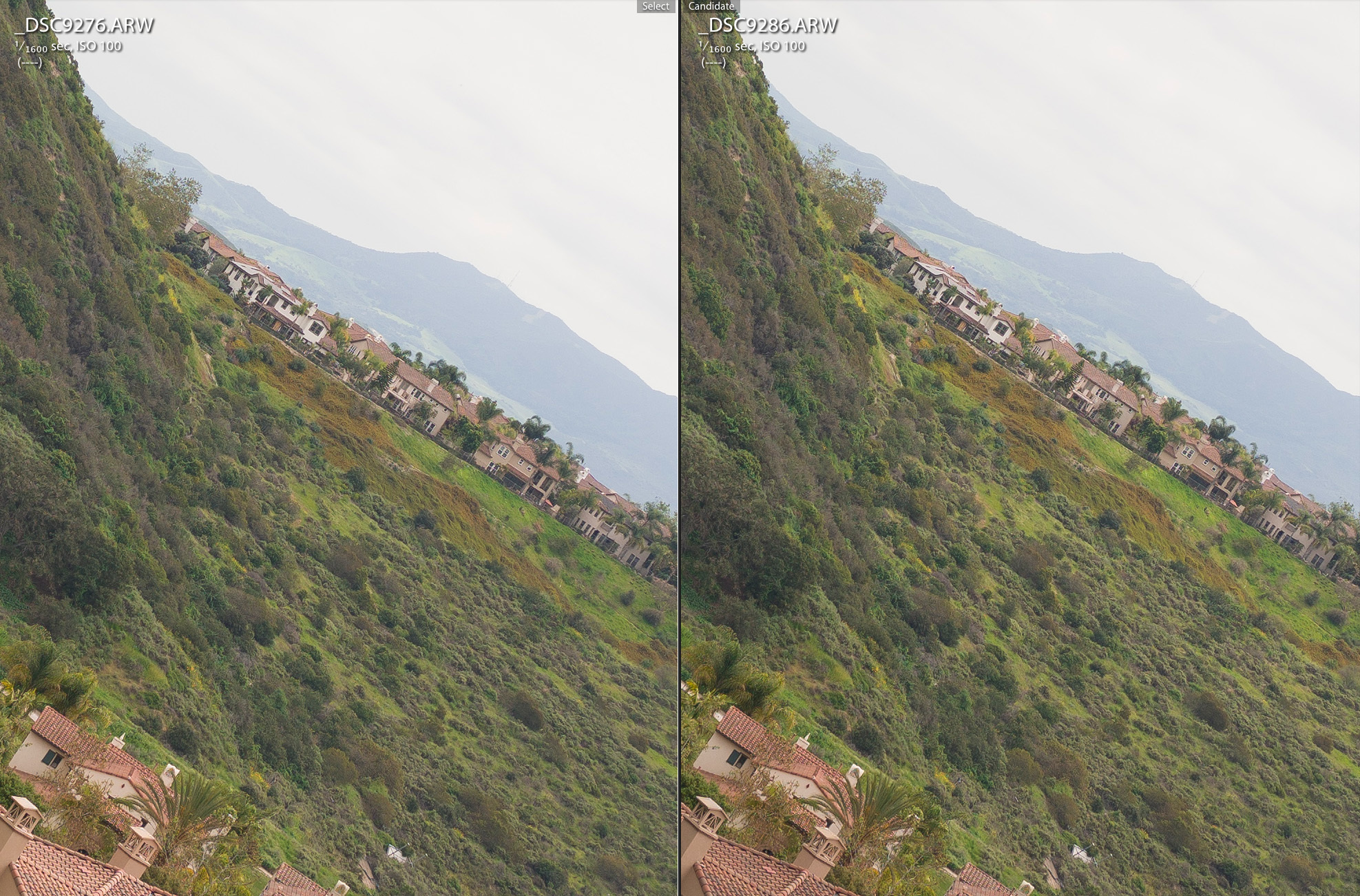
Heads up for those using the 5m PCX front-lens with the ZM 35/1.4:
I finally was able to test both normal and reverse ways and confirm some reports that it performs better with the front-lens in "reverse" orientation. That means the convex side facing the camera instead of the subject.
The improvement is small but I could detect a slightly increase in resolution at 1:1. Focus was identical for both samples since my 35/1.4 ZM lens is optimized for the Hawk's hard infinity stop. I also made sure the PCX was perfectly centered for both orientations. Luckily the lighting didn't change much so histograms were also identical.
See samples below:
LEFT SIDE: PCX 5m in normal orientation
RIGHT SIDE: PCX 5m in reverse orientation.
This is the lens at f/2.8. Sorry overcast weather.
Extreme corner at f/2.8: LEFT: normal orientation | Right: reversed
Mid-zone at f/2.8: LEFT: normal orientation | Right: reversed
Center at f/2.8: LEFT: normal orientation | Right: reversed
Fred Miranda wrote:
Heads up for those using the 5m PCX front-lens with the ZM 35/1.4:
I finally was able to test both normal and reverse ways and confirm some reports that it performs better with the front-lens in "reverse" orientation. That means the convex side facing the camera instead of the subject.
The improvement is small but I could detect a slightly increase in resolution at 1:1. Focus was identical for both samples since my 35/1.4 ZM lens is optimized for the Hawk's hard infinity stop. I also made sure the PCX was perfectly centered for both orientations. Luckily the lighting didn't change much so histograms were also identical.
See samples below:
LEFT SIDE: PCX 5m in normal orientation
RIGHT SIDE: PCX 5m in reverse orientation.
This is the lens at f/2.8. Sorry overcast weather. ...Show more →
And we thought you where crazy Rob, go figure. Lol
Seriously this is what this thread is all about and maybe one of the best threads on the net as far as the tech, the community and the brain power here to solve problems. FM should be proud of this one.
robgo2 wrote:
This is what I found in a quick comparison.
Rob
+1
And BTW, I shot some stars on Saturday night with mine (reversed) at F/2.8, 10 secs and ISO 6400, and a 3 by 3 stitch is awesome for its capture of detail - I'm stoked with the results
And BTW, I shot some stars on Saturday night with mine (reversed) at F/2.8, 10 secs and ISO 6400, and a 3 by 3 stitch is awesome for its capture of detail - I'm stoked with the results
Fred Miranda wrote:
Heads up for those using the 5m PCX front-lens with the ZM 35/1.4:
I finally was able to test both normal and reverse ways and confirm some reports that it performs better with the front-lens in "reverse" orientation. That means the convex side facing the camera instead of the subject.
The improvement is small but I could detect a slightly increase in resolution at 1:1. Focus was identical for both samples since my 35/1.4 ZM lens is optimized for the Hawk's hard infinity stop. I also made sure the PCX was perfectly centered for both orientations. Luckily the lighting didn't change much so histograms were also identical.
See samples below:
LEFT SIDE: PCX 5m in normal orientation
RIGHT SIDE: PCX 5m in reverse orientation.
This is the lens at f/2.8. Sorry overcast weather. ...Show more →
Nice test and confirmation Fred, thanks. If I may ask, what are folks doing to make th PCX 5cm stay centered and in a fixed position. Mine moves a bit as it is loosely bound between the filter rings. Is it the rings I have or are people doing something to the PCX to keep it from moving?
rji2goleez wrote:
Nice test and confirmation Fred, thanks. If I may ask, what are folks doing to make th PCX 5cm stay centered and in a fixed position. Mine moves a bit as it is loosely bound between the filter rings. Is it the rings I have or are people doing something to the PCX to keep it from moving?
My approach is very easy and fast but not so easy to describe.
I cut two small pieces of Scotch double tape (about 2mm) and place them against each other on the step-up ring (where the PCX will sit on). Then I place the PCX lens on it and center it visually as good as possible. I do not press it down yet. Next, I get a small screw driver (about 2mm head) and circle around the empty area around the PCX to make sure it's perfectly centered. Once, I'm done, I press the PCX firmly down and it will no longer move.
And BTW, I shot some stars on Saturday night with mine (reversed) at F/2.8, 10 secs and ISO 6400, and a 3 by 3 stitch is awesome for its capture of detail - I'm stoked with the results
-John
I wanted to compare the FE 35/2.8 vs ZM 35/1.4 @f/2.8 for astro. That's the aperture where the FE lens shines and I'm expecting to get very similar results. I will post it.
I used a old blank retaining ring that fit around the Proxar but now I need to change this up since I'll be switching to the PCX lenses . This is on my 25 . My only reluctance to tape is reside in high heat. Im in the real Desert . Lol
As soon as I get the grandkids down for a nap. I'm going to install it and at least get a couple shots off. This better work. I got a lot of extra money in this lens. Lol