Looks to work very well on the 35 just what I'm after to pick up some outside the center area. Be a lot easier to put people out to the edges and focus on. Great test Fred
This looks like a great result, and I could see myself using it particularly for night sky photography. Fred, is the lower contrast, particularly in the left-hand version of the center crop, the reduction in overall contrast that you attributed to the addition of the filter?
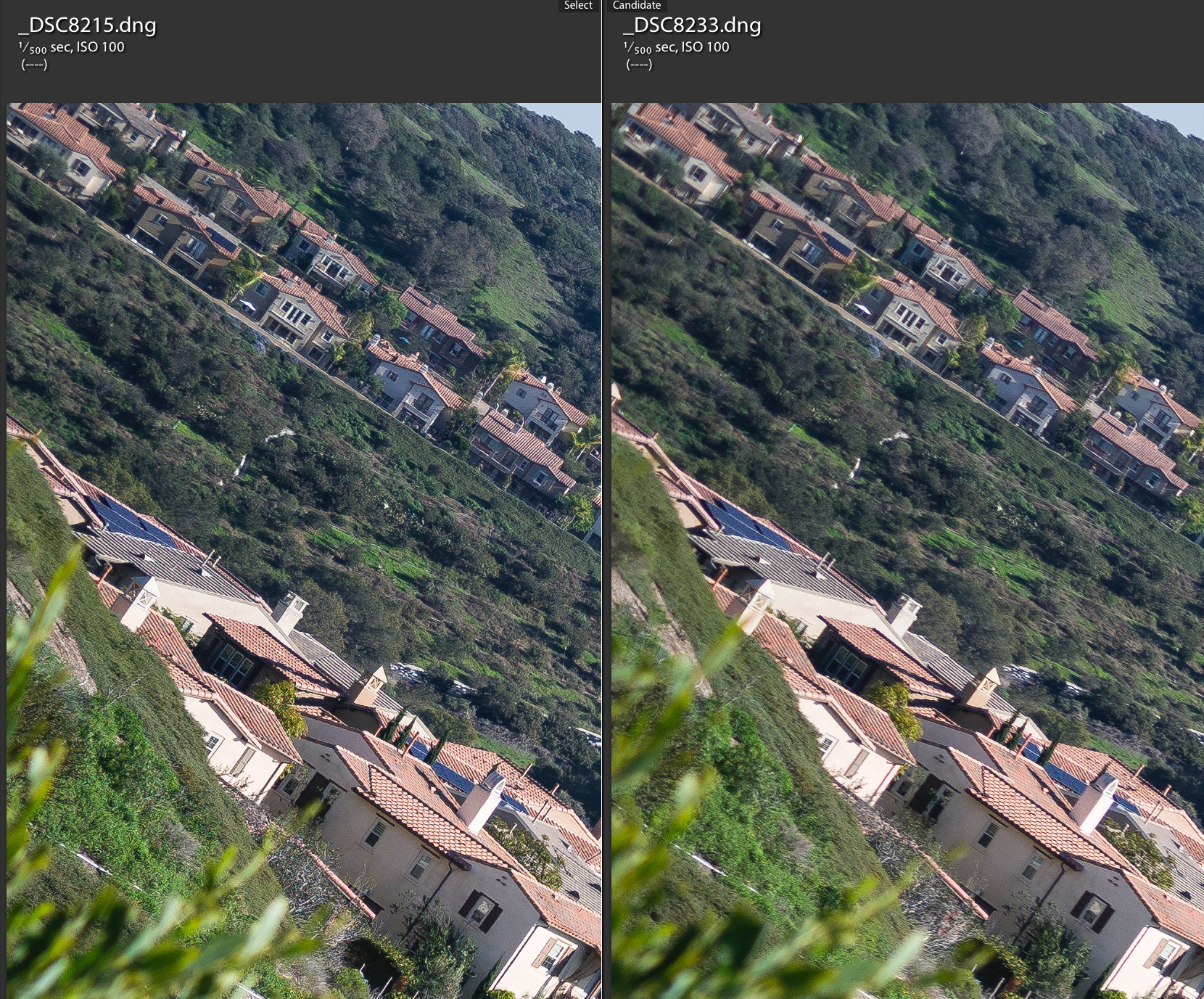
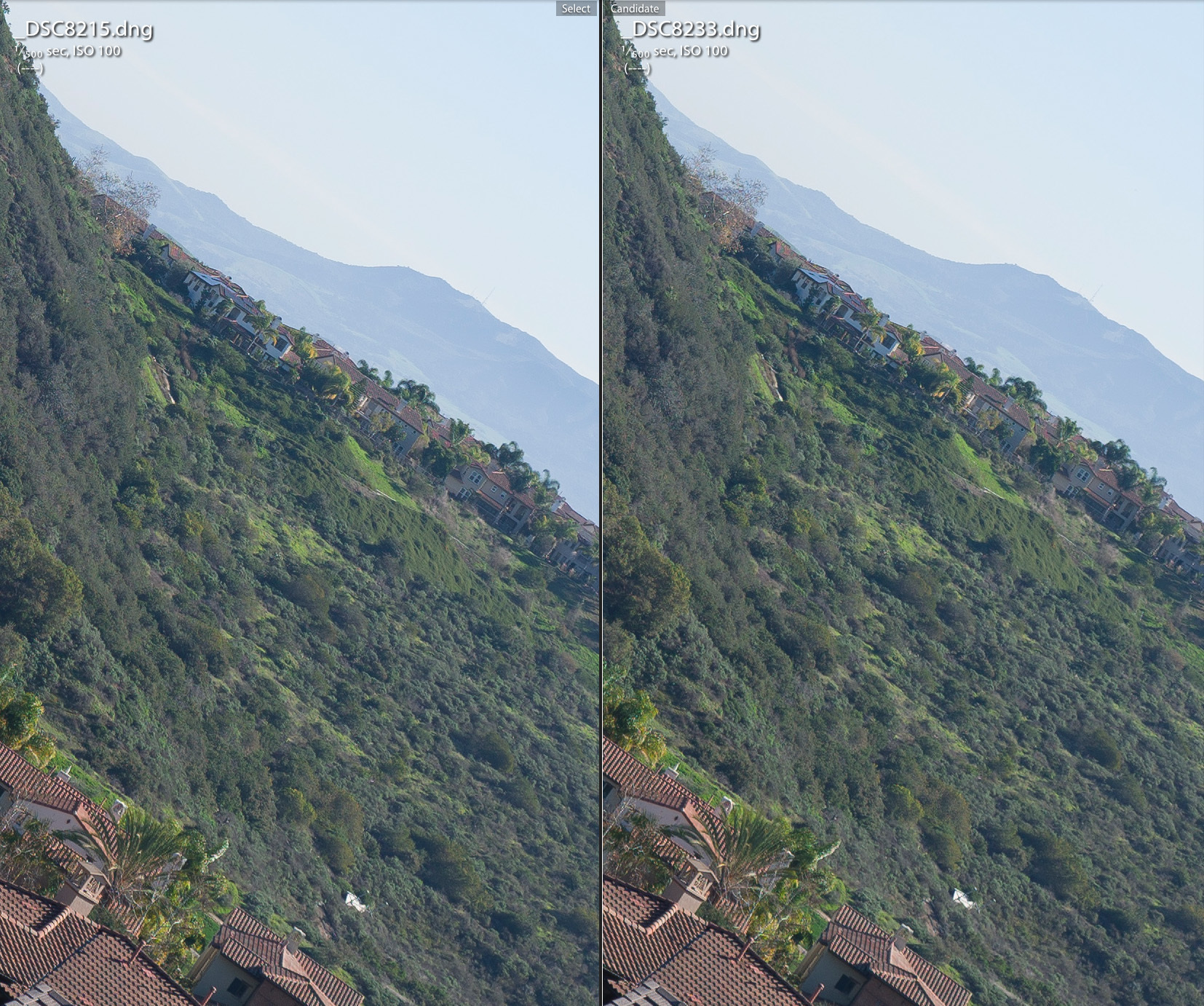
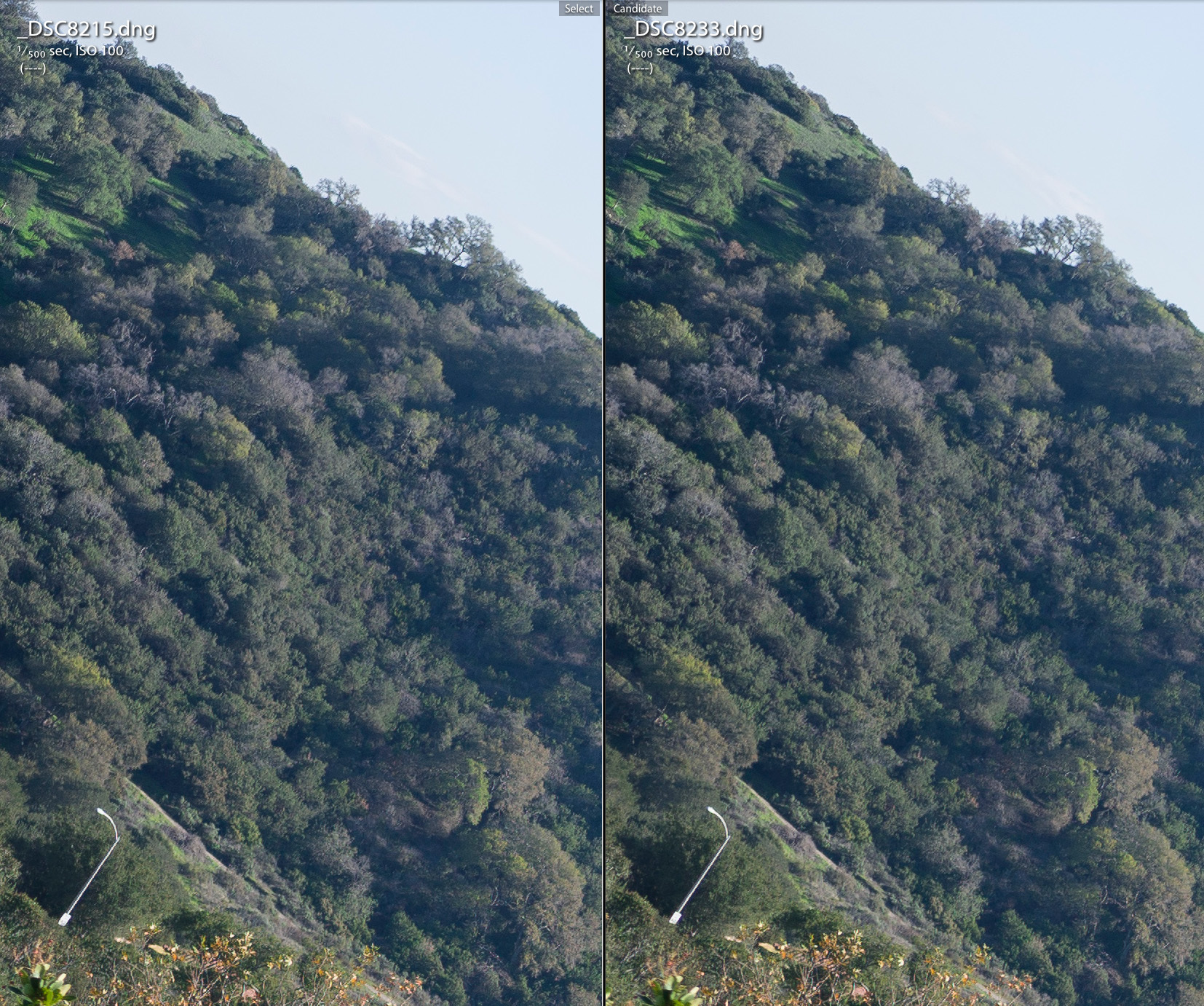
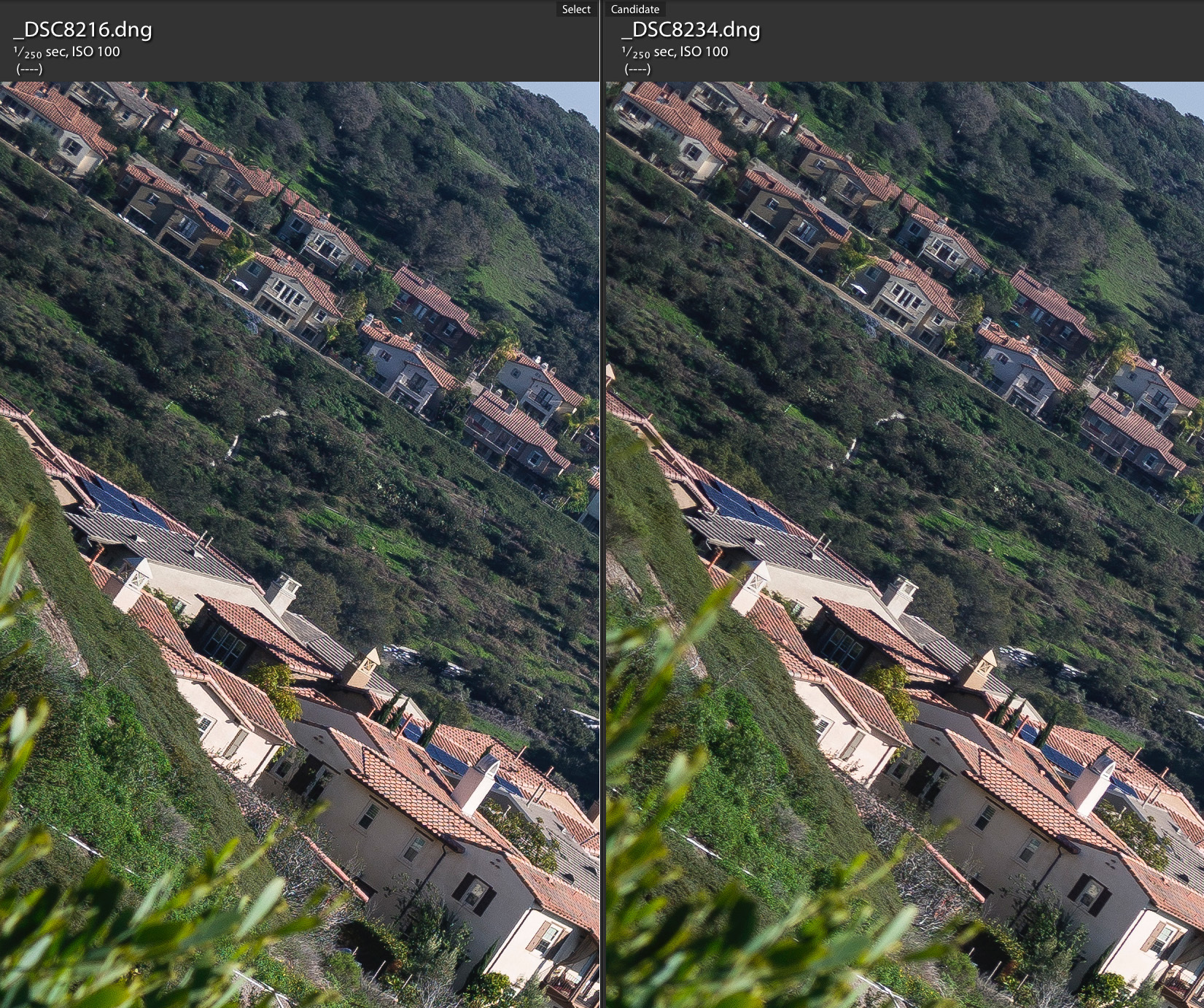
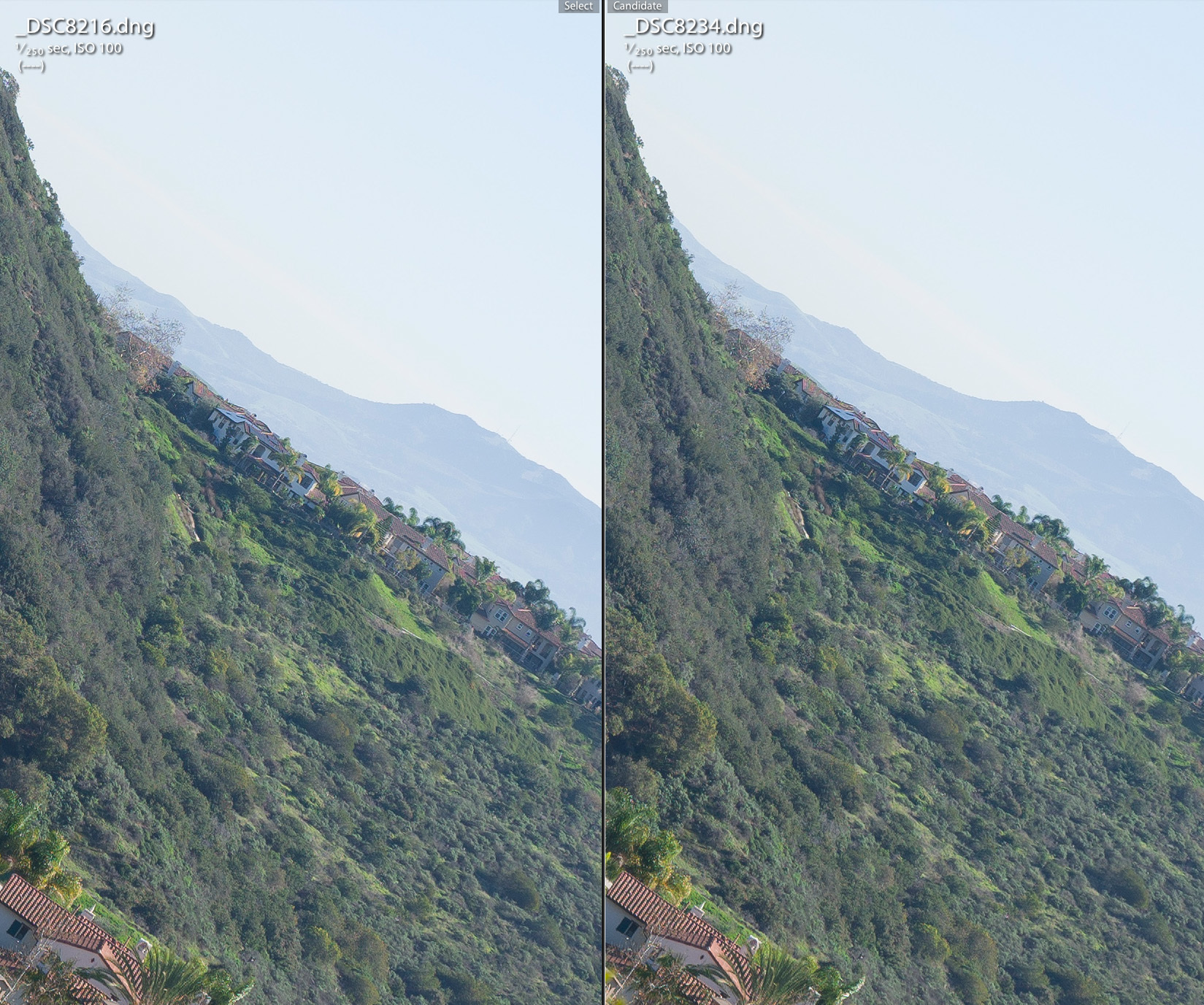
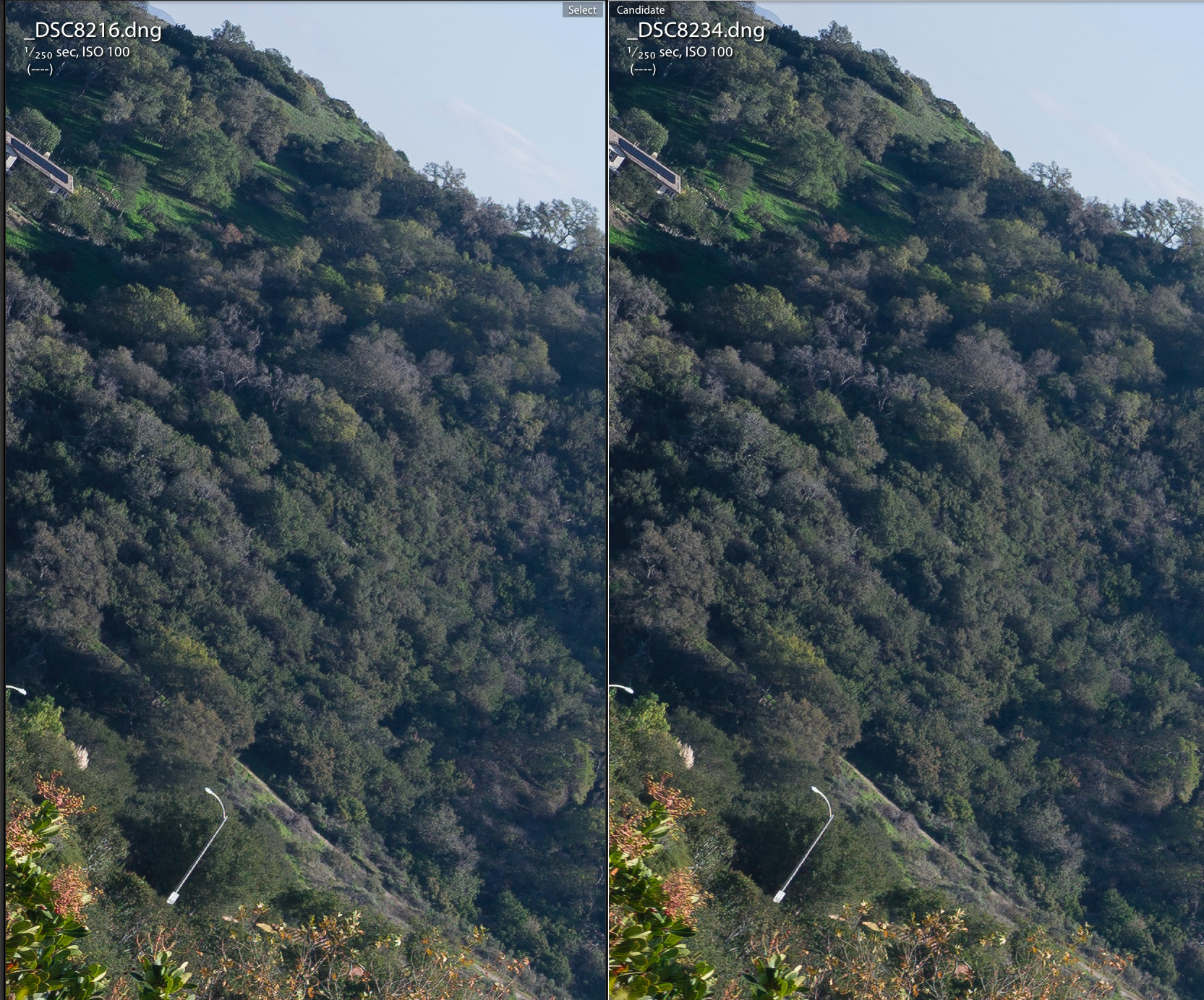
At f/5.6 there is practical no difference with or without the front-end lens. The image with the front-end lens still looks technically better (slightly more flat field) but the image without the front-end lens at f/5.6 already looks darn good from center to the very edges (As long as you carefully focused on the mid-field area of the image).
I would still give a small advantage for the front-lens set-up at this aperture but they are practically the same.
(Notice that the very extreme edge house in the front-end crop lacks contrast when compared to the non-front-end crop). Resolution is the same, just contrast is a bit lower.
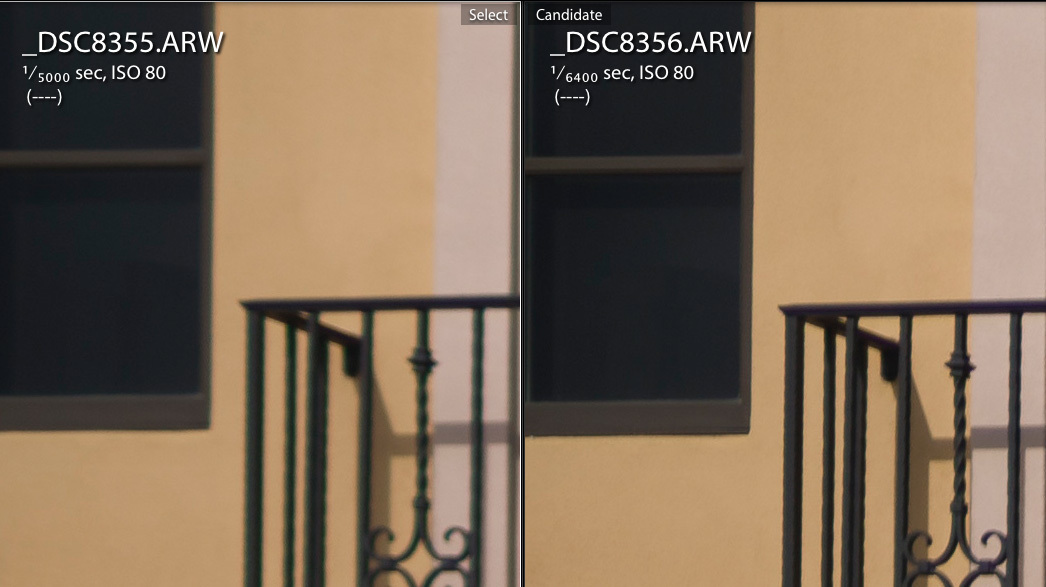
extreme edges at f/5.6 (5m front-lens: LEFT - No front-lens: RIGHT)
center at f/5.6 (5m front-lens: LEFT - No front-lens: RIGHT)
mid-field at f/5.6 (5m front-lens: LEFT - No front-lens: RIGHT)
navmannz wrote:
This looks like a great result, and I could see myself using it particularly for night sky photography. Fred, is the lower contrast, particularly in the left-hand version of the center crop, the reduction in overall contrast that you attributed to the addition of the filter?
-John
Yes, that is the loss of contrast. It's not that noticeable for it's there.
So, starting at f/6.3, they are both pretty much identical as long as you carefully focused the non-front-lens image in the mid-field area. The advantage of the front-end set-up is that you can focus the image in the center or extreme edge and the results will be practically the same.
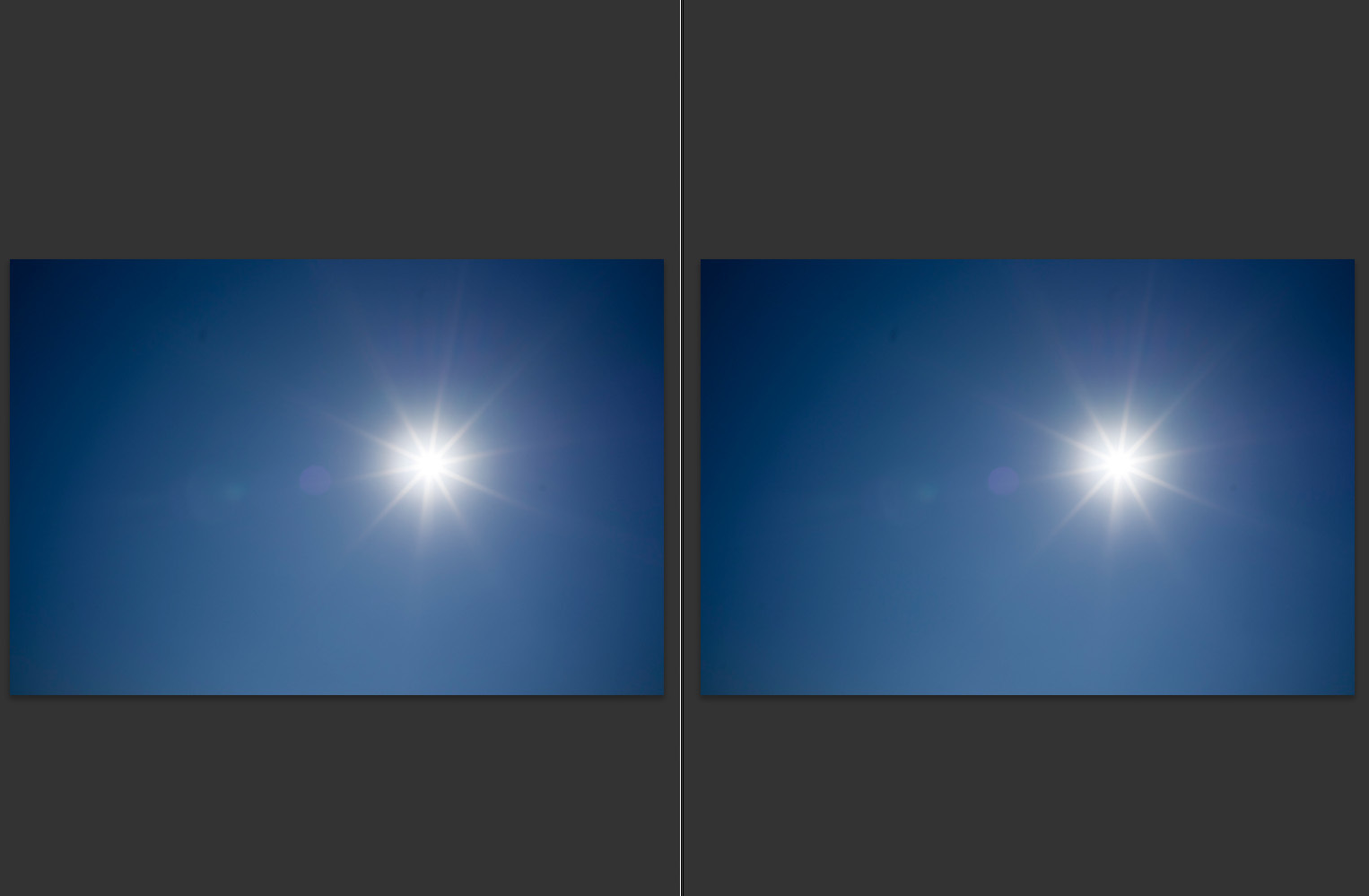
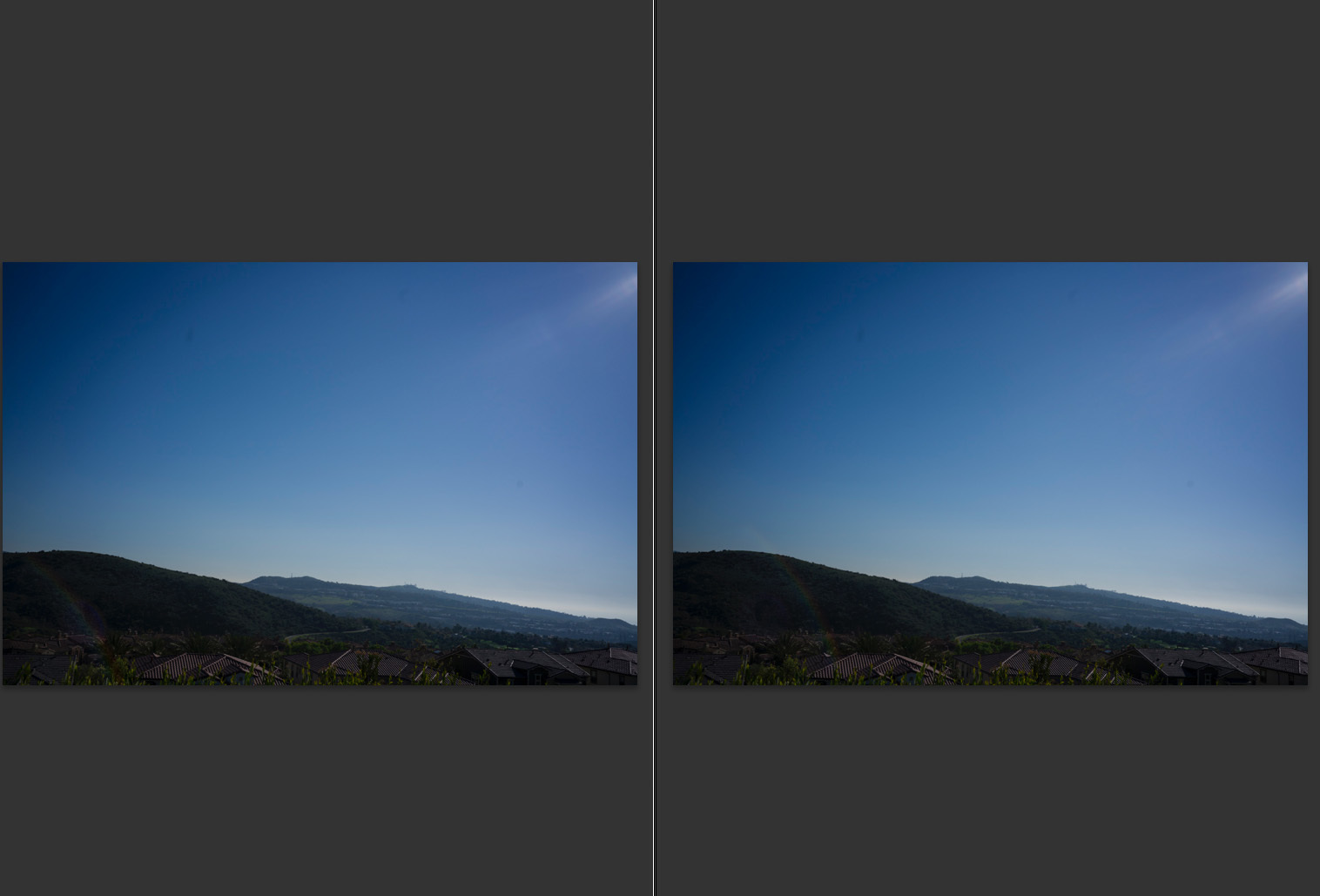
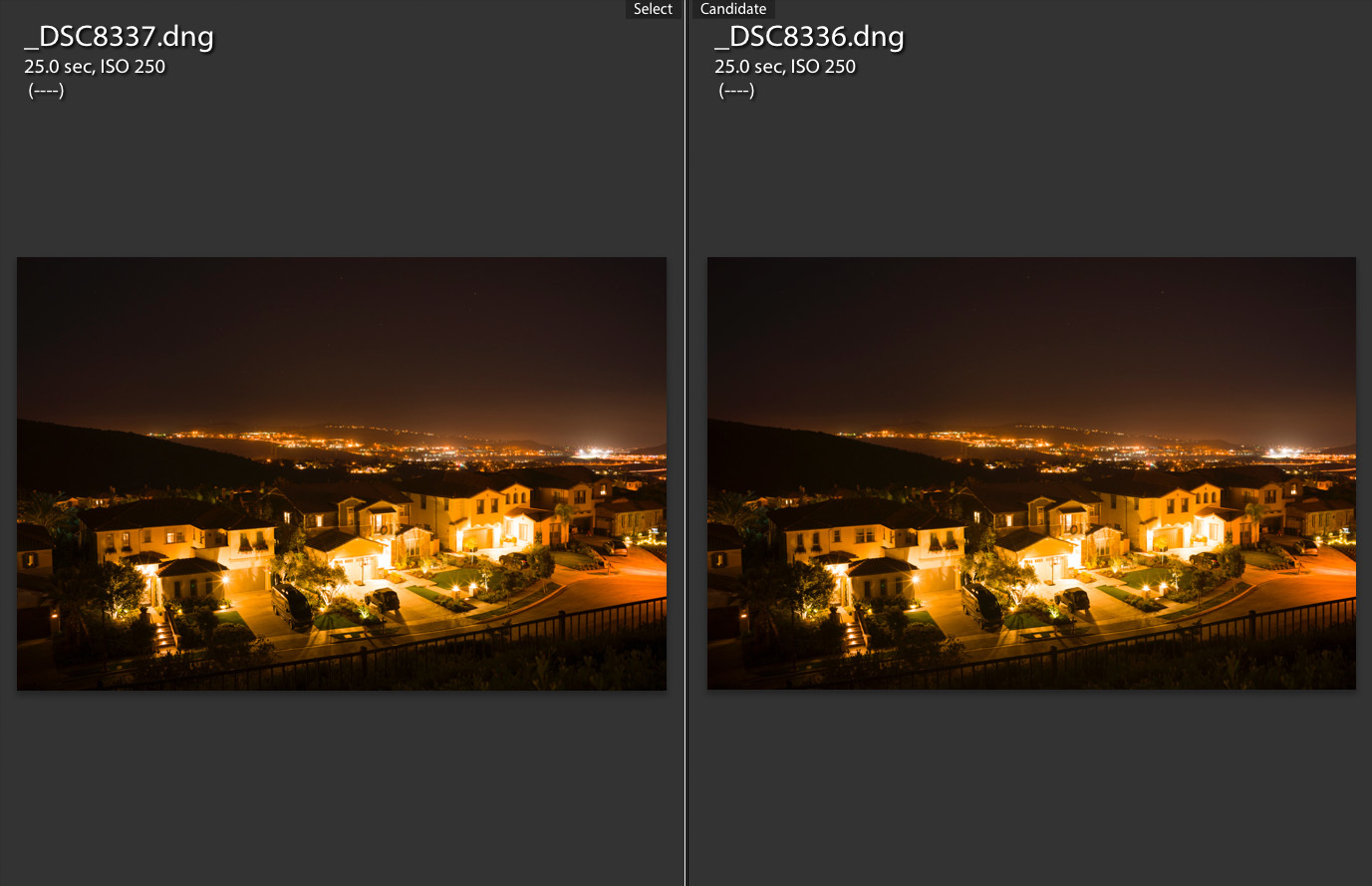
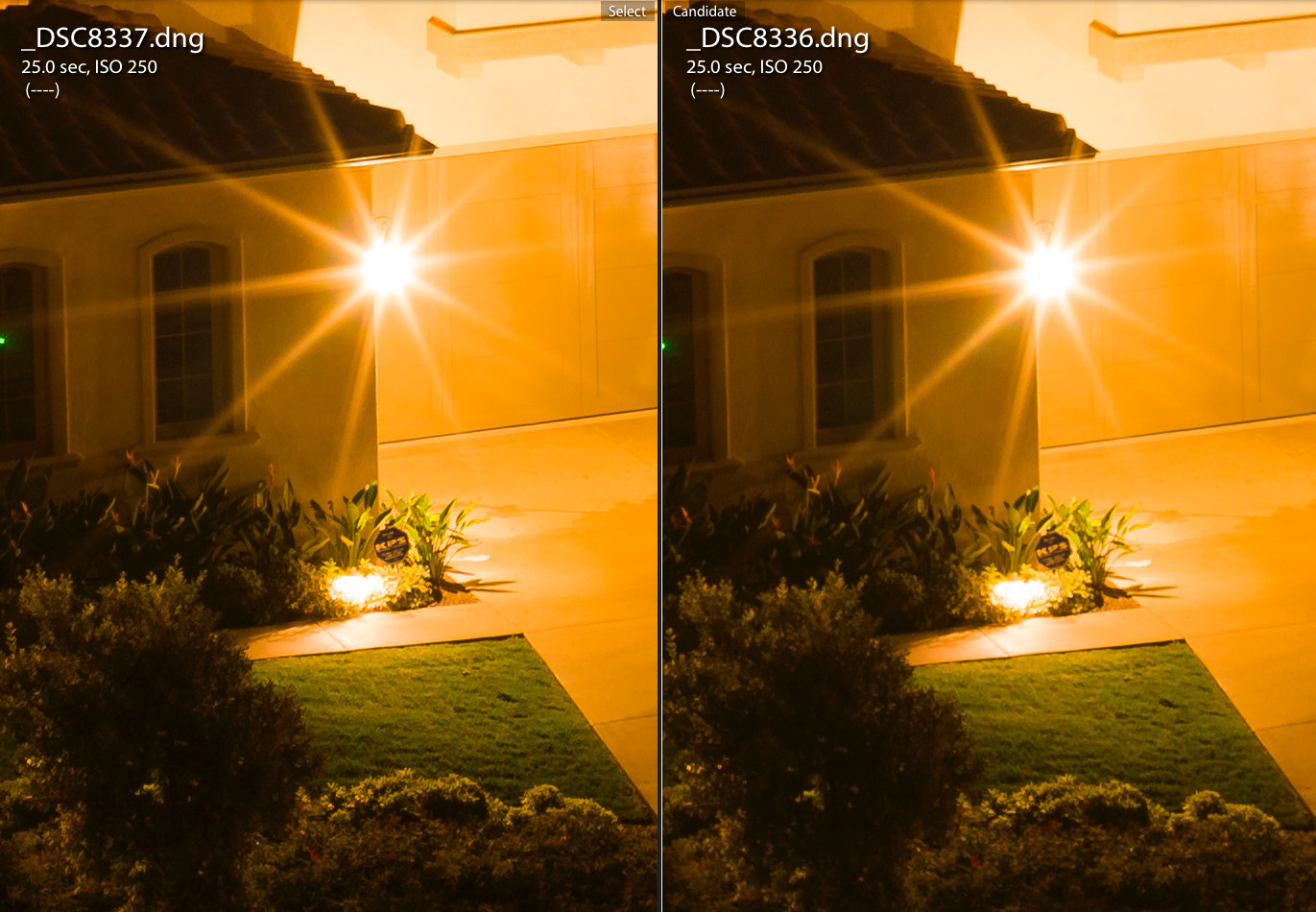
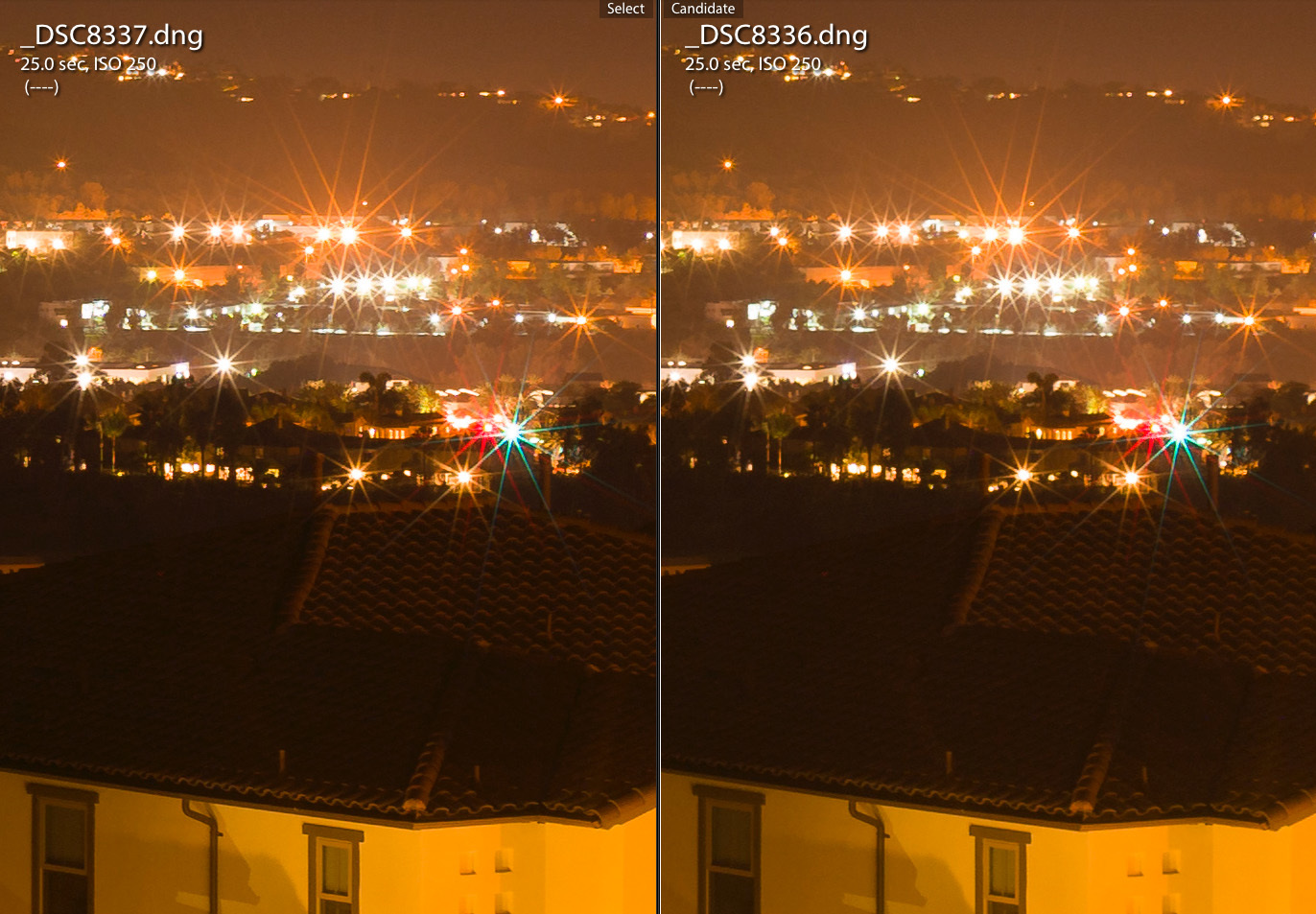
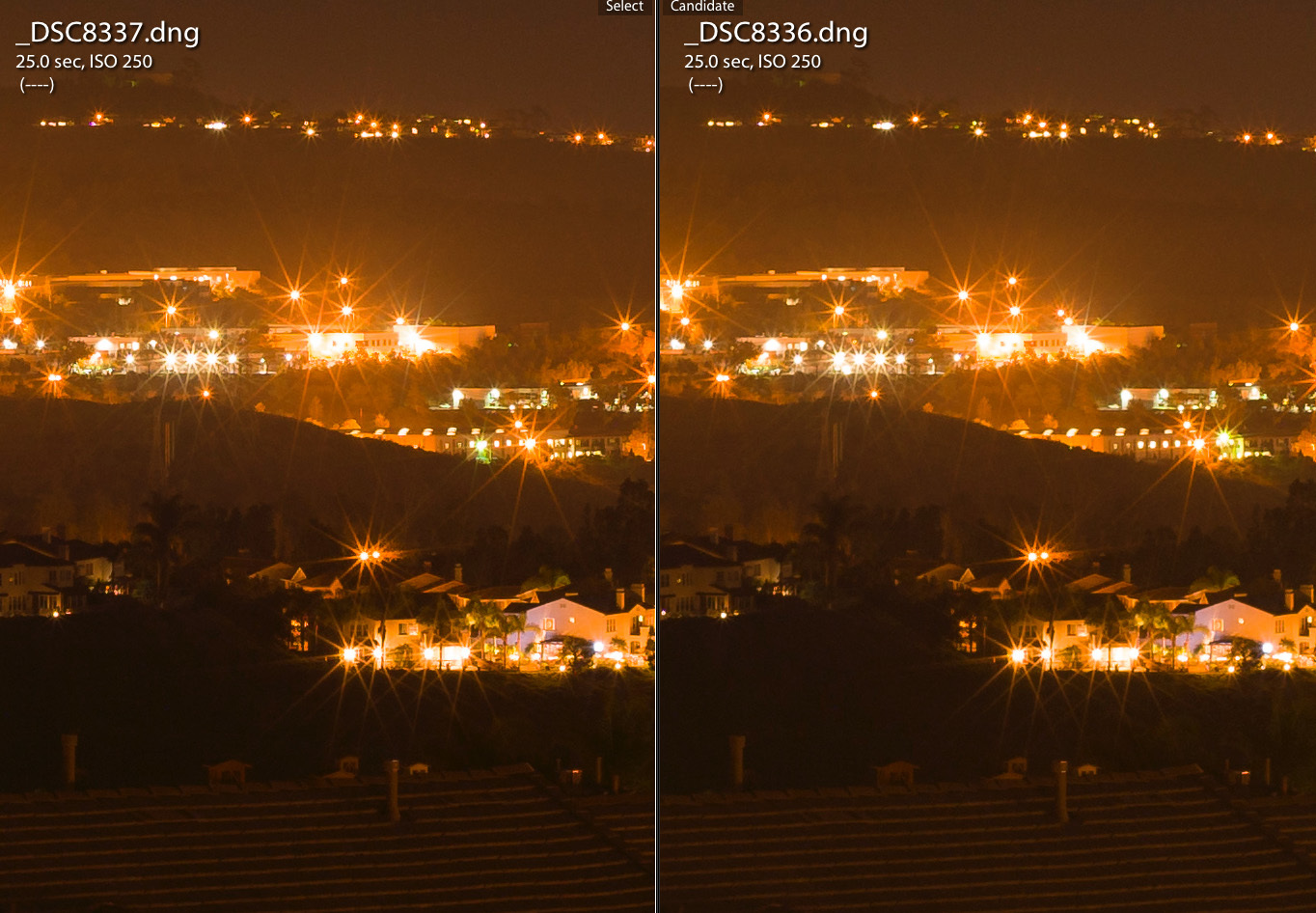
Next I will show some flare tests. (Spoiler....the front-lens has excellent multi-coating as I don't see any flare deterioration from the bare lens...)
So, for those interested in the 5m front-lens for the ZM 35/1.4, here is my overview:
1) Depending on the lighting conditions, there could be a slight contrast loss when using the front-lens. Whenever present, it's very small and can be easily recovered in post. I can only really notice it when comparing images with and without the front-lens side by side.
2) The ZM 35/1.4 is already super sharp (without a front lens) at the extreme edges even wide open as long as you carefully focus on that area. Astigmatism is not too much of an issue. However, with flat subjects, you can never get sharp edges and center at the same time since the lens was designed for a thinner sensor stack. The compromise is to focus on the mid-field. The front-end lens does a great job flattening the image field, so carefully focusing is no longer needed and greater sharpness can be achieve across the field even wide open.
3) Flare response is pretty much identical with or without the front-end lens. (the PCX 5m has excellent multi-coating)
4) There is a slight increase in focal lens. Something like 0.5mm
5) The front-end helps tremendously from f/1.4 until about f/3.2. Starting at f/4, it becomes less needed but it's still useful. At f/5.6 less so, and after f/6.3 the front-end filter does not help much more in practical terms...Keep in mind that in order to get good sharpness across the field without the front-lens even at f/5.6 and smaller, one must focus carefully towards the mid-field to mitigate the pronounced field curvature induced by the Sony sensor stack.
Fred what shims did you leave in with the Hawk adapter as I have the same setup but I'm waiting on the lens filter for sure.
Also seems no worse effect with the shims out even without the lens filter. So it seems to just remove the shims regardless and set the Hawk at the infinity stop
GMPhotography wrote:
Fred what shims did you leave in with the Hawk adapter as I have the same setup but I'm waiting on the lens filter for sure.
There are 4 shims. (gold, silver and two bronze)
If you only leave the gold, our cheap adapters like the Fotasy or Pixco are able to focus at infinity at exactly the lens "new" infinity hard stop.
With the Hawk's, you can leave one gold and one bronze and set-up the adapter to the maximum infinity retraction.
My advise is to only leave the gold shim. That way you will be able to use it with pretty much all adapters and with the Hawk, you will be able to adjust the adapter infinity hard stop perfectly.
@Fred Miranda@
Thanks for sharing your tests.
I would still recommend also testing flare with a nightly cityscape.
The uncoated Eksma also shows almost no problems when shooting directly into the sun,
but its performance is abyssmal when shooting with point light sources in the frame at night.
Fred Miranda wrote:
I tested positioning subjects towards the edges at closer distances and I see an improvement with the front-end filter.
Thank You, Fred and others, to everyone's efforts regarding this lens' use on the Sony cameras.
I would say that the infinity edge IQ performance at wider apertures is remarkable with the addition of the front lens filter.
The thing that would seal the deal for me is the lack of field curvature at closer distances. I continue to see example photos of focused objects closer in or mid distance, only to see farther distance objects toward the edges that are also more in focus, versus the expected blending of those farther objects into the bokeh of the scene.
Has there been any examination of this, yet? It could be a challenging experiment because one first has to first find a scene where this occurs before a test of the front-end filter would make a difference.
JimBuchanan wrote:
The thing that would seal the deal for me is the lack of field curvature at closer distances. I continue to see example photos of focused objects closer in or mid distance, only to see farther distance objects toward the edges that are also more in focus, versus the expected blending of those farther objects into the bokeh of the scene.
Has there been any examination of this, yet? It could be a challenging experiment because one first has to first find a scene where this occurs before a test of the front-end filter would make a difference.
Jim,
I tested for this and here are the results at 1.5m, 2m and 2.75m distances from subject.
keep in mind that the house in the background is not too far from the subject. If it was the blur would be bigger and the discrepancy between the front-lens On and Off would be even greater.
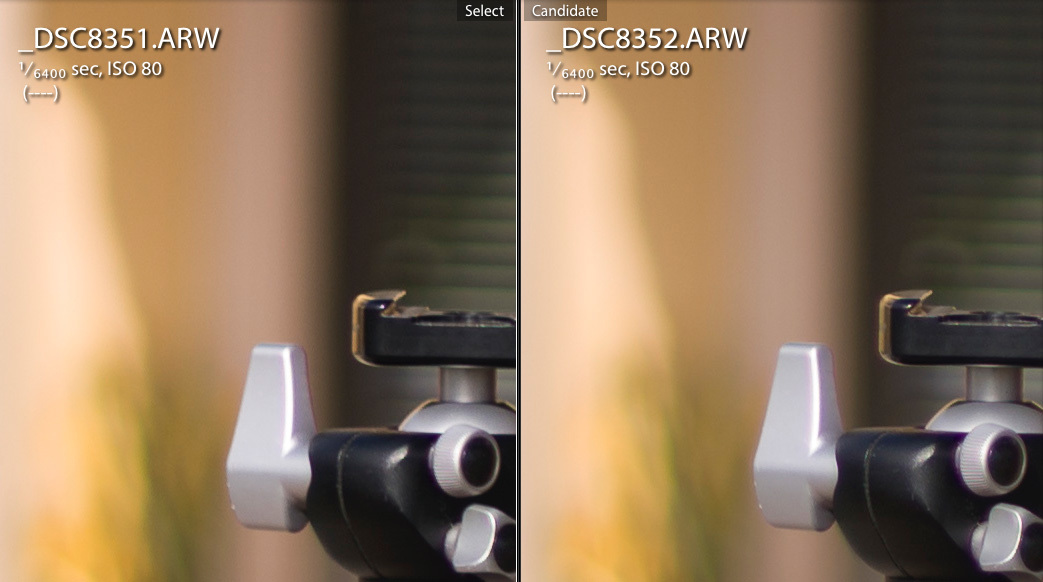
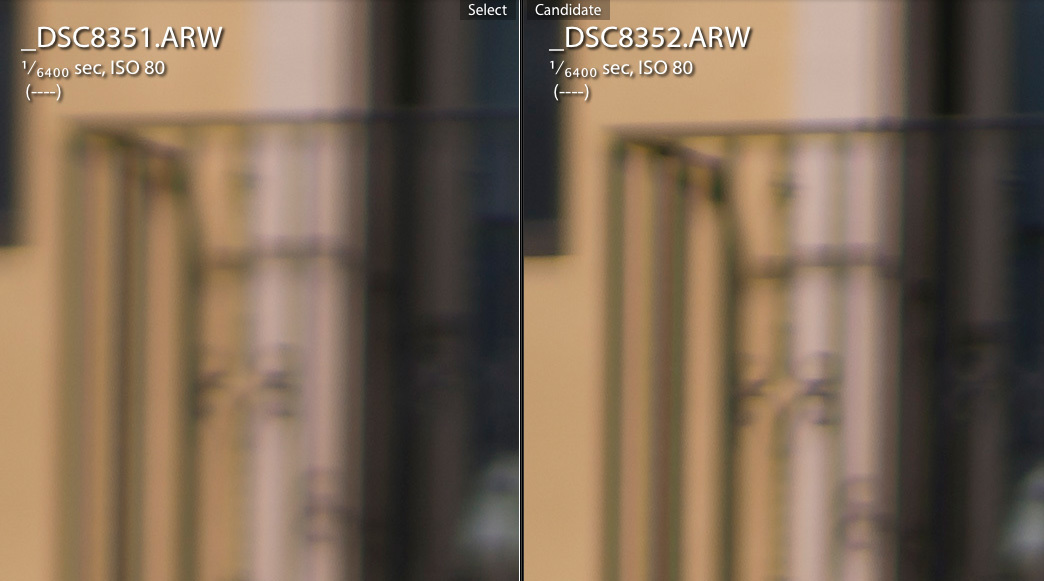
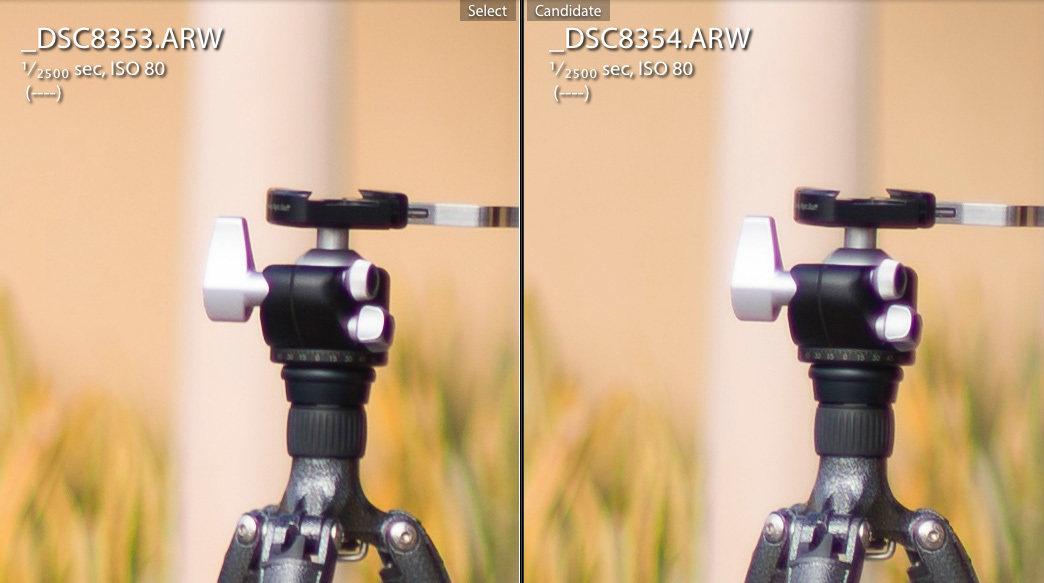
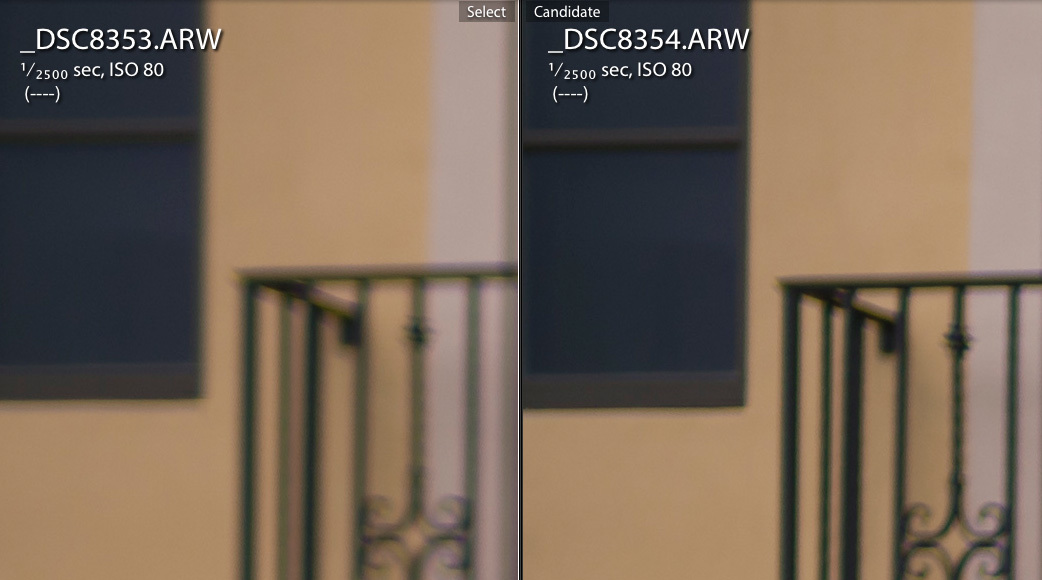
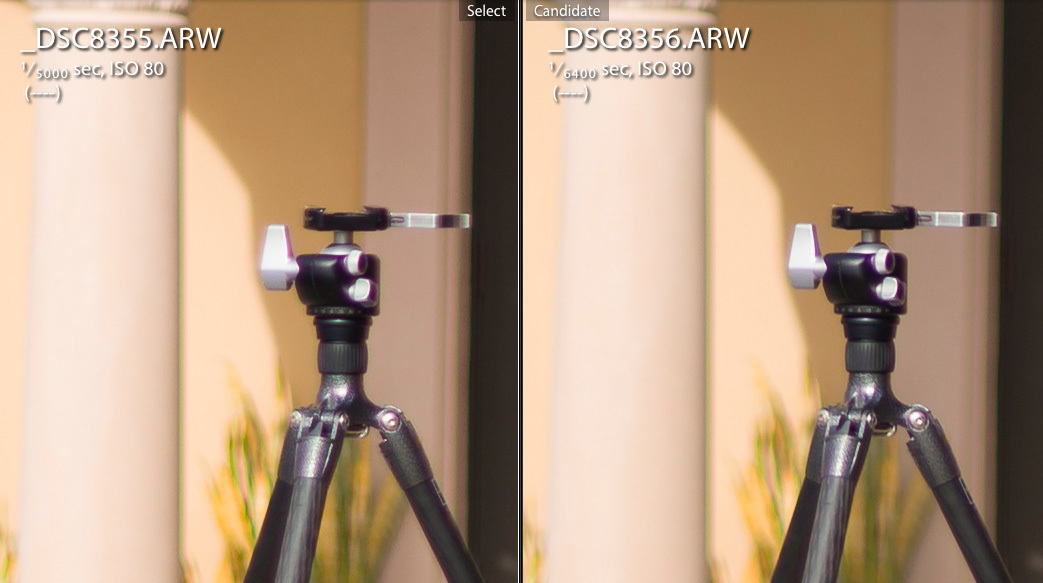
subject at 1.5m CENTER (f/1.4): Front-lens (LEFT): Bare-lens (RIGHT)
subject at 1.5m EDGE (f/1.4): Front-lens (LEFT): Bare-lens (RIGHT)
subject at 2m CENTER (f/1.4): Front-lens (LEFT): Bare-lens (RIGHT)
subject at 2m EDGE (f/1.4): Front-lens (LEFT): Bare-lens (RIGHT)
subject at 2.75m CENTER (f/1.4): Front-lens (LEFT): Bare-lens (RIGHT)
subject at 2.75m EDGE (f/1.4): Front-lens (LEFT): Bare-lens (RIGHT)
Here is thumb showing the entire image with the subject at 2m. (Just as a reference as where the center and corner areas are). As you can see, the house in the background is not too far from the subject. (tripod)
JimBuchanan wrote:
Wow. Looks too good to be true. Are there any catches or tradeoffs other than the slight loss of contrast?
Jim,
I am trying really hard to find faults with the 5m front-lens. At first we thought there was mid-field dip when using the front-lens but I can assure this is not the case. One must position the lens very centered on the step-up ring though.
So, there are the pros and cons I've encountered so far:
Pros:
1) Drastic reduction of 'induced' field curvature at close and infinity distances. That in itself is the MAIN feature of this add-on as astigmatism is not so too much of an issue with the Distagon 35/1.4 ZM on the Sony sensor stack.
2) Corner improvement at all apertures at close and infinity distance. (Especially from f/1.4 until f/4). At f/6.3, the improvement is minimal but still visible at very close inspection. The front-lens allows you to focus on center/mid-field or corner and get sharpness across the field. Without the fron-lens you are still able to get great results at f/6.3 and smaller but you must carefully focus on the mid-field area.
3) Improvement of minimal focus distance (MFD). That is a plus for those not using a helicoid adapter but it also helps get even closer using a helicoid adapter.
4) Very noticeable improvement of edge detail at close distance. This is good news for environment portraits for example as you can position your subject closer to the edges for higher sharpness when shooting at wide apertures.
5) The front-lens acts as a protection (UV) filter for your lens.
6) Drastically reduces the field curvature issue at 2m+ subject distance where the edges of the frame would be sharper without the front-lens.
7) Excellent flare performance using the front-lens. This is not a benefit from the bare lens but I'm happy to report that I don't see a deterioration of flare performance with the front-lens from Opto-Sigma
8) No increase of LoCA, CA or distortion. If there is an increase, it's small and not noticeable at close inspection.
-------------------
Cons:
1) It costs $95 and you need a 49-55mm step-up ring, 55-52 step-down ring and a 52mm retention ring. Probably the total price is around $120
2) There is slight loss of contrast with the front-lens. Nothing very noticeable but I'm being picky as hell.
3) There is an increase in focal length of about 0.5mm. So, if the 35 ZM is truly 35mm, it will became 35.5mm. (This could be a pro or cons depending on your needs)
4) It adds weight to your lens. (25 grams..which is about the same weight as the ZM hood)
5) You can't use the 35 ZM original hood with it.
6) There is a need to remove internal metal plates (shims) from your lens to achieve infinity focus with the 5m front-lens.