Thanks for all the input, I wonder how the Sony Zeiss 35mm 1.4 Distagon performs concerning 3D Pop!? It's not mentioned in the top league so far...
Thought about to buy the great new Sony Zeiss 50mm 1.4 but I already have the small 55mm 1.8 and my favourite FL is 35mm. Trying to stay with at least 1 light lens like the 55mm - the 35mm 2.8 falls out, I had it but like mentioned in the 1st post I was not happy with the pop.
Which route would you go under consideration that beside the 55mm also the 24-70GM and 85GM is existing already?
Mirror wrote:
Thanks for all the input, I wonder how the Sony Zeiss 35mm 1.4 Distagon performs concerning 3D Pop!? It's not mentioned in the top league so far...
Thought about to buy the great new Sony Zeiss 50mm 1.4 but I already have the small 55mm 1.8 and my favourite FL is 35mm. Trying to stay with at least 1 light lens like the 55mm - the 35mm 2.8 falls out, I had it but like mentioned in the 1st post I was not happy with the pop.
Which route would you go under consideration that beside the 55mm also the 24-70GM and 85GM is existing already?
Count me in as a fan of the FE 35mm f/1.4 as I love that lens. I don't use it too often but each time I do, it puts a simile on my face. I am about to go on a trip where I will be using this lens pretty heavily in combination with the GM 85mm f/1.4. And those two lenses will be on 2 separate bodies for an easy transition as the 2 FLs complement each other really well.
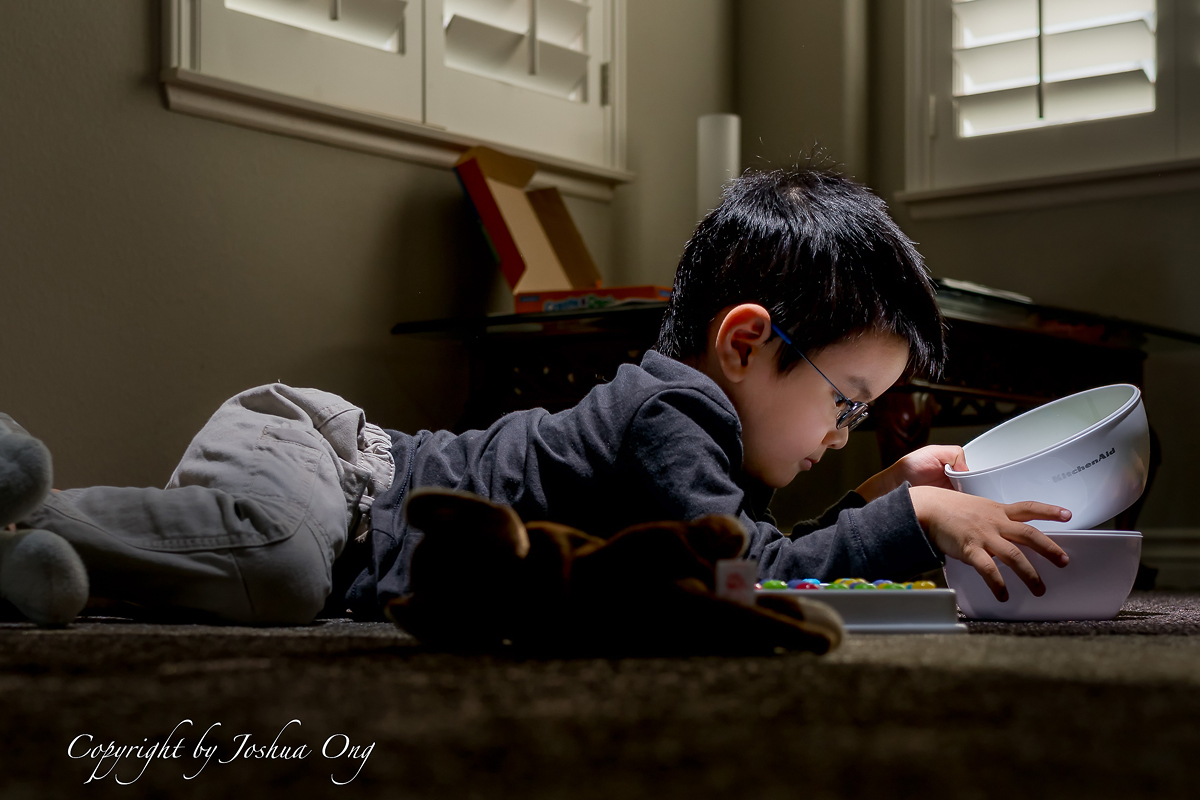
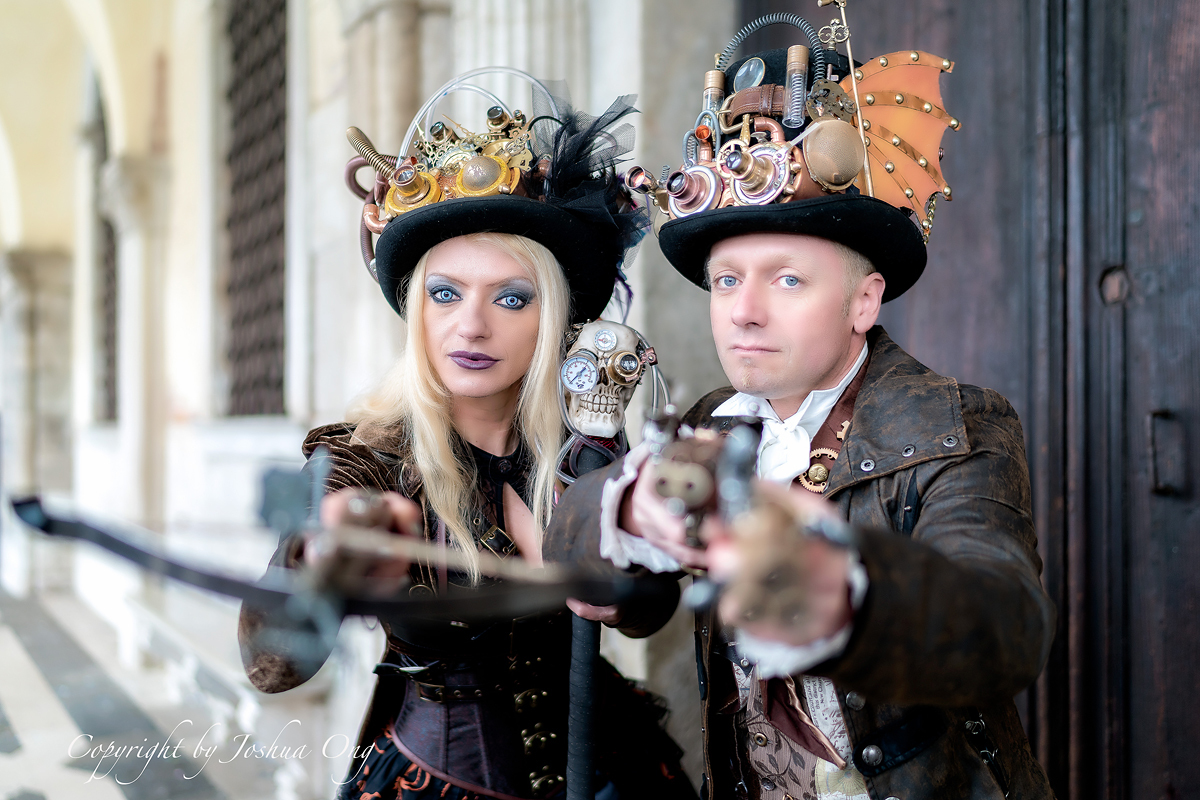
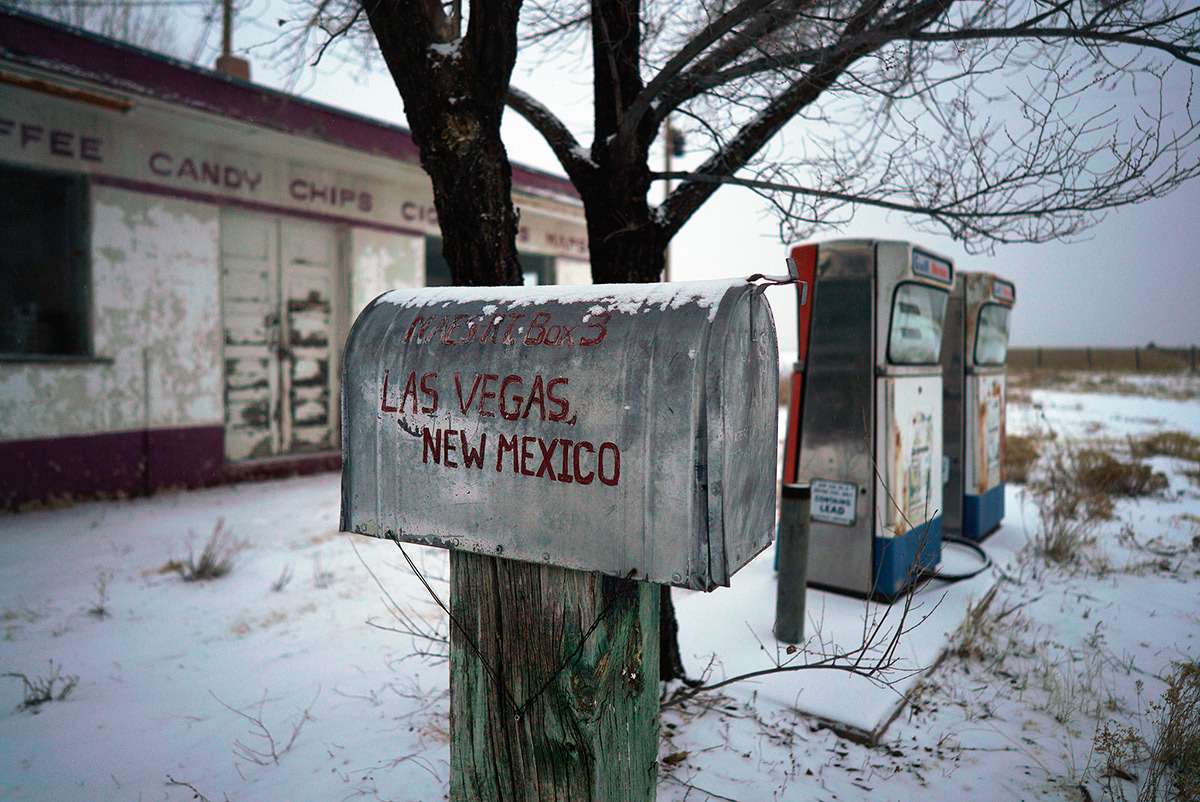
Here are a few images from the 35mm lens. The first image is of my 4 year old grandson taken at ground level. I was playing with a remote flash setup and that one was lit, in addition to the ambient light, by a single flash from the top right. The lens was stopped down to f/4, I may add. The last 2 images are from the mask carnival in Venice. Please take a look at the exif data for the aperture used.
Oh no, not this again ... but I'll join the game, even though I still think it's mostly conditions (esp. the light) that create this effect. I think it takes really unique conditions for one lens to stand out compared to a similar (focal length, aperture) one. The biggest difference is (duh!) caused by DoF (field curvature?) IMHO.
I'd rank highly the ultra fast not-so-recent additions to Sony lineup:
* Sony 50GM
* Sigma 35/1.2 DN
The term "3d-pop" is somehow nonsens to me, because the impression you are discussing about depends on:
1) There is subject-seperation (depending on: a) focal length, b) aperature, c) dicstance to the focal plane - adjusted by the focusring in MF or when using AF)
2) There is the contrast, the lens delivers (depending on the quality of the coatings and to some degrees to the optical construction)
3) Some lenses of the same focal length (and adjusted aperature at the same focusing distance) have different short or long areas from sharp to unsharp (or blurred).
The combination of this many factors lead to this 3d-impressions, but some factors (like contrast) can be manipulated by software and some people feel a lens has strong 3d-pop if the area of sharpness falls of very fast, others feel a lens has a lot of 3d-pop if the area of sharpness degrades about a longer distance to see the placement in 3d-space. There is no scientific definition to this term, do you think it is helpful to use the term in discussions here?
j4nu wrote:
Oh no, not this again ... but I'll join the game, even though I still think it's mostly conditions (esp. the light) that create this effect. I think it takes really unique conditions for one lens to stand out compared to a similar (focal length, aperture) one. The biggest difference is (duh!) caused by DoF (field curvature?) IMHO.
I'd rank highly the ultra fast not-so-recent additions to Sony lineup:
* Sony 50GM
* Sigma 35/1.2 DN
I agree. IMO the best 3D Pop lenses in the Sony line up today are:
dieterson wrote:
The term "3d-pop" is somehow nonsens to me, because the impression you are discussing about depends on:
1) There is subject-seperation (depending on: a) focal length, b) aperature, c) dicstance to the focal plane - adjusted by the focusring in MF or when using AF)
2) There is the contrast, the lens delivers (depending on the quality of the coatings and to some degrees to the optical construction)
3) Some lenses of the same focal length (and adjusted aperature at the same focusing distance) have different short or long areas from sharp to unsharp (or blurred).
The combination of this many factors lead to this 3d-impressions, but some factors (like contrast) can be manipulated by software and some people feel a lens has strong 3d-pop if the area of sharpness falls of very fast, others feel a lens has a lot of 3d-pop if the area of sharpness degrades about a longer distance to see the placement in 3d-space. There is no scientific definition to this term, do you think it is helpful to use the term in discussions here?...Show more →
Agreed. IMHO lens-based 3D pop has never really been defined in a specific and falsifiable manner. And I've never seen anyone clearly describe how to distinguish lens-based 3D pop from the many techniques of increasing subject separation.
Many of the photos in this thread have nice subject separation, but there isn't any evidence it's due to the specific model of lens with which they were shot.
If one takes on a personal assignment to only shoot photos with 3D pop, they will eventually be able to do so regardless of the lens they use. Of course, they may find it more difficult with slower lenses, but not impossible.
But if one happens to take a photo with a 3D-feel unintentionally, it seems they'll often attribute it to their lens instead of their chosen settings, composition, lighting, and subject/background distances.
That's really too bad. IMHO this is a technique and experience issue, not a GAS-inducing "if only I buy the right gear my photos will then have magical qualities" issue.
In my opinion, which others seem to also have, it's a side effect of a few things. You don't need "all" of these things, and sometimes if you have these things, you still won't get the desired effect.
1) Lower F stops
2) More subject to background separation
3) Better framing
4) Proper focus
5) Better post-shot editing.
You can give yourself advantages by buying the most expensive, fastest most "magic" lens but don't undervalue the other aspects. I've got a friend who shoots family stuff with a $1000 nikon DSLR kit her husband got her for Christmas 5 years back, who's got a way better eye for composition and way better editing skills than me.
Tim
P.S. If you really want a lens recommendation, I'll throw in the 35-150 Tamron 2-2.8 into the mix. I tried the prime game and I found for my shooting style, I needed more versatility in a single lens versus having that "perfect" lens in the bag. It's my "go to" for family events now.
Ask a painter, they’ve been creating the illusion of 3D depth in 2D media for centuries. Or an animator or graphic artist or digital illustrator or…
I’m sure there are courses in it that teach a bunch of techniques for creating depth perception. Some of them probably map to to lens attributes - that would be useful to know. Most are probably compositional and lighting techniques that are lens agnostic. Bet the later dominate when we perceive an image as pop-y but I think some lenses I have are better at it than others. Wish I understood why.
kimballistic wrote:
Agreed. IMHO lens-based 3D pop has never really been defined in a specific and falsifiable manner. And I've never seen anyone clearly describe how to distinguish lens-based 3D pop from the many techniques of increasing subject separation.
Many of the photos in this thread have nice subject separation, but there isn't any evidence it's due to the specific model of lens with which they were shot.
If one takes on a personal assignment to only shoot photos with 3D pop, they will eventually be able to do so regardless of the lens they use. Of course, they may find it more difficult with slower lenses, but not impossible.
But if one happens to take a photo with a 3D-feel unintentionally, it seems they'll often attribute it to their lens instead of their chosen settings, composition, lighting, and subject/background distances.
That's really too bad. IMHO this is a technique and experience issue, not a GAS-inducing "if only I buy the right gear my photos will then have magical qualities" issue.
Well, it kind-of-sort-of has been defined by Zeiss to mean "micro contrast". So we're really just talking about how well a lens scores at the finest level of MTF measurement.
shutterbug40 wrote:
To me, "lens pop" has to be shown in a SOOC file, otherwise it's a result of the photographers post-processing skills and not necessarily the lens.
There really is no such thing as a "straight out of camera" image. A JPEG goes through whatever processing pipeline is embedded in the camera. A raw file is not viewable until it has undergone some amount of post-processing and conversion to a viewable format. Sure you can always pump up certain values in photoshop to improve contrast. But how far you can take those enhancements depends on having a good clean file to start with.









 ... but I'll join the game, even though I still think it's mostly conditions (esp. the light) that create this effect. I think it takes really unique conditions for one lens to stand out compared to a similar (focal length, aperture) one. The biggest difference is (duh!) caused by DoF (field curvature?) IMHO.