p.1 #1 · Can a pair of Godox AD360 II or AD600 flashes freeze motion for sports shots?
I occasionally do dancer jumps and action sports shots where the slower flash sync is an issue with my Einstein flashes. Do a pair of the aforementioned godox flash units have enough power in HSS mode to freeze motion ?
p.1 #4 · Can a pair of Godox AD360 II or AD600 flashes freeze motion for sports shots?
jzucker wrote:
I occasionally do dancer jumps and action sports shots where the slower flash sync is an issue with my Einstein flashes. Do a pair of the aforementioned godox flash units have enough power in HSS mode to freeze motion ?
Are you shooting in a studio or outside and balancing with ambient? I have the AD360 and it still have plenty of punch with HSS enabled. I'd need to have a better idea of your shooting environment/needs though. Also if you're freezing motion don't you want a short flash duration instead of HSS?
p.1 #5 · Can a pair of Godox AD360 II or AD600 flashes freeze motion for sports shots?
i'm shooting dance jumps indoors and outdoors both in bright sunlight and shade. Not sure it makes much difference to have short flash duration if I'm shooting with a fast shutter speed like 1/1000. At that point, even the steady pulsing of the HSS will be limited by the shutter speed. I just don't know if there is enough power to do that with a pair of these lights and a couple umbrellas or even 7" socked reflectors at 10' away...
p.1 #7 · Can a pair of Godox AD360 II or AD600 flashes freeze motion for sports shots?
HSS means the shutter is the motion stopping agent.
Yes the lights have enough power if placed properly.
There are high output reflectors that will help with the 360.
Both the 360II and AD600 automatically transition to HSS when using the X1T transmitter/controller on camera.
p.1 #8 · Can a pair of Godox AD360 II or AD600 flashes freeze motion for sports shots?
dmward wrote:
HSS means the shutter is the motion stopping agent.
Yes the lights have enough power if placed properly.
There are high output reflectors that will help with the 360.
Both the 360II and AD600 automatically transition to HSS when using the X1T transmitter/controller on camera.
That doesn't really answer the question though. Admittedly, I didn't give much data...To be more specific, Can a couple AD600 lights with 24x36 softboxes at say 10' away provide enough power to shoot at F11 with a shutter speed of 1/800?
p.1 #13 · Can a pair of Godox AD360 II or AD600 flashes freeze motion for sports shots?
Exactly.
HSS and HyperSync are constant light sources but can not be metered in a meaningful way.
1/800th or a second shutter speed is likely to be too slow to stop motion.
F11 is going to require a lot of power. I doubt that any available light will be able to do what you need at 10 feet.
F11, 1/800 ISO 100 is well past sunny 16.
p.1 #14 · Can a pair of Godox AD360 II or AD600 flashes freeze motion for sports shots?
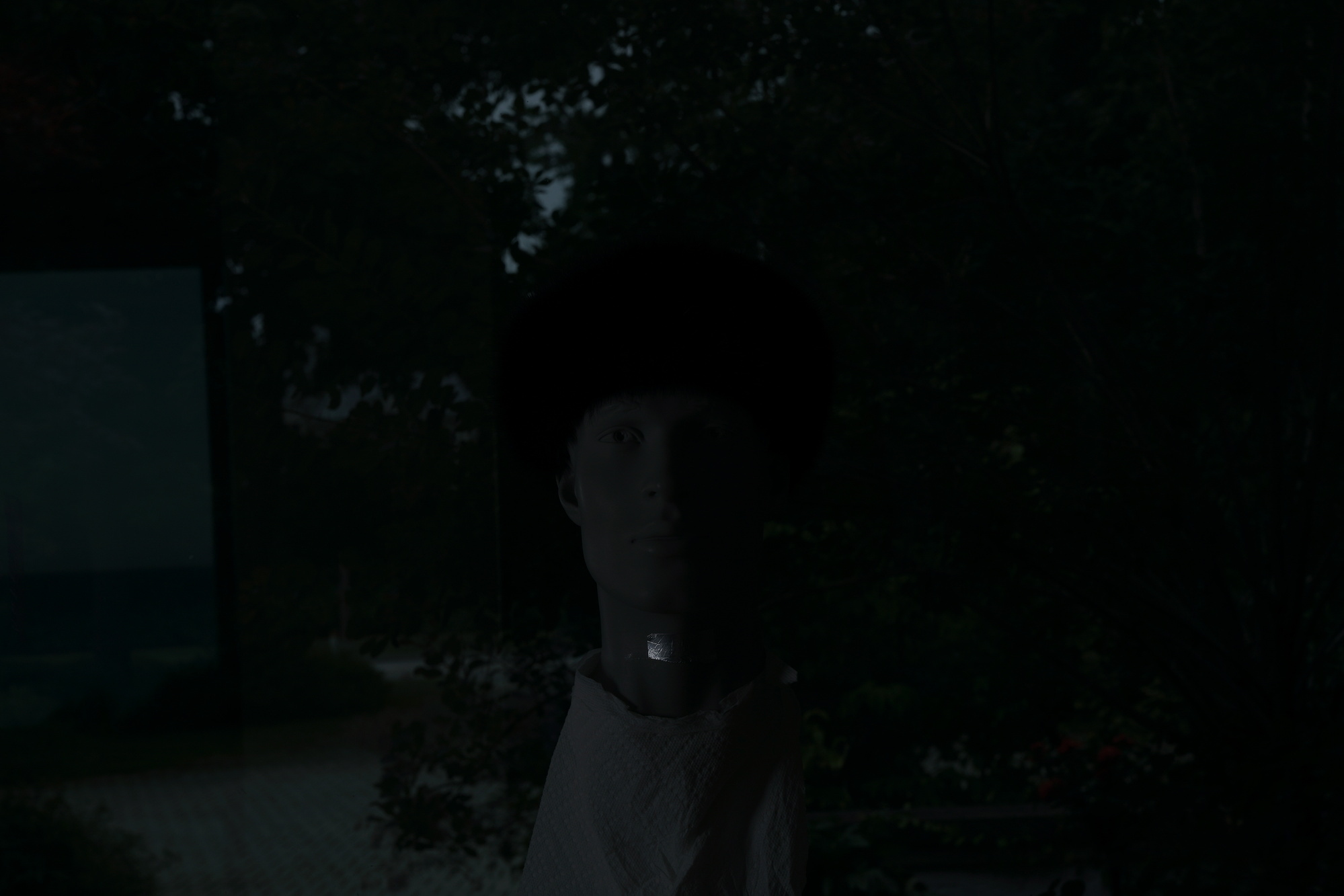
I just did a quick test.
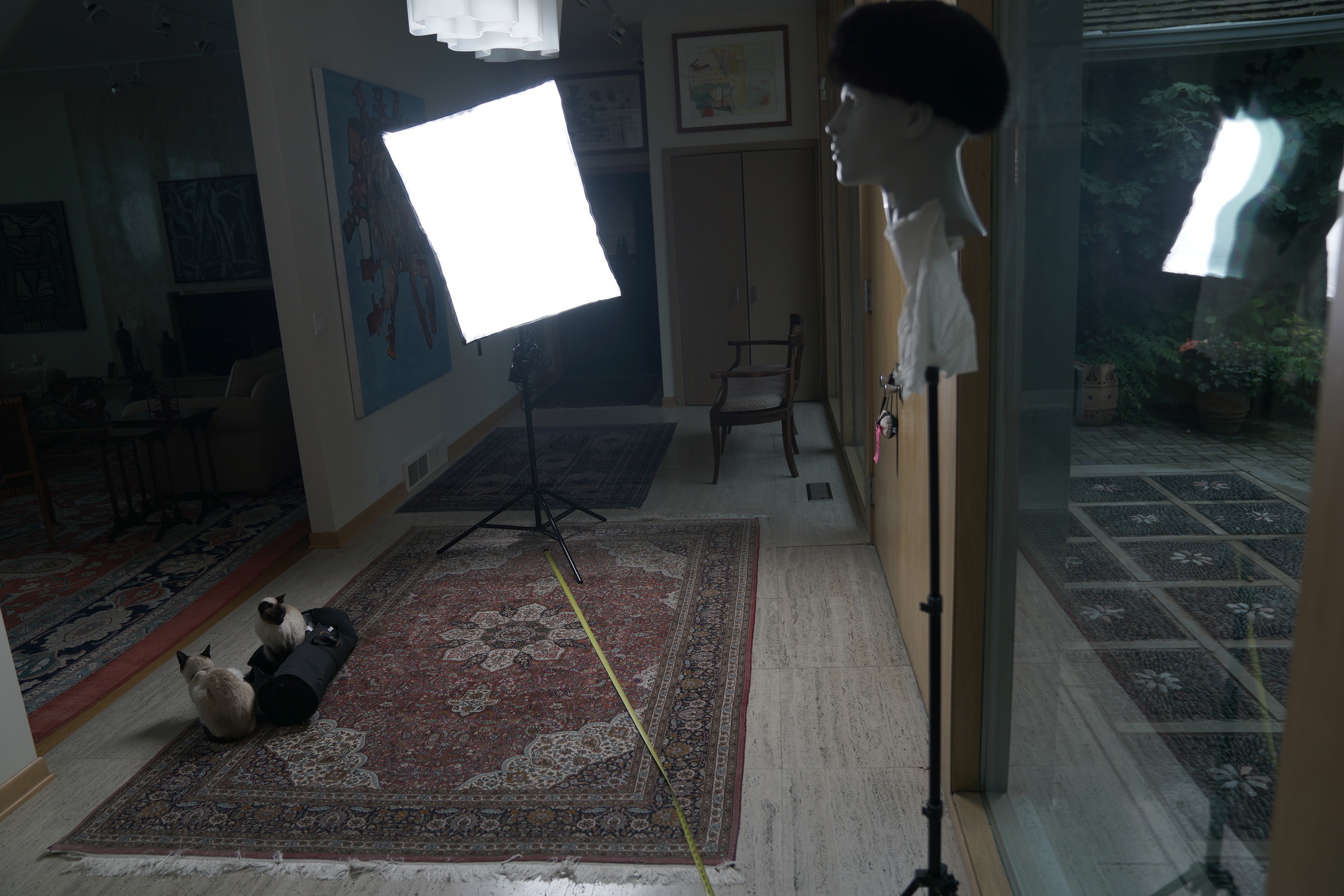
F11, 1/800, ISO 100 AD360 in 24x36 Glow Pop softbox 10 feet from Manny.
The image is dramatically under exposed.
At f2.8 the strobe exposure is just about what one would want.
p.1 #15 · Can a pair of Godox AD360 II or AD600 flashes freeze motion for sports shots?
A short flash duration makes a huge difference if your flash is overpowering the ambient light and is the sole source of lighting in your photo. In that case, your camera's shutter speed has no affect on freezing the action - its all about the T-times of the flash in use.
If you are letting ambient light be part of your light source - then yes - camera shutter speeds will determine if you can freeze the action.
There are 2 ways to obtain high speed sync - short fast pulsing or long burn.
I don't believe that the Einstein can do fast pulsing but can do long burn. Its an IGBT flash so the longest burn is at full power. So T-times get better as power decreases - which means longer durations when power is increased and faster shutter sync speeds are possible if you can get program the timing right on your triggers. This is good for overpowering the sun where you usually want more power anyways.
jzucker wrote:
i'm shooting dance jumps indoors and outdoors both in bright sunlight and shade. Not sure it makes much difference to have short flash duration if I'm shooting with a fast shutter speed like 1/1000. At that point, even the steady pulsing of the HSS will be limited by the shutter speed. I just don't know if there is enough power to do that with a pair of these lights and a couple umbrellas or even 7" socked reflectors at 10' away...
p.1 #16 · Can a pair of Godox AD360 II or AD600 flashes freeze motion for sports shots?
Littleguy wrote:
I don't believe that the Einstein can do fast pulsing but can do long burn. Its an IGBT flash so the longest burn is at full power. So T-times get better as power decreases - which means longer durations when power is increased and faster shutter sync speeds are possible if you can get program the timing right on your triggers. This is good for overpowering the sun where you usually want more power anyways.
IGBT, by its nature eliminates any tail from the flash at all power settings below full power.
The Einstein is NOT suitable for any "long burn" approach to FP sync and higher shutter speeds.
The Einstein does not do "pulsing" HSS either. PCB said in numerous emails that he didn't think it was a useful addition to the feature set.
p.1 #17 · Can a pair of Godox AD360 II or AD600 flashes freeze motion for sports shots?
Yes - histoically, IGBT flash units have not been the first choice for the long burn approach for high speed sync.
But with all the new battery powered units flashes being IGBT based (Godox AD360, Broncolor Siros, Profoto B1 & B2) - triggers are now coming out with timing adjustments to get the most of the shorter burn times of IGBT flashes.
Plus from the OP's question - it looks like he is trying to overpower the sun and he will most likely be at full power anyways.
If he was indoors in a low light situation - he wouldn't be asking about using a faster shutter speed to stop motion - he would be using the flash duration to stop motion.
dmward wrote:
IGBT, by its nature eliminates any tail from the flash at all power settings below full power.
The Einstein is NOT suitable for any "long burn" approach to FP sync and higher shutter speeds.
The Einstein does not do "pulsing" HSS either. PCB said in numerous emails that he didn't think it was a useful addition to the feature set.
p.1 #18 · Can a pair of Godox AD360 II or AD600 flashes freeze motion for sports shots?
"If he was indoors in a low light situation - he wouldn't be asking about using a faster shutter speed to stop motion - he would be using the flash duration to stop motion."
Exactly, and this is where a more traditional strobe beats IGBT technology. You want the shorter flash duration at the highest output, so you can shoot at f/ll and have the strobe stop the action.
p.1 #19 · Can a pair of Godox AD360 II or AD600 flashes freeze motion for sports shots?
Littleguy wrote:
Yes - histoically, IGBT flash units have not been the first choice for the long burn approach for high speed sync.
But with all the new battery powered units flashes being IGBT based (Godox AD360, Broncolor Siros, Profoto B1 & B2) - triggers are now coming out with timing adjustments to get the most of the shorter burn times of IGBT flashes.
Plus from the OP's question - it looks like he is trying to overpower the sun and he will most likely be at full power anyways.
If he was indoors in a low light situation - he wouldn't be asking about using a faster shutter speed to stop motion - he would be using the flash duration to stop motion.
The adjustment capabilities in the triggers is to optimize the FP-Sync plus relative to the first curtain shutter opening. By design, FP-sync sends the fire pulse prior to first curtain opening. When designed, FP sync was for flat burn flash bulbs and slow cloth focal plane shutters. The pulse earlier than shutter opening was to give the bulb time to reach maximum output prior to the curtain opening.
New, metal focal plane shutters are much faster, optimizing the relationship between the pulse and the shutter opening minimizes the gradient caused by the decreasing light output as the capacitor loses voltage pressure.
The timing adjustment also permits optimizing the fire signal to get better use of the diminishing tail for a voltage controlled strobe when used for "long burn".
IGBT, without the HSS rapid pulsing implementation, has no tail below full power. A 1/10,000 flash duration will never be able to illuminate the sensor during the travel of a focal plane shutter slit at any speed above x sync. Without access to the engineering documents for a camera the best estimate for the length of time necessary for the shutter curtains to travel across the sensor is the x sync speed. i.e. if x sync is 1/200 then the shutter takes 1/200th of a second to travel across the sensor at all shutter speeds above x sync. The faster nominal shutter speed results from the width of the slit as both shutter curtains travel across the sensor. That means that for FP sync to work; a) the fire pulse has to turn on the light before the front curtains starts to expose the sensor; b) the light has to continue, at the same intensity, for the duration of the shutter travel until the rear curtain covers the sensor.
Whether using "long burn" or HSS, when using FP-sync the shutter becomes the action stopping mechanism because the light is now a constant source for the duration of the shutter travel.
Simply put, x sync the flash duration determines action stopping, FP sync the shutter determines action stopping.